
To London with Greater Anglia
It’s been a busy few weeks for me when it comes to travel. I expect a lot of people think a travel writer is always travelling, but I choose to work part time and limit the number of trips I make so that I can be here for family and my beautiful dogs. Nevertheless, travel is always a privilege. Kyrgyzstan really blew me away, but 16 hours after stepping through the front door it was off to Devon, having written three articles and done five loads of washing – oh how glam! As we drove across the Dartford Bridge, a Eurostar passed beneath us, reminding me that travelling by train really is the best way to travel. So I was very pleased to have a day out in London courtesy of Greater Anglia to look forward to.


One of the most frustrating things about train travel is when there are no trains. The dreaded words “rail replacement bus” strike fear into us all, so I was really pleased when Kerri from Greater Anglia informed me that there is almost no engineering work planned on our lines into Liverpool Street all summer. She told me:
“Network Rail has paused its engineering work on the mainline for the summer with only a couple of exceptions – Sunday 16th June, when all journeys will involve a change at Stratford for the Underground into London, and Sunday 8 September, when there are buses between Colchester and Chelmsford during the morning.”


So if you were thinking of a trip up to London, then this summer’s an excellent time to go. For this week’s visit, I decided to focus on the South Bank. It’s a great area for families as there are a number of kid-friendly attractions. The London Dungeon, Shrek’s Adventure and Namco Funscape are all located close together. I opted for a visit to the SEA LIFE London Aquarium and a ride on the Coca Cola London Eye.


First up: the aquarium. What used to be the London Aquarium, housed in the bowels of County Hall at Westminster Bridge, was bought by Merlin Entertainments in 2008 and reopened a year later with a new look. It receives mixed reviews on Trip Advisor, but I was interested to see what it was like for myself. I’m sorry to report that my visitor experience didn’t get off to a good start. The member of staff who dealt with me on the ticket desk was rude and her manager wasn’t much better. Fortunately the other members of staff I encountered were more helpful and enthusiastic.


The SEA LIFE London Aquarium exhibits are arranged IKEA-style. Once you’re in, there’s no going back and even though I was assured it was a quiet day, there were some bottlenecks. At the penguin enclosure, two large primary school groups meant that it was difficult to see the birds, who’d taken themselves off down to the far end of their space, presumably for a bit of peace and quiet! The huge shark tank was very impressive, however, and I thought that it was well designed as you could get access to the tank’s windows on two different levels. Most impressive were the jellyfish, mesmerising as the lights illuminating them changed colour.

Throughout, there are a lot of opportunities to interact with the exhibits. The kids I saw really enjoyed being able to stick their heads into the perspex domes to get a 360° view of the marine life swimming around their heads. However, it isn’t a cheap day out. Standard tickets cost £27, though families could save a little by purchasing a family ticket. Adults would pay £26, children from 3-15 £22 and under 3s free. To snorkel with sharks for 15 minutes would set you back £150.


Next: the London Eye. This was a completely different kettle of fish if you’ll pardon the pun. I’ve been before and it never disappoints. Their customer service is excellent. Every member of staff I spoke to couldn’t have been more friendly and genuinely wanted to ensure I had the best time. And it wasn’t just because I had a complimentary pass; I listened in on a few other conversations and was delighted that staff were so polite and helpful to everyone. Though they offer a VIP experience, it seemed that those staff managing the queue to board treated everyone like a VIP.
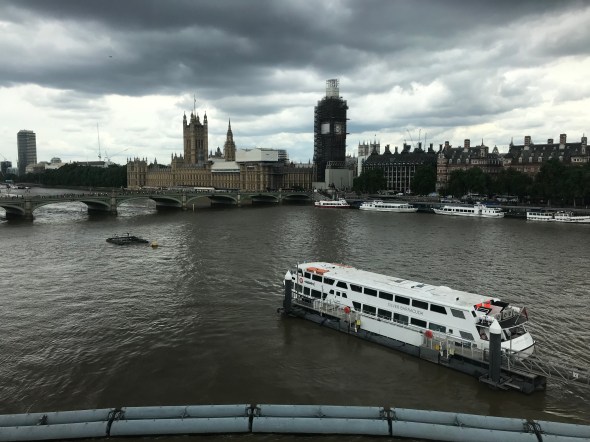
The flight was great, even though the sky was threatening rain with dark thunder clouds in all directions. It brought to mind my first ever visit to the London Eye, not long after it opened, when an elderly lady behind me in the queue was rocking a hat she’d fashioned from a John Lewis carrier bag. This time, the rain held off and visibility was pretty good. We were a mixed bunch in our capsule, with visitors from the USA, Brazil and New Zealand all giving it the thumbs up.
“Best day ever!” one lady said.


Big Ben of course is covered in scaffolding, but it was interesting to see how much the skyline had altered in those almost two decades since my first visit. If you don’t know your Gherkin from your Walkie Talkie, there’s a useful 360 degree map that will cost you £2 on top of the price of your ticket which will help you identify what you’re looking at. Prices are pretty much the same as for the SEA LIFE London Aquarium and there are occasional special events for a similar entrance fee, like Time Out’s smart phone masterclasses. Of course, you can opt for a champagne experience too, for something extra special.
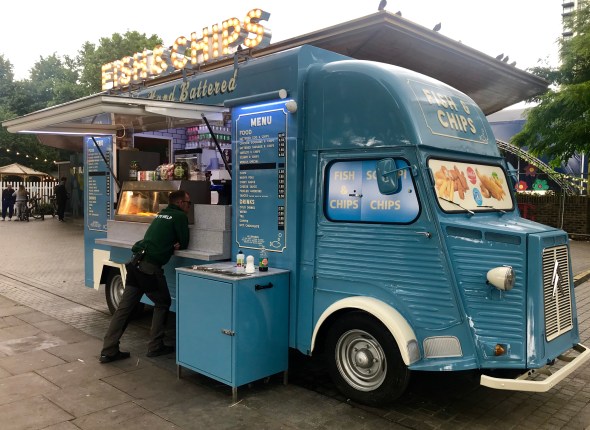
The trouble with London, understandably, is big city prices. Finding somewhere reasonably priced to eat in a city with such high rents can be a challenge. Fish and chips from the wagon on the South Bank would have set me back £10. If the weather’s fine, there’s another option. The Jubilee Gardens Trust work hard to maintain a sizeable patch of green space right next to the London Eye. There’s a play area for young children and the Trust have just purchased what was once a car park and have plans to turn it into an adventure playground for older children. It’s perfectly located for a summer picnic on a dry, sunny day.
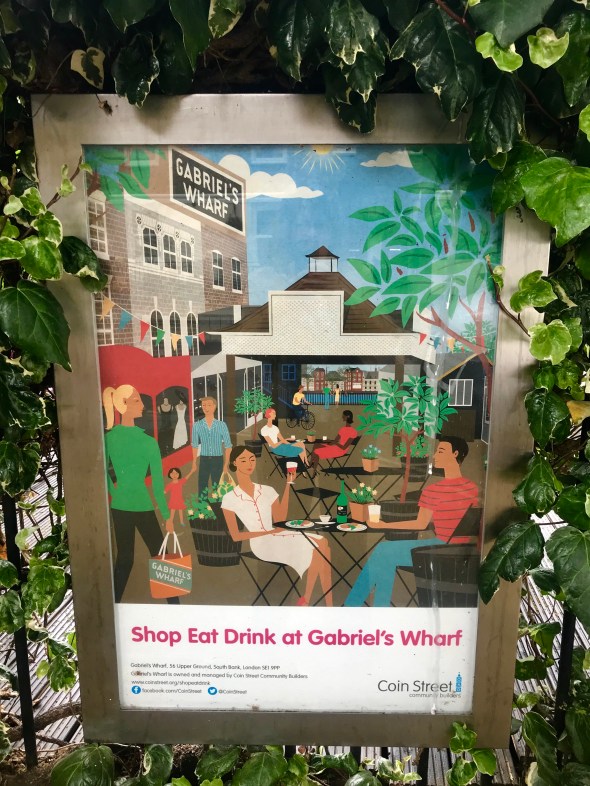
Around ten minutes walk further east is one of my favourite spots this side of the river: Gabriel’s Wharf. This eclectic mix of boutiques and eateries has a more local vibe than the tourist traps closer to Westminster Bridge. Spend your £10 here, and it will buy you a delicious sit down lunch rather than an average takeaway. It’s worth checking out some of the independent stores here too. The House of Eunice works with artisans in India to create some unique clothing designs – the owner runs trips to India too if you’re keen to learn about the processes for yourself.

We really are lucky to have such a magnificent city on our doorstep. Thanks to the speedy trains, from my Essex village by the coast I can still be in the City of London in under 70 minutes door to door (as little as 48 minutes on the train). That is always a good feeling, particularly on the way home! The recently launched Norwich in 90 and Ipswich in under 60 services bring East Anglia even closer to the capital.
Need to know
If you buy your train ticket in advance you can travel to London from Colchester or even as far as Norwich for just £10 each way. From Southend, getting to London can cost as little as £6 single if you are flexible with dates and times. You don’t need an Oyster card to score the lowest fares within the capital, as you can tap in and tap out with a contactless debit card in the same way.
You don’t need me to tell you just how many visitor attractions there are in London. Greater Anglia offer a range of 2for1 deals which can add up to some pretty significant savings. Museums, theatre tickets and even bike tours are included in the promotion – dates and specific savings vary so check on Greater Anglia’s website for more details. While the SEA LIFE London Aquarium isn’t participating, their sister attractions in Southend and Yarmouth are. The current London Eye offer with a valid rail ticket is a 2for1 deal for £30.
With thanks to Greater Anglia for my train ticket and to Merlin Entertainments for complimentary passes to SEA LIFE London Aquarium and the Coca Cola London Eye. I appreciate their generosity. All views expressed in this blog are my own.
A beginner’s guide to Alberobello
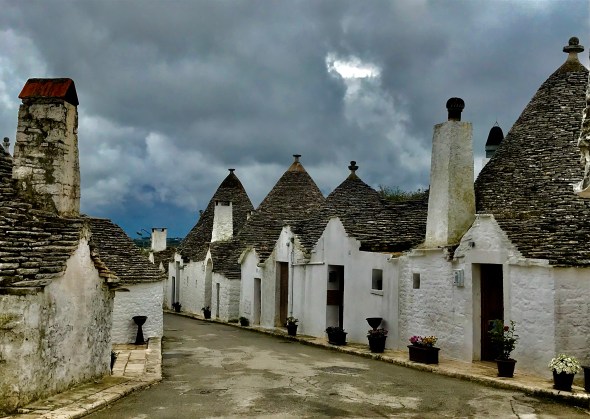
Puglia is Italy’s heel, where a karst landscape makes its presence felt in the form of caves and sinkholes. Somewhere in the middle of all that is Alberobello, a town known for one thing: trulli. These simple circular dwellings are built without mortar and take their name from the Greek word “troullos” meaning dome.
Getting there
The nearest airports to Alberobello are Brindisi and Bari. The latter’s the most convenient in terms of onward travel, served from London Gatwick, Stansted and Luton by easyJet, Ryanair and Wizz respectively. Flights can be had for a little under £50 return, excellent value for a flight that’s almost 3 hours long.
From Bari, a train takes you direct to Bari Centrale station, taking about 20 minutes. From there you can pick up the FSE train, tucked away on a far-flung platform – ask for assistance if you can’t find it. Even though it’s an FSE train, you can buy a ticket from the Trenitalia ticket machines (Trenitalia bought FSE in 2018). The fastest connection takes about 1 hour 15 minutes, but it’s more usually about an hour and a half. Tickets are cheap at just 5€ and can be used on any train without the need for a reservation. At the moment, until at least 2020, the stretch of track from Putignano to Martina Franca is being renovated, so there are no trains to Alberobello itself. Instead, you need to catch the connecting rail replacement bus – and fortunately it does connect, waiting for the train if the train is running late. It’s part of the same 5€ ticket, so just show the driver. The bus journey takes about half an hour.
On Sundays, things get a little more complicated. FSE trains don’t run at all. Instead there is a bus service that connects Alberobello to Bari Centrale. Though that might sound simple, the bus doesn’t start from the station. Instead, you’ll need to find the stop – tucked around the corner on Viale Bari near Hotel Astoria and the petrol station. Remember to buy your ticket online or at the petrol station; you can’t buy a ticket on the bus from the driver.

Getting around
To explore the surrounding countryside, it’s most sensible to hire a car. Though public transport does exist, it radiates from Bari and other large towns and there are few cross-country connections. To visit Matera by public transport, for instance, would require a trip from Alberobello to Bari and then out again to Matera – a long detour.

However, it is possible to catch the train (or Sunday bus) to some of the nearby villages. I enjoyed Locorotondo, the next village along, which is a pleasant outing for the afternoon. There aren’t many sights as such, but the hilltop location affords fantastic views across the surrounding countryside and the pretty old town is compact as a result.
Things to see
Rione Monti
The big draw when it comes to Alberobello is Rione Monti. This district is packed with trulli and straggles picturesquely up the hillside. One of the best views across from the town centre is at the Belvedere Santa Lucia. It’s also worth checking out the park beside the tourist information centre and, across in Rione Monti itself, several shops that offer free access to their upstairs terraces.
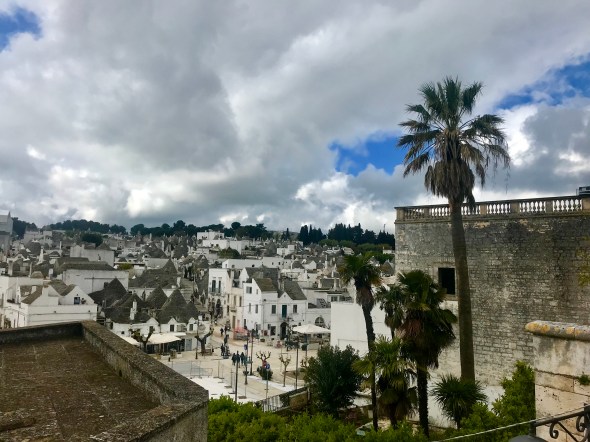
Close up, it’s not quite as quaint, largely because many of the trulli house souvenir shops – some of which is mass produced tat. A few stood out, including La Bottega dei Fischietti which sells not only the traditional ceramic whistles common to Puglia but also some rather lovely ceramic tableaux.


Nearby, Pasteca La Mandragora sells high quality linens and there’s also a store to delight art lovers called Forme e Colori di De Marco Vita crammed full of brightly painted pottery. Be warned, however, some places that purport to be museums house a minimum of exhibits which exist as a honey trap for unwary visitors.
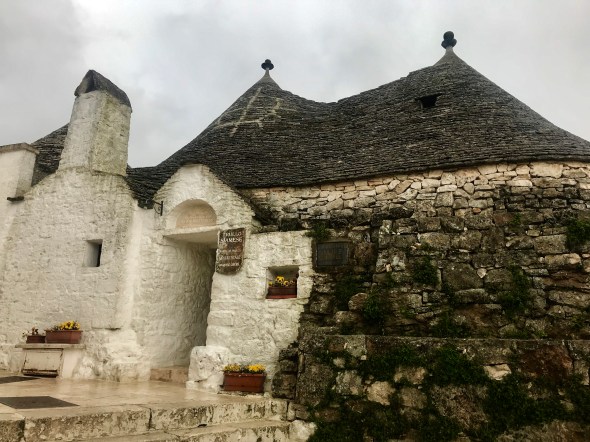
But it’s also in Rione Monti that you’ll find a 20th century trulli church and where you’ll find the curious Trulli Siamesi. This double trulli has one roof. Legend has it that two brothers fell out over a woman but neither would give up the home they had inherited. Instead of moving out, the spurned sibling bricked up the wall and knocked through to make a separate front door.

You’ll also see plenty of trulli with symbols painted on their roofs. Some people will tell you that these symbols have an ancient spiritual or religious meaning. That’s probably true, but I also read on an exhibit tucked away in a corner of the town’s museum that when Mussolini came to visit in 1927 many of the villagers were asked to paint those symbols on their trulli to add a touch of mystery. This seems to be glossed over now in favour of the more politically correct religious imagery line.

Rione Aia Piccola
The only district to rival Rione Monti in terms of the sheer number of trulli is Rione Aia Piccola, which faces off against its nemesis across Largo Martellotta. In contrast to its touristy neighbour, it’s quieter than you’d expect from somewhere on the tour guide route. Many of the trulli here are private dwellings, though a significant number are let to visitors. You’ll see just how many if you wander through in between check out and check in, when they’re marked by vacuum cleaners and mops on their thresholds.


A tourist map I had been given implied that there was a kind of open air museum here, but there was no evidence of that during my stay – perhaps because it was still early in the season? If you are in Alberobello in the height of summer it would be worth checking out just in case.


Trulli Sovrano
In the main part of town, there are also more than a scattering of trulli, one of which is worth seeking out as it is two-storey. This is rare: Alberobello’s trulli were originally modelled on the agricultural buildings found across the Puglian countryside and the dry stone wall construction wasn’t strong enough to support an upper floor.

Trulli Sovrano was built in the 17th century by the family of a priest, taking the name Corte di Papa Cataldo and is now a museum, its rooms recreated with antique furniture. In the front bedroom, a notice pinned to the wall states that the slit was useful for seeing who was at the door, or shooting them if they weren’t welcome. It was at one time a warehouse; if you climb the stairs, you’ll see a trapdoor in the floor used for passing goods down to the floor below. Over the years it’s had many uses, including a court, chapel, grocer’s, monastery and the HQ of the Brotherhood of the Holy Sacrament.


Museo del Territorio “Casa Pezzolla”
Much of the town’s history can be learned within the confines of this collection of fifteen or so trulli which now form a museum. It recounts the impact of the Prammatica De Baronibus, an edict of the 15th-century Kingdom of Naples. The Kings wished to impose a tax on permanent dwellings, so under the leadership of nobleman Gian Girolamo II, the residents of Alberobello were forced to live in trulli. Their dry stone construction made it easy to take them down if an inspection was imminent. The tax dodge worked, serving Alberobello well for many years but in the end, the political situation changed and thus these temporary structures became an enduring part of the urban landscape.


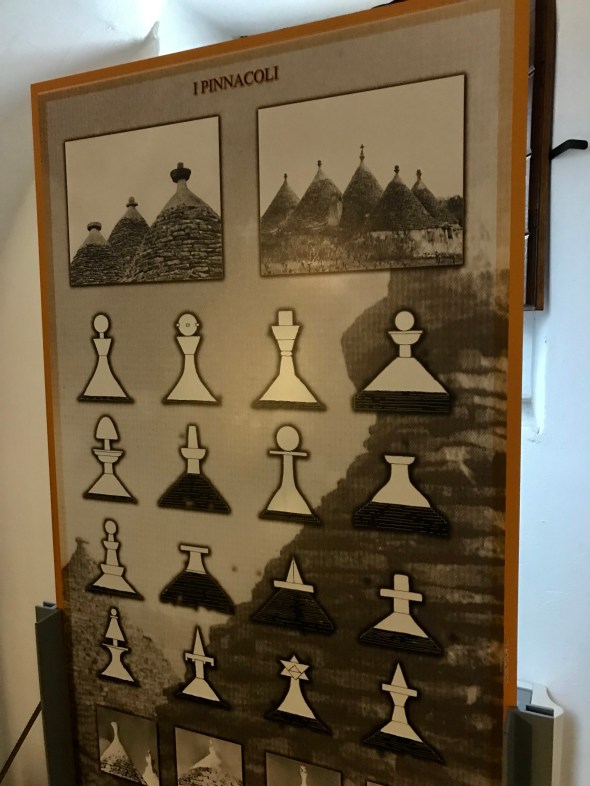
One of the sections of the museum explains the significance of the adornments on the roofs of the trulli. What’s called the “pinnacolo” is the only part of the trulli to be purely decorative, a kind of architect’s calling card. The more complex the design of this topper, the more talented was the master trullaro. It was also a good way of finding a particular trullo amongst so many similar constructions; think of it as the design equivalent of a postcode.
Where to stay
If you’re going to stay in Alberobello – and why wouldn’t you, since once the daytrippers have gone home it’s absolutely gorgeous – then I’d suggest you book Trulli Anti.


While there are plenty of trulli scattered across town that can be rented by visitors, many of them cluster in Rione Aia Piccola. Though that district isn’t as plagued by tour groups during the day as Rione Monti, it’s still on the tourist trail. Where Trulli Anti wins is that it’s close to the sights without being in the middle of them. Plus it’s on such a narrow road that it’s almost impossible for cars to drive past. I only saw one car try it and that was the local police.

That peace and quiet, coupled with its stylish and very contemporary design, gives it 10/10 in my books. If you’re thinking that I’m only saying that because I got a freebie, I didn’t. I paid my own way. It wasn’t cheap for a solo traveller, costing about 125€ a night – though it would be much better value if there are three of you. But oh was it worth it!


The trulli has been well thought out and owner Angelo is keen to ensure you have a great time. On a mezzanine, there’s a very inviting double bed under the domed roof. Lighting is good, and the stairs are pretty solid, which is reassuring as the bathroom is downstairs. That bathroom is chic – I especially loved the tiles and having a shower with some oomph to it. I also need to mention the comfortable sofa (so comfortable I fell asleep on it one evening) and that there’s a single room on the ground floor if you need a second bedroom or you’ve had so much vino you don’t trust yourself on the stairs.


If you plan to cook, there’s also a small but well-equipped kitchen with a dining table. When it comes to eating out, Angelo provides many recommendations and there are several excellent restaurants within staggering distance. Call ahead if you want to try La Cantina as it’s tiny and usually booked out. I had better luck geting into Trullo d’Oro and the food there was delicious. Make sure you try burata, a type of mozzarella that is moist and creamy. Breakfast comes in a box from a nearby cafe, with plenty of choice. You simply pick what you’d like off a menu, send it to Angelo via text message or What’s App and tell him what time you’d like it delivered. You can, if you prefer, eat at the same cafe, a ten minute stroll away.
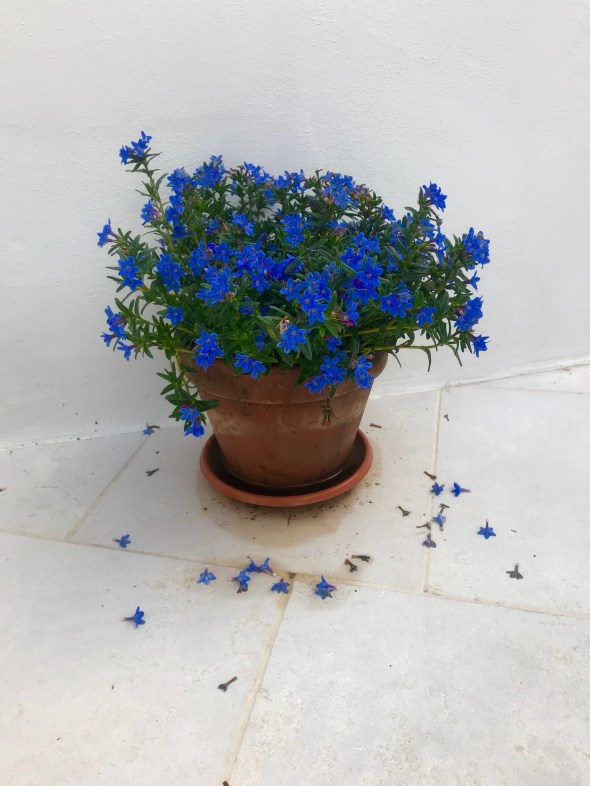
Out back there is a courtyard garden. During my stay the weather was rarely sunny, but if it hadn’t been wet I’d have loved sitting out there. Angelo supplies bikes too and there’s even an outdoor shower. Pots of flowers add colour to the whitewashed trulli and fairylights create a magical feel. I’m probably gushing, but it was just delightful. Trulli delightful, in fact. Sorry, couldn’t resist.
I booked Trulli Anti via booking.com – here is the link if you want to check prices and availability: https://www.booking.com/hotel/it/trulli-anti.en-gb.html
Why not take the train to Norwich?
Regular readers of this blog will know that I’ve worked with Greater Anglia on several occasions. They sponsor me to go to places in the Greater Anglia network and in return, I share my experiences. This weekend, I took the intercity train to Norwich.

Journey time is only an hour from Colchester station, typically around half an hour quicker than it would be by road, and with standard advance fares costing as little as £8 each way, surprisingly cheap. Factor in Greater Anglia’s offers – accompanied children go for just £2 (just turn up on the day and nab this fare for any off peak journey on the network) and 2for1 deals on many attractions – it’s a tempting prospect.

To be honest, the intercity trains that currently run on the Greater Anglia network look pretty dated from the outside. However, when you step inside, they’ve been refurbished as part of a £12m upgrade. What you get is a very comfortable ride. The seats are like armchairs and there’s plenty of legroom. There’s a choice as you’d expect of table seating, great for families or groups of friends, and airline-style seats. That upgrade has paid for new carpets, seat covers, improved lighting and upgraded toilets. Best of all are the at-seat powerpoints, which came in very handy on the return journey when I needed to use my phone which as always had a woefully low battery. It’s also convenient to have onboard WiFi. The only thing I didn’t like was having to lean out of the window to open the carriage door, but fortunately those waiting on the platform helped when I couldn’t quite reach. It reminded me of the slam door trains in the 1970s, though getting out wasn’t as impossible as it was with that horizontal squeeze – if you travelled by rail back then, you’ll know exactly what I mean.
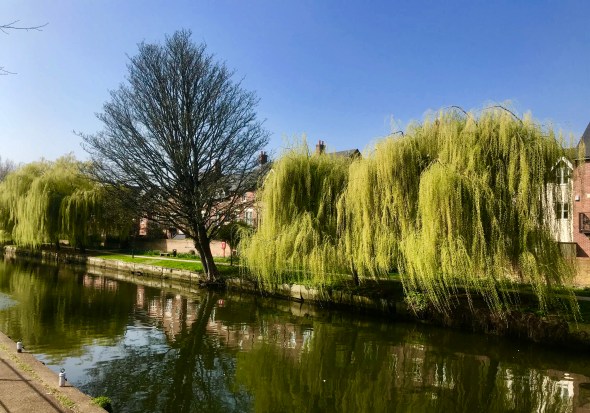
Anyway, I’d got so comfortable it was almost a pity to arrive in Norwich (and I promise I’m not just saying that because Greater Anglia paid my fare) But the sun was shining it was the first really mild day of the year, perfect for a stroll alongside the River Wensum which does a loop of the city centre. The river is almost right in front of the station. Within a couple of minutes, I was walking along a riverbank lined with willow trees. The first landmark I passed was Pull’s Ferry. This flint building was once a watergate and takes its name from John Pull, a ferryman, who ran the boats in the first part of the 19th century. Apparently, the stone that was used to construct Norwich Cathedral came in via this route, having been imported from Normandy.
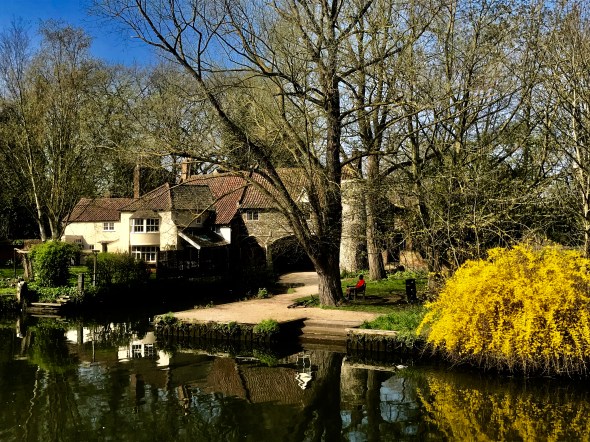
I strolled further along the river bank until I came to the Red Lion pub. On its slipway, a group of people were stepping into wooden Canadian-style kayaks. Chantal and Nick set up Pub and Paddle a few years ago – this year will be their fourth summer and the business is going from strength to strength. Chantal told me that one of their most popular excursions is also their shortest, suitable for anyone. This four hour rental takes paddlers past the cathedral, football ground and Colman’s mustard factory to the village of Thorpe St Andrew. Most people take a break at one of the riverside pubs before returning to the Red Lion. At only £20 per person, it’s good value. Chantal and Nick make their own kayaks and also have a couple of wooden rowing boats for hire for those wishing to stay in the city centre. I didn’t have time to do this, but it’s definitely a good excuse to return.


My next stop was Cow Tower, a 14th century artillery tower built as a response to the threat posed to Norwich not only by the French but also by local rebel forces. Contrary to what its name suggests, it wasn’t constructed to shelter cows, though this Eastern Daily Press article suggests that might have happened later. Instead, it was named after the surrounding meadow, which was called Cowholm. It was big enough to hold a garrison but now, it’s just a shell, the floors and roof long gone. As a consequence, you can’t go inside. Nevertheless it’s an imposing structure, standing almost 15 metres high, and very photogenic in the spring sunshine, particularly when the daffodils are in bloom. On the other side of the path from the Cow Tower there’s a rather lovely carved wooden seat, its smooth curves perfect for lying back to watch cotton wool clouds scud across a blue sky.


I was reluctant to leave my seat, but wanted to take a look at Norwich Cathedral. Construction began in 1096, using local flint and mortar faced with that limestone imported from Caen. It’s quite a large site – actually two churches and an Anglo-Saxon settlement were knocked down to make room for this new structure, such was its scale. The cathedral close is the largest in England. By 1145, the cathedral was pretty much completed. The same building you see today would have had a wooden spire clad with lead, added in the 1160s. It was struck by lightning in 1169, less than two years after it was finished, so today’s spire dates from 1480.


The cloisters of this very grand church bear a resemblance to the colleges of Oxford or Cambridge and are the second largest in the country after those of Salisbury Cathedral. A quadrangle is bounded by walkways featuring elaborate vaulted ceilings; inside, the cathedral itself is even more impressive.

One of the more interesting modern additions is the copper baptismal font. Formed from two bowls, one upturned, it was donated to the cathedral when it was repurposed from its previous use – making chocolate in the Rowntree’s factory until it closed in 1994. Though a donation is suggested, entry is free. Allow plenty of time as the building warrants more than a quick look.


It was time for lunch and over on Tombland, Cocina caught my eye, two white statues flanking its doorway. Samson and Hercules are Norwich icons, though the figures that you see today are replicas, installed when the originals became too fragile to leave in place. In 1657, the two figures, both symbols of strength, were placed outside the home Christopher Jay, then the Mayor of Norwich.

The statues were removed from their pedestals in 1789 and reinstalled in the rear courtyard of the building; a century later antique dealer George Cubitt moved them back again. At that point, Hercules was in such a bad way he had to be replaced. In the 20th century, the building housed a dance hall and later a nightclub. In 1993, one of Samson’s arms fell off and years of paint were revealed. The two figures you see today might only have been placed there just before the millennium but are a much treasured part of the city’s history.


Taking a circuitous route to take in cobbled Elm Hill, my next target was the Museum of Norwich at the Bridewell. Whether you know a lot about Norwich or like me, embarrasingly little, it’s a fascinating place to spend a few hours. The £5.95 ticket charge is a steal. Originally constructed as the home of a rich merchant in 1325, it became a prison for women and beggars in the late 16th century (that’s what a Bridewell means).


The first inmate was one John Flowers, banged up for being accused of having “a lewd life and to be a counterfeiter of begging licences”. But the most interesting story was that of Jane Sellers. She was the Bridewell’s most persistent offender, serving nine sentences in just eight years in the early 17th century. Her first stint was for “being found idle at Trowse”. Several times she returned, did her time and promised to leave town to find work. But she never did. Instead she was caught stealing numerous times. The burglary she committed at the end of 1631 would be her last. The authorities lost patience with her and she was hanged.


After a pit stop at Jarrold’s for tea, I set off for the Plantation Garden, pausing for a quick look at the city’s Roman Catholic cathedral along the way. The garden is the work of a dedicated team of volunteers. Occupying an abandoned chalk quarry, the garden is Victorian in origin, something you might guess from the many follies and statuary that litter the garden. There’s a gothic fountain, Italianate terrace and mock mediaeval terrace wall, plus delightful woodland walkways and vibrant flower beds. Judging by the many people who’d spread picnic blankets or settled into the benches for a natter, it’s well used by locals and visitors alike. A honesty box is located by the gate for your £2 entrance fee.

Back in the heart of the city, there was time for one last stop before I would catch my train. Norwich Castle occupies a hilltop site overlooking the shopping streets below. There’s a £9.50 entrance fee which is expensive, but I was told that for the final hour each day, you can get in for just £2. Inside, as well as an impressive keep, you’ll find a collection of exhibits, some temporary. Right now, there’s a Viking display which is worth a look, as well as a section telling the story of Boudicca, Queen of the Iceni. For me, the museum lacked the emotional connection I got with the Bridewell, but I’m a hard sell, much more interested in social and industrial history than that of early Britain. If you’re local and have kids, I think they might enjoy the castle’s Knight Club or some of the special Easter events that are planned.


Have your own rail adventure
If you’d like to have your own rail adventure, then why not take a look at Greater Anglia’s website? You could visit Norwich, but there are plenty more places that offer a great day out – read my previous blogs on Harwich or Wivenhoe, for instance. I’d also love it if you would answer the simple yes/no review on this survey – being purely selfish, if you’ve been inspired by my day out, I get to do another!
Cirque du Soleil’s back in London
Bulging veins riddled the man’s substantial biceps, triceps and quiadriceps like a toddler had been let loose with a crayon and scribbling pad. Beads of sweat trickled into the furrows in his forehead. He was mirrored by another, equally intense, performer who lie supine beneath him. Together, they contorted into ever more fanciful positions, bearing each other’s weight and holding positions that required muscle strength and concentration far beyond that which ordinary mortals could summon. The sight, just a metre or so in front of me, was as hypnotic as it was impressive. I, like everyone around me, was rapt.

That was my first introduction to Cirque du Soleil, over twenty years ago. Was it Quidam or Alegria? I can’t remember. Nor can I remember whether it was in the Grand Chapiteau or the Royal Albert Hall. But that doesn’t matter. What’s important is the spectacle of it all, the mesmerising performances that truly deserve the overused and rarely accurate epithet breathtaking. That’s what has stuck with me for all these years and that’s what keeps me going back to see Cirque du Soleil time and time again.

Crystal from TOTEM
Picture credit: OSA Images via the Totem press kit
This week, Made and Greater Anglia supported a complimentary trip to see this year’s show, Totem. It was staged at the Royal Albert Hall – a treat in itself. As the lights dimmed, the compere revealed that it was a Royal premiere also, to raise money for Sentebale, a charity working with HIV-positive children in Lesotho and Botswana. Our seats would face those of Prince Harry and his wife Meghan, who wore a dazzling Roland Mouret gown. I felt underdressed in my wool sweater and scarf dampened by rain. Touching my make up free face, I resolved to make a bit more effort next time. But hey, who cares when the lights dim?

Diabolo from TOTEM
Picture credit: OSA Images via the Totem press kit
Totem wowed, just as the others had done before. From the moment the covers came off the skeletal turtle shell to the waves and bows of the finale, it was a showstopper. Acrobats, unicyclists, Russian bars and of course the almost obligatory Italian clowns – it had all the elements of the successful shows that I’ve come to love.
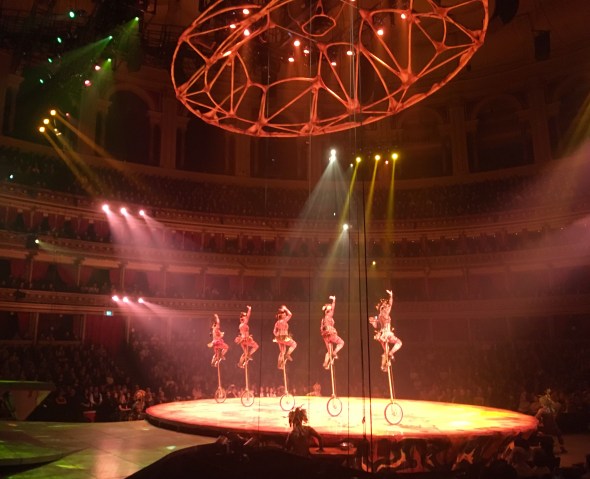
Stand out moments in the evolution-themed show included the flawless work of the Native American ring dancers and a wonderfully romantic rollerskate interlude conducted on a platform too small for any error. Clever choreography lent itself to a neat evolution of man set piece.


If I had one criticism, it would be that the music lacked the impact of, say, Alegria. As I’m writing this, the title song from what’s probably my favourite of all the Cirque du Soleil shows is playing in my head, although I’ve not heard it for years. Yet less than 48 hours after hearing Totem, I can’t recall a single tune. But don’t let that put you off. Whether you’re a die-hard fan or a Cirque du Soleil newbie, this is a show that you should definitely see. You’ve got until February 26th to catch it this time.

Thanks
Made provided two complimentary tickets to Totem, for which I’m very grateful. I also appreciated the free rail travel provided by Greater Anglia – driving to the Royal Albert Hall at rush hour wouldn’t have been a pleasant trip at all. The train was clean, comfortable and on time, leaving me plenty of time for a pre-show drink. For more on Cirque du Soleil including ticket booking for the current London run of Totem, please visit their website at:
https://www.cirquedusoleil.com/totem

Finale from TOTEM
Picture credit: OSA Images via Totem press kit
Moldova’s National Wine Day
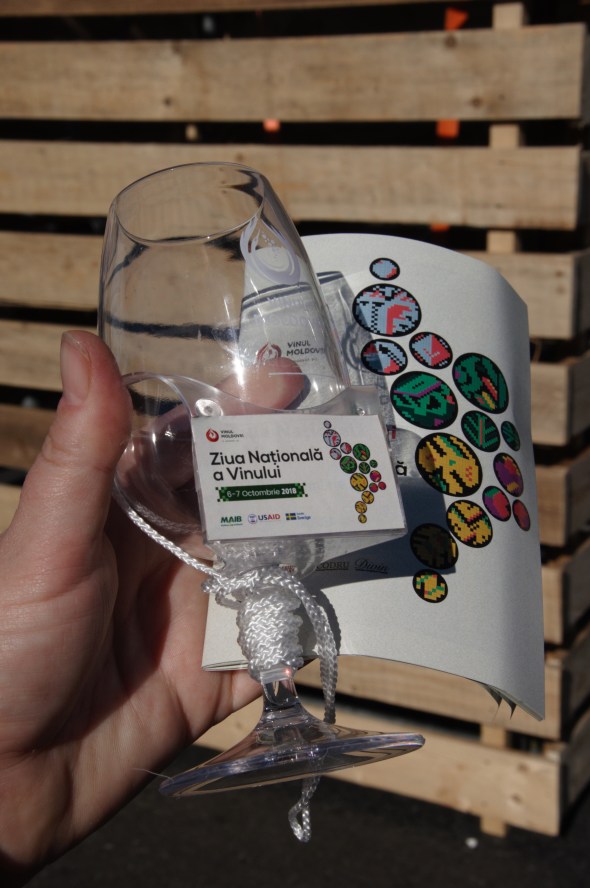
Moldova celebrates its National Wine Day over the first weekend in October. If you want to sample wines from the country’s many wineries without putting in the legwork, this is your chance. Representatives from the major labels come to the capital Chișinău and set up beside Cathedral Park. The organisers even offer a wine tasting passport with tour guide to provide key background information should you wish to know a little more about what you’re drinking.
Getting there
From the UK, there are pretty much two direct options: Air Moldova from Stansted and Wizz Air from Luton. (I also found an airline called FlyOne, but it didn’t seem to be operating flights at this time of year.) When I booked, the Wizz Air option was significantly cheaper but did have the disadvantage of flying overnight on the outbound leg. If you’re going to do this one, hope that your hotel will allow you to check in early or prepare to take an afternoon nap. That’s of course if like me you’ve reached the age where staying up all night is no longer a good thing.

Getting around
There’s a convenient trolley bus which departs from right outside the arrivals terminal door. It takes about half an hour to get into the city centre and costs just 2 lei, about 10p. Look for the number 30 and pay the conductor on the bus. If you need to find change, there are exchange facilities that open early in the morning landside; I bought a cup of coffee which gave me somewhere warm to wait for the bus and the right money to buy a ticket. It was a little disconcerting when the bus stopped and the driver got out; I’d forgotten that trolley buses are a lot of effort when the wires don’t extend the length of the route. What was good, though, was that the buses ran from very early in the morning until late at night, even on Sunday.
Getting a room
I opted for the almost brand new City Center Hostel. It was located just across the road from Cathedral Park and around the corner from the bus stop. My room had twin bunks and for single occupancy cost just £27 for the night. The shared bathrooms were down the hall but were spotless. If you can’t bring yourself to stay in a hostel, next door is the conveniently located Bristol Central Park Hotel and opposite is the Radisson Blu. Both I’m sure are very nice but would set you back a whole lot more.
Getting your culture fix
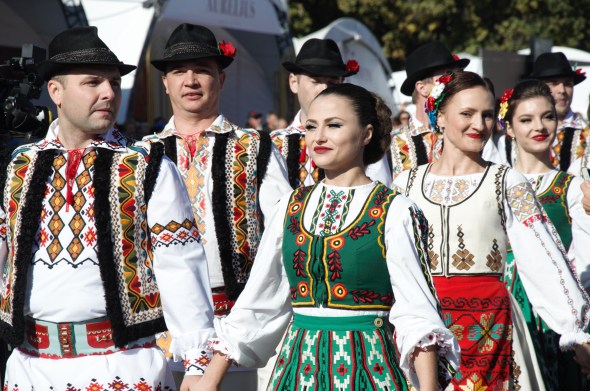
I’d read that there was a parade and early signs were promising. There were plenty of people in national costume and in front of the big sound stage, rehearsals were still in full swing just minutes before the action was supposed to kick off. I was able to get close enough to see the dancers, which was fortunate as once the formal proceedings began, some rather surly security personnel did a very good job of keeping everyone right back out of the way. The view was further obstructed by press photographers and cameramen. There were no programmes in English, but this lady had brought her own from the local newspaper – no help to me, alas:

Though I did manage to see some of the winery representatives presenting their baskets of grapes, this part of the proceedings was something of a let down. However, later, once all the dignitaries had said their piece, the bands came on and the dancing started – fun to watch and even more fun to join in. The event’s free too, which was even better.

Getting drunk
With a tasting passport costing just 200 lei (£10), it’s hard to resist the chance to try as many of the wines on offer as you can. I made my way to one of the information kiosks (they’re located at either end of the main drag) and grabbed a place for one of the English speaking tours.

Our guide was as hipster as they come, but explained the different characteristics of the wine well at first. As the afternoon wore on, he became progressively more tipsy (like the rest of us) and at one point dropped a bottle of wine on the floor in front of him.

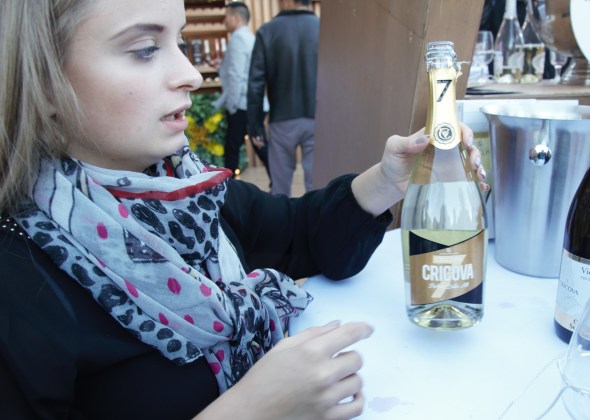
Some of the wines were too dry for my taste but I did enjoy the Cricova sparkling wines. I’m no connoisseur – the sweeter and fizzier the wine, the more I like it. Fortunately, the passport contained an extra token for “your favourite” wine so I had a second glass. It was a pity there are such stringent regulations at airports these days as I’d have liked to buy some to bring back.
By the way, if you are going to visit one of the wineries outside Chișinău, I’d recommend Mileștii Mici. Its huge underground vault can hold almost 2 million bottles of wine and its subterranean rooms and passageways extend for around 120 miles. They run organised tours so there’s no need to worry about getting lost down there forever.
Getting food
Fortunately, there was plenty of opportunity to taste the local food as well, which helped to soak up a little of the alcohol I’d consumed. Adjacent to the wine stands are the food stalls. Many sold similar fare: succulent pork, tasty sausage, cabbage and potatoes. A lot of the stalls sold by weight; you indicated roughly how much they should pile on your plate and they told you how much you owed them. I had a heaped plate for about 75 lei, which worked out to under £4, and it was delicious. Communal tables mean it’s easy to make friends while you eat.


Getting to see more of the city
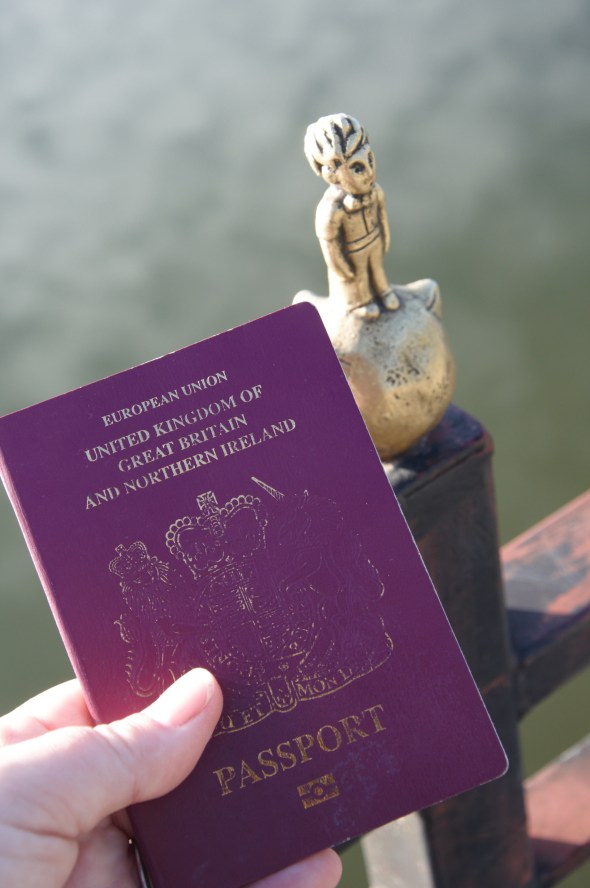
As I was visiting Transnistria, my time in Chișinău was limited. I did get to see the city’s smallest statue. Representing the Little Prince in Antoine de Saint-Exupéry’s novella, it took a while to locate, not least because someone I asked for directions Googled it and found an old article which said it was yet to be installed. It’s on the railings lining the lake in Valea Morilor Park – persevere and you’ll find it.
I also had a wander around an open air museum outside the city centre on the airport road; there was a wedding taking place so I didn’t have the chance to go in the wooden church. I finished up at the Ciuflea Monastery. Despite being close to the main road, it was remarkably peaceful.


How to visit Transnistria from Chisinau








Have you visited London’s Postal Museum?
Piccadilly, Central, Circle – most of us are very familiar with the London Underground. But there’s another subterranean railway and it links Whitechapel in the east to Paddington in the west. Long before the DLR was operational, it ran without drivers and guards. It carried freight beneath the streets of London and kept an industry efficient despite the capital’s heavily congested streets.

That railway is MailRail and though it was closed by the Royal Mail in 2003, the good news is that last year, specially adapted, it opened for visitors as part of the new Postal Museum. If you haven’t been, I’d urge you to go. From small children to the elderly, this is a true family attraction with something to interest everyone. Last week I was lucky enough to be offered a complimentary visit courtesy of Made and enjoyed a fun afternoon at the Postal Museum as their guest.

We began at the Postal Museum Exhibition. I expected to want to rush this part of the visit in my excitement at having the opportunity to ride MailRail. In fact, the exhibits have been very well thought out and I was soon engrossed. Many of us don’t realise that the postal service in Britain began as a private service for Henry VIII. The term “the post” referred to the horses that were used as transport. But the King’s couriers took on covert work to supplement their income and soon the notion of sending something through the post was commonplace – amongst the wealthy at least. Ironically, most of the post boys couldn’t read and letters bore the symbol of a hanged man as a stark warning not to steal the letters’ contents. The advent of the mail coach reduced the risk of robbery and increased reliability.


In the Victorian era, the Royal Mail as we know it was born. Rowland Hill submitted his proposal for postal reform in the 1830s. He suggested the introduction of uniformly low prices based on weights rather than distance, as well as the system of prepayment which we take for granted today. His ideas met with a favourable response. In 1840, the Penny Black was introduced and for weightier letters, the Twopenny Blue.

The museum features plenty of interactive exhibits. You can dress up in vintage mail uniforms and create your own stamp with your picture on it. There were also plenty of surprises. I learnt that pillar boxes were originally green. They were road tested in the Channel Islands in the 1850s before being rolled out across the UK soon after. But the colour was thought dull and dreary, so red paint was introduced a couple of decades later.

Blue airmail boxes also existed and on them were lists of last posting times for key cities around the world. The inclusion of Algiers is a reminder that places become more and less important to others as times change. Colonial names like Tanganyika, Persia, Siam and Ceylon can still be seen on this 1930s box. If you’d have wished to send a letter from London to Brisbane at this time, it would have taken 12 days to arrive. With a journey length of 12700 miles (when you take into account the many stops), it was the world’s longest air route at the time it was launched, in 1935.

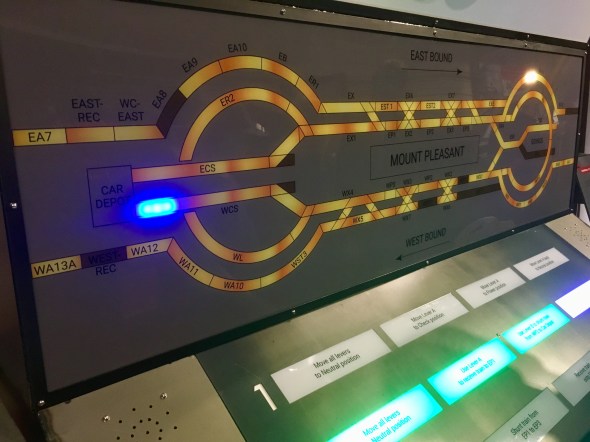
Engaging though the museum was, the highlight of the afternoon was to be found across the street: MailRail. The Post Office Railway was rebranded on the occasion of its 60th birthday in 1987 to this catchier brand name, but in actual fact, the idea of a railway for the postal service had been mooted as early as 1909. The route linked the six big sorting offices with two mainline train stations over 6.5 miles of track.

Sacks of mail were transported on these trains and an army of employees manned the platforms unloading the precious cargo. The trains ran for 22 hours a day, six days a week. An estimated 4 million letters passed through the system every day. A series of lifts, chutes, conveyors and elevators were used to avoid “laborious man-handling of bags” which would slow the whole process down. Automatic train control was in operation, leading some employees to comment that it was like having their “own giant train set to run”. With as many as eighteen mail cars speeding around the system at any one time, they needed to keep their wits about them.
The mail was sent by overground train to the different parts of the UK and postal workers sorted it by destination while on the move in what was called a Travelling Post Office. This part of the museum has a mock up of such an onboard sorting office which you can use to file “mail” – as the carriage rocks it’s not easy to keep your balance if you’re not used to the motion.
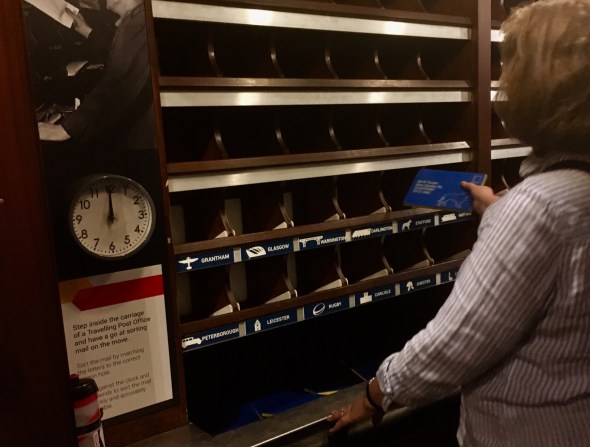
The ride itself lasted about fifteen minutes, completing a loop under the Mount Pleasant section of the railway beginning and ending at what was once the maintenance depot. When operational, express trains would have taken the same amount of time to run between Liverpool Street and Paddington – try doing that on the Tube now! It was well done – from the cramped compartments we listened to an informative commentary and enjoyed some interesting audio-visual projections along the route.


Though you might struggle if you’re claustrophobic, spare a thought for my father. A retired engineer, he once carried out a survey of some of London’s sorting offices and was sent with his bags via MailRail. That would have been a very tight squeeze. At least now you get to leave your stuff in the lockers provided!


Practical information
The Postal Museum and MailRail are open all year except for 24-26th December. Opening hours are 10am to 5pm with the last train departing at 4.35pm. Allow at least a couple of hours for your visit. As you need a timed ticket to ride the railway, it’s best to buy your tickets in advance. Details of ticket prices and other information can be found on the Postal Museum’s website here:
On safari in Kent: review of Port Lympne
The thrill of seeing animals in the wild in Africa’s national parks is one of life’s great travel adventures. But sometimes you can’t wait for Africa to get your travel fix. A visit to Port Lympne Reserve in Kent, owned and managed by the Aspinall Foundation, provides an opportunity to go on safari without leaving the UK, but how does it compare to the real thing?

The organisation’s credentials are good: known for its work breeding rare and endangered species, the park is home to 25 painted dogs, 17 Western lowland gorillas, 15 Eastern black rhinoceros and 5 Rothschild giraffes. The park’s animals are housed in a variety of ways, with some roaming freely across acres of rolling fields and others in purpose built enclosures.


It’s possible to visit for the day but for a special occasion, Port Lympne has a range of overnight accommodation. We chose to rent a cottage, but could equally have spent the night in a glamping tent, hotel or even a treehouse suite. Further accommodation is planned, as is a spa, expected in around 18 months time.


Our cottage slept eight and was very comfortable for our party of six. Each of the four bedrooms was a generous size, in particular the master suite, which had a huge bathroom attached. Attention to detail was evident throughout, such as finding cute little elephant hooks for the bathroom robes. We enjoyed the services of a personal chef who cooked us a three course dinner and came back to serve up a full English the following morning. It was an impressive set up which pleased everyone.


From the windows, we looked down over fields grazed by some of the park’s animals, though admittedly from a distance. If you’re serious about wildlife spotting from your bedroom, you’re going to need to bring binoculars. There was something almost surreal about hearing the shout of “Quick! I can see a rhino from the bathroom window!” when your brain is protesting you are so close to home. Less fun was finding the nieces had hidden the resident oversized gorilla plushy with the spooky eyes in our bath as a joke, though they found my screams hilarious.

But it was the safari experience that set the trip apart. Our guide, Rebecca, was knowledgable without being preachy and supplied enough anecdotes to prevent the whole thing turning into a Biology field trip. She explained about conservation and environmental pressures on creatures in the wild in the context of the animals’ own personal histories. We didn’t see the new born giraffe that was resolutely hiding inside, but we did meet the extended family from our Land Rover vantage point.

Larger safari trucks ferry passengers around Port Lympne’s extensive site, but the advantage of being in a smaller vehicle was that we could go off road from time to time to get a closer look at some of the grazing herds.
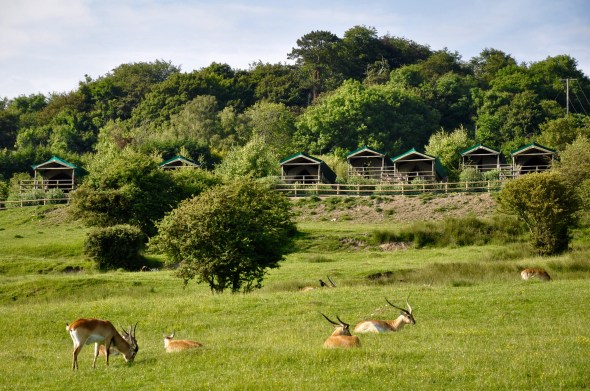
The Bactrian camels looked somewhat scruffy as they were blowing their fur coats, and somehow wildebeest always do, but the small herd of Chapman zebra looked to be in fine condition. Save for the distant view of the English Channel, we could have been on that African safari.The morning safari was shorter, but took us to different parts of the park to see ostrich, eland, baboons and more.


Afterwards, we spent a few more hours wandering the pedestrian paths that looped the animal enclosures, timing our visit to the gorillas to coincide with feeding time and watching a Siberian tiger hunt out meat that had been hidden in her patch.


It felt slightly odd to be seeing primates in cages after our safari, but obviously it wasn’t going to be safe, practical or possible for a silverback to be mingling with the crowd.


How did I feel about the trip? Well I came home and booked a flight to Uganda. I’m going to be taking my third African safari in early 2019.
A beginner’s guide to the Faroe Islands
One of the most remote and most overlooked corners of Europe, the self-governing Faroe Islands might be part of the kingdom of Denmark but they believe in doing things their way. A long weekend is just sufficient to see why those who find themselves there can’t get enough of the place. In part, it reminds the traveller of Iceland, Norway, Scotland and even the Yorkshire Dales, but in truth it’s all of them and none of them.

Getting there
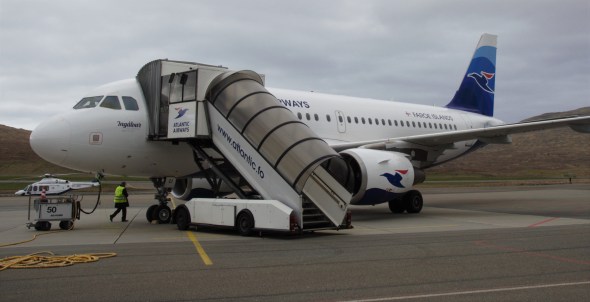
Flights are operated by two airlines: Atlantic Airways and SAS. There’s a twice-weekly direct flight from Edinburgh to Vagar Airport. Flight time is around an hour. However, if you have onward connections, particularly on the inbound leg, it’s wise to allow a longer than usual layover because flights are often affected by bad weather. All other flights from the UK are indirect, with the greatest number of connections via Copenhagen as you’d expect.
Getting around
If you have plenty of time, or are happy to be constrained by public transport routes, it is possible to get around without your own vehicle. An airport bus connects Vagar Airport with the capital Tórshavn. In town, the centre is compact and walking between the main sights is easily doable. In addition, there’s a free bus that links Tórshavn to historic Kirkjubøur. Ferries are as reliable as they can be given the wild weather, but cheap, particularly if you walk on. For instance, foot passengers travelling from Gamlarætt to Skopun on Sandoy Island pay just DKK 40 return (less than £5) while a car costs under £20. Multi-day travel cards might work out cost effective if you are travelling around a lot; they cost DKK 500 for four days and are valid on all buses and most ferries.
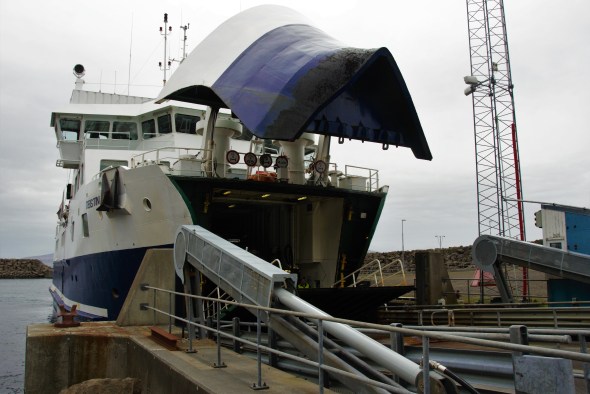
For timetables, visit the Strandfaraskip website:
http://www.ssl.fo/en/timetable/ferry/7-tvoeroyri-torshavn/
Car rental is best if you wish to get off the beaten track. We rented from 62°N which is affiliated to Hertz, Europcar and Sixt, but there are several other agencies. Typically, prices start at around DKK 600 (£70) per day for a small car. In my experience, roads were good quality and drivers courteous, but the buffetting wind can be disconcerting if you’re not used to it. The Visit Faroe Islands website has plenty of sound advice about driving conditions and rules of the road as well as this useful graphic:

Helicopter rides are also possible if the weather is playing ball, which sadly it wasn’t during my trip. A community initiative means that transport is subsidised, meaning you can be airborne for a tenner. A chopper transfer from Vagar to Tórshavn bookable through Atlantic Airways costs DKK 215 (about £25). Fares between other islands cost from DKK 85 to DKK 360. More here: https://www.atlantic.fo/en/book-and-plan/helicopter/fares/
What to see
Tórshavn
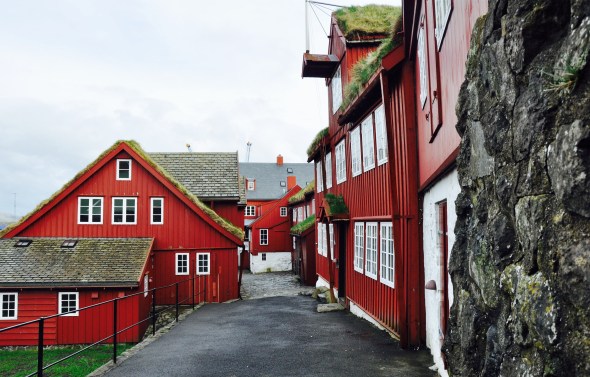
The Faroese capital is a delightful, quirky little place with much to recommend it. Begin between the twin harbours at Tinganes, seat of the Faroese government. The russet-painted government buildings with their verdant turf roofs are impossibly photogenic and unusually accessible.
The fish market on the quayside is also worth a look, and you may be able to blag a sample or two. There are plenty of cafes and a burgeoning bar scene; I can vouch for the hot chocolate in Kafe Husid and a beer in Mikkeller. There are also a clutch of good eateries in town including the excellent Barbara Fish Restaurant, where the broth for its bouillebaisse is poured from a vintage china teapot and the deconstructed lemon meringue pie is to die for.


KOKS
KOKS, the first Michelin-starred restaurant in the Faroe Islands, deserves its own entry. An evening here doesn’t come cheap – the tasting menu is an eye-watering DKK 1400 (about £165) with the wine pairings another DKK 1100 (approximately £130) on top. It might just be the most memorable and adventurous meal you ever eat, however, and is not to be missed. Your evening begins in a lakeside hjallur, or drying house, with some tasty nibbles of fermented lamb and dried kingfish. Next, you jump on a Land Rover for the short hop up the hill to the restaurant itself (this is not a restaurant for posh heels). From the opener of scallops served in a shell encrusted with live and very wriggly barnacles to the final mouthwatering dulse (red seaweed) and blueberry dessert, it was incredible.


Kirkjubøur
The historic village of Kirkjubøur is home to the ruins of St Magnus Cathedral, the largest mediaeval building in the Faroes. Next door, is the simple but beautiful whitewashed church of St Olav which dates from the early 12th century. It’s still in use today and 17th generation farmer and churchwarden Jóannes Patursson rings the bell to announce a service. Opposite, lies the oldest inhabited wooden house in Europe, the 11th century Roykstovan farmhouse built from stone and logs weatherproofed with black tar. It began its days in Norway, before being dismantled and shipped to its present location. Today it remains the Paturssons’ family home and is fascinating to visit. On the walls hang traditional whaling equipment, now obselete; Jóannes will explain and defend the long tradition of hunting pilot whales if asked. Whatever your personal views, it’s interesting to hear a Faroese take on the practice.


Saksun
To reach the tiny village of Saksun, you’ll need your own transport (or be up for a lengthy hike) but the reward is a super hike alongside a tidal lagoon to the sea. The folk museum within the Dúvugarðar sheep farm is managed by the farmer himself who apparently isn’t too keen on tourists visiting, so don’t plan on gaining access. The setting’s the star here, though, and you won’t be disappointed by the walk along a sheltered, sandy beach hemmed in by steep cliffs. At low tide, and in good weather, it’s surely got to be one of the prettiest spots in the country. I visited in the pouring rain and on a rising tide. Despite the low cloud and the slightly wet feet it was still worth the effort.


Vestmanna
Weather killed my boat trip to the Vestmanna bird cliffs but I’m told the sight of the towering rockfaces crammed with puffins, guillemots and razorbills is an impressive one. If rain stops play as it did for me, the SagaMuseum, housed inside the tourist information centre, is an interesting detour, if a bloodthirsty one. Prepare for some pretty explicit waxworks; the creators didn’t hold back when telling the stories from the sagas of the Faroes’ Viking past. Decapitation, torture and drowning are all depicted in the gruesome exhibits. An audio guide is a must to learn about the fascinating tales behind the exhibits.


And beyond…
Even if you’re only in the Faroes for a long weekend, Sandoy and Streymoy are only a half an hour apart by ferry so it’s a tempting excursion from Tórshavn.

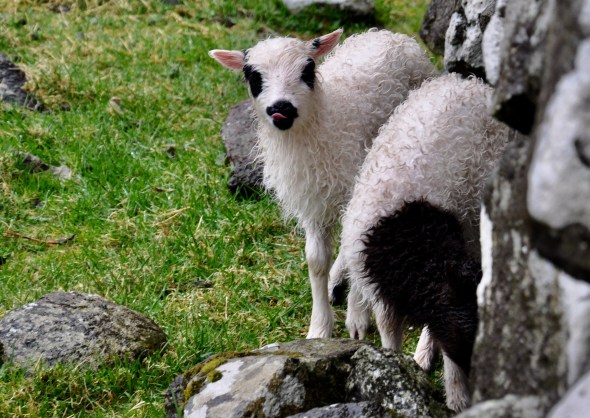
Vast empty beaches lined with sea stacks and grazed by sheep who munch on the plentiful seaweed are a big draw, even in the shoulder season. Quaint harbours full of colourful fishing boats, yarn-bombed rocks and even the odd art gallery all offer pleasant diversions. With more time you can journey further afield to the other islands. Highlights include Hans Pauli Olsen’s sculpture of the seal woman on Kalsoy, picturesque Gjógv – the most northerly village on the island of Eysturoy – and a solitary hike to the lighthouse at the end of the the islet of Mykineshólmur on Mykines, an island where puffins greatly outnumber people.


Planning
I bought the Bradt guide to the Faroe Islands a month or so before I travelled and as ever, it’s an informative and eminently readable guide. If you are planning an independent visit to the Faroe Islands it will be invaluable to your preparations.
Thanks
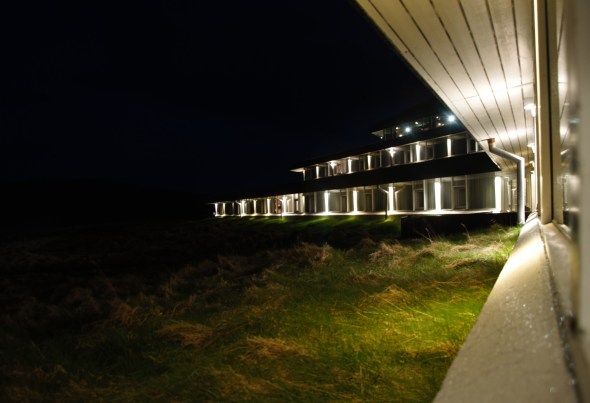
I travelled to the Faroe Islands on a press trip as a guest of Atlantic Airways who were efficient, friendly and best of all laid back about seat swaps so we could all grab a window seat. Visit Faroe Islands and Visit Sandoy arranged a diverse and memorable itinerary, so much so that I’m already planning a return visit at some point in the not so distant future. Their accommodation choices, the Hotel Føroyar overlooking Tórshavn and the Hotel Sandavik on Sandoy, were comfortable, contemporary and classically Scandinavian.
Though I paid for my connecting flight, I’m grateful to Holiday Extras for taking care of my airport parking at London Stansted, particularly as they chose the very convenient Short Stay Premium option.
Raindrops and red cheeks
Raindrops splattered the windscreen like sound effects in a kid’s comic. The summer storm had intensified and visibility was quickly changing from irritatingly poor to downright dangerous. From the back of the car came a half hearted grumble. Einstein didn’t much care for rain at the best of times. This current assault had triggered the rear wipers he detested and he was making his feelings clear.
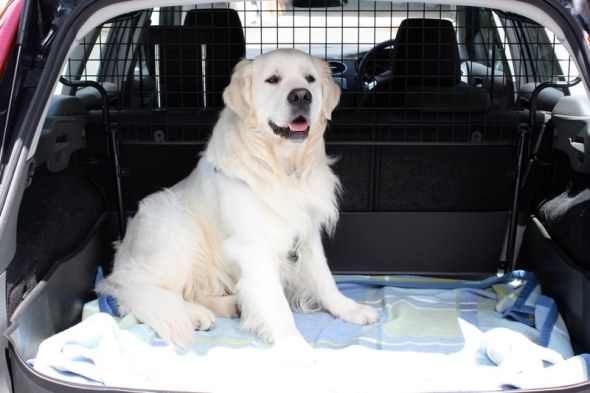
We’d done a lot of car trips, Einstein and I. My parents had a house on the Mosel and we were regular visitors. We had an understanding. In silence, Einstein would endure the ferry crossing and the many hours in the car. As his reward, we took long, companionable walks. I would order a tub of ice cream at one of the riverside cafes and he would bury his nose into it and lick it clean. Together, we explored castles and bought wine. Not once had his wagging tail knocked a bottle over. He revelled in the fuss he invariably received. In turn, I delighted in the jovial salutations that followed when the locals learned his name: Ein-schtein! Back at the house, Mum and Dad spoiled him rotten, indulging his every whim and fussing him on demand.

This trip was a little more ambitious. We’d spent the night at the house, as usual. But today, instead of snoozing lazily in the sun (me) and flopping across the kitchen doorway in the hope of scraps (him), we’d packed up the car and hit the road again. Golden retrievers are a stubborn breed. It had taken some persuasion to prise Einstein from the breakfast dishes and into the boot of the car. Grumpy didn’t cover it.
So now we were on the autobahn bound for Austria, Einstein’s eyes fixed resolutely on the road behind us. Somewhere near Munich, I thought, but it was hard to see the car in front, let alone the road signs. Not that the weather was slowing down the local drivers, who appeared in the rear view mirror out of nowhere and overtook as if we were standing still. A lone woof nudged above the sound of the engine. It was time to pull off the road and take a break. Spotting a motorway service station, I slowed the car and swung into a space in the middle of the car park.
Raising the tailgate, a doleful face greeted me. In protest, Einstein made no attempt to get out. I waited. Ever since he was a puppy, he’d done things at his own pace and there was little point in trying to hurry him. Finally, he got to his feet and jumped down. A wince crossed his face as his paws hit the asphalt. As he moved forward, there was a pronounced limp. Einstein had been known to fake such a limp for effect, so I wasn’t unduly concerned. I wondered, though, if it might be a slight touch of cramp and figured a gentle walk might do him good. Einstein thought otherwise and after a few steps, laid himself down in the middle of the car park, blocking the traffic. I rummaged in my pocket for a treat but found only crumbs.

It was still raining heavily. Droplets of water dampened my hair before percolating slowly and persistently to the nape of my neck and down to the small of my back. On the surface, Einstein’s thick cream curls were slick, his waterproof overcoat perfectly suited to keeping him dry. My rain jacket was somewhat less effective and as a result, my patience was wearing thinner than a gossamer stocking.
“Come on, get up doggo.”
No response. I tried a lighter tone.
“Einy, sweetie, up you get.”
Defiant, Einstein rolled slowly and deliberately onto his side, exhaling deeply. It wasn’t the first time he’d decided to do this. At the park, my usual tactic was to walk away and wait for him to follow, which he did, eventually. Here, I couldn’t risk leaving him, even to grab a treat from the car.
Trying a different tactic, I knelt down and attempted to lever his dead weight upright. It was hopeless. When he was this uncooperative, I simply wasn’t strong enough. I could lift his head and shoulders off the ground, but as soon as I switched to his rear end, he rolled back again. It was a battle of wills and I was losing. Defeated, I began to look around for someone who might help. A couple of passing Dutchmen brushed me off. I couldn’t blame them. What sane person wanted to lift thirty-odd kilos of wet dog? Beneath all that stubbornness he was sweet natured and gentle, but they couldn’t know that.
Time passed at a crawl. Drivers manoeuvred carefully around us and motorists returning to their vehicles took elaborate detours lest they were called upon to assist. I was just going to have to wait for Einstein to move, however long that might take. I allowed myself a wistful daydream of the holiday we could have been enjoying further north and muttered a silent prayer to the Tyrolean gods that the Alps would be worth all this stress – if we ever got there.
After what seemed forever, help arrived in the form of a rotund German with extravagant facial whiskers. His car was parked next to mine. Scanning the scene, he understood my predicament. Without speaking he lifted the boot. Inside was a cool box. And inside that was a fat heap of sausages. My spirits lifted. At last, something to determine whether Einstein was genuinely in pain.
It didn’t take long to get my answer. Spying the sausage, Einstein raised his head and leapt to his feet. He trotted over to the man without a backward glance, miraculously cured. Stiffly, I got to my feet and smoothed down my wet trousers in a vain attempt to look presentable. I walked over, relief mixed with exasperation, as the dog wriggled himself into a perfect sit in front of his new best friend and sneezed with excitement. Gazing up with adoration, Einstein wolfed down the first tasty morsel. With a cute tilt of the head, he raised a damp paw in anticipation of the next.
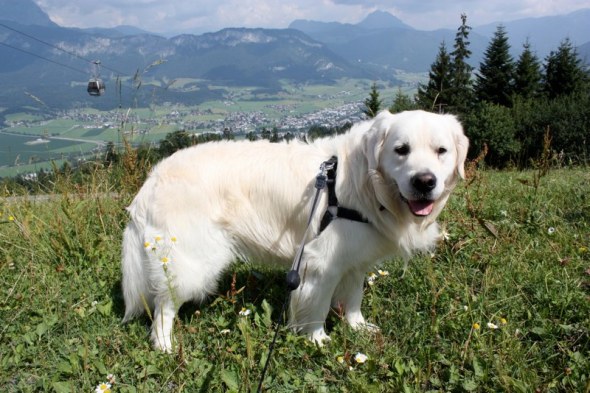
I grinned. We’d be hiking those Alpine trails after all. Red cheeked, I enticed him to our car and high-tailed it to the border.
Tips for getting the best out of Salzburg’s Christmas markets
If you’re looking for an alternative to Germany’s excellent Christmas markets, then why not head over the border to Austria? Salzburg is one of Europe’s most elegant cities, and during the run up to Christmas, it’s bedecked with festive lights and crammed full of stalls. I spent the weekend exploring its Christmas markets and experienced Advent Austrian-style. Here are my tips for getting the best out of a pre-Christmas trip.

Make the most of public transport with a day pass
An extensive network of buses and trolley buses makes getting around easy. Day passes are available, as is the more expensive Salzburg Card which includes free admission to visitor attractions as well as free transport. It does cost 24 euros for the day, however, so you need to be sure you’re going to get your money’s worth for the extra 20 euros you’ll be spending per person. If you’re going to be spending a lot of time at the markets it’s unlikely the Salzburg Card will represent good value for money.

But if you buy regular, transport-only day passes from a machine they cost just 4 euros a day, compared to 5,70 euros if you purchase them from the driver of the bus. If you’re arriving in Salzburg by train or plane, you’ll find these machines in the main bus station or at the airport. They are valid for a complete 24 hour period rather than by calendar days, so you’ll most likely be able to use them the following morning too – good to know if you’re going to be starting your day somewhere there’s no machine. Print off or download maps before you go to make sense of the network; there’s also an app featuring timetables and mobile ticketing.

Download from:
https://salzburg-verkehr.at/service/downloads/
There’s an English option available, but if not these are the maps you’ll find most useful:
City: Liniennetzplan Stadt Salzburg Region: SVV Zonenplan

Wrap up warm
You might not get a dumping of snow as I did, but if you’re visiting Salzburg in December, it is likely to be very cold. Temperatures during my visit hovered just below freezing, but if like me you’re tempted out onto the Wolfgangsee, the wind that blows across the lake is a chill one. Pack accordingly, and layer up with hat, scarf, gloves and thermal underlayers. If all else fails, drink gluhwein!
Plan your market trips
As you might expect, there’s more than just one market in the city, as well as some delightful markets in the surrounding towns and villages. I took a trip out to St Gilgen and Strobl on the shores of the Wolfgangsee. Strobl’s market featured livestock in the form of sheep, goats and reindeer and boat trips were possible too between the lakeshore villages. St Gilgen’s market was bigger and had a lot of character. A day pass on the #150 bus meant I could hop on and hop off all day for a fare of 17,60 euros.


In the city itself, the largest market is the Christkindlmarkt in Domplatz. As the name suggests, it’s right by the cathedral in the Old Town. It has its origins in a market that started in the 15th century, though in its present incarnation it’s been going since 1974. Just around the corner you’ll find an ice rink. The Christkindlmarkt had a huge concentration of stalls but as a result was packed; if you’re not so keen on crowds, I’d recommend visiting this one during the day.

There is also a smaller market at Mirabellplatz, which is handy if you need to kill time or grab a hot drink before your bus leaves as it’s right by the stops. This year the market up at the Hohensalzburg fortress is closed due to renovation work, but well worth checking out next year.


My favourite of all the city markets was that at Hellbrunn, a short ride away by #25 bus and included in the 4 euros day pass. Nestled in the courtyard of this attractive palace, there are plenty of artisan stalls so a lot of choice if you plan to do some gift-shopping. The inclusion of hundreds of trees festooned with red baubles and the use of the palace shutters to turn the palace into a huge Advent calendar makes this one extra special.

There is a 3 euros entrance charge at the weekend (it’s free on weekdays) but this is redeemable for a mug of Gluhwein which would have cost 3,50 euros. If you have kids with you, it’s good to know that this is the place where they have the trick fountains and although they used to be a summer-only attraction, for the last couple of years these have been opened during Advent too.

To check opening times and other details, this is the link you’ll need:
Don’t just visit the markets
Space them out and punctuate your visits with other activities. There are carol concerts and muscial recitals at many of the markets; you’ll find schedules online, though not all sites are in English. For something completely different, I caught a train out to Oberndorf bei Salzburg to visit the Silent Night chapel, a memorial chapel in the village where schoolmaster Franz Gruber and pastor Josef Mohr composed and performed the popular carol for the first time. In the company of a band of actors and local dignitaries, I participated in a themed walk that crossed the Salzach River into Laufen, Germany. there, at the Salzachhalle, watched a play which recounted the tale of the history of those twin villages as well as the story of how Silent Night came to be. I won’t pretend I understood a lot with my schoolgirl German, but the music was heavenly.


Attending a Krampus run is also good fun and it’s worth checking out where the nearest is during your visit. If you haven’t already seen the blog I wrote about Gnigl’s Krampus festivities, check out the post here where you’ll also find some useful links if you plan to go yourself:
https://juliamhammond.wordpress.com/2017/12/05/the-scary-side-of-christmas/


Done Salzburg?
If you’ve already been to Salzburg’s Christmas markets and they’ve given you a taste for more, why not try these alternatives? Last year I blogged about Copenhagen and Regensburg, both of which can be visited in a day from London:
https://juliamhammond.wordpress.com/2016/11/25/just-back-from-a-day-trip-to-regensburg/
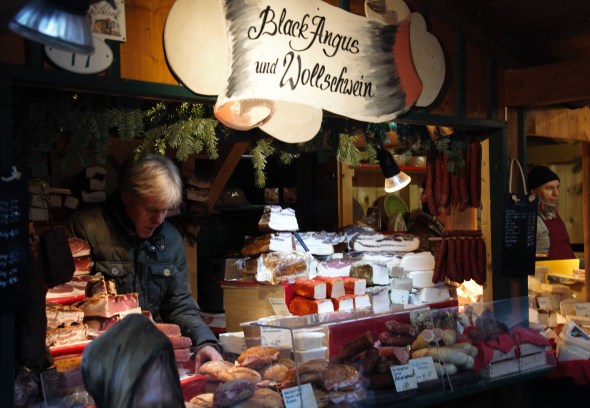
Wherever you are this Advent, have a safe and happy time!
Book review: Europe by Rail
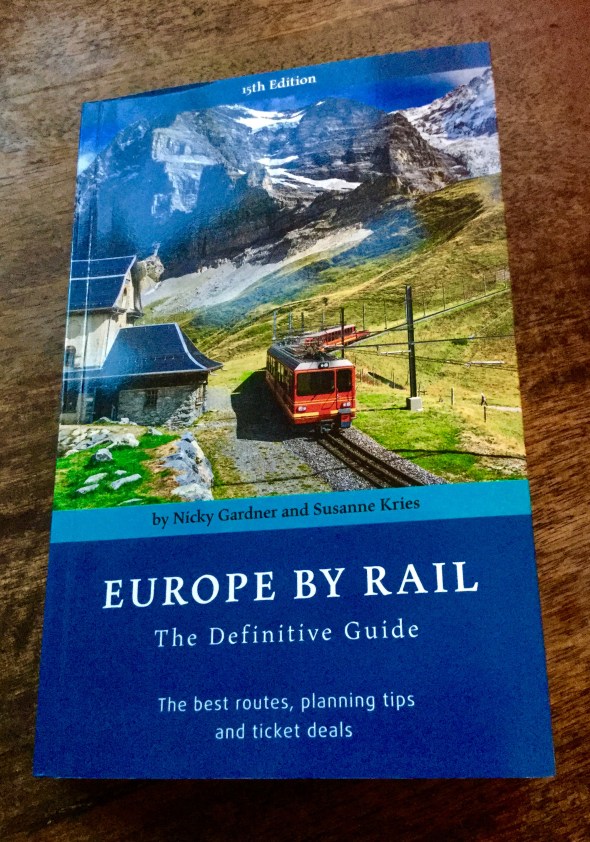
I was thrilled when an opportunity arose to review the latest edition of Europe by Rail in exchange for a complimentary copy. This guide, now in its fifteenth incarnation, is to print what the Man in Seat 61’s website is to the internet – the definitive guide. But with so much information freely available on the internet, should you buy this book at all?
A task of epic proportions
Covering all the railways of all the European countries in a book light enough to carry onto a train is a huge undertaking. As a consequence this book acts as an overview. While it’s definitive, it doesn’t claim to be comprehensive. The guide is designed to be used together with the European Rail Timetable – or in these times of data roaming, in conjunction with the websites of national rail providers in the countries it covers. The authors, Nicky Gardner and Susanne Kries, have updated the guide once more, expanding coverage of the Baltics and the Balkans, as well as providing current information about rail travel across the continent. Schedules change frequently, and I was sad to learn that the excellent CityNightLine service which I enjoyed in 2015 ceased operations between Munich and Berlin last year.
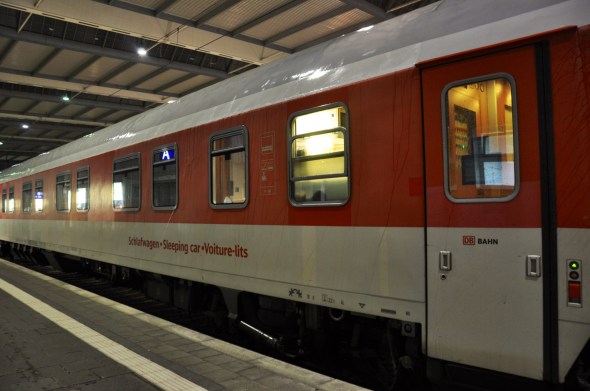
CityNightLine
An inspiring guide
The authors wanted to take the guide in a different direction and as such, set out to inspire as well as inform. So although there are factual sections in the guide, its greatest strength is in the persuasiveness of the descriptions that comprise the bulk of its pages. Underpinning this erudite prose is a fundamental belief that train journeys are fun and, most crucial of all, to be savoured. While acknowledging the important role Europe’s high speed trains have to play, Gardner and Kries put the case for slow travel, yet never come across as preachy. If you need to zip across the continent in a hurry, then so be it, but for those with more time, there are routes to be savoured on local stopping trains, with tempting sidetracks built in as well.

Crossing the Landwasser Viaduct in Switzerland
Punctuating the narrative are frank insights into the realities of each trip: “It’s an easy run south to Barcelona. The railway enters the Catalan city through its unexciting northern suburbs and terminates in the subterranean gloom at the Estació de Sants.” Nuggets of advice are also in abundance, such as this on Italy’s fabulous Cinque Terre: “A long sequence of tunnels means that you’ll see little of the area from the train, but take time to stop and explore. Vernazza is a good base; it’s the prettiest of the villages.” Gardner and Kries have put the hours in and travelled these routes, which makes them authoritative as well as engaging.
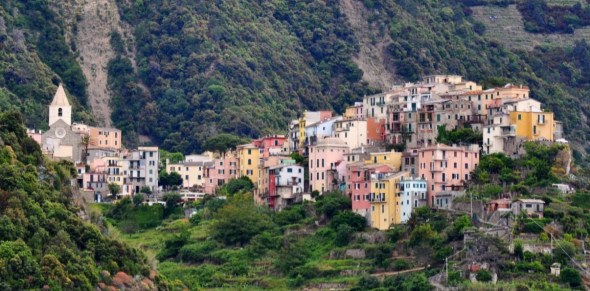
The Cinque Terre
What could be improved?
Numbers rather than names refer to each of the fifty routes covered by the guide once you get past each one’s title. Though this system takes a bit of getting used to, many of them cross international borders so it’s hard to see how they could be referred to in any other way. It doesn’t help, however, that some of the subtitles within each section, specifically those of the major cities en route, are in the same sized font, making it confusing as to whether you’ve reached the end of a route or not. It takes a bit of time to get your head around, but once you’ve got into a rhythm, you won’t be bothered by it.
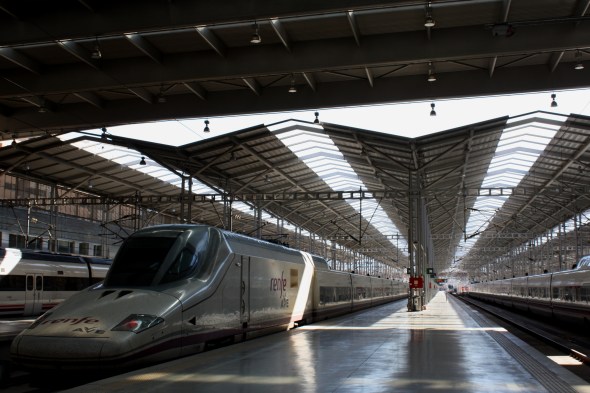
Spain’s high speed AVE
Each route features a map. The presentation is simple, with a table attached that shows the journey time, frequency and cross-reference for the European Rail Timetable. While I could see that the authors were aiming for clarity, I thought it was a shame that these maps couldn’t have been illustrated to showcase some of the key attractions along the way. This would have added to the temptation to jump on a train and follow in their footsteps. I’m guessing publishing constraints required the photographs to be grouped in their own section, as is the way with most guidebooks, but it’s again a pity that these couldn’t have been integrated with the text. Instead, I wanted to skim over them, impatient to get to the routes themselves.

Sintra station’s exquisite ticket office
There’s a lot of page turning, back and forth, which breaks into reveries and brings the reader back to reality. I appreciate that logic dictates a section entitled “Before you leave” should be placed at the beginning of a guide, but perhaps the parts detailing rail passes, ticket classes and the like would have been just as at home in an appendix. These are minor criticisms, more a measure of how keen I was to get stuck in than any fault with the guide.
The verdict: would I buy this guide?
For anyone planning to embark on a rail holiday in Europe, this guide is an invaluable companion. Even if you’ve travelled extensively by rail across the continent, things change regularly and it’s an easy way to bring yourself up to date. Don’t wait until you leave to buy it. The suggestions for stopovers and detours will help with your planning and you’ll have information at your fingertips about rail passes, supplements, connections and the like. If you’re like me, it won’t help you make a decision, as there are so many tempting routes from which to choose, but it will give you hours of pleasure as you take a virtual journey on some of Europe’s most scenic tracks. Now if you’ll excuse me, I’m just going to go back to that chapter on Arctic Norway…
The scary side of Christmas
The bus is packed and tempers are fraying as those who can’t fit are left to wait on the snowy pavement. On board, spirits are high. Childish excitement is contagious. At Gnigl station in Salzburg, Austria, the bus spews its pasengers onto the street and the pace quickens as I follow the crowd up the street. A fire engine blocks the road and the scream of labouring engines marks the point where the trolley buses unhook and divert to continue their journey under their own power. Behind metal barriers, the crowd is already four or five thick. I squeeze past and make my way along the street until I find a space next to three youngsters of primary age. I take a few test shots with the camera and the little boy next to me tells me sternly to use the flash.

Soon, the parade gets underway. The Krampuslauf has a long history in Austria, its origins in pagan rituals dating from the Middle Ages. While St Nicolaus rewards good children with sweets, those who have been naughty have to face the consequences of their actions. Chains and claws set the Krampus apart from the evil Schiachperchten, who are also masked creatures with shaggy pelts and curved horns. Traditionally, the perchten weren’t seen during Advent, instead being associated with the period between the Winter solstice and Epiphany. These days the once defined lines between the two have become blurred, though no one seems to mind.


The costumes are elaborate, with no visible trace of the human inside. Hand carved wooden masks are painted in garish colours. From head to toe a suit of shaggy sheep wool, plus tail of course, tops shoes hidden behind hooves. The jarring sound of the bells on their backs marks their arrival. The children next to me fall silent, their fearful eyes widening. They’re young enough still to believe. A six foot beast runs at the barrier and clambers up, rearing over the children’s heads to great effect. Their shrieks pierce the night and they shrink back, momentarily afraid. Even as an adult, it’s a frightening moment, and I can’t help myself as I jump back too.
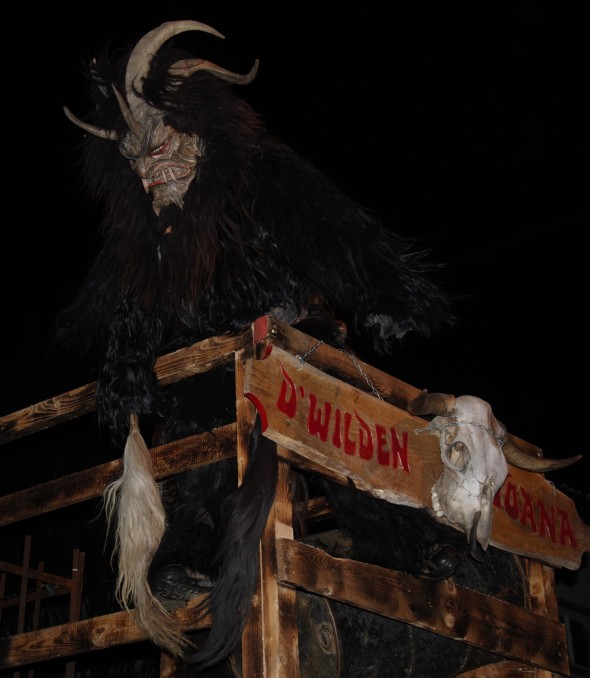
One child finds the courage to roar back at the Krampus and the monster ruffles his hair in a good-natured response. Everyone plays along, and the atmosphere is one of family fun. But there are more terrifying figures behind him. As they dart up the street, they twist this way and that. The cow bells on their backs clank heavily and they swish whips fashioned, I’m told, from a horse’s tail. I’ve heard that it’s common for them to thrash spectators’ legs and it makes me a little nervous.


From time to time, there’s an injection of humour. One group stops to perform a dance routine, though they’re as far removed from a boy band as you can get. Another pair face off as if in a boxing ring, before dropping to the floor and doing press ups. The children next to me giggle, at least until they jump to their feet. But St Nicolaus isn’t far behind and their pleading cries gain the desired result: sweets. They stuff their faces, eyes bright, their fear of Krampus forgotten.


The frigid air bites my cheeks and I wrap my scarf tighter around my face. The parade’s only about half done, but there’s a gluhwein stand within sight and it’s time to warm up.
Where to see the Krampus in or around Salzburg

5th December, is St Nicolaus Eve, the night of the Krampus run in Salzburg’s Altstadt. There are also many other parades that take place throughout the Salzburg region, from its suburbs to tiny mountain villages, as well as throughout Austria and the neighbouring German state of Bavaria. The following two links will help you plan which Krampus or Perchten parades coincide with your visit:
https://www.krampuszeit.at/veranstaltungen/salzburg/
https://www.salzburg.info/en/salzburg/advent/krampus-percht

If you plan to head to Gnigl next year, it’s an easy ride on the #4 trolley bus from Mirabellplatz in the centre of the city. Alight at Gnigl S-bahn station and follow the crowd a couple of blocks up to Turnerstrasse or Schillinghofstrasse to claim your spot.
Get to know Royal London
If you’re a lover of all things Royal, then you’ll be looking forward to next May’s Royal wedding which is set to take place at Windsor. London, a stone’s throw away, is of course a Royal favourite, but where should you visit to follow in the footsteps of the Royal family? From the obvious locations like Buckingham Palace to places with a less well-known connection to the UK’s best loved family, these excursions will tick all the boxes.
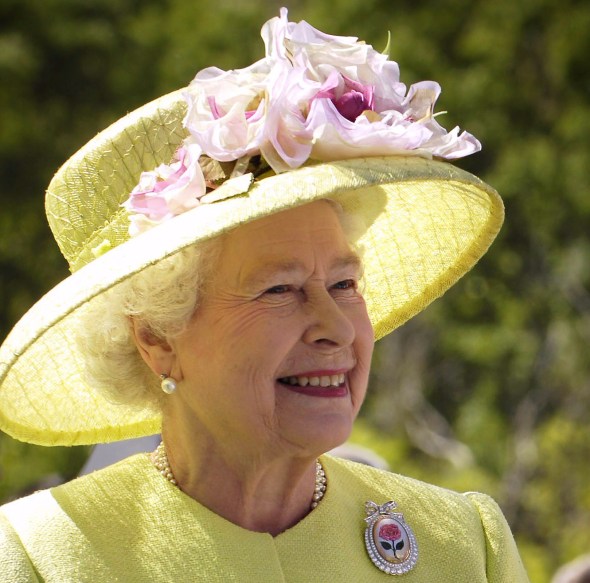
Fortnum and Mason
Along Piccadilly, you’ll see the distinctive eau de nil façade of the Queen’s grocer, Fortnum and Mason. The Queen, despite her advancing years, is a frequent entertainer, hosting heads of state and other dignitaries for lavish banquets. Her annual food bill was recently estimated at around £1.4 million. Fortnum and Mason receive a chunk of that money but there are plenty of affordable goods to be had for regular customers too. Don’t miss the food hall and pick up a picnic fit for Royalty. Time your visit to watch the clock outside chime the hour; Mr Fortnum bows to Mr Mason.
Buckingham Palace
Near to Piccadilly is Green Park, the smallest of the capital’s eight Royal Parks at just 40 acres. Its tree-lined paths and grassy meadows make for a beautiful picnic spot. Aim to reach Buckingham Palace by late morning to coincide with the Changing of the Guard ceremony; you can check the exact time at www.changing-guard.com. For the best view, try to get as close to the Palace gates as possible. If you’re visiting in August and September, then it is possible to take a guided tour inside the palace itself and that’s well worth the entry fee.

Queen’s Gallery
At Buckingham Palace, tours of the Queen’s Gallery operate year-round. Located in what was originally one of John Nash’s conservatories, the structure was destroyed during World War Two. It was rebuilt at the suggestion of the Queen and the Duke of Edinburgh to house the Royal Collection in 1962. Exhibits change, but it’s likely you’ll see works of art by an eclectic range of artists including names such as Rembrandt, Hockney, Rubens and da Vinci.
The Royal Mews
The Royal Mews is where you’ll find the Queen’s carriages and it’s found around the corner from the Queen’s Gallery on Buckingham Palace Road. Guided tours operate between April and October and are included in the price of your admission. Wardens dressed in a smart navy and red livery will show you the highlights of the collection of vehicles, including the Diamond Jubilee State Coach which is the newest addition to the fleet. Equally dazzling is the Gold State Coach which dates from the time of George III. It weighs nearly four tonnes and requires eight horses to pull it. It’s the coach that has been used to take each monarch to their coronation since the early 19th century. Animal lovers will also be pleased to learn that you’ll get to meet the horses during the tour.
The Goring Hotel
This exclusive hotel is tucked away a short walk from the Palace in Beeston Place. It describes itself as “London’s last remaining family-owned luxury hotel – a grand hotel with impeccable manners.” It’s the hotel in which Kate Middleton’s family stayed on the eve of her wedding to Prince William and this five-star establishment is sure to impress. If you have the budget, you can stay here too; room rates begin at a little over £300 per night.
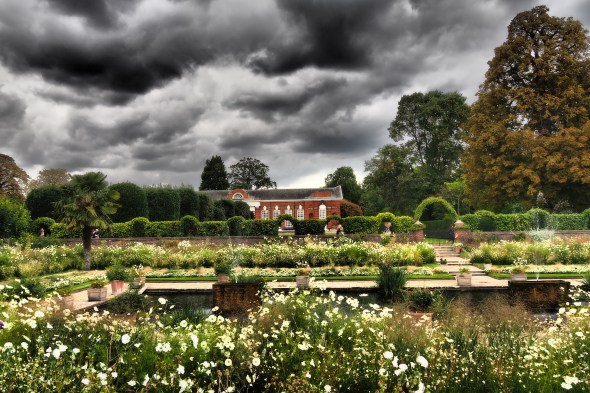
Kensington Palace
Access to Kensington Palace, former home of Diana, Princess of Wales, its gardens and exhibitions is by ticket only. Inside, you’ll be able to visit the King and Queen’s state apartments, little changed since 1690 when they were built for the then monarchs William and Mary. Temporary exhibits also feature; the “Diana: her fashion story” collection scheduled to open early in 2017 is sure to be immensely popular.
Diana Memorial Garden
Following the edge of Hyde Park, another of London’s Royal Parks, you’ll come to the Diana Memorial Garden. Its highlights include a playground, a nod to Diana’s great love of children, featuring as its centrepiece a huge pirate ship. Also, it’s here you’ll find a memorial fountain built from 545 pieces of Cornish granite. Water flows in cascades and swirls until it reaches a calm pool at the bottom, symbolising Diana’s sometimes turbulent life.
The Brown Cow, Fulham and the Cross Keys, Chelsea
My final suggestion is to down a drink at one of Prince Harry’s favourite pubs. The Brown Cow is owned by one of his friends, Mark Dyer, a former officer in the Welsh Guards. Harry was a regular when in town, before his engagement at least. It’s the place he chose to toast the birth of his nephew Prince George. You’ll find it on the Fulham Road. The Cross Keys in trendy Chelsea is another Mark Dyer establishment. Originally Chelsea’s oldest pub, Harry celebrated his 31st birthday here. You’ll find the pub just before you get to the River Thames near Chelsea Embankment. Cheers!
A visit to Bury St Edmunds Christmas Fayre
Regular readers of this blog will perhaps remember how I enjoyed a trip to the Christmas markets in Regensburg, Germany last year. If you’re looking for a German Christmas market destination, then I’d recommend this small city near to Nuremberg as the markets are compact yet very atmospheric, with one located in the grounds of the delightful Thurn und Taxis Palace. I snagged flights with Ryanair for less than a fiver, making it viable both in terms of time and cost for a day out.
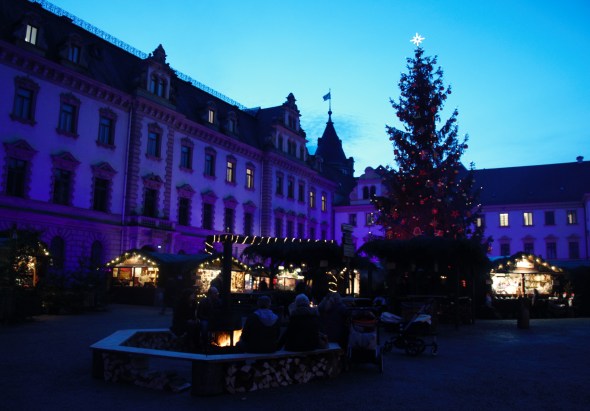
Copenhagen’s Christmas markets were also well worth the trip, with the Danish capital adding some Scandi style to the proceedings. This year, I’ll soon be spending the weekend in charming Salzburg, Austria to see how they compare. In the meantime, you can read more about Regensburg and Copenhagen’s markets here:
https://juliamhammond.wordpress.com/2016/11/25/just-back-from-a-day-trip-to-regensburg/

But what about the markets closer to home? Can the UK compete? A news feature on BBC Look East about increased security at Bury St Edmunds Christmas Fayre was not only reassuring but perhaps more importantly, brought the event onto my radar. It took about an hour and a half to drive through some of North Essex and Suffolk’s most scenic countryside to reach the town. At midday on the Friday of the Fayre, the Park & Ride was full, as were the town’s long stay car parks. I began to wonder whether I should have taken the train, though it would have involved two changes and an extra hour on the return journey. Finally, we were given permission to tuck the car into the exhibitors’ car park. Was it worth the trip?

The Fayre
With around 300 stalls spread across several locations in the town, there was plenty to hold our attention. In total, we spent around 5 hours at the Fayre, beginning in the pedestrian streets spanning Cornhill and Buttermarket. Moyse’s Hall Museum, which focuses on local and social history, is worth making the time for.
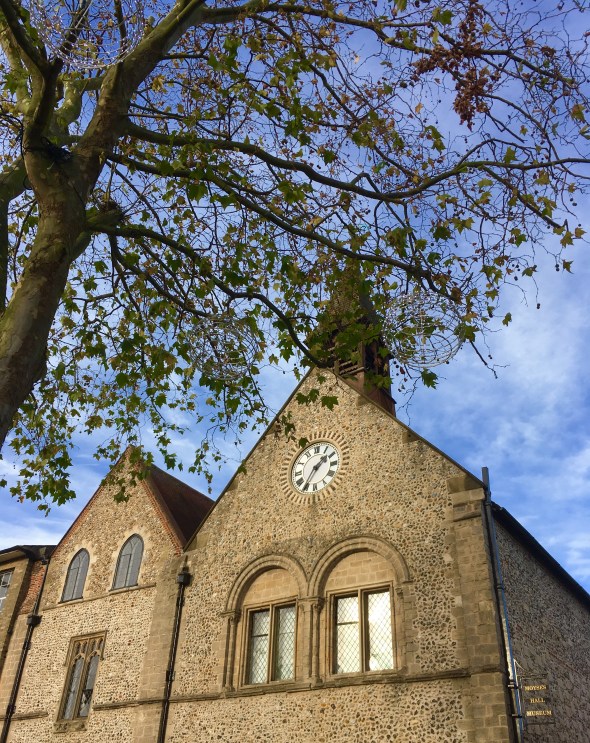
Outside the museum, we found several enticing food stalls, the best of which specialised in salami and sausage. Purchase one in the bag. Not far away, Just Our Stall, which has a permanent base in the town on St John’s Street, had a wide selection of sheepskins and farmed reindeer hides. Prices were very competitive and quality was high.
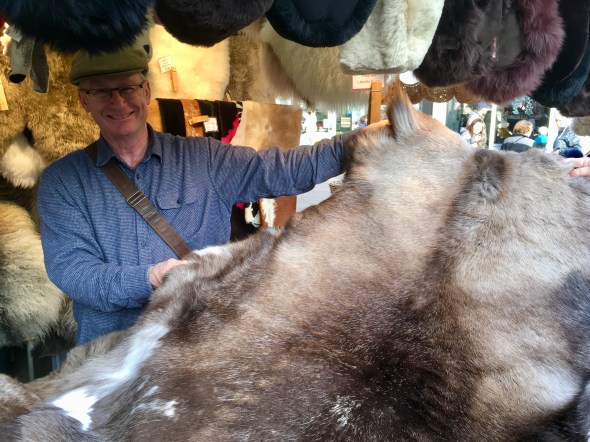
From there, a stroll down Abbeygate Street led us via shops and cafes towards the Abbey itself. Fairground rides and Santa’s Grotto would keep the kids happy. Inside, we were disappointed at first to find that there weren’t as many seasonally-themed traders as we’d imagined, though once we got to the reindeer pen, things got a lot more Christmassy. One of the two reindeer wasn’t too keen on remaining in the pen, attempting to climb out when someone produced a carrot. He was a real character.
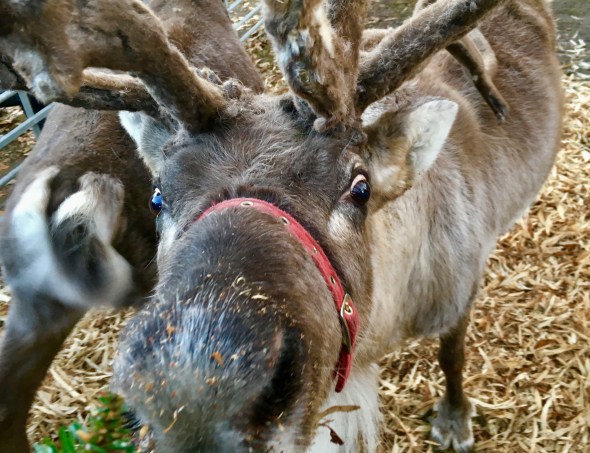
Through the Abbey gate, the concentration of stalls selling Christmas gifts and decorations was higher, making this our favourite part of the Fayre. Stand out traders, for their sense of humour as well as their product range, included HaGA Lifestyle which enthusiastically embraced the Danish concept of hygge. Locals will be aware that their regular base in Eastgate Street has an excellent cafe, a deli and also offers dog grooming.


The Once I Was stall also brought to mind the recycling theme I’d seen in action in Copenhagen. Each of the products had previously been something else before being repurposed for use in the home. Tealight holders, chopping boards and Christmas decorations had been fashioned from drawer fronts, fence posts and sheets of plywood. Also worthy of a mention is The Crafty Foxes. Based in Queens Road, they offer craft workshops. Here at the Fayre, they had a range of gift bags for sale which made excellent stocking fillers, as well as some rather unique Christmas tree decorations.


Food stalls were in abundance and there were some tempting and very festive offerings from which to choose. In contrast to the European markets, however, there was a lack of seating nearby, which meant either standing around or walking around with food and drink. Hopefully, that’s something which St Edmundsbury Council might consider for next year.


As the sun set, the festive atmosphere ramped up a notch. There hadn’t been time to duck inside the Athenaeum for the indoor stalls or catch one of the cookery demonstrations in the Cathedral Courtyard. Walking back to the car, we reflected on what an enjoyable afternoon it had been and well worth a return visit.

Just back from: a day trip to Venice
Regular readers of this blog will know how I’ve made a number of day trips by air to some of Europe’s most captivating cities. Yesterday saw me jet off to Venice, in perhaps my most ambitious trip yet.

You’ll find a full list of the others at the bottom of this post or on my Index page here:
https://juliamhammond.wordpress.com/index/
While I’m not suggesting for a minute you’re going to truly get under the skin of your chosen destination in such a short space of time, it is great when you have little or no holiday left but still have that pressing need to travel. Or in my case, a desire to keep two dogs out of kennels and into Daddy Day Care which is always a priority. If you believe those predicting Brexit will put an end to cheap European flights from the UK, time could be running out to snap up a bargain. Here’s the how, where, when and what of Venice in a day.
Getting there
My local airport is Stansted, the main UK base of Ryanair, and once again it was to the controversial budget carrier that I looked for my cheap fare. Normally, Ryanair flies in to Treviso airport, but while the airport has been closed for essential runway maintenance, flights are being rerouted to Marco Polo instead. Marco Polo also has the advantage of being closer to the city and well connected by both boat and bus. The current closure lasts until 18 October, but it’s worth keeping an eye out as it’s not the first time I’ve read flights have been diverted. My flight departed on time from Stansted at 0620 and touched down ten minutes ahead of schedule at 0910. The return left a few minutes after its scheduled departure time of 2230 and taxied to the terminal to unload us at 2355, about 15 minutes late. Total ticket cost this time was £34 return. I should also add, as per usual I didn’t bother with a seat reservation and got a randomly allocated window seat on the outbound flight and an aisle on the return leg.

To reach Venice from Marco Polo it’s possible to catch a bus. An express service takes around 20 minutes to make the journey to Piazzale Roma, near the top end of the Grand Canal and the city’s Santa Lucia station. Return tickets cost 15 euros. But to arrive in style, I figured I needed to arrive by boat, though my budget most certainly doesn’t stretch to water taxis. There are, however, direct transfers from the airport with Alilaguna who offer a reliable service on one of three routes. This is double the price of the bus at 30 euros for a return, but in my mind well worth the cost. However, I should mention you do sit low in the boat, which isn’t great for sightseeing if you aren’t tall.

I opted for the orange route as it takes you via Cannaregio and then down the Grand Canal. Journey time to the Rialto Bridge was just under an hour. From there, the boat continues down to Santa Maria del Giglio, just short of St Mark’s. It was busy, and I had to wait for one boat to leave before getting on the second one, which added about a 30 minute delay to my journey. However, the boats serving the blue route were bigger and there wasn’t a wait. They loop via Murano and Giudecca instead, and calling at San Marco on the way. This is a really convenient option if seeing Murano’s famous glass is on your wishlist. However, it does take about 90 minutes to get to San Marco and it doesn’t transit the Grand Canal. The way I see it is that this transfer is part of your day out rather than just transport, but if time is the priority then the bus is a no-brainer.

Note: From Treviso, an airport bus scheduled to coincide with arrivals takes around 70 minutes to reach Piazzale Roma. Make sure that you’re on the ATVO bus and not the Barzi bus as the latter calls at Mestre station rather than Santa Lucia (requiring a second train journey to get to the city) and also Tronchetto Island which is again inconvenient for Venice’s top attractions.
The links you’ll need (including timetables, fares and maps):
ACTV bus and city boats: http://actv.avmspa.it/en
Ailaguna boat: http://www.alilaguna.it/en

Getting around
Venice is time-consuming to get around, which is why I refer to this as my most ambitious day trip to date. Because of the lack of roads, you either have to walk or take to the city’s canals. It’s a pleasure to wander on foot, but the downside is that many alleyways are dead ends leading to canals or courtyards. Without a good map (or even with one) you’re likely to get lost. I relied on a combination of paper map, Google map navigation on my phone and a general sense of direction.

Those of you who know me will realise the latter is pretty much non-existent. Narrow streets and a maze of densely packed buildings mean that sometimes Google maps don’t quite have your location right. I also struggled with night mode, as the canals and alleys have almost no contrast – the waterways are such an essential aid to navigation that I switched it back to day mode. Fortunately even with very limited Italian, people were helpful to my pitiful “Scusi, dove Rialto Bridge?” attempts at conversation and pointed me in the right direction with a smile.
There has been a lot in the press about how residents are fed up with the city being overrun by tourists; the historic centre’s residential population numbers only 55,000 now, compared to an estimated 28 million visitors annually. Do the maths: that’s more tourists per day than the number who actually live there. Whether it was because I visited in the quieter shoulder season or whether such irritation has been exaggerated in the press, I didn’t see any indication of frustration with tourists invading locals’ space. But it’s certainly not an issue to brush under the carpet.

Due to the unhappy marriage of being time-poor and totally incompetent at map reading, I decided to splurge on a day pass for the city’s ACTV boats. This cost 20 euros and can be purchased at the many ticket booths near the jetties. (The jetties themselves are easy to spot being a) near the bigger canals and b) on account of their bright yellow livery as in the photo below.) You do have to validate the pass before you step onto a floating jetty, or risk a hefty fine. Look for a white oval terminal as you step off dry land and tap the card against it. I got my money’s worth hopping on and off, but you’ll need to make several journeys to cover your outlay.

Things to do
With so many sights to choose from, whittling down what’s easily a month’s worth of sightseeing into the nine hours I had in central Venice was tricky to say the least. It helped that this was my third trip to Venice, so I’d already seen the main attractions and (fortunately for me) years ago, well before selfie sticks had been invented. I was also keen to test out the new policy of the Venice authorities which is to encourage people to explore off the beaten track. You’ll find a wide choice of suggestions here (when they first pop up, you might think they’re written only in Italian but they’re actually dual language with English too):
http://www.veneziaunica.it/en/content/itineraries


I began my day by alighting at the Rialto Bridge boat jetty and crossing the bridge itself to the adjacent market. Originally the market moved to this location in 1097, but a 16th century fire destroyed almost everything in the vicinity. The market was rebuilt and despite being a stone’s throw from the tourist crap which lines the bridge and its environs, manages to retain more than a little of its charm. There’s plenty to see, including more varieties of mushrooms than you could ever expect to see back home, capsicums done up like posies of flowers plus of course a pungent but vibrant fish market.

There’s a treat tucked around the back of the market in a hard to find alley (even with the address, Sestiere San Polo 429, it was concealed so well it took me a while to find either of its two doors) What I’m referring to is Cantina do Mori, the bacaro which claims to be the oldest in Venice. This tiny bar whose ceiling is hung with dozens of copper pots still retains a customer base who are happy to share their local with tourists like me. It’s been around since 1462 and once counted the infamous lothario Casanova among its clientele. Today, it’s still a popular place to go and have an ombra (Venetian slang for glass of wine) and soak up the alcohol with some cicheti (or in English, cicchetti), the Venetian equivalent to Spanish tapas.


Eventually, I prised myself away from the bar and its surroundings. I decided first to take a stroll in search of Venice’s narrowest street. Calle Varisco is just 53cm at the little end, though mercifully for pedestrian flow, it widens as you walk down. If I’m honest, I was a little underwhelmed; several properties off the street were having work done and there was a fair bit of rubbish around as a result. Forget what you’ve read: it’s not the narrowest street in the world (that’s a German one) and it’s not even close to being the slimmest in Italy.

Moving on, I headed north and picked up a boat which looped around the Castello district to bring me to the San Zaccaria stop. I was hoping to see if the church’s flooded crypt was underwater, but it closes from 12 noon until 4pm each afternoon so was out of luck. Nearby though, I passed Banco-Lotto No. 10 which sells clothing made by inmates at the women’s penitentiary on Giudecca Island. Sadly, that too was closed, though it shouldn’t have been according to the sign on its doorway. The clothes looked fabulous, even for someone with my limited fashionista skills.
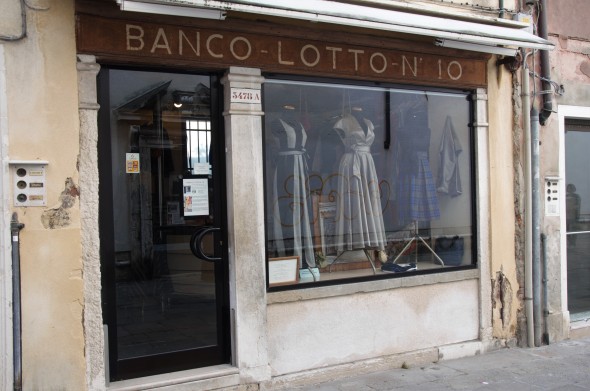
Next up was a bookstore, and one which proves that Amazon can’t provide everything. The Libreria Alta Acqua is a treasure. Books stacked in precarious piles fill every inch of available space. Balanced on shelves, filling redundant gondolas and bath tubs, they represent what a bookstore should be.


This is a place to be savoured, to potter and to forget the time or anything else on your mind. The store owner wandered about, leaving the rather scary looking cat to mind the till while he wheezed and tutted to himself looking for items unspecified but clearly important. I think I could have watched him all day too. Out back was the tinest of courtyards with a sign imploring people to climb up some wobbly stairs made of old books to see the view over the canal.


I couldn’t resist walking south via St Mark’s Square. This might sound odd as I really hate the crowds and the tourist paraphernalia but I think I wanted to see just how bad it was. On the way, in Calle del Mondo Novo, my nose caught the aroma of a cheese and ham store as my eye was drawn to a pig in the pizza shop window opposite. Incidentally, I read that you should never eat pizza in Venice as wood-fired ovens are banned with just a tiny handful of exceptions. The store, Prosciutto e Parmigiano, is known locally as Latteria Senigaglia (that was the name of the original family-run dairy produce store which was set up in 1940).


In St Mark’s Square, I navigated a sea of people who couldn’t have been more synchronised in pointing their mobile phones towards whatever their guide was pointing out had a musical soundtrack been in place. Pausing only to recreate the famous shot of the gondolas lined up facing out across the lagoon, I hopped on another vaporetto. This one was bound for the church of San Giorgio Maggiore. From the top of its belltower, or campanile as they’re called, the views across the city are splendid and of course you look out over the campanile in St Mark’s Square rather than from it. It costs 6 euros to ascend, but for that they provide a lift, and free entertainment when the bells chime the hour, frightening unsuspecting visitors. Best of all – no queues.

It was mid-afternoon and I wanted to explore a little more before I left, so I took a boat a short way up Canale della Giudecca, jumping off at Spirito Santo church to cut back through to the Grand Canal near the Peggy Guggenheim art collection. Another vaporetto took me to Venice Casino from where I could cut through to the district of Cannaregio. This is on the Venice authorities’ recommendations list and is where you’ll find the Jewish Ghetto. It lacked the crowds of St Mark’s and it’s probably very uncharitable of me to hope that the city’s campaign is unsuccessful and it stays that way.


I had planned to have an early dinner in Osteria al Bacco, which is one of the area’s most highly rated restaurants, but got sidetracked by the wonderful Al Timon instead. You do need to book ahead for dinner reservations, though they don’t always serve what they display in the window. Get there right on the dot of six when they open to grab a table for cicheti and a Spritz – for something classically Venetian, swap the fashionable Aperol for Campari.


Time was ticking on so I took a last vaporetto ride along the Grand Canal and then bought a ticket for the boat back to the airport. I’d definitely recommend a visit outside of summer and most importantly, away from the crowd. Venice is never going to be one of my favourite cities, but it’s growing on me.
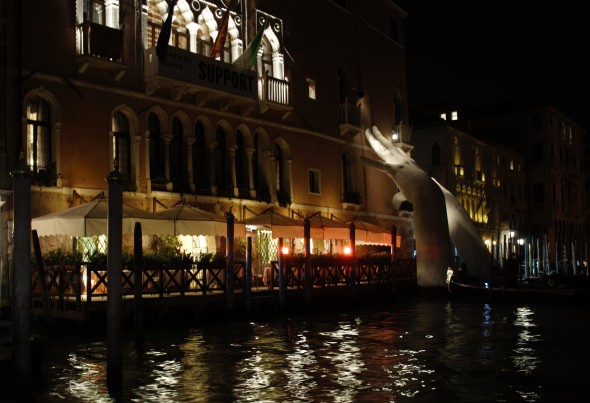
The other day trips by air:
Ibiza
https://juliamhammond.wordpress.com/2017/05/13/just-back-from-a-day-in-ibiza/
Copenhagen Christmas markets
https://juliamhammond.wordpress.com/2016/12/05/just-back-from-a-day-at-copenhagens-christmas-markets/
Regensburg
https://juliamhammond.wordpress.com/2016/11/25/just-back-from-a-day-trip-to-regensburg/
Belfast
https://juliamhammond.wordpress.com/2016/10/17/just-back-from-a-day-trip-to-belfast/
Budapest
https://juliamhammond.wordpress.com/2016/10/07/just-back-from-a-day-in-budapest/
Bremen
https://juliamhammond.wordpress.com/2016/06/07/just-back-from-a-day-trip-to-bremen/
Lisbon
https://juliamhammond.wordpress.com/2014/10/20/just-back-from-a-day-trip-to-lisbon/
Amsterdam
https://juliamhammond.wordpress.com/2015/01/26/just-back-from-a-day-trip-to-amsterdam/
What to do if you’re impacted by Ryanair’s cancellations
If you’re affected by Ryanair’s announcement that they are cancelling many hundreds of flights over the next six weeks, you’re going to need to know your rights. This is how the news broke:

If your outbound flight has been cancelled at short notice:
First, see if you can rebook. According to Ryanair’s website, this should be possible online. People are reporting on social media that the Ryanair helplines are overwhelmed and they’re not able to complete a rebooking over the phone. Obviously with so many people chasing so few seats at short notice, many are going to be disappointed. So what then?
If you cannot find a satisfactory rebooking (e.g. your flight is being rebooked but so late into your holiday to make it as good as useless) then you’ll need to apply for a refund. You may also be entitled to compensation. These are your rights under EU law if the destination is within the EU or if it’s an EU carrier like Ryanair:
Flight cancellation
Flights under 1500km – 250 euros compensation
Flights over 1500km – 400 euros compensation
Note: this only covers you if your cancellation occurs 14 days or less before your flight. If you are due to travel in more than 14 days’ time and your flight is cancelled, this will be treated by the airline as a rebooking or rerouting. You still have the right to cancel with a full refund of what you paid for the flights, but will not be eligible for additional compensation.
Delayed arrival whether with Ryanair or alternative carrier
Flights under 1500km – 2 hours
Flights over 1500km – 3 hours
If you are delayed, you are also entitled to food and accommodation vouchers. Full details here:
http://eur-lex.europa.eu/legal-content/EN/TXT/?uri=LEGISSUM:l24173
Note that it can take many months to secure this compensation, despite EU regulations stating refunds must be paid within a week. Remember you will need to keep all receipts and boarding passes. It’s also a good idea to send letters recorded delivery if you are getting nowhere by email.
If you decide not to travel, have a look at what expenses you’ll incur, such as accommodation that cannot be cancelled at short notice. The airline is not liable for this. It will need to be claimed back from your travel insurance company. Making a claim such as this doesn’t affect your right to EU compensation if applicable.

If you’re abroad and your inbound flight has been cancelled:
The above applies but you’ll also have to factor in whether you need to be back home as a matter of urgency or can afford the time and money (up front at least) to extend your trip. You might find it easier to deal with staff face to face at the airport though this can add to your stress as there will be a lot of other angry passengers there which isn’t going to make you feel better.
You can try to persuade the airline that rebooking you with an alternative carrier e.g. a seat on a rival airline is a better idea. You’ll have more bargaining power if the airline itself is very tight for space and is struggling to get you somewhere, especially if you’re stranded and they’re having to pay for your overnight accommodation. Remember if you pay for your own alternative flights, you’re out of pocket.
It can be very hard to get them to pay, as I found out with CityJet a few years ago. CityJet refunded their own flight (that they cancelled fifteen minutes before departure) but because I didn’t want to wait for an alternative with CityJet or spend another night in Paris even at their expense, I paid for the Eurostar alternative. I eventually funded it out of the compensation I received eight months later. Read the full story here:
https://juliamhammond.wordpress.com/2015/03/06/finally-a-win-against-cityjet/
If you can get through on a helpline, that is often better, but you will need to be patient. Be as calm, polite and flexible as you can, particularly if you need to get back home in a hurry. Remember the person on the phone isn’t directly to blame and venting your frustration isn’t going to get you anywhere.

If you’ve a flight coming up which is currently unaffected:
This currently is where most Ryanair passengers are, fortunately, and the social media furore should calm down for the most part now that people know where they stand. Nevertheless:
Have a Plan B. Research alternative airlines or other means of transport on the inbound leg. Check your email on a regular basis so that if your flight is next to be affected, you’re amongst the first to know – and fight for the seats that might be available on alternative flights.
Print out or save to your phone a copy of the EU regulations (see link above) so that there can be no dispute with airline staff about your rights – it will be in black and white.
Double check your travel insurance, especially the limits and excesses for flight delays and flight cancellations. Again, keep all receipts and boarding passes as you’ll need them to make a claim. Keep proof of the cancellation.

What now?
Ryanair’s lack of consideration for their customers, though not a surprise, is still a concern. They won’t be the first and last airline to do this. I’ve had similar late in the day cancellations from American Airlines (weather related issues leading to a 48 hour delay in New York when I should have been in Nicaragua) and as mentioned, with CityJet (who didn’t even inform us the flight was cancelled, just checked us in as normal and quietly removed our flight from the departures board). But for the record, Ryanair, you need to remember who keeps your staff in a job and your planes in the air.
Update 17 September from the excellent Simon Calder at The Independent:
Update 18 September of full list of cancellations on the Ryanair website:
https://www.ryanair.com/ie/en/useful-info/help-centre/travel-updates/flight-cancellations7
Ten of the best European cities
Recently I posted a blog about my ten favourite American cities; you can read it here if you missed it.
https://juliamhammond.wordpress.com/2017/08/31/ten-of-the-best-american-cities/
Among the comments was a good-natured challenge from Andrew Petcher of Have Bag, Will Travel, suggesting that Europe’s cities have a lot more to offer the visitor. It got me thinking about which would make my Top Ten and after some deliberation, here are my choices.
Cáceres, Spain
In the heart of beautiful Extremadura, Cáceres is one of those finds that you agonise over telling others about for fear of drawing the crowds. This is the kind of place you’ll want to keep for yourself. The labyrinthine Ciudad Monumental, crammed full of mediaeval mansions and delightful churches, absorbs as much time as you’re prepared to give it. I’d have still been there were it not for the promise of the tastiest suckling pig in the region and late night drinks in the palm-lined Plaza Mayor.
Lisbon, Portugal
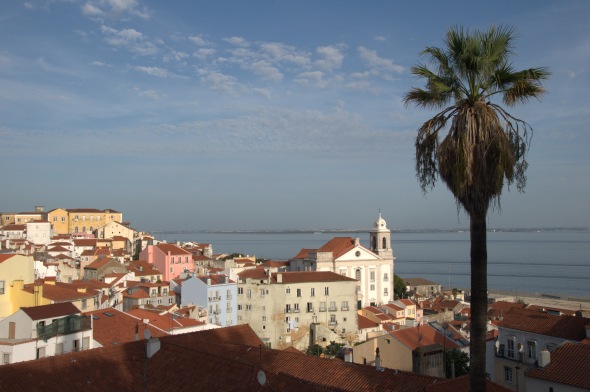
Over the border, the Portuguese capital is one of the most absorbing on the continent. Its rich maritime history is proudly remembered across the city such as in Belém’s Monument to the Discoveries. The #28 tram ride linking the lower and upper towns might be touristy, but it’s still a must for its heritage wooden cars and the views along the way. But again, it’s food that is my fondest memory, particularly the delicious Pastéis de Belém warm out of the box – you’ll have to queue, but it’ll be worth it.
Stockholm, Sweden

The reason I’m so taken with the Swedish capital is that it doesn’t have to be a city break at all, if you don’t want it to be. The Feather Islands are just a thirty minute boat ride away, but a tranquil spot for lunch and a short stroll if you’re fed up with city traffic and noise. Skeppsholmen Island reveals a collection of historic boats and Benny from ABBA’s recording studio, while Djurgården Island is where you’ll find the ABBA museum and the astonishingly well-preserved 17th century Vasa ship.
Bremen, Germany
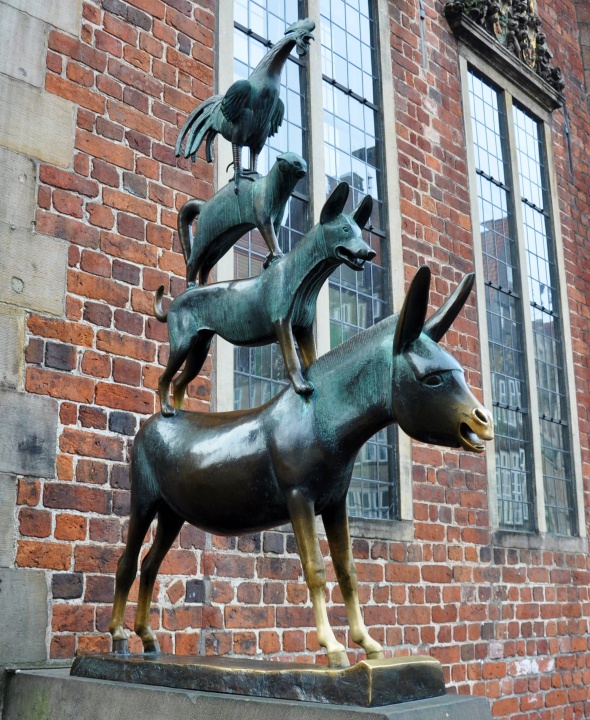
Of Germany’s cities, Bremen stands out. The Schnoor quarter is packed with timber-framed houses once occupied by fishermen but now home to a plethora of boutique shops selling artisan crafts. The city’s historic heart is eclectic, its Flemish-style Schütting, a 16th century guild hall, and the windmill in Wallenlagen Park a reminder of how close you are to the Netherlands. But it’s four small creatures that were the reason for my trip – donkey, dog, cat and rooster from the Grimm’s fairytale.
Krakow, Poland

Krakow is one of those cities that no matter how many times you visit, you’ll never tire of it. Nowhere is this more true than in the Old Town’s largest square, Rynek Glowny. It’s dominated by the centuries-old Cloth Hall; duck under its arches to find shops selling amber and other local wares. I enjoy it best at night, when huts selling pierogis and tender ham hocks draw people away from the many souvenir stalls of the market.
Salzburg, Austria
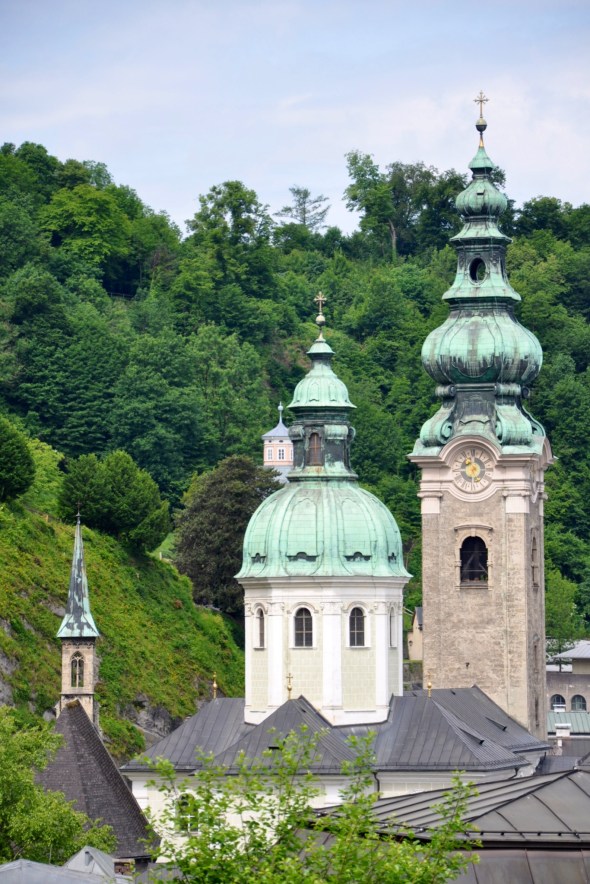
I first squealed with delight at Hellbrunn’s trick fountains as a small child. Years later, I returned to find I wasn’t too old to have the exact same reaction. Just as much fun was a bicycle tour of the main sights featured in The Sound of Music – yes I know Mozart was born there but I’d much rather be yodelling with a lonely goatherd. This December I’m visiting the city’s Christmas markets for the first time. Can. Not. Wait.
Bologna, Italy
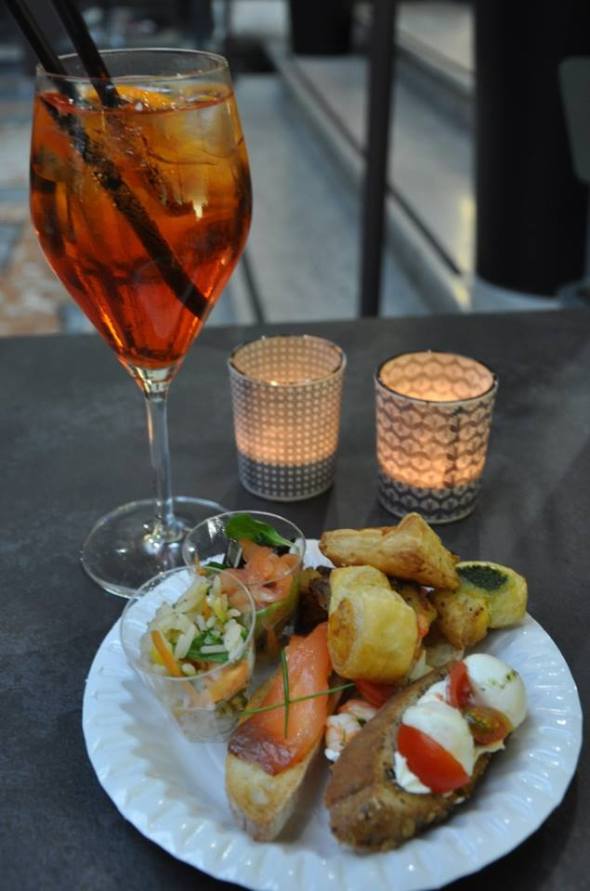
Give me a choice of Italy’s large cities, and this would be my choice, rather than Rome or Florence or Milan or Venice. Why? This is a city that is focused on food, from the delis that cram into its narrow alleyways to the platefuls of snacks laid out to soak up the Aperol Spritz at passeggiata hour. Thoughtfully, they even built a tower to climb so you can work off some of the calories; it’s 498 steps to the top of Torre Asinelli.
Dubrovnik, Croatia
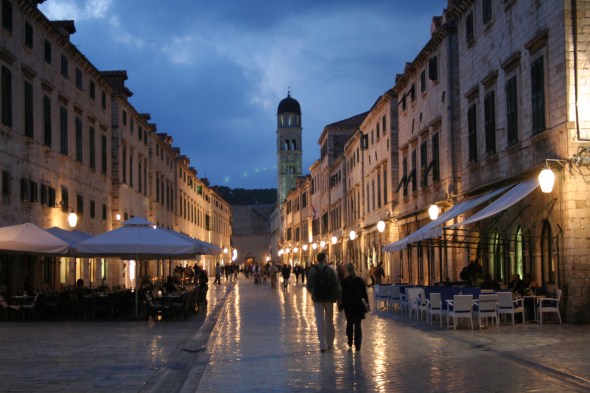
To see Dubrovnik at its best you’ve got to time it so that the cruise ships aren’t in dock, and that takes some planning – or at least an overnight stay. You’ll be rewarded with empty city walls to walk, piazzas and cobbled streets lined with cafes and restaurants and a host of other sights that are far better without the crush.
Riga

When it comes to the Baltics, it was a tough decision for me to choose between the Latvian capital Riga and its Estonian counterpart Tallinn. In the end, I opted for the former. Don’t miss the Three Brothers, the oldest buildings in the city, and the House of the Blackheads which houses Parliament. Both are a must for architecture fans. They also have some innovative ideas to help you avoid putting a dent in your bumper.
Budapest
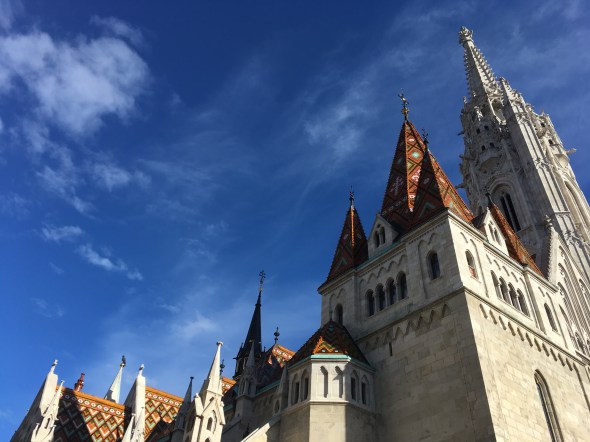
Bisected by the River Danube, this is a city with a split personality, so whatever mood you’re in, you’ll find half the city to suit. Fishermen’s Bastion in Buda is a good place to get your bearings, and admire the Gothic architecture of Parliament across the water. After coffee in Cafe Gerbeaud, the market hall in Pest is perfect for stocking up for a riverside picnic. And don’t forget the city’s many thermal baths for when your muscles begin to ache.
So there you have it. Apologies if you were looking for Amsterdam or Paris, Berlin or Barcelona. While I enjoyed the latter pair, the first two still fail to wow me. And I’ve deliberately stuck to mainland Europe, hence the lack of London, York, Bath or Leeds. What would you have included on your list of Top Ten European cities?
Ryanair’s baggage changes penalise those already booked
Today Ryanair have announced that from 1st November, their policy on cabin baggage will change. Currently, up to two bags can be taken on board, one of standard dimensions (55cm x 40cm x 20cm) and one smaller item (35cm x 20cm x 20cm). Currently, a small wheelie fits and can be stowed in the overhead bins, while the smaller bag, perhaps a day sack, can be placed under the seat in front. On busy routes, some passengers are asked to place their larger bag in the hold free of charge.

Today Ryanair have announced changes to their policy. Basically, customers opting not to pay for Priority Boarding will lose the right to take some of their carry on with them as they board the plane, instead handing it to staff to put it in the hold.
I have two Ryanair flights coming up, one in October to Venice and one in December to Salzburg. My Salzburg flight will be affected by the changes. I was planning to take a bag that was smaller than their maximum dimensions but slightly larger than those of a smaller item. Now, I have to either rethink the size of that bag or pay a £6 priority boarding fee for each leg to be able to take the luggage I planned. The Ryanair website states that the policy will be introduced on 1st November for all travellers, regardless of when they’ve booked.
That’s not playing fair. We took out the contract and now the details are unilaterally being changed. If I take the bag I planned, and the policy is implemented as per the rules, I’ll either have to check it at the gate free of charge and incur a delay when I arrive waiting for luggage, or risk being denied boarding. So effectively, my flight has gone up by £12 if I wish to take the luggage I planned. Had I paid for Priority Boarding at the time of booking, it would have cost £5 each way; to do so retrospectively it will be £6 each way.

I understand why Ryanair have taken this step. The amount of luggage being dragged on board is reaching ridiculous levels and boarding is a much slower process because of it. But it does seem underhand to introduce a change to existing bookings without notice. Will this be the end of my love affair with Ryanair? Probably not. Do I feel like I’ve been cheated out of £12? Yes. The Ryanair haters are going to have a field day with this, and for once, rightly so.
Are you affected? Full details from Ryanair’s website here:
Welcome to the Wiviera!
Fresh air and water are always a good combination. With excellent rail links as well, it made the riverside town of Wivenhoe a good choice for my third outing with Greater Anglia this summer. There’s an easy but very pleasant 4km walk that takes you along the banks of the River Colne from Hythe to Wivenhoe. The really good news is that if you don’t wish to walk it in both directions, the path is easily accessible from Hythe station and leads you straight into the station car park at Wivenhoe. Both the path and the railway line follow the banks of the Colne Estuary, offering splendid views. As a walk, it couldn’t be more convenient if it tried!

If you’ve been following my previous blogs, you’ll know that I’ve enjoyed days out by train to Harwich and to the East Anglian Railway Museum. Greater Anglia have some very affordable advance fares across their network as well as £2 child fares and many other offers. It’s well worth checking out their website if you’re at a loose end this summer.
I set off from Hythe station just before lunchtime and walked along the riverbank towards the University buildings and on towards the new apartments that are springing up. I’d come this route a thousand times – it’s on the way to B&Q and Tesco – but from the car, you just don’t see what’s under your nose. There’s some fantastic artwork to be seen.


Information boards telling a little of the area’s history help provide context. In parts, they form trail markers. You can’t miss them in their steel cages.
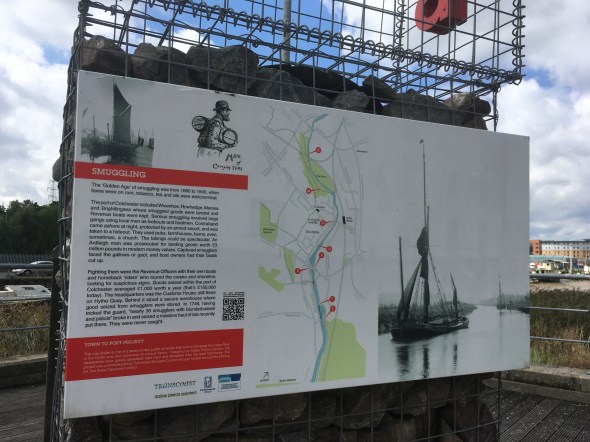
Following the river, I passed the iconic lightship and headed off in the direction of Wivenhoe. Urban becomes rural pretty quickly and it’s a pleasant and flat walk past riverside meadows, reed beds and woodland. Even on a weekday, there were plenty of joggers and cyclists using the trail, as well as a man in a wheelchair walking his dog. This is a trail for everyone to share.

Towards Wivenhoe, there’s a board marking the entrance to the Ferry Marsh Colne Local Nature Reserve; the name’s a bit of a mouthful but it’s well worth the diversion. There’s plenty of seating along the river banks on which to sit and watch the birdlife and see what the ebb and flow of the tide reveals. If you’re lucky you could even see otters or water voles.

But it was Wivenhoe that I’d come to see. From its railway station, I found myself on the charming quayside in just a few minutes. Wivenhoe Quay is packed with buildings of historic interest, among them The Nottage, open on weekends, housing a museum with an eclectic collection of nautical items. Every Saturday and Sunday afternoon until September 3rd you can visit to learn more about Captain Nottage, the Victorian army officer and keen yachtsman whose name is on the door.


Next door to The Nottage is the excellent Rose and Crown pub. Its outside tables are perfectly placed to watch the comings and goings along the Quay and the food’s not too shabby either. In the sunshine, there are few places in Essex more attractive for an al-fresco lunch.


I wanted to see something of Wivenhoe and began to explore its quiet streets. Just along Rose Lane, I noticed a blue plaque commemorating the great Miss Marple actress Joan Hickson, who once made her home here. Around the corner, I couldn’t resist browsing the produce on offer in the Village Deli. Owner Mike had an interesting take on the calorie issue presented by the ice cream on sale. According to him, if you use the attached spoon correctly, the calories can be neutralised and thus don’t count. That’ll be a salted caramel tub for me, then, and…

Along the High Street I found the Wivenhoe Bookshop, the kind of place that almost doesn’t exist anymore. Staff member Sue told me they’ve worked hard to create a space that works as a community cultural hub as well as a bookstore. Coming up there are writers’ workshops, book signings, a knitting group and even a philosophy breakfast, reflecting the University of Essex presence on the edge of town. You don’t have to be a local to get a warm welcome. The place has a homely feel – the sofa in the back room was just the kind of sofa you’d want to sink into on a rainy afternoon. I was blessed with blue skies so it was time to move on.
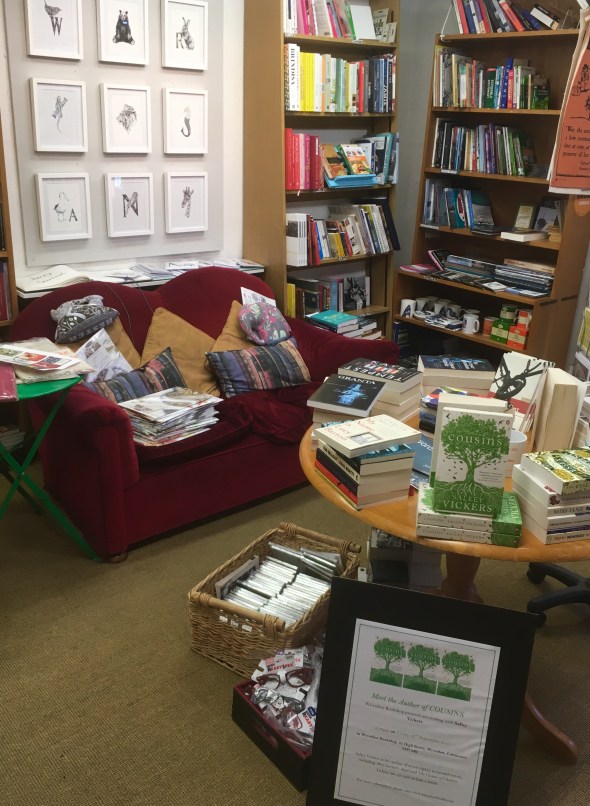
My final port of call was to The Sentinel Gallery, run by the delightful Pru Green whose enthusiasm for art is catching. Inside, work from some of East Anglia’s most talented artists was on display as well as some of the most colourful pottery you’ll find in the county. The modern structure features angular lines and huge panes of glass. It stands in stark contrast with the very traditional buildings that surround it, but it doesn’t jar. And the light which floods into the exhibition space is incredible. Even if you’re no art expert, this place is worth a visit, though don’t come on a Monday or a Tuesday as they’re closed.


Wivenhoe, I decided, had much to recommend it and if you want to see for yourself, there’s a ton of special events still to come this summer. The Sunday, August 20th, sees the Wivenhoe Crabbing Competition, great fun for all the family; register on the Quay from 10.30am. The town hosts its Beer Festival from September 1st to 3rd with the Art Sea Music Festival following close behind on September 9th. Throughout the summer season, a weekend foot ferry links Wivenhoe to Rowhedge and Fingringhoe so long as the tide is high enough. With limited parking in Wivenhoe, it’s a really good idea to take the train.

With thanks to Greater Anglia for providing transport to and from Wivenhoe.
Links
Rail tickets and offers from Greater Anglia
https://www.greateranglia.co.uk/
The Nottage Maritime Institute
http://www.nottagemaritimeinstitute.org.uk/
Rose and Crown pub
https://www.facebook.com/Rose-Crown-Wivenhoe-173216156080059/
Village Deli
Wivenhoe Bookshop
The Sentinel Gallery
Stepping back in time at the East Anglian Railway Museum
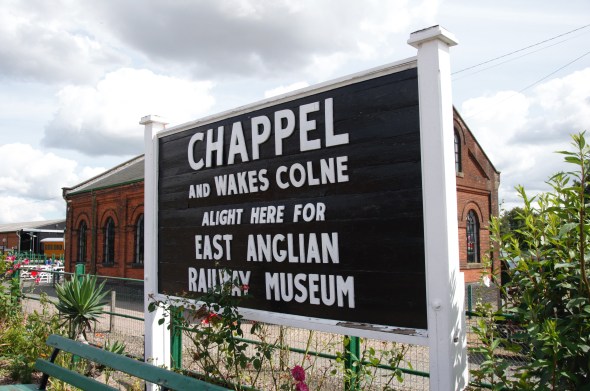
“Time flies by when I’m the driver of a train, and I ride on the footplate, there and back again.” Chances are, if you’ve just sung this rather than read those words, you grew up on a diet of Chigley and you remember as fondly as I do Lord Belborough and his steam engine Bessie.
But until yesterday, though I’d been on many a steam train, I’d never experienced what it’s like to ride on the footplate. Thanks to train driver Michael and his sidekick Kim, whose role is that of fireman, I got to tick it off my bucket list. Stood between Michael and Kim, I tried to keep my balance and time my barrage of questions to avoid interfering with their safety checks and operational duties. With a carriage-load of passengers on board, even on such a short demonstration trip, it was important that things were done properly.


Teamwork was key, with both volunteers working together to ensure everything ran smoothly. It was hot work. As Kim stoked the firebox with coal, the blast of heat coming from inside was palpable. Kim wiped a smear of coal dust from his nose and grinned as I wiped the sweat from my own forehead. I was glad this was the museum’s 1905 vintage engine when Michael mentioned that had I ridden on the footplate of one of the other two working engines I’d have been much hotter, as the furnace would have been level with our faces instead of by our feet.


Whatever your age, there’s something special about a trip to a railway museum and the chance to see a working steam engine. If you’re reading this and nodding your head in agreement, then I’d recommend you visit the East Anglian Railway Museum at Chappel and Wakes Colne. While riding on the footplate was a special treat, visitors will sometimes be able to take advantage of the museum’s “Taster for a Tenner” promotion where you can learn how to drive a diesel loco for just £10.

This summer, Greater Anglia are making it better than ever to travel by train. For a number of attractions across East Anglia and London, the East Anglian Railway Museum being one of them, presenting your rail ticket gets you 2FOR1 admission. If there’s just two of you, Greater Anglia’s advance fares will also keep your costs down. For larger groups, check out the Group Save tickets, a good deal for families and groups of friends looking for an affordable day out. Even better, Group Save can be used in conjunction with the 2FOR1 offer. With rail tickets for children costing from just £2, arriving at the EARM by train makes a lot of sense. Chappel and Wakes Colne station lies between Sudbury and Marks Tey on the pretty Gainsborough Line. From Marks Tey there are frequent connections to London’s Liverpool Street as well as Ipswich and beyond.

I chose to time my visit to coincide with one of the EARM’s regular special events. The 1940s Vintage Tea Dance marries our nostalgia for the age of steam with a love of music, dance and reminiscing about the war. Headlining the event were the fabulous Fox, Wiggle and Sass. Perfectly co-ordinated in red polka dot dresses, hair coiffed in immaculate victory rolls and lips painted a perfect scarlet, the girls had the Forties look down pat.


Aimee (Fox), Amy (Wiggle) and Gemma (Sass) hail from what they term the Bermuda Triangle of Essex: Layer de la Haye, Finchingfield and Witham. Over the last four years, they’ve been hired for countless weddings and private parties, but coming back to the EARM is special as it was the first gig they ever played. This talented trio made performing the harmonies and melodies of iconic Forties classics like “Ac-Cent-Tchu-Ate the Positive” and “It’s a Good Day” as well as swing hits like “Sing Sing Sing” look simple.


Watching them perform was a full house – or rather goods shed – of people, many in 1940s costume themselves. Servicemen danced with WVS volunteers while onlookers sipped tea from vintage china and ate cream teas. Sharon from Swing Jive Sudbury was on hand to teach everyone the basics so even complete beginners could join in the fun.


Also in the goods shed, Bunty Bowring had laid out a fascinating collection of 1940s vintage clothing, showing how in times of rationing, make do and mend were of vital importance. Together with husband Richard, who was dressed as one of the Home Guard, she shares her passion for all things wartime by giving regular talks to various local organisations. Outside the goods shed, meanwhile, members of the Suffolk Regiment Living History Society had brought their rifles, kit bags and even their trucks and The Viaduct mini-pub was open for those wishing to sample the local beer.


The event had been fun, but to leave without exploring the museum’s regular exhibits would have been a travesty. I began at the signal box where a series of colour-coded levers ensured a train couldn’t enter a stretch of track while another was in the way. The blue one shown in use here is pulled to activate a points lock, making sure the points don’t move as the train’s wheels pass over the top. Young kids will love pulling the levers so much it will be hard to drag them away.

Across the footbridge, the restoration shed gives you the chance to see some of the museum’s many engines and carriages being brought back to their former glory. Many of the volunteers work on these projects on Wednesdays, making this a good day to find out about what’s going on. There’s plenty of restored rolling stock to have a look at, including some vintage wooden carriages and recreations of station buildings and platforms.


The exhibitions in the on-site heritage centre explain the impact of Beeching’s cuts on the Gainsborough Line, which once would have continued on to Cambridge. Sudbury’s population grew sufficiently to save the Marks Tey to Sudbury stretch from the same fate. But other long-lost lines are covered too, including the Crab and Winkle Line which ran from nearby Kelvedon to the coast at Tollesbury. Take a walk around Tollesbury Wick and at low tide, you can still see the railway’s wooden sleepers disappearing into the mud.

EARM staff say that visitors often remark on how much there is to see at the museum and I’d have to agree. I made it through the level crossing gates back to the regular platform just in time to catch my train. Whether you time your own visit for an event day or not, you’re sure to have a rewarding and enjoyable day out. The volunteers were without exception keen to share their knowledge and enthusiasm. Best of all, taking the train instead of the car gave me the chance to mull over what I’d seen and done. My verdict: I’m going back – and next time I’m taking a 2FOR1 friend.
With thanks to Greater Anglia for courtesy train travel to and from the museum and to the East Anglian Railway Museum for a great day out.
Links
Greater Anglia’s offers
https://www.greateranglia.co.uk/offers/offers-in-east-anglia
East Anglian Railway Museum
Fox, Wiggle and Sass
https://www.facebook.com/foxwiggleandsass/
Swing-jive Sudbury
http://www.swingjive-sudbury.co.uk/
Richard and Bunty Bowring
Email: bowring40s_talks@hotmail.co.uk
Suffolk Regiment Living History Society
Border control queues in Europe – and how to beat them
Today’s news has been full of horror stories of British travellers caught up in excessive queues at some of Europe’s busiest airports. If you haven’t seen it, try this article from the BBC:
http://www.bbc.co.uk/news/uk-40824027
Sadly, though changes in legislation have worsened the situation, it’s nothing new. Miss your flight, and you’ll find the airline and the airport pass the blame back and forth, leaving you frustrated and potentially out of pocket. So what can you do?
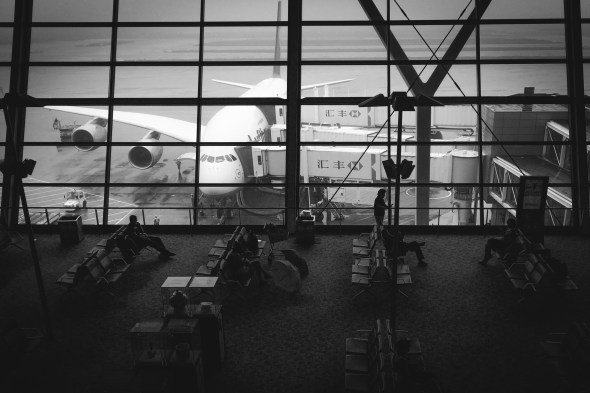
Take out a decent insurance policy
Many travel insurance policies will cover you for missed departures, but check the small print in case there are any exclusions. Also check the amount covered – and work out whether this is going to be sufficient to cover a night in a hotel and the cost of a replacement flight.
Get to the airport early – and don’t wait for your gate number to be displayed
Queues for security are going to be lengthy in peak summer season, so you should be aiming to get to the airport in plenty of the time regardless. But once you’re through security, you need to go through passport control too. In some airports, this can be tucked away in a quiet wing of the airport serving just a few gates.

If your gate isn’t displayed early, by the time you start to line up, you may have cut it too fine. I almost missed a flight from Malaga to London a couple of years ago for this very reason – so don’t risk having to be very un-British and queue jump like I did. And if I pushed in front of you and you’re reading this, I’m very sorry – and hope you made your flight too!
My advice is to go through passport control even if your gate isn’t displayed on the boards – if there are multiple passport controls, in my experience the border control officials will redirect you. Just look suitably apologetic as I did and make sure you head off in the right direction.

Consider booking a package
If you book a package holiday with an operator with has its own fleet of planes, such as Thomson (other operators are available!), then the same company is responsible for getting you from the hotel to the airport and from the airport to Britain. At the very least this is going to reduce the buck-passing.
Have you any tales to tell? I’d love to hear your experiences.
Harwich: the town that rocked
It’s the people that make a place special. How often have you read that? It’s been written so often it’s a travel cliché. But sometimes it’s also true.
Greater Anglia have a range of offers on rail journeys across the network this summer. To find out more, look at the #lettheadventurebegin video on their website; the address is at the bottom of this blog. They invited me to pick somewhere in the network and in return for a rail ticket, they asked me to blog about my trip. I chose Harwich. I’ll admit that having consulted the timetable, I was a little concerned. To reach Harwich from my starting point necessitated two changes of train and with just a few minutes between each, I anticipated spending half the morning in Manningtree. After all, this wasn’t Switzerland, was it? I needn’t have worried. The trains were punctual, the connections made without even having to power walk and the carriages clean and comfortable. The views as we made our way on the Mayflower Line along the River Stour were the icing on the cake, and I thought what a refreshing change it was not to have to focus on the road and be able to enjoy them.


A ten minute stroll from Harwich Town station and I was already beginning to appreciate the town’s long maritime history. Using a walking trail map I’d found online, I ticked off both the High and Low Lighthouses, the second of three pairs of lighthouses that had been built around here to aid ships’ navigation along the North Sea coast. To ensure they maintained the correct course, the two lights needed to line up, one above the other.
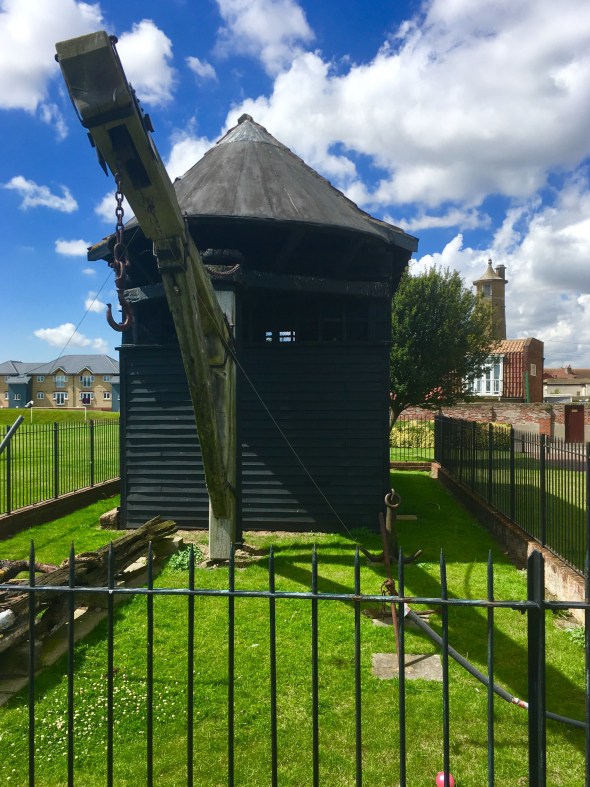
The Treadwell Crane was fascinating too, operated by men walking on the inside of the wheels. I was grateful for the Harwich Society’s comprehensive website, for though an informative sign had been placed near the crane, it had been positioned at the foot of a steep grassy bank. To read it, I’d probably have been best off lying flat on the turf.
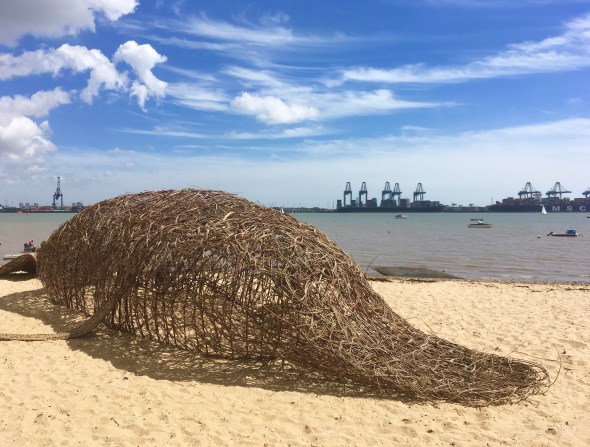
Heading along the estuary, I walked past the impressive murals on Wellington Road and doubled back to take a look at the Electric Palace. Built in 1911, there were two entrances, one to access seats costing a shilling, the other a more affordable sixpence. The cinema still holds regular screenings today, though the reminder to patrons to turn off mobile phones is a more recent addition to the signage.
Update July 2019: the Electric Palace is closed for extensive renovations and is currently scheduled to open in late spring 2020.
It was time to pop in to The Pier Hotel, right on the quayside. Looking like a little piece of Shoreditch, the hotel was slick, contemporary and on-trend, its staff welcoming. Manager Chris told me that I could find 113 different gins on the NAVYÄRD bar’s drinks menu, and I wondered how long you’d have to stay to work your way through them at what the government would deem an acceptable rate. With the view over the confluence of the Stour and Orwell right in front of the hotel’s terrace, it would be an absolute pleasure, though one which would have to wait for another time. I had a boat to catch, and it wasn’t going to wait.


A foot ferry had connected Harwich to Felixstowe for over a century, but it was under threat of closing for good when Austrian Christian Zemann spotted it was up for sale. Seeing the potential – it’s easily an hour’s drive from Harwich to Felixstowe – he bought the business. Though he’d always dreamed of making his living on the water, he didn’t know Harwich, nor the area which surrounded it. It was a gamble, but one that paid off.


With hard work and a nose for opportunity, Christian has expanded the business, running not only the foot ferry but evening cruises, bicycle rental and seal boat trips as well. In fact, he’s already bought a larger boat, increasing the capacity of the ferry from 12 passengers to 58. The level of commitment Christian has shown is extraordinary. Troubled by the drenching some of his passengers were getting out on deck, he invested £15000 in stabilisers to stop the new boat from tossing and pitching. I’m pleased to report it worked.


Christian’s latest venture, the boat trips to the grey and harbour seals that make their home at nearby Hamford Water, have already proved to be a gold mine. Once down to only a handful in number, there’s now a small but thriving colony of around 70 seals at the reserve. I asked Christian how close he got. “Well, the channel’s pretty narrow, so if I kill the engine, then you can hear them breathe,” he said. That sounded close enough to me.


Back on shore, there was one vessel on the quayside that just couldn’t be ignored, not least because of its scarlet livery. Built in 1958, LV18 was Trinity House’s last manned light vessel before it was retired from service in 1994. But as with the Harbour Ferry, this was a boat that wasn’t going to go quietly, thanks to one man – the ebullient and utterly charming Tony O’Neil. He bought the vessel for a nominal £1 and the Pharos Trust was set up to oversee its restoration. It opened in 2011 as Harwich’s quirkiest visitor attraction.
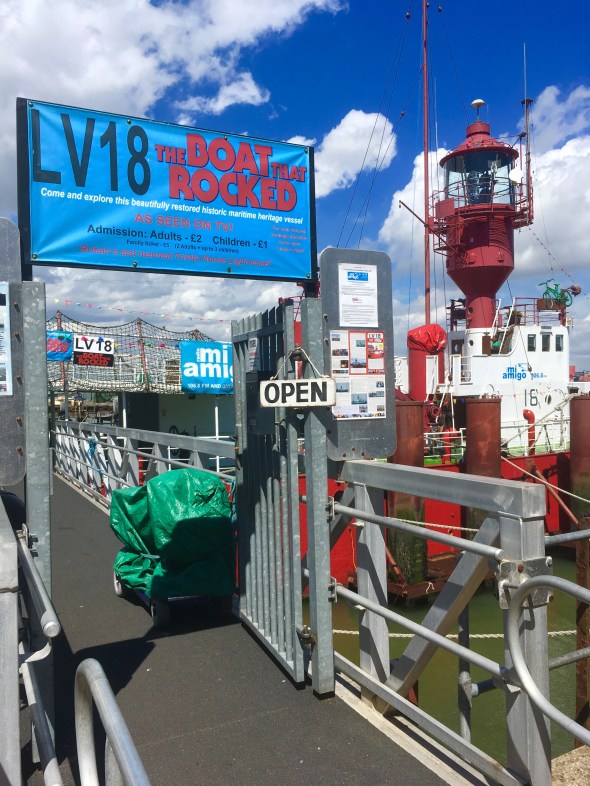
Update July 2019: since I took this photo, the cost of admission has risen to £4 for adults and £2 for children. Family tickets (2 adults and 4 children) are £10.
A musician by trade, Tony has a passion for radio. Visitors to the ship can see some of his extensive collection of antique and vintage radios on board, but with an estimated 1600 in his collection, some remain in storage in the hold. That passion for radio also manifests itself in broadcasting. Tony once worked for Radio Caroline and his enthusiasm for pirate radio is undimmed. The likes of John Peel, Tony Blackburn, Emperor Rosko and Johnnie Walker all broadcast from radio ships anchored just outside UK territorial waters and the tenders that facilitated their commute came from Harwich.


Even the beautiful garden that you see on deck has a musical connection. The scented plants that form part of it are there in homage to John Peel. His 1967 show for pirate station Radio London was named “The Perfumed Garden.” Johnnie Walker is still involved. He’s a patron of the Pharos Trust and will broadcast from LV18 this August.

For anyone keen on maritime history, Tony has preserved some of the cabins on board just as they would have been when the vessel was in use as a lightship. There’s also a chance to see what a pirate radio station would have been like. There’s so much in the way of nautical and radio memorabilia that some have dubbed it a “floating prop shop”. Unsurprisingly, it caught the eye of the production team working on the 2008 movie “The Boat that Rocked” and with a splash of yellow paint for the occasion, doubled as Radio Sunshine.
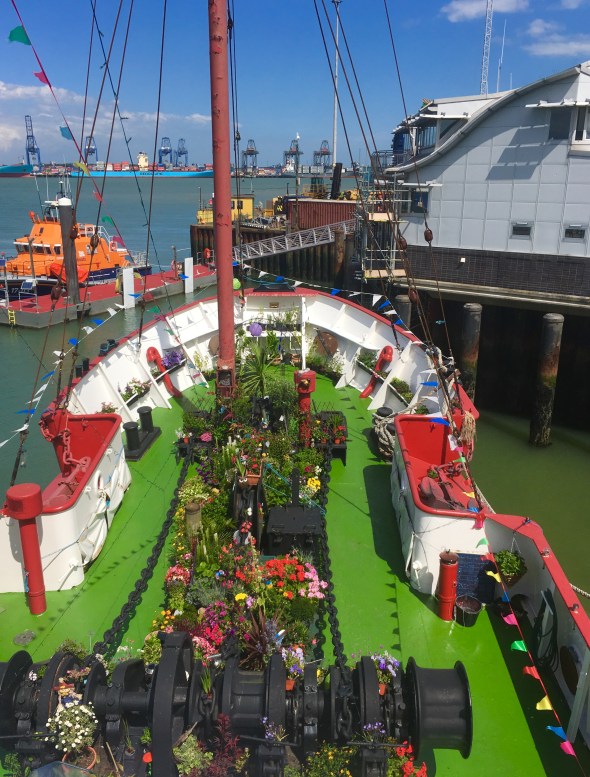
It is individuals like Christian and Tony that are breathing life into a town that once lay forgotten at the end of the line. Their energy and commitment to this corner of Essex is helping to make Harwich the town that rocks.
Links
Greater Anglia trains:
https://www.greateranglia.co.uk/
Harwich Harbour Ferry:
http://www.harwichharbourferry.com/
Seal boat trips:
LV18:
Harwich Society:
The Pier Hotel:
Tourism on my doorstep: Colchester’s Bourne Mill
Eighteen months ago, I moved to a village close to Britain’s oldest recorded town. Colchester was mentioned by Pliny the Elder in 77 AD; it was then known as the Roman settlement of Camulodunum. After much time spent doing DIY and decorating the house, I decided it was time to get out and explore the town on my doorstep. Today that took me to the delightful Bourne Mill, a National Trust property just outside Colchester town centre.

Bourne Mill with the stream running beneath it
If you live in East Anglia, you might be interested to know that Greater Anglia are running a promotion this summer called Let the Adventure Begin. There’s also a competition running until mid-August in which you could win first-class train tickets to any station on their network:
Win that, and you too could be exploring Colchester. Visitors today can see plenty of evidence of the town’s long history, from the Roman Berryfield mosaic at Firstsite to surviving groundworks of the Roman theatre which can be seen in Maidenburgh Street in the town’s Dutch Quarter. The Tourist Information Centre run a superb bi-weekly walking tour which I highly recommend.

Colchester Castle
Now, look closely at the photo above and in particular, the materials used to build the castle. The structure that you see is Norman. Construction began in 1076, similar to the Tower of London, but all is not what it seems. The foundations stand on what was the Temple of Claudius dating from about 55-60 AD and many of the building materials were recycled from Roman Colchester. In particular, look at the red stones that form the cornerstones – they look almost like roof tiles. These crop up elsewhere too, for example, in the remains of the fortifications that once encircled the town (you can make them out about halfway up the original wall to the left of the picture below):
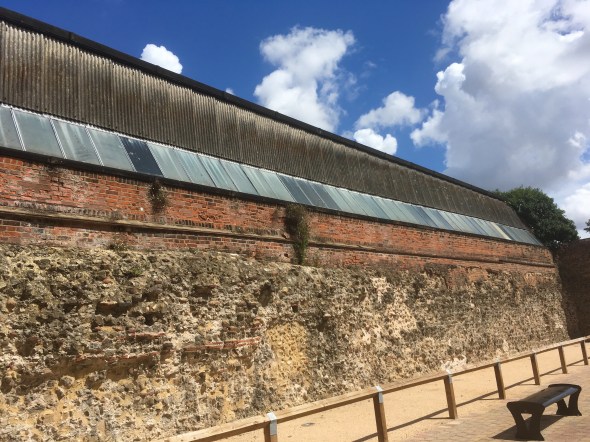
Roman wall near St Botolph’s Priory
I shouldn’t have been surprised, therefore, to see the same materials plundered to build Bourne Mill, located about a 20 minute walk away. This National Trust property was originally a fishing lodge used by the monks of St John’s Abbey. A stream, the Bourne, emerges a short distance north of the site and spills out to form a large pond, thought to have been created artificially as there appears to be no geological reason for the water to widen.

The pond at Bourne Mill
After the dissolution of the monasteries during the reign of Henry VIII, St John’s Abbey passed to the Lucas family and later, they began to demolish it. Seeking to improve on the monks’ fishing hut, they constructed what’s now Bourne Mill. The stones were cannibalised and together with those Roman bricks, pieces of flint and some Walton-on-the-Naze septaria to hold it all together, this wonderful building was the result.

Bourne Mill
Well actually, not quite.
What Sir Thomas Lucas built was a single story dwelling, thought to be a place where he could go with his well-heeled mates to fish and then hang out over dinner. On the ground floor, there are two fireplaces which lend credence to this theory. Carp, pike and wildfowl would have been plentiful so it seems likely that this story is true. This beautiful banner, stitched by the Colne and Colchester Embroiderers Guild, tells the story.
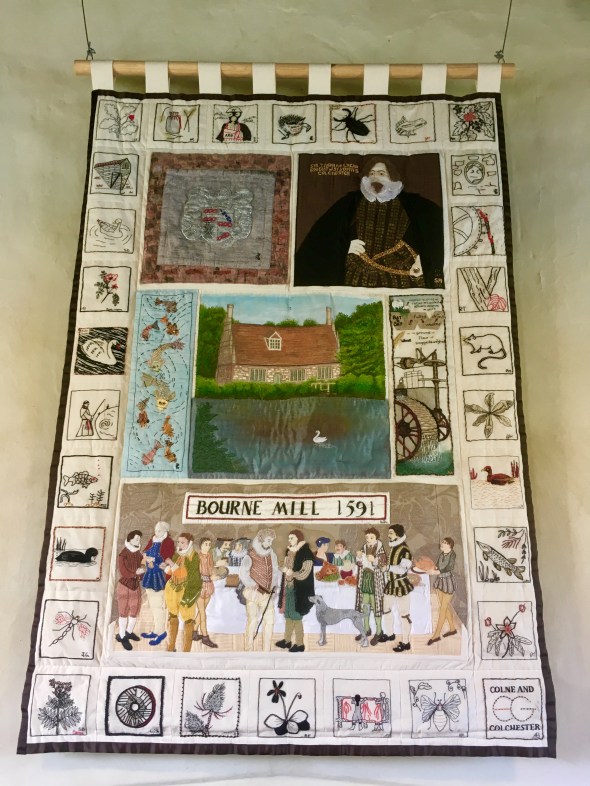
Wall hanging at Bourne Mill
But that story doesn’t end there, of course. Now that Britain was Protestant, it became a haven for those fleeing religious persecution in Catholic Europe. Granted refuge by Queen Elizabeth 1 in 1565, they boosted the town’s population, congregating in what would later become known as Colchester’s Dutch Quarter. Though they kept themselves separate when it came to socialising and marriage, they did have a profound effect on the north Essex landscape and economy, bringing their weaving industry skills and breathing new life into a flagging industry.
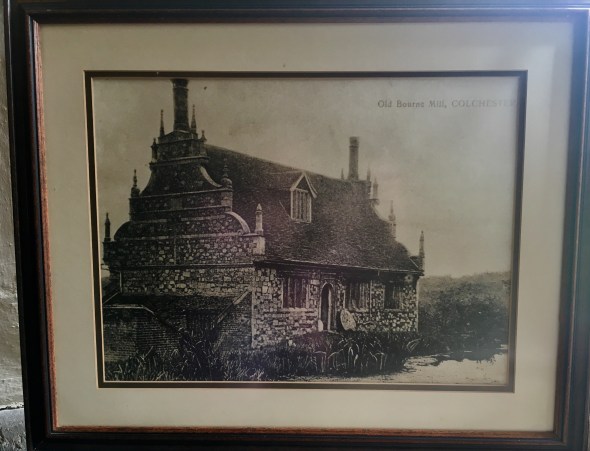
Bourne Mill prior to its use as a corn mill
The Dutch introduced new worsted draperies, known as bays and says. They were lighter and cheaper, and not surprisingly proved very popular. A method of quality control was introduced in 1631, immediately raising the status of Colchester cloth. That Dutch seal automatically meant that your cloth fetched a higher price; faulty workmanship, on the other hand, would lead to fines (called rawboots) being levied.
Bourne Mill grew an upper storey, recognisable by the gable ends that are also commonly found in the Netherlands and Belgium. It became a fulling mill, a place where cloth was softened to make it more wearable. A waterwheel would have made the process of hammering the fabric much less labour-intensive. Initially urine, collected from the poorhouse, would have been used in the process; the ammonia it contained helped to clean and whiten the cloth. Later, Fuller’s earth would have been used instead. Afterwards, the cloth was stretched on frames known as tenters to dry – attached by tenterhooks.
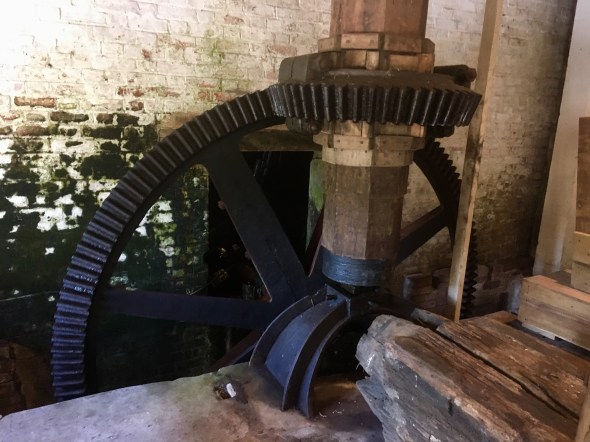
Part of the wheel mechanism
After a while, the Essex cloth industry fell into decline once more. The cloth industry, bay especially, was vulnerable in the 18th century to disruption by wars, competition from rival manufacturers, and the import of cotton. As the cloth industry declined, the fulling mills were converted to grind corn or grain, competing with the many windmills that dotted the landscape. By around 1840, Bourne Mill was no longer in use as a fulling mill. It was converted to a corn mill by 1860 and it’s for this purpose that the uppermost floor and sack hoist would have been installed. Later, it was steam driven, but the last miller hung up his apron in 1935.
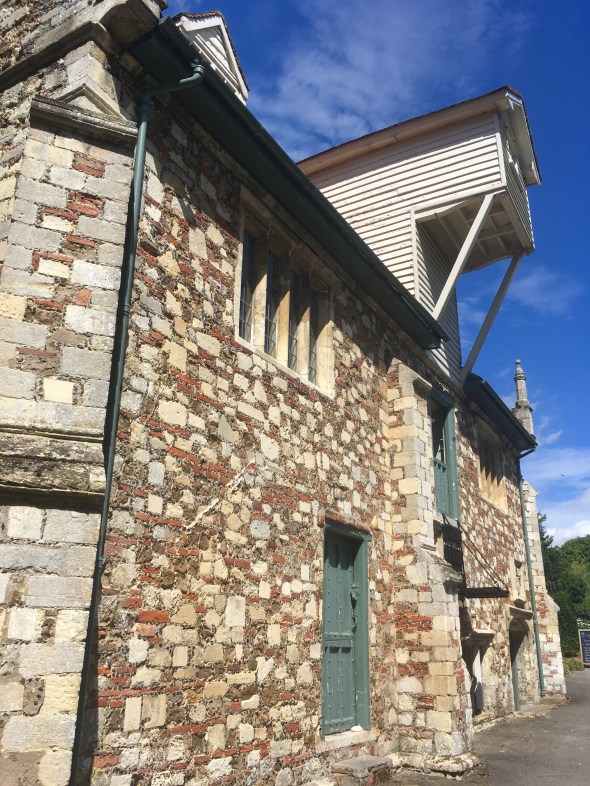
Bourne Mill today
Honestly, I was pleasantly surprised at just how much there was to see and learn at Bourne Mill, expecting only to see a waterwheel and not a lot more. The team of volunteers work hard to bring the Mill’s history to life and succeed in communicating their enthusiasm. I’d especially like to thank Liz Mullen and Joan Orme for their insights and for not burdening me with more historical detail than I could cope with.
Acknowledgements and practical information
I’d like to say thanks to the National Trust who provided me with a free pass to visit Bourne Mill. If you’d like to do the same, entrance costs £3.75 for adults and £1.90 for children. The place is open from Wednesday to Sunday inclusive, from 10am to 5pm. Dogs are welcome on a lead, though there’s a steep ladder-like staircase to the upper storey which they won’t be able to access. There’s a small cafe too and plenty of picnic tables perfect for sitting and watching the ducks, including Joan’s favourite with the quiff.

Check out that fluffy head!
There are plenty of things to do with the kids, including free use of the Mill’s pond dipping equipment, making this a good choice now that the school summer holidays are upon us:
https://www.nationaltrust.org.uk/bourne-mill/features/things-to-see-and-do-at-bourne-mill
The National Trust website also has a guided walk which you can follow to get a better grasp of your surroundings. I shall be back soon to try it out.
https://www.nationaltrust.org.uk/bourne-mill/trails/bourne-mill-a-wee-wander
If you’d like to begin with the Camulodunum to Colchester walking tour, then this takes place at 11am on Saturdays year-round, with additional walks on Wednesdays at the same time throughout the summer. Walks need to be pre-booked as they do fill up; adults cost £4.30 and children £3.10. Find out more here:
http://www.visitcolchester.com/things-to-do/tours-sightseeing.aspx

At Bourne Mill, parking is limited on site – Sir Thomas Lucas didn’t plan ahead – but you should be able to find roadside parking nearby. Better still, take the train. Greater Anglia’s nearest station is Colchester Town. It’s about a 20 minute walk from the town centre to the Mill, but you can catch a bus to Mersea Road from outside the station if your feet have had enough.
The fastest connections from London Liverpool Street to Colchester’s main station take just 46 minutes and just over an hour to the Colchester Town station right in the centre of town. More details can be found on the Greater Anglia website:
https://www.greateranglia.co.uk/
#lettheadventurebegin

 Julia's Travels
