
Why you should do your homework before booking a flight
I had an interesting conversation with a lady the other night about the financial situation of airlines. A number of airlines have made the news recently for the wrong reasons, including Monarch and its demise. Her take on things was that it would have been perfectly reasonable to book with them because they’d been around for so long and if you’d travelled with them before, it would be unnecessary to check them out because you would know they were OK.

Monarch Airlines plane by Andy Mitchell CC BY-SA 2.0 via Flickr
I had a different opinion. Monarch’s financial woes over the preceding few years had been well-documented in the press. Anyone doing even the most rudimentary of Google searches would have thrown up a number of articles filling out a picture of money troubles and the importance of the end of September deadline to renew its ATOL certificate. But given that hundreds of thousands of travellers were caught out, I’m guessing my expectation that people wouldn’t shell out hundreds of pounds without checking out the robustness of the company was inaccurate.
What’s also interesting is that following the whole Ryanair mismanagement debacle, many people assume that Ryanair is in a difficult position financially. According to industry business analysts, however, it’s not. The graphic on this link reveals that they think it’s in the best position of any European airline when it comes to the risk of going bankrupt:

If the Dow Jones researchers are to be believed, then it might be an idea to be think carefully before about booking a flight with Turkish Airlines or Pegasus at the moment. I’ve flown with both and had excellent experiences but last year business was difficult for both of them. The former posted a 2016 loss of $77 million, the latter $36.1 million. You can read more at:
http://atwonline.com/airline-financials/turkish-airlines-posts-77-million-net-loss-2016
http://atwonline.com/airline-financials/pegasus-airlines-posts-361-million-loss-2016
But then in the case of Finnair, they seem to be doing significantly better than their position on the chart would suggest. Though Dow Jones suggest they fall into the “In Trouble” category, this article appears to refute that speculation:
https://yle.fi/uutiset/osasto/news/finnair_announces_best-ever_quarterly_results/9899848

Norwegian Dreamliner by Juraj Patekar CC BY 2.0 via Wikimedia Commons
Personally, I’m being cautious over booking with Norwegian at the moment. Their rapid long-haul expansion is, in my book, cause for concern, given the history of low-cost airlines and trans-Atlantic flights in particular. I also wonder whether it’s a coincidence that after they announce the commencement of a London to Singapore route, Qantas cans their Dubai layover on their London to Sydney route and goes back to making Singapore their stopover destination.
Whatever your own take on the situation (and I’m not advising you to follow my lead), Norwegian Air currently have a lot of new planes to pay for and face plenty of competition. Norwegian Air’s CEO has been quick to counter that the airline is in good financial health, but this Reuters article also references the potential impact of their CFO quitting in the summer:

I’ll stick to my earlier assertion: if you’re planning on booking a flight, do a little research on your chosen airline first. Take the sensible precautions: make sure they’re ATOL protected where that applies (charters and packages in general terms), pay using a credit card as your outlay will be protected if the flight is over £100 and consider taking out scheduled airline failure insurance in situations where you wouldn’t be covered if you didn’t.
Vitamin Sea
It’s not long now until my trip to Cape Verde and as an autumn chill lingers on the Essex marshes long after sun up, I’m looking forward to some warmth and sea air. To keep me going, I’ve been thinking about five of my favourite beaches and where I’ve most enjoyed getting my Vitamin Sea fix.
Anse Source d’Argent, Seychelles
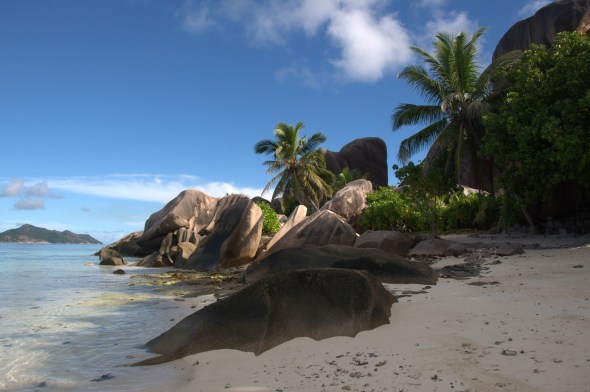
Anse Source d’Argent
I had high expectations for this glossy magazine favourite but didn’t leave disappointed. It’s one of the most beautiful beaches I’ve ever seen and a pre-dawn walk from my guesthouse meant that I had it to myself at sun up. There’s something about the size of the granite blocks that makes it feel almost prehistoric.
Pointe Sable, Haiti
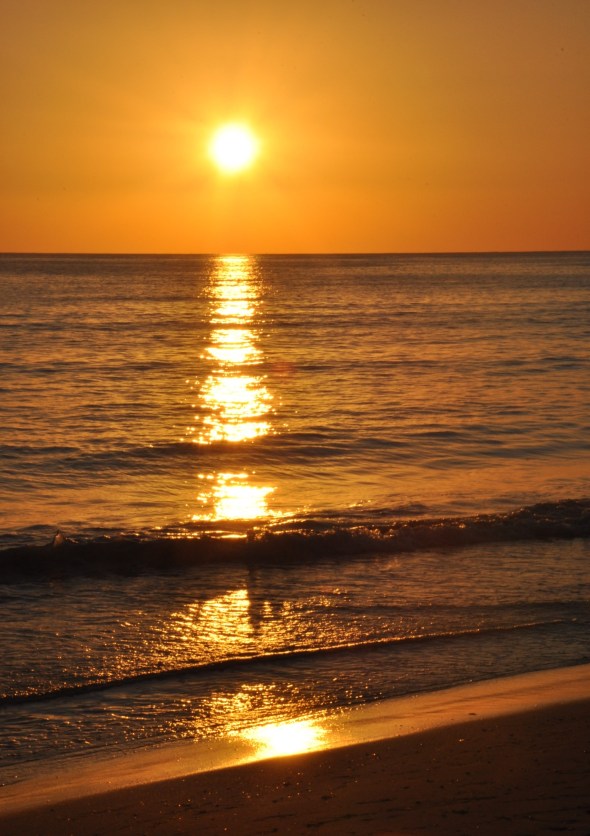
Sunset at Pointe Sable
Solitude is hard to find in the Caribbean, but Haiti’s still off the beaten track and this beach at Port Salut was the prettiest I found during my travels there. It’s popular with aid workers at weekends, so time your visit for midweek to have it to yourself.
Little Hunter’s Beach, USA

Little Hunter’s Beach
I really enjoyed a few days in the coastal town of Bar Harbor, Maine, the jumping off point for Acadia National Park. Parking up on the loop road, I found serenity and beauty in this tiny cobbled beach. Most people drive right by as the beach isn’t signed.
Jökulsárlón Beach, Iceland

Jökulsárlón beach
Nicknamed the diamond beach, this spot near the outflow of the retreating Oraefajokull glacier is pockmarked with glistening icebergs that have calved and been washed out to sea. Out of season, when the crowds are thin, it’s one of the country’s most incredible sights.
Elmina Beach, Ghana
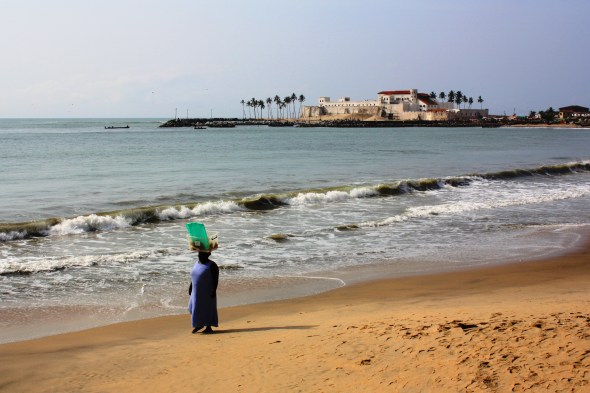
The beach at Elmina, Ghana
No matter which way you walk from the castle at Elmina, you quickly reach unspoilt, almost deserted beaches. Save for a few hawkers the fine sands and superb views are yours alone. São Jorge da Mina castle has stood on the spot for over 500 years, built by the Portuguese to use as a trade hub and later part of the Gold Coast slave trade.
I’m looking forward to finding some world class beaches in Cape Verde. If you’ve been, I’d love to hear your recommendations.
How much do we really know about the countries we visit?
Several news items this week have left me considering just how much we really know about the countries we visit. Freedom is something which we all too often take for granted here in the UK and wrongly assume the same rights and privileges exist when we travel abroad.
I remember returning from a brief trip to Syria in 2010 and extolling the country’s virtues. I’d walked down the streets of Old Damascus at two in the morning, I said, and felt safer than I did at home. Yet a few short months later, the conflict kicked off that has since destroyed this once peaceful nation and truths about how such security was achieved made for unpalatable reading. It was a wake-up call for me as a traveller. I’d always felt like I was well prepared. Now I realise that I didn’t know the half of it. And still don’t.
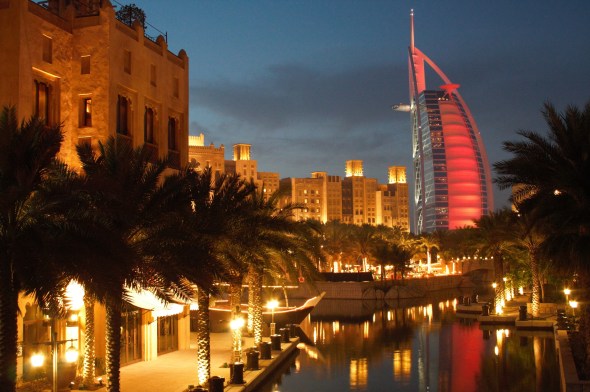
How much do we know about the politics of the countries we holiday in? Today, a Scot has received an official pardon after being handed down a three month prison sentence in glitzy Dubai for public indecency. The man’s crime was to have touched a man’s hip in a bar; his defence argued it was to avoid spilling his drink over the stranger. Sheikh Mohammed bin Rashid al-Maktoum has exonerated him, yet he still returns home £30,000 out of pocket and without a job as a result of this travesty of justice. He isn’t the first Brit to fall foul of Dubai’s strict laws. According to the organisation Detained in Dubai, a married couple were falsely accused of having sex out of wedlock and only escaped jail when they were able to produce their marriage certificate. Sadly, there are many more stories like the two I’ve mentioned.
A news item from the US reinforced that even in the Land of the Free all is not what it seems. I’m not even talking Trump here – though the decisions made by his administration are often hard to comprehend from this side of the Pond. No, in June of this year, New York banned child marriage under the age of 17. Though technically the legal age of marriage in most states is 18 (in Nebraska it’s 19 and Mississippi 21), loopholes permit marriage before this – and in 25 states there is no minimum age at all. We’re talking kids as young as 11, children whose life chances are altered irrevocably by the very people that should be most concerned with their welfare. So while it’s good news for New York’s minors, others in the US aren’t so well protected.

Closer to home, Spain’s young democracy is being tested by recent events in Catalonia. Franco’s 20th century repression of Basque and Catalan culture plays some role in shaping current political opinion. Whatever your views on whether the referendum should have been held and whether the ensuing result holds any weight, it has been hard to watch government-backed violence at the polling stations. It’s shocking to think that a member of the EU cares so little about freedom of speech. Such a heavy-handed approach has done little for Spain’s reputation. Only time will tell how they move forward and whether they can fix what seems, from the outside at least, to be an impossible situation.

So how much do we really know about a country before we visit? It would seem, not enough.
Just back from: a day trip to Venice
Regular readers of this blog will know how I’ve made a number of day trips by air to some of Europe’s most captivating cities. Yesterday saw me jet off to Venice, in perhaps my most ambitious trip yet.

You’ll find a full list of the others at the bottom of this post or on my Index page here:
https://juliamhammond.wordpress.com/index/
While I’m not suggesting for a minute you’re going to truly get under the skin of your chosen destination in such a short space of time, it is great when you have little or no holiday left but still have that pressing need to travel. Or in my case, a desire to keep two dogs out of kennels and into Daddy Day Care which is always a priority. If you believe those predicting Brexit will put an end to cheap European flights from the UK, time could be running out to snap up a bargain. Here’s the how, where, when and what of Venice in a day.
Getting there
My local airport is Stansted, the main UK base of Ryanair, and once again it was to the controversial budget carrier that I looked for my cheap fare. Normally, Ryanair flies in to Treviso airport, but while the airport has been closed for essential runway maintenance, flights are being rerouted to Marco Polo instead. Marco Polo also has the advantage of being closer to the city and well connected by both boat and bus. The current closure lasts until 18 October, but it’s worth keeping an eye out as it’s not the first time I’ve read flights have been diverted. My flight departed on time from Stansted at 0620 and touched down ten minutes ahead of schedule at 0910. The return left a few minutes after its scheduled departure time of 2230 and taxied to the terminal to unload us at 2355, about 15 minutes late. Total ticket cost this time was £34 return. I should also add, as per usual I didn’t bother with a seat reservation and got a randomly allocated window seat on the outbound flight and an aisle on the return leg.

To reach Venice from Marco Polo it’s possible to catch a bus. An express service takes around 20 minutes to make the journey to Piazzale Roma, near the top end of the Grand Canal and the city’s Santa Lucia station. Return tickets cost 15 euros. But to arrive in style, I figured I needed to arrive by boat, though my budget most certainly doesn’t stretch to water taxis. There are, however, direct transfers from the airport with Alilaguna who offer a reliable service on one of three routes. This is double the price of the bus at 30 euros for a return, but in my mind well worth the cost. However, I should mention you do sit low in the boat, which isn’t great for sightseeing if you aren’t tall.

I opted for the orange route as it takes you via Cannaregio and then down the Grand Canal. Journey time to the Rialto Bridge was just under an hour. From there, the boat continues down to Santa Maria del Giglio, just short of St Mark’s. It was busy, and I had to wait for one boat to leave before getting on the second one, which added about a 30 minute delay to my journey. However, the boats serving the blue route were bigger and there wasn’t a wait. They loop via Murano and Giudecca instead, and calling at San Marco on the way. This is a really convenient option if seeing Murano’s famous glass is on your wishlist. However, it does take about 90 minutes to get to San Marco and it doesn’t transit the Grand Canal. The way I see it is that this transfer is part of your day out rather than just transport, but if time is the priority then the bus is a no-brainer.

Note: From Treviso, an airport bus scheduled to coincide with arrivals takes around 70 minutes to reach Piazzale Roma. Make sure that you’re on the ATVO bus and not the Barzi bus as the latter calls at Mestre station rather than Santa Lucia (requiring a second train journey to get to the city) and also Tronchetto Island which is again inconvenient for Venice’s top attractions.
The links you’ll need (including timetables, fares and maps):
ACTV bus and city boats: http://actv.avmspa.it/en
Ailaguna boat: http://www.alilaguna.it/en

Getting around
Venice is time-consuming to get around, which is why I refer to this as my most ambitious day trip to date. Because of the lack of roads, you either have to walk or take to the city’s canals. It’s a pleasure to wander on foot, but the downside is that many alleyways are dead ends leading to canals or courtyards. Without a good map (or even with one) you’re likely to get lost. I relied on a combination of paper map, Google map navigation on my phone and a general sense of direction.

Those of you who know me will realise the latter is pretty much non-existent. Narrow streets and a maze of densely packed buildings mean that sometimes Google maps don’t quite have your location right. I also struggled with night mode, as the canals and alleys have almost no contrast – the waterways are such an essential aid to navigation that I switched it back to day mode. Fortunately even with very limited Italian, people were helpful to my pitiful “Scusi, dove Rialto Bridge?” attempts at conversation and pointed me in the right direction with a smile.
There has been a lot in the press about how residents are fed up with the city being overrun by tourists; the historic centre’s residential population numbers only 55,000 now, compared to an estimated 28 million visitors annually. Do the maths: that’s more tourists per day than the number who actually live there. Whether it was because I visited in the quieter shoulder season or whether such irritation has been exaggerated in the press, I didn’t see any indication of frustration with tourists invading locals’ space. But it’s certainly not an issue to brush under the carpet.

Due to the unhappy marriage of being time-poor and totally incompetent at map reading, I decided to splurge on a day pass for the city’s ACTV boats. This cost 20 euros and can be purchased at the many ticket booths near the jetties. (The jetties themselves are easy to spot being a) near the bigger canals and b) on account of their bright yellow livery as in the photo below.) You do have to validate the pass before you step onto a floating jetty, or risk a hefty fine. Look for a white oval terminal as you step off dry land and tap the card against it. I got my money’s worth hopping on and off, but you’ll need to make several journeys to cover your outlay.

Things to do
With so many sights to choose from, whittling down what’s easily a month’s worth of sightseeing into the nine hours I had in central Venice was tricky to say the least. It helped that this was my third trip to Venice, so I’d already seen the main attractions and (fortunately for me) years ago, well before selfie sticks had been invented. I was also keen to test out the new policy of the Venice authorities which is to encourage people to explore off the beaten track. You’ll find a wide choice of suggestions here (when they first pop up, you might think they’re written only in Italian but they’re actually dual language with English too):
http://www.veneziaunica.it/en/content/itineraries


I began my day by alighting at the Rialto Bridge boat jetty and crossing the bridge itself to the adjacent market. Originally the market moved to this location in 1097, but a 16th century fire destroyed almost everything in the vicinity. The market was rebuilt and despite being a stone’s throw from the tourist crap which lines the bridge and its environs, manages to retain more than a little of its charm. There’s plenty to see, including more varieties of mushrooms than you could ever expect to see back home, capsicums done up like posies of flowers plus of course a pungent but vibrant fish market.

There’s a treat tucked around the back of the market in a hard to find alley (even with the address, Sestiere San Polo 429, it was concealed so well it took me a while to find either of its two doors) What I’m referring to is Cantina do Mori, the bacaro which claims to be the oldest in Venice. This tiny bar whose ceiling is hung with dozens of copper pots still retains a customer base who are happy to share their local with tourists like me. It’s been around since 1462 and once counted the infamous lothario Casanova among its clientele. Today, it’s still a popular place to go and have an ombra (Venetian slang for glass of wine) and soak up the alcohol with some cicheti (or in English, cicchetti), the Venetian equivalent to Spanish tapas.


Eventually, I prised myself away from the bar and its surroundings. I decided first to take a stroll in search of Venice’s narrowest street. Calle Varisco is just 53cm at the little end, though mercifully for pedestrian flow, it widens as you walk down. If I’m honest, I was a little underwhelmed; several properties off the street were having work done and there was a fair bit of rubbish around as a result. Forget what you’ve read: it’s not the narrowest street in the world (that’s a German one) and it’s not even close to being the slimmest in Italy.

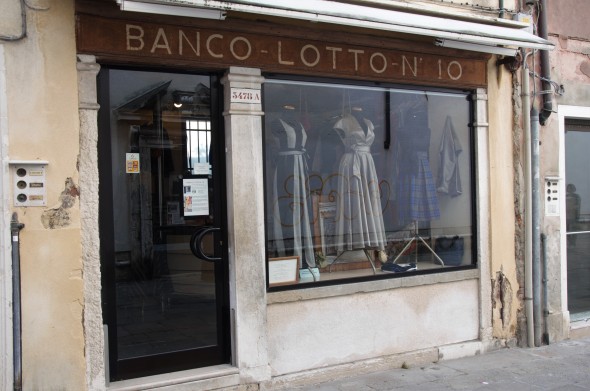
Moving on, I headed north and picked up a boat which looped around the Castello district to bring me to the San Zaccaria stop. I was hoping to see if the church’s flooded crypt was underwater, but it closes from 12 noon until 4pm each afternoon so was out of luck. Nearby though, I passed Banco-Lotto No. 10 which sells clothing made by inmates at the women’s penitentiary on Giudecca Island. Sadly, that too was closed, though it shouldn’t have been according to the sign on its doorway. The clothes looked fabulous, even for someone with my limited fashionista skills.
Next up was a bookstore, and one which proves that Amazon can’t provide everything. The Libreria Alta Acqua is a treasure. Books stacked in precarious piles fill every inch of available space. Balanced on shelves, filling redundant gondolas and bath tubs, they represent what a bookstore should be.


This is a place to be savoured, to potter and to forget the time or anything else on your mind. The store owner wandered about, leaving the rather scary looking cat to mind the till while he wheezed and tutted to himself looking for items unspecified but clearly important. I think I could have watched him all day too. Out back was the tinest of courtyards with a sign imploring people to climb up some wobbly stairs made of old books to see the view over the canal.


I couldn’t resist walking south via St Mark’s Square. This might sound odd as I really hate the crowds and the tourist paraphernalia but I think I wanted to see just how bad it was. On the way, in Calle del Mondo Novo, my nose caught the aroma of a cheese and ham store as my eye was drawn to a pig in the pizza shop window opposite. Incidentally, I read that you should never eat pizza in Venice as wood-fired ovens are banned with just a tiny handful of exceptions. The store, Prosciutto e Parmigiano, is known locally as Latteria Senigaglia (that was the name of the original family-run dairy produce store which was set up in 1940).


In St Mark’s Square, I navigated a sea of people who couldn’t have been more synchronised in pointing their mobile phones towards whatever their guide was pointing out had a musical soundtrack been in place. Pausing only to recreate the famous shot of the gondolas lined up facing out across the lagoon, I hopped on another vaporetto. This one was bound for the church of San Giorgio Maggiore. From the top of its belltower, or campanile as they’re called, the views across the city are splendid and of course you look out over the campanile in St Mark’s Square rather than from it. It costs 6 euros to ascend, but for that they provide a lift, and free entertainment when the bells chime the hour, frightening unsuspecting visitors. Best of all – no queues.

It was mid-afternoon and I wanted to explore a little more before I left, so I took a boat a short way up Canale della Giudecca, jumping off at Spirito Santo church to cut back through to the Grand Canal near the Peggy Guggenheim art collection. Another vaporetto took me to Venice Casino from where I could cut through to the district of Cannaregio. This is on the Venice authorities’ recommendations list and is where you’ll find the Jewish Ghetto. It lacked the crowds of St Mark’s and it’s probably very uncharitable of me to hope that the city’s campaign is unsuccessful and it stays that way.


I had planned to have an early dinner in Osteria al Bacco, which is one of the area’s most highly rated restaurants, but got sidetracked by the wonderful Al Timon instead. You do need to book ahead for dinner reservations, though they don’t always serve what they display in the window. Get there right on the dot of six when they open to grab a table for cicheti and a Spritz – for something classically Venetian, swap the fashionable Aperol for Campari.


Time was ticking on so I took a last vaporetto ride along the Grand Canal and then bought a ticket for the boat back to the airport. I’d definitely recommend a visit outside of summer and most importantly, away from the crowd. Venice is never going to be one of my favourite cities, but it’s growing on me.
The other day trips by air:
Ibiza
https://juliamhammond.wordpress.com/2017/05/13/just-back-from-a-day-in-ibiza/
Copenhagen Christmas markets
https://juliamhammond.wordpress.com/2016/12/05/just-back-from-a-day-at-copenhagens-christmas-markets/
Regensburg
https://juliamhammond.wordpress.com/2016/11/25/just-back-from-a-day-trip-to-regensburg/
Belfast
https://juliamhammond.wordpress.com/2016/10/17/just-back-from-a-day-trip-to-belfast/
Budapest
https://juliamhammond.wordpress.com/2016/10/07/just-back-from-a-day-in-budapest/
Bremen
https://juliamhammond.wordpress.com/2016/06/07/just-back-from-a-day-trip-to-bremen/
Lisbon
https://juliamhammond.wordpress.com/2014/10/20/just-back-from-a-day-trip-to-lisbon/
Amsterdam
https://juliamhammond.wordpress.com/2015/01/26/just-back-from-a-day-trip-to-amsterdam/
Monarch’s collapse: your rights
Sadly, this morning’s headlines that Monarch has collapsed wasn’t shock news. The company had been in trouble for years, with several bailouts brinking it back from the brink of collapse on more than one occasion. Once, it cleaned up on routes to Tunisia, Turkey and Egypt, but had been badly hit by the slump in tourist numbers to those destinations in the face of terrorist attacks. Its Greek business was hit by the economic crisis and in response, it turned to the saturated markets of Spain to try to balance the budget.
It’s the largest UK airline ever to fail. That’s no consolation for the estimated 110,000 people stranded or left with their holiday plans in tatters. This collapse affects at least a further 300,000 people who are due to fly, perhaps more.

What to do if you’re on holiday with Monarch right now
Sit tight. For those booked with Monarch Holidays, the CAA are negotiating with hotels so that you can stay. If you are asked to pay a bill, keep receipts. The CAA are saying they will reimburse you, though the end date for this is uncertain as yet. If you are due to fly home, the CAA are putting on flights to get you home.
A webpage has been set up by the CAA to provide information to travellers. Find it here:
On this website there are details of flight rebookings. Click on the airport you are travelling back from and it will open up the flight number and timing of your new flight. At present, just today’s flights are up, so if you’re due to travel in the next few days, you’ll have to check back later.
If you’re in the UK but have a future Monarch flight or package holiday booked
The CAA’s advice is repeated here:
Flights booked directly with Monarch Airlines from 15 December 2016 onward
Customers with these bookings are not ATOL protected and are not entitled to make a claim to the CAA. You are advised to contact your card issuer, insurer or PayPal for advice on how to claim a refund.
I add: if you have booked using a credit card and the cost of your flight is £100 or more, you are covered. (If you book a return flight, the cost of the total must be over £100, i.e. each leg can be under £100 so long as when combined they’re over.) The credit card company will reimburse you. If you have booked with a debit card, you might be able to get your money back via something called Chargeback; contact your issuing bank for details. If you have specific cover for airline failure in your travel insurance policy, this is also a route for recovering your money. Note that this isn’t a standard clause on many insurance policies.
Back to the CAA:
Flights booked on or before 14 December 2016 directly with First Aviation Ltd trading as Monarch Airlines
If your flight was booked with Monarch Airlines on or before 14 December 2016 and you received an ATOL Certificate stating that your flight is protected with First Aviation, you are ATOL protected. We are making arrangements for refunds to be made as soon as possible to these UK customers.
We will be providing more information on how you should claim shortly. You will be able to submit a claim when we make the Monarch claim form available. Please do not submit a claim until advised to do so.
Bookings made directly with Monarch Airlines from 15 December 2016 onward are not protected by ATOL.
I add: ATOL protection refers to the Air Travel Organiser’s Licence. Basically it ensures you don’t lose your money or get stranded abroad if the company responsible for getting you home goes bust. You receive an ATOL certificate with your holiday paperwork. What happens is that companies lodge money with the CAA in case the CAA has to step in and get their passengers home. Monarch’s ATOL licence ran out on September 30th and as they couldn’t afford to renew it, they were forced to call in the liquidators.
If the ATOL-bonded company goes bust, you apply directly to ATOL for your refund. The CAA website explains what to do, as reproduced here:
Holidays booked directly with Monarch Holidays
Customers booked directly with Monarch Holidays are ATOL protected and will have received an ATOL Certificate when they made their booking. We are making arrangements for refunds to be made on these bookings as soon as possible, and we aim to complete this by the end of 2017 at the latest. We will be providing more information on how you should claim shortly. You will be able to submit a claim when we make the Monarch claim form available. Please do not submit a claim until you are advised to do so.
Monarch flights and Monarch Holidays booked through another travel company or travel agent
If you booked a flight or holiday with another travel company or travel agent you should contact them directly about your arrangements.
What to do if you’re impacted by Ryanair’s cancellations
If you’re affected by Ryanair’s announcement that they are cancelling many hundreds of flights over the next six weeks, you’re going to need to know your rights. This is how the news broke:
If your outbound flight has been cancelled at short notice:
First, see if you can rebook. According to Ryanair’s website, this should be possible online. People are reporting on social media that the Ryanair helplines are overwhelmed and they’re not able to complete a rebooking over the phone. Obviously with so many people chasing so few seats at short notice, many are going to be disappointed. So what then?
If you cannot find a satisfactory rebooking (e.g. your flight is being rebooked but so late into your holiday to make it as good as useless) then you’ll need to apply for a refund. You may also be entitled to compensation. These are your rights under EU law if the destination is within the EU or if it’s an EU carrier like Ryanair:
Flight cancellation
Flights under 1500km – 250 euros compensation
Flights over 1500km – 400 euros compensation
Note: this only covers you if your cancellation occurs 14 days or less before your flight. If you are due to travel in more than 14 days’ time and your flight is cancelled, this will be treated by the airline as a rebooking or rerouting. You still have the right to cancel with a full refund of what you paid for the flights, but will not be eligible for additional compensation.
Delayed arrival whether with Ryanair or alternative carrier
Flights under 1500km – 2 hours
Flights over 1500km – 3 hours
If you are delayed, you are also entitled to food and accommodation vouchers. Full details here:
http://eur-lex.europa.eu/legal-content/EN/TXT/?uri=LEGISSUM:l24173
Note that it can take many months to secure this compensation, despite EU regulations stating refunds must be paid within a week. Remember you will need to keep all receipts and boarding passes. It’s also a good idea to send letters recorded delivery if you are getting nowhere by email.
If you decide not to travel, have a look at what expenses you’ll incur, such as accommodation that cannot be cancelled at short notice. The airline is not liable for this. It will need to be claimed back from your travel insurance company. Making a claim such as this doesn’t affect your right to EU compensation if applicable.

If you’re abroad and your inbound flight has been cancelled:
The above applies but you’ll also have to factor in whether you need to be back home as a matter of urgency or can afford the time and money (up front at least) to extend your trip. You might find it easier to deal with staff face to face at the airport though this can add to your stress as there will be a lot of other angry passengers there which isn’t going to make you feel better.
You can try to persuade the airline that rebooking you with an alternative carrier e.g. a seat on a rival airline is a better idea. You’ll have more bargaining power if the airline itself is very tight for space and is struggling to get you somewhere, especially if you’re stranded and they’re having to pay for your overnight accommodation. Remember if you pay for your own alternative flights, you’re out of pocket.
It can be very hard to get them to pay, as I found out with CityJet a few years ago. CityJet refunded their own flight (that they cancelled fifteen minutes before departure) but because I didn’t want to wait for an alternative with CityJet or spend another night in Paris even at their expense, I paid for the Eurostar alternative. I eventually funded it out of the compensation I received eight months later. Read the full story here:
https://juliamhammond.wordpress.com/2015/03/06/finally-a-win-against-cityjet/
If you can get through on a helpline, that is often better, but you will need to be patient. Be as calm, polite and flexible as you can, particularly if you need to get back home in a hurry. Remember the person on the phone isn’t directly to blame and venting your frustration isn’t going to get you anywhere.

If you’ve a flight coming up which is currently unaffected:
This currently is where most Ryanair passengers are, fortunately, and the social media furore should calm down for the most part now that people know where they stand. Nevertheless:
Have a Plan B. Research alternative airlines or other means of transport on the inbound leg. Check your email on a regular basis so that if your flight is next to be affected, you’re amongst the first to know – and fight for the seats that might be available on alternative flights.
Print out or save to your phone a copy of the EU regulations (see link above) so that there can be no dispute with airline staff about your rights – it will be in black and white.
Double check your travel insurance, especially the limits and excesses for flight delays and flight cancellations. Again, keep all receipts and boarding passes as you’ll need them to make a claim. Keep proof of the cancellation.

What now?
Ryanair’s lack of consideration for their customers, though not a surprise, is still a concern. They won’t be the first and last airline to do this. I’ve had similar late in the day cancellations from American Airlines (weather related issues leading to a 48 hour delay in New York when I should have been in Nicaragua) and as mentioned, with CityJet (who didn’t even inform us the flight was cancelled, just checked us in as normal and quietly removed our flight from the departures board). But for the record, Ryanair, you need to remember who keeps your staff in a job and your planes in the air.
Update 17 September from the excellent Simon Calder at The Independent:
Update 18 September of full list of cancellations on the Ryanair website:
https://www.ryanair.com/ie/en/useful-info/help-centre/travel-updates/flight-cancellations7
How to reduce your risk of being caught up in a Caribbean hurricane
As Irma finally begins to blow herself out, the US and many Caribbean islands have been left reeling from her effects. Sustained 185mph winds have been recorded during this Category 5 storm, beaten only by Hurricane Allen in 1980 which registered winds of 190mph. On top of that, of course, are the floods which result from torrential rain and the even more dangerous storm surges caused when winds slam ocean water back onshore with terrifying force. Even a Category 1 hurricane is not to be taken lightly, as those who live in hurricane-prone regions will testify. For casual holidaymakers unused to such events, it’s even more frightening. So has seeing Irma’s devastation marked the end of your Caribbean holiday plans? Here’s why it shouldn’t and how you can avoid getting caught up in such a disaster.
Choose your island carefully
Statistically, some Caribbean islands are hit by hurricanes far more often than others. According to data compiled by stormcaribe.com for storms between 1944 and 2010, you’re most likely to be affected if you’re in Abaco in the Bahamas, with Grand Bahama, Bimini and New Providence islands hot on its heels. A couple of islands in the Netherlands Antilles also occur in the top ten, notably Saba and St Eustatius. Making up the numbers are Nevis, Key West, Tortola in the BVI and the Cuban capital Havana.

Conversely, the bottom of the list features some well known names. Barbados, Grenada, St Lucia and St Vincent are much less likely to experience a hurricane. Such severe storms rarely if ever take a southerly track, making the likes of Trinidad and Tobago, Aruba, Curacao and Bonaire the safest bet in the region. For the full list check out this link:
http://stormcarib.com/climatology/freq.htm
A broader picture (and more up to date, factoring in storms up to 2016) is offered by Hurricane City. Their list factors in storms as well as hurricanes, giving a more rounded and perhaps more accurate appraisal of the risk posed for the Caribbean, Bermuda and the USA. Joining the Bahamas to represent the Caribbean in the top ten are the Cayman Islands. Because this list encompasses storms as well, there are a few northerly locations there too:
http://www.hurricanecity.com/rank.htm
Avoid peak hurricane season
If you really want to go to the islands that lie in the path of potential hurricanes then you’ve got to be picky about when you go. Technically, the Atlantic hurricane season begins in June, but rarely do we see really damaging hurricanes before late August. 2005 was a bumper year for big storms – Katrina among them – and was the year when we saw the earliest Category 4 storm (Dennis on July 8th) and Category 5 storm (Emily on July 17th). The storm season officially comes to a close at the end of November though on rare occasions they can continue until December or even January. Yes, you guessed it, that happened in 2005 too. They’d already run through the named hurricanes by October when Wilma hit and eventually needed to borrow six letters of the Greek alphabet. Tropical Storm Zeta finally brought the season to a close when it dissipated on January 6th 2006.

Check the NOAA forecasts
Each year, the National Oceanic and Atmospheric Administration (NOAA) offers a forecast for the upcoming season. They take in a number of factors such as ocean temperatures and, though it’s not an exact science, have a good track record in identifying busy years. So far, 2017 is falling in line with predictions. It kicked off with Tropical Storm Arlene in April – two months ahead of schedule – and with the likes of Harvey and Irma, is set to be another of those unforgettable seasons. If you want to avoid being caught up in a severe hurricane, then if it’s been quiet, you’re much less likely to find yourself in trouble if you want to make a late booking. And if the worst happens, this leaflet is packed with useful advice:
Click to access TropicalCyclones11.pdf
My thoughts are with those who found themselves in the path of recent Atlantic hurricanes. I hope that those affected get back on their feet and that the impacted economies recover as quickly as possible. Once they do, they’re going to need your tourist dollars, so don’t write off this beautiful region just yet.
Ten of the best American cities
The USA’s diversity makes it one of my favourite countries and there are many cities I’ve revisited – or hope to do so – over and over again. Here’s my top ten: what are yours?
New Orleans, Louisiana

Sultry New Orleans ticks all the boxes: history, colour, a sense of fun and plenty of quiet, atmospheric corners to retreat to when the buzz gets too buzzy. The mansions of the Garden District stand in haughty contrast to the tackiness of Bourbon Street, but you don’t have to stray far from the notoriously crass party hub to find wrought iron balconies and heart-lifting melodies within the iconic French Quarter.
New York, New York
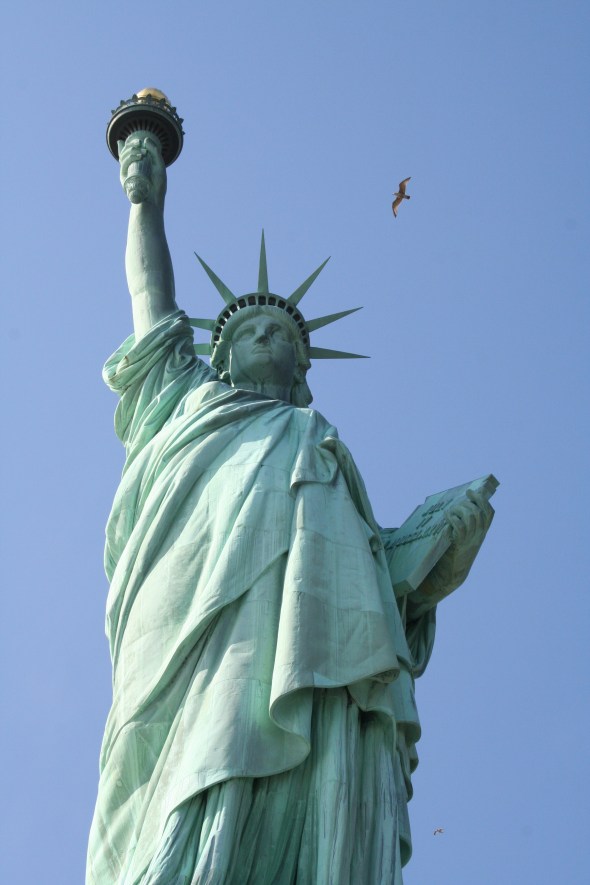
I’ve been back to New York countless times yet never tire of the place. But now I’ve ticked off the sights, on recent trips my focus has been on some of its most fascinating neighbourhoods and ethnic food joints. It delivers. But then I’d expect nothing less from the self-styled “Capital of the World”. Where else can you enjoy a southern-style Gospel brunch, El Salvadorean pupusas for lunch and the most succulent steaks outside Argentina for dinner?
Savannah, Georgia

Savannah’s centre has a split personality. On the one hand, its genteel tree-filled squares host historic mansions, each with its own intriguing tale to tell. Yet barely a stone’s throw away lies River Street, which comes alive each evening with bars and restaurants thronging with customers. This Georgia gem has it all – and some of the best beaches in the State just a short drive away.
Charleston, South Carolina

Elegant Charleston oozes sophistication from every cobble and porch, yet somehow manages to make you feel you’re worthy of a stay here. Beautifully tended gardens force you to stop and stare, even though you know you shouldn’t intrude. Yet in the bay lies Fort Sumter where the first shots of the Civil War were fired – there’s passion and fervour behind that steely façade.
Bar Harbor, Maine
A visit to Maine is a lesson in Geography, as Down East is actually north and residents travelling south to Boston say they’re going up. The map might be a bit squiffy but there’s no mistaking you’re in New England with fresh lobster, seal boat trips and the dark greens of Acadia’s firs and pines set off to perfection against a muted palette of pink granite and yellow sand.
Philadelphia, Pennsylvania

The Liberty Bell draws a crowd who queue patiently to inspect the crack in the iron that signalled the very first reading of the Declaration of Independence. Beyond that historic district is a city that is proud of its heritage and isn’t afraid to work hard to make a living. Best time to visit? New Year’s Day, when Philly lets its hair down for the annual Mummers Parade.
San Antonio, Texas

The city famed for the Alamo delivers, but the surprise is that the Alamo is overshadowed by the city’s other attractions. The River Walk, a flight of steps down from street level, is lined with restaurants and bars where minutes turn into hours without you even noticing that the time’s passed. With plenty of museums, galleries, and a Stetson hat store to rival anything anywhere, this place begs to be revisited.
Seattle, Washington

The iconic skyline with the instantly recognisable Space Needle might be what draws visitors to Seattle (or at least fans of Grey’s Anatomy) but this is another city where the memorable attractions are those which you didn’t know about before you landed. The fascinating story of a city built on lumber and a whole other world of underground storefronts and sidewalks awaits visitors who’ve watched the fish fly at Pike Place Market and sipped their coffee in the Starbucks where it all began.
San Francisco, California
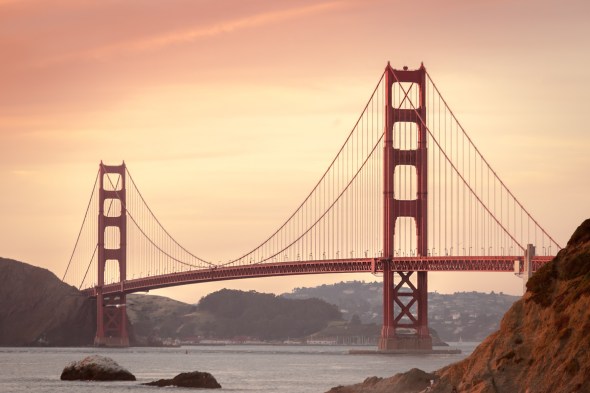
The seaplane pilot wore a grin with a span to rival that of the Golden Gate Bridge. Visibility, he said, was the best he’d seen in thirty years. Luck like that burns memories into your brain so deep they never fade. And under blue skies, sights like Alcatraz, Fisherman’s Wharf and the artists of Sausalito don’t get any better. Just check those brakes before you drive down the world’s most crooked street…
Memphis, Tennessee

Green shag pile carpet on a stairwell ceiling? Check. Acid yellow walls framing a bank of chunky televisions? Check. A private jet in the car park bearing the name Lisa Marie? Check. Graceland might not impress in terms of size but its Seventies style will leave you gawping, mouth open wider than the zip on that white jumpsuit. Oh yeah, and there’s music on Beale Street when you’re ready to return to the present.
There you have it; I’m sure Miami, Chicago and Boston will have their fans, as will Vegas, DC and the City of the Angels. What makes your list?
Tourism on my doorstep: Colchester’s Bourne Mill
Eighteen months ago, I moved to a village close to Britain’s oldest recorded town. Colchester was mentioned by Pliny the Elder in 77 AD; it was then known as the Roman settlement of Camulodunum. After much time spent doing DIY and decorating the house, I decided it was time to get out and explore the town on my doorstep. Today that took me to the delightful Bourne Mill, a National Trust property just outside Colchester town centre.

Bourne Mill with the stream running beneath it
If you live in East Anglia, you might be interested to know that Greater Anglia are running a promotion this summer called Let the Adventure Begin. There’s also a competition running until mid-August in which you could win first-class train tickets to any station on their network:
Win that, and you too could be exploring Colchester. Visitors today can see plenty of evidence of the town’s long history, from the Roman Berryfield mosaic at Firstsite to surviving groundworks of the Roman theatre which can be seen in Maidenburgh Street in the town’s Dutch Quarter. The Tourist Information Centre run a superb bi-weekly walking tour which I highly recommend.

Colchester Castle
Now, look closely at the photo above and in particular, the materials used to build the castle. The structure that you see is Norman. Construction began in 1076, similar to the Tower of London, but all is not what it seems. The foundations stand on what was the Temple of Claudius dating from about 55-60 AD and many of the building materials were recycled from Roman Colchester. In particular, look at the red stones that form the cornerstones – they look almost like roof tiles. These crop up elsewhere too, for example, in the remains of the fortifications that once encircled the town (you can make them out about halfway up the original wall to the left of the picture below):
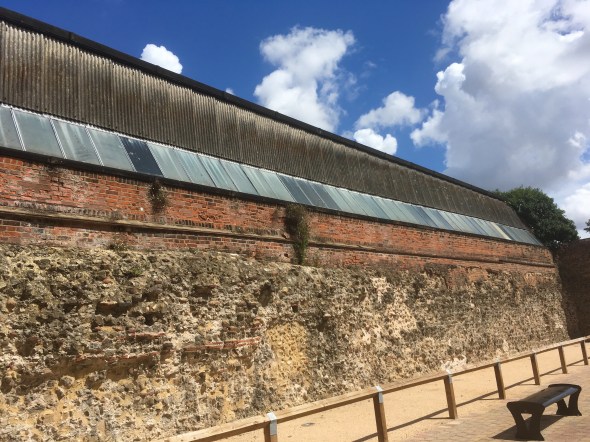
Roman wall near St Botolph’s Priory
I shouldn’t have been surprised, therefore, to see the same materials plundered to build Bourne Mill, located about a 20 minute walk away. This National Trust property was originally a fishing lodge used by the monks of St John’s Abbey. A stream, the Bourne, emerges a short distance north of the site and spills out to form a large pond, thought to have been created artificially as there appears to be no geological reason for the water to widen.

The pond at Bourne Mill
After the dissolution of the monasteries during the reign of Henry VIII, St John’s Abbey passed to the Lucas family and later, they began to demolish it. Seeking to improve on the monks’ fishing hut, they constructed what’s now Bourne Mill. The stones were cannibalised and together with those Roman bricks, pieces of flint and some Walton-on-the-Naze septaria to hold it all together, this wonderful building was the result.

Bourne Mill
Well actually, not quite.
What Sir Thomas Lucas built was a single story dwelling, thought to be a place where he could go with his well-heeled mates to fish and then hang out over dinner. On the ground floor, there are two fireplaces which lend credence to this theory. Carp, pike and wildfowl would have been plentiful so it seems likely that this story is true. This beautiful banner, stitched by the Colne and Colchester Embroiderers Guild, tells the story.
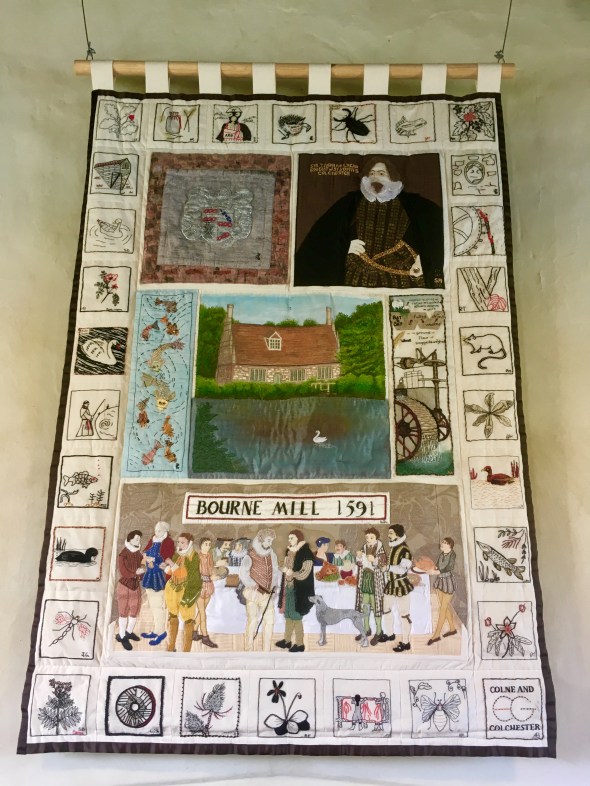
Wall hanging at Bourne Mill
But that story doesn’t end there, of course. Now that Britain was Protestant, it became a haven for those fleeing religious persecution in Catholic Europe. Granted refuge by Queen Elizabeth 1 in 1565, they boosted the town’s population, congregating in what would later become known as Colchester’s Dutch Quarter. Though they kept themselves separate when it came to socialising and marriage, they did have a profound effect on the north Essex landscape and economy, bringing their weaving industry skills and breathing new life into a flagging industry.
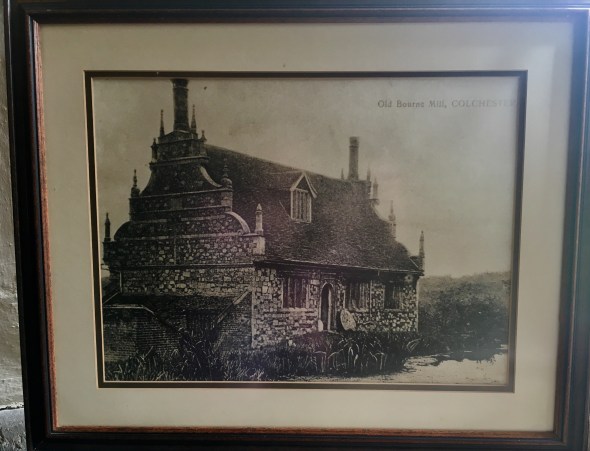
Bourne Mill prior to its use as a corn mill
The Dutch introduced new worsted draperies, known as bays and says. They were lighter and cheaper, and not surprisingly proved very popular. A method of quality control was introduced in 1631, immediately raising the status of Colchester cloth. That Dutch seal automatically meant that your cloth fetched a higher price; faulty workmanship, on the other hand, would lead to fines (called rawboots) being levied.
Bourne Mill grew an upper storey, recognisable by the gable ends that are also commonly found in the Netherlands and Belgium. It became a fulling mill, a place where cloth was softened to make it more wearable. A waterwheel would have made the process of hammering the fabric much less labour-intensive. Initially urine, collected from the poorhouse, would have been used in the process; the ammonia it contained helped to clean and whiten the cloth. Later, Fuller’s earth would have been used instead. Afterwards, the cloth was stretched on frames known as tenters to dry – attached by tenterhooks.
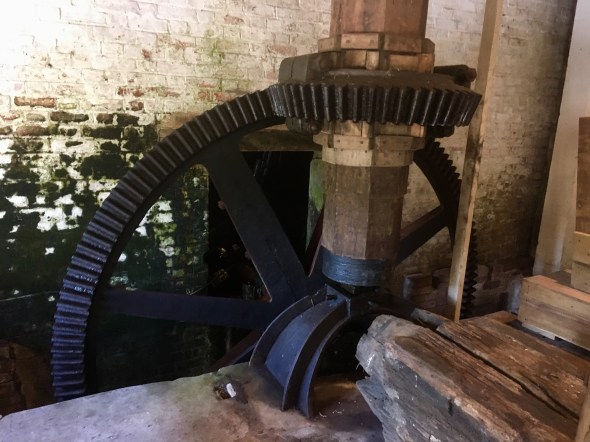
Part of the wheel mechanism
After a while, the Essex cloth industry fell into decline once more. The cloth industry, bay especially, was vulnerable in the 18th century to disruption by wars, competition from rival manufacturers, and the import of cotton. As the cloth industry declined, the fulling mills were converted to grind corn or grain, competing with the many windmills that dotted the landscape. By around 1840, Bourne Mill was no longer in use as a fulling mill. It was converted to a corn mill by 1860 and it’s for this purpose that the uppermost floor and sack hoist would have been installed. Later, it was steam driven, but the last miller hung up his apron in 1935.
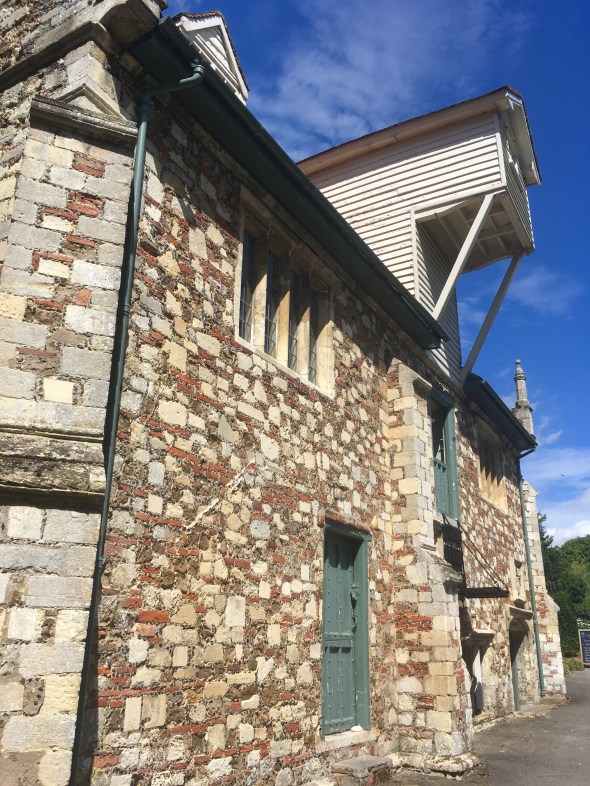
Bourne Mill today
Honestly, I was pleasantly surprised at just how much there was to see and learn at Bourne Mill, expecting only to see a waterwheel and not a lot more. The team of volunteers work hard to bring the Mill’s history to life and succeed in communicating their enthusiasm. I’d especially like to thank Liz Mullen and Joan Orme for their insights and for not burdening me with more historical detail than I could cope with.
Acknowledgements and practical information
I’d like to say thanks to the National Trust who provided me with a free pass to visit Bourne Mill. If you’d like to do the same, entrance costs £3.75 for adults and £1.90 for children. The place is open from Wednesday to Sunday inclusive, from 10am to 5pm. Dogs are welcome on a lead, though there’s a steep ladder-like staircase to the upper storey which they won’t be able to access. There’s a small cafe too and plenty of picnic tables perfect for sitting and watching the ducks, including Joan’s favourite with the quiff.

Check out that fluffy head!
There are plenty of things to do with the kids, including free use of the Mill’s pond dipping equipment, making this a good choice now that the school summer holidays are upon us:
https://www.nationaltrust.org.uk/bourne-mill/features/things-to-see-and-do-at-bourne-mill
The National Trust website also has a guided walk which you can follow to get a better grasp of your surroundings. I shall be back soon to try it out.
https://www.nationaltrust.org.uk/bourne-mill/trails/bourne-mill-a-wee-wander
If you’d like to begin with the Camulodunum to Colchester walking tour, then this takes place at 11am on Saturdays year-round, with additional walks on Wednesdays at the same time throughout the summer. Walks need to be pre-booked as they do fill up; adults cost £4.30 and children £3.10. Find out more here:
http://www.visitcolchester.com/things-to-do/tours-sightseeing.aspx

At Bourne Mill, parking is limited on site – Sir Thomas Lucas didn’t plan ahead – but you should be able to find roadside parking nearby. Better still, take the train. Greater Anglia’s nearest station is Colchester Town. It’s about a 20 minute walk from the town centre to the Mill, but you can catch a bus to Mersea Road from outside the station if your feet have had enough.
The fastest connections from London Liverpool Street to Colchester’s main station take just 46 minutes and just over an hour to the Colchester Town station right in the centre of town. More details can be found on the Greater Anglia website:
https://www.greateranglia.co.uk/
#lettheadventurebegin
Everything you need to know about flying
The title’s a bit of an exaggeration – at the very least a work in progress – but I’m in the process of creating an index for my blog posts. Here’s the first instalment. With years of independent travel under my belt there’s a lot of advice I can share about airlines and air travel. From finding business class flights at fares lower than economy to what to do if your flight is cancelled, there’s a blog to help.
Tips for saving money on flights
https://juliamhammond.wordpress.com/2014/10/15/nine-tips-to-save-money-on-flights-and-one-to-avoid/
Cabin baggage charges
https://juliamhammond.wordpress.com/2017/07/22/the-increasingly-thorny-issue-of-cabin-baggage/
What to do if you miss your flight
https://juliamhammond.wordpress.com/2016/07/27/what-to-do-if-you-miss-your-flight/
How to travel business class for the price of economy
https://juliamhammond.wordpress.com/2016/07/18/how-to-fly-business-class-for-the-price-of-economy/
Are business class flights really worth the extra?
https://juliamhammond.wordpress.com/2016/06/14/are-business-class-flights-really-worth-the-extra/
How to survive a long haul flight
https://juliamhammond.wordpress.com/2016/05/03/how-to-survive-a-long-haul-flight/
What’s it like to travel long haul on a budget airline?
https://juliamhammond.wordpress.com/2017/01/19/whats-it-like-to-travel-long-haul-on-a-budget-airline/
Thoughts on airports
https://juliamhammond.wordpress.com/2016/05/24/its-almost-time-to-go-to-the-airport/
Transport options from Heathrow to London
https://juliamhammond.wordpress.com/2015/12/07/how-to-get-the-best-out-of-a-heathrow-layover/
How to get the best from a Heathrow layover
https://juliamhammond.wordpress.com/2015/12/09/how-to-get-the-best-out-of-a-heathrow-layover-part-2/
Getting your money back if your flight is cancelled
https://juliamhammond.wordpress.com/2015/03/06/finally-a-win-against-cityjet/
The increasingly thorny issue of cabin baggage
Airline Jet2 are in the news this weekend, with an article in the Daily Mail highlighting their new policy of charging for guaranteed cabin baggage. You can read the article here:
http://www.dailymail.co.uk/news/article-4719308/Now-airlines-charge-bring-HAND-LUGGAGE.html
I was a little suspicious, given the propensity of the Daily Mail to be economical with the truth, so I did some fact checking. Buried within the Jet2 website, and revealed as far as I could see only after you have reserved flights and are well into the booking process, is the opportunity to pay extra to keep your bag with you:
Subject to availability, you can pre-book “guaranteed cabin baggage” for an extra charge, and if you have purchased this service, you will not be asked to put your hand baggage in the hold (unless it exceeds the weight and size requirements detailed above or operational requirements apply). If we require your guaranteed cabin baggage to go into the hold for operational requirements, you can contact customer services to arrange a refund for any charges which you have paid for this service.
I tried a sample booking of a flight from Stansted to Dubrovnik. The cost of ensuring your cabin baggage made it into the cabin with you (subject to those operational requirements not being necessary, of course) was £3 per person per leg, a little more than the £2.59 quoted in the Mail’s article.
Would you pay it?
I’m not sure I would. But then I’ve rarely taken a suitcase on board and instead prefer to check it or, better still, leave it behind. I find it irritating to wait while wheelie after wheelie bangs its way down the aisle, though with airlines charging to put such luggage in the hold, I can hardly blame those doing so. But this not only slows boarding, it often means that there’s too much luggage to fit. I’ve taken many a Ryanair flight – the airline guarantees only the first 90 carry on bags will make it on board – and watched it all kick off as people are asked (or not) to hand over their bags. My fairly small day pack has always made it on board, I presume because it can fit between my feet and wouldn’t have to be placed in the overhead bins.
Wizz Air, it would seem, have had to backtrack on their plans to charge for guaranteed larger sized cabin baggage. You can take on a bag of up to 42x32x25cm free of charge, but to carry on an item up to the maximum dimensions (55x40x23cm) there’s a price to pay. Until 29th October 2017, this can be anything from 10 to 20 euros according to the small print on their website (35 euros if you take care of business at the airport), but this add-on disappears after that date, supposedly incorporated into the price of your seat. Have Wizz caved under the pressure of customer complaints, I wonder?

At this point, you’re likely to be muttering things about budget airlines, but they’re not the only offenders. Increasingly, scheduled, so-called full service airlines are supplementing their fares with extra fees and charges. And when it comes to revenue “earned” by such add-ons, you might be surprised to learn who the worst offenders are:
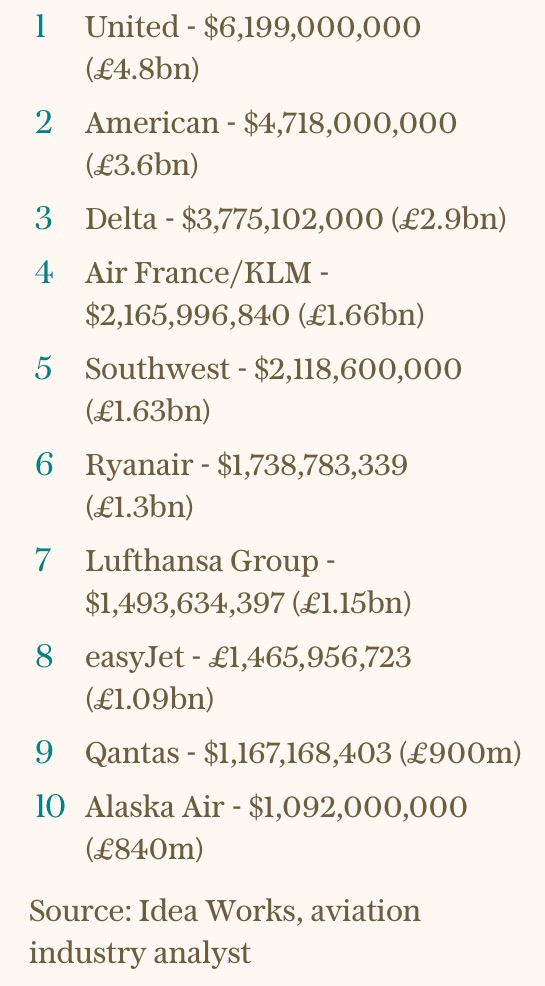
Some airlines are worryingly reliant on additional revenue as a share of their total earnings. You can read the full report here:
http://www.telegraph.co.uk/travel/news/airlines-that-rely-most-on-extra-charges/
So, even on a scheduled airline, if I want to select my seat in advance (and even as a solo traveller I might, or risk being stuck in that middle seat that no one wants) I’m likely to have to pay for the privilege. At the moment at least, I’m not likely to have to hand over my carry on luggage but who knows how long that might last?
I don’t think we’ve seen the last of this. As travellers, if we’re determined to do so on as low a budget as possible, we’re going to have to think hard about what we really need to take with us. I shared my packing tips here:
https://juliamhammond.wordpress.com/2016/02/28/packing-tips-from-someone-who-learnt-the-hard-way-2/
Taking large suitcases will perhaps become a luxury rather than the norm. It will certainly be interesting to see if Jet2’s new policy lasts the distance, and if it does, whether other airlines will follow suit.
What are your views? Would you pay to ensure your bag comes on board with you or do you think it’s one rip-off too many? I’d love to hear what you think.
Photos from Ushguli
During my recent trip to Georgia, I spent a day in the hotch-potch straggle of villages collectively known as Ushguli.

One of the best preserved Svan towers
They’re reached by an apology of a road from Mestia, the main focal point of tourism in Svaneti. I shared a taxi with a couple of Germans to bounce and slide over gravel, in and out of potholes and scarily close to sections of road which had just fallen away. The road’s in the process of being rebuilt, so don’t let that put you off.

The view is worth the effort
Ushguli translates as “fearless heart” which matches the reputation of the Svans historically being a fearsome people suspicious of incomers. Five villages form the settlement of Ushguli: Murkmeli which you pass as you go in, Chazhashi where your driver will park, and then higher up Chvibiani, Zhibiani and Lamjurishi, the highest of which claims to be the highest permanently settled village in Europe. It’s a slightly dubious claim, though, not least because geographers and other experts can’t even decide whether Georgia is European or Asian. (I’ll save that one for a later blog post.)


So what is it about Ushguli that makes it worth the arduous journey? Mostly, it’s the setting. Reached at the dead end of this rural road, all that stretches ahead of you are the few clusters of homes and Svan towers that constitute the villages and then meadows framed by the mountain peaks of the Great Caucasus. UNESCO have had Chazhashi on their list since 1996. Part of the attraction is just to find a quiet corner and sit. There’s also an ethnographic museum in one of the towers which is far more interesting than it sounds. Honestly. I’m no great fan of museums but it was good.

12th century cross in the ethnographic museum
In Mestia, the person to find is the lady that sells the marshrutka tickets from her agency next to the bakery in the centre of town. She manages more of the drivers and you’ll wait for less time. A return ticket in a shared taxi costs 20 lari. Be prepared to negotiate how long a wait you’ll have in Ushguli with your driver. Tip: if you wish to spend more than a couple of hours, it’s worth popping into the restaurant he’s likely to have holed up in to make sure he’s not been knocking back too many beers.
Some of my favourite shots from the day:
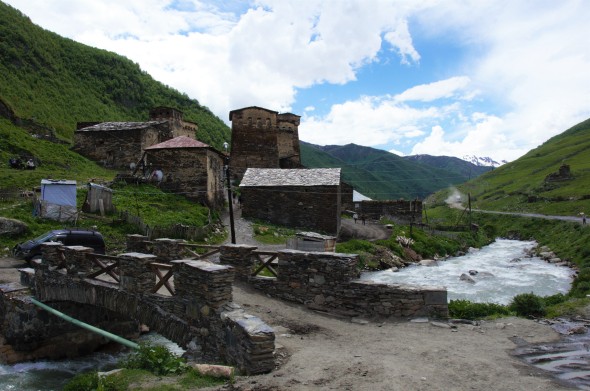
Chazhashi’s riverside setting

View from inside the ethnographic museum over Chazhashi

Sheepdog guarding the ethnographic museum
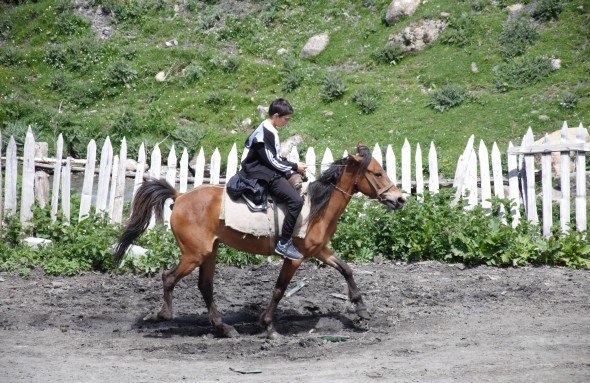
Young tearaway on a lively horse

Grandma takes a rest

Scratching post

Cow under the public toilet

Piglets feeding

Tower and current occupant!

Cow wandering through the village

Looking down over Ushguli

Monastery dwarfed by mountain

Transport home? “You can go faster but I can go everywhere.”
If you’re planning a trip to Georgia – and you should – make sure you don’t miss Svaneti. You can stay in Ushguli and you can even do a three day hike there from Mestia in the short summer season. Or you can do as I did and base yourself in Mestia and visit Ushguli for the day.
Why you should visit the Armenia Genocide Museum and Memorial
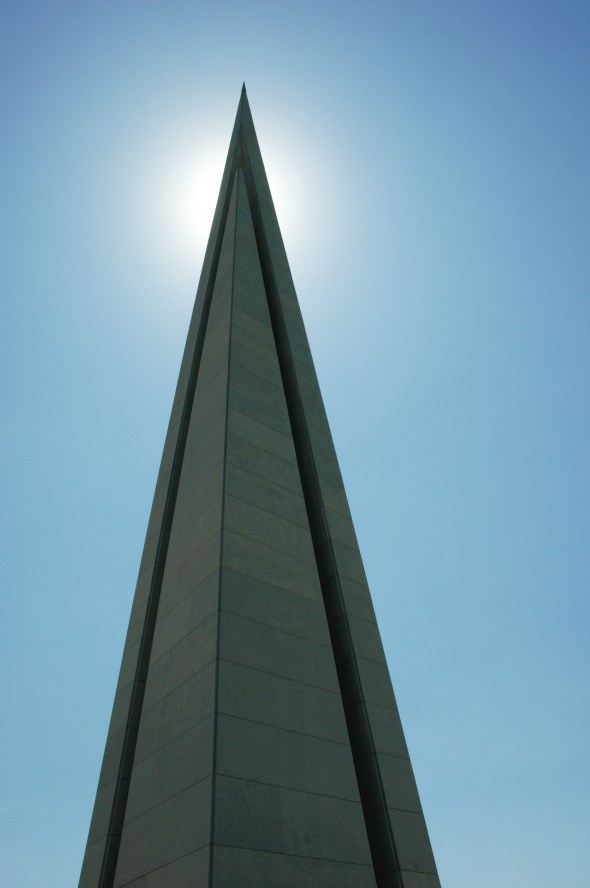
On Tsitsernakaberd Hill, overlooking the city of Yerevan, you’ll find a pilgrimage site dedicated to the 1.5 million victims of the Armenian Genocide. Their harrowing story cannot fail to move you, as it did me.

I sit, alone. The music haunts every inch of stone and every speck of dust. The sound of violins, melancholic yet soothing, permeates the soul. I feel it. It seeps into my heart and as I focus on the flickering flame, I raise a hand to my cheek, wiping a persistent tear. A few sorry bunches of carnations have wilted where they were placed. Tall slabs of basalt crush the sunlight. The sky is obstinately blue but in here, inside the stone circle, it’s a place of shadows and ghosts. I’m shocked at the strength of my feelings. Until yesterday, I hadn’t been aware an Armenian genocide had taken place. And I’m ashamed of that.
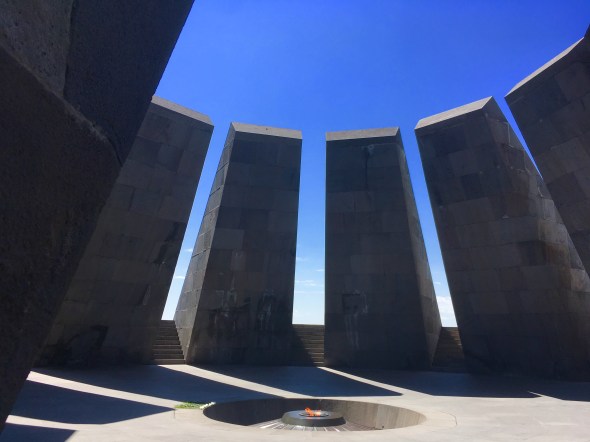
A cleaner arrives with her broom and sweeps, rhythmically, until my attention is forced out of its sad reverie. She busies herself collecting dead blooms and rearranging those that will stay. A young man follows her with a camera, framing and reframing his shots. He clicks repeatedly but then he too is still. A family of five arrive, speaking Armenian, and pose in endless configurations for snapshots beside the flame. The emotion I felt is lost and I glance at my watch. The museum is open. I head inside.
I read, missing nothing, trying to make sense of what happened. In the late 19th century, Armenia was a divided country. The Persians had ceded territories to the Russians, who occupied what was then known as Eastern Armenia. Strategically important Western Armenia had fallen to the Ottomans in 1555 and over four centuries later, they retained control. War between the Russian and Ottoman Empires had torn Armenia apart. Armenians living under Turkish rule looked to the Russians for protection but though the 1878 Treaty of Berlin set out basic rights for Armenians they were not honoured. Amidst growing calls for independence, Sultan Abdul Hamid, the leader of the Ottoman Empire, tightened his grip on the dissenters. Words were banned: Armenia, rights, freedom.
To ban the word freedom is an alien concept. From my privileged life in a stable democracy, how could I understand?
Compelled, I read on. In 1895, 300,000 protesters were massacred in Constantinople in an attempt by Hamid to shut down the Armenian Question for good. It didn’t work. Nine years later, there was another uprising. The stability of the Ottoman Empire was under threat. In 1908, a political party called the Young Turks seized power. Their policy of the “salvation of the Turkish homeland” could only be achieved, they held, by the liquidation of the Christian population. Under their watch, anti-Armenian atrocities continued unpunished. A further 30,000 were killed in a market in Adana in 1909. Their treatment was horrific. Many were set alight or stabbed repeatedly. The backs of children’s legs were gored with cotton hooks leaving gaping holes. A series of photographs documented the horror.

I’m struck by the eyes. They stare, vacantly, yet implore those watching to act. But it’s too late. I’m a century too late.
World War One was to provide cover for the vilest act of all. A secret treaty was signed, allying the Ottomans with the Germans. Needing the support of its largely Islamic population to survive, the Turks proclaimed Jihad in an attempt to demonstrate their religious credentials. In October 1914, 60,000 Armenians were called up to fight, joining others already conscripted. They fought, bravely, at Sarikamish on the Caucasian Front under Enver Pasha, but were no match for the wintry conditions. The Ottomans suffered huge losses and 70,000 lost their lives. A scapegoat was required. The Armenians were that scapegoat. Soldiers who had fought alongside Pasha were killed on his orders. Afterwards, the Young Turks turned their attention to civilians, murdering politicians, clergy, intellectuals and other eminent Armenians. Mass arrests followed, in Western Armenia and Constantinople.
The Armenian family I saw at the memorial see that I’m making notes. It’s diaspora season and they’re from LA, bringing their children to the home of their ancestors for the first time. They ask if I’m a writer and if I’m going to write about this. I promise them I will, emotion choking my words. The mother hugs me, an unspoken thank you.
Unarmed Armenians in Ottoman territory were rounded up to be sent to the deserts of Mesopotamia and Syria, their property looted as they left. Men were separated and stabbed. Women, children and the elderly were spared, but instead driven south. On the way, their police and army escorts stood by and did nothing as bands of Kurds and Turks kidnapped and murdered the helpless. Those who did complete the journey ended up in concentration camps. In Rakka, Bab, Deir Ez-Zor, Ras Ul-Ain and Meskene, 600,000 endured horrendous atrocities. They were subjected to medical experiments, pregnant women were used for target practice, bare feet were shod as if they were horses’ hooves, children were burned alive or dragged behind horses until they died from their injuries. Rape was common. An estimated 600,000 lost their lives.

It’s hard to reconcile what I’m reading with the gentle and welcoming Turks I’ve met on my travels. I’m shocked to find I’m upset, not because I think it’s not worth getting upset about, but because at Auschwitz and Bergen-Belsen and Dachau, I haven’t been. Sobered, desperately sad, but not upset like this. The tragedy that befell the Armenians feels worse, somehow, because I wasn’t aware it had happened. I feel that in some way that means I’ve betrayed them.
On May 24 1915 France, Britain and Russia issued a joint statement condemning and declaring the Turkish government responsible for a “crime against humanity and civilisation”. After the war, the Young Turks were brought to trial. The key perpetrators – Mehmed Talat, Ismail Enver and Ahmed Djemal – were brought to justice and punished for what they’d done. Yet today, the mass extermination of Armenians isn’t acknowledged by all countries. Britain views what happened as a war crime and doesn’t recognise it as genocide.

I climb, slowly, from the bowels of the museum back up into the sunshine of the plaza, legs and heart heavy. Another tear escapes from my eye but this time, I let it fall.
Practical matters
To visit the Armenian Genocide Museum and Memorial it’s easiest to take a taxi. From Republic Square I paid 700 drams, just over £1. The museum is free to enter. Leaving, the unofficial taxis in the car park were asking for 2000 drams for the same ride. I walked down the hill and across the footbridge to the Dalma Garden Mall, from where I caught the #27 marshrutka back to Mashtots Avenue for a 100 dram fare. The bus stops right outside the Blue Mosque, also worth a visit.
Dude ranch vs. working ranch – how do you know what’s best for you?
Yee-ha! There’s still some kind of magic associated with the cowboy lifestyle, isn’t there? I don’t know about you, but seeing a man in chaps astride a horse is enough to get me all of a tizzy. Back home (and I’m not referring to my husband here) men can seem just a little too in touch with their feminine side. Out on the ranch, though, as they gallop off leaving a trail of dust behind them, well, it’s work for real men…

Yep, a ranch holiday is for me. But whether to spend my holiday on a dude ranch or on a working ranch was too difficult a choice – so I booked both. How did they compare?
The activities
Panagea Ranch, located an hour outside Tacuarembó in Uruguay, accepts visitors but expects them to get involved in ranch life. Juan inherited the ranch that his grandfather bought and has an emotional commitment as well as financial to the place which is obvious almost as soon as you arrive.

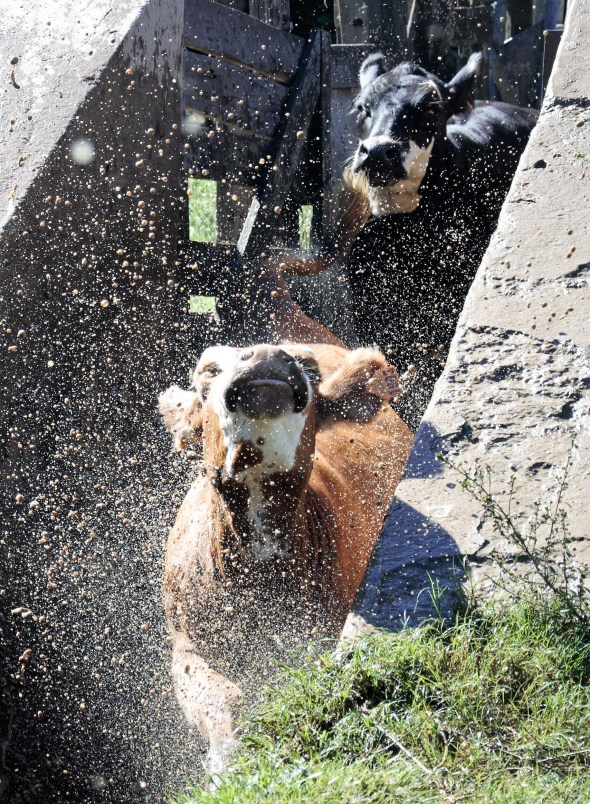
During my stay, getting involved meant riding out to check on the progress of a sick sheep (and finding it incredibly quickly considering there are 1800 of them!), rounding up some of the 1100 head of cattle to move them to new pasture and herding them into the dip so that they could be treated for ticks. It was hard work for a novice rider (though they don’t require any prior riding ability, it helps to have spent at least a bit of time in the saddle) but there was also a huge sense of accomplishment.
In contrast, the Dixie Dude Ranch, on the outskirts of the Cowboy Capital of the World (that’s Bandera, Texas if you didn’t know) offered more of a vacation experience. It has been welcoming visitors since 1937 and offers sedate trail rides, hiking and a huge pool with hot tub. There’s evening entertainment too. On the first night, we were treated to a ride in a hay cart to feed the couple of dozen longhorn cattle that can be found on the ranch.

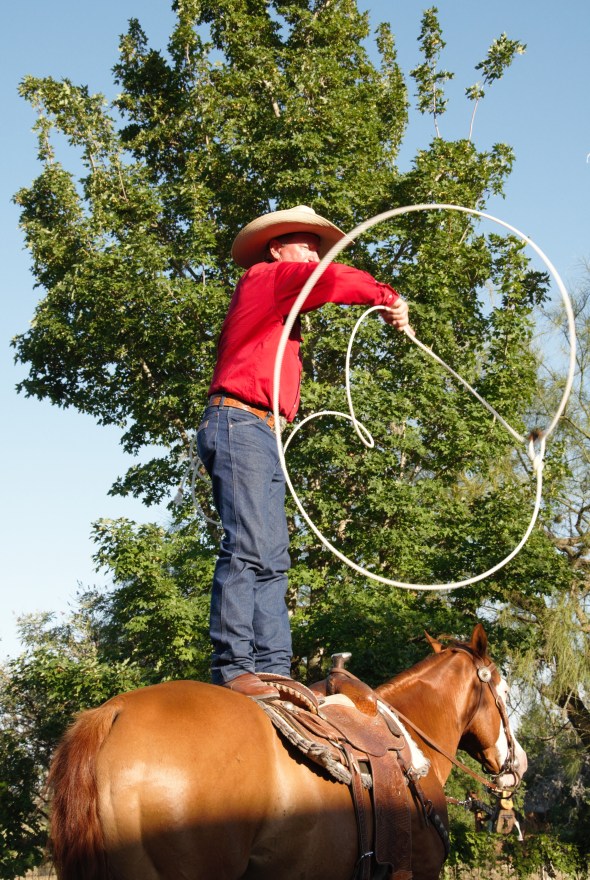
The next, we were treated to a show by a trick roper who was in town for the Bandera rodeo before heading off to Morgan Freeman’s 80th birthday party. Marshmallows were also provided to toast over the campfire. I travelled as part of a group and so we enjoyed relaxing by the fire in the evening – it’s a great place to head with a group of friends, though you may wish to stop off at Walmart on the way in as no alcohol is provided. They’re fine with BYOB.
The staff
In Uruguay, Juan Manuel was a little gruff at first but has a heart of gold and a genuine desire to both learn more about his guests and teach them how his ranch works. The sole female in a group of men on the first night, things were a bit macho at the start, but I did warm to Juan and have a huge respect for what he does. Susana makes you feel like one of the family from the get-go.

A warm Southern welcome was just what you’d expect from Texas and the staff made you feel like a VIP rather than any old guest. On the rides, at both ranches I felt safe and well looked after. The horses at both ranches were well looked after and their welfare a high priority.
The accommodation
Accommodation provided by Panagea is, by their own admission, fairly basic. Rooms were comfortable but when the ranch is full, single travellers might need to share. The beds were firm and everything spotlessly clean. Hot water is usually available but electricity is only available for a couple of hours each evening. There’s no WiFi. To be honest, I enjoyed that. It made me focus on the outdoors and I slept more soundly as a result. I also thought it was excellent value at US$65 per person per night full board including activities.
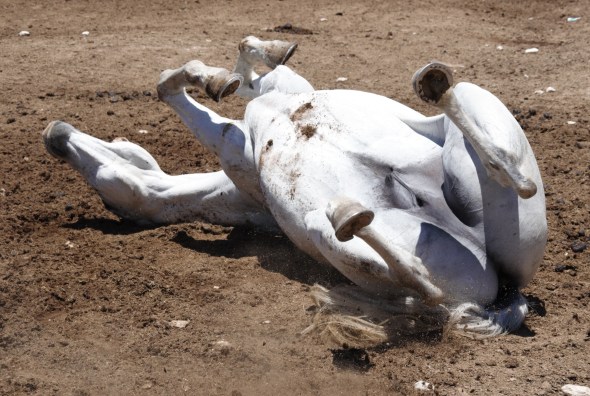
Dixie Dude Ranch is more akin to holiday accommodation with a range of chalets for guests and WiFi near the main building (though guests are asked to limit data usage due to restrictions outside the control of the ranch). I stayed in one of the oldest cabins, which was a little more basic than the newer ones. The latter were spacious enough to contain armchairs and even a fireplace. Water is sourced from the property’s well which was temporarily down one morning during our stay; service was resumed rapidly. My only niggle was the noise from the air conditioner which interrupted my sleep! As you’d expect, accommodation in the States is more expensive than in South America. Dixie Dude Ranch charges $165pppn for single occupancy and $145pppn if you share.
The food
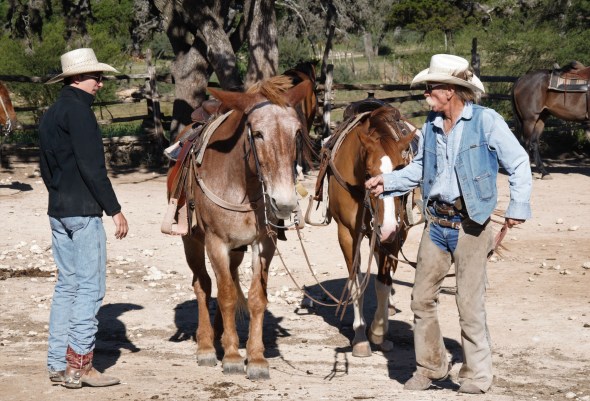
Both ranches welcomed guests on a full board basis. At Panagea, Juan’s wife Susana was an incredible cook and the food was in equal parts tasty and plentiful. When Susana’s in town, Juan cooks, and he does a mean barbecue. Dinner is when everyone’s back and the fire’s going; preparing, setting the table and eating is a communal affair with the family. Juan loves to promote Uruguayan wine and will happily toast to that with his guests. In the mornings, everyone helps themselves to what’s there; the wood-fired range was somewhat different to the induction hob at home but a fun challenge to master. The food at Dixie Dude Ranch was good too (though not quite to Susana’s standards) and there was plenty for second helpings. Service there was attentive and sincere.

The verdict
Which ranch stay would I recommend? I enjoyed both of them immensely, but in terms of the experience, it will be Panagea which I’ll more fondly remember. I think it’s probably because I felt a real sense of achievement there. As a novice rider who’s just about mastered a trot, I didn’t have the confidence to think I could help to herd cattle until Juan showed me I could. He is a great fan of making people step outside their comfort zone! Juan claims he can teach even a beginner in just a few days but I was glad I’d had a few lessons back home to learn the basics.
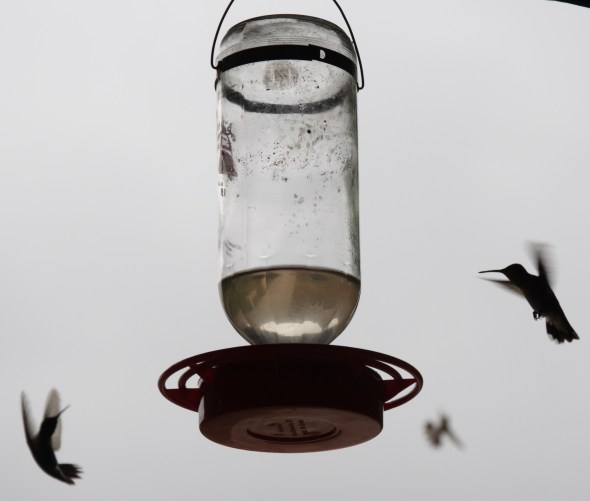
But I think if I’d never been on a horse before, Panagea might have been a bit too ambitious. Being able to mix riding with other activities (such as lazing by the pool or watching the hummingbirds come and go on the front porch) made Dixie Dude Ranch a great choice for a relaxing holiday. But get those riding lessons booked so like me, you can make it to Uruguay one day!
Is Austin weird?
The Texan city of Austin would like to think so. Proud of its alternative culture and buzzing music scene, the city’s slogan is “Keep Austin weird”. The dictionary definition of weird has the word’s meaning as “suggesting something supernatural; unearthly” or more informally “very strange; bizarre”.Compared to America’s many identikit cities, some parts of Austin have an indy feel, but is this enough to warrant the label?

Google “weird Austin” and there’s no end of blogs and e-zine articles trying to justify the term. From watching bats leave their roost under South Congress bridge to playing Chicken Shit Bingo at Ginny’s Little Longhorn Saloon, there are no end of suggestions.
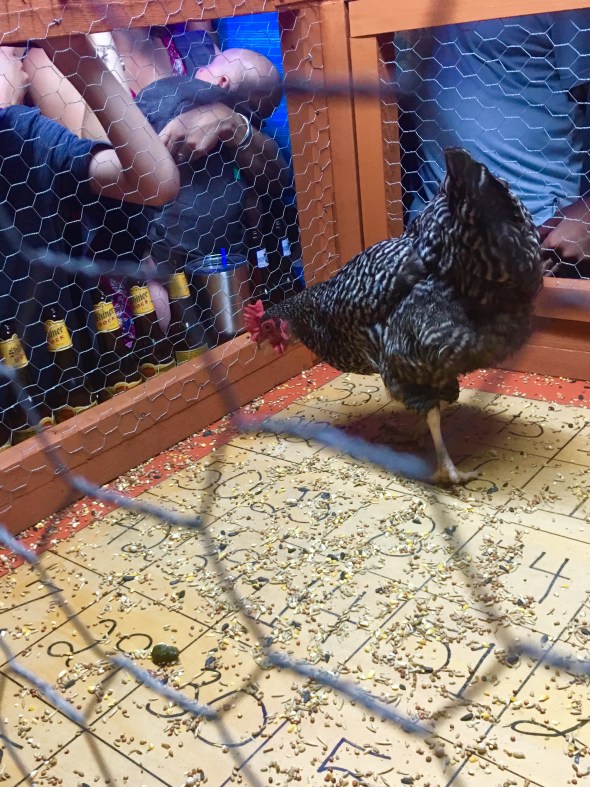
But read a little more carefully and you’ll perhaps find such writers are a little economical with the facts. There are suggestions that drinking a particular cocktail or watching a band play live in a bar is weird. Given that you can do that in any major city, I don’t see how that qualifies as weird.

There’s a whole load of street murals which are a common sight in many a city these days and a cathedral of junk – but isn’t that just someone’s interpretation of art? Someone even went so far as to suggest the local propensity for eating tacos qualified the place as weird. Seriously?

I didn’t take to Austin. In its defence, I was there for the weekend – and Memorial Day weekend at that. Entertainment venues were heaving, the restaurants were packed and added to the mix was a bunch of thunderstorms that brought unusually high humidity for the time of year.

The music was pumping, the bass was thumping. If you’re 21, you’d have loved it, but for this middle-aged traveller, it wasn’t ideal. Ginny’s had a classic car show on its forecourt and was even more rammed than the regulars said it should be. The bats left it so late to come out from their hiding place it was too dark to see them when they did. Disappointing it was, weird it was not.

And I’m not alone. Google “Austin is overrated” and you’ll also find plenty of results. For those of us that like to sightsee as well as socialise, there’s a relatively limited number of sights to see. OK it has the State Capitol, which as you’d expect from Texas is bigger than everyone else’s and impressive inside. There’s a couple of good museums, including the LBJ Library and Museum dedicated to President Lyndon Baines Johnson. The riverfront is pleasant, but nothing to write home about. There’s a certain charm to SoCo, with its quirky shops and the excellent Jo’s for coffee, but it’s bisected by the busy road which gives the district its name.

Amidst the noise, the many panhandlers that were just a stone’s throw from 6th Street and the Saturday night vomit on the pavement, one place stood out. The Broken Spoke had an excellent band, Two Tons of Steel, and a comfortable family vibe.
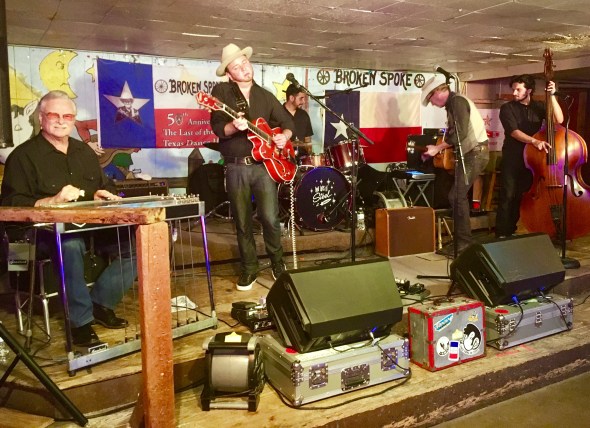
Sure, people were drinking, but there were also granddads dancing with their granddaughters and young couples deep in conversation in between masterful circuits of the dance floor. (Yes, the music wasn’t so loud as to drown out their voices.) My brief Texas Two Step lesson wasn’t sufficient to give me the confidence to join them but it was fun to watch. From the moment we stepped through the door to be greeted by an elderly cowboy in a rhinestone studded shirt, we were welcomed. By the time the charming Ben Rogers doffed his Stetson and took a break from propping up the bar to call us a cab home, we were made to feel like we came every weekend.
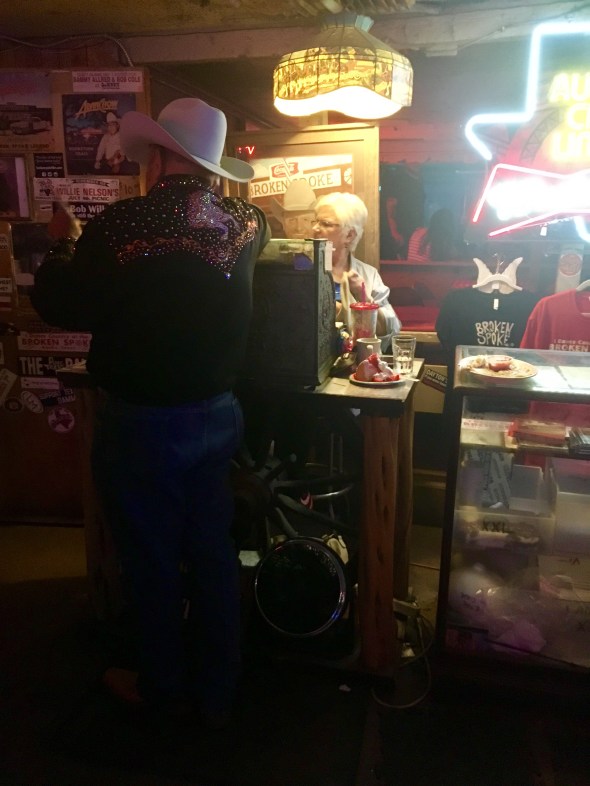
You see, what made Austin special was its residents. It’s that Southern hospitality thing kicking in again. In every venue and on every street corner, locals were keen to share their city. You don’t need a guidebook in Austin, you just need to hang around and chat. There’ll be no end of people to talk to.
We were given recommendations for places to eat, drink and shop without soliciting for information. What’s more, they turned out to be good. I’d have not known about the Iced Turbo coffee at Jo’s in SoCo if the friendly gent at the lights hadn’t passed the time of day, nor would I have found Easy Tiger, its yummy bratwurst a welcome change from the ubiquitous (but tasty) Mexican fare.
So, no, Austin’s not weird, no matter how much it would like to be, and as a tourist destination it’s a little dull, but its welcome is possibly the best you’ll get in the Lone Star state.
What you need to know about the US laptop ban
Much has been written in the press over the past week on the subject of a ban on larger electronics items entering the United States with airline passengers. Following on from the March policy shift in which inbound flights from certain Middle Eastern and North African destinations, there’s speculation that such a policy could be extended to European destinations.
What’s the current situation?
At present, passengers travelling to the US from ten airports are affected: Queen Alia International Airport (AMM), Cairo International Airport (CAI), Ataturk International Airport (IST), King Abdul-Aziz International Airport (JED), King Khalid International Airport (RUH), Kuwait International Airport (KWI), Mohammed V Airport (CMN), Hamad International Airport (DOH), Dubai International Airport (DXB) and Abu Dhabi International Airport (AUH).

Large electronics items, including laptops but also larger cameras like DSLRs and tablets such as the iPad, must be carried in the hold and cannot be taken on board the flight. How airlines are implementing this varies, but some are offering gate check in and secure packaging in the form of bubble wrap and cardboard boxes. This policy doesn’t extend to the return leg; flights departing the US for these ten airports are not subject to the same restrictions.
So why are people getting upset? Surely they can do without their gadgets for a few hours?
As talk grows about an extension to the ban, so too do certain worrying facts emerge. Many of these larger items are powered by lithium ion batteries, which up to now have been banned from the hold for safety reasons. They carry a risk of catching fire, something that could have disastrous consequences if unnoticed. The FAA itself stated its concerns in 2016:
There’s more here, from The Independent:
There’s also the issue of sensitive data on company laptops and directives from some businesses to their employees requiring them to keep such equipment on their person whilst travelling. For the regular tourist, it’s more a case of a lack of insurance. I might just about be able to cope without my iPad on a long flight if I went back to those old fashioned paperback things I used to lug around, but if the airline then loses my suitcase, my travel insurance policy won’t pay out. I really can’t afford to replace my DSLR if the lens gets smashed in transit. So, with a flight to Houston looming on Friday, I’ve been watching the TSA website and Twitter like a stalker.

So have they made a decision yet?
There were some misleading headlines last week, like this one in NYMag following a piece in The Daily Beast:
http://nymag.com/selectall/2017/05/laptops-banned-in-plane-cabin-on-flights-from-europe-to-u-s.html
Retweeted and quoted to within an inch of its life, The Daily Beast’s article, claiming an announcement would be made Thursday 11 May, sparked an angry reaction. In part, there was a touch of indignation along the lines of European nations being way too civilised to be lumped together with the Middle East.
But amidst all the fuss, some serious issues for the Americans began to be raised, not least the impact that it would have to the US economy and its tourism sector. This article from The Independent explains:
Yes, you read that right: 1 in 3 potential foreign tourists would think twice about going if this policy becomes a reality. I’m among them. I’d be seriously concerned about that fire risk, especially on such a long flight.
Here’s a follow up article, also from The Independent:
I’m hoping, as we get closer to my departure date, that even if the electronics ban is widened, the changes won’t take effect until after I’m there. Getting my valuables back to Blighty in one piece will be, as it has always been, down to me. But after that, much as it pains me to say given my love of the USA, I’d have to give it a miss, at least until the TSA came to its senses once more. It was reported that the TSA met with representatives of the US’ major airlines last Friday to see how a ban could be implemented; sources indicate that further meetings were to be held with EU personnel today. At the time of writing, there’s been no announcement.
Watch this space.
Update 18.5.17
Well as it turned out we didn’t have to wait too long for an update. Common sense has prevailed and the EU have persuaded the US authorities that widening the ban on larger electronics would be foolish:
http://www.bbc.co.uk/news/world-europe-39956968
The ban still exists for the ten Middle Eastern and North African airports, so think about your safety before you opt to fly. Happy travels!
Product test: Sunwise UVA clothing
It was August 2004. I was in Bali and I’d heard about a celebration known as Kuningan. This ceremony was held to mark the end of Galungan, a holiday similar to our New Year. Devotees dress in white with red sashes and bring offerings for their ancestors who are returning to heaven after spending time on earth for the Galungan festivities. They bring yellow rice, fish and fruit, placed in bowls made from leaves. The rice symbolises their gratitude to God for the blessings he has bestowed and the bowls are adorned with little figures representing angels which bring happiness and prosperity. It promised to be an incredible sight, so I made my way to the temple near Candidasa on Bali’s eastern coast.


Arriving, I wasn’t alone. In front of me was a sea of white, a crowd of people thronging the space between me and the temple entrance. Resigned to a long wait, I found a place in a queue of sorts and waited. It was late morning. The sun was already high in the sky and packing a powerful tropical punch. I wasn’t unduly worried. I’d put on some sun cream and had chosen what I thought to be a sensible outfit – a long sleeved cotton blouse. Time passed slowly and my shoulders began to redden. I applied more cream to the visible parts and thought no more of it. Eventually, I entered the temple and observed the prayers and rituals. It was a fascinating scene.
Later on, returning to the hotel, I realised the thin cotton blouse I’d worn was no match for the midday sun and my skin had not only reddened, it had blistered badly. I spent the rest of the holiday in the shade, cursing how ill-prepared I’d been. I’ve never been as casual about the sun since. Several of my friends have had skin cancer, and that’s not something I wish to emulate. According to statistics compiled for Cancer Research UK, there are over 15,000 new cases of melanoma skin cancer each year. While many are treatable, some, sadly are not. Realistically, with the amount of travelling I do and how fair my skin is, I need to be proactive about the precautions I take. Sun cream alone isn’t enough of a solution. Yet there are many tropical places in the world that I still want to visit. I don’t want to find myself in a position where I’ve got to stay out of the sun completely and miss out on the chance of seeing them.
But here’s the rub. I’ve never found much in the way of UVA resistant clothing that I thought I’d actually like to wear. The thought of putting on one of those clingy long sleeved surfer shirts in soaring temperatures and high humidity just doesn’t appeal. Nor do I find the functionality of the standard traveller clothing appealing; it just doesn’t feel like I’m on holiday if I’m wearing a collared shirt. So up until now, I’ve slapped on the sun cream (ruining many a white blouse in the process with those impossible to remove stains) and hoped for the best.
I’m not ready to give up my view of a tropical beach just yet. So when a friend offered to let me trial a UVA resistant kaftan, I jumped at the chance. Finally, something that would prevent a repeat of my Balinese burns. Its first outing was to Ibiza. In May, the temperatures are in the mid-twenties, perfect for a trial in conditions similar to a good British summer. Here’s how I got on.
Style 8/10

I just loved the colours in this. Blue always feels so summery and the mix of the palette works well as a pattern and means that it goes with a wider range of bottom halves. The longer length style, sitting flatteringly mid-thigh, meant this kaftan hid both generous hips and a tummy that likes to eat. I’m not usually a fan of the tie waist, as I do sometimes think such styles make me feel like a trussed turkey, but actually it too was attractive. I found that in a bow it did have a tendency to undo itself, but in a loose knot it looked just as good. The batwing sleeves hung to my elbow, giving it a pretty waterfall silhouette. The round neck, though high, was loose enough to be comfortable. In my selfies, though, it looks a little too high, reminding me of a hairdresser’s gown. In real life, this isn’t the case, as the length of the garment more than balances this out and obviously if you have someone else taking your holiday photos you’ll get a better image.

Comfort 9/10
I trialled this in a number of situations. As I was on the move, it’s yet to sit round a pool (watch out for an update later this month when it comes with me to hotter Texas). When I first looked at the label, I was a little concerned to see that it was made of 100% polyester, usually favouring cotton and linen for high temperatures. It was so lightweight though, that I never felt hot and sticky; it didn’t cling and hung beautifully. The versatility of this style means that it’s as at home in a cafe as it is on the beach, sophisticated enough for the city yet casual enough to wear poolside. I even went for a short hike in it. The floatiness of the fabric meant it didn’t ride up or become too rucked up around the legs. My only criticism is that with half-sleeves the lower parts of your arms are exposed. I’d love to see that the range is widened to include a long sleeve tunic blouse in the same colourway and fabric.


I’m not alone in praising its versatility. Fellow tester Kate had this to say when she packed it for a Med cruise:
“In Rome today and melting. The kaftan is absolutely brilliant. I don’t need cream under it and there’s been no burning at all. I feel posh too! Ingenious.”
Kate’s a skin cancer survivor and adds:
“It gave me so much confidence, took away the worry I have when I see the sun is shining! I could sit on a beach and look like everyone else in a glamorous floaty cover up, yet I knew my skin was being protected.”
Value for money 10/10
This item is new for 2017 and the retail price has yet to be finalised. I’m assured that it should be in the region of £25 to £30. At this price bracket, that’s excellent value for money in my opinion. The kaftan is well made and you’re getting a quality product. With little competition in the UK market, it’s hard to find a comparison, but similar clothing from high-end retailers can go for up to £100, making this a bargain.
Function 10/10
Let’s get real for a minute: the main reason you’re going to be looking at the Sunwise UVA product range is to buy clothing that is going to protect you from the sun. So did it do its job? I spent the day in and out of the sun, and even when my lower arms were reddening at my sunny cafe table over lunch, the parts covered by the kaftan were well protected. I’ve covered the lack of wrist-length sleeves in the style score, so for me this garment’s ability to protect me from sunburn in temperatures of around 25°C was first rate. If that changes when I up the temperatures a bit, I’ll edit this section to reflect its capabilities.
The verdict
Would I buy it? Yes, absolutely, and another one too if further colourways were to become available. It’s not something I’d have considered before, but I’m a convert.
Where to find it:
Sunwise UVA is a recent start up and would value your custom as well as your comments. Their current range can be viewed online at:
They’re also on Facebook: look for Sunwise. UVA clothing
Should tourist numbers be capped?
The authorities in Venice have recently announced that they will be introducing a series of measures to limit visitor numbers. Amongst other things, Venice’s city council plan to issue tickets for St Mark’s Square and leaflet tourists to encourage them to head to less-visited parts of the city. Supporters of the plan claim it’s necessary to protect a city that’s already on UNESCO’s endangered list; critics respond vehemently that a city should be open to all. Where do I stand? Somewhere in the middle, if I’m honest.
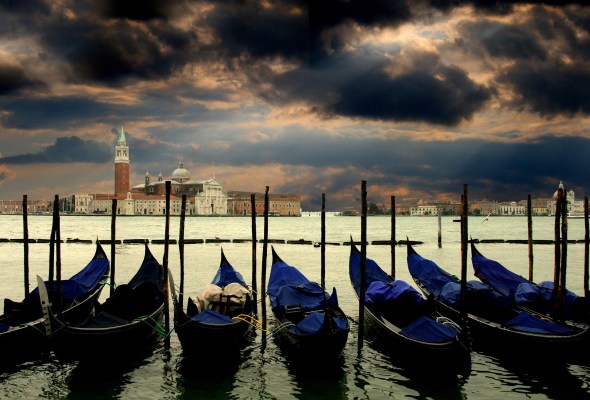
A storm is brewing over tourists’ right to roam
The more mobile the world’s population gets, the busier tourist honeypots are getting, and our visitor experience is suffering as a result. Travelling to many European cities in the middle of August can be more of a chore than a pleasure. I had to visit the Swiss city of Interlaken in August a couple of years ago and the sheer number of people competing for space was dangerously close to what the infrastructure could cope with. Added to that was a liberal scattering of selfie sticks, overflowing rubbish bins and a bunch of people whose disdain for queuing manifested itself in elbowing and shoving. It was about as far from tranquil as you could get, and certainly not what you’d imagine if you pictured a trip to the Swiss Alps in your head.
Getting close to views like this can test your sanity
Over time, however, tourist numbers can increase so rapidly that not taking action can jeopardise not only the visitor experience but the site itself. When I first visited Machu Picchu in 1995, I remember wandering with a friend amongst the ruins with hardly another soul there. Memories can be a little rose-tinted; statistics put the annual figure in those days at about 250,000, averaging out at a little under 700 a day. By the time I returned in 2006, the site felt busy and the prices hiked in what proved to be an ineffectual attempt to limit the number of people. Statistics estimate visitor numbers to have reached about 700,000 per annum by that point.
Once the only thing photobombing your shot would have been a llama
By 2014, an estimated 1.2 million tourists came, around 300,000 in excess of limits agreed between UNESCO and the Peruvian authorities. Erosion of paths and stones, waste disposal issues and the risk of landslides are, still, very real threats. The diesel-spewing fleet of buses might have been replaced by newer models and the threat to build a cable car that could well have sent the whole ruins tumbling down the mountain seen off, but Machu Picchu isn’t out of danger yet.

Visiting Machu Picchu is now a very different experience
There are plans to introduce compulsory guides, expect tourists to follow set routes through the ruins and limit time at the site to prevent Machu Picchu collapsing under the strain. I can’t face returning a third time under such conditions, but if I’d never been, I guess it would be better to accept these strategies than to miss out completely. I feel lucky that I got to visit many of the world’s iconic sights ahead of the crowd yet at the same time saddened that the way I experienced them is, by necessity, a thing of the past.
Even off season, Iceland’s wild views are coming under pressure
A whole raft of amazing places have implemented, or are planning to, measures to limit the impact of tourism. Whether following the Bhutanese model of insisting on a minimum spend of $200-$250 via a compulsory daily package, limiting numbers arriving by cruise ship à la Santorini and Antarctica or regulating hotel beds and the likes of Airbnb as is being considered by Iceland, the goal is the same: to find a limit which works for the environment and people. If your next bucket list destination is nearing breaking point, you’d better get organised (or rich) so you don’t miss out.
Salt flat tours: Argentina vs Bolivia
One of South America’s iconic bucket list activities is to visit the vast Salar de Uyuni. It’s been on my wish list for a while:
https://juliamhammond.wordpress.com/2015/03/18/after-104-countries-can-i-still-have-a-bucket-list/
Salar de Uyuni
This March I finally made it to Uyuni, 22 years after my first trip to Bolivia. On the way, I travelled from Salta along the Quebrada de Humahuaca, one of Argentina’s most attractive areas. A side trip from Tilcara took me to Salinas Grandes, Argentina’s largest salt flat. The two tours were as different as they come, so which was best? Here is my review.
The salt flats
The Salar de Uyuni is the world’s largest salt flat. It covers an area over 4000 square miles and sits at an altitude of over 3600 metres above sea level. The crust of what were once prehistoric lakes dries to a thick layer of salt, and the brine which lies underneath it is rich in lithium with something like 50-70% of the world’s known reserves. Even on a day trip, it’s not long before you’ve driven far enough out onto the salt flat to be totally surrounded by a sea of white. Losing your bearings is entirely possible though the position on the horizon of distinctive volcanoes such as Tunupa makes things a little easier.
Argentina’s Salinas Grandes
In contrast, Argentina’s biggest offering is paltry by comparison, though still the second largest in the world. Measuring a little over half the area of its Bolivian neighbour at 2300 square miles, it’s still enormous of course. Like the Salar de Uyuni, it’s a high altitude location, coming in a few hundred metres lower. Salt mining is also a feature of the landscape here and as in Bolivia, you’ll see piles of salt, blocks of dust-striped salt for construction and other industrial activity.
Choosing the tour
Salar de Uyuni tours are big business. It’s firmly on the backpacker trail and the scruffy, dusty town of Uyuni is rammed with operators selling one-day and three-day tours to the flats. I opted for a one-day tour. Having been just across the border in Chile and seen some of the most spectacular scenery in the world, I didn’t feel the need to spend hours in a cramped 4X4 to do the same in Bolivia. Three-day tours offer basic accommodation and rudimentary facilities; the days of cold showers and BYO sleeping bags are long behind me. I opted for a mid-range tour with a respectable outfit called Red Planet Expeditions, booking online via Kanoo Tours at a cost of $83. (It is cheaper to book when you arrive but I didn’t want to have to hang around so was prepared to pay the extra few dollars to arrange my tour in advance.) Even this, one of the better companies, had mixed reviews, so I figured if I had a poor experience for a day I’d be happier than if I’d opted for the longer tour.
Wet season reflections, Bolivia
The nearest tourist base to the Salinas Grandes is at Tilcara, the other side of a mountain from the salt flats. I found a highly regarded tour operator called Caravana de Llamas which offer a range of llama trekking tours, opting for a tour that spent a few hours walking out to the salt flats. The tour itself was excellent value at $65 per person, minimum two people. However, this doesn’t include transport. You’ll either need a rental car to cross the mountain pass (it’s a good road) or a car with driver. Caravana de Llamas can arrange this for you for 1500 Argentinian pesos per car (rates correct as at March 2017) which is reasonable for a car load but expensive for a solo traveller.
On the salt flats with Oso, Paco and their handler Santiago
The tour: Bolivia
Choosing to visit in wet season, the Bolivian tours cannot reach Incahuasi Island which is a fair distance across the salt flats (and home to giant cacti). I’d been sent information requesting that I check in to the Red Planet office at 9am for a departure by 10am. On arrival, I was told we’d actually be leaving at 11am. On departure we were a convoy of three vehicles with one guide between us. The car was in good condition; judging from the reviews this isn’t always the case. The driver was pleasant enough, though he spoke no English which may be a problem for some. There were five travellers per car, but this can be six or seven which would have been cramped. Two at least have to sit on the back seat and there, the windows do not open. My fellow travellers were a pleasant bunch, though much younger than me. I wasn’t as keen as the others on having the music turned right up, making it very hard to talk, but everyone else seemed happy. The guide, Carlos, split his time between the three vehicles. I didn’t take to him, finding him obnoxious and arrogant, so I was pleased we didn’t have to have him in the car very much. I had several concerns about his attitude and behaviour (some shared with other members of the group). I contacted Red Planet for their comment but have yet to receive a reply two weeks later. It’s not appropriate to go into details here but I would hesitate to book with this company again if they couldn’t guarantee the guide would be different.
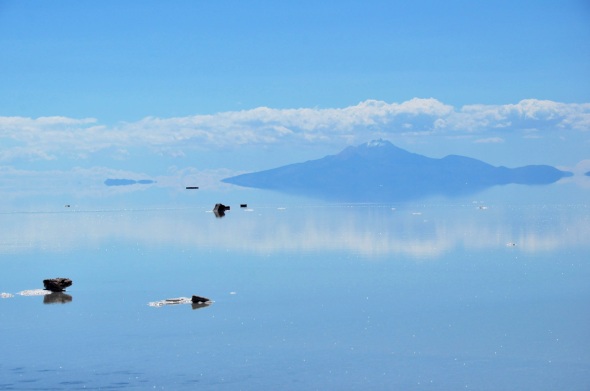
Tunupa Volcano
The tour allocated a great deal of time to the train cemetery – which had the potential to be a fantastic place to visit if you don’t time it to coincide with the 30+ 4X4s which stop there on the way to the salt flats each morning. Having woken to clear skies, the clouds had rolled in by the time we arrived which was frustrating given how close the site was to the town. There was also a lengthy stop in the village of Colchani where we visited a salt factory (just a room where not much was going on except for attempts to flog us bags of salt) and where we were given lunch of lukewarm chicken, stone-cold rice or cold potatoes plus a delicious apple pie. Eventually we reached the salt flat itself and the scenery at that point took over. In wet season the reflections in the water are a crowd-pleaser and it wasn’t a disappointment. What was a pity was the lack of thought given to pre-departure information. As requested I’d come prepared with sun cream, but no one had thought to tell us we’d need flip-flops for the salt flats. It wasn’t just a case of getting our feet wet, more that the crust is sharp and uncomfortable to walk on. I ended up in socks which was better than going barefoot but still unpleasant.
Ouch! Bring flip flops!
Later, we drove to a drier part of the salt flats for the famous perspective photos. These were cheesy, clearly well rehearsed (we did the same poses as every group I’m sure) but a fun souvenir. The guide did take the photos, which was kind of him, so those on their own could participate. Afterwards we had an enforced and quite lengthy stop near a monument. I think it was included to enable us to arrive at the edge of the salt flats in time for sunset, though it felt like time-wasting. Six out of the fifteen travellers in our cars had overnight buses to catch and were very worried they’d miss them. Given we were all filthy dirty and covered in salt, they’d have needed time to clean themselves up before boarding. The rest of us had what turned out to be quite a rushed sunset photo stop. However, we were dropped off at the Colchani salt hotels on the edge of the salt flat. This was a bonus; if we’d have had to return to Uyuni and then take a taxi, this would have added an hour at least as well as the additional cost of transport.
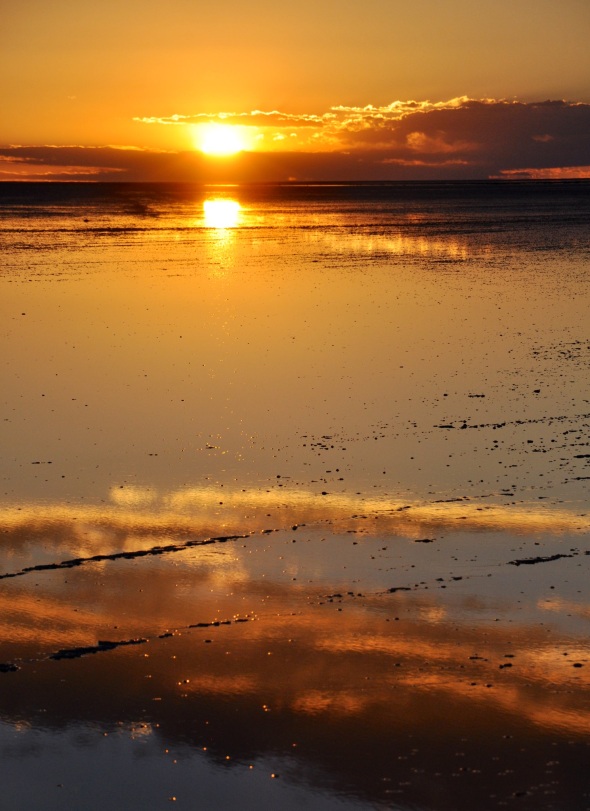
Sunset on the Salar de Uyuni, a beautiful thing to behold
Conclusion: Bolivia
All in all I felt that the wow-factor of the salt flats themselves redeemed the day. The guide was a big negative, but I was told it wasn’t possible to go deep into the salt flat without one. Walking from the salt hotels to the edge of the salt flats wouldn’t have given me the same experience, so although this was one of the worst tours I’ve taken in years, I’m still glad I did it. But even more relieved I didn’t opt for the three-day tour.
The tour: Argentina
I was sent a reconfirmation email the day before my tour to ensure I knew that the driver would be on time; in fact he was early when he arrived at my hotel in Tilcara. The car was almost brand new and spotlessly clean. Another traveller had cancelled so I had a private tour. Jose Luis the driver was friendly, courteous and knowledgeable, as well as being safe over the mountain pass. I was offered several stops at viewpoints to enable me to take some great scenery shots as we climbed above the clouds. Arriving at the tiny village of Pozo Colorado, llama handler and guide Santiago was ready, welcoming and cheerful. Jose Luis joined us for the first part of the trek to ensure I was comfortable leading a llama and then joined us later at the salt flats.
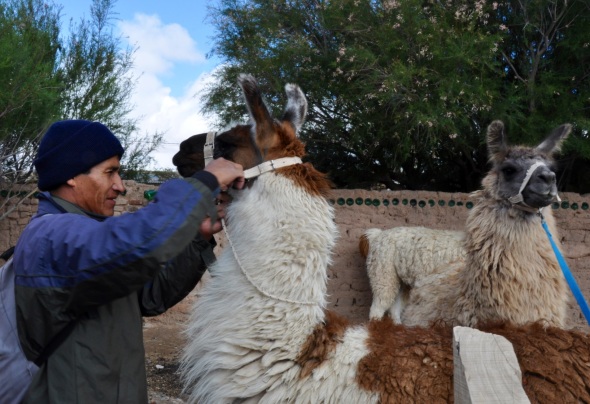
Santiago getting Paco ready
Walking with the llamas was fun. Oso and Paco were well behaved and to my relief didn’t spit. From time to time Santiago told me a bit about the llamas, the scenery and the way of life up there on the Argentine Puna, but he also knew when to let me enjoy the silence and serenity of the place. The trek was easy, over flat terrain, and when we arrived at the edge of the salt flats, there was time for me to wander off and take photos while lunch was prepared. A picnic table had been set up loaded with delicious food: local goats’ cheese, llama meat, ham sandwiches, salad and more. There was plenty to go around. Jose Luis joined us for lunch and the inclusion of a third person made chatting easier as he was bilingual.
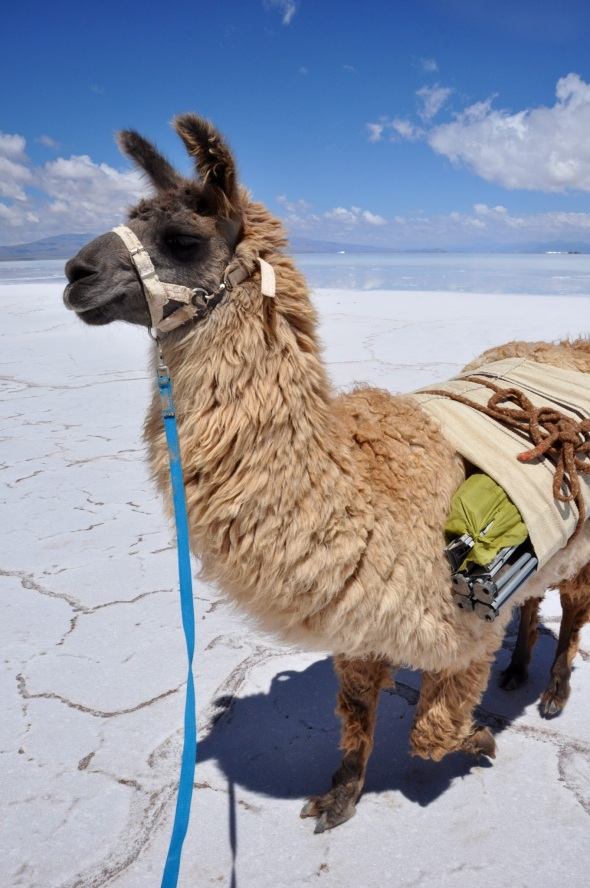
Oso carrying the lunch table
After lunch, the llamas had rested and we walked onto the salt flats for some souvenir photos. Afterwards, Jose Luis drove me to some of the industrial workings a short distance away. There wasn’t a lot of activity going on, though as with Bolivia, I did see the piles of salt “bricks” and also heaps of mined salt. By the time we’d driven back over the mountain the tour was a similar length to that taken in Bolivia, arriving in Tilcara late afternoon.

Paco having a siesta on the lakeshore
Conclusion: Argentina
If I’d have visited Bolivia before Argentina, I’d have probably been disappointed with this tour. The scenery just didn’t have that sense of scale that gave it the bucket list wow. However, as an activity, walking with llamas was a lot of fun and I felt that Santiago had gone to a lot of trouble to make me feel comfortable and, despite his basic English, to put the scenery in context. I was left wanting more and would definitely book with Caravana de Llamas again if I returned to the area.
Overall conclusion
Both tours were worth doing but very different. The Argentinian tour was very civilised and the llamas incredibly cute. Regular readers of this blog will know how much I adore these fluffy creatures. The people involved worked hard to ensure I was well-looked after. In contrast, the Bolivian tour encompassed my worst nightmares with a bossy, inflexible guide and yet – the scenery was so incredible that I’d still do it again.
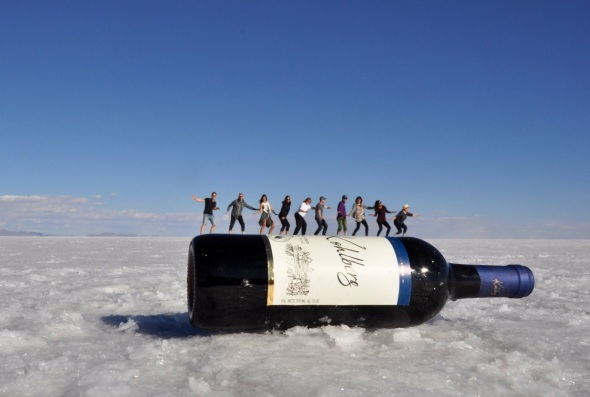
Expectations are key. In Uyuni, there doesn’t seem to be a single operator winning consistently excellent reviews. In this respect, having a horrible guide but a good driver and a vehicle that didn’t break down was the best option – if there’s a weak link, at least your safety isn’t compromised. It’s been a long time since I’ve had to take a backpacker-style tour, so perhaps I’m out of the habit of being herded around – and it’s no surprise to those readers who know me to hear that I don’t like being told what to do.
Perhaps taking a budget option in Bolivia would have been the way to go: there were day trips for under $40, half the price I paid, and given how poor the guiding and the lunch were, maybe it would make the tour seem better value. However, I certainly wouldn’t recommend taking a basic tour for the three-day option as the mileage covered is considerable and the area remote. I heard good reports about the scenery from a private Dutch group, but having seen similar (better?) in the more accessible Chile a couple of years ago, I don’t regret my choice to cut out the mountain lakes and volcanoes.
So – which tour? Tough decision: I’ll call it a draw! Have you taken either tour? What were your impressions?
Footnote: I paid for both tours myself; all opinions expressed are my own.
Trip preparations: Bolivia
It’s almost time for me to fly off to South America. My itinerary is pretty much fleshed out now and most of the bookings are made. One thing that’s easy to overlook, though, is specific vaccination requirements. For Bolivia, the regulations concerning yellow fever have just changed.
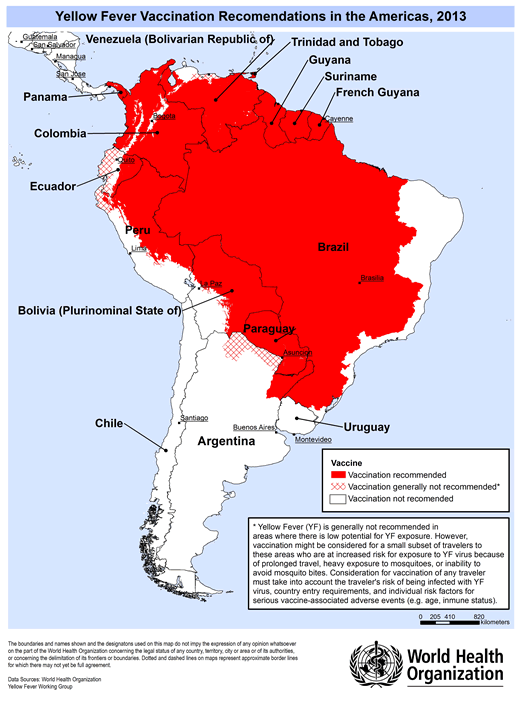
As you’ll see from the map above, parts of Bolivia are affected, like much of South America, by yellow fever. Travelling to Uyuni and then La Paz, however, I’m not going to be venturing into yellow fever territory, so it’s tempting to think I wouldn’t need the vaccine. But early last month, a Danish traveller was found to have the disease. The National Health Director was quoted as saying: “This person came from another place and was not vaccinated.” There’d been an outbreak of yellow fever across the border in Brazil, but whether the Danish traveller had been there is unclear from the news reports. You can read Reuters’ report here:
http://uk.reuters.com/article/us-bolivia-health-yellow-fever-idUKKBN15P2QW

What this means in practice is that from yesterday, 2nd March, all travellers entering Bolivia from a country which has a current outbreak of the disease or remains a risk area for it, must hold a valid yellow fever certificate. I’m travelling across the border from Argentina so that means me – even though I won’t have passed through yellow fever areas within Argentina. I’ll still need a certificate. That certificate would need to be issued at least 10 days before I’d be due to enter Bolivia. Potentially, without one, I could be refused entry at the border.
Even some transit passengers are likely to be affected. If you hub through an airport in a neighbouring country on your way to Bolivia, you could still be refused entry into Bolivia if you have cleared immigration and gone landside. That’s even if you never left the airport. Basically, the Bolivians are playing it safe and you can’t blame them for being cautious.
I’ll update this post in a couple of weeks to tell you if the certificate was requested by border officials or not. Fortunately, my jabs are up to date and the yellow fever certificate I needed to get into Panama a few years ago is still valid. But make sure you’re not caught out by this change in immigration requirements by seeking health from a medical professional before you embark on your trip.
Update March
At the land border between La Quiaca and Villazon, I was not asked for a yellow fever certificate.
A beginner’s guide to the Trans-Siberian
I love a good train trip and the ultimate in rail journeys has surely got to be the Trans-Siberian in some form or another. If you’re thinking of crossing Russia by train, I’d suggest doing some background reading beforehand to get your head around what seems like a complex trip but in reality is more straightforward than it looks.
What is the Trans-Siberian?
Some people wrongly believe that the Trans-Siberian is one single luxury train. It’s not. It’s one of several long distance routes that stretch across Russia. Generalising a little, there are three main routes: the Trans-Siberian, the Trans-Manchurian and the Trans-Mongolian. Following each of these routes, it is possible to travel on a single train, but most people stop off along the way to explore some of Russia’s great sights – and see something of Mongolia and China as well, perhaps.

Trans-Siberian route (Courtesy of Ertmann and Profil CC BY-SA 2.5 via Wikimedia)
How long will I need?
To follow the classic route from Moscow in the west to Vladivostok in the east without stops will take 6 days. If you plan to do this, you’ll need to book the Rossiya train (number 1 or 2 depending on the direction you take). Extending your journey , you could begin (or end) in St Petersburg rather than Moscow, which are connected by an overnight train taking about 8-9 hours, or the high speed Sapsan train which covers the distance in about 4 hours. Personally, I’d allow at least a couple of days to scratch the surface of Moscow or St Petersburg, though it’s easy to spend more time in either. To cover the whole route with a few meaningful stops, it’s best to allow a couple of weeks, more if you can. And of course, you can do the whole trip overland with connecting trains via Paris and a route that takes you through Berlin, Warsaw and Minsk.
What was my itinerary?
Mine is, of course, by no means the definitive tour. On these three routes, it’s easy to tailor your journey according to your own personal preferences. I flew from London City airport to Moscow as at the time I booked, this worked out cheapest. When I planned my trip, I’d already been to Beijing, so I opted for the Trans-Mongolian from Moscow to Ulan Bator in Mongolia, leaving the Trans-Siberian on the map above at Ulan-Ude and heading south to the border. Read more about Russia here:
I stopped at Vladimir (for Suzdal and the Golden Ring) and then Perm (to visit one of Stalin’s notorious gulags). I skipped the popular stop at Yekaterinburg for reasons of time, though I’d like to visit next time, making the journey from Perm to Irkutsk in one go (a little under three days and over 3000 miles) as I wanted to experience a multi-night trip. I think that was enough: though you can book itineraries which involve staying on board the train for longer, I was definitely ready to sleep in a proper bed after two nights on the train and it was an amazing feeling to luxuriate in a bath and soak away all that train grime and staleness. There’s only so much wet wipes and dry shampoo can achieve!
I had a couple of days at Irkutsk so I could visit Listvyanka at Lake Baikal. On a second trip, I’d build in more time here as it was beautiful – and frozen in winter, it must be a special place indeed. Reboarding a train, I crossed over the border to Mongolia. Having seen a little of the Mongolian capital I set off into the surrounding countryside for an unforgettable stay in a ger with the steppe nomads. Culture shock is an understatement! Read about it here:
I then retraced my steps to Ulan-Ude from where I caught a flight back to Moscow with budget airline S7 – a six and a half hour domestic flight which gives you some idea of the country’s vast size. This worked out considerably cheaper than finding a single leg fare to Moscow and home from UB. In all, the train tickets cost me about £500, with flights adding about £350 to the total. In all a couple of weeks’ holiday cost me around £1500 including basic hotels, meals and sightseeing.
Is it easy to do as an independent traveller?
Yes and no. I’m a big fan of independent travel, not only for the cost savings, but also for the flexibility it gives me to tailor the itinerary to suit my exact requirements. But I’m also not a Russian speaker and I felt I needed support with the booking process to ensure I ended up with the right tickets for the right trains. As you can see from the ticket below, it’s not at all easy to understand not only a different language but a different alphabet as well.
Due to the complexities of the railway ticketing system plus visa considerations, I decided to use a single specialist travel agent for those two aspects of my trip. As is my usual style, I booked my own flights, accommodation and most of my sightseeing myself; the exception was a private tour to Perm-36 Gulag which I also outsourced. I used a UK-based company called Trans-Siberian Experience (https://www.trans-siberian.co.uk) who were very efficient and helpful. The day trip was a 260km round trip from Perm, customised to my personal requirements and cost £170, the most extravagant part of my trip but more than worth the outlay.
The company I used at the time was Real Russia.
http://realrussia.co.uk/Trains/Trans-Siberian
Their website has a dedicated Trans-Siberian section which enables you to check train times, suss out possible routes, check prices and order visas. It’s clear and in my experience the support offered by the team was excellent. All my tickets were sent in good time with English translations, the visa process was uncomplicated and every aspect of the trip that they’d arranged went according to plan – which was more than could be said for some of my own bits:
https://juliamhammond.wordpress.com/2016/11/06/lost/
Since switching careers, I’ve done a lot of work for Just Go Russia, another London-based agency specialising in Russia, and they are always extremely efficient. If you’re looking for a tour, they do offer a wide range of options. You can find them here:
http://www.justgorussia.co.uk/en/transsiberian.html
Even if you don’t end up booking a tour, it’s a good way of getting an overview of the route and whittling down the options about where to stop off. Another source of information is The Man in Seat 61, my starting point for every train trip I’m planning outside the UK. There’s a good overview here:
http://www.seat61.com/Trans-Siberian.htm
What’s it like on the train?
Each of the trains I took was a little different. I “warmed up” on the short leg from Moscow to Vladimir and this was a regular seated train. That took away some of the nerves about checking I was on the right train, right seat and so on, without the worry of a missed long distance connection. From Vladimir heading east, some of the long distance trains leave in the middle of the night, so I opted for one departing early evening which arrived after lunch the following day. The overnight trains varied considerably in terms of speed and quality, something that is reflected in the price.
Another thing to factor in if travelling in Russia’s hot summer is that the air-conditioning is turned off when you stop at the border and the windows of such carriages don’t open; more basic trains have windows that can be pulled down to let in a breeze. (In winter, in case you’re wondering, the trains are heated, so prepare to swelter on the train and freeze on the platform.)
Some compartments featured luxury velour seating, others were more basic, such as the one I travelled on from Perm to Irkutsk. In my opinion, that didn’t really matter as I followed the lead of my compartment companions (all Russians) and stretched out on a made bed all the way rather than converting it back to a seat. When I did the Irkutsk-UB leg, the train was more luxurious, those sharing the compartment were all tourists like me and we all sat up during the daytime. To be honest, I liked the local approach best.
In all cases, I opted for second-class tickets which provided comfortable accommodation though no en-suite facilities. The logic to this was that as a solo female traveller I didn’t want to be alone in a compartment with a single man and the first-class compartments came as two-berth not four-berth kupe. I shared with three men from Perm to Irkutsk but as everyone sleeps in their clothes nothing untoward happened and actually I was well looked after by one of them in particular, a Russian army officer heading on to Chita.
Border crossings can be daunting, but knowing my visas and documentation were in order was helpful. Formalities vary and the immigration officials will make it clear whether you are to remain on board or not. It is normal for them to take your passports away; that can feel stressful but having a photocopy of your papers is a comfort. Note that the Chinese trains run on a different gauge so the carriages have to be lifted onto new bogeys.
What should I pack?
As you are likely to sleep in your clothes then picking something comfortable like jogging bottoms and a loose T-shirt is a good idea, though clearly you won’t win any fashion awards. Who cares? I found it helpful to pack changes of clothes (socks, underwear and T-shirts) in a day pack so I could store my suitcase under the bed and forget about it.
In terms of footwear, most of the locals seemed to favour blue flip-flops with white socks. Slip on shoes of some form are convenient to help keep your bedding free of dust picked up from the floor. The provodnitsa, or carriage attendant, will come round with the vacuum cleaner each day and will chastise anyone who’s made a mess, so keep the compartment clean.
It’s a good idea to book a lower bunk as you are then sleeping on top of your bags, affording grreater security than the open stow holes up top. It’s possible to lock the door from the inside, but not from the outside, so when you visit the bathroom it’s reassuring to know that your belongings are out of sight. Having a small handbag to carry passport, money and other valuables – like train tickets! – was also helpful. When I’m travelling by overnight train I always take a lockable, hard shell wheelie; it’s narrow enough to wheel down train corridors and light enough to lift from the platform, but also more robust than a slashable canvas bag. A determined thief will steal or break into anything, so it’s about making yourself a more difficult target than the next passenger.
When I travelled, the bathroom facilities were pretty basic so I would definitely recommend taking lots of wet wipes and also a can of dry shampoo. It’s amazing how clean you can get yourself in a small cubicle with just a small sink. These days, most Russian overnight trains have a special services car with a pay-to-use shower which would have been great. You do need your own towel, but I use a special travel towel which folds up small and dries fast. I won mine in a competition but you can get something similar here:
http://www.nomadtravel.co.uk/c/261/Travel-Towels-and-Wash-Bags
In terms of sustenance, the provodnitsa also keeps a samovar boiling from which you can get hot water to make tea, noodles or soup, so I packed some of these too. Some were more accommodating than others; if you get a grumpy one, she’ll lock her door or disappear for hours at a time. I was lucky to have a smiling provodnitsa on my longest leg, which made a difference. The Russians travelled with plenty of food which they generously shared, most memorably omul, a kipper-like smoked fish common in Siberia.
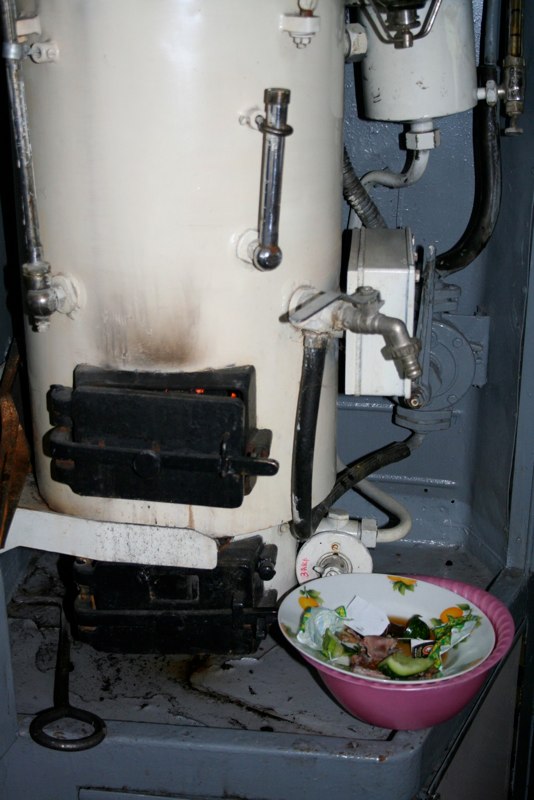
There’s a restaurant car as well and at station stops, despite the queues there was often enough time to nip off to buy food from the platform vendors, so carry enough small change for these kind of purchases. Finally, it’s a long way. Although batteries can be charged (though sometimes in the corridor on older trains) I’d pack an old fashioned paperback to read or carry a pack of cards to entertain yourself. Take family photos – in my experience it’s true that Russians love to share theirs. It’s also true that a bottle of vodka can break the ice though some compartments sounded more raucous late at night than others – the luck of the draw! I also had a copy of the Trans-Siberian Handbook (as opposed to the Lonely Planet which I would usually take) because the level of detail about what you’ll see out of the train window was much better.

Anything else I should know?
One of the things I was most worried about before I set off was missing a train or missing a stop. In the event, neither of these were an issue. At the station, huge signboards helped identify where the train might pull in and showing the ticket and smiling a lot got me escorted to many a carriage door. Pretty much without exception, I found the Russian railway staff very helpful. The trains used to run on Moscow time which could be a little confusing at first, but there are timetables up in the corridors and even on the longer legs I usually knew roughly where I was. Since summer 2018, they’ve switched to local time and are showing both times to help ease the changeover.
A phrase book helped me decipher the Cyrillic alphabet; my technique was to focus on just the first two or three letters rather than trying to remember the whole name. Thus Suzdal became CY3 etc. The train provodnitsas were very good at giving their passengers plenty of warning when their stop was imminent and so I managed to get across Russia without incident.
I never felt unsafe during my trip but I would say that you need to be a bit savvy when it comes to your valuables. Keep your passport and money with you, don’t flash around expensive cameras or laptops but equally, don’t get too paranoid.
Would I do it again?
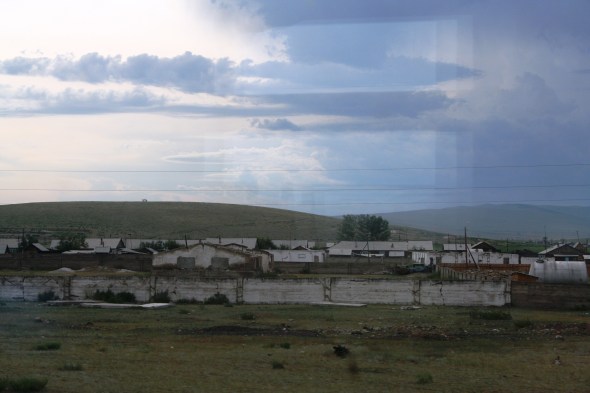
Yes! The scenery at times was monotonous but that was missing the point. The adventure was in the interactions with people on the train; the sightseeing came after I alighted at the station. Next time I think I’ll begin in St Petersburg, detour to Kazan and make that visit to Yekaterinburg before heading east to Vladivostok. Now where did I put that Trans-Siberian handbook?
Review of the year 2016
Despite a house move – and subsequent endless weekends spent decorating and driving to and from every DIY store in a fifty mile radius – I’ve managed to fit in a few trips this year. What follows is a review of my favourite travel moments from 2016 and what I’m looking forward to in 2017.
Sri Lanka
There are a few countries on my “still to visit” list that I really should have ticked off years ago, and Sri Lanka was one of them. I finally managed to get there in March and had a fabulous week riding trains and exploring the southern half of the country. Here are some of my posts from that trip; I’ve you’ve never been, I’m sure you’ll want to add it to your wish list.

Sigiriya – to the tune of Duran Duran’s Save a Prayer…
https://juliamhammond.wordpress.com/2016/03/12/sigiriya/
Tea time in the hill country – dare you swallow and not spit?
https://juliamhammond.wordpress.com/2016/03/12/tea-time-in-the-hill-country/
Uda Walawe – watching the elephants play!
https://juliamhammond.wordpress.com/2016/03/14/elephant-spotting-in-uda-walawe/
The Seychelles
From Sri Lanka, it was a short hop across the Indian Ocean to the beautiful island archipelago of the Seychelles. This one had been saved as a potential honeymoon destination, but in the end we opted for a US road trip and I visited the Seychelles as a solo traveller. Anse Source d’Argent was every bit as sublime as the glossy travel magazines would have you believe, and being able to do the trip on a budget without sacrificing style and comfort was an added bonus. Definitely one to return to one day.
https://juliamhammond.wordpress.com/2016/04/01/how-to-visit-the-seychelles-on-a-budget/
New York – but this time in business class!
I’ve almost lost count of the number of trips I’ve made to New York and there’s much to read on this blog that will explain to you why it’s a city that has held my interest for so long. But this year, I travelled in style with British Airways for less than the cost of an economy fare, courtesy of a very attractive error fare. It’s likely my article on how to blag a business class fare on the cheap is going to be in the Sunday Times Travel Magazine before the spring, but in the meantime, I blogged about error fares here:
https://juliamhammond.wordpress.com/2016/07/18/how-to-fly-business-class-for-the-price-of-economy/
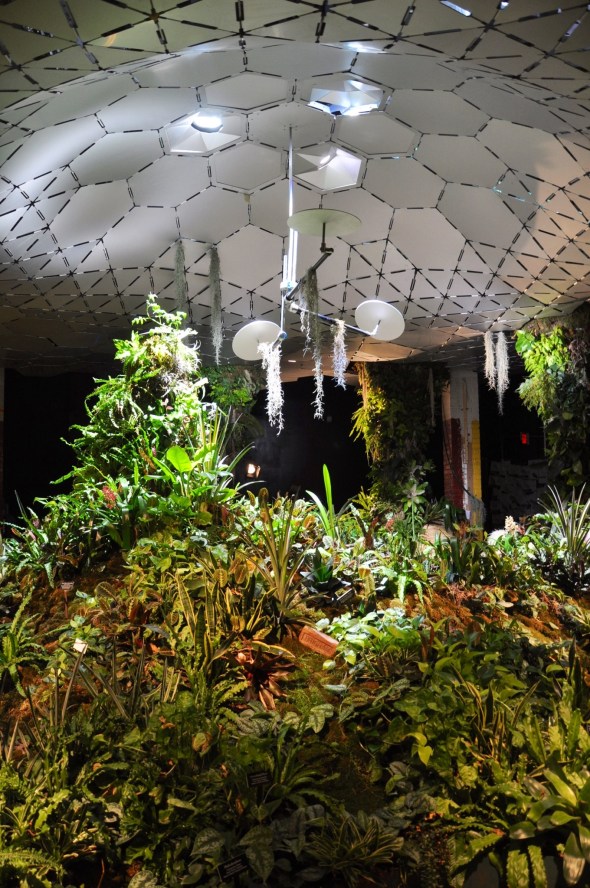
Stockholm and Sweden’s High Coast
I took a slight detour on the way back from NYC and visited Stockholm, another place that’s been on my bucket list for a while. The Swedish capital was fun to visit, its ABBA museum exceeding expectations and the outlying islands providing an alternative to city traffic. I then drove up to the High Coast area for a few days in the splendid isolation of some of the country’s best beaches and sheltered harbours. If you’ve never heard of this part of Scandinavia, then I’d urge you to check it out.

Extremadura – hidden Spain
I’m a big fan of Spain and was delighted to have the opportunity to explore a region that has been overlooked by Brits – Extremadura. With a mix of stunning natural beauty, characterful towns packed with history and outstanding food, it ticked all the boxes and then some. I only scratched the surface, but my short trip has left me keen to return. My guide is just an overview; it will get you started but to fully explore the region before you go, then I’ll point you in the direction of native Irene Corchado and her excellent site:
http://www.piggytraveller.com/
https://juliamhammond.wordpress.com/2016/07/12/a-beginners-guide-to-extremadura/

California
September brought with it the opportunity to spend some of hubby’s air miles and a respite from the muddle that is our half-finished house. We chose to fly to LA for the weather, but having been there before, headed south down the coast for a few days in San Diego and then inland to the heat of Palm Springs. Good food, lots of sunshine and a chance to witness the crazy run up to the elections first hand before returning home to even crazier news a month later when the result was announced. The highlight of the trip, for me at least, was a visit to San Juan Capistrano, one of SoCal’s mission towns:
https://juliamhammond.wordpress.com/2016/09/28/on-a-mission-in-san-juan-cap-california/
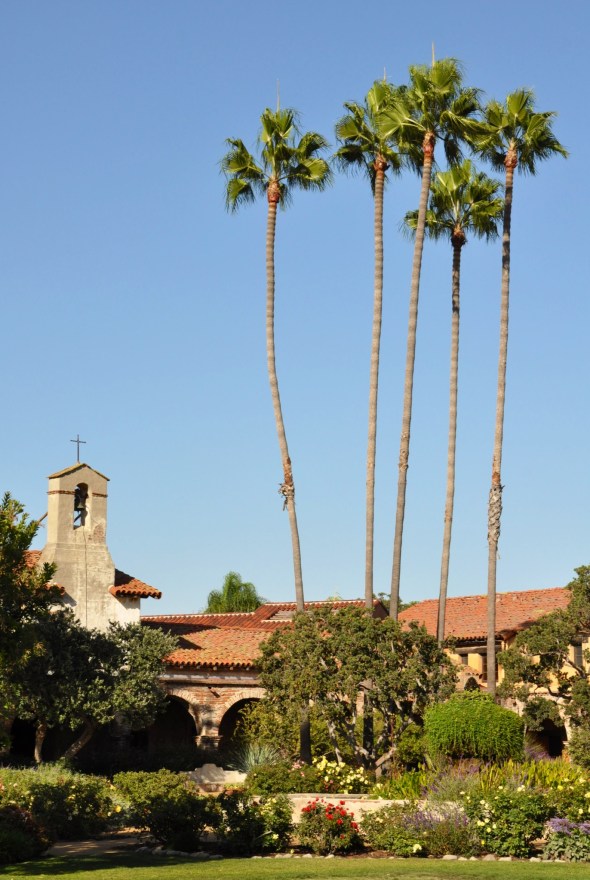
A few day trips to end the year
With two dogs to take care of, I need to juggle the trips I make so that they are well looked after. One of the ways I achieve this is to take shorter trips which means my husband can work from home to keep them company. So, the last three trips of the year were day trips: to Budapest, Regensburg and Copenhagen. I’ve done many such trips and it is always a big surprise to realise how much it’s possible to fit in without the day feeling like one big dash from sight to sight. To see what I mean, check out these three and the previous similar trips I’ve made. It’s also a great way to get your travel fix on a budget – flights for that day out to Regensburg (flying to nearby Nuremberg) cost less than a fiver.
http://juliahammond.co.uk/Travel/BLOG.html
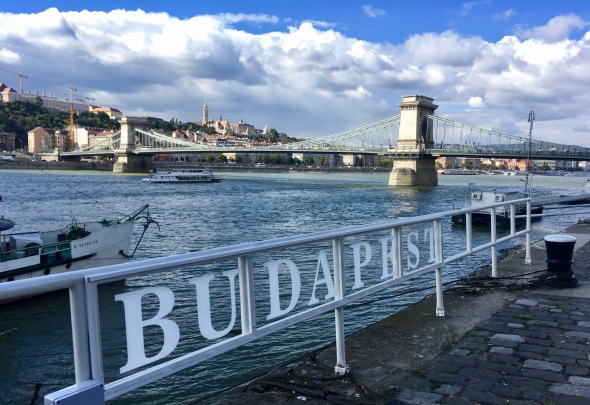
And so, that was my travel year; I hope yours was as satisfying. What’s in store for 2017?
To kick off the New Year, I’m off to Puerto Rico for some winter sunshine and a chance to explore the historic sights of San Juan’s Old Town. Then a couple of months later I’m off to South America for Uruguay’s gaucho festival and a chance to finally visit Bolivia’s Salar de Uyuni. After that, who knows? Writing some background material about the ‘Stans for Kalpak Travel has put Central Asia on my radar, a part of the world that suits my preference for off the beaten track destinations. Georgia looks like a strong contender right now, along with neighbouring Armenia and some fascinating breakaway republics, but nothing is set in stone. I’ll be keeping an eye on those error fare notifications just in case…
A city for every month of the year
Following on from my recent post “An island for every month of the year” I thought the planners among you might be thinking ahead to your travels in 2017. You can read the earlier blog post here, by the way:
https://juliamhammond.wordpress.com/2016/11/09/an-island-for-every-month-of-the-year/
On the basis of my own travels, here are my picks for city breaks. And don’t forget, if your favourite city doesn’t make the cut, let me know which part of the year you’d recommend for visitors.
January: Cape Town

I was lucky when I visited Cape Town in July a few years ago to be blessed with sunshine on all but one of my five days in the city, but for a return visit I’d leave less to chance and time my visit for the new year. The beaches of Camps Bay – great for brunch – and Bloubergstrand – great for views – would be even better in the higher temperatures of the southern hemisphere summer.
February: Antigua

The colourful former capital of Guatemala is just the tonic to break the dull grey of a British winter. The ochre yellow of Santa Catalina arch perfectly frames the conical shape of Volcan Agua which looms over the city. An afternoon’s stroll through its streets uncovers a plethora of brightly painted homes and commercial premises: chalky colbalt blues, salmon pinks and tangerines competing to out-brighten each other.
March: New York
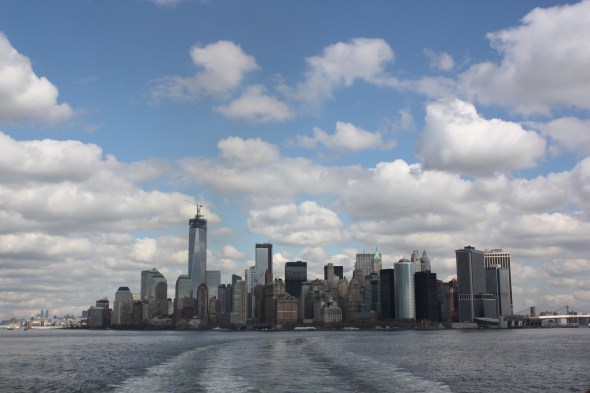
I love the Big Apple but I’m less of a fan of the sultry weather that plagues the city during the summer months. Instead, I prefer to visit off-season when New York’s tourist attractions are less busy but (with luck) the frigid winters with their heavy dumping of snow and biting winds have eased into the milder days of early spring. And if you are unlucky with the weather, there are plenty of ways you can escape the cold and stay indoors.
April: Kyoto

I’ll admit, I visited Kyoto in July. In the throes of midsummer, it was hot and humid, but nevertheless the city quickly established itself as one of my favourites on our Japanese tour. Walking the Philosopher’s Walk from the temples of Ginkaku-ji and Nanzen-ji was a delight. But April is cherry blossom season in Kyoto, and although this tree-lined canal walk would be rammed, I can’t think of a prettier sight than when those cherry trees are covered in pink blossom.
May: Stockholm

Winter might add a picturesque dusting of snow to the streets of the Swedish capital but I prefer a touch of Scandi sunshine. Late spring is the perfect time to board one of the ferries to the outlying islands of the Stockholm archipelago. The weather is good enough for an al fresco lunch at the Feather Islands and a gentle ramble amongst the spring flowers to walk it off.
June: Cusco

In the southern hemisphere winter, nights in the Peruvian Andes are chilly at best and usually downright cold. But days are characterised by warm sunshine and cloudless ultramarine skies. Add to that the celebrations for Inti Raymi, the festival commemorating the Sun God (Inti) just as the Incas would have done. It seems like the whole city turns out for the parade that makes its way to the Plaza de Armas and the reenactment at Sacsayhuaman is one show I’d happily travel halfway round the world for.
July: Ubud

This attractive city lies at the heart of the Indonesian island of Bali and a visit at this time of year should be characterised by low rainfall totals. Surrounded by verdant rice terraces punctuated by palm trees, the slight increase in altitude makes this a more pleasant place to walk than along the island’s coastline. There is plenty in the way of cultural attractions such as museums, galleries and temples to fill your days should you tire of the physical landscape, not that it’s likely.
August: Sydney

Plagued by heat and flies, summer in Australia’s largest city in my mind is not as pleasant as a bit of winter sun. With August temperatures regularly topping the averages of 16°C and often reaching the low twenties, that’s perfect sightseeing weather. Sling a sweater over your shoulders and go have a look at the Opera House, Harbour Bridge and more – in comfort.
September: Lisbon
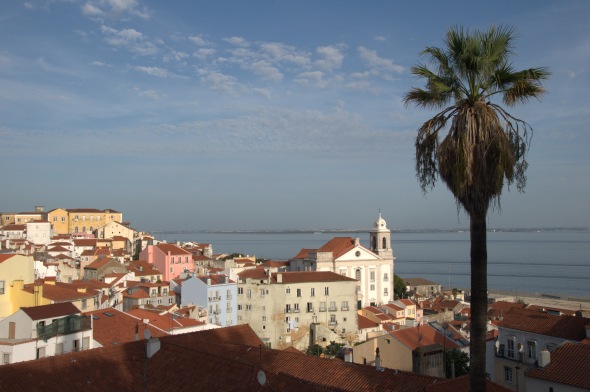
The intense heat of the Portuguese summer is starting to lose its potency by early autumn, yet sunny days are still the norm. This fascinating maritime city begs to be explored and this is the time to do so. From the lofty panoramas of the Alfama to the wide open squares of the Baixa, the glittering of the Tagus to the yummy Pastéis of Belem, there are myriad reasons to get yourself over to the most westerly of continental Europe’s capitals.
October: Marrakesh

When the soggy UK autumn rears its ugly head but your budget won’t stretch to a long haul trip, then the warmth of the southern Moroccan city of Marrakesh is just too tempting to resist. It’s getting chilly in the nearby Atlas Mountains but warm enough in the city to ditch the coats and wander the souks and palaces of this enchanting place. If you’re lucky, you should still get to sunbathe on the rooftop terrace of your riad.
November: Oaxaca
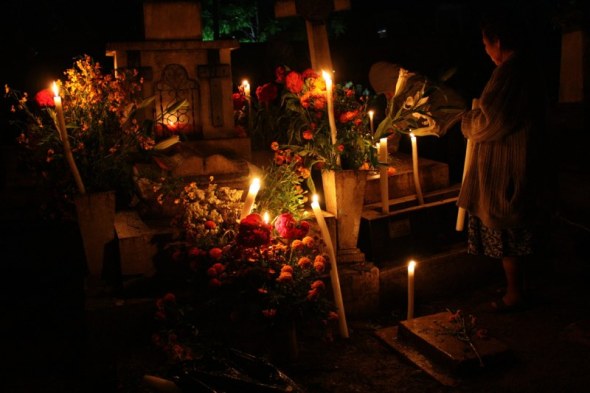
The first few days of November are festive times in Oaxaca, coinciding with the city’s Day of the Dead celebrations. From family visits to cemeteries festooned with marigolds and candles to fancy dress parades through the streets, there’s a typically Mexican pop of colour and a party atmosphere. I’d advise arriving several days early to make sure you’re part of the preparations too.
December: Regensburg
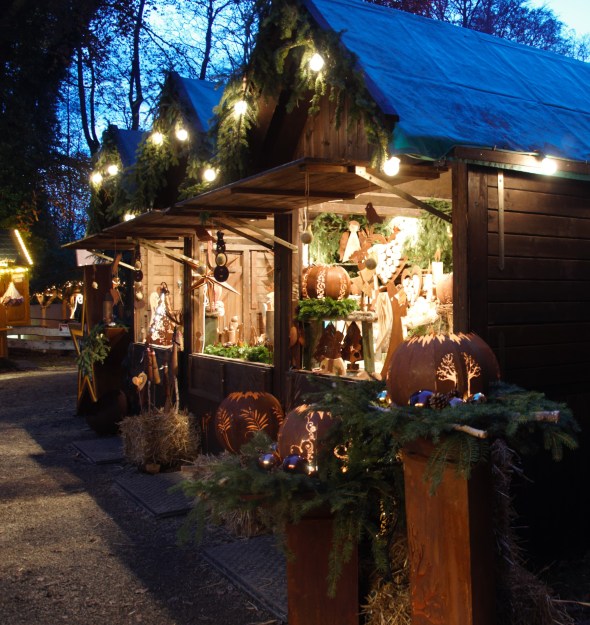
For my pick of the December city breaks, it has to be a German one – I’m a big fan of the Christmas markets and my choice is Regensburg. During my recent visit I was wowed by the market in the Thurn und Taxis Palace where the courtyard and surrounding gardens provided the perfect setting for this, my favourite of German traditions. With three other markets scattered throughout the Altstadt there are plenty of stalls to detain you between visits to the historic Sausage Kitchen.
Six special places to stay
In my travelling life, I’ve been fortunate to stay in some pretty amazing places. They’re not always budget-friendly as these picks illustrate, but then sometimes it’s worth pushing the boat out and splurging on somewhere that’s likely to stick in the memory long after you return. Here are six of my all-time favourites that are worth blowing the budget for.
Patagonia Camp

A treat for our first wedding anniversary, this small group of Mongolian-style gers clusters on a hillside overlooking Lago del Toro at the entrance to the Torres del Paine National Park. The views from the tents are fabulous, whether of the stars in the night sky through the glass window in the roof or the sunrise casting a pink sheen to the lake first thing in the morning. The oversized double bed and en-suite bathroom made this the most luxurious camp I’d ever stayed at. Mealtimes showcased the best in local produce, with tender Chilean lamb the stand out winner.
Canal House
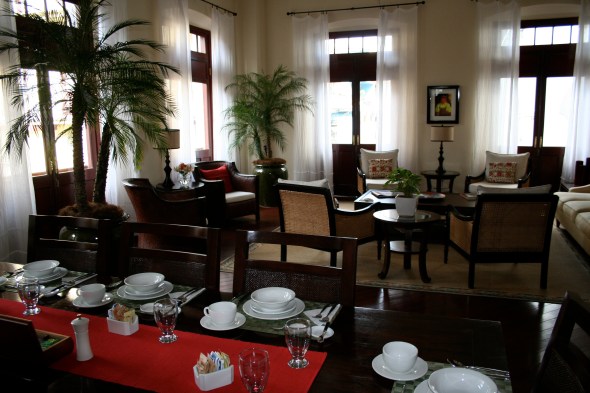
Daniel Craig stayed there before me when filming Quantum of Solace, but I’m more than happy to have copied him. This tiny place, a converted mansion in the Casco Viejo, only had three rooms but each one exuded style, as did the communal areas. These days it’s only available for long stay rentals but its sister property Las Clementinas looks promising.
Riad Dar Karma
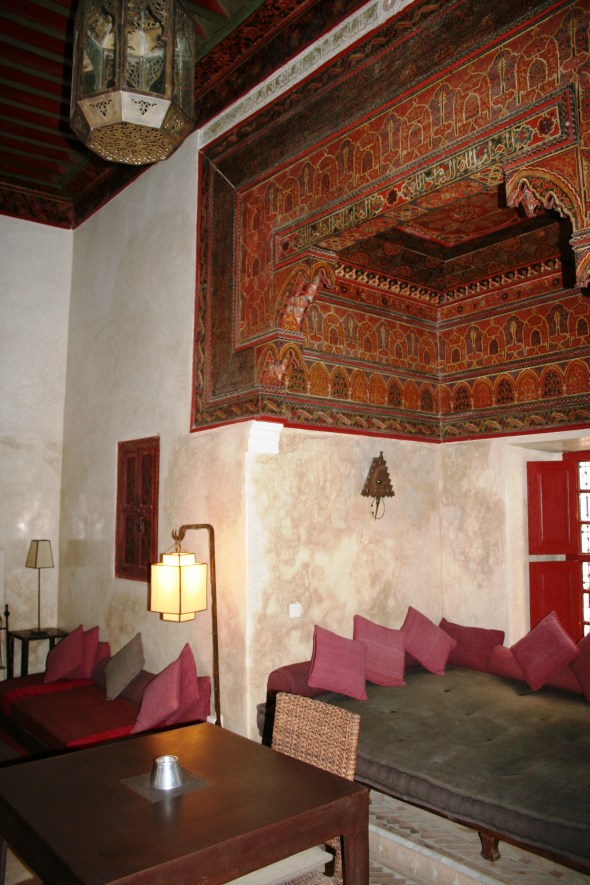
It’s not hard to find a decent riad in Marrakesh, if what you mean by find is stumble upon one on the internet and book a room. Finding that same riad in the labyrinthine alleyways of the medina is altogether more difficult as I know to my cost. That’s why Dar Karma makes this list: not only is it wonderfully restored with all the finishing touches you’d expect – Moorish architectural details, hamman, courtyard pool and roof terrace – it’s also a few minutes’ walk away from the action. A stone’s throw from the Djemaa el Fna in the heart of the Kasbah district, your taxi can pull up right outside so you’ll never get lost.
Heritance Tea Factory
The Heritance Tea Factory in the hills above Nuwara Eliya is so much more than just a hotel. My window looked out over verdant slopes that came and went as the mist rolled in and out. My back ached as, sari-clad, I picked tender tea shoots from those same bushes and threw them over my shoulder into the wicker basket that I carried with a strap across my forehead. With samples ready for inspection, we headed indoors to learn about tea. Accidentally I became the class dunce as I swallowed rather than spat at the tasting session, but it tasted too good to waste.
23 Hepburn

Auckland’s Ponsonby district was the setting for the place which made me feel most at home. Run by the delightful Beth, this three room bed and breakfast was a real treat. Her warm welcome, the loan of her boxer Finn for company on the veranda and a great night’s sleep made for a super start to my New Zealand trip. Beth’s closed the place now to focus on other projects, which is a shame as she made the best Greek yoghurt I’ve ever tasted.
Hiiragiya Bekkan
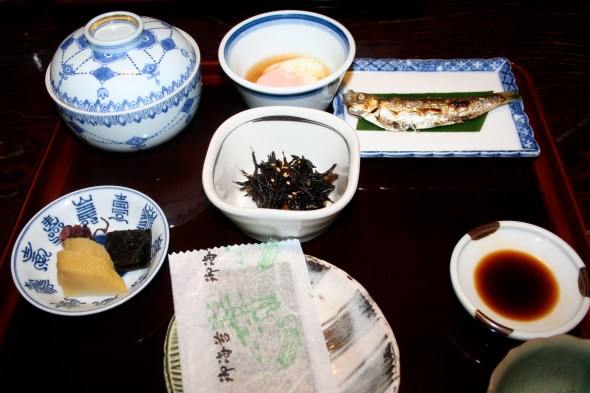
If I had one piece of advice for visitors new to Kyoto’s Hiiragiya Bekkan it would be this: embrace what you don’t know. This traditional ryokan was an experience from start to finish, particularly the many course Kaiseki-style dinner that contained not one single recognisable dish. We were immersed in Japanese culture from the yukatas they gave us to wear to the ritual of bathing in a Japanese hot tub. We slept surprisingly soundly on the futons provided and emerged the following morning fully-prepared to tackle the bustle of Kyoto once more.
If you’ve stayed somewhere memorable (for the right or the wrong reasons!) then I’d love to hear from you.

 Julia's Travels