
Five favourite travel books: Africa
While novice backpackers cut their teeth on the well-trodden route from South East Asia to Oz, Africa outside the beach resorts and luxury safari camps can be challenging even for the most experienced traveller. Fortunately for the world of travel literature, this is good news. Challenges make for gripping tales. These books are my favourites from this enchanting, maddening and diverse continent. What are yours?
In the footsteps of Mr Kurtz by Michela Wrong

You could be forgiven for thinking that some of the topics chosen by Michela Wrong as suitable book material might be a chore to read but she has a talent for observation as well as insight and thus her work is hard to put down. This vivid account of Mobutu Sese Seko opens with the words:
“At 3 a.m. on Saturday morning, a group of guests who had just staggered back to their rooms after a heavy drinking session in L’Atmosphere, the nightclub hidden in the bowels of Kinshasa’s best hotel, heard something of a fracas taking place outside. Peering from their balconies… they witnessed a scene calculated to sober them up.”
I’ll forgive her following a.m. with morning. That’s one great opening paragraph.
The Congo isn’t somewhere I’ve been, though it is somewhere that fascinates me. This book, tackling the subject of how good leaders turn bad, is one to be devoured, one that will keep you turning the pages long after you should be asleep and one that is essential reading for any traveller to Africa, Congo or otherwise.
Blood River by Tim Butcher
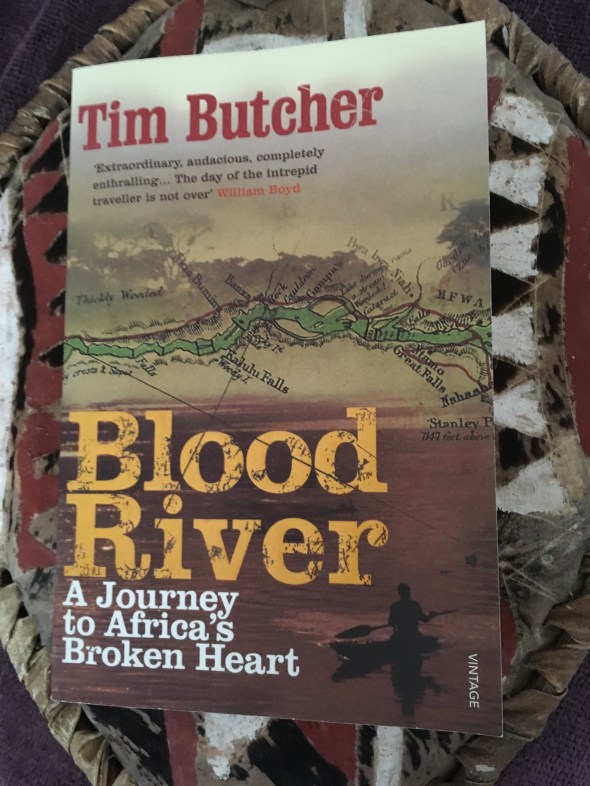
Another Congo account, entirely different but equally enthralling, is Butcher’s tale of his journey along the Congo River. Such were the dangers likely to be encountered en route, you’d be forgiven for thinking at the outset that the author was a complete lunatic. It’s one of those narratives where you find yourself holding your breath so often that you wonder whether such behaviour could be good for you. He writes beautifully:
“The heat began to grow, so I shed my fleece, but not the feeling of torpor.”
He’s economical with words, yet is wonderfully evocative at the same time:
“I stirred in the pre-dawn chill, my legs pedalling for bedclothes.”
It’s such a casual phrase but one with an imagery with which you identify instantly, a delight to read right from the get-go.
The Lost Kingdoms of Africa by Jeffrey Tayler

This guy is great too and through this book, you get to accompany him on a journey westwards across the Sahel from Chad to Senegal. These days, much of the region would be challenging to visit, some on the no-go list through risk of kidnap or terrorism. He sums up Dakar:
“Women dressed in elaborate banana headscarves and tight-waisted floral dresses strolled the sidewalks. The wind set loose clothes flapping, but it carried no dust; it was pure, coming from the Atlantic, intoxicatingly fresh.”
I spent my holiday in Senegal by the ocean, from its capital Dakar to St Louis in the north, but having visited the Sahara, I can imagine how refreshing it must have been to have finally reached the sea after so long travelling through that desiccated region. I can also identify with his impatience to get out there and engage with the city:
“We soon slowed and got stuck in a traffic jam. I was too excited to sit still. With my bag on my shoulder, I jumped out…”
Isn’t that why you should always travel light?
The Last Resort by Douglas Rogers

Douglas Rogers’ poignant memoir about his family’s struggles in Zimbabwe is one of the most heart-rending works on Africa I’ve read. It’s a timely reminder that issues surrounding land ownership and race in African nations are hugely complex. There are no easy solutions but there are always victims. Rogers deals with the subject tactfully and with empathy for both sides:
“Other farming families stayed longer, determined to fight to get their property or livestock back, or simply because this was home. They were Zimbabweans. There was nowhere else to go.”
Swahili for the Broken-hearted by Peter Moore

Sometimes you just want to read something a little less serious, and Peter Moore has a light touch and a sense of humour that hits the spot. Each chapter begins with an African proverb, which is an education in itself, but it’s his witty turn of phrase and wry observations as he travels from Cape Town to Cairo that make the book such a gem. He’s the kind of person you’d love to go travelling with despite deep down knowing you’d be led astray, as with this account from the Zim side of Victoria Falls:
“Perhaps the most astounding thing about the falls is that there are no guard rails along the rim to stop visitors from falling in. Back home they stick up signs screaming ‘Danger!’ even if it’s a 1-metre drop onto a bed of spongy moss. Here you can get as close to a 107-metre drop as you want… As I crept towards the edge to peer at the river 100 metres below I lost my footing and slipped on the wet rocks.”
Peter, if you’re reading, where shall we go?
Just back from – a day in Budapest
If you’re a regular reader of this blog then you’ll know it’s perfectly possible to have a day out in Europe, so long as you don’t live too far away from the airport and the flight schedules permit an early out, late back pairing. Following on from my days out in Amsterdam, Belfast, Bremen and Lisbon, the latest trip saw me heading to the Hungarian capital Budapest. The links to those previous day trips can be found at the end of this post. As with the others, I’ve been to Budapest before, but well over a decade ago, so I was keen to revisit what had been an enjoyable destination.
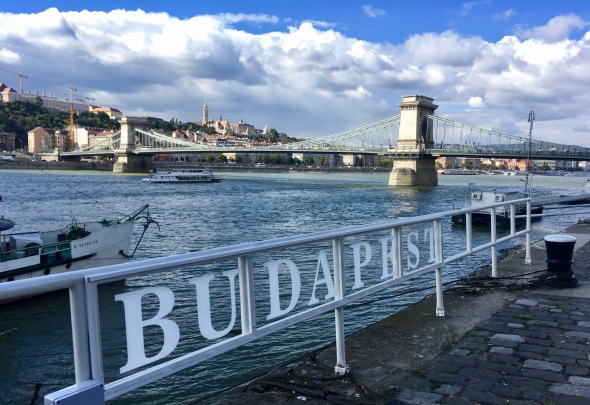
Budapest straddles the Danube
Arriving at midday local time after a civilised 8.30am flight, it was good to hear the famous Ryanair on time hurrah and even better to find that Hungary’s border police valued speed over anything else. An easy bus and metro ride got me into the centre of Budapest, giving me about six and a half hours in the city after the commute to and from the airport had been factored in. Once again, having waited for a flash sale, I paid less for my flight than I would have done for a train ticket into London, with my time equating to less than £5 per hour of sightseeing. I thought that was good value. The one day travel card, good for bus, tram and metro, was also excellent value at 1650 forints, about £5.
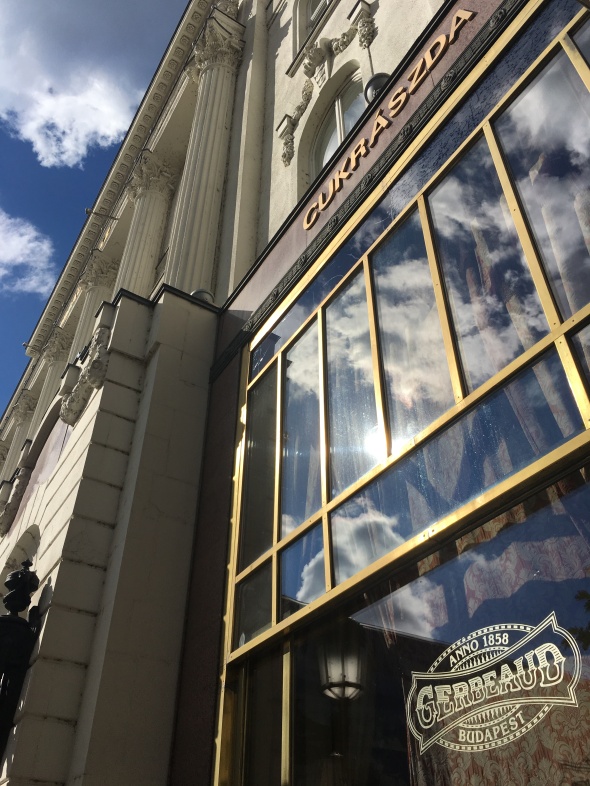
Cafe Gerbeaud has been found at its present location in Vörösmarty tér since 1870
First stop was an old haunt: Cafe Gerbeaud. Located in Pest, this famous coffee house has been a fixture for well over a century and still knows how to put on the style. A cappuccino and some delicious biscuits topped up the massive breakfast of huevos rancheros I’d wolfed down at Stansted. The sun was pleasantly warm for October and so I decided to take a stroll along the banks of the Danube and over the city’s famous Chain Bridge.
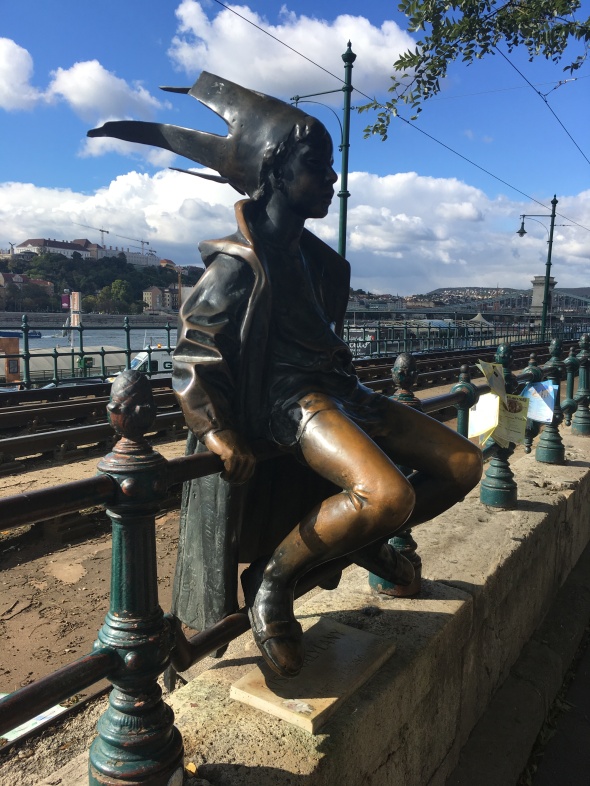
On the waterfront
With skies blue and visibility good, it was too tempting to take the funicular up Buda’s Castle Hill. The ticket wasn’t included in the travel card, more’s the pity, but it was 1200 forints for a single ride – hardly break the bank rates. The views from the top were as fine as any in Europe, with landmarks like Pest’s parliament building easy to spot.
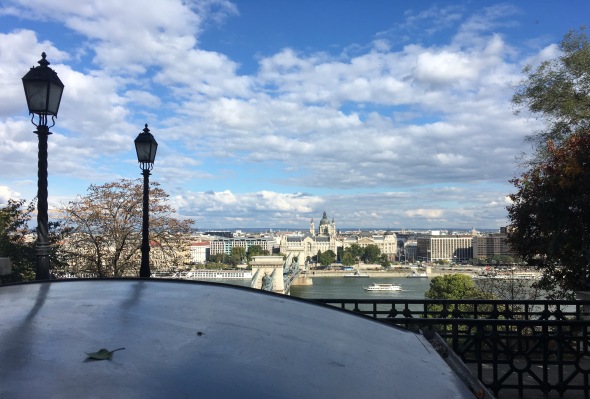
View across to Pest as I ascended the funicular
The castle occupies a prominent position, as you might expect. There are wine tastings to sample and museums to explore, but one of the great pleasures is just to sit in the sunshine and admire that view over Pest. As luck would have it, the changing of the guard ceremony was about to start in front of the Presidential Palace just as I reached the top. A forest of cameras, phones, selfie sticks and mobile phones recorded the occasion, but there was plenty of room for everyone to get their shot.
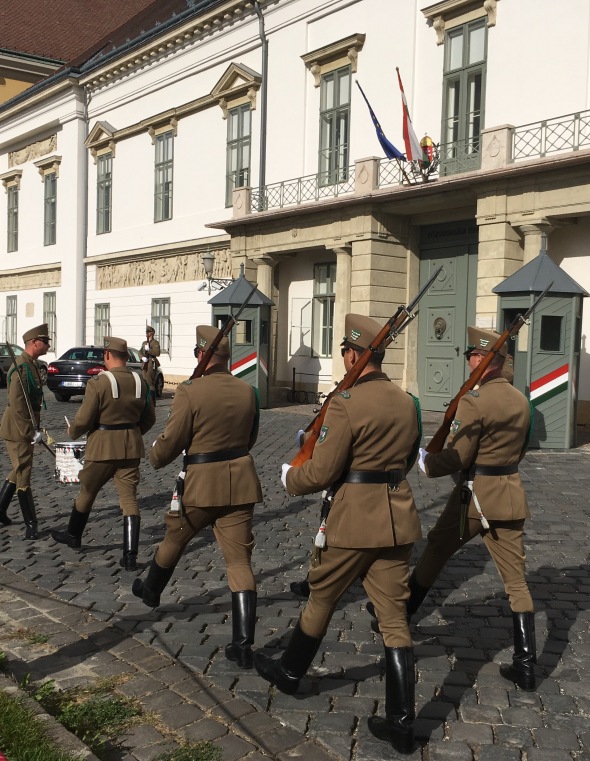
Changing of the guard, a tradition reinstated in 2003
The weather was just too good to resist and so I continued my stroll through Buda’s castle district to picture postcard Fishermen’s Bastion. It’s not a place to hurry, unless an out of control Segway rider is heading your way. There are loads of museums and plenty of cobbled streets, and as access to traffic is limited it’s easy to wander around.
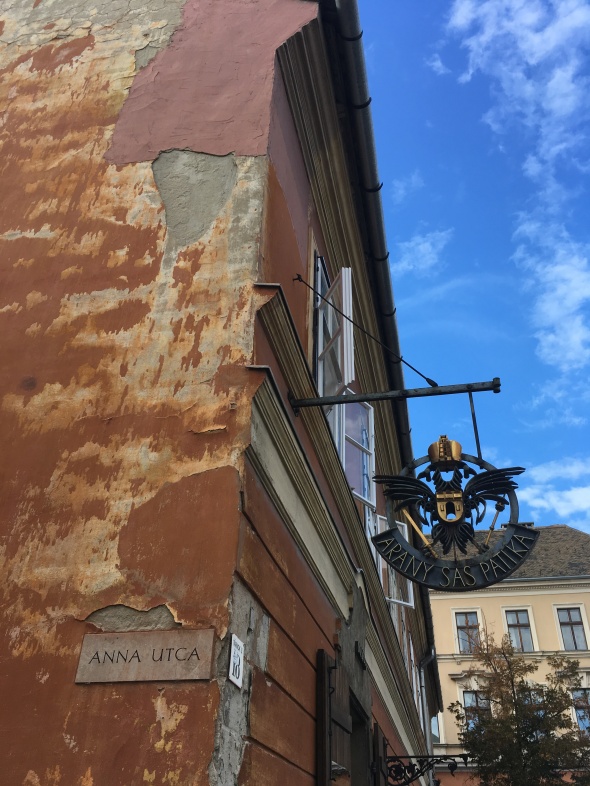
Castle District
The white domes of Fishermen’s Bastion have a touch of the Sacre Coeur about them. The place was constructed between 1901 and 1903, designed to complement the Church of Our Lady which dominates the square adjacent to it. There’s no need to pay to enter for the view, or to have a coffee in the expensive cafe in the ramparts, though, as you can enjoy the same splendid vistas for nothing if you walk a little further along.


Back on the bus, I headed down to the river to search out an old Turkish Bath I’d read about. Instead, I found what looked like an abandoned sanatorium but what was actually a working thermal baths. It turned out to be the Lukács baths, whose website provided a bit of background missing from other web posts about Budapest’s baths:
“The Lukács Thermal Bath has a rich historical background: monastery baths were built in this area as early as the 12th century, the first spa hotel was built in the 1880s, a drinking cure hall was added in 1937, and a daytime hospital was established in 1979. At the end of the 20th century, the thermal bath was thoroughly renovated and all facilities were modernised.”
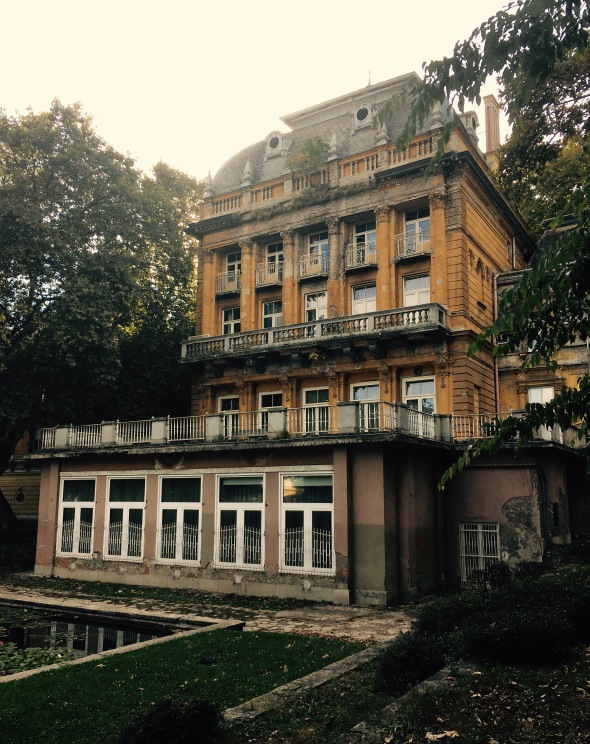
A surprise find
Budapest has loads of them dotted about the city, including the swanky baths at the Gellert Hotel and the famous Széchenyi Baths in City Park. These were less well known, perhaps off the tourist track because it looked like no one had maintained them for an age. Undeniably atmospheric, I decided against a dip in case the building fell on me and in any case, it was late afternoon and getting a little chilly. Instead, I decided to go back to Pest instead for a stroll through City Park. The lake had been drained for cleaning, alas, so I cut my losses and caught a bus to the market.
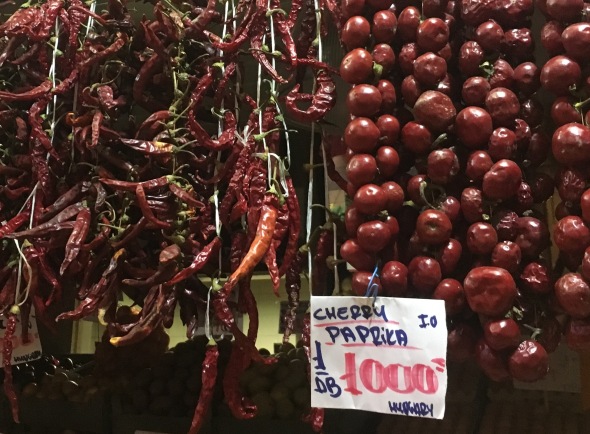
Paprika in the market
I could wander around a market all day, and Budapest’s, housed in a glorious building down by the river, is no exception. Ropes of paprika hung like Christmas decorations from greengrocery stalls and rows of salamis adorned the butchers. I’d been tipped off about a cheese pastry, a kind of crispy rolled croissant filled with cream cheese and dipped in finely grated cheese. It was deliciously more-ish.
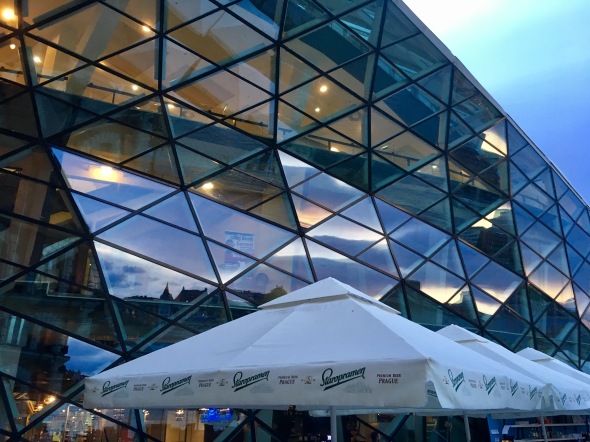
The Whale at dusk
Temptation would have to be resisted though, for almost next door was one of Budapest’s newer architectural efforts. Known as Bálna or the whale, this modern structure connects several old warehouses with a confection of glass and steel. It opened, I read, in November 2013 after protracted disputes between the city and the developer, but not all of the units inside had been filled – a mix of shops, bars and restaurants – leading to some commentators renaming it the white elephant.
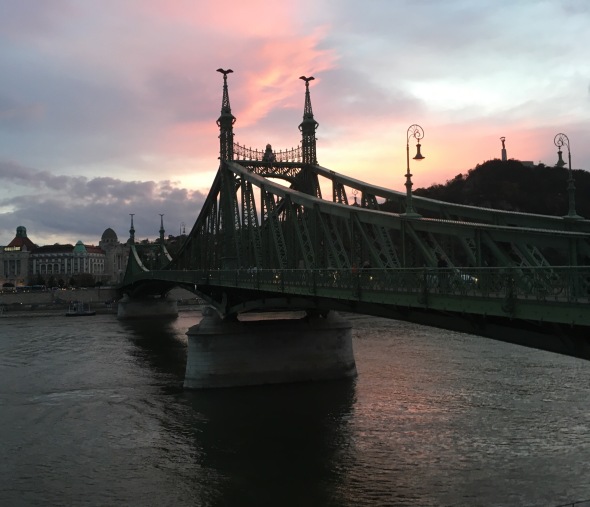
Sunset over the Danube
It was getting late. The sun had cast a pink hue over the Gellert and left the faintest of reflections in the Danube. There was just time for a light supper before heading back to the airport for my 9.35pm flight back home.
Previous day trips…
Bremen
https://juliamhammond.wordpress.com/2016/06/07/just-back-from-a-day-trip-to-bremen/
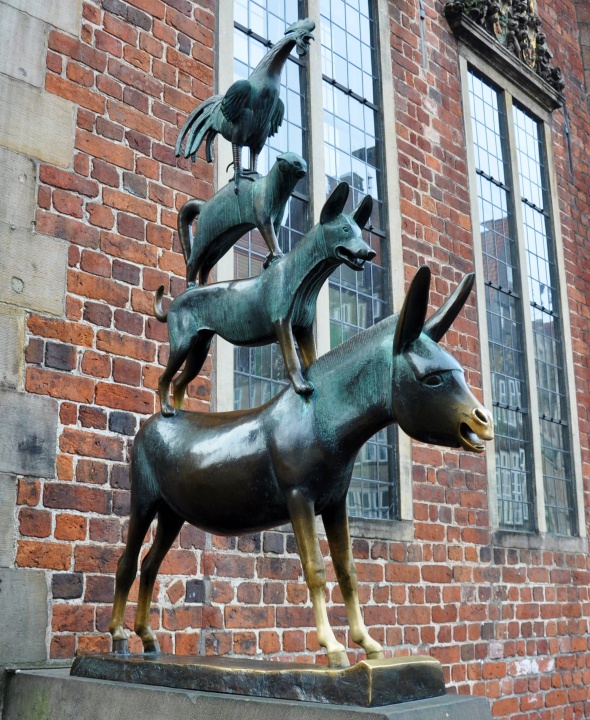
The four budding musicians
Lisbon
https://juliamhammond.wordpress.com/2014/10/20/just-back-from-a-day-trip-to-lisbon/
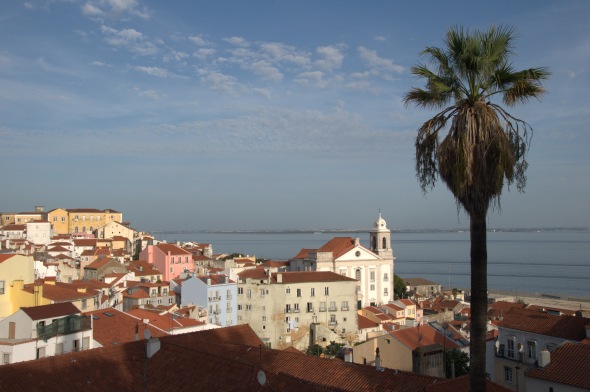
The Alfama district seen from the Mirador at Portas do Sol
Amsterdam
https://juliamhammond.wordpress.com/2015/01/26/just-back-from-a-day-trip-to-amsterdam/
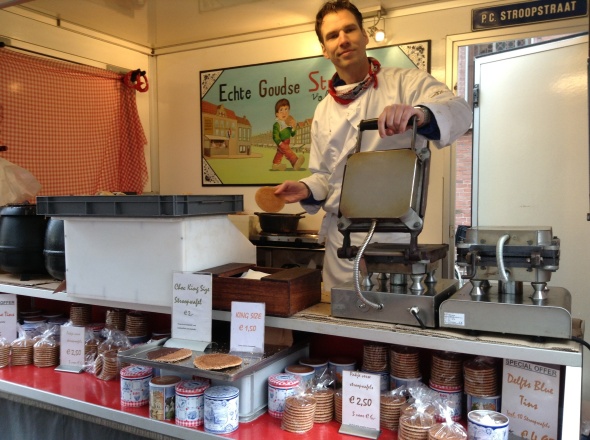
The Stroopwafel man
Joshua Tree National Park
U2 fans take note: if you rock up to Joshua Tree National Park looking for that tree, you’ll be disappointed. The iconic image that featured on the band’s 1987 album cover was actually taken by the side of the SR190, a couple of hundred miles away up near Darwin, CA. There’s no point in going in search of it as the tree is long gone. In fact, the Joshua Tree National Park wasn’t even a designated national park at the time, though it was a national monument. Its status was upgraded in 1994.
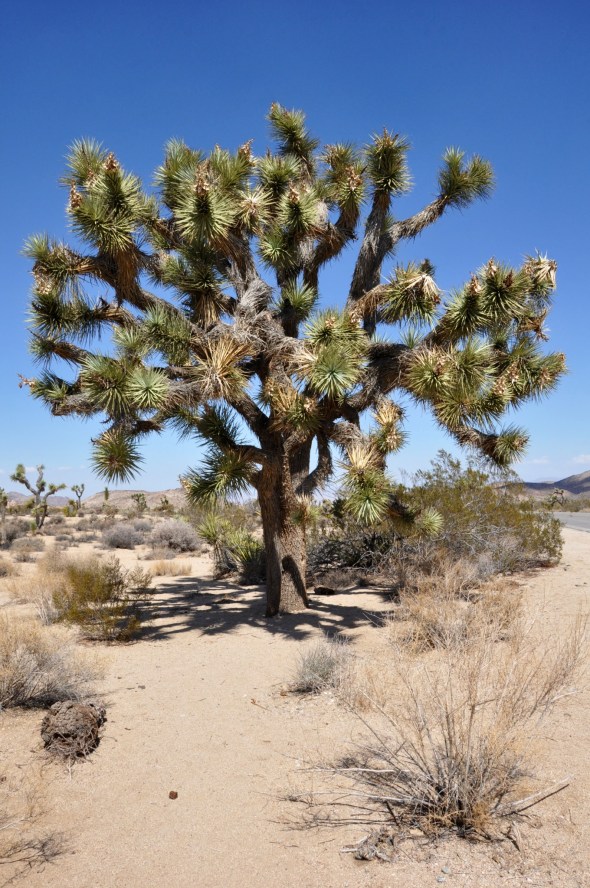
A visit to the park is a rewarding experience. It’s basically divided into two distinct zones: the Colorado desert to the south and the higher and slightly wetter Mojave Desert to the north. As with many US national parks, a road cuts through the park. If you’re driving, enter from the south as the scenery will improve as your day goes along rather than the other way round.

The cholla cactus garden (pronounced choy-a in the Latino way as with most place names in these parts) is one of the highlights of the south side of the park. Much of the road leading to the area is lined with fairly featureless scrub, the barren landscape dotted with creosote bushes and the cactus-like ocotillo trees which despite their appearance aren’t cacti at all. Aside from almost running over a snake, we saw almost no wildlife at all which wasn’t a surprise given the landscape and the high temperatures.

Cholla cacti almost have the appearance of cuddly bears – if your imagination is wired that way – but are extremely hazardous. Their prickles are incredibly sharp, and they get their nickname of jumping cactus from their propensity to detach.

Straying from the path could be a disastrous decision. That path is sufficiently wide not to cause a problem, but as with walking the beam in gym class, there’s something about knowing you can’t wobble that makes you wobble. As someone with short sight and thus poor peripheral vision, it was a slightly stressful walk. Back at the hotel later, I found this video on YouTube showing what happens if you’re not so careful – and it’s excruciating viewing:
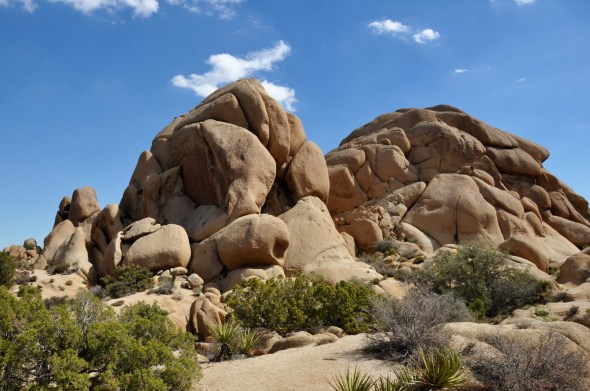
Back in the car without incident, the road climbed steadily, taking us into the Mojave and ramping up the scenic quality to something worthy of National Park status. Pulling over, we were treated to the sight of Skull Rock, which as its name suggested had been sculpted into something resembling a human skull.

The geological story of much of rocky Joshua Tree is one of volcanic intrusion – molten monzogranite pushing its way up into the overlying Pinto gneiss. As the magma cooled, the granite cracked. Over time, chemical weathering widened those cracks and rounded off the rock into the huge monzogranite boulders that litter the landscape today.

After Skull Rock came Jumbo Rocks, which were pretty much what they said they were. If at first we had been in any doubt as to whether this desert deserved to be a national park then those doubts had now evaporated. Some people run America down, but in terms of sheer scale, its majestic scenery cannot be beaten. I know the word is overused, but it is awesome.
Turning off the main highway, we climbed for a short while to Keys View. Fearing snakes, scorpions and tarantulas, it turned out to be something much more common that caused us the biggest headache in terms of creature discomfort – honeybees. Attracted by moisture, and not caring whether that came from human perspiration, a/c condensate or half-drunk Coke in the car’s cup holder, those pesky insects created quite the nuisance of themselves. Fortunately we were able to get them back out of the car fairly easily and – with much relief – without being stung, leaving us free to appreciate the views across the valley to Palm Springs and even as far as the Salton Sea in the hazy distance.
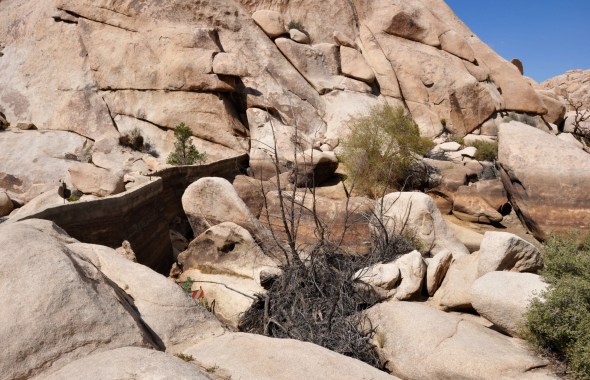
Descending to the valley, the road took us to the start of the Barker Dam loop trail. It wasn’t far, along a well marked and graded gravel path, though in the intense heat (by British standards anyway) it was far enough. The dam was constructed around 1900 to store water for the cattle which were grazed here as well as for the local mines. It’s rain-fed, but visiting in the autumn meant that the reservoir was bone dry, leaving visitors to ponder the wisdom of trying to rear livestock in such an inhospitable location in the first place.
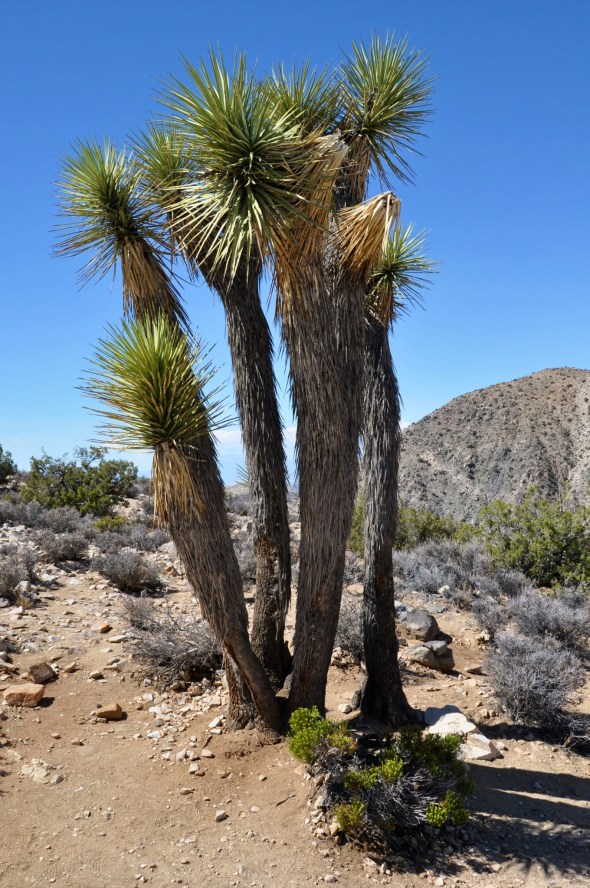
Not far from Barker Dam lies Hidden Valley, one of the park’s landmark attractions and the only place we saw a tour bus. Once the hideout of cattle rustlers, now it’s aesthetic qualities that draw humans. Steps wind up through the rocks to a clearing crammed with vegetation: cacti, yucca and several species of trees have colonised the area naturally protected from the wildest weather. Overhearing a guide, I learnt that even a seemingly spine-free cactus was actually a hazard. Touch what seemed like a smooth surface and microscopic spines would embed themselves into the skin – almost impossible to remove without the aid of duct tape. Ouch!

My verdict? Visit Joshua Tree for sure, but remember it comes with a health warning!
Tips for keeping yourself – and your stuff – safe while you’re travelling
Travel safety is a big consideration for most travellers and as a solo female, it’s something that has to be thought about, both at the planning stage and while I’m on the road. Here’s some advice based on what I’ve learned over the years about keeping myself safe.
Plan before you go
I hold what I call my reserve bucket list. I contains places that I hope to go to one day, but for safety or security reasons aren’t top of the list right now. One of the websites I go to when I have a trip idea involving somewhere that might just be a bit dodgy is the FCO’s – and in particular its Travel Advice by Country. Sometimes it can make for scary reading, but knowledge is never a bad thing. The FCO’s up to date facts about a country can help rule it out – sorry, Mali, you’ll just have to wait in line with Yemen – but where it’s clear that any issues involving safety are contained to a specific part of the country, it can sometimes rule a country in.

Guatemala – one place where the FCO’s advice helped me prepare
Keep abreast of news while on the road
I’ve found Twitter to be an invaluable help in finding out what’s going on within a country from the inside. In Haiti last year, it was the most accurate way of tracking the unrest triggered by fuel price rises and ensuring that I didn’t leave sleepy Jacmel too early. It’s also been handy to check how the roads are running in and out of Calais when my family have taken a cross Channel ferry during the recent difficulties.
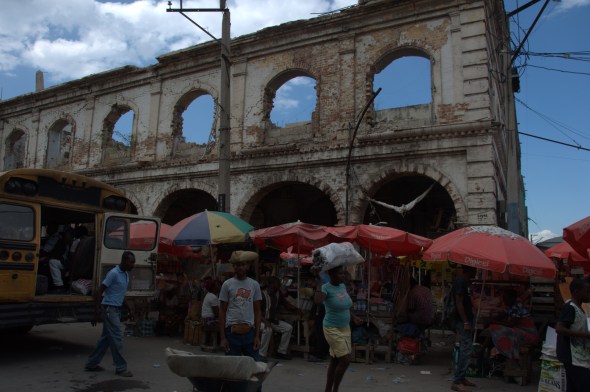
Haiti – not the safest place to travel but certainly interesting
Think about luggage
Habitually I travel with a rigid-shell wheelie, which would be harder for thieves to slash than a soft suitcase. My aim is usually to appear a more difficult target than someone else, so to that end I ensure zips and fastenings are done up, small padlocks secure outside pockets from interfering fingers and bags are worn cross-body so they can’t easily be slipped off my shoulder. Valuables are buried deep within inside pockets and expensive equipment like cameras are in plain bags rather than labelled ones with Nikon or Canon clearly visible. One thing I never do, though, is wear my rucksack on my chest – personally, I just think that marks you out as a dumb tourist and makes you more of a target.
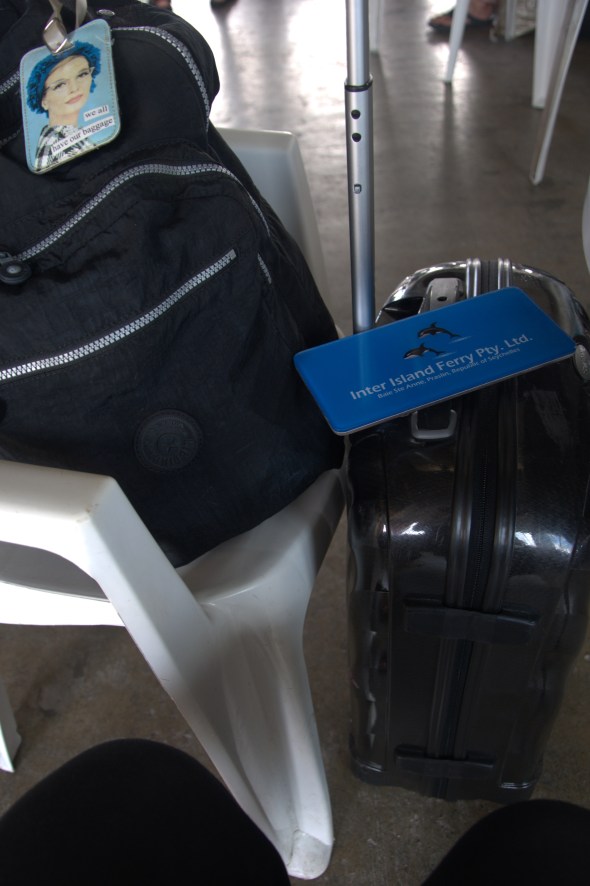
My trusty travelling companions, seen here waiting for a ferry in the Seychelles
Trust your instincts
Over the years I’ve either been lucky or I’ve developed the skill of knowing when something just doesn’t feel right. Of course, I could have been blissfully unaware of any potential danger. Sometimes, you just have to go with your gut and accept help or hospitality from complete strangers. I’ve trusted people to give me a lift and turned others down simply because it didn’t seem right; spoken to others at length and entered their homes while avoiding eye contact with others. One of the most rewarding aspects of travelling is the encounters you have with people along the way, which would be impossible if your guard was always up. So far, though I shouldn’t want to jinx my luck, I’ve never got myself into any situation I couldn’t get out of. Perhaps that’s the key – have an exit strategy in the back of your mind.

I’ve been rescued by a group of Rastas in Zambia
Choose accommodation in a safe location
It can be tempting to book a hotel or hostel near a bus or train station but I do check first to find out if that puts it in an insalubrious district. Better to have a short taxi ride or subway trip than to risk walking around somewhere that I’m more likely to get robbed. That’s especially important if I’m arriving after dark, which may be earlier than at home, of course. If arriving after nightfall is unavoidable, then I’ll almost always take a taxi; to do otherwise could be false economy. It’s also good to take local advice. The hostel I stayed at in Windhoek, Namibia’s capital, was very clear with the advice posted on its gate: leave anything behind that you didn’t wish to lose – pickpockets were, sadly, rife.

Damascus in the daylight
Ironically as it turned out, when I visited Syria just months before the civil war kicked off, I took the airport bus from Damascus into the city and then walked alone through its deserted streets at 2 am – and have rarely felt safer than I did that night. Perhaps safety is a state of mind?
Been there, done that, now what?
I wouldn’t class myself as a jaded traveller. I still get excited as I pack my wheelie and I even still love dragging myself out of bed in the pitch black to make an early flight. But there are places that I’ve tired of, places where I find myself wondering why they’re so hyped. If I never got to go to Paris or Amsterdam again, I wouldn’t be concerned. (But let’s not include New York in there because I’d be gutted to think I could ever be done with that incredible city.)

Tulips from Amsterdam
Increasingly, though, I’m keen to seek out places without crowds, not so much out of some kind of snobbish one upmanship but more out of a desire to be completely unsociable. We introverts need our space, you know. So which alternative destinations do I recommend if you’re looking for an off the beaten track experience?
Been there: Cusco and the Sacred Valley
Now what: Chachapoyas
The wealth of Inca sites in and around the Peruvian city of Cusco makes the area one of the country’s most visited. From Sacsayhuaman to Machu Picchu, this splendid heritage makes for fascinating viewing, but year on year visitor numbers have soared and you’ll be hard pushed to find space for quiet reflection unless you seek out some of the lesser-known places like Poroy and Chinchero.

Kuelap fortress
Trailblazers should ditch the crowds and fly north from the Peruvian capital Lima instead of south. Basing yourself in the charming town of Chachapoyas, you’ll be well placed to visit the intriguing hilltop fortress of Kuelap as well as the sarcophagi at Karajia. Find out everything you need to know about arranging your trip here:
https://juliamhammond.wordpress.com/2014/11/25/northern-peru-the-chacha-circuit/
Been there: Dominican Republic
Now what: Haiti
Not for the faint hearted, a trip to Haiti’s going to require you to keep your wits about you. Compared to its Hispaniolan neighbour, the Dominican Republic, package tourism is in its infancy and largely confined to Labadee in the north of the island. Instead of all-inclusives and the hard sell at the end of a rum factory tour, head over the border and make for the sleepy beach at Port Salut.
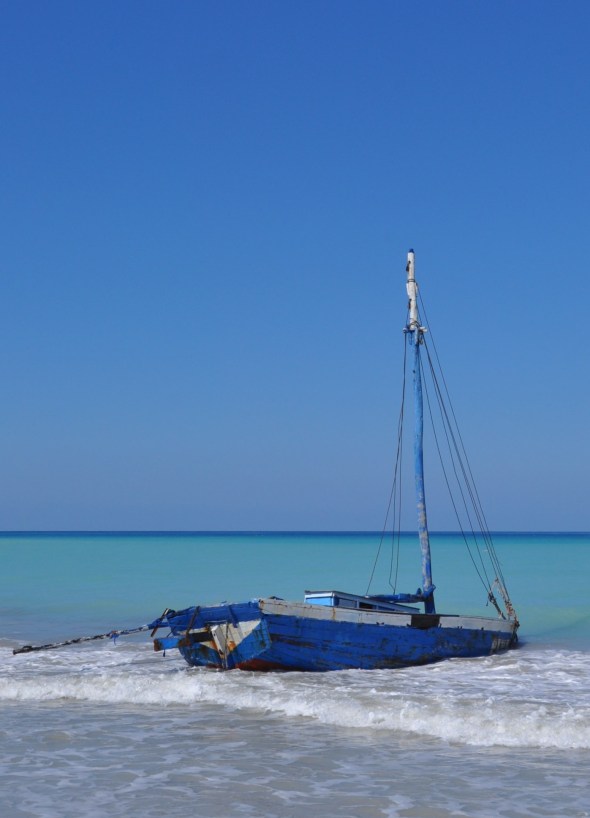
Fishing boat on Pointe Sable, Port Salut
You won’t find a bustling resort, rowdy beach bars or pestering hawkers who won’t leave you alone until they’ve made a sale. At weekends, a steady stream of ex-pat aid workers from Port au Prince gives the place some life, but if all you want is pristine white sand, crystal clear turquoise waters and a cold beer, then come on a weekday and you’ll have the place to yourself. See why I liked it here:
https://juliamhammond.wordpress.com/2015/02/14/the-best-beach-in-haiti/
Been there: Andalusia
Now what: Extremadura
I’m a big fan of Andalusia, from the tranquil elegance of the Mezquita in Cordoba to the bustling alleyways of the Jewish quarter in Seville. The delightfully atmospheric hamman in Jerez offered welcome respite from scorching afternoon sun and the towers of Cadiz offered a glimpse into that city’s fascinating maritime past. This year, though, for the first time, I dragged myself away from Andalusia’s comforting familiarity and ventured north to Extremadura.
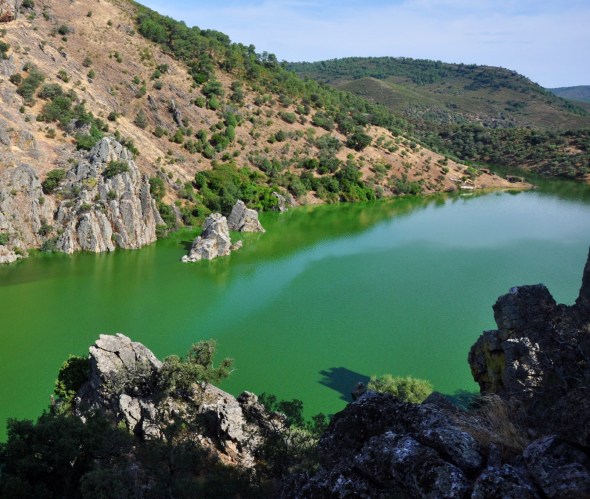
Vivid colours and unspoilt views
This overlooked region still has its pueblos blancos, like Zafra. It offers the gourmand such a choice in unmissable foodie experiences that stay too long and you’ll need to pay for an extra seat on the plane to accommodate a vastly enlarged belly. And the scenery, both natural and built, is as transfixing as its more popular neighbour. My favourites? Monfragüe National Park’s showstopping scenery and Trujillo’s atmospheric back street bakeries selling yummy yemas. Find out what else you shouldn’t miss here:
https://juliamhammond.wordpress.com/2016/07/12/a-beginners-guide-to-extremadura/
Been there: Vienna, Budapest and Prague
Now what: Lviv
Given the political situation in parts of Ukraine, you could be forgiven for thinking I’ve lost my mind in recommending one of its cities instead of the other gems of the Austro-Hungarian Empire. But Lviv was annexed by Austria in 1772 and, known as Lemburg, had more in common with west than east. Belle Epoque mansions and public buildings built in Viennese style still characterise today’s Lviv. It’s a very rewarding place to explore on foot, safe and not at all what you’d expect from an ex-Soviet bloc city. I’ll have my coffee and cake here, thanks.

Elegant Lviv
Any other suggestions?
Of course, there’s a good reason why some parts of the planet attract so many of us. But if you venture off on your own, the rewards are limitless. Where have you been that improves upon one of the world’s top rated destinations?
The coffin makers of Teshie
If you could choose a coffin designed to match your favourite hobby or interest, what would it be? A football boot? A bottle of Coke? A mobile phone? In Teshie, a suburb of the Ghanaian capital Accra, there’s no such thing as a regular coffin.

If I’m honest, I’ve never really given my own funeral much thought, concentrating instead on living. But to Ghanaians, death is a big celebration, the funeral a chance to mark the contribution a person has made to their community. And a big part of that is a customised coffin. Despite the typical cost coming in at more than six times the average income, many families choose to invest in one of these designer pieces to give their loved one a worthy send off.

The southern Ghanaian Ga people believe that death is not the end and that a person’s spirit will live on in the afterlife. It’s thought that deceased relatives hold much influence over the living and thus need to be kept happy. Depending on a person’s status, they might qualify for a particular type of coffin. Swords have high status and therefore cannot be used for just anyone; lions, cockerels and crabs represent clans and so only the heads of certain families are permitted to be carried in them.

Pulling up along the main street in Teshie, at first glance it seemed a pretty unassuming place. My driver led me to the back of one of the breeze block shops that lined the street and up a rickety wooden staircase across the back yard.
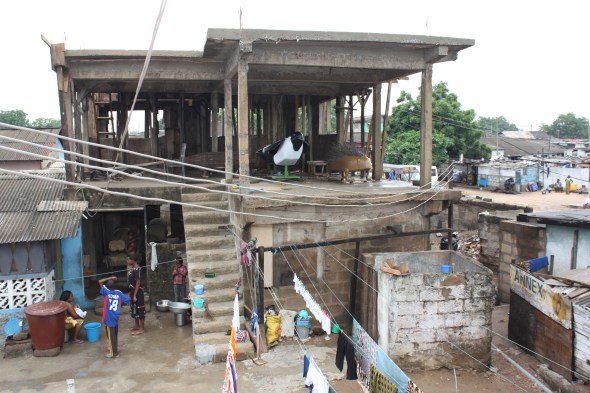
There, open to the elements, was a tiny showroom and workshop packed with finished and half-finished creations. An aeroplane, silk lined and carefully painted, looked ready to leave, missing only its dead body. A small photograph of an unsmiling policeman was tacked to the wall next to a crudely chiselled dugout. It was in its early stages, but it was clear that before long, this was going to be the ultimate vanity project.

It’s also common for the deceased’s relatives to choose a coffin themed to their loved one’s former occupation. A fisherman would find himself interred inside a fish – how ironic – while a fruit seller could end up in an elongated pineapple or mango, perhaps. A barman (or drunk) could be a bottle of beer, a farmer a cow. There was no shortage of imagination, or skill. Many of the craftsmen working on these fantasy coffins have been in the family business since starting their working life. Artisans employ apprentices who learn the craft and do the grunt work, leaving the artist to work simultaneously on the finer details of a number of coffins at once. Once carved, specialist painters or sign writers are drafted in to decorate the coffin appropriately. A coffin such as this is always to be a carefully crafted item, never a rush job.
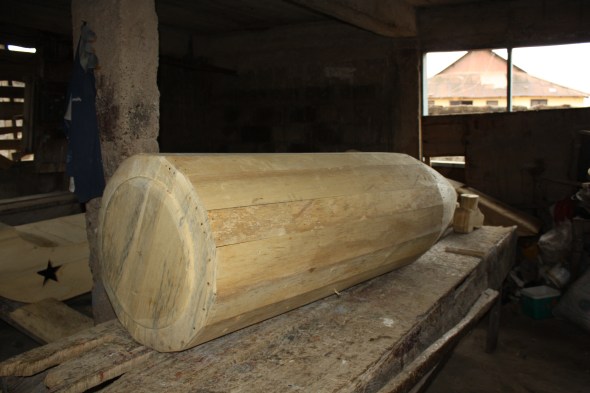
But although such businesses have been operating for decades since around 1950, interest from overseas is a relatively recent phenomenon. Word’s now out, though, and the coffins have featured all over the world in museums, festivals, commercials and trade shows from Milan to Toronto and a wealth of places in between. Coffins for local use are generally sculpted from the wood of the wawa tree, but for increased durability, those going to temperate climes are usually created out of something harder such as mahogany.

If I’d have been at the beginning of my trip rather than the end, I might have been tempted. Never mind the freight charges, just think of the reaction when you got it home. Orders take at least a fortnight to take shape if not longer, however, so for now a personalised coffin will have to wait. In any case, I have no idea what I’d choose. Would you?
Should you go back to a favourite destination?
For much of my adult travelling life, I’ve been keen to seek out new destinations, craving the buzz which comes from taming the unfamiliar and discovering what makes a place tick. As the country count has increased, some have commented that I’m only interested in the number, but that’s really not the case. In fact, over the past two years I’ve cut back on visiting the new to revisit old haunts. Nostalgia is harder to fight the older you get.

Valle de la Luna, near San Pedro de Atacama
After a fourteen year gap, exploring the incredible landscapes around San Pedro de Atacama in Chile helped to reinforce just how spectacular that country is – and this time I came armed with a better camera:
https://juliamhammond.wordpress.com/2015/04/20/around-san-pedro-de-atacama/
As well as Chile, I returned to Salzburg in Austria, a city which I last visited as a child. Participating in the Fraulein Maria Cycling Tour enabled me to create new memories – although I think my dream of belting out Lonely Goatherd at the top of my voice was probably someone else’s nightmare. Perhaps that’s the key – to try something new in a familiar environment and add another page to your personal guide book for that place.

Fraulein Maria’s Cycling Tours provide the words in case you’ve forgotten
There’s more here:
https://juliamhammond.wordpress.com/2015/06/05/salzburg-on-two-wheels/
There’s a risk, though, and that’s the place will have changed from the rose-tinted picture that takes pride of place in your holiday album. Accept the reality: it moved on, and it moved on without you. I remember heading back to Lake Titicaca after an eleven year gap to find the Uros Islands that had held such rustic charm now sported satellite dishes and solar panels. The quality of life for the islanders had measurably improved and I had to adjust my perception accordingly. Why should people forgo education and health care just so we can get our daily dose of quaint?

At least the Uros Islands still bounce
However, on balance, returning has been a largely satisfactory experience. Seville, New York, Saigon and Cusco are amongst the cities which have garnered renewed attention from me over the past couple of years, and none of them disappointed. In a few weeks, I’ll head to Budapest for a second visit. It will be a day trip (joining Belfast, Lisbon, Amsterdam and Bremen on this blog once I return) but I’m already excited at the thought of luxuriating in one of the city’s hot springs and having a post-dip coffee and cake at Gerbeaud’s Cafe. If you’ve been, send me your tips for how I should spend my day.


My next big solo trip will be back to South America; I plan to return to Uruguay, Argentina and Bolivia but many of the destinations I’ll stop at en route from Montevideo to La Paz will be new to me. And I’ve still got a few new countries on my wish list – Ethiopia, Cape Verde and Moldova spring to mind – but for now, they’ll just have to get in line.
What’s your take? Do you love to return to the familiar or prefer seek out new places?
Visiting a cemetery on holiday? You’re dead right I do!
Thanks to myWanderlust, I recently became aware of a fantastic blog by Rachelle – better known to those on the forum as Moose on the Loose – called http://www.stoneanddust.com. With her blessing, I’ve decided to blog this week about my own favourite cemetery visits. It may seem odd or macabre, but they are fascinating places with more than a single story to tell. And if you’ve been to any on your travels, I’d love to hear about them.
Oaxaca
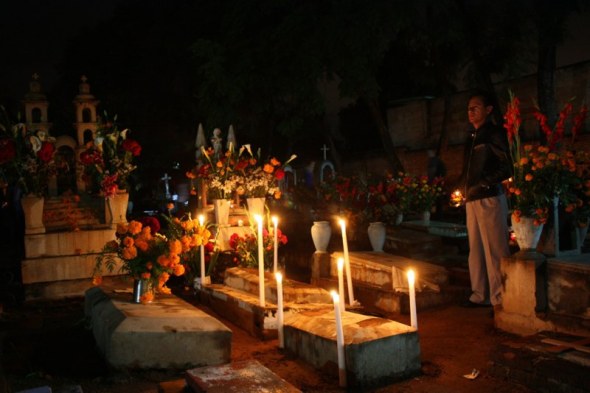
Xoxocotlan old cemetery
I visited Oaxaca’s old and new cemeteries when I visited for the Day of the Dead festivities. Each year, at the end of October, preparations are made to welcome the ancestors back for a celebration. Graves are decorated, food prepared and the Mezcal bottle drained to toast the gone but never forgotten. Lit by candles and adorned with more marigolds than I’ve ever seen in my life, Xoxocotlan’s old cemetery was the more atmospheric. In Xoxocotlan’s new cemetery, glow sticks and candy floss were the order of the day against a soundtrack of Michael Jackson’s Thriller. Read about the festival and find more photos here:
http://juliahammond.co.uk/Travel/DIA_DE_MUERTOS.html
Port au Prince
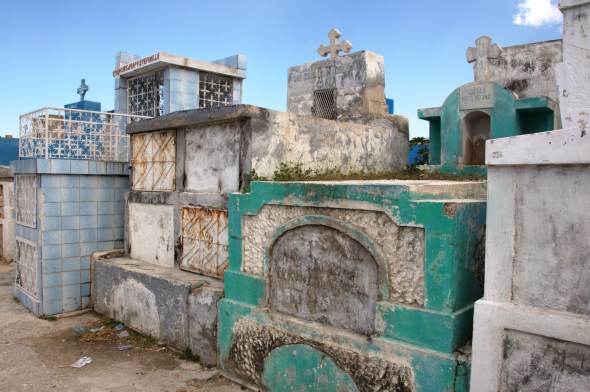
The cemetery, like the city, was damaged in the 2010 quake
My companions in the ageing cemetery in Haiti’s capital weren’t mourners – they weren’t even human. Instead of the expected hustlers, I was tailed by a goat and several chickens. Locally known as the Grand Cimetière, it’s an important focal point for followers of vodou. Parts of the Haitian capital aren’t very safe and this was reputedly one of them, so I lingered only long enough to absorb my surroundings and explore some of the more accessible graves, concerned that if I strayed too far from the main paths I might find myself the victim of a mugging.
New Orleans

If you’re in NOLA and need a guide, Sandy comes highly recommended
During my first visit to the Big Easy, I’d been fascinated to learn about Hurricane Katrina and its aftermath by one of the most interesting guides I’ve ever had the fortune to meet. On my return, I found out that Sandy was guiding a tour of St Louis Cemetery Number One. It’s the site of vodou queen Marie Laveau’s tomb, and after some vandalism, tours are only possible with a guide. Sandy regaled us with tales of the dead and the city that swallowed them up, with her distinctive humour and deadpan delivery. Who knew that temperatures inside those tombs were so high they acted like a mini crematorium?
Buenos Aires

The Duarte family tomb, La Recoleta cemetery
Another cemetery where tombs are largely located above ground rather than the below ground graves I’m used to in the UK is La Recoleta in the Argentinian capital Buenos Aires. Located in an upscale neighbourhood, it’s home to many of the city’s rich or famous former inhabitants, including of course Eva Peron. When I went to pay my respects at her tomb, I was touched by a man holding his own personal vigil to the iconic former first lady, proof that the cult of Evita lives on.
Paris
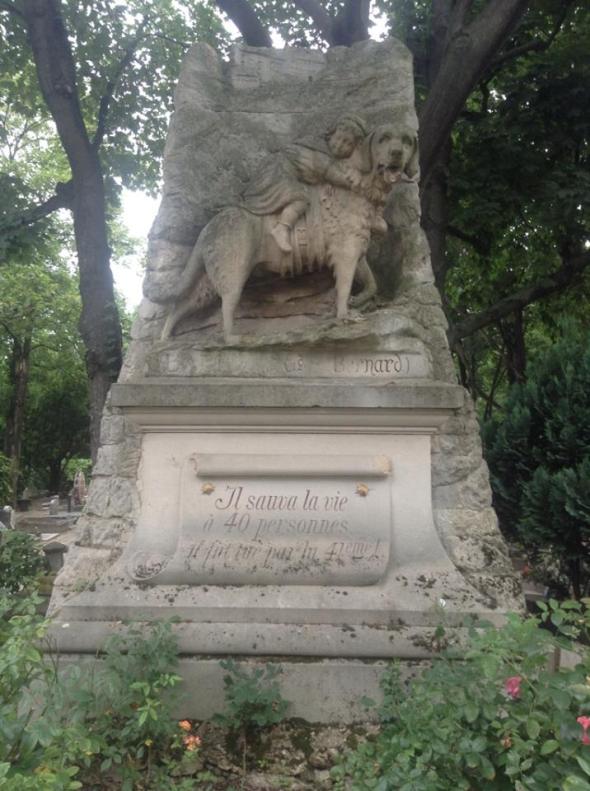
Canine hero Barry the St Bernard
This time, it’s a cemetery for dogs, a short metro ride from the centre of Paris. To give the place its full name, Le Cimetière des Chiens et Autres Animaux Domestiques has an eclectic mix of graves of much loved pets and canine heroes. Rin Tin Tin, the German Shepherd star of many Hollywood movies, was brought here to be buried after his death in 1932. Perhaps the most poignant of the inscriptions relates to a canine hero, a St Bernard called Barry, who saved 40 human lives before dying as he tried to save the 41st.
London
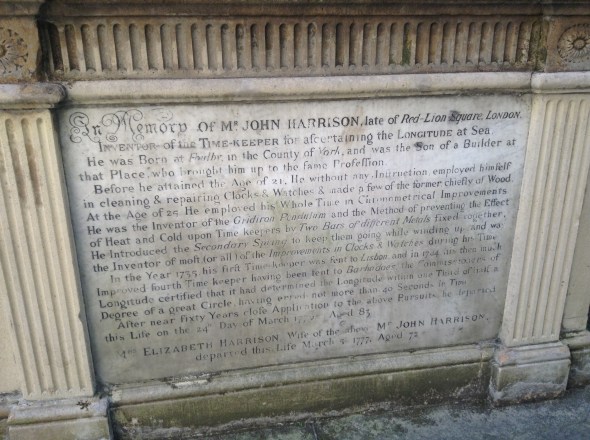
John Harrison’s tomb
Highgate is well known as the place where Karl Marx is interred, but my favourite of the UK capital’s graveyards is that of the church of St John at Hampstead. Inside, you’ll find two tombs of note. The first is of John Harrison, the clock maker credited with inventing a timepiece that could roll with the waves without losing time and thus enabling us to accurately define lines of longitude. The other is that of another John, Constable, whose paintings of the Essex and Suffolk borders sum up the beauty that can still be seen in my home county today. For a walking itinerary in Hampstead, plus others in Notting Hill and Marylebone, why not have a look at my Unanchor guide, available on Amazon here:
Travel hacks for solo travel
For almost three decades, I’ve happily travelled the globe alone. While I enjoy travelling with family or friends, nothing beats the joy of being by myself as I discover a new place. But there are, as with anything worthwhile, a few issues to consider. Here are a few tips to help you discover solo nirvana.
Watching the bags
One of the most inconvenient things about travelling alone is having no one with you to watch your bags. With a bag on your back or at your feet, you become very vulnerable when your attention is distracted – like when you’re booking a bus ticket for instance. There are several ways of reducing the chances of being robbed. Travelling light is the obvious one – carry less stuff and there’s less chance of that stuff being stolen.
All the luggage I needed for a two-week trip to the Indian Ocean
Also consider which type of luggage you’re carrying and how to avoid being the victim of an opportunist thief. I travel with a hard shell wheelie and when I’m off somewhere dodgy, pop a mini padlock on my rucksack. It’s not foolproof – a bag slasher obviously wouldn’t have a problem – but it is a small deterrent. If the person next to you has their bag wide open, you’re not going to be the first choice for a thief. Keep your bags in sight and where possible, keep the strap across your body.
Timing is everything
On a related point, I’ve never thought it would be smart to leave my bags unattended. I’ve no wish to be the reason an airport is evacuated. But I’m also regularly the victim of suggestion – and if I see a toilet, then there’s a good chance I need to visit it. That can be tricky when you’re on the move with all your bags and the floors are at best grubby, at worst, well, let’s not go there…

No single option even in the loo – Norway’s answer to toilet queues
Timing is everything. Go before you leave your hotel, in an airport where the cubicle could be big and clean enough to leave belongings on the floor or somewhere there’s a solid, heavy duty hook. And pray it’s not a squat toilet. Believe me when I say it’s almost impossible to keep your balance with a rucksack on your back.
Avoid tours
The dreaded single supplement can make it all too obvious that solo travellers incur a financial penalty from some establishments. While I understand how frustrating it must be for hoteliers to lose half the potential revenue from a double or twin room, I still have a travel budget to stick to. I look for hotels with single rooms – they’re not all windowless cells shoved in basements – and unpackage my trip to swap private drivers for public transport.

Don’t rule out private rooms in hostels for single occupancy
I also avoid tour companies promising single rooms without the single supplement – usually all they’ve done is absorbed those charges into their headline price. If I do need to take a tour, I opt to share with a same-sex stranger – sometimes you get lucky and get a room to yourself anyway and where that’s not been the case, I’m relieved to say my room mate has been a pleasant distraction for a few nights and not a surprise snorer.
Personal space
Most of the time, while I’m happy for my husband to rest his head on my shoulder, the same doesn’t apply for complete strangers who just happen to be occupying the seat beside me. On buses and trains, I seat myself on the aisle seat with my bag by the window. Most people would prefer to slide into an empty seat rather than have to ask someone to move, so you often keep your seat even when the bus is quite full. I’m always gazing intently at something out of the window, though if they ask me to move over or let them in, I always do so with a smile. There’s no sense in pissing someone off who’s going to be next to you for hours. It’s also easier than you might think to find single seats, whether on trains or on the overnight sleeper buses that are common in South America.

No shortage of space on Italy’s FrecciaRossa trains in executive class
If you do end up next to someone, it’s not the end of the world. The most comfortable flight I ever took was an overnighter from Ghana wedged tightly up against a very large woman – she was as soft as a goose feather pillow and happy for me to snuggle up as she spilled over into my seat.
Eat at the bar
Often, the only time when I’m really conscious I’m travelling alone is when it comes to dinner. Where eating breakfast without a companion rarely feels odd, there still seems to be a stigma about sitting alone over dinner. I’ve never been one for room service (and let’s face it, rarely stay somewhere smart enough to even have room service) so how do I overcome the thorny problem of dinner for one? I’m not frightened to say no to a table shoved up at the back of a restaurant by the kitchen door – if they don’t want to give me a decent table, I’m quite happy to take my business elsewhere.

Alas, there was no one present to witness me eating grasshoppers in Mexico
But if I’m feeling sociable I often sit at the bar to eat, as the bar tender and fellow patrons are often chattier there. And if I’m not, I’m quite happy to read a book between courses or simply people watch.
If you’re thinking of travelling solo but are scared to try it – don’t be! It might just be the best thing you’ve ever done.
Pick somewhere safe for your travels this year
In a world where, sadly, incidents of terrorism and violent crime are all too common, it can be a worrying proposition to plan a trip outside a familiar environment. Ongoing conflicts and political uncertainty place too many countries strictly off-limits for the time being at least, including destinations to which I’ve enjoyed peaceful holidays in the past, like Syria and Ukraine.

A tranquil scene in Hama, Syria photographed in 2010
According to the 2016 Global Peace Index, seven out of the top ten safest destinations for travellers are in Europe. Iceland, one of the world’s most fashionable must-sees right now, takes the top spot, with Denmark and Austria snapping at its heels.

The Sun Voyager statue, Reykjavik
For a full list of countries you can view the entire report here:
Click to access GPI%202016%20Report_2.pdf
The Economist’s Intelligence Unit creates its own list based on perceptions and reality in fifty of the world’s cities. It’s not as comprehensive a report but it does give an interesting insight into the situation in some of the world’s most influential and populous cities. In 2015, Tokyo was deemed the safest of the cities investigated, closely followed by Singapore and Osaka, demonstrating that Europe doesn’t have a monopoly on safe travel.
Tokyo: safe doesn’t have to be boring
See the report here:
Click to access EIU_Safe_Cities_Index_2015_white_paper-1.pdf
Sometimes, perceptions can be very different to reality. I made my fourth trip to Lima in 2014 and felt much safer than when I first visited in 1995 (and definitely safer than when I was almost mugged there in 2006). Yet The Economist places the Peruvian capital at number 38 (out of 50) on its summary list. I spent the majority of time during my last visit in the prosperous Barranco and Miraflores districts, which might go some way to explaining the discrepancy.
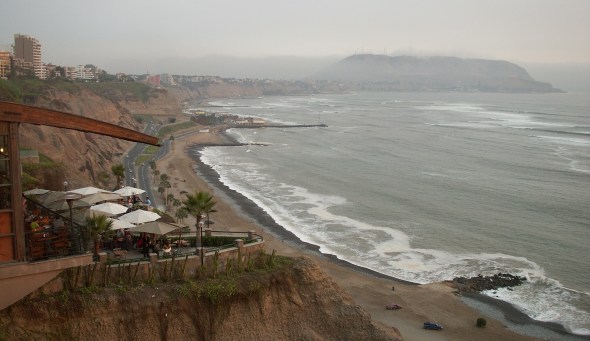
Lima coastal view
So what can you do to ensure you don’t unwittingly stumble into trouble?
Read government advice before you travel
If I’m planning a trip somewhere, I make this one of my first ports of call at the research stage so that I can make a considered decision as to whether I’m happy to put myself in that country. Sometimes, it’s as much a case of being prepared as being put off; if there’s an upcoming election for example, I might make sure I’m not in a large city in case the losing side get a bit shirty. The UK’s Foreign and Commonwealth Office maintain a comprehensive listing of travel advice by country here:
https://www.gov.uk/foreign-travel-advice
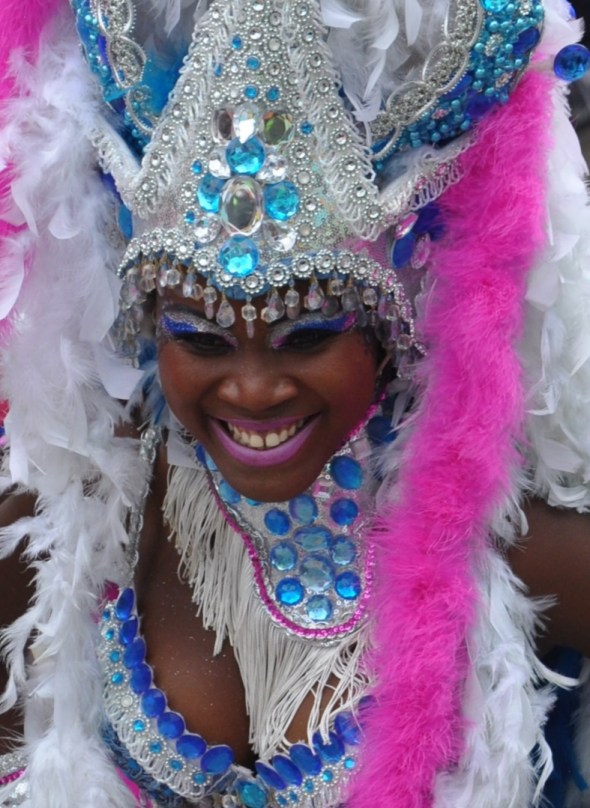
Carnival queen, Jacmel
Utilise social media
While travelling in Haiti last winter, I found Twitter an invaluable source of information as an unfolding labour dispute saw taxi drivers take to the street to blockade roads and set fire to piles of tyres. I was able to keep abreast of events happening in the capital Port au Prince and judge when it was safe to make the minibus journey back from the sleepy coffee town of Jacmel where I’d holed up to experience Carnaval.
Get advice from people who’ve just been there
The internet’s home to many forums specialising in travel and by posting for advice on a destination you’re hoping to visit you can tap into a wealth of information. Try forums such as Trip Advisor, Lonely Planet’s Thorn Tree or myWanderlust whose regular posters are usually more than happy to help.
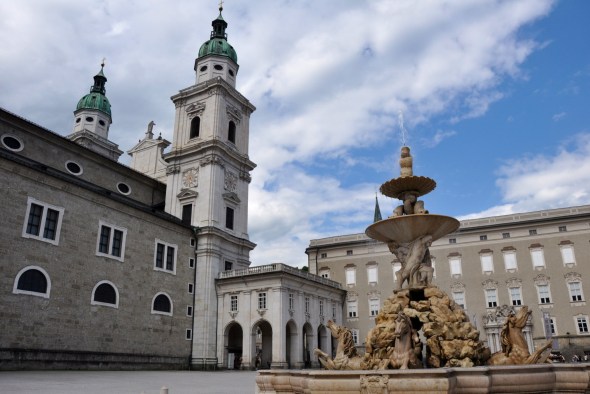
Residenzplatz, one of Salzburg’s prettiest corners
Trust your instincts
Finally, if something doesn’t feel quite right, go with your gut. That might mean you move on from a place that has a dodgy vibe or it might mean you shelve that trip for another time. After all, there’s always Austria…
More from Extremadura: the Roman ruins of Mérida
Spain probably isn’t the first country that springs to mind if you’re planning to explore the legacy of the Romans, but their empire encircled the Mediterranean (and beyond). In Spain, in addition to better known sights like Segovia’s aqueduct and Cordoba’s old bridge, Mérida is one of the best places to see some of the structures left from that age.
The modern city of Mérida has developed around and on top of the Roman colony of Augusta Emerita. It was built around 25BC and was the capital of Lusitana, located the furthest west of the Roman provinces. I began my exploration at the amphitheatre.

Passageway leading to the main arena
Though not as well preserved as others I’d visited – Tunisia’s El Djem, Nîmes in France and of course Rome’s Colosseum spring to mind – it had a certain charm. Being a weekday in the height of summer, visitors were thin on the ground, giving me a place free of tour groups to savour at a leisurely pace.
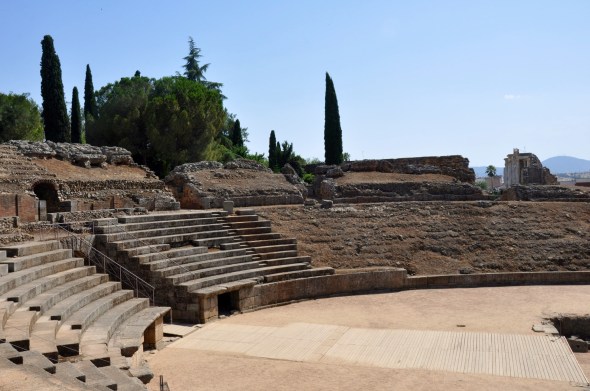
The amphitheatre viewed from the top of the stands
The amphitheatre itself was built about 8BC, designed to stage gladiatorial fights and other such spectacles. It would have had a capacity of around 15000 people, making it considerably smaller than the Colosseum which could seat almost four times that number. Adjacent to the amphitheatre is the theatre. More impressive, in my opinion, it’s a few years older than its neighbour, though back then, it wouldn’t have been nearly as popular. Give the Romans a choice between a bloodthirsty fight and a stage play and the fight would win every time.
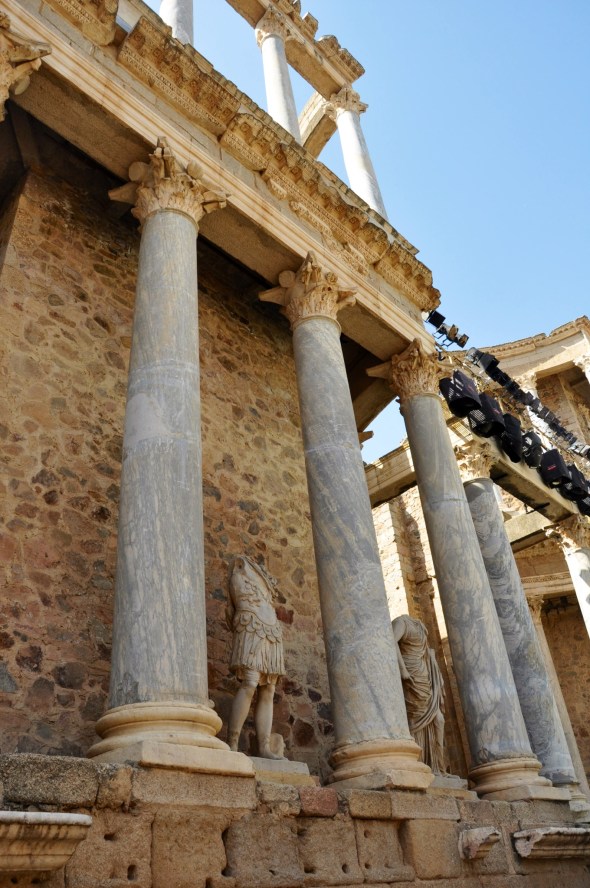
The headless statues behind the stage
Six thousand people would have been able to watch the proceedings. These days, the theatre is still in use; the Festival de Mérida takes full advantage of the atmospheric setting for a summer of plays. My schedule didn’t coincide, so I had to content myself with sitting on the front row in front of an empty stage gazing up at statues of deified emperors.
Perhaps the most impressive structure in the city is that of the Temple of Diana.
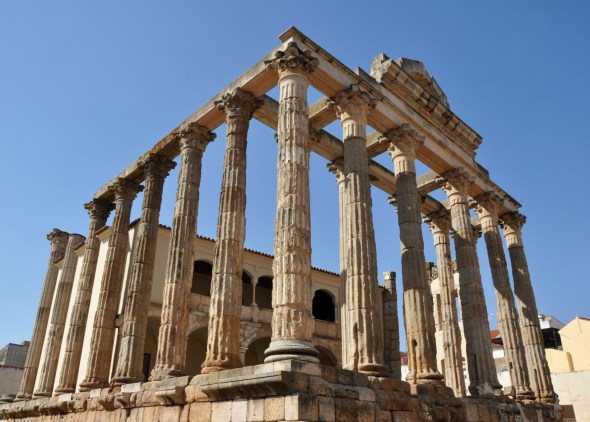
The Temple of Diana
Its Corinthian columns make it an impressive sight. Behind, lies the Palace of the Duke of Corbis, into which the temple was absorbed in the 16th Century. The temple lies on one of Mérida’s main streets and there’s a cafe next to it, which makes it a surreal sight. Nearby, is the Forum, again surrounded by the town’s modern buildings.

Mérida’s Forum
Strolling downhill, it’s not long before you reach the Guadiana river and there, you find the old bridge. Built in two sections, it links the river’s banks via an island. Sixty of its original sixty two spans still exist, and wisely the bridge was pedestrianised over two decades ago.

The Roman bridge at Mérida
Following the river bank from the bridge, after exploring the 9th Century Moorish Alcazaba that abuts its western bank, I headed to the Casa del Mitreo. There, Mérida’s most beautiful mosaics can be found. Best known is the mosaico cosmológico, laid in the 3rd Century and partially intact today.

Parts of the mosaic can be seen to this day
The city also has a Hippodrome, but I made a conscious decision not to go. I could blame the weather – who wants to do such a walk when the temperature is still 40°C at six in the evening – but actually it was to avoid comparisons with the excellent experience I had at Jerash in Jordan. Its Hippodrome is used for the wonderfully entertaining RACE project.
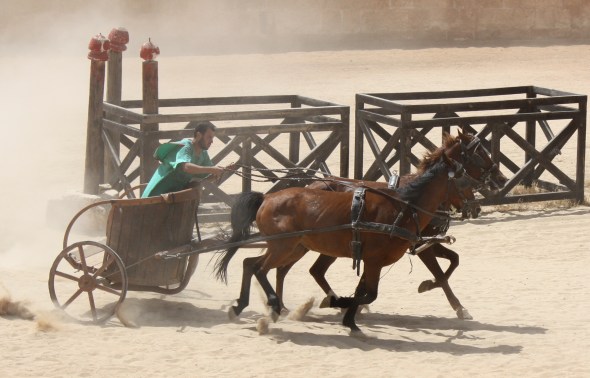
You can read about it here:
https://juliamhammond.wordpress.com/2016/07/25/gladiators-we-salute-you/
How to fly business class for the price of economy
At the end of May I flew business class on BA to New York. As an ex-teacher and now a travel writer who specialises in budget independent travel, you could be forgiven for wondering how on earth that budget managed to stretch beyond economy. Well, the answer is, it didn’t. My ticket from Europe to New York’s JFK airport cost me the princely sum of £342. This is the story of how I did it.

Error fares explained
I travelled on what’s known as an error fare – and it’s just that, a mistake fare. Sometimes, perhaps as a result of exchange rate glitches or human error (who cares so long as it’s a mistake in your favour) the computer offers up a fare at way below market rate. They don’t last long, sometimes staying available hours or even minutes. So how do you find one among all the many destination combos and available dates?
Subscribe to alerts
I subscribe to many email newsletters but those that are the most useful in this respect come from Secret Flying http://www.secretflying.com, from CheapFlightsLab http://www.cheapflightslab.com and from FlyNous http://www.flynous.com. Each have the facility to subscribe on social media – in fact I first became aware of Secret Flying via a post that popped up as a retweet on Twitter. Follow them on whatever platform you’re most likely to spot them. Make sure you have notifications switched on. In this instance I saw the deal first on a Secret Flying Facebook post.
Sift out unwanted deals
I tend to stick to the well respected airlines and travel booking sites that I’ve used before. So if a deal has to be booked through a consolidator’s website and I’ve not heard of them, I don’t use them. Equally, I don’t want to be bombarded with offers that originate outside Europe, so I select European deals only.
Be flexible
The business class fare I found actually originated in Oslo, Norway. The return flight was in four legs: OSL-LHR-JFK-LHR-OSL. The way air tickets work, if I’d been a no-show for the first leg from Oslo to London, the rest of the ticket would have been cancelled. I couldn’t have just travelled straight from Heathrow. However, so long as I didn’t have checked baggage (and remember business class offers a more generous cabin baggage allowance) then I would be permitted to exit in London on the return leg and just “miss” the onward flight to Oslo.
A few words of warning
As I’m UK-based, the cost of getting to Oslo had to be factored into the equation. I’d never been to Oslo and decided to travel on the morning flight from LGW to OSL the day before my New York flight and make a mini-break of it. My one-way flight cost £45 and I added a budget hotel room on for about £30. If you’re keeping a tally, that’s £417 to fly to New York business class – pretty much the same as a reasonable economy fare. Norway’s not cheap, but I could have chosen a hostel should I have wished. I could also have chosen an error fare via somewhere that offers cheaper accommodation, Spain for instance, or waited for one originating in London.
In the event, that Oslo flight was delayed by a staggering eight hours, scuppering my plans to explore the Norwegian capital but fortunately not impacting on my New York flight. But – and I cannot stress this enough – be generous with your connection time: had my inbound flight arrived too late, I’d have forfeited my NYC error fare as the two segments weren’t purchased as part of a single through ticket.
Sometimes, these error fares are honoured and sometimes they are not
The airline is under no obligation to honour an error fare. Basically, once you find and book an error fare, sit tight for a week or so. Use a credit card to pay for the error fare and don’t invest any money just yet in hotels, connecting flights or airport transportation. That way, should the error fare be cancelled, you won’t be out of pocket.
Once you have a confirmed ticket (check on the airline’s own website against your booking reference) then things should be OK. Make sure you have decent insurance cover just in case and it’s also wise to book your accommodation on a free cancellation basis. Sites like booking.com do this as a matter of routine; you can usually cancel right up to the day before without incurring a financial penalty but check carefully before you commit.
They work for economy too
At the time of writing Malaysian Airlines has an economy class error fare deal to Manila in the Philippines for £265 with availability showing from October 2016 to April 2017. These flights originate and end in London, so no need to mess about with connecting flights like I did for New York. Business class error fares come up less frequently but they do come up. The trick is to keep an open mind. Rather than look for a particular route, see which error fares come up and then book the one that excites you. I’ve never been to the Philippines…
Sit tight until the right deal comes up – and then grab it before it’s gone! Happy travels.
A beginner’s guide to Extremadura
Extremadura isn’t on most people’s radar when it comes to holidaying in Spain, overshadowed by its popular neighbour Andalusia. That doesn’t mean it’s got nothing to offer, however, and this region has proved to be one of the most diverse and interesting parts of Spain that I’ve visited.

Bakery selection in Trujillo
Getting there from the UK
There aren’t any direct flights from the UK to Extremaduran towns so realistically, the choice is between Seville to the south of the region and Madrid to the north east. Ryanair fly to Seville from London’s Stansted airport, BA, Ryanair and easyJet from Gatwick. If you’re wondering why Iberia’s missing from the list, it codeshares with BA on their LGW flight. From regional airports, you’ll have to connect as there are no direct routes.
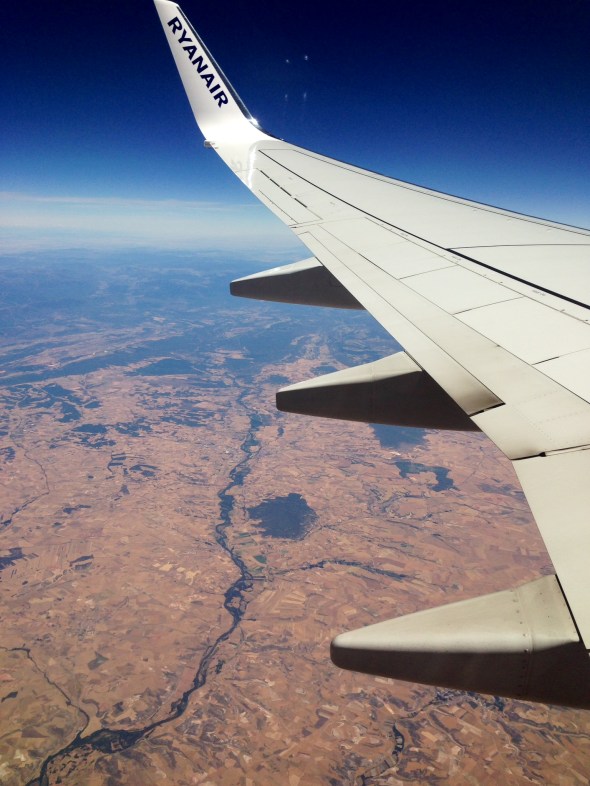
Ryanair en route to Seville
Those same airlines will also carry you to Madrid, plus Norwegian, a low-cost carrier operating out of Gatwick, as well as Iberia Express and Air Europa also from Gatwick.
Getting to and from the airport
I flew into Seville and out of Madrid on this trip but there’s no reason why you can’t do a round trip route or reverse the itinerary. To get into Seville from the airport I caught the airport bus, buying a ticket while I queued up for a few euros. It stops at the train station Santa Justa, skirts the old town and ends up at the main bus station, making it a convenient option wherever you’re staying.

One of the most atmospheric bars in Barrio Santa Cruz, Seville
In Madrid, my train’s final destination was Chamartin station to the north of the city centre but I bailed at Atocha. Getting to the airport was straightforward; the cercanias or stopping trains are quickest but go to Terminal 4. I’d opted to fly Ryanair which left from Terminal 1 and so I connected to the airport using metro line 8.
Getting around
Whether or not you’ll need to rent a car depends on whether you wish to explore the region’s attractive countryside and villages or stick to the main towns. There are a few train connections, such as between Badajoz to the west and the Spanish capital, but for me, on many of the routes I wanted to use, buses operated to a more convenient schedule. Operators include LEDA, ALSA and Avanza.

Every town has a main square; this is Zafra’s
I caught the bus from Seville to Zafra; you can buy a ticket to Mérida for around 10 euros. Although it’s possible to alight at Zafra, as far as I could work out, I couldn’t buy a ticket to Zafra online (you can in person) so I needed a separate ticket from Zafra to Mérida. Book online at http://www.alsa.es. It was just a few euros – well worth it for the chance to see this charming little town.

Pizarro’s mansion in Trujillo
From Mérida to Cáceres, an hour or so further north, I used LEDA; find them at http://www.leda.es where they also offer online booking. A single ticket costs just under 6 euros. From Cáceres, I made a sideways hop to atmospheric Trujillo for under 4 euros each way, leaving my bag in a locker at the bus station back at Cáceres. Tickets from the brand new and barely open bus station in Trujillo only go on sale fifteen minutes before the bus departs with Avanza but the buses weren’t full.
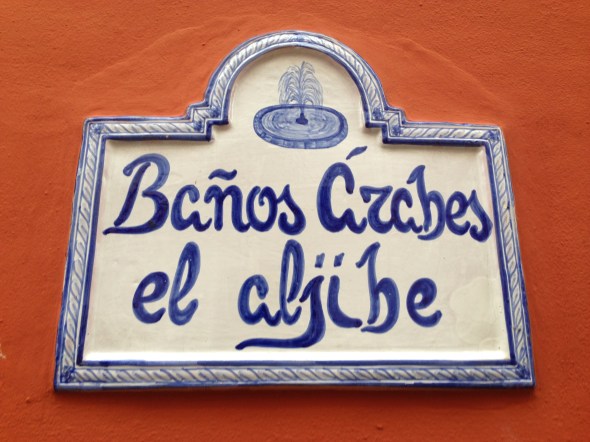
The hammam at Cáceres
To explore Monfragüe National Park and the La Vera valley in a day, there was no alternative to hiring a car. I used Europcar as its office was an easy walk from my Plaza Mayor base and also a straightforward and mercifully short drive to the ring road, easing the pain of town traffic. I did get a tiny bit lost getting the car back but I was only a few blocks out.

Birds take flight over the Ciudad Monumental
To get from Cáceres to the capital Madrid, I figured a train might be more reliable (it wasn’t – we were 40 minutes late getting in) and the train ticket on one of RENFE’s Media Distancia trains was also considerably more expensive than the buses I’d taken – around 32 euros.
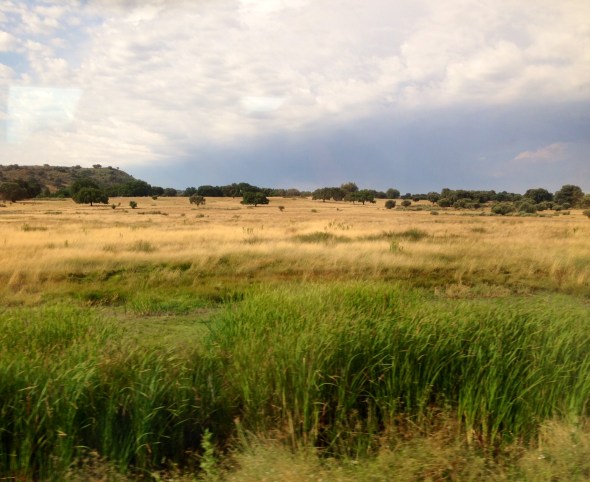
The Extremaduran countryside as seen from the train
Where to go
Where to start? There are so many incredible destinations that it’s hard to whittle them down. In order, here are the places I visited during my Extremaduran holiday.
Zafra
This small town felt more like an Andalusian town than an Extremaduran one, though as it was the first stop on my itinerary, I hadn’t at that point worked out what an Extremaduran town might feel like. It has a pretty double square with lots of pavement cafes and tapas bars. I was there just for the day but I am told the food scene is good there – something for next time. The town also has a castle, now converted into a parador, and plenty whitewashed alleyways adorned with window boxes stuffed full of geraniums.
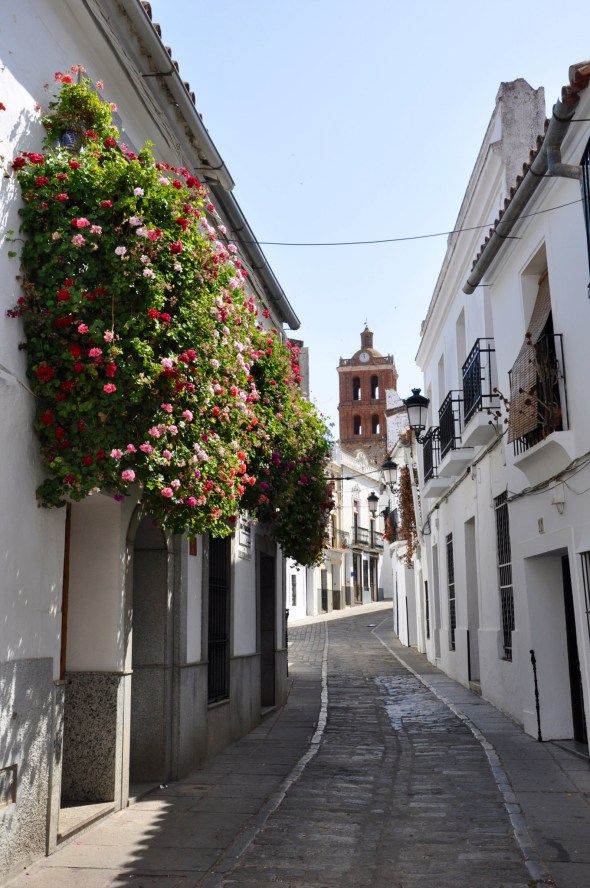
Street leading to the main squares
Mérida
This town is supposed to have the best preserved Roman remains in Spain. The sheer number of ruins was impressive, but some sights had more of the wow factor than others. There’s a partially reconstructed amphitheatre next to a fantastic open air theatre. Then there’s the breathtaking Temple of Diana which is literally plonked halfway along the main street with shops and cafes either side; OK technically it was there first but it does look so out of place it’s a bizarre sight. A restored Roman bridge, old fort with atmospheric cistern, Moorish remains and Forum are also easily accessible within the town centre.
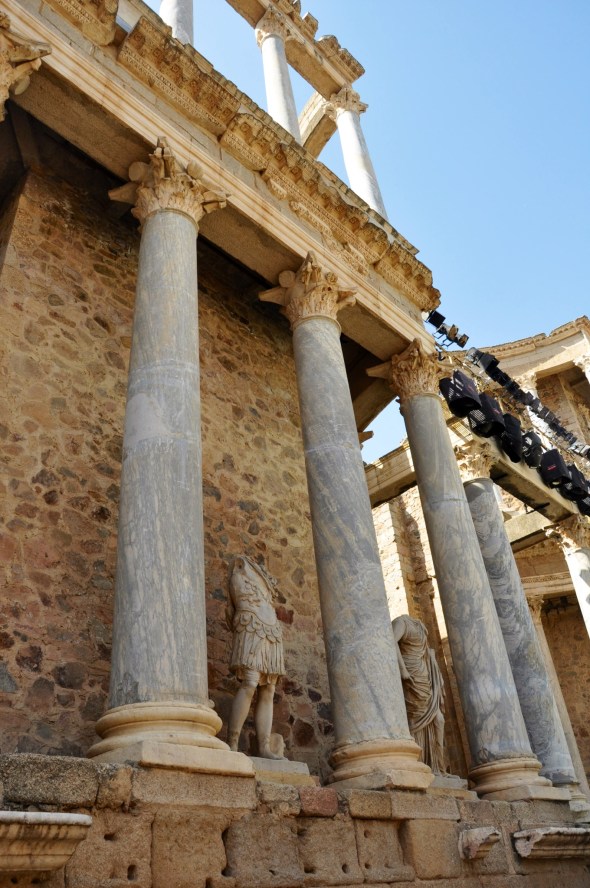
Merida’s Roman theatre
Trujillo
This charming town was my favourite, home to conquistador Pizarro whose statue dominates the main square. Actually, that statue was supposed to be of Cortes, but the Mexicans didn’t want it so it was re-purposed as a Pizarro statue instead. The historic centre of Trujillo is packed full of mansions, including Pizarro’s, as well as myriad churches, towers to climb, a museum about the conquest of Peru and a hilltop castle.

View over Trujillo’s rooftops
Cáceres
The main attraction of this large town is its Ciudad Monumental, a walled old town which is also a UNESCO World Heritage Site. Just wandering amongst its alleyways late in the day was a delight; the addition of a very talented flamenco singer playing Spanish guitar was the icing on the cake. Outside the Ciudad Monumental, the Plaza Mayor was the centre of the action when it came to food and drink, though nearby San Juan had better food. The town also has a hammam with the usual hot, warm and cold baths – massage optional.
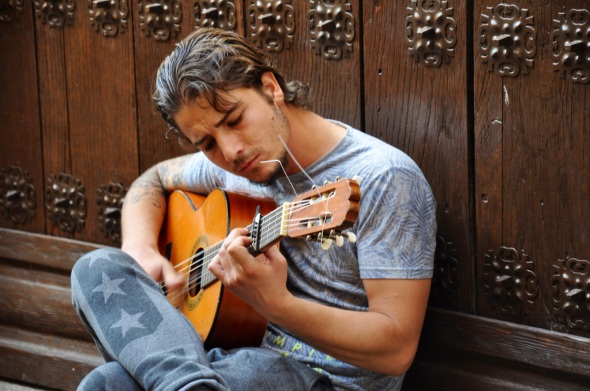
Flamenco singer in Cáceres’ Ciudad Monumental
Monfragüe National Park
This, I read, was Spain’s 14th national park but it was the one place I visited that made me gasp. At the Salta del Gitano lookout in the centre of the park, the River Tajo meanders between a couple of rocky outcrops. I visited in the morning and the water was a vivid green – a spectacle in itself but even for someone who can’t see the point of birdwatching, the sight of a black vulture close up was pretty impressive. The winding drive through the park was very pleasant and, if you don’t visit in the height of summer when the temperatures soar, the area is great for hiking.
Salta del Gitano
La Vera
This valley connects a series of pretty little villages, many of them worth a stop. Pasarón de la Vera was my first stop, its setting the main draw. From there, a short drive took me to Jaraíz de la Vera, known for its peppers, and then to Cuacos de Yuste, where the monastery housed the Spanish King Carlos V towards the end of his life. I drove on as far as Jarandilla de la Vera where there was an impressive Roman bridge and several natural swimming pools (a big thing in these parts) before backtracking to Garganta de Olla, a quaint little village with a plethora of half-timbered houses overhanging its narrow streets. Taking the mountain route via Piornal provided the adrenaline rush to end the day – though fortunately by that I mean returning to Cáceres and not going over the cliff edge.
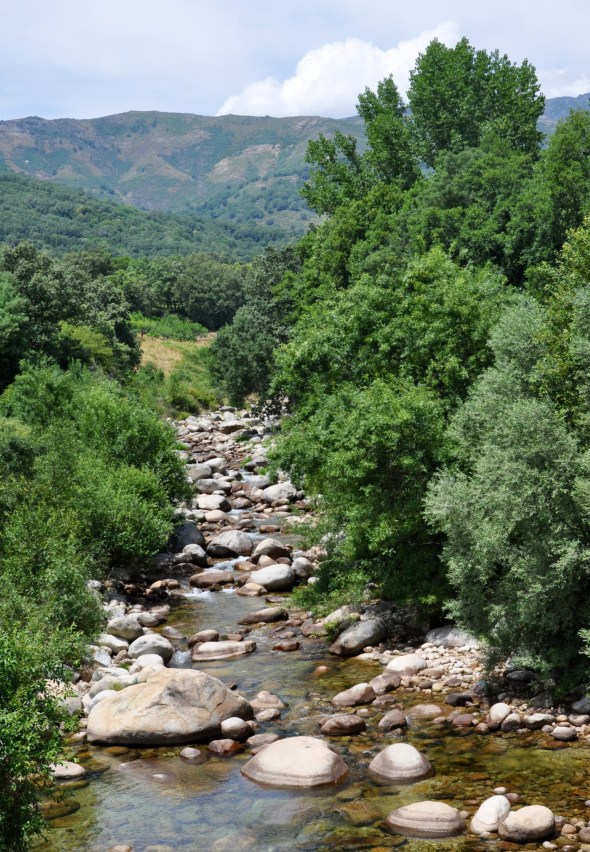
Natural pool on the edge of Jarandilla de la Vera
The ones that got away…
This was my first trip to this region and there were quite a few places I didn’t have time to visit – this time! I’ll be back, one day, to visit Alcántara and its bridge as well as to Montánchez, Monesterio and to Casar de Cáceres for the food.
Watch out for more blogs covering Extremadura in the near future for more on these fantastic places.
Best of British: coastal picks
With last week’s shock Brexit decision, the pound has slid against the dollar and the euro, making the UK a cheaper destination for foreign visitors. Whether you’re flying in from abroad on the back of an advantageous exchange rate or a Brit now planning a staycation, here are a few of my favourite English coastal destinations to whet your appetite. You don’t even need sunshine for a great holiday – which is just as well given the summer we’re having so far.
Dorset


Dorset’s Jurassic Coast is one of my favourite spots. As a former Geography teacher, this stunning coastline packed with headlands, bays, arches and stacks never fails to disappoint. The walk across the cliff top from Lulworth Cove’s almost perfectly circular bay to the drama of Durdle Door has surely got to be among the best in the country as far as I’m concerned.
North Norfolk
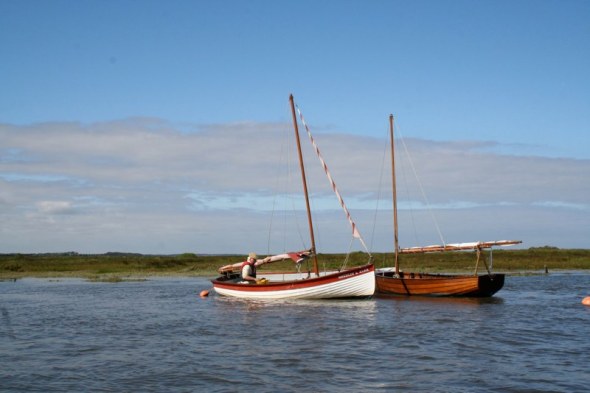
From the old windmill at Cley-next-the-Sea to the vast expanse of sand that forms Holkham beach, this small stretch of coastline punches well above its weight when it comes to visitor attractions per square kilometre. So close to London and yet a world away, whether you choose to take a seal boat trip from Blakeney, take a hike across the marshes (some of these seaside towns are no longer sea-side) or hole up in one of the many excellent local pubs you’ll love it enough to be sure to return.
Cornwall


No discussion of England’s best coastal destinations could be complete without reference to the west country and pretty though Devon is, Cornwall just has more character in my book. It’s hard to pick a favourite – this is a part of the country where you’re truly spoilt for choice. Polperro, pictured, has a lot of charm and perilously narrow access for those who blindly follow their Sat-Navs into town. If in doubt, take the locals seriously when they advise that some routes are not caravan friendly – and by caravan, they mean anything wider than a bicycle.
North Yorkshire

As an Essex girl, you’ll have to forgive me for a list biased towards the south, but doing my degree at the University of Leeds has left a lasting fondness for God’s Own County. Many a happy field trip was spent perched on a cliff sketching this dinosaur-like rock formation at Flamborough Head known as High Stacks, but to save you from some water-damaged and decidedly tatty field sketches, here’s a photo instead.
© Copyright Dr Patty McAlpin and licensed for reuse under this Creative Commons Licence
And one I keep promising myself I’ll get to one day… Crosby Beach near Liverpool

Antony Gormley has excelled himself with this installation, titled “Another Place” which, after being exhibited in various European locations has found a permanent home at Crosby Beach just north of Liverpool. A hundred cast iron figures stand in the mudflats at low tide, staring at the horizon until the incoming tide buries them in water and sand. People say it’s a haunting sight, and it’s one I’m looking forward to seeing for myself when I’m next in the area.
Photograph by Chris Howells CC-BY-SA-3.0 via Wikimedia Commons
What are your favourite parts of the English coastline?
I could easily continue this blog: the best fish and chips in the world at Aldeburgh, Suffolk; the imposing castles of Northumberland; Brighton’s iconic Victorian piers and more. The beauty of Wales, Scotland and Northern Ireland will be the subject for another time, but for now, where would you say is a stand-out for you? And where have you always wanted to visit? I’d love it if you would share your English coastline tips by commenting on this blog.
New York’s latest project? The Lowline Lab
Hot on the heels of the High Line, the elevated railway turned park which is now one of New York City’s best loved attractions, there comes a bold newcomer. Following the same tradition of cutting edge conceptual development, imaginative design and community involvement, a new way of injecting green space into the Big Apple’s concrete jungle is underway. It’s officially called Delancey Underground but unsurprisingly, everyone’s nicknamed it the Lowline.

A small group of talented individuals led by James Ramsey and Dan Barasch have been working on trialling a technology which would enable natural sunlight to be harvested and transferred underground in order to grow plants for a subterranean garden. The Lowline Lab, as the testing site is called, houses around three thousand plants in the former market building on Essex Street. It occupies a site about 5% of the proposed end result, large enough to give the visitor a sense of what the Lowline might one day be like.

This Lower East Side location has not been selected by chance. In fact, this is one of the most built up areas of a city blessed with squares and neighbourhood parks. A growing population and substantial redevelopment in the LES puts paid to any hopes of removing concrete and tarmac from any above-ground real estate so burrowing underground was the logical choice. With a suitable location identified – the long abandoned Williamsburg Bridge trolley terminal – all that had to happen was for technology to catch up.

Working in collaboration with a number of specialist firms, the committed Lowline staff and volunteers have developed an impressive system of mirrors and tubes which feed light off the street and into the dark depths of the derelict market. Last October, the project set about testing whether plants could survive the New York winter when shorter daylight hours in theory wouldn’t provide the right environment for them to thrive. In fact, the opposite has been true and it has even proved possible to grow viable plants from seed. Spanish moss hangs from the ceiling, trailing down towards a plywood platform carpeted in shade tolerant ferns, exotic succulents and verdant shrubs. Seedlings labelled with lolly sticks emphasise the newness and experimental nature of the project.

With the market earmarked by developers, the Lowline Lab was set to close in March 2016 but a stay of execution was granted as the developers postponed their plans. Now, the Lowline Lab will be open to visitors until at least March 2017. This extension has brought with it new challenges, not least a plethora of pesky insects that have been as thrilled to move into their new neighbourhood digs as the human residents have been to repurpose them. Undeterred, the Lowline team have implemented a series of measures that will ensure that the experience of visiting this innovative underground garden isn’t marred by a thick cloud of midges. Nematodes have been placed in the soil to good effect, though the introduction of carnivorous plants has been less successful, partly because visitors have been tempted to touch their snapping jaws themselves.
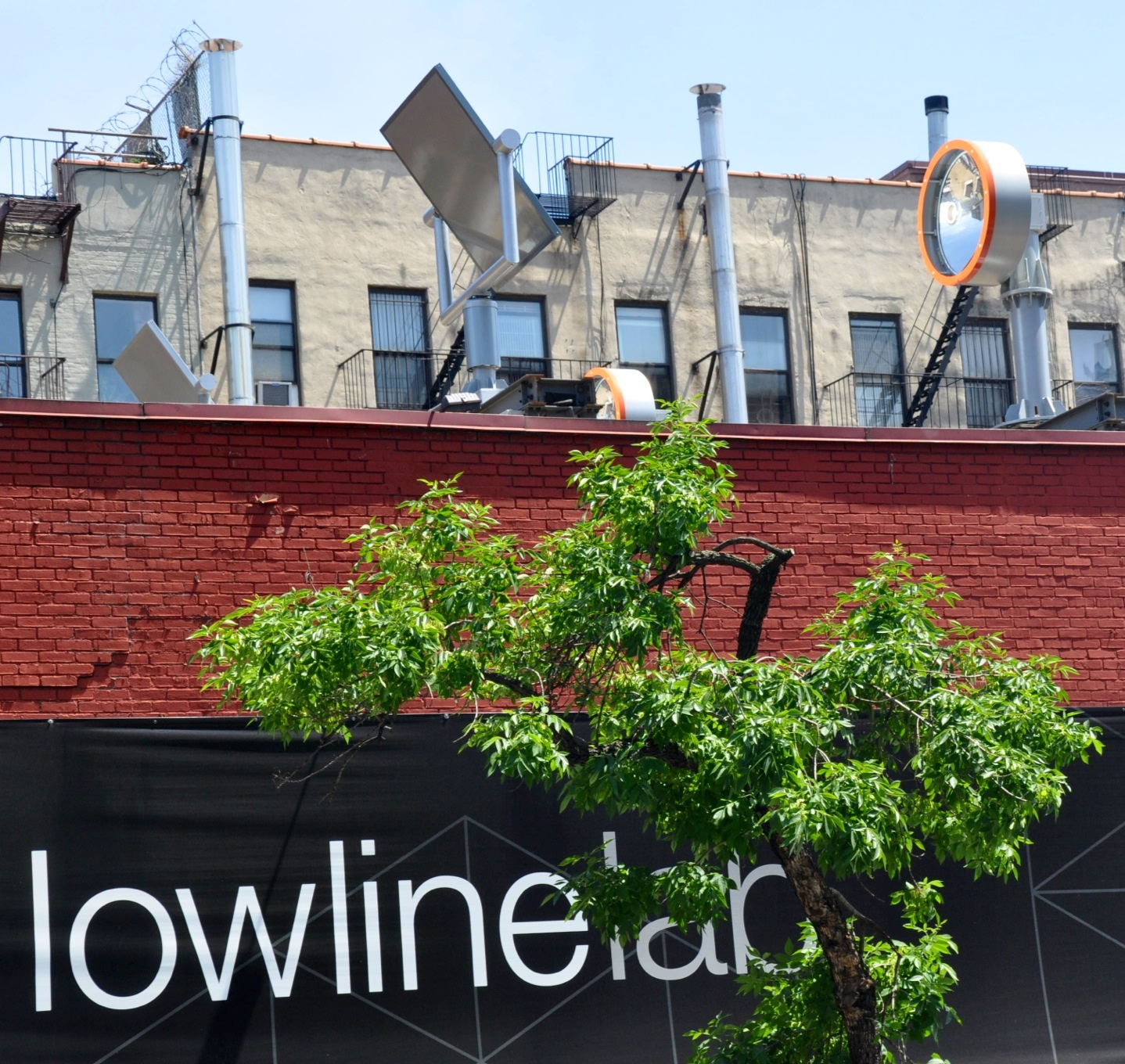
With feasibility studies complete, politicians and community groups on side, support (though not funds) from owners MTA and a steady stream of interested visitors to the Lab itself, there are just a few fundraising and logistical hurdles to overcome. It seems the project could well come to fruition. At present, the team are confident they’ll have the Lowline up and running by 2020 or thereabouts. In the meantime, I’d strongly recommend that if you’re in New York one weekend before next March you take a trip down to 140 Essex Street and check out the Lab for yourself.
Head Stateside this summer
It’s fast approaching Memorial Day in the USA, the day for Americans to remember those who died fighting for their country. It falls on the last Monday in May, which this year is May 30th. For visitors, that weekend more or less marks the beginning of the tourist season for those attractions that open only during the summer months. In New York, for instance, that’s when the new Gansevoort Market is expected to open and the weekend Governor’s Island kicks off its summer season. For many Brits, a holiday in the USA means taking the kids to Florida’s theme parks, or perhaps a shopping trip to the Big Apple. The reality is, of course, that there is so much more.
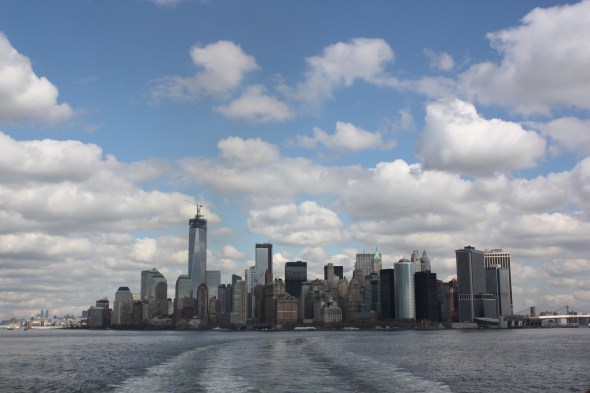
Lower Manhattan as viewed from the Staten Island Ferry
I’m often surprised to read on travel forums that people write the country off because of its draconian immigration procedures, when in fact in my experience it’s rarely worse than anywhere else. Some even claim that the $14 ESTA is a deal breaker – seriously, a £9 charge on a long haul holiday? That’s hardly going to leave you without spending money. I’ve travelled a lot in the States and I can honestly say, Florida aside, (I’m no fan of the Mouse) I’ve never begrudged paying it to see such incredible and varied scenery. So, to mark Memorial Day, here’s my pick of America’s very best tourist spots. It’s been hard to whittle them down and I could easily add more.
This Memorial Day weekend I’m going to be in my favourite US city – New York. Where are you going to be?
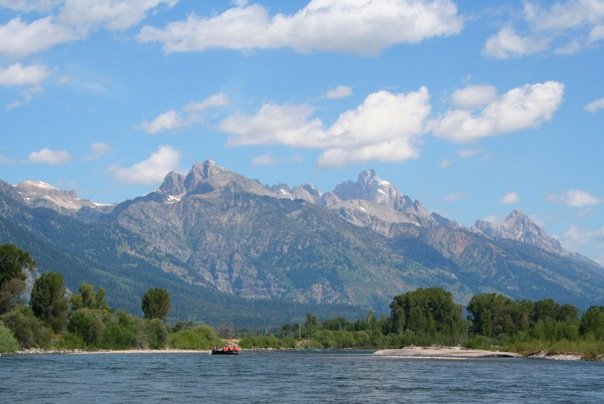
A float trip in the Grand Tetons
Bad skies in the Badlands

New Orleans

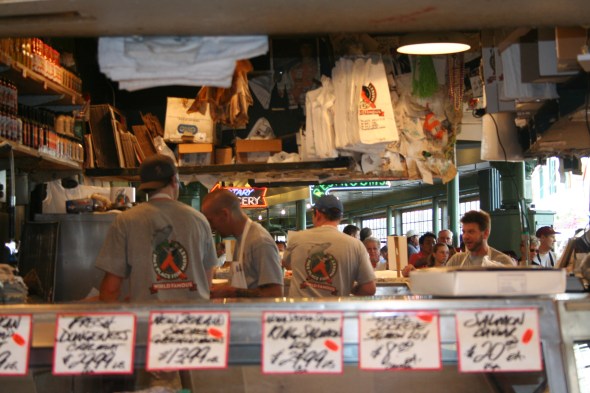
Pike Place Market, Seattle
Savannah’s squares

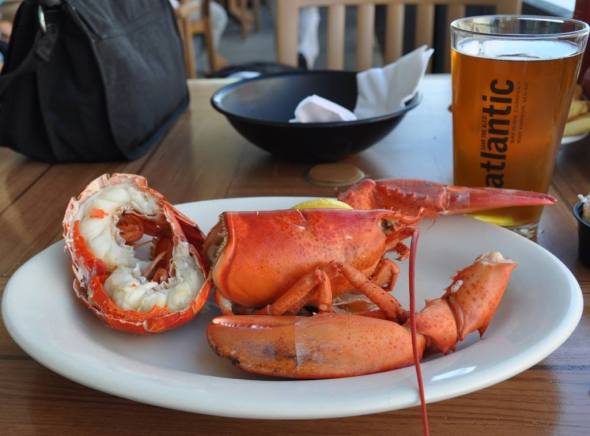
Bar Harbor – lobster and beer
The Rodeo at Cody

Canyons, rock arches and more, Utah

The Mummer’s Parade, Philadelphia

Las Vegas’ Neon Museum

Big skies and glaciers, Montana

The Bronx, New York
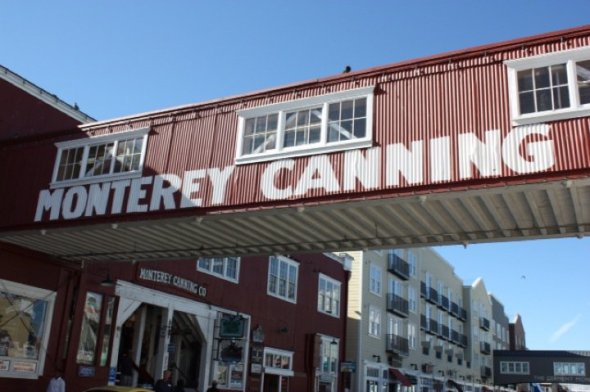
Monterey’s Cannery Row
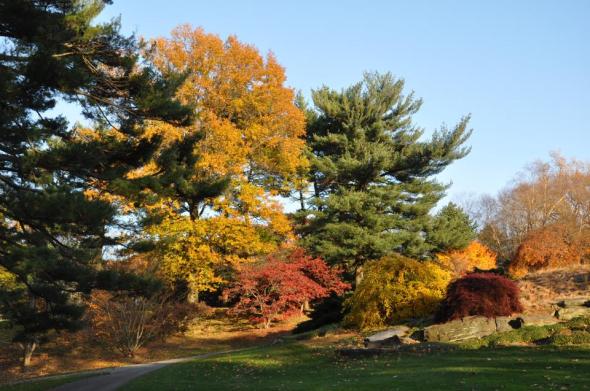
Elegant Charleston

Running with the llamas, Hammond Wisconsin

So are you tempted? What’s your favourite US destination and why?
Looking at the familiar with fresh eyes
“The whole object of travel is not to set foot on foreign land; it is at last to set foot on one’s own country as a foreign land.”
London born writer Gilbert K. Chesterton wrote this oft quoted phrase about Battersea in his essay “The Riddle of the Ivy”. It’s an idea I’m embracing while out and about in my home county of Essex.
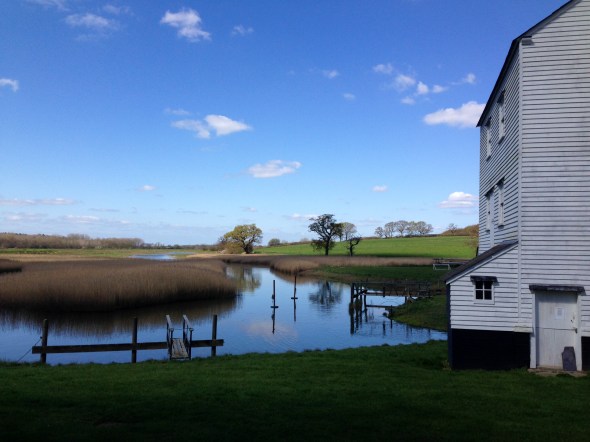
Thorrington Tide Mill
Often overlooked in favour of neighbouring Suffolk or Kent, the greatest pleasure for me of travelling in my local area is the lack of visitors in all but the most obvious of destinations.

In the grounds of Layer Marney Tower
Researching for Countryside Dog Walks, I’ve quite literally walked for miles without seeing a soul. It’s taken me to parts of the county I’ve never visited and to my delight, I’ve had as much enjoyment discovering new sights in my own backyard as I’ve had anywhere in the world.

Marks Hall Arboretum
Part of the joy of independent solo travel for me is to unpick somewhere new, to learn how it’s constructed and to find out how it ticks. Realising I can still do this in Essex has been a satisfying revelation. Another great British writer, Lawrence Durrell, famously wrote:
“Travel can be one of the most rewarding forms of introspection.”
Walking along the Essex coastline and through its surprisingly empty countryside, the lack of specific sights and attractions makes it perfect for pondering while wandering. Life’s full of things to be done and these walks feel deliciously self-indulgent, yet unlike a big trip, they only require me to take a few hours off.
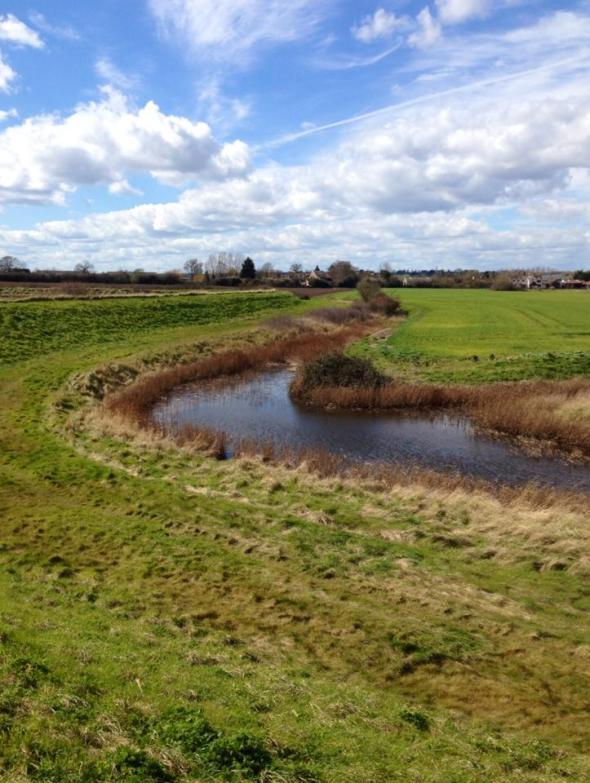
Salcott Creek
Being alone makes me more in tune with my surroundings. Sounds that are concealed by conversations push their way in to a solo walk. The salt marsh fizzing, the wind vibrating the rushes, the stream trickling – all lost unless you really listen. For me, one of the biggest distractions from the landscape is my camera. It can be hard to give up the search for the perfect shot and just look without a lens. But when I force myself to do so, it’s more than worth it.

Lion Creek, Paglesham
To find out more about the hidden corners of Essex, why not visit my Essexology blog? You’ll find it at http://www.essexology.com
A beginner’s guide to Peru
Lots of people ask me what my favourite country is out of all those I’ve travelled to. It isn’t really a hard question to answer as over four visits to this South American nation, it’s really got under my skin. Peru’s landscapes, fascinating culture and rich history make it a shoe in for the top spot, its crazy and very likeable people the icing on the cake. If you’ve never been to South America, Peru’s a great country to start with. Its tourist infrastructure is well developed, particularly around Cusco, and although it has sometimes had a reputation for petty crime, with a bit of care you can easily avoid becoming the next statistic.

Bottle feeding a baby alpaca
Getting there
Getting to Lima, the Peruvian capital from the UK has just got a whole lot easier with the introduction of thrice-weekly direct flights from London Gatwick with British Airways. However, these are hard to come by for a reasonable price and you’re still likely to have to consider an indirect routing.
Typically, the best European options are via Madrid with Iberia, through Amsterdam with KLM and Paris with Air France. I’ve used all these routes and the advantage outbound is that you’re on the second leg towards Peru pretty quickly which makes you feel like you’re getting somewhere. Be wary of using CityJet connections from Paris back to London in case you have the poor experience I suffered:
https://juliamhammond.wordpress.com/2015/03/06/finally-a-win-against-cityjet/
It’s also possible to hub through the USA which gives you two more evenly balanced flights. However, if you do choose this option you’ll need to clear immigration in the USA even though you’re only in transit, meaning you’ll need to apply for an ESTA at a cost of $14 just to sit in the airport. Queues can be long; it’s best to allow at least a three hour layover if you plan to do this to avoid missing the second leg of your flight. I’ve seen people beg and plead to queue jump to no avail.
Getting to Lima from the airport
With most flights from the UK arriving in the evening Peru time, you’re going to need to spend at least one night in the capital before connecting to your domestic flight or bus the following day. Lima’s Jorge Chavez airport is located in the port district of Callao, the opposite side of the city to the upscale neighbourhoods of San Isidro, Miraflores and Barranco which are the most pleasant to stay in. You can find accommodation in Callao but it’s not a very nice area and not especially safe. Buses pass the airport and head into the city but you’re better off organising a taxi. Don’t go out onto the street to hail one; instead, before you leave the arrivals hall, look for the Taxi Green company and use them. Their rates are fixed so you can be sure you won’t be ripped off. Lock your door though; I’ve had an opportunist thief attempt to steal my phone by opening the back door of the taxi while we waited at a red light.
Getting around
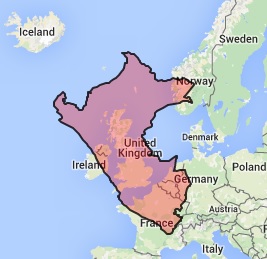
Let’s start by stating the obvious: Peru is large. Getting around is a trade off between cost and time. If you are only in the country for a couple of weeks then flying between cities is really your best bet. Internal flights are relatively competitive if you book reasonably early, especially to Cusco. I’ve recently flown with LC Peru and Star Peru which were both good; TACA also operate internal flights. LAN (now LATAM), the national carrier, is very reliable but tends to be more expensive.
You can also take overnight buses. It’s advisable to travel with a reputable company such as Cruz del Sur or Ormeño as they are supposed to drug-test their drivers more often and travel with a pair. Buses have regular seats but often semi-cama or cama also; these are much larger, reclining seats (cama means bed) and are much better over longer distances. I suffer from back problems but found I could get comfortable enough to sleep.
Train services are limited in Peru but there are a couple of routes which are of interest to tourists. Lima to Huancayo is the second highest rail line in the world (after Tibet) but the Tren de Sierra only rarely makes the journey. Services from Cusco are more frequent and thus of greater importance here. Trains run to Machu Picchu beginning from Poroy just outside Cusco (and also from Ollantaytambo further along in the Sacred Valley) as well as to Puno over the altiplano. Find out more at http://www.perurail.com.
In town, it’s cheap to take a taxi, though make sure you agree a price in advance and if there’s more than one of you, make sure that price is per car and not per person. Colectivos, minibuses that run on fixed routes, are easy to hail and cheap to ride. Alternatively, little three wheelers (Peruvian tuk tuks) are the way to go in places like Cajamarca.
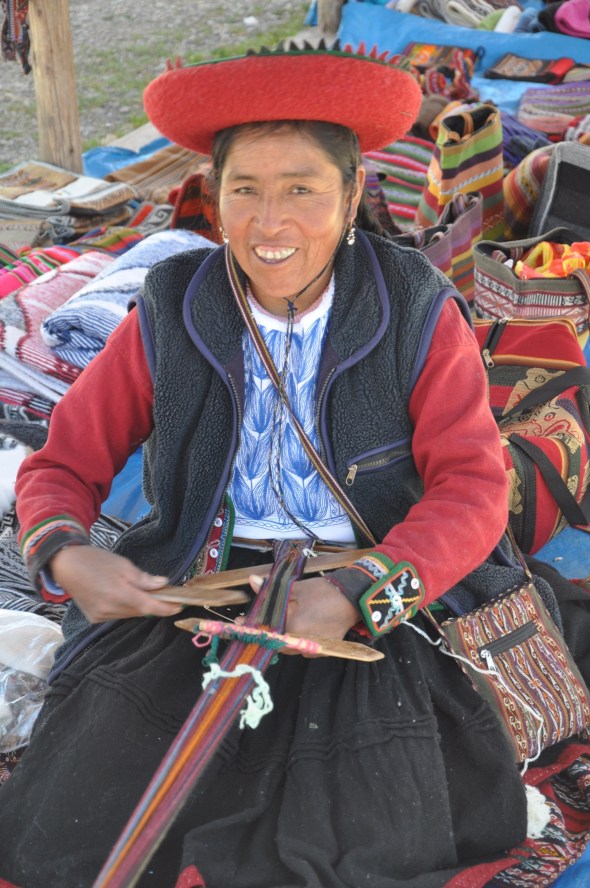
Chinchero market
Where to go
Lima
The nation’s capital had something of a reputation with many visitors spending as little time there as possible. These days, however, it’s enjoying a resurgence in popularity as the Peruvian foodie scene has kicked up a gear. I did an excellent food tour with the Lima Gourmet Company which made me re-evaluate my feelings about the city. For more on Peruvian cuisine read my blog for Wanderlust here: http://www.wanderlust.co.uk/planatrip/inspire-me/lists/top-10-peru-food-experiences?page=all
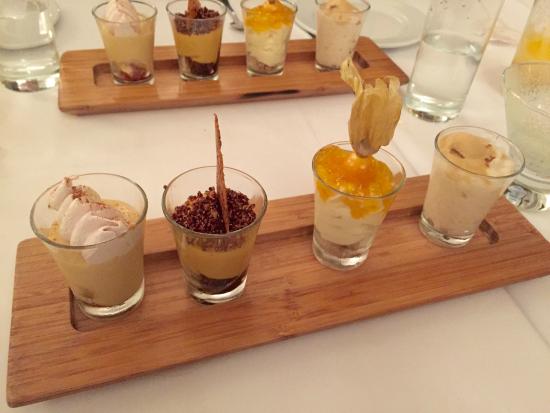
The best desserts in the whole country
Nazca, Ica and Pisco
A few hours’ drive south of Lima are the Nazca Lines, those lines in the desert which defy explanation. It’s possible to take a flight in a light aircraft but try to time your visit for early in the day as it gets bumpy later on – and take it from me, drinking a bottle of Inca Kola beforehand doesn’t help. I saw the monkey and the inside of a sick bag. Nearby, head for Ica to visit the pretty oasis of Huacachina and to Pisco, the jumping off point for a boat trip to the Ballestas Islands.

Mummies in the desert
Cusco
The undisputed jewel in Peru’s tourist crown, if you only have time for one place in Peru then make it the Incan capital. There’s plenty to see in the city itself, including the incredible Qoricancha, temple of the Sun God, as well as the Spanish cathedral built on Inca foundations. San Blas neighbourhood is a good place to browse the craft shops and relax in its pavement cafes, but for the wow factor, continue up the hill to the incredible fortress of Sacsayhuaman.
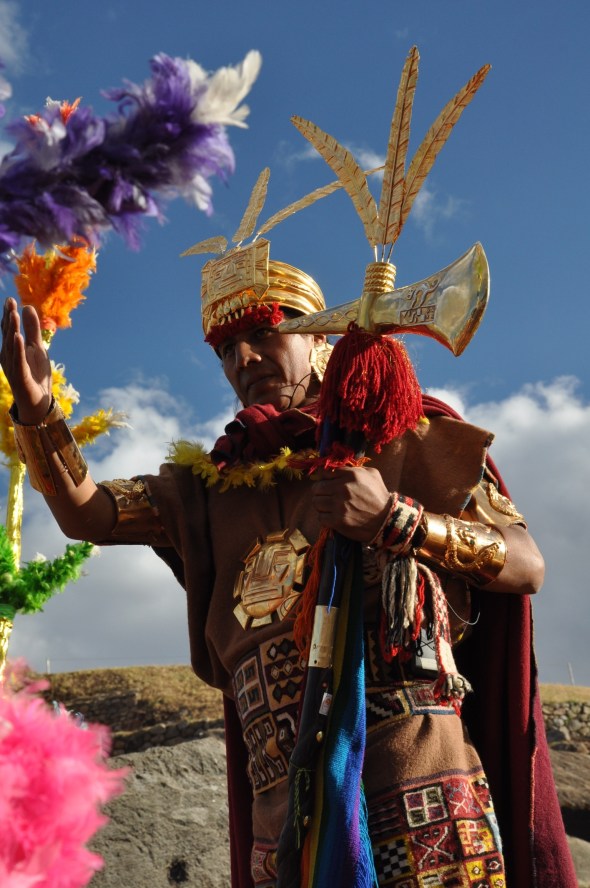
Inti Raymi celebrations take place in Cusco each June
Sacred Valley & Machu Picchu
Machu Picchu, an Inca citadel high in the hills, is Peru’s number one tourist destination. Walking the Inca Trail is the ultimate bucket list activity. If that’s too much like hard work, take the train and overnight in Aguas Calientes. These days you’re unlikely to get the place to yourself but to have a chance of seeing this magnificent UNESCO World Heritage Site before the crowds peak with day-trippers from Cusco is worth a try.
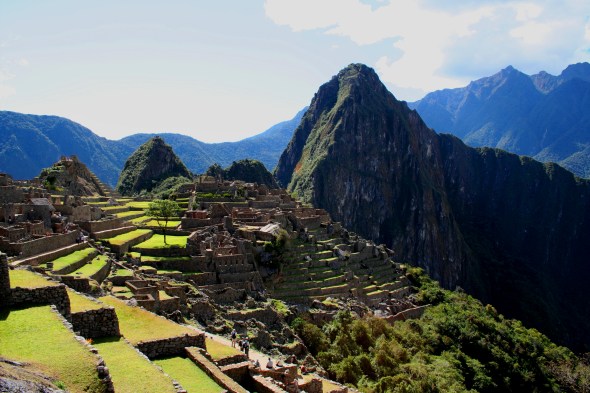
Machu Picchu
The Sacred Valley is packed full of amazing places to visit, among them Ollantaytambo with its imposing ruins, the amphitheatre at Moray, salt pans near Maras, and two great markets at Chinchero and Pisac. For a suggested itinerary, try my Unanchor Kindle guide: http://www.amazon.co.uk/Cusco-Unanchor-Travel-Guide-first-time-ebook/dp/B00RKE5E96.

Salt production near Maras
Arequipa
The White City, built in colonial times from sillar, the local volcanic stone, is the most elegant of Peru’s many wonderful cities. Its Plaza de Armas is dominated by a beautiful cathedral and wandering the old town is a delight. It’s worth heading slightly out of the centre to the mirador at Yanahuara; this lookout offers a good vantage point from which to see Misti. Arequipa’s also the jumping off point for visiting the impressive Colca canyon. Download my Unanchor guide from Amazon to find out more: http://www.amazon.co.uk/Arequipa-Unanchor-Travel-Guide-First-Time-ebook/dp/B00Q2C02NU

The mirador at Yanahuara
Puno
The high altitude at which Puno sits makes walking up its hills hard work, but if you make the effort, the views of Lake Titicaca are worth the lack of breath. One of the most interesting day trips is out to the chullpas at Sillustani, ancient Aymara funerary towers. Another is to the islands on the lake: Taquile and Amantani give visitors an interesting insight into what life is like on the lake while the more touristy Islas Flotantes (the Uros floating islands) are well worth a bounce.

Visiting the Uros Islands
Chachapoyas
Chachapoyas is well off the beaten track, but that doesn’t mean you should give it a miss. Nearby, the ruins of Kuelap are touted as the “new” Machu Picchu, even though they’re considerably older. Also in the area are the peculiar sarcophagi at Karajia, where mummies were placed high in the cliffs, and the lofty Gocta Falls, hidden from the outside world until 2005. Find out more in my earlier post: https://juliamhammond.wordpress.com/2014/11/25/northern-peru-the-chacha-circuit/
Kuelap
Cajamarca
Another northern gem, this is the place where Atahualpa was tricked into paying a huge ransom in gold by the invading Spanish. He was captured and murdered, but you can pay a visit to the Baños del Inca for a soak near his tub. A short ride from the city centre are the Ventanillas de Otuzco, a pre-Inca necropolis. Don’t leave without sampling the region’s yummy cheese.

Cajamarca is worth visiting for the hats alone
Mancora
Hammocks and palm trees dripping with coconuts – are you sure this is Peru? Mancora is a surfer’s resort up near the Ecuadorian border. If you’ve timed your visit to catch the dry season in the south, those cold nights may well have you dreaming of lazing around on a sunny beach as the Pacific waves lap the shore.

Looking out over the Pacific from a Mancora hammock
And even that’s not all. Chan Chan, the largest pre-Columbian city in the Americas and capital of the Chimu kingdom, is another of Peru’s UNESCO World Heritage Sites and the biggest adobe city in the world. One day I’ll fly up to Trujillo and pay a visit. I’ve also not been to Iquitos, the heart of the Peruvian Amazon, but if rainforest’s your thing, then you should plan to go. As for me, I’m not a fan of the humidity or the midges, so I’ll be making a beeline for Huaraz, the base for some of Peru’s best mountain peaks and glacial lakes. But even as I daydream about going back, I’m guessing that even a fifth trip won’t be enough for me to have had my fill of this wonderful country.
When it isn’t OK to post a bad review
Recently I stayed in a hotel very close to Colombo’s airport, the Otha Shy Airport Hotel. The Sri Lankan capital is some distance away, and as I had a late arrival followed by a morning onward flight, I was more focused on location than quality. I took a cursory look at some reviews but didn’t bother with much more. The price was reasonable, it looked clean and I wasn’t going to have to spend an hour in traffic worrying whether I’d miss my flight.
On arrival, at nearly midnight following a delayed flight, the person manning reception was pleasant and efficient. He gave me a complimentary bottle of water and a working WiFi code. The room was spotless and I had a comfortable night’s sleep. I woke reasonably early and half an hour or so later I became aware of some persistent hammering from the floor above. I wasn’t too worried, as I was about to check out anyway.


On check out, the reason became apparent: the ground floor was complete but the first floor was a scaffolding-clad building site. Never mind: the owner was still charm personified and despite his late night, gave me a free lift to the airport about ten minutes up the road.
Curious, I checked the reviews. Most were very positive. Here’s what Trip Advisor has to say: https://www.tripadvisor.co.uk/Hotel_Review-g2550421-d8656795-Reviews-Otha_Shy_Airport_Hotel-Katunayaka_Western_Province.html#review_361396695 and here are the reviews on Booking.com: http://www.booking.com/hotel/lk/otha-shy-airport.en-gb.html#tab-reviews.
The owner was very enthusiastic about his expansion plans and convinced that the building work would be completed this month (April 2016). He was the kind of man you want to root for; he had a dream and was determined to realise it. What’s nice is that the lack of poor reviews means that the people that have stayed there while construction is underway get that. I can’t imagine there being much leeway in his budget, so he’d need bookings for his ground floor rooms despite the noise or disruption. A few bad reviews could scupper his dreams.
I’m not in the habit of destroying someone’s chances to improve themselves. Mr Nalaka, I wish you every success with your business and if I return to Sri Lanka, I’ll be booking my old room.
How to visit The Seychelles on a budget
The Indian Ocean island nation of the Seychelles isn’t likely to be your first thought when planning a budget holiday but with beaches as photogenic as they come, it’s been on my wish list for a very long time.

Photoshop not required!
With resort prices coming in at around £1500 for a week-long break, and some of the most luxurious offerings well over that for just a single night, you could be forgiven for giving up and going elsewhere. Don’t. Although it’s never going to be what you’d call a cheap holiday, here’s how to make those beautiful beaches a more affordable reality.
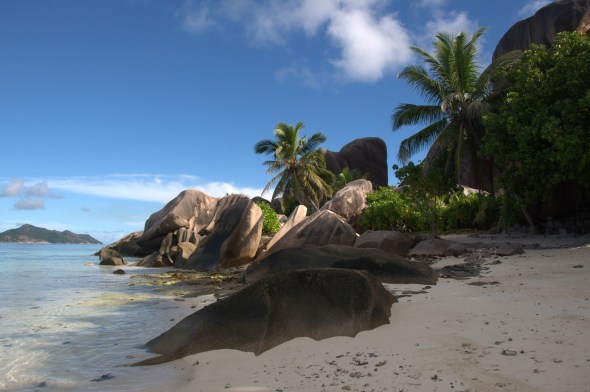
Anse Source d’Argent
Choose your flights carefully
I flew indirect via Colombo, Sri Lanka, and with the use of a few Nectar points, snagged a fare of under £500. Other routes to explore include Ethiopian Airlines via Addis Ababa and Kenya Airways via Nairobi. Emirates and Etihad also serve The Seychelles.
Travel in the shoulder seasons
Peak time means peak prices. Off season brings the rain and there’s nothing worse than a beach destination in wet weather. I travelled in March. It was hot and humid but the sun was shining. April’s also good as is our autumn. Avoid Easter and Christmas when prices soar.
Locally registered car parked at the ice cream parlour!
Unpackage your accommodation
The all-inclusive resorts offer a lot, but you pay handsomely for the privilege. Instead, choose a home stay or a self-catering option. On Mahe, I needed an overnight stopover before catching a ferry to the islands and came across Chez Lorna, just north of the capital in De Quincey Village. The owner was exceptionally welcoming and my en-suite air conditioned room with shared balcony cost me just £30 for the night.

View across Victoria from Chez Lorna
On La Digue, I upped the budget a bit and spent about £80 a night on a cottage at Cabanes des Anges in within an easy stroll of the jetty in La Passe. For that I had air conditioning, my own kitchen, living room with satellite TV – and the place also had a pool. Considering my accommodation slept two, that’s extraordinary value at £40pppn. Best of all, the island’s main supermarket, Gregoires, was just a minute’s walk away making self-catering an attractive option.
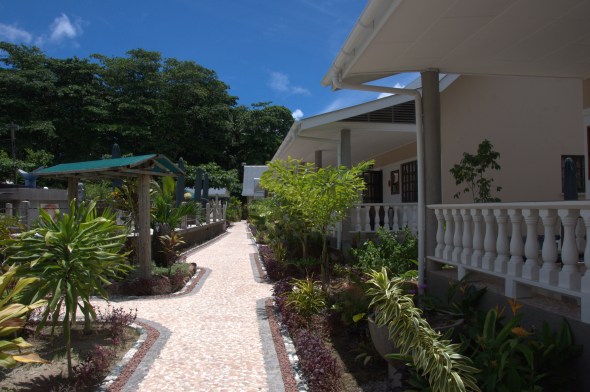
Cabanes des Anges
If you’re looking for a traditional hotel set up, then Palm Beach at Grande Anse on Praslin might fit the bill – right on the beach with a decent pool and sea views from superior rooms. The price was about £80 per night for a double room.
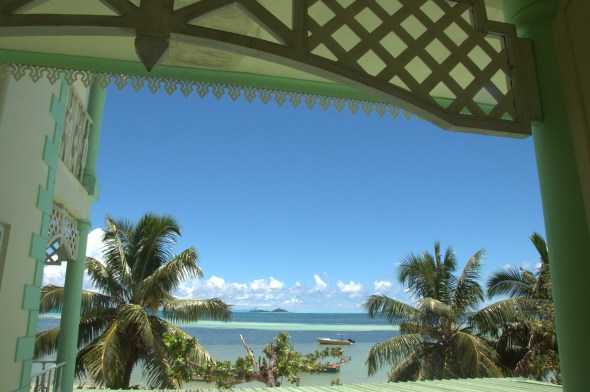
Palm Beach on Praslin – ask for a sea view
Eat local
Eating out isn’t cheap in The Seychelles but it is possible to save money by eating where the locals go or by self-catering. There are plenty of pizzerias if you’re looking to eat out but have a tight budget. On La Digue, most places charge extra for WiFi but Fish Trap by the jetty offers a free connection to its customers. You can eat for about £10-12 but save money on surfing while you check your emails. It also has a beachfront seating area and the sunset cocktails are worth pushing the boat out.

Use local transport
Getting between the islands is cheapest on the ferries. Expect to pay about £30-35 depending on the exchange rate for an economy seat; the journey takes about an hour making it a convenient choice. The fifteen minute hop between Praslin and La Digue is cheaper.
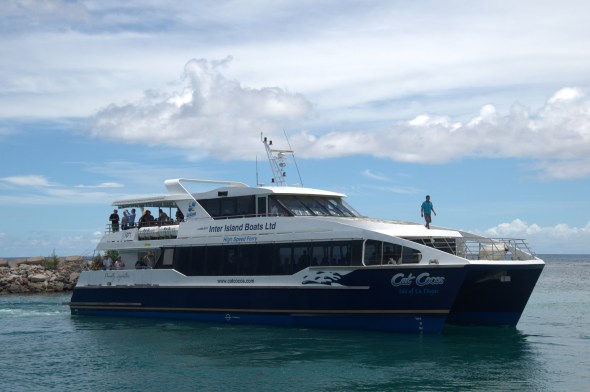
The boat linking La Digue and Praslin
On Mahe and Praslin, the buses are easy to use and cost a flat fare of 5 rupees (about 25p) however far you go. You’ll need small change as notes greater than 25 rupees aren’t accepted. Choose accommodation on the bus route and there’s no need to hire a car to get around. The two options listed above are close to the bus stop. Note that you’ll need to hire a taxi if you have luggage, though, as the buses won’t let you on.
 The best bargain in the country
On La Digue, it’s easy (and free of course) to get around on foot, but you can also find bicycle hire for around 100 rupees a day (about £5) which makes it straightforward to explore the rest of the island. I hired mine through the Cabanes des Anges reception desk but there are plenty of operators in La Passe.
So there you have it: proof that paradise doesn’t have to be prohibitively expensive.
On two wheels around La Digue
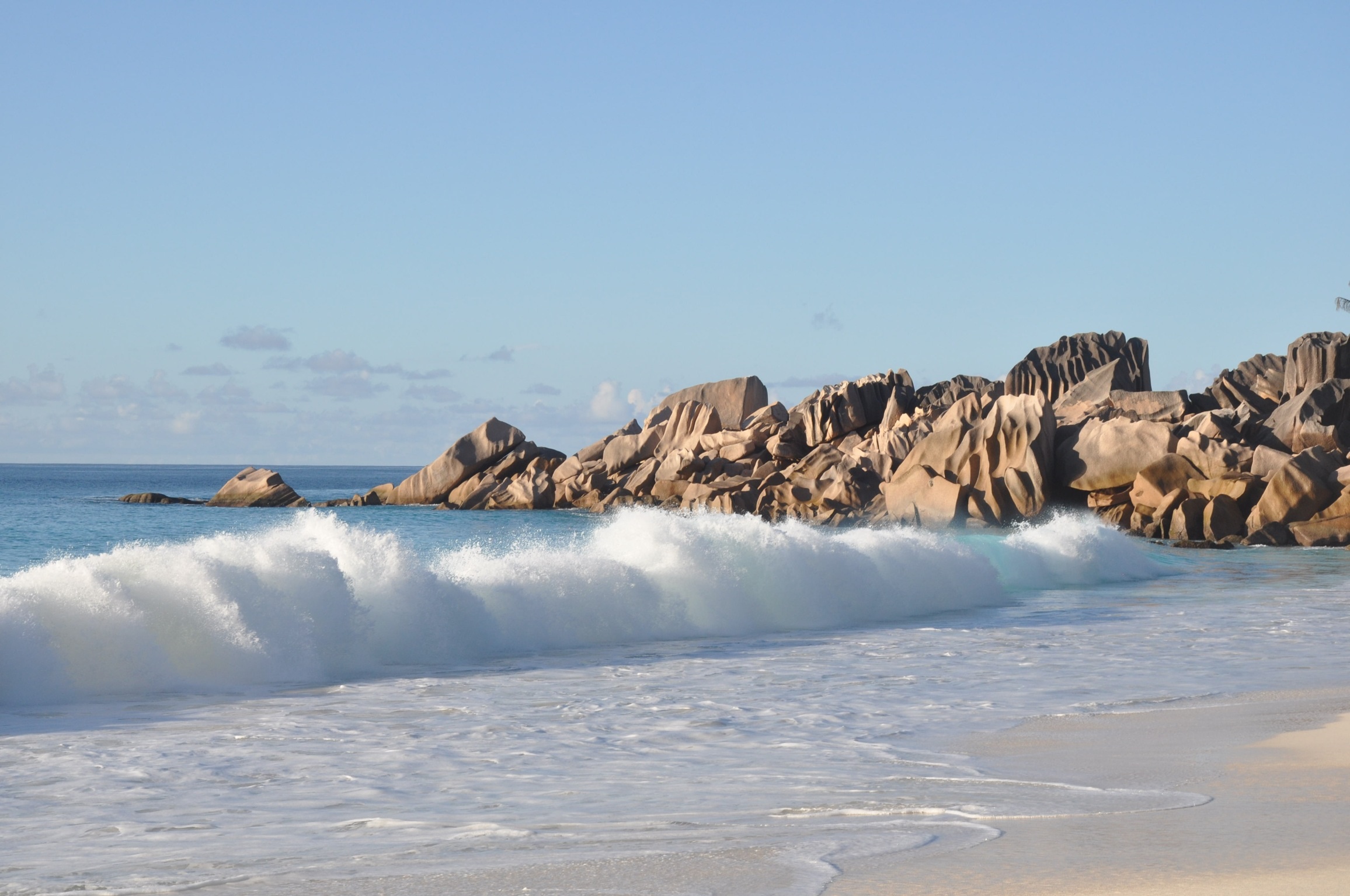
Grande Anse soon after dawn
The biggest threat to my safety in La Digue, without a doubt, was that posed by novice cyclists. Despite never having ridden on two wheels before, or at the very least since childhood, these tourists didn’t hesitate to rent bikes. After all, cycling was the only practical way to get about on this almost car-less island. The ox carts of yesteryear had pretty much been replaced by open-sided trucks, the hotel golf buggies seemed to vanish when the inter-island ferry sailed and hot footing it on two legs took on a whole new meaning in the sweltering temperatures and almost unbearable humidity.
Ox cart – a rare sight
So bike it was. Continental Europeans, of whom there were plenty, veered to the right as was their custom, but the Seychellois follow British convention and there was much gesticulation, albeit of a tropically languid kind, to force them to ride on the left. Weaving erratically across the street, they cut up pedestrians and wobbled perilously close to roadside ditches causing the South Asian migrant workers to rattle their tiffin boxes in protest. A Gallic shrug indicated that they didn’t really care.

“Traffic jam” in La Passe
The local youth weren’t much better when it came to road sense. By day they rode three abreast to the pumping sounds of the beat boxes on their shoulders and by night they rode hell for leather with no lights. More than once I had to swerve onto the sandy verge to avert an accident.
And then there was the animal traffic. A few stray dogs roamed the island, passing their time comatose under a shady tree until a cyclist took their fancy and a chase ensued. Soon, though, they’d tire. The threat was worst in the early morning before it got too hot. I learnt the hard way, ambushed on my way to the Union Estate copra plantation with a dog snapping at each ankle and lucky to escape with my trouser legs intact. Fortunately a lump of seaweed on the nearby beach provided a welcome diversion. They were soon flinging it around and pouncing on it, good practice for their regular habit of crab chasing.

The beach dogs who gave me a special welcome on the beach at L’Union Estate
A giant tortoise taking an amble along the road up at Anse Banane was less aggressive, though the crowd of tourists who had stopped to take his picture were making a pretty effective road block. Eventually they, and their target, had moved on. The tortoise, predictably, hadn’t got very far. The effort of chomping on some couch grass had proved too much and it had fallen still alongside someone’s rear tyre. Fortunately mine was parked in the next rack; when I retraced my steps an hour later the creature still hadn’t moved, though to be fair neither had the bike’s owner. It was all too easy for one fresh juice to turn into two or more.
Giant tortoise – an usual road hazard
Despite these hazards, and aside from getting to grips with derailing gears – my fault for back pedalling – cycling around La Digue’s coast road was a pleasure. Locals shouted words of encouragement on the inclines. As I freewheeled on the downhill stretches, I felt the breeze snatch my wet fringe from my forehead. It was worth every last drop of sweat expelled on the way up. More than once I’d lost momentum distracted by the many scenic bays that dotted the coast. It was exhilarating, and if I’m honest, not that challenging to anyone with reasonable physical fitness. Not for the first time I cursed my preference for spending my evenings snacking in front of the TV rather than heading out to the gym.

Anse Source d’Argent
But the burn that nagged at my thighs was worth it. Huge chunks of granite, sculpted by persistent waves, trapped the ivory sand in gentle crescents. Coconut palms arched over takamaka and casuarina trees providing a little shade for those tempted to rest. The warm clear water looked inviting, but dangerous rips gave it a potentially murderous beauty. An engaging German tourist stressing about a shark attack was quickly shut down by the fruit seller. That incident had been two years ago and in any case, on Praslin, she said. Not here. Nothing like that would happen here.

The fruit seller at Anse Severe
But which beach to choose? That was easy. To figure out which was the best, all you had to do was look for the one with the greatest number of bicycles propped by the roadside.
Petite Anse – ironically reached by a hike not a bike
A beginner’s guide to Sri Lankan railways
One of the unquestionable highlights of touring Sri Lanka is a journey by rail. The network is extensive and links many of the country’s must-see destinations. There are many tour companies who offer itineraries based around train travel, but these can be expensive and prescriptive. If you prefer to go it alone, here’s my guide to getting around by train.
Sri Lanka’s hill country is easily explored by train
Planning is everything
Although trains link many of the country’s cities and towns, there are gaps. I planned a circular route beginning at Colombo Fort station, heading inland to Kandy, then up into the highlands to Nanu Oya (for Nuwara Eliya) and then on to Ella. Separately, I rode the stretch of track from Weligama to Galle from where you can catch a train back up to Colombo.
Some of the faces I saw while waiting to board
Arranging a driver for the gaps
To visit the lofty palace at Sigiriya, I hired a car and driver for the day, stopping off on the way back at an elephant sanctuary. There’s no rail link between Ella and the south coast either, so again, I hired a car and driver. This time I stopped off half way to take an elephant safari at Uda Walawe. Although I could have picked up a train at Matara, I chose to book the driver to Galle so I wouldn’t have to clock watch all day. Drivers were arranged as I went along, either through the hotel or via a taxi driver at a station. Costs aren’t excessive by UK standards. To travel from Galle to the airport via the fast expressway costs around 11000 rupees including tolls (about £55).
Seeing the elephants at Uda Walawe requires a car as the rail network doesn’t extend to that part of the country
To book or not to book?
Some trains can be reserved online and you may wish to book these trains for the beginning and end of your trip if you want to be sure of making connections. Depending on how long you allow at each stop, you should be fine to just purchase your other tickets as you go along, unless you’re travelling in a large group or at a holiday time.
Tickets are easily purchased on the way; my advice is to call in at the station a few days ahead of travel
Where did I get my tickets?
I caught the Rajhadani Express from Colombo Fort to Kandy; a reserved seat in air-conditioned first class cost 1100 rupees (less than £6). It was straightforward to book online. Seats become available two weeks prior to departure and you just need to make a note of your reservation number. On arrival at Colombo airport, as you exit into the tour and taxi desk hall, you’ll see a Mobitel counter right by the door. They will print your ticket for you on production of your reservation number and passport. Alternatively, you can do this when you get to the station.

The Rajhadani Express
It wasn’t what you’d call luxury by European standards but the fat leather seats and padded arm rests were comfortable. The train lurches around a lot so whichever carriage you opt for it’s not going to be a relaxing ride, however. Expo Rail bookings work in a similar way to the Rajhadani Express with their own dedicated website. However, departures with these two companies are limited and may not fit in with your plans. You can check the online schedule on the Sri Lanka Railways website for a full list of trains operating on the days you wish to travel.
Booking regular trains
Whether or not you can book other trains in advance depends on whether the train has any reserved seat carriages or not. Following up on a recommendation from the Man in Seat 61’s excellent website, I booked the Kandy to Nanu Oya leg with Visit Sri Lanka Tours, a UK based travel agent. They were efficient and most importantly, the reservation number they sent me was recognised at Kandy station when I went to collect the ticket. Obviously they charge a premium for this service, but their rates were not exorbitant.

If a web connection eludes you, use the station timetables
Reserved carriages can be first, second or third class. First class isn’t necessarily air-conditioned but can be. Don’t expect luxury; it’s more about space than quality. Second class usually has four seats per row, overhead fans and windows that fully open, while third class is more crowded with six seats per row.
First class carriage
Second class carriage
When I booked the train from Kandy to Nanu Oya second class was full so I bought a first class ticket for 1000 rupees (about £5). I was told that sometimes additional reserved seating is released at the last minute at a premium price. If at first you’re told the train is full, it might therefore be worth asking again the day before. This strategy worked for a London couple I met on the train whose driver procured second class reserved tickets at the last minute.

Or ride at the door…
For at least half the journey I rode by the door as it was more social and I could take better photographs from the open doorway. I tried not to think about health and safety too much, but definitely held on tight. One jolt and I could have been offering myself as extra labour in a trackside tea plantation.

Great views from the open doors for photographers
From Nanu Oya to Ella a first-class observation car had been attached to the back of a train mostly hauling freight but with a couple of unreserved passenger cars also. I wouldn’t say the view out of the dirty observation window was much to write home about, for photographers at least, but the windows did open fully making for some fantastic scenic shots from my seat and a welcome breeze too.
Station master just outside Ella station
On the Weligama to Galle hop, I just bought a ticket on the day as there was no allocated seating on that local train. It cost 60 rupees (about 30p) and I just found a seat when the train pulled in.
As it was a middle of the day departure, it wasn’t crowded, but on some peak time services the advice from the station master was that to get a seat, you may have to fight. I didn’t like the sound of that for the Galle to Colombo leg of my trip which I would have had to make at rush hour with luggage, so I opted to hire a car and driver instead. Had my schedule permitted, I could however have pre-booked an afternoon train with a reserved seat, just not a morning one.
Boys running for their train at Colombo Fort station
And one last piece of advice…
All tickets are collected on exit so make sure you keep your print out (reserved seating) or little cardboard ticket (regular seating) safe throughout the journey. My ticket was checked en route by an inspector on the Rajhadani Express but not on subsequent trains.
Elephant spotting in Uda Walawe
Uda Walawe National Park is home to the largest concentration of elephants in Sri Lanka. It was created in 1972 and centres on the Uda Walawe reservoir. Although in March there was quite dense vegetation on the way in to the park, it thinned by the lake shore and thus made it easier to see wildlife. At first, sightings were limited to a few monitor lizards and birds, neither of which excited me much. But at the lake, a couple of herons were pottering about in the shadows seemingly oblivious to the crocodile skulking behind them. In the middle distance, some water buffalo wallowed.
But I’d come to see the elephants, said to number around six hundred, making it the best place to view them in the country. Easily seen year-round, herds can number over fifty but the largest family group I saw was eleven, still impressive. Our first sighting, a mother with two juveniles, was entertaining. They took a stroll down to the lake where the youngest couldn’t wait to relieve himself in the water. Toilet taken care of, it could bathe happily before the trio wandered back into the bush.
As we drove along the lake shore dirt track, a lone adolescent passed us at close range, near enough to leave us in no doubt that he was a male. Unperturbed by the camera clicking, he ambled past towards the lake.
In the vegetation, the thick leaves can provide excellent camouflage, but the guide was equally skilled in locating the wildlife. This was our closest encounter, though fortunately the creature was very docile and didn’t warn us off.

A herd of eleven including two babies was the highlight of the drive. One infant looked to be just three months old or thereabouts, with the other perhaps six months. It’s always delightful to see how the older members of the family protect the youngest when they’re on the move, keeping the babies close by but placing themselves between infant and safari vehicle just in case.


There are other species to keep the elephants company, and I saw plenty of water buffalo and in the distance, a couple of spotted deer. A family of monkeys swung in the branches of a tree and amongst the birds I recognised were a grey heron and a kingfisher by a lake so full of green algae it was hard to decide which was the most vibrant in colour. Leopards are said to be present in small numbers though I wasn’t lucky enough to encounter one.
While some people stay at one of the nearby hotels or guesthouses, I took a game drive en route from Ella to Galle. The three hour stop was a welcome diversion from sitting in the car. My driver arranged a safari jeep within minutes and it cost about £45 for a private excursion with Wild Safari Service including all entrance fees. Be prepared to haggle.
Tea time in the Hill Country
I expected tea picking to be difficult. Working in the sun on scarily steep slopes for eight hours wouldn’t be my choice of job and certainly not for the 600 rupee (£3) daily wage that these industrious women earn.
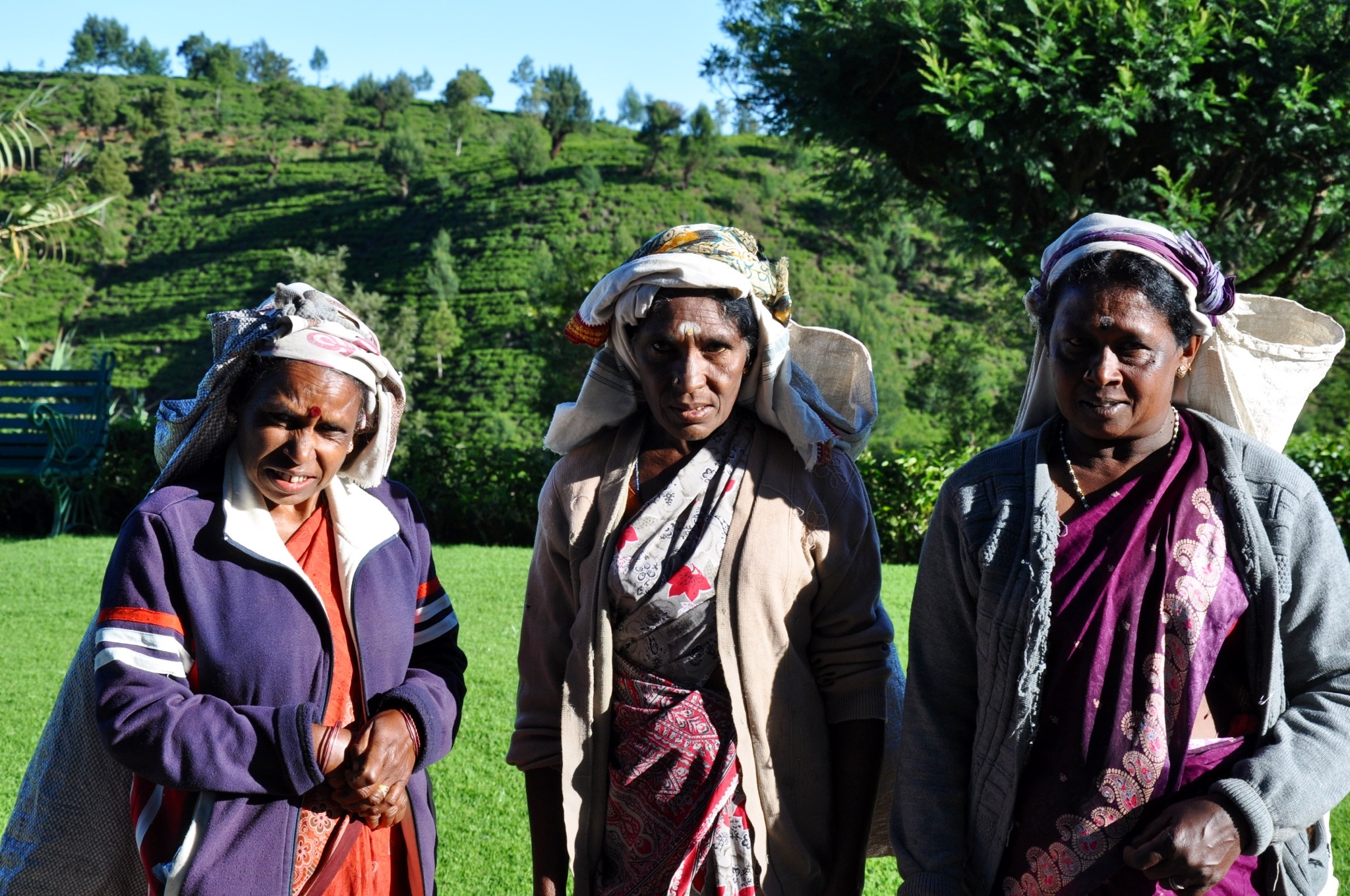
Tea pickers off to work
Learning that the Heritance Tea Factory offered a tea plucking and tasting activity, I jumped at the chance to try my hand. The slopes carpeted with squat tea bushes were relatively gentle compared to those I’d seen from the train on the way in and thickening cloud promised to deal with the heat issue.
Weather changes fast in the hills
The staff at the Heritance kitted out their small but enthusiastic team of volunteers in suitable attire: saris for the women and sarongs for the men. Raising my arms, my dresser tied a string snugly around my waist, into which she tucked a carefully pleated sari. Six metres of fabric is expertly tied to create an elegantly flowing dress, pinned across one shoulder to ensure modesty isn’t neglected.

The basket for collecting leaves
Elegant, that is, until I moved. Sadly walking in a long dress without tripping had never been a skill I’d mastered and squeezing my way through the tiniest of gaps between tea bushes only compounded my clumsiness. Unhooking me from a stray piece of barbed wire, our guide led me to the plucking area and demonstrated which leaves to pick.

The guide showed us which leaves to pluck
Get it wrong and the tea will be useless.

Tea, glorious tea!
As I started to pick what I hoped were the softer, greener leaves I wished I’d paid closer attention to those deftly thrown into the basket by the expert. My basket, with an optimistic capacity of 3kg given we were only out here for half an hour, looked pathetically empty, despite the guide’s surreptitious efforts to sneak a few handfuls of her leaves in when my attention was diverted.

Not much to show for my efforts

No shortage of tea bushes
The bag attached with a wide canvas strap across my forehead. As I bent over to pick, it swung a little, needing the weight of some leaves to hold it steady. That strap seemed to have a mind of its own, alternating between slipping down onto my glasses and wriggling up to form a Sixties’ style beehive. Eventually, I gave up and balanced the basket on the ground. It wasn’t quite what was expected but at least I could fling in a few more leaves before my shift ended to save face.
The area surrounding Heritance is stunning
It was hard to concentrate given the beauty of the landscape surrounding the hotel – and indeed, it’s own well-tended gardens. The Heritance Tea Factory has a long history. Its original owner was a man called William Flowerdew who bought the land in 1879, only a decade or so after tea bushes were introduced to Sri Lanka by Scot James Taylor.

Heritance Tea Factory
Flowerdew named his factory Hethersett, producing around half a million kilos of tea each year for decades.

Machinery from the factory still in place
The factory buildings were modernised in 1937 but the factory closed, no longer economic, in 1973. Fortunately, it soon underwent a sympathetic restoration: much of the factory machinery remains in situ to make this what surely must be a unique hotel and, with attentive staff, a delight in which to stay.

The hotel has its own tea bar; flavour and strength are determined only by how small the leaves have been ground
The fact that they serve a decent cuppa – well, that’s just a bonus.

Hands off the Flowery Pekoe!

 Julia's Travels