
Travel hacks for solo travel
For almost three decades, I’ve happily travelled the globe alone. While I enjoy travelling with family or friends, nothing beats the joy of being by myself as I discover a new place. But there are, as with anything worthwhile, a few issues to consider. Here are a few tips to help you discover solo nirvana.
Watching the bags
One of the most inconvenient things about travelling alone is having no one with you to watch your bags. With a bag on your back or at your feet, you become very vulnerable when your attention is distracted – like when you’re booking a bus ticket for instance. There are several ways of reducing the chances of being robbed. Travelling light is the obvious one – carry less stuff and there’s less chance of that stuff being stolen.
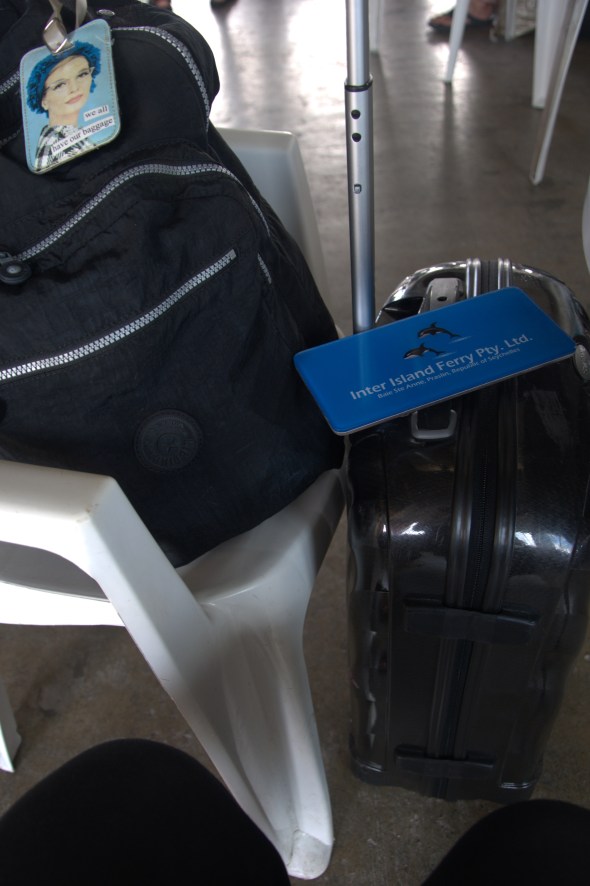
All the luggage I needed for a two-week trip to the Indian Ocean
Also consider which type of luggage you’re carrying and how to avoid being the victim of an opportunist thief. I travel with a hard shell wheelie and when I’m off somewhere dodgy, pop a mini padlock on my rucksack. It’s not foolproof – a bag slasher obviously wouldn’t have a problem – but it is a small deterrent. If the person next to you has their bag wide open, you’re not going to be the first choice for a thief. Keep your bags in sight and where possible, keep the strap across your body.
Timing is everything
On a related point, I’ve never thought it would be smart to leave my bags unattended. I’ve no wish to be the reason an airport is evacuated. But I’m also regularly the victim of suggestion – and if I see a toilet, then there’s a good chance I need to visit it. That can be tricky when you’re on the move with all your bags and the floors are at best grubby, at worst, well, let’s not go there…

No single option even in the loo – Norway’s answer to toilet queues
Timing is everything. Go before you leave your hotel, in an airport where the cubicle could be big and clean enough to leave belongings on the floor or somewhere there’s a solid, heavy duty hook. And pray it’s not a squat toilet. Believe me when I say it’s almost impossible to keep your balance with a rucksack on your back.
Avoid tours
The dreaded single supplement can make it all too obvious that solo travellers incur a financial penalty from some establishments. While I understand how frustrating it must be for hoteliers to lose half the potential revenue from a double or twin room, I still have a travel budget to stick to. I look for hotels with single rooms – they’re not all windowless cells shoved in basements – and unpackage my trip to swap private drivers for public transport.

Don’t rule out private rooms in hostels for single occupancy
I also avoid tour companies promising single rooms without the single supplement – usually all they’ve done is absorbed those charges into their headline price. If I do need to take a tour, I opt to share with a same-sex stranger – sometimes you get lucky and get a room to yourself anyway and where that’s not been the case, I’m relieved to say my room mate has been a pleasant distraction for a few nights and not a surprise snorer.
Personal space
Most of the time, while I’m happy for my husband to rest his head on my shoulder, the same doesn’t apply for complete strangers who just happen to be occupying the seat beside me. On buses and trains, I seat myself on the aisle seat with my bag by the window. Most people would prefer to slide into an empty seat rather than have to ask someone to move, so you often keep your seat even when the bus is quite full. I’m always gazing intently at something out of the window, though if they ask me to move over or let them in, I always do so with a smile. There’s no sense in pissing someone off who’s going to be next to you for hours. It’s also easier than you might think to find single seats, whether on trains or on the overnight sleeper buses that are common in South America.

No shortage of space on Italy’s FrecciaRossa trains in executive class
If you do end up next to someone, it’s not the end of the world. The most comfortable flight I ever took was an overnighter from Ghana wedged tightly up against a very large woman – she was as soft as a goose feather pillow and happy for me to snuggle up as she spilled over into my seat.
Eat at the bar
Often, the only time when I’m really conscious I’m travelling alone is when it comes to dinner. Where eating breakfast without a companion rarely feels odd, there still seems to be a stigma about sitting alone over dinner. I’ve never been one for room service (and let’s face it, rarely stay somewhere smart enough to even have room service) so how do I overcome the thorny problem of dinner for one? I’m not frightened to say no to a table shoved up at the back of a restaurant by the kitchen door – if they don’t want to give me a decent table, I’m quite happy to take my business elsewhere.

Alas, there was no one present to witness me eating grasshoppers in Mexico
But if I’m feeling sociable I often sit at the bar to eat, as the bar tender and fellow patrons are often chattier there. And if I’m not, I’m quite happy to read a book between courses or simply people watch.
If you’re thinking of travelling solo but are scared to try it – don’t be! It might just be the best thing you’ve ever done.
Pick somewhere safe for your travels this year
In a world where, sadly, incidents of terrorism and violent crime are all too common, it can be a worrying proposition to plan a trip outside a familiar environment. Ongoing conflicts and political uncertainty place too many countries strictly off-limits for the time being at least, including destinations to which I’ve enjoyed peaceful holidays in the past, like Syria and Ukraine.

A tranquil scene in Hama, Syria photographed in 2010
According to the 2016 Global Peace Index, seven out of the top ten safest destinations for travellers are in Europe. Iceland, one of the world’s most fashionable must-sees right now, takes the top spot, with Denmark and Austria snapping at its heels.

The Sun Voyager statue, Reykjavik
For a full list of countries you can view the entire report here:
Click to access GPI%202016%20Report_2.pdf
The Economist’s Intelligence Unit creates its own list based on perceptions and reality in fifty of the world’s cities. It’s not as comprehensive a report but it does give an interesting insight into the situation in some of the world’s most influential and populous cities. In 2015, Tokyo was deemed the safest of the cities investigated, closely followed by Singapore and Osaka, demonstrating that Europe doesn’t have a monopoly on safe travel.
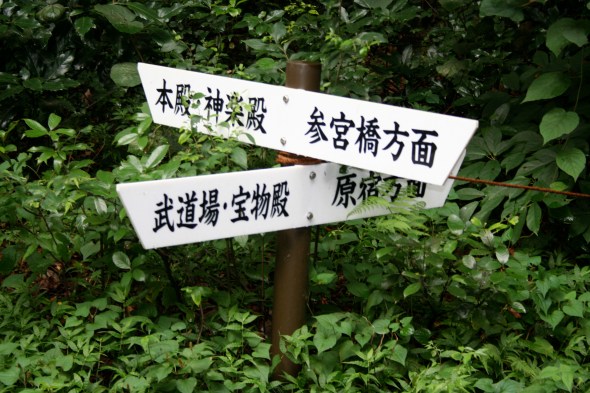
Tokyo: safe doesn’t have to be boring
See the report here:
Click to access EIU_Safe_Cities_Index_2015_white_paper-1.pdf
Sometimes, perceptions can be very different to reality. I made my fourth trip to Lima in 2014 and felt much safer than when I first visited in 1995 (and definitely safer than when I was almost mugged there in 2006). Yet The Economist places the Peruvian capital at number 38 (out of 50) on its summary list. I spent the majority of time during my last visit in the prosperous Barranco and Miraflores districts, which might go some way to explaining the discrepancy.
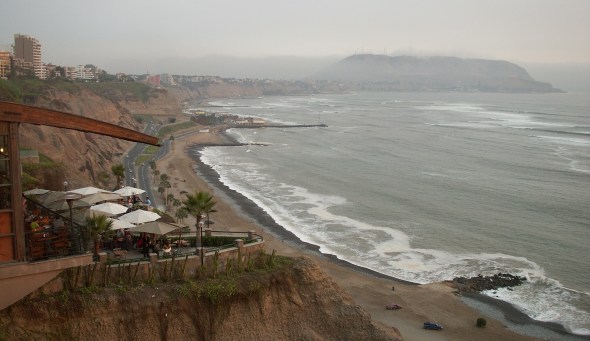
Lima coastal view
So what can you do to ensure you don’t unwittingly stumble into trouble?
Read government advice before you travel
If I’m planning a trip somewhere, I make this one of my first ports of call at the research stage so that I can make a considered decision as to whether I’m happy to put myself in that country. Sometimes, it’s as much a case of being prepared as being put off; if there’s an upcoming election for example, I might make sure I’m not in a large city in case the losing side get a bit shirty. The UK’s Foreign and Commonwealth Office maintain a comprehensive listing of travel advice by country here:
https://www.gov.uk/foreign-travel-advice
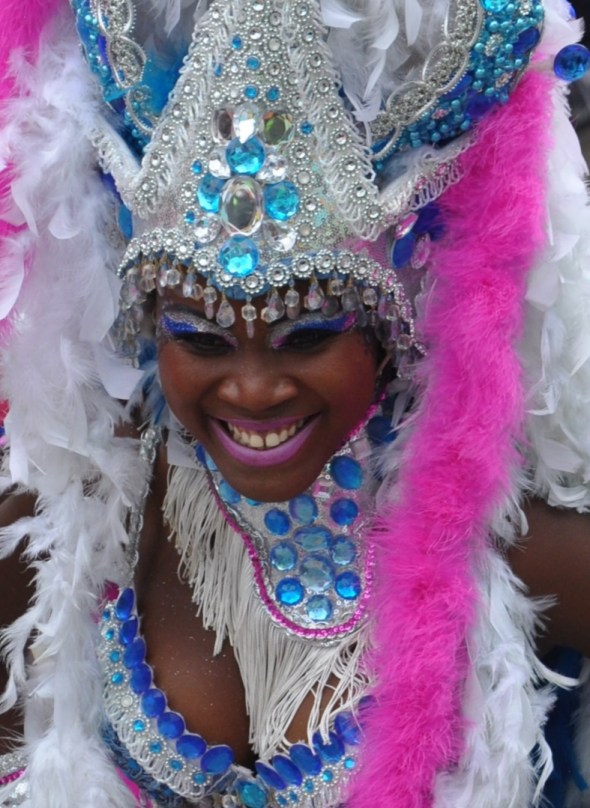
Carnival queen, Jacmel
Utilise social media
While travelling in Haiti last winter, I found Twitter an invaluable source of information as an unfolding labour dispute saw taxi drivers take to the street to blockade roads and set fire to piles of tyres. I was able to keep abreast of events happening in the capital Port au Prince and judge when it was safe to make the minibus journey back from the sleepy coffee town of Jacmel where I’d holed up to experience Carnaval.
Get advice from people who’ve just been there
The internet’s home to many forums specialising in travel and by posting for advice on a destination you’re hoping to visit you can tap into a wealth of information. Try forums such as Trip Advisor, Lonely Planet’s Thorn Tree or myWanderlust whose regular posters are usually more than happy to help.
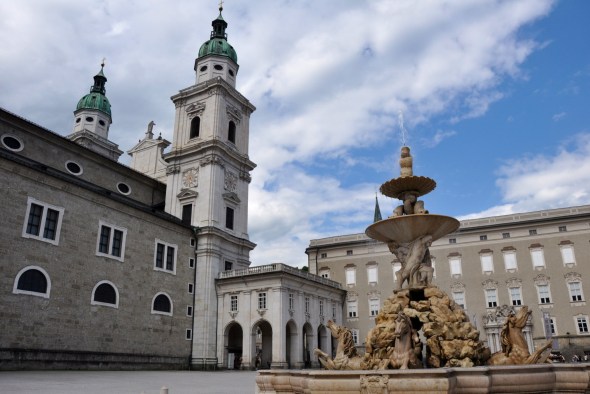
Residenzplatz, one of Salzburg’s prettiest corners
Trust your instincts
Finally, if something doesn’t feel quite right, go with your gut. That might mean you move on from a place that has a dodgy vibe or it might mean you shelve that trip for another time. After all, there’s always Austria…
What to do if… you miss your flight
One of the biggest obstacles to independent travel is the fear of things going wrong. Without the safety net of a tour company, worrying about how to cope might well seem like a sure fire way of ruining a good holiday. I decided long ago that I’d prefer to be in control – no surprises for those who know me beyond the computer screen. But things do go wrong and it’s good to know what to do if that’s the case.

Always good to see “On Time” showing
Missing a flight is stressful. It doesn’t matter why or whose fault it was, it’s stressful. Mostly, when I’ve missed flights, it’s been a case of a late-arriving inbound flight causing a missed connection, but I’ve arrived at the airport on more than one occasion to find my flight had already departed. You can read the stories here:
https://juliamhammond.wordpress.com/2014/10/15/five-reasons-to-travel-independently/
What to do if you miss a connecting flight because the inbound flight is late
If you’re still on the plane when your next one is merrily backing off the stand, no amount of pleading with airport staff is going to get you on that flight. The first thing to think about is whether you have a through ticket. If you buy two separate tickets and the first is delayed, the carrier operating the second leg has no obligation to honour your ticket. Don’t choose flights with very short connection times either. Immigration officials can be very stubborn.

Fantasy or reality?
Minimise your chances of being stranded by choosing a carrier who operates multiple flights a day to your final destination if at all possible and avoid opting for the last flight of the day. If they have space, you’ll still get to your destination the same day, albeit later than planned.
Speak to the ground staff as quickly as possible; if there are more people to rebook than there are seats available, you don’t want to be last in the queue. Holding a frequent flier card with that airline can also help you move up the queue. It can also pay to get an aisle seat as near to the front of the plane as you can, particularly if you know you have a tight connection.
Be nice. It’s not the fault of the ground staff if your plane was late in. Getting angry isn’t going to help. In fact, it’s likely to hinder your chances of organising a speedy replacement flight if you piss off the one person that can arrange it for you. Save your breath and stay calm.
Be flexible. Can you travel to a different airport in the same city? It’s inconvenient, perhaps, but still better than not arriving at all. Let the ground staff know what you’d be prepared to put up with. If you’re due at a hotel but are going to lose the first night of your booking, get in touch with them and explain – they might let you off any financial penalties they’d usually impose.
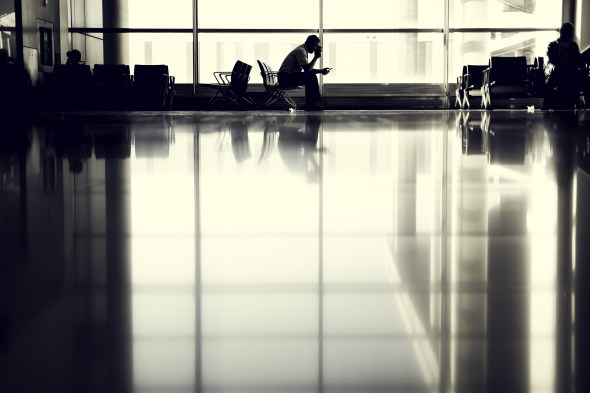
Be patient
What to do if it’s your fault you miss the flight
Technically, the airline doesn’t have to do a thing and you’ll have to abandon your travel plans or buy a new ticket. So be nice and hope they take pity on you – and I mean really nice. Appeal to their better nature. Coming back from Bangkok, arriving 21 hours late for a flight just after midnight, I explained to the check in staff my humiliating predicament. As a Geography teacher who taught about time zones and tourism amongst other things, if they couldn’t fit me onto that night’s flight, I was going to have to confess to my students the real reason I’d shown up for work a day late…
What to do if it’s their fault – your flight is cancelled
Your airline must offer to rebook you on a later flight or offer you a refund. They have an obligation to get you to your destination, though not necessarily by the routing you’ve chosen or on a particular day.
Note that if your flight originates in the EU or arrives there from anywhere else but on an EU airline, you are entitled to compensation – even if the airline claims you aren’t. If an EU and a non-EU codeshare applies – such as Virgin and Delta, for instance – you’ll only fall into this category if your ticket and therefore contract is with the EU airline – Virgin in my example. I had a long and drawn out fight with Cityjet over this right to compensation, but eventually won. Read about how to get your money back here:
https://juliamhammond.wordpress.com/2015/03/06/finally-a-win-against-cityjet/

Airlines should give you a written notification of a flight cancellation
You’ll see from that post that keeping evidence is crucial. Make sure you keep hold of boarding pass stubs and receipts until you’re safely home without any problems. Never send off your only copy of something; scan instead.
Make sure you have decent insurance in case you need to recoup your costs that way instead. This may be your only option for compensation if you’re travelling outside the EU on a non-EU airline.
For more information, there’s a useful link here:
More from Extremadura: the Roman ruins of Mérida
Spain probably isn’t the first country that springs to mind if you’re planning to explore the legacy of the Romans, but their empire encircled the Mediterranean (and beyond). In Spain, in addition to better known sights like Segovia’s aqueduct and Cordoba’s old bridge, Mérida is one of the best places to see some of the structures left from that age.
The modern city of Mérida has developed around and on top of the Roman colony of Augusta Emerita. It was built around 25BC and was the capital of Lusitana, located the furthest west of the Roman provinces. I began my exploration at the amphitheatre.

Passageway leading to the main arena
Though not as well preserved as others I’d visited – Tunisia’s El Djem, Nîmes in France and of course Rome’s Colosseum spring to mind – it had a certain charm. Being a weekday in the height of summer, visitors were thin on the ground, giving me a place free of tour groups to savour at a leisurely pace.
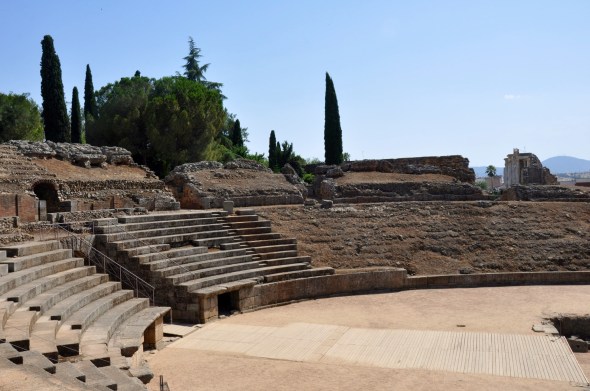
The amphitheatre viewed from the top of the stands
The amphitheatre itself was built about 8BC, designed to stage gladiatorial fights and other such spectacles. It would have had a capacity of around 15000 people, making it considerably smaller than the Colosseum which could seat almost four times that number. Adjacent to the amphitheatre is the theatre. More impressive, in my opinion, it’s a few years older than its neighbour, though back then, it wouldn’t have been nearly as popular. Give the Romans a choice between a bloodthirsty fight and a stage play and the fight would win every time.
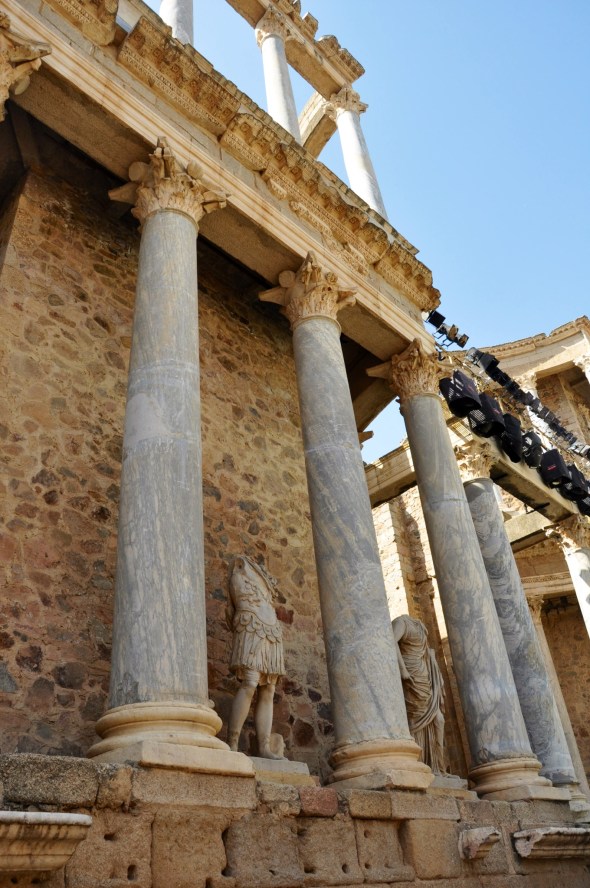
The headless statues behind the stage
Six thousand people would have been able to watch the proceedings. These days, the theatre is still in use; the Festival de Mérida takes full advantage of the atmospheric setting for a summer of plays. My schedule didn’t coincide, so I had to content myself with sitting on the front row in front of an empty stage gazing up at statues of deified emperors.
Perhaps the most impressive structure in the city is that of the Temple of Diana.
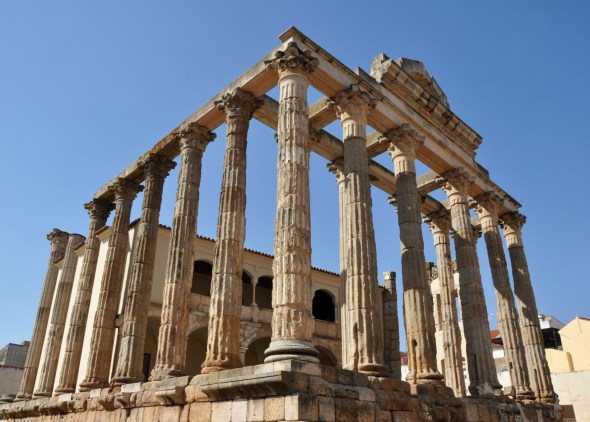
The Temple of Diana
Its Corinthian columns make it an impressive sight. Behind, lies the Palace of the Duke of Corbis, into which the temple was absorbed in the 16th Century. The temple lies on one of Mérida’s main streets and there’s a cafe next to it, which makes it a surreal sight. Nearby, is the Forum, again surrounded by the town’s modern buildings.

Mérida’s Forum
Strolling downhill, it’s not long before you reach the Guadiana river and there, you find the old bridge. Built in two sections, it links the river’s banks via an island. Sixty of its original sixty two spans still exist, and wisely the bridge was pedestrianised over two decades ago.

The Roman bridge at Mérida
Following the river bank from the bridge, after exploring the 9th Century Moorish Alcazaba that abuts its western bank, I headed to the Casa del Mitreo. There, Mérida’s most beautiful mosaics can be found. Best known is the mosaico cosmológico, laid in the 3rd Century and partially intact today.

Parts of the mosaic can be seen to this day
The city also has a Hippodrome, but I made a conscious decision not to go. I could blame the weather – who wants to do such a walk when the temperature is still 40°C at six in the evening – but actually it was to avoid comparisons with the excellent experience I had at Jerash in Jordan. Its Hippodrome is used for the wonderfully entertaining RACE project.
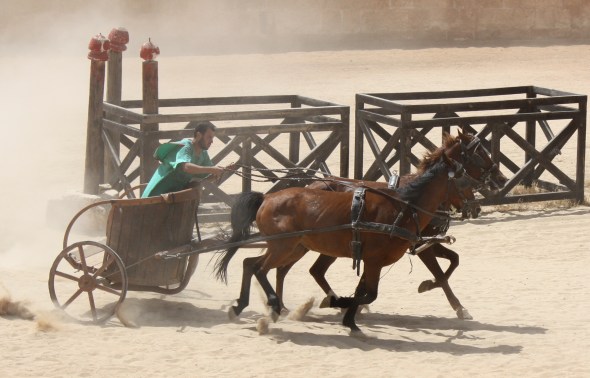
You can read about it here:
https://juliamhammond.wordpress.com/2016/07/25/gladiators-we-salute-you/
Gladiators, we salute you!
As the theme tune from “Gladiator” filled the arena, I felt the hairs on my arm stand to attention.

I’d come to watch a spectacle. Jerash’s RACE project had both impressive credentials and great reviews. Ticket clutched in sweaty palm, I hurried into the auditorium, eager to secure a good seat. A Roman soldier adjusted his strap under a stubble-pocked chin, bristle-brush helmet conferring stature, scarlet tunic incongruous under masculine armour. An air of anticipation rippled through the crowd.

A small group of legionaries arrived, interrupting excited chatter, and took their place in the sand of the legendary Hippodrome. Though few in number, they were a formidable sight behind their flag bearer.

Known as the Legion VI Ferrata, “the ironclads”, they treated us to an impressive demonstration of battle tactics and formation marching. As they recreated the classic Roman two-sided shield barrier, it was clear how effective this would have been in war. Not a finger or stray hem was visible outside the shield.
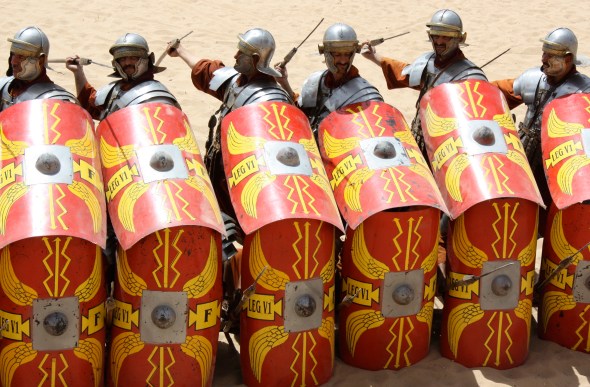
The music played, unashamedly tongue in cheek. A diverse band of gladiators entered the arena ready to fight, clad in robes and armed with assorted weapons: net, shield, trident. All were muscle-bound and postured aggressively. Once they might have been slaves or criminals facing the death penalty, but today they had the best job in Jerash.

“Ave, imperator, morituri te salutant!”
“We who are about to die salute you!”

Passive spectating wasn’t allowed; thumbs up or thumbs horizontal – we had to vote. The loser kept his life with thumbs up. Caught up in the moment, I voted thumbs horizontal, before realising, embarrassed, that everyone else had pardoned him. Feeling audience pressure, next time I voted thumbs up.
A Roman general tore into the stadium in a horse-drawn chariot. Two others followed, kicking up clouds of dust. Their wheels angled outwards, giving the impression of imminent collapse every time their horses tackled the tight turns. The centre of the track was marked by a fragile wooden fence which didn’t seem at all like it might withstand a misjudged move.
Leaning forward over the barrier, I urged the racers on ever more enthusiastically, reminiscent of ‘My Fair Lady’ though with slightly more ladylike language. I cheered myself hoarse for a bearded driver clad in an emerald tunic, who threw himself into the job with gusto and wasn’t going to let anyone pass under any circumstances. My favourite strode to a clear win after the regulation seven laps. I whooped unashamedly and thought it was a pity I couldn’t have put a bet on.

As the winner received his prize and our respect, it was time to clamber down to the track for some photos. Not allowed to take a chariot for a spin (clearly my reputation for a lack of hand-eye-wheel coordination had preceded me) my hero had been swallowed up within a crowd of well wishers. I had to settle for a picture with the runner up – same beard, same tunic but, alas, a lot less balls.
How to fly business class for the price of economy
At the end of May I flew business class on BA to New York. As an ex-teacher and now a travel writer who specialises in budget independent travel, you could be forgiven for wondering how on earth that budget managed to stretch beyond economy. Well, the answer is, it didn’t. My ticket from Europe to New York’s JFK airport cost me the princely sum of £342. This is the story of how I did it.

Error fares explained
I travelled on what’s known as an error fare – and it’s just that, a mistake fare. Sometimes, perhaps as a result of exchange rate glitches or human error (who cares so long as it’s a mistake in your favour) the computer offers up a fare at way below market rate. They don’t last long, sometimes staying available hours or even minutes. So how do you find one among all the many destination combos and available dates?
Subscribe to alerts
I subscribe to many email newsletters but those that are the most useful in this respect come from Secret Flying http://www.secretflying.com, from CheapFlightsLab http://www.cheapflightslab.com and from FlyNous http://www.flynous.com. Each have the facility to subscribe on social media – in fact I first became aware of Secret Flying via a post that popped up as a retweet on Twitter. Follow them on whatever platform you’re most likely to spot them. Make sure you have notifications switched on. In this instance I saw the deal first on a Secret Flying Facebook post.
Sift out unwanted deals
I tend to stick to the well respected airlines and travel booking sites that I’ve used before. So if a deal has to be booked through a consolidator’s website and I’ve not heard of them, I don’t use them. Equally, I don’t want to be bombarded with offers that originate outside Europe, so I select European deals only.
Be flexible
The business class fare I found actually originated in Oslo, Norway. The return flight was in four legs: OSL-LHR-JFK-LHR-OSL. The way air tickets work, if I’d been a no-show for the first leg from Oslo to London, the rest of the ticket would have been cancelled. I couldn’t have just travelled straight from Heathrow. However, so long as I didn’t have checked baggage (and remember business class offers a more generous cabin baggage allowance) then I would be permitted to exit in London on the return leg and just “miss” the onward flight to Oslo.
A few words of warning
As I’m UK-based, the cost of getting to Oslo had to be factored into the equation. I’d never been to Oslo and decided to travel on the morning flight from LGW to OSL the day before my New York flight and make a mini-break of it. My one-way flight cost £45 and I added a budget hotel room on for about £30. If you’re keeping a tally, that’s £417 to fly to New York business class – pretty much the same as a reasonable economy fare. Norway’s not cheap, but I could have chosen a hostel should I have wished. I could also have chosen an error fare via somewhere that offers cheaper accommodation, Spain for instance, or waited for one originating in London.
In the event, that Oslo flight was delayed by a staggering eight hours, scuppering my plans to explore the Norwegian capital but fortunately not impacting on my New York flight. But – and I cannot stress this enough – be generous with your connection time: had my inbound flight arrived too late, I’d have forfeited my NYC error fare as the two segments weren’t purchased as part of a single through ticket.
Sometimes, these error fares are honoured and sometimes they are not
The airline is under no obligation to honour an error fare. Basically, once you find and book an error fare, sit tight for a week or so. Use a credit card to pay for the error fare and don’t invest any money just yet in hotels, connecting flights or airport transportation. That way, should the error fare be cancelled, you won’t be out of pocket.
Once you have a confirmed ticket (check on the airline’s own website against your booking reference) then things should be OK. Make sure you have decent insurance cover just in case and it’s also wise to book your accommodation on a free cancellation basis. Sites like booking.com do this as a matter of routine; you can usually cancel right up to the day before without incurring a financial penalty but check carefully before you commit.
They work for economy too
At the time of writing Malaysian Airlines has an economy class error fare deal to Manila in the Philippines for £265 with availability showing from October 2016 to April 2017. These flights originate and end in London, so no need to mess about with connecting flights like I did for New York. Business class error fares come up less frequently but they do come up. The trick is to keep an open mind. Rather than look for a particular route, see which error fares come up and then book the one that excites you. I’ve never been to the Philippines…
Sit tight until the right deal comes up – and then grab it before it’s gone! Happy travels.
What’s your favourite tourist board slogan?
There’s nothing that puts a smile on your face quicker than a tourist board slogan on an airport billboard. Sometimes, they’re inspired. Sometimes, though, they’re so bad that the joke’s on them.
One of my all time favourites is from the Far East. Malaysia Truly Asia is an alliterative joy. Over on the other side of the world, I ❤ NY is as iconic today as it was when it was first thought up back in 1977.

The perfect place for doing nothing: fabulously unexpected
Some slogans prove to be truer than could ever have been realised. Haiti’s Fabulously Unexpected rang true, but not always for the right reason. Some are just plain awful. Panama, couldn’t you have come up with something better than It Will Never Leave You ? Fiji Me has thankfully been replaced by Fiji: Where Happiness Finds You, though the top question asked about the country according to Google still seems to be “Is Fiji a country?”
If a slogan is just too obvious, it fails to deliver. I reckon Maldives’ The Sunny Side Of Life falls into this category, as does Thailand’s offering, It Begins With The People. I’m on the fence about Canada’s Keep Exploring and still can’t get my head around Incredible India. (Or, if we’re mentioning cities, Incredinburgh, for that matter, though that was axed.) Germany: The Travel Destination is clear but dull, though their Twitter feed places the same logo beside Simply Inspiring which is marginally better.
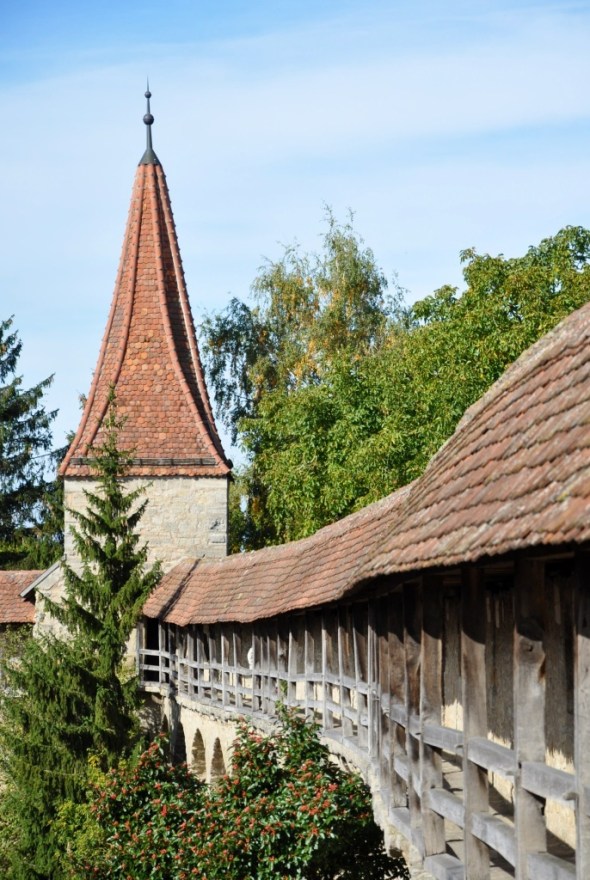
Rothenburg: simply inspiring?
Humour’s always a good idea, when it’s deliberate. Australia might currently be going with There’s Nothing Like Australia, but they’ll never surpass So Where The Bloody Hell Are You as far as I’m concerned. Jamaica’s posters adorned my walls as a university student, but its latest slogan Home Of All Right, is pretty good in my book.
There are a few slogan generating websites out there that in general cope badly when tasked with coming up with something snappy based on a country’s name. I thought I’d see if Visit Sweden could be improved at http://www.sloganizer.net – it came up with Sweden: Yabba Dabba Duh. It was, however, more successful with Nigeria, generating the delightful Nigeriarific.
What are your favourites? Can you improve on any of the official offerings mentioned above or have you seen worse?
A beginner’s guide to Extremadura
Extremadura isn’t on most people’s radar when it comes to holidaying in Spain, overshadowed by its popular neighbour Andalusia. That doesn’t mean it’s got nothing to offer, however, and this region has proved to be one of the most diverse and interesting parts of Spain that I’ve visited.

Bakery selection in Trujillo
Getting there from the UK
There aren’t any direct flights from the UK to Extremaduran towns so realistically, the choice is between Seville to the south of the region and Madrid to the north east. Ryanair fly to Seville from London’s Stansted airport, BA, Ryanair and easyJet from Gatwick. If you’re wondering why Iberia’s missing from the list, it codeshares with BA on their LGW flight. From regional airports, you’ll have to connect as there are no direct routes.
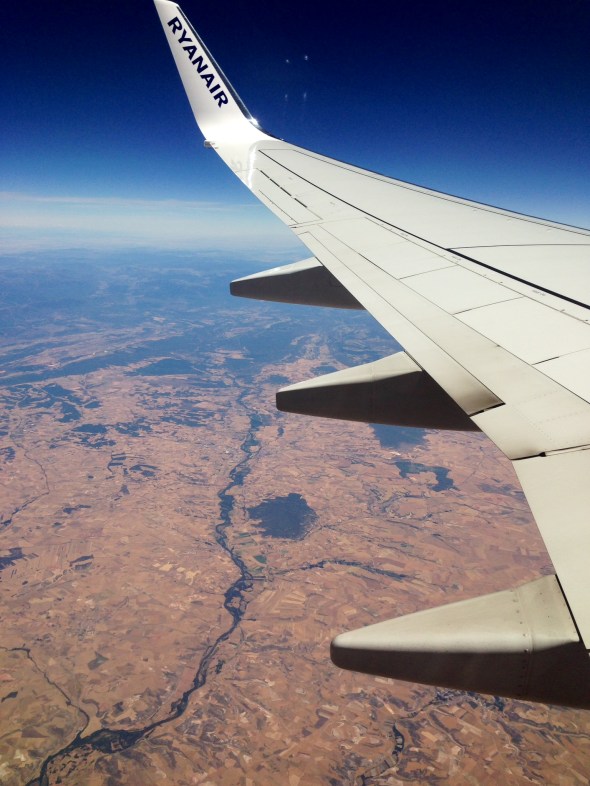
Ryanair en route to Seville
Those same airlines will also carry you to Madrid, plus Norwegian, a low-cost carrier operating out of Gatwick, as well as Iberia Express and Air Europa also from Gatwick.
Getting to and from the airport
I flew into Seville and out of Madrid on this trip but there’s no reason why you can’t do a round trip route or reverse the itinerary. To get into Seville from the airport I caught the airport bus, buying a ticket while I queued up for a few euros. It stops at the train station Santa Justa, skirts the old town and ends up at the main bus station, making it a convenient option wherever you’re staying.

One of the most atmospheric bars in Barrio Santa Cruz, Seville
In Madrid, my train’s final destination was Chamartin station to the north of the city centre but I bailed at Atocha. Getting to the airport was straightforward; the cercanias or stopping trains are quickest but go to Terminal 4. I’d opted to fly Ryanair which left from Terminal 1 and so I connected to the airport using metro line 8.
Getting around
Whether or not you’ll need to rent a car depends on whether you wish to explore the region’s attractive countryside and villages or stick to the main towns. There are a few train connections, such as between Badajoz to the west and the Spanish capital, but for me, on many of the routes I wanted to use, buses operated to a more convenient schedule. Operators include LEDA, ALSA and Avanza.

Every town has a main square; this is Zafra’s
I caught the bus from Seville to Zafra; you can buy a ticket to Mérida for around 10 euros. Although it’s possible to alight at Zafra, as far as I could work out, I couldn’t buy a ticket to Zafra online (you can in person) so I needed a separate ticket from Zafra to Mérida. Book online at http://www.alsa.es. It was just a few euros – well worth it for the chance to see this charming little town.

Pizarro’s mansion in Trujillo
From Mérida to Cáceres, an hour or so further north, I used LEDA; find them at http://www.leda.es where they also offer online booking. A single ticket costs just under 6 euros. From Cáceres, I made a sideways hop to atmospheric Trujillo for under 4 euros each way, leaving my bag in a locker at the bus station back at Cáceres. Tickets from the brand new and barely open bus station in Trujillo only go on sale fifteen minutes before the bus departs with Avanza but the buses weren’t full.

The hammam at Cáceres
To explore Monfragüe National Park and the La Vera valley in a day, there was no alternative to hiring a car. I used Europcar as its office was an easy walk from my Plaza Mayor base and also a straightforward and mercifully short drive to the ring road, easing the pain of town traffic. I did get a tiny bit lost getting the car back but I was only a few blocks out.

Birds take flight over the Ciudad Monumental
To get from Cáceres to the capital Madrid, I figured a train might be more reliable (it wasn’t – we were 40 minutes late getting in) and the train ticket on one of RENFE’s Media Distancia trains was also considerably more expensive than the buses I’d taken – around 32 euros.
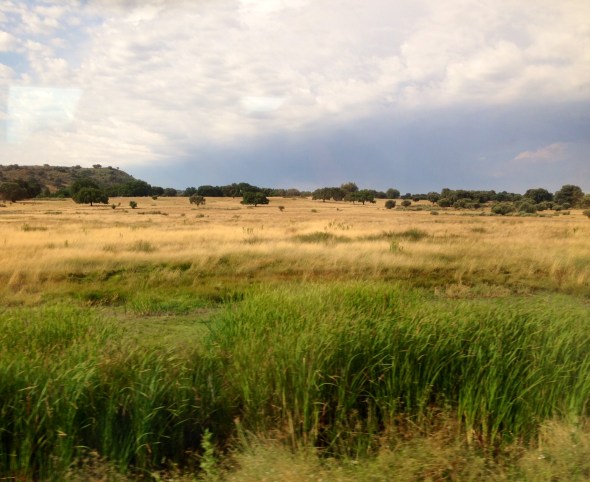
The Extremaduran countryside as seen from the train
Where to go
Where to start? There are so many incredible destinations that it’s hard to whittle them down. In order, here are the places I visited during my Extremaduran holiday.
Zafra
This small town felt more like an Andalusian town than an Extremaduran one, though as it was the first stop on my itinerary, I hadn’t at that point worked out what an Extremaduran town might feel like. It has a pretty double square with lots of pavement cafes and tapas bars. I was there just for the day but I am told the food scene is good there – something for next time. The town also has a castle, now converted into a parador, and plenty whitewashed alleyways adorned with window boxes stuffed full of geraniums.
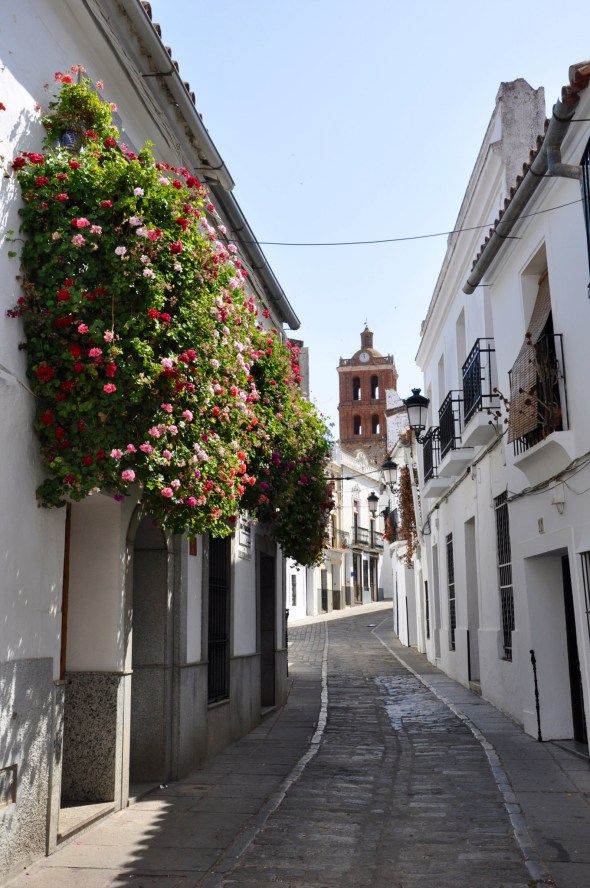
Street leading to the main squares
Mérida
This town is supposed to have the best preserved Roman remains in Spain. The sheer number of ruins was impressive, but some sights had more of the wow factor than others. There’s a partially reconstructed amphitheatre next to a fantastic open air theatre. Then there’s the breathtaking Temple of Diana which is literally plonked halfway along the main street with shops and cafes either side; OK technically it was there first but it does look so out of place it’s a bizarre sight. A restored Roman bridge, old fort with atmospheric cistern, Moorish remains and Forum are also easily accessible within the town centre.
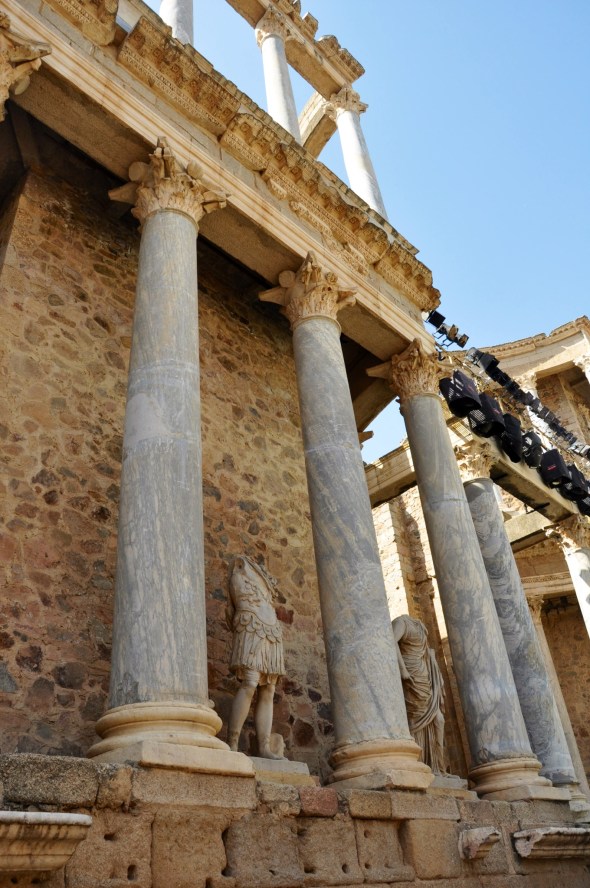
Merida’s Roman theatre
Trujillo
This charming town was my favourite, home to conquistador Pizarro whose statue dominates the main square. Actually, that statue was supposed to be of Cortes, but the Mexicans didn’t want it so it was re-purposed as a Pizarro statue instead. The historic centre of Trujillo is packed full of mansions, including Pizarro’s, as well as myriad churches, towers to climb, a museum about the conquest of Peru and a hilltop castle.

View over Trujillo’s rooftops
Cáceres
The main attraction of this large town is its Ciudad Monumental, a walled old town which is also a UNESCO World Heritage Site. Just wandering amongst its alleyways late in the day was a delight; the addition of a very talented flamenco singer playing Spanish guitar was the icing on the cake. Outside the Ciudad Monumental, the Plaza Mayor was the centre of the action when it came to food and drink, though nearby San Juan had better food. The town also has a hammam with the usual hot, warm and cold baths – massage optional.

Flamenco singer in Cáceres’ Ciudad Monumental
Monfragüe National Park
This, I read, was Spain’s 14th national park but it was the one place I visited that made me gasp. At the Salta del Gitano lookout in the centre of the park, the River Tajo meanders between a couple of rocky outcrops. I visited in the morning and the water was a vivid green – a spectacle in itself but even for someone who can’t see the point of birdwatching, the sight of a black vulture close up was pretty impressive. The winding drive through the park was very pleasant and, if you don’t visit in the height of summer when the temperatures soar, the area is great for hiking.
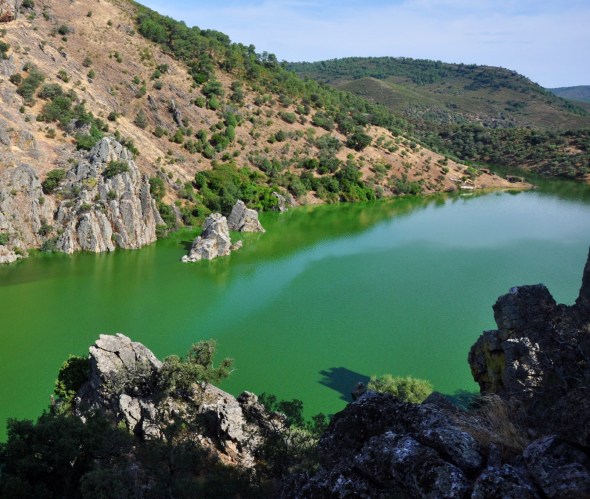
Salta del Gitano
La Vera
This valley connects a series of pretty little villages, many of them worth a stop. Pasarón de la Vera was my first stop, its setting the main draw. From there, a short drive took me to Jaraíz de la Vera, known for its peppers, and then to Cuacos de Yuste, where the monastery housed the Spanish King Carlos V towards the end of his life. I drove on as far as Jarandilla de la Vera where there was an impressive Roman bridge and several natural swimming pools (a big thing in these parts) before backtracking to Garganta de Olla, a quaint little village with a plethora of half-timbered houses overhanging its narrow streets. Taking the mountain route via Piornal provided the adrenaline rush to end the day – though fortunately by that I mean returning to Cáceres and not going over the cliff edge.
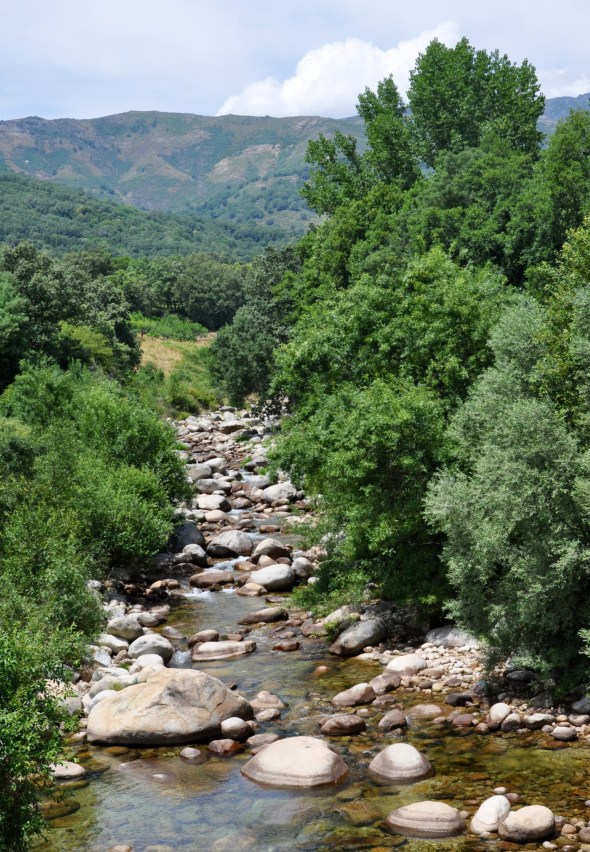
Natural pool on the edge of Jarandilla de la Vera
The ones that got away…
This was my first trip to this region and there were quite a few places I didn’t have time to visit – this time! I’ll be back, one day, to visit Alcántara and its bridge as well as to Montánchez, Monesterio and to Casar de Cáceres for the food.
Watch out for more blogs covering Extremadura in the near future for more on these fantastic places.
Best of British: coastal picks
With last week’s shock Brexit decision, the pound has slid against the dollar and the euro, making the UK a cheaper destination for foreign visitors. Whether you’re flying in from abroad on the back of an advantageous exchange rate or a Brit now planning a staycation, here are a few of my favourite English coastal destinations to whet your appetite. You don’t even need sunshine for a great holiday – which is just as well given the summer we’re having so far.
Dorset


Dorset’s Jurassic Coast is one of my favourite spots. As a former Geography teacher, this stunning coastline packed with headlands, bays, arches and stacks never fails to disappoint. The walk across the cliff top from Lulworth Cove’s almost perfectly circular bay to the drama of Durdle Door has surely got to be among the best in the country as far as I’m concerned.
North Norfolk
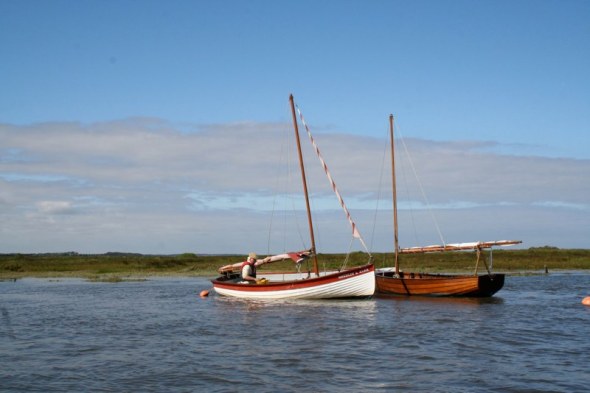
From the old windmill at Cley-next-the-Sea to the vast expanse of sand that forms Holkham beach, this small stretch of coastline punches well above its weight when it comes to visitor attractions per square kilometre. So close to London and yet a world away, whether you choose to take a seal boat trip from Blakeney, take a hike across the marshes (some of these seaside towns are no longer sea-side) or hole up in one of the many excellent local pubs you’ll love it enough to be sure to return.
Cornwall


No discussion of England’s best coastal destinations could be complete without reference to the west country and pretty though Devon is, Cornwall just has more character in my book. It’s hard to pick a favourite – this is a part of the country where you’re truly spoilt for choice. Polperro, pictured, has a lot of charm and perilously narrow access for those who blindly follow their Sat-Navs into town. If in doubt, take the locals seriously when they advise that some routes are not caravan friendly – and by caravan, they mean anything wider than a bicycle.
North Yorkshire

As an Essex girl, you’ll have to forgive me for a list biased towards the south, but doing my degree at the University of Leeds has left a lasting fondness for God’s Own County. Many a happy field trip was spent perched on a cliff sketching this dinosaur-like rock formation at Flamborough Head known as High Stacks, but to save you from some water-damaged and decidedly tatty field sketches, here’s a photo instead.
© Copyright Dr Patty McAlpin and licensed for reuse under this Creative Commons Licence
And one I keep promising myself I’ll get to one day… Crosby Beach near Liverpool

Antony Gormley has excelled himself with this installation, titled “Another Place” which, after being exhibited in various European locations has found a permanent home at Crosby Beach just north of Liverpool. A hundred cast iron figures stand in the mudflats at low tide, staring at the horizon until the incoming tide buries them in water and sand. People say it’s a haunting sight, and it’s one I’m looking forward to seeing for myself when I’m next in the area.
Photograph by Chris Howells CC-BY-SA-3.0 via Wikimedia Commons
What are your favourite parts of the English coastline?
I could easily continue this blog: the best fish and chips in the world at Aldeburgh, Suffolk; the imposing castles of Northumberland; Brighton’s iconic Victorian piers and more. The beauty of Wales, Scotland and Northern Ireland will be the subject for another time, but for now, where would you say is a stand-out for you? And where have you always wanted to visit? I’d love it if you would share your English coastline tips by commenting on this blog.
Weather to travel: New York City
For a first time visitor wanting to maximise sightseeing time, good weather is a must, but when’s the best time to visit New York City? I’ve visited in all seasons, so here are some observations and tips based on my experience.
Avoid summer if you can
Summer in the city, with its long sunny days and picnics in the park, sounds like the perfect recipe for a great trip, right? Wrong! New York in summer is humid and hot. Typical temperatures push 30°C which in my opinion is too hot for sightseeing. Add to that average humidity which peaks in August at around 70% and conditions are often unpleasant. It’s sweltering if there’s a storm brewing and when the rain does fall, it’ll be heavy and you can expect localised flooding.
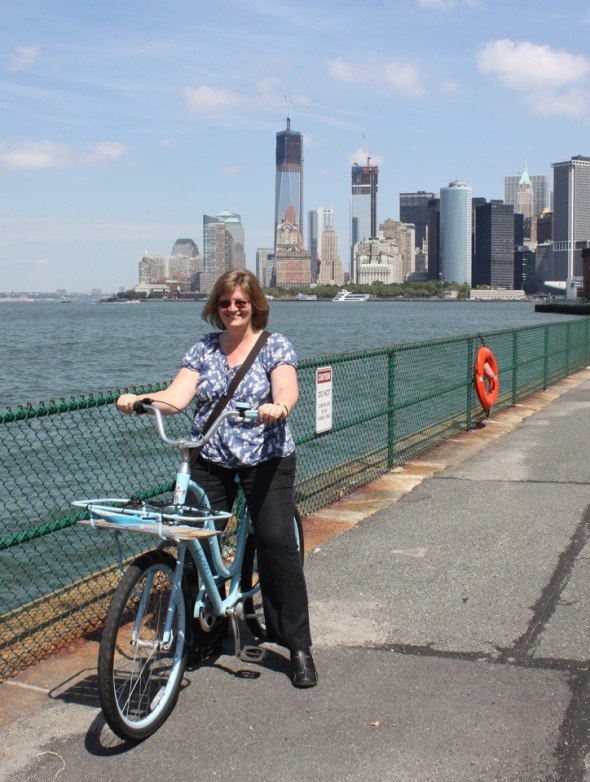
Beating the summer heat on a bicycle round Governor’s Island
It’s beach weather, sure, and there are some fun places to go close to the city like Coney Island, but if you’re planning to visit the Big Apple’s iconic sights like the Empire State and the Statue of Liberty, then you’ll be standing in line until you’re good and sweaty. If you have booked to travel between June and August, then take a ferry to Governor’s Island to catch a breeze, rent a boat from Central Park’s Loeb Boathouse or head out of Manhattan to the Botanical Gardens in the Bronx.
Don’t write off winter
Travelling to New York in winter is not without its risks. If your holiday coincides with a big winter storm, then you can find yourself stranded if the subway system shuts down and the buses can’t get through. That said, there’s a lot of fun to be had snowballing in Central Park and seeing the rooftops dusted with powder. Overnight temperatures can plunge to -10°C or below, but in the daytime, it usually hovers around zero. Wind may well be your biggest problem, but an advantage of a grid pattern street network is that if you turn a corner, you’ll come out of the icy blast and warm up. Make sure you pack accordingly, and don’t skimp on the hats, scarves and windproof down jacket.

Coney Island closed for the winter
The main advantage of travelling in winter is the lack of crowds – those who venture to the Big Apple in winter are rewarded handsomely. First-timers can pack more into an itinerary and reduce the need for pre-booking popular attractions such as the Freedom Tower. It’ll also be easier to pick up tickets for popular Broadway shows. Restaurant week takes place in late January or early February, with lots of establishments offering special menus and good deals.
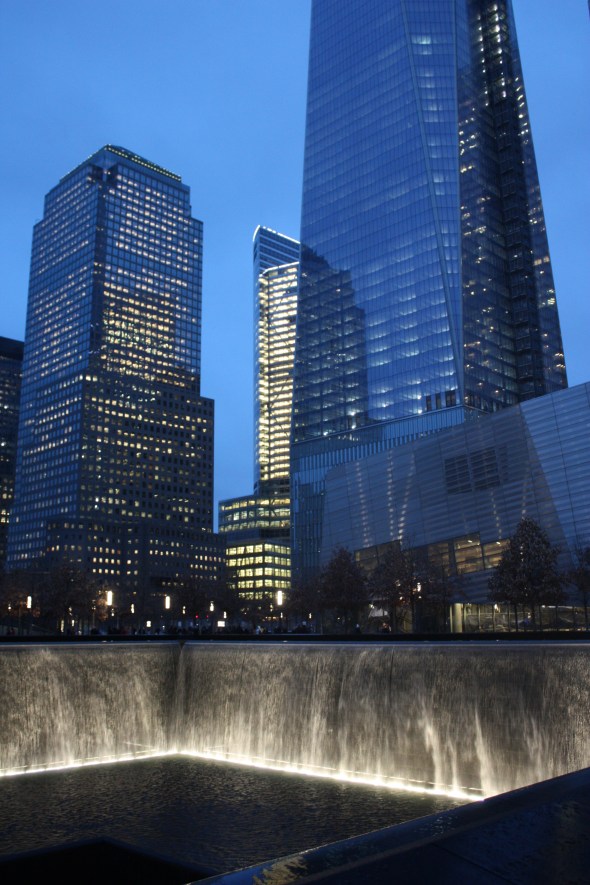
9/11 Memorial in winter
Spring and autumn might just be the best compromise
Temperatures by April are on the rise, and it can be warm and sunny through into October, so travelling in the shoulder seasons is a good option. You’re looking at an average of around 17°C in May which in my book is perfect for sightseeing. Statistically, October is the driest month, though that was also the month in 2012 that Storm Sandy wreaked havoc, so it’s not a dead cert. April is the wettest, but rainfall averages are fairly constant through the year so that’s not a deal breaker. Markets reemerge from their winter hibernation, blossom enhances the High Line and stepping out is a pleasure.
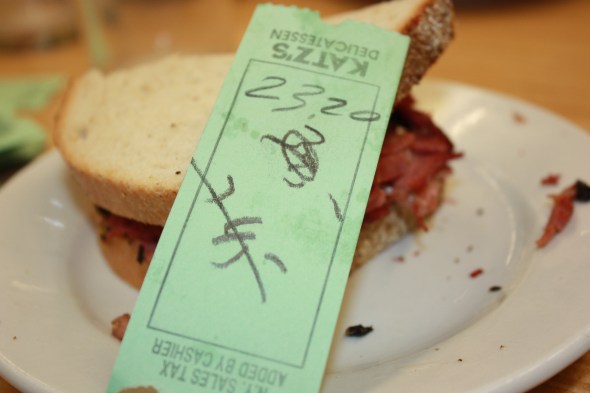
Some of New York’s attractions are great whatever the weather
Book your hotel well ahead, however, because late spring and early autumn are when you’ll see accommodation prices spike – it makes sense, of course, as you would expect demand to drive up rates. May sees temperatures climb and after Memorial Day weekend, summer has officially started; try earlier in the month if you prefer it less busy. You’re more likely to find a deal in November, and maybe even plan a trip to coincide with Macy’s Thanksgiving Parade, and the leaves will be on the turn in the city’s parks to boot.
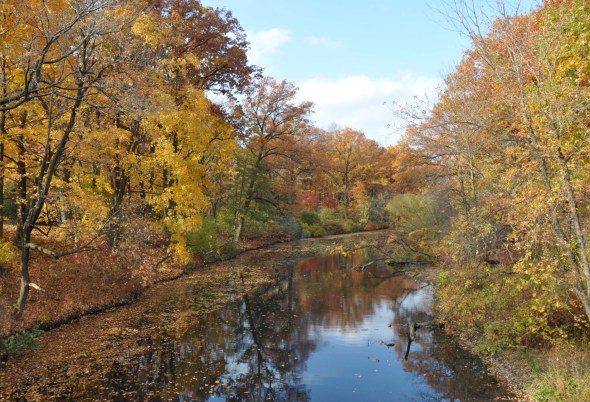
The Bronx River in autumn
What I have learned over the years and through numerous visits, is that there’s really never a bad time to go. My personal preference is for a winter trip, but I’ve never had a bad holiday in New York yet.
Tempted to book? Don’t miss these earlier posts from Julia’s Travels:
https://juliamhammond.wordpress.com/2015/01/06/julias-guide-to-new-york-part-1-lower-manhattan/
https://juliamhammond.wordpress.com/2015/01/06/julias-guide-to-new-york-part-2-manhattan-west/
https://juliamhammond.wordpress.com/2015/01/07/julias-guide-to-new-york-part-3-manhattan-east/
Are business class flights really worth the extra?
I recently had the opportunity to travel business class across the Atlantic from London to New York. I’ve always been of the opinion that I’d rather spend my holiday budget on accommodation and activities at my destination rather than on travel to it. An opportunity to fly business class with British Airways for less than the price of an economy ticket was too good to resist – more about that in a later post – so for the first time I crossed the pond in style.

So what did I think?
Lounge access
Heathrow’s Terminal 5 has two business class lounges but I was tipped off that South Lounge was the better of the two, so that’s where I headed after a very pleasant fast track security experience. I was very pleased to find a decent breakfast spread and had several yummy pastries, read the paper, hooked up to the free WiFi and relaxed in the nice padded chairs while I waited to board the aircraft. All very civilised, though I don’t really mind the bustle of airside especially where there’s somewhere decent to get a coffee.
Boarding
The thing I hate most about boarding these days? The fact that because everyone is carrying such an enormous amount of carry on luggage, the overhead bins fill up. Consequently, there’s a mad dash to get in the queue to board so you avoid having to do a long haul flight with a bag squashed between your legs. Now this is somewhere that business class scores highly: there are fewer people fighting for bin space and you get to queue jump and board when you like. Of course the amount of stress in the economy cabin could also be reduced if the carry on weight and size limit was reduced to something sensible as opposed to the current policy of “bring the kitchen sink or the equivalent, we’ll cram it in somehow”.

Settling in
I was a little nervous I’d show myself up by not being able to work the controls of the flat bed seat. I’ve only flown business class once before, a short hop from JFK to Dallas Fort Worth after being snowbound in New York for so many days the American Airlines call centre staff just wanted to get rid of me, and in any case that was a regular seat. In reality, I had nothing to worry about. Raising and lowering the privacy screen was the hardest part (and not exactly difficult) but the actual seat controls were a piece of cake. The addition of pink champagne was a bonus. I broke my own rule of always flying sober, but only because it felt rude not to take the glass that was proffered, you understand.

Would you like to fly backwards or forwards, Madam?
I’d been advised to try to get a window seat as with the screen up, you were in a little cocoon. Taking off and landing backwards felt very odd. That said, the rest of the flight was fine and it was great to be tucked away. So tucked away, in fact, that when I finally uncurled myself to pop to the toilet (disappointingly cramped), I was amazed to see everyone else lying flat. If I have to be critical (I feel I ought to be objective), I’d say the footrest was a bit of a stretch. Oh the hardship! Her Ladyship had to reach forward a little to put her feet up.

The food
Oh the food! A delicious sounding menu was presented. It basically said I could eat them out of house and home – and then they’d bring me more. Take a look at the feast that I consumed:


And the invitation to just pig out… I love the line: “Of course the best thing about tasty treats is eating them rather than reading about them…” Of course. Of course! Pass the Cadburys.

Actually, in reality I was so stuffed I could barely shuffle to the Club Kitchen, let alone raid it. Note to self: if you ever the chance again to fly business class long haul, make it to Sydney or Auckland. Or at the very least to LAX.
Arrival
Having reached JFK at least three dress sizes larger than when I left Heathrow, I came down to earth with a bump to join the long queue into the US. At least the whole of the economy cabin were behind me. I don’t mean that in a condescending way. I’m usually quick off the mark out of the plane and walk relatively fast, meaning most of the economy cabin are behind me when I disembark from an economy seat too. This time, however, with all that free food and drink sloshing around inside me, I had to walk slowly to make sure I didn’t spill any.
The return
Until I realised I could be reclining flat on the outbound leg, I’d been most looking forward to the return journey. Sadly, this wasn’t to be as good. Although I was upstairs, supposedly better, I was in an aisle seat – nowhere near as peaceful as being tucked away by the window. And being one of BA’s sleeper services due to the late departure, I’d planned on eating in the lounge before take off, but found a rather unappetising buffet presented in the lounge at JFK. If this sounds like I’m complaining, I’m not, any free food is good as far as I’m concerned, but it wasn’t the gourmet experience I had on the outbound leg. Nor was the service as attentive or as friendly, but in the crew’s defence, we’d had a three hour delay to take off and no one was happy.
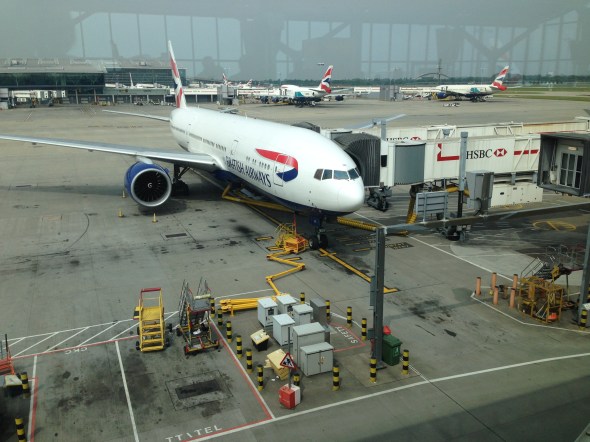
So what’s the verdict?
Based on the outbound leg particularly, I’d say you are made to feel very special in business class. I enjoyed being addressed by name. It is also a real treat to eat the meals course by course and not have to juggle plastic pots in a confined space. I loved the flat bed and found it very comfortable; I don’t usually snatch more than an hour or two’s sleep on a standard economy flight and yet on this I was sleeping so soundly I was dreaming. Fast tracking through security at Heathrow was very welcome. I’m not sure why the same service wasn’t available at JFK, though in fairness it may have been because of the delays and the need to process everyone as quickly as possible so they didn’t miss their flights.
All in all it was an experience I’d be delighted to repeat, though not one that justifies spending such a huge amount more. But keep an eye on this blog. Soon I’ll tell you how I achieved this journey for less than the price of an economy ticket – perfectly legit and no air miles needed.
Just back from – a day trip to Bremen
Regular readers may recall previous posts about days out I’ve done by air:
- to Amsterdam https://juliamhammond.wordpress.com/2015/01/26/just-back-from-a-day-trip-to-amsterdam/
- to Lisbon https://juliamhammond.wordpress.com/2014/10/20/just-back-from-a-day-trip-to-lisbon/
This time, Ryanair are in the hot seat and it’s off to London Stansted for my flight to the north German city of Bremen.
Flight times, for once, are very convenient. The outbound flight departs at 7.55am and is scheduled to arrive in Bremen at 10.20am. It’s a short flight with a one hour time difference. The only downside is that you hit Stansted at peak rush hour. Don’t be tempted to rock up too late; the queues for security are long and just as tedious as anywhere. Of course, with Ryanair your boarding passes are already printed and as it’s a day trip, there’s no luggage to worry about. If you are tempted to shop before you take off, Stansted offers a buy and collect service and you can pick up your shopping on your way back in. Coming back, the flight’s at 9.20pm, but the ten minute tram ride from the city centre and the diminutive size of Bremen Airport mean that you can get away with leaving as late as 8pm. Touchdown at Stansted is scheduled for 9.45pm though we were a little late.
Arrival
After a take off delay of fifteen minutes or so due to earlier fog at Stansted, I passed swiftly through passport control at Bremen’s tiny airport. Ryanair use a separate terminal. It is as pared down as Ryanair users would expect, but the advantage of being apart are of course that there is no one else to share the passport queue with. In less than ten minutes from the wheels hitting the tarmac, I was through the airport and off to find transport into the city.
Getting to the city
Bremen Airport is obscenely close to the city centre and by far the easiest method of getting there is by tram. Exit the Ryanair terminal and turn right. Walk past the main terminal and ahead of you is the tram stop. You’ll need Tram 6 marked Universität which departs every ten minutes. The fare costs 2,70 euros. You can either buy your ticket at the machine at the stop or hop on board and buy one from the tram’s machine. Small notes and euro coins are accepted – don’t go trying to use a 50 euro note as it won’t let you. It’s only a few minutes to the Domsheide tram stop. Alight there and you’re a minute from the cathedral, town hall and main square. The tram then goes on to the main train station.
Getting around
A network of buses and trams can take you all over the city. The Bremen tourist board have produced a series of very useful PDF guides which include a very clear street plan as well as a map of tram and bus routes. I downloaded these onto my Kindle app before setting out, but you can of course pick up paper copies from the tourist information desk when you get to Bremen if you prefer a hard copy, or they’ll send them to you through the post on request. Here’s the link: https://www.bremen-tourism.de/information-material
Much of the city centre is walkable as it is a compact place, but if laziness or inclement weather strike then it’s handy to know which tram to jump on and the guides also detail opening hours and which buses or trams to use. As with the airport tram ride, fares are 2,70 euros for a single but you can also buy a day pass for 8,90 euros which also gives you discounts off some of those city’s must-see attractions.
How to spend the day
First stop for me was the obligatory pose with donkey, dog, cat and rooster. The famous bronze sculpture resides beside the town hall. You’ll see donkey’s front feet are well worn – it’s considered good luck to give them a rub. The four creatures are Bremen’s mascots if you remember the Brothers Grimm’s fairytale.
Next, I walked through the main square. The Rathaus (town hall) was under wraps which was a pity as it is a splendid building minus its scaffolding. It’s UNESCO listed and it is possible to take tours of the inside. The cafes in the main square are tempting and I can recommend coffee and cake of course. Duck behind the Schütting (Guildhall), which sadly isn’t open to the public, and you’ll come across Böttcherstraße which is the marvellous Art Deco creation of a famous local coffee manufacturer. If you can, time your visit to coincide with the chiming of the hour at the House of the Glockenspiel (look up and you’ll see it).
A short stroll from Böttcherstraße took me to the Schnoor quarter. This is one of the oldest neighbourhoods in Bremen and was once where the sailors hung out. The name Schnoor comes from the low German “Snoor” meaning string, which could have been a reference to the way the old houses line up or perhaps to the making of ropes or nets for the ships that passed through here. The area’s very touristy but worth a visit nevertheless.
Still in Schnoor, I had a schnitzel lunch in Beck’s; if you get there early enough you can bag the table with the window out onto quaint Wuste Statte. Flipping the main meal to lunchtime makes sense; most restaurants offer reasonably priced lunch menus and the local cafe culture lends itself to an early evening coffee or an aperitif with a cake or snack before you leave.
Wandering the streets of the Schnoor to walk off lunch was a delight. There, you’ll find many artists and artisans, but for me the delight was the intricate detailing and artwork that formed part of many of the buildings. It’s very important not to rush and also to look up, or you’ll miss them.
From the Schnoor quarter, it would have been logical to move on to Viertel, but as the sun was shining I decided to take a boat trip up the Weser instead. A 75-minute round trip cost 10,50 euros and was rather pleasant, passing the Docklands area of Uberseestadt. Boats depart from Schlachte. Look out for the Beck’s brewery and also some famous names on some of the factories and warehouses: Kellogg’s and Primark among them. With little wind and a clear sky, there were some lovely reflections on the water.
Back on dry land, I walked up to the park that lines the northern edge of the city centre. There’s an old windmill on a hill overlooking the park which was the perfect stop for a cherry juice: a cooling breeze to take the edge off a humid day. Because of the weather, I opted to catch a number 10 tram to Viertel. It’s one of Bremen’s more Bohemian neighbourhoods: think Notting Hill but not quite as affluent. There’s some fantastic street art to be seen, a few shops selling vintage clothes and furniture as well as plenty of decent cafes. I was glad of one of the latter when a thunderstorm brewed suddenly and equally glad when it was short lived.
Strolling back through the Schnoor, the thunderstorm had an unexpected silver lining. Crowds of tourists typically frequent the narrow streets but even though the sun had reappeared, people were slow to venture out again, so I almost had the district to myself. A meander to the main square for a coffee and it was time to head back to the airport after what had been a very pleasant day. The hot weather had prompted me to take it easy, but there is a lot more to see in this Hanseatic city. I could have taken a tour of Beck’s brewery, seen how Mercedes-Benz make cars or ponder whether modern works of art have as much value as their earlier counterparts. Another time, I think. This place is worth another visit.
For more on Bremen, check out my previous blog on the city here https://juliamhammond.wordpress.com/2015/10/03/beautiful-bremen/.
Röda Stugan, a true home away from home
Let’s be honest, when we book self catering accommodation, most of us are dreaming of a home away from home. We want to ditch the pressures associated with actually being at home – intruding work emails, DIY that won’t do itself, lawns that need mowing, carpets to vacuum, washing that seems to breed in the laundry bin. But when we go away, many of us still want our home comforts and more space to breathe than can be afforded by a hotel.
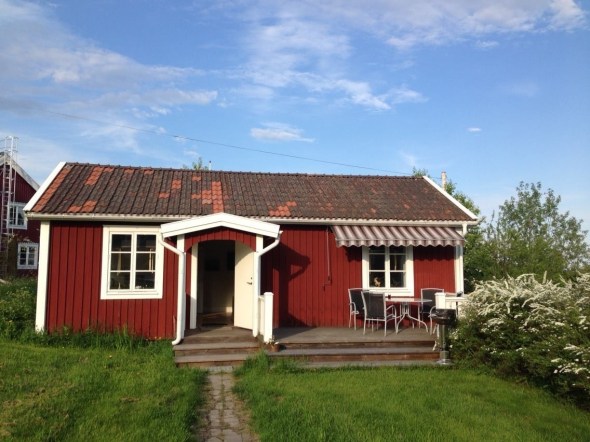
I’ve been up in Sweden’s High Coast region for a few days and my base has been a traditional claret red cottage just off the E4 motorway. It didn’t take any insider knowledge to find – I just used booking.com as is my habit. On paper, it was eminently suitable: Scandi style decor, off road parking for the hire car, WiFi and a bit of space to chill out and put my feet up after a day’s exploration.
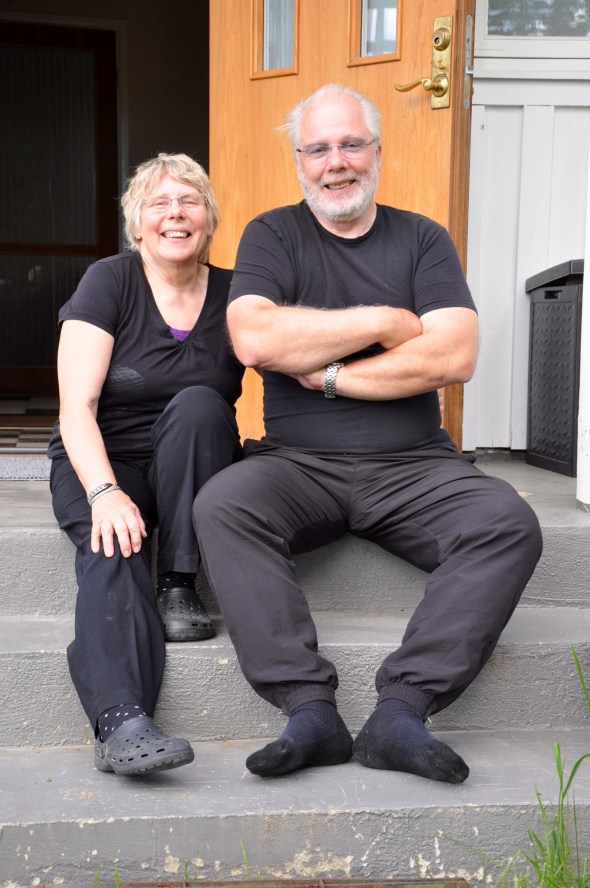
In reality, it’s been way more than that. Owners Karin and Hans, who reside in the farmhouse next door, have been the perfect hosts. And then some. A friendly chat on the sun trap of a verandah with a local map and Hans had pretty much planned my itinerary which, I have to admit, was pitifully vague to begin with. His suggestions have been superb. In particular, I’d have never taken the boat to Ulvohamn without his recommendation and of course, there’s just something so much more tempting about a tip straight from the horse’s mouth than from a tourist board leaflet.
Despite this officially being self-catering, the warm welcome extended to a dinner invite. Over a bottle of wine and delicious homemade quiche, I learnt more about the Swedish psyche and way of life than I could have if I’d had a hotel room for a month. Karin really knows how to cook! I’ve since met the family, checked out the ride-on mower, drank more wine and shared half my family secrets.

It’s true what they say – a place is only really special if the people make it so. And this cottage has felt like home because I’ve had the best neighbours I could have wished for. Thank you – and I promise that’s not just the wine talking.
If you’re tempted to visit the High Coast, you should check out the cottage too.
Röda Stugan, Berg 131, 870 33 Docksta
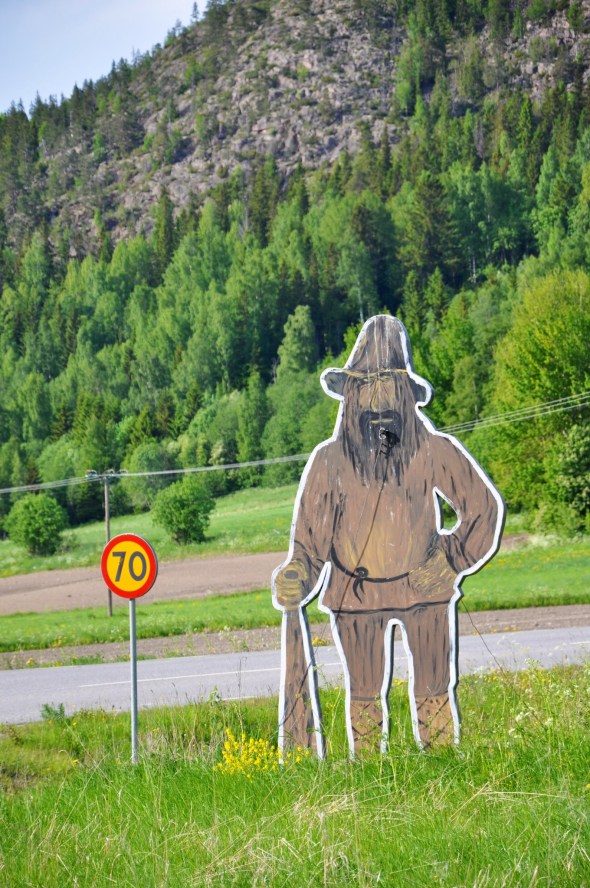
Take the first exit off the E4 north of Docksta. Ignore the sign straight ahead saying Berg and instead make an immediate right turn up a gravel track where you see the cut out of a country yokel. Go up the hill and past a couple of yellow houses. Look for the house numbers or the little red cottage which you should easily spot to your left.
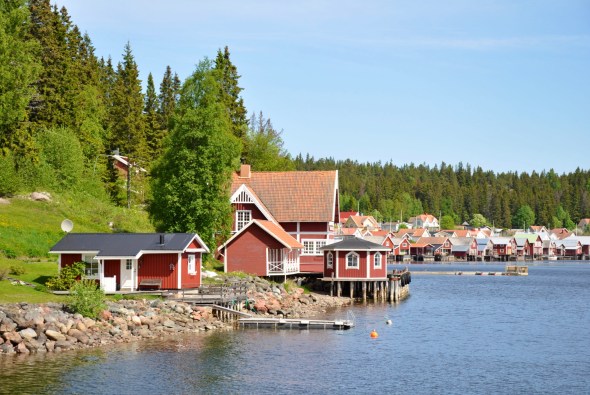
Sweden’s High Coast – the prettiest place you’ve never heard of
It’s the third of June and today’s the day the little cafe on Ulvon Island has reopened for business. The plant pots still await their summer flowers but the sun is out and has enough strength to make an al fresco lunch a pleasure. The owner, like the plants, is taking a while to adjust to the change in season. She’s been to the supermarket, she says, but asks me to wait awhile so she can fetch the groceries in from the car and work out what’s going to be on the menu. I’m happy to hang out. The boat doesn’t leave until after lunch and it’s moored just a short stroll along the gravel path that doubles as a quay.

The High Coast’s not exactly a hive of activity, but even by those languid standards, Ulvon’s a sleepy place. There’s almost no traffic, so the only noise to be heard is the gentle flapping of the flagpoles, of which there are many, and the occasional rustling of leaves. The climate in these parts, and a relatively fertile soil, makes the grass lush and the trees thrive. Rows of conifers stand sentinel on the rocky hills that form a backdrop to the harbour, but down by the water’s edge I spotted maples and robinias dotted amongst people’s gardens.
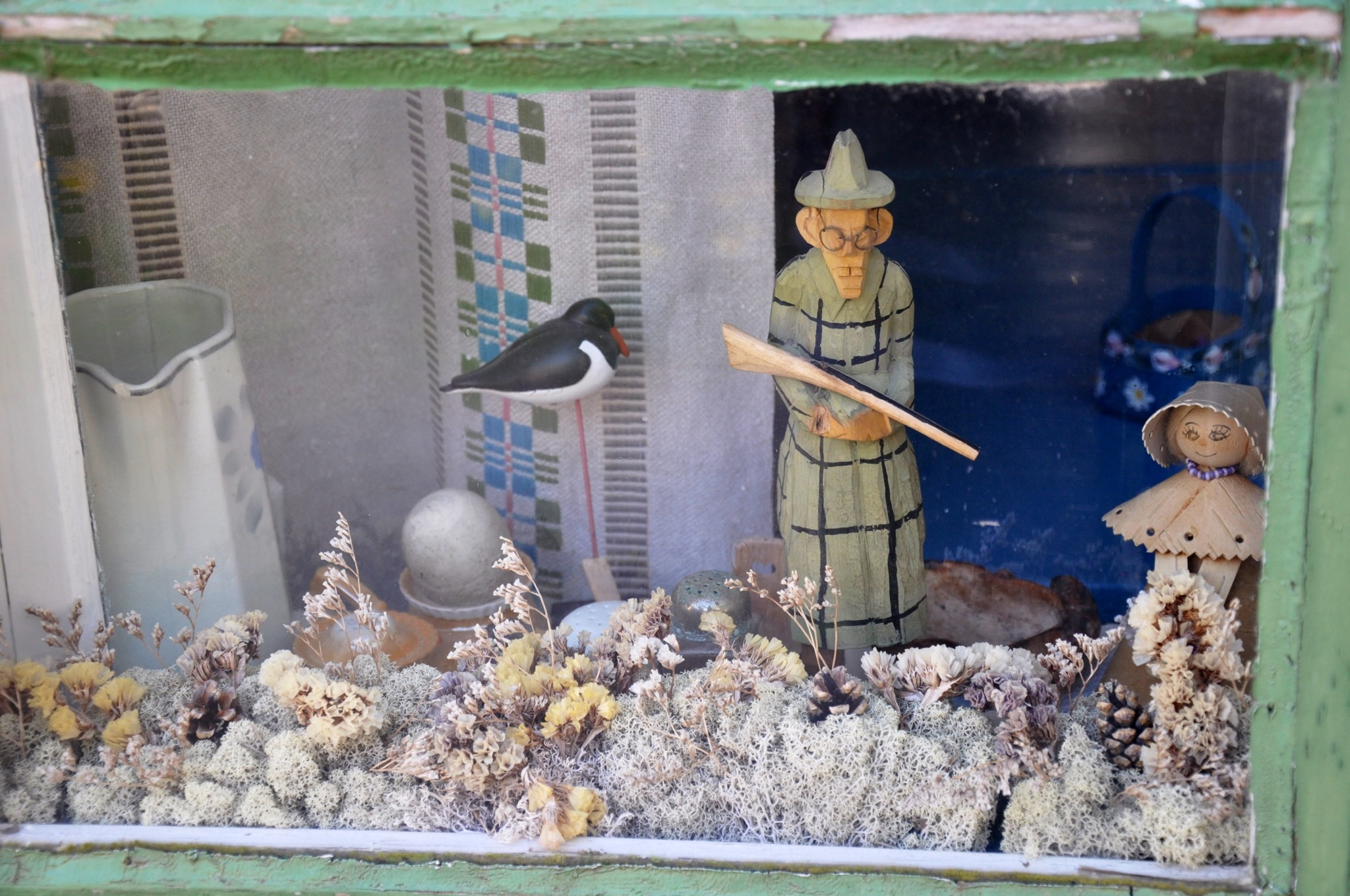
The familiar claret red is prevalent but not ubiquitous here, joined by soft ochres, creams and even a cottage painted sky blue. The houses hug the gentle curve of the bay, lined up in three rows, two by the water and the third set back behind long lawns lined with racks for drying fishing nets. Everything faces out to sea, both physically and metaphorically.

The sea is the reason this area won UNESCO recognition, one of Sweden’s fifteen World Heritage Sites. Once, the High Coast was pinned down under the weight of thick ice sheets. When it melted, the land, free of its burden, sprang upwards. Now, what was once coastline is now an impressive 286 metres above current sea level. At the top of the Skuleberget chair lift, iron rings placed around rocks demonstrate where the waves once lapped, far above today’s glinting sea.
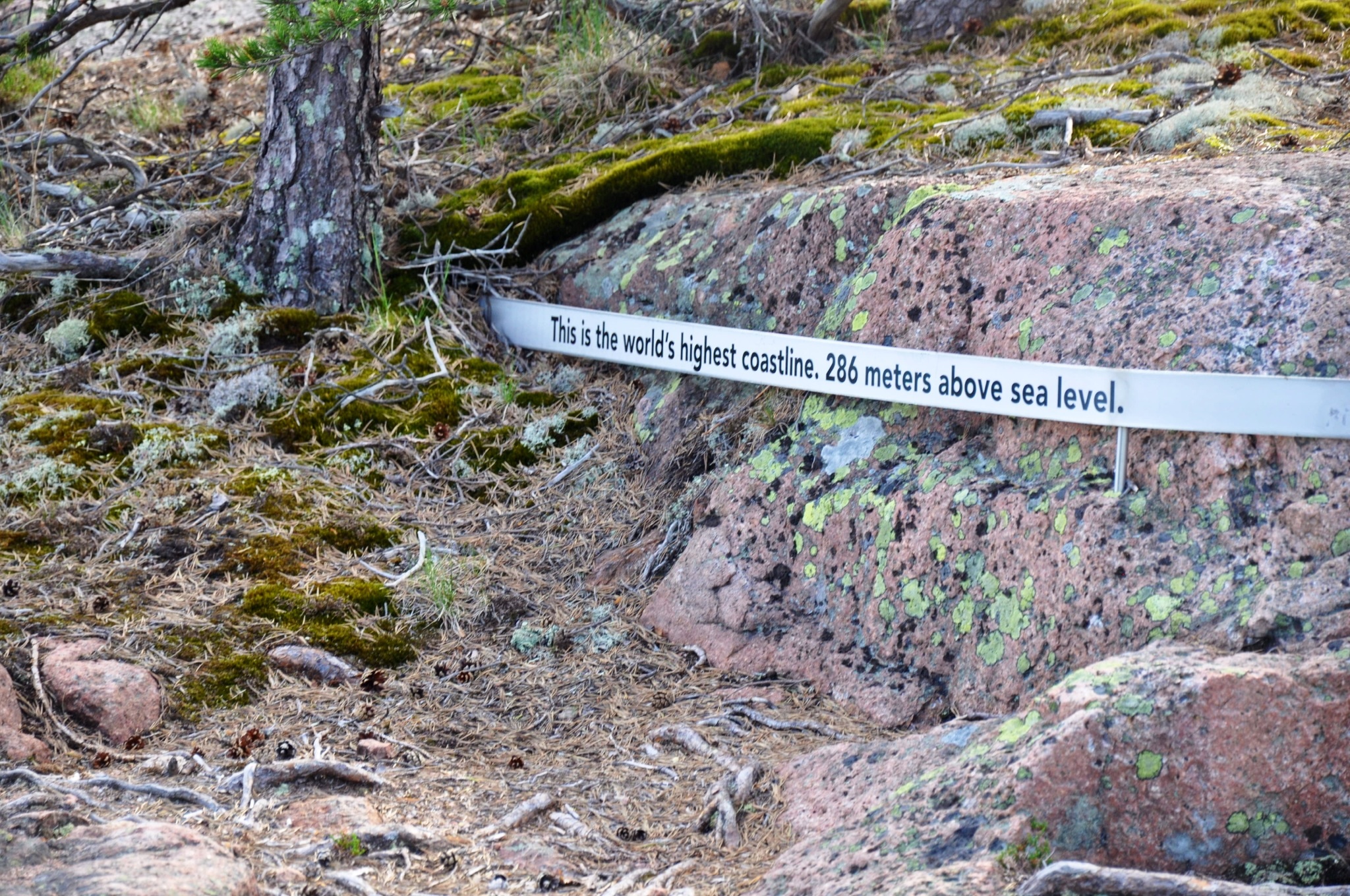
Unsurprisingly, the region’s beauty has been well documented, but the season doesn’t get underway until midsummer. I’m a few weeks early and it shows. The car parks are almost empty, trails bereft of footprints. Ferry schedules are pared down to the bare minimum. There isn’t much of a cafe culture up here, but supermarkets stock ready made rolls and prepared salads, their staff offering plastic cutlery and serviettes without me having to reveal a complete lack of Swedish beyond “Hej” and “Tack”.
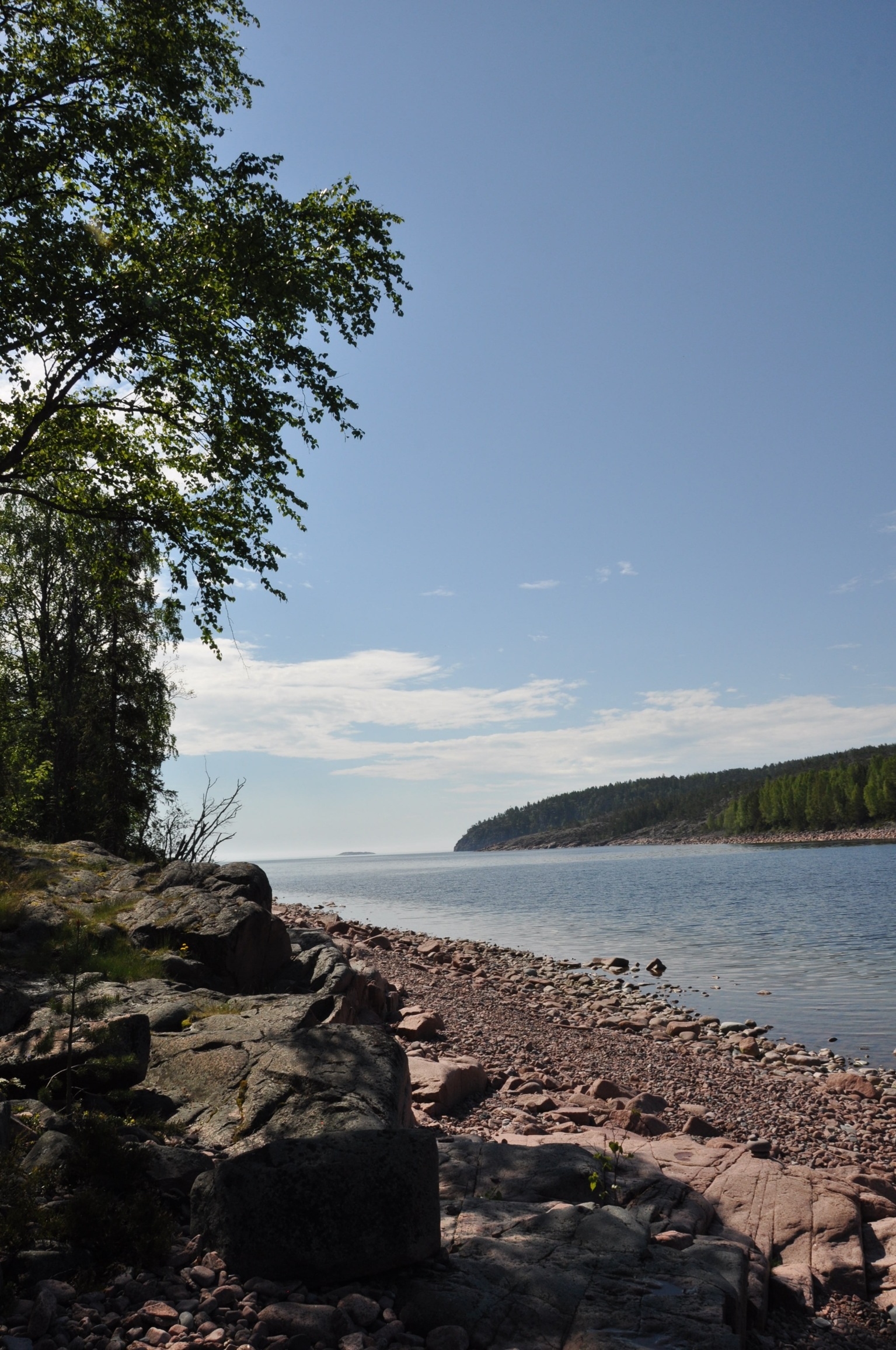
I’m spoilt for choice when it comes to picnic locations. The reflections of Mjallom’s waterside dwellings and the trees that form a picture perfect backdrop are still, not a murmur of a breeze to shimmy the water’s smooth surface. Under a blue sky at Norrfallsviken beach, I clamber over the pink granite cobbles and boulders with not a soul in sight. A lone tree on the headland marks the end of the promontory and something to aim for.
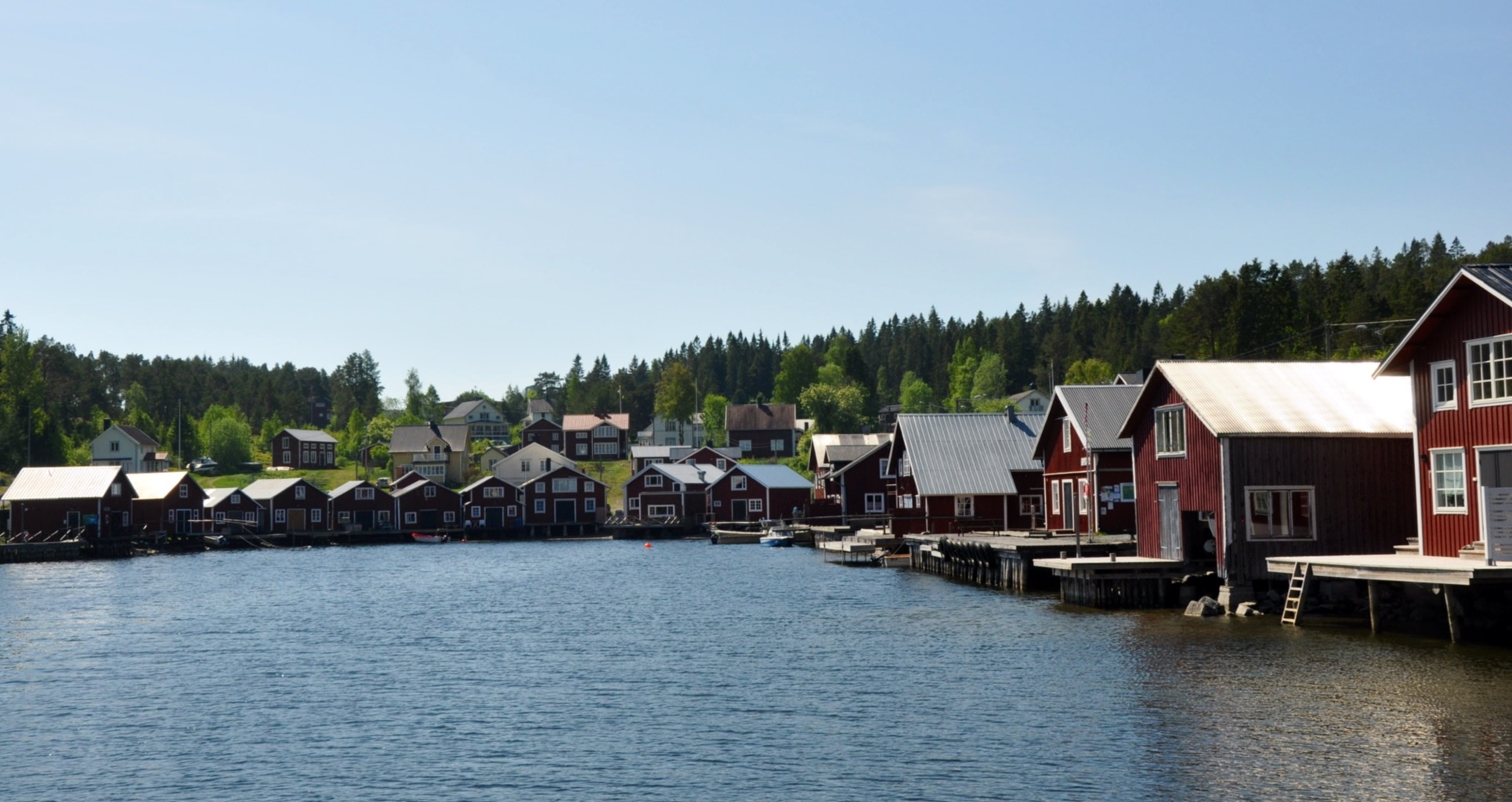
Back in the car, I follow the white flower signs of the scenic drive as far as Bonhamn. There, in a perfect U-shape around the sheltered harbour, every house is the same red shade. The few villagers that can be seen are tending to their gardens, the buzz of lawnmowers the only sound to punctuate the silence.

It’s Rotsidan that tempts me to linger, and I picnic on the flat rocks that line the sea as far as the eye can see. A lone reader is engrossed in her book, propped against a cleft in the rock but there’s plenty of room for us both to feel a sense of solitude. A stroll through the forest to walk off lunch and I’m ready to hit the road again. I’d have thought nothing could top it, but now my Ulvon host’s come up trumps with homemade waffles piled high with prawns, creme fraiche and finely chopped onion, liberally sprinkled with fresh dill. It’s so delicious I might never leave.
New York’s latest project? The Lowline Lab
Hot on the heels of the High Line, the elevated railway turned park which is now one of New York City’s best loved attractions, there comes a bold newcomer. Following the same tradition of cutting edge conceptual development, imaginative design and community involvement, a new way of injecting green space into the Big Apple’s concrete jungle is underway. It’s officially called Delancey Underground but unsurprisingly, everyone’s nicknamed it the Lowline.

A small group of talented individuals led by James Ramsey and Dan Barasch have been working on trialling a technology which would enable natural sunlight to be harvested and transferred underground in order to grow plants for a subterranean garden. The Lowline Lab, as the testing site is called, houses around three thousand plants in the former market building on Essex Street. It occupies a site about 5% of the proposed end result, large enough to give the visitor a sense of what the Lowline might one day be like.

This Lower East Side location has not been selected by chance. In fact, this is one of the most built up areas of a city blessed with squares and neighbourhood parks. A growing population and substantial redevelopment in the LES puts paid to any hopes of removing concrete and tarmac from any above-ground real estate so burrowing underground was the logical choice. With a suitable location identified – the long abandoned Williamsburg Bridge trolley terminal – all that had to happen was for technology to catch up.

Working in collaboration with a number of specialist firms, the committed Lowline staff and volunteers have developed an impressive system of mirrors and tubes which feed light off the street and into the dark depths of the derelict market. Last October, the project set about testing whether plants could survive the New York winter when shorter daylight hours in theory wouldn’t provide the right environment for them to thrive. In fact, the opposite has been true and it has even proved possible to grow viable plants from seed. Spanish moss hangs from the ceiling, trailing down towards a plywood platform carpeted in shade tolerant ferns, exotic succulents and verdant shrubs. Seedlings labelled with lolly sticks emphasise the newness and experimental nature of the project.

With the market earmarked by developers, the Lowline Lab was set to close in March 2016 but a stay of execution was granted as the developers postponed their plans. Now, the Lowline Lab will be open to visitors until at least March 2017. This extension has brought with it new challenges, not least a plethora of pesky insects that have been as thrilled to move into their new neighbourhood digs as the human residents have been to repurpose them. Undeterred, the Lowline team have implemented a series of measures that will ensure that the experience of visiting this innovative underground garden isn’t marred by a thick cloud of midges. Nematodes have been placed in the soil to good effect, though the introduction of carnivorous plants has been less successful, partly because visitors have been tempted to touch their snapping jaws themselves.
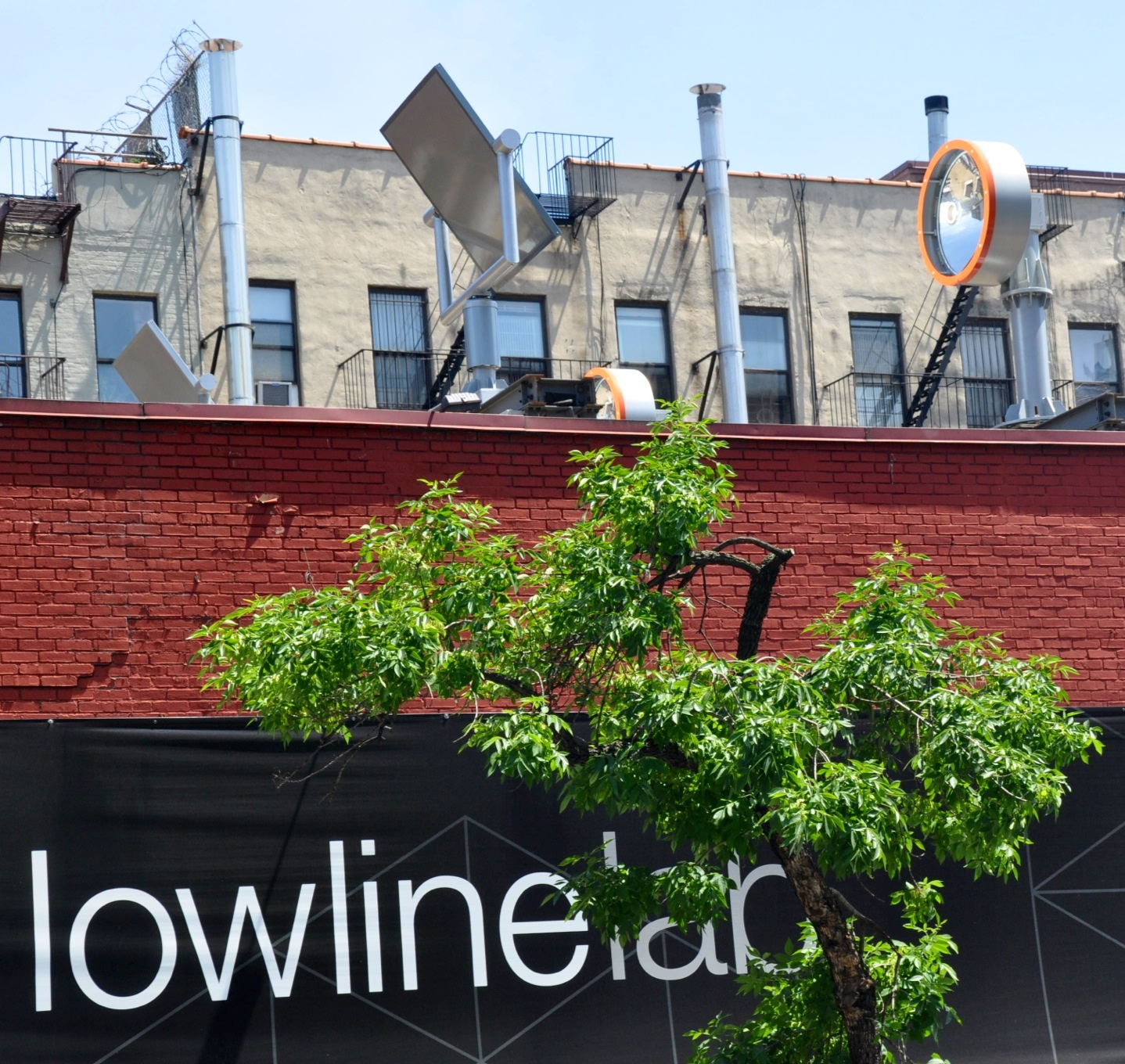
With feasibility studies complete, politicians and community groups on side, support (though not funds) from owners MTA and a steady stream of interested visitors to the Lab itself, there are just a few fundraising and logistical hurdles to overcome. It seems the project could well come to fruition. At present, the team are confident they’ll have the Lowline up and running by 2020 or thereabouts. In the meantime, I’d strongly recommend that if you’re in New York one weekend before next March you take a trip down to 140 Essex Street and check out the Lab for yourself.
It’s almost time to go to the airport

Dennis Potter’s famous quote sums it up perfectly:
“I did not fully understand the dread term “terminal illness” until I saw Heathrow for myself.”
Another trip is looming and with it, the love-hate feelings that come with beginning that trip at an airport. A necessary evil, of course, if you’re intending to go long haul and back without taking a six-month sabbatical or trading in a regular job for work on a cruise ship. This time it’s Gatwick. I’m not thrilled about the place, though I don’t feel the same loathing for it as I do for Heathrow.
The immigration hall at Heathrow is the worldly embodiment of hell. But at least I don’t have to face it for a while. I’m OK with Gatwick. Baggage reclaim there is a whole other matter but I must stay strong and limit myself to carry on.
But to return, I first have to leave.
If only I could time it right so I could sweep through the airport and onto the plane in one elegant motion, like cabin crew or Kim Kardashian or something. The reality, alas, is more like the Tom Hanks film The Terminal, where instead I feel like I’ve moved in. My stress level rockets unless I’m at the airport at least three hours before my flight leaves. I usually end up pacing up and down the concourse wandering aimlessly in and out of various retail outlets browsing at things I have no need for and certainly no intention of buying. At least Gatwick has normal shops. I like the kind of shops that can help me out with the essentials I’ve just realised I’ve forgotten to pack: toothpaste and hair bands and excessively large chocolate bars, not stuff like caviar and silk ties and other crap that only rich tourists will be impressed with.
If I’m not de-stocking Boots, I’m buying expensive coffee to ensure I need the bathroom just as the monitor flashes up my flight’s final call. Is there ever a stage between wait in lounge and final call? Even as I tell myself it can’t possibly be a final call as my flight isn’t scheduled to leave for another hour I feel a deep seated panic and race off to the gate to find no boarding is happening whatsoever. With all the travelling I do, I should know better. I really should.
Perhaps the call goes out early so there’s plenty of time to get lost. Douglas Adams, in The Long Dark Tea-Time of the Soul, wryly observed that airport planners seek:
“wherever possible to expose the plumbing on the grounds that it is functional, and conceal the location of the departure gates, presumably on the grounds that they are not.”
But at least our British airports don’t conceal the check in desks behind a plain white wall, as the Russians did in Ulan Ude when I visited it. Now that really was a challenge. It takes a really special kind of planner to design an airport like that. I can only assume the sign writer charged such exorbitant prices that the budget wouldn’t stretch that far. For once I was glad I’d rocked up three hours early. It took almost all of that time to find out where to drop my bag.
Should we adapt to a no-frills travel style?
The travel press is focusing on speculation concerning British Airways and its possible policy change in charging for food on short haul routes. Read more about it here: http://www.telegraph.co.uk/travel/comment/british-airways-to-charge-for-meals-budget-airline/
Following the stratospheric growth of the low-cost sector, full service scheduled airlines have had to work harder to attract passengers whose prime consideration is price. Living close to Stansted and Southend airports, it’s very rare for me to travel to Heathrow or Gatwick (or God forbid Luton during school holidays) unless I absolutely have to, so the likes of easyJet and Ryanair have been my go-to airlines for short hops for a couple of decades now.
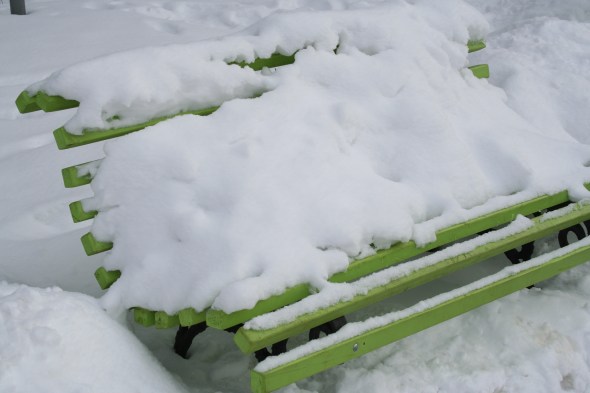
Lithuania in the off season
Over the years, bargain flights have taken me to pretty much every country in Europe. From Kaunas (Lithuania) to Malmo (Sweden), I’ve never let the fact that I’ve not heard of a destination stand in the way of a cheap fare. And neither have I worried about the extras, happily paring down my luggage and printing off my boarding passes at home to avoid fees that some whine about. If I can get halfway across the continent for thirty quid, then quite frankly I don’t give a stuff if they feed me or not. It’s not like most airline food is anything to rave about.
So to be honest, I don’t really understand the fuss. On the very short flights like, say, London to Amsterdam, cabin crew have to practically throw the food at you to get down the aisle and back before the fasten seat belt signs come back on. If you’re only in the air for an hour, is it really so bad to do without a drink or a snack? And if you’re that bothered, buy a bottle of water and a chocolate bar airside and take it on with you.

Tulips from Amsterdam, where they also sell food should you leave the airport hungry
I like these bargain basement fares – and who doesn’t? I’ve never understood the logic in flying business class on short haul routes (they’re often the exact same seats for heaven’s sake!) or upgrading to speedy boarding (do these people not realise that the plane still won’t take off until the last person’s on too?)
I don’t even care who I sit with. It’s nice to chat to my travelling companion but it’s not a deal breaker if I’m separated for an hour or two. It even happened on my Wow Air flight to Iceland to get married, but then my fiance and I were the last to check in so it did serve us right. Who knows, the person that has the pleasure of my company might be more entertaining. (Apologies to those who are reading this having been a travelling companion of mine in the past – I don’t mean you, obviously.)
The Sun Voyager statue, Reykjavik
And therein lies my point. The travel industry is evolving to cope with a changing economic climate and we need to adapt too. The days of flying being a glamorous affair reserved for the rich and famous are long gone. So ditch the suitcase, have a drink before you board and eat when you get there – no frills travel is here to stay!
Head Stateside this summer
It’s fast approaching Memorial Day in the USA, the day for Americans to remember those who died fighting for their country. It falls on the last Monday in May, which this year is May 30th. For visitors, that weekend more or less marks the beginning of the tourist season for those attractions that open only during the summer months. In New York, for instance, that’s when the new Gansevoort Market is expected to open and the weekend Governor’s Island kicks off its summer season. For many Brits, a holiday in the USA means taking the kids to Florida’s theme parks, or perhaps a shopping trip to the Big Apple. The reality is, of course, that there is so much more.
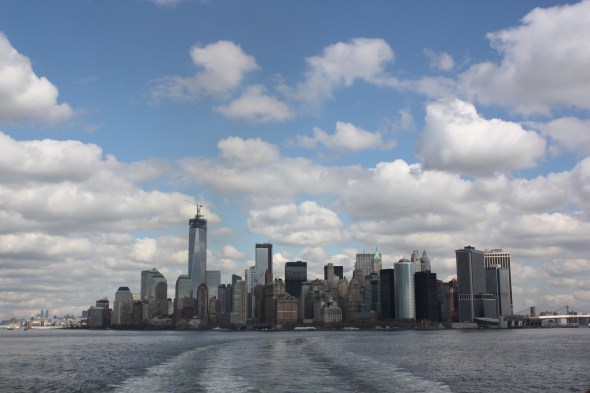
Lower Manhattan as viewed from the Staten Island Ferry
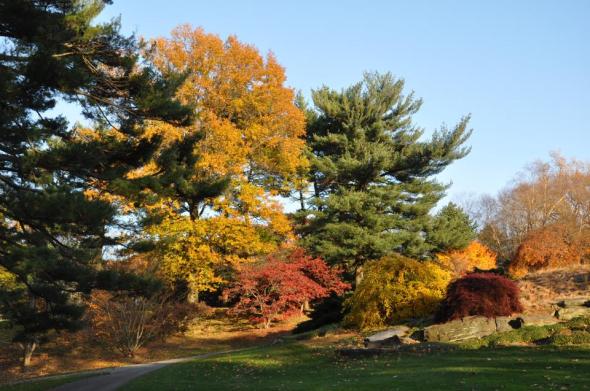
I’m often surprised to read on travel forums that people write the country off because of its draconian immigration procedures, when in fact in my experience it’s rarely worse than anywhere else. Some even claim that the $14 ESTA is a deal breaker – seriously, a £9 charge on a long haul holiday? That’s hardly going to leave you without spending money. I’ve travelled a lot in the States and I can honestly say, Florida aside, (I’m no fan of the Mouse) I’ve never begrudged paying it to see such incredible and varied scenery. So, to mark Memorial Day, here’s my pick of America’s very best tourist spots. It’s been hard to whittle them down and I could easily add more.
This Memorial Day weekend I’m going to be in my favourite US city – New York. Where are you going to be?
A float trip in the Grand Tetons
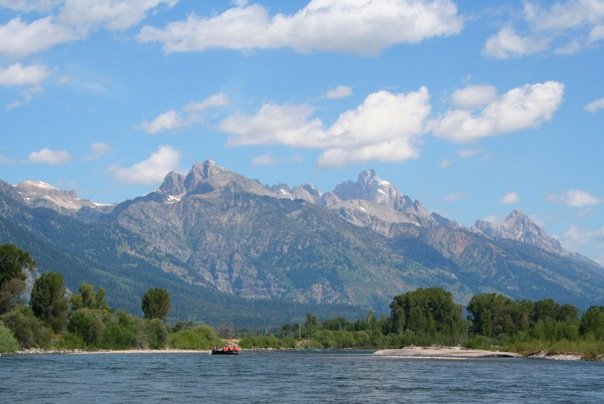
Bad skies in the Badlands

New Orleans

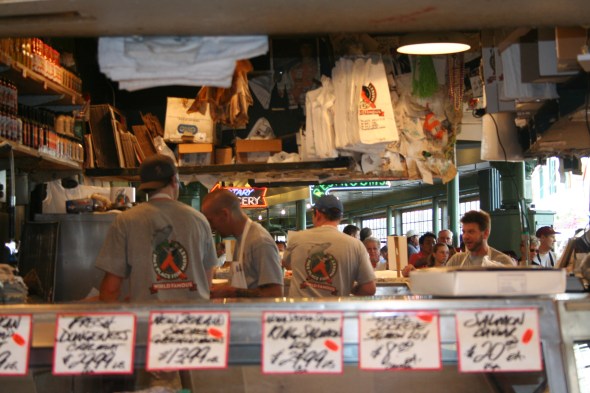
Pike Place Market, Seattle
Savannah’s squares

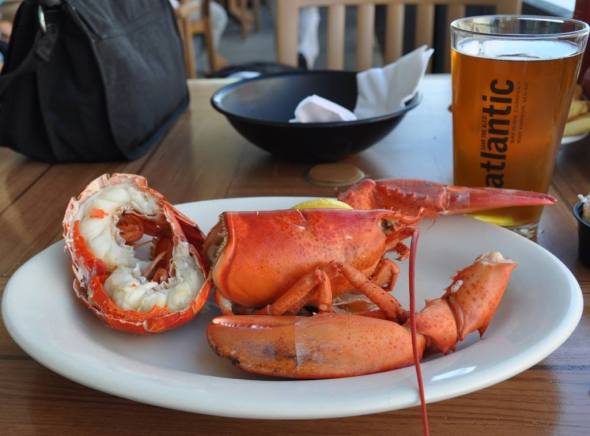
Bar Harbor – lobster and beer
The Rodeo at Cody

Canyons, rock arches and more, Utah

The Mummer’s Parade, Philadelphia

Las Vegas’ Neon Museum

Big skies and glaciers, Montana

The Bronx, New York
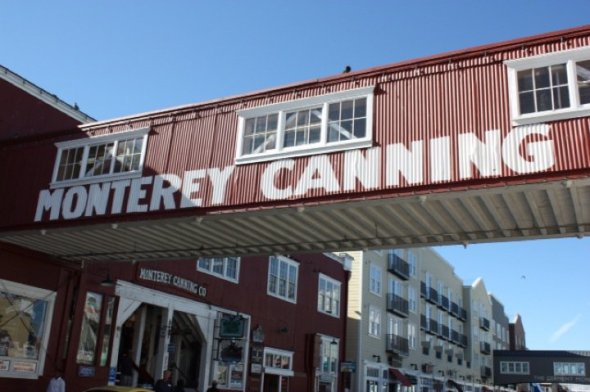
Monterey’s Cannery Row
Elegant Charleston

Running with the llamas, Hammond Wisconsin

So are you tempted? What’s your favourite US destination and why?
How to survive a long haul flight
Always wanted to visit that far flung destination but dread the flight you’ll need to take to get there? Sometimes a long haul flight is the hell that has to be endured to reach paradise. If you aren’t lucky enough to fly First Class or have incredible views beneath you through a cloudless sky, you might need my help. Here are a few tried and tested tips for making that journey fly by (sorry, couldn’t resist!)
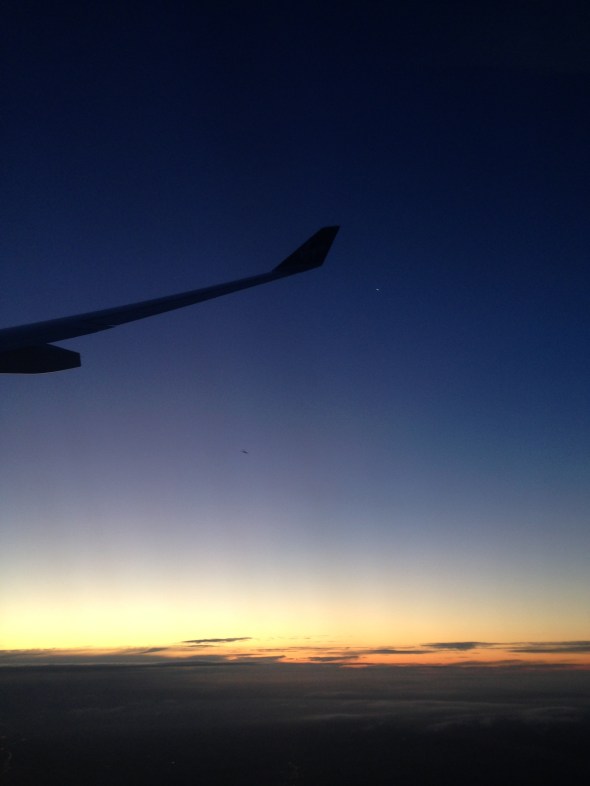
London at dawn from the air
Drink plenty
Sadly, I don’t mean chug back the wine and pass out. Save the alcohol for your holiday and instead drink plenty of water. Flying is very dehydrating – which means if you don’t keep topping up your liquids, on top of thirst, you risk suffering headaches, dry skin and tiredness. And none of those are conducive to a happy flight. You can keep asking cabin crew for water, but you might be more popular if you buy a bottle of water from the airside newsagents before you board. Pack a travel-size moisturiser to keep your skin hydrated too.
Keep moving
Unless you’re still lucky enough to be a lithe and supple twenty something who can curl themselves up into a ball on take off and stretch like a contented cat as they awake on landing, a long flight potentially means discomfort. Spending a long time in a cramped environment leads to aching muscles and stiff joints. Make a point of getting up at regular intervals to move those legs and you’ll feel much better for it.
Bring some reading material
Forget War and Peace, what I take on a flight has to be easy to read. Eschew the literary classics and think chick lit, trashy magazines and historical sagas. I was so engrossed in Jeffrey Archer’s Clifton Chronicles on a recent flight I barely noticed we’d landed. Make sure the Kindle’s fully charged or go retro and take a paperback. And if you’re taking a guide book, don’t pack it in your hold luggage; plan your trip in the air to maximise time for sightseeing when you arrive.
Save up your correspondence
There are rarely enough hours in the day to fit everything in and it’s not uncommon to fall behind, so I spend some of a long flight writing drafts of emails on my iPad ready to send when I arrive. (Some airlines offer Internet access on board but check the small print to find out how much it’s likely to cost before you connect.) I also use the time to write future blog posts, draft articles for clients and make to do lists.
Make the most of the on-board entertainment
Listen to the album you’ve not had chance to download, engross yourself in that film you failed to catch at the cinema, binge watch addictive TV sitcoms – most airlines have plenty of choice. I also make sure I’ve got lots of games on my tablet so I can pass the time playing Scrabble, card games and Sudoku.
Talk to your neighbour
Whether you’re travelling with a companion or solo, it’s often pleasant to chat. Take the hint though if your neighbour is monosyllabic with their responses – some people might find your inane chatter intensely annoying. And if you’re stuck with the cabin’s biggest bore, dig out some headphones and announce with an apologetic shrug you’ve been looking forward to listening to that album or audio book for ages.
Hit the snooze button
If all else fails, sleep. Beg, borrow or steal an extra pillow and blanket to pad out those uncomfortable armrests and snatch a nap or two.
Why not paying attention to your Geography teacher could cost you dearly
Next time you go online to book flights, be careful. You may end up miles off course if you don’t double check your booking before you confirm travel. As an ex-Geography teacher myself, I couldn’t help but shake my head in despair at the unfortunate couple who this week made the news as they managed to book themselves flights to Las Vegas from Birmingham Alabama rather than the UK’s second largest city:
Couple book flights from Birmingham airport… What could possibly go wrong?
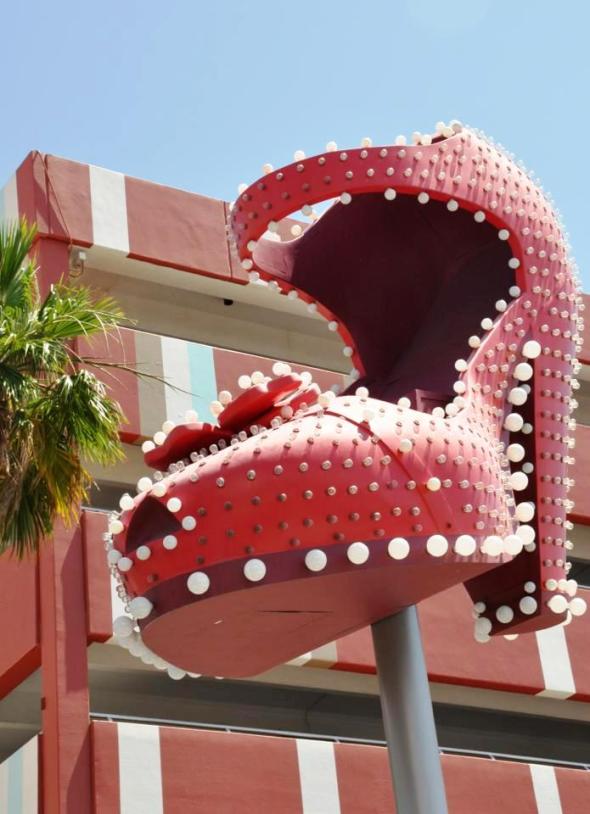
Vegas, baby!
While it’s a shame they missed out on their dream holiday, it shouldn’t be an easy mistake to make. Flight booking sites are easy to navigate and cities clearly identifiable. They’re not the first, either. I remember a couple trying to get to see their daughter in San Jose, Mexico but who ended up flying to San Jose, California instead:
The flight codes are only one letter different, so if I’m being generous that could have been hard to spot. But then there was the granny who actually wanted to be in San Jose, California but headed to the Costa Rican capital instead:
http://www.dailymail.co.uk/news/article-118629/Grandmother-flown-3-000-miles-way.html
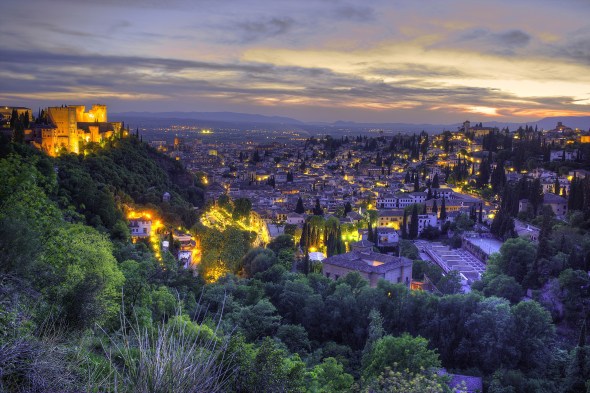
The beautiful Spanish city of Granada
While many accept responsibility for their mistakes, some just can’t believe it. This American couple decided to sue when they were wrongly routed to the Caribbean island of Grenada instead of the Spanish city Granada:
http://www.theguardian.com/world/2014/jun/25/american-couple-sue-british-airways-grenada-granada
They aren’t the only ones to fall foul of these two similar sounding places, though at least this granny can claim she was misheard:
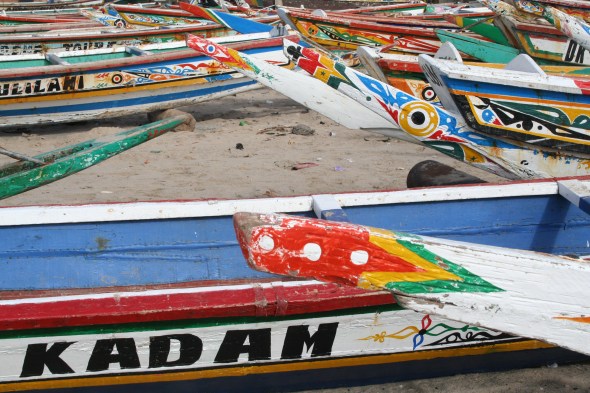
Dakar’s colourful boats
I could go on and on. The internet’s full of tales of people mixing up Dakar and Dhaka, respectively the capitals of Senegal and Bangladesh and located on different continents, Melbourne, Florida and Melbourne, Australia (I’d recommend the latter if you can’t decide which to add to your bucket list), and Paris, Texas with the French capital itself.
So, if your child isn’t paying as much attention as you’d like in school, show them this blog and tell them to pull their socks up, or one day they might find themselves facing an expensive onward flight!
Looking at the familiar with fresh eyes
“The whole object of travel is not to set foot on foreign land; it is at last to set foot on one’s own country as a foreign land.”
London born writer Gilbert K. Chesterton wrote this oft quoted phrase about Battersea in his essay “The Riddle of the Ivy”. It’s an idea I’m embracing while out and about in my home county of Essex.
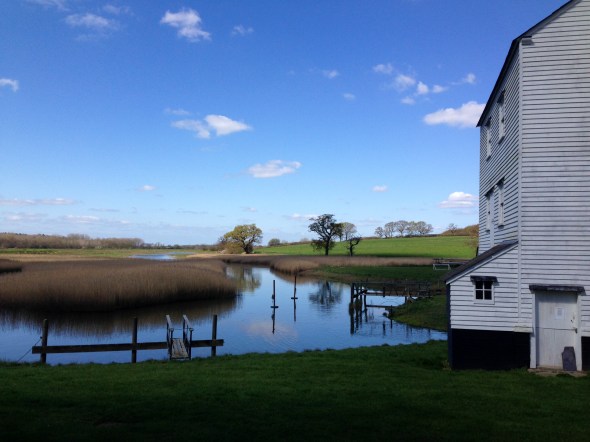
Thorrington Tide Mill
Often overlooked in favour of neighbouring Suffolk or Kent, the greatest pleasure for me of travelling in my local area is the lack of visitors in all but the most obvious of destinations.

In the grounds of Layer Marney Tower
Researching for Countryside Dog Walks, I’ve quite literally walked for miles without seeing a soul. It’s taken me to parts of the county I’ve never visited and to my delight, I’ve had as much enjoyment discovering new sights in my own backyard as I’ve had anywhere in the world.

Marks Hall Arboretum
Part of the joy of independent solo travel for me is to unpick somewhere new, to learn how it’s constructed and to find out how it ticks. Realising I can still do this in Essex has been a satisfying revelation. Another great British writer, Lawrence Durrell, famously wrote:
“Travel can be one of the most rewarding forms of introspection.”
Walking along the Essex coastline and through its surprisingly empty countryside, the lack of specific sights and attractions makes it perfect for pondering while wandering. Life’s full of things to be done and these walks feel deliciously self-indulgent, yet unlike a big trip, they only require me to take a few hours off.
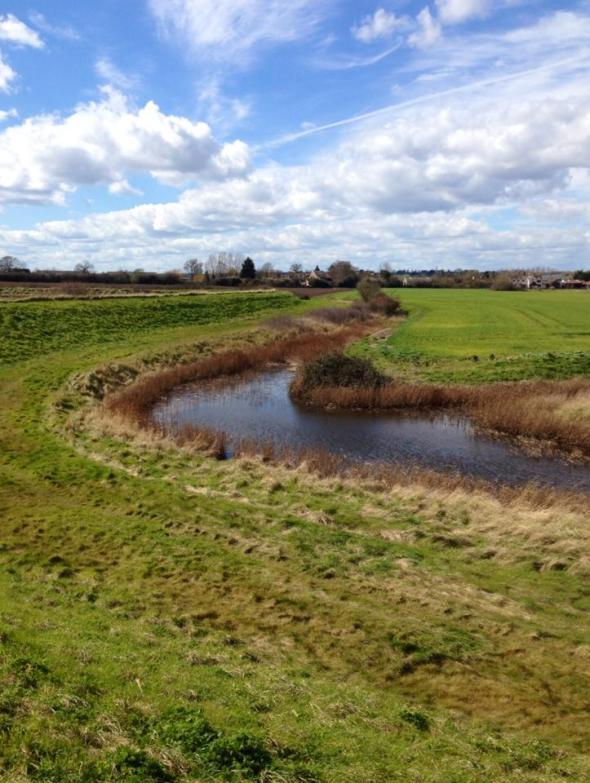
Salcott Creek
Being alone makes me more in tune with my surroundings. Sounds that are concealed by conversations push their way in to a solo walk. The salt marsh fizzing, the wind vibrating the rushes, the stream trickling – all lost unless you really listen. For me, one of the biggest distractions from the landscape is my camera. It can be hard to give up the search for the perfect shot and just look without a lens. But when I force myself to do so, it’s more than worth it.

Lion Creek, Paglesham
To find out more about the hidden corners of Essex, why not visit my Essexology blog? You’ll find it at http://www.essexology.com
Ecuador: is it safe to travel yet?
News items reporting Saturday’s magnitude 7.8 earthquake centred on Pedernales, Ecuador, were sadly no shock – the country lies on an active plate boundary where seismic tremors and volcanic eruptions are a fact of life. The scale of this quake, and the high death toll, were unusual and the people of the country will have a long hard slog in rebuilding their lives and livelihoods. Right now, the coastal cities of Pedernales, Manta, Bahia de Caraquez and Portoviejo are going to need time and money to recover, and the country’s largest city, Guayaquil, is reporting damage to transport infrastructure. If you’d like to help, this article from CNN is a useful starting point: http://edition.cnn.com/2016/04/17/americas/iyw-ecuador-earthquake-how-you-can-help/

The country sits on the Equator as its name suggests
You could be forgiven for thinking now’s not the time to be planning a holiday to Ecuador. However, this South American nation is telling us that many of the places on our holiday wish list are unaffected. While aftershocks are continuing, most are only around 4.5 on the Richter scale, with a number of those epicentred out to sea in the Pacific. You can track them here: http://earthquake.usgs.gov/
Quito
Buildings at the historic heart of the Ecuadorean capital are currently being checked over but the city’s hotels and transport systems are functioning. A trip to nearby Otavalo’s famous market is still possible as the town has not reported any significant damage.
![IMG_3002[1]](https://juliahammond.blog/wp-content/uploads/2016/04/img_30021.jpg?w=590)
Otavalo market
Baños
In the shadow of Tungurahua volcano, the hot springs of this tiny tourist town are a welcome sight to those with muscles aching from volcano hikes. There’s been no major damage and if you were thinking of heading there after a Cotopaxi climb, that’s open for business too.
![IMG_3089[1]](https://juliahammond.blog/wp-content/uploads/2016/04/img_30891.jpg?w=590)
Volcano tours are operating as normal
Cuenca
My favourite of all the places I visited during my 2006 trip, this elegant city lies an eight hour drive away from the area most affected by the quake. It’s where you’ll find Panama hats being made – not Panama! – as well as a pretty river walk, a colourful flower market and plenty of colonial era mansions to impress.

Cuenca’s flower market
Galapagos Islands
If you know your geography, then you’ll know that this group of islands is located over 800 miles off the Ecuadorean mainland – about the same as London to the south of France. There’s no tsunami alert in place and excursions are running as usual. The blue-footed boobies are awaiting your call!
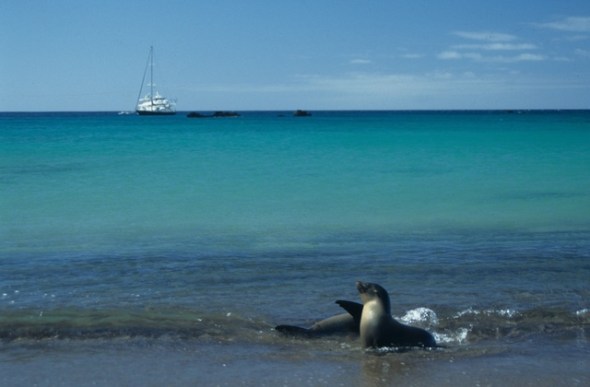
Galapagos Islands by Derek Keats CC BY 2.0 via Flickr
To find out more, visit the Ecuadorean government website at http://www.turismo.gob.ec/update-on-ecuadors-tourism-infrastructure-services-following-saturdays-earthquake/
A beginner’s guide to Peru
Lots of people ask me what my favourite country is out of all those I’ve travelled to. It isn’t really a hard question to answer as over four visits to this South American nation, it’s really got under my skin. Peru’s landscapes, fascinating culture and rich history make it a shoe in for the top spot, its crazy and very likeable people the icing on the cake. If you’ve never been to South America, Peru’s a great country to start with. Its tourist infrastructure is well developed, particularly around Cusco, and although it has sometimes had a reputation for petty crime, with a bit of care you can easily avoid becoming the next statistic.

Bottle feeding a baby alpaca
Getting there
Getting to Lima, the Peruvian capital from the UK has just got a whole lot easier with the introduction of thrice-weekly direct flights from London Gatwick with British Airways. However, these are hard to come by for a reasonable price and you’re still likely to have to consider an indirect routing.
Typically, the best European options are via Madrid with Iberia, through Amsterdam with KLM and Paris with Air France. I’ve used all these routes and the advantage outbound is that you’re on the second leg towards Peru pretty quickly which makes you feel like you’re getting somewhere. Be wary of using CityJet connections from Paris back to London in case you have the poor experience I suffered:
https://juliamhammond.wordpress.com/2015/03/06/finally-a-win-against-cityjet/
It’s also possible to hub through the USA which gives you two more evenly balanced flights. However, if you do choose this option you’ll need to clear immigration in the USA even though you’re only in transit, meaning you’ll need to apply for an ESTA at a cost of $14 just to sit in the airport. Queues can be long; it’s best to allow at least a three hour layover if you plan to do this to avoid missing the second leg of your flight. I’ve seen people beg and plead to queue jump to no avail.
Getting to Lima from the airport
With most flights from the UK arriving in the evening Peru time, you’re going to need to spend at least one night in the capital before connecting to your domestic flight or bus the following day. Lima’s Jorge Chavez airport is located in the port district of Callao, the opposite side of the city to the upscale neighbourhoods of San Isidro, Miraflores and Barranco which are the most pleasant to stay in. You can find accommodation in Callao but it’s not a very nice area and not especially safe. Buses pass the airport and head into the city but you’re better off organising a taxi. Don’t go out onto the street to hail one; instead, before you leave the arrivals hall, look for the Taxi Green company and use them. Their rates are fixed so you can be sure you won’t be ripped off. Lock your door though; I’ve had an opportunist thief attempt to steal my phone by opening the back door of the taxi while we waited at a red light.
Getting around
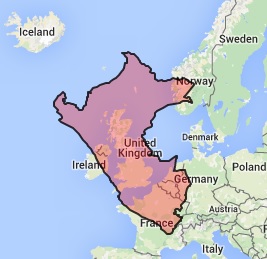
Let’s start by stating the obvious: Peru is large. Getting around is a trade off between cost and time. If you are only in the country for a couple of weeks then flying between cities is really your best bet. Internal flights are relatively competitive if you book reasonably early, especially to Cusco. I’ve recently flown with LC Peru and Star Peru which were both good; TACA also operate internal flights. LAN (now LATAM), the national carrier, is very reliable but tends to be more expensive.
You can also take overnight buses. It’s advisable to travel with a reputable company such as Cruz del Sur or Ormeño as they are supposed to drug-test their drivers more often and travel with a pair. Buses have regular seats but often semi-cama or cama also; these are much larger, reclining seats (cama means bed) and are much better over longer distances. I suffer from back problems but found I could get comfortable enough to sleep.
Train services are limited in Peru but there are a couple of routes which are of interest to tourists. Lima to Huancayo is the second highest rail line in the world (after Tibet) but the Tren de Sierra only rarely makes the journey. Services from Cusco are more frequent and thus of greater importance here. Trains run to Machu Picchu beginning from Poroy just outside Cusco (and also from Ollantaytambo further along in the Sacred Valley) as well as to Puno over the altiplano. Find out more at http://www.perurail.com.
In town, it’s cheap to take a taxi, though make sure you agree a price in advance and if there’s more than one of you, make sure that price is per car and not per person. Colectivos, minibuses that run on fixed routes, are easy to hail and cheap to ride. Alternatively, little three wheelers (Peruvian tuk tuks) are the way to go in places like Cajamarca.

Chinchero market
Where to go
Lima
The nation’s capital had something of a reputation with many visitors spending as little time there as possible. These days, however, it’s enjoying a resurgence in popularity as the Peruvian foodie scene has kicked up a gear. I did an excellent food tour with the Lima Gourmet Company which made me re-evaluate my feelings about the city. For more on Peruvian cuisine read my blog for Wanderlust here: http://www.wanderlust.co.uk/planatrip/inspire-me/lists/top-10-peru-food-experiences?page=all
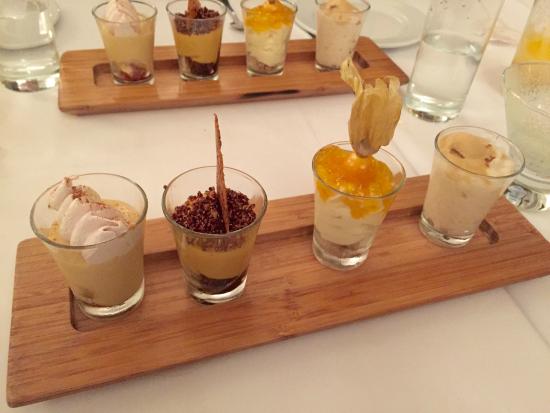
The best desserts in the whole country
Nazca, Ica and Pisco
A few hours’ drive south of Lima are the Nazca Lines, those lines in the desert which defy explanation. It’s possible to take a flight in a light aircraft but try to time your visit for early in the day as it gets bumpy later on – and take it from me, drinking a bottle of Inca Kola beforehand doesn’t help. I saw the monkey and the inside of a sick bag. Nearby, head for Ica to visit the pretty oasis of Huacachina and to Pisco, the jumping off point for a boat trip to the Ballestas Islands.

Mummies in the desert
Cusco
The undisputed jewel in Peru’s tourist crown, if you only have time for one place in Peru then make it the Incan capital. There’s plenty to see in the city itself, including the incredible Qoricancha, temple of the Sun God, as well as the Spanish cathedral built on Inca foundations. San Blas neighbourhood is a good place to browse the craft shops and relax in its pavement cafes, but for the wow factor, continue up the hill to the incredible fortress of Sacsayhuaman.
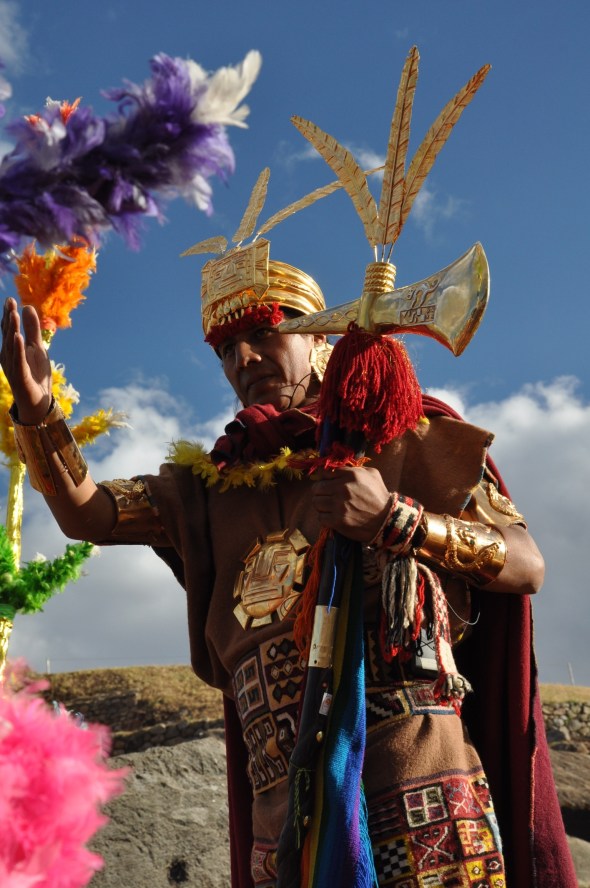
Inti Raymi celebrations take place in Cusco each June
Sacred Valley & Machu Picchu
Machu Picchu, an Inca citadel high in the hills, is Peru’s number one tourist destination. Walking the Inca Trail is the ultimate bucket list activity. If that’s too much like hard work, take the train and overnight in Aguas Calientes. These days you’re unlikely to get the place to yourself but to have a chance of seeing this magnificent UNESCO World Heritage Site before the crowds peak with day-trippers from Cusco is worth a try.
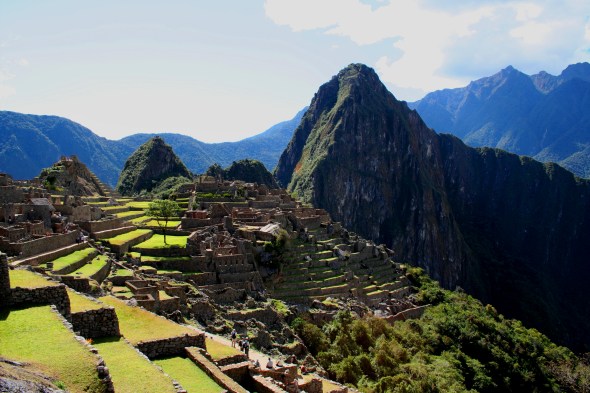
Machu Picchu
The Sacred Valley is packed full of amazing places to visit, among them Ollantaytambo with its imposing ruins, the amphitheatre at Moray, salt pans near Maras, and two great markets at Chinchero and Pisac. For a suggested itinerary, try my Unanchor Kindle guide: http://www.amazon.co.uk/Cusco-Unanchor-Travel-Guide-first-time-ebook/dp/B00RKE5E96.

Salt production near Maras
Arequipa
The White City, built in colonial times from sillar, the local volcanic stone, is the most elegant of Peru’s many wonderful cities. Its Plaza de Armas is dominated by a beautiful cathedral and wandering the old town is a delight. It’s worth heading slightly out of the centre to the mirador at Yanahuara; this lookout offers a good vantage point from which to see Misti. Arequipa’s also the jumping off point for visiting the impressive Colca canyon. Download my Unanchor guide from Amazon to find out more: http://www.amazon.co.uk/Arequipa-Unanchor-Travel-Guide-First-Time-ebook/dp/B00Q2C02NU

The mirador at Yanahuara
Puno
The high altitude at which Puno sits makes walking up its hills hard work, but if you make the effort, the views of Lake Titicaca are worth the lack of breath. One of the most interesting day trips is out to the chullpas at Sillustani, ancient Aymara funerary towers. Another is to the islands on the lake: Taquile and Amantani give visitors an interesting insight into what life is like on the lake while the more touristy Islas Flotantes (the Uros floating islands) are well worth a bounce.

Visiting the Uros Islands
Chachapoyas
Chachapoyas is well off the beaten track, but that doesn’t mean you should give it a miss. Nearby, the ruins of Kuelap are touted as the “new” Machu Picchu, even though they’re considerably older. Also in the area are the peculiar sarcophagi at Karajia, where mummies were placed high in the cliffs, and the lofty Gocta Falls, hidden from the outside world until 2005. Find out more in my earlier post: https://juliamhammond.wordpress.com/2014/11/25/northern-peru-the-chacha-circuit/

Kuelap
Cajamarca
Another northern gem, this is the place where Atahualpa was tricked into paying a huge ransom in gold by the invading Spanish. He was captured and murdered, but you can pay a visit to the Baños del Inca for a soak near his tub. A short ride from the city centre are the Ventanillas de Otuzco, a pre-Inca necropolis. Don’t leave without sampling the region’s yummy cheese.

Cajamarca is worth visiting for the hats alone
Mancora
Hammocks and palm trees dripping with coconuts – are you sure this is Peru? Mancora is a surfer’s resort up near the Ecuadorian border. If you’ve timed your visit to catch the dry season in the south, those cold nights may well have you dreaming of lazing around on a sunny beach as the Pacific waves lap the shore.

Looking out over the Pacific from a Mancora hammock
And even that’s not all. Chan Chan, the largest pre-Columbian city in the Americas and capital of the Chimu kingdom, is another of Peru’s UNESCO World Heritage Sites and the biggest adobe city in the world. One day I’ll fly up to Trujillo and pay a visit. I’ve also not been to Iquitos, the heart of the Peruvian Amazon, but if rainforest’s your thing, then you should plan to go. As for me, I’m not a fan of the humidity or the midges, so I’ll be making a beeline for Huaraz, the base for some of Peru’s best mountain peaks and glacial lakes. But even as I daydream about going back, I’m guessing that even a fifth trip won’t be enough for me to have had my fill of this wonderful country.
When it isn’t OK to post a bad review
Recently I stayed in a hotel very close to Colombo’s airport, the Otha Shy Airport Hotel. The Sri Lankan capital is some distance away, and as I had a late arrival followed by a morning onward flight, I was more focused on location than quality. I took a cursory look at some reviews but didn’t bother with much more. The price was reasonable, it looked clean and I wasn’t going to have to spend an hour in traffic worrying whether I’d miss my flight.
On arrival, at nearly midnight following a delayed flight, the person manning reception was pleasant and efficient. He gave me a complimentary bottle of water and a working WiFi code. The room was spotless and I had a comfortable night’s sleep. I woke reasonably early and half an hour or so later I became aware of some persistent hammering from the floor above. I wasn’t too worried, as I was about to check out anyway.


On check out, the reason became apparent: the ground floor was complete but the first floor was a scaffolding-clad building site. Never mind: the owner was still charm personified and despite his late night, gave me a free lift to the airport about ten minutes up the road.
Curious, I checked the reviews. Most were very positive. Here’s what Trip Advisor has to say: https://www.tripadvisor.co.uk/Hotel_Review-g2550421-d8656795-Reviews-Otha_Shy_Airport_Hotel-Katunayaka_Western_Province.html#review_361396695 and here are the reviews on Booking.com: http://www.booking.com/hotel/lk/otha-shy-airport.en-gb.html#tab-reviews.
The owner was very enthusiastic about his expansion plans and convinced that the building work would be completed this month (April 2016). He was the kind of man you want to root for; he had a dream and was determined to realise it. What’s nice is that the lack of poor reviews means that the people that have stayed there while construction is underway get that. I can’t imagine there being much leeway in his budget, so he’d need bookings for his ground floor rooms despite the noise or disruption. A few bad reviews could scupper his dreams.
I’m not in the habit of destroying someone’s chances to improve themselves. Mr Nalaka, I wish you every success with your business and if I return to Sri Lanka, I’ll be booking my old room.

 Julia's Travels