
Dude ranch vs. working ranch – how do you know what’s best for you?
Yee-ha! There’s still some kind of magic associated with the cowboy lifestyle, isn’t there? I don’t know about you, but seeing a man in chaps astride a horse is enough to get me all of a tizzy. Back home (and I’m not referring to my husband here) men can seem just a little too in touch with their feminine side. Out on the ranch, though, as they gallop off leaving a trail of dust behind them, well, it’s work for real men…

Yep, a ranch holiday is for me. But whether to spend my holiday on a dude ranch or on a working ranch was too difficult a choice – so I booked both. How did they compare?
The activities
Panagea Ranch, located an hour outside Tacuarembó in Uruguay, accepts visitors but expects them to get involved in ranch life. Juan inherited the ranch that his grandfather bought and has an emotional commitment as well as financial to the place which is obvious almost as soon as you arrive.

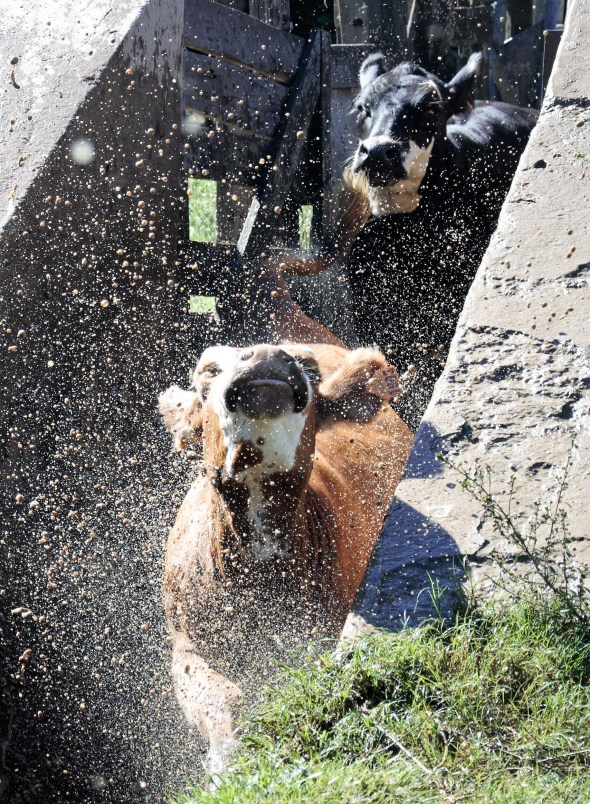
During my stay, getting involved meant riding out to check on the progress of a sick sheep (and finding it incredibly quickly considering there are 1800 of them!), rounding up some of the 1100 head of cattle to move them to new pasture and herding them into the dip so that they could be treated for ticks. It was hard work for a novice rider (though they don’t require any prior riding ability, it helps to have spent at least a bit of time in the saddle) but there was also a huge sense of accomplishment.
In contrast, the Dixie Dude Ranch, on the outskirts of the Cowboy Capital of the World (that’s Bandera, Texas if you didn’t know) offered more of a vacation experience. It has been welcoming visitors since 1937 and offers sedate trail rides, hiking and a huge pool with hot tub. There’s evening entertainment too. On the first night, we were treated to a ride in a hay cart to feed the couple of dozen longhorn cattle that can be found on the ranch.

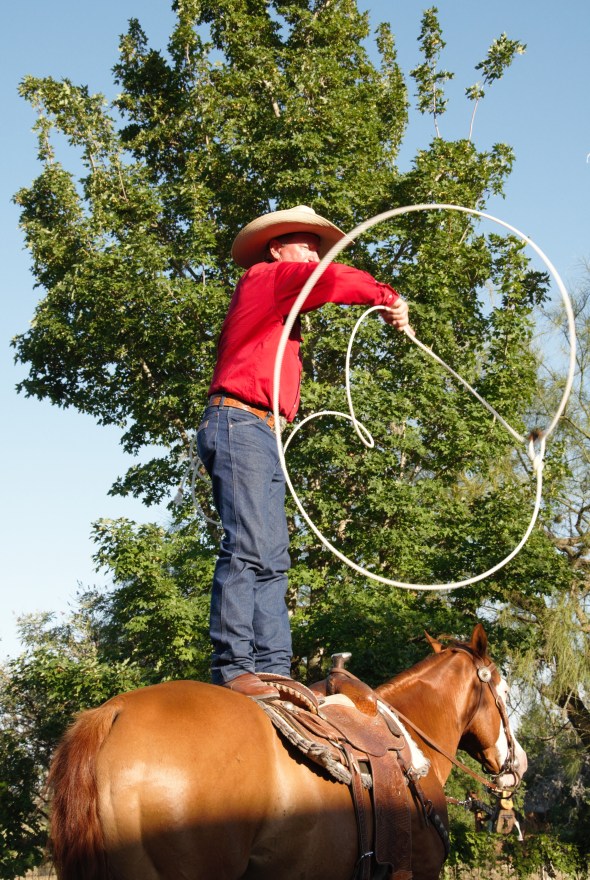
The next, we were treated to a show by a trick roper who was in town for the Bandera rodeo before heading off to Morgan Freeman’s 80th birthday party. Marshmallows were also provided to toast over the campfire. I travelled as part of a group and so we enjoyed relaxing by the fire in the evening – it’s a great place to head with a group of friends, though you may wish to stop off at Walmart on the way in as no alcohol is provided. They’re fine with BYOB.
The staff
In Uruguay, Juan Manuel was a little gruff at first but has a heart of gold and a genuine desire to both learn more about his guests and teach them how his ranch works. The sole female in a group of men on the first night, things were a bit macho at the start, but I did warm to Juan and have a huge respect for what he does. Susana makes you feel like one of the family from the get-go.

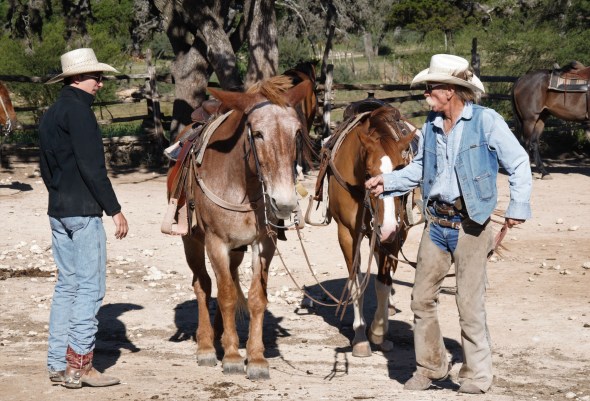
A warm Southern welcome was just what you’d expect from Texas and the staff made you feel like a VIP rather than any old guest. On the rides, at both ranches I felt safe and well looked after. The horses at both ranches were well looked after and their welfare a high priority.
The accommodation
Accommodation provided by Panagea is, by their own admission, fairly basic. Rooms were comfortable but when the ranch is full, single travellers might need to share. The beds were firm and everything spotlessly clean. Hot water is usually available but electricity is only available for a couple of hours each evening. There’s no WiFi. To be honest, I enjoyed that. It made me focus on the outdoors and I slept more soundly as a result. I also thought it was excellent value at US$65 per person per night full board including activities.
Dixie Dude Ranch is more akin to holiday accommodation with a range of chalets for guests and WiFi near the main building (though guests are asked to limit data usage due to restrictions outside the control of the ranch). I stayed in one of the oldest cabins, which was a little more basic than the newer ones. The latter were spacious enough to contain armchairs and even a fireplace. Water is sourced from the property’s well which was temporarily down one morning during our stay; service was resumed rapidly. My only niggle was the noise from the air conditioner which interrupted my sleep! As you’d expect, accommodation in the States is more expensive than in South America. Dixie Dude Ranch charges $165pppn for single occupancy and $145pppn if you share.
The food
Both ranches welcomed guests on a full board basis. At Panagea, Juan’s wife Susana was an incredible cook and the food was in equal parts tasty and plentiful. When Susana’s in town, Juan cooks, and he does a mean barbecue. Dinner is when everyone’s back and the fire’s going; preparing, setting the table and eating is a communal affair with the family. Juan loves to promote Uruguayan wine and will happily toast to that with his guests. In the mornings, everyone helps themselves to what’s there; the wood-fired range was somewhat different to the induction hob at home but a fun challenge to master. The food at Dixie Dude Ranch was good too (though not quite to Susana’s standards) and there was plenty for second helpings. Service there was attentive and sincere.

The verdict
Which ranch stay would I recommend? I enjoyed both of them immensely, but in terms of the experience, it will be Panagea which I’ll more fondly remember. I think it’s probably because I felt a real sense of achievement there. As a novice rider who’s just about mastered a trot, I didn’t have the confidence to think I could help to herd cattle until Juan showed me I could. He is a great fan of making people step outside their comfort zone! Juan claims he can teach even a beginner in just a few days but I was glad I’d had a few lessons back home to learn the basics.
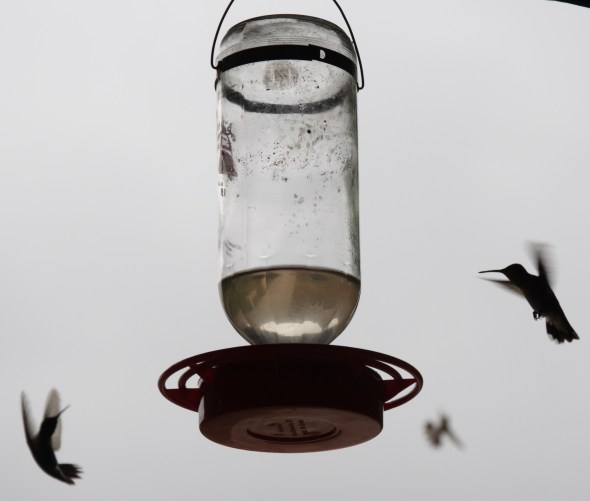
But I think if I’d never been on a horse before, Panagea might have been a bit too ambitious. Being able to mix riding with other activities (such as lazing by the pool or watching the hummingbirds come and go on the front porch) made Dixie Dude Ranch a great choice for a relaxing holiday. But get those riding lessons booked so like me, you can make it to Uruguay one day!
Is Austin weird?
The Texan city of Austin would like to think so. Proud of its alternative culture and buzzing music scene, the city’s slogan is “Keep Austin weird”. The dictionary definition of weird has the word’s meaning as “suggesting something supernatural; unearthly” or more informally “very strange; bizarre”.Compared to America’s many identikit cities, some parts of Austin have an indy feel, but is this enough to warrant the label?
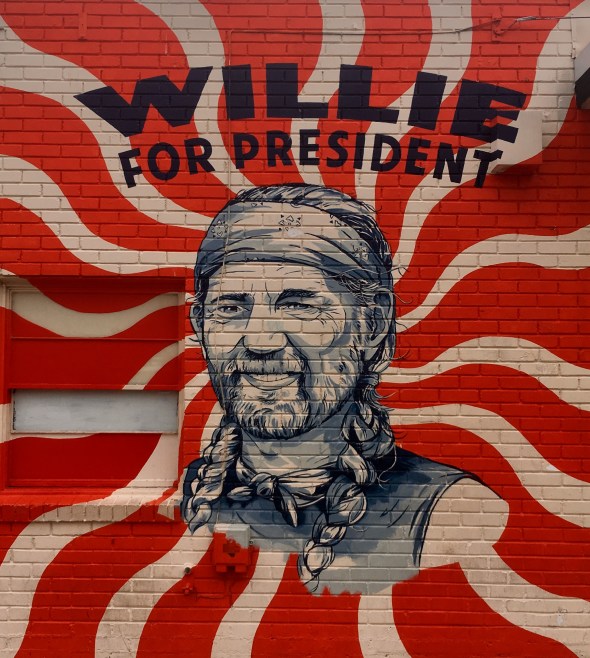
Google “weird Austin” and there’s no end of blogs and e-zine articles trying to justify the term. From watching bats leave their roost under South Congress bridge to playing Chicken Shit Bingo at Ginny’s Little Longhorn Saloon, there are no end of suggestions.
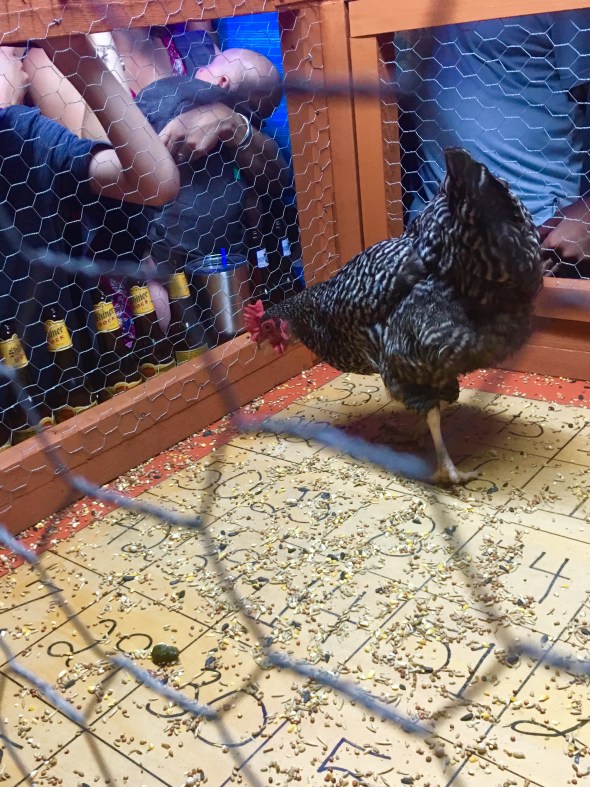
But read a little more carefully and you’ll perhaps find such writers are a little economical with the facts. There are suggestions that drinking a particular cocktail or watching a band play live in a bar is weird. Given that you can do that in any major city, I don’t see how that qualifies as weird.
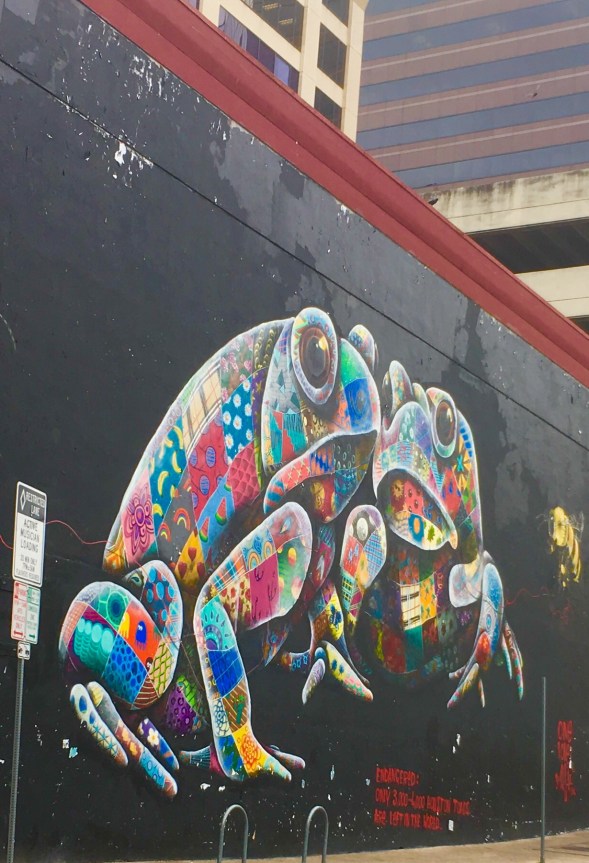
There’s a whole load of street murals which are a common sight in many a city these days and a cathedral of junk – but isn’t that just someone’s interpretation of art? Someone even went so far as to suggest the local propensity for eating tacos qualified the place as weird. Seriously?
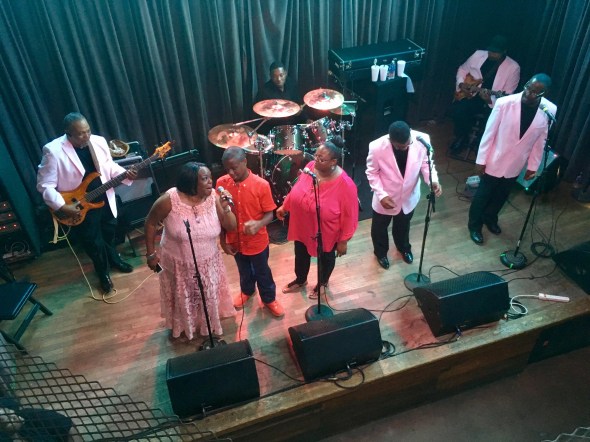
I didn’t take to Austin. In its defence, I was there for the weekend – and Memorial Day weekend at that. Entertainment venues were heaving, the restaurants were packed and added to the mix was a bunch of thunderstorms that brought unusually high humidity for the time of year.

The music was pumping, the bass was thumping. If you’re 21, you’d have loved it, but for this middle-aged traveller, it wasn’t ideal. Ginny’s had a classic car show on its forecourt and was even more rammed than the regulars said it should be. The bats left it so late to come out from their hiding place it was too dark to see them when they did. Disappointing it was, weird it was not.

And I’m not alone. Google “Austin is overrated” and you’ll also find plenty of results. For those of us that like to sightsee as well as socialise, there’s a relatively limited number of sights to see. OK it has the State Capitol, which as you’d expect from Texas is bigger than everyone else’s and impressive inside. There’s a couple of good museums, including the LBJ Library and Museum dedicated to President Lyndon Baines Johnson. The riverfront is pleasant, but nothing to write home about. There’s a certain charm to SoCo, with its quirky shops and the excellent Jo’s for coffee, but it’s bisected by the busy road which gives the district its name.

Amidst the noise, the many panhandlers that were just a stone’s throw from 6th Street and the Saturday night vomit on the pavement, one place stood out. The Broken Spoke had an excellent band, Two Tons of Steel, and a comfortable family vibe.
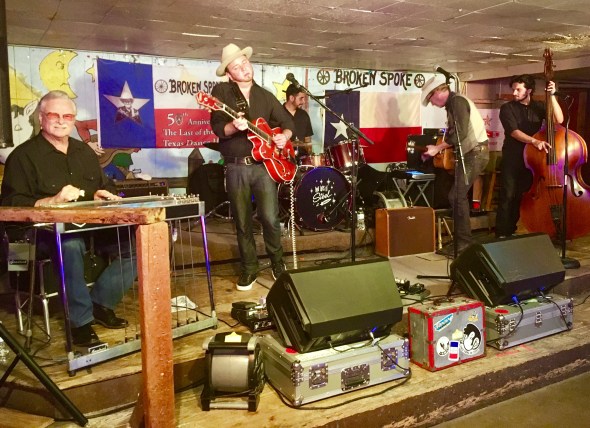
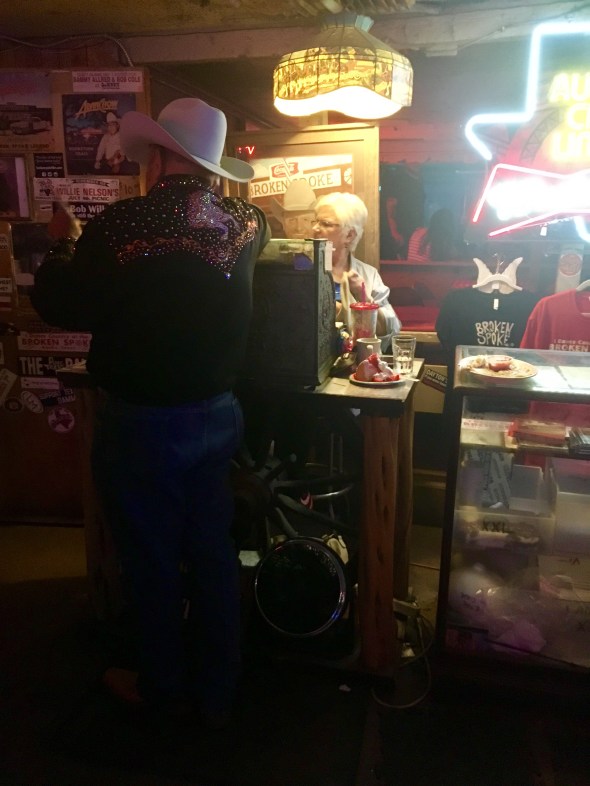
Sure, people were drinking, but there were also granddads dancing with their granddaughters and young couples deep in conversation in between masterful circuits of the dance floor. (Yes, the music wasn’t so loud as to drown out their voices.) My brief Texas Two Step lesson wasn’t sufficient to give me the confidence to join them but it was fun to watch. From the moment we stepped through the door to be greeted by an elderly cowboy in a rhinestone studded shirt, we were welcomed. By the time the charming Ben Rogers doffed his Stetson and took a break from propping up the bar to call us a cab home, we were made to feel like we came every weekend.
You see, what made Austin special was its residents. It’s that Southern hospitality thing kicking in again. In every venue and on every street corner, locals were keen to share their city. You don’t need a guidebook in Austin, you just need to hang around and chat. There’ll be no end of people to talk to.
We were given recommendations for places to eat, drink and shop without soliciting for information. What’s more, they turned out to be good. I’d have not known about the Iced Turbo coffee at Jo’s in SoCo if the friendly gent at the lights hadn’t passed the time of day, nor would I have found Easy Tiger, its yummy bratwurst a welcome change from the ubiquitous (but tasty) Mexican fare.
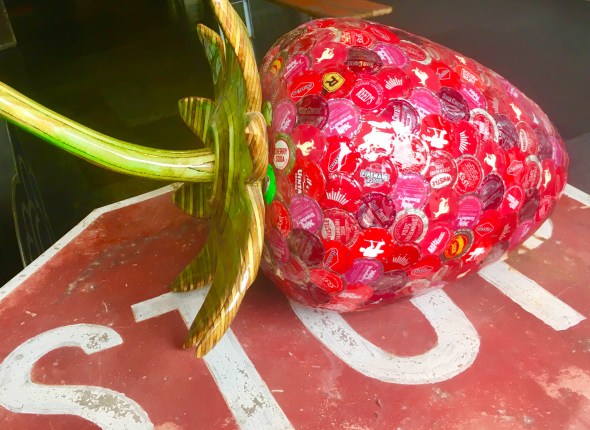
So, no, Austin’s not weird, no matter how much it would like to be, and as a tourist destination it’s a little dull, but its welcome is possibly the best you’ll get in the Lone Star state.
The Great Storm, Galveston
“I should as soon think of founding a city on an iceberg as on Galveston Island, if I looked to its safety and perpetuity.”
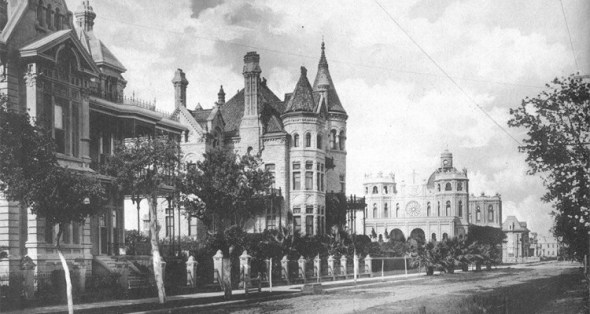
Before the deadliest storm in US history left low-lying Galveston flattened and in shock, it was a prosperous town. Forty thousand people called it home and a steady stream of cotton steamers created a reliable source of income. The town was littered with mansions, symbolic of the immense wealth being accumulated here; before the storm there were 26 millionaires living within a five block radius. Trolleys carried those too lazy, rich or old to walk about town. At the end of the 19th century, it was the most important seaport in the USA and it seemed nothing could hold it back.

Except the weather had other ideas. After a calm, sunny week, as evening turned into the night of Friday 7th September 1900 the winds began to pick up. Rain lashed the two-storey homes that lined the Strand and weather observers looked on anxiously. Forecasting was in its infancy in those days, but even then the rudimentary instruments told a frightening story. Wind speeds were increasing, reaching 100mph that night, before the equipment blew away. Some meteorologists think the wind speeds could have reached as much as 145mph at their peak. The barometric pressure was the lowest ever recorded up to that point in US history.
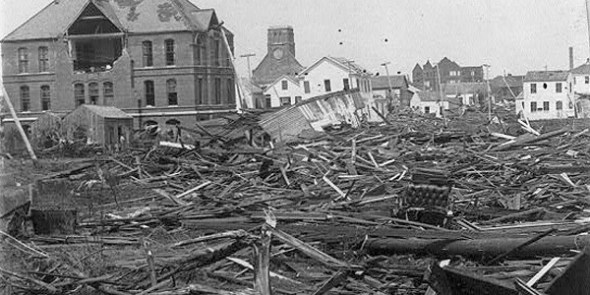
By 4am, the sea had surged inland, flooding the town’s streets. A four and a half metre storm surge was more than the island could cope with, the highest ground being being little more than half that. The heavy swell continued to be a concern as day broke. By noon, much of the island was underwater, but there was worse to come. Strengthening winds battered the feeble housing. Debris flew around in the wind acting as missiles against any building still standing.
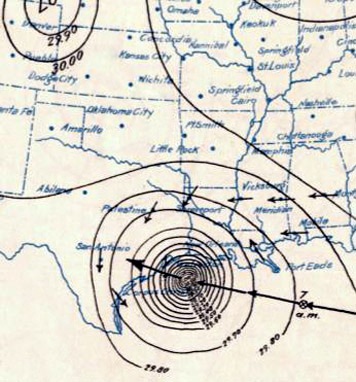
One observer was sheltering in a house that had withstood such an attack for several hours. He noted that a man trying to reach that same home had his faced sliced clean off by a flying roof slate. It must have been a terrifying time for those who were to become the survivors, that thud of wave-driven timbers on the walls like a mediaeval battering ram on a wooden castle door.

At least 6000 would never know such lasting fear. Whole families were wiped out, making a confirmed death toll impossible to ascertain, but it’s generally agreed that the figure is a conservative estimate of the final death toll. As Sunday morning dawned, the skies had cleared and the storm had passed. What was left was unrecognisable. Much of the island was completely flattened, the powerful waves scouring the landscape and leaving it in places as pristine as when the first settlers had laid out their street plan. A few blocks further along, huge mounds of debris concealed the bodies of the dead. Here and there, properties listed at angles more commonly associated with earthquake damage; a few had been turned completely upside down. From 9th Street east towards the beach, block after block no longer existed.
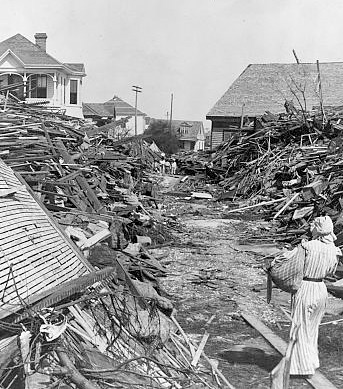
The human cost was appalling. 5000 families were left destitute; it would be days before word reached the Red Cross in Washington and the much-needed aid would arrive. Marshal law was instigated in an attempt to stave off looting. Pilferers were shot. Those in authority also had to deal with the tricky question of burying the dead. With no time in the heat and humidity to dig sufficient graves, rocks were attached to bodies and they were buried at sea. The water that had killed them would be their final resting place.

Yet the sea had other ideas, washing bloated and putrid corpses up on the shore day after day. A decision was taken to burn the bodies. Those enduring such a horrendous task were paid in whiskey until they threw up from the disgusting stench. It was a job no one wanted but someone had to do. The risk of disease for the survivors was just too high a price to pay to leave the bodies to rot. As the impact of the disaster sank in, page after page of the newspaper was filled with the names of those who had perished.
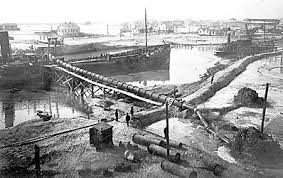
But the survivors stayed to resurrect their city. In 1902 a solid sea wall was proposed and within two years the designs had become a reality. Together with the wall, a regrading of the roads was undertaken, raising the level of the streets. 3000 houses would be lifted and sand dredged from the a Gulf of Mexico pumped underneath them so the buildings would sit three metres higher, above the danger level. In future, any incoming wave would be weakened by the increased gradient. The cost of this ambitious engineering project was a staggeringly high $6 million. By 1905, Galveston was ready to take on the elements once more. It didn’t have to wait long. In 1915, a hurricane hit, similar in magnitude to the Great Storm of 1900. The city’s residents held their breath. Would their defences hold?
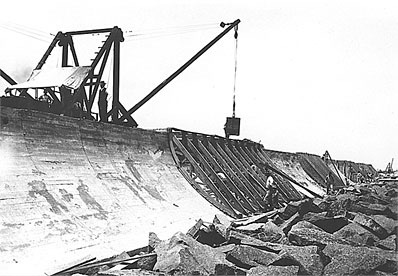
They would: just eight people died. Galveston had a future, though it would never regain its pre-storm commercial status.
What you need to know about the US laptop ban
Much has been written in the press over the past week on the subject of a ban on larger electronics items entering the United States with airline passengers. Following on from the March policy shift in which inbound flights from certain Middle Eastern and North African destinations, there’s speculation that such a policy could be extended to European destinations.
What’s the current situation?
At present, passengers travelling to the US from ten airports are affected: Queen Alia International Airport (AMM), Cairo International Airport (CAI), Ataturk International Airport (IST), King Abdul-Aziz International Airport (JED), King Khalid International Airport (RUH), Kuwait International Airport (KWI), Mohammed V Airport (CMN), Hamad International Airport (DOH), Dubai International Airport (DXB) and Abu Dhabi International Airport (AUH).

Large electronics items, including laptops but also larger cameras like DSLRs and tablets such as the iPad, must be carried in the hold and cannot be taken on board the flight. How airlines are implementing this varies, but some are offering gate check in and secure packaging in the form of bubble wrap and cardboard boxes. This policy doesn’t extend to the return leg; flights departing the US for these ten airports are not subject to the same restrictions.
So why are people getting upset? Surely they can do without their gadgets for a few hours?
As talk grows about an extension to the ban, so too do certain worrying facts emerge. Many of these larger items are powered by lithium ion batteries, which up to now have been banned from the hold for safety reasons. They carry a risk of catching fire, something that could have disastrous consequences if unnoticed. The FAA itself stated its concerns in 2016:
There’s more here, from The Independent:
There’s also the issue of sensitive data on company laptops and directives from some businesses to their employees requiring them to keep such equipment on their person whilst travelling. For the regular tourist, it’s more a case of a lack of insurance. I might just about be able to cope without my iPad on a long flight if I went back to those old fashioned paperback things I used to lug around, but if the airline then loses my suitcase, my travel insurance policy won’t pay out. I really can’t afford to replace my DSLR if the lens gets smashed in transit. So, with a flight to Houston looming on Friday, I’ve been watching the TSA website and Twitter like a stalker.
So have they made a decision yet?
There were some misleading headlines last week, like this one in NYMag following a piece in The Daily Beast:
http://nymag.com/selectall/2017/05/laptops-banned-in-plane-cabin-on-flights-from-europe-to-u-s.html
Retweeted and quoted to within an inch of its life, The Daily Beast’s article, claiming an announcement would be made Thursday 11 May, sparked an angry reaction. In part, there was a touch of indignation along the lines of European nations being way too civilised to be lumped together with the Middle East.
But amidst all the fuss, some serious issues for the Americans began to be raised, not least the impact that it would have to the US economy and its tourism sector. This article from The Independent explains:
Yes, you read that right: 1 in 3 potential foreign tourists would think twice about going if this policy becomes a reality. I’m among them. I’d be seriously concerned about that fire risk, especially on such a long flight.
Here’s a follow up article, also from The Independent:
I’m hoping, as we get closer to my departure date, that even if the electronics ban is widened, the changes won’t take effect until after I’m there. Getting my valuables back to Blighty in one piece will be, as it has always been, down to me. But after that, much as it pains me to say given my love of the USA, I’d have to give it a miss, at least until the TSA came to its senses once more. It was reported that the TSA met with representatives of the US’ major airlines last Friday to see how a ban could be implemented; sources indicate that further meetings were to be held with EU personnel today. At the time of writing, there’s been no announcement.
Watch this space.
Update 18.5.17
Well as it turned out we didn’t have to wait too long for an update. Common sense has prevailed and the EU have persuaded the US authorities that widening the ban on larger electronics would be foolish:
http://www.bbc.co.uk/news/world-europe-39956968
The ban still exists for the ten Middle Eastern and North African airports, so think about your safety before you opt to fly. Happy travels!
Just back from: a day in Ibiza
This, perhaps, wasn’t going to be one of my usual days out. A few days before I was due to fly – out of Stansted at 7am on a Tuesday – an email arrived from Ryanair announcing certain restrictions on the flight.

Amongst other words of caution, it said:
• Customers will not be allowed to carry alcohol on board and all cabin baggage will be searched at the boarding gates.
• Boarding gates will be carefully monitored and customers showing any signs of anti-social behavior or attempting to conceal alcohol will be denied travel without refund or compensation.
For a moment I wondered what I had let myself in for. In the event, though we did have a stag party on board, they were very well behaved and remarkably quiet. The plane was too, empty seats an indication that some of our passengers had fallen victim to one of Stansted’s worst mornings for queues at security I’d ever seen. I’d made the flight in good time and jetted off on time to the hippy isle with a row of three seats to myself.

Arriving slightly ahead of schedule, I picked up a hire car and set off on an itinerary I’d found on the Ibiza Spotlight website. As my main focus of the day was to be a trial of a Sunwise kaftan, I’d originally planned to hole up at one of Ibiza’s stylish beach clubs and chill out all day. In the event, my geographer’s curiosity got in the way and I just couldn’t resist the chance to go exploring, especially up in the north of the island where the agricultural landscape was more verdant and prettier than the south. That said, I needed to be in the sun, so there were going to be plenty of stops.

The first was supposed to be in Santa Eulària des Riu, Ibiza’s third largest resort. Incidentally, road signs are in Catalan, though my map was in Spanish, with this particular resort being Santa Eulalia – mostly the names were similar enough for this not to be confusing. I’d read about an excellent ice cream parlour called Mirreti’s. Reaching the town, I decided it just wasn’t my kind of place: too busy and lacking charm. I drove straight through, headed for Sant Carles de Peralta.

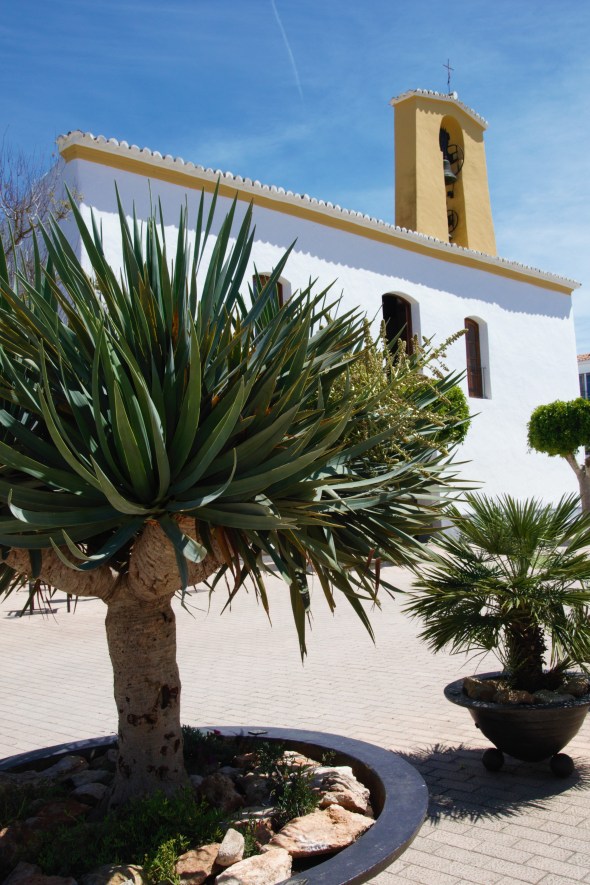
This small village, dominated by a delightful whitewashed church, was the perfect spot for a stroll in the sunshine. There wasn’t much to see, but I’d been tipped off about a cafe called Bar Anita across the road. I spent a pleasant half an hour sipping a cold drink in the warm sunshine, watching the world go by.

Onwards and northwards, as the hire car wound its way around the back lanes following the Cala de Sant Vicenç coast road for a few kilometres before ducking inland across the Serra de la Mala Costa. Turning north at Sant Joan de Labritja, I snaked across country on a tiny lane which led to the resort of Portinatx on the island’s rugged north coast. Smaller than Santa Eulària des Riu but nevertheless a resort, it was more my scene and I had a wander to explore.

Back in the car, I drove back to Sant Joan, this time via the main road and on to my next stop, another village dominated by a magnificent church, Sant Miquel de Balansat. Sited on top of the hill, this whitewashed church is impossible to miss. It’s the second oldest on the island, after the cathedral and like the one in Sant Carles, had three crosses on the front wall, something you’ll see on all the churches on the island, the symbol of Golgotha. The painted chapel walls are very special. This bronze sculpture outside also caught my eye.

But by now, I was getting hungry and so drove the few kilometres to Santa Gertrudis de Fruitera. This was my favourite of all the villages I stopped at, and I feasted on jamon serrano and queso manchego in the sunshine, choosing a spot opposite the church.

Somehow the village managed to hang onto its character despite its popularity with day trippers. I had time to browse in a few boutiques before they closed for a siesta and I hit the road again.
This part of Ibiza is greener than the scrubby south and I drove across the countryside towards Santa Agnès de Corona, known as Santa Ines in Spanish. I passed olive groves, almond trees and orange trees laden with fruit. Ruined windmills completed the agricultural scene.

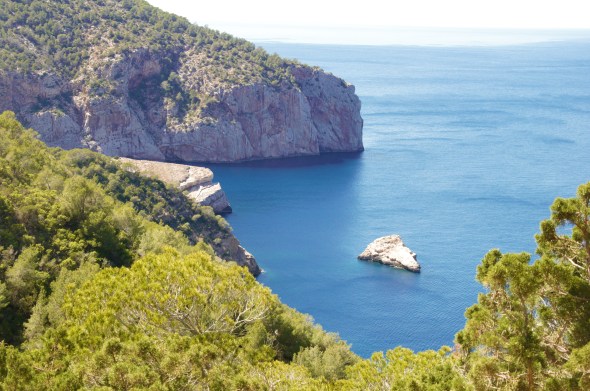
The road layout here forms a circle, so it as it was such a fine day, I decided to backtrack a bit and go for a short hike. My target was the hidden fishermen’s cove of Es Portitxol, said to be one of the prettiest spots on the island.
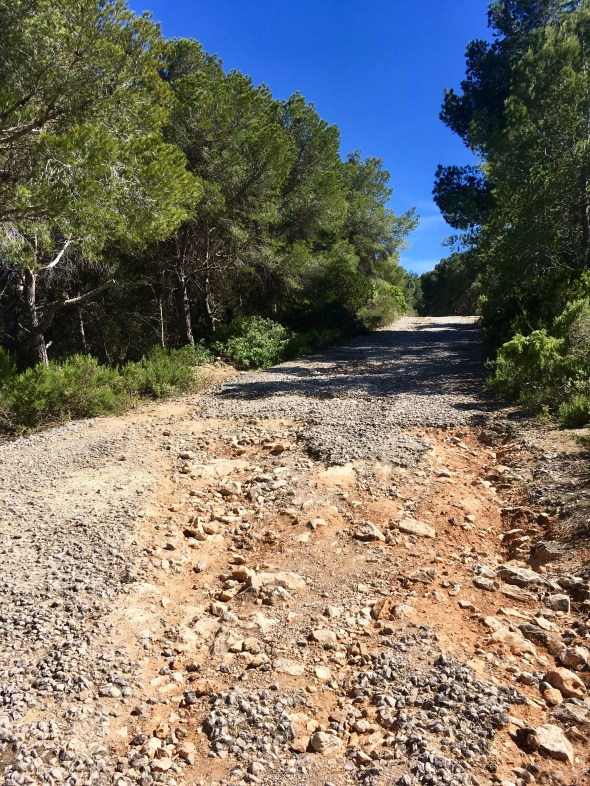
The road was in pretty poor shape, so I parked up and picked my way down the lane on foot. When I saw poor shape, it looked like a digger had gone rogue and there were great rifts gouged out of the stones. I wished at that point I’d had on walking boots rather than sandals, as it was hard going. The path did level out for a while and led through a shady forest; alongside were sweeping views over the ocean and towards the cove. Improperly clad, I decided to bail before I ripped my sandal straps, but had I continued, I’d have been rewarded with one of Ibiza’s hidden gems. Ah, next time.
It was time to head into Eivissa, the island’s capital. I’d seen the cathedral and fortifications of its Dalt Vila or old town as I’d passed earlier, and now it was time to explore on foot. Luck was on my side when it came to finding a parking space; yellow spaces reserved for workers become free for anyone who finds them empty after 4pm.

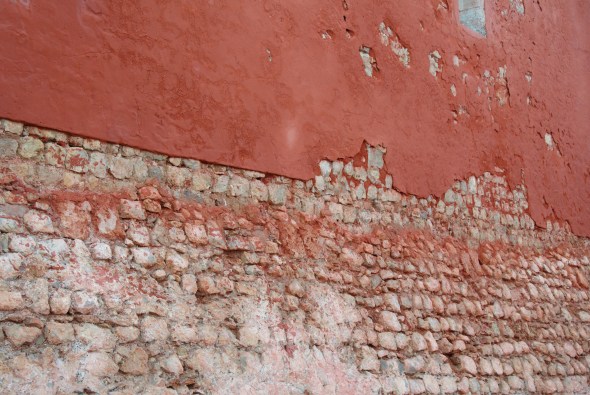
For anyone whose experience of Ibiza is solely the lively mass tourism resorts and club scene, Dalt Vila is the very antithesis: elegant, ancient and impressive. The thick wall and fortifications once protected Eivissa from marauding pirates; now they provide lofty vantage points from which you can admire the Mediterranean and watch the fishing boats bring their catch in, trailing clouds of seagulls in their wake. This defensive settlement dates from the 7th century BC when the Phoenicians founded the city, though the walls themselves are even older.

Today, Dalt Vila is threaded with alleyways and tunnels which, unsigned, invite you to partake of a lucky dip; when you step through the doorway, you might have no idea where you’ll emerge. I popped up in the Plaça d’Espanya for a time. One of the tunnels here was a Civil War refuge; Ibiza was Republican for a time before Franco stepped up his campaign and occupied the island, forcing the Republicans to flee.

In the Plaça d’Espanya traders were setting up a mediaeval fayre which should, according to the road signs, have opened three hours earlier but looked like it was still a while off. From there, I climbed a little further to the cathedral, its fussy architectural details contrasting with the simplicity of the whitewashed churches I’d seen in the villages.

Overlooking the marina, it was a good place to perch on a wall and soak up both the sun and the view. Refreshed, I wandered the streets of the old town for a while before ducking randomly into a tunnel and emerging some considerable way beneath them. I took it as a sign and headed back to the airport.
The details
Outbound: Ryanair STN to IBZ departing 0700 with a scheduled arrival time of 1040 (we were about 20 minutes early)
Inbound: Ryanair IBZ to STN departing 2140 and arriving at 2320 (also early)
Flights available from £19.99 each way.
Car hire with Alamo purchased through the Ryanair website was a little over £30 for the day; airport buses into Eivissa cost 3,50 euros each way.
Have you seen my other blogs on days out by plane? They’re perfect if you are desperate to travel but can’t get the time off you need for a longer trip. You’ll be surprised at how much you can do in a single day. For how to visit Amsterdam, Belfast, Bremen, Budapest, Lisbon, Regensburg and Copenhagen for the day from London, please follow this link:
http://juliahammond.co.uk/Travel/BLOG.html
Product test: Sunwise UVA clothing
It was August 2004. I was in Bali and I’d heard about a celebration known as Kuningan. This ceremony was held to mark the end of Galungan, a holiday similar to our New Year. Devotees dress in white with red sashes and bring offerings for their ancestors who are returning to heaven after spending time on earth for the Galungan festivities. They bring yellow rice, fish and fruit, placed in bowls made from leaves. The rice symbolises their gratitude to God for the blessings he has bestowed and the bowls are adorned with little figures representing angels which bring happiness and prosperity. It promised to be an incredible sight, so I made my way to the temple near Candidasa on Bali’s eastern coast.


Arriving, I wasn’t alone. In front of me was a sea of white, a crowd of people thronging the space between me and the temple entrance. Resigned to a long wait, I found a place in a queue of sorts and waited. It was late morning. The sun was already high in the sky and packing a powerful tropical punch. I wasn’t unduly worried. I’d put on some sun cream and had chosen what I thought to be a sensible outfit – a long sleeved cotton blouse. Time passed slowly and my shoulders began to redden. I applied more cream to the visible parts and thought no more of it. Eventually, I entered the temple and observed the prayers and rituals. It was a fascinating scene.
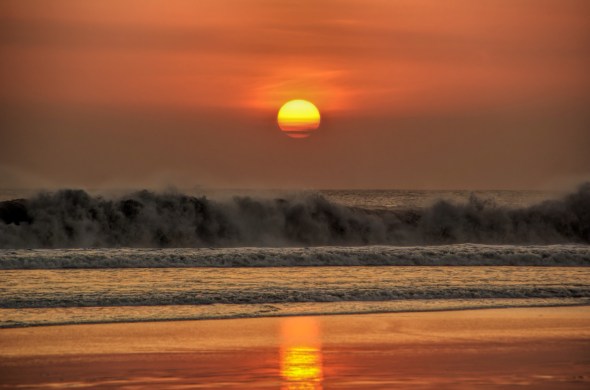
Later on, returning to the hotel, I realised the thin cotton blouse I’d worn was no match for the midday sun and my skin had not only reddened, it had blistered badly. I spent the rest of the holiday in the shade, cursing how ill-prepared I’d been. I’ve never been as casual about the sun since. Several of my friends have had skin cancer, and that’s not something I wish to emulate. According to statistics compiled for Cancer Research UK, there are over 15,000 new cases of melanoma skin cancer each year. While many are treatable, some, sadly are not. Realistically, with the amount of travelling I do and how fair my skin is, I need to be proactive about the precautions I take. Sun cream alone isn’t enough of a solution. Yet there are many tropical places in the world that I still want to visit. I don’t want to find myself in a position where I’ve got to stay out of the sun completely and miss out on the chance of seeing them.
But here’s the rub. I’ve never found much in the way of UVA resistant clothing that I thought I’d actually like to wear. The thought of putting on one of those clingy long sleeved surfer shirts in soaring temperatures and high humidity just doesn’t appeal. Nor do I find the functionality of the standard traveller clothing appealing; it just doesn’t feel like I’m on holiday if I’m wearing a collared shirt. So up until now, I’ve slapped on the sun cream (ruining many a white blouse in the process with those impossible to remove stains) and hoped for the best.
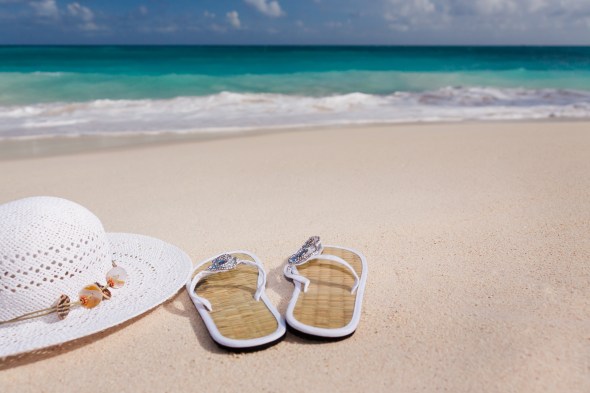
I’m not ready to give up my view of a tropical beach just yet. So when a friend offered to let me trial a UVA resistant kaftan, I jumped at the chance. Finally, something that would prevent a repeat of my Balinese burns. Its first outing was to Ibiza. In May, the temperatures are in the mid-twenties, perfect for a trial in conditions similar to a good British summer. Here’s how I got on.
Style 8/10

I just loved the colours in this. Blue always feels so summery and the mix of the palette works well as a pattern and means that it goes with a wider range of bottom halves. The longer length style, sitting flatteringly mid-thigh, meant this kaftan hid both generous hips and a tummy that likes to eat. I’m not usually a fan of the tie waist, as I do sometimes think such styles make me feel like a trussed turkey, but actually it too was attractive. I found that in a bow it did have a tendency to undo itself, but in a loose knot it looked just as good. The batwing sleeves hung to my elbow, giving it a pretty waterfall silhouette. The round neck, though high, was loose enough to be comfortable. In my selfies, though, it looks a little too high, reminding me of a hairdresser’s gown. In real life, this isn’t the case, as the length of the garment more than balances this out and obviously if you have someone else taking your holiday photos you’ll get a better image.
Comfort 9/10
I trialled this in a number of situations. As I was on the move, it’s yet to sit round a pool (watch out for an update later this month when it comes with me to hotter Texas). When I first looked at the label, I was a little concerned to see that it was made of 100% polyester, usually favouring cotton and linen for high temperatures. It was so lightweight though, that I never felt hot and sticky; it didn’t cling and hung beautifully. The versatility of this style means that it’s as at home in a cafe as it is on the beach, sophisticated enough for the city yet casual enough to wear poolside. I even went for a short hike in it. The floatiness of the fabric meant it didn’t ride up or become too rucked up around the legs. My only criticism is that with half-sleeves the lower parts of your arms are exposed. I’d love to see that the range is widened to include a long sleeve tunic blouse in the same colourway and fabric.


I’m not alone in praising its versatility. Fellow tester Kate had this to say when she packed it for a Med cruise:
“In Rome today and melting. The kaftan is absolutely brilliant. I don’t need cream under it and there’s been no burning at all. I feel posh too! Ingenious.”
Kate’s a skin cancer survivor and adds:
“It gave me so much confidence, took away the worry I have when I see the sun is shining! I could sit on a beach and look like everyone else in a glamorous floaty cover up, yet I knew my skin was being protected.”
Value for money 10/10
This item is new for 2017 and the retail price has yet to be finalised. I’m assured that it should be in the region of £25 to £30. At this price bracket, that’s excellent value for money in my opinion. The kaftan is well made and you’re getting a quality product. With little competition in the UK market, it’s hard to find a comparison, but similar clothing from high-end retailers can go for up to £100, making this a bargain.
Function 10/10
Let’s get real for a minute: the main reason you’re going to be looking at the Sunwise UVA product range is to buy clothing that is going to protect you from the sun. So did it do its job? I spent the day in and out of the sun, and even when my lower arms were reddening at my sunny cafe table over lunch, the parts covered by the kaftan were well protected. I’ve covered the lack of wrist-length sleeves in the style score, so for me this garment’s ability to protect me from sunburn in temperatures of around 25°C was first rate. If that changes when I up the temperatures a bit, I’ll edit this section to reflect its capabilities.
The verdict
Would I buy it? Yes, absolutely, and another one too if further colourways were to become available. It’s not something I’d have considered before, but I’m a convert.
Where to find it:
Sunwise UVA is a recent start up and would value your custom as well as your comments. Their current range can be viewed online at:
They’re also on Facebook: look for Sunwise. UVA clothing
Should tourist numbers be capped?
The authorities in Venice have recently announced that they will be introducing a series of measures to limit visitor numbers. Amongst other things, Venice’s city council plan to issue tickets for St Mark’s Square and leaflet tourists to encourage them to head to less-visited parts of the city. Supporters of the plan claim it’s necessary to protect a city that’s already on UNESCO’s endangered list; critics respond vehemently that a city should be open to all. Where do I stand? Somewhere in the middle, if I’m honest.
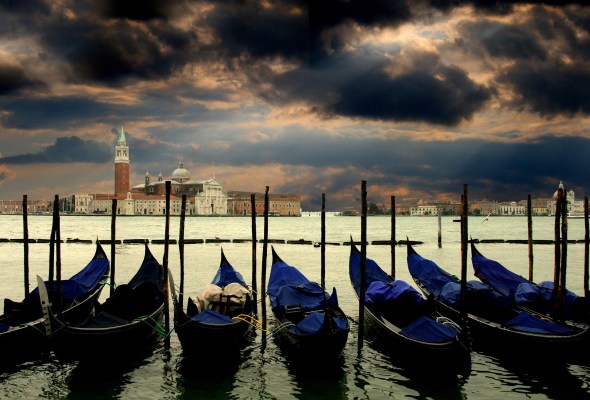
A storm is brewing over tourists’ right to roam
The more mobile the world’s population gets, the busier tourist honeypots are getting, and our visitor experience is suffering as a result. Travelling to many European cities in the middle of August can be more of a chore than a pleasure. I had to visit the Swiss city of Interlaken in August a couple of years ago and the sheer number of people competing for space was dangerously close to what the infrastructure could cope with. Added to that was a liberal scattering of selfie sticks, overflowing rubbish bins and a bunch of people whose disdain for queuing manifested itself in elbowing and shoving. It was about as far from tranquil as you could get, and certainly not what you’d imagine if you pictured a trip to the Swiss Alps in your head.
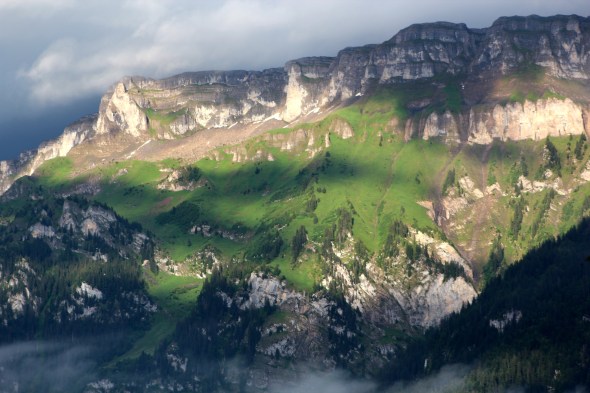
Getting close to views like this can test your sanity
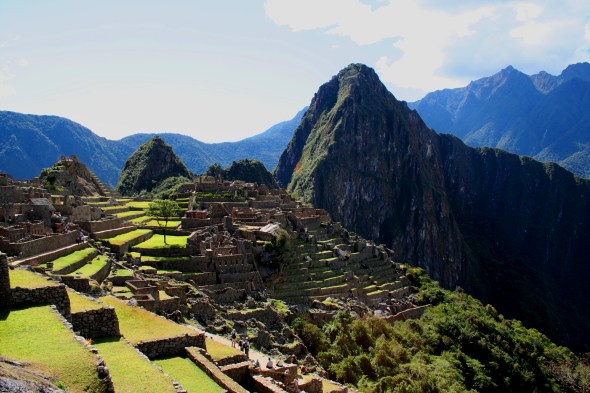
Over time, however, tourist numbers can increase so rapidly that not taking action can jeopardise not only the visitor experience but the site itself. When I first visited Machu Picchu in 1995, I remember wandering with a friend amongst the ruins with hardly another soul there. Memories can be a little rose-tinted; statistics put the annual figure in those days at about 250,000, averaging out at a little under 700 a day. By the time I returned in 2006, the site felt busy and the prices hiked in what proved to be an ineffectual attempt to limit the number of people. Statistics estimate visitor numbers to have reached about 700,000 per annum by that point.
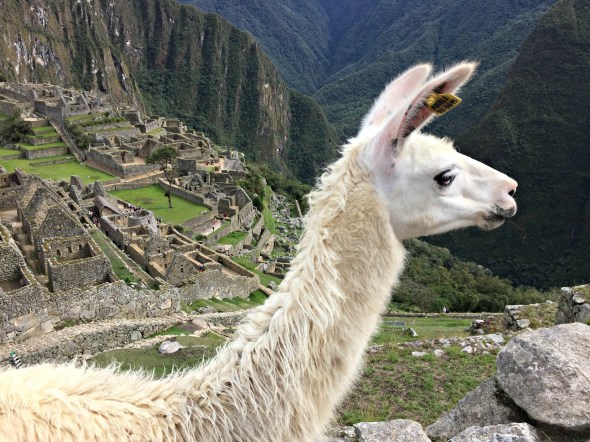
Once the only thing photobombing your shot would have been a llama
By 2014, an estimated 1.2 million tourists came, around 300,000 in excess of limits agreed between UNESCO and the Peruvian authorities. Erosion of paths and stones, waste disposal issues and the risk of landslides are, still, very real threats. The diesel-spewing fleet of buses might have been replaced by newer models and the threat to build a cable car that could well have sent the whole ruins tumbling down the mountain seen off, but Machu Picchu isn’t out of danger yet.

Visiting Machu Picchu is now a very different experience
There are plans to introduce compulsory guides, expect tourists to follow set routes through the ruins and limit time at the site to prevent Machu Picchu collapsing under the strain. I can’t face returning a third time under such conditions, but if I’d never been, I guess it would be better to accept these strategies than to miss out completely. I feel lucky that I got to visit many of the world’s iconic sights ahead of the crowd yet at the same time saddened that the way I experienced them is, by necessity, a thing of the past.
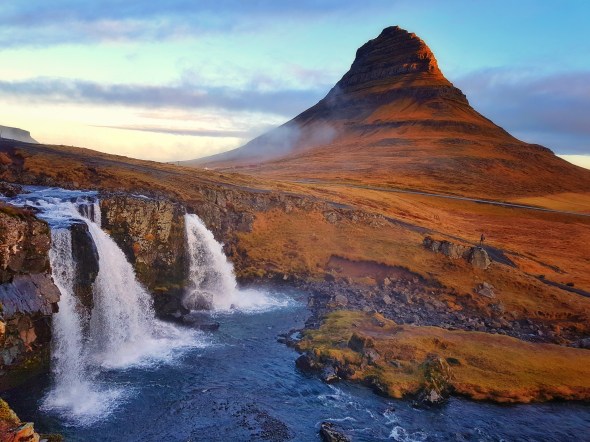
Even off season, Iceland’s wild views are coming under pressure
A whole raft of amazing places have implemented, or are planning to, measures to limit the impact of tourism. Whether following the Bhutanese model of insisting on a minimum spend of $200-$250 via a compulsory daily package, limiting numbers arriving by cruise ship à la Santorini and Antarctica or regulating hotel beds and the likes of Airbnb as is being considered by Iceland, the goal is the same: to find a limit which works for the environment and people. If your next bucket list destination is nearing breaking point, you’d better get organised (or rich) so you don’t miss out.
Flight news: Honduras
While parts of Central America have been blessed with direct flights from Europe for some time, others have been a bit more disconnected. Honduras is one of those places. But now, with the launch of a weekly flight from Spain, it’s possible to get there a little quicker. When I visited Honduras a few years ago, getting there involved an overnight layover in Houston, adding both considerable time and expense to the journey. Air Europa’s flight from Madrid at first might appear to be less than ideal, arriving shortly before 5am in what was once the world’s worst hotspot for murders. (San Pedro Sula has now passed the Murder Capital of the World crown to the Venezuelan capital Caracas.) But this late departure means that a connecting ticket from the UK is possible and you no longer have to lose a day of your holiday just to get there.

Honduras might not be the first place that springs to mind if you’re looking to holiday in that region, especially in terms of safety. But it’s easy to get straight out of San Pedro Sula and the early arrival means you’ll have plenty of time to reach somewhere both safer and more beautiful well before nightfall. Copan Ruinas is one such place. I spent a pleasant time there in 2014, riding horses out to the Guatemalan border, drinking the excellent locally-grown coffee and exploring some of the least crowded Mayan ruins in the region. Visitors were outnumbered by scarlet macaws by some considerable margin.

While I’d still be loathe to recommend spending any more of your time in San Pedro Sula than is absolutely necessary, the country’s Caribbean coast is as laid back as they come. It’s well worth risking the journey back to San Pedro Sula’s airport after your Copan Ruinas sojourn to make the short hop to Roatan Island. It’s the perfect place to unwind in the sunshine, sink your toes in the sand and sip a cocktail or two.

When are we going?
Five favourite travel books: Asia and the Middle East
I’m not Asia’s greatest fan. Though you’ll find some of the world’s most fascinating natural and cultural sights, I find it irritating that they’re buried amidst jumbles of telephone wires and that reaching them often involves darting out in front of more motorbikes than it should ever be possible to encounter on one road. Nevertheless, I enjoy reading about the place, when I can filter out the bits that I don’t like to be left with a vibrant and enticing locale. There are exceptions, however, and one is most definitely Sri Lanka. I visited last year and cannot wait to return.
The Tea Planter’s Wife by Dinah Jeffries

It’s perhaps no surprise, therefore, to learn that one of my choices is a work of fiction. The story is enthralling but most of all, it captures the essence of the country in which it’s set. Here’s one of my favourite descriptions from the book:
“She took a deep breath of what she’d expected would be salty air, and marvelled at the scent of something stronger than salt.
“What is that?” she said as she turned to look at the man, who, she rightly sensed, had not shifted from the spot.
He paused and sniffed deeply. “Cinnamon and probably sandalwood.”
“There’s something sweet.”
“Jasmine flowers. There are many flowers in Ceylon.”
“How lovely,” she said. But even then, she knew it was more than that. Beneath the seductive scent there was an undercurrent of something sour.
“Bad drains too, I’m afraid.”
She nodded. Perhaps that was it.”
For some reason, though this scene takes place in Colombo, it feels to me like it should be set in Galle Fort. Quite possibly that’s because I grabbed the first train out of Colombo to head for the hill country and quite possibly because Galle Fort oozes history, spice and sewage from every cobblestoned street.
Hokkaido Highway Blues by Will Ferguson

My next choice focuses on an Asian country I also love: Japan. Travelling through Japan ought to have been a challenge, what with the different alphabet and all, but the Japanese go out of their way to make sure they can understand you, even if the conversation can get a little stilted. Here’s the author on the art of Japanese conversation:
“This was conversation by Non Sequitur and I was thoroughly familiar with it by now. The trick was to answer with equally arbitrary statements, until you sound like a couple of spies conversing in code.
“Yes, I can eat Japanese food. Baltimore is very big.”
“How long will you stay in Japan?”
“Until tomorrow, forever. It is very cold in Baltimore.”
He shook my hand. We smiled warmly at each other, clearly this was an International Moment.”
Fortunately, when I reached Kyushu, the lady in the tourist office at Yanagawa defaulted to technology when she realised our language abilities were sorely lacking. Video conferencing with a disembodied head on her computer, I was able to secure a map and a recommendation for lunch. The head seemed very disappointed that I had no further questions and I felt guilty as I thanked it and headed off.
Three Moons in Vietnam by Maria Coffey

Years ago, I found myself sleeping in Michael Caine’s bed. He wasn’t in it, of course – of course! – but he had stayed in that same room and slept in that same bed while filming The Quiet American. The bed was located in Hoi An, in an old Chinese chophouse that had been converted into a guest house. Despite that it heaves with tourists (more so now, I understand, than when I was there) I found Hoi An to be a wonderfully atmospheric place. Maria Coffey describes the place thus:
“It was no problem to while away some time in Hoi An. We explored the fish market along the river bank, where women vendors smoking fat hand-rolled cigarettes squabbled nastily and noisily with each other.”
I don’t remember any squabbling, but I do remember the noise.
Mirror to Damascus by Colin Thubron

On to the Middle East now, and a book set in a city whose history stretches back seven millennia, giving me hope that when the present conflict ends, the city will rebuild and restore. I visited shortly before the war kicked off and was enchanted by the place and its people. Clad in what felt like a mediaeval cloak, I marvelled at the Umayyad Mosque; free of my robes, I haggled in the tiny shops on Straight Street and never felt unsafe in the streets of its old town, even late into the night. In his book, Thubron tackles some of the city’s history:
“Some cities oust or smother their past. Damascus lives in hers.”
Here’s to when Damascus can live freely again.
The 8.55 to Baghdad by Andrew Eames

My final choice is another reminder that time changes everything. Mention Baghdad now and the Iraqi capital is still, to many, a place that instils fear instead of hope. But less than a century ago in 1928, none other than Agatha Christie made the journey from London to Baghdad by train. Her route took her through Syria, where she frequently stayed at the Baron Hotel in Aleppo. (Rumour has it that this historic hotel, which I visited but didn’t overnight in, has so far survived the war almost unscathed.)
Eames quotes the 1928 edition of the Thomas Cook handbook which “advises customers packing for Syria that “There is nothing better for travelling than a suit of Scottish tweed, supplemented by an ulster or other warm overcoat and a good waterproof.” The author had probably never ventured further than Ramsgate.”
Times change and for some places, that’s a good thing.
The value of trip planning
I’m looking forward to two big trips at the moment, and they couldn’t be more different. The first, in a few weeks’ time, is a ten day holiday to Texas. I’ll be travelling with a specialist operator for the visually impaired, Traveleyes:
https://juliamhammond.wordpress.com/2017/02/17/off-to-texas-with-traveleyes/
It’s outside my comfort zone. Not the place of course – I’ve been to more States than many Americans – but the style of travel. I rarely book a package tour, avoid group travel and try not to allow anyone complete control over my itinerary. Yes, I’m a control freak and yes, I’m happy about that.
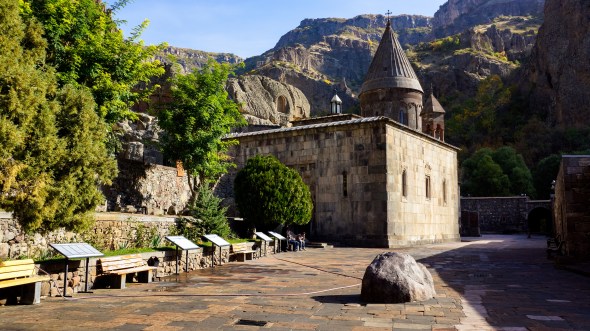
The other, in June, is an independent trip to the Caucasus. I’ll begin my adventure in Georgia, spending ten days exploring some of what promises to be the region’s most stunning landscapes, before venturing into Armenia and the breakaway republic of Nagorno-Karabakh for a further week. This is firmly within my comfort zone. This is how I like to travel: tailor made by me for me, with me firmly in the driving seat.

The former is a departure from my usual travelling style. Pretty much everything has been planned for me save for updating my ESTA and getting to the airport. There’s some free time, of course, but the way the group rotates to ensure all travellers get a change of company means I won’t know who I’ll be paired with on those days and in any case, free time is to be “negotiated” so both parties are happy. I don’t have a problem with the theory – it should make for a much better trip once we get going – but in practice I feel very disconnected from this trip. The main reason has to be that I haven’t been able to do my usual research. I have some ideas – someone, surely, will want to join me for what’s described as a “gospel-ish brunch” in Austin – but until I get there and meet my fellow travellers, that’s all they are: ideas. Technically I don’t even know what flight I’m getting though I’ve figured that out by a process of elimination and United Airlines, if you bump me there’ll be trouble.
In contrast, the Caucasus planning is really engaging. I’m wearing in new hiking boots and the Lonely Planet guide to Georgia, Armenia and Azerbaijan has become my nightly read. I’ve been swapping emails with tour providers to see whether organised day excursions would be a better option than going it alone by marshrutka. I’ve compared monasteries and researched foodie experiences, checked weather forecasts and studied hotel rooms. I’m figuring out whether a side trip to Abkhazia is possible even though I’m still half convinced that was the country the Tom Hanks character was supposed to have come from in The Terminal. I really must look that up. A rough plan is finalised for Armenia and once the Tbilisi-Mestia flights are released in a couple of weeks, the Georgia part will fall into place too. I’m happy. Browsing maps, photos and blogs online is giving me a sense of place and the more I find out, the more excited I’m getting.
It’s just that the more I’m getting excited about Georgia and Armenia, the more I’m realising I’m missing the experience of getting excited about Texas. Once I’m there, I’m sure it won’t be a problem, but without this build up, without the anticipation, I can’t seem to be able to savour the place. It feels like I’ll be tucking into dinner without sniffing the aroma wafting from the kitchen. And that’s a shame.
What’s your most unusual travel experience?
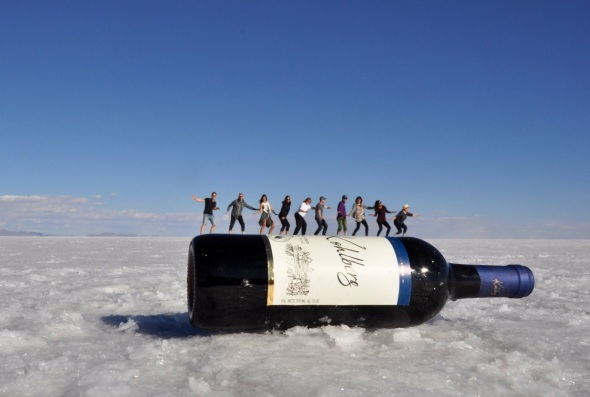
While travelling in South America recently, I was asked what my most unusual travel experience had been. Put on the spot, I was momentarily thrown. At the time, we were posing for pictures pretending to run away from a plastic T-Rex that our guide had placed on the world’s largest salt flat. I couldn’t help but think that what one person might define as unusual might be entirely normal behaviour to someone else. Our guide certainly thought that there was nothing weird about what he was asking us to do and judging by the number of pictures on the internet, he’s not alone.

I’m at the stage in my travelling life when visiting off the beaten track destinations has become a way of life and as such, the kinds of things I do on my holidays are very different from your average traveller. For me, to fly and flop would be a change from my typical holiday style. Since I’ve been back, I’ve been giving a bit of thought to some of my more unusual adventures. Taking the definition as something I wouldn’t expect to do on a regular basis, here are my favourite five. What are yours?
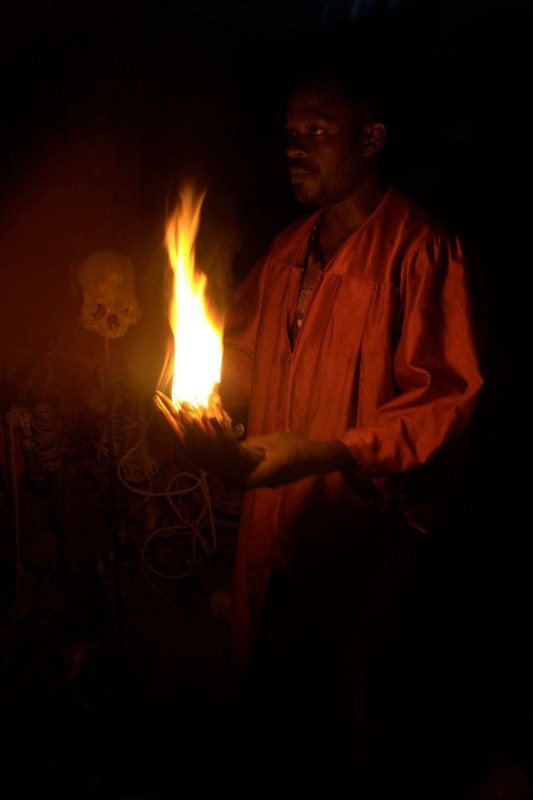
Receiving a vodou blessing, Haiti
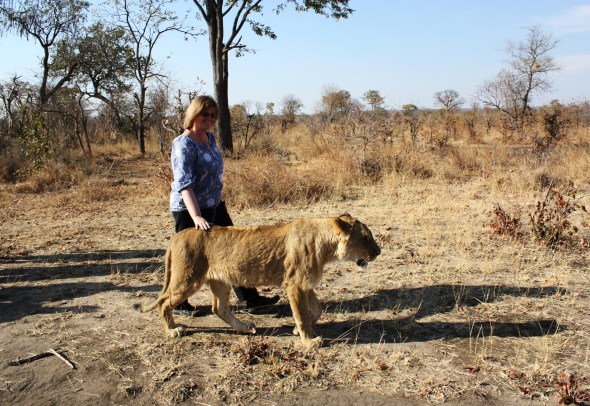
Watching a volcanic eruption from the crater rim, Vanuatu

Taking a lion for a walk, Zambia
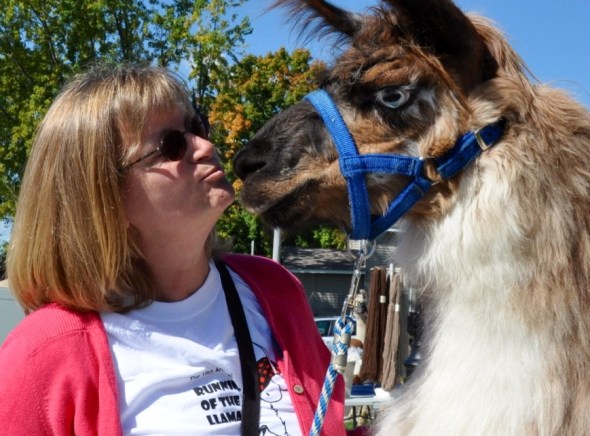
Presenting the prizes at the Running with the Llamas festival, USA
Eating rotted shark, Iceland
Bolivia’s bowler hats
Even on the briefest of visits to the Bolivian capital, La Paz, you can’t fail to notice the plethora of hats, specifically the good old-fashioned bowler. But unlike the black attire once worn by London’s city gents, these are brown – and worn by women.

It’s a cultural thing: the cholas who wear them do so to emphasise their heritage and reinforce how proud they are of it. Once, the cholas weren’t welcome downtown. They were refused entry to restaurants, banned from walking in Plaza Murillo in front of the Presidential Palace and harassed if they ventured into the city’s wealthier neighbourhoods.

Cholas, or cholitas to give them the diminutive form, dress in voluminous skirts, multiple layers of petticoats and crocheted shawls. The hat is an easy way of determining the wearer’s marital status: if she wears it straight, she’s married, but if it sits at an angle, she’s available. So that hat plays a critical role in the La Paz social scene.

The practice of wearing a bowler is a comparatively recent phenomenon. Most sources agree that, in the 1920s, a consignment of bowler hats was shipped to Bolivia, intended for railway workers. But someone had made a mistake with the colour or size – versions of the story disagree – and faced with a huge loss, an entrepreneur named Domingo Soligno marketed them to the indigenous Aymara women as being the height of fashion in Europe.

Some sources wrongly name the type of hat as a borsalino. In fact, Borsalino is the name of an Italian hat manufacturer that for many years supplied the cholas. It’s correctly known, therefore, as a sombrero de la chola paceña.

To wear a Borsalino comes at a price and these expensive hats are beyond the means of many. The target of thieves wishing to make an easy buck, the Borsalino brand is now largely a thing of the past in Bolivia. For more than forty years, bowlers have been made locally by the likes of Sombreros Illimani and also imported from Colombia. But even these cheap imitations have a charm about them.

Essex Belongs to Us
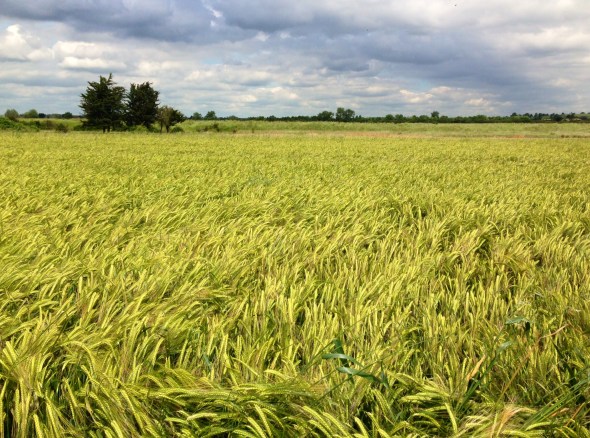
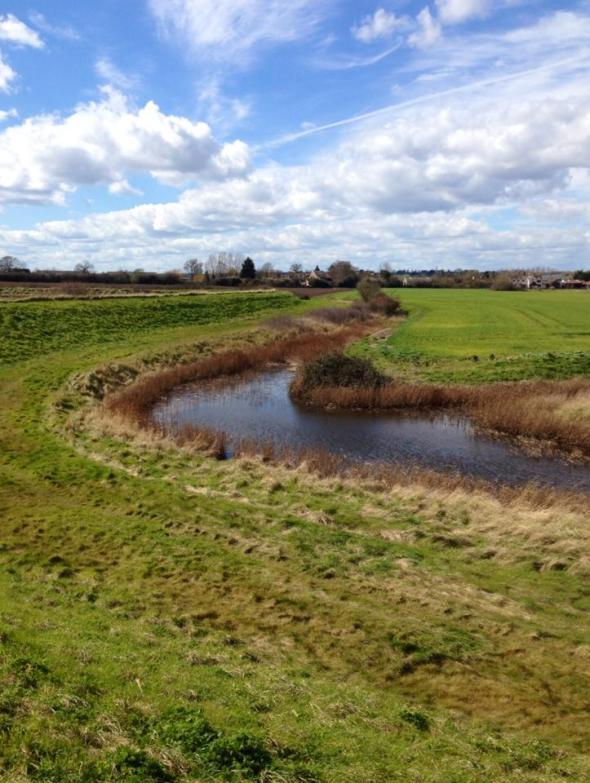
Earlier in the year I was lucky enough to be selected for the Essex Belongs to Us project. A book has just been released featuring a selection of Essex-based authors writing about their county. Whether you’re local and want to reminisce, or live further afield and know little about one of the UK’s most misunderstood areas, the book will prove to be a good read. Here’s a brief taster of what I had to say about Salcott – but to read the rest, you’ll need to buy the book. Details of how to do so follow at the end of this blog post.
Fish out of water
I swear out of the corner of my eye I thought I saw a unicorn.
I’d dozed off in front of the telly and awoken to the sound of agitated voices. A few months ago, I’d have slept right through the commotion, part and parcel of living on a main road in a big town. But my husband valued silence over convenience and home was now Salcott-cum-Virley, a small village on the Essex marshes. Ensconced at the deadest part of a dead end road, tucked away behind five huge oak trees, it was about as quiet as Essex got.
Instead of the scream of motorbikes and the rumble of lorries, I now awoke to birdsong – and an infernal wind that sometimes blew so hard it drowned it out. With the gales of spring, fence panels popped like champagne corks. After retrieving the dog from the neighbours’ garden for the third time in as many weeks, we hired a man to build us some wind proof fencing.
But we were in the habit of leaving the gates open, and things had a habit of wandering in, causing great excitement. At first, we would run to the window each time, interrupting whatever we were doing to marvel at pheasants strolling across the front lawn or ducks making their raucous way across the sky out the back. All this wildlife was a novelty. We’d once had a squirrel visit our small back garden in Rayleigh but the dog had soon seen him off. Whether we liked it or not, we were going to have to share our garden with the local residents: the pair of wood pigeons that roosted in the dead apricot tree in front of the kitchen window and the quarrel of sparrows that nested in the blackberry bush that had long since conquered our garage wall. You didn’t live in the country, you shared it. Boundaries were arbitrary, there for the purposes of officialdom only.
And so it was that when the neighbour’s small white pony escaped, I awoke to find it at the patio door and in my somnolent state, confused it with a unicorn. It was soon joined by another and, then, several men trying to round them up, startling me out of my slumber. It wasn’t long before they were all heading back out of the gate. They seemed almost practised and I had a strong suspicion this had happened before.
The rest you’ll find in the book. You can order a paperback here:
It costs £8.99 plus a pound for postage and packaging. Alternatively, the e-Book is much cheaper. You can download it to your Kindle via Amazon for just £1 here:
And if you do, I’d love to hear what you thought of the book. Was Essex what you expected it to be?
Salt flat tours: Argentina vs Bolivia
One of South America’s iconic bucket list activities is to visit the vast Salar de Uyuni. It’s been on my wish list for a while:
https://juliamhammond.wordpress.com/2015/03/18/after-104-countries-can-i-still-have-a-bucket-list/
Salar de Uyuni
This March I finally made it to Uyuni, 22 years after my first trip to Bolivia. On the way, I travelled from Salta along the Quebrada de Humahuaca, one of Argentina’s most attractive areas. A side trip from Tilcara took me to Salinas Grandes, Argentina’s largest salt flat. The two tours were as different as they come, so which was best? Here is my review.
The salt flats
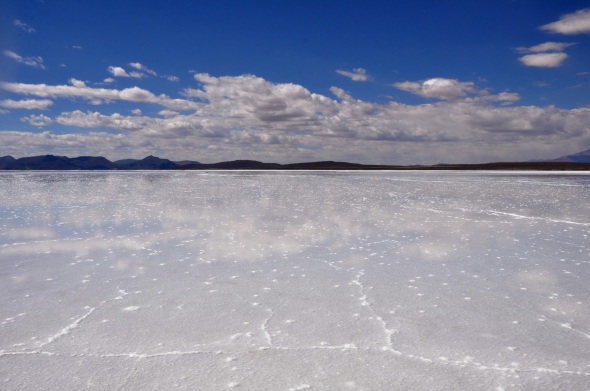
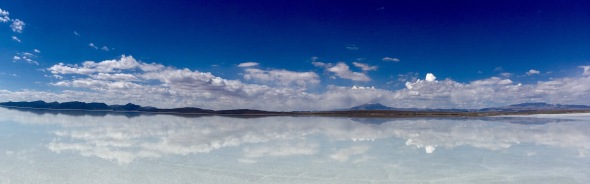
The Salar de Uyuni is the world’s largest salt flat. It covers an area over 4000 square miles and sits at an altitude of over 3600 metres above sea level. The crust of what were once prehistoric lakes dries to a thick layer of salt, and the brine which lies underneath it is rich in lithium with something like 50-70% of the world’s known reserves. Even on a day trip, it’s not long before you’ve driven far enough out onto the salt flat to be totally surrounded by a sea of white. Losing your bearings is entirely possible though the position on the horizon of distinctive volcanoes such as Tunupa makes things a little easier.
Argentina’s Salinas Grandes
In contrast, Argentina’s biggest offering is paltry by comparison, though still the second largest in the world. Measuring a little over half the area of its Bolivian neighbour at 2300 square miles, it’s still enormous of course. Like the Salar de Uyuni, it’s a high altitude location, coming in a few hundred metres lower. Salt mining is also a feature of the landscape here and as in Bolivia, you’ll see piles of salt, blocks of dust-striped salt for construction and other industrial activity.
Choosing the tour
Salar de Uyuni tours are big business. It’s firmly on the backpacker trail and the scruffy, dusty town of Uyuni is rammed with operators selling one-day and three-day tours to the flats. I opted for a one-day tour. Having been just across the border in Chile and seen some of the most spectacular scenery in the world, I didn’t feel the need to spend hours in a cramped 4X4 to do the same in Bolivia. Three-day tours offer basic accommodation and rudimentary facilities; the days of cold showers and BYO sleeping bags are long behind me. I opted for a mid-range tour with a respectable outfit called Red Planet Expeditions, booking online via Kanoo Tours at a cost of $83. (It is cheaper to book when you arrive but I didn’t want to have to hang around so was prepared to pay the extra few dollars to arrange my tour in advance.) Even this, one of the better companies, had mixed reviews, so I figured if I had a poor experience for a day I’d be happier than if I’d opted for the longer tour.
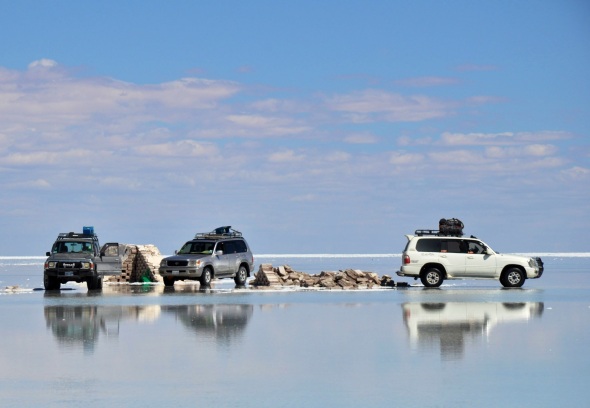
Wet season reflections, Bolivia
The nearest tourist base to the Salinas Grandes is at Tilcara, the other side of a mountain from the salt flats. I found a highly regarded tour operator called Caravana de Llamas which offer a range of llama trekking tours, opting for a tour that spent a few hours walking out to the salt flats. The tour itself was excellent value at $65 per person, minimum two people. However, this doesn’t include transport. You’ll either need a rental car to cross the mountain pass (it’s a good road) or a car with driver. Caravana de Llamas can arrange this for you for 1500 Argentinian pesos per car (rates correct as at March 2017) which is reasonable for a car load but expensive for a solo traveller.
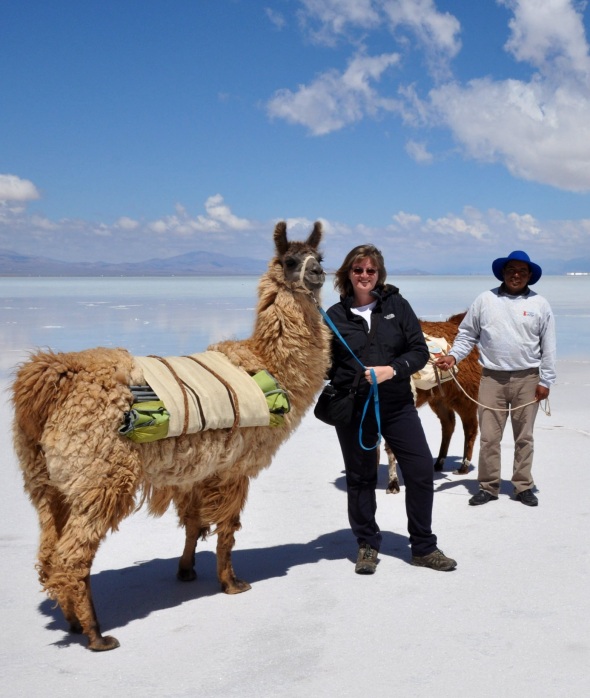
On the salt flats with Oso, Paco and their handler Santiago
The tour: Bolivia
Choosing to visit in wet season, the Bolivian tours cannot reach Incahuasi Island which is a fair distance across the salt flats (and home to giant cacti). I’d been sent information requesting that I check in to the Red Planet office at 9am for a departure by 10am. On arrival, I was told we’d actually be leaving at 11am. On departure we were a convoy of three vehicles with one guide between us. The car was in good condition; judging from the reviews this isn’t always the case. The driver was pleasant enough, though he spoke no English which may be a problem for some. There were five travellers per car, but this can be six or seven which would have been cramped. Two at least have to sit on the back seat and there, the windows do not open. My fellow travellers were a pleasant bunch, though much younger than me. I wasn’t as keen as the others on having the music turned right up, making it very hard to talk, but everyone else seemed happy. The guide, Carlos, split his time between the three vehicles. I didn’t take to him, finding him obnoxious and arrogant, so I was pleased we didn’t have to have him in the car very much. I had several concerns about his attitude and behaviour (some shared with other members of the group). I contacted Red Planet for their comment but have yet to receive a reply two weeks later. It’s not appropriate to go into details here but I would hesitate to book with this company again if they couldn’t guarantee the guide would be different.
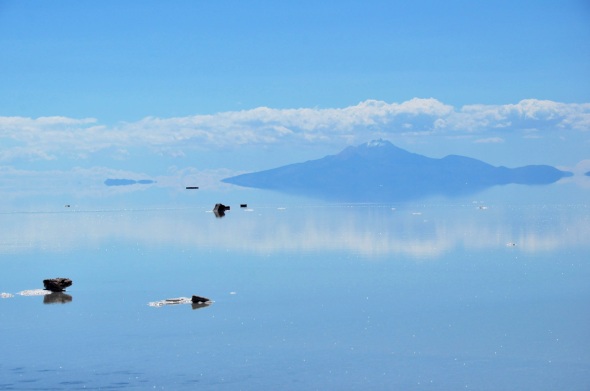
Tunupa Volcano
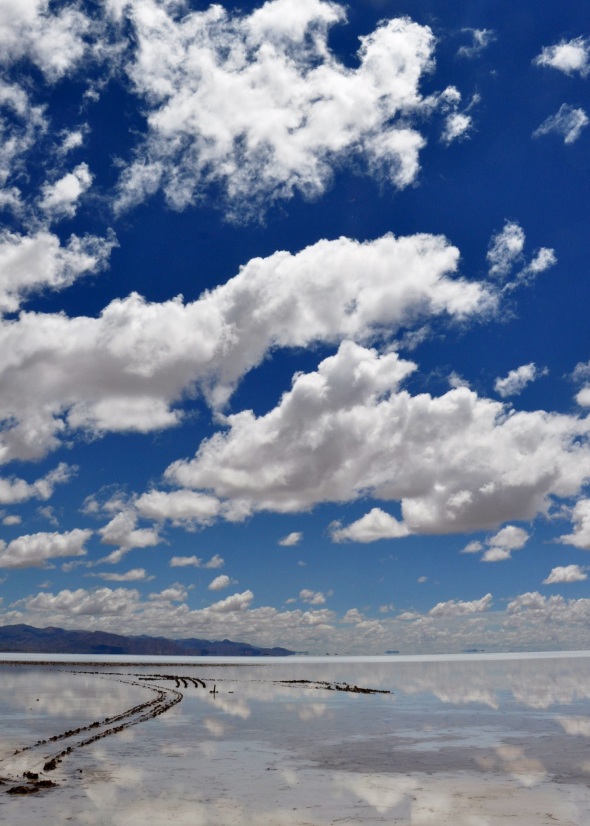
The tour allocated a great deal of time to the train cemetery – which had the potential to be a fantastic place to visit if you don’t time it to coincide with the 30+ 4X4s which stop there on the way to the salt flats each morning. Having woken to clear skies, the clouds had rolled in by the time we arrived which was frustrating given how close the site was to the town. There was also a lengthy stop in the village of Colchani where we visited a salt factory (just a room where not much was going on except for attempts to flog us bags of salt) and where we were given lunch of lukewarm chicken, stone-cold rice or cold potatoes plus a delicious apple pie. Eventually we reached the salt flat itself and the scenery at that point took over. In wet season the reflections in the water are a crowd-pleaser and it wasn’t a disappointment. What was a pity was the lack of thought given to pre-departure information. As requested I’d come prepared with sun cream, but no one had thought to tell us we’d need flip-flops for the salt flats. It wasn’t just a case of getting our feet wet, more that the crust is sharp and uncomfortable to walk on. I ended up in socks which was better than going barefoot but still unpleasant.
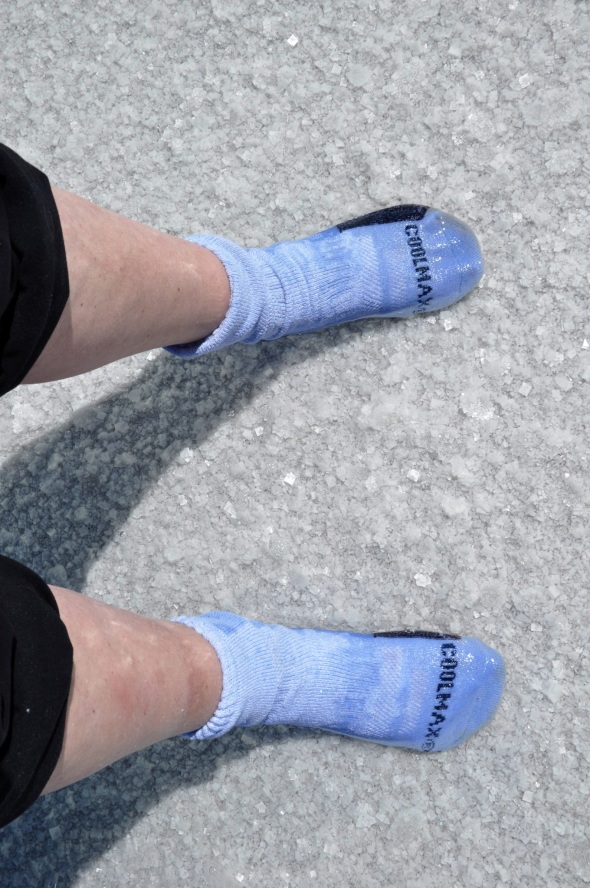
Ouch! Bring flip flops!
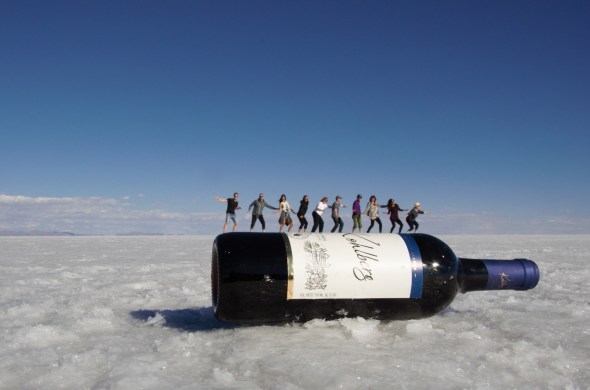
Later, we drove to a drier part of the salt flats for the famous perspective photos. These were cheesy, clearly well rehearsed (we did the same poses as every group I’m sure) but a fun souvenir. The guide did take the photos, which was kind of him, so those on their own could participate. Afterwards we had an enforced and quite lengthy stop near a monument. I think it was included to enable us to arrive at the edge of the salt flats in time for sunset, though it felt like time-wasting. Six out of the fifteen travellers in our cars had overnight buses to catch and were very worried they’d miss them. Given we were all filthy dirty and covered in salt, they’d have needed time to clean themselves up before boarding. The rest of us had what turned out to be quite a rushed sunset photo stop. However, we were dropped off at the Colchani salt hotels on the edge of the salt flat. This was a bonus; if we’d have had to return to Uyuni and then take a taxi, this would have added an hour at least as well as the additional cost of transport.
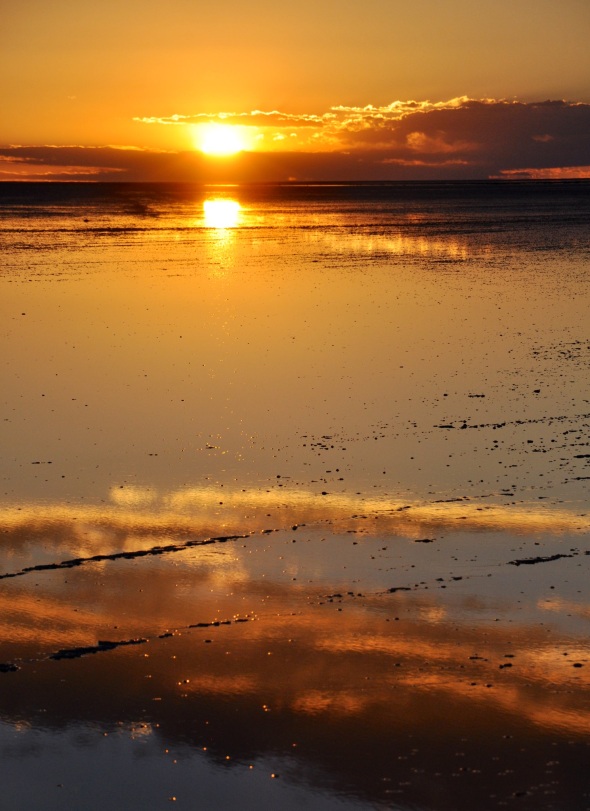
Sunset on the Salar de Uyuni, a beautiful thing to behold
Conclusion: Bolivia
All in all I felt that the wow-factor of the salt flats themselves redeemed the day. The guide was a big negative, but I was told it wasn’t possible to go deep into the salt flat without one. Walking from the salt hotels to the edge of the salt flats wouldn’t have given me the same experience, so although this was one of the worst tours I’ve taken in years, I’m still glad I did it. But even more relieved I didn’t opt for the three-day tour.
The tour: Argentina
I was sent a reconfirmation email the day before my tour to ensure I knew that the driver would be on time; in fact he was early when he arrived at my hotel in Tilcara. The car was almost brand new and spotlessly clean. Another traveller had cancelled so I had a private tour. Jose Luis the driver was friendly, courteous and knowledgeable, as well as being safe over the mountain pass. I was offered several stops at viewpoints to enable me to take some great scenery shots as we climbed above the clouds. Arriving at the tiny village of Pozo Colorado, llama handler and guide Santiago was ready, welcoming and cheerful. Jose Luis joined us for the first part of the trek to ensure I was comfortable leading a llama and then joined us later at the salt flats.
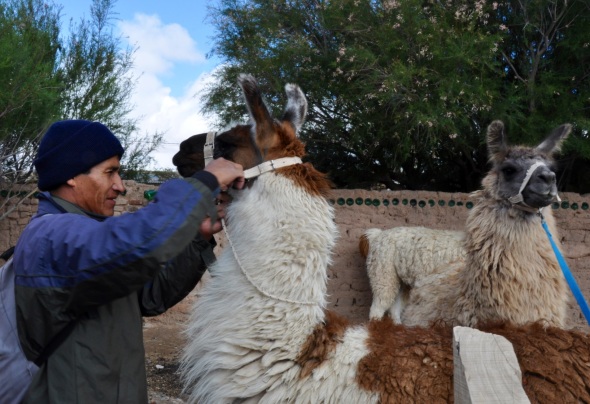
Santiago getting Paco ready
Walking with the llamas was fun. Oso and Paco were well behaved and to my relief didn’t spit. From time to time Santiago told me a bit about the llamas, the scenery and the way of life up there on the Argentine Puna, but he also knew when to let me enjoy the silence and serenity of the place. The trek was easy, over flat terrain, and when we arrived at the edge of the salt flats, there was time for me to wander off and take photos while lunch was prepared. A picnic table had been set up loaded with delicious food: local goats’ cheese, llama meat, ham sandwiches, salad and more. There was plenty to go around. Jose Luis joined us for lunch and the inclusion of a third person made chatting easier as he was bilingual.
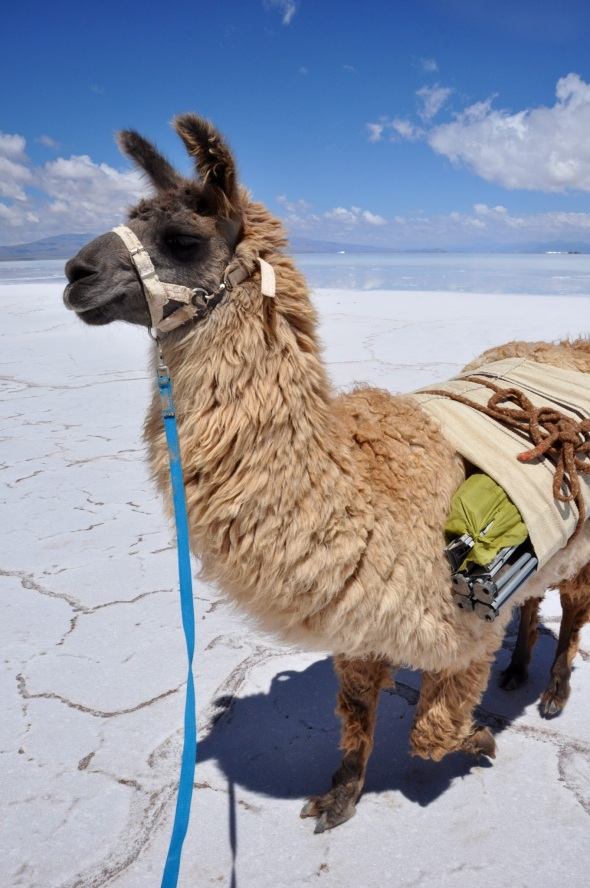
Oso carrying the lunch table
After lunch, the llamas had rested and we walked onto the salt flats for some souvenir photos. Afterwards, Jose Luis drove me to some of the industrial workings a short distance away. There wasn’t a lot of activity going on, though as with Bolivia, I did see the piles of salt “bricks” and also heaps of mined salt. By the time we’d driven back over the mountain the tour was a similar length to that taken in Bolivia, arriving in Tilcara late afternoon.
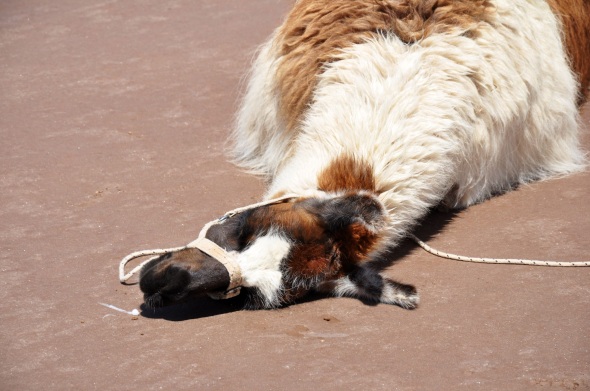
Paco having a siesta on the lakeshore
Conclusion: Argentina
If I’d have visited Bolivia before Argentina, I’d have probably been disappointed with this tour. The scenery just didn’t have that sense of scale that gave it the bucket list wow. However, as an activity, walking with llamas was a lot of fun and I felt that Santiago had gone to a lot of trouble to make me feel comfortable and, despite his basic English, to put the scenery in context. I was left wanting more and would definitely book with Caravana de Llamas again if I returned to the area.
Overall conclusion
Both tours were worth doing but very different. The Argentinian tour was very civilised and the llamas incredibly cute. Regular readers of this blog will know how much I adore these fluffy creatures. The people involved worked hard to ensure I was well-looked after. In contrast, the Bolivian tour encompassed my worst nightmares with a bossy, inflexible guide and yet – the scenery was so incredible that I’d still do it again.
Expectations are key. In Uyuni, there doesn’t seem to be a single operator winning consistently excellent reviews. In this respect, having a horrible guide but a good driver and a vehicle that didn’t break down was the best option – if there’s a weak link, at least your safety isn’t compromised. It’s been a long time since I’ve had to take a backpacker-style tour, so perhaps I’m out of the habit of being herded around – and it’s no surprise to those readers who know me to hear that I don’t like being told what to do.
Perhaps taking a budget option in Bolivia would have been the way to go: there were day trips for under $40, half the price I paid, and given how poor the guiding and the lunch were, maybe it would make the tour seem better value. However, I certainly wouldn’t recommend taking a basic tour for the three-day option as the mileage covered is considerable and the area remote. I heard good reports about the scenery from a private Dutch group, but having seen similar (better?) in the more accessible Chile a couple of years ago, I don’t regret my choice to cut out the mountain lakes and volcanoes.
So – which tour? Tough decision: I’ll call it a draw! Have you taken either tour? What were your impressions?
Footnote: I paid for both tours myself; all opinions expressed are my own.
Is it safe to travel to South America on your own?
It’s a question that bothers a lot of people who are considering a trip to South America. Tours are expensive but going it alone can be daunting. The issue of personal safety is something that shouldn’t be taken lightly, but with a bit of common sense, you can have an incident-free trip. I have travelled as a solo female countless times to all but three of the continent’s thirteen nations (Suriname, French Guiana and Guyana you’ll keep!). During those trips I’ve travelled independently and those trips have been pretty much trouble-free.
Overnight buses
Don’t discount overnight or late night buses as a method of transport; they’re comfortable and a good way of saving on accommodation as you move between destinations. But, do think about yourself and your possessions along the way.
* Check your bus operator’s safety record. At night especially, it’s worth paying a few dollars more for a better bus. Not only will the seats be more comfortable but you’re more likely to find yourself on a bus that’s better maintained and where there are two drivers to share the driving. Some companies insist on drink and drug-testing their employees.
* Most operators use a ticket system for your hold luggage; make sure your luggage is locked, loaded and you keep that ticket stub safe as you’re going to need it at the other end. A few coins for a propina (tip) are essential in some places such as Argentina – or you risk your bags being left behind.
* On board, opt if possible for a seat by the window as your bags on your lap or by your feet are less accessible to sticky fingers while you sleep. Keep valuables on your person e.g. a money belt or a securely zipped bag across your chest. Don’t use the overhead shelves. Keep items that you don’t want to lose in an inside pocket rather than an outside pocket – I lost a comb that way on a bus in Ecuador and it cost me a dollar to replace!
* Be safe getting to and from the bus station if you have a late night departure. If you’re in a very small town you’ll probably be safe walking, but in a large city, don’t risk it and book a taxi instead. Ask locally if you’re not sure! At night, doorways are often shadowy and you might not see someone emerge; if it’s safe to do so I often walk in the road where it’s better lit. (It’s also less likely to have holes to fall into.) Check with your hotel or hostel what night time safety is like in the area.

Pickpocketing and express kidnapping
Sadly, South America still has more than its fair share of ladrones (thieves) who’ll be more than happy to relieve you of your belongings should you let them.
* Don’t flash the cash – or expensive jewellery, mobile phones and top of the range cameras. It’s just asking for trouble. If you want to use a camera on a city street, carry it in an unmarked bag, take it out to photograph what you’ve seen and then put it away again. If you need to keep it out, carry it diagonally across your chest and keep a hand on it; this will reduce the risk of opportunist theft. Keep full memory cards separate from your camera.
* Keep your passport safe and carry photocopies in case of loss or theft. Never leave a bag unattended, especially if it contains the documents you need to get home.
* Express kidnapping is unfortunately a problem in some parts of the continent, such as Bolivia. Travellers take a taxi, wrongly assuming it’s legit, only to find themselves at an ATM. Some have been held overnight so that the perpetrators can steal multiple withdrawals. Use a reliable radio taxi (any decent restaurant, bar or hotel will call one for you even if you’re not a patron) and only take with you what you really need. Keep your valuables in a safe if possible.
* Be especially careful in crowds. Think carefully about what you need to take with you if you’re going to a carnival or fiesta and try to avoid crowds that might turn nasty such as demonstrations.
* Learn a few choice swear words in Spanish (or Portuguese for Brazil) and be loud. It is one of the most important things I learnt at university, as this one has worked for me twice. I won’t say what I said, suffice to say that it wasn’t repeatable in polite company. However, the shock of a seemingly respectably dressed woman having a potty mouth was enough on both occasions for the wannabe robber to drop what they had their hands on and flee the would-be crime scene.

Do your research
Some areas of some cities aren’t as safe as they could be. Whether we like it or not, South America has one of the largest differentials between the haves and have nots. It figures, therefore, that there will be some areas that you ought to stay clear of.
* Use the FCO website’s travel advice by country for up to date advice regarding the country you’re planning to visit. It will list any scams that are currently being operated (never allow anyone to help you remove bird poo from your clothing!) and also any areas where safety is a current concern. Forewarned is forearmed: you don’t necessarily have to stay away, but you need to think about whether you are prepared to take a particular risk.
* Keep abreast of travel forums to find out about the reputations of companies you’re planning to use for tours and activities. Reviews aren’t 100% reliable, of course, as some businesses put pressure on clients to write glowing reviews, but they do give you a starting point. I recently met a Canadian traveller in Bolivia who’d just cycled the Death Road. He said he’d looked to see which operators’ reviews didn’t mention accidents and deaths, which seemed a logical starting point to me!
* Choose accommodation in a good area, even if it means upping the budget slightly. Look for roads that are well lit and well used. You’re going to put yourself in a vulnerable position if you choose accommodation down a narrow alley in a rough neighbourhood.
Consider the society you’re in
South America is changing, but many men still expect to protect the women in their family and it can be hard for them to get their head around a lone female traveller who doesn’t need a man for protection.
* Be mindful that many South Americans, especially middle class, will dress smartly to travel. Rocking up scruffy won’t endear you to them, nor will beach wear away from the beach. Don’t draw attention to yourself for the wrong reason.
* Accept concern in the spirit it’s intended and reassure older men or women that you are OK. Explain to them why you’re travelling solo, tell them a bit about your family back home to show that you love them despite leaving them behind and ask how things are changing. I’ve had some very interesting exchanges with people who were concerned at first I was alone but were keen to learn more about my culture. On the surface, European culture might seem very similar to South America but there are subtle but important differences in etiquette.
* Enjoy a drink but don’t overdo it. It’s not usual for females to drink heavily in South America, but you don’t have to abstain completely to fit in. Know your limits and stay safe.
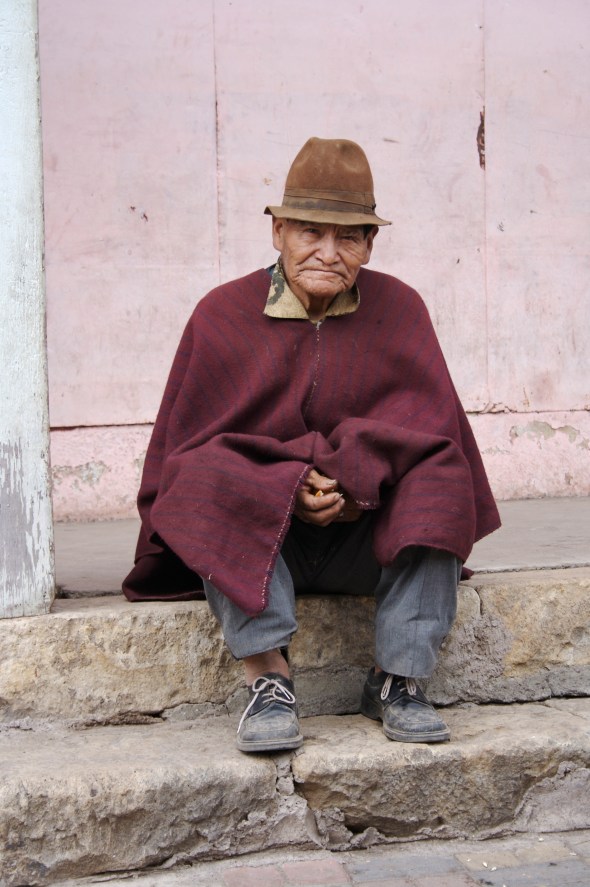
Go to Uruguay
If all else fails, or you lose your nerve, go to Uruguay or Chile. They’re generally considered to be the safest of the South American nations. And beautiful to boot. But don’t drop your guard completely: on my most recent trip, I met an American who’d lost his money and passport, stolen from inside a bus in Calama while he’d nipped off to use the bus station’s facilities.
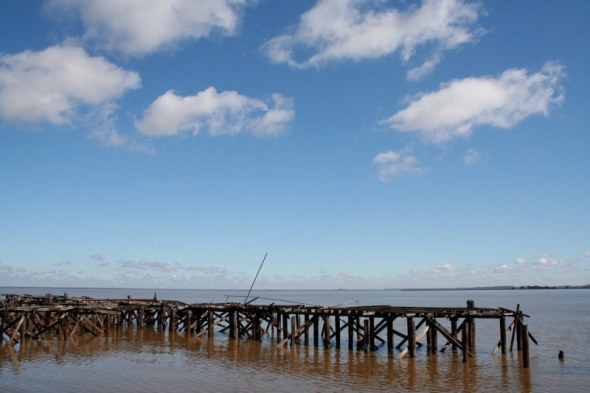
First day on the ranch
At the beginning of this year’s South America trip I spent a few days on Panagea Ranch just outside Tacuarembó, Uruguay. Tired from the journey, recovering from a sickie bug I’d picked up at home and generally in need of some R and R, I spent the first day stretched out on the veranda doing very little at all.
And it was great!
Here’s a few thoughts on what I saw without moving a muscle (well, almost!)
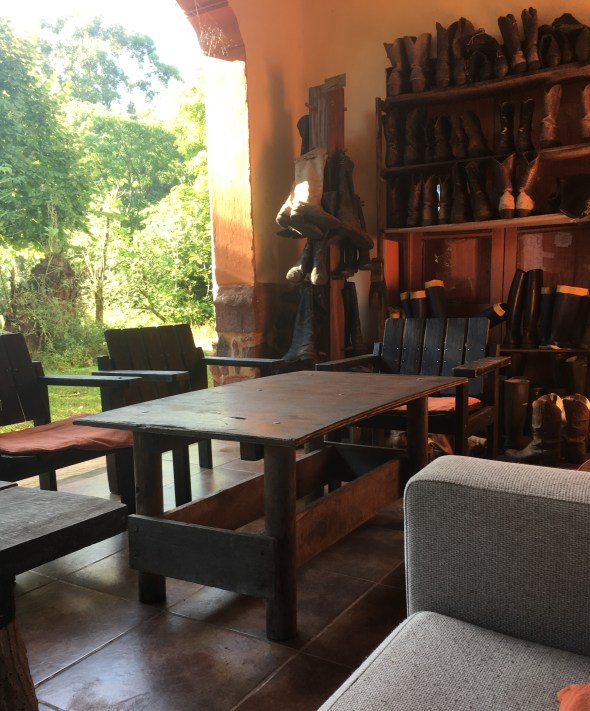
There’ll be more about the ranch in another post; find out how I got on as a novice rider herding cattle and rounding them up to go through the tick dip.
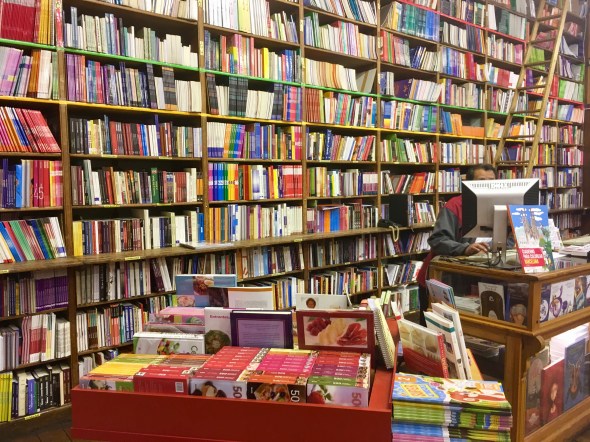
An old fashioned bookstore in La Paz

Salta’s Lightning Girl
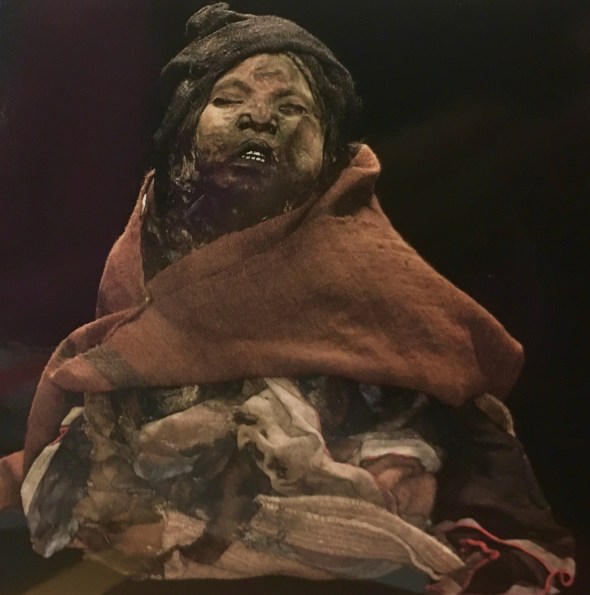
One of the most fascinating and also morally challenging of the Inca rites is surely the sacrificing of children. Scattered across the high Andean peaks are a number of sacrificial sites that have only been discovered relatively recently. One such site can be found on Mount Llullaillaco, a 6700m high volcano straddling the Argentina-Chile border. Drugged with coca and fermented maize beer called chicha, three children had been led up to a shrine near the volcano’s summit and entombed, a practice known as capacocha. The freezing temperatures inside their mountain dens had not only killed them, it had perfectly preserved their small bodies. There they’d remained, undisturbed, for five centuries. An archaeological team led by Johan Reinhard found what’s now known as the Children of Llullaillaco less than twenty years ago.
Today, the three mummies are rotated, one on display at a time, in MAAM, a museum on the main plaza in the northern Argentinian city of Salta. Three years ago, I’d visited Juanita, a similar mummy found in Peru and displayed in a darkened room a few blocks from the Plaza de Armas in Arequipa. As a consequence, I figured I knew what to expect when I stepped inside MAAM. During my visit, Lightning Girl was the mummy being displayed, possibly the most haunting museum exhibit I’ve ever seen. No photography is permitted; the image above is of a postcard I purchased in the museum shop.
The first thing that struck me was how well preserved this small child was, much more so than Juanita had been. Found entombed with a slightly older girl, her half-sister, and a boy, she looked straight ahead. Her face stared bleakly, as if tensed against intense cold. A dark stain marked her face, thought to have been caused by a lightning strike after she was sacrificed. But it was her teeth that caught my attention, tiny white milk teeth that emphasised just how young this girl would have been when she met her fate. Text beside her indicated that she had been just five years old when she died. There was no escaping that here in front of me, in this darkened room, was a real person.
During Inca times, it was the custom to choose sacrificial children from peasant families, deemed an honour for the family, though surely a heartbreaking one too. Girls such as these were selected as toddlers to be acclas or Sun Virgins, destined later to be royal wives, priestesses or to be sacrificed. It is thought that the elder girl was such a person, the two younger children her attendants. The children were then fed a rich diet of maize and llama meat to fatten them up, nutritionally far better than their previous diet of vegetables would have been. The higher their standing in society, the better the value of this offering to the gods, essential to protecting future good harvests and political stability. The children would not die, it was believed, they joined their ancestors and watched over mortals like angels.
Despite the drugged state induced by the coca and chicha, which in theory led to a painless end, the boy had been tied. Perhaps he’d struggled and had needed to be restrained. The older girl had her head buried between her knees, but Lightning Girl looked straight ahead. Had she been too young to comprehend what was happening to her?
Trip preparations: Bolivia
It’s almost time for me to fly off to South America. My itinerary is pretty much fleshed out now and most of the bookings are made. One thing that’s easy to overlook, though, is specific vaccination requirements. For Bolivia, the regulations concerning yellow fever have just changed.
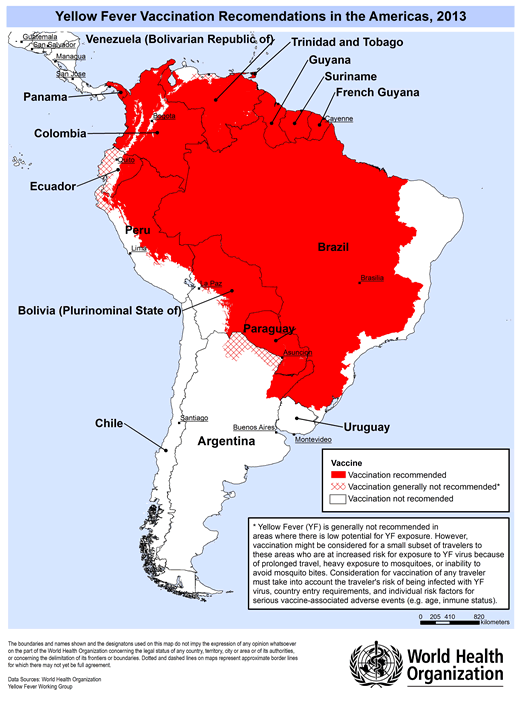
As you’ll see from the map above, parts of Bolivia are affected, like much of South America, by yellow fever. Travelling to Uyuni and then La Paz, however, I’m not going to be venturing into yellow fever territory, so it’s tempting to think I wouldn’t need the vaccine. But early last month, a Danish traveller was found to have the disease. The National Health Director was quoted as saying: “This person came from another place and was not vaccinated.” There’d been an outbreak of yellow fever across the border in Brazil, but whether the Danish traveller had been there is unclear from the news reports. You can read Reuters’ report here:
http://uk.reuters.com/article/us-bolivia-health-yellow-fever-idUKKBN15P2QW

What this means in practice is that from yesterday, 2nd March, all travellers entering Bolivia from a country which has a current outbreak of the disease or remains a risk area for it, must hold a valid yellow fever certificate. I’m travelling across the border from Argentina so that means me – even though I won’t have passed through yellow fever areas within Argentina. I’ll still need a certificate. That certificate would need to be issued at least 10 days before I’d be due to enter Bolivia. Potentially, without one, I could be refused entry at the border.
Even some transit passengers are likely to be affected. If you hub through an airport in a neighbouring country on your way to Bolivia, you could still be refused entry into Bolivia if you have cleared immigration and gone landside. That’s even if you never left the airport. Basically, the Bolivians are playing it safe and you can’t blame them for being cautious.
I’ll update this post in a couple of weeks to tell you if the certificate was requested by border officials or not. Fortunately, my jabs are up to date and the yellow fever certificate I needed to get into Panama a few years ago is still valid. But make sure you’re not caught out by this change in immigration requirements by seeking health from a medical professional before you embark on your trip.
Update March
At the land border between La Quiaca and Villazon, I was not asked for a yellow fever certificate.
From Heybridge to Jayuya
Visiting Hacienda San Pedro in Jayuya, Puerto Rico, last month I came across this machine in the hacienda’s museum. I presume it was some kind of machine used to grind the coffee, but there was no information on it. What caught my eye was the place name on the machine: Maldon. That’s a fifteen minute drive from my house.
Since getting back, I’ve been finding out a bit about E. H. Bentall and it makes for interesting reading. Not least, the E. H. stands for Edward Hammond, which is my father’s name. Edward’s father (the Heybridge Edward, not mine) was a farmer named William. He designed a plough to use on his land near Goldhanger and got a local smithy to make it up. Word got around and by 1795, he’d gone into business making them. Business boomed but raw materials at the time had to be brought in by barge up the Blackwater. William Bentall upped sticks and moved down the road to Goldhanger where he built a place by the Chelmer and Blackwater Navigation. Bentall diversified, producing amongst other things the first steam powered threshing machine.

Meanwhile, with his wife Mary Hammond, he’d produced a son. Edward Hammond Bentall had the same aptitude for engineering as his father. This particularly makes me smile as my Dad was an engineer throughout his working life. He took over the business in 1836 aged 22 and three years later, registered as E.H. Bentall & Co, it was thriving. In 1841, mindful of competition, he took out a patent on an improved Goldhanger plough protecting it from imitators. Under Edward’s leadership, the company began to export machinery overseas and one of those machines found its way to a coffee hacienda just outside the village of Jayuya.
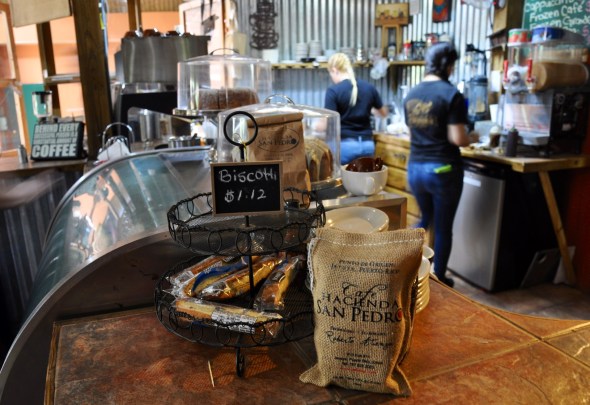
Back at home, Edward Hammond Bentall had been elected as Member of Parliament for Maldon, a post which he held from 1868 to 1874. In 1873 Edward had an imposing home built, known as The Towers, which was located near Heybridge Cemetery. It was so well built that when the time came to pull it down in the 1950s, dynamite had to be used to blow it up. By the time Edward passed the business on to his son Edmund in 1889, he was a wealthy man. He died in 1898.
Mechanisation of the coffee plantations further increased profits, particularly after World War Two while the company operated under the leadership of Edward’s grandson, Charles. He died in 1955, and just six years later, the company was taken over by Acrow, which eventually went bust in 1984. That was it for Bentall & Co, but their warehouse still proudly overlooks the canal in Heybridge.
Postscript
And if you remember Bentall’s department store (now Kingston Fenwicks), the founders of that store are related to William too.
The Kelpies

Steve was proof they’re built of sterner stuff up in Scotland. While I was cocooned in a thick winter jumper and padded coat, he went bare armed as he rounded up his tour group outside the visitor centre. I couldn’t help but comment. His eyes crinkled at the edges as he told me that the building had underfloor heating and his body was as efficient as a storage heater. He assured me he’d be warm throughout the tour. I was convinced, however, that I’d see a goose bump or hint of a shiver at some point. After all, you don’t come to Falkirk in February for T-shirt weather.

And it most certainly wasn’t T-shirt weather. Dark concertina folds of cloud crowded the sky and a brisk wind ruffled my hair. I wasn’t too upset. If anything they added drama to an already impressive sight. The two horse heads that formed The Kelpies stood over 30 metres tall. Coming from Glasgow, the first glimpse from the car was as in your face as it got: a massive horse’s mouth emerging from a clump of trees by the side of the motorway. I’d known little about The Kelpies before I’d visited and was taken aback as to how large they were. Excited, I pulled into the Helix car park and was delighted to find it was free. No National Trust price hikes here; this is a community run project and consideration is given to such matters. On a bleak February Saturday, it felt like my willingness to risk the weather had been rewarded and that put a smile on my face.

I had a few minutes to kill before the tour began so I kicked around the site with coffee in hand. What was immediately apparent was that this was as much a community resource as a tourist attraction. Dogs happily chased balls and the kids had brought their scooters. For those wishing to wander along the adjacent Forth & Clyde canal or around The Kelpies, no charge was made. I decided to invest in the £7 required for the tour, keen to find out more about this unique sculpture.
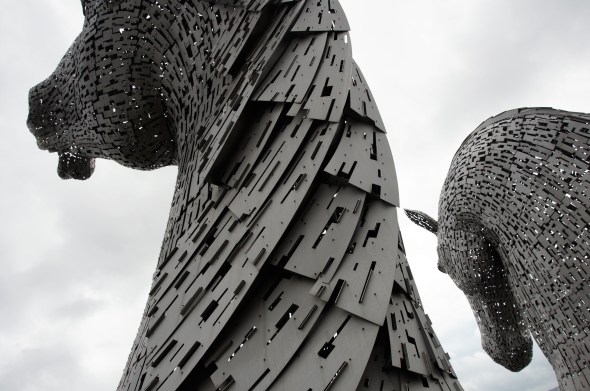
There was plenty to learn. Steve was an enthusiastic guide and worked the small crowd well. “In the three or so years since we’ve been open,” he said, “ten people have fallen into the water. Nine of them were adults!” He grinned and the kids in the group took the bait, ribbing their parents. The shallow moat around the base of The Kelpies wasn’t likely to drown anyone, but given the number of people walking backwards with their eyes glued to their camera screens, it was easy to see how the tally had been achieved.

I’d last visited Falkirk back in the mid 1990s. It hadn’t left a lasting impression. Steve acknowledged that I wasn’t alone in holding such a view. “I’ve lived here for twelve years, Before, when I was asked where I came from I’d say Falkirk.” He muttered into his beard and the name was lost on the wind. “Now, because of The Kelpies, I’m proud to say I’m from Falkirk.” Falkirk Council shared his passion, it would seem. Securing Lottery funding to the tune of around £23m, they and several other interested parties match-funded. The timing of the project wasn’t great, coinciding with the recession, but despite opposition the planned project went ahead. Visitor numbers are looking healthy – an estimated 2 million people have come here since the construction finished in late 2013 and around 200,000 have taken the tour. What was good to hear was that many of those that came were repeat visitors from the local area. Profits from the attraction were ploughed back into local amenities such as local library funding.
The story behind The Kelpies project was fascinating, blending mythology with industrial heritage. The Scottish Kelpie that I’d worn on my Brownie uniform was a little red pixie-like character. “We’re the little Scottish Kelpies, smart and quick and ready helpers,” went the rhyme we chanted. But this sweet image, it would seem, was a con. Of all the Brownie creatures, the Kelpies were the nastiest – malevolent, shape-changing aquatic creatures that commonly took the form of a horse. They’d entice people in their equine form before dragging them underwater to an untimely death. If the media had got hold of that story in time, someone at Brownie HQ would have been fired for sure.

Artist Andy Scott was responsible for the Kelpies at Falkirk and he’d focused on the power and endurance of the beasts rather than their malevolence. The canal-side location was an appropriate setting; horses would have been a common sight, pulling the barges upon which Scotland’s industry relied. In a clever twist, the idea of using the Kelpie reinforced how much the landscape had been transformed too. When choosing a suitable horse to model, Scott took the local Clydesdale breed as his inspiration, with the two muses being Baron (head up) and Duke (head down). The original sketch had been of the entire animal, the water line sketched in and then cropped to ensure the sculpture’s proportions were accurate.

The resultant sculpture is magnificent. The second largest equine structure in the world, they’re beaten in scale only by the monument to Genghis Khan in Mongolia. That stands 40 metres tall, but then Genghis is on top and he’s the star attraction. I’ve seen it, and it’s impressive, but, well, a bit too shiny. The Kelpies would probably be even more of a distraction for drivers on M9 if they had such a sheen, but the matte finish looks more tasteful. Sorry Mongolia, 1-0 to Scotland.

There’s something about the workmanship of The Kelpies that draws your attention and keeps it transfixed. Inside, out of the wind, it’s easier to concentrate on the structure itself. Each of the horse heads used 464 manufactured plates in its construction. Every one is different. They were transported on 150 lorries from Sheffield and took ninety days to be fitted together, in what must have been like an ultimate marathon game of Tetris. At night, they’re lit by LEDs, an energy efficient method costing the equivalent of a pot of tea every night. Now that’s an achievement in itself, don’t you think?

My one disappointment was that it wasn’t possible to climb the structure, though looking at the access ladder for the maintenance crew, you’d need a good head for heights to do so. No matter; the tour’s a must, even at ground level. For more information and to pre-book a slot to see The Kelpies with a guide, please visit the website here:
Off to Texas with Traveleyes
In May I’m off to Texas, and I’m already excited. But this isn’t my usual kind of trip. This time I’m travelling with a company called Traveleyes, who pair sighted travellers with the visually impaired for a trip which promises to enrich the experience for both types of tourist.
The brainchild of Amar Latif, an entrepreneur who went blind in his late teens, the company specialises in offering trips which make independent travel a reality for the blind and partially sighted. Sighted travellers are offered a hefty discount on the price of the tours. In return, they accompany a different traveller each day, guiding the person to their own individual requirements.

Included sightseeing programmes promise to make this a trip to remember. I’m looking forward to visiting Austin, San Antonio and the Alamo, where we’ll be taking guided walking tours to unlock the history of these places. I’m especially keen to visit Galveston, devastated by the USA’s deadliest hurricane in 1900 which killed over 6000 people. It’s long since been rebuilt, of course, but it will be interesting to compare notes with the experience of New Orleans after Hurricane Katrina.
http://oceanservice.noaa.gov/news/features/sep13/galveston.html

There are also some activities on the programme which you might not expect. A ranch stay forms part of the programme and we’ll be riding out on horseback to enjoy the local scenery. As a novice rider, I’m a little daunted about how I’m going to be able to guide another horse if I’m not fully in control of my own, but I’m trusting that both Traveleyes and the ranch have already thought of that.

Traveleyes have sent through their document on the do’s and don’ts of how to act as a sighted guide and I’m going to be studying it carefully. One thing I do know, however, is that I’m going to learn as much as the people I’m paired with. I can’t wait to see Texas from a different perspective to my own. Check back at the start of the summer and find out how I got on.
If you’d like to find out more about Traveleyes, please visit their website:
More from Puerto Rico: Arecibo’s radio telescope
One of the unexpected bonuses of a week of showery weather was that we did a lot more sightseeing in Puerto Rico than we’d originally planned. A visit to see Arecibo’s Observatory with a huge radio telescope hidden away amongst the wooded karst scenery of the island’s interior was on the cards after we “discovered” it on the map we’d been given by the hire car company. It was a bit of a trek, reached by a winding road up a mountain and then, phones set to airplane mode, a climb up a seemingly unending flight of steps to get to the Observatory’s visitor centre. Stepping out onto the observation deck out the back, it was worth the effort when this was the result:

If it looks familiar, then you might well be a Bond fan, albeit one with a better memory than me. Much as I love the Bond films, they do seem to be hard to tell apart. The sequence shot here in Puerto Rico comes from the 1995 Pierce Brosnan film Goldeneye. The dish shaped telescope that you see above was flooded and drained for a climatic chase scene which proves just how different a location can be once the movie makers get their hands on things. There’s a good YouTube clip here if you want to see for yourself:
You might also remember that this was where they filmed the Jodie Foster movie Contact. The storyline revolved around her research into SETI, which is an acronym for Search for Extra-Terrestrial Life. In a twist, they actually do SETI at the Observatory. Any sounds from space will be picked up by the radio receivers, which hang down, suspended in liquid helium so they don’t overheat and so that any incoming sound is magnified. I have this idea in my head that when the aliens do answer, they’ll speak in high pitched voices and laugh at how dumb they sound. And they’ll eat Smash instant mashed potato. (Can you even get that now?)
I was excited about such a message until I learned that the one they sent in 1974 still has a good 24000 years and then some to reach its destination somewhere in outer space and then the same time to get back. Not a lot of point in that, then. That didn’t stop them launching SETI@home in 1999 or having a pin board for visitors to leave a Post-It note of the question they wanted to ask. Reminded me of Duran Duran…
“Is there anyone out there?”

There’s a lot of science stuff that was well beyond my comprehension and interest, but also a series of interactive exhibits, probably aimed at children, that were fun to try out. There were bits of meteorite collected from where they’d fallen, many in deserts, some scarily recently. I did enjoy playing a simple computer game to shoot down asteroids and some kind of playground roundabout that if you acted like a figure skater and stuck your leg out, it would change speed. I would tell you what that’s got to do with the space theme except I was so dizzy when I got off I couldn’t read the explanations.
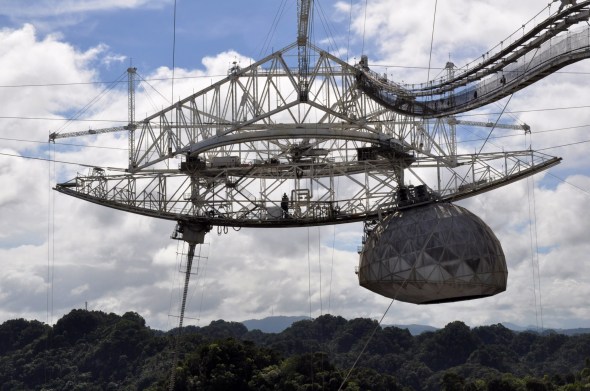
We watched a short film about the Observatory. It hadn’t been updated to reflect that this is no longer the world’s largest radio telescope (now that’s in China, quelle surprise). It was interesting nevertheless. After seeing the film, we took a VIP tour which was just a ride in a bus but it did take you right to the edge of the “dish” and that’s what really gave me a sense of scale. Plus, the guide said that Pierce Brosnan was a complete wuss when he had to do his action scenes which cheered me up no end as I don’t much like his Bond now Daniel Craig has shown us how it should be done.

If you’re in Puerto Rico and you’d like to visit the Observatory, it’s around an hour and a half’s drive from San Juan.
A beginner’s guide to New Orleans
The Big Easy isn’t your usual North American city. Crammed full of French and Spanish creole architecture, hemmed in by Lake Pontchartrain to the north and enclosed by a huge looping meander of the Mississippi to the south, it’s about as unique as they come in this part of the world. It’s laid back, easy going and welcomes visitors like they’re old friends. Here’s what you need to know if you’re planning to visit.
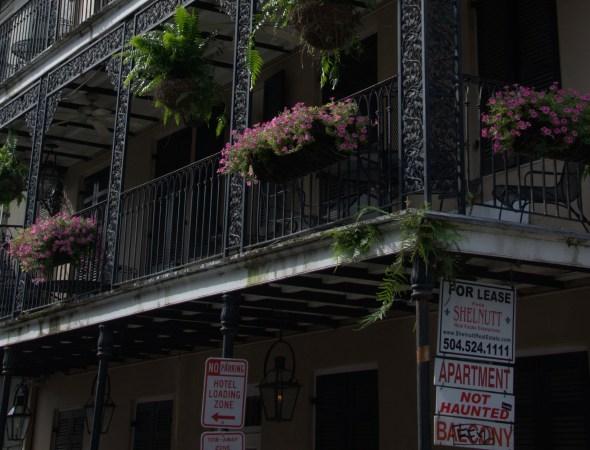
Apartment listings include whether haunted or not
Getting there
From the UK, getting there just got a whole lot easier. Direct flights with British Airways from Heathrow begin at the end of March. They’re going to be a little more expensive than the indirect options but convenience may be worth paying for, particularly if your travel dates match up (the direct service operates several days a week only). Indirect, flights hubbing via Atlanta with Delta are likely to be the cheapest option, but don’t rule out other carriers. The #202 Airport Express bus (sometimes referred to as the E2) is the cheapest method of transport between the arrivals hall and downtown but of course the use airport shuttles and taxis are available.

Amtrak: a great way to arrive in New Orleans
If you want to arrive overland, then consider one of the Amtrak trains that serve New Orleans. The Crescent takes 30 hours to make its way south west from New York stopping at Philadelphia, Washington and Atlanta, while the City of New Orleans is quicker, taking 19 hours to travel south from Chicago via Memphis. Single travellers will find the roomettes a tight squeeze; I had just a small wheelie and we just about fitted, me and my bag. Book early as this isn’t a cheap option unless you can cope with a reclining seat. The good news is that once you arrive, it’s a quick trolley ride into the French Quarter from the railway station.
Getting around
Much of the historic downtown area known as the French Quarter is a delight on foot (so long as it’s not raining heavily). But New Orleans also has a very useful public transport network which is convenient to use and budget-friendly. Planning your accommodation so that you stay near to a tram stop can make your holiday a whole lot easier.

Riverfront tram
There’s plenty of information online including maps:
http://www.norta.com/Getting-Around/Overview
Trams are fun to ride and simple to find. The shortest, the #2 Riverfront streetcar, links the French Quarter with the Outlet Mall at Riverwalk. The #47 Canal streetcar takes you from the edge of the French Quarter past St Louis Cemetery No. 1 and up as far as Greenwood Cemetery. The #48 follows a similar route and then heads to City Park. The #12 St Charles streetcar is great for the Garden District and Audubon Park. Single tickets are $1.25 but a 1 day Jazzy pass only costs $3 if you’re planning on making a few journeys. Crossing the river is also worth doing. You can take the ferry from Canal Street to Algiers Point for just $2. Check out the schedule here:
Where to stay
Being central to the action is key in New Orleans. It’s the kind of place where you can wander aimlessly, drink in hand, and you don’t want to have to end your evening trying to find a cab. I’ve stayed in a couple of places that are worth recommending. Both are located within staggering distance of the #2 Riverfront streetcar. If you’re on a budget, try Villa Convento. It’s atmospheric and reputedly haunted, a Creole townhouse dating back to about 1933.

My room at the Villa Convento
Some say it’s the House of the Rising Sun, made famous by The Animals in the 1964 song. Renovation work has taken place though some parts of the hotel are a bit shabby – the lift being one of them – but ask for a room with a balcony and you should be fine. It’s website is here:
At the other end of the same streetcar line is the Marriott Downtown at the Convention Center. Ask for a room in the historic half of the hotel which has more style. I like it because you alight at the Julia Street station. Mulate’s restaurant is also nearby though when I went there the food didn’t live up to my admittedly high expectations.
Money-saving tips
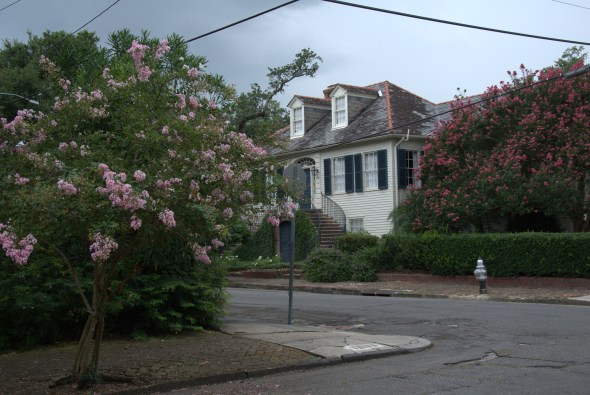
Free walking map leads you round the Garden District
If you’re on a tight budget, there are loads of ways to save money while you’re in the Big Easy. For tips on how to save money on everything from food, drink and attractions to where to find free walking tour maps, check out my previous blog post:
https://juliamhammond.wordpress.com/2015/06/26/how-to-save-money-on-your-nawlins-vacation/
What to see
There’s a ton of places that are worth seeing and doing in New Orleans, so what follows should get you started if it’s your first visit.
The French Quarter

The French Quarter is packed with historic homes
You can’t visit New Orleans and not go to the French Quarter. Amidst its streets, you’ll find the 18th century almost Disney-esque St Louis Cathedral which commands a prominent position on Jackson Square. Opposite, the Cafe du Monde is the place to eat beignets and drink the chicory-rich coffee; it’s tourist central, but a must none the more for that.
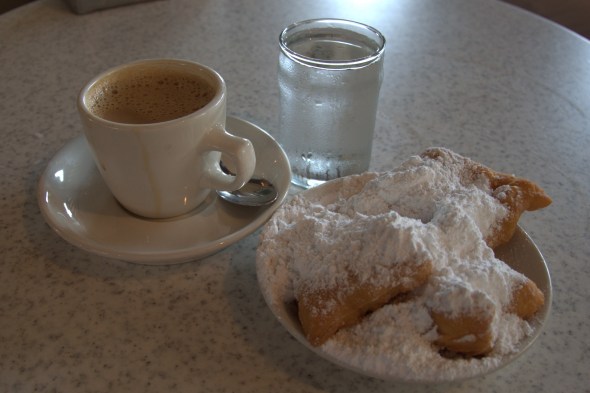
Beignets and cafe au lait
Take a horse and carriage ride from here through the surrounding cobblestone streets of the Quarter. You’ll get your bearings as you clip clop through the Vieux Carré past mansions with wrought iron balconies intertwined with trailing plants and hidden courtyards glimpsed through open doorways.
Music on Frenchmen Street
Live music is an essential part of the New Orleans experience
Forget Bourbon Street, which has almost become a caricature of itself. In my opinion, you’re much better off heading to Frenchmen Street. You’ll find it in the nearby Faubourg Marigny neighbourhood. There’s at least twenty or so bars and clubs where you’ll find live music. Although the action kicks off in the late afternoon, the later it gets the better the atmosphere. Some places have cover charges, others require the purchase of food or drink. Others require just a tip for the musicians. My advice is to head down there and check out what’s on during your stay. If you do want to get some advance research in, check out this site:
St Louis Cemetery No. 1

St Louis Cemetery No. 1
One of the most interesting things to do while in New Orleans is to visit at least one of its Catholic cemeteries. Begin with St Louis Cemetery No. 1. This is the oldest, opened in 1789. It is characterised by above ground tombs, a nod to the city’s swampy and flood-prone location. The most notable “resident” is Marie Laveau, Voodoo priestess, a religion very much alive in New Orleans to this day and a fascinating topic to explore. She rests among aristocrats, politicians, engineers and architects. Actor Nic Cage has a plot here; look for the pyramid. Since 2015, independent visiting has been prohibited after vandals spray painted Marie Laveau’s tomb. You’ll need to take a tour. Options include booking via the nonprofit Save Our Cemeteries or Free Tours on Foot; I’d recommend Gray Line, especially if Sandy’s rostered on.
The mansions of the Garden District

Seen on a fence in the Garden District
The Garden District’s wide avenues and huge mansions with even bigger gardens contrasts with the downtown feel of the French Quarter. Many of these mansions have a story to tell, their original owners making their fortunes off cotton and other mercantile activity, and a walk around the area is a pleasant way to spend the afternoon. In the midst of the mansions, you’ll find another atmospheric cemetery: Lafayette Cemetery No. 1. The cemetery was first planned out in 1832, making it the oldest of New Orleans’ seven cemeteries, and can be visited without having to book a tour.
Lafayette Cemetery No. 1
Mardi Gras World
Last year’s float being recycled at Mardi Gras World
If you can’t get here in February for Mardi Gras, then at the very least you should pay a visit to Mardi Gras World down by the Convention Centre. The building houses an enormous collection (both in scale and number of exhibits) of former floats, props and other carnival-related paraphernalia. Guided tours are possible and will show you around; you’ll get to see some of the costumes and props being made for the next carnival. Many are revamped and recycled. One thing’s for sure: the colours will blow your mind!
Old Algiers
Home near Algiers Point
Across the Mississippi lies the sleepy residential neighbourhood known as Old Algiers. It was first settled by Jean Baptiste le Moyne in 1719, who had a plantation here. It has a dark past, site of a slaughterhouse and also an 18th century holding area for African slaves. The ferry you take to get here has operated since 1827, fiercely protected by the Algiers residents from any attempt by the city authorities to close it down on economic grounds. It’s well worth a wander to explore the 19th century homes here, and of course a coffee stop in the corner cafe at the junction of Alix and Verret Streets.
Steamboat Natchez
Below decks on the Natchez
The steamboat you’ll see churning up the Mississippi isn’t the first to be named the Natchez. It’s actually the ninth and dates only from 1975. It’s also not modelled on its namesake predecessors, pinching its design instead from steamboats Hudson and Virginia. Her engines came from the steamboat Clairton and were made in 1925; her copper bell came from the SS JD Ayres. So she’s a bit of a mongrel, really. Nevertheless, cruises for lunch and dinner are a popular addition to many people’s itineraries. Even if the food doesn’t impress, the music’s good and it’s interesting to head down to the engine room to have a closer look.
Hurricane Katrina tour
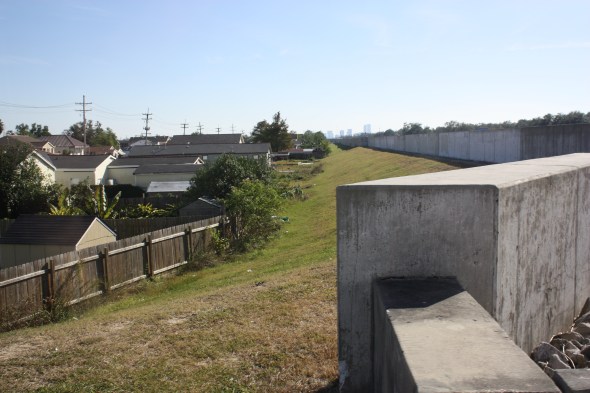
A reminder of how vulnerable low-lying New Orleans is
Despite it being over a decade since Hurricane Katrina blew through the Big Easy with devastating consequences, there are still parts of the city that bear its scars. I took a Gray Line tour in 2012 and was shocked to find so many houses still covered with blue tarpaulins and bearing the red crosses of the search teams on their doors and windows. Returning a few years later in 2015, I was less surprised to see boarded up houses as the train made its final approach into the city. Time may heal the hurt and dissipate the shock, but the economic impacts on an individual scale linger long after the city proclaims it’s open for business again. New Orleans will always be vulnerable to the impacts of hurricanes, and exploring what happened in 2005 will help you understand why.
For more on New Orleans, why not read my article on etrip.tips?

 Julia's Travels