
More from Puerto Rico: Arecibo’s radio telescope
One of the unexpected bonuses of a week of showery weather was that we did a lot more sightseeing in Puerto Rico than we’d originally planned. A visit to see Arecibo’s Observatory with a huge radio telescope hidden away amongst the wooded karst scenery of the island’s interior was on the cards after we “discovered” it on the map we’d been given by the hire car company. It was a bit of a trek, reached by a winding road up a mountain and then, phones set to airplane mode, a climb up a seemingly unending flight of steps to get to the Observatory’s visitor centre. Stepping out onto the observation deck out the back, it was worth the effort when this was the result:

If it looks familiar, then you might well be a Bond fan, albeit one with a better memory than me. Much as I love the Bond films, they do seem to be hard to tell apart. The sequence shot here in Puerto Rico comes from the 1995 Pierce Brosnan film Goldeneye. The dish shaped telescope that you see above was flooded and drained for a climatic chase scene which proves just how different a location can be once the movie makers get their hands on things. There’s a good YouTube clip here if you want to see for yourself:
You might also remember that this was where they filmed the Jodie Foster movie Contact. The storyline revolved around her research into SETI, which is an acronym for Search for Extra-Terrestrial Life. In a twist, they actually do SETI at the Observatory. Any sounds from space will be picked up by the radio receivers, which hang down, suspended in liquid helium so they don’t overheat and so that any incoming sound is magnified. I have this idea in my head that when the aliens do answer, they’ll speak in high pitched voices and laugh at how dumb they sound. And they’ll eat Smash instant mashed potato. (Can you even get that now?)
I was excited about such a message until I learned that the one they sent in 1974 still has a good 24000 years and then some to reach its destination somewhere in outer space and then the same time to get back. Not a lot of point in that, then. That didn’t stop them launching SETI@home in 1999 or having a pin board for visitors to leave a Post-It note of the question they wanted to ask. Reminded me of Duran Duran…
“Is there anyone out there?”

There’s a lot of science stuff that was well beyond my comprehension and interest, but also a series of interactive exhibits, probably aimed at children, that were fun to try out. There were bits of meteorite collected from where they’d fallen, many in deserts, some scarily recently. I did enjoy playing a simple computer game to shoot down asteroids and some kind of playground roundabout that if you acted like a figure skater and stuck your leg out, it would change speed. I would tell you what that’s got to do with the space theme except I was so dizzy when I got off I couldn’t read the explanations.
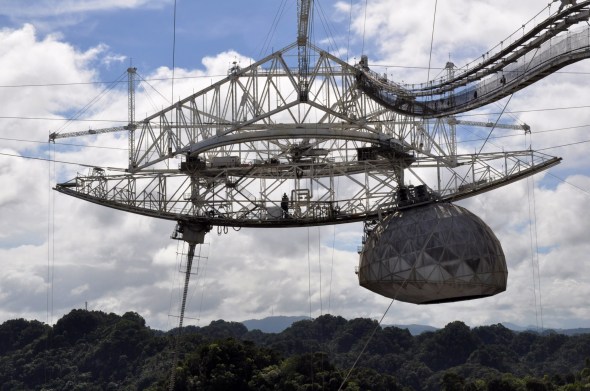
We watched a short film about the Observatory. It hadn’t been updated to reflect that this is no longer the world’s largest radio telescope (now that’s in China, quelle surprise). It was interesting nevertheless. After seeing the film, we took a VIP tour which was just a ride in a bus but it did take you right to the edge of the “dish” and that’s what really gave me a sense of scale. Plus, the guide said that Pierce Brosnan was a complete wuss when he had to do his action scenes which cheered me up no end as I don’t much like his Bond now Daniel Craig has shown us how it should be done.

If you’re in Puerto Rico and you’d like to visit the Observatory, it’s around an hour and a half’s drive from San Juan.
The streets of Old San Juan
The Puerto Rican capital has a history which goes back over 500 years. Founded by the Spanish at the end of the first decade of the 16th century, it was originally known simply as Puerto Rico but by 1521 went by its proper name of San Juan Bautista de Puerto Rico (which these days has become just San Juan). Though you could be forgiven for thinking the city’s American, it’s not quite: the Spanish eventually ceded the island to the USA at the end of the Spanish-American War in 1898 and it’s been a self-governing territory ever since. That Spanish flair is still much in evidence in Old San Juan, however.
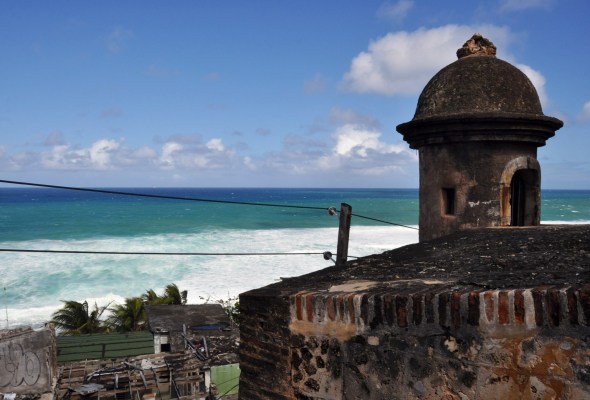
Within the metropolitan area of San Juan which sprawls for miles, the area of settlement that occupies a narrow peninsula on the island’s north coast, bounded by Fuerte San Cristóbal and Castillo San Felipe del Morro, is known as Old San Juan. The geography of San Juan naturally lent itself to providing a safe harbour. It’s still a busy port today receiving a steady stream of cargo and cruise ships.


In its early days, San Juan’s location at the eastern edge of the Caribbean led to its development as a defensive stronghold, hence the heavy fortifications that you can still see today. They comprise not only those two forts but the thick, almost impenetrable, walls that encircle the city and the imposing Puerta de San Juan located on the south western flank of the city. As the 16th century progressed, Old San Juan came under attack from numerous forces, among them Francis Drake, whose men were adversely affected by a dysentery outbreak and fled, tails between their legs. They wouldn’t be the last.
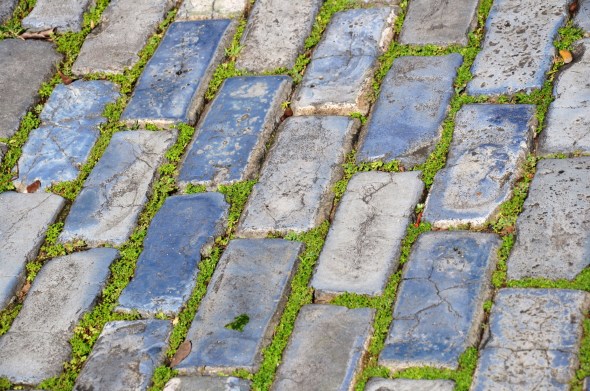
The narrow European-style streets of Old San Juan are a far cry from the wide boulevards lined with high rises and flanked by shopping malls that characterise other parts of the city. Here, cobbled surfaces bear the distinctive blue setts known as adoquines. They’re not granite, as you might think, but instead made from the slag of iron furnaces and used as ballast on ships arriving from Spain.
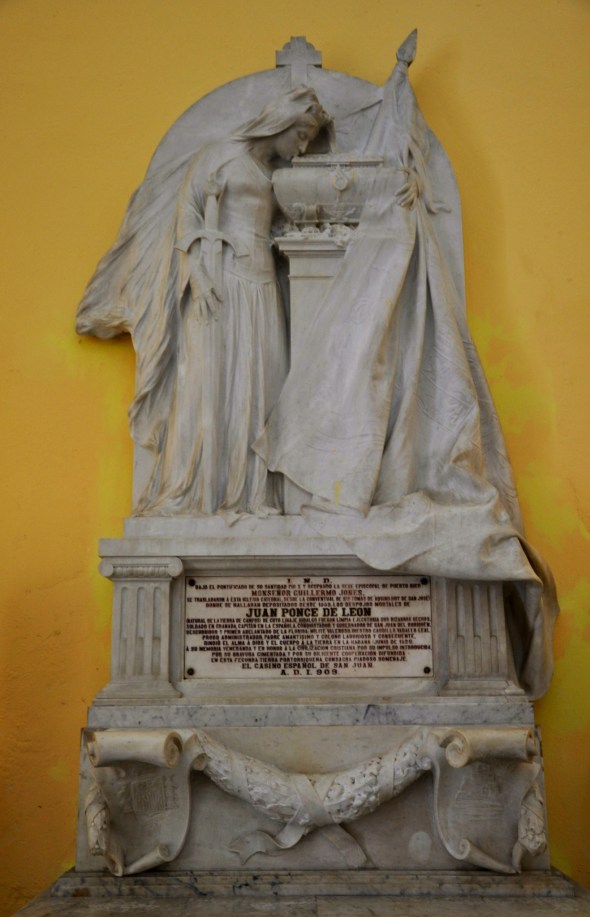
One of those Spanish ships brought Juan Ponce de León, whose remains can be found in front of an egg yolk yellow wall of the city’s bijou cathedral. Like many conquistadors seeking a new life in the New World, he was escaping a life of poverty and a region devoid of opportunities for the ambitious. His travels took him first to Florida and then to Puerto Rico, and it is he that is credited with the foundation of the island’s first settlement, Caparra, which predates Old San Juan by a few years though wasn’t to last.
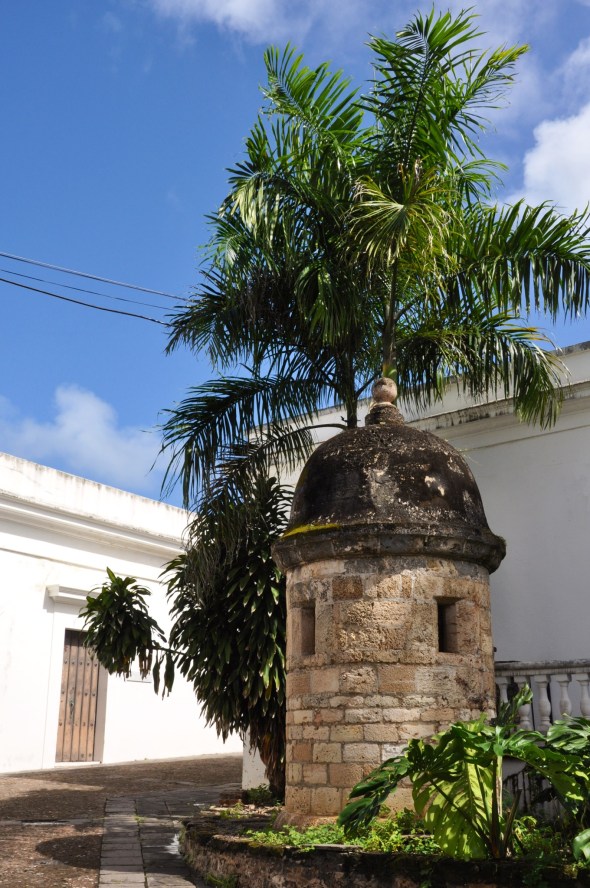
Ponce de León was the island’s first governor but he didn’t remain long in Puerto Rico. Off exploring, he was fatally wounded by a poisoned arrow and died in Cuba. The family home, Casa Blanca, is significant as the oldest continuously occupied house in the city.


One of the great delights of a visit to 21st century Old San Juan is simply to wander. Many of the buildings are painted in bright colours, making this a photographer’s dream. Several tourist trolleys loop the old town, but to truly appreciate the architecture and atmosphere, strolling through its streets and lingering in its many parks and squares is a must.
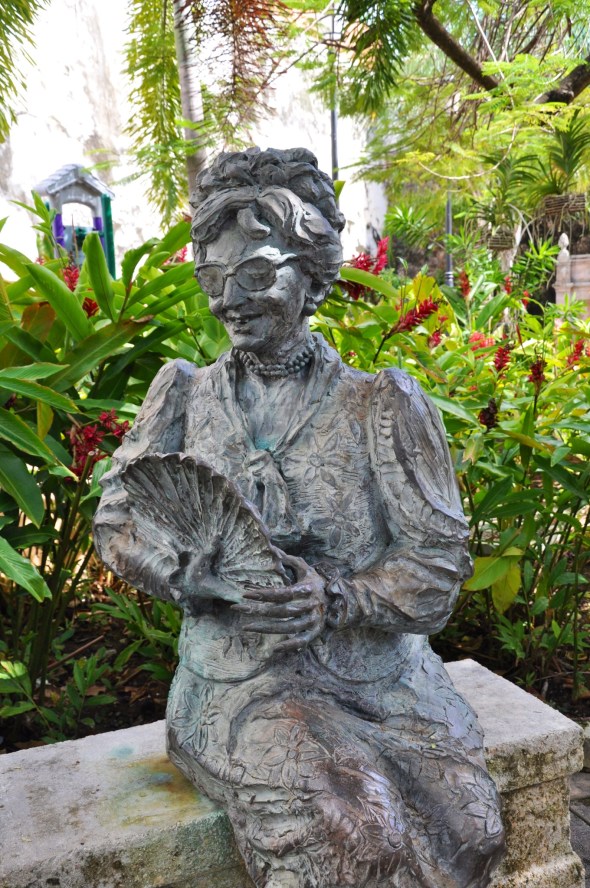
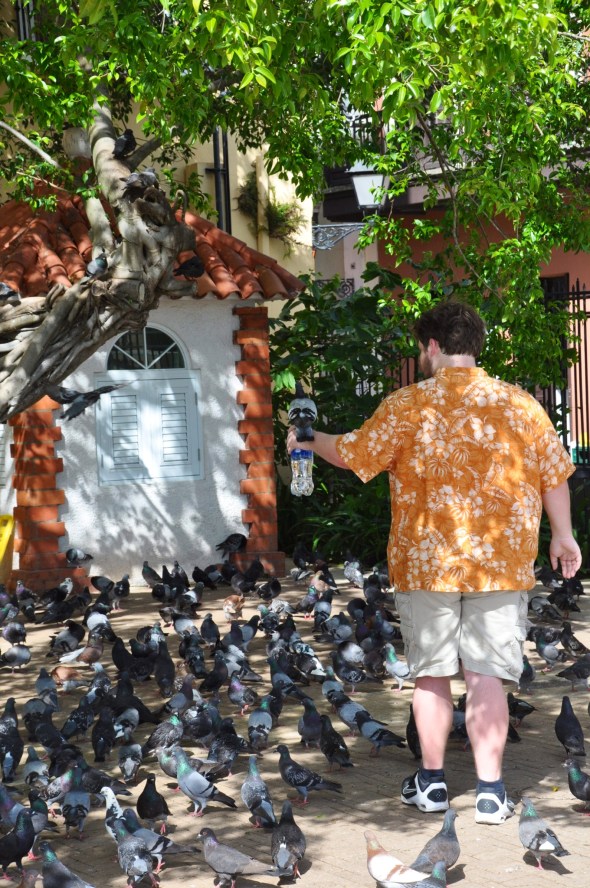
Each has its own identity, from the tourists that feed the pigeons which flock to Parque Las Palomas, to the many characterful statues and sculptures that you’ll find camouflaged with verdant planting. The shade provides welcome respite from the Caribbean sun, enabling visitors to recharge their batteries before continuing their exploration of this delightful place.
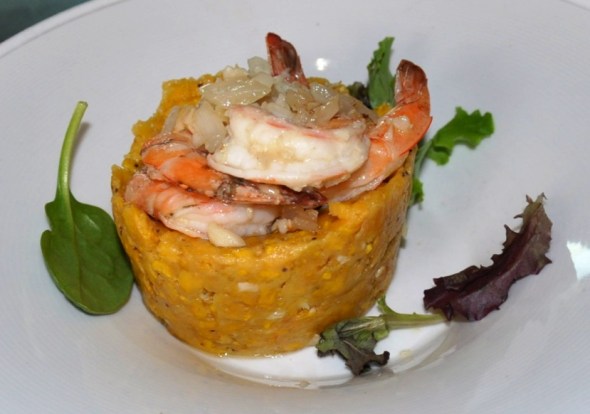
When you do finally run out of steam, there are many cafes and restaurants where you can try the uniquely Puerto Rican dishes. Mofongo, a dish of mashed plantains topped with shrimp or chicken, is a staple and a must-taste. For a snack, the ubiquitous Mallorcas, pastries filled with cheese, guava jam, ham or eggs and dusted with icing sugar, is a tasty way of staving off the hunger pangs. And don’t leave without trying the coffee: rich and smooth, the addition of sugar would be a sin.
Puerto Rico’s Ruta Panorámica
Translating as the Scenic Route, Puerto Rico’s Ruta Panorámica consists of 167 miles of twisting mountain roads that bisect the island’s verdant interior. Driving on this Caribbean island was fast though rarely furious. Although many a driver strayed onto our side of the road as they tackled the many blind hairpins, we didn’t hear a horn hooted in anger. Plenty of vehicles had horns which imitated police sirens, however, which was disconcerting at first. This was also the road that attracted the boy racers in their pimped up orange, blue or red Jeeps, sound systems blaring out the bass as they tried to outdo each other’s decibel count.
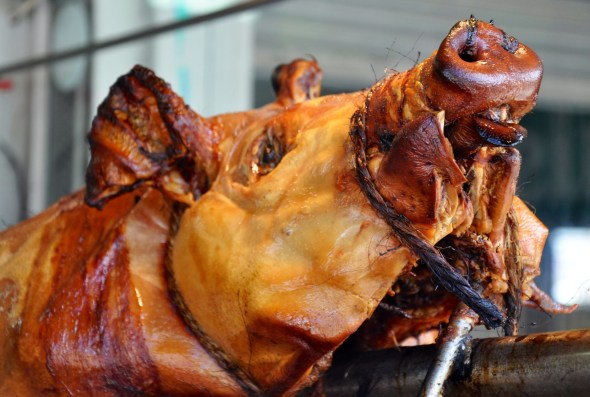
We began in Guavate, a short drive from the easternmost point of the Ruta Panorámica. On Sundays, half the island’s population winds its way up the steep switchbacks to eat suckling pig in one of the village’s many lechoneras. Whole pigs rotate on spits, drawing in the punters, while chefs armed with machetes hack the glistening animals into bite sized pieces. This isn’t fancy dining: you’re just as likely to get a lump of bone as you are a hunk of melt in the mouth pork, but the crackling is to die for and the atmosphere warm and inviting. Stalls loaded with helium-filled balloons and soft toys ensure that amidst all that Medalla beer, it remained a determinedly family-friendly occasion.

The party at Guavate goes on all afternoon, but we were keen to drive at least part of the Ruta Panorámica, picking it up midway between the towns of Cayey and Aibonito. Climbing steadily, we followed a tour bus, grateful of its slow pace for the extra time it gave us to judge the severity of the bends. Despite our unexpected guide, we still managed to take a wrong turn and missed seeing the Cañón de San Cristóbal, though we might only have caught a glimpse of this deep chasm from the road.

At the Mirador Villalba Orocovis, we grabbed the last space in the parking lot. Sweeping views south across lush vegetated slopes topped by charcoal grey scudding clouds drew a small crowd. The beat of salsa and reggaeton formed a noisy soundtrack to the chaotic scene and judging by the groups of people crowding around car boots, parking lot picnics were even more popular than the stunning views.

Continuing west, we climbed into the Toro Negro Forest. Giant stands of bamboo topped by frothy lime green leaves diffused the afternoon sunshine and formed towering arches over the narrow road. Here and there, we hit a traffic jam caused by cars trying to squeeze into the undersized gravel verges that formed the car parks of local neighbourhood restaurants. Driving the road required a steely nerve: swerving around deep potholes onto the wrong side of the road ahead of tight bends. Our guidebook advised tooting the horn at such points to alert oncoming traffic but this wasn’t a convention observed by anyone, least of all the local drivers who formed the majority of road users.
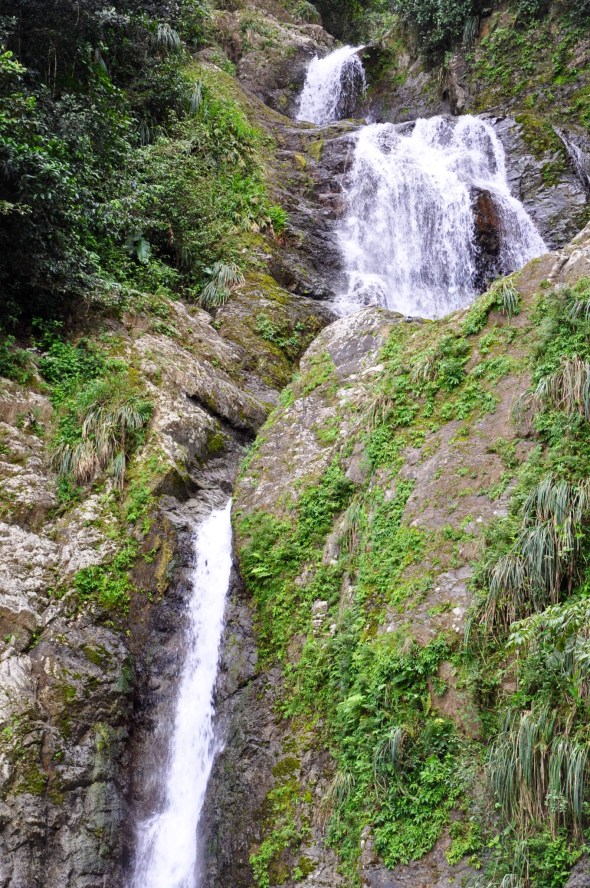
Everyone was in a hurry, except the stray dogs who pottered in the dirt by the side of the road, wandering into the road at worryingly frequent intervals. Some, heartbreakingly, were road kill. Families sat on cheap deckchairs by the side of the road, some animated, others reflective. Their possessions were modest: homes characterised by peeling paint and scruffy yards cluttered with ageing cars sporting years of dents and scratches. It was testament to the fact that local knowledge didn’t make this crazy road any easier to navigate.
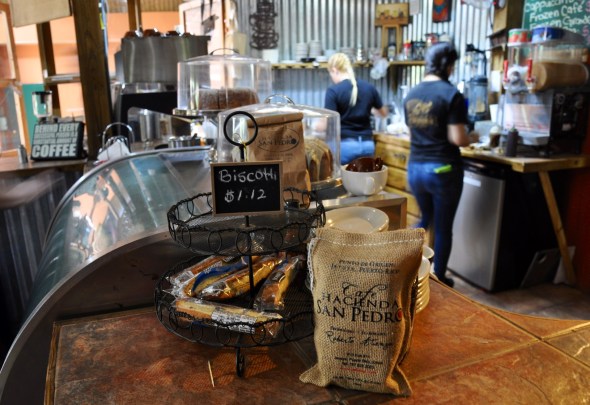
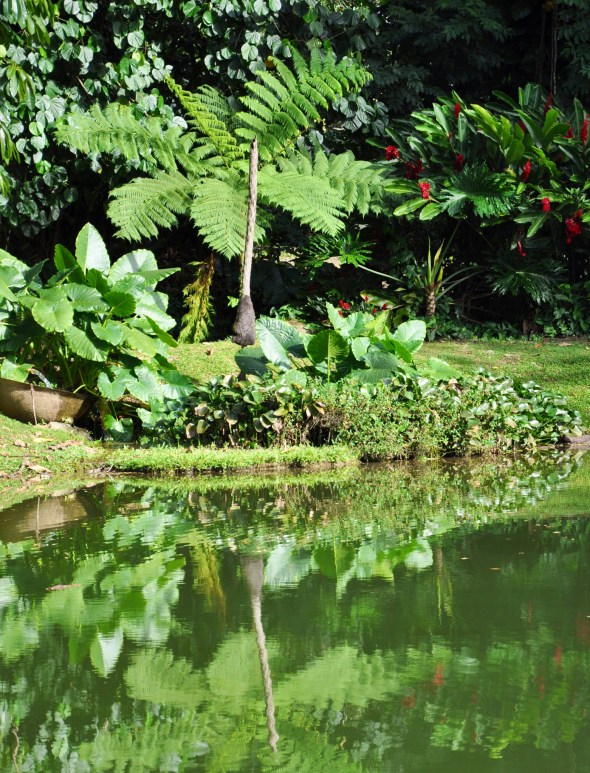
By then, we were in the heart of Puerto Rico’s productive coffee country, and our next stop, a hacienda just short of the town of Jayuya, was proof that the soil and the climate in these hills was well suited to the crop. We queued to sample the rich, almost creamy espresso, fuller bodied and sweeter than we were accustomed to. It was so smooth, we went back for more, this time in the form of frozen coffee. We slurped it through straws, as we sat by the lake on pallet benches slung with rough hessian sacks, watching tiny birds ripple the surface as they dive bombed the water for flies. The ageing machinery above the hacienda’s cafe revealed a surprise: it was made by Bentall’s agricultural works at Heybridge Basin, just a few minutes’ drive from home.
We were keen to get off those dangerous mountain roads by nightfall, cutting north and spiralling up and down through the countryside for what seemed like forever. We were sure we’d missed a turnoff, but instead, we’d woefully underestimated the time it would take us to cover such a small section of the map. Eventually, the Ruta Panorámica spat us out onto the racetrack that would deliver us to San Juan, a world away from the sleepy Puerto Rican countryside that was as more-ish as its coffee.
Stranded in Jacmel
One of the great joys of travelling alone is the freedom to go where you please, when you please. Unfortunately, I was going nowhere, stranded by a set of circumstances out of my control and, thanks to a woefully inadequate command of the local lingo, completely at a loss as to why.

I’d been in Jacmel for a few days celebrating Kanaval. Carnival festivities took place each February a week before the rest of the country. A flamboyant parade of colourful floats, larger than life papier mâché characters and enthusiastic dancing, it was a raucous, deafening and utterly captivating event. In short, it was anything but a warm-up for the revelry which took place a week later in the Haitian capital, Port au Prince.
I say I’d been in town. More accurately, I’d been staying just out of town. Prices at that time of year were hiked by the few desperate hoteliers that managed somehow to stay in business. Haiti’s tourism industry is precarious at best, battered by a hideous earthquake in 2010 and several devastating hurricanes. Those extra gourdes would likely mean the difference between staying open until the following year and closing their doors for good. Today was the day the visitors left and those who remained counted their takings to determine their fate.
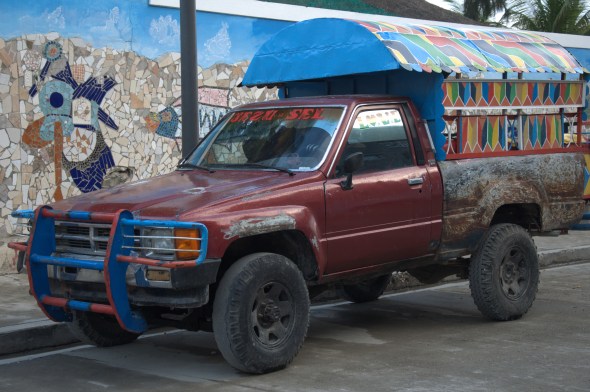
But things were not going to plan that morning. A taxi had dropped me off at the petrol station forecourt that served as a bus station, though there was no petrol at the pumps and nothing in the vicinity that you’d call a bus. Instead, a gaggle of decrepit minibuses were parked in an untidy line as their drivers slouched against the concrete fence drawing on cigarettes and lazily passing the time of day. Inside one minibus there were a handful of patient passengers. Assuming that it would leave when full, I approached the driver to ask if he was headed to Port au Prince. To my surprise he replied in the negative. My schoolgirl French wasn’t up to the ensuing conversation but the gist of it, as far as I could work out, was that there were no buses leaving for the Haitian capital at all.
“Pas de bus?” I asked, exaggerating a French accent for effect while pointing at the minibus.
He shrugged.
“Pas de transport?” I tried, hanging onto the hope that he’d misunderstood.
“Non.”
That, I understood.
A knot began to tighten in my stomach. A veteran of many a solo trip, had I bitten off more than I could chew? With private transport back to the capital well outside my budget, if there was no bus, any chance I had of making my flight home was dwindling fast. What I still couldn’t understand, however, was why, if all transport was suspended, his bus still had passengers inside. I decided that as we were so close to the Dominican border, I’d try speaking Spanish. From what I’d read, there was no love lost between the Haitians and their wealthier neighbours – a few days earlier a cross-border bus had been set alight in a tit for tat incident – but I was running out of options.

Fortunately, the driver spoke a bit of Spanish too. I managed to ascertain that there was a protest just out of town. A blockade had been hastily erected on the road which wound through the hills that cocooned sleepy Jacmel from what otherwise might have been the contagious noise and chaos of the capital. This roadblock of burning tyres and angry protesters had stymied public transport for the foreseeable future. Something to do with the government increasing the price of fuel, he said vaguely, and out of his hands. Until the roadblock was lifted, no one was going anywhere. Those few passengers inside his vehicle were either blindly optimistic of their government’s ability to resolve the situation or had nowhere else to go.
Luckily, I did have somewhere. As of today, hotels were back to offering post-carnival rates, so I schlepped my wheelie back into town. The Hotel Florita was a Jacmel landmark, its elegant balconies and huge wooden doors a giveaway to its former life as a coffee warehouse. Built in 1888, it had been spruced up post-earthquake with a coat of whitewash, its myriad architectural features accentuated in baby blue. I’d read about the place when I’d been planning the trip and fallen in love with the idea of staying there.
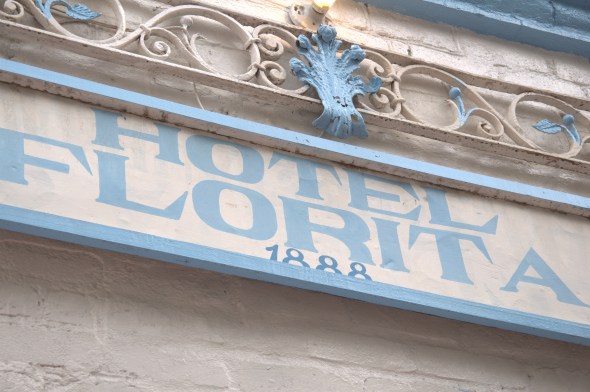
The hotel’s own website proudly boasted that the place was “not in catastrophic condition” and that the main house had “not been hijacked by conditioned air”. The management’s description of the New Yorker who converted the place into a hotel was just as entertaining, recounting that the man had first seen it when drunk before “thoughtlessly and fecklessly” purchasing it. The paragraph concluded: “Why he did it remains a mystery and his decision to turn it into a hotel a decade later unfathomable. It is still there limping along.” The Florita had seemed like my kind of place and now it seemed I might get to stay there after all. Happily what had been the old courtyard kitchen now contained a four poster bed that had seen better days. Its most recent occupants had checked out just this morning, leaving my path clear to snagging the cheapest room in the house.

Installed on one of the Florita’s sofas, I logged on to what surely had to be the slowest WiFi connection in the western hemisphere and attempted to trawl Twitter for information. News was sparse but universally bad. The latest fuel hike was one in a long line of unacceptable actions by an unpopular government and people had had enough. I sympathised up to a point but their timing couldn’t have been worse.
While the townsfolk of Jacmel battled their hangovers to begin the big clean up, I spent the morning researching an alternative route home. The blocked road over the mountains to Port au Prince was the only one in that direction. To the west, a torturous mountain track lead to the tiny towns and villages of Haiti’s southern claw – effectively a dead end. Jacmel had an airport, just outside the town, but it was no longer in use. There was a coast road which might have taken me east into the Dominican Republic, but I had no wish to be the next victim of a retaliatory arson attack.

I snapped the lid of the laptop shut and ordered a beer. I might not be free to go where I pleased, but the whole point of travelling was to embrace your surroundings and anything they threw at you. There were worse places to be stranded, I decided. The sun was shining and it was nearly time for lunch. Solving the problem of how I was going to get home could wait.
An island for every month of the year
For many of us, an island holiday is the ultimate in escapism. There’s something about it which engenders a kind of “pull up the drawbridge” mindset perfect for recharging the batteries. What follows puts together those islands that for one reason or another have made a lasting impression on me, with a suggestion for a good time to visit weather-wise.
Gorée – January
Senegal’s Île de Gorée is at once a melancholy and vibrant place. The focus for the country’s remembrance of those lost to the slave trade even though few were ever shipped from its shores, it’s also colourful and charismatic, a favourite of artists and craftsmen. It’s an easy day trip from the Senegalese capital Dakar. In January the weather is sunny and mild, making this the perfect winter escape.

Roatan – February
Honduras might have a hellish reputation in terms of safety and security – its largest city San Pedro Sula is considered to be the murder capital of the world – but the languid island of Roatan off its northern coast is about as far from trouble as you can get. It has all the characteristics you’d expect from a Caribbean island: a laid back welcome, turquoise warm waters and fresh fish dinners. In February, it’s busy enough to feel buzzing, yet you’ll have no problem finding space on the beach to soak up those tropical rays.

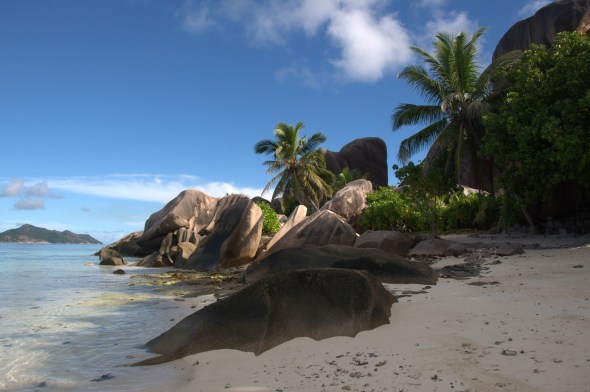
La Digue – March
The Seychelles has a reputation for luxury – and all the costs that come with achieving it. The good news is that La Digue manages to offer accommodation for all budgets. Better still, it’s one of the prettiest islands on the planet and compact enough that you can explore it by bike in a few days. In March, the weather’s on the turn, but unless you’re really unlucky, visiting La Digue in the shoulder season means you’ll dodge the worst of the crowds as well as the rain.
St Lucia – April
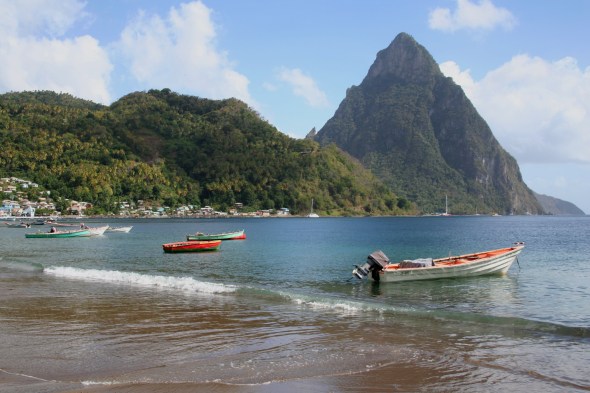
One of the lushest islands in the Caribbean, St Lucia is also one of the prettiest. But that verdant setting has only been achieved with rainfall totals higher than many in the region. April is statistically the driest month, so time your visit to the island’s cocoa plantations, hot springs, iconic peaks and of course fabulous beaches to hit the best of the weather.
Gozo – May
Malta’s firmly on the beaten track when it comes to Mediterranean escapes, but visit Gozo before the main tourist season kicks into gear and you’ll be impressed. This rural and characterful island combines fascinating historic attractions with impressive coastal scenery.

Lanzarote – June
If you’ve ruled out Lanzarote on account of its nickname, Lanzagrotty, then you need to have a rethink: this place is seriously cool. Avoid the crowds of tourists tied to school holidays and get in ahead of the crowds to explore Cesar Manrique’s fabulous architectural legacy and some of the hottest volcanic scenery on the planet.

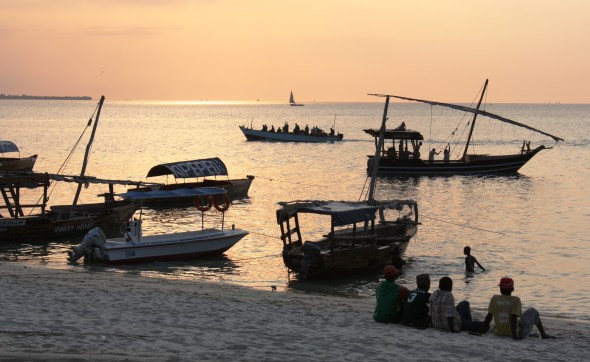
Zanzibar – July
There are few islands with names that conjure up as exotic an image as that of Zanzibar. The reality is as satisfying: the narrow alleyways of the capital Stone Town are lined with mansions made from coral stones held together with lime mortar, built by merchants who traded spices, silks and slaves. To the north of the island, you’ll find plenty of excellent beaches where you can enjoy the dry, hot July weather.
Tanna – August
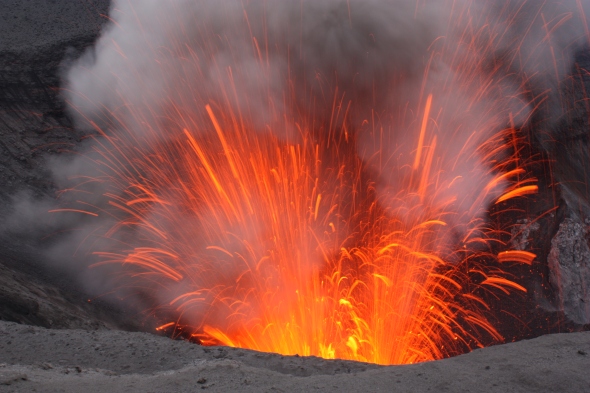
Faraway in the South Pacific lies the archipelago of Vanuatu. Its most fascinating island is without a doubt Tanna. Dominated by one of the most accessible active volcanoes on the planet, visitor interest is piqued by the John Frum cargo cult, and in particular the offshoot Prince Philip movement that think our Queen’s husband is a god. Toast him with kava, the local firewater which numbs your mouth and sedates your brain.
Bali – September
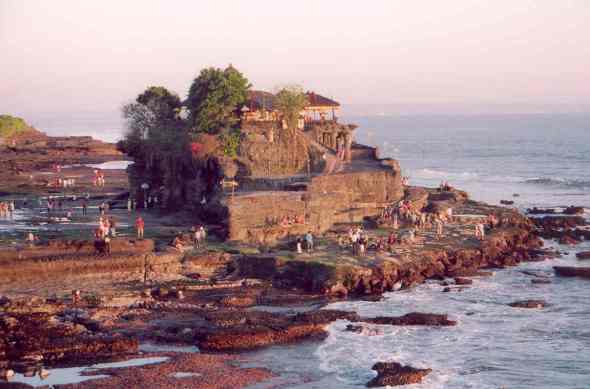
Well on the beaten tourist track, Bali offers a winning combination of culture and relaxation in one neat and tiny package. Its resorts make the best of the sandy beaches and September sees the crowds thin ahead of the October to March wet season. Watch the sunset over the ocean at Uluwatu temple or head inland to the green rice terraces that encircle the pretty town of Ubud.
Kyushu – October
The most southerly of Japan’s big four, Kyushu packs a punch. It’s a good choice for those wishing to get up close to the country’s tectonic action, with mud pools, hells and hot sand baths at Beppu and the active volcano Sakurajima an easy ferry ride from the city of Kagoshima. By October, the humidity that plagues the summer months is long gone, but temperatures are still high enough to make sightseeing a pleasure.

Easter – November
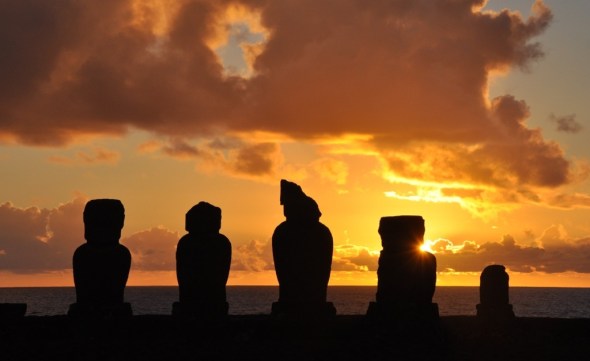
Despite its isolation, remote Rapa Nui is recognisable the world over for its moai, the oversized stone heads that gaze out over the Pacific from all parts of this mountainous island. The five hour flight from the Chilean capital just to get there is arduous, but when you do, you’ll agree it’s well worth the effort. Its history is fascinating, but it’s the location that blows your mind.
Cuba – December
Go there before it changes, they said. So I did. But that was well over a decade ago and the tour companies are still saying it. Nevertheless, I haven’t yet met a visitor who was disappointed. Cuba’s one of those places that gets under your skin, from the old ladies in Havana who’ll puff on their cigars for a dollar to the horses that you’ll still see trotting down the cobbles of backstreet Trinidad. Forget generic Caribbean, this place is unique and special because of it.
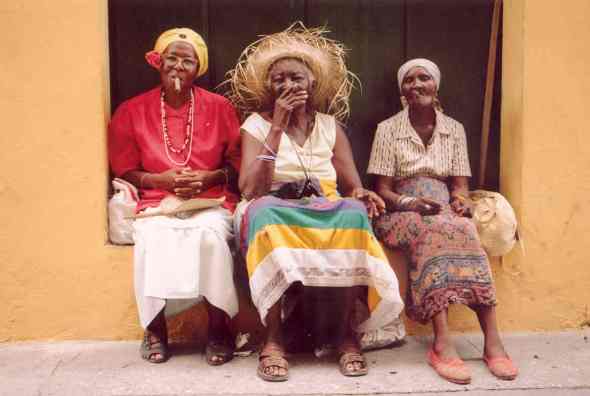
So there you have it, my favourites. What are yours?
Why I’d rather celebrate Day of the Dead than Halloween
Halloween is upon us and with it, the excessive commercialism that has, sadly, come to characterise this holiday. I know some parents make the effort to teach their kids some context, but I suspect many young trick or treaters will have no idea about the origins of the occasion. In fact, trick or treating is thought to have started in Ireland, Wales and Scotland where knocking door to door resulted in the exchange of food for a song. The origins of Halloween go back further: an adaptation of the Celtic pagan festival known as Samhain according to some, while Christians mark it as the evening before All Hallows, an 8th Century attempt to eradicate pagan celebrations. Both however, have something in common: it’s seen as a time when the spirits return and the dead are remembered.

My issue with Halloween, my only issue, is its materialistic bent. Encouraging children to demand treats doesn’t sit well with me. Sure, it’s a bit of fun and what kid doesn’t like dressing up and carving pumpkins? I have no problem with that! However, it seems, as with Christmas, that the true meaning of the occasion has been well and truly buried under all that candy-begging and even harassment of the vulnerable. And if you’re still in any doubt that this is big business, then consider these statistics from a recent Daily Telegraph article:
- £283 million: predicted sales of Halloween-based products in the UK in 2015
- $6.9 billion: total Halloween consumer spending in the US expected for 2015
- $2.1 billion: total amount expected to be spent in the US on candy in 2015
- 3 million: number of pumpkins Tesco expects to sell this Halloween
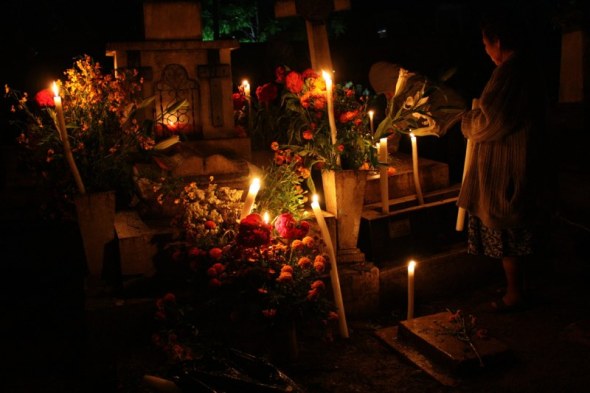
If you’re a Halloween fan and still reading, and I haven’t well and truly pissed you off by this point, then let me tell you what I prefer about Day of the Dead. Known as Día de Muertos, it’s been part of Mexican culture for three thousand years. I first experienced this festival a few years ago with a visit to Oaxaca and was immediately struck by the way that it blended religion, respect, commemoration and celebration. And let’s not forget that last one. Day of the Dead is anything but dull: there are fancy dress parades, carnival floats and of course, much music, drinking and dancing.

At the heart of the festivities is the dressing of the graves of the ancestors and the construction of homemade altars built to honour their spirits and encourage them to return for a visit. Work starts on these ofrendas in the last few days of October, and every street corner is occupied by flower sellers surrounded by buckets of vibrant orange marigolds known locally as cempasuchil.

- On November 1st, the souls of deceased children are the focus, while on November 2nd, it’s the turn of the adult ancestors. Families visit the cemetery and sit at the graveside to raise a glass of Mezcal and eat a special feast. It’s all at once a poignant, private and public occasion, as visitors are welcomed and encouraged to join in.
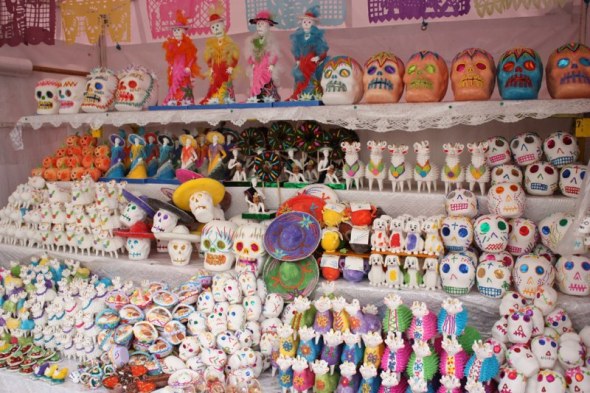
Catrina, the elegantly dressed skeleton and iconic figure of Day of the Dead, is everywhere. Clearly, commerce plays a big part in Día de Muertos too: vendors sell everything from sugar skulls to folk art skeletons, Mezcal to garlands of marigold petals. I don’t have a problem with that. But in Mexico it sits side by side with ceremony and tradition, with both given their proper place.
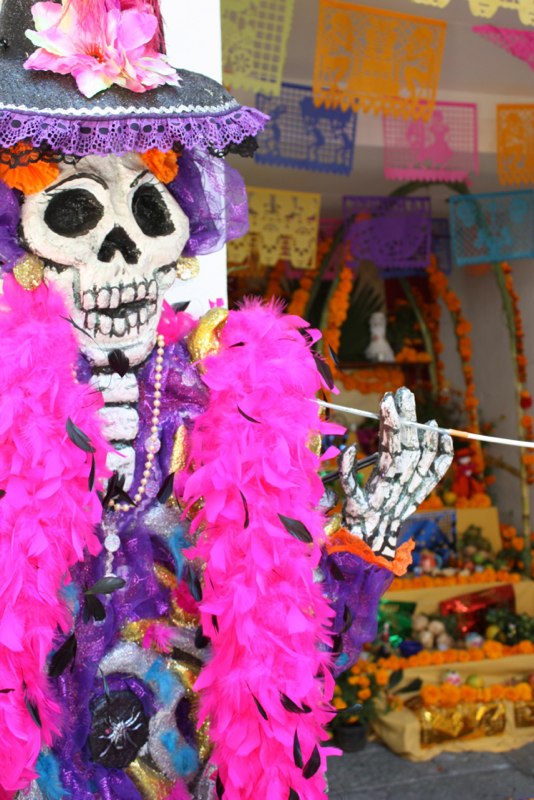
Día de Muertos touched me as a way to remember my grandparents, much loved but long departed. Amid the hectic day to day activities of “life goes on”, over time, I found myself thinking of them less and less. It’s not that I don’t still love them, but I began to worry that as the memories faded I’d one day forget to remember what a significant contribution they made to my life. Their photos are on the altar we made:

When I went to Oaxaca, I took with me their photographs, and, having been privileged to help build an altar at Casa de las Bugambilias, felt a stronger connection to them than I’d had in years. So this year, I’ve built my own altar and on November 2nd, All Souls Day, I’ll raise a glass to toast these very special people and thank them for all they did for me when they were here.
For more photos from the Oaxaca trip, please visit:
Five favourite travel books: South America
I rarely read up about a place in a travel book as preparation for a holiday, but I do love to read about travel. South America, as regular readers will know, is my favourite part of the world and so I thought I’d begin here as I share my best loved travel reads. If you’ve any recommendations for must-read books on any of the South American countries, then do share – I’d love to know. And watch out for more on this theme at a later date: my bookshelves are stuffed full of addictive page-turners not only for the rest of the Americas, but destinations spanning the rest of the world’s continents.
Inca Kola by Matthew Parris
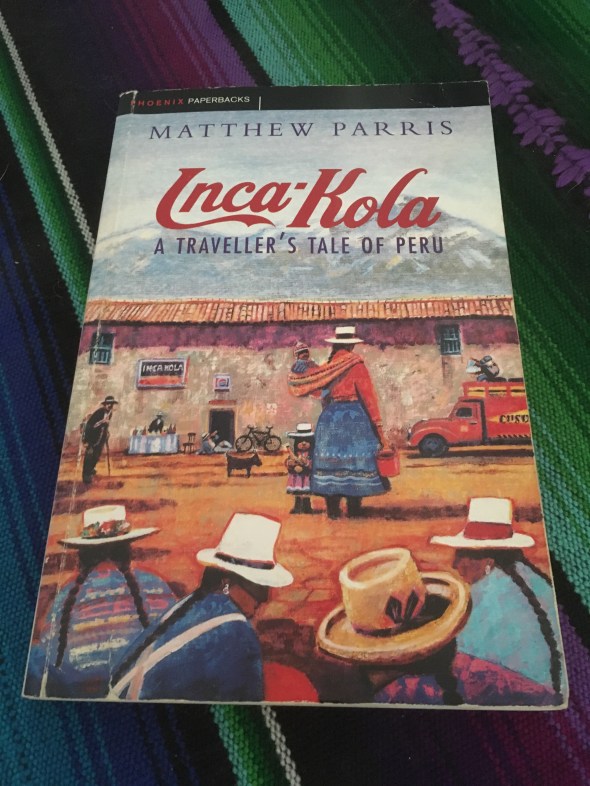
If my house was burning down and I only had time to grab one travel book, it would be this one. I’ve read Matthew Parris’ absorbing account countless times and it’s a delight from the first page to the very last. From his introduction to Limeño traffic to accounts of hostile bandits and remote mountain villages, this is a fabulous insight into how Peru used to be. In the opening chapter, Parris writes:
“Go to any scrapyard in Europe and command the wrecks to rise like Lazarus from the slab: you will have launched a fleet of the finest and newest Lima has to offer!”
I’m reminded of my first visit, in 1995, when my friend announced that, in order to find a cheap ride, you had to flag down the least roadworthy taxi that passed. The dilapidated Beetle that would take me back to airport at the end of that trip had as many rusted holes as it did square inches of metal and the doors were held in place by ordinary kitchen string. That we made it at all was a miracle, but it was indeed cheap.
Eight Feet in the Andes by Dervla Murphy

Few mothers would take their nine year old daughter on a long distance Andean trek with only a mule as transport, but then few people would look to Dervla Murphy for parenting advice. What results is a wonderful adventure and a lesson to everyone that you should never make excuses to avoid fulfilling your needs, especially where travel is concerned. I’ve never had children, but I like to think that had I done so, he or she would have accompanied me on my travels.
Often, Dervla’s experiences are far from mine, but I did identify with this:
“She…provided two litres of watery chicha fascinatingly diversified by scraps of floating vegetation. (“Better than insects” commented Rachel, peering into my glass.)”
I only tried chicha once, this home-fermented maize beer not to my taste. Rumours that those who made it spat their own saliva into it didn’t help to convince me otherwise.
Travels in a Thin Country by Sara Wheeler
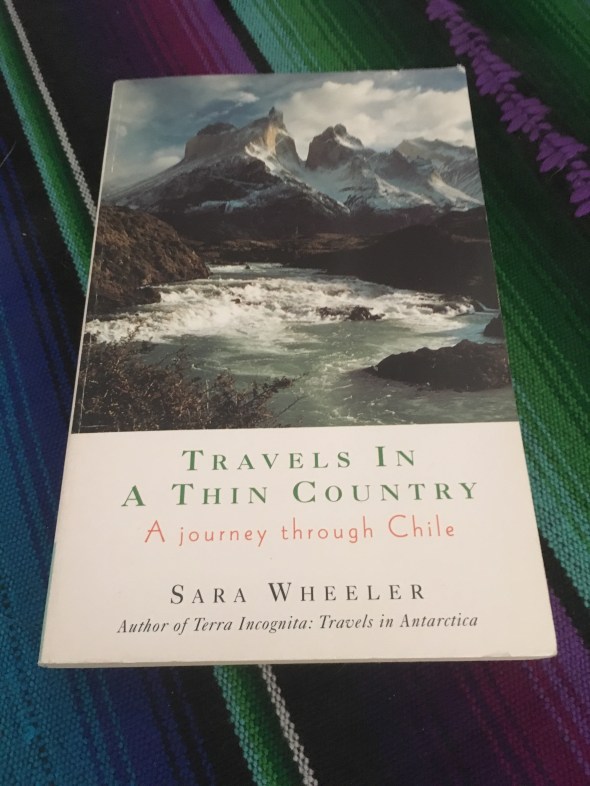
Peru’s neighbour Chile is the subject of this well-written and engaging work. The author spent six months travelling in the country and writes as confidently as you’d expect. Some of my favourite parts of the book are her interactions with those she meets, including this episode in the Torres del Paine National Park:
“I asked if they could sum up the difference between Chilean Patagonia and Argentinian Patagonia in one sentence. “Absolutely none at all except the Chilean bit has mountains,” said the Argentinian. “Quite,” said Fabien (her Chilean guide) and that was that.”
That brief exchange sums up the difference in temperament between the chatty Argentinians and the more reserved Chileans. And in terms of comparing scenery, I can report that both are spectacular and equally beautiful.
The Old Patagonian Express by Paul Theroux

While I’m not disputing that Paul Theroux is a great travel writer, he’s a grumpy old man much of the time and as a consequence, I often find his work doesn’t quite hit the spot. This is an exception and the combination of trains and the Americas is a happy combination as far as I’m concerned.
However, towards the end of the book, Theroux reverts to type as he writes about La Boca, a colourful working class neighbourhood of Buenos Aires:
“I roamed the city on my own. It now depressed me. It was partly the effect of La Boca, the Italian district near the harbour… some of the squalor was affectation, the rest was real dirt.”
He was writing in the late 1970s. I visited three decades later and the vibrant colours and equally colourful characters who inhabited the place made it one of the areas I remember most fondly. But who am I to disagree?
Bad Times in Buenos Aires by Miranda France
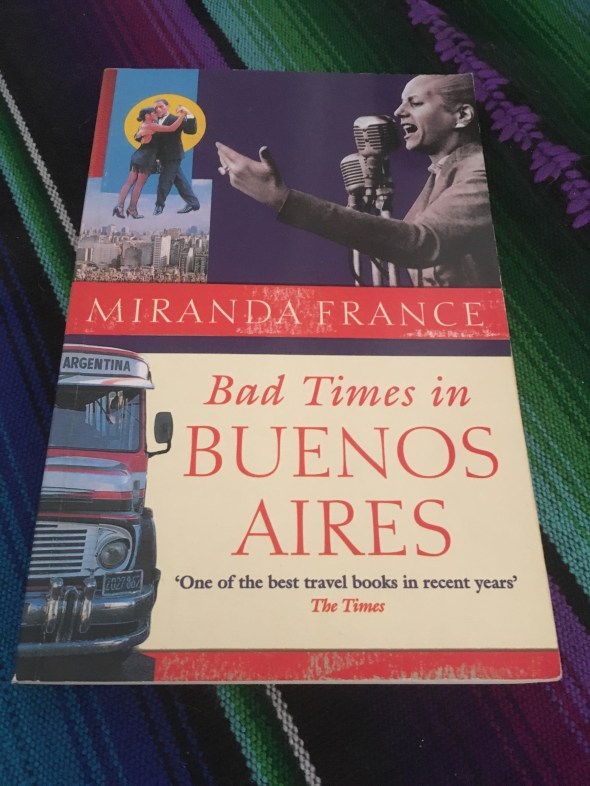
Somehow Miranda France manages to point out Buenos Aires’ flaws with more charm and seems to be affectionately ribbing her adopted home rather than moaning about it. This, I love:
“There was a word I kept hearing: bronca. An Italo-Spanish fusion, like most Argentines themselves, the word implied a fury so dangerously contained as to end in ulcers. People felt bronca when they waited for an hour to be served at a bank, and then the service was bad because the cashiers all had bronca too. Bronca crackled down the crossed telephone lines and stalked the checkout queues in supermarkets with hopeful names like Hawaii and Disco.”
Ah, Buenos Aires, what a screwed up and yet utterly captivating place! See you next year, I can’t wait!
On a mission in San Juan Cap, California
With so many names and signs in Spanish, let alone the number of voices you’ll hear speaking the language, it’s hard to ignore that this part of the USA was once Spanish. In the heart of Orange County, midway between Los Angeles and San Diego, I visited the little town of San Juan Capistrano, drawn by the mission of the same name. (And a really good Mexican restaurant, but that’s another story…)
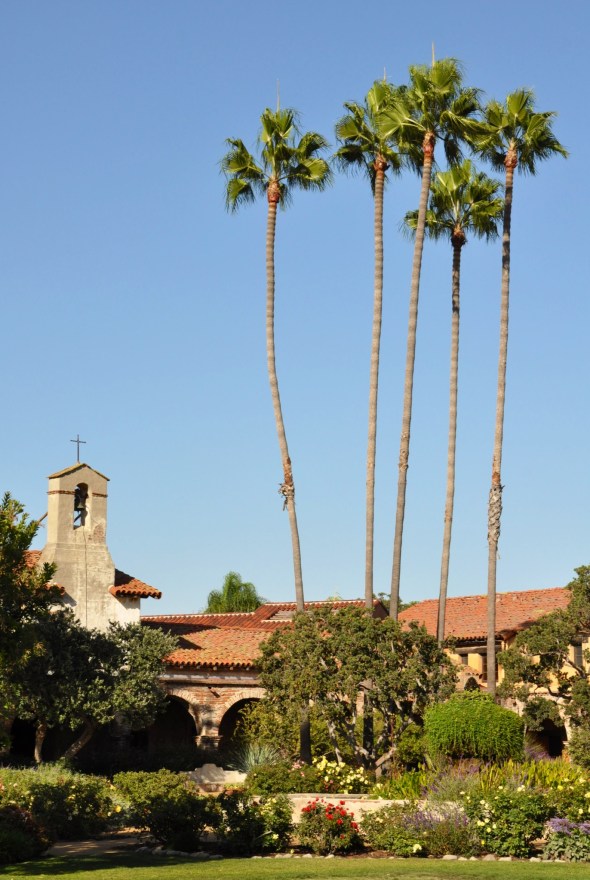
Originally founded in 1775, Mission San Juan Capistrano was the seventh of twenty one such missions in what was them known as Alta California. Spain wished to expand its territory and at the same time, convert the native Americans to Catholicism. The missions were designed to be a place of learning and training, though of course, once converted to upright Spanish citizens, the native population would also be paying tax. The Spanish brought their own animals, food and technology, all of which piqued the curiosity of the locals. Once sucked in, however, there was no going back: converts could not leave the mission grounds without permission. By 1806, Mission San Juan Capistrano had a population of more than 1000 people.
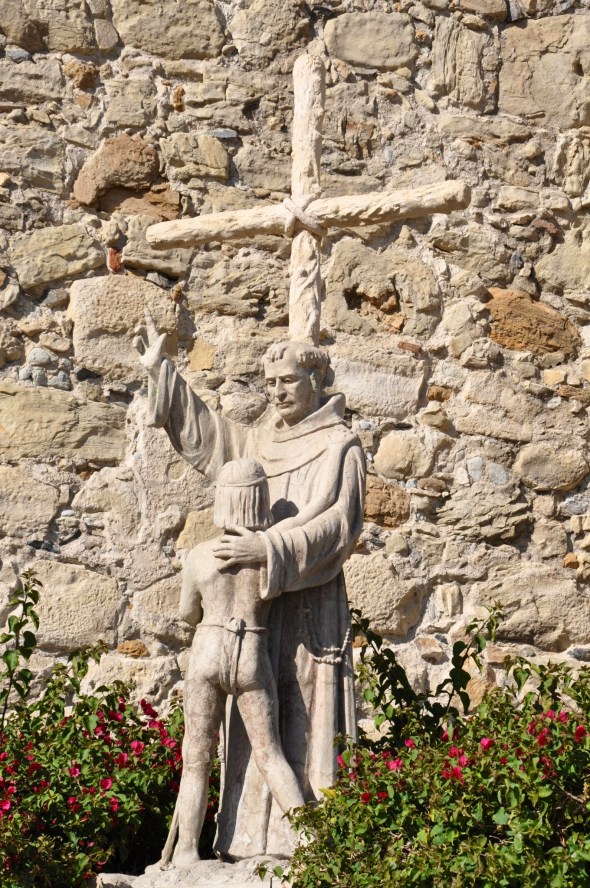
At its heart was the delightful Great Stone Church. Today, this church stands as a ruin, destroyed in an earthquake in 1812. The two bells that sit in front of the structure are actually originals, named San Vicente and San Juan, the latter damaged in the quake, though the four that swing from the bell tower are newer.

The mission collapsed too, let down by the Spanish government so failed to send essential supplies, its residents plagued by outbreaks of disease. The final nail in the mission’s coffin came in 1821. Mexico became independent of Spain and with that, Alta California was no longer a Spanish possession. The Mexican government officially ended the mission system in 1834 and the MSJC’s land was parcelled up and sold to twenty prominent local families. In 1845, the mission itself was sold by the then governor to John Forster, who used it as the family ranch. He paid just $710 for it though its value was over $54000. Did I mention he also just so happened to be the governor’s brother in law?

Things changed again in 1848. Mexico lost the Mexican-American War and under the Treaty of Guadalupe Hidalgo, California was ceded to the Americans and became a state in 1850. President Abraham Lincoln was petitioned to return the missions to the Catholic church and like many, Mission San Juan Capistrano was the recipient of much needed attention and funds from well-heeled philanthropists. Today, such work continues, and visitors and benefactors continue to ensure the mission survives, adding their own flourishes to the existing structures. The fountain in the main courtyard, full of water lilies, is one such embellishment. It’s a tranquil place despite the sightseers, its courtyards full of cacti and hibiscus, framed by brick arches and adobe walls.

The Serra Chapel that stands alongside the ruined Great Stone Church is a still a working church. Its adobe walls are left partially uncovered enabling you to see how it was constructed. Inside, its simple figurines and carvings stand alongside intricate wooden carvings overlaid in gold leaf, allowing to be both rustic and ornate at the same time. The altar, imported from Barcelona, is about 400 years old.

Many visitors come to witness what the mission calls the “miracle of the swallows”. On March 19, the town celebrates the return of swallows from the south. I’m guessing there are some people out there who are gullible enough to believe this is the actual date, but anyway, March is the general time to expect them. The migrating swallows build nests in the nooks and crannies of the church walls where they stay until October. It would be another month before they would return to Argentina. I didn’t see any, but was assured they were there. It said so in the leaflet.
Happy Mexican Independence Day!
September 16 is Mexican Independence Day. Outside Mexico, it is overshadowed by the Cinco de Mayo celebrations which many confuse with Independence Day. In fact May 5 is the anniversary of Mexico’s victory over the French at the Battle of Puebla in 1862. Mexican independence instead was won from the Spanish in 1821 after a war which commenced on September 16 1810.
The fight to extricate Mexico from Spanish rule began with what’s known as the Grito de Dolores, translating as the Cry of Dolores, a rallying cry designed to incite revolt. It was uttered in the small town of Dolores, located a short distance from the colourful city of Guanajuato in central Mexico. The exact words that marked a new chapter in Mexico’s history have been forgotten, but the man who spoke them has not, Miguel Hidalgo y Costilla, a Catholic priest whose statue you’ll find in Guanajuato. Hidalgo was executed a year later but his country owes its freedom to his bravery.

Place of Frogs?
I took a bus to Guanajuato a few years back, travelling from the pretty artists’ enclave of San Miguel de Allende. Arriving in the place they call the “place of frogs” because early residents thought the surrounding hills looked like one, I was struck by the city’s colour. Looking like a city that has shares in Dulux, almost every building is painted a vibrant shade. Individually, they’re pretty, but the overall effect is stunning and it’s no surprise to learn that they’ve earned a UNESCO listing. I took the funicular up to the statue of El Pipila and looked down over the Teatro Juarez immediately below. It really is a splendid place.
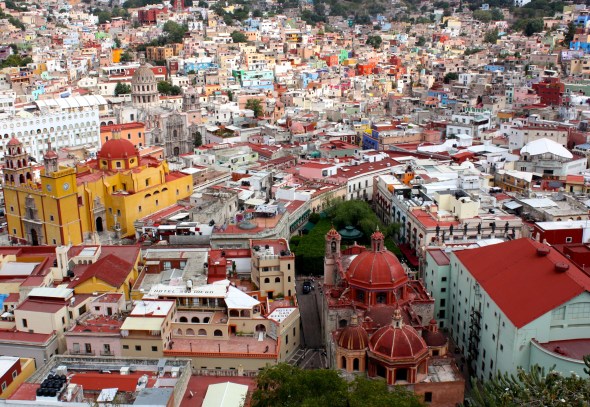
Overlooking Guanajuato from El Pipila
Once, Guanajuato was a mining town, sitting on vast reserves of silver, making it one of the most productive mining areas in the country. The La Valenciana mine, located in the village of the same name, brought huge wealth to the Spanish mine owners and provided many labouring jobs, but it was closed down when the Spanish were given their marching orders. The mine did reopen, but is now permanently shut, though tours are available. Even if you don’t descend underground, it’s worth heading to La Valenciana to see the ornate San Cayetano church.
Back in Guanajuato, one of the best ways to appreciate the city is on foot, wandering along the many alleyways, including the Callejon del Beso (the alleyway of the kiss) where it’s so narrow it’s possible to kiss your lover from balconies on opposite sides of the street. Cafes are another thing that the city does well, scattered in the plazas that are lined with museums, theatres, churches and historic mansions.

Bronze sculpture of a musician outside San Diego church
The day is marked with fiestas, flags, parades and partying. Whether you’re in Mexico or not, I’m sure you’ll join me in raising a glass to that. Viva Mexico!
Ecuador: is it safe to travel yet?
News items reporting Saturday’s magnitude 7.8 earthquake centred on Pedernales, Ecuador, were sadly no shock – the country lies on an active plate boundary where seismic tremors and volcanic eruptions are a fact of life. The scale of this quake, and the high death toll, were unusual and the people of the country will have a long hard slog in rebuilding their lives and livelihoods. Right now, the coastal cities of Pedernales, Manta, Bahia de Caraquez and Portoviejo are going to need time and money to recover, and the country’s largest city, Guayaquil, is reporting damage to transport infrastructure. If you’d like to help, this article from CNN is a useful starting point: http://edition.cnn.com/2016/04/17/americas/iyw-ecuador-earthquake-how-you-can-help/

The country sits on the Equator as its name suggests
You could be forgiven for thinking now’s not the time to be planning a holiday to Ecuador. However, this South American nation is telling us that many of the places on our holiday wish list are unaffected. While aftershocks are continuing, most are only around 4.5 on the Richter scale, with a number of those epicentred out to sea in the Pacific. You can track them here: http://earthquake.usgs.gov/
Quito
Buildings at the historic heart of the Ecuadorean capital are currently being checked over but the city’s hotels and transport systems are functioning. A trip to nearby Otavalo’s famous market is still possible as the town has not reported any significant damage.
![IMG_3002[1]](https://juliahammond.blog/wp-content/uploads/2016/04/img_30021.jpg?w=590)
Otavalo market
Baños
In the shadow of Tungurahua volcano, the hot springs of this tiny tourist town are a welcome sight to those with muscles aching from volcano hikes. There’s been no major damage and if you were thinking of heading there after a Cotopaxi climb, that’s open for business too.
![IMG_3089[1]](https://juliahammond.blog/wp-content/uploads/2016/04/img_30891.jpg?w=590)
Volcano tours are operating as normal
Cuenca
My favourite of all the places I visited during my 2006 trip, this elegant city lies an eight hour drive away from the area most affected by the quake. It’s where you’ll find Panama hats being made – not Panama! – as well as a pretty river walk, a colourful flower market and plenty of colonial era mansions to impress.

Cuenca’s flower market
Galapagos Islands
If you know your geography, then you’ll know that this group of islands is located over 800 miles off the Ecuadorean mainland – about the same as London to the south of France. There’s no tsunami alert in place and excursions are running as usual. The blue-footed boobies are awaiting your call!
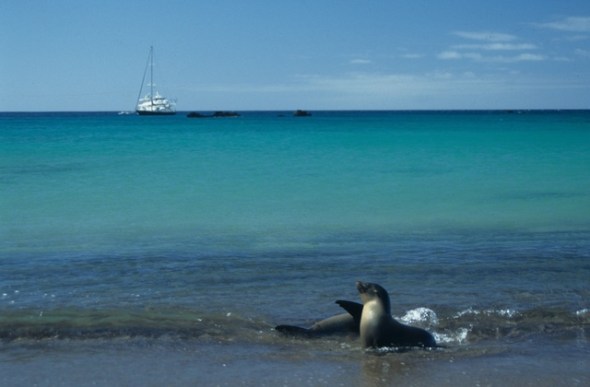
Galapagos Islands by Derek Keats CC BY 2.0 via Flickr
To find out more, visit the Ecuadorean government website at http://www.turismo.gob.ec/update-on-ecuadors-tourism-infrastructure-services-following-saturdays-earthquake/
A beginner’s guide to Peru
Lots of people ask me what my favourite country is out of all those I’ve travelled to. It isn’t really a hard question to answer as over four visits to this South American nation, it’s really got under my skin. Peru’s landscapes, fascinating culture and rich history make it a shoe in for the top spot, its crazy and very likeable people the icing on the cake. If you’ve never been to South America, Peru’s a great country to start with. Its tourist infrastructure is well developed, particularly around Cusco, and although it has sometimes had a reputation for petty crime, with a bit of care you can easily avoid becoming the next statistic.

Bottle feeding a baby alpaca
Getting there
Getting to Lima, the Peruvian capital from the UK has just got a whole lot easier with the introduction of thrice-weekly direct flights from London Gatwick with British Airways. However, these are hard to come by for a reasonable price and you’re still likely to have to consider an indirect routing.
Typically, the best European options are via Madrid with Iberia, through Amsterdam with KLM and Paris with Air France. I’ve used all these routes and the advantage outbound is that you’re on the second leg towards Peru pretty quickly which makes you feel like you’re getting somewhere. Be wary of using CityJet connections from Paris back to London in case you have the poor experience I suffered:
https://juliamhammond.wordpress.com/2015/03/06/finally-a-win-against-cityjet/
It’s also possible to hub through the USA which gives you two more evenly balanced flights. However, if you do choose this option you’ll need to clear immigration in the USA even though you’re only in transit, meaning you’ll need to apply for an ESTA at a cost of $14 just to sit in the airport. Queues can be long; it’s best to allow at least a three hour layover if you plan to do this to avoid missing the second leg of your flight. I’ve seen people beg and plead to queue jump to no avail.
Getting to Lima from the airport
With most flights from the UK arriving in the evening Peru time, you’re going to need to spend at least one night in the capital before connecting to your domestic flight or bus the following day. Lima’s Jorge Chavez airport is located in the port district of Callao, the opposite side of the city to the upscale neighbourhoods of San Isidro, Miraflores and Barranco which are the most pleasant to stay in. You can find accommodation in Callao but it’s not a very nice area and not especially safe. Buses pass the airport and head into the city but you’re better off organising a taxi. Don’t go out onto the street to hail one; instead, before you leave the arrivals hall, look for the Taxi Green company and use them. Their rates are fixed so you can be sure you won’t be ripped off. Lock your door though; I’ve had an opportunist thief attempt to steal my phone by opening the back door of the taxi while we waited at a red light.
Getting around
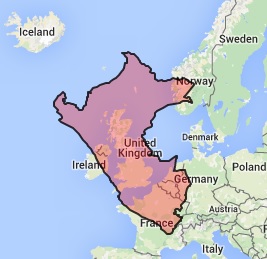
Let’s start by stating the obvious: Peru is large. Getting around is a trade off between cost and time. If you are only in the country for a couple of weeks then flying between cities is really your best bet. Internal flights are relatively competitive if you book reasonably early, especially to Cusco. I’ve recently flown with LC Peru and Star Peru which were both good; TACA also operate internal flights. LAN (now LATAM), the national carrier, is very reliable but tends to be more expensive.
You can also take overnight buses. It’s advisable to travel with a reputable company such as Cruz del Sur or Ormeño as they are supposed to drug-test their drivers more often and travel with a pair. Buses have regular seats but often semi-cama or cama also; these are much larger, reclining seats (cama means bed) and are much better over longer distances. I suffer from back problems but found I could get comfortable enough to sleep.
Train services are limited in Peru but there are a couple of routes which are of interest to tourists. Lima to Huancayo is the second highest rail line in the world (after Tibet) but the Tren de Sierra only rarely makes the journey. Services from Cusco are more frequent and thus of greater importance here. Trains run to Machu Picchu beginning from Poroy just outside Cusco (and also from Ollantaytambo further along in the Sacred Valley) as well as to Puno over the altiplano. Find out more at http://www.perurail.com.
In town, it’s cheap to take a taxi, though make sure you agree a price in advance and if there’s more than one of you, make sure that price is per car and not per person. Colectivos, minibuses that run on fixed routes, are easy to hail and cheap to ride. Alternatively, little three wheelers (Peruvian tuk tuks) are the way to go in places like Cajamarca.
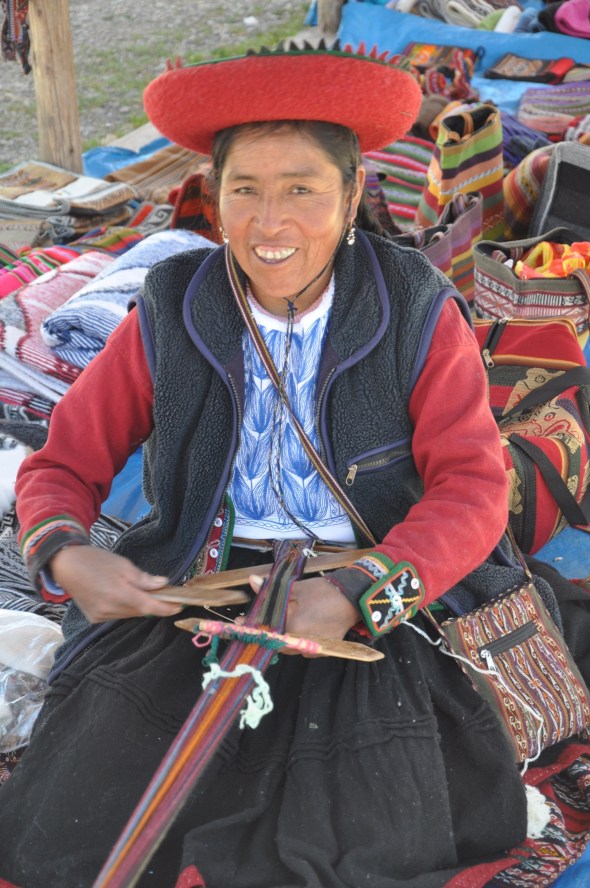
Chinchero market
Where to go
Lima
The nation’s capital had something of a reputation with many visitors spending as little time there as possible. These days, however, it’s enjoying a resurgence in popularity as the Peruvian foodie scene has kicked up a gear. I did an excellent food tour with the Lima Gourmet Company which made me re-evaluate my feelings about the city. For more on Peruvian cuisine read my blog for Wanderlust here: http://www.wanderlust.co.uk/planatrip/inspire-me/lists/top-10-peru-food-experiences?page=all
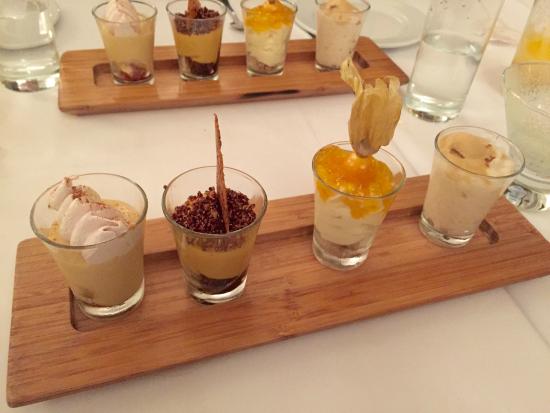
The best desserts in the whole country
Nazca, Ica and Pisco
A few hours’ drive south of Lima are the Nazca Lines, those lines in the desert which defy explanation. It’s possible to take a flight in a light aircraft but try to time your visit for early in the day as it gets bumpy later on – and take it from me, drinking a bottle of Inca Kola beforehand doesn’t help. I saw the monkey and the inside of a sick bag. Nearby, head for Ica to visit the pretty oasis of Huacachina and to Pisco, the jumping off point for a boat trip to the Ballestas Islands.

Mummies in the desert
Cusco
The undisputed jewel in Peru’s tourist crown, if you only have time for one place in Peru then make it the Incan capital. There’s plenty to see in the city itself, including the incredible Qoricancha, temple of the Sun God, as well as the Spanish cathedral built on Inca foundations. San Blas neighbourhood is a good place to browse the craft shops and relax in its pavement cafes, but for the wow factor, continue up the hill to the incredible fortress of Sacsayhuaman.
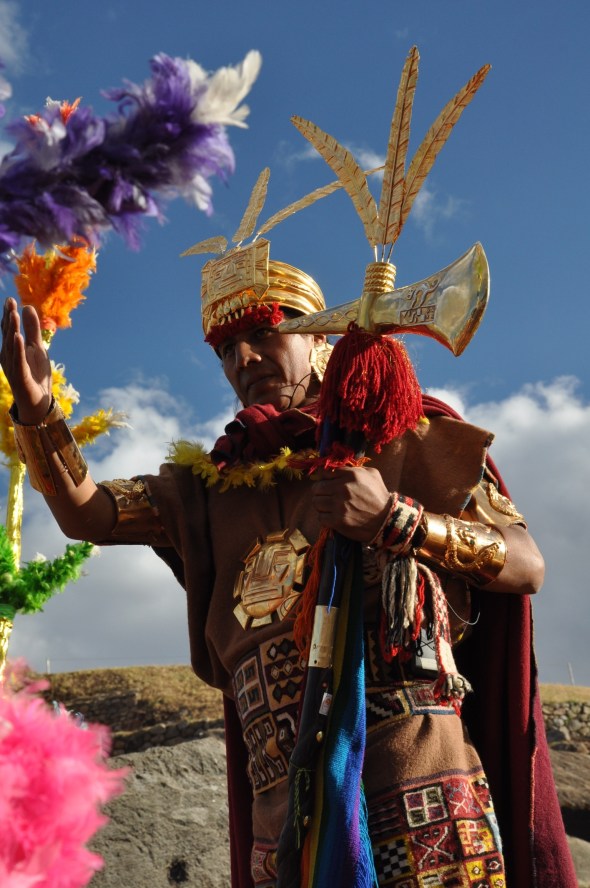
Inti Raymi celebrations take place in Cusco each June
Sacred Valley & Machu Picchu
Machu Picchu, an Inca citadel high in the hills, is Peru’s number one tourist destination. Walking the Inca Trail is the ultimate bucket list activity. If that’s too much like hard work, take the train and overnight in Aguas Calientes. These days you’re unlikely to get the place to yourself but to have a chance of seeing this magnificent UNESCO World Heritage Site before the crowds peak with day-trippers from Cusco is worth a try.
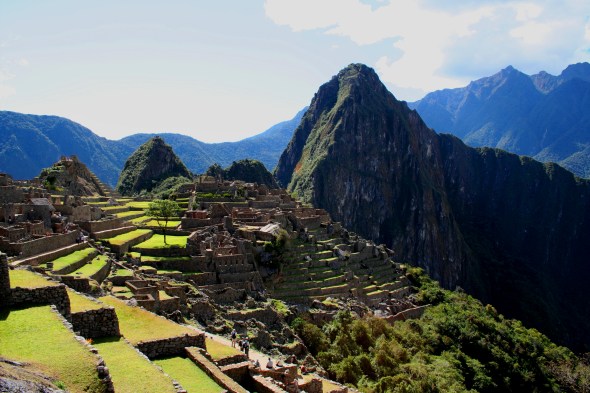
Machu Picchu
The Sacred Valley is packed full of amazing places to visit, among them Ollantaytambo with its imposing ruins, the amphitheatre at Moray, salt pans near Maras, and two great markets at Chinchero and Pisac. For a suggested itinerary, try my Unanchor Kindle guide: http://www.amazon.co.uk/Cusco-Unanchor-Travel-Guide-first-time-ebook/dp/B00RKE5E96.

Salt production near Maras
Arequipa
The White City, built in colonial times from sillar, the local volcanic stone, is the most elegant of Peru’s many wonderful cities. Its Plaza de Armas is dominated by a beautiful cathedral and wandering the old town is a delight. It’s worth heading slightly out of the centre to the mirador at Yanahuara; this lookout offers a good vantage point from which to see Misti. Arequipa’s also the jumping off point for visiting the impressive Colca canyon. Download my Unanchor guide from Amazon to find out more: http://www.amazon.co.uk/Arequipa-Unanchor-Travel-Guide-First-Time-ebook/dp/B00Q2C02NU

The mirador at Yanahuara
Puno
The high altitude at which Puno sits makes walking up its hills hard work, but if you make the effort, the views of Lake Titicaca are worth the lack of breath. One of the most interesting day trips is out to the chullpas at Sillustani, ancient Aymara funerary towers. Another is to the islands on the lake: Taquile and Amantani give visitors an interesting insight into what life is like on the lake while the more touristy Islas Flotantes (the Uros floating islands) are well worth a bounce.

Visiting the Uros Islands
Chachapoyas
Chachapoyas is well off the beaten track, but that doesn’t mean you should give it a miss. Nearby, the ruins of Kuelap are touted as the “new” Machu Picchu, even though they’re considerably older. Also in the area are the peculiar sarcophagi at Karajia, where mummies were placed high in the cliffs, and the lofty Gocta Falls, hidden from the outside world until 2005. Find out more in my earlier post: https://juliamhammond.wordpress.com/2014/11/25/northern-peru-the-chacha-circuit/

Kuelap
Cajamarca
Another northern gem, this is the place where Atahualpa was tricked into paying a huge ransom in gold by the invading Spanish. He was captured and murdered, but you can pay a visit to the Baños del Inca for a soak near his tub. A short ride from the city centre are the Ventanillas de Otuzco, a pre-Inca necropolis. Don’t leave without sampling the region’s yummy cheese.

Cajamarca is worth visiting for the hats alone
Mancora
Hammocks and palm trees dripping with coconuts – are you sure this is Peru? Mancora is a surfer’s resort up near the Ecuadorian border. If you’ve timed your visit to catch the dry season in the south, those cold nights may well have you dreaming of lazing around on a sunny beach as the Pacific waves lap the shore.

Looking out over the Pacific from a Mancora hammock
And even that’s not all. Chan Chan, the largest pre-Columbian city in the Americas and capital of the Chimu kingdom, is another of Peru’s UNESCO World Heritage Sites and the biggest adobe city in the world. One day I’ll fly up to Trujillo and pay a visit. I’ve also not been to Iquitos, the heart of the Peruvian Amazon, but if rainforest’s your thing, then you should plan to go. As for me, I’m not a fan of the humidity or the midges, so I’ll be making a beeline for Huaraz, the base for some of Peru’s best mountain peaks and glacial lakes. But even as I daydream about going back, I’m guessing that even a fifth trip won’t be enough for me to have had my fill of this wonderful country.
Are these the world’s best railway journeys?
This week, in preparation for my upcoming trip to Sri Lanka, I’ve been booking train tickets to explore the country’s beautiful hill country. The Man in Seat 61 has, of course, been an invaluable tool as ever, and I’ve been very impressed with the service provided by Visit Sri Lanka Tours, a recommendation gleaned from Seat 61. It’s got me thinking about previous rail journeys I’ve taken. These are my favourites, but are they yours?
Peru: Cusco to Machu Picchu
Machu Picchu, Peru’s mighty Inca citadel
Before tourist numbers reached epic proportions, to reach Machu Picchu by train you used to have to crawl out of bed in the dark to catch the early morning local train from central Cusco’s gloomy station, travel for five hours as the wooden bench seating slowly petrified your buttocks and emerge blinking into the middle of the market at Aguas Calientes to find your diesel-belching ride to the famous mountaintop Inca ruins. Periodically, the train halted in the dark to facilitate trade. Hands used to appear through the tiny windows to offer roasted corn and alpaca wool hats. It was one of those iconic travel journeys that is better relived from the comfort of your armchair several months later. Taking the journey again years later, this time in a glass-roofed backpacker train (boy, hadn’t backpacker expectations grown?!) I was delighted to see that snow-capped peaks lined the route and that the PeruRail authorities had built a fancy new station. The increase in comfort was worth the hike in the fare and best of all, the switchbacks to enable the train to haul the train out of Cusco’s bowl-shaped valley were still the most fascinating stretch of the journey. Then, in 2010, flooding and landslides caused severe damage to the track and when repairs were completed, the train began from Poroy, just outside the city, rather than from Cusco’s Wanchaq station. Despite the changes, it remains one of the best railway journeys in the world.
Switzerland: the Bernina Express
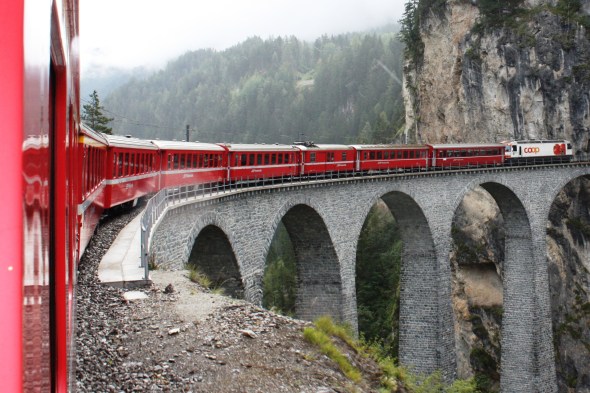
The Landwasser viaduct from the Bernina Express
It’s hard to pick a favourite amongst so many standout lines, but if forced to choose, then the Bernina Express gets my vote. Run by the Rhaetian Railway, the Bernina Express covers two lines which together comprise a UNESCO World Heritage site – Albula and Bernina. During its 122km run from Chur to the Italian town of Tirano, the train passes through 55 tunnels and over 196 bridges and viaducts including the spectacular Landwasser Viaduct pictured here. To fully appreciate this engineering marvel, take a local train (the panoramic picture windows don’t open), head to the back and lean out of a right hand side window. The train loops and glides over the Bernina Pass, with the Morteratsch and Palü glaciers and alpine Lago Bianco darker Lej Nair lakes providing the glamour in terms of scenery. With no cogwheels aiding its descent, this impressive adhesion railway has one final wow up its sleeve: the 360° spiral that encompasses the nine arches of the century-old Brusio Viaduct.
Kenya: the Lunatic Express

Mombasa’s beach, the prize for those surviving the Lunatic Express
I first read about this railway in Bill Bryson’s African Diary. His descriptions of being flung around as if being tumbled in a washing machine were as compelling as you’d expect from the undisputed king of humourous travel writing and I decided there and then I’d make the same journey. This narrow gauge railway runs from Nairobi to the coast at Mombasa, cutting through Tsavo National Park on its way. It gained its unusual nickname as several workers involved in its construction ended up as dinner for the hungry lions, dragged from their tents as they slept exhausted from the day’s hard labour. I didn’t see any lions, just a beautiful sunset over the savannah plains, though I was plagued by hungry mosquitoes and arrived in Mombasa covered in bites.
The best of the rest!
Russia: Trans-Mongolian
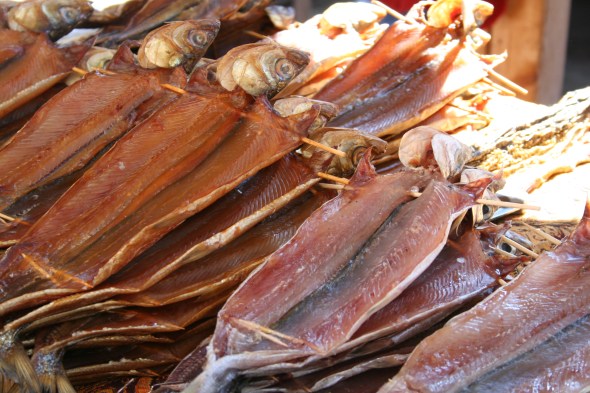
Omul on sale at Listvyanka, on the shores of Lake Baikal
The longest rail trip I’ve done, with a trip that took me from Moscow to the Mongolian capital Ulan Bator by train. I saw a lot of trees, but I also learned first hand what a warm and welcoming bunch of people the Russians are: a special mention here for Aleksander the army officer who fed me smoked omul and showed me his family photos.
New Zealand: Tranz-Alpine
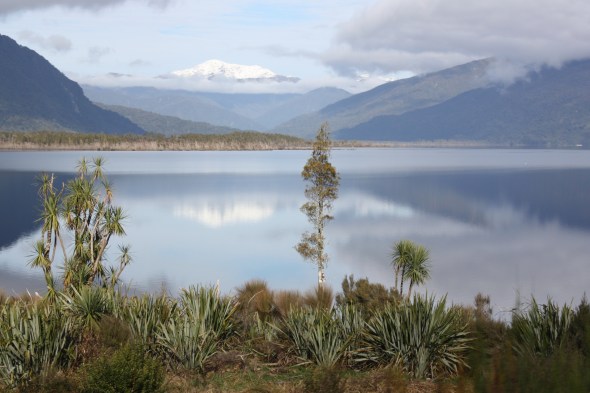
Serene Lake Brunner
Not the Alps in Europe, but instead, New Zealand’s South Island. Crossing from Christchurch to Greymouth, this scenic ride crossed Arthur’s Pass and chugged alongside pretty Lake Brunner. Wrap up warm if you’re going to ride the open air viewing car in winter as I did – it’s freezing!
Update: I’ve just booked a ride on the Northern Explorer to see more of North Island out of a Kiwi Rail train window. Watch out in 2018 to see how I got on.
If it’s geysers you’re after…
If it’s geysers you’re after, then here’s where you need to be heading.
Iceland
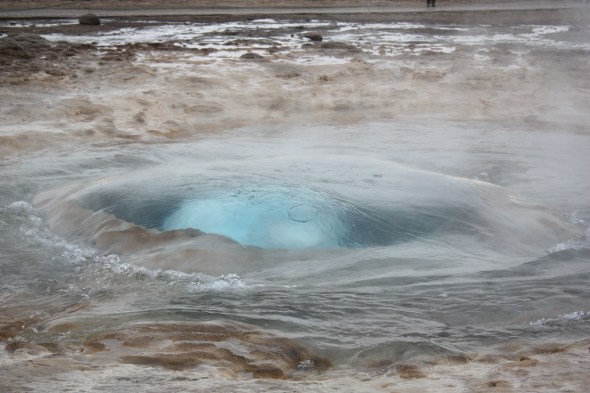
Strokkur on the verge of blowing
The original, in name at least, can be found a short distance from the country’s capital Reykjavik. The original geyser, Geysir, has decided it’s had enough, but Strokkur puts on a show every few minutes delighting those who visit. It’s easily accessible as part of the Golden Circle tour, or if you prefer to go it alone, then download my Unanchor Kindle guide from the UK Amazon site here: http://www.amazon.co.uk/Iceland-Unanchor-Travel-Guide-self-drive-ebook/dp/B017SDBNE8/ref=sr_1_8?s=books&ie=UTF8&qid=1452095658&sr=1-8.
It’s also available on the US site here: http://www.amazon.com/gp/product/B017SDBNE8/ref=s9_simh_gw_p351_d0_i1?pf_rd_m=ATVPDKIKX0DER&pf_rd_s=desktop-1&pf_rd_r=152KPS2974X3G9P0D5RQ&pf_rd_t=36701&pf_rd_p=2079475242&pf_rd_i=desktop
New Zealand

Pohutu, Rotorua
For a small country, New Zealand packs in a lot of geothermal sights, from other-worldly Craters of the Moon to photogenic Orakei Korako. But for sheer wow factor, then join the crowds watching Pohutu, located in the Te Whakarewarewa Thermal Valley on the outskirts of Rotorua to see the jet of boiling water shoot high into the sky.
Chile

Atmospheric El Tatio
El Tatio geyser field might not have the dramatic gushers of Iceland or New Zealand, but it has atmosphere in spades. It’s essential to crawl out of bed in the middle of the night (don’t overdo it on the pisco the night before like I did) but watching the sunrise illuminate the steaming geysers is well worth the effort.
USA
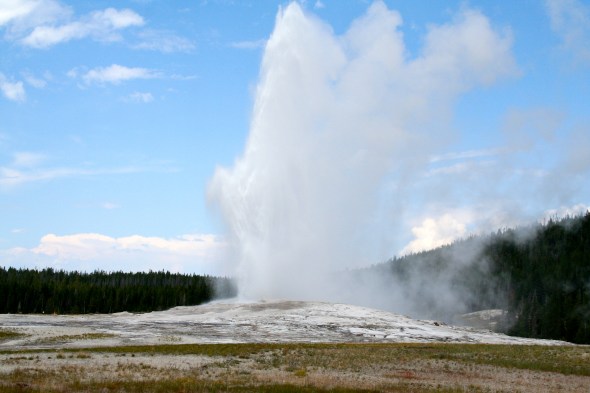
Old Faithful
I couldn’t blog about geysers and leave out Old Faithful. It’s been drawing the crowds at Yellowstone National Park for as long as the park’s been in existence and has had its name since 1870. It erupts on average 50 metres into the air about every 90 minutes or so; check the ranger’s board on arrival to see when the next show is expected.
And finally, one on the wish list…
Russia

Kamchatka by Einar Fredriksen via Flickr CC BY-SA 2.0
Kamchatka’s Valley of Geysers has the second largest concentration of geysers in the world after Yellowstone, packing over ninety of them into a 6km long valley. It’s difficult to reach, and therefore expensive, but it’s a trip that’s on my ever-growing bucket list. You too?
Latest blogs for Go4Travel
Regular readers will know that I blog regularly for Go4Travel, usually about New Zealand. Every now and then, I persuade the editors to let me blog about other amazing destinations and they couldn’t resist when I pitched Chile. My overview guides to Easter Island, San Pedro de Atacama and Torres del Paine National Park are essential reading if you’re thinking of heading there yourself. Take a look here:
http://www.go4travelblog.com/author/juliahammond/
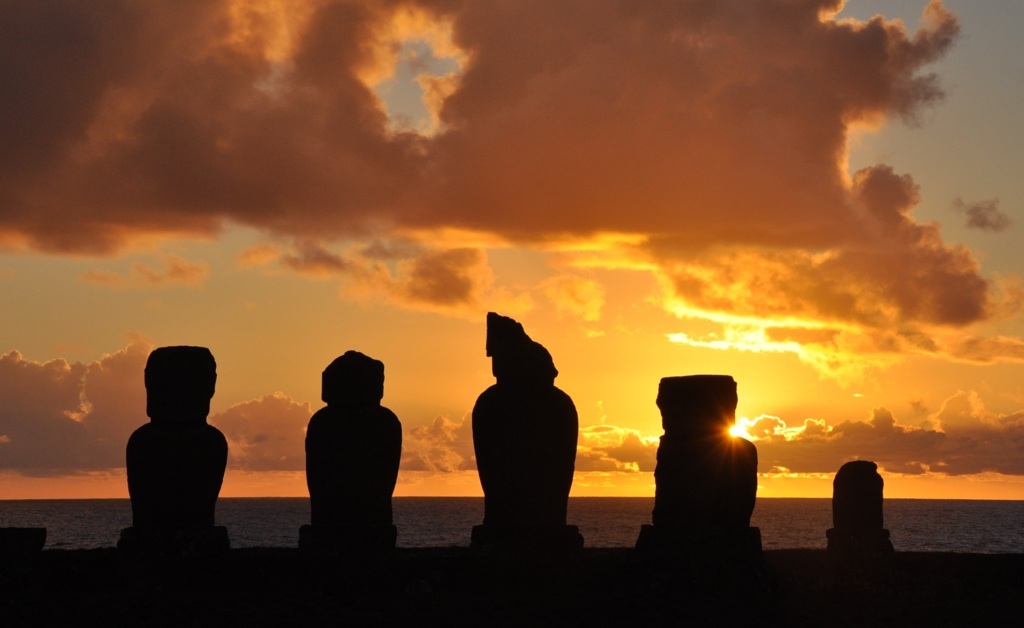
Sunset at Ahu Vai Uri, Tahai, Easter Island
How to save money on your South American trip
Many people might rule out a holiday in South America on the grounds that it is too expensive, but there are ways to save money and make that dream trip an affordable reality. Here’s what you need to know:
Book independently
Tour operator prices to Latin America are often prohibitively expensive. Although some operators offer good value, such as Llama Travel and Journey Latin America’s value range, typical tour prices are high. Unpackage your trip and book it yourself. Get decent insurance and make sure that your Transatlantic flights aren’t going to be affected by a cancelled or delayed short haul connection by purchasing all legs as a through ticket. Don’t be tempted to book airport transfers or tours in advance for the popular destinations as you’ll pay a premium and it’s simple to arrange these on arrival.
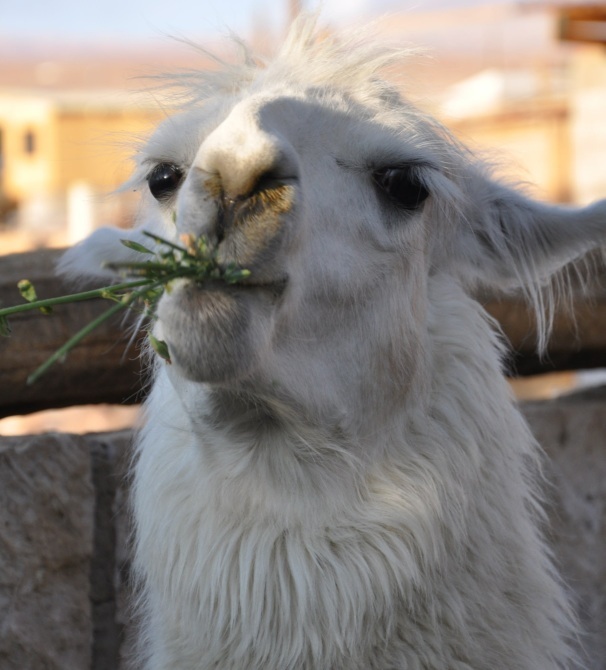
Llama feeding in the village of Toconao
Book your trip for shoulder season
Peak period flights to South America are expensive, there’s no getting round it. But if you can be flexible with your dates, then it is possible to slash the cost of your Transatlantic fare. For example, travelling in the shoulder seasons (spring and autumn) can reduce prices significantly. Don’t rule out the southern hemisphere winter. Air France flights from London to Lima last June were on sale for a little over £500 (compared to over £1000 in August) and if your planned destination is up in the Andes such as Cusco in Peru or San Pedro de Atacama in Chile then it will be dry and sunny during the daytime – just pack a thick fleece and jacket for the evenings.
Don’t assume the European route will be the cheapest
There are few direct flights to Latin America, meaning demand often outstrips supply which pushes the prices up. Use a flight comparison website to see which routes are cheapest for the dates you wish to travel; many people consider the US and European hubs such as Amsterdam, Paris and Madrid, but there are often deals to be had to west coast destinations via Brazil or Argentina with LATAM. At the time of writing, LAN were offering return fares to Rio for £419. If you’re on a really tight budget but have bags of time, you could consider reaching your final destination overland from Rio or Buenos Aires.

Hubbing through Buenos Aires could save you a packet
Do your homework on internal flights
Sometimes, overnight buses provide a cheap and surprisingly comfortable alternative to flying. Many large bus companies in Latin America offer cama or semi-cama seating – large spacious seats which recline far enough for you to have a good night’s sleep. Stick to a reputable operator which will use two drivers and ensure they are drug-tested and safe to go behind the wheel. Try Cruz del Sur, for example, between Arequipa and Cusco. If you do need to fly, check the terms and conditions before purchasing. LAN offers sizeable discounts on its internal flights in Chile if you book from a Chilean website (use free software such as Tor) or via a Chilean travel agent – and you don’t have to be Chilean national to take advantage of them. This isn’t the case for all countries; in Argentina, discounted prices are for nationals only.
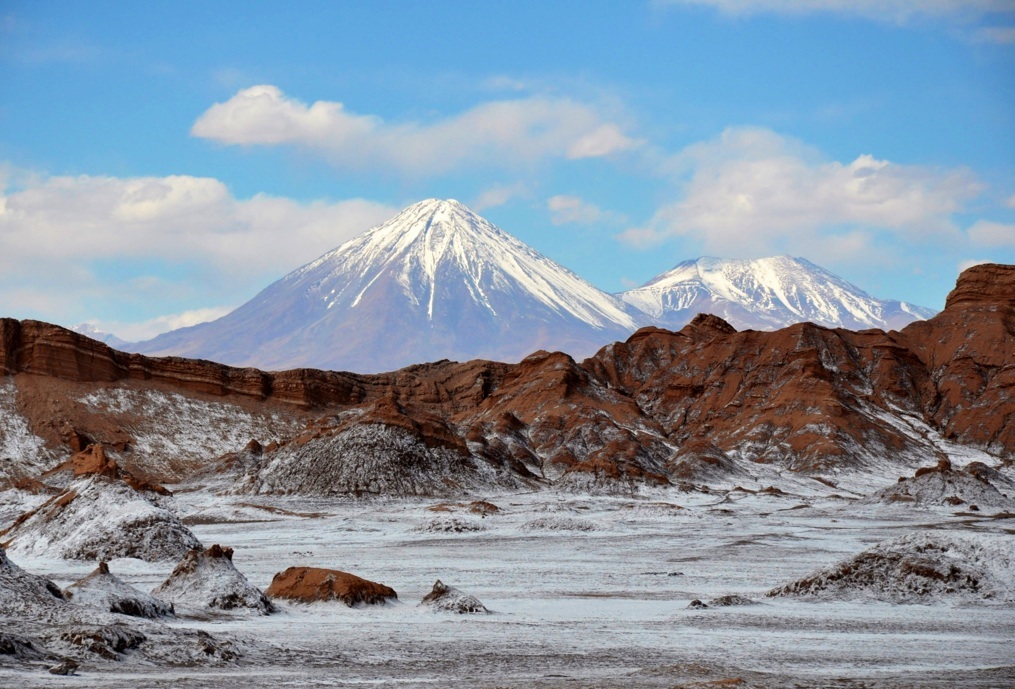
Valle de la Luna, Chile
Don’t rule out hostels and guest houses
Private rooms in hostels increasingly come with private bathrooms and can be a fraction of the cost of a similar quality hotel room. They’re also a good way to meet other like-minded travellers who might be willing to split the cost of tours with you. Use a reliable website such as Booking.com or Hostelbookers.com to fix up your accommodation in advance – use the free cancellation option, monitoring prices so you can cancel and rebook if prices fall before you leave. Check locations carefully so that you are within walking distance of transport operators or the attractions you want to visit.
Package up tours
If you do decide to book tours, some operators will bundle up different day and half-day excursions offering a discount for cash. If you’re booking for the next few days ahead, they’ll be keen to fill their minibus and will want to make sure you don’t take your business elsewhere. This works well where it’s normal to take tours rather than use public transport to visit sites of interest, such as the Sacred Valley near Cusco and Los Flamencos National Reserve in the Chilean Atacama.
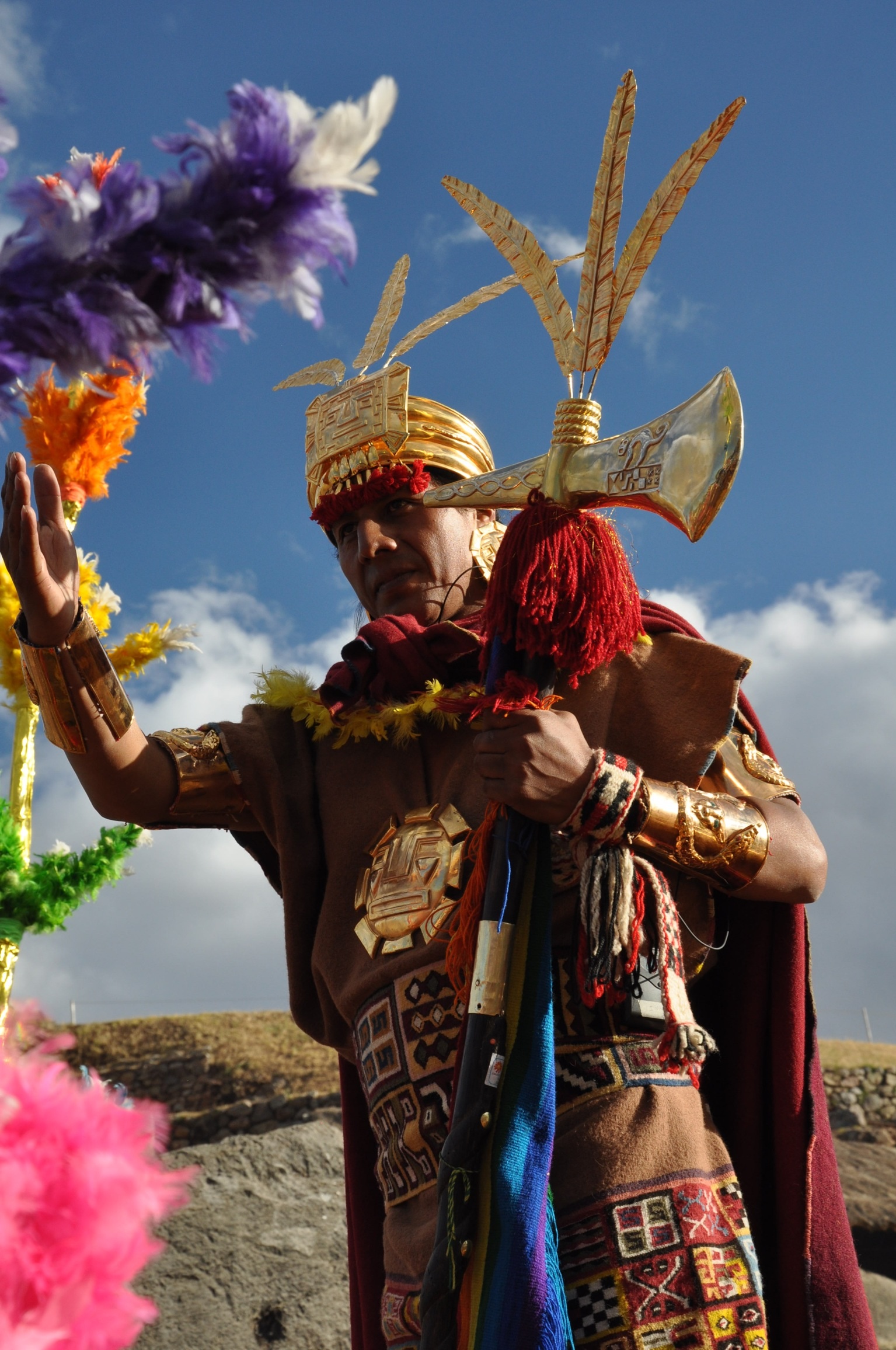
Inti Raymi celebrations take place in Cusco each June
Consider self-drive
In Chilean Patagonia, accommodation providers in the Torres del Paine National Park offered expensive all-inclusive packages. Self-drive from Punta Arenas (four hours) or Puerto Natales (one hour) and drive yourself round the park. Stock up at the supermarket in Puerto Natales for provisions to save buying expensive box lunches from the hotel (and make sure you have a full tank of petrol). The maps and information provided by the visitor centre are excellent and you won’t have wasted money on a guide.
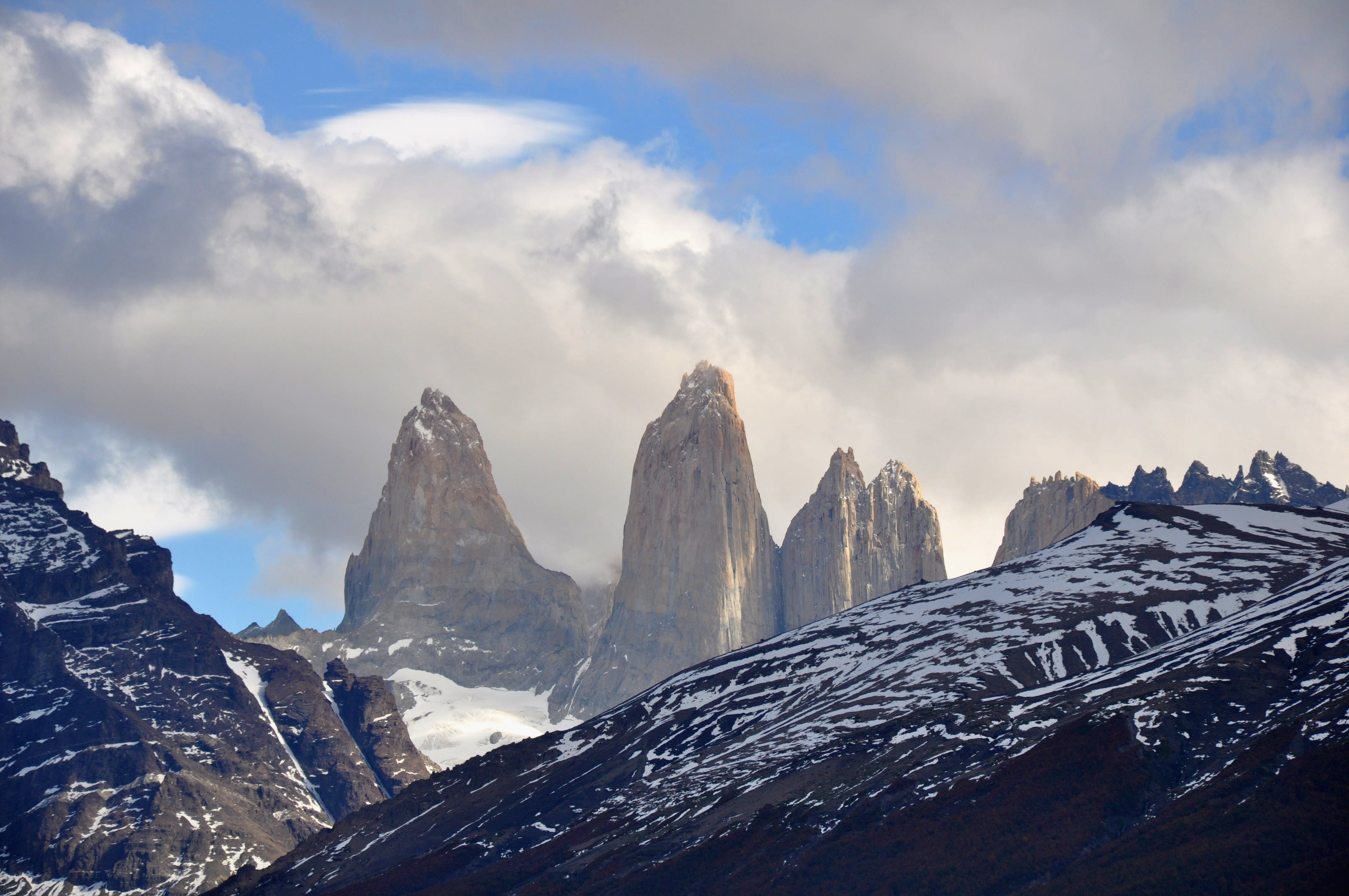
The Torres del Paine National Park
Torres del Paine National Park: the highlights
Chile’s Torres del Paine National Park has been on my wish list for many years. Now that I’ve been, I can report that it didn’t disappoint. You can see my blog about the area on Go4Travel’s website: http://www.go4travelblog.com/torres-del-paine-national-park-highlights/
Here are some of my favourite photos from the trip.

Sunrise over Lago Toro

Cuernos del Paine as seen from Lago Nordernskjold

Salto Grande waterfall

Lago Pehoe in the late afternoon sun

Guanacos in the north of the park

Young guanacos play-fighting
The Torres del Paine

Glaciar Grey

Close up of the ice, Glaciar Grey
Easter Island in pictures
Easter Island, the second most isolated island on the planet, yet famous the world over for the moai which stand sentinel, their backs to its shores. Spending Easter here has been a blessing, the island’s beauty a revelation and the warmth of its people ensuring the memories go beyond mere statues.

Sunrise at Tongariki, site of the greatest number of moai

Long shadows in the morning’s first hour of daylight, beginning in April at a civilised 8am

Sunrise in full colour

Heading north to the coast, but watch out for horses, wild or herded

The moai quarry, Rano Raraku
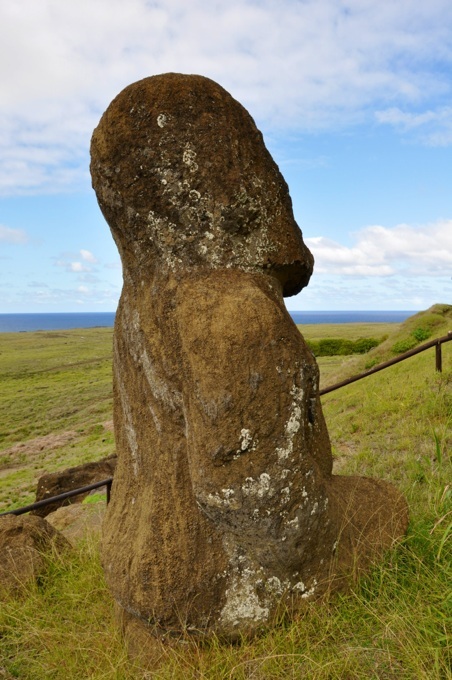
The kneeling moai at Rano Raraku

Moai quarried right out of the stone cliffs
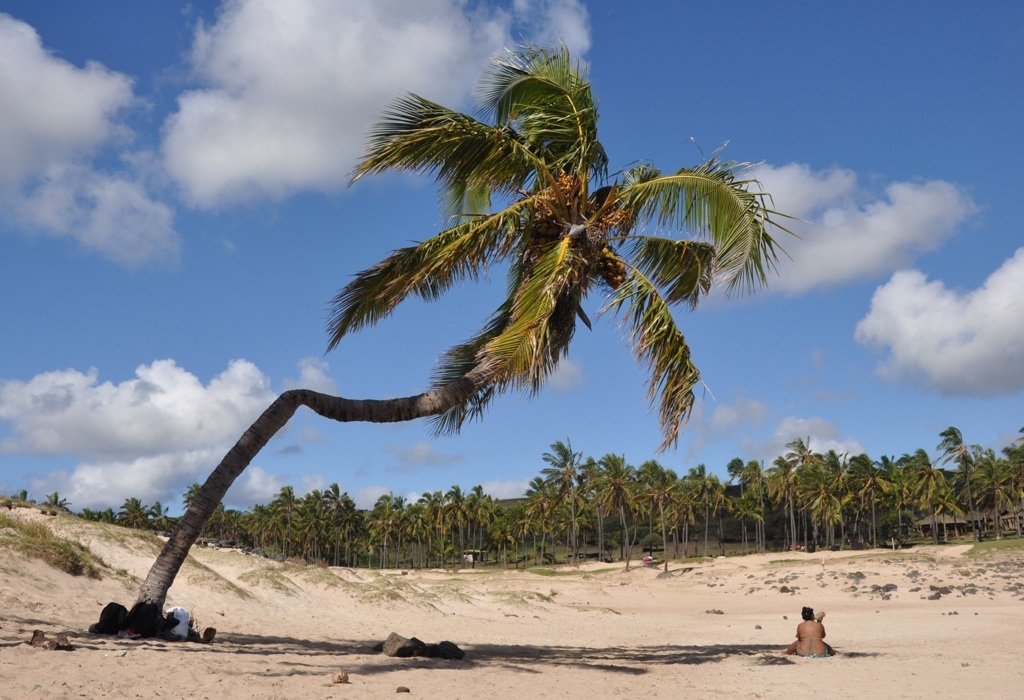
The beach at Anakena, one of only two sandy shores on an island characterised by rocky cliffs

Ahu Nau Nau: Sand piled up right
behind the ahu (platform) on which stand seven moai

Close up shot of one of the moai at Anakena
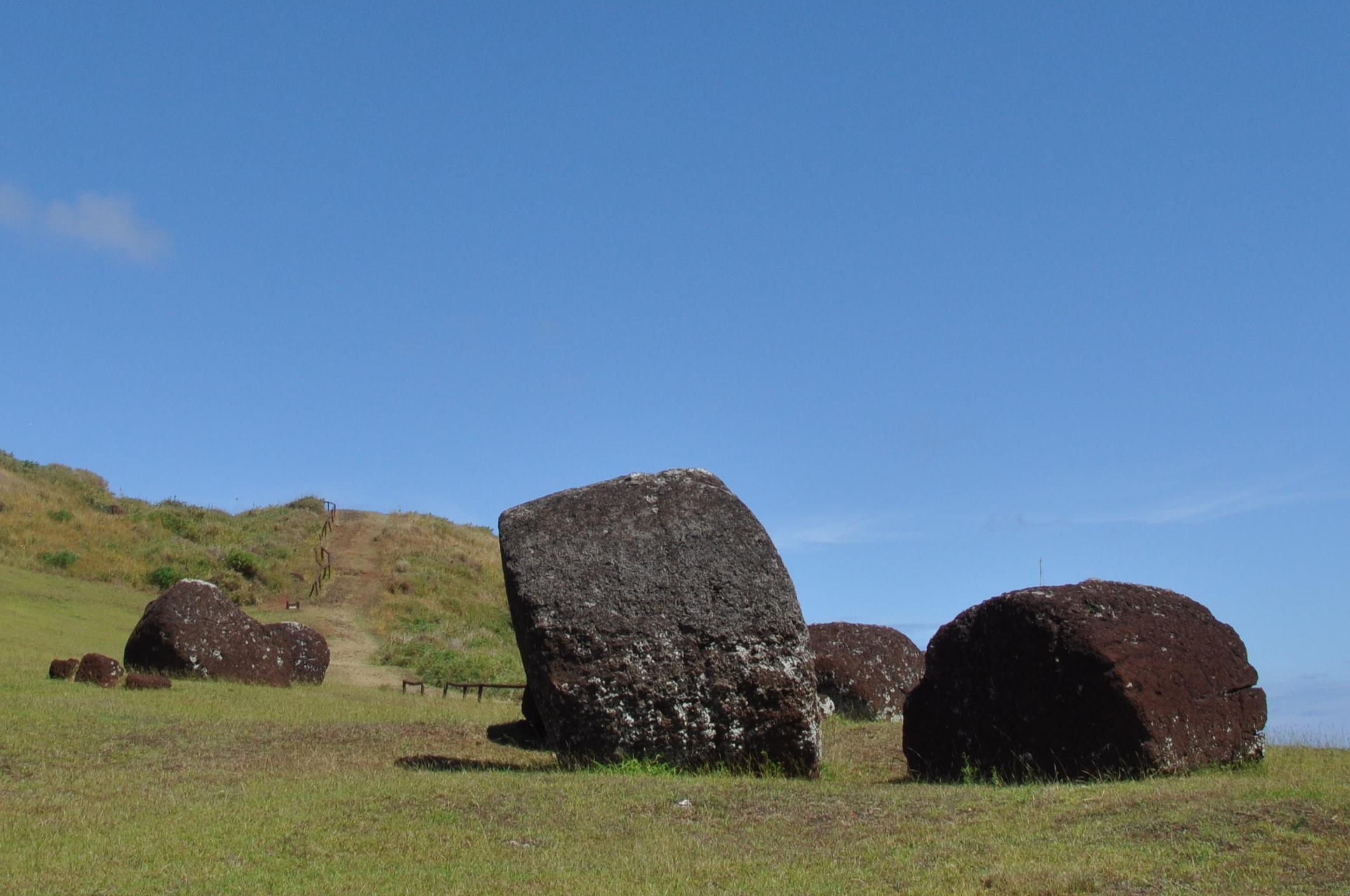
Puna Pau top knot quarry

The seven moai at Ahu Akivi, unusual in that they face the sea

Visitors are requested to respect the island’s heritage and keep off the ahu, but the horses don’t always get the message
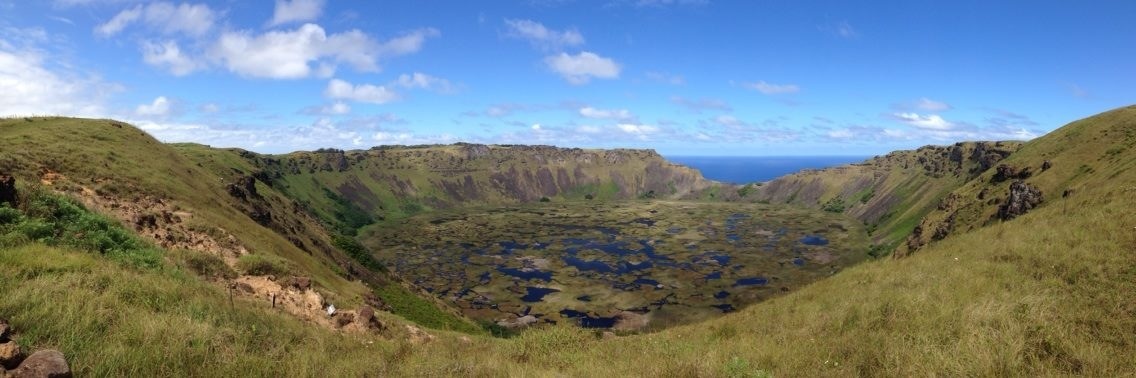
Rano Kau crater, near the main settlement of Hanga Roa
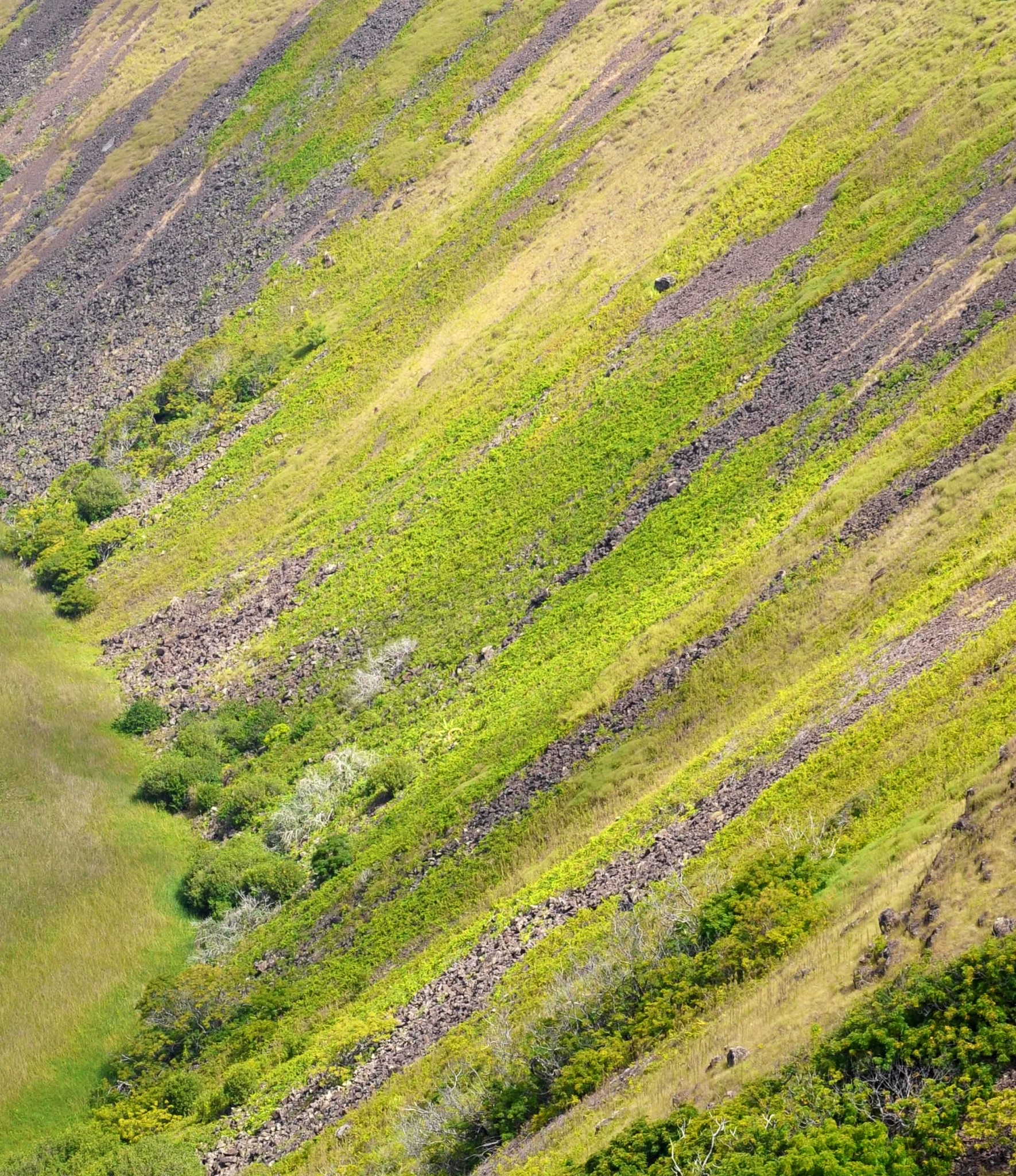
Vivid colours of the vegetation on the crater rim
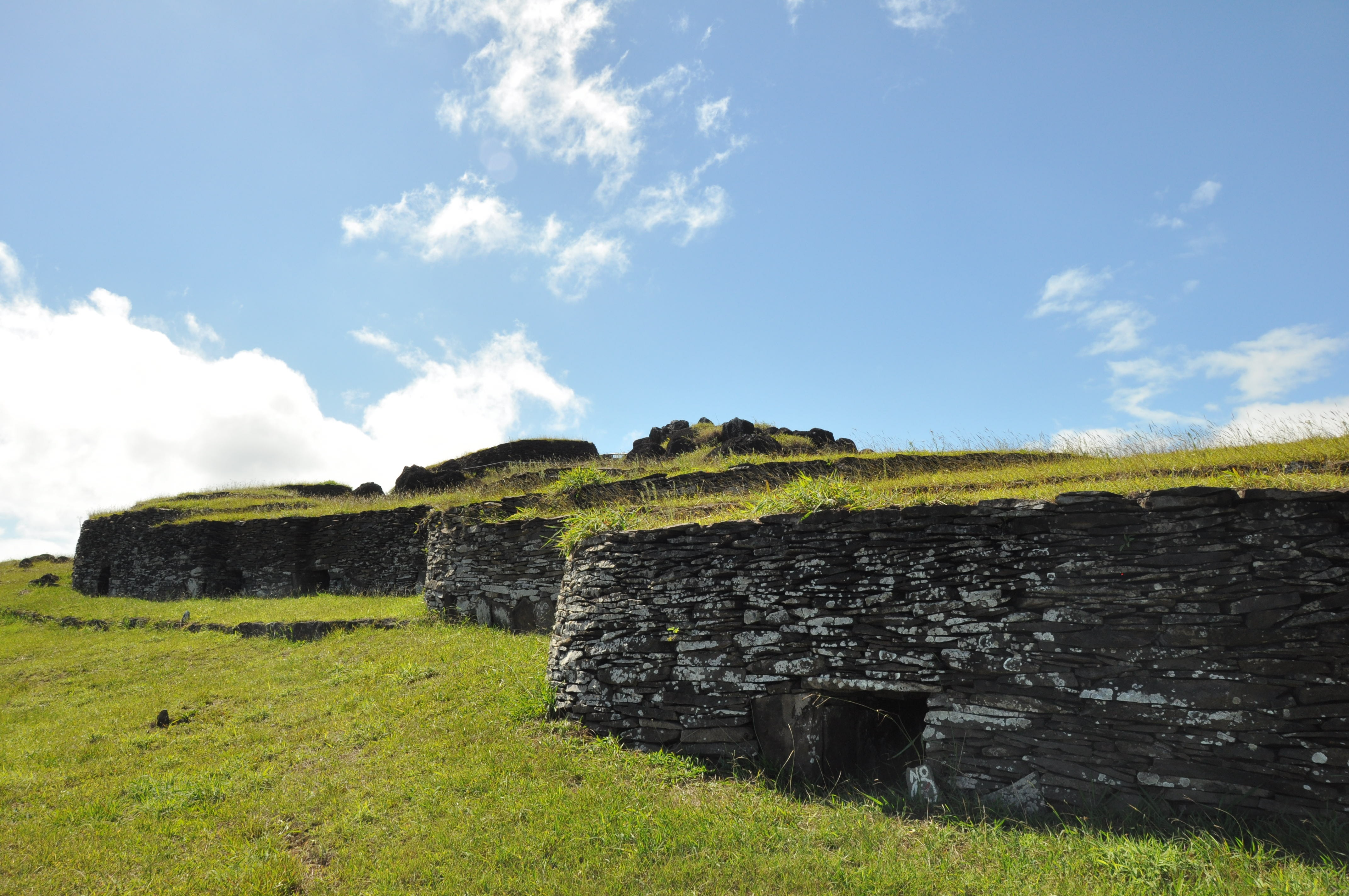
The unusual buildings at Orongo

Hanga Roa’s quirky cemetery
Sunset at Ahu Vai Uri, Tahai

Rapa Nui flag – at present the Chilean government aren’t collecting (aren’t able to collect?) the National Park fee; the Rapanui people have roadblocks and are recording visitor details

Boeing Dreamliner takes off to begin its five hour journey back to Santiago on the mainland
Why you should visit the Turks and Caicos this summer
I’ve been blogging for Creative Travel Ltd about the Turks and Caicos. This Caribbean archipelago receives fewer than 7,000 British visitors a year – its main source of international tourists is of course, North America. It’s time to remedy this: March 29 sees the launch of British Airways’ direct flights from Gatwick to Provo (with a brief touchdown in Antigua, making this direct but not non-stop). Find out what Provo’s like in my blog here:
http://www.creativetravelltd.com/travel-destinations/turks-and-caicos-beaches/
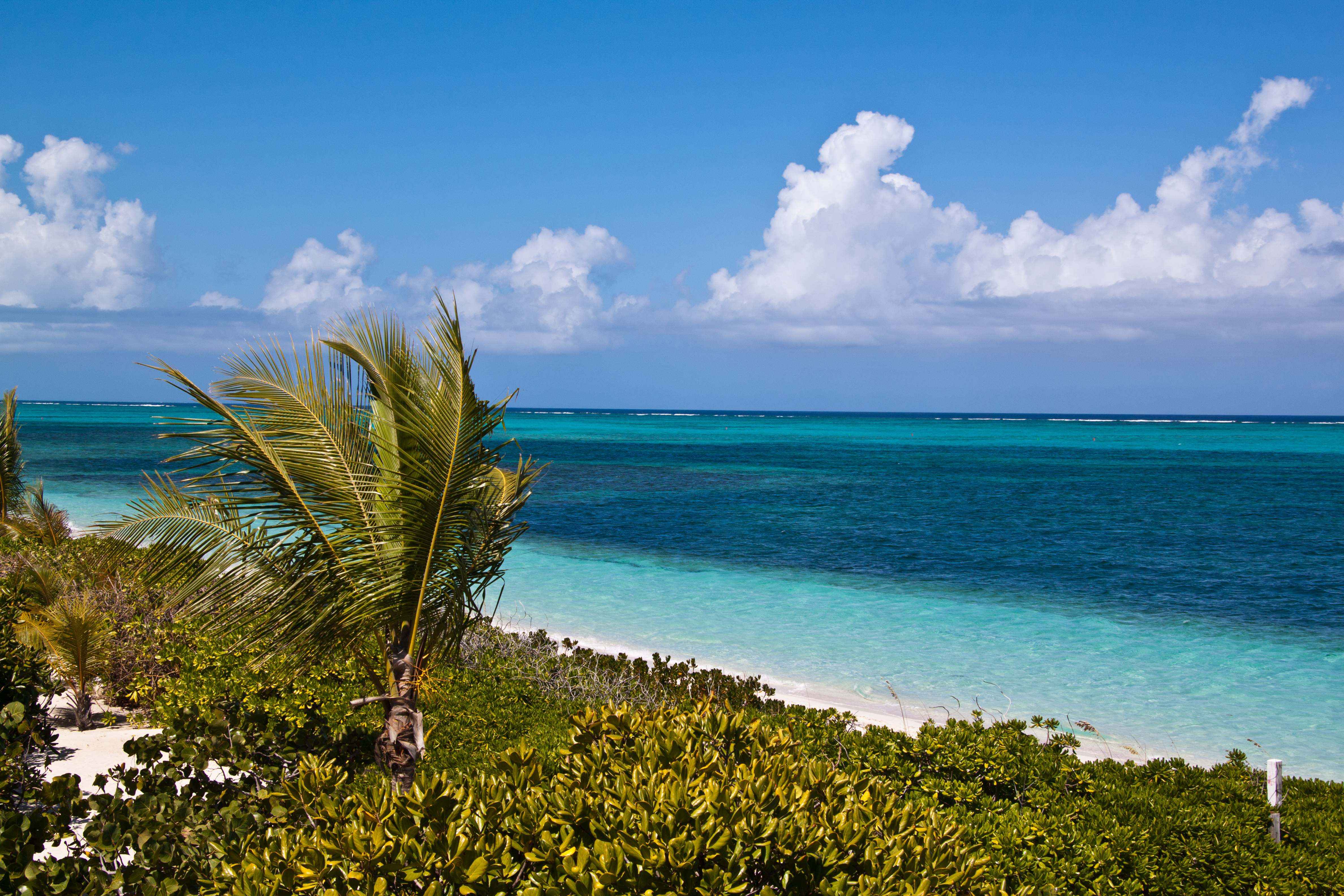
“Turtle Cove Providenciales Beach” by Tim Stackton Licensed under GFDL
Unanchor interview about Cusco
To celebrate my Unanchor guide to Cusco and the Sacred Valley, Unanchor have interviewed me about this, one of my favourite cities. You can see the interview here http://blog.unanchor.com/2015/02/23/itinerary-writer-spotlight-julia-hammond-cusco-peru/ and remember it’s available on Amazon if you’d like to buy a copy.
Inti Raymi celebrations take place each June
The best beach in Haiti
Nothing much happened in a hurry in Port Salut.
The village sprawled beside the soft white sands of Pointe Sable, on Haiti’s southern coast about a half hour from the noisy bustle of Les Cayes. It was no small relief to arrive. My coccyx was numb after a ride in the most cramped and overloaded tap tap I’d had the misfortune to flag down. Not for the first time this trip, I wondered whether my days of travelling like this, eschewing comfort for a more authentic experience, were numbered.
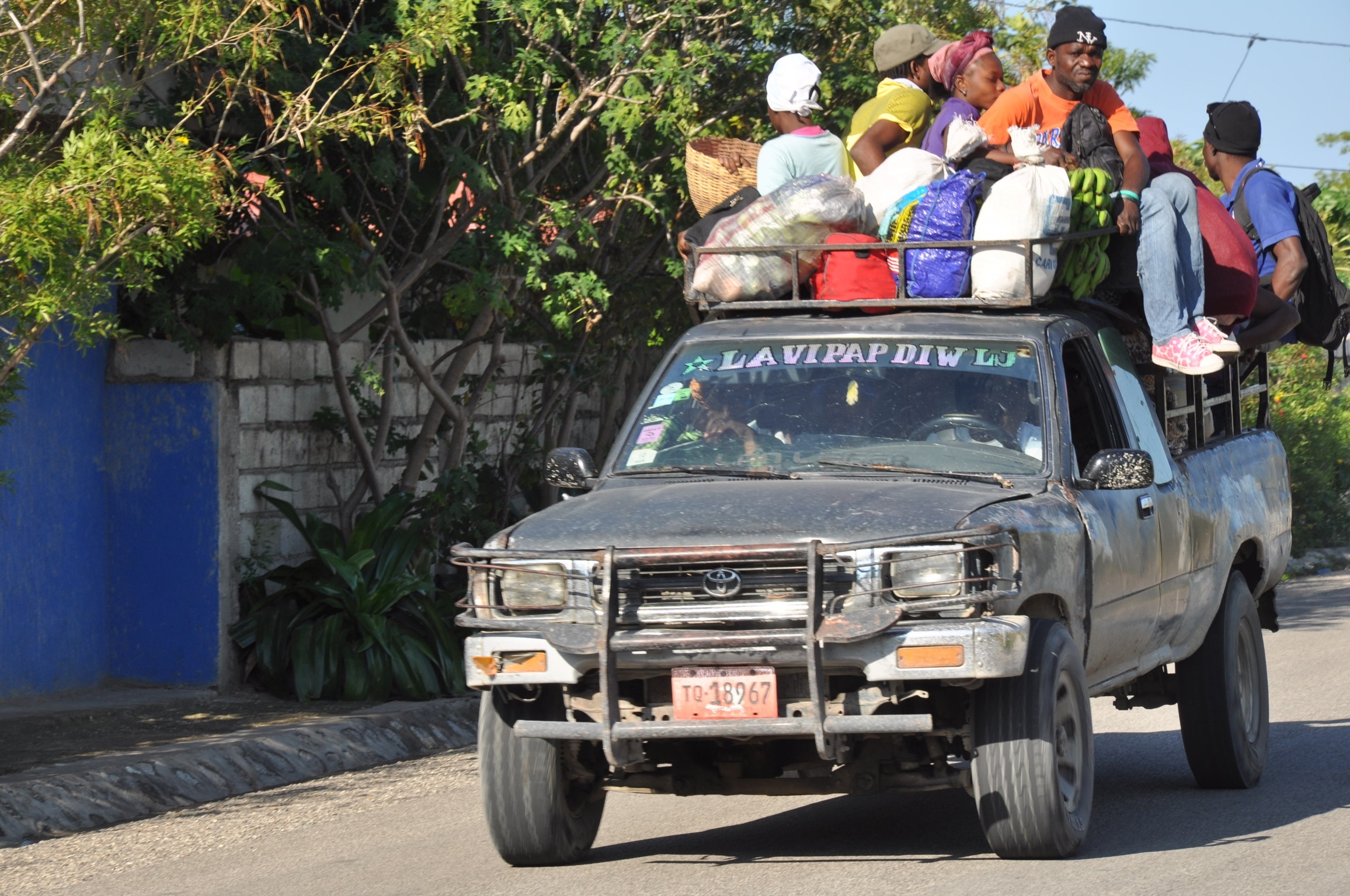
Overloaded tap taps are the only public transport to Port Salut
The half-hour ride had stretched to five times that, delayed by the need to fill the vehicle to three times a sensible capacity, then tie and retie a large assortment of sacks and packages to the roof. Finally, the driver turned over the engine but instead of leaving, we waited while he carried out urgent mechanical work with much tutting coming from under the rusty bonnet. All the while we sweated under a relentless sun, listening to the football on someone’s portable radio. There wasn’t a murmur of complaint; such delays were clearly the norm. These tap taps had once been shiny new pick up trucks, but were now zombified skeletons, shadows of their former selves. Bereft of various body panels they were held together with frayed bits of rope that disintegrated and wafted fibres into my eyes, . Eventually we had left the goats and stray dogs to scavenge in the filthy depot, only to stop a few kilometres down the road at the edge of a rice paddy while the driver acquired sufficient water to cool the already overheated engine and finish the journey.
Missing the unmarked turn off from the main road, I’d been dropped at the far end of the beach road. I told the conductor I needed to find my lodgings.
“Is it far?” I asked in schoolgirl French, unsure if I’d been understood.
A shrug.
“Combien de kilometres?” I tried again. The conductor glanced at his other passengers.
“Cinq, je pense,” came the collective reply.
Inwardly cursing that I’d relied on my own inadequate observation rather than asking the conductor a little earlier, I resigned myself to a long (albeit scenic) trudge laden with luggage. A young man pulled alongside me on a motorbike and offered me a ride. Asking how much, he’d shaken his head and told me he was offering out of kindness. Gratefully, I accepted. Such a willingness to help was common amongst Haitians, I’d found, one of the delights of visiting a place where tourism was at an embryonic stage.
In the end, it was less than a kilometre. Bathed in the soft peach of late afternoon, the Auberge du Rayon Vert – the Inn of the Green Ray – looked as if it had been transported straight from rural France. Dumping my bags, I watched the sun settle languidly into the horizon and headed to the terrace to eat. The menu, chalked carelessly on a board, gave no inkling that the food served was to be the most delicious I’d have anywhere in the country. I feasted on creamy goat’s cheese enclosed by an exquisitely pink fillet of beef. The sky turned to blood orange before I sank into a deep slumber under crisp sheets.

L’Auberge du Rayon Vert
The following morning, I awoke to the sound of the Caribbean lapping at the shore and set off to explore Port Salut. Popular with Haitians from Port au Prince as a weekend retreat, I wasn’t surprised to see half-built houses strung out along the main road which I presumed to be holiday homes in the making. Hot pink bougainvillea made a welcome change from the ubiquitous grey concrete of the building plots and beach shacks.
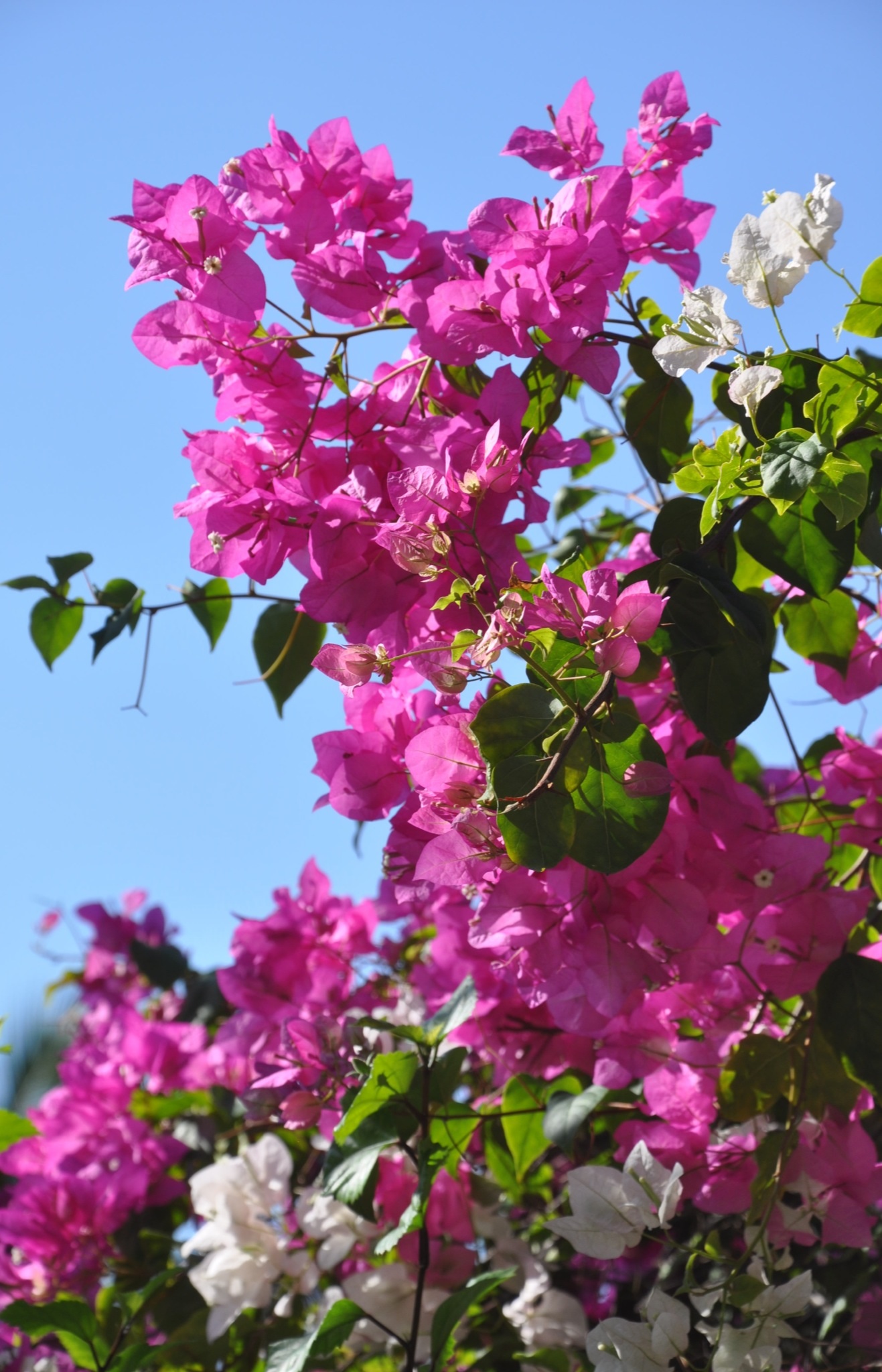
Bougainvillea
Changing some dollars at the hardware store, I doubled back to the beach. Crudely fashioned dugouts on the sand didn’t look seaworthy. The flaking turquoise paint was photogenically shabby but didn’t appear to my untrained eye to be watertight. Piles of netting heaped in their bows indicated otherwise. A group of fishermen dragged a gnarled wooden boat out of the sea, their scant catch inadequate recompense for their labour.
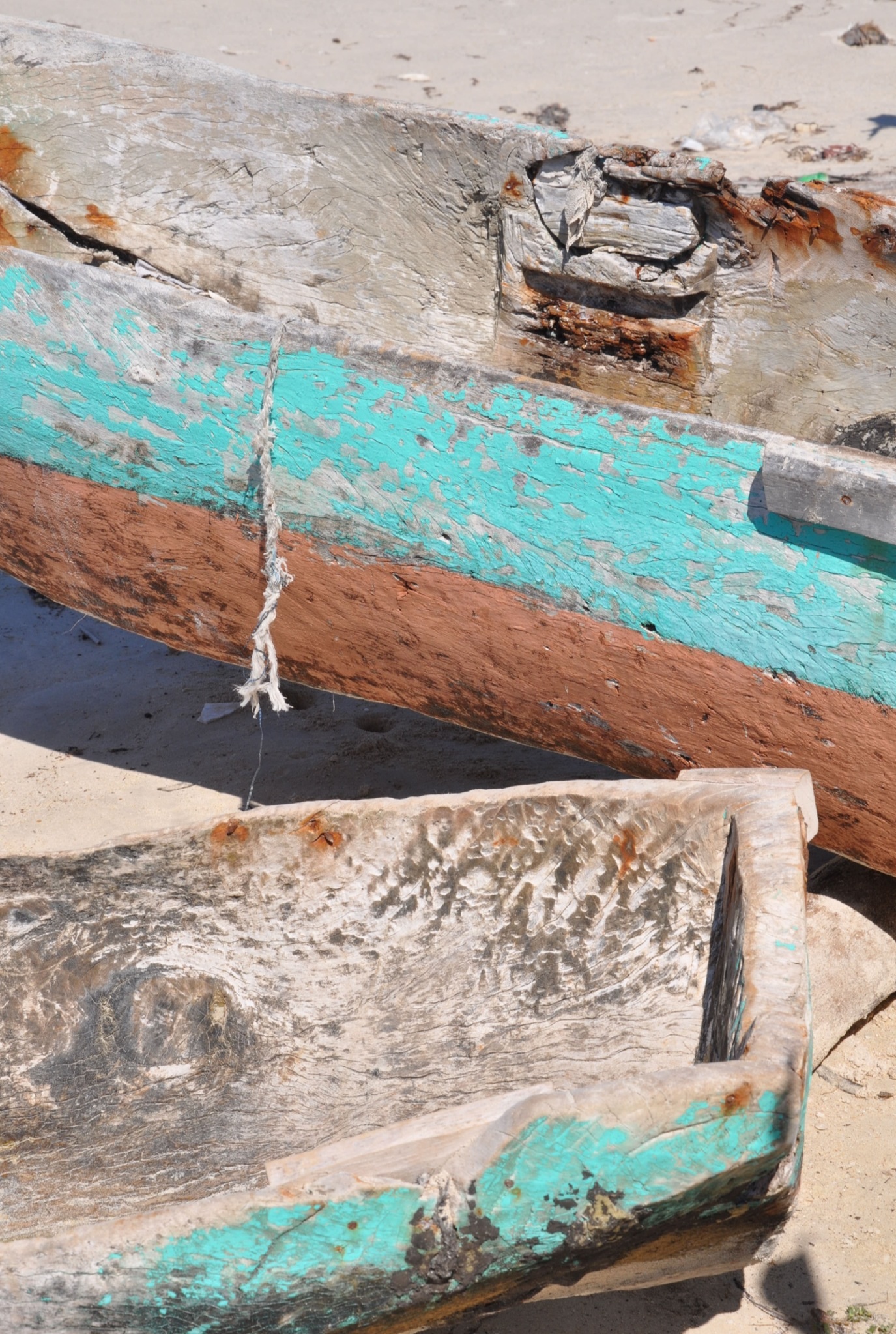
Old wooden boats in the beach
A little further on, a cluster of beach bars catered to a largely local population. At this hour their plastic chairs and tables were deserted save for a group of men idly chatting into mobile phones. They looked up briefly to say hello. An old man slept soundly on a concrete bench, his forehead deeply lined and his feet calloused. Children giggled and pointed, “Blan, blan!” I smiled back. One of the bars was painted with a colourful mural of tourists waterskiing, which struck me as just about as far removed from reality in this backwater as you could get. Opposite, a six-point guide to cholera prevention on a painted billboard seemed a whole lot more relevant.
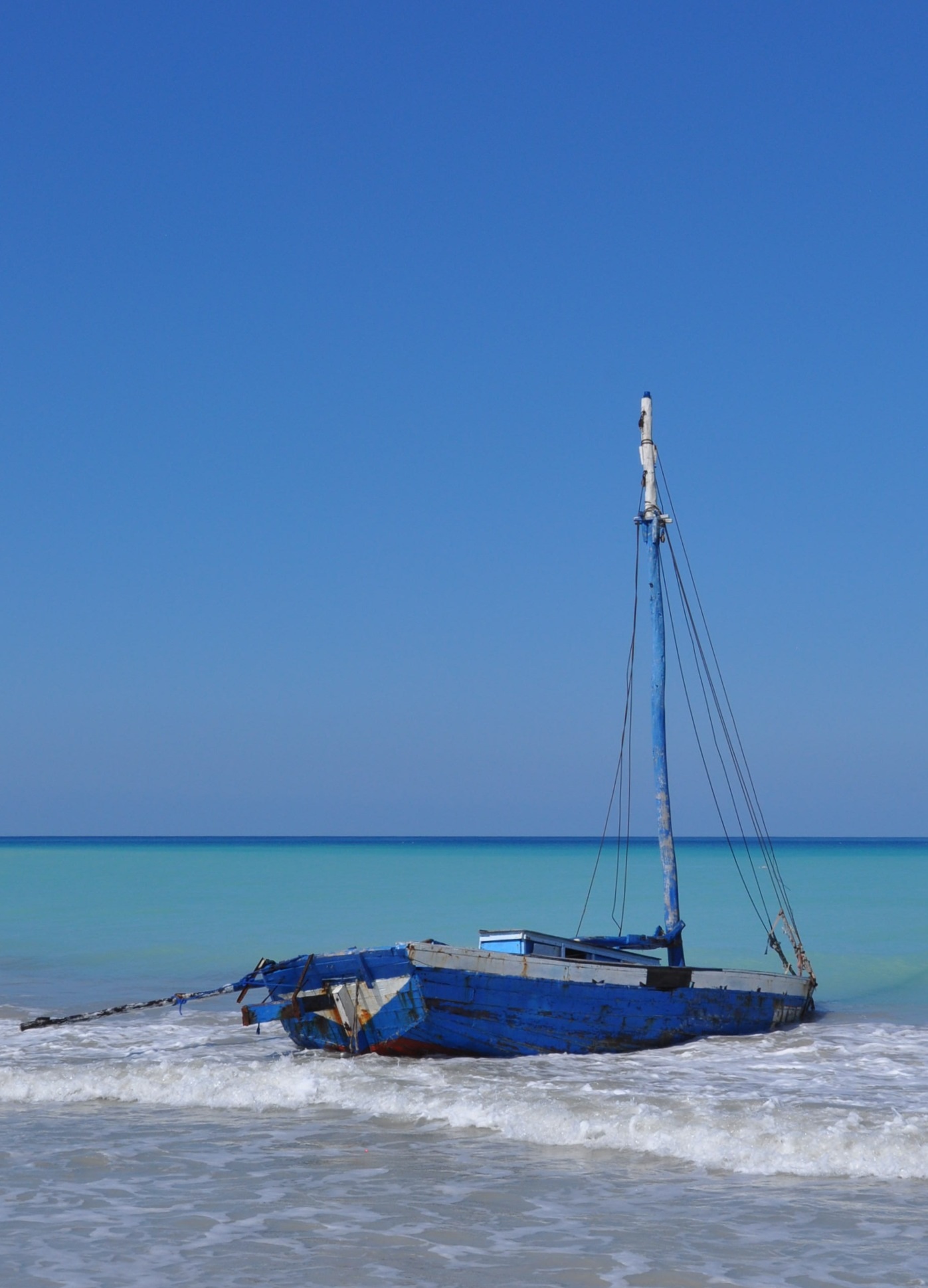
Fishing boat on Pointe Sable
Opposite the auberge, another catch was being landed. A group of villagers were hauling in their net, dragging its colourful floats into a horseshoe to corral the fish into an ever diminishing trap. But for all their toil, the results were meagre, a few fish the size of sprats tossed into a wicker basket guarded by a small child.
By far the best thing to do, or more accurately, not do, as it involved very little effort at all, was to relax on one of the hotel’s beach chairs and watch the world go by. This wasn’t an arduous task; there wasn’t much world to go by. The palms that edged the beach swayed almost imperceptibly in the breeze, fidgeting the shade. From my vantage point, I watched as delicate ghost crabs scuttled about their business before retreating from the heat into burrows drilled deep into the damp sand. A trio of avocets tapped away at the water’s edge while a lone pelican cruised overhead.

The perfect place to do nothing
The sun was now high in the sky. A single wisp of cloud hung like a vapid crescent moon. Traffic was limited to a few motos and the odd 4×4 – the auberge was a popular weekend hangout for the UN police and NGO personnel working in the area. Out towards the horizon, a small boat with tattered sails bobbed on a sea pricked with diamonds. The voice of an occasional hawker interrupted the sound of the waves’ ebb and flow, offering straw hats and fresh coconuts. They approached gently as they offered their wares; there was no need to be pushy. A young girl wandered up, carrying a large straw bag.
“Would you like mamba, ma’am?”
For a minute, I was alarmed, fearful she might produce a snake. It turned out mamba was a kind of peanut butter. The large jar being proffered would have been a tempting purchase had it not been made of heavy glass clearly unsuited to moto rides. Eventually, I dozed off under the shade of a tree, its dense bunches of fat leaves creating a natural sun umbrella. After all, nothing much happened in a hurry in Port Salut, so how else was I going to kill time before dinner?
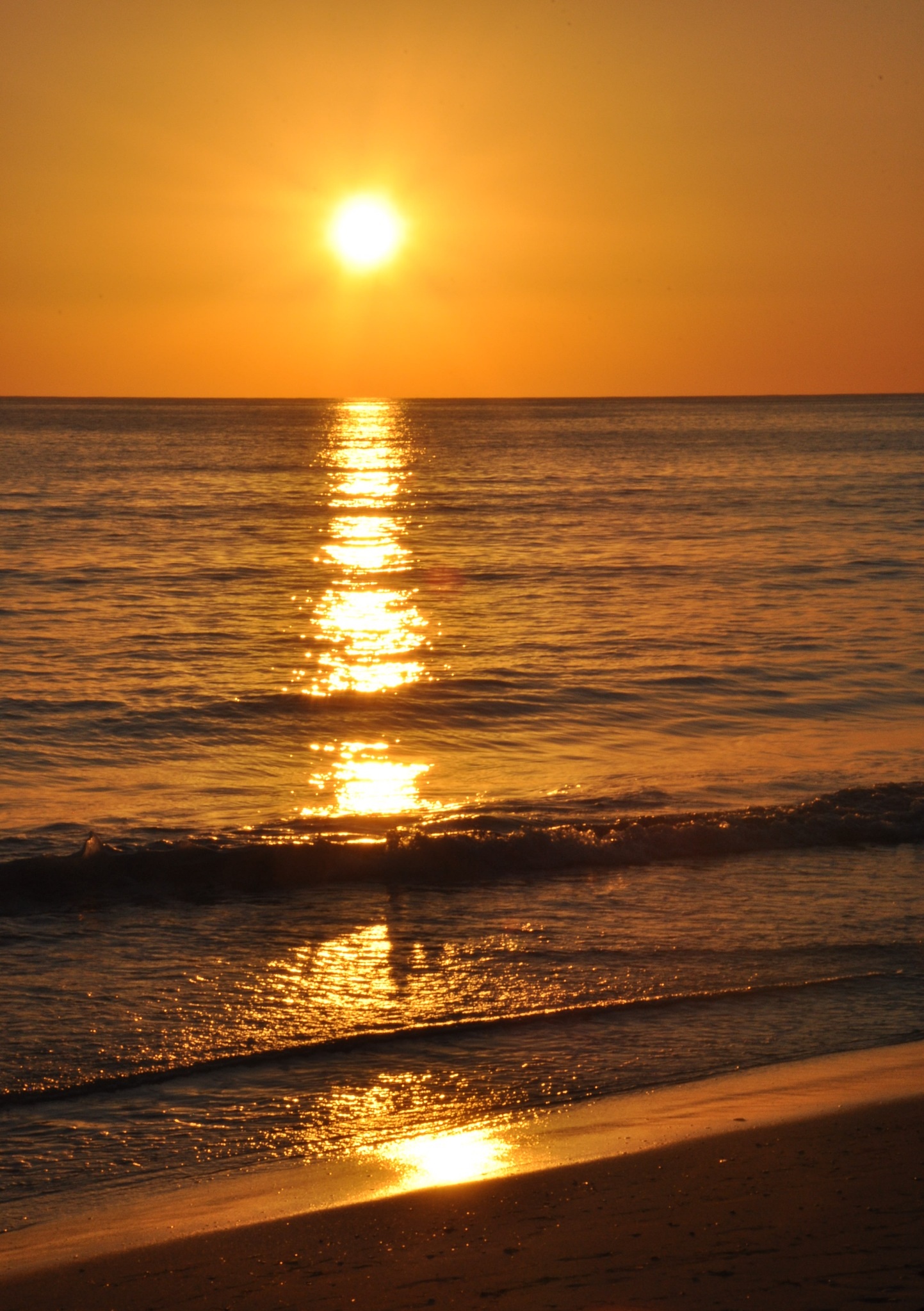
Sunset at Pointe Sable
Jacmel carnival, Haiti
Each February, the southern Haitian town of Jacmel celebrates carnival in style. Here’s some photos from yesterday’s event.

Plenty of characters on the street before the main event; this one’s Tonton Bicha

The best place to watch the parade is from the specially constructed wooden balconies on the main street

Colourful dancer getting into the groove
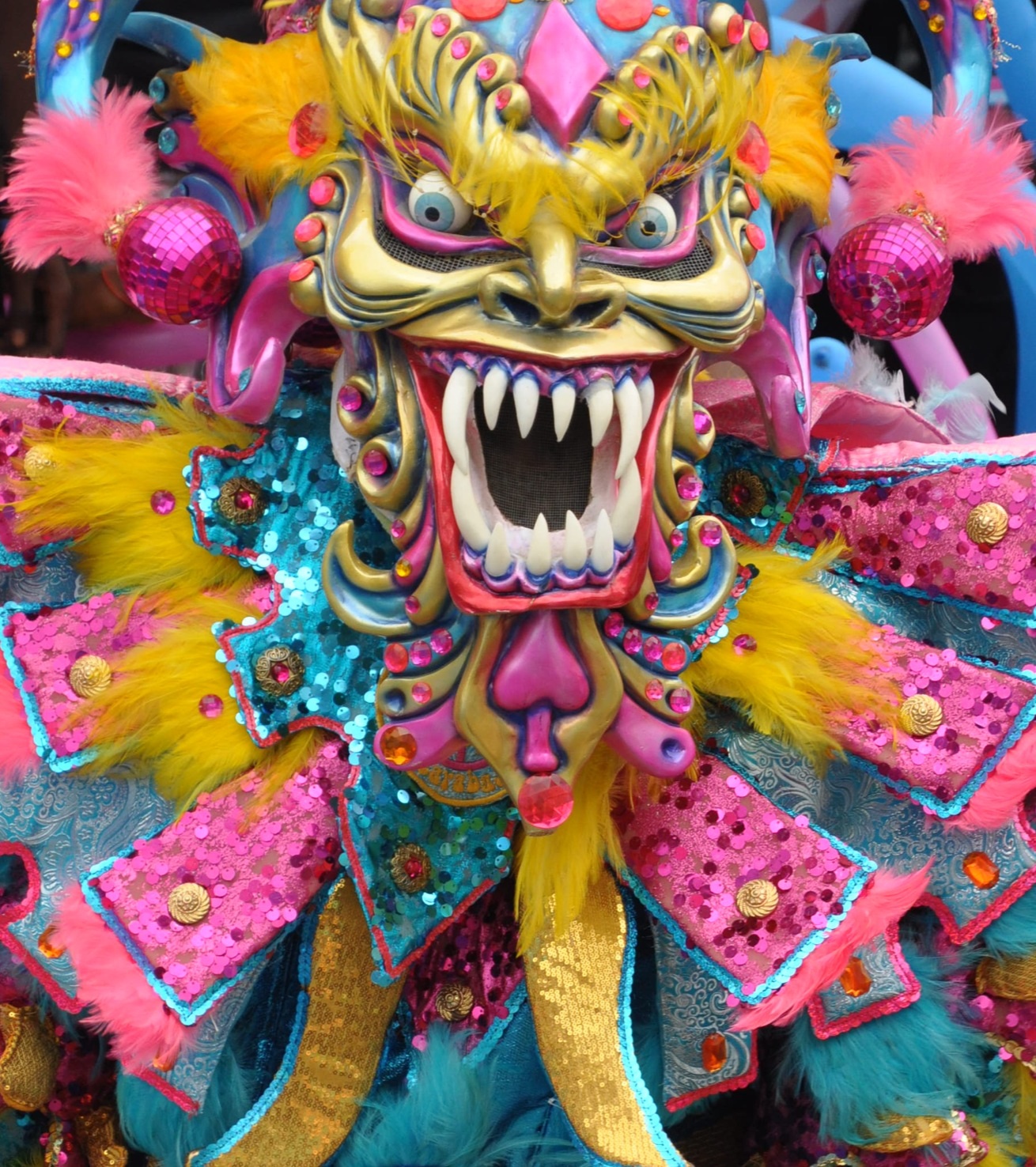
The costumes are amazing

Impressive how much energy they have in the Caribbean heat

Carnival queen

What every well-dressed donkey is wearing this season…

Political comment also has its place
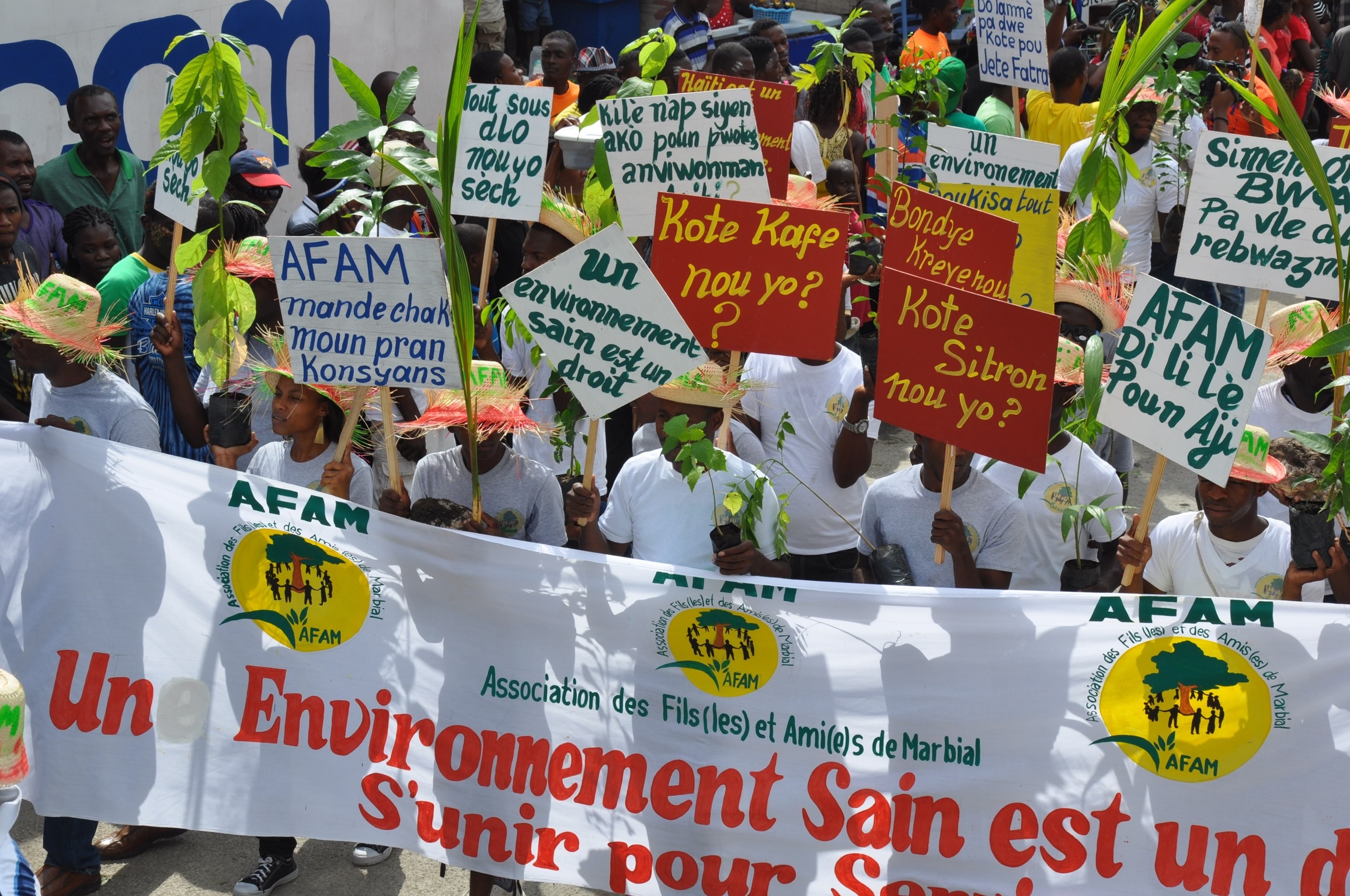
Loving how they’ve tippexed out their grammar mistake

Most of them cleared the jump – except one!

Papier mâché figures are what Jacmel’s known for

Half king, half Santa, this figure is called “Papa Jwif”

The “Yawe” – a cowhide that’s beaten (with some vigour!) in a recreation of a Taino hunting scene

The clacking sound of the wooden wings of the “Mathurin” bat-devils is distinctive

The scariest characters are the “Lanset Kod” – covered in charcoal dust and cane syrup they run amok through the crowds smearing as many people as possible with their gunk
Kindle guide to Cusco now available to download at Unanchor.com & on Amazon
I’m pleased to announce that my latest Kindle guide is now available to download. It’s a five day itinerary covering the best of Cusco and the Sacred Valley and you can purchase it now on Unanchor’s website here:
http://www.unanchor.com/itinerary/view/509.
It is also available on Amazon here:
There’s a free sample on Amazon, so why not download it and perhaps write a review?
Cusco, the ancient capital of the Inca Empire, is Peru’s top visitor destination. Around two million foreign visitors travel to this part of South America annually, with numbers steadily growing year on year. Aside from nearby Machu Picchu, the jewel in Peru’s tourist crown by some considerable margin, there are enough historic and cultural attractions in the Cusco area to keep visitors occupied for weeks.

Alpacas are a common sight in the countryside around Cusco
Cusco, with its colonial architecture set around characterful squares, warrants a whole trip in itself. The historic city is centred on the bustling Plaza de Armas. The imposing cathedral and its tiny neighbour, the Iglesia del Triunfo, face off against the Iglesia de la Compania de Jesus, built by the Jesuits to rival their Catholic counterpart. The most important temple of the Inca Empire, Koricancha, occupies a prime location on Avenida El Sol, just a short walk from the plaza. Neighbourhoods such as San Blas, with steep cobbled streets packed with cafes, bars and galleries, have much to delight tourists. Higher still, exploring the Inca fortress of Sacsayhuaman, with its enormous blocks of stone and impressive Inca engineering, is a must on every visitor’s itinerary.
Inti Raymi celebrations take place each June
But that’s not all. Cusco is a short drive away from the Sacred Valley, crammed full of Inca archaeological sites amidst stunning highland scenery. The agricultural terraces and storehouses of Ollantaytambo offer a fascinating glimpse into the everyday life of the Incas. The valley is settled and farmed to this day and the bustling markets at Pisac and Chinchero draw thousands seeking the perfect souvenir to take home.

Chinchero market
Therein lies the problem: there’s so much to see that careful planning is essential. Knowing what to leave out and what not to miss is crucial to making the best of your time here. Lesser known attractions such as the circular terraces of the Inca’s agricultural laboratory at Moray or the incredible salt pans, the Salineras de Maras, are often overlooked as the tour buses hurtle past on their way to the big attractions.

Salt production near Maras
That’s where this guide comes in. I’ve visited Cusco and the Sacred Valley on numerous occasions spanning a period of twenty years, most recently in 2014. This tailor-made itinerary explains how to dodge the crowds and see the best of the area without relying on expensive tours. It offers recommendations for accommodation options to suit all tastes and budgets as well as detailing the best places to eat. Day by day plans with clear maps and photographs make navigating on foot and by public transport simple, giving you the confidence to step out on your own.
A beginner’s guide to the Riviera Maya
Mexico’s Riviera Maya is the name given to the stretch of Quintana Roo coastline that extends from Cancun in the north (or a few kilometres south of it, definitions vary) to the Sian Ka’an Biosphere Reserve to the south. Together with the neighbouring state of Yucatan, it is a deservedly popular package and independent tourism destination. This guide is aimed at the first-time visitor and should help you to make the most of your holiday. Prices are shown in Mexican pesos, which at the time of writing had an exchange rate of about twenty to the pound. The information given was correct at the time of writing, but check locally as things change.
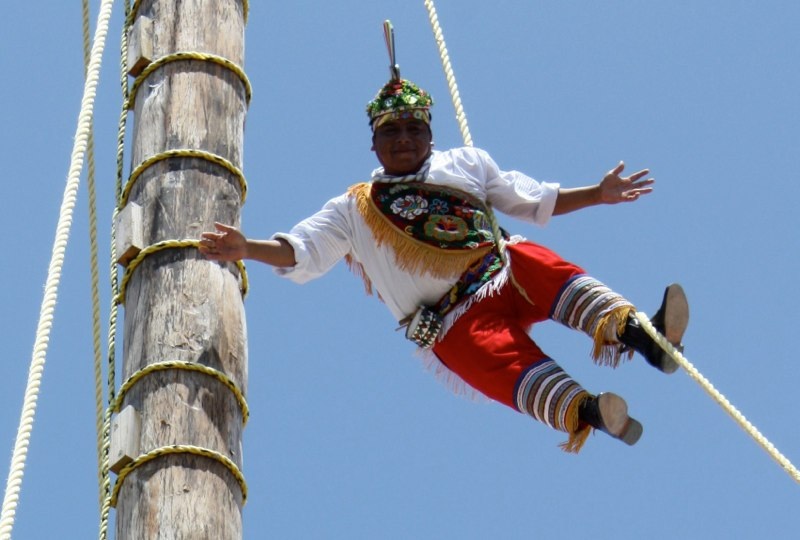
One of the four voladores
How to get there
Most visitors arrive at Cancun’s international airport just to the south of town, well served by direct scheduled flights from the UK, for example, with British Airways and Virgin Atlantic. It is possible to fly to Mexico City and catch a connecting flight but this takes longer. A wide range of packages are available with operators such as Thomson, Thomas Cook and First Choice. From the airport, the best way of getting to your hotel depends on your location. ADO buses serve the centres of Cancun and Playa del Carmen on a half-hourly basis, with fares of 148 pesos per person to Playa and 62 pesos to Cancun. Airport shuttles are available to the main resort areas for around four times as much and private hotel transfers considerably more. If you’re on a package, transfers will usually be included but check your booking documents.

Parrot in Xcaret Eco-park
How to get around
Taxis are cheap but better still are the minibuses called colectivos that ply the main road at regular intervals. To catch one, simply flag it down and tell the conductor your intended destination. Fares are cheap so take loose change and small notes. In Playa, colectivos can be found in town at Calle 2 Norte between 15th and 20th, whereas in Cancun you’ll need to come out of the Zona Hotelera into downtown, where they congregate outside La Comercial Mexicana supermarket on Avenida Tulum. In Tulum, look for them opposite the ADO bus station in the town. Several bus companies serve a large network across Quintana Roo (the state containing the coastal strip) and neighbouring Yucatan (where you’ll find Chichen Itza). The best quality buses, with fewer stops and therefore slightly dearer fares, are run by ADO, whose website http://www.ado.com.mx is easy to navigate. Local routes are also served by the cheaper Oriente and Mayab buses, which tend to be a little less comfortable and stop more frequently.
Where to stay
Cancun is the largest of the Mayan Riviera resorts. Created from scratch four decades ago, it basically consists of two areas: downtown, where the locals live, and the Zona Hotelera, a narrow strip of land flanked by a lagoon on one side and white sand in the other. Its lively nightlife and many bars attract a young crowd, especially from the USA and Canada. However, Cancun’s too noisy and brash for many, who Instead head an hour down the coast to Playa del Carmen. Playa has grown immensely in the last decade, but its pedestrian street, Quinta, with a good selection of shops, bars and restaurants still attracts many people. Try Sur, which serves Argentine steaks in a swanky setting, or Blue Lobster for seafood and glow in the dark blue margaritas. The central beach, though eroded in places, is busy and lined with popular beach clubs playing music while its water is safe for swimming.

Blue margarita
Alternatives to Cancun and Playa
Another hour by bus further south, Tulum is rapidly developing with accommodation strung out along the beach. Once home to a few hippy hangouts, it now also hosts beach clubs and luxury hotels alongside the hammocks. Puerto Morelos, midway between Cancun and Playa, is a small town that contains a few hotels, such as Casa Caribe to which the excellent Little Mexican Cooking School is attached. Akumal, a quarter of an hour south of Playa, serves those who like their resort to be local and relatively unspoilt. The easiest way to get to both Puerto Morelos and Akumal is by flagging down a colectivo on the side of the main road, known as the 307. Connecting Cancun to Tulum and beyond is a string of all-inclusive luxury resorts, gated from the main road and fiercely protective of their private patch of beach. These are well suited to families as the all-inclusive option makes budgeting easier and there are plenty of water-based activities for all ages. Whether you’re a backpacker on a budget or a family seeking a fortnight of water sports and lazy days by the pool, there’s something on the Mayan Riviera that will cater for you. If you don’t mind being away from the beach, the town of Valladolid, two hours inland from Cancun, offers an alternative to independent travellers seeking a less touristy experience. ADO buses run frequently, costing 176 pesos each way from both Cancun and Playa del Carmen.
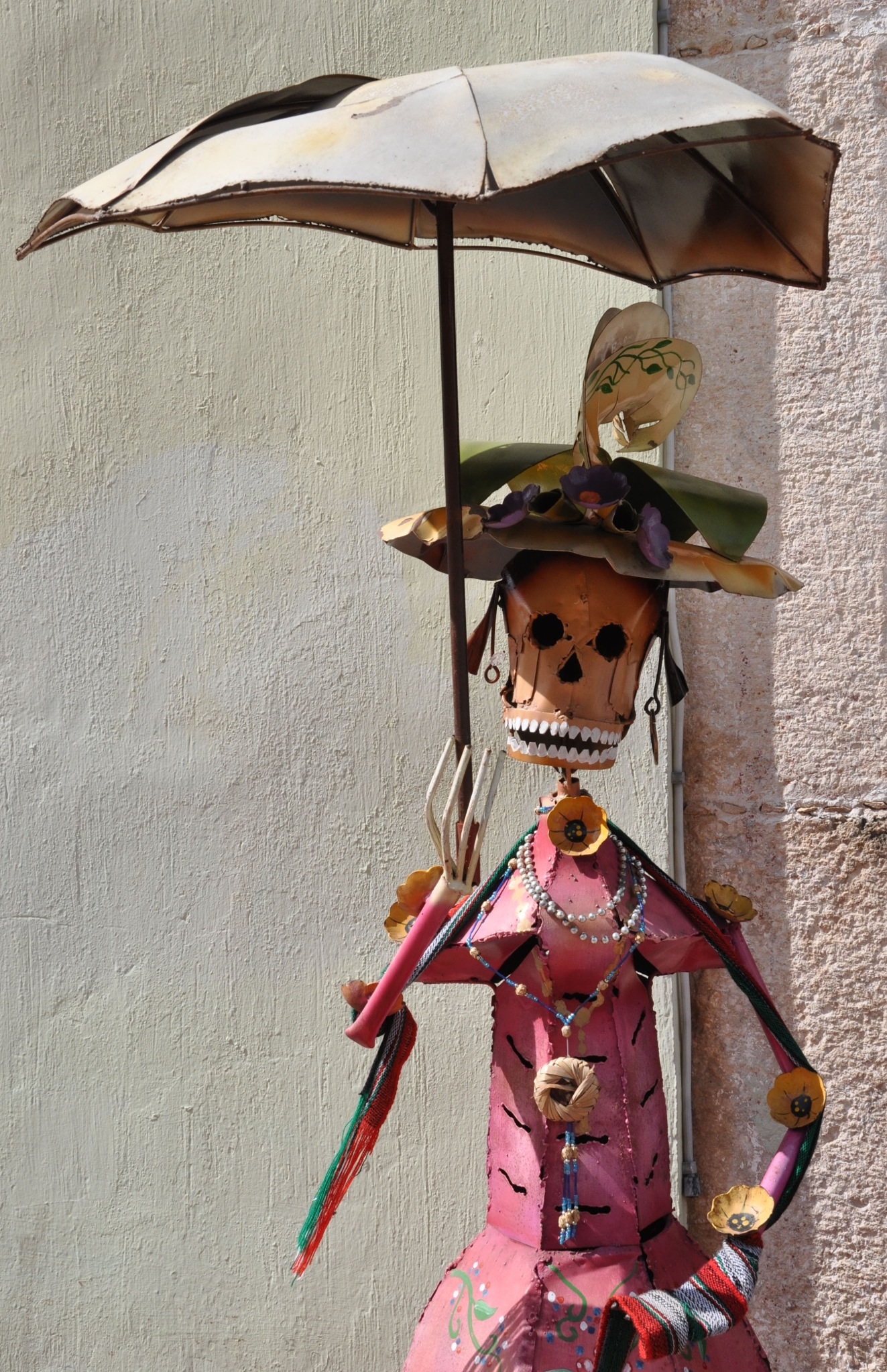
Art gallery in Valladolid selling all things Catrina, the symbol of the Day of the Dead festivities
Set around a charming plaza, there are a handful of hotels and restaurants, the best being El Meson de Marques right on the main square. From Valladolid, it’s easy to get to the ruins of Chichen Itza and Ek Balam as well as to the pretty town of Merida to the north of the peninsula, itself a good base for visiting the ruins of Uxmal and Sayil. The town is busy and it can feel less comfortable in the heat without a cooling sea breeze, but Valladolid’s a useful stopping off point between the coast and Merida if you wish to tour the peninsula.
Theme parks
As you’d expect from a well-established destination, there’s a number of water and eco-parks to tempt holidaymakers out of their resorts. If you go to only one, make it Xcaret. Pronounced “ish-ca-rett”, the site was once a Mayan port. Its archaeological remains can be visited without having to pay the entrance fee to the main park, and cost 43 pesos, but the park itself is a fun way to spend the day. You can swim in a lazy river and visit the park’s wildlife including turtles and dolphins. The park features a reconstructed Mayan ball court as well as a typical hacienda and folk art museum. At night, stay for the spectacle that condenses a thousand years of history into a couple of hours. It features everything from Mayan sport played with balls of fire to dance and folklore set pieces representing Mexico’s diverse regions. This and other performances such as an equestrian show and the exciting display put on by the Voladores de Papantla are included in the ticket price. It’s simple to find booths selling tickets in Cancun and Playa del Carmen or you can book online. Tickets start from US$89 with some activities such as swimming with dolphins carrying a supplement. For more information visit http://www.xcaret.com or pick up a leaflet when you arrive.

The show at Xcaret
Xplor is the go-to park for thrill seekers. Tickets cover four attractions: a ride in an amphibious vehicle, a lazy river swim, underground rafting and the highest zip lines in Latin America. Full instruction is given and a helmet mounted camera ensures that you have a selection of photos as a memento of your day. Tickets cost from US$119 and can be purchased in much the same way as Xcaret. Xplor’s website http://www.xplor.travel has all the information. As well as Xcaret and Xplor, there are a range of other attractions run by the same company, including Xel-Ha and Rio Secreto. Perhaps even more fun is to do what the locals do to make the best of the landscape. Beneath the peninsula, the limestone rock has slowly been weathered away to create a fascinating underground world of sinkholes and caverns into which water has gradually filtered. These lagoons, known as cenotes, form natural swimming pools popular with families at weekends but often quiet in the week. There are many close to the coast, but one of the best is Cenote Xkeken at Dzitnup. Located a little way out of Valladolid, it is a glistening turquoise lake lit through a hole in the roof of a huge cavern dangling with stalactites. Entrance costs 80 pesos.

Cenotes can be found throughout the peninsula
Mayan ruins
The large number of historical sites in Quintana Roo and the Yucatan can leave the visitor ruined out. It’s best to choose a few and enjoy them, rather than attempt to tick them all off in one trip. The jewel in the crown is without a doubt Chichen Itza. A sprawling site surrounded by jungle, it centres around the restored Kukulkan pyramid and an interesting collection of other structures including an observatory and ball court. Every tour operator offers day trips, but the site is easy to visit independently. ADO buses connect Chichen Itza directly to Cancun and Playa del Carmen via good roads. Guides can be hired at the entrance if you wish. A ticket to get in costs 533 pesos for foreign tourists. (Mexicans enjoy a discounted rate, locals even more so).

The Kukulkan pyramid at Chichen Itza
The must-see on the coast is Tulum, not for its scale but for its location. Tulum’s temples sit right on top of the cliff above a small patch of sand and a turquoise sea and unsurprisingly as a result receives the highest number of visitors of any of the peninsula’s archaeological sites. Like Chichen Itza, the volume of tourists necessitates obvious management and many structures are roped off, but the grey of the stone against the blue sky makes this a very atmospheric place despite the crowds. It’s still just possible to find a quiet spot with just a lizard or two for company, especially first thing in the morning. Tickets are priced at 80 pesos.

Tulum’s dramatic setting
Coba, just a few years ago off the beaten track but now increasingly in the tour operators’ sights, is situated an hour or so from Tulum. Once a thriving Mayan city, the ruins are scattered through an area of jungle crisis-crossed with Mayan roads known as sacbe. The pyramid here is less well preserved than that at Chichen Itza and for now at least can be climbed by anyone untroubled by vertigo – with just a single rope to cling on to, this is not a climb for those with a fear of heights. Entrance costs 80 pesos but due to the size of the site, many people opt to rent bicycles or take a ride to the ruins in a cycle rickshaw at extra cost.
Note that at present Coba is closed to visitors.
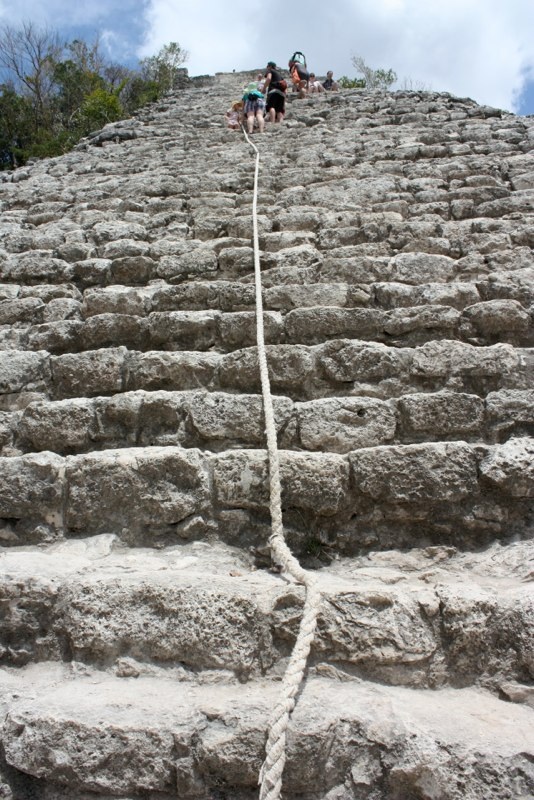
Coba’s pyramid
Less well-known and yet only twenty minutes by colectivo from Valladolid are the extensive ruins at Ek Balam. Relatively recently rediscovered, like Coba the site has a pyramid to climb, the Acropolis, its 106 worn steps rising steeply from the ground to offer extraordinary views of the surrounding jungle from the top. Ek Balam means dark jaguar in Mayan and as a result, the observant will spot jaguar motifs carved into the stone throughout the site. The entrance fee is 456 pesos for foreign tourists. Colectivo taxis from Valladolid cost upwards of 150 pesos each way; either pay for a seat and wait for others to join you or pay for the whole car. As they’re taxis rather than minibuses, you’ll find them on Calle 44 between 37 and 35, tucked inside the courtyard of a building rather than on the road outside.

The little-visited Ek’ Balam
Further afield, the attractive colonial town of Merida makes a convenient base if you wish to visit the Yucatecan sites of Sayil, Labna and Uxmal. It’s also close to Izamal whose ruins boast the largest surviving Mayan structure in the area. Getting to Merida takes around five hours by bus from the coastal resorts of Quintana Roo.
Natural wonders
A coral reef extends from the Riviera Maya down past Belize and on to Honduras. The second longest in the world, after Australia’s Great Barrier Reef, it provides excellent opportunities for both snorkelling and diving. The largest protected reserve in the area is the Sian Ka’an Biosphere Reserve, south of the main tourist strip. Tours showcase its flora and fauna, in particular birds, dolphins and turtles, plus occasionally manatees for those lucky enough to spot them. Akumal’s public beach is a good place for green turtle watching. There’s no need to book a tour, as snorkelling equipment can be rented from the dive shop on the beach, from where it’s a short swim out to the reef. Even in busy spots such as the main beach at Playa del Carmen, you’ll see flamingos diving for fish and bobbing about amidst the breakers.

Playa del Carmen beach
Off the coast
Cozumel, an established cruise ship and diving destination, is easily reached by ferry from the terminal at the southern end of Playa del Carmen. It offers the facilities you’d usually expect from a place where the majority of visitors are only in town for a short while. Island tours are expensive as are taxis. Isla Mujeres and Isla Holbox, reached by ferry from Cancun, are better bolt holes if you want a more laid back island stay.
Northern Peru: the Chacha circuit
The vast majority of visitors to the increasingly popular nation of Peru follow the southern tourist circuit, taking in the main sites of the Cusco area such as Machu Picchu and the Sacred Valley. They might extend their trip by heading to Puno, on the shores of Lake Titicaca, or to Arequipa, gateway to the Colca Canyon. None of these places should be missed; Peru has some of the most beautiful scenery in the world and its kind-hearted population will give you a warm welcome.
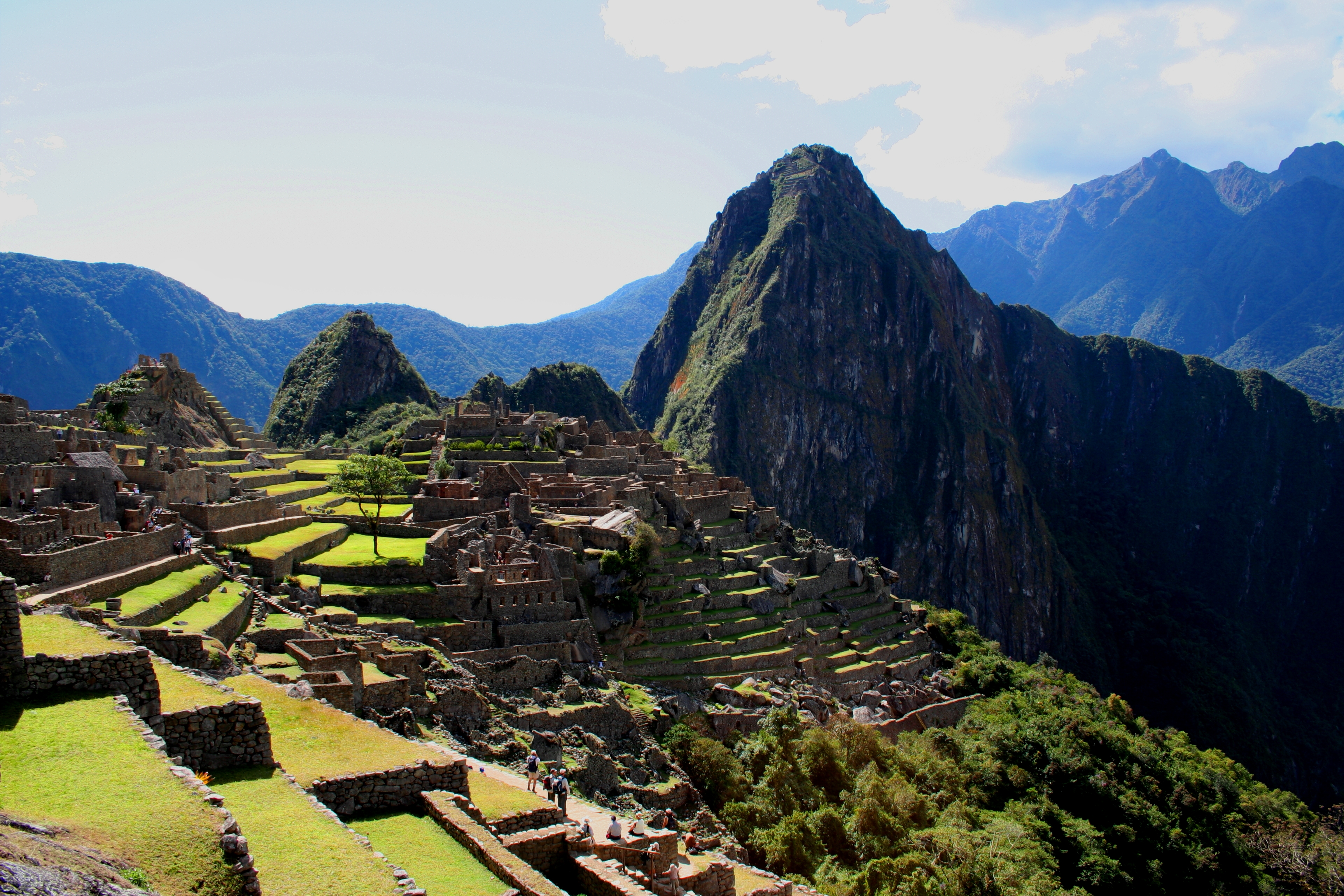
Machu Picchu
Since I first visited Peru back in 1995, tourist infrastructure and its reliability has improved, along with the food that makes the country one of South America’s most enticing culinary destinations. But the north remains overlooked, despite having ruins that easily rival those of the south in terms of interest but can be seen minus the crowds. Visiting Chachapoyas and its surrounding attractions doesn’t have to push the south out of your itinerary completely.

Chachapoyas’ cathedral in the Plaza de Armas
Here’s my lowdown on extending your visit; to take in all the places I mentioned you’ll need between five days and a week.
Getting there
Chachapoyas has its own airport. It just doesn’t have any flights. There are plans to begin commercial flights (LAN looks like the most likely contender) but in the meantime, getting there involves flying either to Tarapoto on the edge of the Amazon or to the Inca city of Cajamarca. Both are well served by flights from Lima with airlines like LAN, Star Peru and LC Busre, but both routes entail a long bus ride on to Chachapoyas. I took a day bus from Tarapoto to Chachapoyas, which was about an eight-hour ride and an overnight bus from Chachapoyas on to Cajamarca, a bone shaking ten hours including a change of bus in the middle of the night.

On the way from Tarapoto
Buses are rarely completely full on the Tarapoto to Chachapoyas route and it is usually possible to catch a bus without pre-booking. Usually, it’s necessary to take the bus as far as the town of Pedro Ruiz. Passengers heading for Chachapoyas are then escorted a few metres up the main street and take a colectivo (shared minibus) for the rest of the journey. These leave when full but you don’t normally have to wait long. Some days you can also catch a tourist shuttle direct to Chachapoyas but check locally to see if it is running. The Virgen Del Carmen overnight bus from Chachapoyas to Cajamarca runs from Calle Salamanca, a couple of blocks north of the Plaza de Armas and it is wise to book a day in advance. There is plenty of information online about this being a day bus but at the time I travelled only the overnight service was operational. Again check locally; schedules alter, and if you can get a day bus to Cajamarca the scenery will take your mind off the condition of the road.
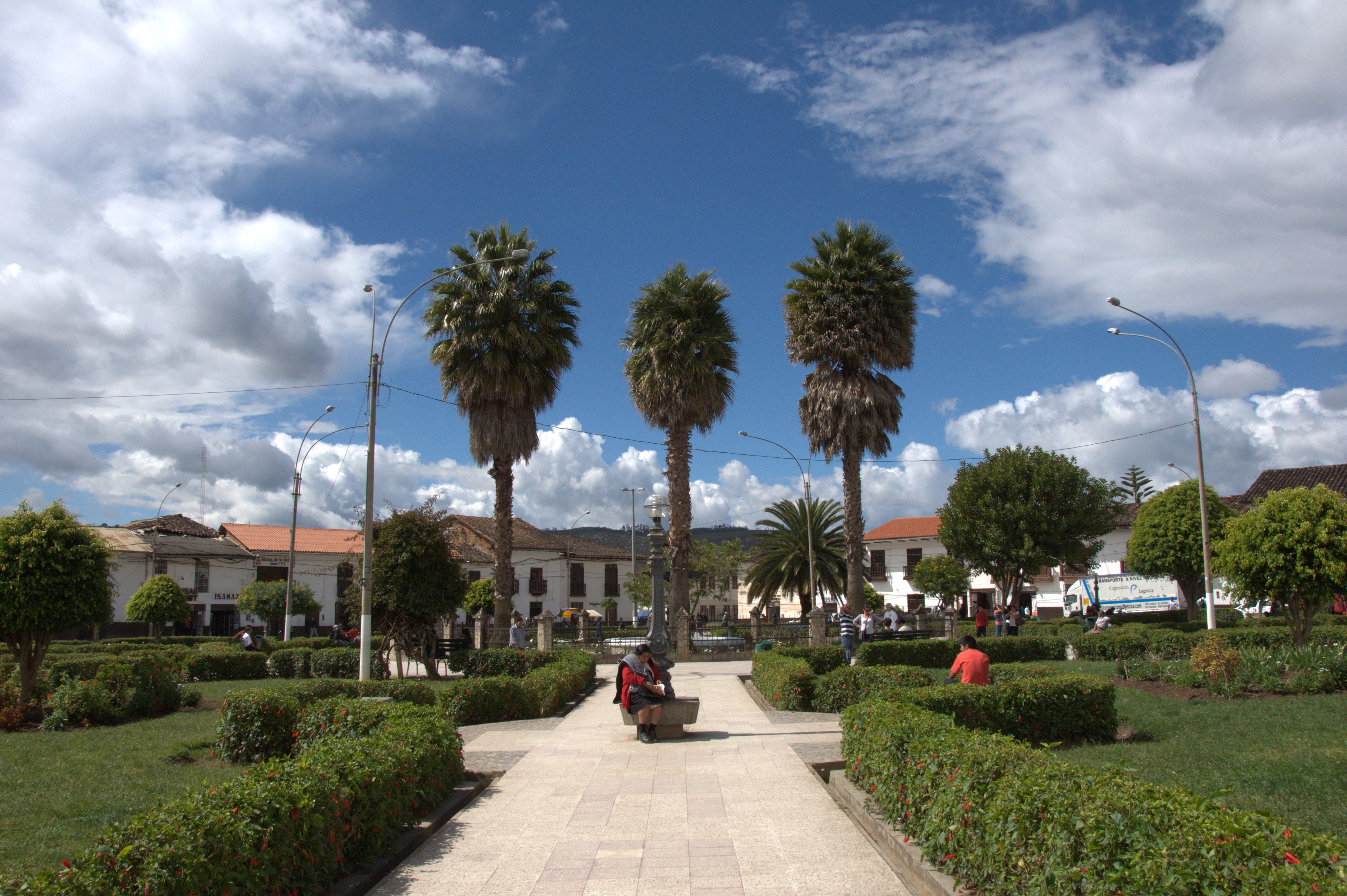
Plaza de Armas, Chachapoyas
Chachapoyas
Chacha, as it is commonly known by travellers, is a small and easily manageable town with an attractive main square. The town has a few minor attractions itself, including the pretty Huancas Gorge just outside of town just a little way past the airport turn off.

Huancas Gorge
Any taxi driver will take you there and wait for a reasonable fare. There’s also a charming adobe church in the sleepy plaza.

The adobe church in Huancas
The other unmissable site (for a foodie at least) is the marvellous Tierra Mia Cafe, adjacent to the Hostal Casa Vieja on Calle Chincha Alta, a block from the main square. The coffee is excellent and the food, especially their pastries and desserts, the best in town.
Get out of town
But the main draw of Chacha is not what’s in town, it’s what’s nearby. There are three unmissable attractions in the Chachapoyas area: Kuelap, Karajia and Gocta Falls. Surrounding the square are a whole host of tour operators selling day excursions to the region’s most popular sites. In season, there are just enough visitors to make such tours viable but you might need to be flexible with your schedule in order to visit all the places you wish.
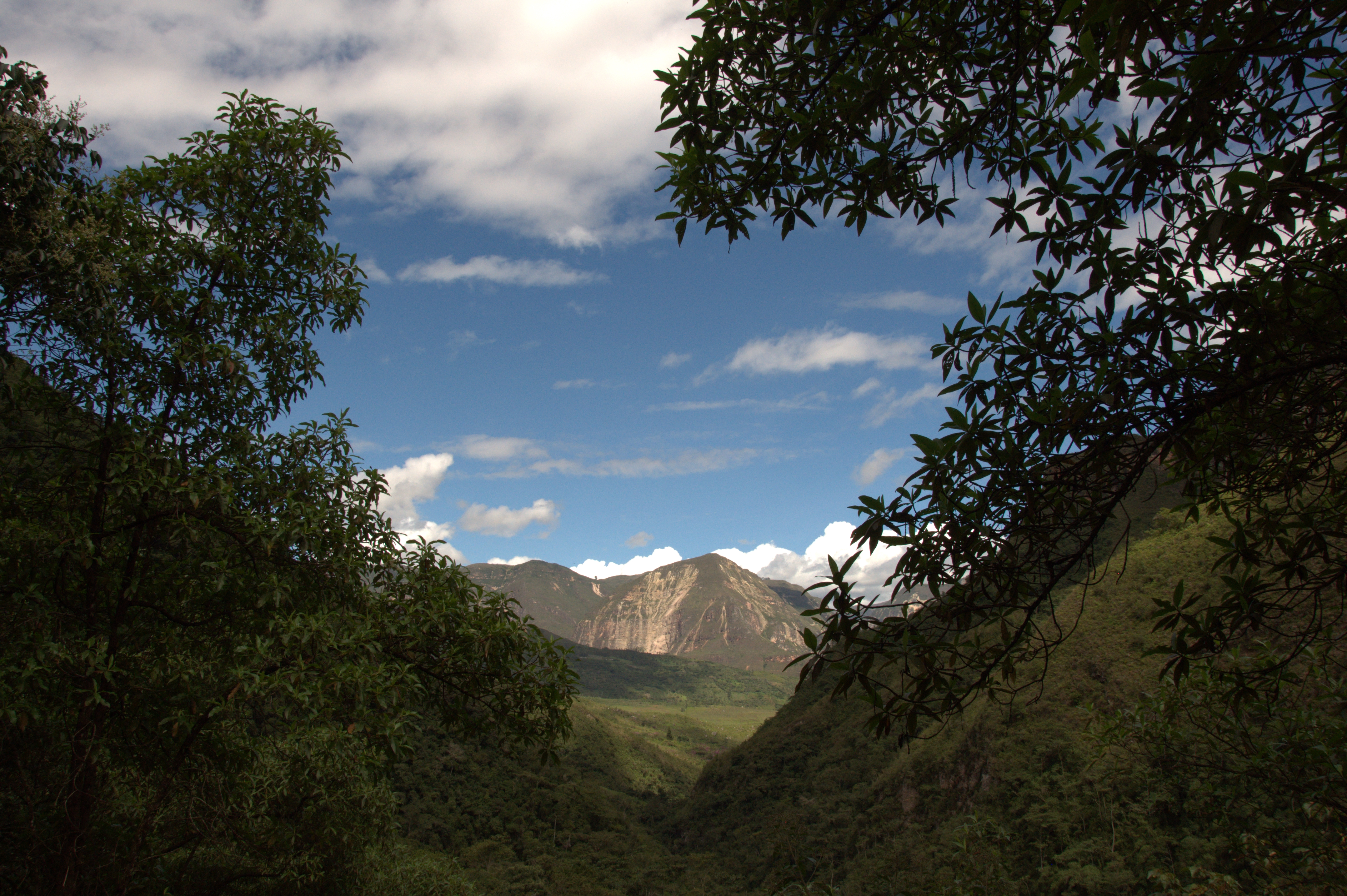
En route to Gocta Falls
Gocta Falls
One of the world’s highest waterfalls, Gocta is reached at the end of a strenuous hike which begins at the small village of Cocachimba, a short drive from Chacha.

The trail to Gocta Falls in dry season
The trek takes walkers up and over a densely forested hill on a path that is slippery and muddy even in dry season. The incline is so great that even locals puff, but fortunately horses can be rented for the worst part of the trail.

Horse relaxing after its trip to Gocta Falls
Along the way, the scenery is lush and from time to time, glimpses of Gocta Falls can be caught across the valley encouraging hikers to keep going. The Falls are situated in such a secluded location that they remained unknown outside the local area until 2005.

Gocta Falls
The ruined fortress of Kuelap
Kuelap is a ruined fortress dating, it’s thought, from around 600AD, its imposing stone walls punctuated by tumbledown staircases whose steps have been worn away over the centuries.
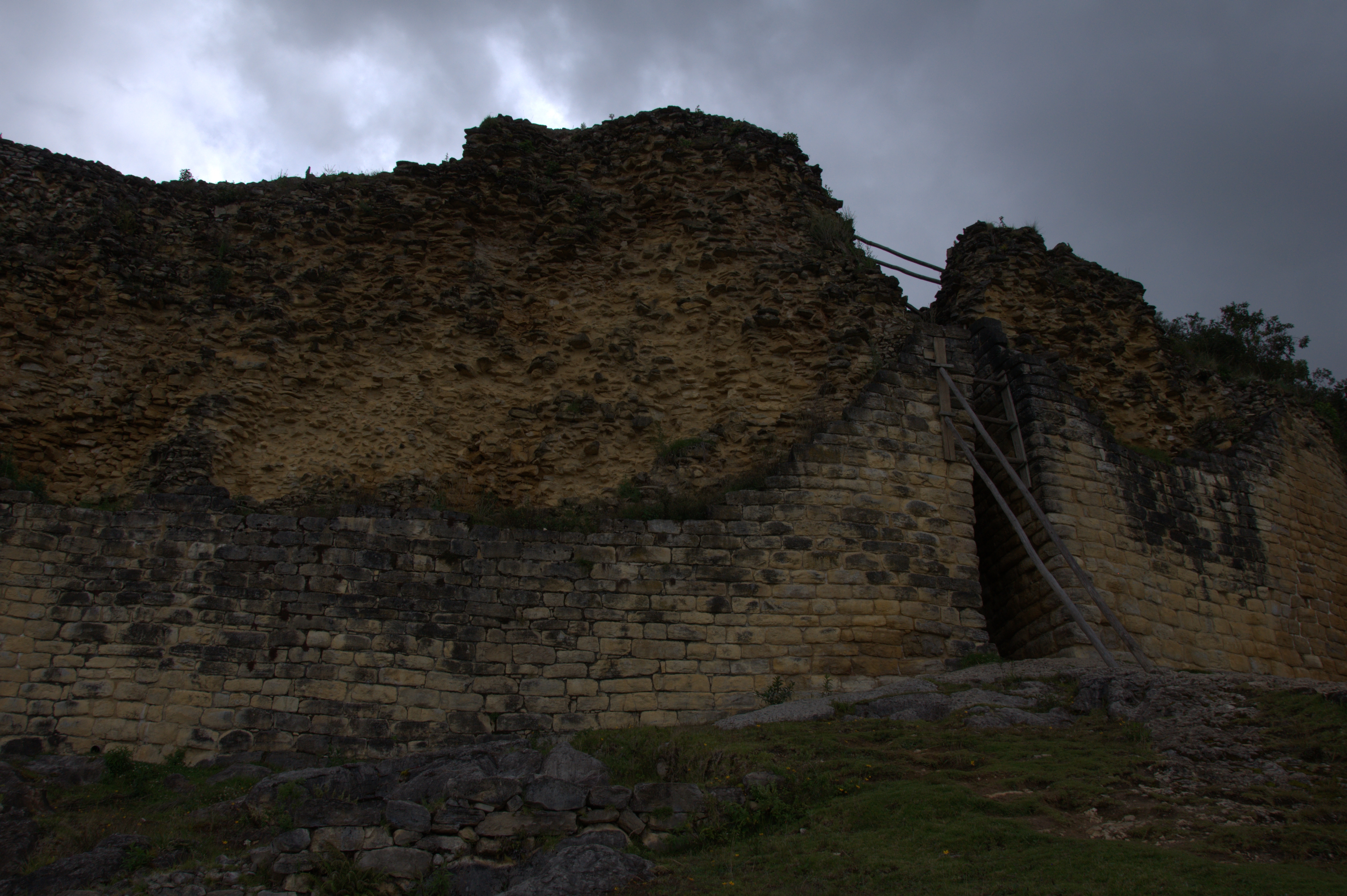
Kuelap Fortress
At the top, there are some interesting circular structures, one of which has been reconstructed with controversially more guesswork than historical knowledge, though with its photogenic thatched cone roof no one from the tourist board is really complaining.
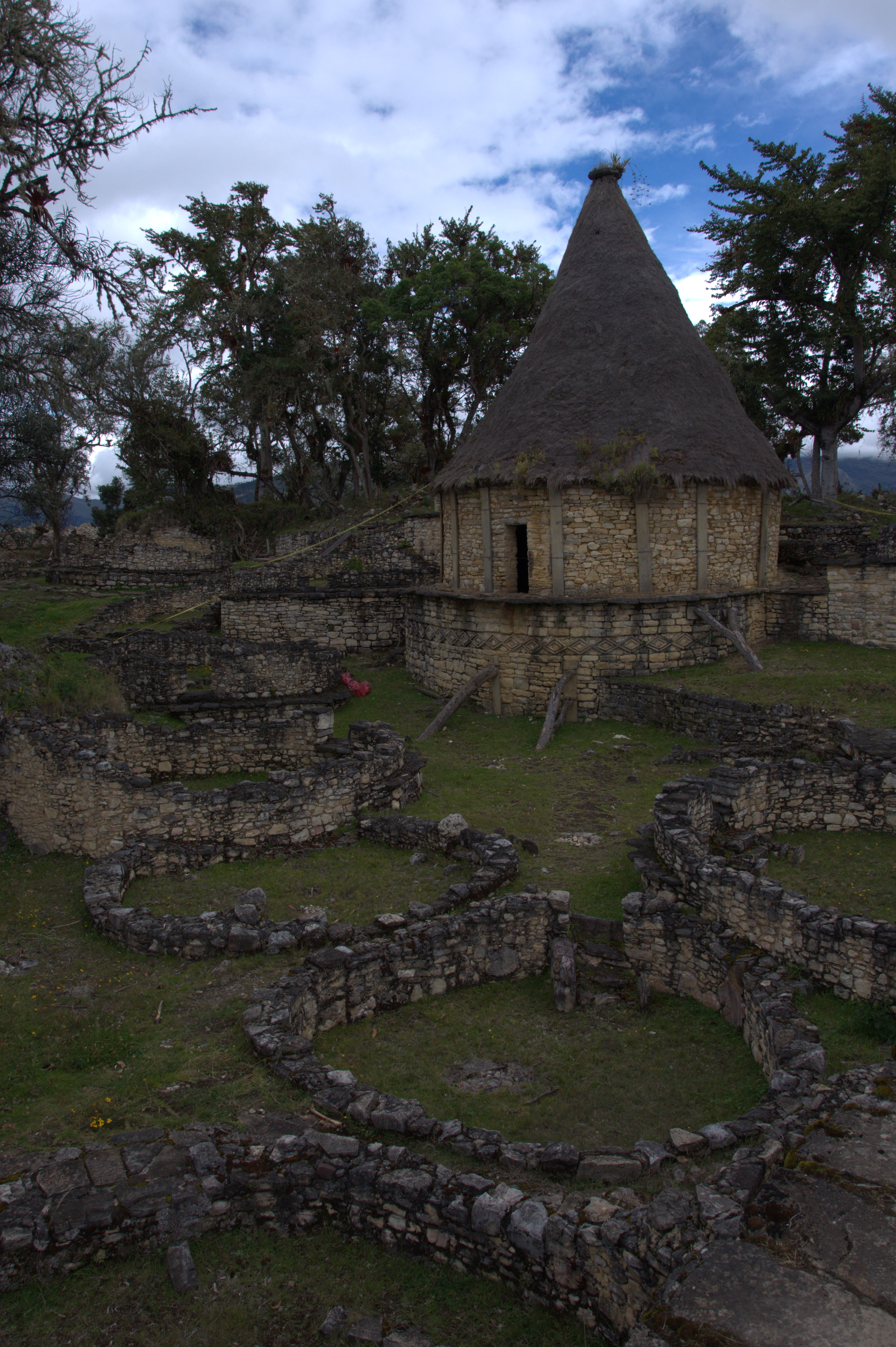
Kuelap reconstruction
Llamas still wander through the extensive site, which as a result of its hilltop location offers dramatic views over the surrounding valleys.
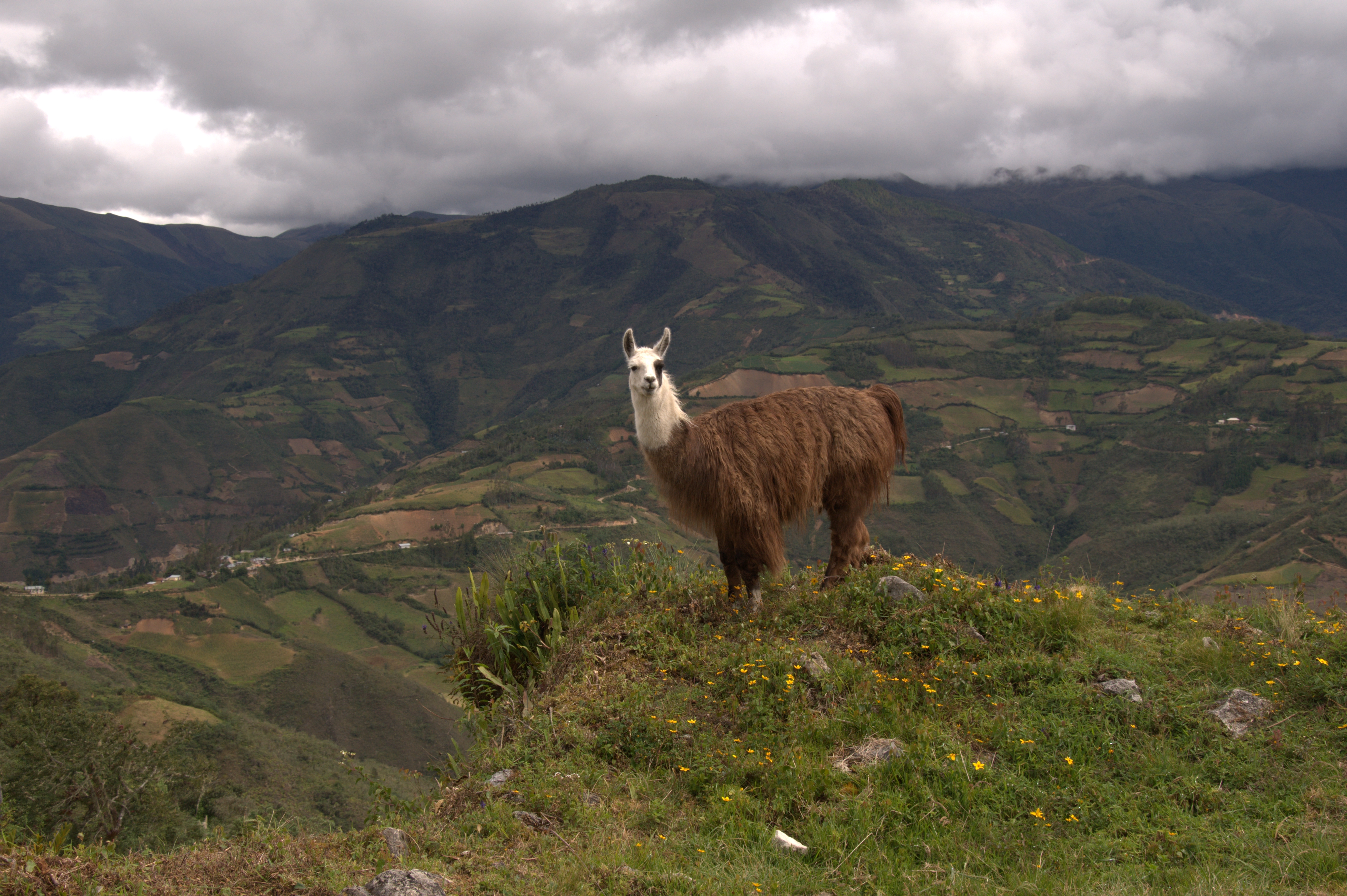
Llama at Kuelap
Peru’s tourism ministry is beginning to market Kuelap as the “new” Machu Picchu and a cable car is likely to open in 2016 making it quicker to reach.

Kuelap
The sarcophagi of Karajia
Imagine the Easter Island moai, but shrunk and plonked halfway up a remote cliff. You might be getting close to imagining what Karajia’s sarcophagi are like.
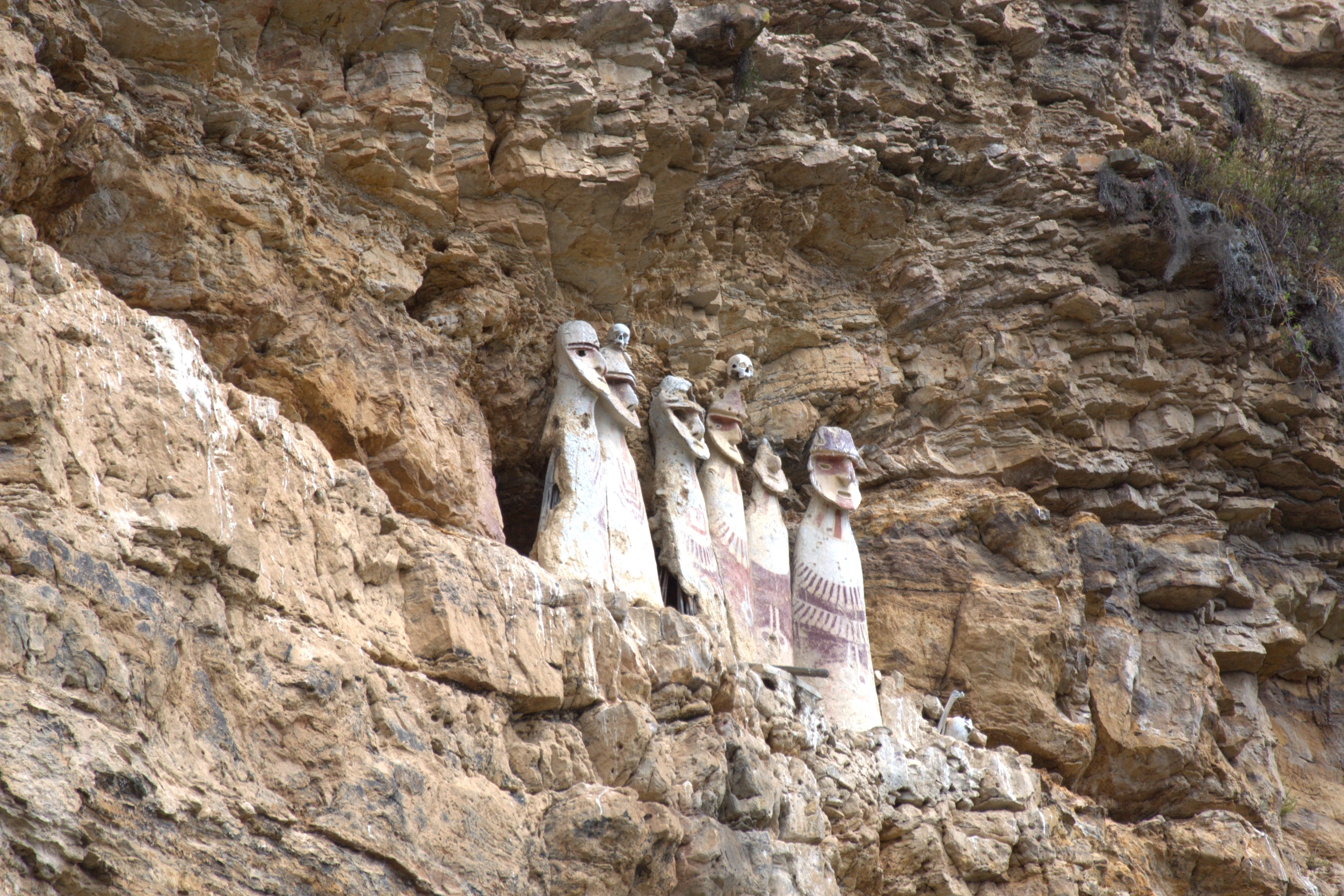
The sarcophagi at Karajia
Around two feet tall and hollow inside, these clay figures housed mummies of the Chachapoyas tribe who lived in the area between 1000 and 1300AD but were only revealed to the outside world thirty years ago. Getting to Karajia is an adventure in itself; motorised transport can only get as far as the village of Cruzpata, from where it’s a steep climb down a gravel path to the cliffs where the sarcophagi are found.

Cruzpata village
Horses can be rented if you think your lungs won’t cope with the tough climb back to the village. Tours to Karajia are often combined with a visit to Quiocta Cavern.
The verdict
Despite the relatively small number of foreign tourists, the area around Chachapoyas is definitely worth a visit and the proliferation of tour operators in the town means that getting to the outlying sites is straightforward and cost-effective. Visitor numbers are slowly but steadily rising, however, so if you want to explore without sharing your experience with coachloads of others, now is the time to go.

 Julia's Travels