juliamhammond

Latest

Gladiators, we salute you!

As the theme tune from “Gladiator” filled the arena, I felt the hairs on my arm stand to attention.

IMG_2767

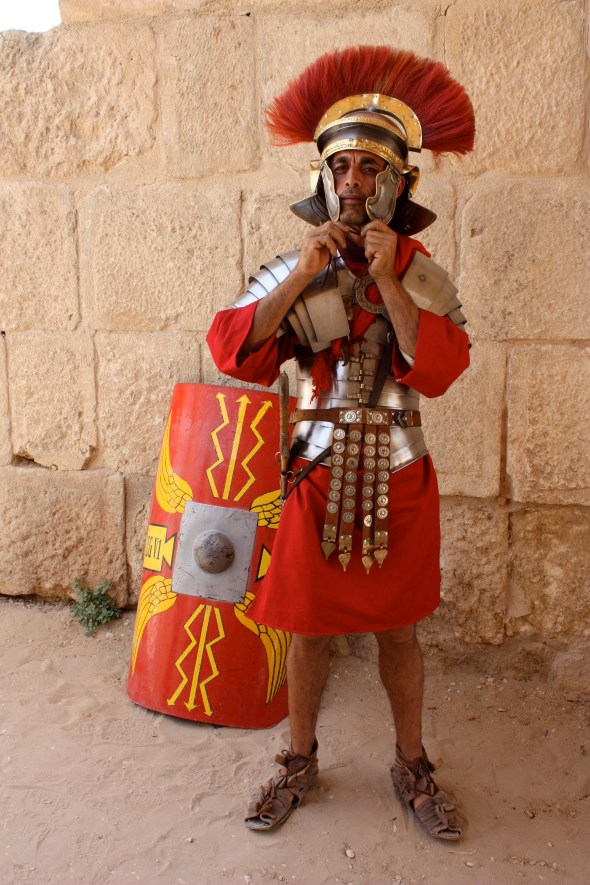
I’d come to watch a spectacle.  Jerash’s RACE project had both impressive credentials and great reviews.  Ticket clutched in sweaty palm, I hurried into the auditorium, eager to secure a good seat.  A Roman soldier adjusted his strap under a stubble-pocked chin, bristle-brush helmet conferring stature, scarlet tunic incongruous under masculine armour. An air of anticipation rippled through the crowd.

IMG_2698

A small group of legionaries arrived, interrupting excited chatter, and took their place in the sand of the legendary Hippodrome.  Though few in number, they were a formidable sight behind their flag bearer.

IMG_2702

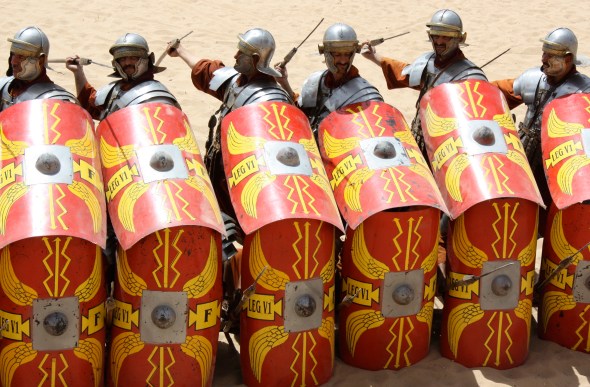
Known as the Legion VI Ferrata, “the ironclads”, they treated us to an impressive demonstration of battle tactics and formation marching.  As they recreated the classic Roman two-sided shield barrier, it was clear how effective this would have been in war.  Not a finger or stray hem was visible outside the shield.

IMG_2723

The music played, unashamedly tongue in cheek.  A diverse band of gladiators entered the arena ready to fight, clad in robes and armed with assorted weapons: net, shield, trident.  All were muscle-bound and postured aggressively.  Once they might have been slaves or criminals facing the death penalty, but today they had the best job in Jerash.

IMG_2733

“Ave, imperator, morituri te salutant!”

“We who are about to die salute you!”

IMG_2725

Passive spectating wasn’t allowed; thumbs up or thumbs horizontal – we had to vote.  The loser kept his life with thumbs up.  Caught up in the moment, I voted thumbs horizontal, before realising, embarrassed, that everyone else had pardoned him.   Feeling audience pressure, next time I voted thumbs up.

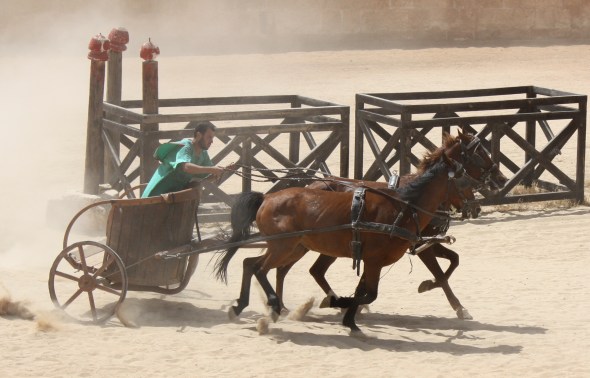
A Roman general tore into the stadium in a horse-drawn chariot. Two others followed, kicking up clouds of dust.  Their wheels angled outwards, giving the impression of imminent collapse every time their horses tackled the tight turns. The centre of the track was marked by a fragile wooden fence which didn’t seem at all like it might withstand a misjudged move.

IMG_2745

Leaning forward over the barrier, I urged the racers on ever more enthusiastically, reminiscent of ‘My Fair Lady’ though with slightly more ladylike language.  I cheered myself hoarse for a bearded driver clad in an emerald tunic, who threw himself into the job with gusto and wasn’t going to let anyone pass under any circumstances.  My favourite strode to a clear win after the regulation seven laps.  I whooped unashamedly and thought it was a pity I couldn’t have put a bet on.

IMG_2765

As the winner received his prize and our respect, it was time to clamber down to the track for some photos. Not allowed to take a chariot for a spin (clearly my reputation for a lack of hand-eye-wheel coordination had preceded me) my hero had been swallowed up within a crowd of well wishers.  I had to settle for a picture with the runner up – same beard, same tunic but, alas, a lot less balls.

How to fly business class for the price of economy

At the end of May I flew business class on BA to New York. As an ex-teacher and now a travel writer who specialises in budget independent travel, you could be forgiven for wondering how on earth that budget managed to stretch beyond economy. Well, the answer is, it didn’t. My ticket from Europe to New York’s JFK airport cost me the princely sum of £342. This is the story of how I did it.

image

Error fares explained

I travelled on what’s known as an error fare – and it’s just that, a mistake fare.  Sometimes, perhaps as a result of exchange rate glitches or human error (who cares so long as it’s a mistake in your favour) the computer offers up a fare at way below market rate.  They don’t last long, sometimes staying available hours or even minutes.  So how do you find one among all the many destination combos and available dates?

Subscribe to alerts

I subscribe to many email newsletters but those that are the most useful in this respect come from Secret Flying http://www.secretflying.com, from CheapFlightsLab http://www.cheapflightslab.com and from FlyNous http://www.flynous.com.  Each have the facility to subscribe on social media – in fact I first became aware of Secret Flying via a post that popped up as a retweet on Twitter.  Follow them on whatever platform you’re most likely to spot them.   Make sure you have notifications switched on. In this instance I saw the deal first on a Secret Flying Facebook post.

Sift out unwanted deals

I tend to stick to the well respected airlines and travel booking sites that I’ve used before.  So if a deal has to be booked through a consolidator’s website and I’ve not heard of them, I don’t use them.  Equally, I don’t want to be bombarded with offers that originate outside Europe, so I select European deals only.

Be flexible

The business class fare I found actually originated in Oslo, Norway.  The return flight was in four legs: OSL-LHR-JFK-LHR-OSL.  The way air tickets work, if I’d been a no-show for the first leg from Oslo to London, the rest of the ticket would have been cancelled.  I couldn’t have just travelled straight from Heathrow.  However, so long as I didn’t have checked baggage (and remember business class offers a more generous cabin baggage allowance) then I would be permitted to exit in London on the return leg and just “miss” the onward flight to Oslo.

A few words of warning

As I’m UK-based, the cost of getting to Oslo had to be factored into the equation.  I’d never been to Oslo and decided to travel on the morning flight from LGW to OSL the day before my New York flight and make a mini-break of it.  My one-way flight cost £45 and I added a budget hotel room on for about £30.  If you’re keeping a tally, that’s £417 to fly to New York business class – pretty much the same as a reasonable economy fare.  Norway’s not cheap, but I could have chosen a hostel should I have wished.  I could also have chosen an error fare via somewhere that offers cheaper accommodation, Spain for instance, or waited for one originating in London.

In the event, that Oslo flight was delayed by a staggering eight hours, scuppering my plans to explore the Norwegian capital but fortunately not impacting on my New York flight.  But – and I cannot stress this enough – be generous with your connection time: had my inbound flight arrived too late, I’d have forfeited my NYC error fare as the two segments weren’t purchased as part of a single through ticket.

Sometimes, these error fares are honoured and sometimes they are not

The airline is under no obligation to honour an error fare.  Basically, once you find and book an error fare, sit tight for a week or so.  Use a credit card to pay for the error fare and don’t invest any money just yet in hotels, connecting flights or airport transportation.  That way, should the error fare be cancelled, you won’t be out of pocket.

Once you have a confirmed ticket (check on the airline’s own website against your booking reference) then things should be OK.  Make sure you have decent insurance cover just in case and it’s also wise to book your accommodation on a free cancellation basis.  Sites like booking.com do this as a matter of routine; you can usually cancel right up to the day before without incurring a financial penalty but check carefully before you commit.

They work for economy too

At the time of writing Malaysian Airlines has an economy class error fare deal to Manila in the Philippines for £265 with availability showing from October 2016 to April 2017.  These flights originate and end in London, so no need to mess about with connecting flights like I did for New York.  Business class error fares come up less frequently but they do come up.  The trick is to keep an open mind.  Rather than look for a particular route, see which error fares come up and then book the one that excites you.  I’ve never been to the Philippines…

Sit tight until the right deal comes up – and then grab it before it’s gone!  Happy travels.

What’s your favourite tourist board slogan?

There’s nothing that puts a smile on your face quicker than a tourist board slogan on an airport billboard.  Sometimes, they’re inspired.  Sometimes, though, they’re so bad that the joke’s on them.

One of my all time favourites is from the Far East.  Malaysia Truly Asia is an alliterative joy. Over on the other side of the world, I ❤ NY is as iconic today as it was when it was first thought up back in 1977.

image

The perfect place for doing nothing: fabulously unexpected

Some slogans prove to be truer than could ever have been realised.  Haiti’s Fabulously Unexpected rang true, but not always for the right reason.  Some are just plain awful.  Panama, couldn’t you have come up with something better than It Will Never Leave You ?  Fiji Me has thankfully been replaced by Fiji: Where Happiness Finds You, though the top question asked about the country according to Google still seems to be “Is Fiji a country?”

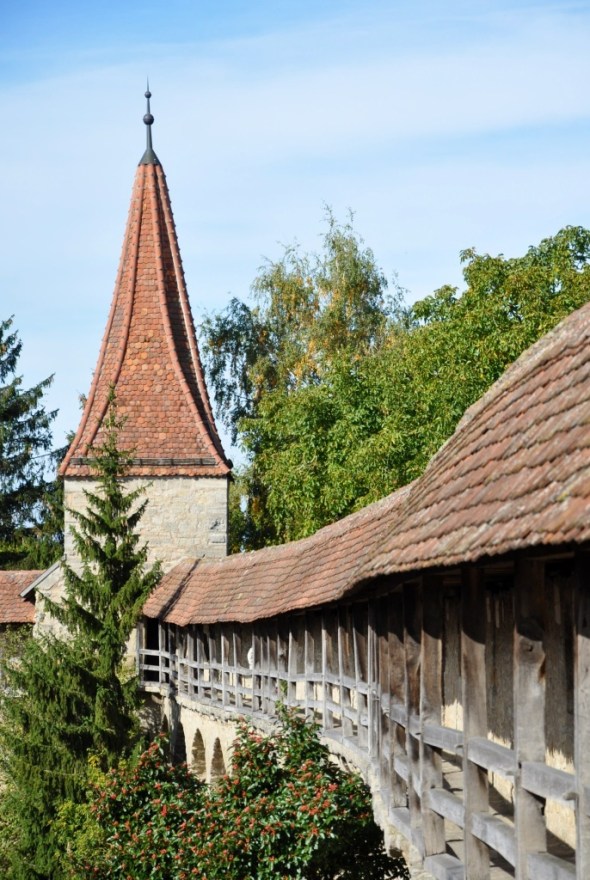
If a slogan is just too obvious, it fails to deliver.  I reckon Maldives’ The Sunny Side Of Life falls into this category, as does Thailand’s offering, It Begins With The People.  I’m on the fence about Canada’s Keep Exploring and still can’t get my head around Incredible India.  (Or, if we’re mentioning cities, Incredinburgh, for that matter, though that was axed.)  Germany: The Travel Destination is clear but dull, though their Twitter feed places the same logo beside Simply Inspiring which is marginally better.

image

Rothenburg: simply inspiring?

Humour’s always a good idea, when it’s deliberate.  Australia might currently be going with There’s Nothing Like Australia, but they’ll never surpass So Where The Bloody Hell Are You as far as I’m concerned.  Jamaica’s posters adorned my walls as a university student, but its latest slogan Home Of All Right, is pretty good in my book.

There are a few slogan generating websites out there that in general cope badly when tasked with coming up with something snappy based on a country’s name.  I thought I’d see if Visit Sweden could be improved at http://www.sloganizer.net – it came up with Sweden: Yabba Dabba Duh.  It was, however, more successful with Nigeria, generating the delightful Nigeriarific.

What are your favourites?  Can you improve on any of the official offerings mentioned above or have you seen worse?

A beginner’s guide to Extremadura

Extremadura isn’t on most people’s radar when it comes to holidaying in Spain, overshadowed by its popular neighbour Andalusia. That doesn’t mean it’s got nothing to offer, however, and this region has proved to be one of the most diverse and interesting parts of Spain that I’ve visited.

photo7

Bakery selection in Trujillo

Getting there from the UK

There aren’t any direct flights from the UK to Extremaduran towns so realistically, the choice is between Seville to the south of the region and Madrid to the north east. Ryanair fly to Seville from London’s Stansted airport, BA, Ryanair and easyJet from Gatwick. If you’re wondering why Iberia’s missing from the list, it codeshares with BA on their LGW flight. From regional airports, you’ll have to connect as there are no direct routes.
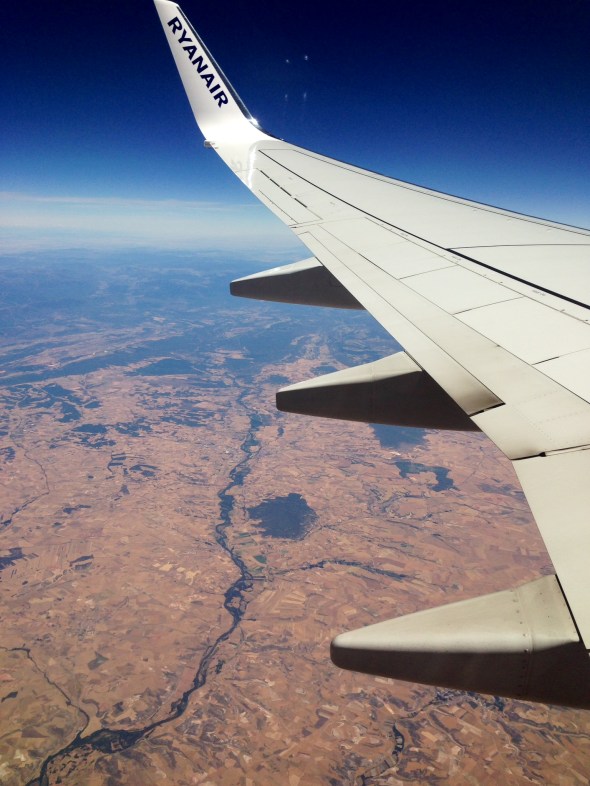
photo15

Ryanair en route to Seville

Those same airlines will also carry you to Madrid, plus Norwegian, a low-cost carrier operating out of Gatwick, as well as Iberia Express and Air Europa also from Gatwick.

Getting to and from the airport

I flew into Seville and out of Madrid on this trip but there’s no reason why you can’t do a round trip route or reverse the itinerary. To get into Seville from the airport I caught the airport bus, buying a ticket while I queued up for a few euros. It stops at the train station Santa Justa, skirts the old town and ends up at the main bus station, making it a convenient option wherever you’re staying.

photo14

One of the most atmospheric bars in Barrio Santa Cruz, Seville

In Madrid, my train’s final destination was Chamartin station to the north of the city centre but I bailed at Atocha. Getting to the airport was straightforward; the cercanias or stopping trains are quickest but go to Terminal 4. I’d opted to fly Ryanair which left from Terminal 1 and so I connected to the airport using metro line 8.

Getting around

Whether or not you’ll need to rent a car depends on whether you wish to explore the region’s attractive countryside and villages or stick to the main towns. There are a few train connections, such as between Badajoz to the west and the Spanish capital, but for me, on many of the routes I wanted to use, buses operated to a more convenient schedule. Operators include LEDA, ALSA and Avanza.

photo12

Every town has a main square; this is Zafra’s

I caught the bus from Seville to Zafra; you can buy a ticket to Mérida for around 10 euros. Although it’s possible to alight at Zafra, as far as I could work out, I couldn’t buy a ticket to Zafra online (you can in person) so I needed a separate ticket from Zafra to Mérida. Book online at http://www.alsa.es. It was just a few euros – well worth it for the chance to see this charming little town.

photo9

Pizarro’s mansion in Trujillo

From Mérida to Cáceres, an hour or so further north, I used LEDA; find them at http://www.leda.es where they also offer online booking. A single ticket costs just under 6 euros. From Cáceres, I made a sideways hop to atmospheric Trujillo for under 4 euros each way, leaving my bag in a locker at the bus station back at Cáceres. Tickets from the brand new and barely open bus station in Trujillo only go on sale fifteen minutes before the bus departs with Avanza but the buses weren’t full.
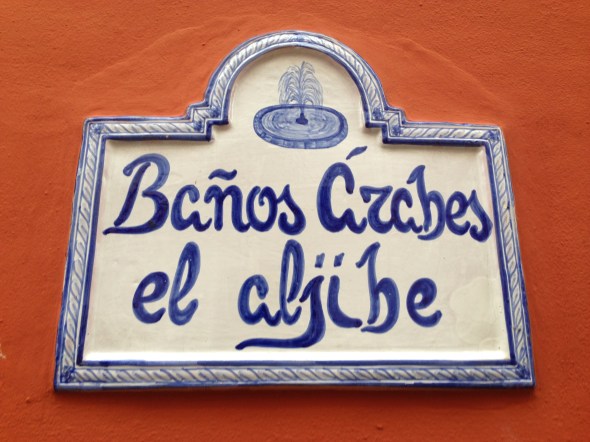
photo17

The hammam at Cáceres

To explore Monfragüe National Park and the La Vera valley in a day, there was no alternative to hiring a car. I used Europcar as its office was an easy walk from my Plaza Mayor base and also a straightforward and mercifully short drive to the ring road, easing the pain of town traffic. I did get a tiny bit lost getting the car back but I was only a few blocks out.

photo4

Birds take flight over the Ciudad Monumental

To get from Cáceres to the capital Madrid, I figured a train might be more reliable (it wasn’t – we were 40 minutes late getting in) and the train ticket on one of RENFE’s Media Distancia trains was also considerably more expensive than the buses I’d taken – around 32 euros.
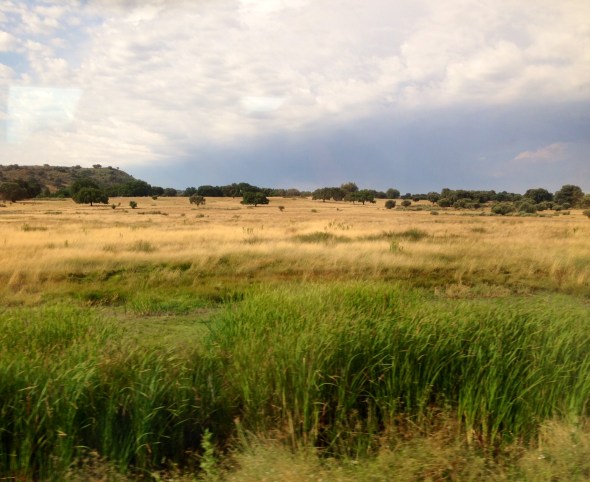
photo16

The Extremaduran countryside as seen from the train

Where to go

Where to start? There are so many incredible destinations that it’s hard to whittle them down. In order, here are the places I visited during my Extremaduran holiday.

Zafra

This small town felt more like an Andalusian town than an Extremaduran one, though as it was the first stop on my itinerary, I hadn’t at that point worked out what an Extremaduran town might feel like. It has a pretty double square with lots of pavement cafes and tapas bars. I was there just for the day but I am told the food scene is good there – something for next time. The town also has a castle, now converted into a parador, and plenty whitewashed alleyways adorned with window boxes stuffed full of geraniums.
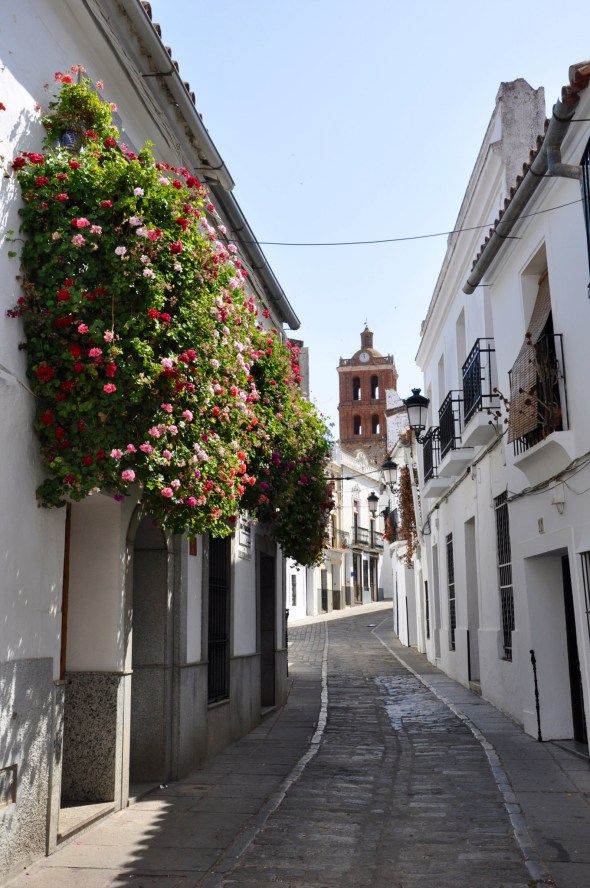
photo11

Street leading to the main squares

Mérida

This town is supposed to have the best preserved Roman remains in Spain. The sheer number of ruins was impressive, but some sights had more of the wow factor than others. There’s a partially reconstructed amphitheatre next to a fantastic open air theatre. Then there’s the breathtaking Temple of Diana which is literally plonked halfway along the main street with shops and cafes either side; OK technically it was there first but it does look so out of place it’s a bizarre sight. A restored Roman bridge, old fort with atmospheric cistern, Moorish remains and Forum are also easily accessible within the town centre.
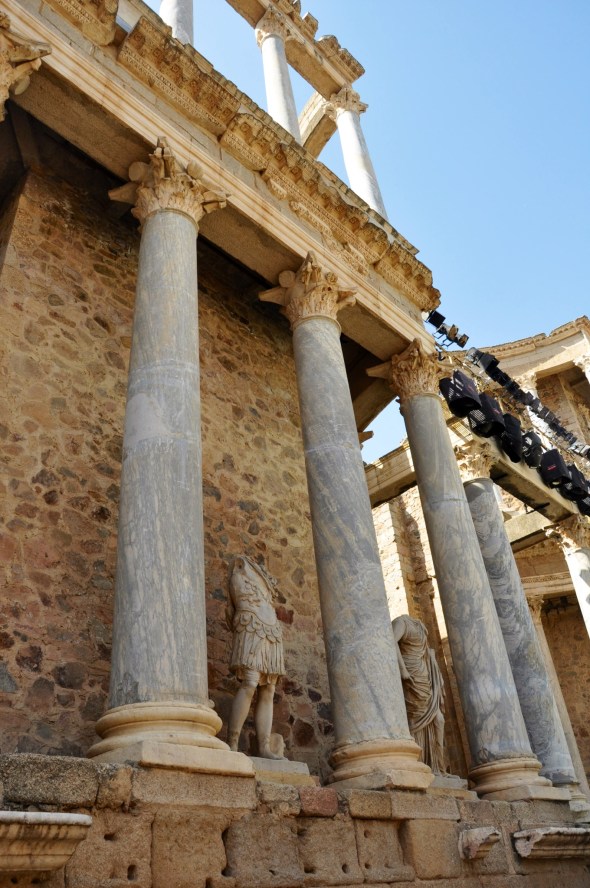
photo10

Merida’s Roman theatre

Trujillo

This charming town was my favourite, home to conquistador Pizarro whose statue dominates the main square. Actually, that statue was supposed to be of Cortes, but the Mexicans didn’t want it so it was re-purposed as a Pizarro statue instead. The historic centre of Trujillo is packed full of mansions, including Pizarro’s, as well as myriad churches, towers to climb, a museum about the conquest of Peru and a hilltop castle.

photo8

View over Trujillo’s rooftops

Cáceres

The main attraction of this large town is its Ciudad Monumental, a walled old town which is also a UNESCO World Heritage Site. Just wandering amongst its alleyways late in the day was a delight; the addition of a very talented flamenco singer playing Spanish guitar was the icing on the cake. Outside the Ciudad Monumental, the Plaza Mayor was the centre of the action when it came to food and drink, though nearby San Juan had better food. The town also has a hammam with the usual hot, warm and cold baths – massage optional.

photo5

Flamenco singer in Cáceres’ Ciudad Monumental

Monfragüe National Park

This, I read, was Spain’s 14th national park but it was the one place I visited that made me gasp. At the Salta del Gitano lookout in the centre of the park, the River Tajo meanders between a couple of rocky outcrops. I visited in the morning and the water was a vivid green – a spectacle in itself but even for someone who can’t see the point of birdwatching, the sight of a black vulture close up was pretty impressive. The winding drive through the park was very pleasant and, if you don’t visit in the height of summer when the temperatures soar, the area is great for hiking.
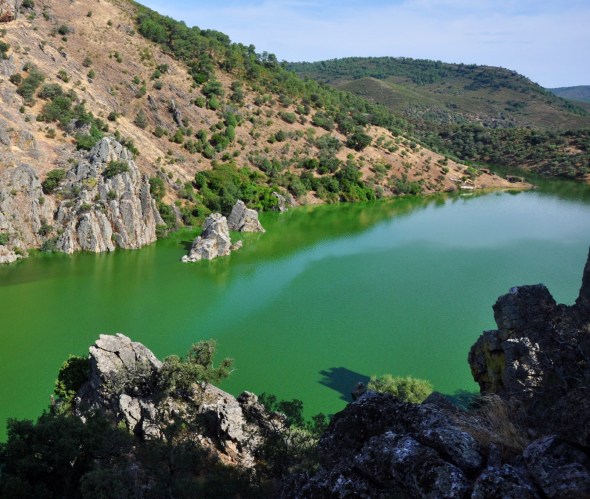
photo3

Salta del Gitano

La Vera

This valley connects a series of pretty little villages, many of them worth a stop. Pasarón de la Vera was my first stop, its setting the main draw. From there, a short drive took me to Jaraíz de la Vera, known for its peppers, and then to Cuacos de Yuste, where the monastery housed the Spanish King Carlos V towards the end of his life. I drove on as far as Jarandilla de la Vera where there was an impressive Roman bridge and several natural swimming pools (a big thing in these parts) before backtracking to Garganta de Olla, a quaint little village with a plethora of half-timbered houses overhanging its narrow streets. Taking the mountain route via Piornal provided the adrenaline rush to end the day – though fortunately by that I mean returning to Cáceres and not going over the cliff edge.
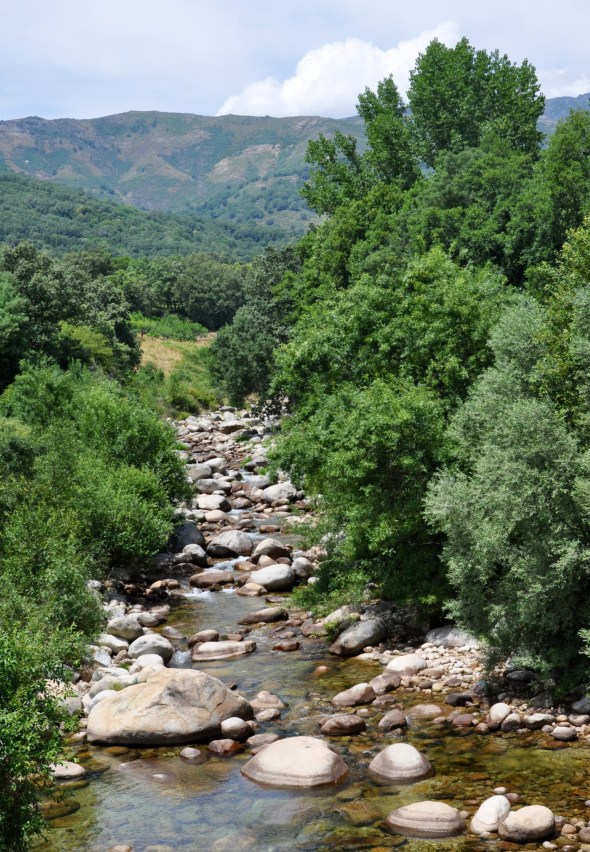
photo1

Natural pool on the edge of Jarandilla de la Vera

The ones that got away…

This was my first trip to this region and there were quite a few places I didn’t have time to visit – this time! I’ll be back, one day, to visit Alcántara and its bridge as well as to Montánchez, Monesterio and to Casar de Cáceres for the food.

Watch out for more blogs covering Extremadura in the near future for more on these fantastic places.

Best of British: coastal picks

With last week’s shock Brexit decision, the pound has slid against the dollar and the euro, making the UK a cheaper destination for foreign visitors. Whether you’re flying in from abroad on the back of an advantageous exchange rate or a Brit now planning a staycation, here are a few of my favourite English coastal destinations to whet your appetite.  You don’t even need sunshine for a great holiday – which is just as well given the summer we’re having so far.

Dorset

Dorset’s Jurassic Coast is one of my favourite spots.  As a former Geography teacher, this stunning coastline packed with headlands, bays, arches and stacks never fails to disappoint.  The walk across the cliff top from Lulworth Cove’s almost perfectly circular bay to the drama of Durdle Door has surely got to be among the best in the country as far as I’m concerned.

North Norfolk

IMG_9954

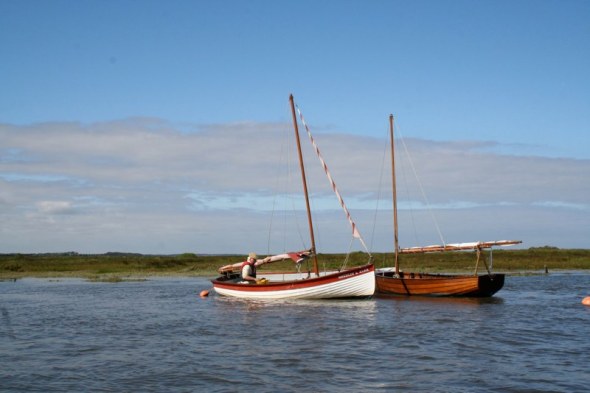
From the old windmill at Cley-next-the-Sea to  the vast expanse of sand that forms Holkham beach, this small stretch of coastline punches well above its weight when it comes to visitor attractions per square kilometre.  So close to London and yet a world away, whether you choose to  take a seal boat trip from Blakeney, take a hike across the marshes (some of these seaside towns are no longer sea-side) or hole up in one of the many excellent local pubs you’ll love it enough to be sure to return.

Cornwall

No discussion of England’s best coastal destinations could be complete without reference to the west country and pretty though Devon is, Cornwall just has more character in my book.  It’s hard to pick a favourite – this is a part of the country where you’re truly spoilt for choice.  Polperro, pictured, has a lot of charm and perilously narrow access for those who blindly follow their Sat-Navs into town.  If in doubt, take the locals seriously when they advise that some routes are not caravan friendly  – and by caravan, they mean anything wider than a bicycle.

North Yorkshire

geograph-1412012-by-Dr-Patty-McAlpin

As an Essex girl, you’ll have to forgive me for a list biased towards the south, but doing my degree at the University of Leeds has left a lasting fondness for God’s Own County.  Many a happy field trip was spent perched on a cliff sketching this dinosaur-like rock formation at Flamborough Head known as High Stacks, but to save you from some water-damaged and decidedly tatty field sketches, here’s a photo instead.

© Copyright Dr Patty McAlpin and licensed for reuse under this Creative Commons Licence

And one I keep promising myself I’ll get to one day… Crosby Beach near Liverpool

Another_Place3_edit2

Antony Gormley has excelled himself with this installation, titled “Another Place” which, after being exhibited in various European locations has found a permanent home at Crosby Beach just north of Liverpool.  A hundred cast iron figures stand in the mudflats at low tide, staring at the horizon until the incoming tide buries them in water and sand.  People say it’s a haunting sight, and it’s one I’m looking forward to seeing for myself when I’m next in the area.

Photograph by Chris Howells CC-BY-SA-3.0 via Wikimedia Commons

What are your favourite parts of the English coastline?

I could easily continue this blog: the best fish and chips in the world at Aldeburgh, Suffolk; the imposing castles of Northumberland; Brighton’s iconic Victorian piers and more. The beauty of Wales, Scotland and Northern Ireland will be the subject for another time, but for now, where would you say is a stand-out for you?  And where have you always wanted to visit?  I’d love it if you would share your English coastline tips by commenting on this blog.