juliamhammond

Latest

Explosive Mount Yasur, highlight of my Vanuatu trip

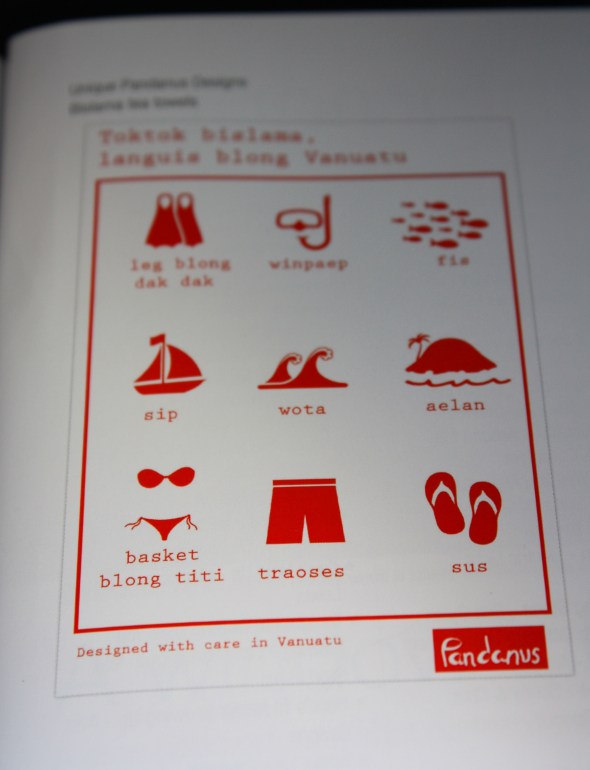
I’ve been reminiscing about a trip I made to Vanuatu as the BBC Travel website commissioned an article about Bislama, the language spoken there.  Some people might question the amount of money spent on travelling, but in my opinion it’s money well spent as you treasure those memories forever.  So, beneath the link to the article, you’ll find some of my favourite photos from that unforgettable trip.

http://www.bbc.com/travel/story/20170814-how-one-language-unites-83-islands

Man on the road to Lenakel

Working in the fields is a tough job

IMG_4564

Women in Mother Hubbards at the market

Lenakel market

Produce at the market, in the foreground is taro

IMG_4550

Lenakel petrol station

AIDS awareness

AIDS awareness poster in Bislama

Air Vanuatu tea towel

The Air Vanuatu tea towel

IMG_4628

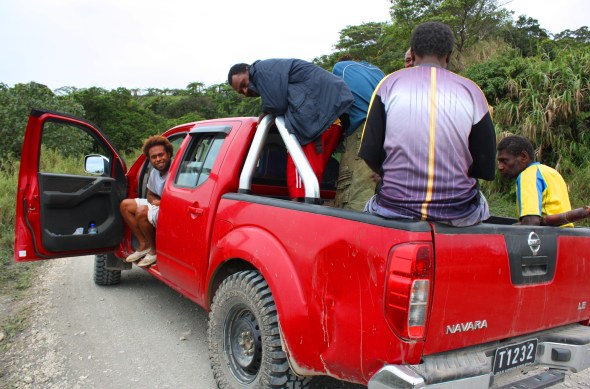
My ride to the volcano

IMG_4677

Post box on the side of the volcano

IMG_4782

Dusk on Mount Yasur

IMG_4799

Terrifying, enthralling, spectacular

Stepping back in time at the East Anglian Railway Museum

DSC_0391 (2)

Time flies by when I’m the driver of a train, and I ride on the footplate, there and back again.”  Chances are, if you’ve just sung this rather than read those words, you grew up on a diet of Chigley and you remember as fondly as I do Lord Belborough and his steam engine Bessie.

But until yesterday, though I’d been on many a steam train, I’d never experienced what it’s like to ride on the footplate.  Thanks to train driver Michael and his sidekick Kim, whose role is that of fireman, I got to tick it off my bucket list.  Stood between Michael and Kim, I tried to keep my balance and time my barrage of questions to avoid interfering with their safety checks and operational duties.  With a carriage-load of passengers on board, even on such a short demonstration trip, it was important that things were done properly.

Teamwork was key, with both volunteers working together to ensure everything ran smoothly.  It was hot work.  As Kim stoked the firebox with coal, the blast of heat coming from inside was palpable.  Kim wiped a smear of coal dust from his nose and grinned as I wiped the sweat from my own forehead.  I was glad this was the museum’s 1905 vintage engine when Michael mentioned that had I ridden on the footplate of one of the other two working engines I’d have been much hotter, as the furnace would have been level with our faces instead of by our feet.

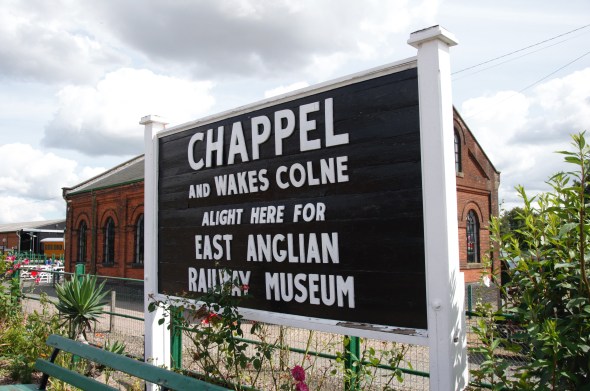
Whatever your age, there’s something special about a trip to a railway museum and the chance to see a working steam engine.  If you’re reading this and nodding your head in agreement, then I’d recommend you visit the East Anglian Railway Museum at Chappel and Wakes Colne.  While riding on the footplate was a special treat, visitors will sometimes be able to take advantage of the museum’s “Taster for a Tenner” promotion where you can learn how to drive a diesel loco for just £10.

DSC_0397 (2)

This summer, Greater Anglia are making it better than ever to travel by train.  For a number of attractions across East Anglia and London, the East Anglian Railway Museum being one of them, presenting your rail ticket gets you 2FOR1 admission.  If there’s just two of you, Greater Anglia’s advance fares will also keep your costs down.  For larger groups, check out the Group Save tickets, a good deal for families and groups of friends looking for an affordable day out.  Even better, Group Save can be used in conjunction with the 2FOR1 offer.  With rail tickets for children costing from just £2, arriving at the EARM by train makes a lot of sense.  Chappel and Wakes Colne station lies between Sudbury and Marks Tey on the pretty Gainsborough Line.  From Marks Tey there are frequent connections to London’s Liverpool Street as well as Ipswich and beyond.

DSC_0575 (2)

I chose to time my visit to coincide with one of the EARM’s regular special events.  The 1940s Vintage Tea Dance marries our nostalgia for the age of steam with a love of music, dance and reminiscing about the war.  Headlining the event were the fabulous Fox, Wiggle and Sass.  Perfectly co-ordinated in red polka dot dresses, hair coiffed in immaculate victory rolls and lips painted a perfect scarlet, the girls had the Forties look down pat.

Aimee (Fox), Amy (Wiggle) and Gemma (Sass) hail from what they term the Bermuda Triangle of Essex: Layer de la Haye, Finchingfield and Witham.  Over the last four years, they’ve been hired for countless weddings and private parties, but coming back to the EARM is special as it was the first gig they ever played.  This talented trio made performing the harmonies and melodies of iconic Forties classics like “Ac-Cent-Tchu-Ate the Positive” and “It’s a Good Day” as well as swing hits like “Sing Sing Sing” look simple.

Watching them perform was a full house – or rather goods shed – of people, many in 1940s costume themselves.  Servicemen danced with WVS volunteers while onlookers sipped tea from vintage china and ate cream teas.  Sharon from Swing Jive Sudbury was on hand to teach everyone the basics so even complete beginners could join in the fun.

Also in the goods shed, Bunty Bowring had laid out a fascinating collection of 1940s vintage clothing, showing how in times of rationing, make do and mend were of vital importance.  Together with husband Richard, who was dressed as one of the Home Guard, she shares her passion for all things wartime by giving regular talks to various local organisations.  Outside the goods shed, meanwhile, members of the Suffolk Regiment Living History Society had brought their rifles, kit bags and even their trucks and The Viaduct mini-pub was open for those wishing to sample the local beer.

The event had been fun, but  to leave without exploring the museum’s regular exhibits would have been a travesty.  I began at the signal box where a series of colour-coded levers ensured a train couldn’t enter a stretch of track while another was in the way.  The blue one shown in use here is pulled to activate a points lock, making sure the points don’t move as the train’s wheels pass over the top.  Young kids will love pulling the levers so much it will be hard to drag them away.

DSC_0411 (2)

Across the footbridge, the restoration shed gives you the chance to see some of the museum’s many engines and carriages being brought back to their former glory.  Many of the volunteers work on these projects on Wednesdays, making this a good day to find out about what’s going on.  There’s plenty of restored rolling stock to have a look at, including some vintage wooden carriages and recreations of station buildings and platforms.

The exhibitions in the on-site heritage centre explain the impact of Beeching’s cuts on the Gainsborough Line, which once would have continued on to Cambridge.  Sudbury’s population grew sufficiently to save the Marks Tey to Sudbury stretch from the same fate.  But other long-lost lines are covered too, including the Crab and Winkle Line which ran from nearby Kelvedon to the coast at Tollesbury.  Take a walk around Tollesbury Wick and at low tide, you can still see the railway’s wooden sleepers  disappearing into the mud.

DSC_0530 (2)

EARM staff say that visitors often remark on how much there is to see at the museum and I’d have to agree.  I made it through the level crossing gates back to the regular platform just in time to catch my train.  Whether you time your own visit for an event day or not, you’re sure to have a rewarding and enjoyable day out.  The volunteers were without exception keen to share their knowledge and enthusiasm.  Best of all, taking the train instead of the car gave me the chance to mull over what I’d seen and done.  My verdict: I’m going back – and next time I’m taking a 2FOR1 friend.

With thanks to Greater Anglia for courtesy train travel to and from the museum and to the East Anglian Railway Museum for a great day out.

Links

Greater Anglia’s offers

https://www.greateranglia.co.uk/offers/offers-in-east-anglia

East Anglian Railway Museum

Home

Fox, Wiggle and Sass

https://www.facebook.com/foxwiggleandsass/

Swing-jive Sudbury

http://www.swingjive-sudbury.co.uk/

Richard and Bunty Bowring

Email: bowring40s_talks@hotmail.co.uk

Suffolk Regiment Living History Society

https://www.suffolklhs.com/

Border control queues in Europe – and how to beat them

Today’s news has been full of horror stories of British travellers caught up in excessive queues at some of Europe’s busiest airports.  If you haven’t seen it, try this article from the BBC:

http://www.bbc.co.uk/news/uk-40824027

Sadly, though changes in legislation have worsened the situation, it’s nothing new. Miss your flight, and you’ll find the airline and the airport pass the blame back and forth, leaving you frustrated and potentially out of pocket. So what can you do?

aircraft-1867602

Take out a decent insurance policy

Many travel insurance policies will cover you for missed departures, but check the small print in case there are any exclusions. Also check the amount covered – and work out whether this is going to be sufficient to cover a night in a hotel and the cost of a replacement flight.

Get to the airport early – and don’t wait for your gate number to be displayed

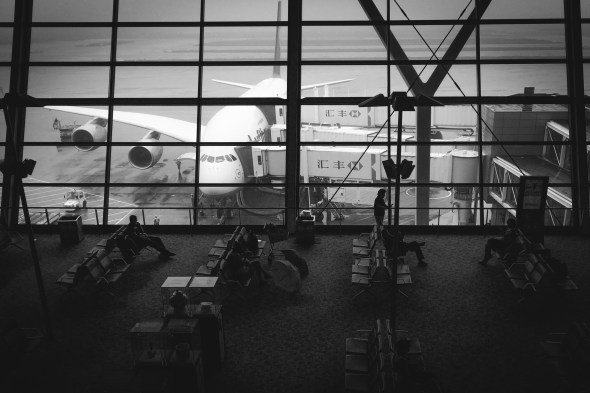
Queues for security are going to be lengthy in peak summer season, so you should be aiming to get to the airport in plenty of the time regardless. But once you’re through security, you need to go through passport control too. In some airports, this can be tucked away in a quiet wing of the airport serving just a few gates.

airport-690556

If your gate isn’t displayed early, by the time you start to line up, you may have cut it too fine. I almost missed a flight from Malaga to London a couple of years ago for this very reason – so don’t risk having to be very un-British and queue jump like I did. And if I pushed in front of you and you’re reading this, I’m very sorry – and hope you made your flight too!

My advice is to go through passport control even if your gate isn’t displayed on the boards – if there are multiple passport controls, in my experience the border control officials will redirect you. Just look suitably apologetic as I did and make sure you head off in the right direction.

airport-802008

Consider booking a package

If you book a package holiday with an operator with has its own fleet of planes, such as Thomson (other operators are available!), then the same company is responsible for getting you from the hotel to the airport and from the airport to Britain. At the very least this is going to reduce the buck-passing.

Have you any tales to tell? I’d love to hear your experiences.

Harwich: the town that rocked

It’s the people that make a place special.  How often have you read that?  It’s been written so often it’s a travel cliché.  But sometimes it’s also true.

Greater Anglia have a range of offers on rail journeys across the network this summer. To find out more, look at the #lettheadventurebegin video on their website; the address is at the bottom of this blog.  They invited me to pick somewhere in the network and in return for a rail ticket, they asked me to blog about my trip.  I chose Harwich.  I’ll admit that having consulted the timetable, I was a little concerned.  To reach Harwich from my starting point necessitated two changes of train and with just a few minutes between each, I anticipated spending half the morning in Manningtree.  After all, this wasn’t Switzerland, was it?  I needn’t have worried.  The trains were punctual, the connections made without even having to power walk and the carriages clean and comfortable.  The views as we made our way on the Mayflower Line along the River Stour were the icing on the cake, and I thought what a refreshing change it was not to have to focus on the road and be able to enjoy them.

A ten minute stroll from Harwich Town station and I was already beginning to appreciate the town’s long maritime history.  Using a walking trail map I’d found online, I ticked off both the High and Low Lighthouses, the second of three pairs of lighthouses that had been built around here to aid ships’ navigation along the North Sea coast.  To ensure they maintained the correct course, the two lights needed to line up, one above the other.

GA5

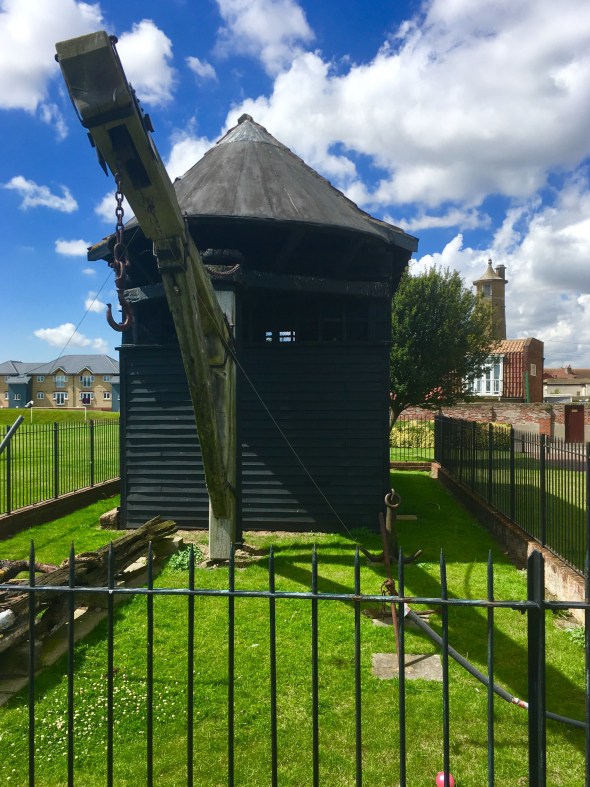
The Treadwell Crane was fascinating too, operated by men walking on the inside of the wheels.  I was grateful for the Harwich Society’s comprehensive website, for though an informative sign had been placed near the crane, it had been positioned at the foot of a steep grassy bank.  To read it, I’d probably have been best off lying flat on the turf.

GA4

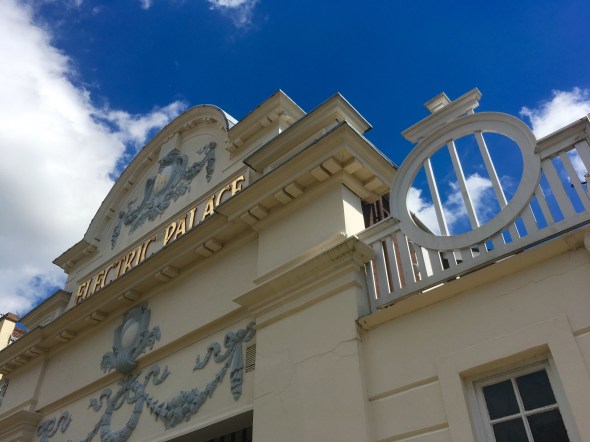
Heading along the estuary, I walked past the impressive murals on Wellington Road and doubled back to take a look at the Electric Palace.  Built in 1911, there were two entrances, one to access seats costing a shilling, the other a more affordable sixpence.  The cinema still holds regular screenings today, though the reminder to patrons to turn off mobile phones is a more recent addition to the signage.

Update July 2019: the Electric Palace is closed for extensive renovations and is currently scheduled to open in late spring 2020.

GA7

It was time to pop in to The Pier Hotel, right on the quayside.  Looking like a little piece of Shoreditch, the hotel was slick, contemporary and on-trend, its staff welcoming.  Manager Chris told me that I could find 113 different gins on the NAVYÄRD bar’s drinks menu, and I wondered how long you’d have to stay to work your way through them at what the government would deem an acceptable rate.  With the view over the confluence of the Stour and Orwell right in front of the hotel’s terrace, it would be an absolute pleasure, though one which would have to wait for another time.  I had a boat to catch, and it wasn’t going to wait.

A foot ferry had connected Harwich to Felixstowe for over a century, but it was under threat of closing for good when Austrian Christian Zemann spotted it was up for sale.  Seeing the potential – it’s easily an hour’s drive from Harwich to Felixstowe – he bought the business.  Though he’d always dreamed of making his living on the water, he didn’t know Harwich, nor the area which surrounded it.  It was a gamble, but one that paid off.

With hard work and a nose for opportunity, Christian has expanded the business, running not only the foot ferry but evening cruises, bicycle rental and seal boat trips as well.  In fact, he’s already bought a larger boat, increasing the capacity of the ferry from 12 passengers to 58.  The level of commitment Christian has shown is extraordinary.  Troubled by the drenching some of his passengers were getting out on deck, he invested £15000 in stabilisers to stop the new boat from tossing and pitching.  I’m pleased to report it worked.

Christian’s latest venture, the boat trips to the grey and harbour seals that make their home at nearby Hamford Water, have already proved to be a gold mine.  Once down to only a handful in number, there’s now a small but thriving colony of around 70 seals at the reserve.  I asked Christian how close he got.  “Well, the channel’s pretty narrow, so if I kill the engine, then you can hear them breathe,” he said.  That sounded close enough to me.

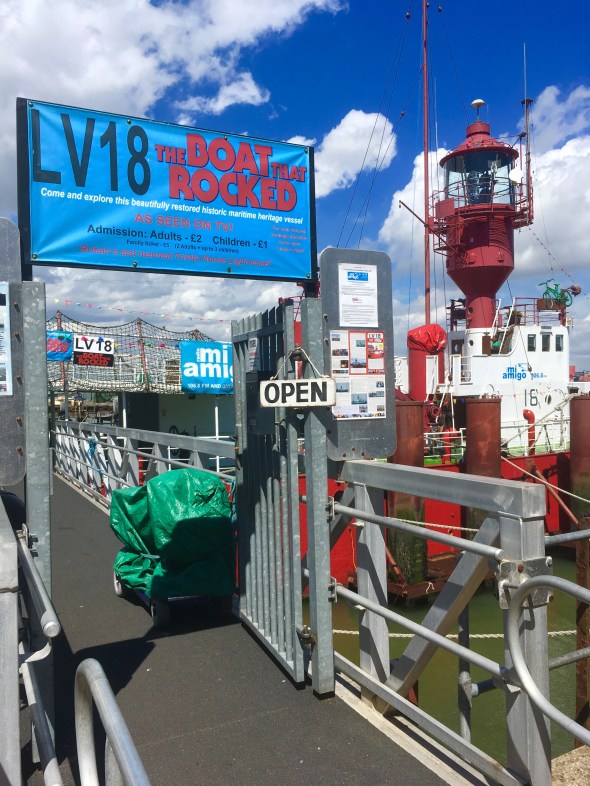
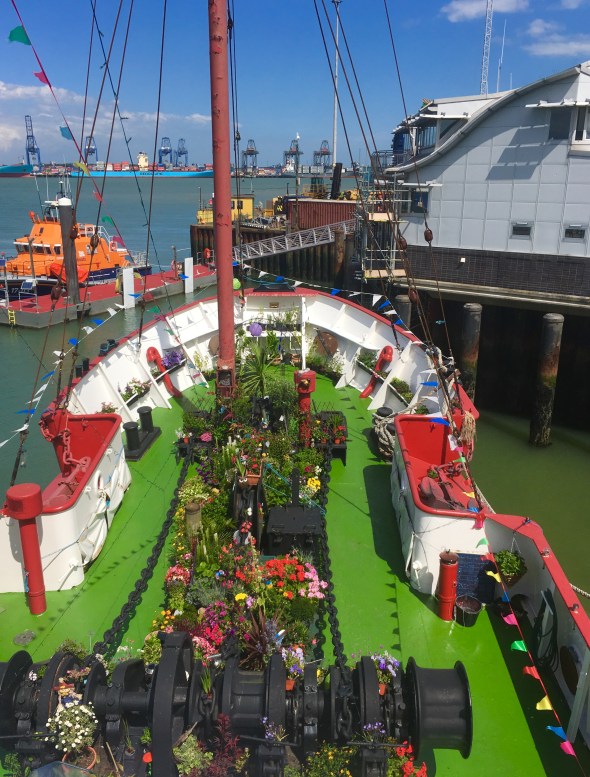
Back on shore, there was one vessel on the quayside that just couldn’t be ignored, not least because of its scarlet livery.  Built in 1958, LV18 was Trinity House’s last manned light vessel before it was retired from service in 1994.  But as with the Harbour Ferry, this was a boat that wasn’t going to go quietly, thanks to one man – the ebullient and utterly charming Tony O’Neil.  He bought the vessel for a nominal £1 and the Pharos Trust was set up to oversee its restoration.  It opened in 2011 as Harwich’s quirkiest visitor attraction.

GA12

Update July 2019: since I took this photo, the cost of admission has risen to £4 for adults and £2 for children. Family tickets (2 adults and 4 children) are £10.

A musician by trade, Tony has a passion for radio. Visitors to the ship can see some of his extensive collection of antique and vintage radios on board, but with an estimated 1600 in his collection, some remain in storage in the hold.  That passion for radio also manifests itself in broadcasting.  Tony once worked for Radio Caroline and his enthusiasm for pirate radio is undimmed.  The likes of John Peel, Tony Blackburn, Emperor Rosko and Johnnie Walker all broadcast from radio ships anchored just outside UK territorial waters and the tenders that facilitated their commute came from Harwich.

Even the beautiful garden that you see on deck has a musical connection.  The scented plants that form part of it are there in homage to John Peel.  His 1967 show for pirate station Radio London was named “The Perfumed Garden.”  Johnnie Walker is still involved.  He’s a patron of the Pharos Trust and will broadcast from LV18 this August.

GA13

For anyone keen on maritime history, Tony has preserved some of the cabins on board just as they would have been when the vessel was in use as a lightship.  There’s also a chance to see what a pirate radio station would have been like.  There’s so much in the way of nautical and radio memorabilia that some have dubbed it a “floating prop shop”.  Unsurprisingly, it caught the eye of the production team working on the 2008 movie “The Boat that Rocked” and with a splash of yellow paint for the occasion, doubled as Radio Sunshine.

GA16

It is individuals like Christian and Tony that are breathing life into a town that once lay forgotten at the end of the line.  Their energy and commitment to this corner of Essex is helping to make Harwich the town that rocks.

Links

Greater Anglia trains:
https://www.greateranglia.co.uk/

Harwich Harbour Ferry:
http://www.harwichharbourferry.com/

Seal boat trips:

Home

LV18:

Home

Harwich Society:

The Harwich Society

The Pier Hotel:

The Pier

Tourism on my doorstep: Colchester’s Bourne Mill

Eighteen months ago, I moved to a village close to Britain’s oldest recorded town.  Colchester was mentioned by Pliny the Elder in 77 AD; it was then known as the Roman settlement of Camulodunum.  After much time spent doing DIY and decorating the house, I decided it was time to get out and explore the town on my doorstep.  Today that took me to the delightful Bourne Mill, a National Trust property just outside Colchester town centre.

Col18

Bourne Mill with the stream running beneath it

If you live in East Anglia, you might be interested to know that Greater Anglia are running a promotion this summer called Let the Adventure Begin.  There’s also a competition running until mid-August in which you could win first-class train tickets to any station on their network:

https://www.greateranglia.co.uk/about-us/news-desk/news-articles/win-free-rail-tickets-greater-anglia-summer

Win that, and you too could be exploring Colchester.  Visitors today can see plenty of evidence of the town’s long history, from the Roman Berryfield mosaic at Firstsite to surviving groundworks of the Roman theatre which can be seen in Maidenburgh Street in the town’s Dutch Quarter.  The Tourist Information Centre run a superb bi-weekly walking tour which I highly recommend.

Col1

Colchester Castle

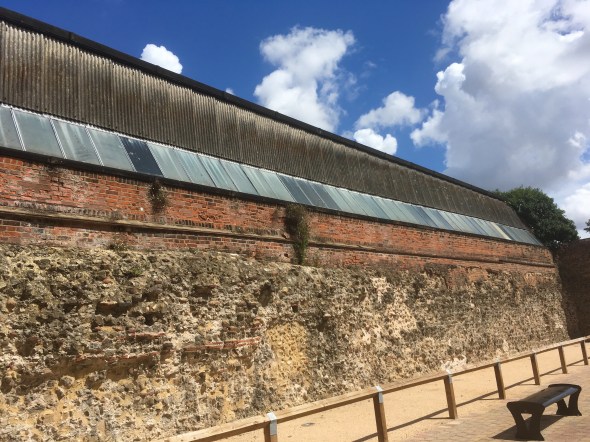
Now, look closely at the photo above and in particular, the materials used to build the castle.  The structure that you see is Norman.  Construction began in 1076, similar to the Tower of London, but all is not what it seems.  The foundations stand on what was the Temple of Claudius dating from about 55-60 AD and many of the building materials were recycled from Roman Colchester.  In particular, look at the red stones that form the cornerstones – they look almost like roof tiles.  These crop up elsewhere too, for example, in the remains of the fortifications that once encircled the town (you can make them out about halfway up the original wall to the left of the picture below):
Col3

Roman wall near St Botolph’s Priory

I shouldn’t have been surprised, therefore, to see the same materials plundered to build Bourne Mill, located about a 20 minute walk away.  This National Trust property was originally a fishing lodge used by the monks of St John’s Abbey.  A stream, the Bourne, emerges a short distance north of the site and spills out to form a large pond, thought to have been created artificially as there appears to be no geological reason for the water to widen.

Col22

The pond at Bourne Mill

After the dissolution of the monasteries during the reign of Henry VIII, St John’s Abbey passed to the Lucas family and later, they began to demolish it.  Seeking to improve on the monks’ fishing hut, they constructed what’s now Bourne Mill.  The stones were cannibalised and together with those Roman bricks, pieces of flint and some Walton-on-the-Naze septaria to hold it all together, this wonderful building was the result.

Col120

Bourne Mill

Well actually, not quite.

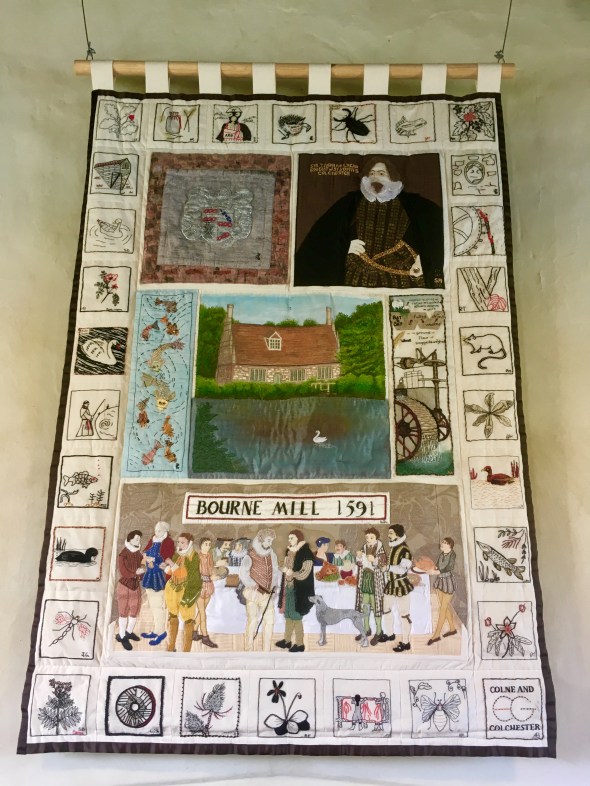
What Sir Thomas Lucas built was a single story dwelling, thought to be a place where he could go with his well-heeled mates to fish and then hang out over dinner.  On the ground floor, there are two fireplaces which lend credence to this theory.  Carp, pike and wildfowl would have been plentiful so it seems likely that this story is true.  This beautiful banner, stitched by the Colne and Colchester Embroiderers Guild, tells the story.
Col12

Wall hanging at Bourne Mill

But that story doesn’t end there, of course.  Now that Britain was Protestant, it became a haven for those fleeing religious persecution in Catholic Europe.  Granted refuge by Queen Elizabeth 1 in 1565, they boosted the town’s population, congregating in what would later become known as Colchester’s Dutch Quarter.  Though they kept themselves separate when it came to socialising and marriage, they did have a profound effect on the north Essex landscape and economy, bringing their weaving industry skills and breathing new life into a flagging industry.
Col9

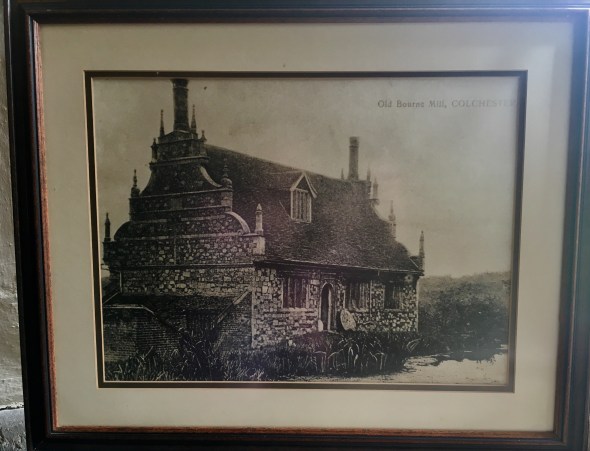
Bourne Mill prior to its use as a corn mill

The Dutch introduced new worsted draperies, known as bays and says.  They were lighter and cheaper, and not surprisingly proved very popular.  A method of quality control was introduced in 1631, immediately raising the status of Colchester cloth.  That Dutch seal automatically meant that your cloth fetched a higher price; faulty workmanship, on the other hand, would lead to fines (called rawboots) being levied.

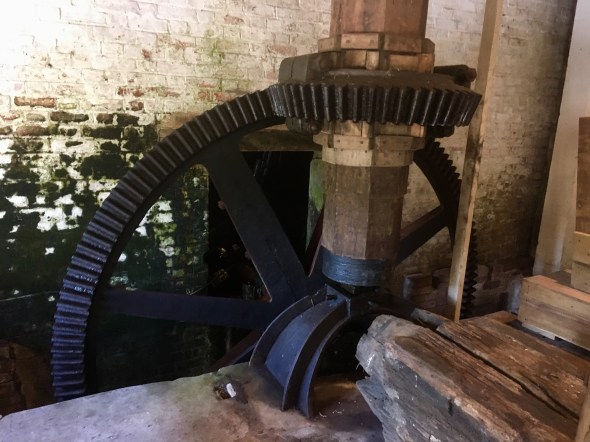
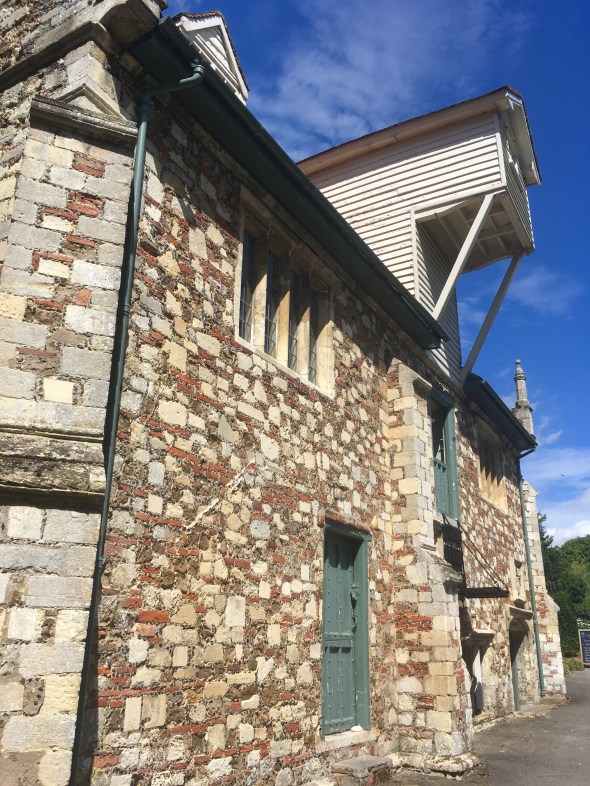
Bourne Mill grew an upper storey, recognisable by the gable ends that are also commonly found in the Netherlands and Belgium.  It became a fulling mill,  a place where cloth was softened to make it more wearable.  A waterwheel would have made the process of hammering the fabric much less labour-intensive.  Initially urine, collected from the poorhouse, would have been used in the process; the ammonia it contained helped to clean and whiten the cloth.  Later, Fuller’s earth would have been used instead.  Afterwards, the cloth was stretched on frames known as tenters to dry – attached by tenterhooks.
Col26

Part of the wheel mechanism

After a while, the Essex cloth industry fell into decline once more.  The cloth industry, bay especially, was vulnerable in the 18th century to disruption by wars, competition from rival manufacturers, and the import of cotton.  As the cloth industry declined, the fulling mills were converted to grind corn or grain, competing with the many windmills that dotted the landscape.  By around 1840, Bourne Mill was no longer in use as a fulling mill. It was converted to a corn mill by 1860 and it’s for this purpose that the uppermost floor and sack hoist would have been installed.  Later, it was steam driven, but the last miller hung up his apron in 1935.
Col21.jpg

Bourne Mill today

Honestly, I was pleasantly surprised at just how much there was to see and learn at Bourne Mill, expecting only to see a waterwheel and not a lot more.  The team of volunteers work hard to bring the Mill’s history to life and succeed in communicating their enthusiasm.  I’d especially like to thank Liz Mullen and Joan Orme for their insights and for not burdening me with more historical detail than I could cope with.

Acknowledgements and practical information

I’d like to say thanks to the National Trust who provided me with a free pass to visit Bourne Mill.  If you’d like to do the same, entrance costs £3.75 for adults and £1.90 for children.  The place is open from Wednesday to Sunday inclusive, from 10am to 5pm.  Dogs are welcome on a lead, though there’s a steep ladder-like staircase to the upper storey which they won’t be able to access.  There’s a small cafe too and plenty of picnic tables perfect for sitting and watching the ducks, including Joan’s favourite with the quiff.

Col23

Check out that fluffy head!

There are plenty of things to do with the kids, including free use of the Mill’s pond dipping equipment, making this a good choice now that the school summer holidays are upon us:

https://www.nationaltrust.org.uk/bourne-mill/features/things-to-see-and-do-at-bourne-mill

The National Trust website also has a guided walk which you can follow to get a better grasp of your surroundings.  I shall be back soon to try it out.

https://www.nationaltrust.org.uk/bourne-mill/trails/bourne-mill-a-wee-wander

If you’d like to begin with the Camulodunum to Colchester walking tour, then this takes place at 11am on Saturdays year-round, with additional walks on Wednesdays at the same time throughout the summer.  Walks need to be pre-booked as they do fill up; adults cost £4.30 and children £3.10.  Find out more here:

http://www.visitcolchester.com/things-to-do/tours-sightseeing.aspx

Col17

At Bourne Mill, parking is limited on site – Sir Thomas Lucas didn’t plan ahead – but you should be able to find roadside parking nearby.  Better still, take the train.  Greater Anglia’s nearest station is Colchester Town.  It’s about a 20 minute walk from the town centre to the Mill, but you can catch a bus to Mersea Road from outside the station if your feet have had enough.

The fastest connections from London Liverpool Street to Colchester’s main station take just 46 minutes and just over an hour to the Colchester Town station right in the centre of town.  More details can be found on the Greater Anglia website:

https://www.greateranglia.co.uk/

#lettheadventurebegin