juliamhammond

Latest

Why I’m loathe to take the hotel’s airport transfer

One of the more stressful aspects of independent solo travel is the journey from the airport to the hotel. In some cases, the availability of public transport makes this transfer cheap and easy – so long as you’re not carrying too much luggage. I’m a big fan of hopping on the metro or train – as stations don’t move and are usually clearly marked, the chance of jumping off at the wrong place is pretty slim. Buses can be a little more tricky, though using Google maps and tracking my position has helped a lot. It’s frustrating when the bus sails right by where you want to get off – or doesn’t stop anywhere near.

airport-605282

In others, however, the need to arrange your own transfer can leave you vulnerable to the attentions of hustlers. Taxi drivers in some parts of the world can be notorious for ripping off the newly arrived and unsuspecting traveller. Insisting that the driver uses a meter helps, if it’s working of course, though there’s nothing to stop an unscrupulous driver taking a roundabout route to the city. Even if you know where the airport and the hotel are in relation to each other, traffic jams and other congestion bottlenecks might make the obvious route more time-consuming. The driver might be doing you a favour with that detour – or leading you a merry dance.

Often, there is no meter, and you’re then at the mercy of your haggling skills and the likelihood that the driver will honour the price you agreed. I’ve had drivers pull over in en route – thank you Delhi – to demand a bigger fare. If you agree, you’ve just cost yourself more money; if you don’t you risk being stranded in the middle of nowhere with a pile of heavy luggage.

India Old Delhi street scene

In some cities, official taxis operate within the airport. They charge a fixed rate for a transfer to specific neighbourhoods and you pay the desk rather than the driver. Lima is one such airport; I’ve used Taxi Green almost every time I’ve been there, though improvements to public transit were on the cards when I last visited. You’ll pay a little more than if you walk out to the airport perimeter and flag down a taxi yourself, but the cars are in better condition and the drivers have been checked out.

Shared shuttles are a good value compromise where they’re available. In Santiago, the Chilean capital, you can prebook a place on a shuttle for a fraction of the private taxi price. Even if your flight is delayed, they just put you on the next shuttle leaving for your neighbourhood and off you go. Unfortunately, relatively few airports have them – and certainly that’s the case for the kind of offbeat destinations I prefer.

DSC_0003 (2)

Which brings me to the hotel transfer. They tend to be the most expensive option, but when they work, the least stressful. A driver will be waiting for you with your name on a board and in theory, there’s no hanging around before you’re safely on your way to the hotel. But things can and do go wrong. I’ve arrived to find there’s no one waiting on more than a handful of occasions. As you wander around looking for where the driver might have disappeared to, other drivers swarm like bees to a pot of honey hoping to pick up a fare. In some cases, I’ve rung the hotel only to be told there’s been a problem and advised to get a taxi instead. Other times, they’ve asked me to wait and I’ve had to spend the next hour fighting off unwanted attention until the driver’s finally arrived.

Morocco donkey cart

Sometimes, taking a hotel’s airport transfer is the only practical option. I’m returning to Fez in Morocco soon, but on a flight that doesn’t get in until almost midnight. My riad, in the heart of the medina, is, I’m told, hard to find without help even in daylight. So I’ve booked their reasonably-priced transfer and shall have to keep my fingers crossed that the driver’s waiting for me when I emerge into the arrivals hall.

Have you had any bad experiences arriving at an airport? Do share your horror stories – but I might just hold off reading them until I’m safely tucked up in my riad…

A day trip to San Marino

When I started planning my trip to San Marino, I knew almost nothing about the country except that it was small. It is also one of only three nations in the world, along with Lesotho and Vatican City, that are totally surrounded by the land of a single other country. You can see the sea from San Marino, but you have to cross Italian territory first.

E0FAEC3F-BF41-4C5B-9F71-4AE5F86318F3

To reach San Marino, you need to enter from Italy. There’s a regular bus service which leaves from Rimini station and costs 5 euros. You can find the timetable here. Rather than stay in Rimini off season (Italians have long since fled the beach by mid-October, even though Brits would still consider it warm enough) I chose to base myself in Bologna. You can read about the food tour I did here. It adds a little under an hour to the journey if you travel between Bologna and Rimini by high speed Frecciabianca train. It costs surprisingly little for the train ticket (under 30 euros return for a first class seat, cheaper in second, and cheaper still if you opt for the slower regional train).

The bus from Rimini drops its passengers in one of San Marino’s car parks. The city of San Marino occupies a lofty position on top of Monte Titano, and visitors have to be prepared for its steeply sloping streets. In a few places, there are lifts, which is a boon for those with buggies or aching legs.

My first stop was at the tourist information office, to pick up a visa and a map, though strictly speaking, neither was necessary. For a fee of 5 euros, you can have a stamp in your passport, which seemed to me to be the best souvenir of my visit. That was, until I discovered the San Marino Duck Store later in the day, which had the biggest range of rubber ducks you could imagine, including a Star Wars stormtrooper that lit up when it came into contact with water. That was husband’s present sorted then.

C7D47379-EAE3-4F08-AEA6-2FC1B2052C1D

From there, it was a short stroll uphill to the first of San Marino’s three towers. Called the Guaita, it’s the oldest of the trio, built in the 11th century. There was an interesting series of exhibits which recounted the tower’s history – at one time it was a prison – and a breathtaking view from its ramparts.

Visibility was excellent the day I visited, giving me a glimpse of the Adriatic in one direction and the Apennines the other. I was content with looking at the Second Tower, known as the Cesta, from the Guaita; a path joins the two, but the Cesta located on the tallest peak and if I’m honest I’m not interested enough in weaponry to have made the hike worthwhile. (The Third Tower, the Montale, isn’t open to the public.

4C3105E2-C31F-4622-B2FA-B7B857BB0554

Instead, I headed downhill for a spot of lunch and a visit to the Museum of Curiosities. This museum houses a quirky and eclectic collection of oddities. Amongst other things, you’ll find Venetian platform shoes, designed with flooding in mind, and a German mug with a porcelain half-lid to help moustached men deal with the problem of foam on their facial hair. It’s tacky and voyeuristic, but go with the right mindset and it’s a lot of fun too.

C2A53098-331F-4361-8824-2F80AA9234C3

The last visit of the day was to the San Marino parliament, housed in the Palazzo Pubblico. The Most Serene Republic of San Marino, as it is unofficially called, is the world’s oldest continually operating republic. It also has a claim on the title of world’s smallest republic, depending on whether you measure Nauru by its land mass or include its marine territories as well. The parliament building was grand, with an imposing staircase leading up to the chamber where its government convenes. On the wall at the top of the staircase is a bust of Abraham Lincoln. San Marino conferred dual citizenship on the US President in 1861 in recognition of the “high consideration and fraternity” they felt with the USA.

For a small country, I was pleasantly surprised by the range of things to do – there were plenty more museums that I didn’t choose to look around, including the Museum of Torture which I didn’t have the stomach for. I’m not sure I’d choose to stay overnight, nor visit in the height of summer. But on a sunny October day, it made for an interesting diversion from Bologna and had a lot going for it.

AFBF19D7-92CC-435B-A69F-C2140609ECFE

Footnote

I’m grateful for the complimentary tickets I received for the Guaita and Palazzo Pubblico, as well as the discounted admission I was given at the Museum of Curiosities. All opinions expressed in this piece are my own.

Review of Secret Food Tours Bologna

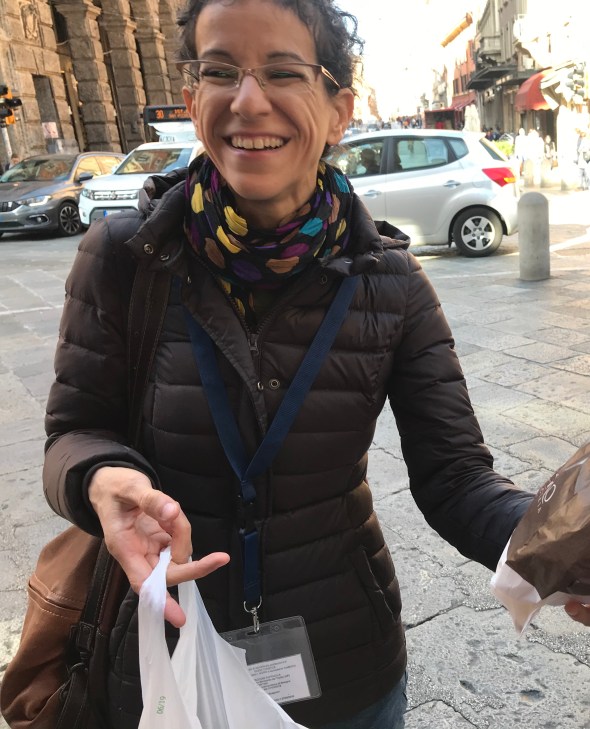
You know you’re going to like someone when they meet you with a smile and a croissant. Raffaella, our delightful guide from Secret Food Tours, certainly knew how to win us over. Our group of six soon gelled and bonded over a shared love of food – and Bologna.

5DEEDE90-9578-40A8-8F78-71E0B36596E1

We met under the Due Torri. The city that they call La Grassa (the fat one) is known for its food, but climb the 498 steps to the top of its tallest tower, Torre Asinelli, and you’ll go some way to easing the guilt of a glutton. Such towers were built by the residents of Bologna in mediaeval times to provide a safe haven in times of strife – in those days you wouldn’t have found a door at ground level. But interesting though Bologna’s past undoubtedly is, we weren’t on the tour for the history, we were there for the food. It was time to get walking.

Fellow foodies, you could be forgiven for thinking that Bologna is the home of spaghetti bolognese, but ask for this pasta dish and you’d be laughed out of town. Instead, you’ll need to ask for Ragù alla Bolognese, a slow cooked meat sauce tossed through fat strips of fresh pasta. We sampled it in a backstreet trattoria alongside half a plate of tortellini cooked perfectly al dente and they were both exquisite. Having watched a table of nimble-fingered women twist tiny squares of fresh pasta into those tiny tortellini shapes gave us some inkling into the work involved. This is nothing like the pasta you’d buy in the supermarket and definitely a treat for the taste buds.

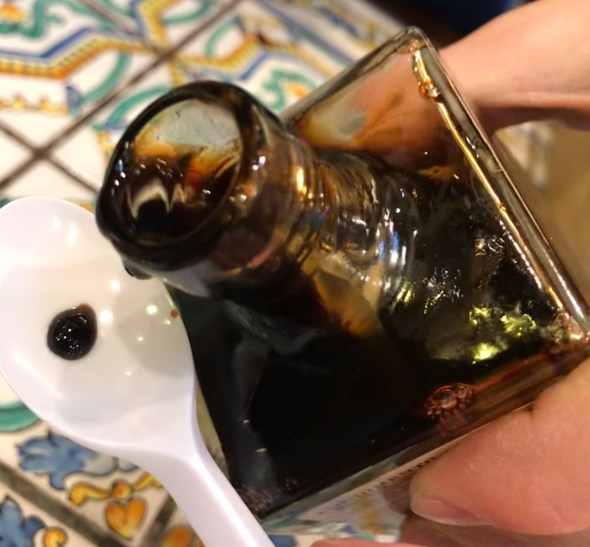
The Quadrilatero, Bologna’s old market area, is crammed full of delicatessens, food stores and cafés, but it helps to have a guide as knowledgeable as Raffaella to navigate such a maze. As we strolled in and around the streets surrounding the Piazza Maggiore, we learned about mortadella, prosciutto and even balsamic vinegar, even though the best of the latter hails from nearby Modena.

FAFD4826-4E0C-40A4-B1F6-9276E1AA39FC

In a store stocked with huge rounds of Parmigiano Reggiano, we discovered why some have horizontal scratches – these are the ones that fail quality control and are sold off cheap. The very best thing about sampling with a local is you try things you wouldn’t otherwise be tempted to consume. For me, ciccioli was a revelation – the ugliest slice of meat on the plate but – oh my! – also the tastiest.

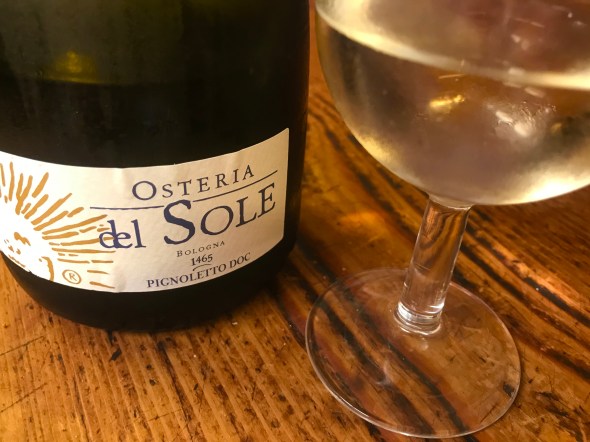
This was my second visit to Bologna and last time, I’d walked right past its oldest osteria, a place with no signage that’s been serving thirsty Bolognesi since 1465. True osterias, like this one, don’t actually serve food, just alcohol. But Italians like to eat while they imbibe and so it’s the norm to carry in a parcel of cooked meats and cheeses to eat while you drink.

Raffaella had something different for us – a rich, sweet, gooey rice cake that was the ideal accompaniment to a glass or two of Pignoletto. It’s an Italian sparkling wine that to an uneducated palate is not unlike Prosecco. But while 400 million bottles of the latter are produced each year, Pignoletto production amounts to a paltry 11 million. That said, I enjoyed its frothy bubbles so much I pushed my way through the throng outside to pay a return visit the following evening. At two euros a glass (a small one) it was utterly quaffable and decidedly moreish. If word gets out, or if I can find it here in the UK, that figure of 11 million will shoot up.

89E2B4A4-01E7-4BE8-A5B8-FFBA2B1C58C5

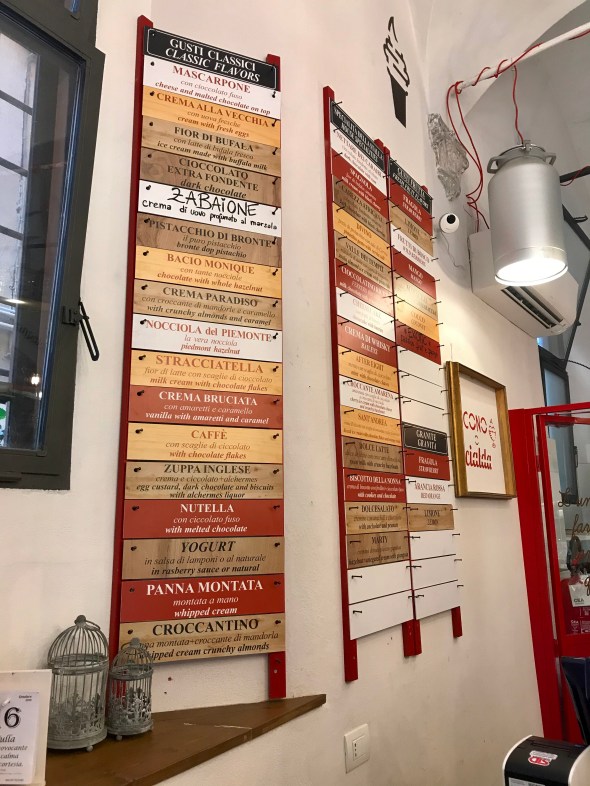
It wouldn’t be an Italian food tour if it didn’t include an ice cream stop, and this tour was no exception. We popped into a cute little place not far from where we began to sample some lusciously creamy gelato. I think I may have disgraced the family, however, as I ordered the zabaione flavour, commenting that my Mum used to make this dessert for us when I was a child. Given the alcohol content, that’s probably not something I should have admitted to, but the ice cream was every bit as flavoursome as Mum’s creation.

AF68BDBA-B0BC-461F-A18B-779A453C82C2

Now, you’ll probably have noticed there’s a distinct lack of names and addresses in this blog, but that’s deliberate – it was a secret food tour, after all. If you want to find out exactly where to eat in Bologna, you’ll have to book a place yourself, but I can promise you that if you love your food, you won’t regret it. Buon Appetito!

I’m grateful that I was offered a complimentary ticket for Secret Food Tours’ Bologna walking tour in exchange for a review; the opinions expressed here are mine, however.

https://www.secretfoodtours.com/bologna/

Gainsborough’s House with Greater Anglia

When was the last time you looked at a painting? I don’t mean a casual glance, I mean really study the detail? If, like me, it’s been a while, then you might want to head to Sudbury before October 27th for a visit to Gainsborough’s House, which showcases the largest collection of the artist’s work in the country. No matter how much of an art philistine you might be, you’ll find yourself impressed by the subtleties of form and light and colour in the paintings that are on display.

E650F926-D3C7-42A2-9CEF-2323562602C6

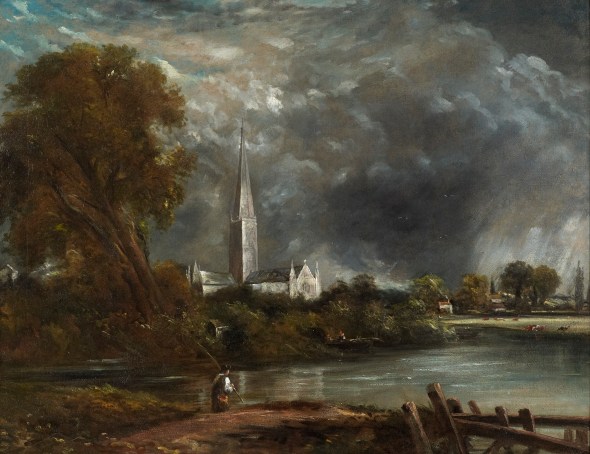
However, you’ll need to get your skates on. The house closes for extensive remodelling in just a few weeks’ time. Downstairs is an exhibition on loan from a private collector, featuring works not only by Gainsborough, but also Turner, Constable and Lawrence. For me, surprisingly, the standout was a large painting not by Gainsborough but by John Constable of Salisbury Cathedral surrounded by meadows. When the museum closes its doors, they’ll be returned to their owner and will no longer be on public view. Upstairs, the comprehensive works will go into fine art storage. Some will be temporarily loaned to the Pushkin Museum in Moscow, but it’s an awful lot easier – and cheaper – to hop on a Greater Anglia train instead.

10. Constable -Salisbury Cathedral from the Meadows copy.jpg

Painting by John Constable © Private collection on loan to Gainsborough’s House, Suffolk

Reached by train via the aptly named Gainsborough Line, Sudbury’s an easy day out by rail from London or East Anglia. This sleepy Suffolk town has surprisingly much to offer the visitor, not least the skull of Simon of Sudbury, hidden in the vestry of St Gregory’s church, and Vanners, one of several working silk mills in the town. Incidentally, when the new gallery is unveiled in 2021, you can expect to see Vanners’ silks adorning the walls.

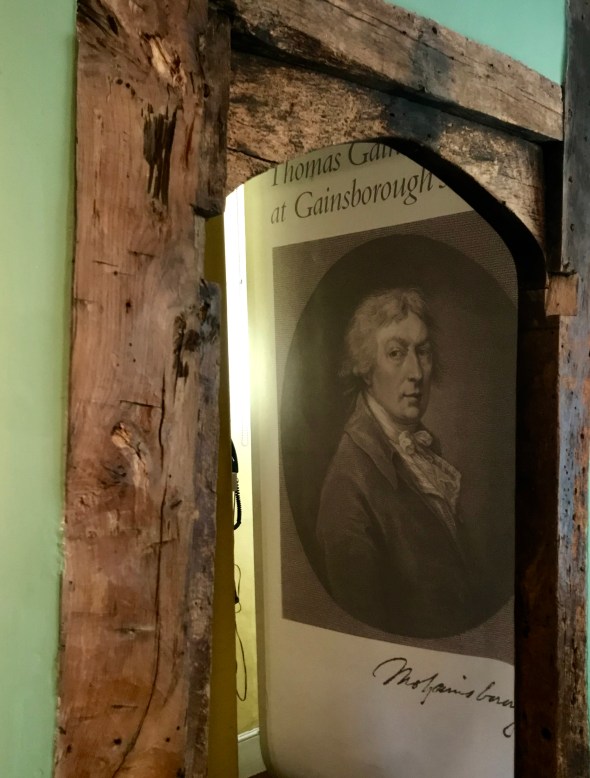
Nevertheless, the star attraction is the house that acclaimed artist Thomas Gainsborough grew up in. He was born there in 1727 and as a child developed a love of sketching and painting landscapes. One of the obituaries published after Gainsborough’s death said simply: “Nature was his teacher, and the woods of Suffolk his academy.” Travelling by train gives you time to appreciate such leafy views instead of concentrating on the road, something that the team at Greater Anglia would like to remind you with their latest promotion, Room with a View. That said, you’ll travel across rather than beside the imposing Chappel Viaduct. Of course, you could always make a day of it and alight at Chappel & Wakes Colne station for the East Anglian Railway Museum to get the best of both worlds.

C6720C14-F2CE-4EDD-A739-E52182B473DA

But I digress. Packed off to London at a tender age to hone his skill, Gainsborough’s artistic bent meant that earning a living as a portrait painter was potentially a lucrative profession. But he hated painting people, calling it “the curs’d face business”. Where possible, Gainsborough would pay as much attention as he possibly could to the background, lavishing the setting with what the churlish might describe as superfluous details of flora and fauna. He was less concerned with getting the faces right, and some of his finished pieces have a distinct touch of the wooden artist’s mannequin about them. To be fair, it didn’t seem to bother his clients much. Nor Gainsborough himself – when the work dried up he moved on, plying his trade not only in Sudbury, but also in Bath and London.

Gainsborough’s landscapes are nothing short of magnificent. In “Wooded Landscape with Cattle by a Pool”, first shown in 1782, the light is captured perfectly. The cattle, in shadow, and the crepuscular shafts of light on the pond complement each other perfectly. As a photograph, such a scene would be impressive; as a painting, it blows your mind. In “Wooded Landscape with Old Peasant and Donkeys outside a Barn, Ploughshare and Distant Church”, the peasant slumps onto his staff, donkeys resting at his feet, a little weary from a hard day’s work but pleased with what he’s achieved. It’s such details that create such a strong connection with those who view them today. Let’s face it, we’ve all had days like that peasant.

At Gainsborough House, the garden too is a delight. A 400 year old mulberry tree takes centre stage; think about it – that tree would have been there when Gainsborough was a boy. Although it’s the wrong variety to be used for producing silk (how neat would that have been?) its fruit is used to make jam to gift to the gallery’s patrons. There’s also a quince tree and a medlar; if you want to try those, Wilkins of Tiptree products are sold in the museum shop along with an extensive range of gifts.

To find out about timetables and fares on the Gainsborough Line, visit the Greater Anglia website. For Gainsborough House exhibit details and opening times, click here. While I am grateful for the complimentary train ticket and admission, all views expressed are my own.

A beginner’s guide to the Lithuanian coast

I’ve just returned from my second visit to Lithuania after a gap of 12 years. This time, I was a guest of the tourist boards representing the coastal regions that comprise Klaipeda, Palanga, Kretinga and the Curonian Spit. Since my 2007 trip, Vilnius and Kaunas, Lithuania’s two largest cities, have become increasingly popular with city breakers, but the coast remains overlooked by many. That’s a shame, as it has much to offer the tourist. So let me try to tempt you – here’s my beginner’s guide to the Lithuanian coast.

How to get there from the UK

IMG_4354.jpg

Our hosts arranged flights for us from Luton to Palanga-Klaipeda Airport with budget carrier Wizz Air. Ryanair fly to Palanga-Klaipeda from Stansted.

Getting around

We were ferried around with private transfers, but there is a bus connection that serves Palanga-Klaipeda airport. Fares are a very reasonable, from 1,80 euro if bought from the driver. The buses are timed to connect with inbound and outbound flights. This is the schedule:

https://www.stops.lt/klaipeda/#minibus/31/a-b/9993/en

If you’re heading over to the Curonian Spit, then you’ll need to catch a ferry from Klaipeda. The Old Ferry carries foot passengers and bicycles; boats frequently throughout the day and into the evening. Buses connect to Nida, the main settlement, at the other side. If you’ve rented a car, you’ll need to use the New Ferry. Note that there are no public transport connections from the spit’s terminal. More details here:

https://klaipedatravel.lt/en/how-to-arrive/transport-in-klaipeda/ferries-klaipeda-smiltyne/

Where to stay

Our hosts were keen to show us a range of different accommodation, so we spent a night at four hotels.

In Klaipeda, we were based at the contemporary Hotel Dangė, an easy walk from the centre of Klaipeda and its bars and restaurants. Doubles can be had for about £65/night; some rooms have balconies. Note that there’s no lift; my room was on the top floor which meant climbing four flights of stairs with luggage.

On the Curonian Spit, we stayed at the lovely Nidus, set in leafy grounds about a fifteen minute stroll to the centre of Nida along a path surrounded by woodland. The double rooms were spacious and had an adjacent sitting room and also a balcony. Booking.com has such rooms for about £170/night in summer but you’ll find cheaper rooms outside peak season. There were other hotels closer to the centre of Nida but this would be quieter in summer.

There was an event on in Palanga so we stayed at a resort hotel a few miles out of town, the Atostogų Parkas. In peak season, you can pick up a double here for about £150 which includes spa access. Colleagues spoke highly of the pool and jacuzzi facilities but I found it a bit cut off. Room sizes varied considerably; ask for a larger room if it’s available.

IMG_4261

I was a little unsure of what to expect for our final hotel, located on the edge of the beach resort of Šventojias some of the artwork was squarely aimed at the male market. Décor was strange, with skulls and devils and Americana all rolled into one crazy package. But the staff worked really hard to make us feel welcome and it was a five minute walk to the beach. Most accommodation at the Elija is apartments; hotel rooms start at around £102.

Things to do: Klaipeda

Klaipeda’s a good starting point for a Lithuanian coastal region tour. There are plenty of attractions in a relatively small area and it’s easy to get to.

The sculpture trail

The compact centre of Klaipeda is littered with quirky sculptures and it’s fun to take a stroll to seek them out. Our guide Diana showed us some of them and told us the tales associated with each. The cutest without doubt is the Thaumaturge Old Town Little Mouse, which bears the inscription “Transform your thoughts into words and words will turn into miracles”.

IMG_3937

Not far away, perched on the roof of a house near the River Danė, is a chimney sweep – touching his clothes or buttons is considered lucky. Fortunately, there’s a separate button on the wall of the house nearer to ground level which offers the same reward. There are plenty more works of art to discover, depicting everything from coins to dragons, but a sure fire winner with the kids will be the Black Ghost that haunts the dockside near the site of Klaipeda’s castle. Legend has it that a ghost appeared to a castle guard warning of grain and timber shortages, before disappearing back into the fog. Whether his prediction came true or not, I don’t know, but younger visitors will love clambering inside and popping their head into the hood of his cloak. Rock fans – this one’s for you too: Alice Cooper raved about the sculpture on his social media feed.

Maritime and historical treasures

Though the warehouse district was largely destroyed in the 1854 fire and the centre of Klaipeda was heavily bombed in the war, you can still get a sense of what the place was like if you take a walk in the reconstructed old town and past the rebuilt warehouses that line the river bank. The 39/45 museum, opened in 2018, is a must for history buffs. Across a series of rooms, visitors can discover what the Nazi occupation meant for the city and its occupants. The exhibit titled “Klaipeda assault” helps visitors visualise the extensive bombing during the siege of the city before the Red Army rolled in.

IMG_3953

In the Blacksmith’s Museum, Dionizos Varkalis showed us the collection of wrought iron crosses rescued from the city’s cemeteries are displayed in a purpose built space resembling a church. Regular jewellery making classes are held on site. Perhaps the most iconic symbol of Klaipeda is the sailing ship Meridianas which is moored beside the Birzos Bridge. Built in Finland in 1948, the vessel was used by the Klaipeda Maritime School for training purposes and has been a popular quayside restaurant since Soviet times – though in these days you had to flash the cash and have the right connections to get in.

Švyturys brewery

Merchant J.W.Reincke opened a brewery in Klaipeda in 1784 – the eagle on his family coat of arms appears today on the bottles of what’s now called Švyturys beer. The brewery makes a range of flavourful stouts, ales and lagers using German methods of  production. Tastings are offered, but book a guide and you can learn not only about how the beer is made but also how food pairings subtly alter the taste. The most popular beer is Švyturys Ekstra; according to our guide, it’s best consumed accompanied by chicken hearts. I’m not so sure about the latter, but a glass of Ekstra certainly slid down a treat! If you haven’t got the stomach for offal either, try Baltijos, an Oktoberfest-style dark lager perfect with carrots, or perhaps a glass of Pale Ale which, I found, goes very well with chick peas. Who knew?

IMG_3968.jpg

Things to do: Curonian Spit

Don’t write this off as a strip of featureless sand: Lithuanians liken the Curonian Spit to an outdoor spa. Its close knit community look out for each other – this is the kind of place where you don’t have to lock your doors.

The sand dunes

The sand dunes on the 98km long Curonian Spit aren’t just any old sand dunes, they are UNESCO-listed sand dunes, recognised for their cultural as well as physical importance. Sand transported by Baltic Sea waves piled high to form this barrier island, which was later colonised by grasses and forest. It is simply magnificent, but as an ex-Geography teacher, I am of course biased.

IMG_4074 (1).jpg

In the 17th and 18th centuries, logging destabilised the fragile ecosystem, threatening settlements as the sand was no longer anchored down by tree roots. But from the 19th century, the area has been successfully managed so people and nature can co-exist. We walked to the top of the dunes which buried the village of Nagliai over 300 years ago. Taking a hike up the “grey dunes” was made easier by the previous day’s rain – the compacted surface made lighter work of the climb than would have been afforded by dry sand.

DSC_0210 (2).jpg

Fun fact (at least for geographers): grey dunes are so-called as they take their name from the carpet of moss, lichen and grasses which bind the fine particles together and prevent them migrating.

Juodkrantė’s Hill of Witches

A pathway leading from the main road in the village of Juodkrantė takes wanderers through a magical forest. This wooded parabolic dune is dubbed the Hill of Witches, taking its name from pagan celebrations which take place here on Midsummer’s Eve.

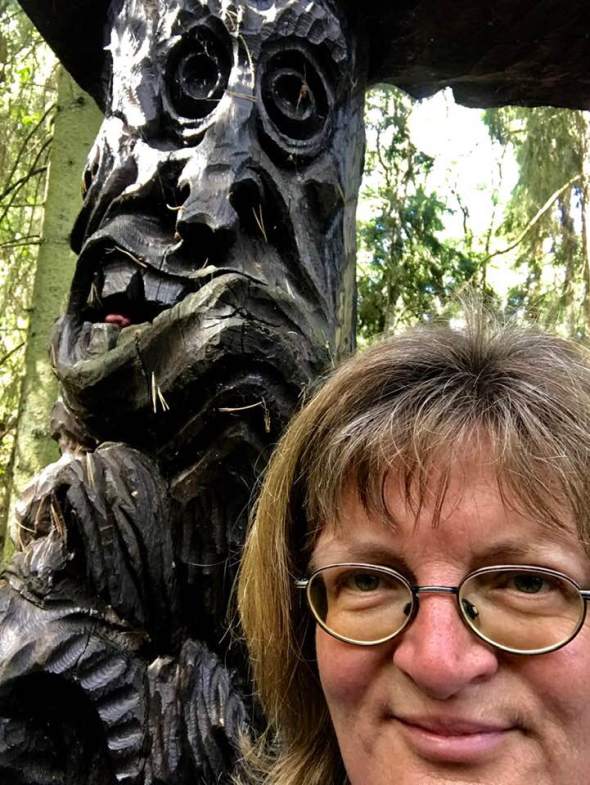
The path is lined not only by trees but by around a hundred quirky wooden sculptures, benches and elaborately carved arches. The characters you see reflect Lithuania’s rich folk and pagan heritage, depicting an eclectic mix of fairy tale protagonists, devils and monsters. There’s plenty of evidence for the Lithuanian sense of humour, too, not least in the witches’ saggy tits! Though it’s free to wander through the forest alone, taking a guide and hearing those stories will definitely enhance your visit. Our lovely PR Angelina, who grew up on the Spit, regaled us with tales as we snapped away in this photogenic spot.
70494006_10217930609164602_5277017774458142720_n

The sundial at the Parnidis Dune

Located at the top of the 52m high Parnidis Dune, you’ll find a giant sundial, the only place in Lithuania where the sun rises and sets on the water. The centrepiece is a granite obelisk, from which shadows fall on a series of stone slabs. At noon, the shadow points due north. Each of these steps references a different month, with additional stones for the equinoxes and solstices. The sundial is richly decorated with icons and runes representing holidays and saints. It’s a wild and windswept place, open to the elements, but even on a day when the weather throws everything it has at you, the views along the Spit are breathtaking. Check out the nearby sculpture of French philosopher Jean-Paul Sartre, who visited the dunes with his partner Simone de Beauvoir in 1965.

IMG_4086

Nida

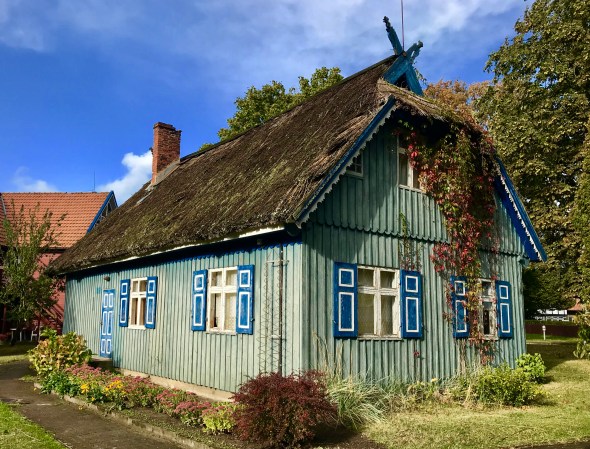
The quaint village of Nida, facing the lagoon side of the Spit, is packed with charming cottages. The traditional architecture features a cross or pole on the top of the front gable as well as wooden fretwork adornments. Bold colours are common – and advantageous to fishermen who could spot their homes from out at sea. One houses an amber museum in which you’ll find the largest lump of raw resin in the country, another an ethnographic fishermen’s museum with a-ha style animations projected on the walls and everyday items suspended on strings.
IMG_4099.jpg

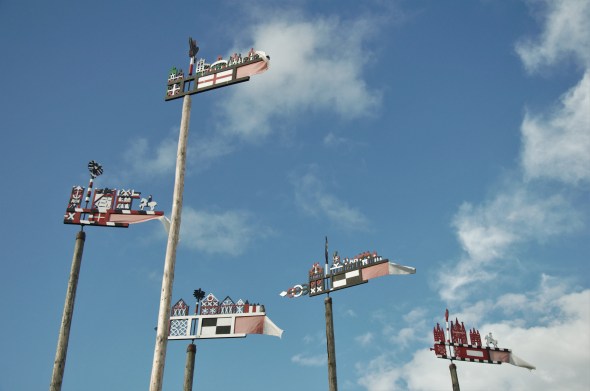
You’ll soon spot the colourful wooden weather vanes along the waterfront: every fisherman had a mark on his boat to show where he came from. From the weather vanes, you can tell which village a fisherman came from and a little about his wealth and status. A black cross on a white background signified a man from Juodkrantė, for instance. I really liked Nida, and would love to return in the spring, if nothing else, to have another scrumptious piece of cake from Gardumėlis bakery opposite the cottage pictured above.
Nida weather vanes

Things to do: Kretinga

Kretinga is nicknamed Lithuania’s Vatican, with five functioning monasteries within the district. If the weather’s not playing ball on the coast, it’s worth the short detour inland to see what Kretinga and its surrounds have to offer.

Church of the Annunciation of the Most Blessed Virgin Mary

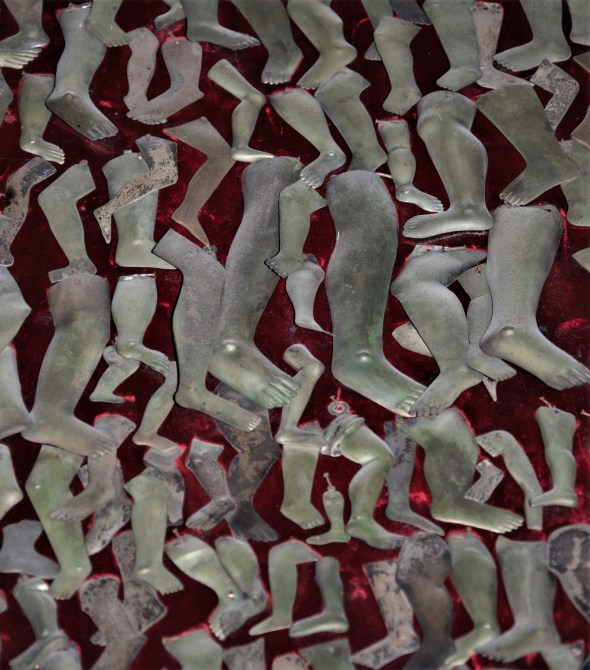
Built between 1610 and 1617, this church is home to the oldest organ in the country. On a wall near the altar there’s a panel of little silver legs placed there by worshippers as a symbol of thanks and good health. The crypt houses the metal coffins of the Chodkiewicz family whose donations funded the church and Franciscan monastery tasked with the pastoral care of local residents. In a side room, four skulls set into a pedestal to commemorate the 120 souls whose remains were found interred in its walls. Our guide Diana told us that when the monks held their first service after the Soviets left, they emerged from the crypt onto the main altar, marking the dawn of independence. What an emotional moment that would have been for the congregation.
DSC_0010 (2)

Dungeons of St Anthony

Under what’s now a school are the dungeons of St Anthony, used as a prison by both the Nazis and the Soviets. In a side room, a now inocuous-looking well was used to torture those held captive. The graffiti on the walls offers a fascinating insight into the mental torment endured by the inmates, with crude calendars, churches, names, dates and places scratched into the plaster. One bears the name of Paul Sansarrat, a French POW who escaped more than once and eventually participated in the Normandy Landings.

Count Tiškevičius manor and winter garden

This museum complex is centred on an impressive manor house, built in the second half of the 19th century, and indoor winter garden. Across the road, a more humble building contains a collection of artefacts that reference everyday life in the past, covering everything from Shrove Tuesday masks to traditional Lowlander dress. There’s even a model of the devil, dressed to impress. They say he’ll offer you gold to get you on side, but when you wake up in the morning, all you’ll have is a pocket full of stones. To uncover his true identity, step on his shoe – if it’s the devil in disguise, there’ll be a cloven hoof where the foot should be.

The Japanese Garden

Located just outside Kretinga is Europe’s largest Japanese garden. It’s the work of Šarunas Kasmauskas, a former military doctor, who doesn’t believe in leisurely retirements. This 16 hectare plot, once open fields, has been transformed into an oasis of calm and colour. The jolly Kasmauskas was quick to point out he hadn’t received an EU handout: “I don’t trust this ‘company’ – I’m Eurosceptic!” he joked. The extensive bonsai collection contains miniature trees that are over 250 years old, specially imported from Japan, each worth thousands of euros. Five hundred or so sakura trees, providing the famous cherry blossom in spring, have been planted with the help of many individual sponsors.

There’s still plenty of work to do, thanks to Kasmauskas’ ambitious vision for the place, but it’s been open to visitors for eight years already and looks set to become better and better as the years pass. And as for upkeep, Kasmauskas had a tip for gardeners that I’m very keen to test out. He said that if you cut grass under a young moon, you’ll have to do so again in five days, but if you wait, you can leave your mower in the shed for two or three weeks.

Japanese garden

Things to do: Palanga

Palanga is Lithuania’s most established tourist resort. A strip of bars and restaurants on J. Basanaviciaus Street leads down to a wooden pier and the Baltic Sea. Rows of benches face the sea, and during our visit most were occupied by old ladies in headscarfs, bringing to mind a bus load of pensioners. But this is a family-friendly resort too, and in season the beaches would be fabulous. In case you weren’t convinced the emphasis is on fun, the motto “Deligas quem diligas” (“Do what you like”) is embedded in the pavement.

DSC_0016 (3) (2)

Walking tour

Palanga’s well-heeled have invested their money in property and as a result there’s much to please those with an interest in architecture. From the traditional to the modern, Palanga’s private homes, apartments and hotels span centuries of style. Some wouldn’t have looked out of place in the southern states of the USA. It’s very green, too, with plenty of trees and parkland to enjoy. Our guide Antanas did a great job giving us some context and his sometimes irreverent commentary, particularly where dates were concerned (“1932? Who cares, actually?”), was a treat.

The Count’s Palace

Palanga’s home to the late 19th century Palace of Count Feliks Tyszkiewicz, which is tucked away in the heart of Birute’s Park. The park has both informal and formal planting, with sculptures and eccentric works of art semi-hidden within the trees and shrubs. The beds in front of the palace were a showstopper, a riot of purples, mauves, creams and white that offset the elegant building and its fountains to perfection. Unsurprisingly, it’s a popular choice for couples to stage their wedding photos.

The amber museum

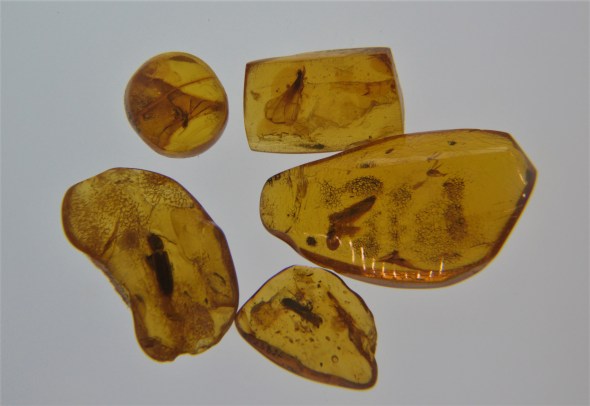
Inside the Count’s palace are several floors devoted to amber. It wasn’t the only amber museum we visited – there was a smaller one in Nida – but this one had the wow factor. Huge chunks of raw and polished amber including the Sun Stone, sizeable pieces with insects suspended in the resin, jewellery and even clocks showcased the versatility of this colourful material.
Amber

A special mention: Šventoji’s beaches

Palanga’s big event did us a favour – instead of staying on the convenient but busy strip, we were a five minute walk from this gorgeous beach. The sun obliged with an appearance just before we were due to leave for the airport – isn’t that typical? – but a walk along the beach was just the thing to blow the cobwebs away and take one last look at this wonderful coastline.

71118932_1391765140979980_7264900360429371392_n

Thanks Lithuania – and especially to all the witty, entertaining and straight-talking people that helped make this trip fun. I will be back and I won’t leave it 12 years this time.

Post updated July 2023