juliamhammond

Latest

The best beach in Haiti

Nothing much happened in a hurry in Port Salut.

The village sprawled beside the soft white sands of Pointe Sable, on Haiti’s southern coast about a half hour from the noisy bustle of Les Cayes. It was no small relief to arrive. My coccyx was numb after a ride in the most cramped and overloaded tap tap I’d had the misfortune to flag down. Not for the first time this trip, I wondered whether my days of travelling like this, eschewing comfort for a more authentic experience, were numbered.

Overloaded tap taps are the only public transport to Port Salut

Overloaded tap taps are the only public transport to Port Salut

The half-hour ride had stretched to five times that, delayed by the need to fill the vehicle to three times a sensible capacity, then tie and retie a large assortment of sacks and packages to the roof. Finally, the driver turned over the engine but instead of leaving, we waited while he carried out urgent mechanical work with much tutting coming from under the rusty bonnet. All the while we sweated under a relentless sun, listening to the football on someone’s portable radio. There wasn’t a murmur of complaint; such delays were clearly the norm. These tap taps had once been shiny new pick up trucks, but were now zombified skeletons, shadows of their former selves. Bereft of various body panels they were held together with frayed bits of rope that disintegrated and wafted fibres into my eyes, . Eventually we had left the goats and stray dogs to scavenge in the filthy depot, only to stop a few kilometres down the road at the edge of a rice paddy while the driver acquired sufficient water to cool the already overheated engine and finish the journey.

Missing the unmarked turn off from the main road, I’d been dropped at the far end of the beach road. I told the conductor I needed to find my lodgings.

“Is it far?” I asked in schoolgirl French, unsure if I’d been understood.

A shrug.

“Combien de kilometres?” I tried again. The conductor glanced at his other passengers.

“Cinq, je pense,” came the collective reply.

Inwardly cursing that I’d relied on my own inadequate observation rather than asking the conductor a little earlier, I resigned myself to a long (albeit scenic) trudge laden with luggage. A young man pulled alongside me on a motorbike and offered me a ride. Asking how much, he’d shaken his head and told me he was offering out of kindness. Gratefully, I accepted. Such a willingness to help was common amongst Haitians, I’d found, one of the delights of visiting a place where tourism was at an embryonic stage.

In the end, it was less than a kilometre. Bathed in the soft peach of late afternoon, the Auberge du Rayon Vert – the Inn of the Green Ray – looked as if it had been transported straight from rural France. Dumping my bags, I watched the sun settle languidly into the horizon and headed to the terrace to eat. The menu, chalked carelessly on a board, gave no inkling that the food served was to be the most delicious I’d have anywhere in the country. I feasted on creamy goat’s cheese enclosed by an exquisitely pink fillet of beef.  The sky turned to blood orange before I sank into a deep slumber under crisp sheets.

L'Auberge du Rayon Vert

L’Auberge du Rayon Vert

The following morning, I awoke to the sound of the Caribbean lapping at the shore and set off to explore Port Salut. Popular with Haitians from Port au Prince as a weekend retreat, I wasn’t surprised to see half-built houses strung out along the main road which I presumed to be holiday homes in the making. Hot pink bougainvillea made a welcome change from the ubiquitous grey concrete of the building plots and beach shacks.
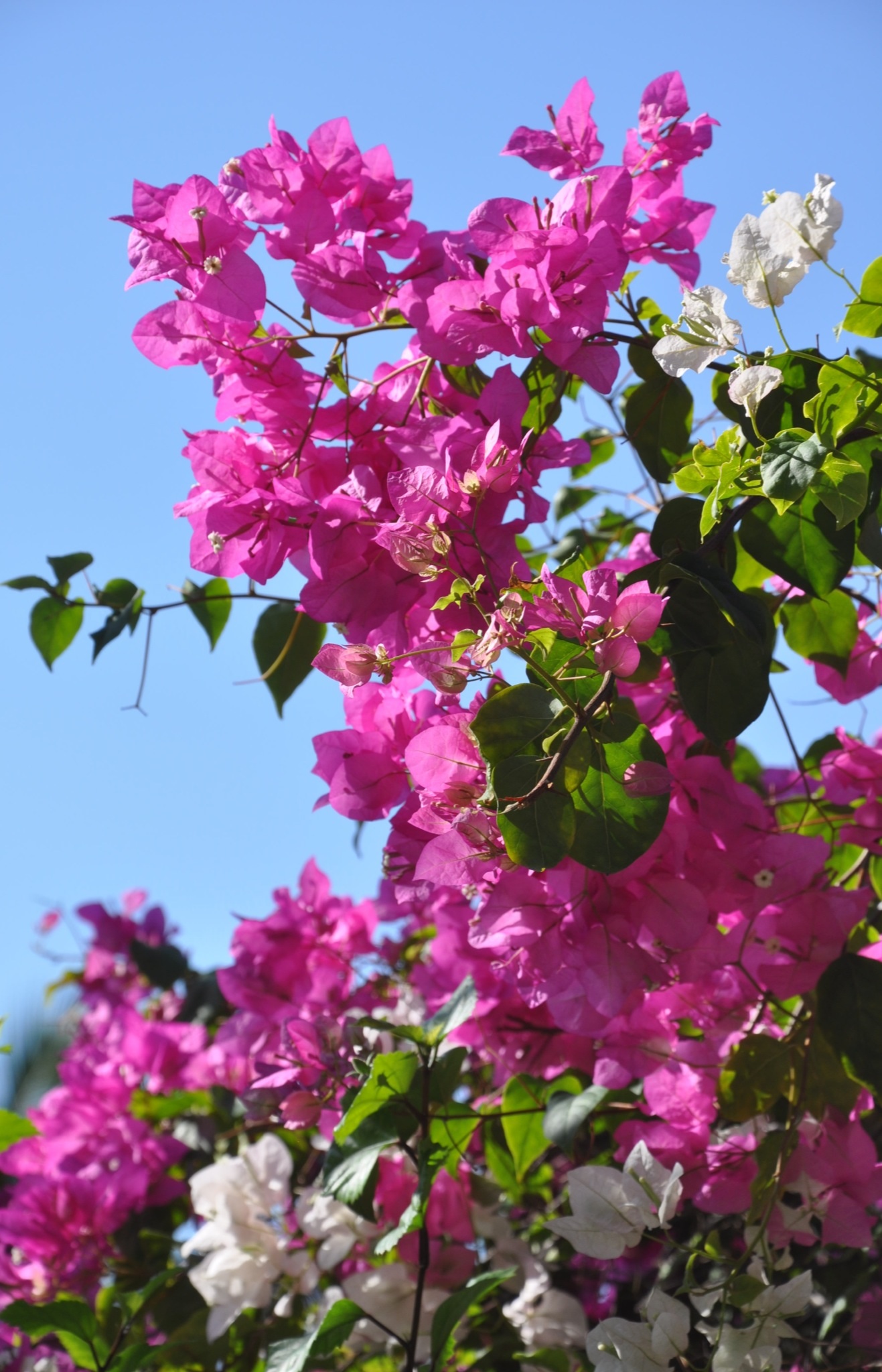
Bougainvillea

Bougainvillea

Changing some dollars at the hardware store, I doubled back to the beach. Crudely fashioned dugouts on the sand didn’t look seaworthy.  The flaking turquoise paint was photogenically shabby but didn’t appear to my untrained eye to be watertight.  Piles of netting heaped in their bows indicated otherwise. A group of fishermen dragged a gnarled wooden boat out of the sea, their scant catch inadequate recompense for their labour.
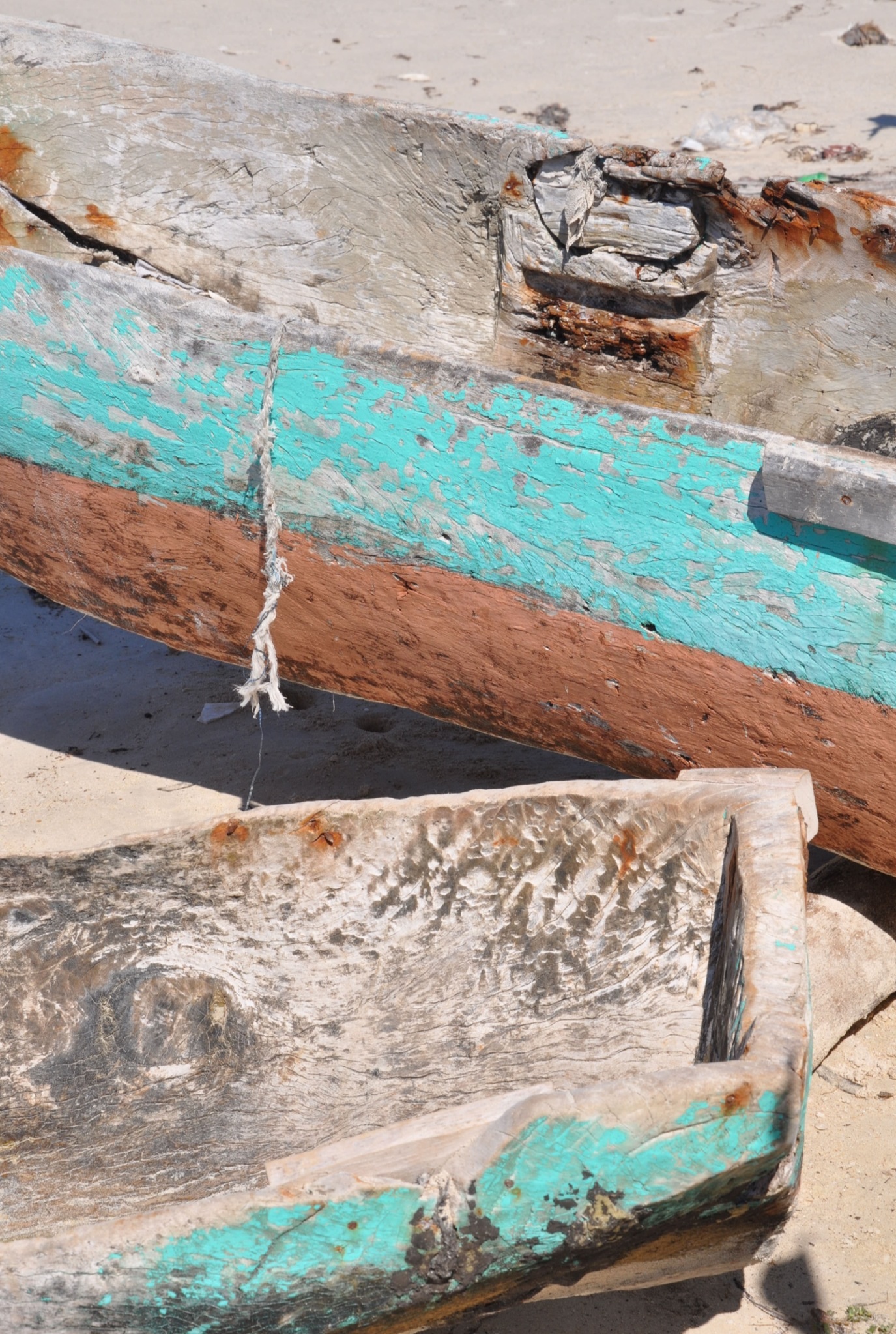
Old wooden boats in the beach

Old wooden boats in the beach

A little further on, a cluster of beach bars catered to a largely local population. At this hour their plastic chairs and tables were deserted save for a group of men idly chatting into mobile phones. They looked up briefly to say hello. An old man slept soundly on a concrete bench, his forehead deeply lined and his feet calloused. Children giggled and pointed, “Blan, blan!” I smiled back. One of the bars was painted with a colourful mural of tourists waterskiing, which struck me as just about as far removed from reality in this backwater as you could get. Opposite, a six-point guide to cholera prevention on a painted billboard seemed a whole lot more relevant.
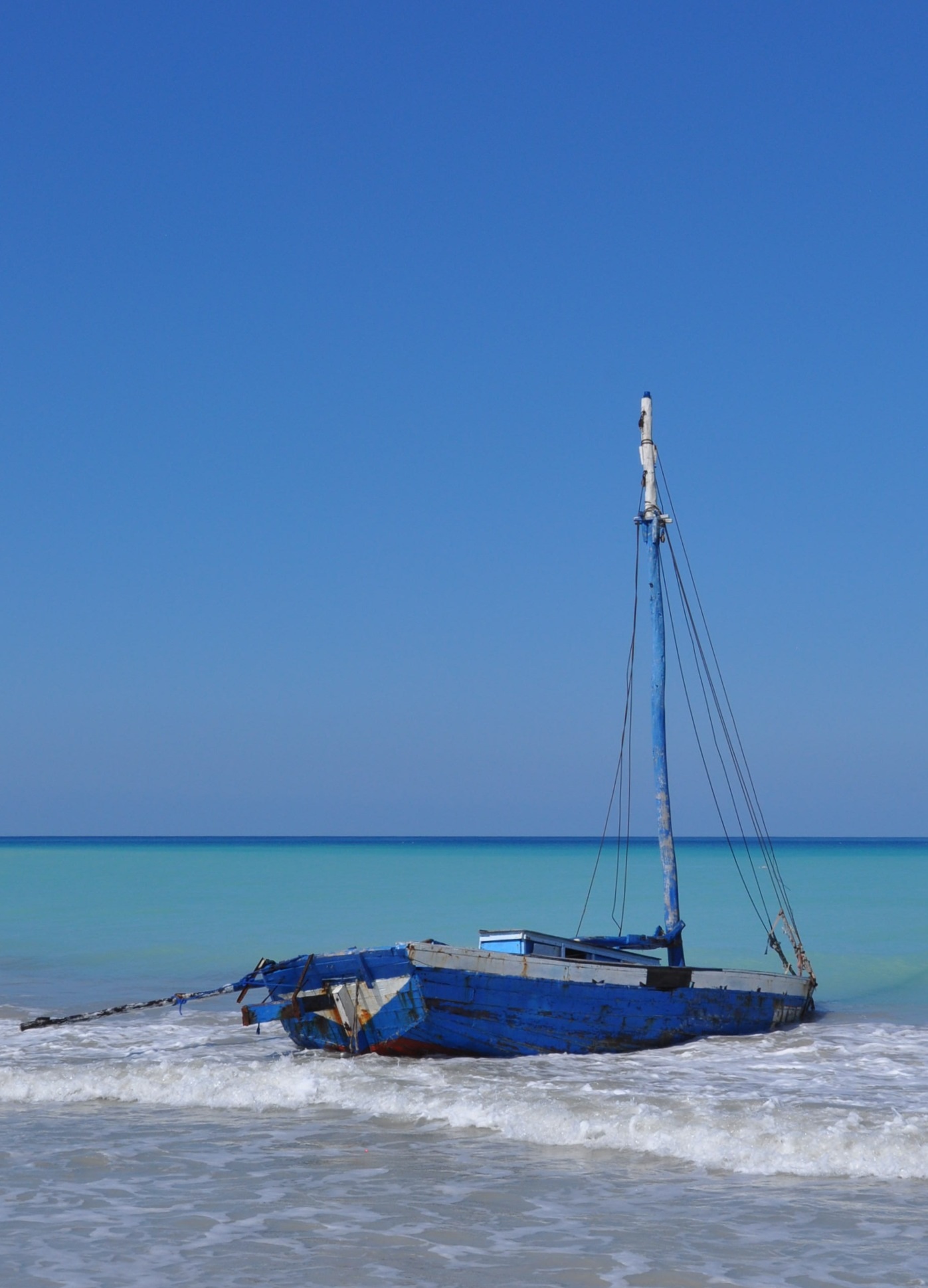
Fishing boat on Pointe Sable

Fishing boat on Pointe Sable

Opposite the auberge, another catch was being landed. A group of villagers were hauling in their net, dragging its colourful floats into a horseshoe to corral the fish into an ever diminishing trap. But for all their toil, the results were meagre, a few fish the size of sprats tossed into a wicker basket guarded by a small child.

By far the best thing to do, or more accurately, not do, as it involved very little effort at all, was to relax on one of the hotel’s beach chairs and watch the world go by. This wasn’t an arduous task; there wasn’t much world to go by. The palms that edged the beach swayed almost imperceptibly in the breeze, fidgeting the shade. From my vantage point, I watched as delicate ghost crabs scuttled about their business before retreating from the heat into burrows drilled deep into the damp sand. A trio of avocets tapped away at the water’s edge while a lone pelican cruised overhead.

The perfect place for doing nothing

The perfect place to do nothing

The sun was now high in the sky. A single wisp of cloud hung like a vapid crescent moon. Traffic was limited to a few motos and the odd 4×4 – the auberge was a popular weekend hangout for the UN police and NGO personnel working in the area. Out towards the horizon, a small boat with tattered sails bobbed on a sea pricked with diamonds. The voice of an occasional hawker interrupted the sound of the waves’ ebb and flow, offering straw hats and fresh coconuts. They approached gently as they offered their wares; there was no need to be pushy. A young girl wandered up, carrying a large straw bag.

“Would you like mamba, ma’am?”

For a minute, I was alarmed, fearful she might produce a snake. It turned out mamba was a kind of peanut butter. The large jar being proffered would have been a tempting purchase had it not been made of heavy glass clearly unsuited to moto rides. Eventually, I dozed off under the shade of a tree, its dense bunches of fat leaves creating a natural sun umbrella. After all, nothing much happened in a hurry in Port Salut, so how else was I going to kill time before dinner?
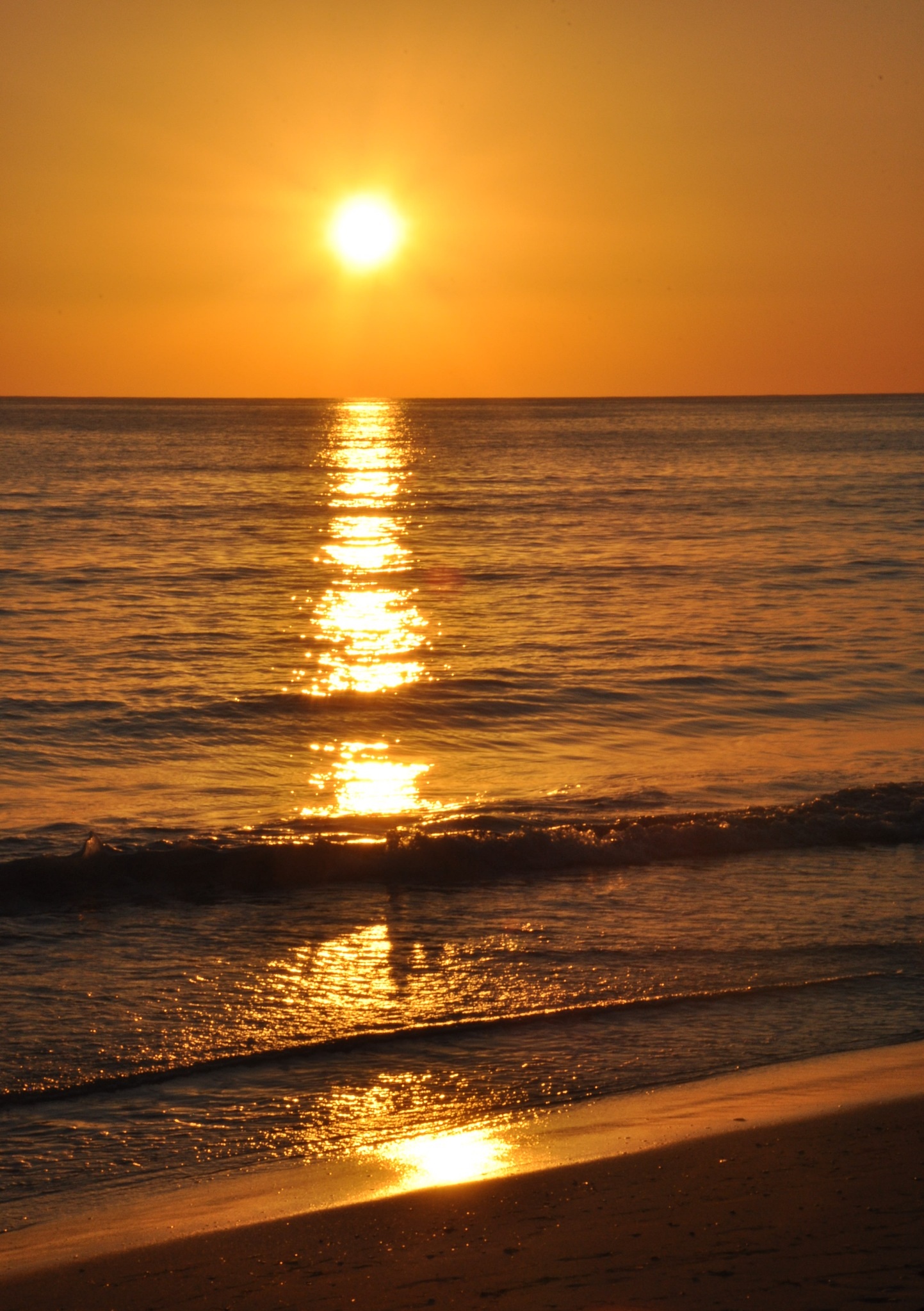
Sunset at Pointe Sable
Sunset at Pointe Sable
A beginner’s guide to Dalmatia

Dalmatia is the region of the Adriatic extending from the Croatian town of Zadar in the north down to Kotor, Montenegro in the south. Rising sea levels once drowned the lower parts of glacial valleys leaving a string of islands reminiscent of the spots and splodges on the backs of the dogs which share the region’s name. Long a favourite of the Italians, this beautiful stretch of coastline has become increasingly popular with UK visitors over the past few years, with those in the know finding a Mediterranean holiday at a fraction of the price of more established destinations. The most scenic part of the region links the historic cities of Split and Dubrovnik, so this blog will focus on making a journey between the two.

Getting there

The region is much better connected than it was a decade ago, emphasising the area’s tourist resurgence. British Airways has direct summer season flights to both Split and Dubrovnik, flying to the latter a couple of times a week in winter. The budget airline easyJet flies to Split and Dubrovnik offering flights to the region from Luton, Gatwick, Stansted, Manchester, Newcastle and Bristol. Ryanair serves Zadar. Other airlines operating flights to Split and/or Dubrovnik include Wizz Air, Thomsonfly, Norwegian, Monarch and Jet2. As with BA, there are considerably more flights in summer. To get to the area with Croatia Airlines you’ll need to hub through Zagreb and change planes. For an up to date list of flight schedules, try http://www.visit-croatia.co.uk/index.php/getting-to-croatia/flights-to-croatia-from-the-uk-ireland/.

Getting around

If you’re beginning your trip in the Croatian capital, a train service links Zagreb to Split but even the fast train takes almost six hours – strictly a journey for aficionados. A convenient bus network links the mainland towns. The Visit Croatia website is invaluable and lists the bus companies here http://www.visit-croatia.co.uk/index.php/travelling-around-croatia/bus-travel-in-croatia/. Autotrans offer the facility to make online bookings. A fleet of ferries facilitates island hopping. Taxis are cheap in the region but where the old towns are characterised by labyrinthine alleyways, it’s best to explore on foot.
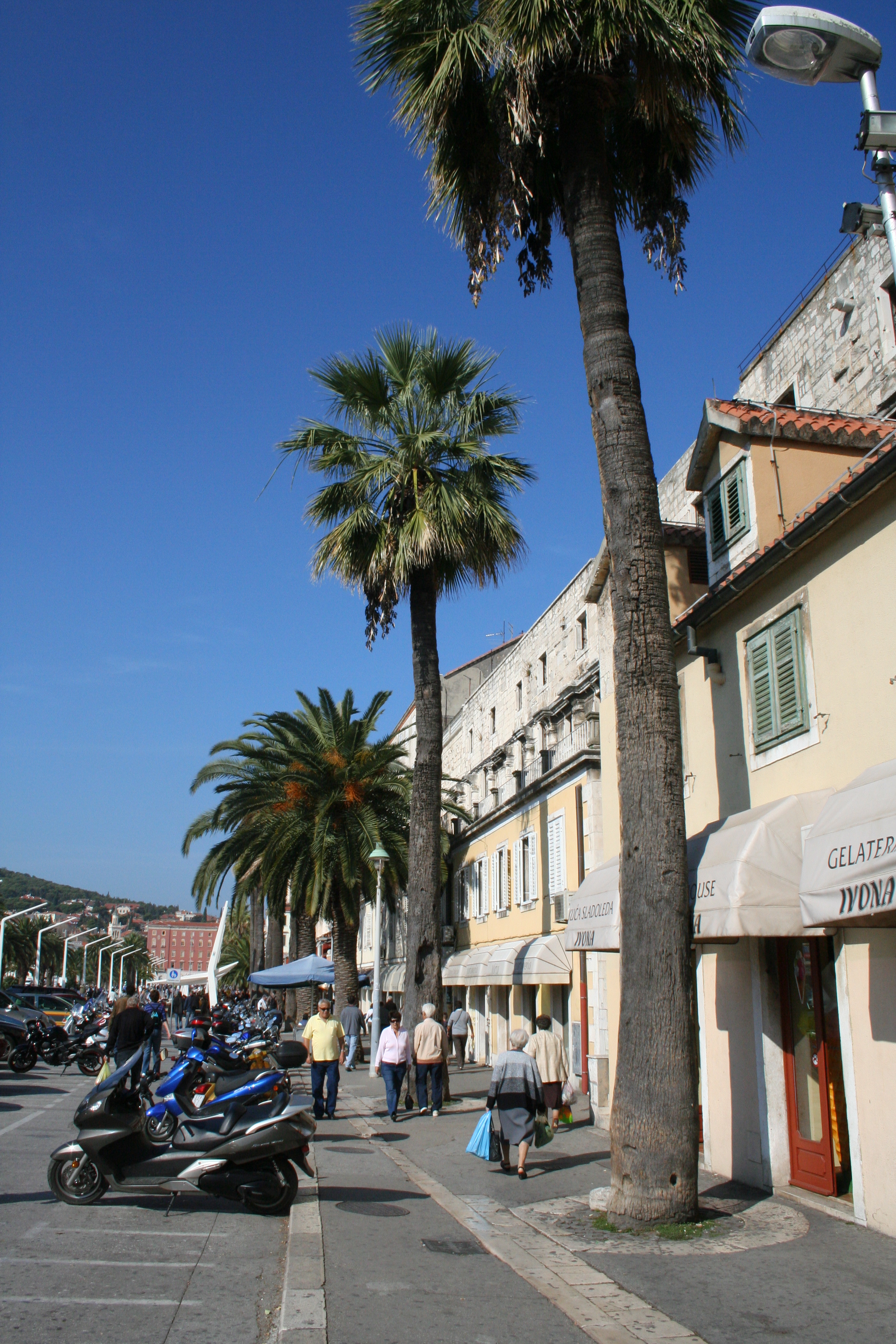
Narrow streets lend themselves to walking

Narrow streets lend themselves to exploring on foot

What to see

Split

Split is the Adriatic’s main ferry port, its quayside thronging with workers as well as tourists. The city’s residents are always on the go and business is conducted frenetically and noisily. The mild and sunny climate makes for an outdoor cafe culture in all but the depths of winter.

Split has a vibrant cafe culture

Split has a vibrant cafe culture

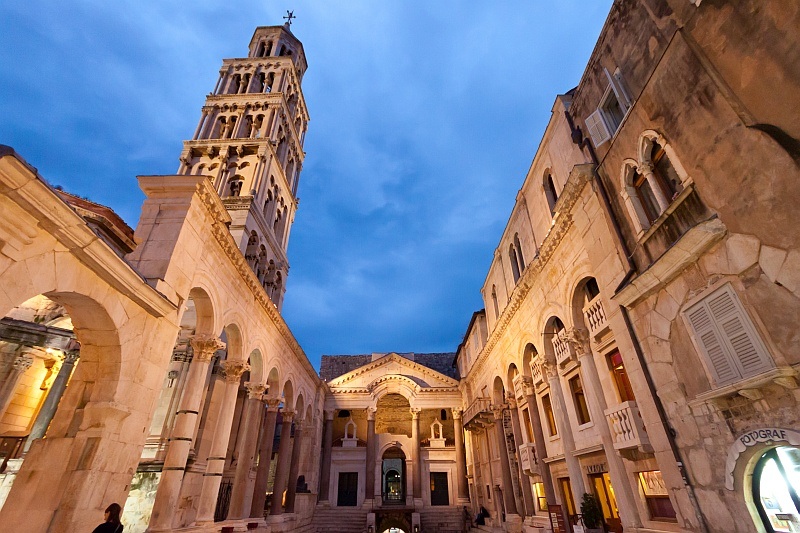
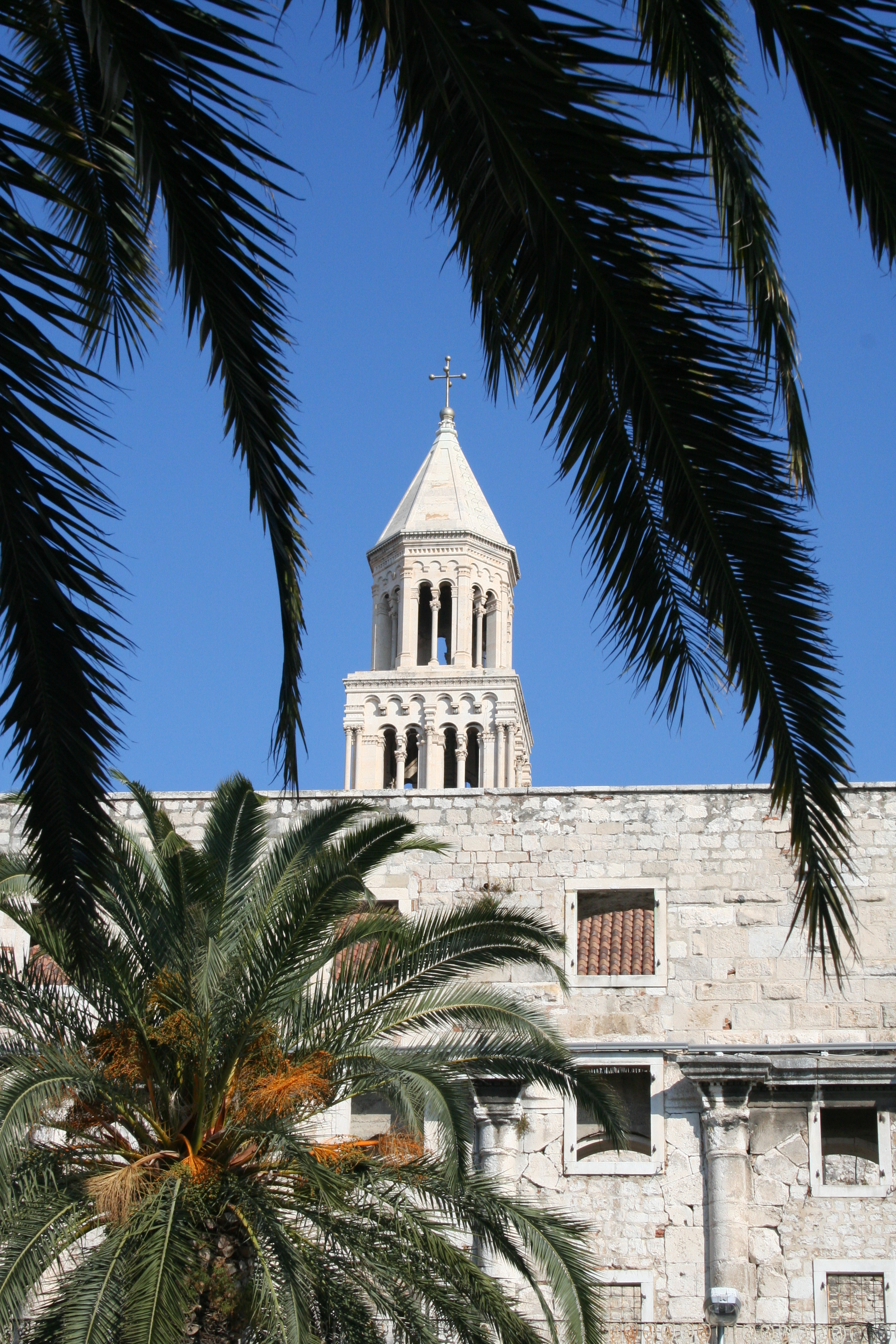
Undisputedly, the jewel of Split’s crown is Diocletian’s Palace. Roman emperor Diocletian came here to retire, commissioning an elaborate fortified palace which is now a UNESCO world heritage site. Some time after Diocletian’s death, the palace fell into a state of disrepair, but was seized upon by refugees fleeing from the town of Salona, five kilometres inland and a Roman stronghold thought to be the birthplace of the emperor himself. These new residents added their own fortifications to the palace, building on the original two-metre thick walls, towers and keeps of the original design. Split grew steadily, forging trading links with the interior and was eventually absorbed into the Hungaro-Croatian empire in the eleventh century.

Diocletian's Palace, by Ballota, courtesy of Wikicommons CC BY-SA 4.0

Diocletian’s Palace, by Ballota, courtesy of Wikicommons CC BY-SA 4.0

Now, Diocletian’s Palace blends almost seamlessly with the mediaeval buildings that crowd its western flank. The narrow alleyways beg to be explored at a snail’s pace before heading back to the waterfront Riva to while away the afternoon over a glass or two of wine.

Split

Split

Mostar

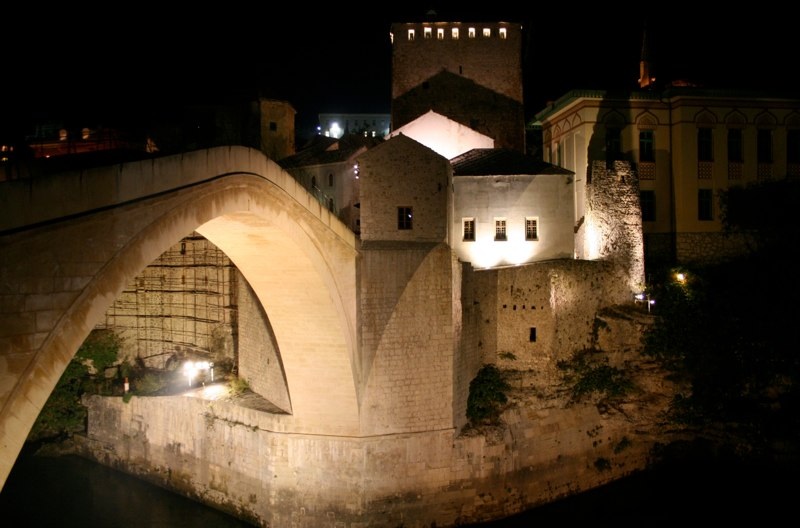
It’s worth making a detour inland to the town of Mostar in neighbouring Bosnia-Herzegovina. A three and a half hour bus ride from the coast (see timetables here http://www.buscroatia.com/split-mostar/), pockmarked buildings still bear the scars of the bullets that so recently ripped out its heart. The conflict in 1993 saw the destruction of the town’s iconic Stari Most bridge, a sixteenth century structure spanning the Nevetna River. In peace time, the town’s young daredevils once dived from its ledge outdoing each other in bravado and skill. The bridge was blown up by the Croats. Some say it was destroyed for strategic reasons, but others believe that it was a deliberate act of vandalism intended to enrage.

Mostar, Stari Most

Mostar, Stari Most

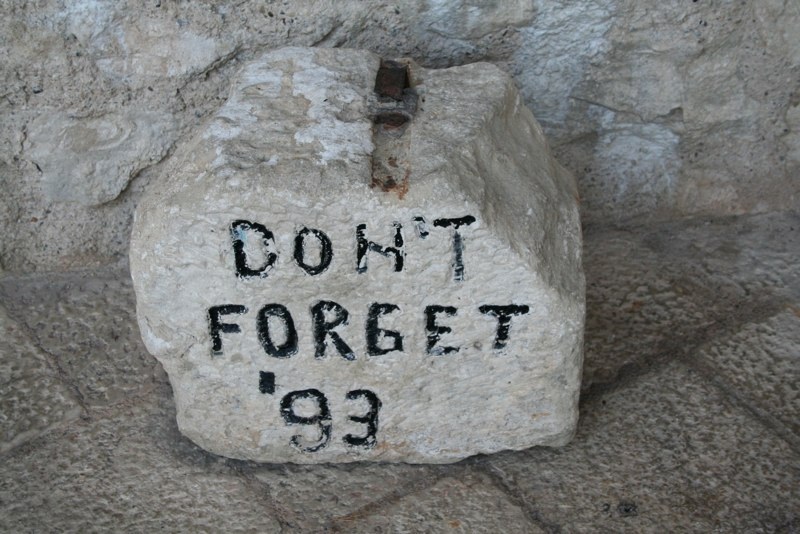
Today, the bridge has been rebuilt, a simple engraved stone acting as a reminder to the futility of war. The streets it connects are lined with souvenir shops, selling tin hats and bullets alongside postcards and nick nacks. This old town district was originally settled by Ottomans and the area has a distinctly Turkish feel. Many of Mostar’s mansions were severely damaged by the shelling, but it’s worth checking out the Muslibegovic House which was miraculously untouched. Owner Tadz, will show you round and offer you a room in this museum-guest house hybrid. Book through online agencies such as booking.com or visit the website http://www.muslibegovichouse.com/.

A poignant reminder of a recent conflict

A poignant reminder of a recent conflict

The islands

The mountains that hem the coastal strip from the interior force the focus out to sea and it’s hard to spend any length of time looking out at the sparkling Adriatic without resisting the urge to hop on a boat. There’s an island for everyone. Šolta, close to Split, is a sleepy place characterised by quiet lanes and yachts bobbing serenely in tiny inlets. Base yourself near the harbour in Maslinica. Neighbouring Brač is perfect for beach lovers; try those at Zlatni Rat, Bol and Supetar. Better known Hvar has a fashionable old town packed with bars and clubs, palaces and chapels, a kind of offshore mini-Dubrovnik without the cruise ships. Known for its olive groves, Korčula offers a similar variety to Hvar but on a smaller scale. Further off the beaten track, if you want to escape the crowds, try the island of Vis, popular with urban escapees from the Croatian capital, Zagreb.

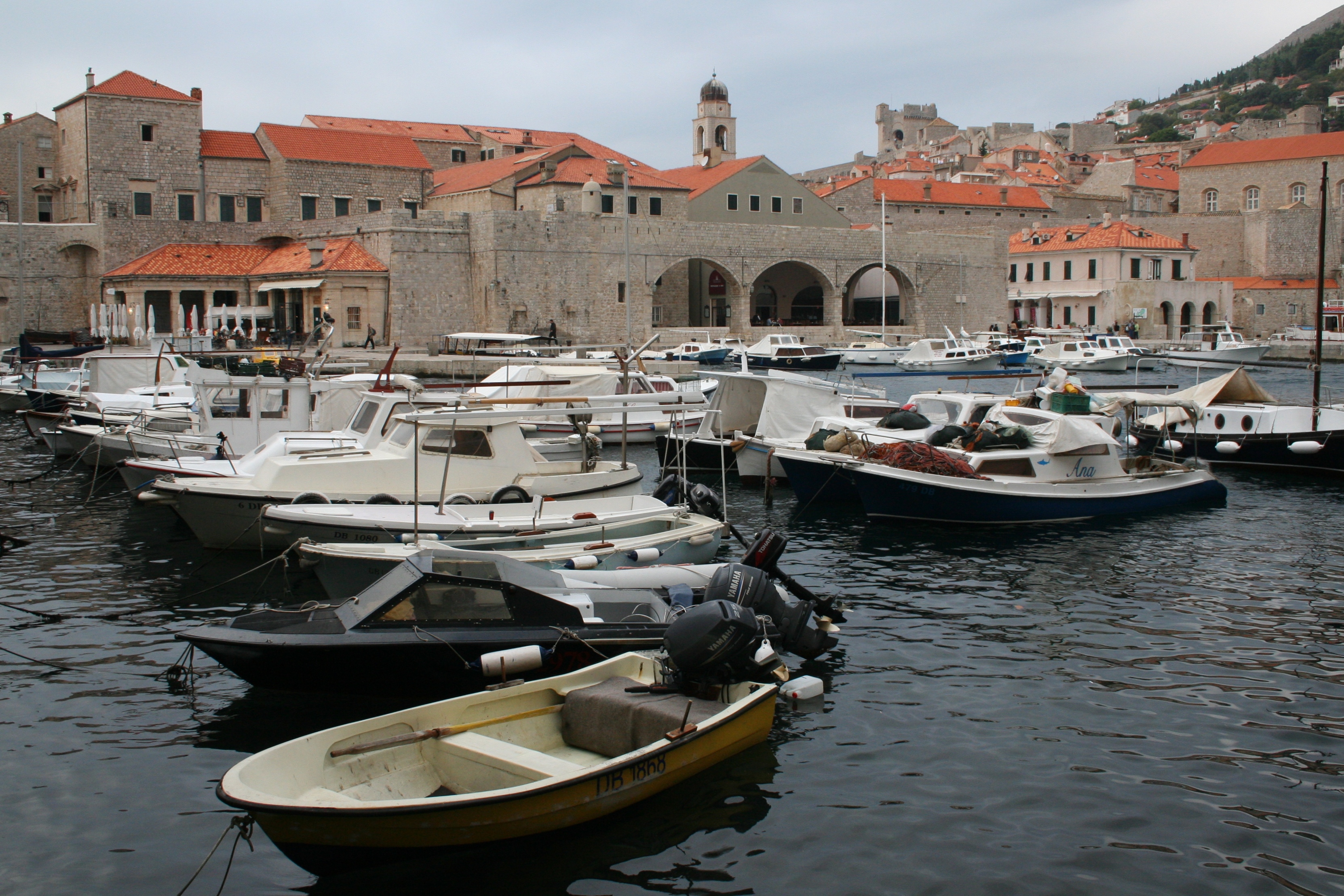
Boats, Dubrovnik harbour

Boats, Dubrovnik harbour

If you’re based in Dubrovnik, the islands of Koločep, Lopud and Šipanhen are all within easy reach. Sold to the city of Dubrovnik in 1333 by the kings of Bosnia, Mljet is do-able as a day trip, but those staying for longer are rewarded with beautiful countryside and much sought after peace and quiet. The west of the island has been designated a national park, the highlights of which are two saltwater lakes framed by pristine woodland. You could even spot a mongoose, imported from India in an attempt to rid Mljet of its persistent snake problems.
Dubrovnik

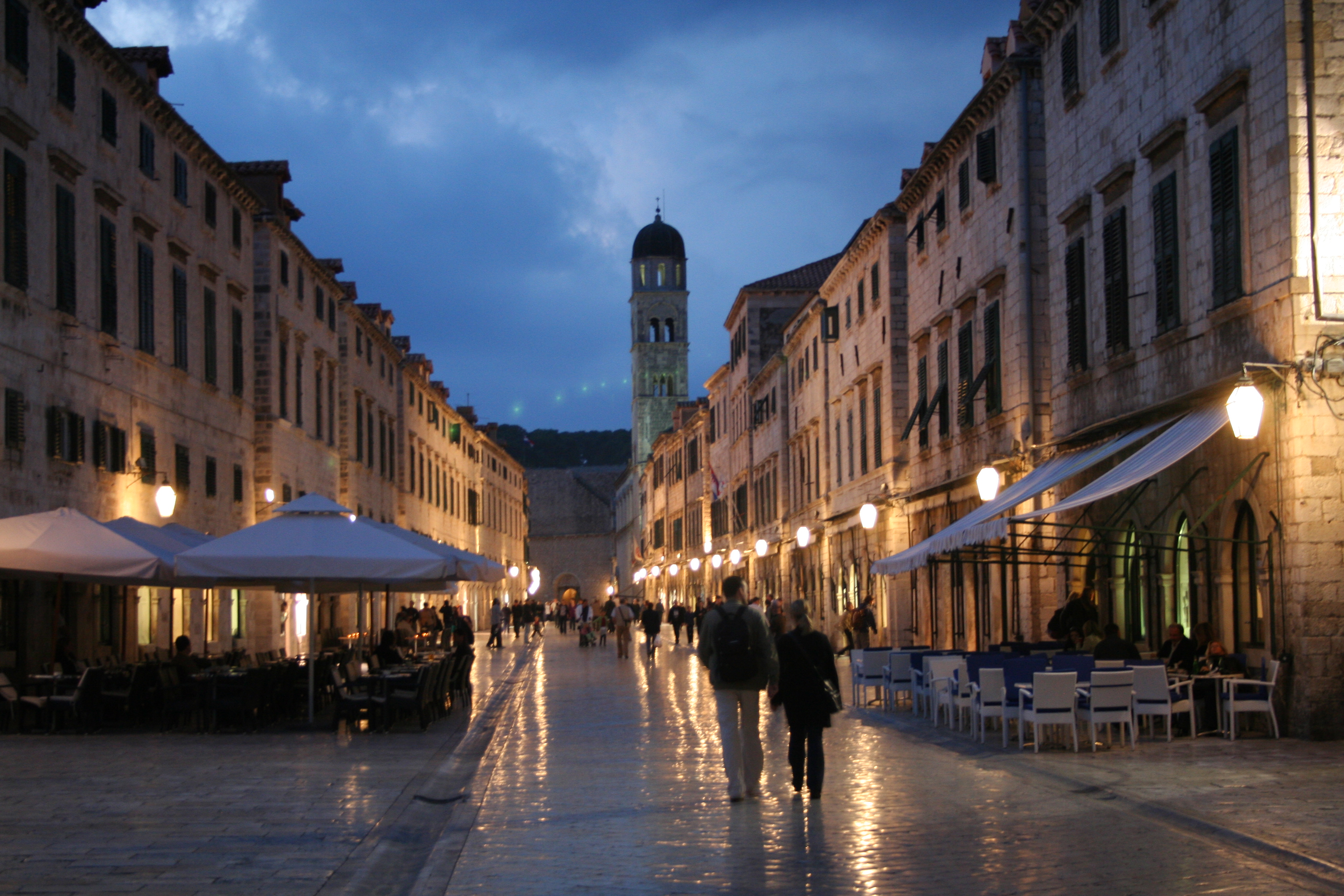
Get Dubrovnik wrong, and you battle hordes of cruise ship passengers clogging the narrow streets of the Old Town, tacky souvenirs and unappetising food. That’s not to say don’t visit, just do your homework first. Best in spring or summer (avoid January when many business owners take the month off) the crowds ease when the day trippers leave in late afternoon. Restaurants offering al fresco dining tout for custom, but get off the main drag to avoid inflated prices.

Dubrovnik

Dubrovnik

The city has a long history. Originally settled in the seventh century, it became an important trading post, a neutral port between the Ottomans and the West. The money generated by sales of wool, hides, wheat and even slaves underpinned the city’s cultural development. The Sponza Palace, Rector’s Palace and the fountains designed by Onofrio della Cava are evidence of this building boom.

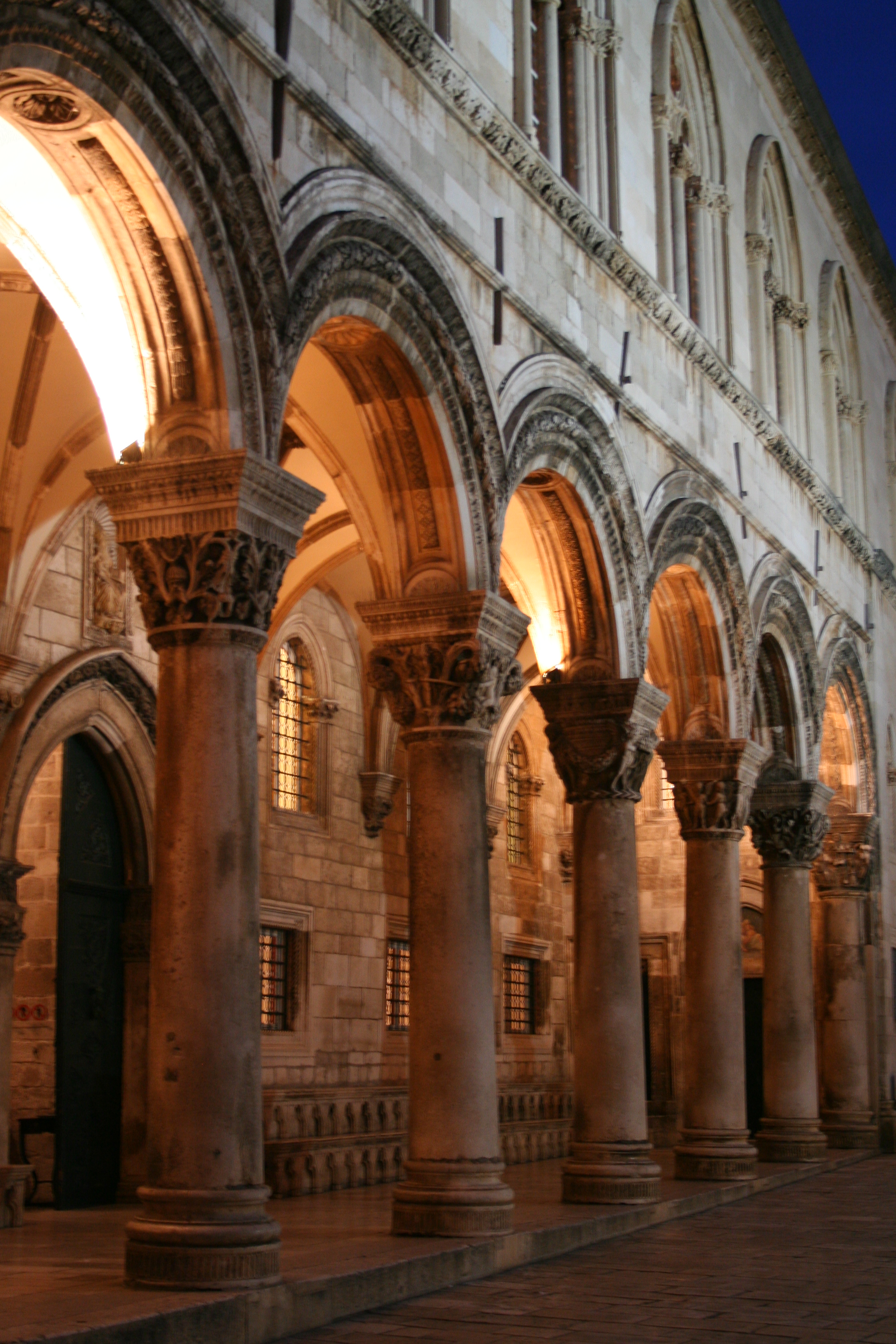
Rector's Palace, Dubrovnik

Rector’s Palace, Dubrovnik

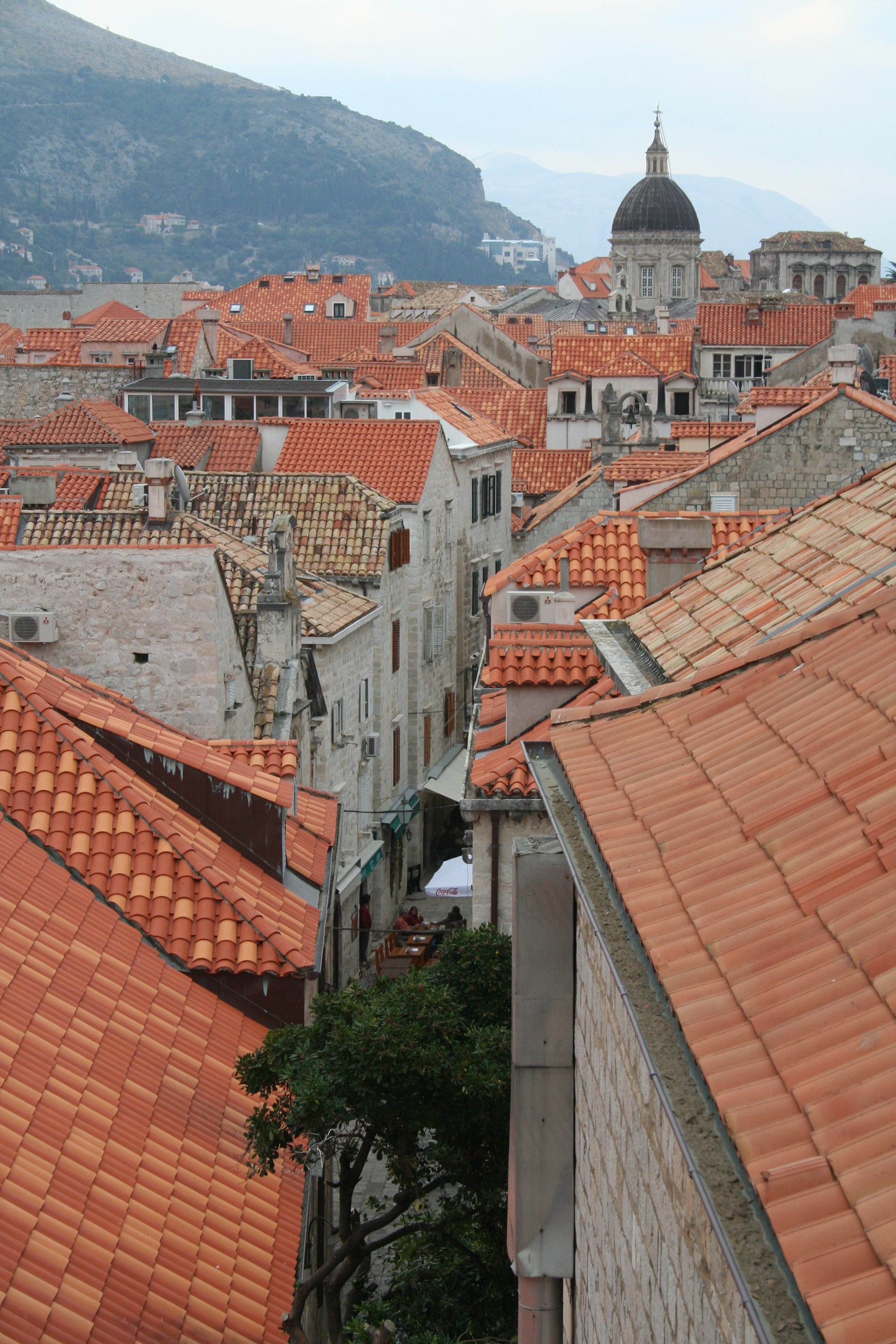
Climb the walls of the fortified Old Town for stunning views across terracotta rooftops to the Adriatic, hidden courtyards revealing themselves to those high enough to peer over their walls. The sea pounds away but is no match for the thick stone that Michelozzo Michelozzi and Juraj Dalmatinac designed to protect the city from the waves. After 1995, war damage was repaired speedily and you’d be forgiven for thinking the city was spared; only newer tiles and patched walls give it away.

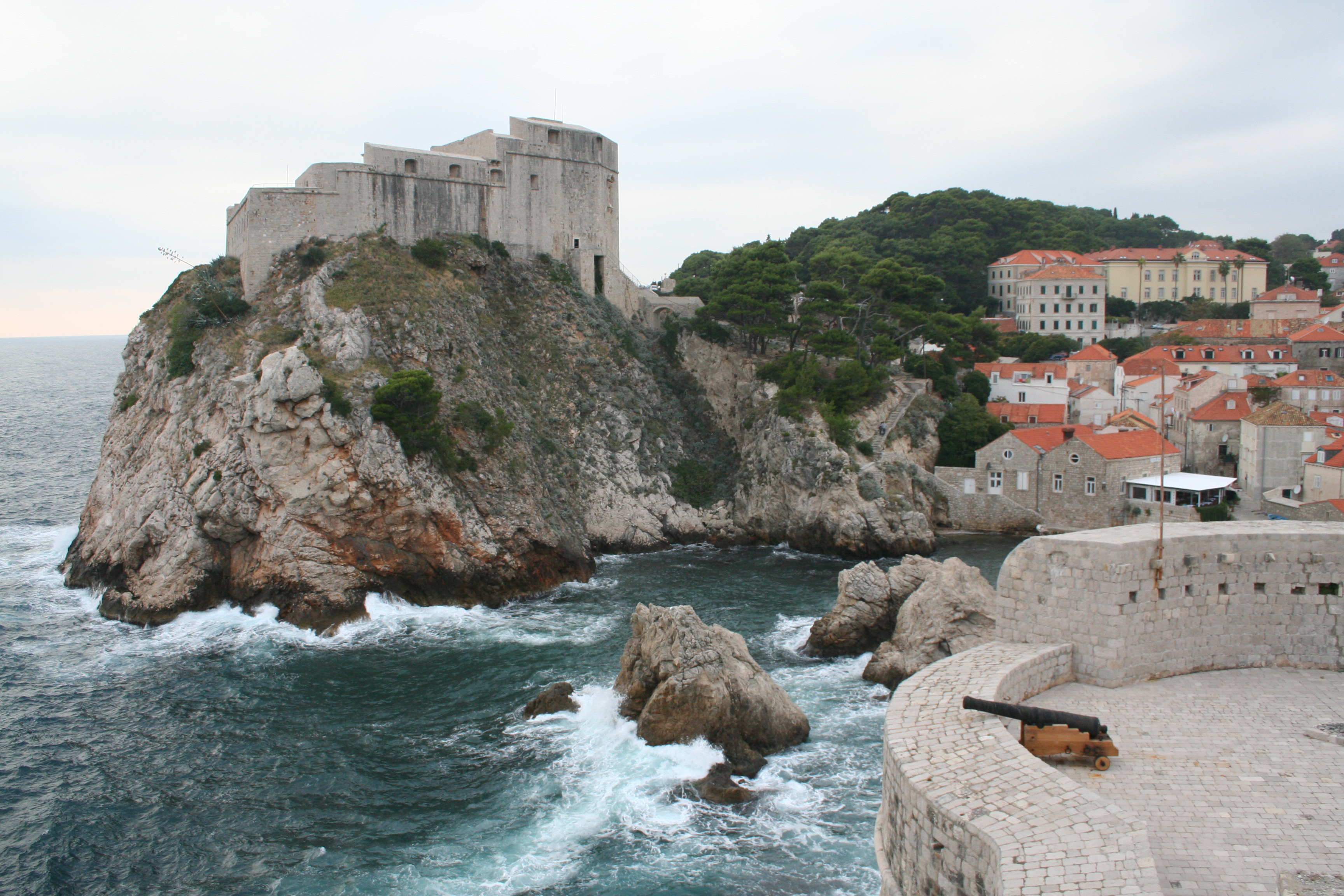
A fortified city, Dubrovnik's thick walls were designed to protect from waves as well as invaders

A fortified city, Dubrovnik’s thick walls were designed to protect from waves as well as invaders

The compact Old Town is a delight to wander aimlessly, but accommodation is expensive. It’s worth considering renting an apartment or staying just outside the city walls to achieve better value for money. Some people stay in the resorts of Cavtat or Župa Dubrovačka and visit Dubrovnik just for the day, but it’s worth basing yourself in the city for at least part of your stay.

Moving on

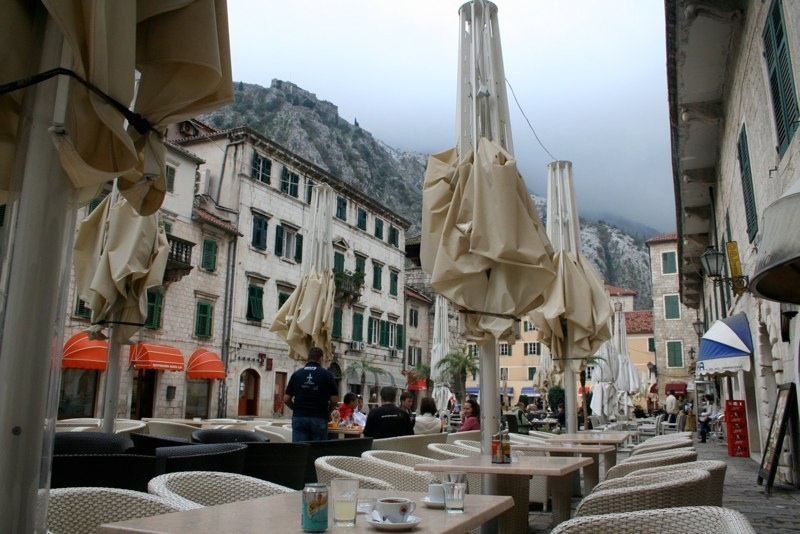
The pretty town of Kotor to the south of Dubrovnik across the border in Montenegro lies at the head of a fjord. Like Dubrovnik, it has a sprawling Old Town and a thriving cafe culture.

Kotor

Kotor

It’s worth taking a boat trip out on the fjord if the weather is fine; there are some pretty churches at the water’s edge. Also, make the effort to climb to the castle at the top of the hill – the views are spectacular on a clear day.

Kotor's fjord side setting - better luck with the weather than I had!

Kotor’s fjord side setting – better luck with the weather than I had!

As a beginner’s guide, this blog post isn’t intended to be complete, but there are lots more resources on the web to help you plan a trip. Try the Croatia traveller site here: http://www.croatiatraveller.com/Dalmatia.htm

For Northern Dalmatia, fly into Zadar and then head out from there. Rough Guides have a comprehensive description on their website here: http://www.roughguides.com/destinations/europe/croatia/northern-dalmatia/

For specific attractions, the Lonely Planet is a good bet. Find the relevant Croatia section here: http://www.lonelyplanet.com/croatia

Finally, for accommodation, I find http://www.booking.com reliable and the reviews generally accurate.

Jacmel carnival, Haiti

Each February, the southern Haitian town of Jacmel celebrates carnival in style. Here’s some photos from yesterday’s event.

Plenty of characters on the street before the main event

Plenty of characters on the street before the main event; this one’s Tonton Bicha

The best place to watch the parade is from the specially constructed wooden balconies on the main street

The best place to watch the parade is from the specially constructed wooden balconies on the main street

Colourful dancer getting into the groove

Colourful dancer getting into the groove

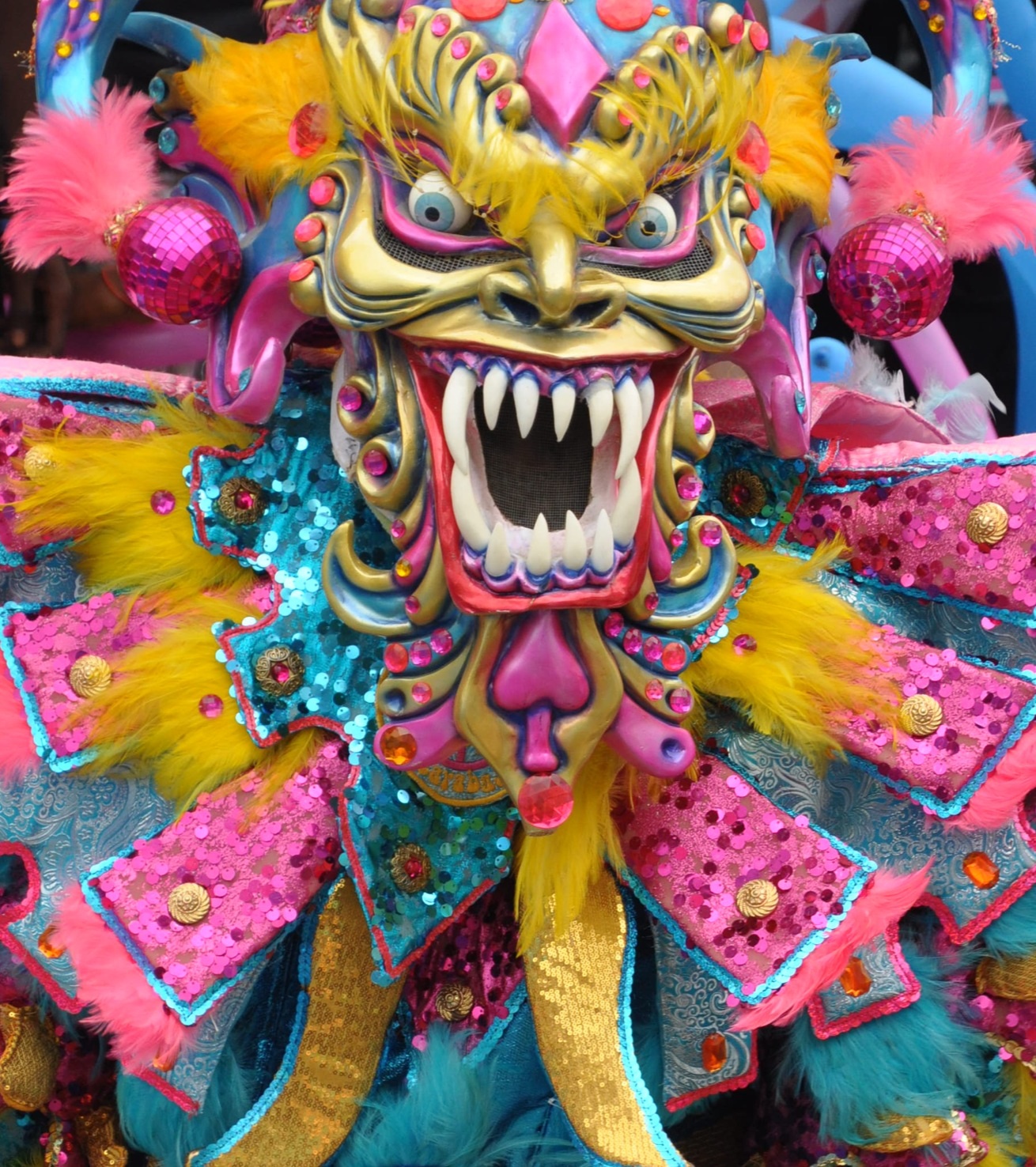
The costumes are amazing

The costumes are amazing

Impressive how much energy they have in the Caribbean heat

Impressive how much energy they have in the Caribbean heat

Carnival queen

Carnival queen

What every well-dressed donkey is wearing this season...

What every well-dressed donkey is wearing this season…

Political comment also has its place

Political comment also has its place

Loving how they've tippexed out their grammar mistake

Loving how they’ve tippexed out their grammar mistake

Most of them cleared the jump - except one!

Most of them cleared the jump – except one!

Papier mâché figures are what Jacmel's known for

Papier mâché figures are what Jacmel’s known for

Half king, half Santa, this figure is called "Papa Jwif"

Half king, half Santa, this figure is called “Papa Jwif”

The "Yawe" - a cowhide that's beaten (with some vigour!) in a recreation of a Taino hunting scene.

The “Yawe” – a cowhide that’s beaten (with some vigour!) in a recreation of a Taino hunting scene

The clacking sound of the wooden wings of the "Mathurin" bat-devils is distinctive

The clacking sound of the wooden wings of the “Mathurin” bat-devils is distinctive

The scariest characters are the "Lanset Kod" - covered in charcoal dust and cane syrup they run amok through the crowds smearing as many people as possible with their gunk

The scariest characters are the “Lanset Kod” – covered in charcoal dust and cane syrup they run amok through the crowds smearing as many people as possible with their gunk

A beginner’s guide to Barcelona

With a two thousand year history and a vibrant culture, it’s no wonder the Mediterranean city of Barcelona is the UK’s undisputed favourite when it comes to Spanish city break destinations.  As well as having its own ample stretches of sand, the city is perfectly situated to combine some sightseeing with a beach holiday to the Costa Brava or Costa Dorada. But what should you see on a first visit?  Follow my beginner’s guide to this captivating Catalan gem.

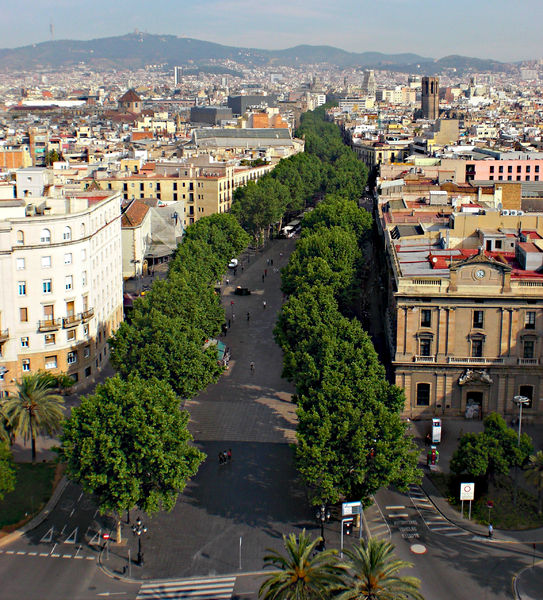
La Rambla by Oh-Barcelona.com reproduced under the terms of the Creative Commons licence CC by 2.0

La Rambla by Oh-Barcelona.com reproduced under the terms of the Creative Commons licence CC by 2.0

Getting there

A number of airlines fly from the UK to Barcelona, from regional airports as well as London.  To give you an idea of the choice available, there are almost 200 direct flights a week from London, on airlines such as British Airways, Iberia, easyJet, Monarch and Vueling.  It’s not difficult to pick up a return ticket for as little as £50 (flying with easyJet from Southend at the end of February, price correct at time of writing) but book well in advance for a summer trip as demand is obviously higher.

Getting from the airport

Most flights arrive at Barcelona’s El Prat airport (some Ryanair services fly into Girona) and there is a train service direct into the city.  Take the RENFE R2 Cercanias service (the local stopping train, sometimes referred to as Rodalies in Catalan) as far as Passeig de Gracia.  Tickets cost 4,10 euros and there’s no need to buy a ticket in advance.  Alternatively there’s an airport bus costing 5,90 euros which takes on average about a half hour to reach the city centre.  You can buy tickets online in advance here http://www.aerobusbcn.com/en/buy-tickets or just pay cash to the driver.  Expect to pay up to 40 euros for a taxi from the airport to the city centre.

Getting around

The Barcelona metro is extensive and easy to use, though as with any busy city, take care of your belongings and ensure bags are zipped or fastened securely.

LlefiàL10 by Javierito92, licensed under CC BY 3.0 via Wikimedia Commons

LlefiàL10 by Javierito92, licensed under CC BY 3.0 via Wikimedia Commons

A single ride on the metro (or bus) costs 2,15 euros but if you are planning on taking five or more journeys then you could buy a T10 card costing 9,95 euros which covers you for ten journeys over a year (i.e. there’s no need to use all ten on the same day).  If you make a journey and change lines without exiting the metro, then that counts as one ride, so long as your total journey time is under 75 minutes.  Multi-day travel cards are available, giving you two days’ unlimited travel for 14 euros for instance.  3, 4 and 5 day cards are also offered.  Check current prices here:

http://www.tmb.cat/en/barcelona-travel-card

Alternatively, you might consider the Barcelona card.  This is a tourist pass offering free transport (including the airport train but not the express airport bus), free or discounted admission to some tourist attractions and discounts in some restaurants and shops.  It costs 45 euros for a three-day pass.  Examples of free attractions (correct at the time of writing but check on arrival) include the Botanical Gardens and Museum of Modernism.  Do your homework; work out what you might like to see and total up the cost – as with all these cards, you need to use it a lot to make it worth your while.  A full list of discounts is found here:

Barcelona Card Discounts

For a first-time visitor who perhaps is less confident about using public transport, I’d recommend a hop on, hop off sightseeing bus.  Barcelona is a city of over 4 million people and therefore its sights are scattered over a wide area.  Although there is a lot to see in a fairly small downtown area, if you wish to see some of the more far-flung attractions it’s easier to catch the sightseeing bus.  It’s more expensive than public transport, with a one day ticket costing 24,30 euros if purchased online and a two day ticket about 10 euros more.  Their informative website can be found here: https://www.barcelonabusturistic.cat/en/home and provides details of routes, prices and current schedules.

Where to stay

I stayed at the Hotel Duquesa de Cardona, a luxury boutique hotel on the waterfront close to the Columbus statue at the end of La Rambla and a short walk from the aquarium. Its beautifully appointed rooms can cost as little as £75 a night for a double in low season, but the convenient location and excellent service mean that it does sell out in peak periods. The W chain are represented in Barcelona at Plaça de la Rosa dels Vents by Barceloneta beach. The hotel’s 473 rooms feature funky décor and both its pool terrace and 26th floor Eclipse bar afford stunning views of the Mediterranean Sea. On a tighter budget, try the Chic and Basic Ramblas, under £50 per night but only a stone’s throw from La Rambla, or for around £20 more, the Hotel Sant Agustí, a converted convent near to the Plaça Reial. The building dates from 1720 and has been a hotel since 1840, making it one of the city’s oldest.

What to see

Antoni Gaudi’s work

Sagrada Familia nave roof detail by SBA73, licensed under CC BY-SA 2.0 via Wikimedia Commons

Sagrada Familia nave roof detail by SBA73, licensed under CC BY-SA 2.0 via Wikimedia Commons

If there’s one name that is synonymous with Barcelona, it’s that of Antoni Gaudi, the architect responsible for the as yet unfinished Sagrada Familia church.  This elaborately constructed church was begun in 1882, consecrated by Pope Benedict XVI in 2010 but is unlikely to be complete until at least 2026.   George Orwell was not a fan, branding it one of the world’s most hideous buildings, but millions of impressed visitors beg to differ.  It’s definitely worth a look. 

Gaudi’s architecture can be found elsewhere in the city. Slightly north of Barcelona’s city centre in the Gràcia district, it’s worth making a special effort to pay a visit to Parc Güell.  Another of Antoni Gaudi’s bonkers creations, as you’d expect its planting is interspersed by wacky benches, columns and platforms featuring the architect’s trademark mosaic tiling.  The extraordinary Parc Güell now charges admission, but is a must-see.

Casa Milà, better known as La Pedrera, is another building bearing the hallmarks of the architect’s unique style. Its odd chimneys are classic Gaudi. I also loved Casa Batlló which Gaudi redesigned in 1904.  Once a family home and now a UNESCO world heritage sight, it’s unique, quirky and delightful, both inside and out.  The entrance fee is a bit steep but looking at the exterior is free.

Casa Batlló

Casa Batlló

La Rambla

This single street is possibly the most famous in the city. For this reason, it has to figure in your itinerary but be warned, it’s also a popular stomping ground for pickpockets and scammers. This pedestrian thoroughfare is crammed with souvenir vendors, street performers, human statues and, at night, prostitutes. It features a mosaic created by the artist Joan Miró, located near the Liceu metro station. If you look closely, you’ll be able to spot his signature on one of the tiles. A museum dedicated to his work can be found at Montjuïc. The street also has a selection of restaurants but you’d do better heading off the street and away from the crowds.

Montjuïc

This hill overlooking the city literally translates as “the hill of the Jews”. Getting up there is half the fun. Head up by funicular and then take the Port Vell aerial tramway back down to the waterfront at Barceloneta. At the top, there’s a whole load of things to do. As well as the Fundació Miró, Montjuïc
is also home to the Museu d’Arqueologia, the Museu Etnològic and the Museu Nacional d’Art de Catalunya-MNAC, housed in the impressive Palau Nacional. In addition you’ll find the Magic Fountain and the artisan village at Poble Espanyol, both built for the 1929 International Exhibition.

Parc Montjuïc by Canaan, reproduced under the Creative Commons licence CC BY-SA 3.0

Parc Montjuïc by Canaan, reproduced under the Creative Commons licence CC BY-SA 3.0

Barri Gòtic

Barcelona’s Gothic Quarter is its old town, linking La Rambla to the Mediterranean seafront.  Many of the buildings of this area date from mediaeval times, though there was extensive modernisation and renovation in the 19th and early 20th century. One of the area’s most popular attractions is the Picasso Museum. Suggested by the artist himself back in 1960, Barcelona is a fitting choice for the museum; although Picasso was born in Malaga, he spent his teenage years in the city before moving to Paris in his twenties. The five buildings that house a collection of 3500 of his earlier works are as much an attraction as the art itself – Palau Aguilar, Palau del Baró de Castellet and Palau Meca date back to the 14th century.
 
The Barri Gòtic is a fabulous area in which to wander, with alleyways linking attractive squares, my favourite being the Plaça Reial.  This palm-filled square provides respite from the heat of the summer sun; in my opinion there’s no better place in the whole of the city to sip a coffee and people-watch.  As with other touristy areas, keep a close eye on your belongings.

Barcelona - Plaça Reial by Josep Renalias, licensed under CC BY-SA 3.0 via Wikimedia Commons

Barcelona – Plaça Reial by Josep Renalias, licensed under CC BY-SA 3.0 via Wikimedia Commons

Camp Nou

For football fans, there’s only one unmissable attraction in the city – Barcelona’s Camp Nou stadium, home to Futbol Club Barcelona, or Barça to its adoring fans. It is possible to take tours of the stadium. Visit the FCB Museum, walk down the players’ tunnel and out onto the pitch, stand in the dressing room and see behind the scenes in areas such as the press room.

Camp Nou colours by DJ Lucifer, licensed under CC BY 2.0 via Wikimedia Commons

Camp Nou colours by DJ Lucifer, licensed under CC BY 2.0 via Wikimedia Commons

Something for the evening

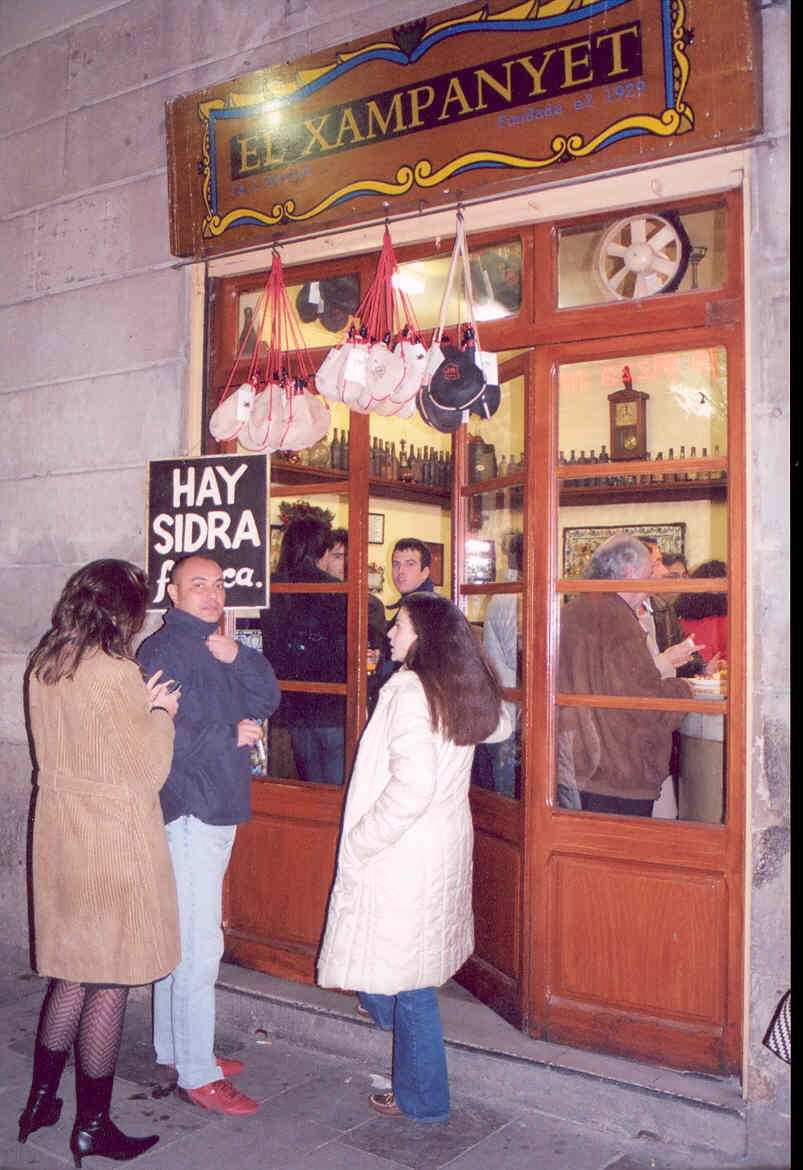
Cava is to Spain as champagne is to France, and the most atmospheric place in town to drink the stuff is at El Xampanyet. This small bar has a take me as you find me vibe, with a mixed clientele of locals and visitors. The tiled walls and tasty tapas have barely changed since the place opened back in 1929. Its location on Carrer de Montcada in El Born district, is within an easy stroll of the cathedral and Parc de la Ciutadella, and perfect for a few glasses before dinner in the Old Town.

El Xampanyet

El Xampanyet

Just back from – a day trip to Amsterdam

Is an Amsterdam day trip viable? In the second of an occasional series, I test whether it’s really worth making the effort for just a single day’s visit to this popular Dutch city. Would I regret not paying for a hotel room as I dashed from attraction to attraction?

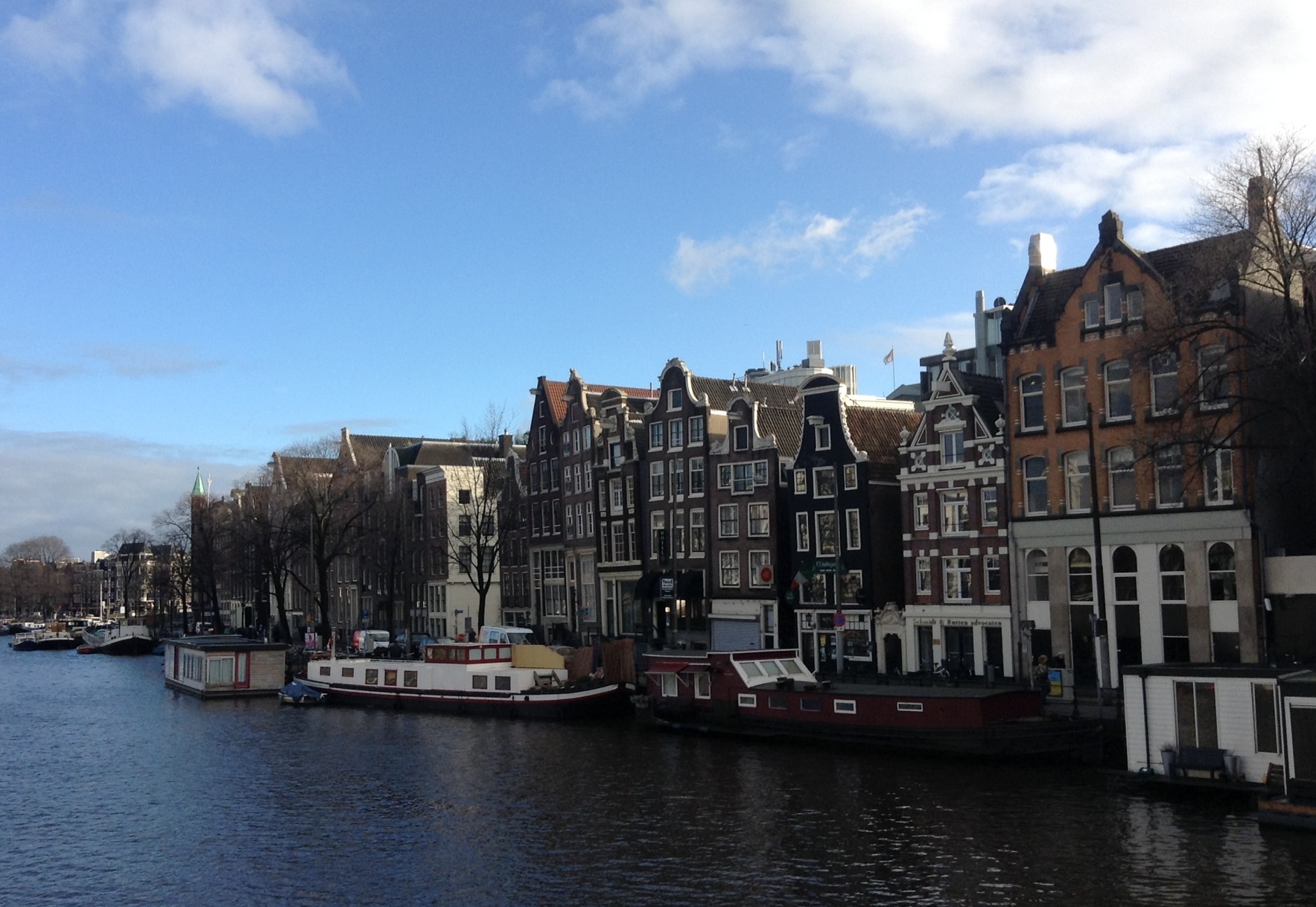
Amsterdam's canals

Amsterdam’s canals

Logistics

I chose to fly from London’s Southend airport, around an hour from Central London but only a short drive from my Essex home. Southend, though expanding, is still a small airport, making it possible to transit the airport in just a few minutes – none of the long queues for security or marathon hikes to the gate that characterise Britain’s larger airports. easyJet fly out to Amsterdam at 7.30am and back at 6pm, making a short day out a cheap possibility. It’s wise to note that easyJet fly into a satellite terminal at Schipol, making for a tidy walk to the gate for your return flight. But they have a good track record for punctuality and my outbound flight was on time. On the return leg, we landed early and thanks to the time difference, I was back in my kitchen feeding the dogs their dinner almost before I should have left Schipol. (Don’t worry about them, we have doggie day care for such occasions.)

Getting into the city

Having made it across the airport without getting distracted by the many shops and even a branch of the Rijksmuseum (Schipol has got to be the best airport in Europe, don’t you think?) I exited through self-service passport control leaving the tulip bulb purchases for my return. Keep straight on as you exit customs for the train station, the quickest way into central Amsterdam. Directly in front of you are bright yellow ticket machines which take cash and cards. A single ticket into the city costs 5,10 euros with a 0,50 euro surcharge for using a credit card; UK issued cards work fine. It’s worth noting, though, that they take coins and not notes if you wish to pay cash. Make a left and head for the train; it’s a quick fifteen minute ride into the city. Trains leave frequently for Amsterdam Centraal Station immediately to the north of the main city. I waited one minute for a train and was walking Amsterdam’s streets by 10am.

Centraal Station

Centraal Station

Getting around

The city centre of Amsterdam is compact and unless it’s raining, it’s a pleasant experience to wander the back streets and canal side paths on foot. You’ll need eyes in the back of your head, though, to avoid being run over by a bicycle. The city has dedicated cycle lanes but it’s all too easy to forget where the pavement ends if you’re trying to take a photo. If you hire a bike yourself, it’s customary to ring your bell rather than mutter profanities at wayward pedestrians obsessed with getting the perfect selfie.

For longer distances, the easiest method of getting around the city is by tram. Single rides cost 2,90 euros and the ticket is valid for an hour. Tap the ticket on the reader as you are given it to activate it. If you are likely to make more than three journeys, it’s worth your while buying a day pass, costing 7,50 euros. Tap in and out each time you ride.

Cheese!

Cheese!

What did I do?

I’ve been to Amsterdam before, so decided to give the big museums and the Anne Frank House a miss this time. If you are making a first visit then you should really consider staying a few days to give you time to do the sights justice. Queues for the Anne Frank house are frequently long (even on a Monday in January!) so if you do want to go, and you should, plan to make this first on your day’s agenda when you visit.

I made for the Begijnhof instead. It’s an easy walk from Centraal Station – cross over the canal and head down Damrak, the main drag. Damrak is tourist central, but you can arrange everything from canal boats to bicycle hire here and buy souvenirs tackier than you’ve ever imagined. From Dam Square, continue down Kalverstraat (almost as bad as Damrak) until you get to Spui.

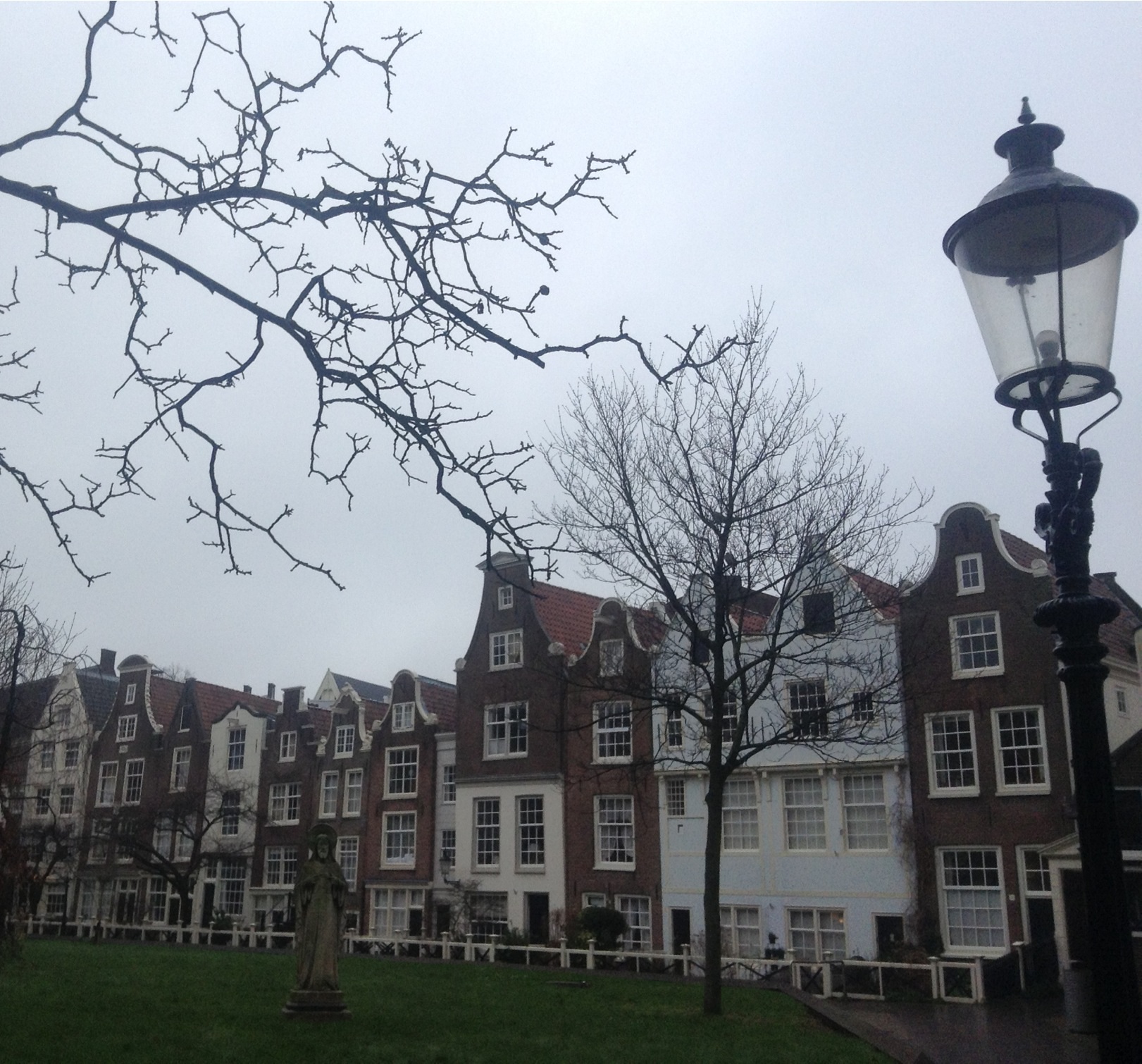
The Begijnhof

The Begijnhof

Accessed through a wooden door, a passageway with impressive vaulted ceilings leads through to an enclosed square, the Begijnhof. Women have lived on this site since 1150, primarily to care for the sick. By the fourteenth century, the place had become a nunnery, the women referred to as “beguines”. Taking pride of place in this inner courtyard is the church. The Begijnhof is also the site of one of only two surviving timber buildings in the city, this one dating from 1528. Visitors can access half the square, so long as they keep off the well-manicured lawns; the rest is for residents only. Entrance is free, though donations to the church are welcomed.

The Begijnhof is around the corner from the Bloemenmarkt, on the Singel, which claims to be the only floating flower market in the world. Don’t worry if you haven’t timed your visit for spring, even in winter the stalls are a riot of colour, selling cut flowers and bulbs. The packaged bulbs are aimed squarely at the tourist market – locals make a beeline for the loose bulbs as they’re considerably cheaper.

Tulips from Amsterdam

Tulips from Amsterdam

Next, I set about exploring the area known as “De Negen Straatjes” – the nine streets. This is an area bisected by canals from the Singel to the Prinsengracht and gentrification has resulted in a wealth of designer boutiques, gift shops and art galleries that lend themselves to ambling. This is not a district to walk with a purpose, more an area in which to potter and dither before recharging your batteries in a cafe. Forget Starbucks – though there are plenty – a canal side coffee shop is the way to go. I recommend the Koffee Huis “De Hoek”, a far cry from the smoky cannabis cafes for which Amsterdam is better known. Try their cheese and ham pancake washed down with proper freshly- squeezed orange juice and bag a window seat for brunch with a view.

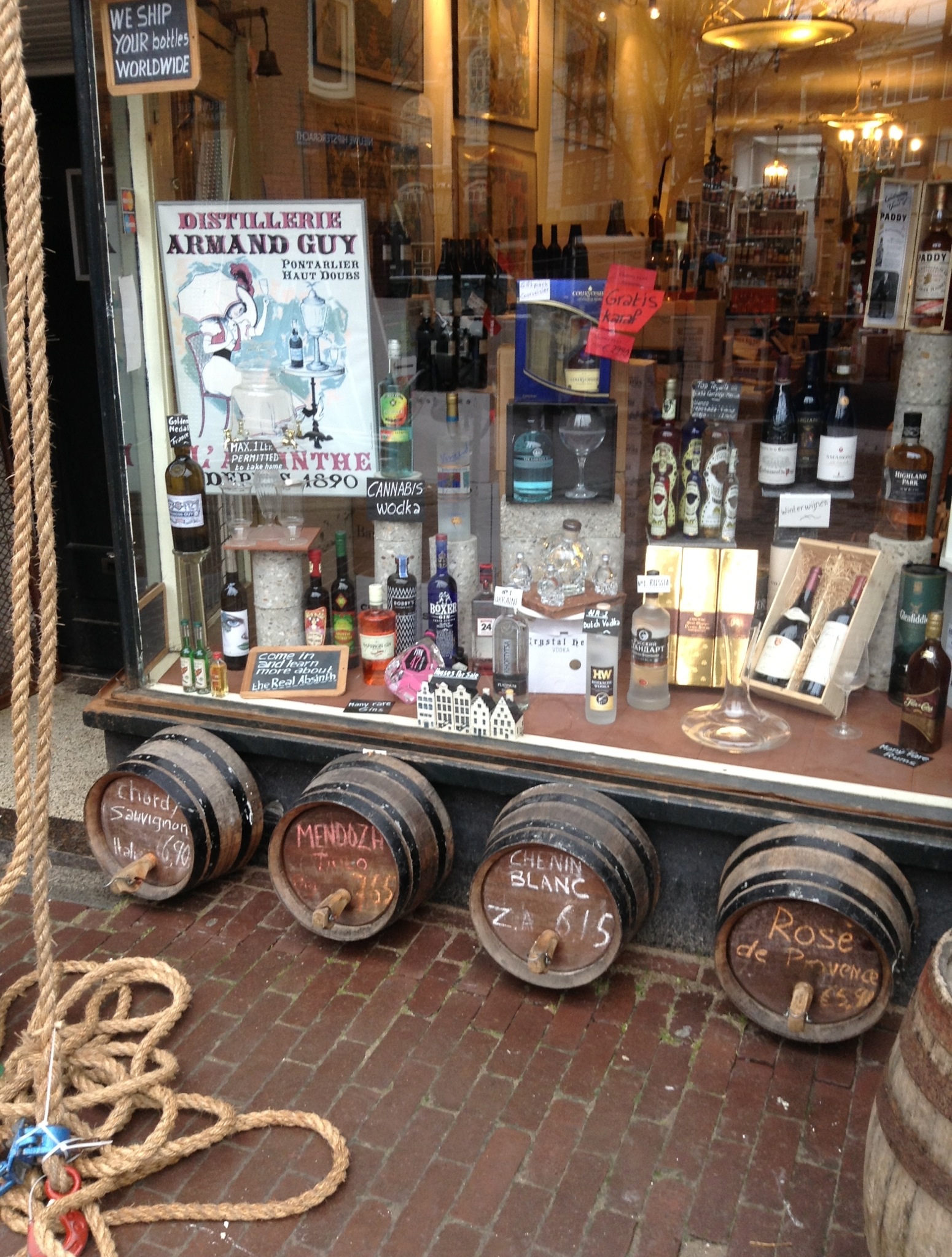
Off licence, Nine Streets

Off licence, Nine Streets

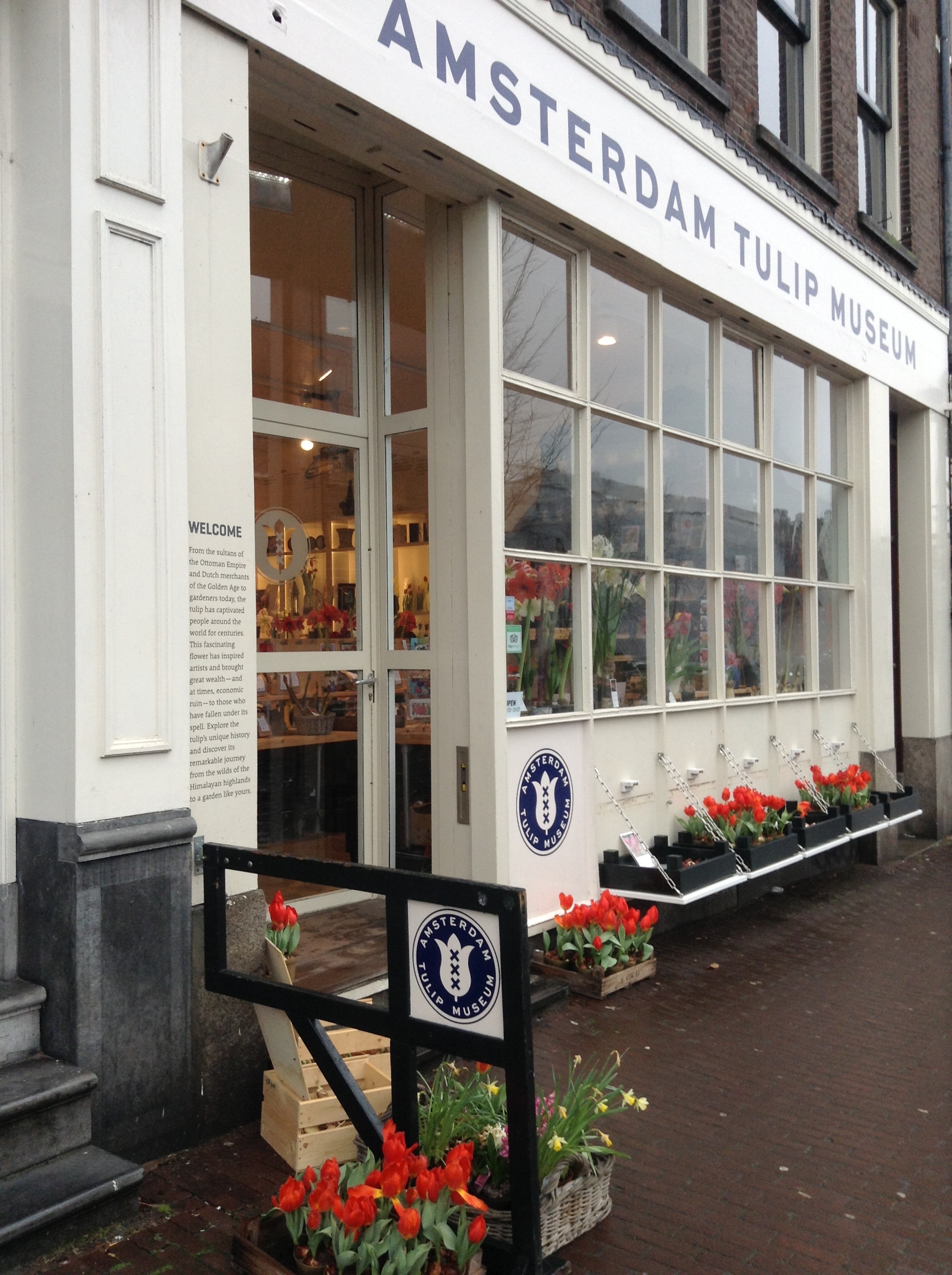
Continuing along Prinsengracht, and just past Westermarkt I passed the long queue for the Anne Frank House. Further along on the opposite side of the canal is an interesting little museum devoted to tulips. Behind the extensive gift shop and down a steep flight of steps, a series of small interconnecting rooms tell the history of this iconic Dutch flower, which you’ll soon learn, isn’t Dutch at all. In fact, it is native to Asia (who knew?) and it was the Ottomans who introduced the flower to the Netherlands in the sixteenth century. They soon became fashionable, with growers competing to see who could produce the most sought after bloom. Speculators moved in on the industry and soon bulbs with the right “pedigree” were changing hands for crazy sums of money, with some selling for twenty times the annual salary of the average Amsterdam resident at the time. Out of control, the market crashed in 1637 and it was to take a further 200 years to steadily rebuild it. Fortunately, the prices of tulips are far more reasonable today, as is the 5 euro entrance fee.

The Tulip Museum

The Tulip Museum

Back at the Westerkerk, I jumped on a number 14 tram heading east to my second museum of the day – the Dutch Resistance Museum. This absorbing museum recounts the experiences of the Netherlands from 14 May 1940 to 5 May 1945, the period when the country was occupied by Nazi Germany. As well as resistance, the museum explains how people chose different paths in coping with the invasion – some collaborated, some fought back. The exhibition covers all forms of resistance: going on strike, forging documents, helping people to go into hiding, publishing underground newspapers, maintaining escape routes, and even armed resistance and espionage. Entrance costs 10 euros which I thought was good value for money. Take the free audio set that’s offered as it unlocks a series of explanations in English; the exhibits are all signed in dual language but some of the text is on the small size. A short film puts the museum in context, in kid-friendly language, and there’s a special children’s section to the museum as well. Families, this is your part of town – Artis zoo’s just across the street.

Dutch Resistance Museum

Dutch Resistance Museum

All that history had made me thirsty (and my back ache) so sinking into a chair in the Cafe Koosje on the corner of Kerklaan and Plantage Middenlaan came as a welcome relief. The hot chocolate topped, of course, with a generous dollop of cream and the friendly wait staff made this a good place to take a break.

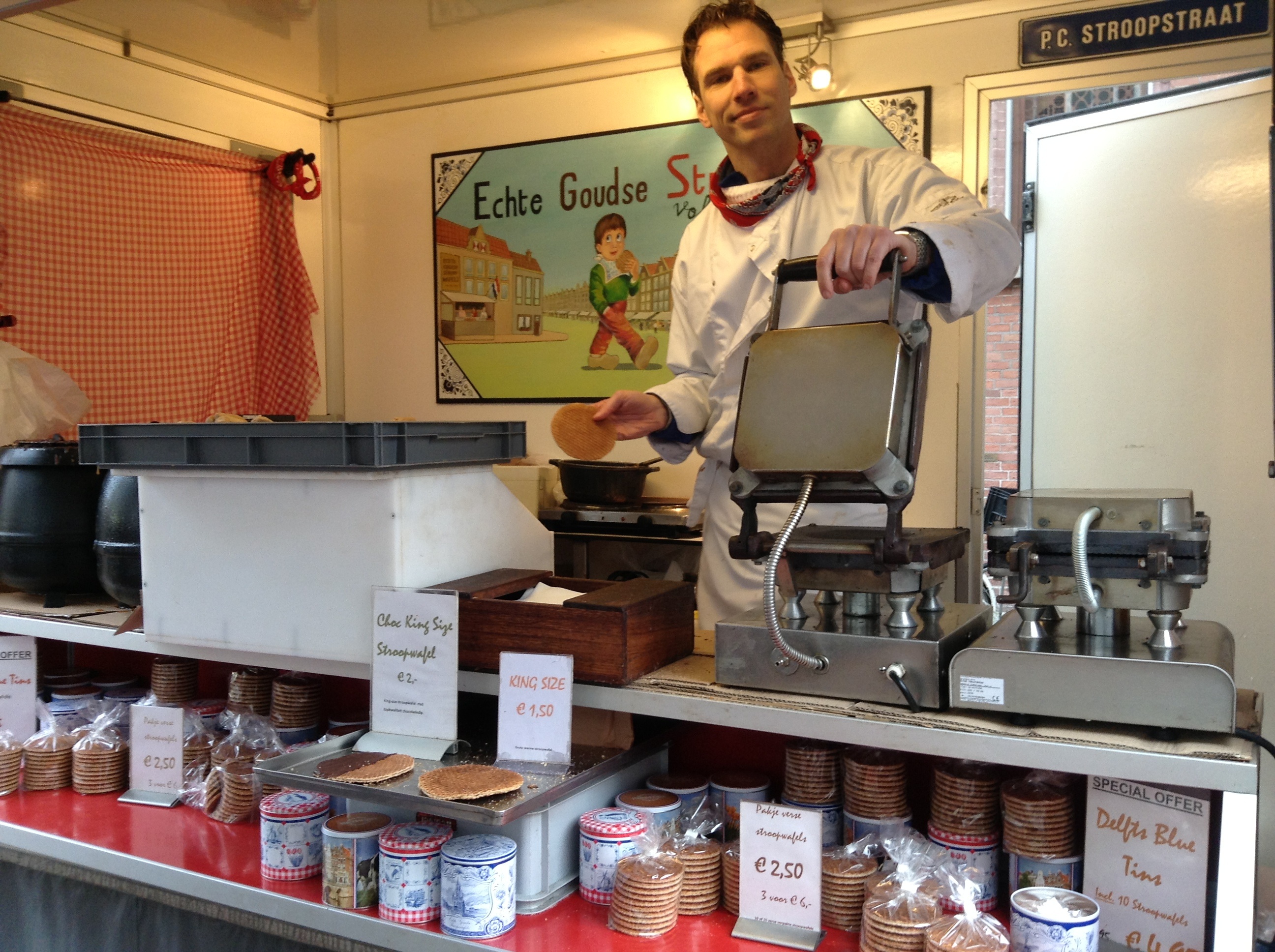
It was time to head back to the centre for some shopping and my mind was on food. Taking the number 14 tram back to Waterlooplein, I walked to Staalstraat where I’d read about a foodie’s paradise at number 20. Het Hanze Huis is crammed full of European foods, from syrups to flavoured tea, chocolate to tasty biscuits. Mouth already watering, I decided to continue by number 24 tram (tram-hopping like a local!) to the market on Albert Cuypstraat. A mix of market tat, food trucks and cheese stalls, this place is definitely worth a visit. I stocked up on Stroopwafels, a family favourite, from a charming man who posed happily for a photo. Bag full, I had to pass on the Gouda cheese, but figured I could at least get that in Sainsbury’s.

The Stroopwafel man

The Stroopwafel man

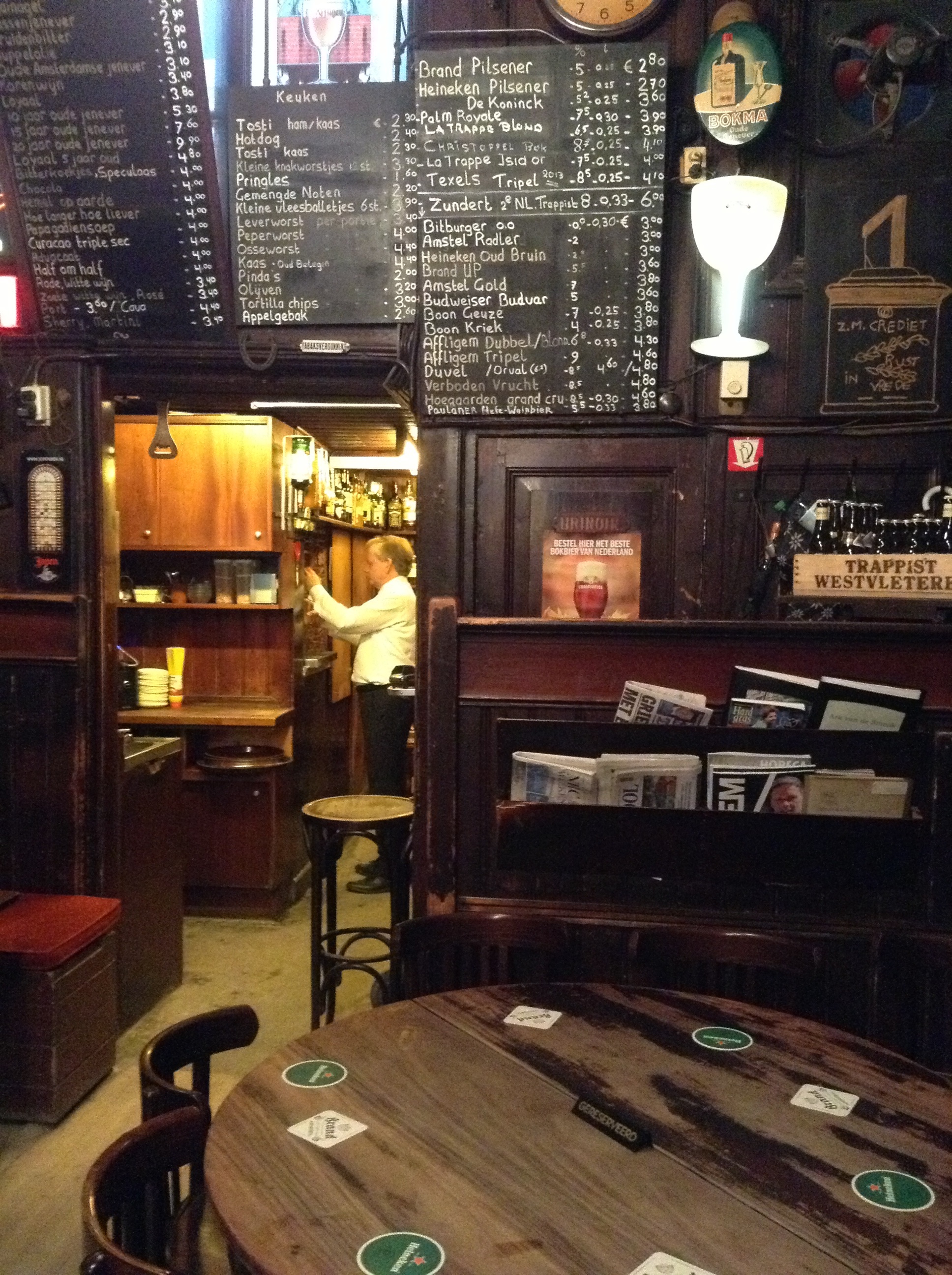
Heading back to the centre on the number 4 tram, my final stop was to a pub with no bar. I’d come across De Pilsener Club, located on Begijnensteeg, via several bloggers on the net. The pub’s nickname is De Engelse Reet, which apparently translates as “The English Ass”. Perfect, I thought. After all today’s walking I need a seat for my own ass. According to what I read, the pub has been in business since the end of the nineteenth century. It’s been in the current owner’s family for four generations (I read that they all share the same first name, so that’s four men called Tuen Van Veen) and they don’t like change. Stepping over the threshold is like travelling back in time, with sanded floorboards and tables pockmarked through years of use. Given the early hour (for a pub, anyway) I expected to have to drink alone, but two tables were occupied when I walked in and by the time I left, it was full. It seems it’s a very popular meeting place in the late afternoon for Amsterdam’s over 60s.

De Engelse Reet

De Engelse Reet

The lowdown

As with Lisbon, I pre-planned my itinerary in order to minimise the chances of wasting time arriving somewhere that’s not yet opened up for the day or unnecessarily backtracking across town. Both times I’ve been fully prepared to ditch things as the day goes on, but was once again surprised by how much I ended up doing. I’ll admit, Amsterdam has never been one of my favourite cities, but I wanted to prove to myself that I could find a city I love within a tourist city I really don’t. A bit of extra research this time uncovered parts of Amsterdam that were a whole lot more rewarding than the Red Light District, tacky souvenir shops and mainstream museums I might otherwise have felt obliged to visit.

I also made good use of the Travel Telegraph’s app, and grew increasingly fond of its “favourites” capability and very functional zoomable map – particularly helpful as my paper map began to disintegrate in the drizzle. Because of the shorter flight time and the exceptionally quick train connection, having a later outbound flight and earlier inbound flight wasn’t an issue, though I could quite happily have holed up in De Engelse Reet and made a night of it. Next time that’s where you’ll find me, though perhaps I’ll get Tuen Van Veen to serve me up a couple of hard boiled eggs to soak up the Heineken.