juliamhammond

Latest

Torres del Paine National Park: the highlights

Chile’s Torres del Paine National Park has been on my wish list for many years. Now that I’ve been, I can report that it didn’t disappoint. You can see my blog about the area on Go4Travel’s website: http://www.go4travelblog.com/torres-del-paine-national-park-highlights/

Here are some of my favourite photos from the trip.

Sunrise over Lago Toro

Sunrise over Lago Toro

Cuernos del Paine as seen from Lago Nordernskjold

Cuernos del Paine as seen from Lago Nordernskjold

Salto Grande waterfall

Salto Grande waterfall

Lago Pehoe in the late afternoon sun

Lago Pehoe in the late afternoon sun

Guanacos in the north of the park

Guanacos in the north of the park

Young guanacos play-fighting

Young guanacos play-fighting

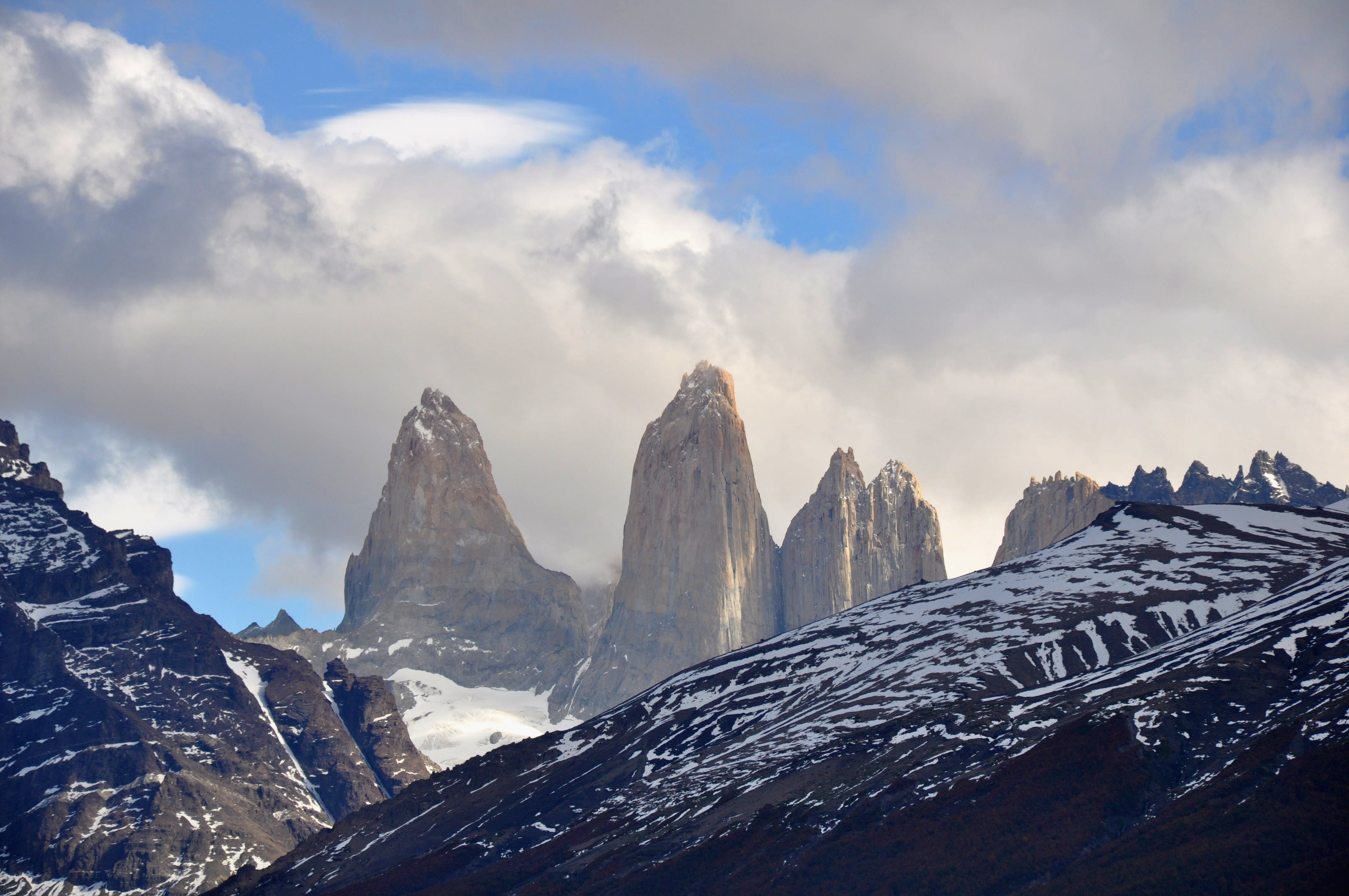
The Torres del Paine

The Torres del Paine

Glaciar Grey

Glaciar Grey

Close up of the ice, Glaciar Grey

Close up of the ice, Glaciar Grey

Easter Island in pictures

Easter Island, the second most isolated island on the planet, yet famous the world over for the moai which stand sentinel, their backs to its shores. Spending Easter here has been a blessing, the island’s beauty a revelation and the warmth of its people ensuring the memories go beyond mere statues.

Sunrise at Tongariki, site of the greatest number of moai

Sunrise at Tongariki, site of the greatest number of moai

Long shadows in the morning's first hour of daylight

Long shadows in the morning’s first hour of daylight, beginning in April at a civilised 8am

Sunrise in full colour

Sunrise in full colour

Heading north to the coast, but watch out for horses, wild or herded

Heading north to the coast, but watch out for horses, wild or herded

The moai quarry, Rano Raraku

The moai quarry, Rano Raraku

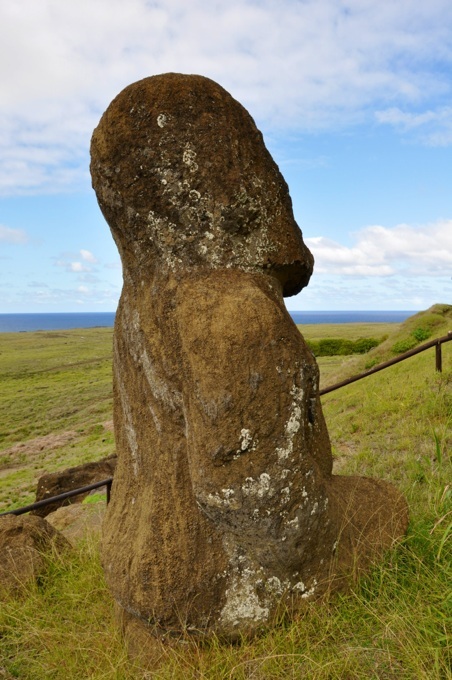
The kneeling moai at Rano Raraku

The kneeling moai at Rano Raraku

Moai quarried right out of the stone cliffs

Moai quarried right out of the stone cliffs

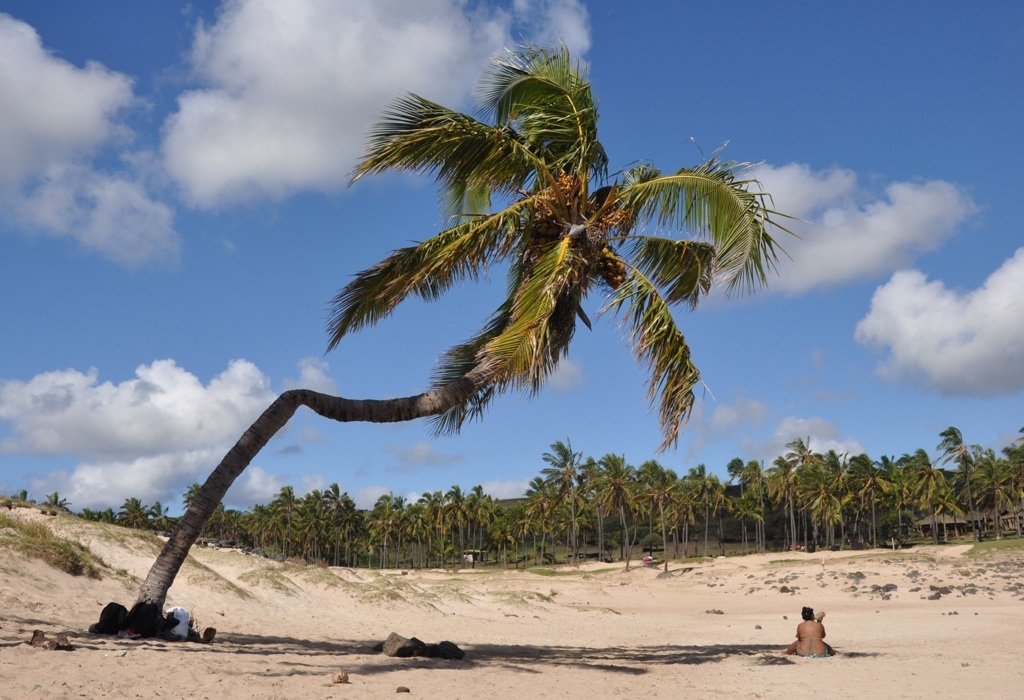
The beach at Anakena, one of only two sandy shores on an island characterised by rocky cliffs

The beach at Anakena, one of only two sandy shores on an island characterised by rocky cliffs

Sand piled up right behind the ahu (platform) on which stand seven moai

Ahu Nau Nau: Sand piled up right
behind the ahu (platform) on which stand seven moai

Close up shot of one of the moai at Anakena

Close up shot of one of the moai at Anakena

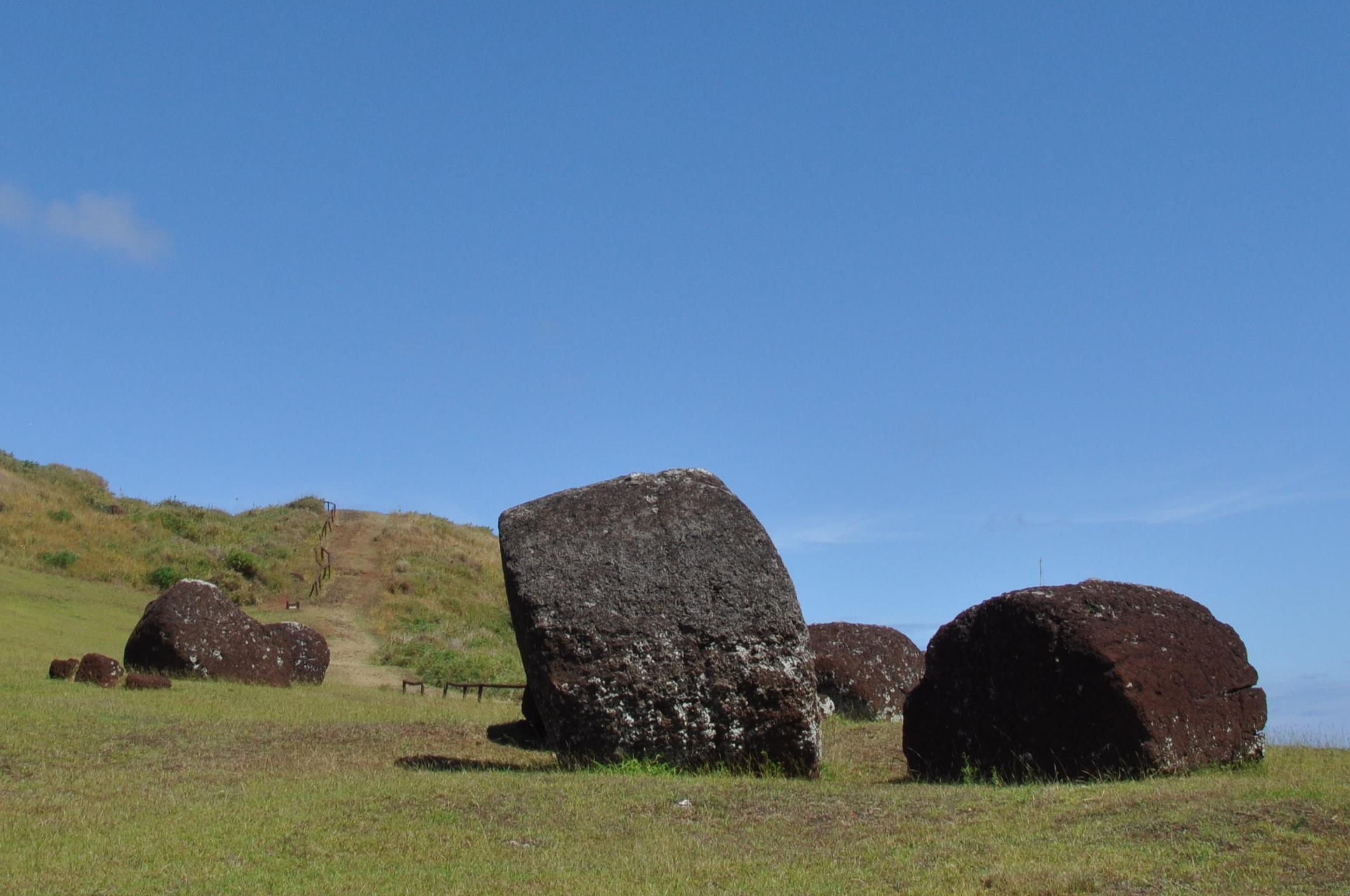
Puna Pau top knot quarry

Puna Pau top knot quarry

The seven moai at Ahu Akivi, unusual in that they face the sea

The seven moai at Ahu Akivi, unusual in that they face the sea

Visitors are requested to respect the island's heritage and keep off the ahu, but the horses don't always get the message

Visitors are requested to respect the island’s heritage and keep off the ahu, but the horses don’t always get the message

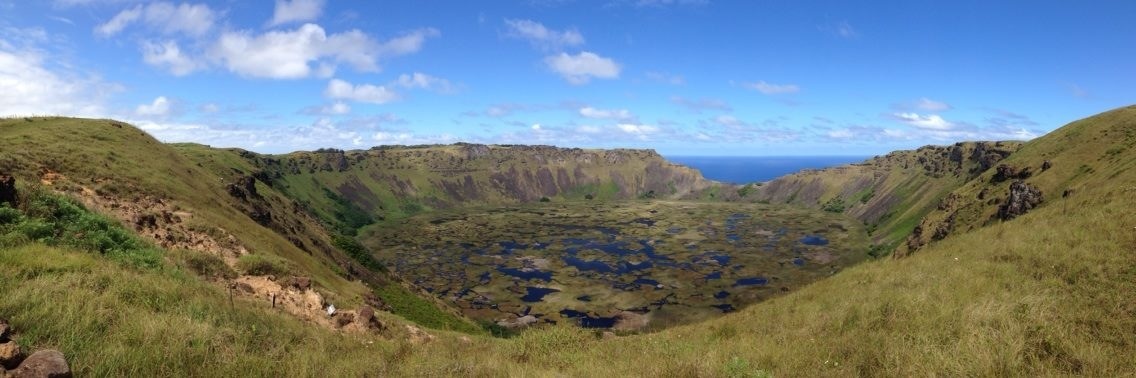
Rano Kau crater, near the main settlement of Hanga Roa

Rano Kau crater, near the main settlement of Hanga Roa

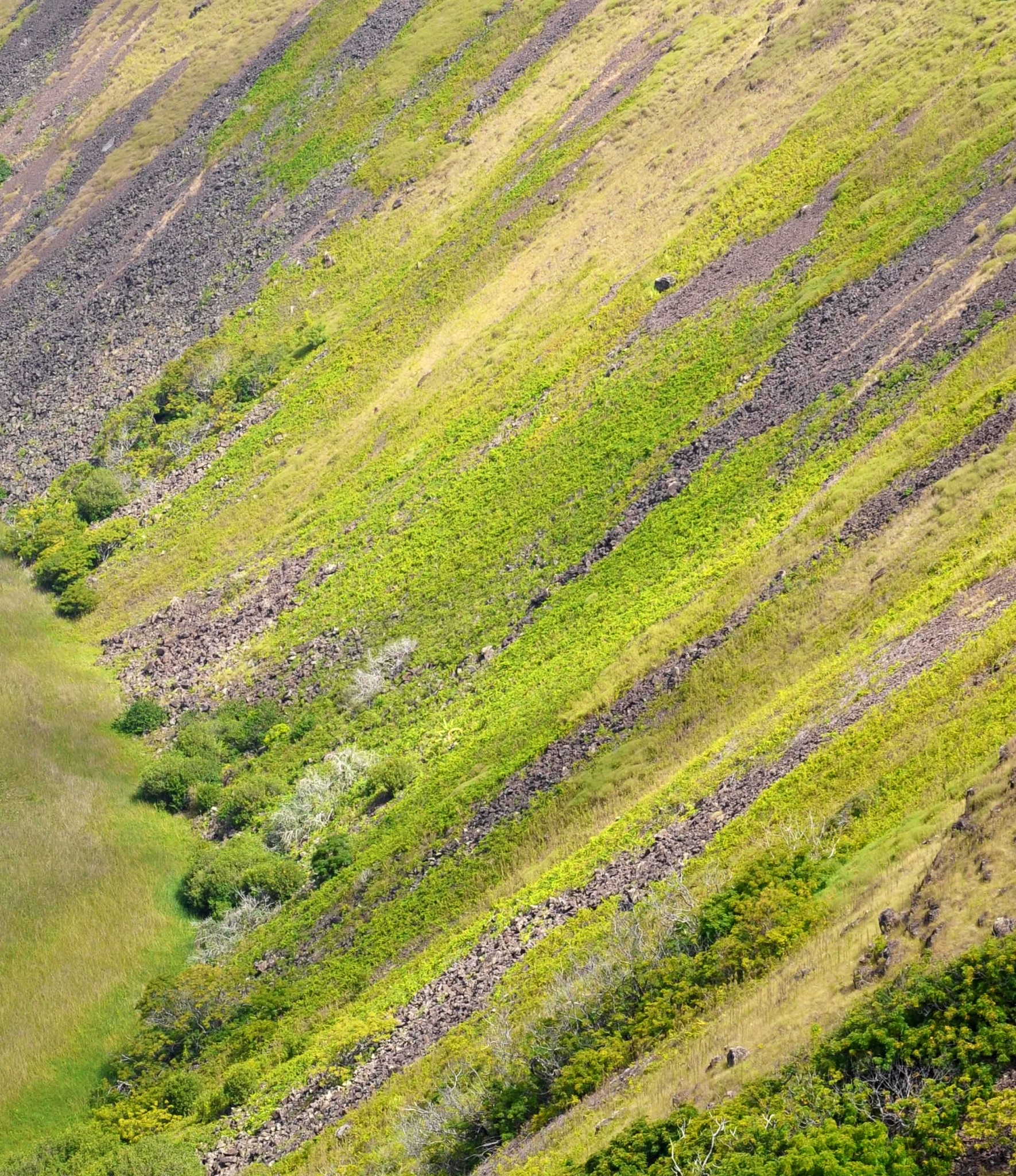
Vivid colours of the vegetation on the crater rim

Vivid colours of the vegetation on the crater rim

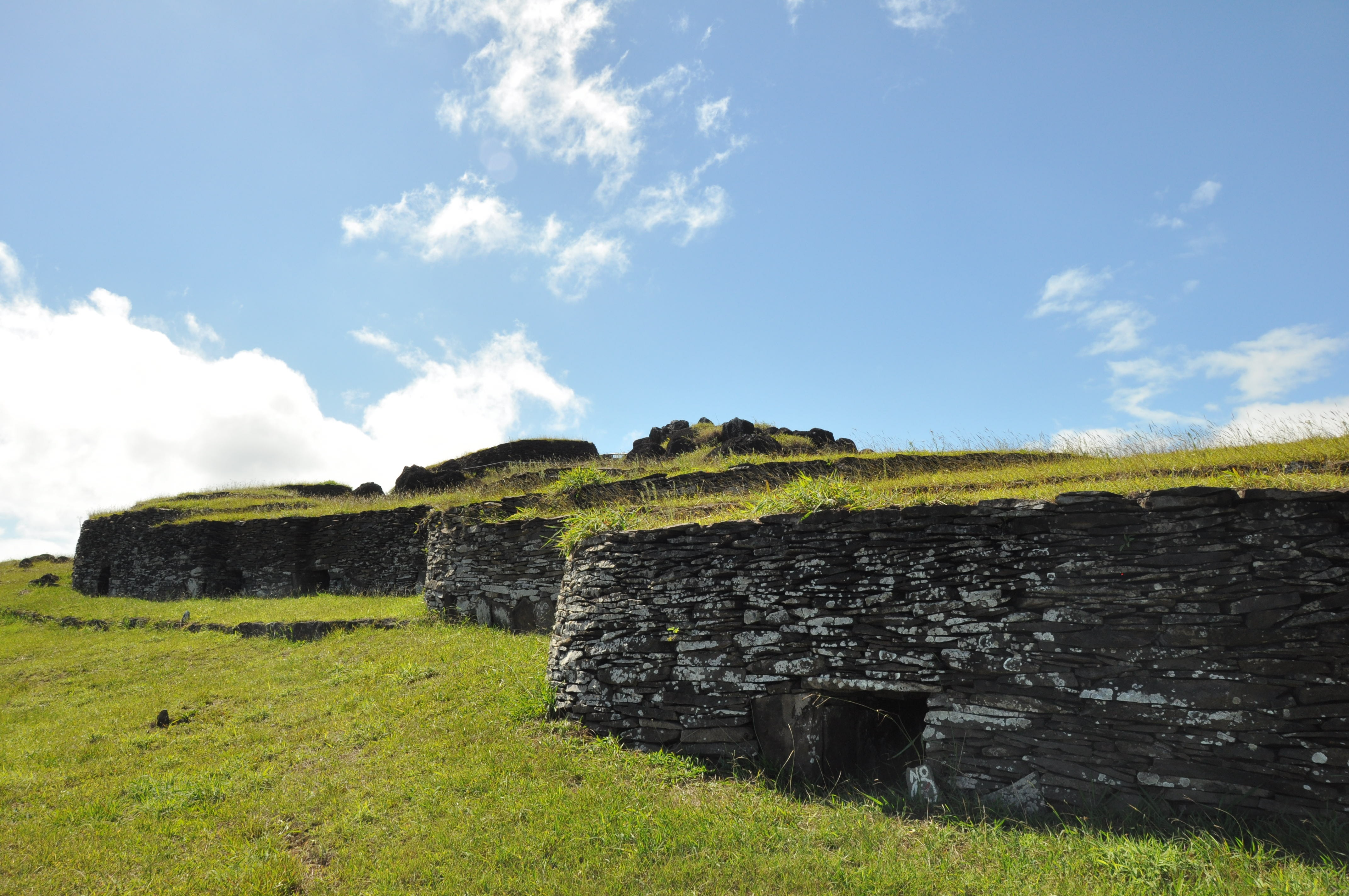
The unusual buildings at Orongo

The unusual buildings at Orongo

Hanga Roa's quirky cemetery

Hanga Roa’s quirky cemetery

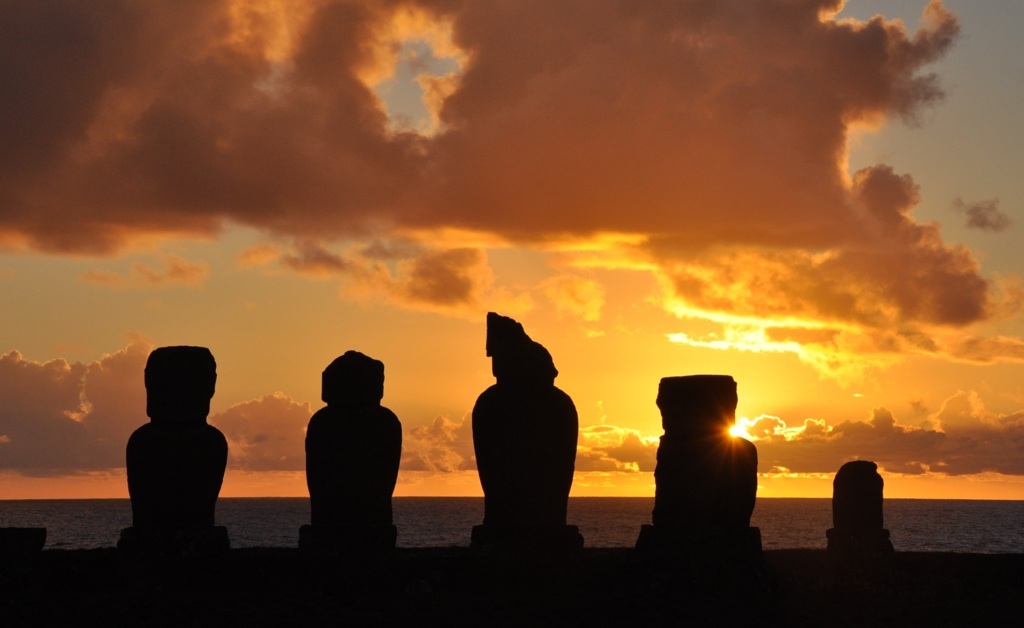
Sunset at Ahu Vai Uri, Tahai

Sunset at Ahu Vai Uri, Tahai

Rapa Nui flag - at present the Chilean government aren't collecting (aren't able to collect?) the National Park fee; the Rapanui people have roadblocks and are recording visitor details

Rapa Nui flag – at present the Chilean government aren’t collecting (aren’t able to collect?) the National Park fee; the Rapanui people have roadblocks and are recording visitor details

Boeing Dreamliner takes off to begin its five hour journey back to Santiago on the mainland

Boeing Dreamliner takes off to begin its five hour journey back to Santiago on the mainland

Looking back on my trip to Tanna, Vanuatu

The news that Cyclone Pam had ripped through the island nation of Vanuatu in the South Pacific broke last week and, some days later, relief and rescue teams reached the outlying island of Tanna where I spend a week in 2013. While loss of life hasn’t been as great as first feared, given that this was a Category 5 storm the islands have been hit hard. Knowing that Tanna Lodge, where I stayed, had its own generator, I sent an email, not knowing whether they’d receive it. Internet and phone connections are down across the outlying islands. Via a satellite phone, I heard on Sunday morning that the staff and buildings had miraculously survived unscathed, though the lush gardens have been devastated.

Tanna Lodge

Tanna Lodge

Tropical vegetation grows back quickly, and I would urge you to consider visiting to give the islanders the much needed income to help them get back on their feet. In the meantime, I wanted to share a story I wrote shortly after returning from Tanna. The island has many kastom villages, where residents live a traditional lifestyle and some even worship our very own Prince Philip…

The Road to Yakel

Ozzy Osbourne would have loved this, but I was not Ozzy.

Heading for Yakel and expecting Tanna’s regular mode of transport, the dusty but trusty pick-up, I was caught unawares by the invitation to jump on the back of a canary yellow quad bike. Ned, my driver and guide, instructed me to hold on tight. Mild panic set in. I’d happily travelled in all manner of rustic transport from tuk tuks to donkey carts but I’d always steered clear of quads out of a not so irrational fear that they’d be certain to topple over. What was I doing? I didn’t even have a helmet.

The quad bike reaches Yakel

The quad bike reaches Yakel

Ned set off at speed up the steep mountain track with the confidence of youth, a wide grin across his face and palm trees reflecting in his sunglasses. Behind him, my mouth clamped tightly into a nervous grimace. Try as I might my mind kept wandering to a story I’d read about Ozzy and his love of quad bikes despite almost dying after crashing one in the grounds of his home. Was he crazy? I wasn’t sure. He didn’t have to contend with a rutted dirt track liberally dusted with volcanic ash and loose gravel. Keep calm, I muttered, reminding myself there was a hospital on the other side of the island.

The ruts deepened into terrifyingly deep chasms and muddy crevasses. Ned, ever cheerful, pointed out the school to our right, funded by Australia. With all their mineral wealth couldn’t they have added to the budget and filled the holes in the road, I wondered? I gripped the handles more tightly than before. One false move and we’d overturn. Tense, I silently willed Ned onwards, wordlessly reminding him to keep left, no right, mind the tree roots, watch that squealing piglet! Up and up we climbed, pausing momentarily here and there to change into a lower gear when the gradient steepened even more.

Higher into the rainforest, the view below became more dramatic where Mt Yasur’s ancient lava flows had once oozed out to sea, but all I could think about was survival. Every approaching village inspired hope. Would this be Yakel? As Ned sped up, the quad bike emitting a throaty roar, we passed clusters of straw and thatch shacks. All looked promising. None, alas, were Yakel. As we bumped and thumped up the interminable track, I implored whatever local God might be listening to make Yakel the next settlement or at the very least, let me get off and walk.

Yakel kids playing in the tree

Yakel kids playing in the tree

My plea fell on deaf ears. Instead of our destination, the Gods presented us with a bridge made from crudely tied logs, gaps surely big enough to lodge a wheel and pitch us into the river below. I peered over. Weathered lava bombs ejected from the volcano sat where water should have been. We picked our way over a second and then a third bridge of the same quality. Concrete? Why had no one thought of concrete? I could feel the logs give slightly as young Ned inched across. Even he’d paused before tackling this hurdle, I noted. Would it be better or worse if I shut my eyes?

My thighs burned from the Herculean task of keeping my body wedged up against the back of the slippery seat. Knuckles rose milky white against my sunbrowned hands which had petrified round the handles I had been told to grip. Ned would have to prise me off this thing if we ever reached Yakel. It became a battle of mind over body, but it didn’t help that my mind was still flitting between various scenes of doom which all ended back at Lenakel hospital. Just as I was thinking I couldn’t take much more of this torture, the track widened into a nakamal, a large clearing under the shade of several banyan trees. A smiling man clad only in a namba emerged from the rainforest. The namba, or penis sheath, identified Yakel as a kastom village, where people lived by the simple ways of their ancestors and, in this particular case, had a special fondness for Prince Philip.

Welcome to Yakel, he said, uttering words that were as magical as the forest itself. The emotion I felt was relief rather than euphoria. I still had to go back; downhill was going to be even more terrifying than uphill. But as the other villagers slowly filtered in and began to dance to the sound of their own rhythmic chanting, it was all worth it.

Yakel villagers dance for their visitor

Yakel villagers dance for their visitor

Finally, a win against CityJet

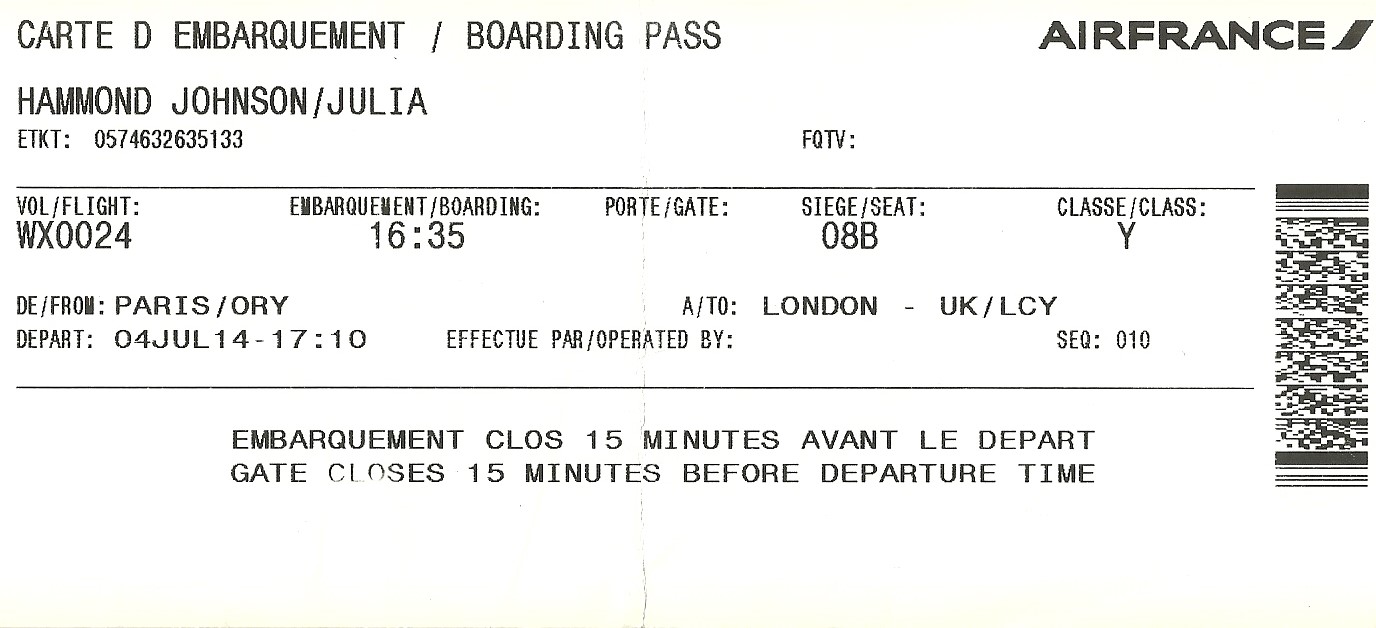
Last July, I flew in to Paris from Lima, Peru with Air France to connect with a CityJet flight back to London City Airport. I checked in as normal at Orly airport on 4 July and made my way airside.
No indication anything was wrong

At check-in there was no indication anything was wrong

Noting that the information board didn’t yet have a gate number, I took a seat and read a magazine. After a while, I thought it would be wise to check if the flight had been allocated a gate and was puzzled to see that fifteen minutes before the scheduled take-off slot, the flight had disappeared from the screens. There were no CityJet ground staff around and after asking a few airport employees, I decided to go back landside to find out what was going on.

At the check-in desk, I managed to find out that the flight had been cancelled “for technical reasons”. I was told that there was no way I’d be able to get back to London that evening as the Heathrow and City flights were all full. The CityJet employee was apologetic but when asked for a solution, gave a Gallic shrug and basically told me there was none. A couple of businessmen in the same predicament joined me and received the same treatment. Eventually, a supervisor was called who repeated that there was “no solution”. Eventually, after some heated debate, he acknowledged that it was CityJet’s responsibility to get us back to the UK and suggested that we go on standby for the following morning’s flight – but that it was possible we wouldn’t be able to travel as the flight wasn’t showing sufficient spaces.

To cut a long story short, the only way of a guaranteed return to London was to take the train to Gare du Nord and take Eurostar at our own expense – and under EU rules, claim compensation for the cancelled flight. To do this required the return of our checked luggage. At first, we were told it was waiting on the carousel, but it wasn’t and no member of ground staff knew where it was. Having booked a Eurostar ticket on the understanding I’d be able to leave the airport pretty much immediately, I then had a nail-biting wait for the luggage to be tracked down followed by a mad dash across Paris. I caught my Eurostar train with five minutes to spare.
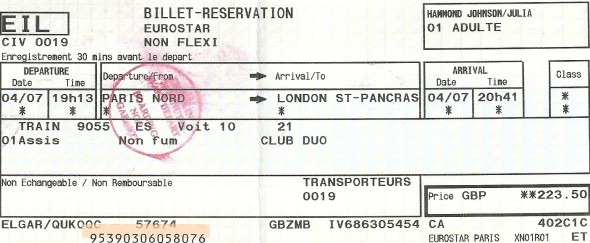
My Eurostar journey was a very pleasant experience

My Eurostar journey was a very pleasant experience

Back in the UK, I submitted my request for compensation. Having been given a slip of paper at Orly with a handwritten note reading “ticket of the flight can be refound (sic)” I didn’t envisage any issues, even if it had been incorrectly dated as 4 June. I filled in the relevant form from CityJet’s website, attached scans of the relevant receipts and tickets and waited for a response.
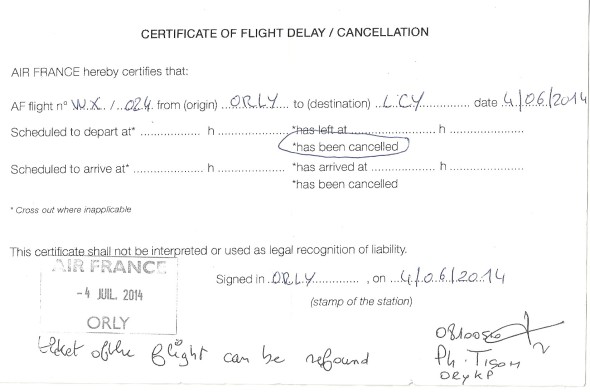
Airlines should give you a written notification of a flight cancellation

Airlines should give you a written notification of a flight cancellation

Nothing happened for several weeks, until I received this reply on 21 August:

Dear Mrs. Hammond Johnson,
Thank you for contacting CityJet.
We write in response to your email regarding your flight incident and we would like to apologise for the inconvenience caused on this occasion.
Having studied your file, we inform you that the incident was due to a technical issue. Such cases are considered as extraordinary events for which we cannot be held liable according to the European Regulation 261/2004.
We therefore regret to inform you that we cannot agree to your compensation request.
We hope your subsequent journeys with us will be to your full satisfaction.
Kind Regards,
Veronica
CityJet Customer Care

Not to be fobbed off, I visited the Which? consumer guide website, which suggested that there was a relevant court case appeal being heard regarding Jet2. Basically, if the appeal went in the customer’s favour rather than that of the airline, technical issues would no longer be classified as extraordinary and I would be entitled to 250 euros in compensation. I decided to wait it out. In November, I read online that the ruling was what I’d hoped for and so I used the Which? template to create the following letter:

24 November 2014
Dear Sir/Madam,
Reference: WX024
I am writing to you in connection with the above flight on which I was booked to travel on 4 July 2014.
The flight was supposed to depart from Paris Orly at 1710, but was cancelled fifteen minutes prior to take off.
When I tried to get compensation under the EU Denied Boarding Regulation 261/2004, I was told I was not eligible because the cancellation was caused by an extraordinary circumstance.
Technical problems are not extraordinary circumstances unless they are the type that you could not expect to encounter when operating a flight.
The decisions made in the Wallentin-Hermann vs. Alitalia case 2009 and Jet2 vs. Huzar case 2014 have confirmed that routine technical difficulties are not extraordinary circumstances. Although Jet2 appealed the ruling, the decision was upheld in November 2014.
I am entitled to the sum of 250 euros compensation and look forward to receiving the sterling equivalent within the next 14 days.
I attach a copy of the ticket and previous correspondence I have had with your airline,
Yours sincerely,
Julia Hammond Johnson
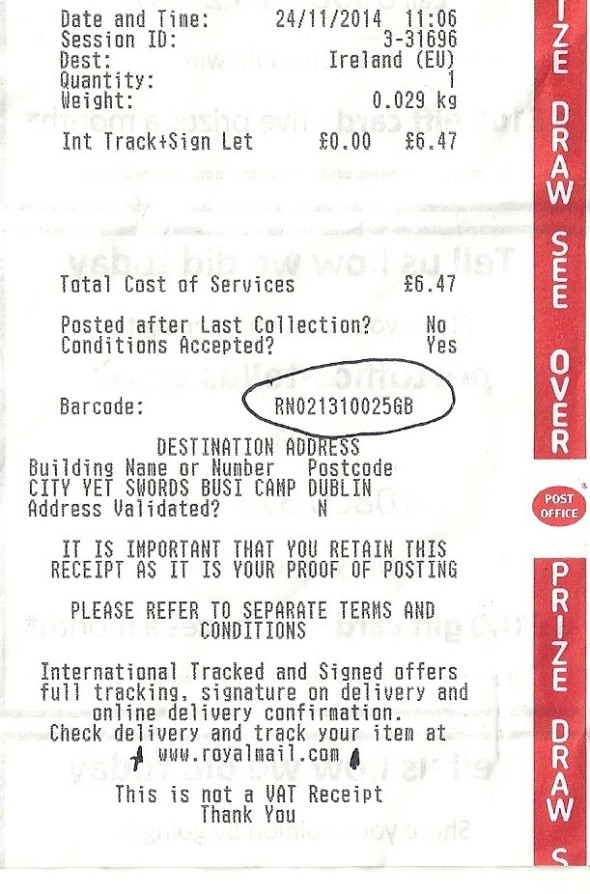
Ensure any written correspondence can be tracked

Ensure any written correspondence can be tracked

I posted it recorded delivery as suggested and waited. Weeks passed and I heard nothing. I sent an email to CityJet requesting an answer to my letter. The following day, I received this reply:

Dear Mrs. Hammond Johnson,
I write in response to your email from Saturday, January 31, 2015.
We take into consideration all the emails sent to you previously from our colleague Veronica on the 21 August 2015 regarding your request for the compensation of your flight cancellation.
At that time as per the European Regualtions EC261/2004 technical issue was classified as Extraordinary events which was not eligible for any compensation. Your compensation request was denied in August before the decision regarding technical issues was amended. Therefore your case was close in August 2014 and the decision was made in November 2014.Taking into consideration the European Regulations at that time you are not entitle to any compensation.
On this occasion we must deny your request for compensation.
Yours sincerely,
Hunsini
CityJet Customer Care

Unimpressed by CityJet’s attempts to wriggle out of their legal obligations, I sent this terse reply:

As you are well aware, the ruling in November applies to flights going back up to six years. You are therefore not legally entitled to deny my request for compensation under British and EU law. I am quite prepared to take this to court and to the media, neither of which would do anything good for CityJet’s image.
Please reconsider the request. Surely 250 euros is better than the negative publicity which would be generated. I have no intention of dropping this matter.
Julia Hammond Johnson

It did the trick. I received this email response almost immediately:

Dear Mrs. HAMMOND JOHNSON,
I write in response to your email from Tuesday, February 03, 2015 whereby you explain you have experienced a flight cancellation.
We are pleased to inform you that we agree to offer you the full compensation amount of Eur 250.00.
In order to answer to your request, we would be grateful if you could send us the following documents by responsding to this email
•Complete bank details including the IBAN (International Bank Account Number),
•Swift code / BIC,
•the full name of the Account holder,
•bank name including address
We are looking forward to read from you.
Yours sincerely,
Kaminee
CityJet Customer Care

It made me chuckle – the first line of Kaminee’s response giving the impression that no previous correspondence had taken place. I did as I was asked and was promised compensation within 21 working days. I am pleased to report that the money was credited to my account on 4 March, eight months to the day after the flight cancellation. Other than the fact that the value of the euro has taken a nosedive against the pound during that time, I am happy with the result. Together with the refund I received last July from Opodo (with whom I booked) for the unused flight leg, the compensation I received covered the cost of my train journey back to London.

What have I learnt from this?

Firstly, know your rights and make sure any correspondence you send quotes the relevant court rulings. Secondly, keep all your receipts and paperwork, taking scans to send if your complaint is made via email. Thirdly, where you have to use the regular mail, ensure you use recorded delivery so that you can prove your letter was received and on what date. Finally, I’ve decided that I won’t be travelling with CityJet again – any airline can be forced to cancel a flight, but CityJet’s deliberate attempts to avoid paying out compensation and its lack of integrity as a company mean that I shall choose to take my business elsewhere in future.

Throwback Thursday: the old man and his cigarettes

Before the present conflict kicked off, I visited Syria, spending a few enjoyable days exploring Damascus, Hama and Aleppo before crossing the border into Jordan. It saddens me to see what has happened to this once beautiful country, but I have fond memories of this trip, and especially when I think back to my journey to Jordan’s capital city, Amman…

Straight Street, Damascus

Straight Street, Damascus

The taxi driver and his assistant scratched their heads as they unpacked the contents of the boot for the third time. My guidebook had said that service taxis only left when full but this was really stretching the concept. My small suitcase was not the problem. My three travelling companions, a Jordanian man and his two daughters, had with them ten or so large bags of assorted shapes, with most of their purchases loosely tied in black plastic sacks. The souks of Damascus were considerably cheaper than those of Amman and the family had taken full advantage.

At 6am the bus station had been almost deserted and my driver and his hustler had decided to try their luck on the main highway. And so it was that we found ourselves by the side of the road surrounded by packages. As the family’s taxi reversed towards us down the main road and popped open its boot, it was clear this was not going to be a fast transfer. Finally, the sixth, or so, attempt at loading the boot was successful – only a handful of bags on laps – and we were on our way. I considered myself lucky to have the front seat and only a small backpack; I had more space than anyone. The hustler balanced precariously the front driver’s seat as we careered along the road, leaning out of the door so as not to interfere with driver’s control of the pedals and trying to keep the door as close to its frame as was possible. Somehow, he was still in one piece when we dropped him off and set off for the border.

Our driver was in a tremendous hurry. It seemed a matter of personal pride to overtake every vehicle on the road, creating a third lane if need be to ensure that the brake wasn’t required. At breakneck speed, we hurtled through the Damascene suburbs and out onto the main road, scattering trucks, vans and cars by the wayside as we passed. No horn was necessary, such was his unwavering determination to push his way through. Each successful manoeuvre spurred him on more. And then, cornering on two wheels (or so it felt), we pulled in to a bunch of roadside shops and parked up with a jolt out front. For twenty minutes negotiations continued and finally our driver emerged with a box of perfumed tissues, large size and pink, and a two litre bottle of water. The almost full box of similarly fragranced yet blue tissues, and an untouched bottle of water in the passenger footwell were clearly insufficient for his needs.

As abruptly as we had pulled in, we were back on the road and, with the impatience of youth, soon accelerated back up to full speed. Fidgeting between lanes, and often straddling them as was the custom, he continued with his quest to overtake every other vehicle in Syria. Reaching a small town twenty kilometres from the border, we parked up with a small group of other service taxis and loaded the three Jordanians and their considerable luggage into one of them. Several hundred Syrian pound notes were handed over to their new driver. Even without me, it was a squeeze, and the back seat was still covered in black sacks next to the two young women. Taking the pink tissues, but neither bottle of water, the racing driver got out. I was introduced to his “father” who was to take me across the border. A leathery, slim fellow with brown jacket and a worried frown permanently on his face, he was a more considerate road user than his predecessor, though no less fast. After stopping briefly to collect the car’s paperwork, we were on our way.

Some reports had suggested that the border formalities could take up to five hours, but at 8.30am the Nasib border was quiet. The Syrian border officials were courteous and thorough, and, aside from a surprise 500 SYP departure tax not mentioned in my guidebook, I crossed into no man’s land without incident. When I emerged from the immigration building, however, my driver was nowhere in sight. I waited for some time in the sunshine until finally he emerged from the direction of the duty free shop clutching a large bag of cigarettes. Leaving one pack of 200 smokes in the bag, he stripped off the cellophane wrapping of the other two and threw it, together with the cardboard cases onto the floor. Every compartment of the taxi was used to store the now loose packets, two in the ashtray, six so perfectly in the armrest it could have been designed for the purpose and three more under the passenger sun visor. What wouldn’t fit were carefully placed, slowly and very deliberately, in his many pockets. Finally, we were ready to set off. Around the corner, a couple of dollars were palmed to an official, a friend, and after a brief exchange of pleasantries, we entered the Jordanian zone.

Each car arriving at the Jabir crossing is searched meticulously, first passing over the top of an official in a pit and then, boot and bonnet open, undergoing a thorough investigation of the rest of the car. My suitcase was opened and questions asked about a small packet of paracetamol tablets. Inexplicably, the driver’s cache of cigarettes remained intact. I didn’t see a packet exchange hands. Money changed and visa purchased, we entered Jordan.

Before dropping me in the Abdali district, we had one last stop to make. Calling in on his customer by a parade of shops, the cigarettes were painstakingly retrieved from each of their hiding places and the carrier bag eventually handed over in exchange for 24 JD. One very happy old man turned his taxi around and headed back to the border.