juliamhammond

Latest

How to visit The Seychelles on a budget

The Indian Ocean island nation of the Seychelles isn’t likely to be your first thought when planning a budget holiday but with beaches as photogenic as they come, it’s been on my wish list for a very long time.

1914566_10207771872002522_467734680855073929_n

Photoshop not required!

With resort prices coming in at around £1500 for a week-long break, and some of the most luxurious offerings well over that for just a single night, you could be forgiven for giving up and going elsewhere.  Don’t.  Although it’s never going to be what you’d call a cheap holiday, here’s how to make those beautiful beaches a more affordable reality.
DSC_0939

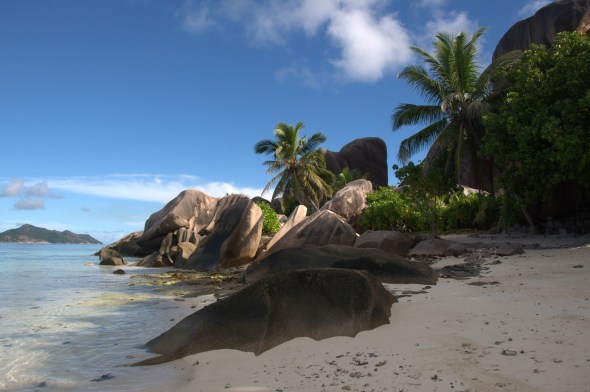
Anse Source d’Argent

Choose your flights carefully

I flew indirect via Colombo, Sri Lanka, and with the use of a few Nectar points, snagged a fare of under £500.  Other routes to explore include Ethiopian Airlines via Addis Ababa and Kenya Airways via Nairobi.  Emirates and Etihad also serve The Seychelles.

Travel in the shoulder seasons

Peak time means peak prices.  Off season brings the rain and there’s nothing worse than a beach destination in wet weather.  I travelled in March.  It was hot and humid but the sun was shining.  April’s also good as is our autumn.  Avoid Easter and Christmas when prices soar.
DSC_0587-1

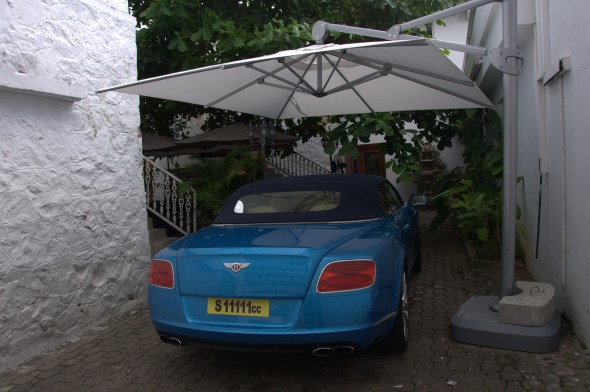
Locally registered car parked at the ice cream parlour!

Unpackage your accommodation

The all-inclusive resorts offer a lot, but you pay handsomely for the privilege.  Instead, choose a home stay or a self-catering option.  On Mahe, I needed an overnight stopover before catching a ferry to the islands and came across Chez Lorna, just north of the capital in De Quincey Village.  The owner was exceptionally welcoming and my en-suite air conditioned room with shared balcony cost me just £30 for the night.

DSC_0346

View across Victoria from Chez Lorna

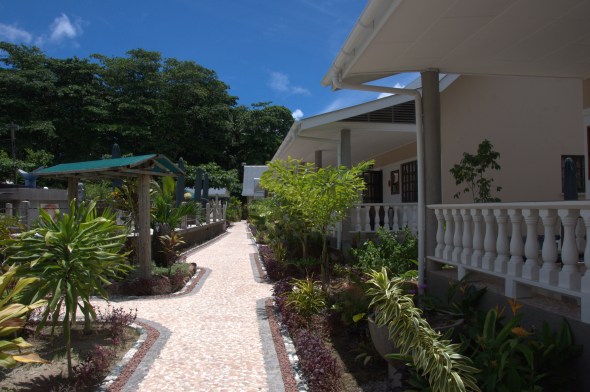
On La Digue, I upped the budget a bit and spent about £80 a night on a cottage at Cabanes des Anges in within an easy stroll of the jetty in La Passe.  For that I had air conditioning, my own kitchen, living room with satellite TV – and the place also had a pool.  Considering my accommodation slept two, that’s extraordinary value at £40pppn.  Best of all, the island’s main supermarket, Gregoires, was just a minute’s walk away making self-catering an attractive option.
DSC_0744

Cabanes des Anges

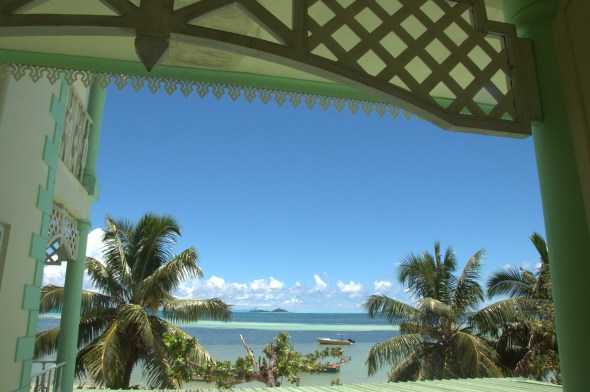
If you’re looking for a traditional hotel set up, then Palm Beach at Grande Anse on Praslin might fit the bill – right on the beach with a decent pool and sea views from superior rooms.  The price was about £80 per night for a double room.
DSC_0370

Palm Beach on Praslin – ask for a sea view

Eat local

Eating out isn’t cheap in The Seychelles but it is possible to save money by eating where the locals go or by self-catering.  There are plenty of pizzerias if you’re looking to eat out but have a tight budget.  On La Digue, most places charge extra for WiFi but Fish Trap by the jetty offers a free connection to its customers.  You can eat for about £10-12 but save money on surfing while you check your emails.  It also has a beachfront seating area and the sunset cocktails are worth pushing the boat out.

DSC_0748

Use local transport

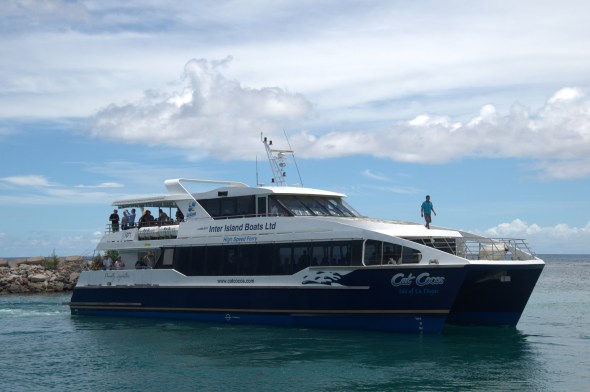
Getting between the islands is cheapest on the ferries.  Expect to pay about £30-35 depending on the exchange rate for an economy seat; the journey takes about an hour making it a convenient choice.  The fifteen minute hop between Praslin and La Digue is cheaper.
DSC_0729

The boat linking La Digue and Praslin

On Mahe and Praslin, the buses are easy to use and cost a flat fare of 5 rupees (about 25p) however far you go.  You’ll need small change as notes greater than 25 rupees aren’t accepted.  Choose accommodation on the bus route and there’s no need to hire a car to get around.  The two options listed above are close to the bus stop.  Note that you’ll need to hire a taxi if you have luggage, though, as the buses won’t let you on.

DSC_0388 The best bargain in the country

On La Digue, it’s easy (and free of course) to get around on foot, but you can also find bicycle hire for around 100 rupees a day (about £5) which makes it straightforward to explore the rest of the island.  I hired mine through the Cabanes des Anges reception desk but there are plenty of operators in La Passe.

So there you have it: proof that paradise doesn’t have to be prohibitively expensive.
On two wheels around La Digue

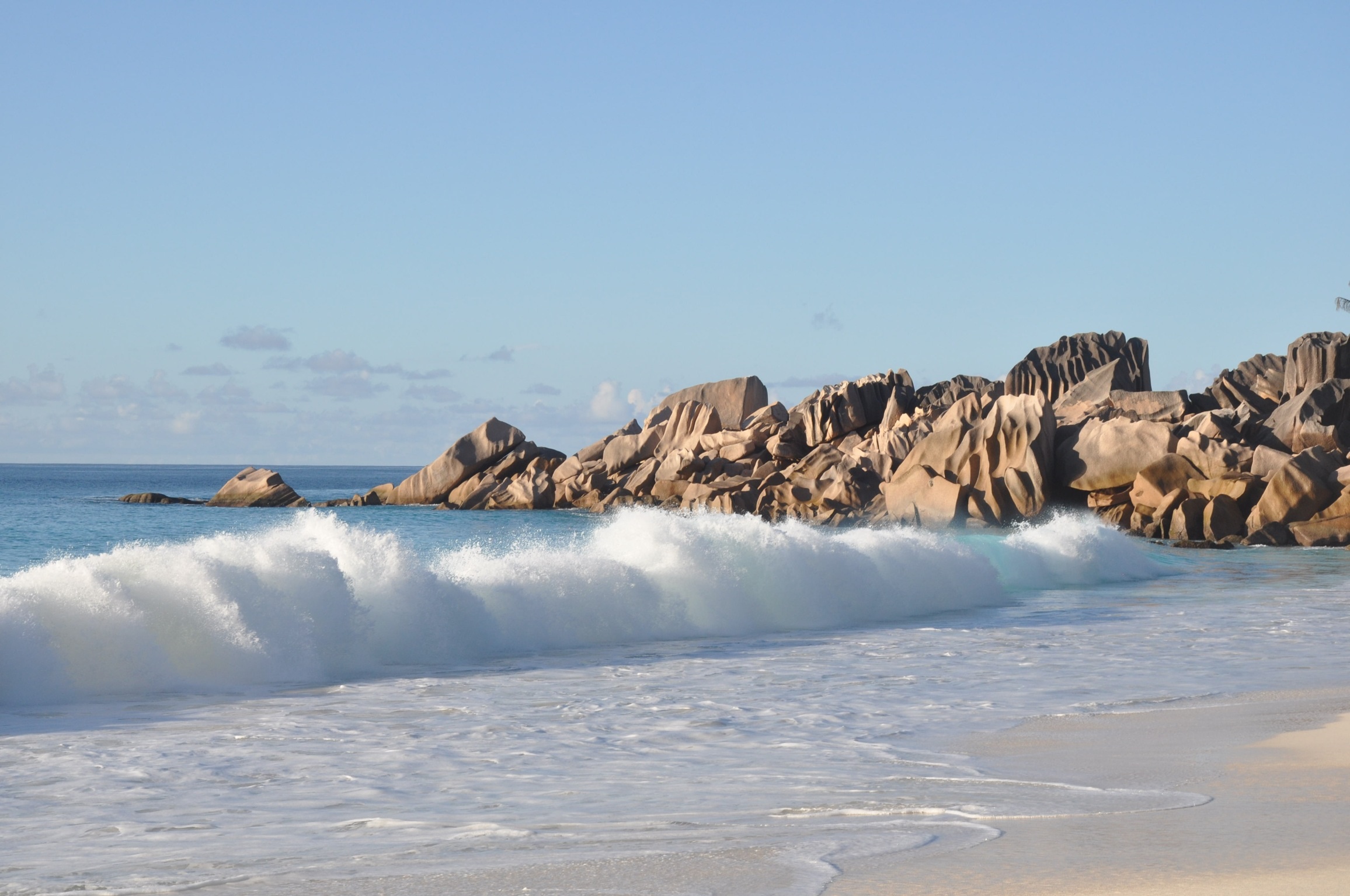
Grande Anse soon after dawn

Grande Anse soon after dawn

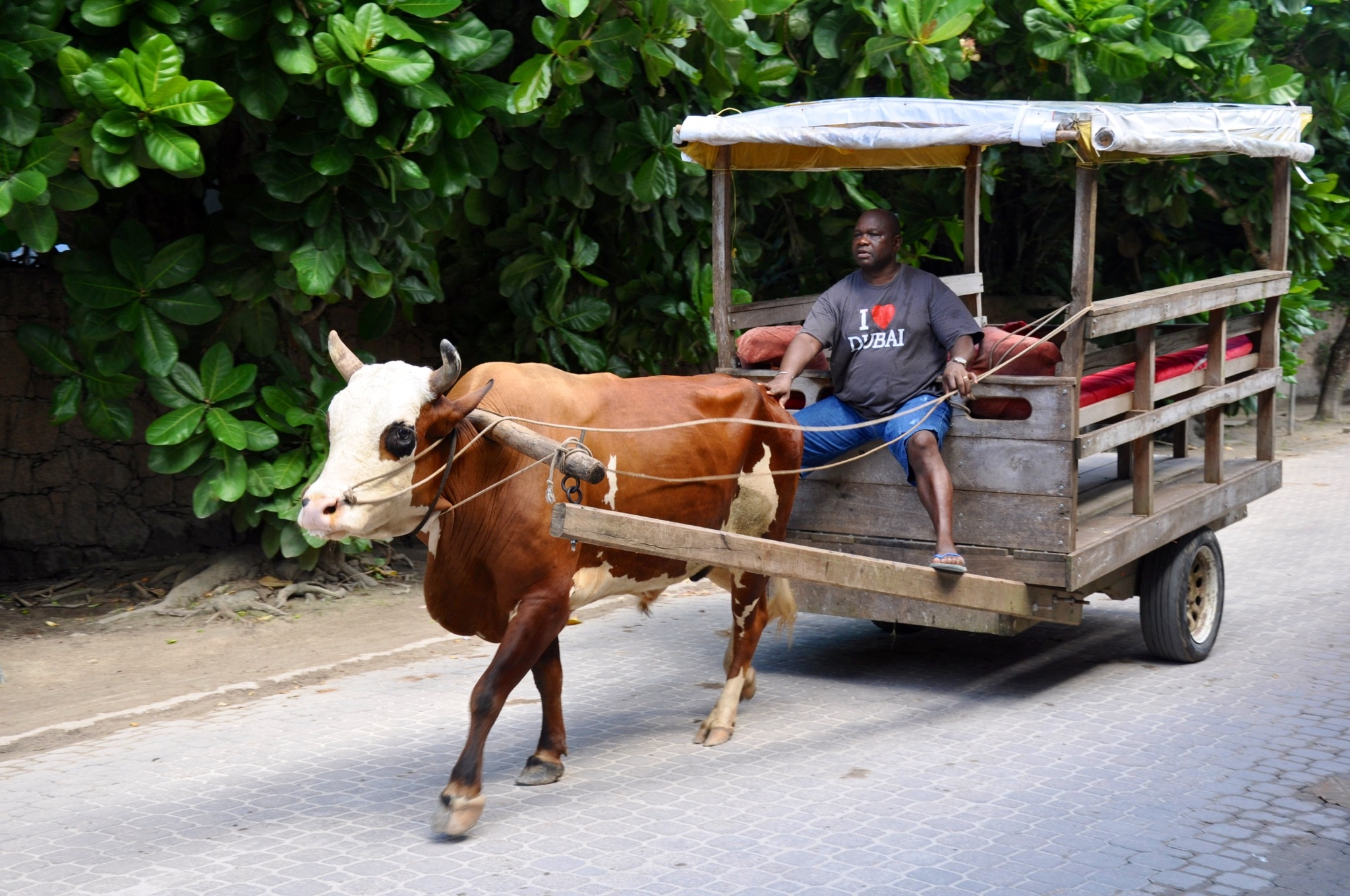
The biggest threat to my safety in La Digue, without a doubt, was that posed by novice cyclists. Despite never having ridden on two wheels before, or at the very least since childhood, these tourists didn’t hesitate to rent bikes. After all, cycling was the only practical way to get about on this almost car-less island. The ox carts of yesteryear had pretty much been replaced by open-sided trucks, the hotel golf buggies seemed to vanish when the inter-island ferry sailed and hot footing it on two legs took on a whole new meaning in the sweltering temperatures and almost unbearable humidity.

Ox cart - a rare sight

Ox cart – a rare sight

So bike it was. Continental Europeans, of whom there were plenty, veered to the right as was their custom, but the Seychellois follow British convention and there was much gesticulation, albeit of a tropically languid kind, to force them to ride on the left. Weaving erratically across the street, they cut up pedestrians and wobbled perilously close to roadside ditches causing the South Asian migrant workers to rattle their tiffin boxes in protest. A Gallic shrug indicated that they didn’t really care.

"Traffic jam" in La Passé

“Traffic jam” in La Passe

The local youth weren’t much better when it came to road sense. By day they rode three abreast to the pumping sounds of the beat boxes on their shoulders and by night they rode hell for leather with no lights. More than once I had to swerve onto the sandy verge to avert an accident.

And then there was the animal traffic. A few stray dogs roamed the island, passing their time comatose under a shady tree until a cyclist took their fancy and a chase ensued. Soon, though, they’d tire. The threat was worst in the early morning before it got too hot. I learnt the hard way, ambushed on my way to the Union Estate copra plantation with a dog snapping at each ankle and lucky to escape with my trouser legs intact. Fortunately a lump of seaweed on the nearby beach provided a welcome diversion. They were soon flinging it around and pouncing on it, good practice for their regular habit of crab chasing.

Beach dogs giving me a special welcome on Anse Union

The beach dogs who gave me a special welcome on the beach at L’Union Estate

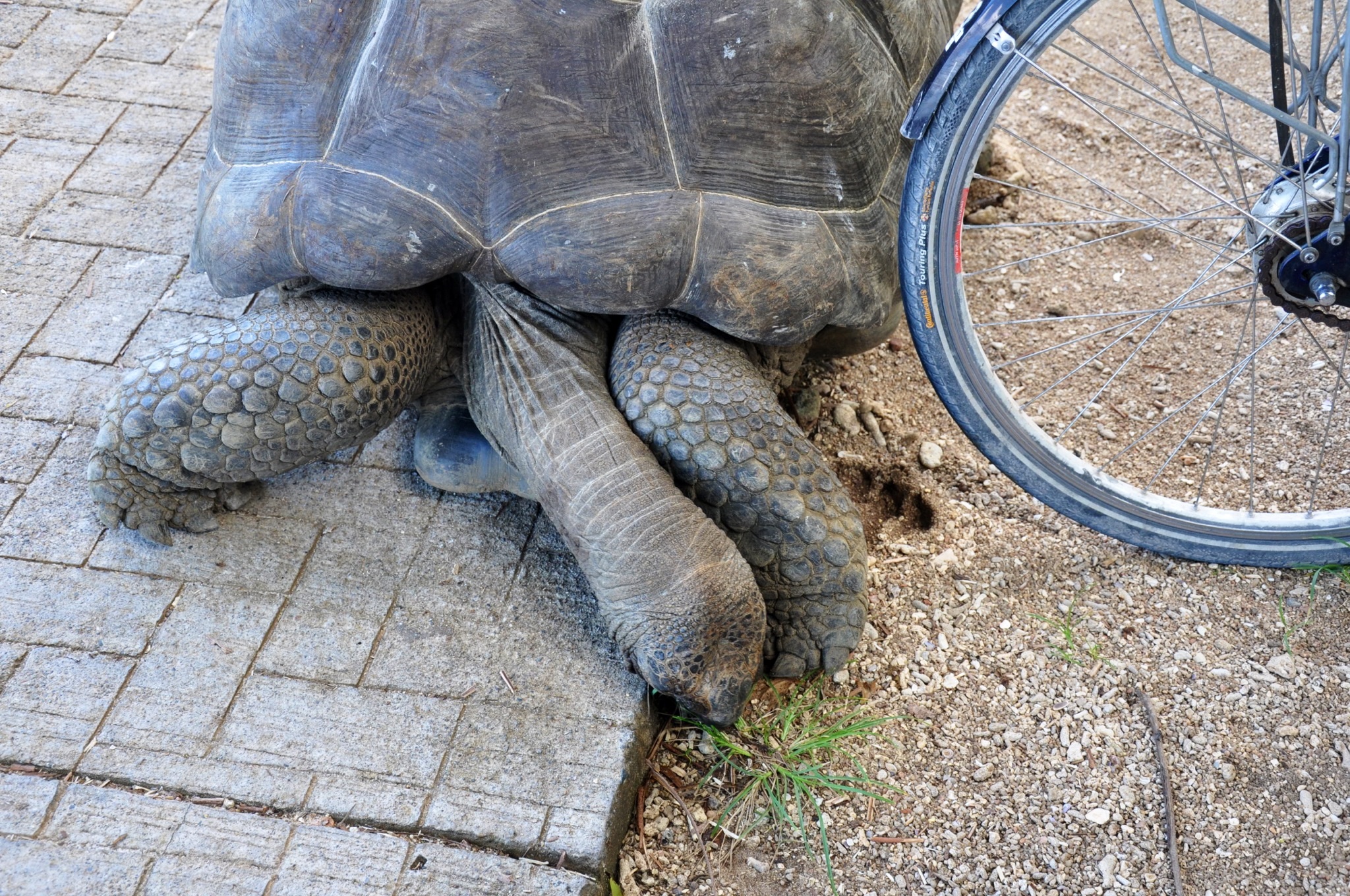
A giant tortoise taking an amble along the road up at Anse Banane was less aggressive, though the crowd of tourists who had stopped to take his picture were making a pretty effective road block. Eventually they, and their target, had moved on. The tortoise, predictably, hadn’t got very far. The effort of chomping on some couch grass had proved too much and it had fallen still alongside someone’s rear tyre. Fortunately mine was parked in the next rack; when I retraced my steps an hour later the creature still hadn’t moved, though to be fair neither had the bike’s owner. It was all too easy for one fresh juice to turn into two or more.

Giant tortoise - an usual road hazard

Giant tortoise – an usual road hazard

Despite these hazards, and aside from getting to grips with derailing gears – my fault for back pedalling – cycling around La Digue’s coast road was a pleasure. Locals shouted words of encouragement on the inclines. As I freewheeled on the downhill stretches, I felt the breeze snatch my wet fringe from my forehead. It was worth every last drop of sweat expelled on the way up. More than once I’d lost momentum distracted by the many scenic bays that dotted the coast. It was exhilarating, and if I’m honest, not that challenging to anyone with reasonable physical fitness. Not for the first time I cursed my preference for spending my evenings snacking in front of the TV rather than heading out to the gym.

Anse Source d'Argent

Anse Source d’Argent

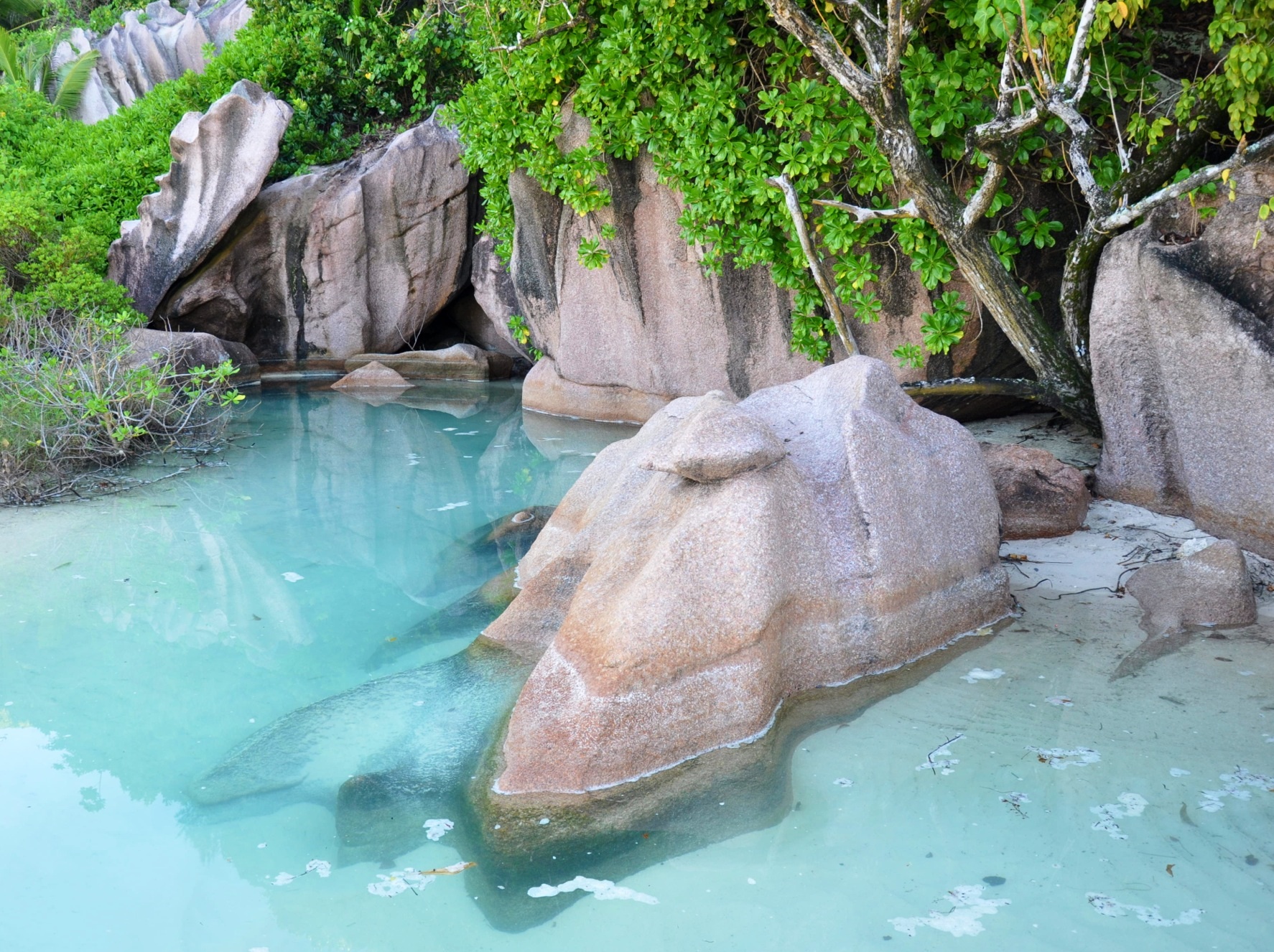
But the burn that nagged at my thighs was worth it. Huge chunks of granite, sculpted by persistent waves, trapped the ivory sand in gentle crescents. Coconut palms arched over takamaka and casuarina trees providing a little shade for those tempted to rest. The warm clear water looked inviting, but dangerous rips gave it a potentially murderous beauty. An engaging German tourist stressing about a shark attack was quickly shut down by the fruit seller. That incident had been two years ago and in any case, on Praslin, she said. Not here. Nothing like that would happen here.

The fruit seller at Anse Severe

The fruit seller at Anse Severe

But which beach to choose? That was easy. To figure out which was the best, all you had to do was look for the one with the greatest number of bicycles propped by the roadside.

Petite Anse - ironically reached by a hike not a bike

Petite Anse – ironically reached by a hike not a bike

A beginner’s guide to Sri Lankan railways

One of the unquestionable highlights of touring Sri Lanka is a journey by rail. The network is extensive and links many of the country’s must-see destinations. There are many tour companies who offer itineraries based around train travel, but these can be expensive and prescriptive. If you prefer to go it alone, here’s my guide to getting around by train.

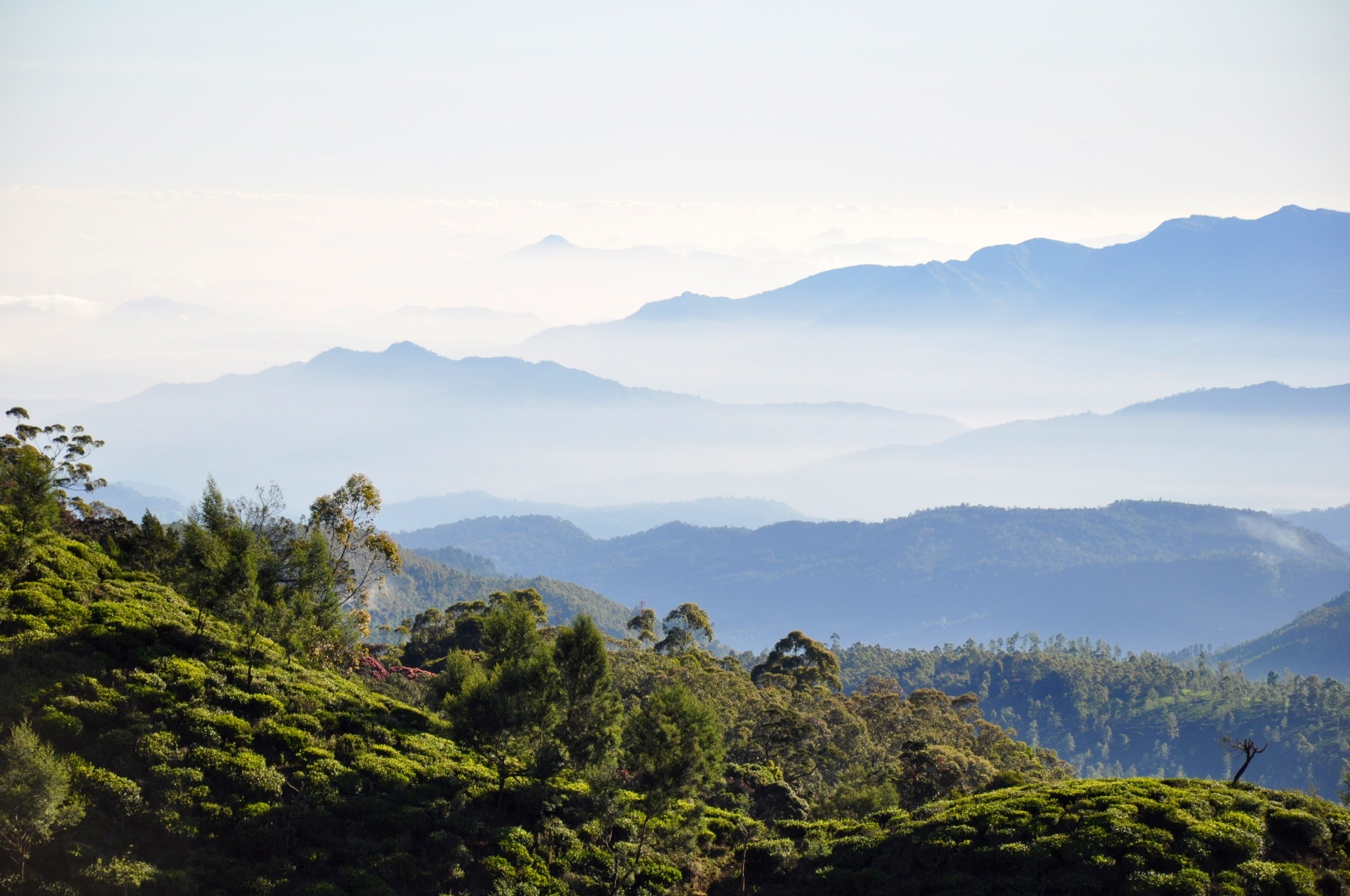
Sri Lanka's hill country is easily explored by train

Sri Lanka’s hill country is easily explored by train

Planning is everything

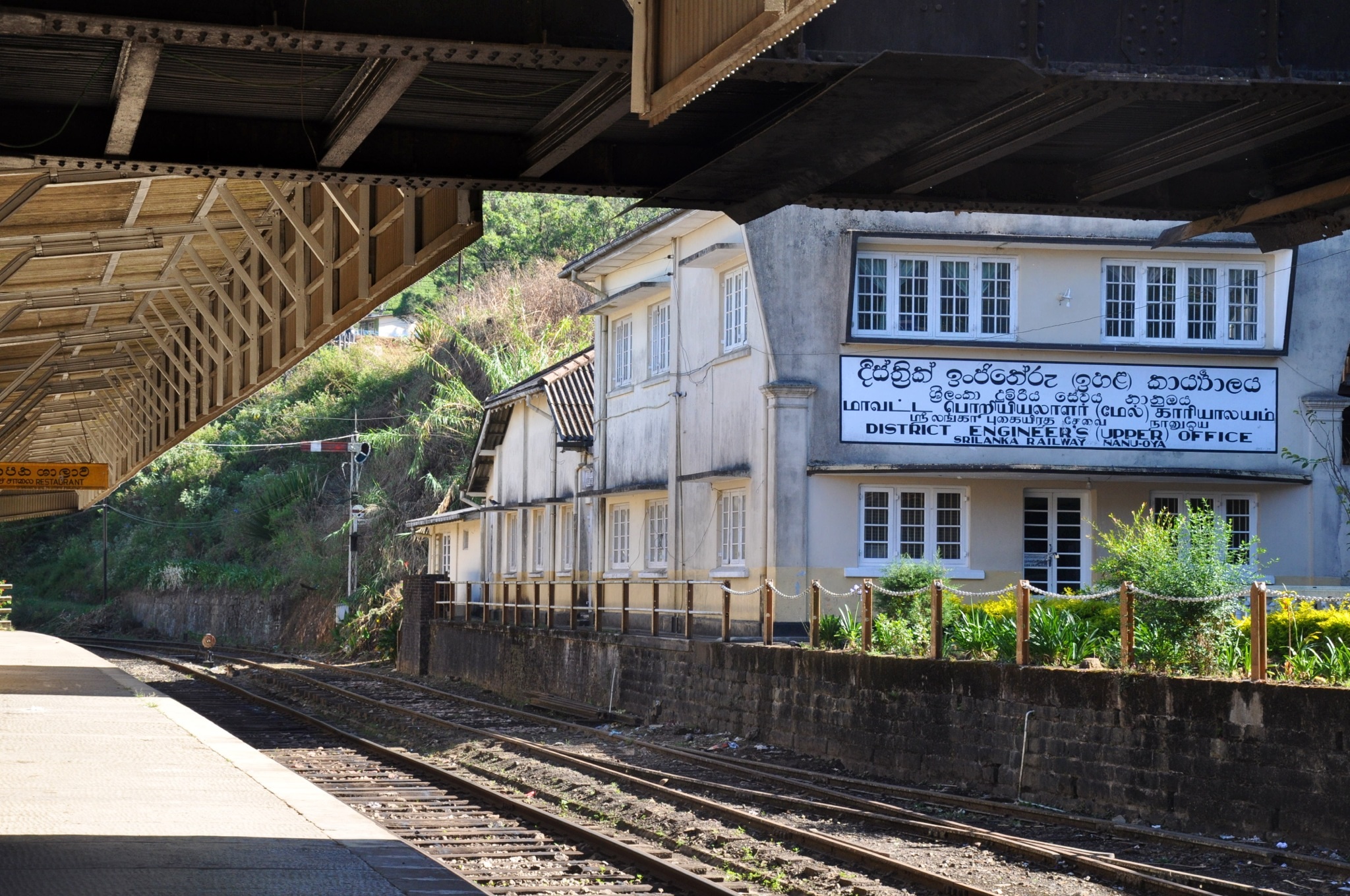
Although trains link many of the country’s cities and towns, there are gaps. I planned a circular route beginning at Colombo Fort station, heading inland to Kandy, then up into the highlands to Nanu Oya (for Nuwara Eliya) and then on to Ella. Separately, I rode the stretch of track from Weligama to Galle from where you can catch a train back up to Colombo.

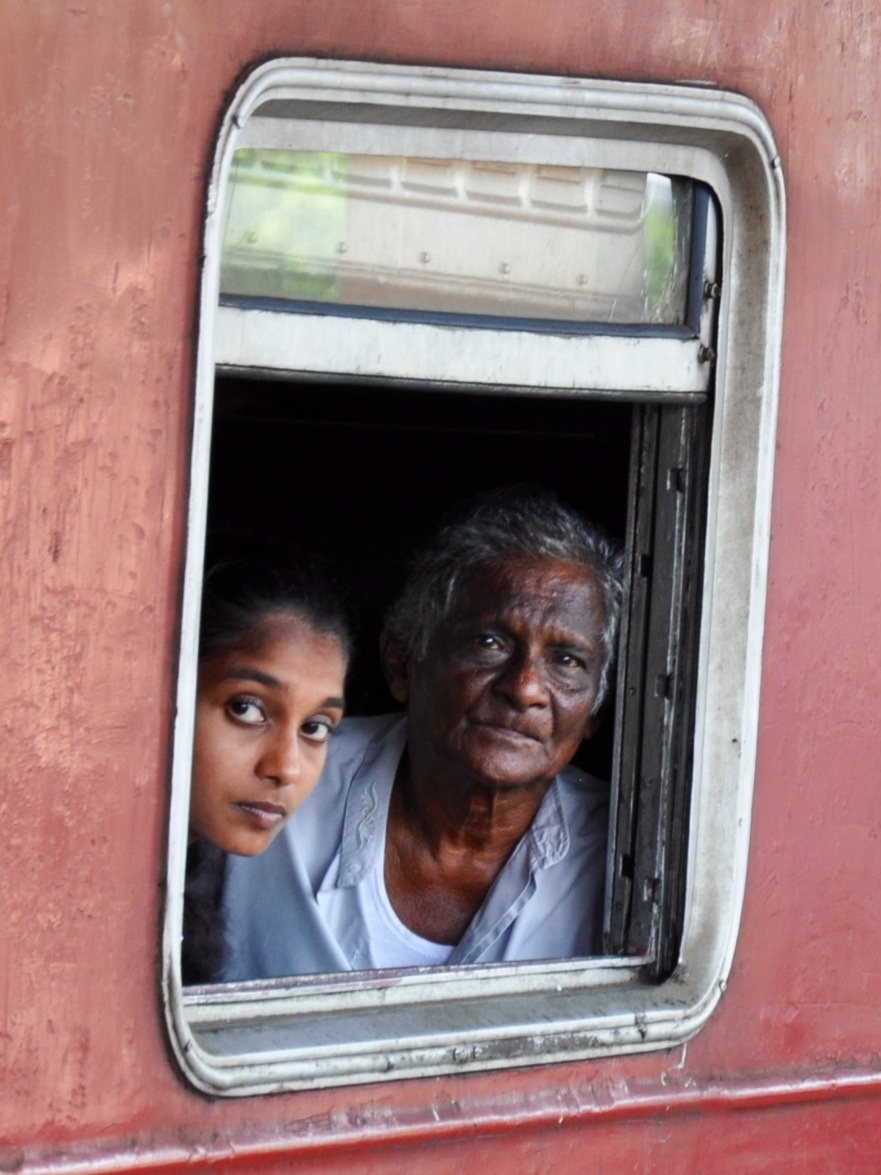
Some of the faces I saw while waiting to board

Some of the faces I saw while waiting to board

Arranging a driver for the gaps

To visit the lofty palace at Sigiriya, I hired a car and driver for the day, stopping off on the way back at an elephant sanctuary. There’s no rail link between Ella and the south coast either, so again, I hired a car and driver. This time I stopped off half way to take an elephant safari at Uda Walawe. Although I could have picked up a train at Matara, I chose to book the driver to Galle so I wouldn’t have to clock watch all day. Drivers were arranged as I went along, either through the hotel or via a taxi driver at a station. Costs aren’t excessive by UK standards. To travel from Galle to the airport via the fast expressway costs around 11000 rupees including tolls (about £55).

Seeing the elephants at Uda Walawe requires a car as the rail network doesn't extend to that part of the country

Seeing the elephants at Uda Walawe requires a car as the rail network doesn’t extend to that part of the country

To book or not to book?

Some trains can be reserved online and you may wish to book these trains for the beginning and end of your trip if you want to be sure of making connections. Depending on how long you allow at each stop, you should be fine to just purchase your other tickets as you go along, unless you’re travelling in a large group or at a holiday time.

Tickets are easily purchased on the way; my advice is to call in at the station a few days ahead of travel

Tickets are easily purchased on the way; my advice is to call in at the station a few days ahead of travel

Where did I get my tickets?

I caught the Rajhadani Express from Colombo Fort to Kandy; a reserved seat in air-conditioned first class cost 1100 rupees (less than £6). It was straightforward to book online. Seats become available two weeks prior to departure and you just need to make a note of your reservation number. On arrival at Colombo airport, as you exit into the tour and taxi desk hall, you’ll see a Mobitel counter right by the door. They will print your ticket for you on production of your reservation number and passport. Alternatively, you can do this when you get to the station.

The Rajhadani Express

The Rajhadani Express

It wasn’t what you’d call luxury by European standards but the fat leather seats and padded arm rests were comfortable. The train lurches around a lot so whichever carriage you opt for it’s not going to be a relaxing ride, however. Expo Rail bookings work in a similar way to the Rajhadani Express with their own dedicated website. However, departures with these two companies are limited and may not fit in with your plans. You can check the online schedule on the Sri Lanka Railways website for a full list of trains operating on the days you wish to travel.

Booking regular trains

Whether or not you can book other trains in advance depends on whether the train has any reserved seat carriages or not. Following up on a recommendation from the Man in Seat 61’s excellent website, I booked the Kandy to Nanu Oya leg with Visit Sri Lanka Tours, a UK based travel agent. They were efficient and most importantly, the reservation number they sent me was recognised at Kandy station when I went to collect the ticket. Obviously they charge a premium for this service, but their rates were not exorbitant.

If a web connection eludes you, use the station timetables

If a web connection eludes you, use the station timetables

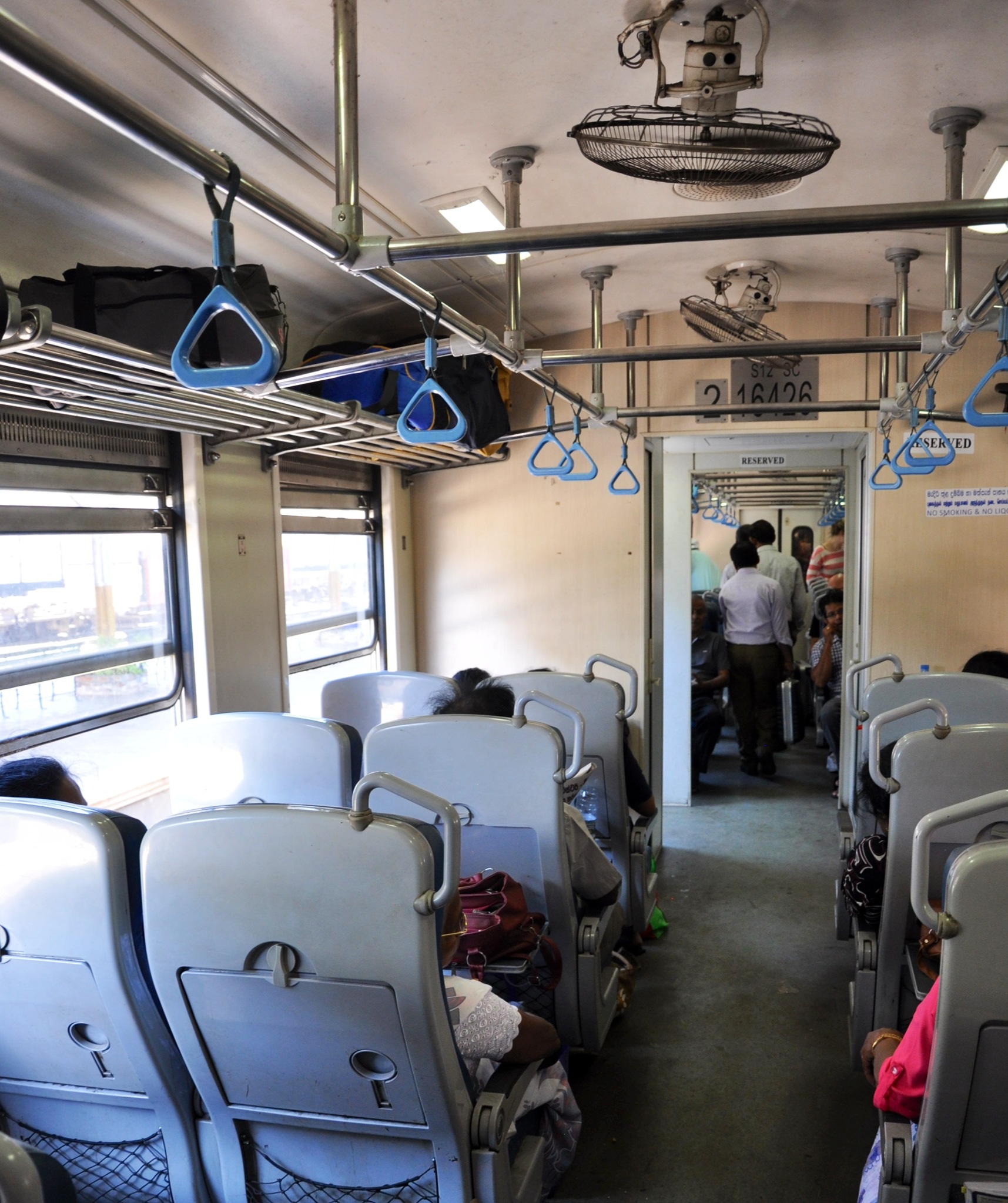
Reserved carriages can be first, second or third class. First class isn’t necessarily air-conditioned but can be. Don’t expect luxury; it’s more about space than quality. Second class usually has four seats per row, overhead fans and windows that fully open, while third class is more crowded with six seats per row.

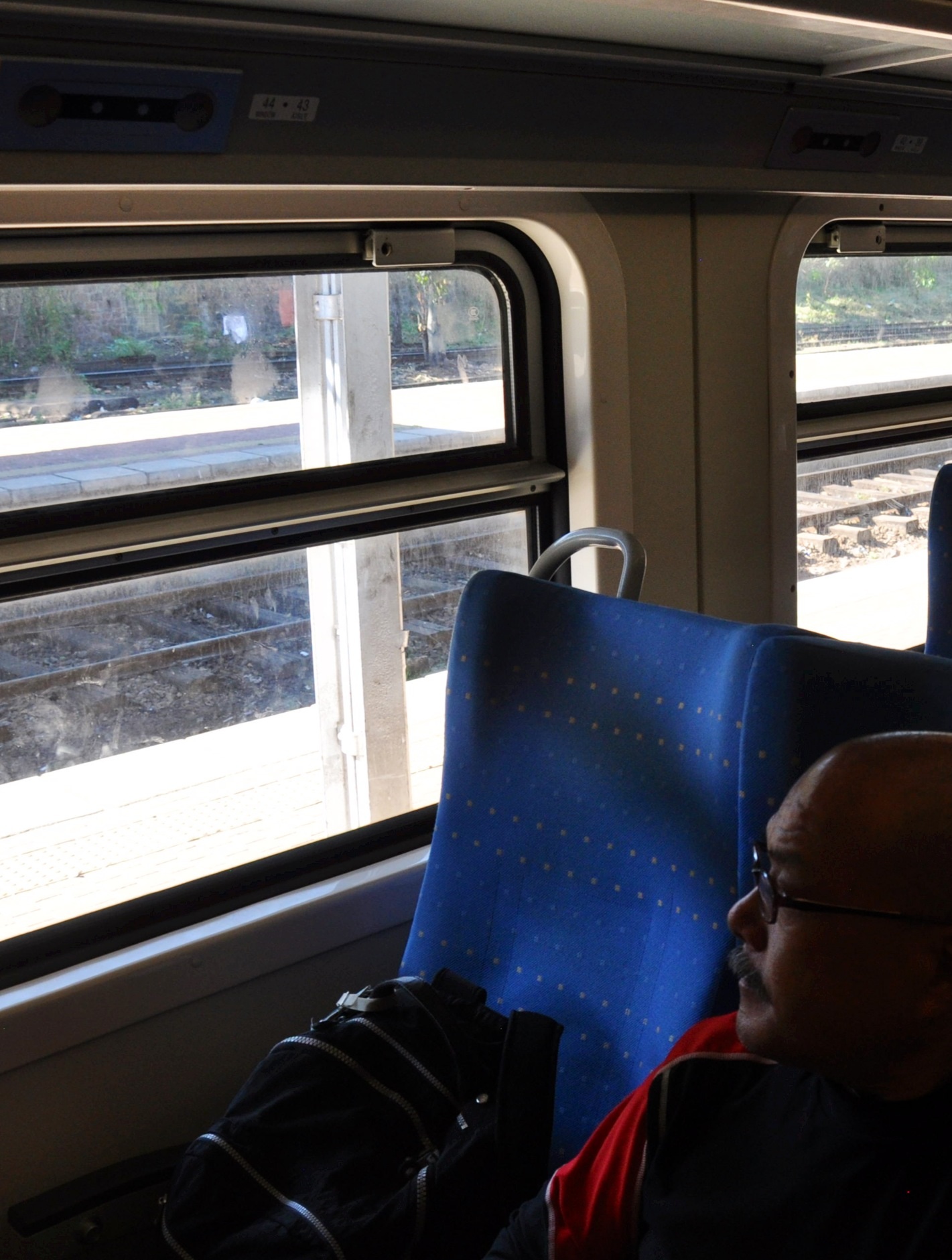
First class carriage

First class carriage

Second class carriage

Second class carriage

When I booked the train from Kandy to Nanu Oya second class was full so I bought a first class ticket for 1000 rupees (about £5). I was told that sometimes additional reserved seating is released at the last minute at a premium price. If at first you’re told the train is full, it might therefore be worth asking again the day before. This strategy worked for a London couple I met on the train whose driver procured second class reserved tickets at the last minute.

Or ride at the door...

Or ride at the door…

For at least half the journey I rode by the door as it was more social and I could take better photographs from the open doorway. I tried not to think about health and safety too much, but definitely held on tight. One jolt and I could have been offering myself as extra labour in a trackside tea plantation.

Great views from the open doors for photographers

Great views from the open doors for photographers

From Nanu Oya to Ella a first-class observation car had been attached to the back of a train mostly hauling freight but with a couple of unreserved passenger cars also. I wouldn’t say the view out of the dirty observation window was much to write home about, for photographers at least, but the windows did open fully making for some fantastic scenic shots from my seat and a welcome breeze too.

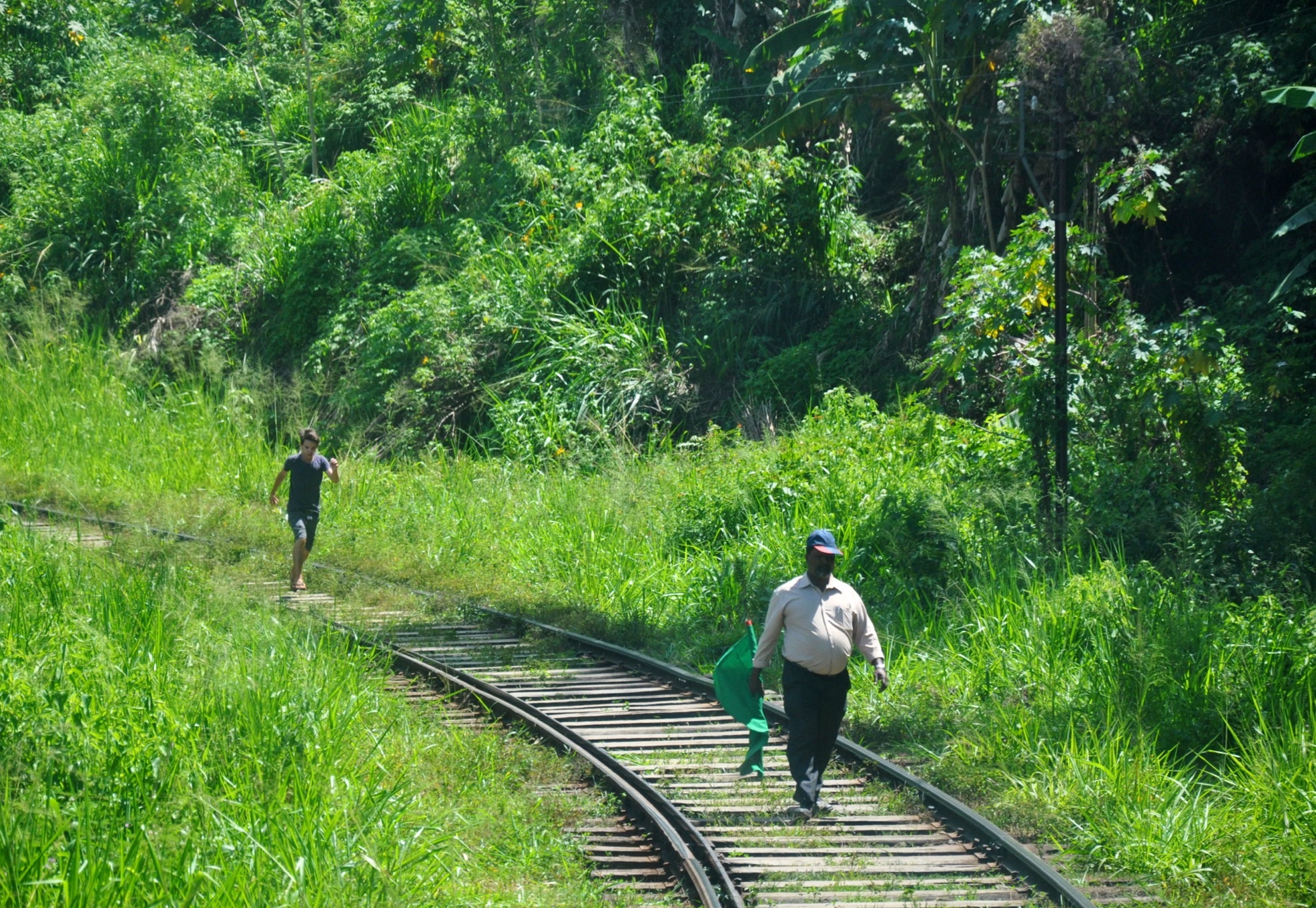
Station master just outside Ella station

Station master just outside Ella station

On the Weligama to Galle hop, I just bought a ticket on the day as there was no allocated seating on that local train. It cost 60 rupees (about 30p) and I just found a seat when the train pulled in.

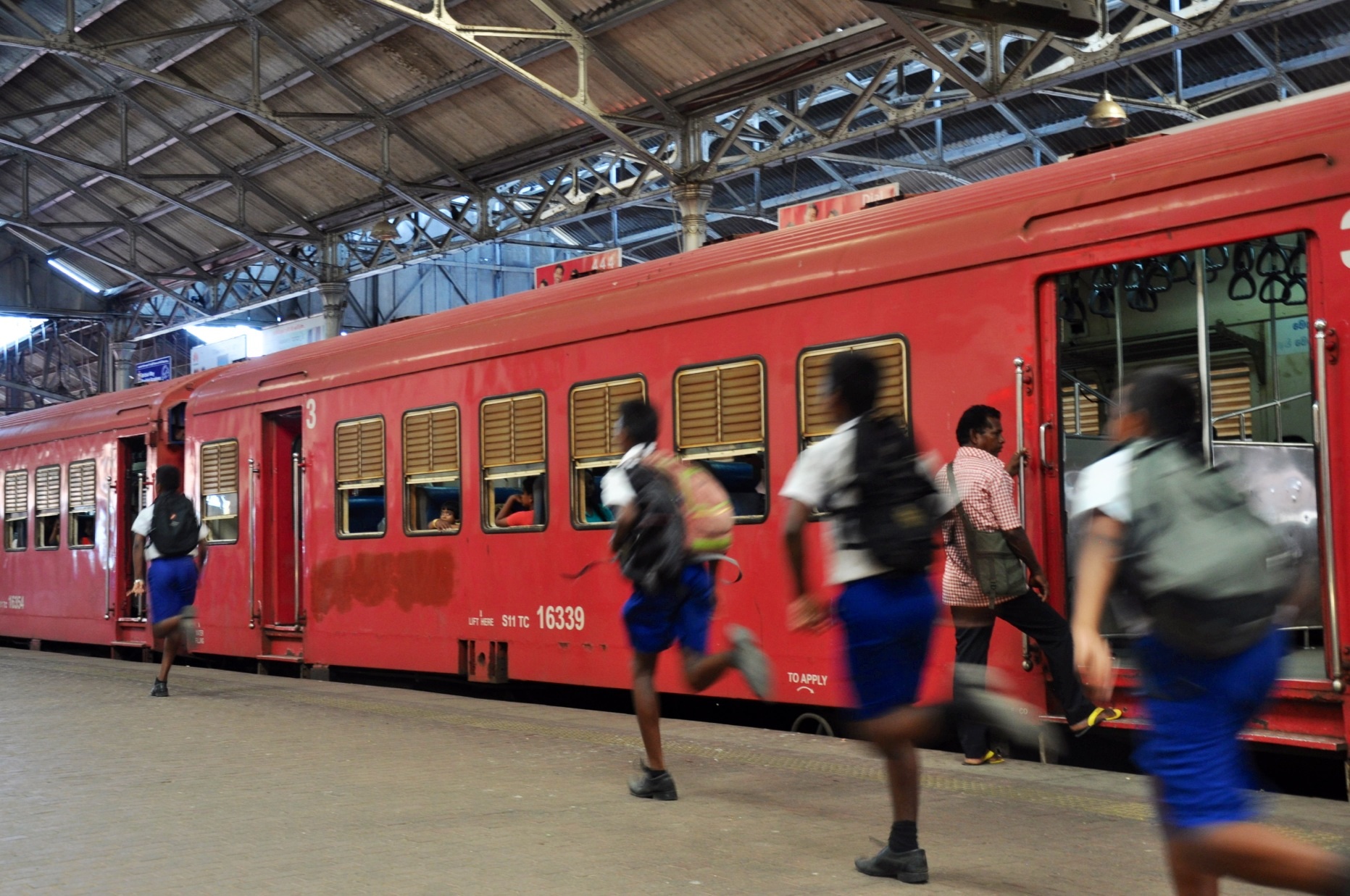
As it was a middle of the day departure, it wasn’t crowded, but on some peak time services the advice from the station master was that to get a seat, you may have to fight. I didn’t like the sound of that for the Galle to Colombo leg of my trip which I would have had to make at rush hour with luggage, so I opted to hire a car and driver instead. Had my schedule permitted, I could however have pre-booked an afternoon train with a reserved seat, just not a morning one.

Boys running for their train at Colombo Fort station

Boys running for their train at Colombo Fort station

And one last piece of advice…

All tickets are collected on exit so make sure you keep your print out (reserved seating) or little cardboard ticket (regular seating) safe throughout the journey. My ticket was checked en route by an inspector on the Rajhadani Express but not on subsequent trains.

Elephant spotting in Uda Walawe

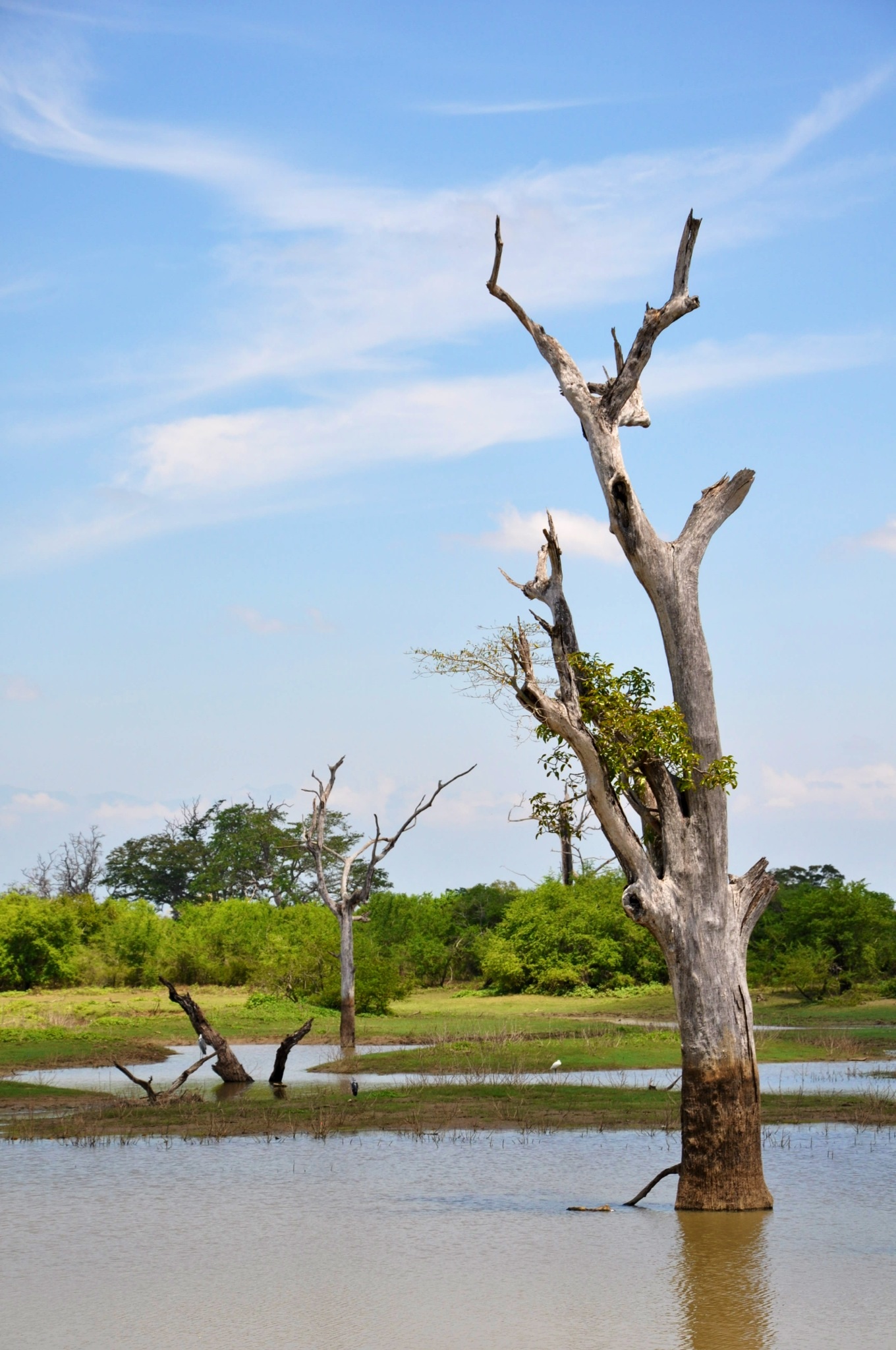
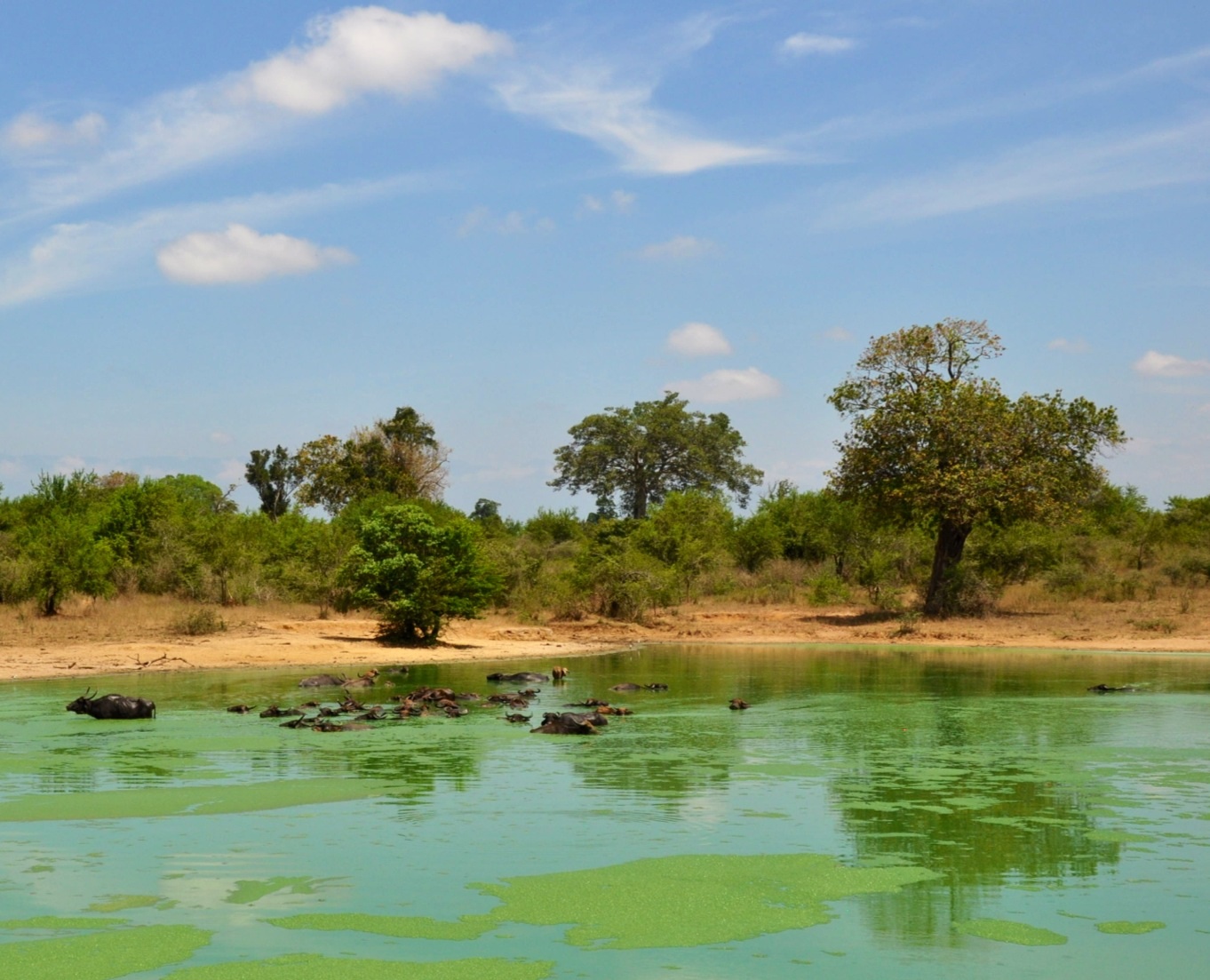
Uda Walawe National Park is home to the largest concentration of elephants in Sri Lanka.  It was created in 1972 and centres on the Uda Walawe reservoir.  Although in March there was quite dense vegetation on the way in to the park, it thinned by the lake shore and thus made it easier to see wildlife.  At first, sightings were limited to a few monitor lizards and birds, neither of which excited me much.  But at the lake, a couple of herons were pottering about in the shadows seemingly oblivious to the crocodile skulking behind them.  In the middle distance, some water buffalo wallowed.
image

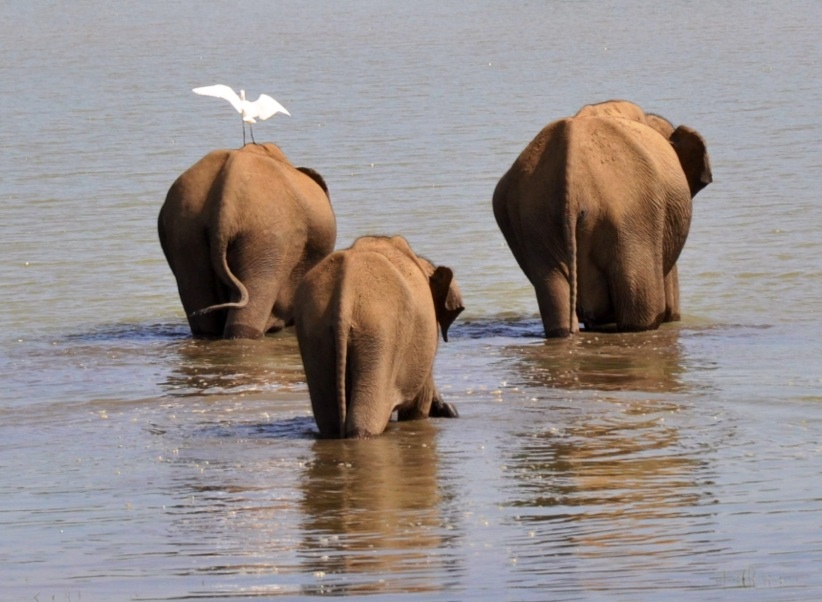
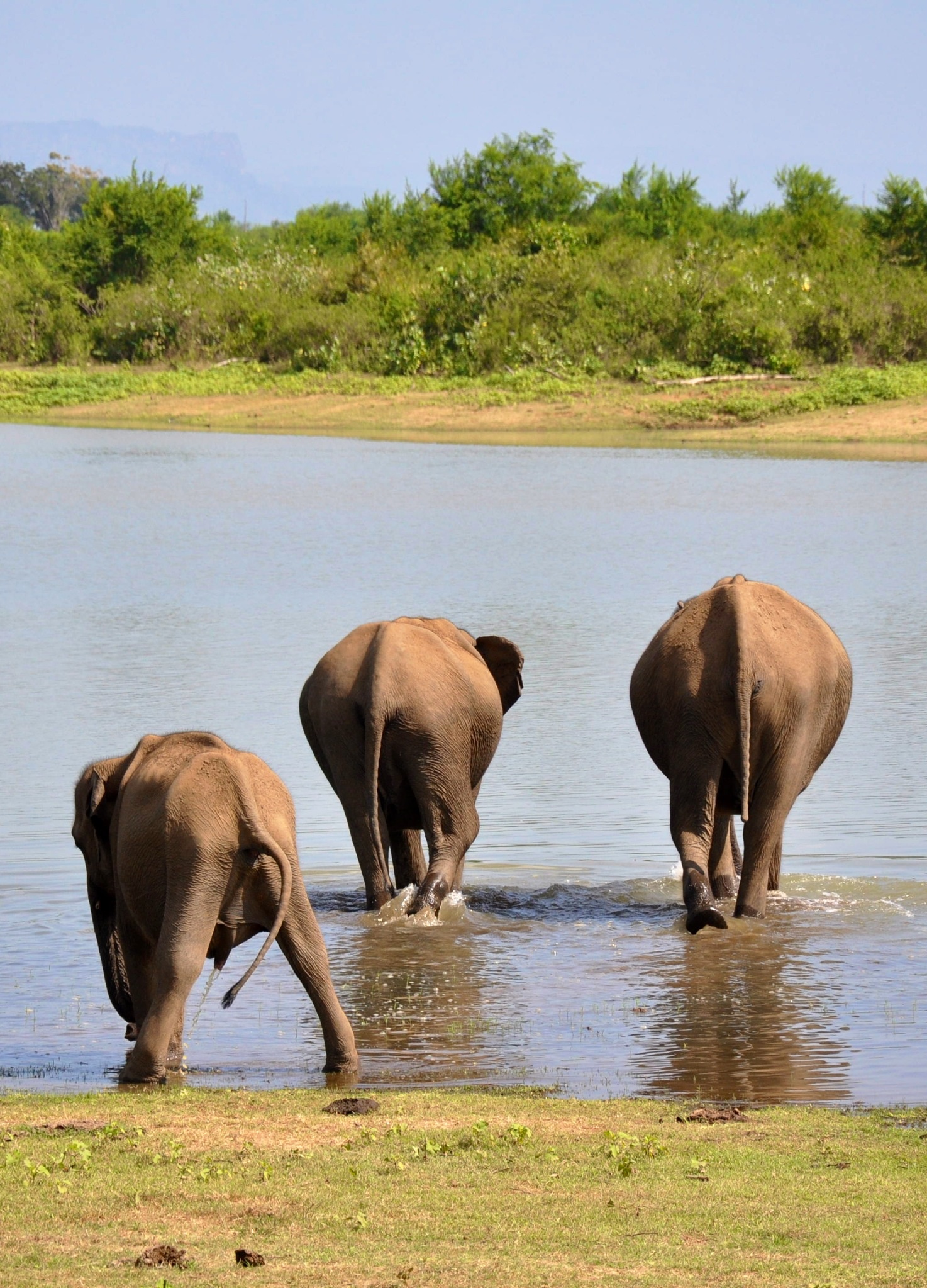
But I’d come to see the elephants, said to number around six hundred, making it the best place to view them in the country.  Easily seen year-round, herds can number over fifty but the largest family group I saw was eleven, still impressive.  Our first sighting, a mother with two juveniles, was entertaining.  They took a stroll down to the lake where the youngest couldn’t wait to relieve himself in the water.  Toilet taken care of, it could bathe happily before the trio wandered back into the bush.
image
image

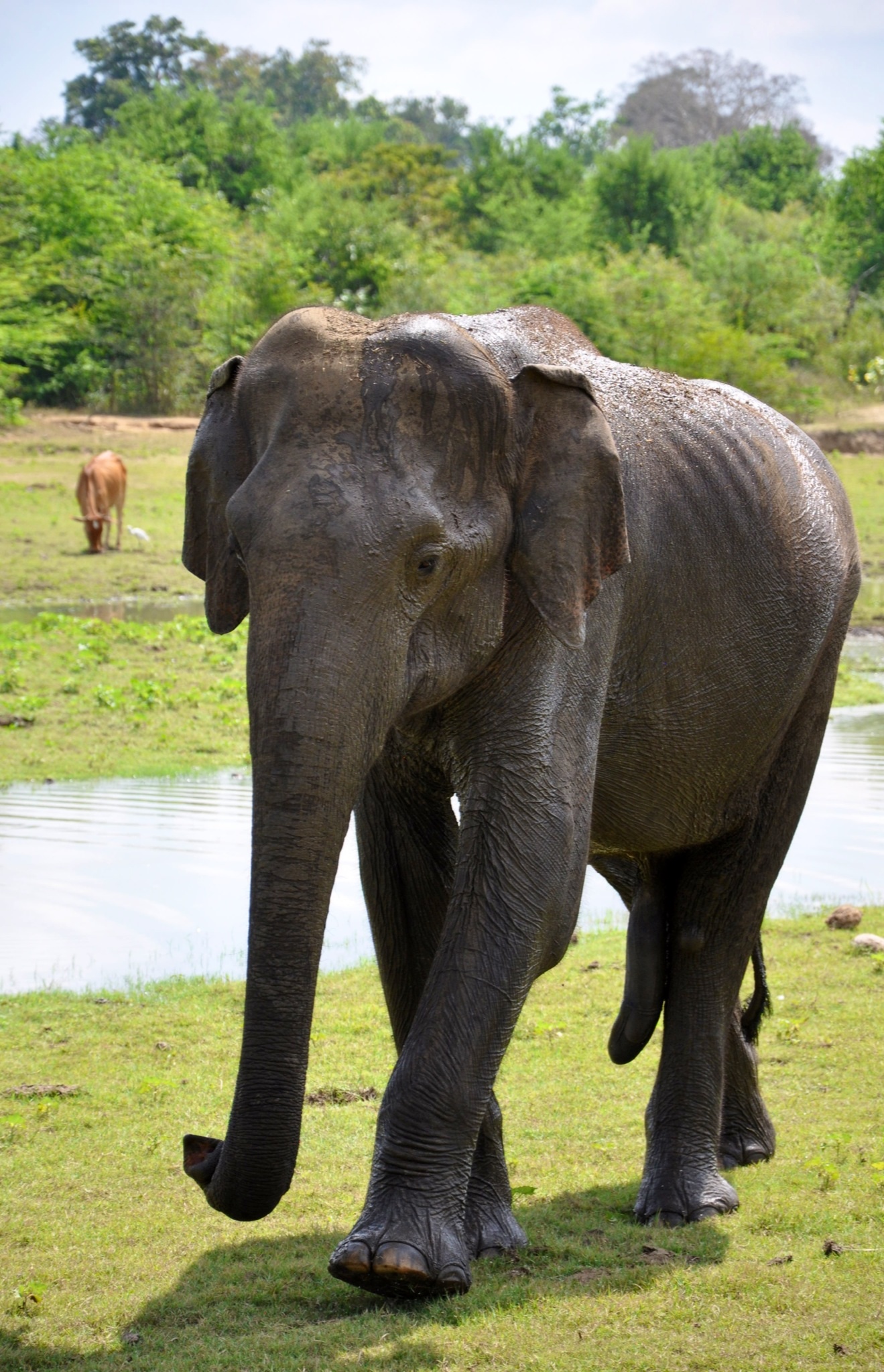
As we drove along the lake shore dirt track, a lone adolescent  passed us at close range, near enough to leave us in no doubt that he was a male.  Unperturbed by the camera clicking, he ambled past towards the lake.
image

In the vegetation, the thick leaves can provide excellent camouflage, but the guide was equally skilled in locating the wildlife.  This was our closest encounter, though fortunately the creature was very docile and didn’t warn us off.
image

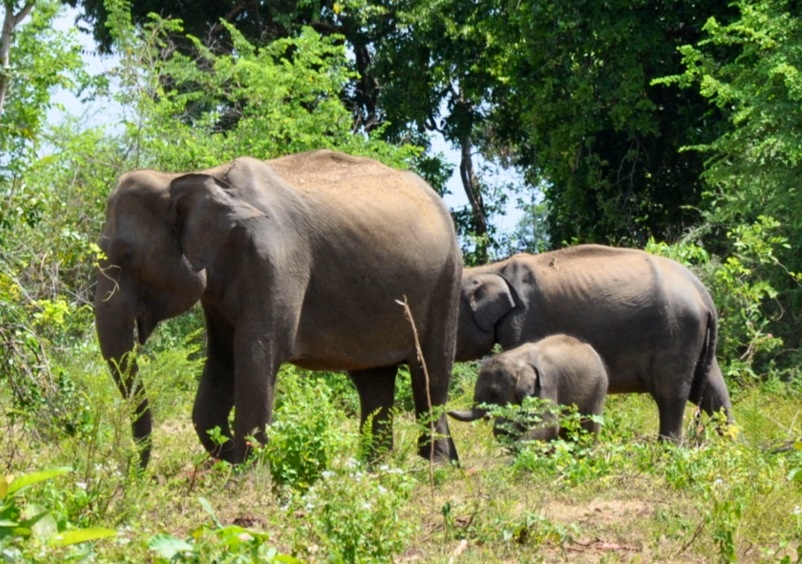
A herd of eleven including two babies was the highlight of the drive.  One infant looked to be just three months old or thereabouts, with the other perhaps six months.  It’s always delightful to see how the older members of the family protect the youngest when they’re on the move, keeping the babies close by but placing themselves between infant and safari vehicle just in case.
image
image
image

There are other species to keep the elephants company, and I saw plenty of water buffalo and in the distance, a couple of spotted deer.  A family of monkeys swung in the branches of a tree and amongst the birds I recognised were a grey heron and a kingfisher by a lake so full of green algae it was hard to decide which was the most vibrant in colour.  Leopards are said to be present in small numbers though I wasn’t lucky enough to encounter one.
image

While some people stay at one of the nearby hotels or guesthouses, I took a game drive en route from Ella to Galle.  The three hour stop was a welcome diversion from sitting in the car.  My driver arranged a safari jeep within minutes and it cost about £45 for a private excursion with Wild Safari Service including all entrance fees.  Be prepared to haggle.


Tea time in the Hill Country

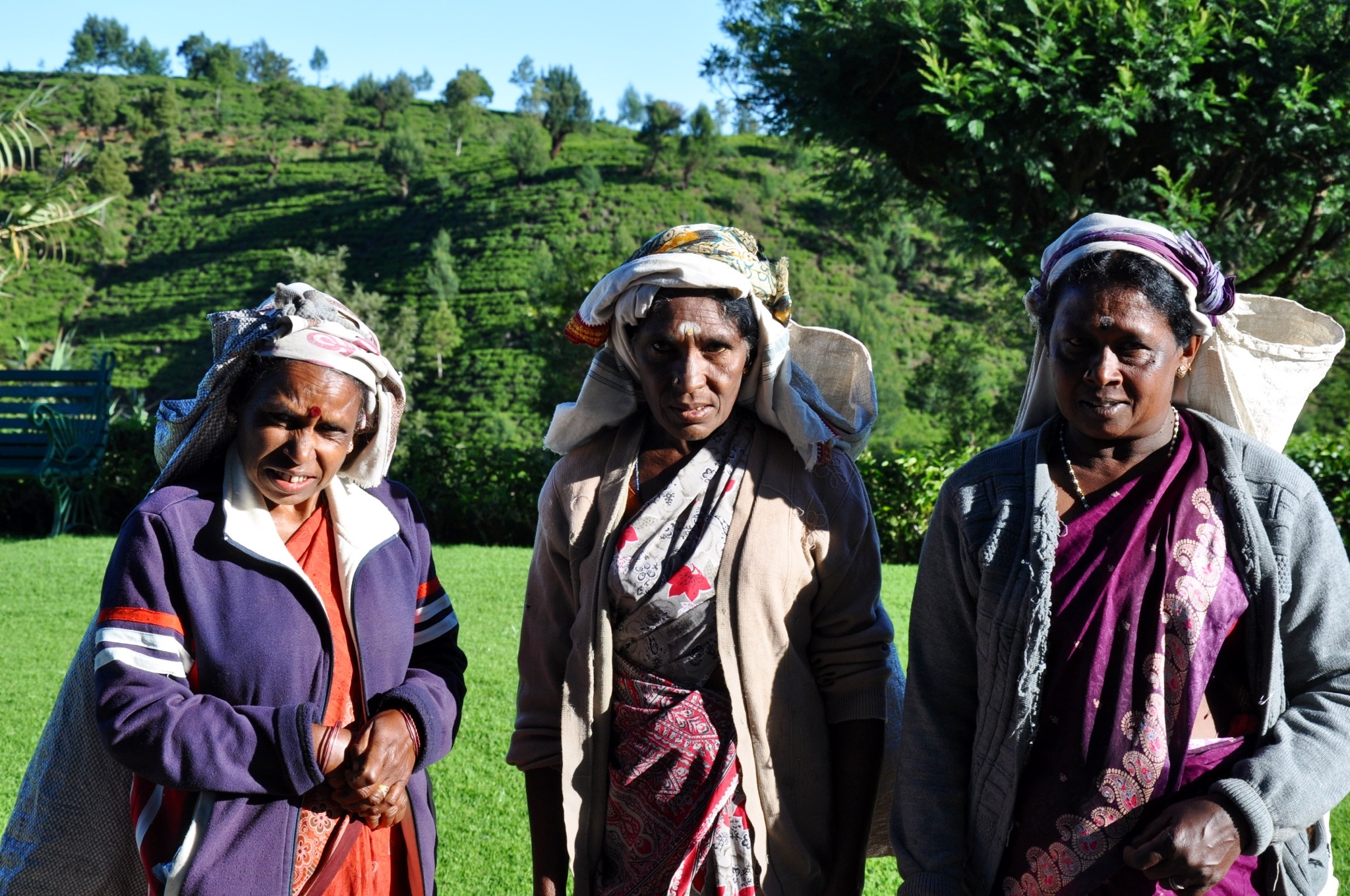
I expected tea picking to be difficult. Working in the sun on scarily steep slopes for eight hours wouldn’t be my choice of job and certainly not for the 600 rupee (£3) daily wage that these industrious women earn.

Tea pickers off to work

Tea pickers off to work

Learning that the Heritance Tea Factory offered a tea plucking and tasting activity, I jumped at the chance to try my hand. The slopes carpeted with squat tea bushes were relatively gentle compared to those I’d seen from the train on the way in and thickening cloud promised to deal with the heat issue.

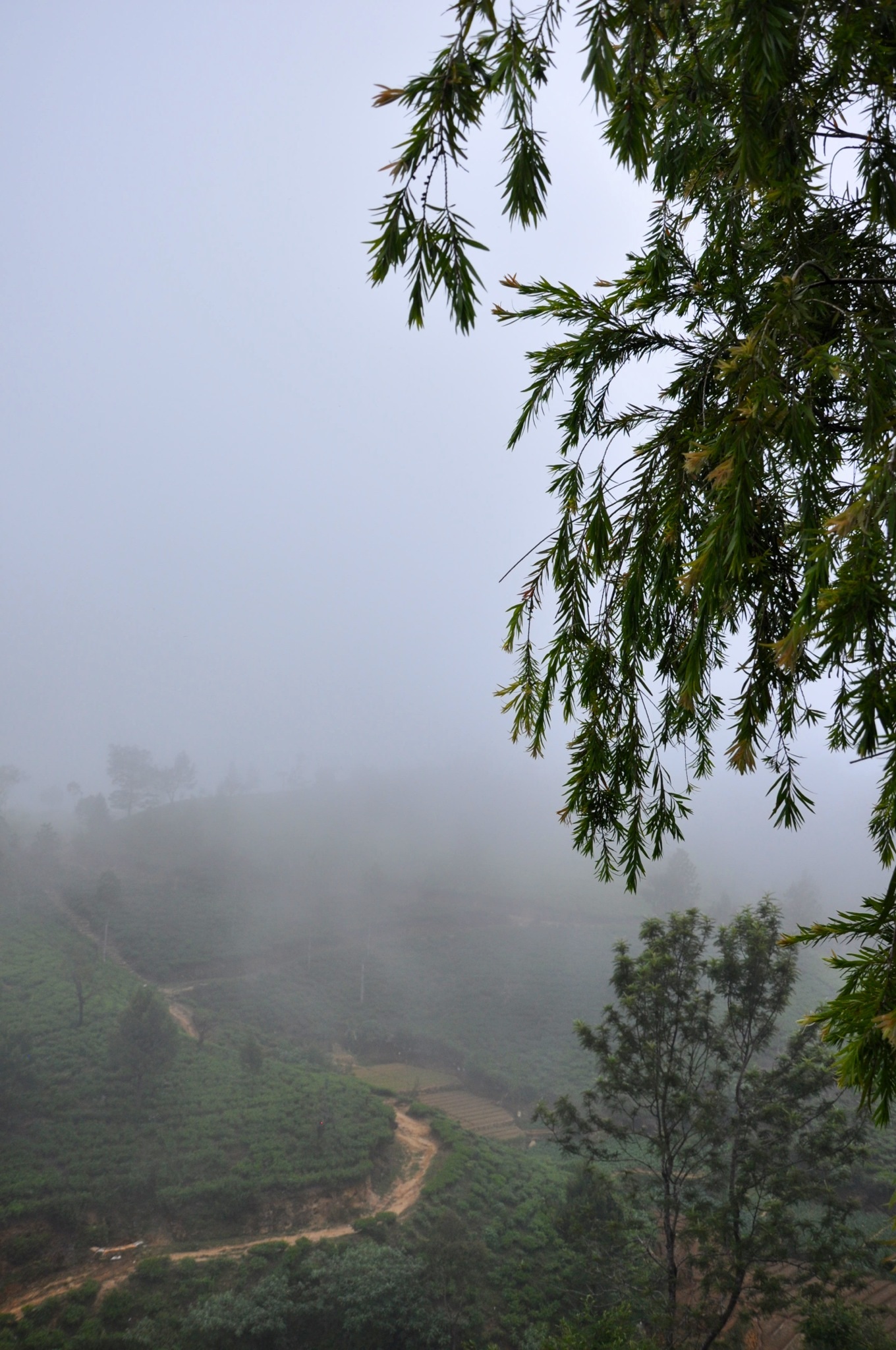
Weather changes fast in the hills

Weather changes fast in the hills

The staff at the Heritance kitted out their small but enthusiastic team of volunteers in suitable attire: saris for the women and sarongs for the men. Raising my arms, my dresser tied a string snugly around my waist, into which she tucked a carefully pleated sari. Six metres of fabric is expertly tied to create an elegantly flowing dress, pinned across one shoulder to ensure modesty isn’t neglected.

The basket for collecting leaves

The basket for collecting leaves

Elegant, that is, until I moved. Sadly walking in a long dress without tripping had never been a skill I’d mastered and squeezing my way through the tiniest of gaps between tea bushes only compounded my clumsiness. Unhooking me from a stray piece of barbed wire, our guide led me to the plucking area and demonstrated which leaves to pick.

The guide showed us which leaves to pluck

The guide showed us which leaves to pluck

Get it wrong and the tea will be useless.

Tea, glorious tea!

Tea, glorious tea!

As I started to pick what I hoped were the softer, greener leaves I wished I’d paid closer attention to those deftly thrown into the basket by the expert. My basket, with an optimistic capacity of 3kg given we were only out here for half an hour, looked pathetically empty, despite the guide’s surreptitious efforts to sneak a few handfuls of her leaves in when my attention was diverted.

Not much to show for my efforts

Not much to show for my efforts


No shortage of tea bushes

No shortage of tea bushes

The bag attached with a wide canvas strap across my forehead. As I bent over to pick, it swung a little, needing the weight of some leaves to hold it steady. That strap seemed to have a mind of its own, alternating between slipping down onto my glasses and wriggling up to form a Sixties’ style beehive. Eventually, I gave up and balanced the basket on the ground. It wasn’t quite what was expected but at least I could fling in a few more leaves before my shift ended to save face.

The area surrounding Heritance is stunning

The area surrounding Heritance is stunning

It was hard to concentrate given the beauty of the landscape surrounding the hotel – and indeed, it’s own well-tended gardens. The Heritance Tea Factory has a long history. Its original owner was a man called William Flowerdew who bought the land in 1879, only a decade or so after tea bushes were introduced to Sri Lanka by Scot James Taylor.

Heritance Tea Factory

Heritance Tea Factory

Flowerdew named his factory Hethersett, producing around half a million kilos of tea each year for decades.

Machinery from the factory still in place

Machinery from the factory still in place

The factory buildings were modernised in 1937 but the factory closed, no longer economic, in 1973. Fortunately, it soon underwent a sympathetic restoration: much of the factory machinery remains in situ to make this what surely must be a unique hotel and, with attentive staff, a delight in which to stay.

The table laid for tea tasting; flavour and strength are determined only by how small the leaves have been ground

The hotel has its own tea bar; flavour and strength are determined only by how small the leaves have been ground

The fact that they serve a decent cuppa – well, that’s just a bonus.

Hands off the Flowery Pekoe!

Hands off the Flowery Pekoe!