juliamhammond

Latest

Ecuador: is it safe to travel yet?

News items reporting Saturday’s magnitude 7.8 earthquake centred on Pedernales, Ecuador, were sadly no shock – the country lies on an active plate boundary where seismic tremors and volcanic eruptions are a fact of life. The scale of this quake, and the high death toll, were unusual and the people of the country will have a long hard slog in rebuilding their lives and livelihoods. Right now, the coastal cities of Pedernales, Manta, Bahia de Caraquez and Portoviejo are going to need time and money to recover, and the country’s largest city, Guayaquil, is reporting damage to transport infrastructure. If you’d like to help, this article from CNN is a useful starting point: http://edition.cnn.com/2016/04/17/americas/iyw-ecuador-earthquake-how-you-can-help/

IMG_2921

The country sits on the Equator as its name suggests

You could be forgiven for thinking now’s not the time to be planning a holiday to Ecuador. However, this South American nation is telling us that many of the places on our holiday wish list are unaffected. While aftershocks are continuing, most are only around 4.5 on the Richter scale, with a number of those epicentred out to sea in the Pacific. You can track them here: http://earthquake.usgs.gov/

Quito

Buildings at the historic heart of the Ecuadorean capital are currently being checked over but the city’s hotels and transport systems are functioning. A trip to nearby Otavalo’s famous market is still possible as the town has not reported any significant damage.

IMG_3002[1]

Otavalo market

Baños

In the shadow of Tungurahua volcano, the hot springs of this tiny tourist town are a welcome sight to those with muscles aching from volcano hikes. There’s been no major damage and if you were thinking of heading there after a Cotopaxi climb, that’s open for business too.

IMG_3089[1]

Volcano tours are operating as normal

Cuenca

My favourite of all the places I visited during my 2006 trip, this elegant city lies an eight hour drive away from the area most affected by the quake. It’s where you’ll find Panama hats being made – not Panama! – as well as a pretty river walk, a colourful flower market and plenty of colonial era mansions to impress.

IMG_3292

Cuenca’s flower market

Galapagos Islands

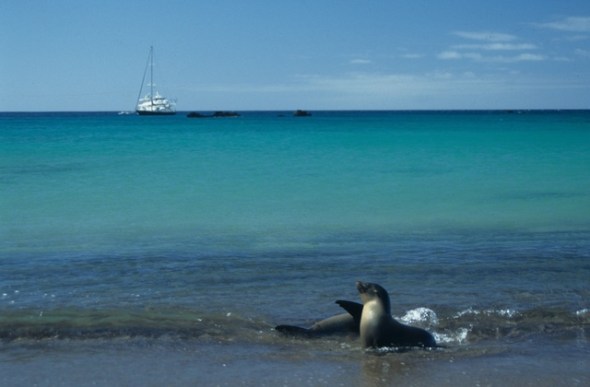
If you know your geography, then you’ll know that this group of islands is located over 800 miles off the Ecuadorean mainland – about the same as London to the south of France. There’s no tsunami alert in place and excursions are running as usual. The blue-footed boobies are awaiting your call!

3391667551_886d122531_o

Galapagos Islands by Derek Keats CC BY 2.0 via Flickr

To find out more, visit the Ecuadorean government website at http://www.turismo.gob.ec/update-on-ecuadors-tourism-infrastructure-services-following-saturdays-earthquake/

A beginner’s guide to Peru

Lots of people ask me what my favourite country is out of all those I’ve travelled to.  It isn’t really a hard question to answer as over four visits to this South American nation, it’s really got under my skin.  Peru’s landscapes, fascinating culture and rich history make it a shoe in for the top spot, its crazy and very likeable people the icing on the cake.  If you’ve never been to South America, Peru’s a great country to start with.  Its tourist infrastructure is well developed, particularly around Cusco, and although it has sometimes had a reputation for petty crime, with a bit of care you can easily avoid becoming the next statistic.

IMG_3867

Bottle feeding a baby alpaca

Getting there

Getting to Lima, the Peruvian capital from the UK has just got a whole lot easier with the introduction of thrice-weekly direct flights from London Gatwick with British Airways.  However, these are hard to come by for a reasonable price and you’re still likely to have to consider an indirect routing.

Typically, the best European options are via Madrid with Iberia, through Amsterdam with KLM and Paris with Air France.  I’ve used all these routes and the advantage outbound is that you’re on the second leg towards Peru pretty quickly which makes you feel like you’re getting somewhere.  Be wary of using CityJet connections from Paris back to London in case you have the poor experience I suffered:

https://juliamhammond.wordpress.com/2015/03/06/finally-a-win-against-cityjet/

It’s also possible to hub through the USA which gives you two more evenly balanced flights.  However, if you do choose this option you’ll need to clear immigration in the USA even though you’re only in transit, meaning you’ll need to apply for an ESTA at a cost of $14 just to sit in the airport.  Queues can be long; it’s best to allow at least a three hour layover if you plan to do this to avoid missing the second leg of your flight.  I’ve seen people beg and plead to queue jump to no avail.

Getting to Lima from the airport

With most flights from the UK arriving in the evening Peru time, you’re going to need to spend at least one night in the capital before connecting to your domestic flight or bus the following day.  Lima’s Jorge Chavez airport is located in the port district of Callao, the opposite side of the city to the upscale neighbourhoods of San Isidro, Miraflores and Barranco which are the most pleasant to stay in.  You can find accommodation in Callao but it’s not a very nice area and not especially safe.  Buses pass the airport and head into the city but you’re better off organising a taxi.  Don’t go out onto the street to hail one; instead, before you leave the arrivals hall, look for the Taxi Green company and use them.  Their rates are fixed so you can be sure you won’t be ripped off.  Lock your door though; I’ve had an opportunist thief attempt to steal my phone by opening the back door of the taxi while we waited at a red light.

Getting around
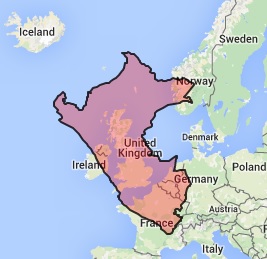
Peru size

Let’s start by stating the obvious: Peru is large.  Getting around is a trade off between cost and time.  If you are only in the country for a couple of weeks then flying between cities is really your best bet.  Internal flights are relatively competitive if you book reasonably early, especially to Cusco.  I’ve recently flown with LC Peru and Star Peru which were both good; TACA also operate internal flights.  LAN (now LATAM), the national carrier, is very reliable but tends to be more expensive.

You can also take overnight buses.  It’s advisable to travel with a reputable company such as Cruz del Sur or Ormeño as they are supposed to drug-test their drivers more often and travel with a pair.  Buses have regular seats but often semi-cama or cama also; these are much larger, reclining seats (cama means bed) and are much better over longer distances.  I suffer from back problems but found I could get comfortable enough to sleep.

Train services are limited in Peru but there are a couple of routes which are of interest to tourists.  Lima to Huancayo is the second highest rail line in the world (after Tibet) but the Tren de Sierra only rarely makes the journey.  Services from Cusco are more frequent and thus of greater importance here.  Trains run to Machu Picchu beginning from Poroy just outside Cusco (and also from Ollantaytambo further along in the Sacred Valley) as well as to Puno over the altiplano.  Find out more at http://www.perurail.com.

In town, it’s cheap to take a taxi, though make sure you agree a price in advance and if there’s more than one of you, make sure that price is per car and not per person. Colectivos, minibuses that run on fixed routes, are easy to hail and cheap to ride. Alternatively, little three wheelers (Peruvian tuk tuks) are the way to go in places like Cajamarca.
image

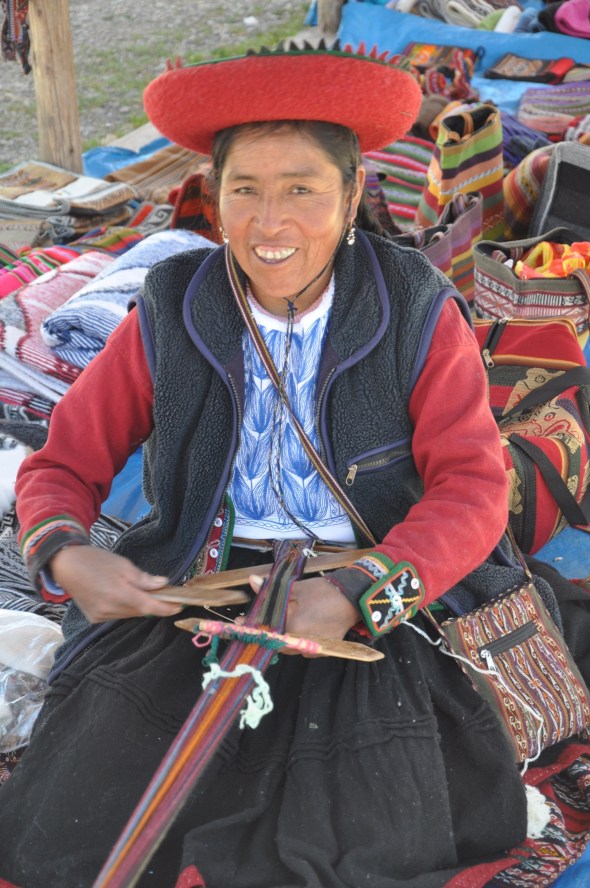
Chinchero market

Where to go

Lima

The nation’s capital had something of a reputation with many visitors spending as little time there as possible.  These days, however, it’s enjoying a resurgence in popularity as the Peruvian foodie scene has kicked up a gear.  I did an excellent food tour with the Lima Gourmet Company which made me re-evaluate my feelings about the city.  For more on Peruvian cuisine read my blog for Wanderlust here: http://www.wanderlust.co.uk/planatrip/inspire-me/lists/top-10-peru-food-experiences?page=all
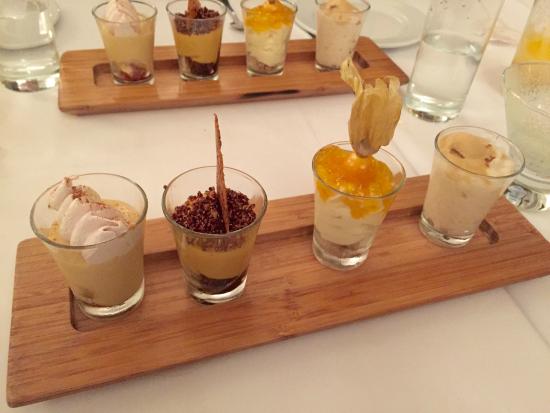
the-lima-gourmet-company

The best desserts in the whole country

Nazca, Ica and Pisco

A few hours’ drive south of Lima are the Nazca Lines, those lines in the desert which defy explanation.  It’s possible to take a flight in a light aircraft but try to time your visit for early in the day as it gets bumpy later on – and take it from me, drinking a bottle of Inca Kola beforehand doesn’t help.  I saw the monkey and the inside of a sick bag.  Nearby, head for Ica to visit the pretty oasis of Huacachina and to Pisco, the jumping off point for a boat trip to the Ballestas Islands.

Peru Nasca cemetery in the desert

Mummies in the desert

Cusco

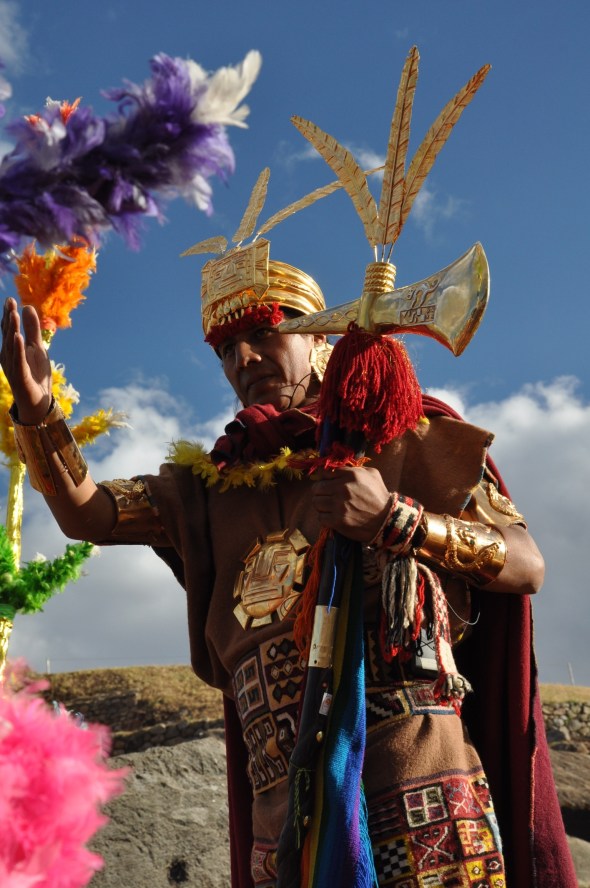
The undisputed jewel in Peru’s tourist crown, if you only have time for one place in Peru then make it the Incan capital.  There’s plenty to see in the city itself, including the incredible Qoricancha, temple of the Sun God, as well as the Spanish cathedral built on Inca foundations.  San Blas neighbourhood is a good place to browse the craft shops and relax in its pavement cafes, but for the wow factor, continue up the hill to the incredible fortress of Sacsayhuaman.
image

Inti Raymi celebrations take place in Cusco each June

Sacred Valley & Machu Picchu

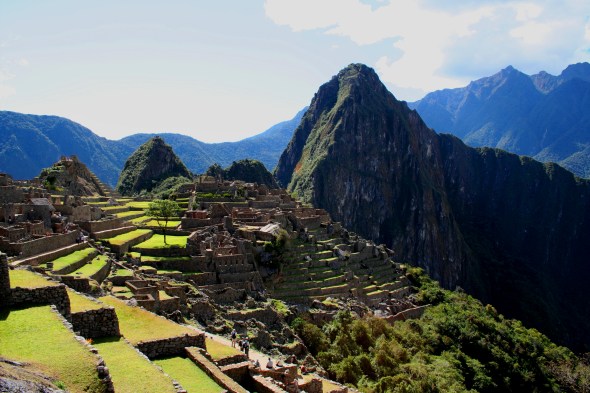
Machu Picchu, an Inca citadel high in the hills, is Peru’s number one tourist destination.  Walking the Inca Trail is the ultimate bucket list activity. If that’s too much like hard work, take the train and overnight in Aguas Calientes. These days you’re unlikely to get the place to yourself but to have a chance of seeing this magnificent UNESCO World Heritage Site before the crowds peak with day-trippers from Cusco is worth a try.
IMG_3533

Machu Picchu

The Sacred Valley is packed full of amazing places to visit, among them Ollantaytambo with its imposing ruins, the amphitheatre at Moray, salt pans near Maras, and two great markets at Chinchero and Pisac.  For a suggested itinerary, try my Unanchor Kindle guide: http://www.amazon.co.uk/Cusco-Unanchor-Travel-Guide-first-time-ebook/dp/B00RKE5E96.

image

Salt production near Maras

Arequipa

The White City, built in colonial times from sillar, the local volcanic stone, is the most elegant of Peru’s many wonderful cities.  Its Plaza de Armas is dominated by a beautiful cathedral and wandering the old town is a delight.  It’s worth heading slightly out of the centre to the mirador at Yanahuara; this lookout offers a good vantage point from which to see Misti.  Arequipa’s also the jumping off point for visiting the impressive Colca canyon.  Download my Unanchor guide from Amazon to find out more: http://www.amazon.co.uk/Arequipa-Unanchor-Travel-Guide-First-Time-ebook/dp/B00Q2C02NU

10338669_10203271480055536_6921512220083552134_o.jpg

The mirador at Yanahuara

Puno

The high altitude at which Puno sits makes walking up its hills hard work, but if you make the effort, the views of Lake Titicaca are worth the lack of breath.  One of the most interesting day trips is out to the chullpas at Sillustani, ancient Aymara funerary towers.  Another is to the islands on the lake: Taquile and Amantani give visitors an interesting insight into what life is like on the lake while the more touristy Islas Flotantes (the Uros floating islands) are well worth a bounce.

IMG_3962

Visiting the Uros Islands

Chachapoyas

Chachapoyas is well off the beaten track, but that doesn’t mean you should give it a miss. Nearby, the ruins of Kuelap are touted as the “new” Machu Picchu, even though they’re considerably older.  Also in the area are the peculiar sarcophagi at Karajia, where mummies were placed high in the cliffs, and the lofty Gocta Falls, hidden from the outside world until 2005. Find out more in my earlier post: https://juliamhammond.wordpress.com/2014/11/25/northern-peru-the-chacha-circuit/

10427280_10203326911761294_2819976564638893839_n

Kuelap

Cajamarca

Another northern gem, this is the place where Atahualpa was tricked into paying a huge ransom in gold by the invading Spanish.  He was captured and murdered, but you can pay a visit to the  Baños del Inca for a soak near his tub.  A short ride from the city centre are the Ventanillas de Otuzco, a pre-Inca necropolis.  Don’t leave without sampling the region’s yummy cheese.

10425189_10203329167937697_9055282404570100172_n

Cajamarca is worth visiting for the hats alone

Mancora

Hammocks and palm trees dripping with coconuts – are you sure this is Peru?  Mancora is a surfer’s resort up near the Ecuadorian border.  If you’ve timed your visit to catch the dry season in the south, those cold nights may well have you dreaming of lazing around on a sunny beach as the Pacific waves lap the shore.

IMG_3448

Looking out over the Pacific from a Mancora hammock

And even that’s not all.  Chan Chan, the largest pre-Columbian city in the Americas and capital of the Chimu kingdom, is another of Peru’s UNESCO World Heritage Sites and the biggest adobe city in the world. One day I’ll fly up to Trujillo and pay a visit.  I’ve also not been to Iquitos, the heart of the Peruvian Amazon, but if rainforest’s your thing, then you should plan to go.  As for me, I’m not a fan of the humidity or the midges, so I’ll be making a beeline for Huaraz, the base for some of Peru’s best mountain peaks and glacial lakes.  But even as I daydream about going back, I’m guessing that even a fifth trip won’t be enough for me to have had my fill of this wonderful country.

When it isn’t OK to post a bad review

Recently I stayed in a hotel very close to Colombo’s airport, the Otha Shy Airport Hotel. The Sri Lankan capital is some distance away, and as I had a late arrival followed by a morning onward flight, I was more focused on location than quality. I took a cursory look at some reviews but didn’t bother with much more.  The price was reasonable, it looked clean and I wasn’t going to have to spend an hour in traffic worrying whether I’d miss my flight.

On arrival, at nearly midnight following a delayed flight, the person manning reception was pleasant and efficient. He gave me a complimentary bottle of water and a working WiFi code. The room was spotless and I had a comfortable night’s sleep. I woke reasonably early and half an hour or so later I became aware of some persistent hammering from the floor above. I wasn’t too worried, as I was about to check out anyway.

On check out, the reason became apparent: the ground floor was complete but the first floor was a scaffolding-clad building site. Never mind: the owner was still charm personified and despite his late night, gave me a free lift to the airport about ten minutes up the road.

Curious, I checked the reviews. Most were very positive.  Here’s what Trip Advisor has to say: https://www.tripadvisor.co.uk/Hotel_Review-g2550421-d8656795-Reviews-Otha_Shy_Airport_Hotel-Katunayaka_Western_Province.html#review_361396695 and here are the reviews on Booking.com: http://www.booking.com/hotel/lk/otha-shy-airport.en-gb.html#tab-reviews.

The owner was very enthusiastic about his expansion plans and convinced that the building work would be completed this month (April 2016).  He was the kind of man you want to root for; he had a dream and was determined to realise it.  What’s nice is that the lack of poor reviews means that the people that have stayed there while construction is underway get that.  I can’t imagine there being much leeway in his budget, so he’d need bookings for his ground floor rooms despite the noise or disruption.  A few bad reviews could scupper his dreams.

I’m not in the habit of destroying someone’s chances to improve themselves.  Mr Nalaka, I wish you every success with your business and if I return to Sri Lanka, I’ll be booking my old room.

How to visit The Seychelles on a budget

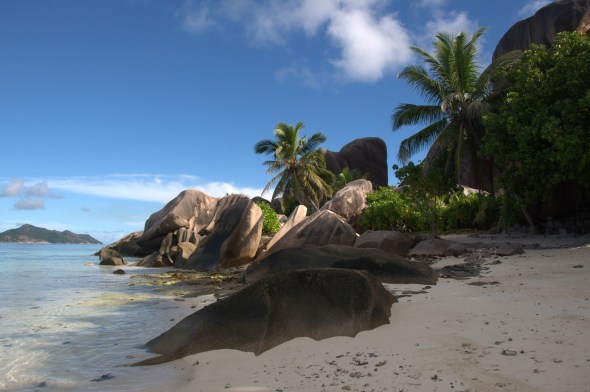
The Indian Ocean island nation of the Seychelles isn’t likely to be your first thought when planning a budget holiday but with beaches as photogenic as they come, it’s been on my wish list for a very long time.

1914566_10207771872002522_467734680855073929_n

Photoshop not required!

With resort prices coming in at around £1500 for a week-long break, and some of the most luxurious offerings well over that for just a single night, you could be forgiven for giving up and going elsewhere.  Don’t.  Although it’s never going to be what you’d call a cheap holiday, here’s how to make those beautiful beaches a more affordable reality.

DSC_0939

Anse Source d’Argent

Choose your flights carefully

I flew indirect via Colombo, Sri Lanka, and with the use of a few Nectar points, snagged a fare of under £500.  Other routes to explore include Ethiopian Airlines via Addis Ababa and Kenya Airways via Nairobi.  Emirates and Etihad also serve The Seychelles.

Travel in the shoulder seasons

Peak time means peak prices.  Off season brings the rain and there’s nothing worse than a beach destination in wet weather.  I travelled in March.  It was hot and humid but the sun was shining.  April’s also good as is our autumn.  Avoid Easter and Christmas when prices soar.

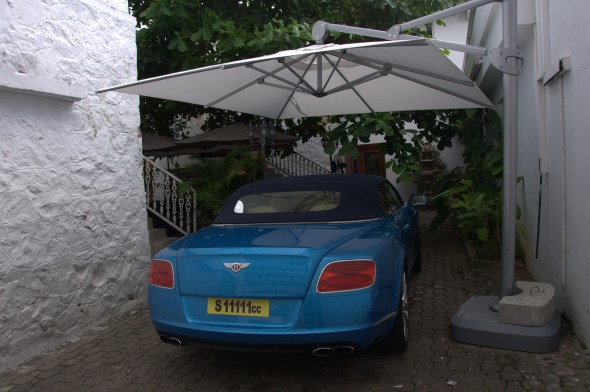
DSC_0587-1

Locally registered car parked at the ice cream parlour!

Unpackage your accommodation

The all-inclusive resorts offer a lot, but you pay handsomely for the privilege.  Instead, choose a home stay or a self-catering option.  On Mahe, I needed an overnight stopover before catching a ferry to the islands and came across Chez Lorna, just north of the capital in De Quincey Village.  The owner was exceptionally welcoming and my en-suite air conditioned room with shared balcony cost me just £30 for the night.

DSC_0346

View across Victoria from Chez Lorna

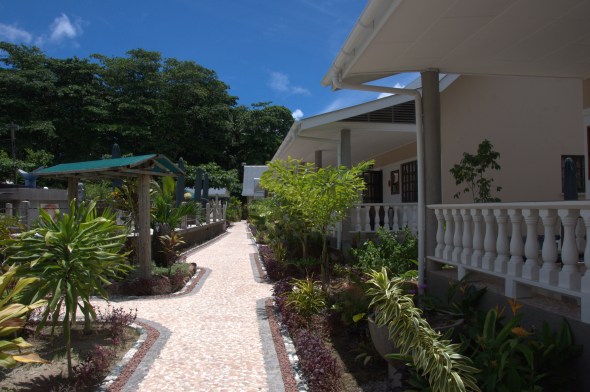
On La Digue, I upped the budget a bit and spent about £80 a night on a cottage at Cabanes des Anges in within an easy stroll of the jetty in La Passe.  For that I had air conditioning, my own kitchen, living room with satellite TV – and the place also had a pool.  Considering my accommodation slept two, that’s extraordinary value at £40pppn.  Best of all, the island’s main supermarket, Gregoires, was just a minute’s walk away making self-catering an attractive option.

DSC_0744

Cabanes des Anges

If you’re looking for a traditional hotel set up, then Palm Beach at Grande Anse on Praslin might fit the bill – right on the beach with a decent pool and sea views from superior rooms.  The price was about £80 per night for a double room.

DSC_0370

Palm Beach on Praslin – ask for a sea view

Eat local

Eating out isn’t cheap in The Seychelles but it is possible to save money by eating where the locals go or by self-catering.  There are plenty of pizzerias if you’re looking to eat out but have a tight budget.  On La Digue, most places charge extra for WiFi but Fish Trap by the jetty offers a free connection to its customers.  You can eat for about £10-12 but save money on surfing while you check your emails.  It also has a beachfront seating area and the sunset cocktails are worth pushing the boat out.

DSC_0748

Use local transport

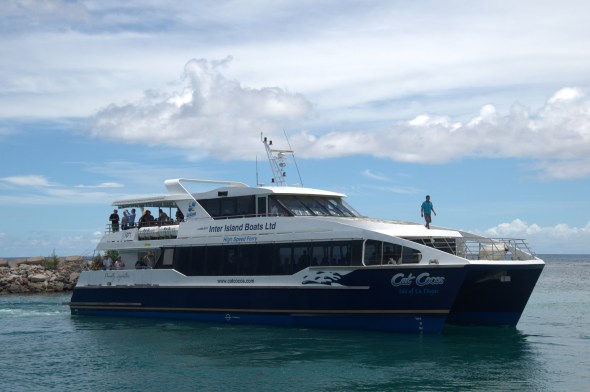
Getting between the islands is cheapest on the ferries.  Expect to pay about £30-35 depending on the exchange rate for an economy seat; the journey takes about an hour making it a convenient choice.  The fifteen minute hop between Praslin and La Digue is cheaper.

DSC_0729

The boat linking La Digue and Praslin

On Mahe and Praslin, the buses are easy to use and cost a flat fare of 5 rupees (about 25p) however far you go.  You’ll need small change as notes greater than 25 rupees aren’t accepted.  Choose accommodation on the bus route and there’s no need to hire a car to get around.  The two options listed above are close to the bus stop.  Note that you’ll need to hire a taxi if you have luggage, though, as the buses won’t let you on.

DSC_0388 The best bargain in the country

On La Digue, it’s easy (and free of course) to get around on foot, but you can also find bicycle hire for around 100 rupees a day (about £5) which makes it straightforward to explore the rest of the island.  I hired mine through the Cabanes des Anges reception desk but there are plenty of operators in La Passe.

So there you have it: proof that paradise doesn’t have to be prohibitively expensive.

On two wheels around La Digue

Grande Anse soon after dawn

Grande Anse soon after dawn

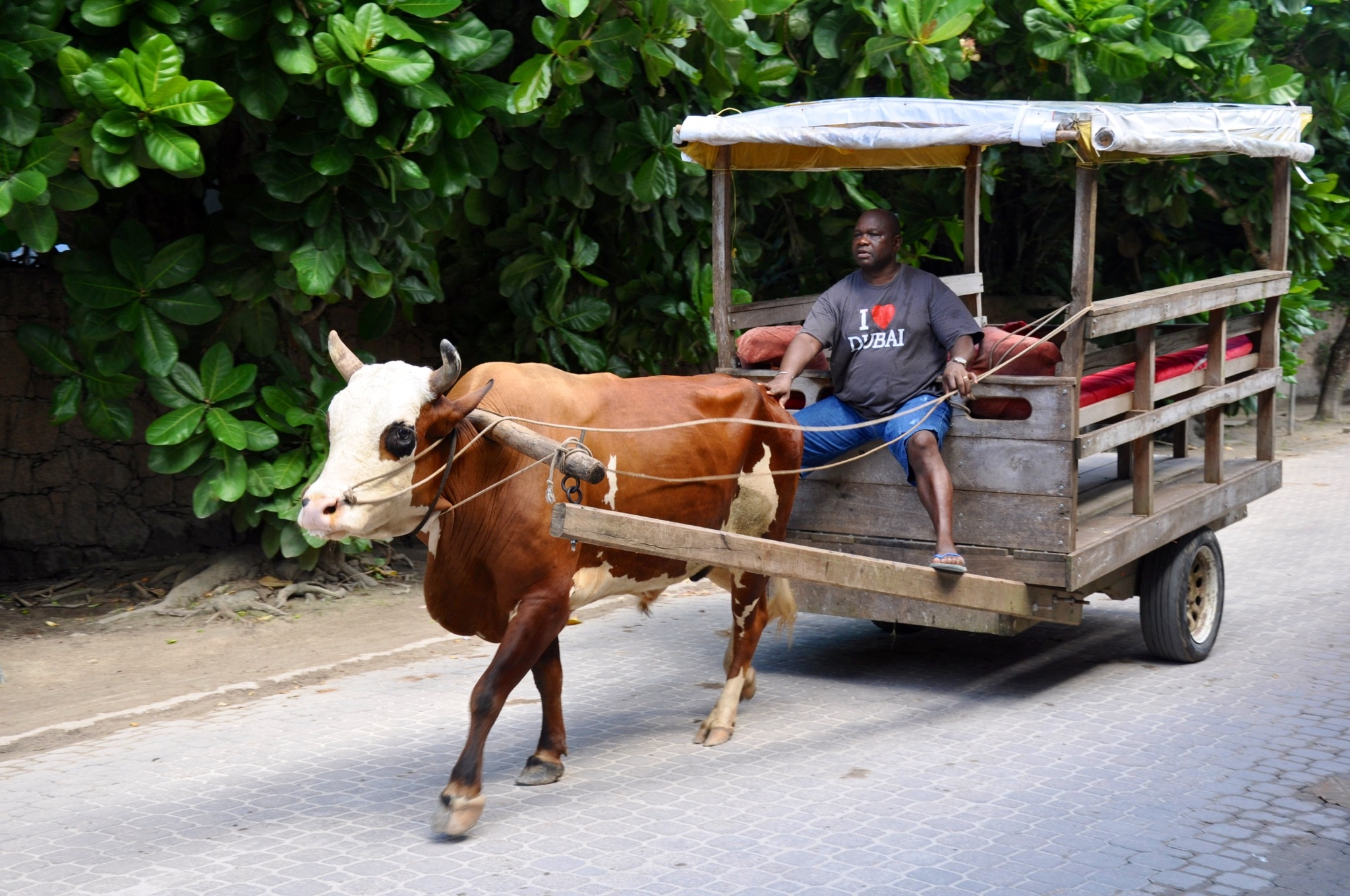
The biggest threat to my safety in La Digue, without a doubt, was that posed by novice cyclists. Despite never having ridden on two wheels before, or at the very least since childhood, these tourists didn’t hesitate to rent bikes. After all, cycling was the only practical way to get about on this almost car-less island. The ox carts of yesteryear had pretty much been replaced by open-sided trucks, the hotel golf buggies seemed to vanish when the inter-island ferry sailed and hot footing it on two legs took on a whole new meaning in the sweltering temperatures and almost unbearable humidity.

Ox cart - a rare sight

Ox cart – a rare sight

So bike it was. Continental Europeans, of whom there were plenty, veered to the right as was their custom, but the Seychellois follow British convention and there was much gesticulation, albeit of a tropically languid kind, to force them to ride on the left. Weaving erratically across the street, they cut up pedestrians and wobbled perilously close to roadside ditches causing the South Asian migrant workers to rattle their tiffin boxes in protest. A Gallic shrug indicated that they didn’t really care.

"Traffic jam" in La Passé

“Traffic jam” in La Passe

The local youth weren’t much better when it came to road sense. By day they rode three abreast to the pumping sounds of the beat boxes on their shoulders and by night they rode hell for leather with no lights. More than once I had to swerve onto the sandy verge to avert an accident.

And then there was the animal traffic. A few stray dogs roamed the island, passing their time comatose under a shady tree until a cyclist took their fancy and a chase ensued. Soon, though, they’d tire. The threat was worst in the early morning before it got too hot. I learnt the hard way, ambushed on my way to the Union Estate copra plantation with a dog snapping at each ankle and lucky to escape with my trouser legs intact. Fortunately a lump of seaweed on the nearby beach provided a welcome diversion. They were soon flinging it around and pouncing on it, good practice for their regular habit of crab chasing.

Beach dogs giving me a special welcome on Anse Union

The beach dogs who gave me a special welcome on the beach at L’Union Estate

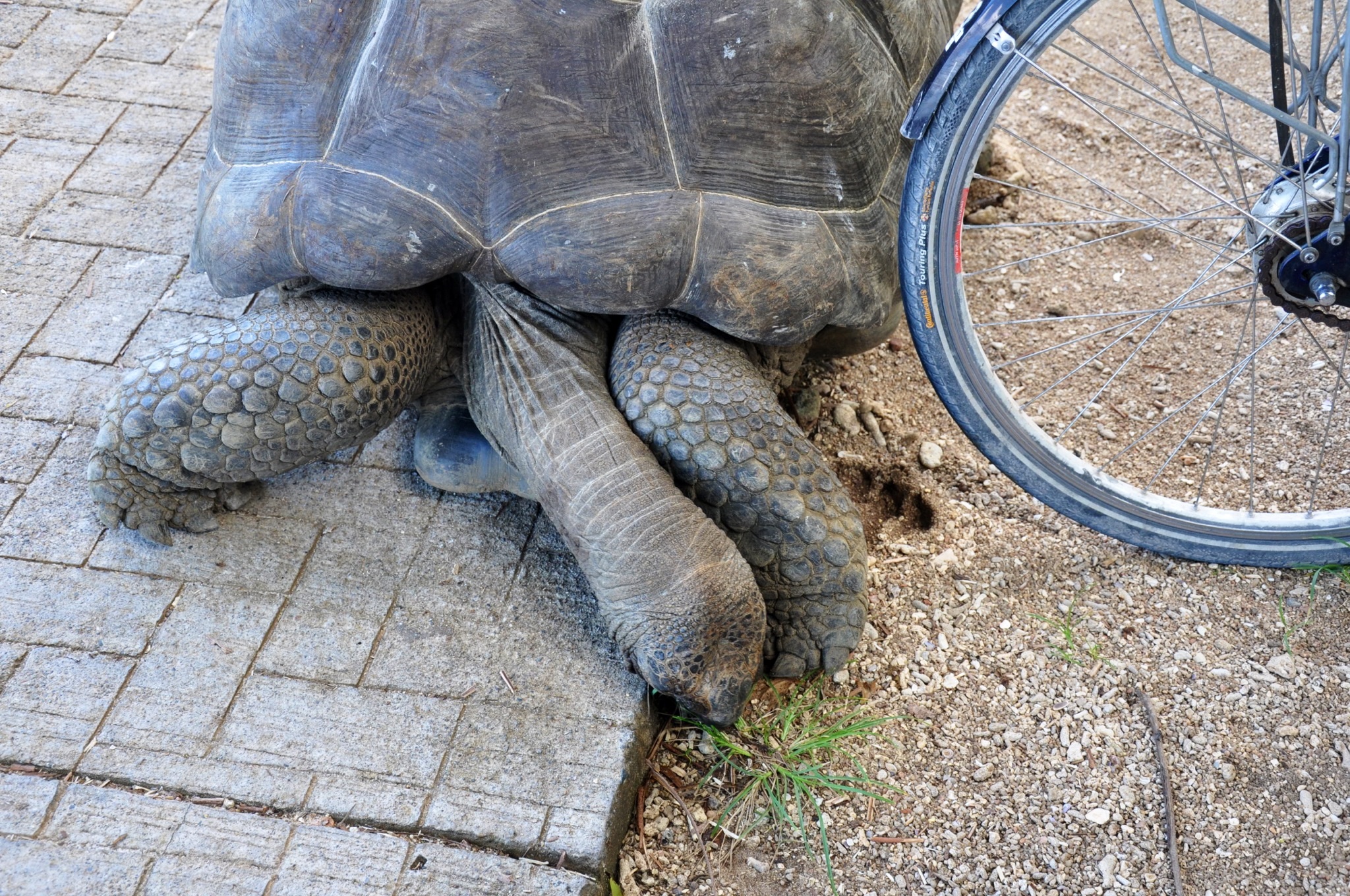
A giant tortoise taking an amble along the road up at Anse Banane was less aggressive, though the crowd of tourists who had stopped to take his picture were making a pretty effective road block. Eventually they, and their target, had moved on. The tortoise, predictably, hadn’t got very far. The effort of chomping on some couch grass had proved too much and it had fallen still alongside someone’s rear tyre. Fortunately mine was parked in the next rack; when I retraced my steps an hour later the creature still hadn’t moved, though to be fair neither had the bike’s owner. It was all too easy for one fresh juice to turn into two or more.

Giant tortoise - an usual road hazard

Giant tortoise – an usual road hazard

Despite these hazards, and aside from getting to grips with derailing gears – my fault for back pedalling – cycling around La Digue’s coast road was a pleasure. Locals shouted words of encouragement on the inclines. As I freewheeled on the downhill stretches, I felt the breeze snatch my wet fringe from my forehead. It was worth every last drop of sweat expelled on the way up. More than once I’d lost momentum distracted by the many scenic bays that dotted the coast. It was exhilarating, and if I’m honest, not that challenging to anyone with reasonable physical fitness. Not for the first time I cursed my preference for spending my evenings snacking in front of the TV rather than heading out to the gym.

Anse Source d'Argent

Anse Source d’Argent

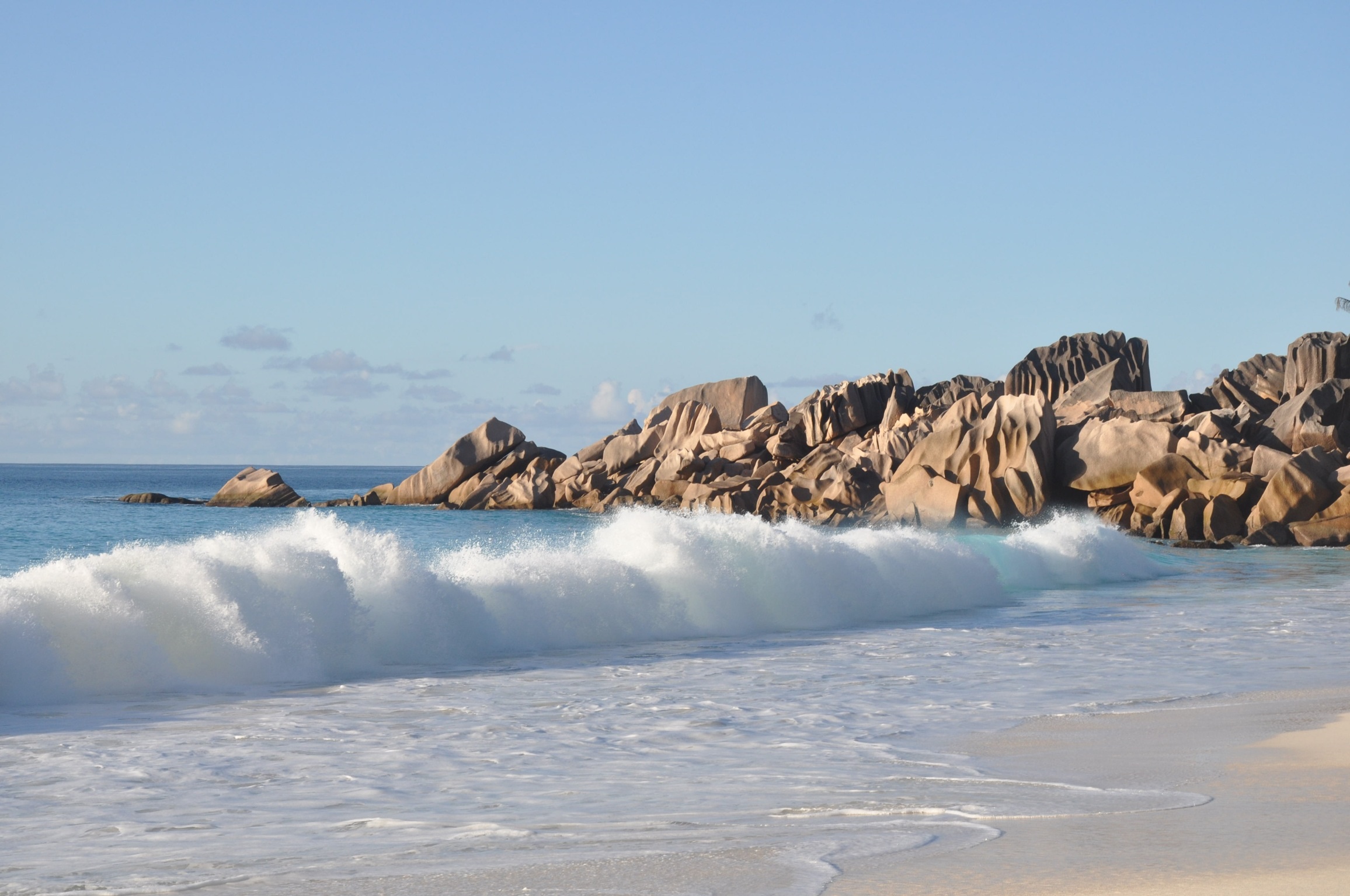
But the burn that nagged at my thighs was worth it. Huge chunks of granite, sculpted by persistent waves, trapped the ivory sand in gentle crescents. Coconut palms arched over takamaka and casuarina trees providing a little shade for those tempted to rest. The warm clear water looked inviting, but dangerous rips gave it a potentially murderous beauty. An engaging German tourist stressing about a shark attack was quickly shut down by the fruit seller. That incident had been two years ago and in any case, on Praslin, she said. Not here. Nothing like that would happen here.

The fruit seller at Anse Severe

The fruit seller at Anse Severe

But which beach to choose? That was easy. To figure out which was the best, all you had to do was look for the one with the greatest number of bicycles propped by the roadside.

Petite Anse - ironically reached by a hike not a bike

Petite Anse – ironically reached by a hike not a bike