juliamhammond

Latest

Visiting a cemetery on holiday? You’re dead right I do!

Thanks to myWanderlust, I recently became aware of a fantastic blog by Rachelle – better known to those on the forum as Moose on the Loose – called http://www.stoneanddust.com. With her blessing, I’ve decided to blog this week about my own favourite cemetery visits. It may seem odd or macabre, but they are fascinating places with more than a single story to tell. And if you’ve been to any on your travels, I’d love to hear about them.

Oaxaca
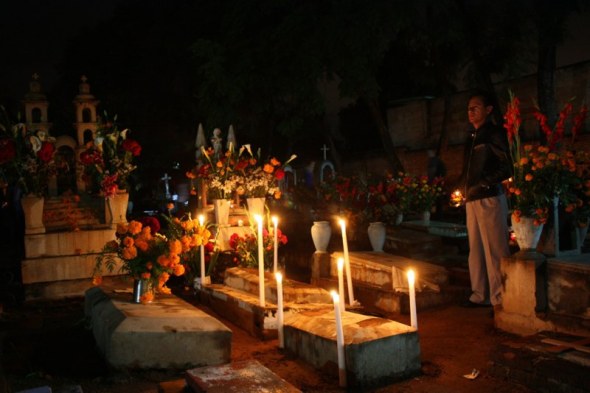
Day of the dead cemetery

Xoxocotlan old cemetery

I visited Oaxaca’s old and new cemeteries when I visited for the Day of the Dead festivities. Each year, at the end of October, preparations are made to welcome the ancestors back for a celebration. Graves are decorated, food prepared and the Mezcal bottle drained to toast the gone but never forgotten. Lit by candles and adorned with more marigolds than I’ve ever seen in my life, Xoxocotlan’s old cemetery was the more atmospheric. In Xoxocotlan’s new cemetery, glow sticks and candy floss were the order of the day against a soundtrack of Michael Jackson’s Thriller.  Read about the festival and find more photos here:
http://juliahammond.co.uk/Travel/DIA_DE_MUERTOS.html

Port au Prince
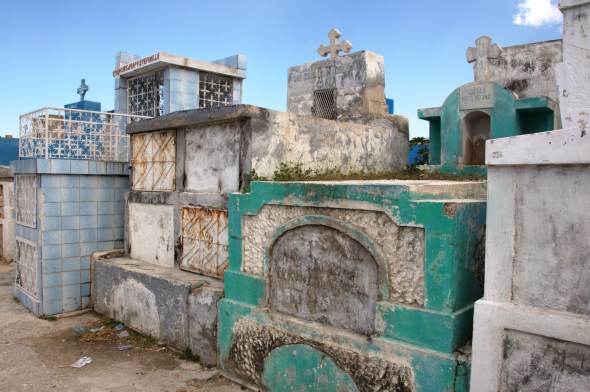
DSC_0032

The cemetery, like the city, was damaged in the 2010 quake

My companions in the ageing cemetery in Haiti’s capital weren’t mourners – they weren’t even human. Instead of the expected hustlers, I was tailed by a goat and several chickens. Locally known as the Grand Cimetière, it’s an important focal point for followers of vodou. Parts of the Haitian capital aren’t very safe and this was reputedly one of them, so I lingered only long enough to absorb my surroundings and explore some of the more accessible graves, concerned that if I strayed too far from the main paths I might find myself the victim of a mugging.

New Orleans

NOLA cemetery

If you’re in NOLA and need a guide, Sandy comes highly recommended

During my first visit to the Big Easy, I’d been fascinated to learn about Hurricane Katrina and its aftermath by one of the most interesting guides I’ve ever had the fortune to meet. On my return, I found out that Sandy was guiding a tour of St Louis Cemetery Number One. It’s the site of vodou queen Marie Laveau’s tomb, and after some vandalism, tours are only possible with a guide. Sandy regaled us with tales of the dead and the city that swallowed them up, with her distinctive humour and deadpan delivery. Who knew that temperatures inside those tombs were so high they acted like a mini crematorium?

Buenos Aires

IMG_9742

The Duarte family tomb, La Recoleta cemetery

Another cemetery where tombs are largely located above ground rather than the below ground graves I’m used to in the UK is La Recoleta in the Argentinian capital Buenos Aires. Located in an upscale neighbourhood, it’s home to many of the city’s rich or famous former inhabitants, including of course Eva Peron. When I went to pay my respects at her tomb, I was touched by a man holding his own personal vigil to the iconic former first lady, proof that the cult of Evita lives on.

Paris
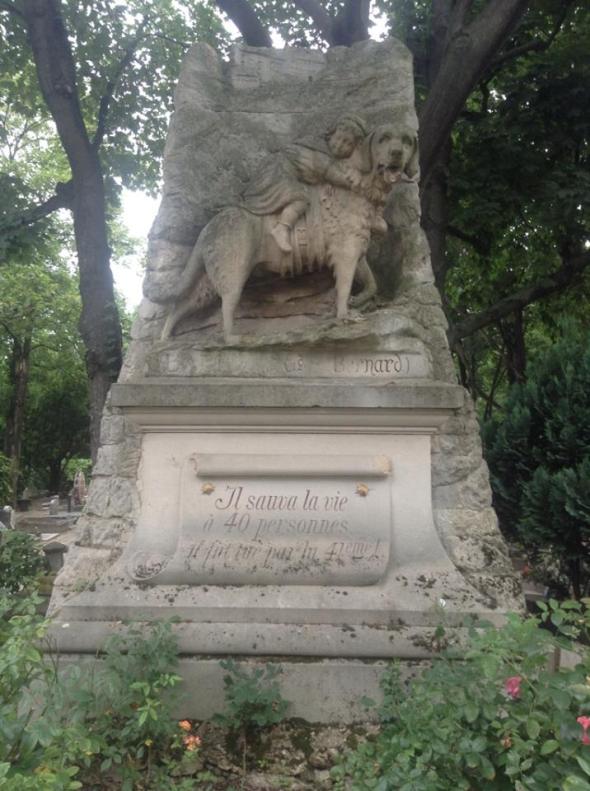
Barry dog

Canine hero Barry the St Bernard

This time, it’s a cemetery for dogs, a short metro ride from the centre of Paris. To give the place its full name, Le Cimetière des Chiens et Autres Animaux Domestiques has an eclectic mix of graves of much loved pets and canine heroes. Rin Tin Tin, the German Shepherd star of many Hollywood movies, was brought here to be buried after his death in 1932. Perhaps the most poignant of the inscriptions relates to a canine hero, a St Bernard called Barry, who saved 40 human lives before dying as he tried to save the 41st.

London
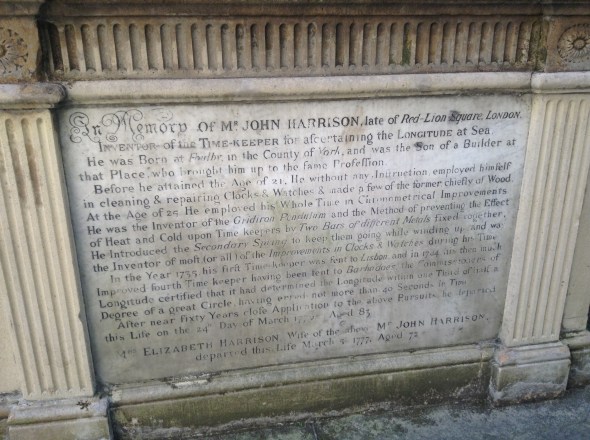
John Harrison

John Harrison’s tomb

Highgate is well known as the place where Karl Marx is interred, but my favourite of the UK capital’s graveyards is that of the church of St John at Hampstead. Inside, you’ll find two tombs of note. The first is of John Harrison, the clock maker credited with inventing a timepiece that could roll with the waves without losing time and thus enabling us to accurately define lines of longitude. The other is that of another John, Constable, whose paintings of the Essex and Suffolk borders sum up the beauty that can still be seen in my home county today. For a walking itinerary in Hampstead, plus others in Notting Hill and Marylebone, why not have a look at my Unanchor guide, available on Amazon here:
Travel hacks for solo travel

For almost three decades, I’ve happily travelled the globe alone. While I enjoy travelling with family or friends, nothing beats the joy of being by myself as I discover a new place. But there are, as with anything worthwhile, a few issues to consider. Here are a few tips to help you discover solo nirvana.

Watching the bags

One of the most inconvenient things about travelling alone is having no one with you to watch your bags.  With a bag on your back or at your feet, you become very vulnerable when your attention is distracted – like when you’re booking a bus ticket for instance.  There are several ways of reducing the chances of being robbed.  Travelling light is the obvious one – carry less stuff and there’s less chance of that stuff being stolen.

DSC_0677

All the luggage I needed for a two-week trip to the Indian Ocean

Also consider which type of luggage you’re carrying and how to avoid being the victim of an opportunist thief.  I travel with a hard shell wheelie and when I’m off somewhere dodgy, pop a mini padlock on my rucksack.  It’s not foolproof – a bag slasher obviously wouldn’t have a problem – but it is a small deterrent.  If the person next to you has their bag wide open, you’re not going to be the first choice for a thief.  Keep your bags in sight and where possible, keep the strap across your body.

Timing is everything

On a related point, I’ve never thought it would be smart to leave my bags unattended. I’ve no wish to be the reason an airport is evacuated. But I’m also regularly the victim of suggestion – and if I see a toilet, then there’s  a good chance I need to visit it.  That can be tricky when you’re on the move with all your bags and the floors are at best grubby, at worst, well, let’s not go there…

IMG_2594

No single option even in the loo – Norway’s answer to toilet queues

Timing is everything. Go before you leave your hotel, in an airport where the cubicle could be big and clean enough to leave belongings on the floor or somewhere there’s a solid, heavy duty hook. And pray it’s not a squat toilet. Believe me when I say it’s almost impossible to keep your balance with a rucksack on your back.

Avoid tours

The dreaded single supplement can make it all too obvious that solo travellers incur a financial penalty from some establishments. While I understand how frustrating it must be for hoteliers to lose half the potential revenue from a double or twin room, I still have a travel budget to stick to. I look for hotels with single rooms – they’re not all windowless cells shoved in basements – and unpackage my trip to swap private drivers for public transport.

Hostel NZ

Don’t rule out private rooms in hostels for single occupancy

I also avoid tour companies promising single rooms without the single supplement – usually all they’ve done is absorbed those charges into their headline price. If I do need to take a tour, I opt to share with a same-sex stranger – sometimes you get lucky and get a room to yourself anyway and where that’s not been the case, I’m relieved to say my room mate has been a pleasant distraction for a few nights and not a surprise snorer.

Personal space

Most of the time, while I’m happy for my husband to rest his head on my shoulder, the same doesn’t apply for complete strangers who just happen to be occupying the seat beside me. On buses and trains, I seat myself on the aisle seat with my bag by the window. Most people would prefer to slide into an empty seat rather than have to ask someone to move, so you often keep your seat even when the bus is quite full.  I’m always gazing intently at something out of the window, though if they ask me to move over or let them in, I always do so with a smile.  There’s no sense in pissing someone off who’s going to be next to you for hours.  It’s also easier than you might think to find single seats, whether on trains or on the overnight sleeper buses that are common in South America.

FrecciaRossa executive

No shortage of space on Italy’s FrecciaRossa trains in executive class

If you do end up next to someone, it’s not the end of the world. The most comfortable flight I ever took was an overnighter from Ghana wedged tightly up against a very large woman – she was as soft as a goose feather pillow and happy for me to snuggle up as she spilled over into my seat.

Eat at the bar

Often, the only time when I’m really conscious I’m travelling alone is when it comes to dinner. Where eating breakfast without a companion rarely feels odd, there still seems to be a stigma about sitting alone over dinner. I’ve never been one for room service (and let’s face it, rarely stay somewhere smart enough to even have room service) so how do I overcome the thorny problem of dinner for one? I’m not frightened to say no to a table shoved up at the back of a restaurant by the kitchen door – if they don’t want to give me a decent table, I’m quite happy to take my business elsewhere.

IMG_8025

Alas, there was no one present to witness me eating grasshoppers in Mexico 

But if I’m feeling sociable I often sit at the bar to eat, as the bar tender and fellow patrons are often chattier there. And if I’m not, I’m quite happy to read a book between courses or simply people watch.

If you’re thinking of travelling solo but are scared to try it – don’t be! It might just be the best thing you’ve ever done.

Pick somewhere safe for your travels this year

In a world where, sadly, incidents of terrorism and violent crime are all too common, it can be a worrying proposition to plan a trip outside a familiar environment.  Ongoing conflicts and political uncertainty place too many countries strictly off-limits for the time being at least, including destinations to which I’ve enjoyed peaceful holidays in the past, like Syria and Ukraine.

IMG_2535

A tranquil scene in Hama, Syria photographed in 2010

According to the 2016 Global Peace Index, seven out of the top ten safest destinations for travellers are in Europe.  Iceland, one of the world’s most fashionable must-sees right now, takes the top spot, with Denmark and Austria snapping at its heels.

IMG_9696

The Sun Voyager statue, Reykjavik

For a full list of countries you can view the entire report here:

Click to access GPI%202016%20Report_2.pdf

The Economist’s Intelligence Unit creates its own list based on perceptions and reality in fifty of the world’s cities.  It’s not as comprehensive a report but it does give an interesting insight into the situation in some of the world’s most influential and populous cities.  In 2015, Tokyo was deemed the safest of the cities investigated, closely followed by Singapore and Osaka, demonstrating that Europe doesn’t have a monopoly on safe travel.

IMG_6666.jpg

Tokyo: safe doesn’t have to be boring

See the report here:

Click to access EIU_Safe_Cities_Index_2015_white_paper-1.pdf

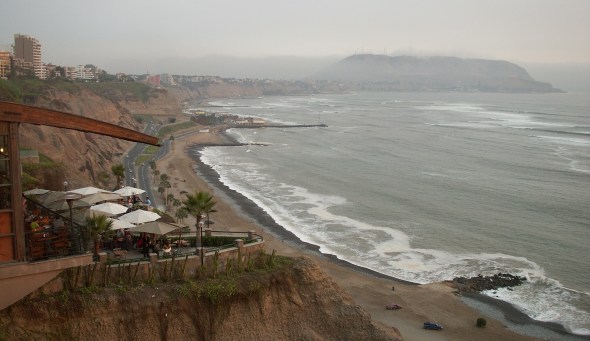
Sometimes, perceptions can be very different to reality.  I made my fourth trip to Lima in 2014 and felt much safer than when I first visited in 1995 (and definitely safer than when I was almost mugged there in 2006).  Yet The Economist places the Peruvian capital at number 38 (out of 50) on its summary list.  I spent the majority of time during my last visit in the prosperous Barranco and Miraflores districts, which might go some way to explaining the discrepancy.

KONICA MINOLTA DIGITAL CAMERA

Lima coastal view

So what can you do to ensure you don’t unwittingly stumble into trouble?

Read government advice before you travel

If I’m planning a trip somewhere, I make this one of my first ports of call at the research stage so that I can make a considered decision as to whether I’m happy to put myself in that country.  Sometimes, it’s as much a case of being prepared as being put off; if there’s an upcoming election for example, I might make sure I’m not in a large city in case the losing side get a bit shirty. The UK’s Foreign and Commonwealth Office maintain a comprehensive listing of travel advice by country here:

https://www.gov.uk/foreign-travel-advice

image

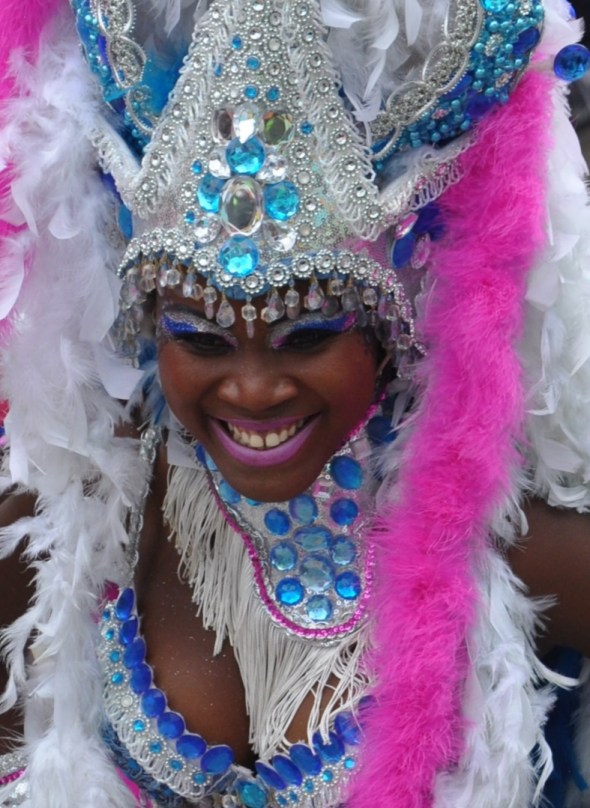
Carnival queen, Jacmel

Utilise social media

While travelling in Haiti last winter, I found Twitter an invaluable source of information as an unfolding labour dispute saw taxi drivers take to the street to blockade roads and set fire to piles of tyres.  I was able to keep abreast of events happening in the capital Port au Prince and judge when it was safe to make the minibus journey back from the sleepy coffee town of Jacmel where I’d holed up to experience Carnaval.

Get advice from people who’ve just been there

The internet’s home to many forums specialising in travel and by posting for advice on a destination you’re hoping to visit you can tap into a wealth of information.  Try forums such as Trip Advisor, Lonely Planet’s Thorn Tree or myWanderlust whose regular posters are usually more than happy to help.

photo1

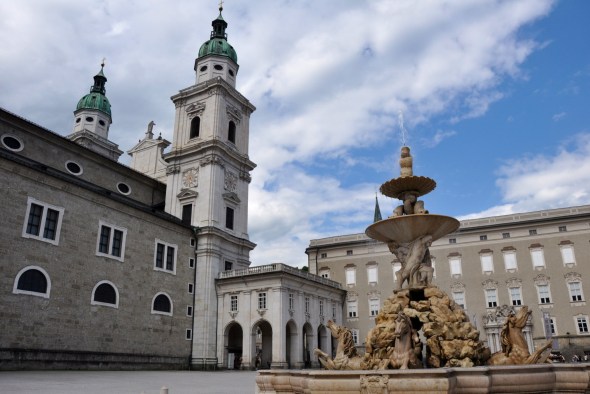
Residenzplatz, one of Salzburg’s prettiest corners

Trust your instincts

Finally, if something doesn’t feel quite right, go with your gut.  That might mean you move on from a place that has a dodgy vibe or it might mean you shelve that trip for another time.  After all, there’s always Austria…

What to do if… you miss your flight

One of the biggest obstacles to independent travel is the fear of things going wrong.  Without the safety net of a tour company, worrying about how to cope might well seem like a sure fire way of ruining a good holiday.  I decided long ago that I’d prefer to be in control – no surprises for those who know me beyond the computer screen.  But things do go wrong and it’s good to know what to do if that’s the case.

airport-690556

Always good to see “On Time” showing

Missing a flight is stressful.  It doesn’t matter why or whose fault it was, it’s stressful.  Mostly, when I’ve missed flights, it’s been a case of a late-arriving inbound flight causing a missed connection, but I’ve arrived at the airport on more than one occasion to find my flight had already departed.  You can read the stories here:

https://juliamhammond.wordpress.com/2014/10/15/five-reasons-to-travel-independently/

What to do if you miss a connecting flight because the inbound flight is late

If you’re still on the plane when your next one is merrily backing off the stand, no amount of pleading with airport staff is going to get you on that flight.  The first thing to think about is whether you have a through ticket.  If you buy two separate tickets and the first is delayed, the carrier operating the second leg has no obligation to honour your ticket.  Don’t choose flights with very short connection times either.  Immigration officials can be very stubborn.

landscape-644323

Fantasy or reality?

Minimise your chances of being stranded by choosing a carrier who operates multiple flights a day to your final destination if at all possible and avoid opting for the last flight of the day.  If they have space, you’ll still get to your destination the same day, albeit later than planned.

Speak to the ground staff as quickly as possible; if there are more people to rebook than there are seats available, you don’t want to be last in the queue.  Holding a frequent flier card with that airline can also help you move up the queue.  It can also pay to get an aisle seat as near to the front of the plane as you can, particularly if you know you have a tight connection.

Be nice.  It’s not the fault of the ground staff if your plane was late in.  Getting angry isn’t going to help.  In fact, it’s likely to hinder your chances of organising a speedy replacement flight if you piss off the one person that can arrange it for you.  Save your breath and stay calm.

Be flexible.  Can you travel to a different airport in the same city?  It’s inconvenient, perhaps, but still better than not arriving at all.  Let the ground staff know what you’d be prepared to put up with.  If you’re due at a hotel but are going to lose the first night of your booking, get in touch with them and explain – they might let you off any financial penalties they’d usually impose.

airport-802008

Be patient

What to do if it’s your fault you miss the flight

Technically, the airline doesn’t have to do a thing and you’ll have to abandon your travel plans or buy a new ticket.  So be nice and hope they take pity on you – and I mean really nice.  Appeal to their better nature.  Coming back from Bangkok, arriving 21 hours late for a flight just after midnight, I explained to the check in staff my humiliating predicament.  As a Geography teacher who taught about time zones and tourism amongst other things, if they couldn’t fit me onto that night’s flight, I was going to have to confess to my students the real reason I’d shown up for work a day late…

What to do if it’s their fault – your flight is cancelled

Your airline must offer to rebook you on a later flight or offer you a refund.  They have an obligation to get you to your destination, though not necessarily by the routing you’ve chosen or on a particular day.

Note that if your flight originates in the EU or arrives there from anywhere else but on an EU airline, you are entitled to compensation – even if the airline claims you aren’t.  If an EU and a non-EU codeshare applies – such as Virgin and Delta, for instance – you’ll only fall into this category if your ticket and therefore contract is with the EU airline – Virgin in my example.  I had a long and drawn out fight with Cityjet over this right to compensation, but eventually won.  Read about how to get your money back here:

https://juliamhammond.wordpress.com/2015/03/06/finally-a-win-against-cityjet/

scan10002

Airlines should give you a written notification of a flight cancellation

You’ll see from that post that keeping evidence is crucial.  Make sure you keep hold of boarding pass stubs and receipts until you’re safely home without any problems.  Never send off your only copy of something; scan instead.

Make sure you have decent insurance in case you need to recoup your costs that way instead.  This may be your only option for compensation if you’re travelling outside the EU on a non-EU airline.

For more information, there’s a useful link here:

https://www.caa.co.uk/Passengers/Resolving-travel-problems/Delays-cancellations/Your-rights/Your-rights-when-you-fly/

More from Extremadura: the Roman ruins of Mérida

Spain probably isn’t the first country that springs to mind if you’re planning to explore the legacy of the Romans, but their empire encircled the Mediterranean (and beyond).  In Spain, in addition to better known sights like Segovia’s aqueduct and Cordoba’s old bridge, Mérida is one of the best places to see some of the structures left from that age.

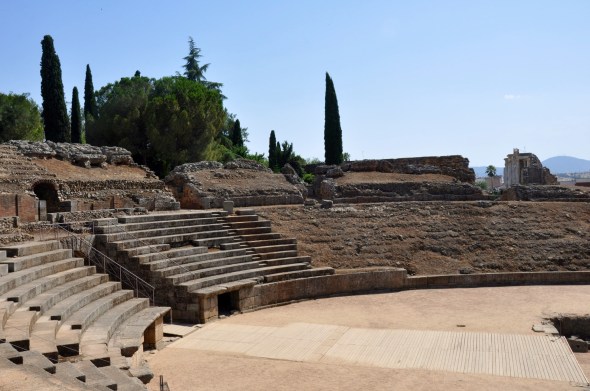
The modern city of Mérida has developed around and on top of the Roman colony of Augusta Emerita.  It was built around 25BC and was the capital of Lusitana, located the furthest west of the Roman provinces.   I began my exploration at the amphitheatre.

mer2

Passageway leading to the main arena

Though not as well preserved as others I’d visited – Tunisia’s El Djem, Nîmes in France and of course Rome’s Colosseum spring to mind – it had a certain charm.  Being a weekday in the height of summer, visitors were thin on the ground, giving me a place free of tour groups to savour at a leisurely pace.

mer5

The amphitheatre viewed from the top of the stands

The amphitheatre itself was built about 8BC, designed to stage gladiatorial fights and other such spectacles.  It would have had a capacity of around 15000 people, making it considerably smaller than the Colosseum which could seat almost four times that number.  Adjacent to the amphitheatre is the theatre.  More impressive, in my opinion, it’s a few years older than its neighbour, though back then, it wouldn’t have been nearly as popular.  Give the Romans a choice between a bloodthirsty fight and a stage play and the fight would win every time.

mer3

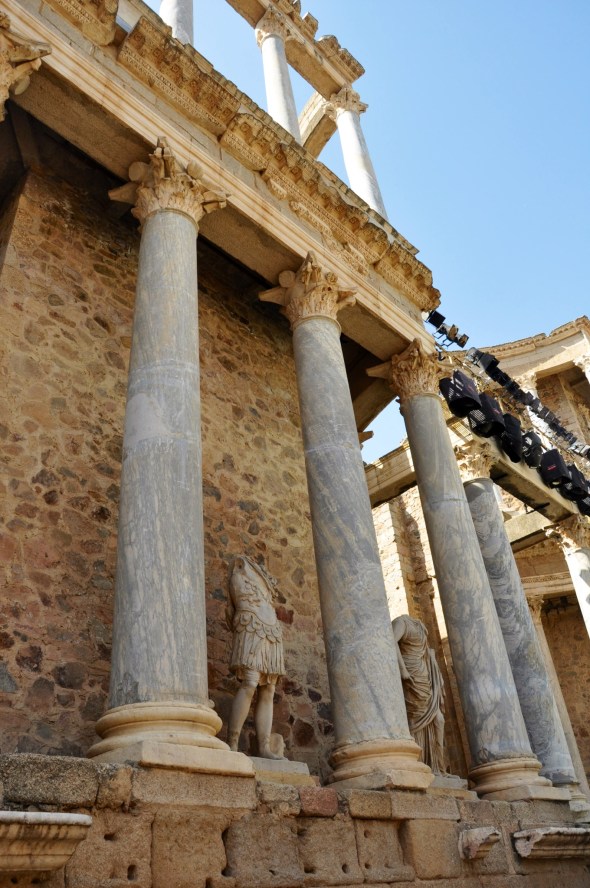
The headless statues behind the stage

Six thousand people would have been able to watch the proceedings.  These days, the theatre is still in use; the Festival de Mérida takes full advantage of the atmospheric setting for a summer of plays.  My schedule didn’t coincide, so I had to content myself with sitting on the front row in front of an empty stage gazing up at statues of deified emperors.

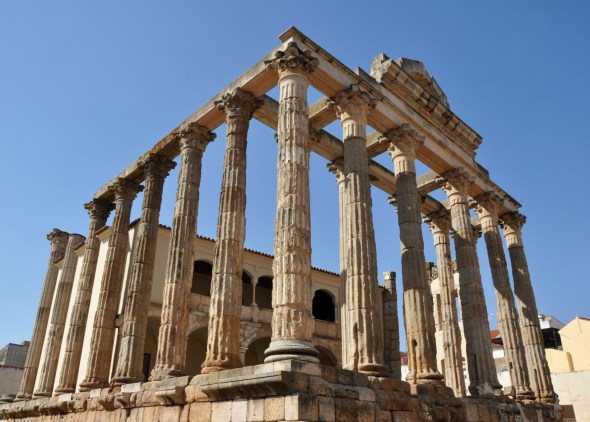
Perhaps the most impressive structure in the city is that of the Temple of Diana.

Mer1

The Temple of Diana

Its Corinthian columns make it an impressive sight.  Behind, lies the Palace of the Duke of Corbis, into which the temple was absorbed in the 16th Century.  The temple lies on one of Mérida’s main streets and there’s a cafe next to it, which makes it a surreal sight.  Nearby, is the Forum, again surrounded by the town’s modern buildings.

mer7

Mérida’s Forum

Strolling downhill, it’s not long before you reach the Guadiana river and there, you find the old bridge.  Built in two sections, it links the river’s banks via an island.  Sixty of its original sixty two spans still exist, and wisely the bridge was pedestrianised over two decades ago.

mer4

The Roman bridge at Mérida

Following the river bank from the bridge, after exploring the 9th Century Moorish Alcazaba that abuts its western bank, I headed to the Casa del Mitreo.  There, Mérida’s most beautiful mosaics can be found.  Best known is the mosaico cosmológico, laid in the 3rd Century and partially intact today.

mer11

Parts of the mosaic can be seen to this day

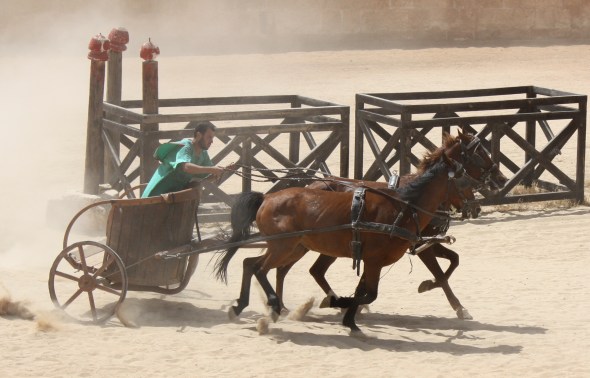
The city also has a Hippodrome, but I made a conscious decision not to go.  I could blame the weather – who wants to do such a walk when the temperature is still 40°C at six in the evening – but actually it was to avoid comparisons with the excellent experience I had at Jerash in Jordan.  Its Hippodrome is used for the wonderfully entertaining RACE project.

IMG_2745

You can read about it here:

https://juliamhammond.wordpress.com/2016/07/25/gladiators-we-salute-you/