juliamhammond

Latest

Been there, done that, now what?

I wouldn’t class myself as a jaded traveller.  I still get excited as I pack my wheelie and I even still love dragging myself out of bed in the pitch black to make an early flight.  But there are places that I’ve tired of, places where I find myself wondering why they’re so hyped.  If I never got to go to Paris or Amsterdam again, I wouldn’t be concerned.  (But let’s not include New York in there because I’d be gutted to think I could ever be done with that incredible city.)

image

Tulips from Amsterdam

Increasingly, though, I’m keen to seek out places without crowds, not so much out of some kind of snobbish one upmanship but more out of a desire to be completely unsociable.  We introverts need our space, you know.  So which alternative destinations do I recommend if you’re looking for an off the beaten track experience?

Been there: Cusco and the Sacred Valley

Now what: Chachapoyas

The wealth of Inca sites in and around the Peruvian city of Cusco makes the area one of the country’s most visited.  From Sacsayhuaman to Machu Picchu, this splendid heritage makes for fascinating viewing, but year on year visitor numbers have soared and you’ll be hard pushed to find space for quiet reflection unless you seek out some of the lesser-known places like Poroy and Chinchero.

10427280_10203326911761294_2819976564638893839_n

Kuelap fortress

Trailblazers should ditch the crowds and fly north from the Peruvian capital Lima instead of south.  Basing yourself in the charming town of Chachapoyas, you’ll be well placed to visit the intriguing hilltop fortress of Kuelap as well as the sarcophagi at Karajia.  Find out everything you need to know about arranging your trip here:

https://juliamhammond.wordpress.com/2014/11/25/northern-peru-the-chacha-circuit/

Been there: Dominican Republic

Now what: Haiti

Not for the faint hearted, a trip to Haiti’s going to require you to keep your wits about you.  Compared to its Hispaniolan neighbour, the Dominican Republic, package tourism is in its infancy and largely confined to Labadee in the north of the island.  Instead of all-inclusives and the hard sell at the end of a rum factory tour, head over the border and make for the sleepy beach at Port Salut.
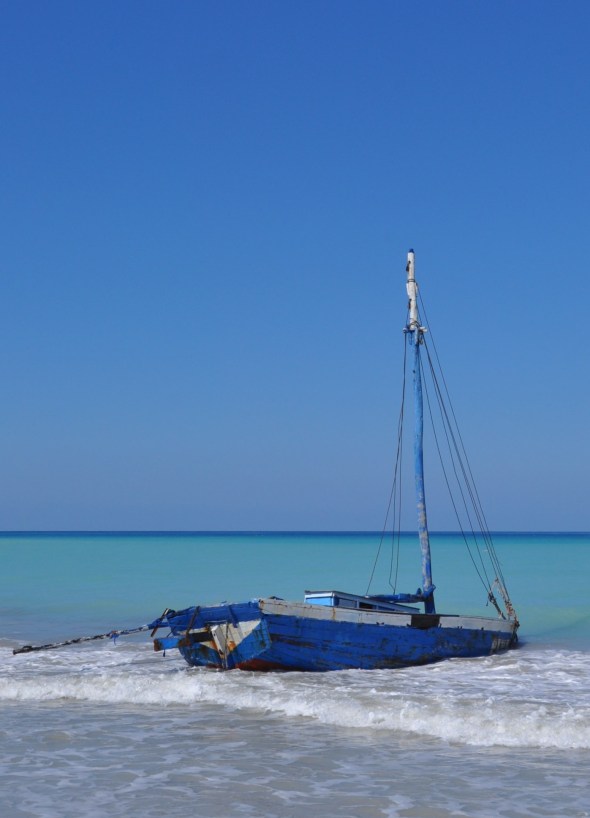
image

Fishing boat on Pointe Sable, Port Salut

You won’t find a bustling resort, rowdy beach bars or pestering hawkers who won’t leave you alone until they’ve made a sale.  At weekends, a steady stream of ex-pat aid workers from Port au Prince gives the place some life, but if all you want is pristine white sand, crystal clear turquoise waters and a cold beer, then come on a weekday and you’ll have the place to yourself.  See why I liked it here:

https://juliamhammond.wordpress.com/2015/02/14/the-best-beach-in-haiti/

Been there: Andalusia

Now what: Extremadura

I’m a big fan of Andalusia, from the tranquil elegance of the Mezquita in Cordoba to the bustling alleyways of the Jewish quarter in Seville.  The delightfully atmospheric hamman in Jerez offered welcome respite from scorching afternoon sun and the towers of Cadiz offered a glimpse into that city’s fascinating maritime past.  This year, though, for the first time, I dragged myself away from Andalusia’s comforting familiarity and ventured north to Extremadura.
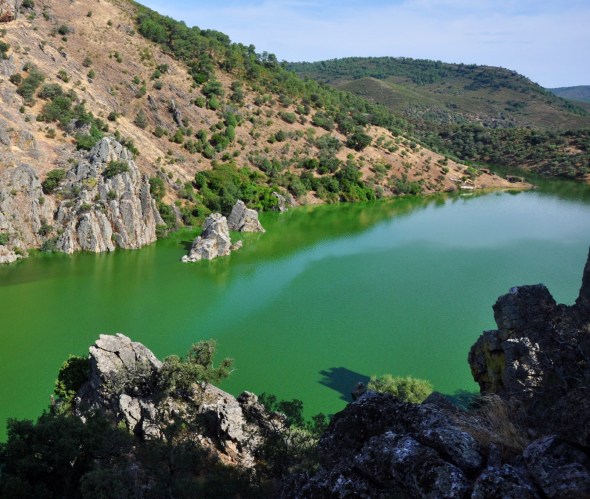
photo3

Vivid colours and unspoilt views

This overlooked region still has its pueblos blancos, like Zafra.  It offers the gourmand such a choice in unmissable foodie experiences that stay too long and you’ll need to pay for an extra seat on the plane to accommodate a vastly enlarged belly.  And the scenery, both natural and built, is as transfixing as its more popular neighbour.  My favourites?  Monfragüe National Park’s showstopping scenery and Trujillo’s atmospheric back street bakeries selling yummy yemas.  Find out what else you shouldn’t miss here:

https://juliamhammond.wordpress.com/2016/07/12/a-beginners-guide-to-extremadura/

Been there: Vienna, Budapest and Prague

Now what: Lviv

Given the political situation in parts of Ukraine, you could be forgiven for thinking I’ve lost my mind in recommending one of its cities instead of the other gems of the Austro-Hungarian Empire.  But Lviv was annexed by Austria in 1772 and, known as Lemburg, had more in common with west than east.  Belle Epoque mansions and public buildings built in Viennese style still characterise today’s Lviv.  It’s a very rewarding place to explore on foot, safe and not at all what you’d expect from an ex-Soviet bloc city.  I’ll have my coffee and cake here, thanks.

lviv

Elegant Lviv


Any other suggestions?

Of course, there’s a good reason why some parts of the planet attract so many of us. But if you venture off on your own, the rewards are limitless.  Where have you been that improves upon one of the world’s top rated destinations?

The coffin makers of Teshie

If you could choose a coffin designed to match your favourite hobby or interest, what would it be? A football boot? A bottle of Coke? A mobile phone? In Teshie, a suburb of the Ghanaian capital Accra, there’s no such thing as a regular coffin.

Ghana 327

If I’m honest, I’ve never really given my own funeral much thought, concentrating instead on living. But to Ghanaians, death is a big celebration, the funeral a chance to mark the contribution a person has made to their community. And a big part of that is a customised coffin. Despite the typical cost coming in at more than six times the average income, many families choose to invest in one of these designer pieces to give their loved one a worthy send off.

Ghana 334

The southern Ghanaian Ga people believe that death is not the end and that a person’s spirit will live on in the afterlife. It’s thought that deceased relatives hold much influence over the living and thus need to be kept happy. Depending on a person’s status, they might qualify for a particular type of coffin. Swords have high status and therefore cannot be used for just anyone; lions, cockerels and crabs represent clans and so only the heads of certain families are permitted to be carried in them.

Ghana 336

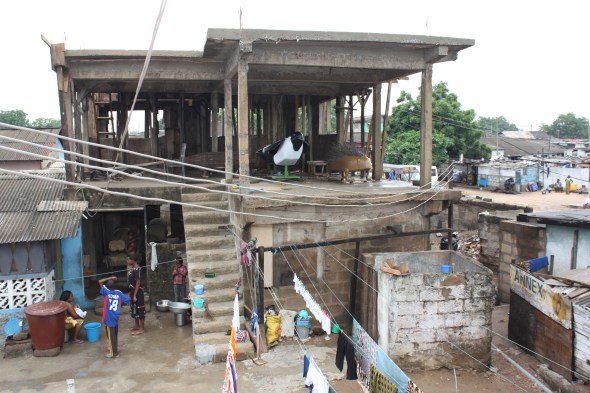
Pulling up along the main street in Teshie, at first glance it seemed a pretty unassuming place. My driver led me to the back of one of the breeze block shops that lined the street and up a rickety wooden staircase across the back yard.

Ghana 332

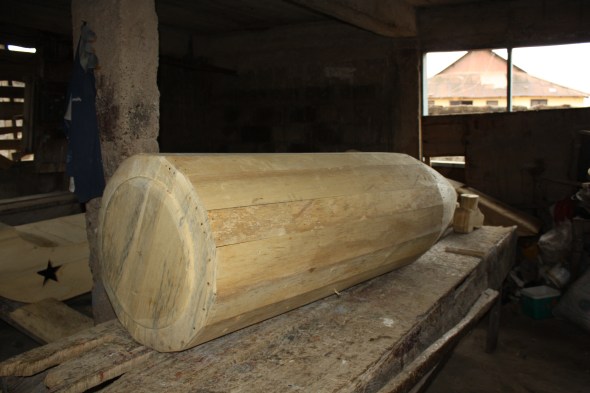
There, open to the elements, was a tiny showroom and workshop packed with finished and half-finished creations. An aeroplane, silk lined and carefully painted, looked ready to leave, missing only its dead body. A small photograph of an unsmiling policeman was tacked to the wall next to a crudely chiselled dugout. It was in its early stages, but it was clear  that  before long, this was going to be the ultimate vanity project.

Ghana 326

It’s also common for the deceased’s relatives to choose a coffin themed to their loved one’s former occupation. A fisherman would find himself interred inside a fish – how ironic – while a fruit seller could end up in an elongated pineapple or mango, perhaps. A barman (or drunk) could be a bottle of beer, a farmer a cow. There was no shortage of imagination, or skill.  Many of the craftsmen working on these fantasy coffins have been in the family business since starting their working life. Artisans employ apprentices who learn the craft and do the grunt work, leaving the artist to work simultaneously on the finer details of a number of coffins at once. Once carved, specialist painters or sign writers are drafted in to decorate the coffin appropriately. A coffin such as this is always to be a carefully crafted item, never a rush job.

Ghana 325

But although such businesses have been operating for decades since around 1950, interest from overseas is a relatively recent phenomenon. Word’s now out, though, and the coffins have featured all over the world in museums, festivals, commercials and trade shows from Milan to Toronto and a wealth of places in between. Coffins for local use are generally sculpted from the wood of the wawa tree, but for increased durability, those going to temperate climes are usually created out of something harder such as mahogany.

Ghana 330


If I’d have been at the beginning of my trip rather than the end, I might have been tempted. Never mind the freight charges, just think of the reaction when you got it home.  Orders take at least a fortnight to take shape if not longer, however, so for now a personalised coffin will have to wait.  In any case, I have no idea what I’d choose.  Would you?

Should you go back to a favourite destination?

For much of my adult travelling life, I’ve been keen to seek out new destinations, craving the buzz which comes from taming the unfamiliar and discovering what makes a place tick.  As the country count has increased, some have commented that I’m only interested in the number, but that’s really not the case.  In fact, over the past two years I’ve cut back on visiting the new to revisit old haunts.  Nostalgia is harder to fight the older you get.

image

Valle de la Luna, near San Pedro de Atacama

After a fourteen year gap, exploring the incredible landscapes around San Pedro de Atacama in Chile helped to reinforce just how spectacular that country is – and this time I came armed with a better camera:

https://juliamhammond.wordpress.com/2015/04/20/around-san-pedro-de-atacama/

As well as Chile, I returned to Salzburg in Austria, a city which I last visited as a child.  Participating in the Fraulein Maria Cycling Tour enabled me to create new memories – although I think my dream of belting out Lonely Goatherd at the top of my voice was probably someone else’s nightmare.  Perhaps that’s the key – to try something new in a familiar environment and add another page to your personal guide book for that place.

Notes

Fraulein Maria’s Cycling Tours provide the words in case you’ve forgotten

There’s more here:

https://juliamhammond.wordpress.com/2015/06/05/salzburg-on-two-wheels/

There’s a risk, though, and that’s the place will have changed from the rose-tinted picture that takes pride of place in your holiday album.  Accept the reality: it moved on, and it moved on without you.  I remember heading back to Lake Titicaca after an eleven year gap to find the Uros Islands that had held such rustic  charm now sported satellite dishes and solar panels.  The quality of life for the islanders had measurably improved and I had to adjust my perception accordingly.  Why should people forgo education and health care just so we can get our daily dose of quaint?

IMG_3977

At least the Uros Islands still bounce

However, on balance, returning has been a largely satisfactory experience.  Seville, New York, Saigon and Cusco are amongst the cities which have garnered renewed attention from me over the past couple of years, and none of them disappointed.  In a few weeks, I’ll head to Budapest for a second visit.  It will be a day trip (joining Belfast, Lisbon, Amsterdam and Bremen on this blog once I return) but I’m already excited at the thought of luxuriating in one of the city’s hot springs and having a post-dip coffee and cake at Gerbeaud’s Cafe.  If you’ve been, send me your tips for how I should spend my day.

My next big solo trip will be back to South America; I plan to return to Uruguay, Argentina and Bolivia but many of the destinations I’ll stop at en route from Montevideo to La Paz will be new to me.  And I’ve still got a few new countries on my wish list – Ethiopia, Cape Verde and Moldova spring to mind – but for now, they’ll just have to get in line.

What’s your take?  Do you love to return to the familiar or prefer seek out new places?

Visiting a cemetery on holiday? You’re dead right I do!

Thanks to myWanderlust, I recently became aware of a fantastic blog by Rachelle – better known to those on the forum as Moose on the Loose – called http://www.stoneanddust.com. With her blessing, I’ve decided to blog this week about my own favourite cemetery visits. It may seem odd or macabre, but they are fascinating places with more than a single story to tell. And if you’ve been to any on your travels, I’d love to hear about them.

Oaxaca

Day of the dead cemetery

Xoxocotlan old cemetery

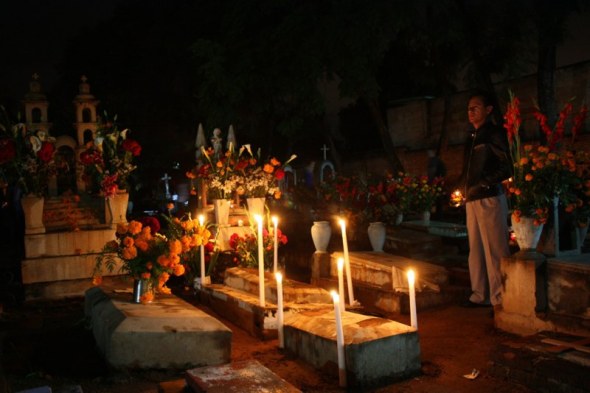
I visited Oaxaca’s old and new cemeteries when I visited for the Day of the Dead festivities. Each year, at the end of October, preparations are made to welcome the ancestors back for a celebration. Graves are decorated, food prepared and the Mezcal bottle drained to toast the gone but never forgotten. Lit by candles and adorned with more marigolds than I’ve ever seen in my life, Xoxocotlan’s old cemetery was the more atmospheric. In Xoxocotlan’s new cemetery, glow sticks and candy floss were the order of the day against a soundtrack of Michael Jackson’s Thriller.  Read about the festival and find more photos here:
http://juliahammond.co.uk/Travel/DIA_DE_MUERTOS.html

Port au Prince

DSC_0032

The cemetery, like the city, was damaged in the 2010 quake

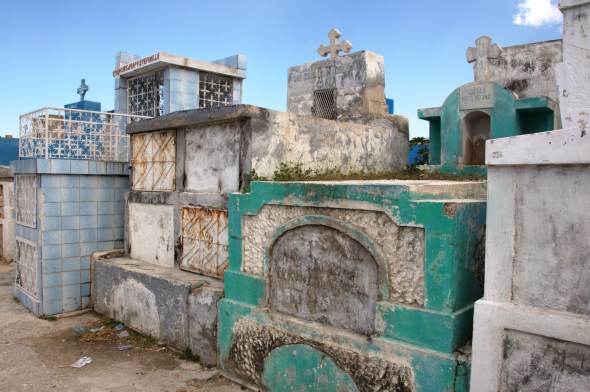
My companions in the ageing cemetery in Haiti’s capital weren’t mourners – they weren’t even human. Instead of the expected hustlers, I was tailed by a goat and several chickens. Locally known as the Grand Cimetière, it’s an important focal point for followers of vodou. Parts of the Haitian capital aren’t very safe and this was reputedly one of them, so I lingered only long enough to absorb my surroundings and explore some of the more accessible graves, concerned that if I strayed too far from the main paths I might find myself the victim of a mugging.

New Orleans

NOLA cemetery

If you’re in NOLA and need a guide, Sandy comes highly recommended

During my first visit to the Big Easy, I’d been fascinated to learn about Hurricane Katrina and its aftermath by one of the most interesting guides I’ve ever had the fortune to meet. On my return, I found out that Sandy was guiding a tour of St Louis Cemetery Number One. It’s the site of vodou queen Marie Laveau’s tomb, and after some vandalism, tours are only possible with a guide. Sandy regaled us with tales of the dead and the city that swallowed them up, with her distinctive humour and deadpan delivery. Who knew that temperatures inside those tombs were so high they acted like a mini crematorium?

Buenos Aires

IMG_9742

The Duarte family tomb, La Recoleta cemetery

Another cemetery where tombs are largely located above ground rather than the below ground graves I’m used to in the UK is La Recoleta in the Argentinian capital Buenos Aires. Located in an upscale neighbourhood, it’s home to many of the city’s rich or famous former inhabitants, including of course Eva Peron. When I went to pay my respects at her tomb, I was touched by a man holding his own personal vigil to the iconic former first lady, proof that the cult of Evita lives on.

Paris

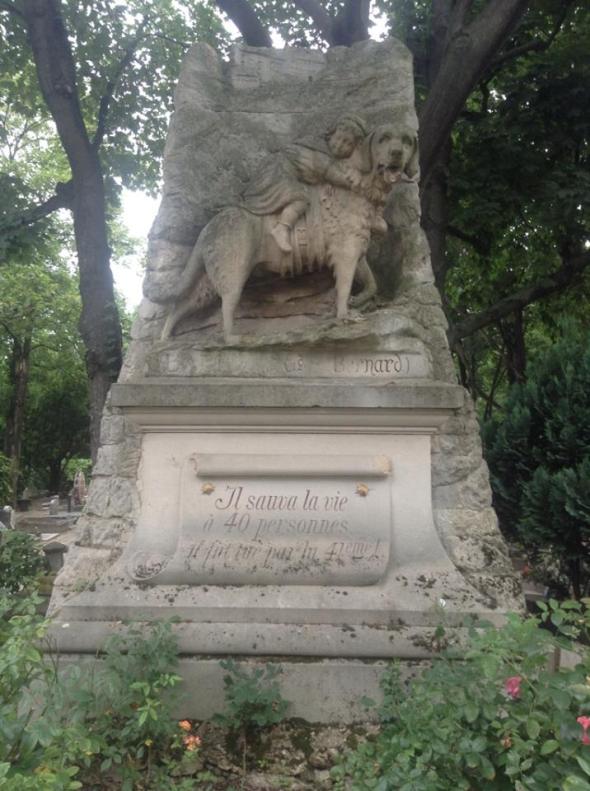
Barry dog

Canine hero Barry the St Bernard

This time, it’s a cemetery for dogs, a short metro ride from the centre of Paris. To give the place its full name, Le Cimetière des Chiens et Autres Animaux Domestiques has an eclectic mix of graves of much loved pets and canine heroes. Rin Tin Tin, the German Shepherd star of many Hollywood movies, was brought here to be buried after his death in 1932. Perhaps the most poignant of the inscriptions relates to a canine hero, a St Bernard called Barry, who saved 40 human lives before dying as he tried to save the 41st.

London

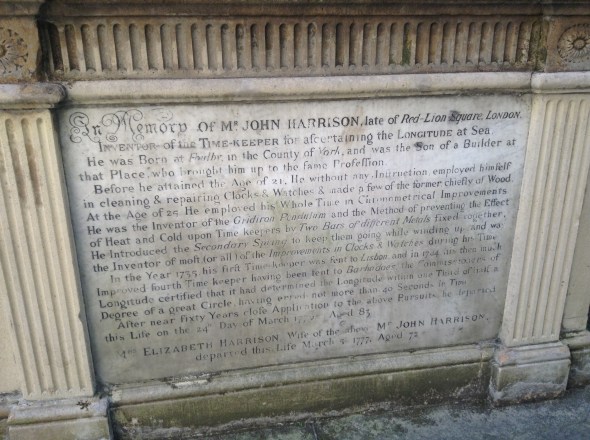
John Harrison

John Harrison’s tomb

Highgate is well known as the place where Karl Marx is interred, but my favourite of the UK capital’s graveyards is that of the church of St John at Hampstead. Inside, you’ll find two tombs of note. The first is of John Harrison, the clock maker credited with inventing a timepiece that could roll with the waves without losing time and thus enabling us to accurately define lines of longitude. The other is that of another John, Constable, whose paintings of the Essex and Suffolk borders sum up the beauty that can still be seen in my home county today. For a walking itinerary in Hampstead, plus others in Notting Hill and Marylebone, why not have a look at my Unanchor guide, available on Amazon here:

Travel hacks for solo travel

For almost three decades, I’ve happily travelled the globe alone. While I enjoy travelling with family or friends, nothing beats the joy of being by myself as I discover a new place. But there are, as with anything worthwhile, a few issues to consider. Here are a few tips to help you discover solo nirvana.

Watching the bags

One of the most inconvenient things about travelling alone is having no one with you to watch your bags.  With a bag on your back or at your feet, you become very vulnerable when your attention is distracted – like when you’re booking a bus ticket for instance.  There are several ways of reducing the chances of being robbed.  Travelling light is the obvious one – carry less stuff and there’s less chance of that stuff being stolen.

DSC_0677

All the luggage I needed for a two-week trip to the Indian Ocean

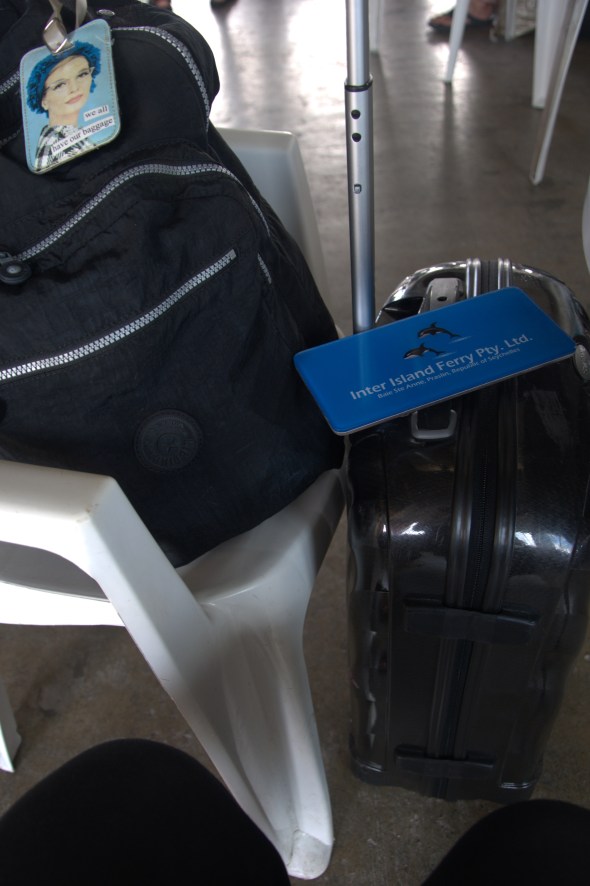
Also consider which type of luggage you’re carrying and how to avoid being the victim of an opportunist thief.  I travel with a hard shell wheelie and when I’m off somewhere dodgy, pop a mini padlock on my rucksack.  It’s not foolproof – a bag slasher obviously wouldn’t have a problem – but it is a small deterrent.  If the person next to you has their bag wide open, you’re not going to be the first choice for a thief.  Keep your bags in sight and where possible, keep the strap across your body.

Timing is everything

On a related point, I’ve never thought it would be smart to leave my bags unattended. I’ve no wish to be the reason an airport is evacuated. But I’m also regularly the victim of suggestion – and if I see a toilet, then there’s  a good chance I need to visit it.  That can be tricky when you’re on the move with all your bags and the floors are at best grubby, at worst, well, let’s not go there…

IMG_2594

No single option even in the loo – Norway’s answer to toilet queues

Timing is everything. Go before you leave your hotel, in an airport where the cubicle could be big and clean enough to leave belongings on the floor or somewhere there’s a solid, heavy duty hook. And pray it’s not a squat toilet. Believe me when I say it’s almost impossible to keep your balance with a rucksack on your back.

Avoid tours

The dreaded single supplement can make it all too obvious that solo travellers incur a financial penalty from some establishments. While I understand how frustrating it must be for hoteliers to lose half the potential revenue from a double or twin room, I still have a travel budget to stick to. I look for hotels with single rooms – they’re not all windowless cells shoved in basements – and unpackage my trip to swap private drivers for public transport.

Hostel NZ

Don’t rule out private rooms in hostels for single occupancy

I also avoid tour companies promising single rooms without the single supplement – usually all they’ve done is absorbed those charges into their headline price. If I do need to take a tour, I opt to share with a same-sex stranger – sometimes you get lucky and get a room to yourself anyway and where that’s not been the case, I’m relieved to say my room mate has been a pleasant distraction for a few nights and not a surprise snorer.

Personal space

Most of the time, while I’m happy for my husband to rest his head on my shoulder, the same doesn’t apply for complete strangers who just happen to be occupying the seat beside me. On buses and trains, I seat myself on the aisle seat with my bag by the window. Most people would prefer to slide into an empty seat rather than have to ask someone to move, so you often keep your seat even when the bus is quite full.  I’m always gazing intently at something out of the window, though if they ask me to move over or let them in, I always do so with a smile.  There’s no sense in pissing someone off who’s going to be next to you for hours.  It’s also easier than you might think to find single seats, whether on trains or on the overnight sleeper buses that are common in South America.

FrecciaRossa executive

No shortage of space on Italy’s FrecciaRossa trains in executive class

If you do end up next to someone, it’s not the end of the world. The most comfortable flight I ever took was an overnighter from Ghana wedged tightly up against a very large woman – she was as soft as a goose feather pillow and happy for me to snuggle up as she spilled over into my seat.

Eat at the bar

Often, the only time when I’m really conscious I’m travelling alone is when it comes to dinner. Where eating breakfast without a companion rarely feels odd, there still seems to be a stigma about sitting alone over dinner. I’ve never been one for room service (and let’s face it, rarely stay somewhere smart enough to even have room service) so how do I overcome the thorny problem of dinner for one? I’m not frightened to say no to a table shoved up at the back of a restaurant by the kitchen door – if they don’t want to give me a decent table, I’m quite happy to take my business elsewhere.

IMG_8025

Alas, there was no one present to witness me eating grasshoppers in Mexico 

But if I’m feeling sociable I often sit at the bar to eat, as the bar tender and fellow patrons are often chattier there. And if I’m not, I’m quite happy to read a book between courses or simply people watch.

If you’re thinking of travelling solo but are scared to try it – don’t be! It might just be the best thing you’ve ever done.