juliamhammond

Latest

Flight news: Honduras

While parts of Central America have been blessed with direct flights from Europe for some time, others have been a bit more disconnected.  Honduras is one of those places.  But now, with the launch of a weekly flight from Spain, it’s possible to get there a little quicker.  When I visited Honduras a few years ago, getting there involved an overnight layover in Houston, adding both considerable time and expense to the journey.  Air Europa’s flight from Madrid at first might appear to be less than ideal, arriving shortly before 5am in what was once the world’s worst hotspot for murders.  (San Pedro Sula has now passed the Murder Capital of the World crown to the Venezuelan capital Caracas.)  But this late departure means that a connecting ticket from the UK is possible and you no longer have to lose a day of your holiday just to get there.

IMG_7749.JPG

Honduras might not be the first place that springs to mind if you’re looking to holiday in that region, especially in terms of safety.  But it’s easy to get straight out of San Pedro Sula and the early arrival means you’ll have plenty of time to reach somewhere both safer and more beautiful well before nightfall.  Copan Ruinas is one such place.  I spent a pleasant time there in 2014, riding horses out to the Guatemalan border, drinking the excellent locally-grown coffee and exploring some of the least crowded Mayan ruins in the region.  Visitors were outnumbered by scarlet macaws by some considerable margin.

IMG_7822

While I’d still be loathe to recommend spending any more of your time in San Pedro Sula than is absolutely necessary, the country’s Caribbean coast is as laid back as they come.  It’s well worth risking the journey back to San Pedro Sula’s airport after your Copan Ruinas sojourn to make the short hop to Roatan Island.  It’s the perfect place to unwind in the sunshine, sink your toes in the sand and sip a cocktail or two.

IMG_8330.JPG

When are we going?


Five favourite travel books: Asia and the Middle East

I’m not Asia’s greatest fan. Though you’ll find some of the world’s most fascinating natural and cultural sights, I find it irritating that they’re buried amidst jumbles of telephone wires and that reaching them often involves darting out in front of more motorbikes than it should ever be possible to encounter on one road. Nevertheless, I enjoy reading about the place, when I can filter out the bits that I don’t like to be left with a vibrant and enticing locale. There are exceptions, however, and one is most definitely Sri Lanka. I visited last year and cannot wait to return.

The Tea Planter’s Wife by Dinah Jeffries

Tea planter

It’s perhaps no surprise, therefore, to learn that one of my choices is a work of fiction. The story is enthralling but most of all, it captures the essence of the country in which it’s set. Here’s one of my favourite descriptions from the book:

“She took a deep breath of what she’d expected would be salty air, and marvelled at the scent of something stronger than salt.
“What is that?” she said as she turned to look at the man, who, she rightly sensed, had not shifted from the spot.
He paused and sniffed deeply.  “Cinnamon and probably sandalwood.”
“There’s something sweet.”
“Jasmine flowers.  There are many flowers in Ceylon.”
“How lovely,” she said.  But even then, she knew it was more than that.  Beneath the seductive scent there was an undercurrent of something sour.
“Bad drains too, I’m afraid.”
She nodded.  Perhaps that was it.”

For some reason, though this scene takes place in Colombo, it feels to me like it should be set in Galle Fort. Quite possibly that’s because I grabbed the first train out of Colombo to head for the hill country and quite possibly because Galle Fort oozes history, spice and sewage from every cobblestoned street.

Hokkaido Highway Blues by Will Ferguson

Hokkaido

My next choice focuses on an Asian country I also love: Japan. Travelling through Japan ought to have been a challenge, what with the different alphabet and all, but the Japanese go out of their way to make sure they can understand you, even if the conversation can get a little stilted. Here’s the author on the art of Japanese conversation:

“This was conversation by Non Sequitur and I was thoroughly familiar with it by now. The trick was to answer with equally arbitrary statements, until you sound like a couple of spies conversing in code.
“Yes, I can eat Japanese food. Baltimore is very big.”
“How long will you stay in Japan?”
“Until tomorrow, forever. It is very cold in Baltimore.”
He shook my hand. We smiled warmly at each other, clearly this was an International Moment.”

Fortunately, when I reached Kyushu, the lady in the tourist office at Yanagawa defaulted to technology when she realised our language abilities were sorely lacking. Video conferencing with a disembodied head on her computer, I was able to secure a map and a recommendation for lunch. The head seemed very disappointed that I had no further questions and I felt guilty as I thanked it and headed off.

Three Moons in Vietnam by Maria Coffey

Vietnam

Years ago, I found myself sleeping in Michael Caine’s bed. He wasn’t in it, of course – of course! – but he had stayed in that same room and slept in that same bed while filming The Quiet American. The bed was located in Hoi An, in an old Chinese chophouse that had been converted into a guest house. Despite that it heaves with tourists (more so now, I understand, than when I was there) I found Hoi An to be a wonderfully atmospheric place. Maria Coffey describes the place thus:

“It was no problem to while away some time in Hoi An. We explored the fish market along the river bank, where women vendors smoking fat hand-rolled cigarettes squabbled nastily and noisily with each other.”

I don’t remember any squabbling, but I do remember the noise.

Mirror to Damascus by Colin Thubron

Damascus

On to the Middle East now, and a book set in a city whose history stretches back seven millennia, giving me hope that when the present conflict ends, the city will rebuild and restore. I visited shortly before the war kicked off and was enchanted by the place and its people. Clad in what felt like a mediaeval cloak, I marvelled at the Umayyad Mosque; free of my robes, I haggled in the tiny shops on Straight Street and never felt unsafe in the streets of its old town, even late into the night. In his book, Thubron tackles some of the city’s history:

“Some cities oust or smother their past. Damascus lives in hers.”

Here’s to when Damascus can live freely again.

The 8.55 to Baghdad by Andrew Eames

Baghdad

My final choice is another reminder that time changes everything. Mention Baghdad now and the Iraqi capital is still, to many, a place that instils fear instead of hope. But less than a century ago in 1928, none other than Agatha Christie made the journey from London to Baghdad by train. Her route took her through Syria, where she frequently stayed at the Baron Hotel in Aleppo. (Rumour has it that this historic hotel, which I visited but didn’t overnight in, has so far survived the war almost unscathed.)

Eames quotes the 1928 edition of the Thomas Cook handbook which “advises customers packing for Syria that “There is nothing better for travelling than a suit of Scottish tweed, supplemented by an ulster or other warm overcoat and a good waterproof.” The author had probably never ventured further than Ramsgate.”

Times change and for some places, that’s a good thing.

The value of trip planning

I’m looking forward to two big trips at the moment, and they couldn’t be more different.  The first, in a few weeks’ time, is a ten day holiday to Texas.  I’ll be travelling with a specialist operator for the visually impaired, Traveleyes:

https://juliamhammond.wordpress.com/2017/02/17/off-to-texas-with-traveleyes/

It’s outside my comfort zone.  Not the place of course – I’ve been to more States than many Americans – but the style of travel.  I rarely book a package tour, avoid group travel and try not to allow anyone complete control over my itinerary.  Yes, I’m a control freak and yes, I’m happy about that.

texas-1656861_1920

The other, in June, is an independent trip to the Caucasus.  I’ll begin my adventure in Georgia, spending ten days exploring some of what promises to be the region’s most stunning landscapes, before venturing into Armenia and the breakaway republic of Nagorno-Karabakh for a further week.  This is firmly within my comfort zone.  This is how I like to travel: tailor made by me for me, with me firmly in the driving seat.

europe-1785465

The former is a departure from my usual travelling style.  Pretty much everything has been planned for me save for updating my ESTA and getting to the airport.  There’s some free time, of course, but the way the group rotates to ensure all travellers get a change of company means I won’t know who I’ll be paired with on those days and in any case, free time is to be “negotiated” so both parties are happy.  I don’t have a problem with the theory – it should make for a much better trip once we get going – but in practice I feel very disconnected from this trip.  The main reason has to be that I haven’t been able to do my usual research.  I have some ideas – someone, surely, will want to join me for what’s described as a “gospel-ish brunch” in Austin – but until I get there and meet my fellow travellers, that’s all they are: ideas.  Technically I don’t even know what flight I’m getting though I’ve figured that out by a process of elimination and United Airlines, if you bump me there’ll be trouble.

oil-106913

In contrast, the Caucasus planning is really engaging.  I’m wearing in new hiking boots and the Lonely Planet guide to Georgia, Armenia and Azerbaijan has become my nightly read.  I’ve been swapping emails with tour providers to see whether organised day excursions would be a better option than going it alone by marshrutka.  I’ve compared monasteries and researched foodie experiences, checked weather forecasts and studied hotel rooms.  I’m figuring out whether a side trip to Abkhazia is possible even though I’m still half convinced that was the country the Tom Hanks character was supposed to have come from in The Terminal.  I really must look that up.  A rough plan is finalised for Armenia and once the Tbilisi-Mestia flights are released in a couple of weeks, the Georgia part will fall into place too.  I’m happy.  Browsing maps, photos and blogs online is giving me a sense of place and the more I find out, the more excited I’m getting.

church-1832512

It’s just that the more I’m getting excited about Georgia and Armenia, the more I’m realising I’m missing the experience of getting excited about Texas.  Once I’m there, I’m sure it won’t be a problem, but without this build up, without the anticipation, I can’t seem to be able to savour the place.  It feels like I’ll be tucking into dinner without sniffing the aroma wafting from the kitchen.  And that’s a shame.

What’s your most unusual travel experience?

While travelling in South America recently, I was asked what my most unusual travel experience had been.  Put on the spot, I was momentarily thrown.  At the time, we were posing for pictures pretending to run away from a plastic T-Rex that our guide had placed on the world’s largest salt flat.  I couldn’t help but think that what one person might define as unusual might be entirely normal behaviour to someone else.  Our guide certainly thought that there was nothing weird about what he was asking us to do and judging by the number of pictures on the internet, he’s not alone.

DSC_0306 (2)

I’m at the stage in my travelling life when visiting off the beaten track destinations has become a way of life and as such, the kinds of things I do on my holidays are very different from your average traveller.  For me, to fly and flop would be a change from my typical holiday style.  Since I’ve been back, I’ve been giving a bit of thought to some of my more unusual adventures.  Taking the definition as something I wouldn’t expect to do on a regular basis, here are my favourite five.  What are yours?

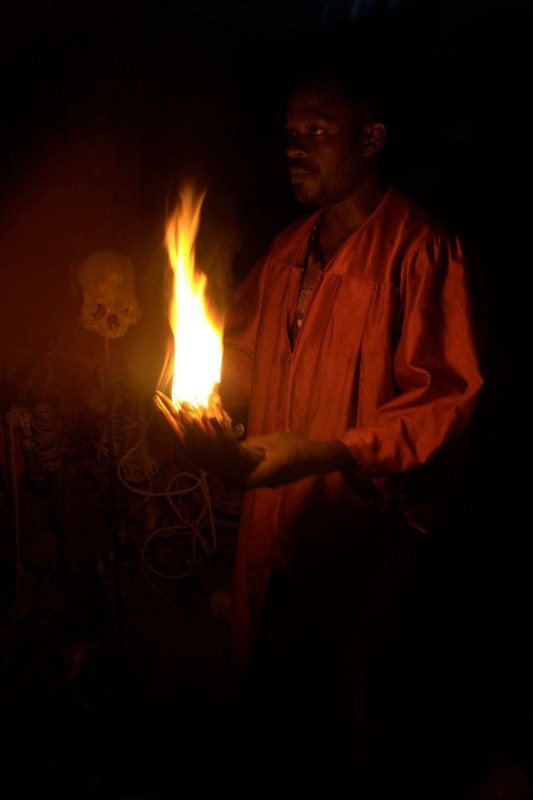
Receiving a vodou blessing, Haiti

image

Watching a volcanic eruption from the crater rim, Vanuatu

img_4782

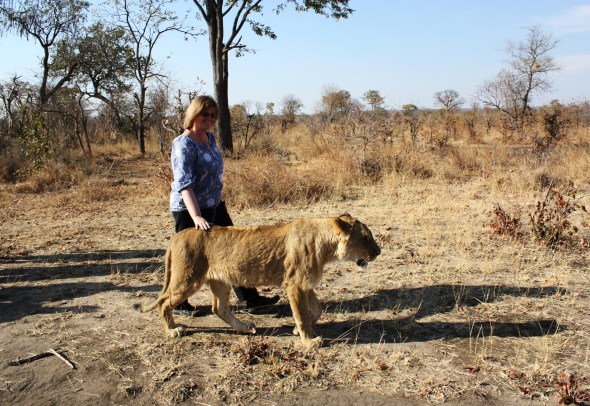
Taking a lion for a walk, Zambia

IMG_5687.JPG

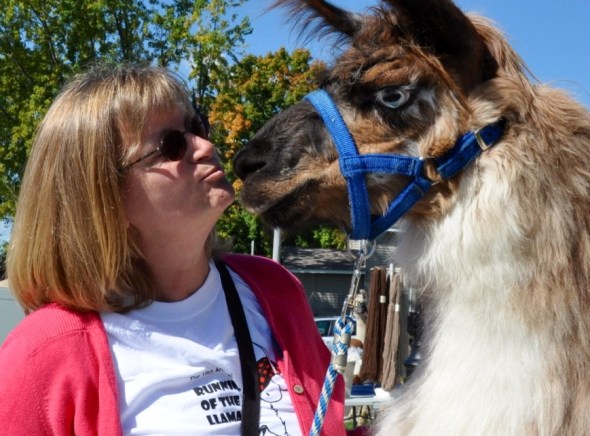
Presenting the prizes at the Running with the Llamas festival, USA

image

Eating rotted shark, Iceland

DSC_0138

Bolivia’s bowler hats

Even on the briefest of visits to the Bolivian capital, La Paz, you can’t fail to notice the plethora of hats, specifically the good old-fashioned bowler.  But unlike the black attire once worn by London’s city gents, these are brown – and worn by women.  

FullSizeRender (56)

It’s a cultural thing: the cholas who wear them do so to emphasise their heritage and reinforce how proud they are of it.  Once, the cholas weren’t welcome downtown.  They were refused entry to restaurants, banned from walking in Plaza Murillo in front of the Presidential Palace and harassed if they ventured into the city’s wealthier neighbourhoods.

FullSizeRender (57)

Cholas, or cholitas to give them the diminutive form, dress in voluminous skirts, multiple layers of petticoats and crocheted shawls.  The hat is an easy way of determining the wearer’s marital status: if she wears it straight, she’s married, but if it sits at an angle, she’s available.  So that hat plays a critical role in the La Paz social scene.

FullSizeRender (55)

The practice of wearing a bowler is a comparatively recent phenomenon.  Most sources agree that, in the 1920s, a consignment of bowler hats was shipped to Bolivia, intended for railway workers.  But someone had made a mistake with the colour or size – versions of the story disagree – and faced with a huge loss, an entrepreneur named Domingo Soligno marketed them to the indigenous Aymara women as being the height of fashion in Europe.

FullSizeRender (49)

Some sources wrongly name the type of hat as a borsalino.  In fact, Borsalino is the name of an Italian hat manufacturer that for many years supplied the cholas. It’s correctly known, therefore, as a sombrero de la chola paceña.

FullSizeRender (54)

To wear a Borsalino comes at a price and these expensive hats are beyond the means of many.  The target of thieves wishing to make an easy buck, the Borsalino brand is now largely a thing of the past in Bolivia.  For more than forty years, bowlers have been made locally by the likes of Sombreros Illimani and also imported from Colombia.  But even these cheap imitations have a charm about them.

FullSizeRender (50)