juliamhammond

Latest

Monastery-hopping in Armenia

Armenia claims to be the oldest Christian nation on the planet so it’s hardly surprising that you’ll encounter plenty of monasteries. Most feature a “gavit” or entrance hall, where the floor is often spread with graves. A few steps will lead into the church proper. As a woman, covering your head isn’t required as it would be in Georgia. You will see the faithful reverse out of the church so as not to turn their back on God; even those who aren’t regular churchgoers sometimes do this out of respect. Here’s a brief guide to eight of its most commonly visited.

Haghpat

image

Located in the Debed Canyon, this is for many visitors their first monastery in Armenia as it lies on the way to Yerevan from the Georgian capital Tbilisi. This imposing mediaeval complex was built in the 9th century, a sprawling delight of building added on to building, the grey stone set off perfectly by the terracotta of the roof tiles. Inside, one of the rooms has a series of holes in the floor, once used for storing wine.

Why should you visit?
As it’s quite a distance from Tbilisi to Yerevan, this is a great way of breaking the journey.

Sanahin
image

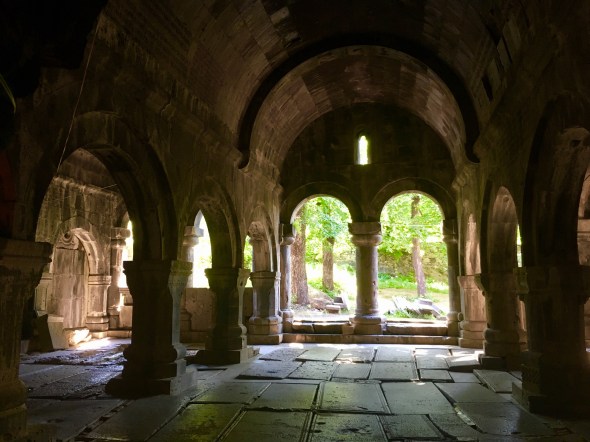
Twinned with Haghpat, this one means “older than that one” though it’s not as attractive from the outside. The cavernous interior is fascinating, with plenty of tombstones on the floor. Step on them as it’s commonly held that if you do, you’re freeing the dead of their sins – and fortunately not taking them upon yourself as a burden in the meantime. And you’ll learn how to recognise whether a monastery is a functioning church or not – if it has a curtain that can be pulled across the altar, it still hosts regular services.

Why should you visit?
While you’re in the Debed Canyon, you may as well visit both the monasteries.

Geghard

image

A party of schoolchildren were visiting at the same time, so for me, this monastery lacked the serenity that some of the others offered. It was a good opportunity to watch the priest deliver a blessing and to hear the acoustics as the children sang inside the chapel. Look out for the hole in the floor which allows you to peep down into the church from above. There’s also a spring inside which is believed to be holy.

Why should you visit?
If you’re in Yerevan and your time is limited, this is an easy excursion from the city and together with nearby Garni temple, doable in just a few hours.

Sevanavank
image

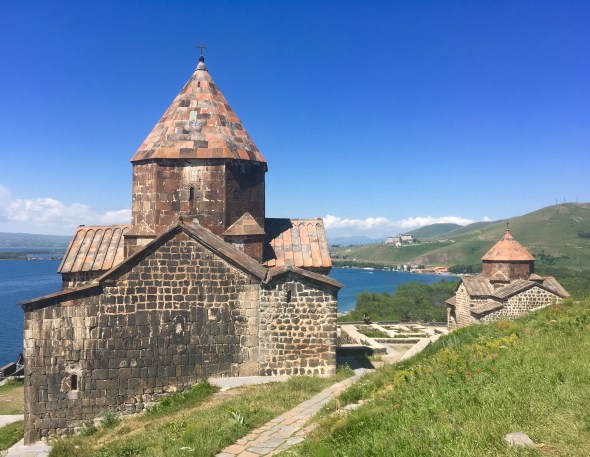
To reach Sevanavank, located above the shoreline of Lake Sevan, you’ll need to climb a lot of steps: 243 to be precise. The reward, though, is a panoramic view of Armenia’s largest lake and its environs. Again it’s a double church site plus plenty of khatchkhars to admire in its cemetery. Those are the standing stones which you’ll see at all religious sites. The largest concentration can be found further along the lakeshore at Noratus cemetery. But it’s that vast expanse of blue that will draw your attention away time and time again.

Why should you visit?
It’s all about that spectacular view – and the satisfaction of making it up the steps without collapsing.

Hayravank
image

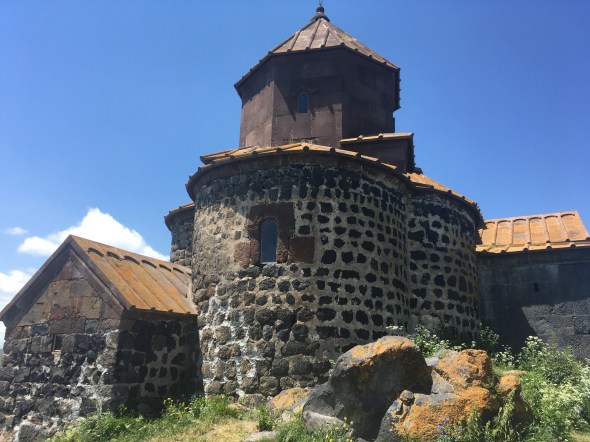
This monastery, built out of tufa, also lies on Lake Sevan, but this time occupies a less lofty position. Its alternative name is Aghavnavank, meaning “church of the human pigeons”. The connection refers to a legend associated with Tamerlane, whereby the local population were turned into pigeons to keep them safe from the invaders – a deal had been struck that anyone who could fit into the church would be spared and of course birds are smaller than people.

Why should you visit?
If they’ve gone to the trouble of coming up with such a fantastic legend, you’ve really got to see how big the church is from the inside.

Khor Virap

IMG_9770

This one’s all about the setting, and what a setting. The road curves on approach offering the picture postcard image of the monastery perched to the right of a backdrop of Mount Ararat, the mountain where Noah’s ark came to rest. From the rear of the monastery, you can climb a small hill – look for the cross on top of it – and you’ll have a similar view, but this time the monastery will be on the left. Inside, you’ll see a steady stream of people descending a narrow stairwell at the doorway to the church – it’s a well, and it’s a dark and shaky climb down.

Why should you visit?
The setting is special, but pick a clear day so you get the panorama of Ararat at the same time; you’ll have a better chance of good visibility in the morning.

Noravank
image

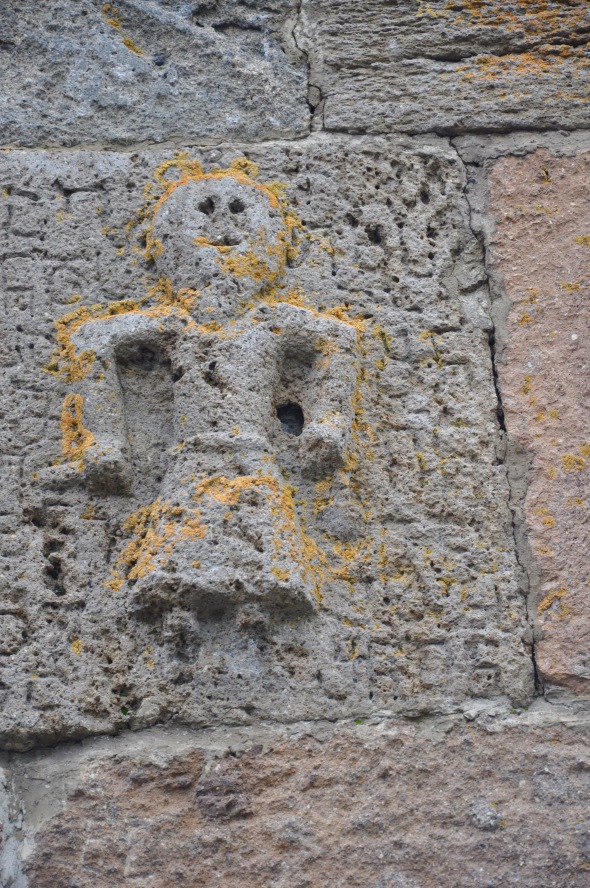
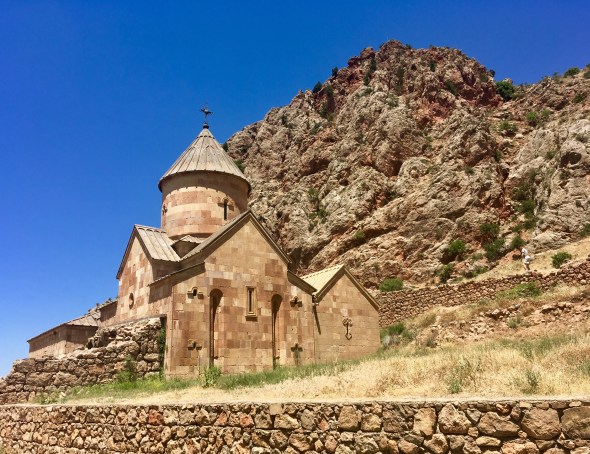
Tucked away up a narrow canyon, Noravank is another site that feels special as a result of its location. There are some wonderful carvings, including one of Jesus with Peter and Paul. What you’ll remember, though, is the scarily steep and narrow stone block steps that lead up to the second storey of the church. Take it from me, it’s much worse coming down. But from the restored cupola to the view across to the other chapel from up high, it’s worth dealing with the fear. After all, you can always come down on your bum!

Why should you visit?
The vertiginous steps up to the second level of the church might be scary, by the view from the top is splendid.

Tatev
IMG_9864

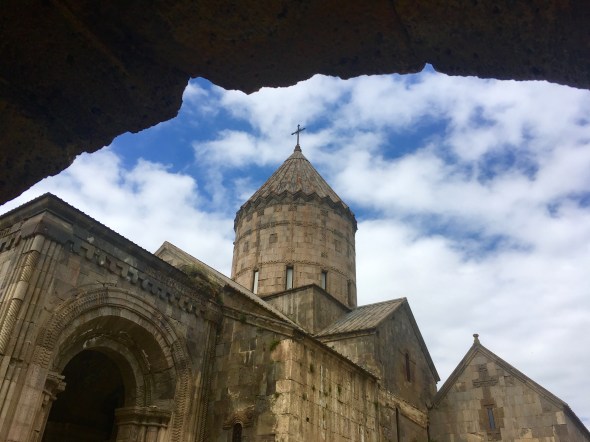
This one is reached by the world’s longest ropeway (that’s cable car to those of us who speak the Queen’s English). If you don’t believe them, there’s a sign which claims Guinness has officially recognised it as such for their Book of Records.  The column allegedly predicts earthquakes and approaching enemy armies.

Why should you visit?
With such an awesome approach, this one’s a must-see.

The verdict

Of course, that’s not all. But even spreading these across a week, I was beginning to feel monasteried-out by the end of it. My advice would be not to feel like you ought to see every major monastery in the country, just pick a few and enjoy the view. If I had to pick a favourite, I’d probably say Sevanavank, as its lofty position represented not only an impressive feat of engineering but also felt remote despite the visiting tourists. Norovank, with those crazy steps and beautiful carvings, came a close second, though perhaps it was a little too perfectly restored to claim the top spot.

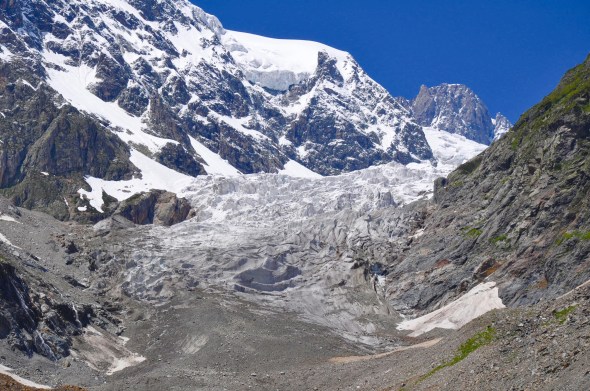
How tough is the hike to Chalaadi Glacier?

The older I get and the more my knees creak, the more I need to research possible hikes before setting on to ensure I don’t end up with aching muscles or worse, being stretchered out. But no one, least of all me, wants to find out that they’ve missed out on superb scenery on a hike that would have been perfectly within their capabilities. So when I found out about a glacier accessible from Mestia on foot, I set about reading up. The trouble is, many of those who post are young and fit. Their definition of an easy hike isn’t necessarily what I’d call easy. So here are the facts about hiking to the Chalaadi Glacier.

image

You don’t have to walk all the way

Technically, the Svans consider this hike a 25km round trip. The official tourist board literature states the duration of the hike as being eight hours. That’s beginning and ending in Mestia and walking up the road past the airport until it runs out. Well, 25km would take me more than eight hours including collapses, even if much of it is fairly flat.

image

Keen not to have to quit before the good bit, I hired a lovely driver called Nodani. I found him in the main square in his adapted Subaru – look for the Subaru sunshield and a disabled badge in his rear windscreen. He agreed to drive me to the suspension bridge that crosses the River Mestiachala. It costs a flat rate of 80 lari (about £26). It’s also possible to rent horses, but they looked pretty frisky and once you pay for the guide too, it’s not a cheap option.

image

Allow time to enjoy the hike

Most people book a two hour gap between rides; I made it three so as not to have to rush. I was keen to take the hike at a steady pace and allow enough time to appreciate my surroundings. I thought I’d make an afternoon of it but in actual fact got back thirty minutes ahead of schedule. No biggie: there’s a cafe at the bridge where I waited for Nodani to come and collect me.

image

You won’t get lost

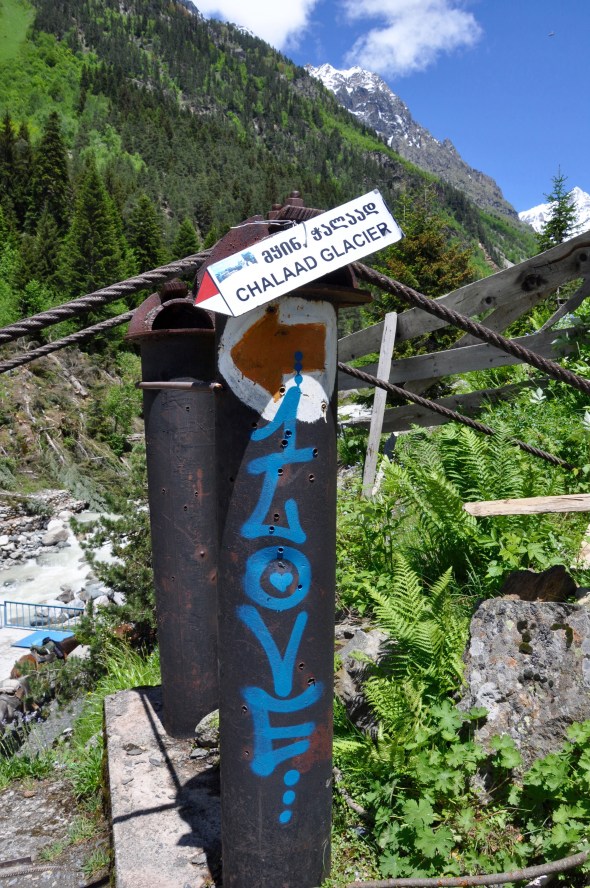
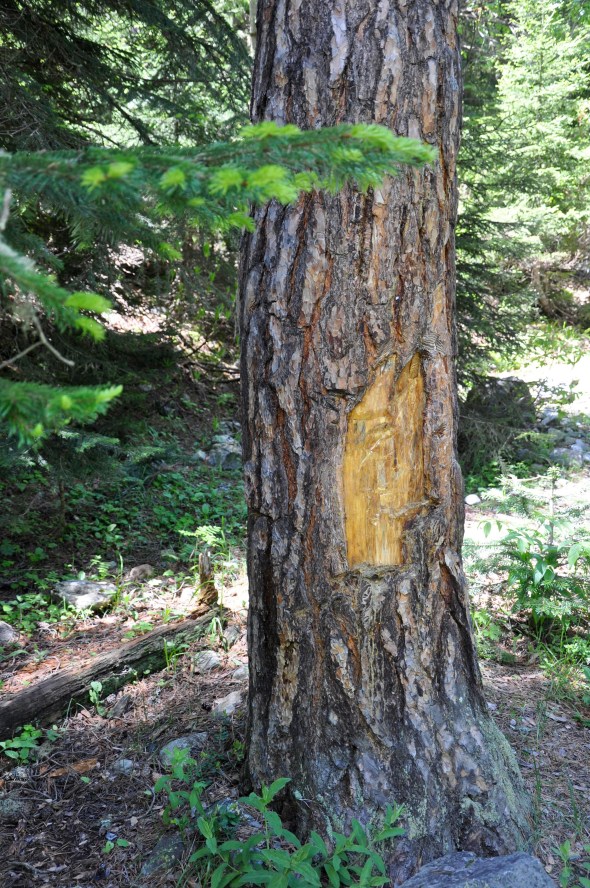
A concern if you’re hiking solo, as I was, is getting lost. Most trails are marked but the frequency of such signs can be less than you need. Not so here, where they’ve helpfully painted red and white rectangles on assorted rocks and tree trunks. There was even an arrow cut into the tree trunks in some places. It was very clear which direction you needed to take, so you won’t get lost.

image

The uphill bits were a bit of a slog

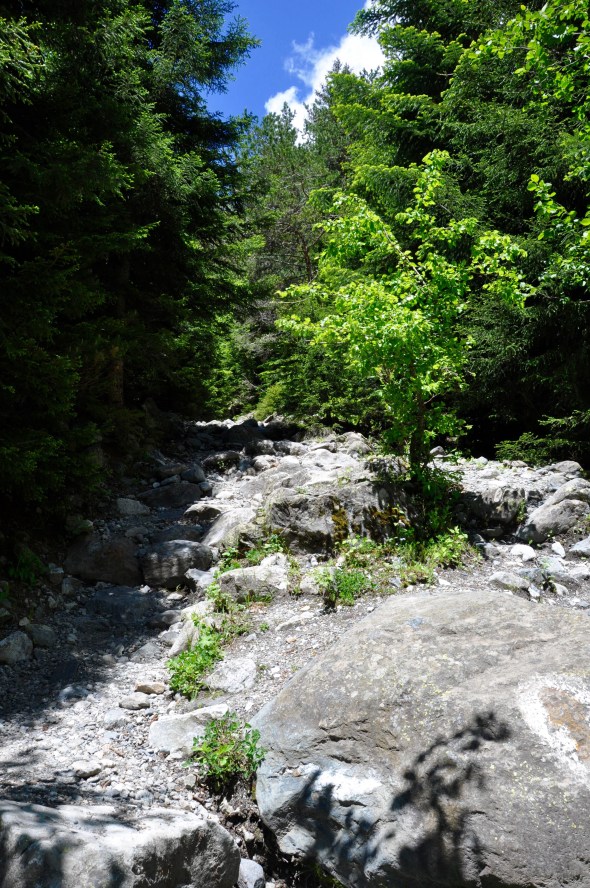
Remember, I’m no athlete. If you are reasonably fit, then this will be a piece of cake. But the altitude at the river is around 1600 metres above sea level, rising to about 1920 up near the glacier. If like me you live at sea level, the thinner air won’t help either. But it’s shady amid the trees and where the route passes through the forest, you’ll see plenty of pretty flowers and lichen covered rocks.

image

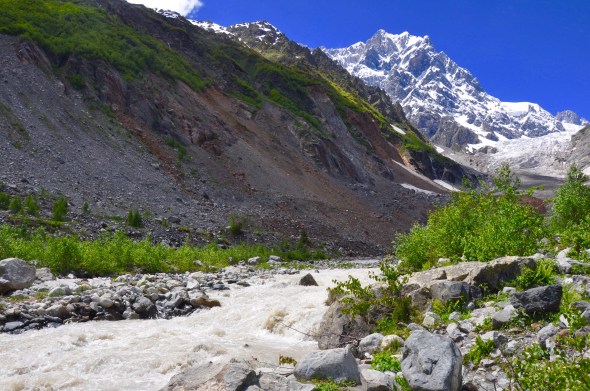
The path wasn’t difficult to navigate as the stones formed a natural staircase. I took frequent rests and carried plenty of water. Further up, heavy rains a few days before my hike meant the water was running high and parts of the path had turned into a shallow stream. Luckily it wasn’t deep enough to leave me with wet feet.

image

You have to cross a boulder field

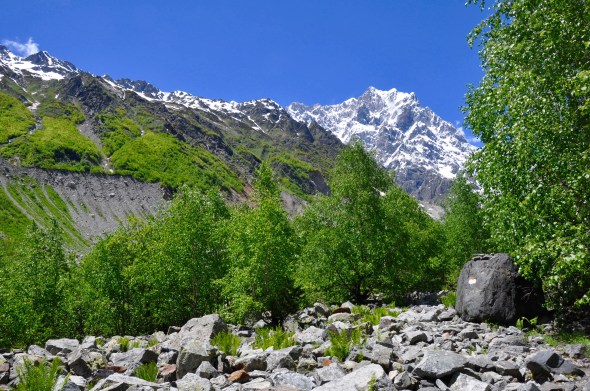
About halfway to the glacier, you reach an area where rockfalls have created a big obstacle. Boulders of various sizes lie piled up. Some are steady, others move disconcertingly beneath your feet. I fell foul of such a hazard when I hiked one of Sweden’s High Coast trails last year and ended up with a nasty cut and bruised elbow. There are also deep gaps between some of the stones, meaning a misstep would leave me with a twisted ankle or worse. This was the scariest part of the hike, more so on the way back down as higher up the slope I could hear rocks falling. Fortunately I managed to cross without incident and didn’t end up a casualty of a rock avalanche. You’ll need decent boots though.

image

You can cut out the very top part of the hike and still see the glacier

Once you’ve successfully negotiated the boulders, the path is an easy one and leads to a flower strewn meadow by the river. Here, you get a fabulous view of the glacier itself and in its mountain setting, it really is a spectacular view. Turn around, and you’ll see mountains behind you too. Unless you’re really dead set on touching the glacier, you’ll be scrambling over terminal moraine to get any higher. Personally, given the timing of my visit in early summer when the ice is melting and there’s a real possibility of being hit by falling ice or rocks, I didn’t continue. If you carry on, as many do, it’s advisable to use walking poles.

image

Is it worth it?

That’s a resounding yes! If the weather’s playing nicely as it was during my visit, it’s hard to imagine a better way of spending an afternoon. But to maximise your time spent at the scenic parts of the trail, I’d definitely advise hiring a driver for that dull airport road.

image

Travelling the Georgian Military Highway

It’s been a long journey involving an overnight train and a four hour ride in a marshrutka, but I’ve finally reached Svaneti.  My base is in Mestia and I’m writing this holed up on the hotel balcony overlooking three of the famous towers that dot the village.  The birds are chirruping and the neighbour’s dog is letting me know if anyone walks up the rutted and very steep road that joins us to the main drag.  The sun is valiantly making an attempt to break through today’s persistent low cloud, but tomorrow’s forecast promises sunshine and blue skies.

IMG_9167.JPG

I spent yesterday travelling along the Georgian Military Highway, the route linking Tbilisi to the Russian border.  The epithet “military” conjures up all manner of images, but you won’t see tanks or soldiers, just great scenery.  I travelled with Envoy Tours in the capable hands of their guide Beqa.  He was great fun, doing everything he could to ensure my Singaporean travelling companion and I had a fun day.  From tour guide to chef to toastmaster, there was nothing he couldn’t turn his hand to.

image

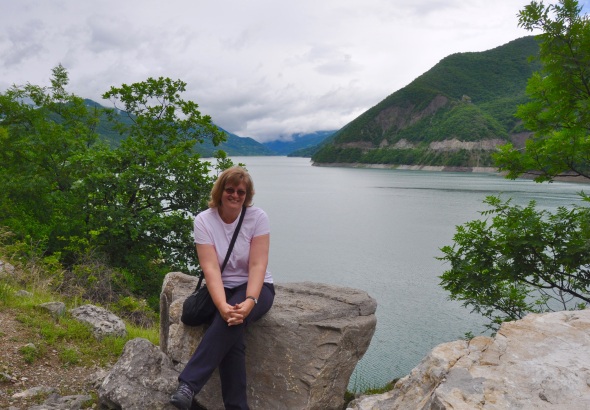
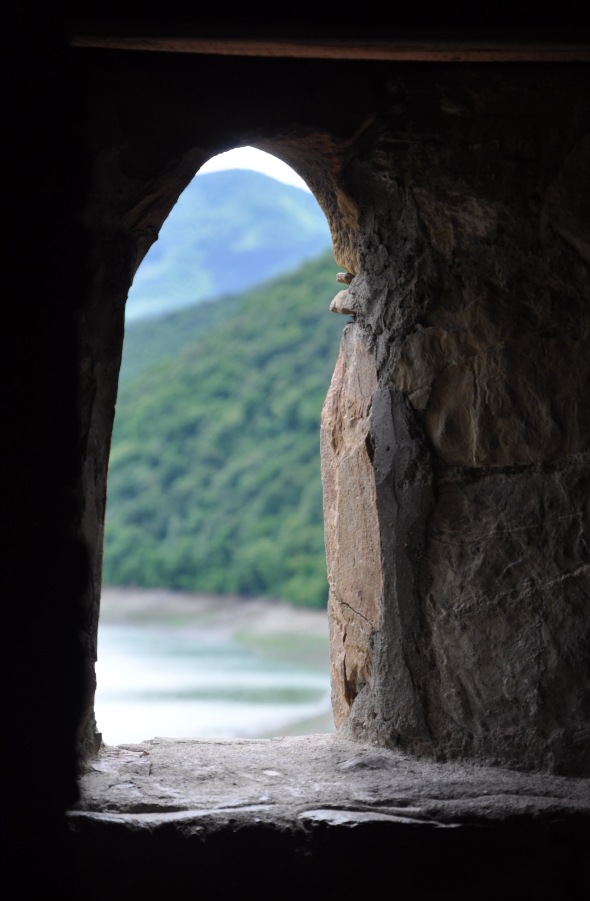
Our first stop was on the edge of the Zhinvali reservoir built in the 1980s to supply water to Tbilisi.  It’s a picturesque addition to the landscape, though one that necessitated drowning several villages.  The water level was high enough to conceal them yesterday, but when the water level is low, sometimes the tops of churches can be revealed.

image

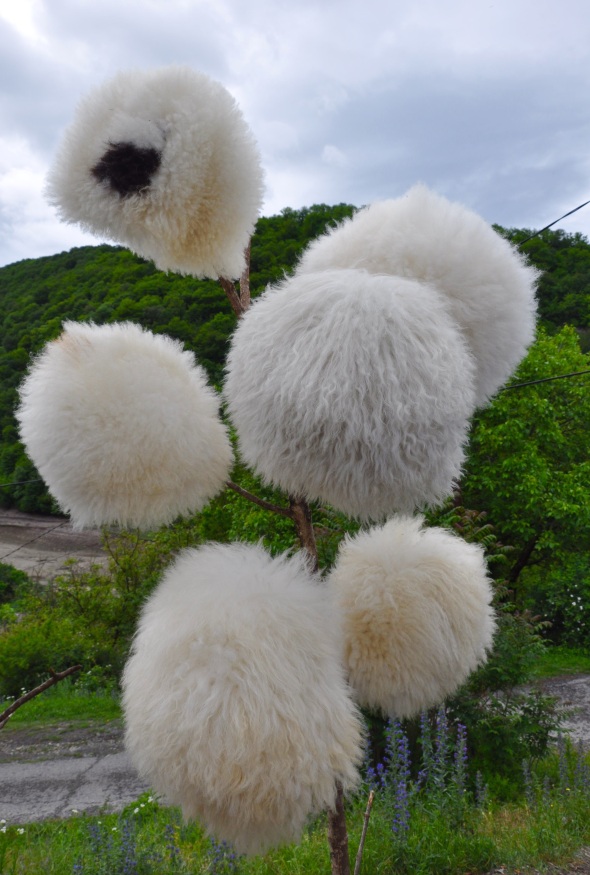
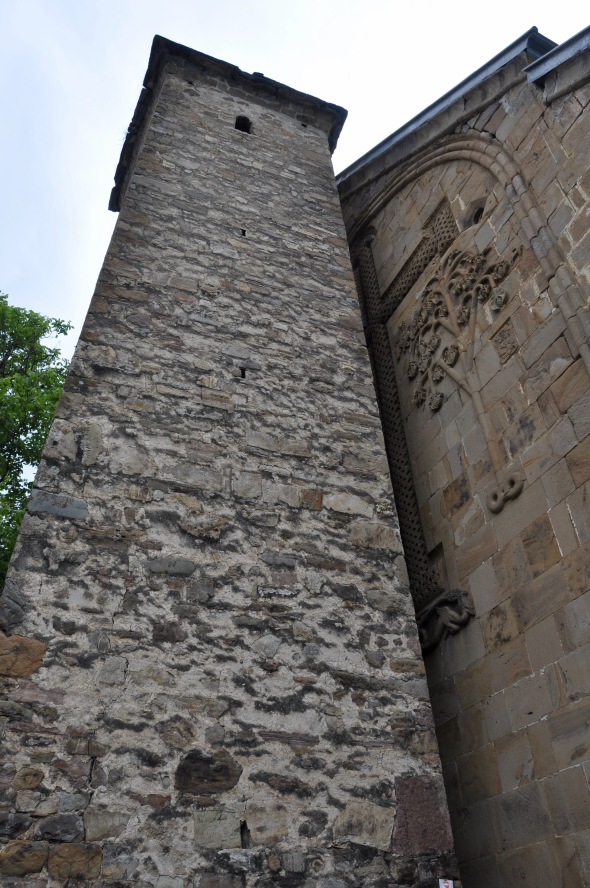
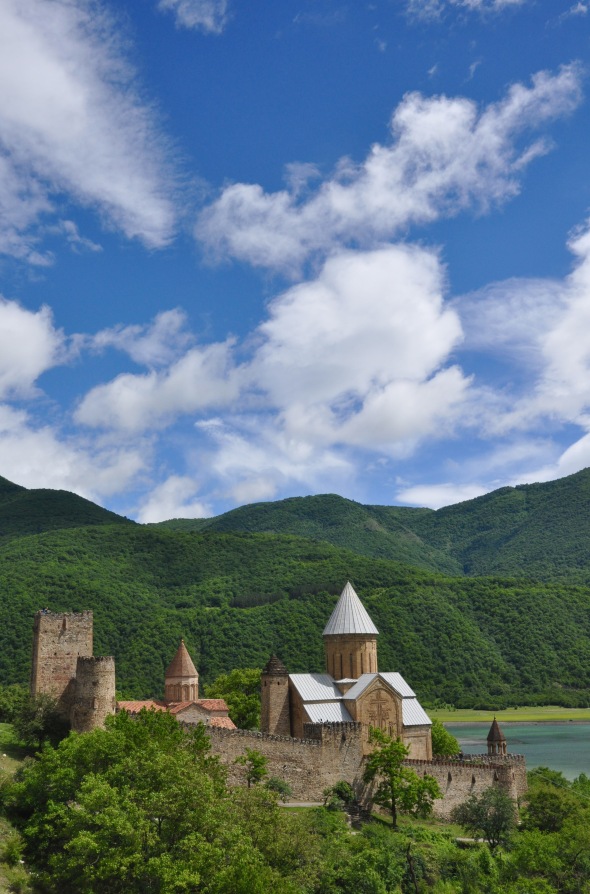
We skirted the edge of the reservoir to reach the fortress complex of Ananuri, where they were selling these fabulous sheepskin hats.  Once, there was just a tower here on a hillside; now there’s a cluster of buildings with defensive towers and a 17th century church featuring ornate carvings.

IMG_9191

It was the first time I’d been asked to wear a skirt over my trousers as well as the headscarf I’d been expecting.  Not the most elegant of looks, of course, but when you’re in someone else’s country you play by their rules.  Inside the church walls bear a few faded but interesting frescoes.  When Georgia was under Russian rule the frescoes were whitewashed and are slowly being restored.

IMG_9196

While the tallest tower was off limits, it was possible to climb the smaller one.  I’ve no head for heights, so the narrow, worn steps missing a handrail had my heart missing a beat.  With plenty of encouragement, my two younger companions got me to the top.  Inside, each level was surprisingly spacious, with a fireplace and plenty of room to live.  These towers would have been hiding places when the area was under attack.  The castle’s dungeon was quite claustrophobic in comparison.

IMG_9195

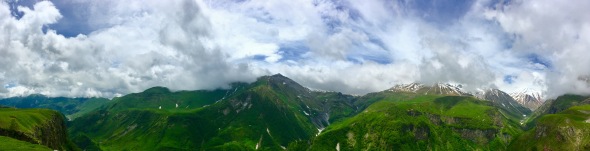
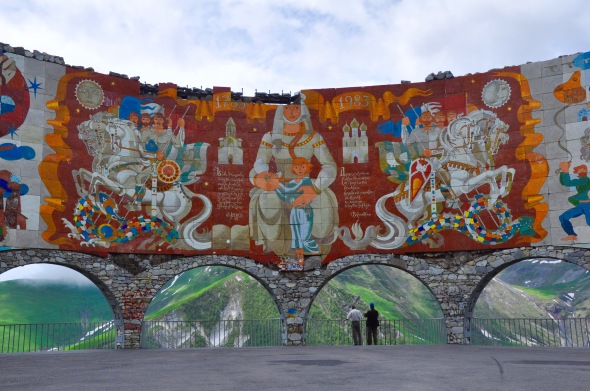
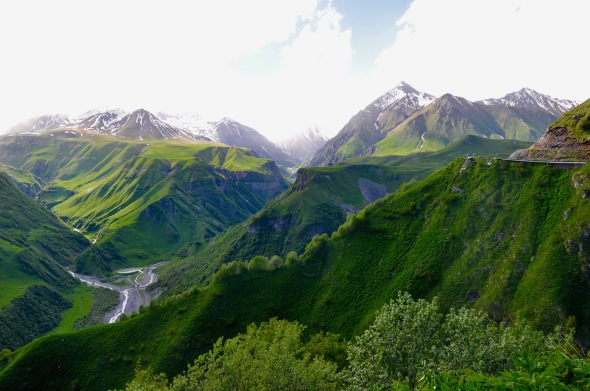
Heading north from Ananuri, the road took us past the ski resort of Gudauri and over the 2379m Jvari Pass.  Next stop was the Georgia-Russia Friendship Balcony.

IMG_9197

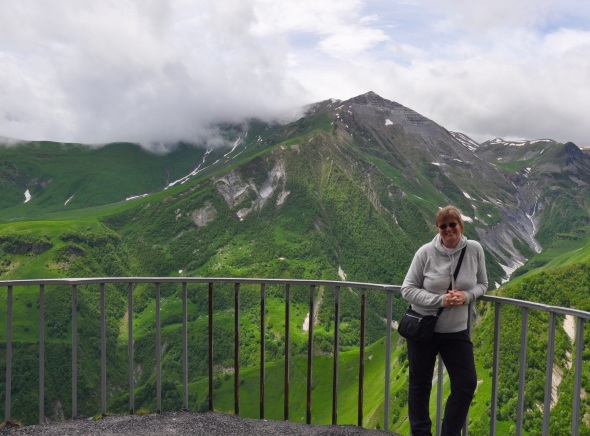
Our guide, no fan of Russia, was quick to point out that it was built in 1983 when Russia was still in charge and Georgian independence was eight years off.  Despite its name, the monument was very tastefully done and its multiple balconies were perfect for capturing a shot of the dramatic mountain scenery which formed its backdrop.

image

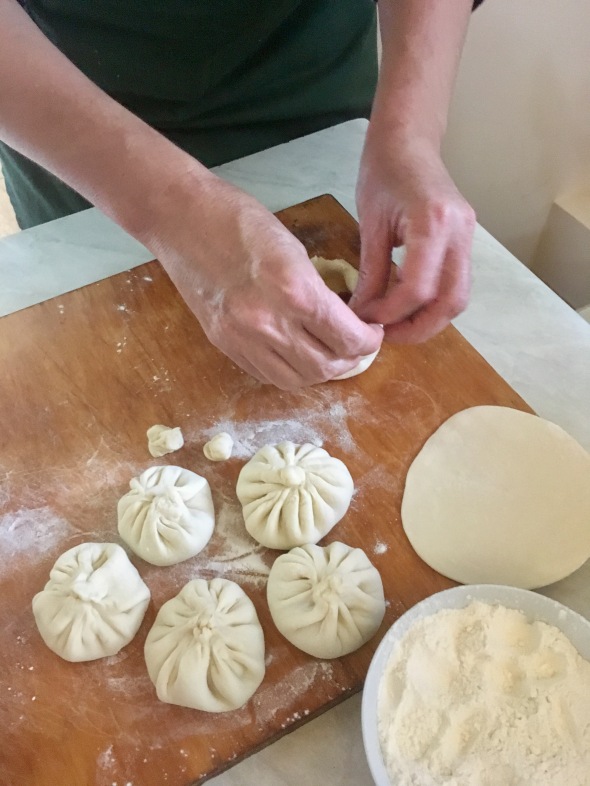
Our last port of call was right near the Russian border near the town of Kazbegi in a little place called Gergeti.  Lunch had been arranged: my first experience of a Georgian stupa or feast.  First, though, we had to make the local dumplings known as khinkali.  Pastry had already been made and rolled; a spicy lamb filling had been preformed.  All we had to do was assemble it, which involved lots of pinching of pastry and some rather dodgy looking shapes.  Our hostess demonstrated a far higher level of skill, putting together a double decker khinkali quicker than we could pick up our cameras.  They were delicious, though I resorted to using a fork instead of eating them the traditional way – bite off the top, drink the juice and then munch on what’s left.  Beqa proved to be a good toastmaster too, ordering us to raise our glasses at regular intervals through the meal to God, peace, ancestors and women.

IMG_9172

A hike had been planned.  The Tsminda Sameba church, also referred to as Holy Trinity, is perched high on the mountain pastures above Kazbegi.  Apparently there was once a cable car (those Russians again!) but the locals were none too impressed at having a sacred place defiled so they tore it down.  A bumpy road led up to the church, but, said Beqa, it didn’t take much longer to walk up.  Yeah right, if you were a goat maybe.  The others walked, but told me later – as I’d suspected – that the path was pretty much straight up to the church and not an easy hike.

image

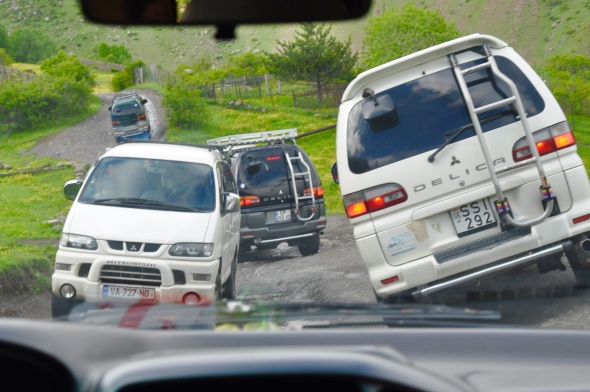
I took the minibus option, to my later relief, though that in itself was a hair-raising experience.  Deep ruts characterised the gravel track for much of its length.  In a couple of places the road had fallen away altogether.  At the top, heavy rain made the pastures soft.  I held my breath as we screamed across the grass, deep in some other vehicle’s tracks.  How we didn’t get bogged down I don’t know.  That fate was to befall someone else later, much to everyone else’s amusement.

IMG_9193

The church was as impressive as its setting, though cloud obscured the 5047m Mount Kazbek which can be seen on a clear day.  Inside simple candles stood in sand illuminated the icons and other works of art that adorn this simple church.  Despite the constant tramping of tourists’ feet (including mine, of course) it had a spiritual feeling, perhaps not surprising as it is a working church to this day.  The forecast rain that had held off all day materialised while we were at the church and so we all headed down by minibus.  Come down on foot when it’s slippery like that and you may as well be on a toboggan.

IMG_9192

For more information on Envoy Tours and to book this Embracing Georgia tour, please visit their website:

Embracing Georgia

Dude ranch vs. working ranch – how do you know what’s best for you?

Yee-ha!  There’s still some kind of magic associated with the cowboy lifestyle, isn’t there?  I don’t know about you, but seeing a man in chaps astride a horse is enough to get me all of a tizzy.  Back home (and I’m not referring to my husband here) men can seem just a little too in touch with their feminine side.  Out on the ranch, though, as they gallop off leaving a trail of dust behind them, well, it’s work for real men…

Austin10

Yep, a ranch holiday is for me.  But whether to spend my holiday on a dude ranch or on a working ranch was too difficult a choice – so I booked both.  How did they compare?

The activities

Panagea Ranch, located an hour outside Tacuarembó in Uruguay, accepts visitors but expects them to get involved in ranch life.  Juan inherited the ranch that his grandfather bought and has an emotional commitment as well as financial to the place which is obvious almost as soon as you arrive.

17240059_10210816519876816_1614859367195478704_o

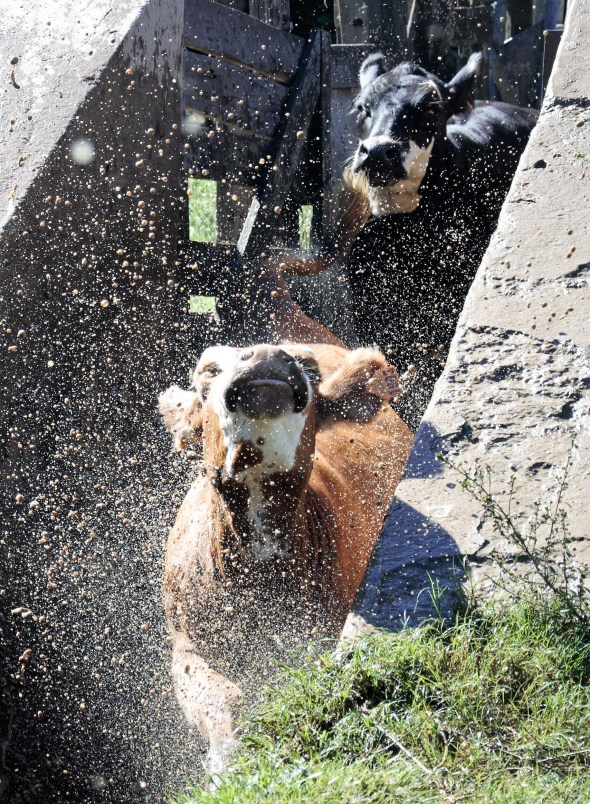
During my stay, getting involved meant riding out to check on the progress of a sick sheep (and finding it incredibly quickly considering there are 1800 of them!), rounding up some of the 1100 head of cattle to move them to new pasture and herding them into the dip so that they could be treated for ticks.  It was hard work for a novice rider (though they don’t require any prior riding ability, it helps to have spent at least a bit of time in the saddle) but there was also a huge sense of accomplishment.

DSC_0660 (2).jpg

In contrast, the Dixie Dude Ranch, on the outskirts of the Cowboy Capital of the World (that’s Bandera, Texas if you didn’t know) offered more of a vacation experience.  It has been welcoming visitors since 1937 and offers sedate trail rides, hiking and a huge pool with hot tub.  There’s evening entertainment too.  On the first night, we were treated to a ride in a hay cart to feed the couple of dozen longhorn cattle that can be found on the ranch.

18698039_10211471250844681_6464142046817995568_n

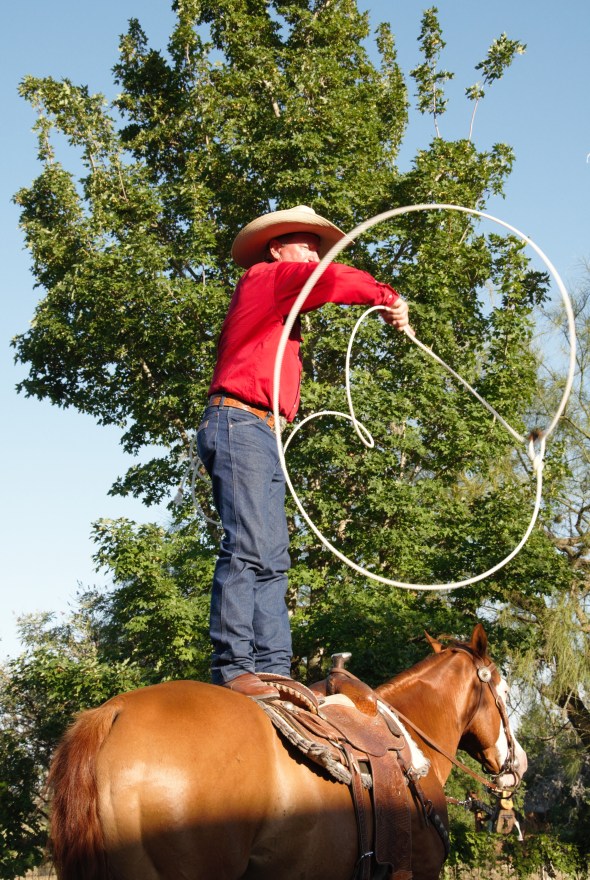
The next, we were treated to a show by a trick roper who was in town for the Bandera rodeo before heading off to Morgan Freeman’s 80th birthday party.  Marshmallows were also provided to toast over the campfire.  I travelled as part of a group and so we enjoyed relaxing by the fire in the evening – it’s a great place to head with a group of friends, though you may wish to stop off at Walmart on the way in as no alcohol is provided.  They’re fine with BYOB.

Rope5

The staff

In Uruguay, Juan Manuel was a little gruff at first but has a heart of gold and a genuine desire to both learn more about his guests and teach them how his ranch works.  The sole female in a group of men on the first night, things were a bit macho at the start, but I did warm to Juan and have a huge respect for what he does.  Susana makes you feel like one of the family from the get-go.

DSC_0580 (2).jpg

A warm Southern welcome was just what you’d expect from Texas and the staff made you feel like a VIP rather than any old guest.  On the rides, at both ranches I felt safe and well looked after.  The horses at both ranches were well looked after and their welfare a high priority.

The accommodation

Accommodation provided by Panagea is, by their own admission, fairly basic.  Rooms were comfortable but when the ranch is full, single travellers might need to share.  The beds were firm and everything spotlessly clean.  Hot water is usually available but electricity is only available for a couple of hours each evening. There’s no WiFi.  To be honest, I enjoyed that.  It made me focus on the outdoors and I slept more soundly as a result.  I also thought it was excellent value at US$65 per person per night full board including activities.

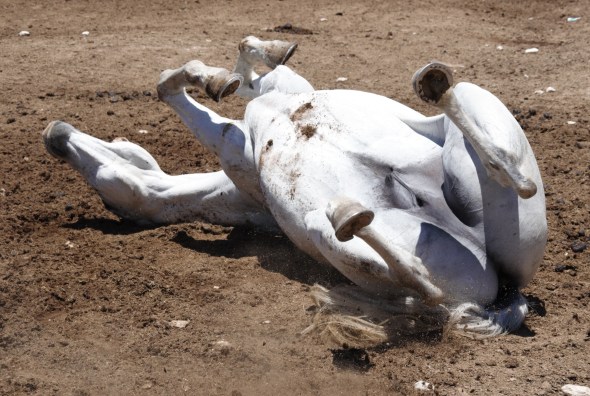
Horse roll 1

Dixie Dude Ranch is more akin to holiday accommodation with a range of chalets for guests and WiFi near the main building (though guests are asked to limit data usage due to restrictions outside the control of the ranch).  I stayed in one of the oldest cabins, which was a little more basic than the newer ones.  The latter were spacious enough to contain armchairs and even a fireplace.  Water is sourced from the property’s well which was temporarily down one morning during our stay; service was resumed rapidly.  My only niggle was the noise from the air conditioner which interrupted my sleep!  As you’d expect, accommodation in the States is more expensive than in South America.  Dixie Dude Ranch charges $165pppn for single occupancy and $145pppn if you share.

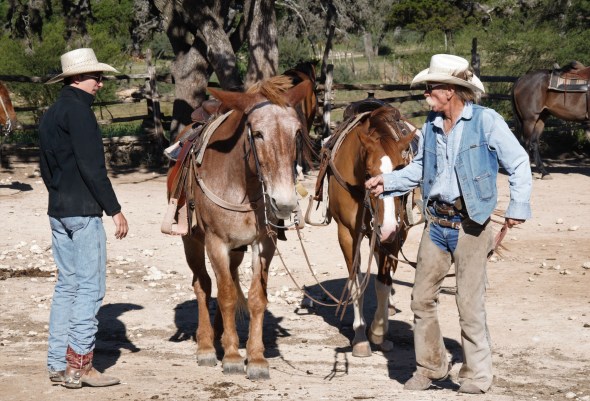
Cowboys

The food

Both ranches welcomed guests on a full board basis.  At Panagea, Juan’s wife Susana was an incredible cook and the food was in equal parts tasty and plentiful.  When Susana’s in town, Juan cooks, and he does a mean barbecue.  Dinner is when everyone’s back and the fire’s going; preparing, setting the table and eating is a communal affair with the family.  Juan loves to promote Uruguayan wine and will happily toast to that with his guests.  In the mornings, everyone helps themselves to what’s there; the wood-fired range was somewhat different to the induction hob at home but a fun challenge to master.  The food at Dixie Dude Ranch was good too (though not quite to Susana’s standards) and there was plenty for second helpings.  Service there was attentive and sincere.

DSC_0235 (2)

The verdict

Which ranch stay would I recommend?  I enjoyed both of them immensely, but in terms of the experience, it will be Panagea which I’ll more fondly remember.  I think it’s probably because I felt a real sense of achievement there.  As a novice rider who’s just about mastered a trot, I didn’t have the confidence to think I could help to herd cattle until Juan showed me I could.  He is a great fan of making people step outside their comfort zone!  Juan claims he can teach even a beginner in just a few days but I was glad I’d had a few lessons back home to learn the basics.

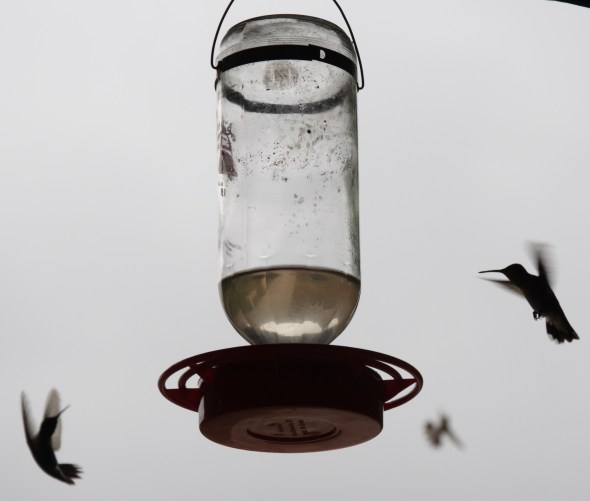
Hummingbirds

But I think if I’d never been on a horse before, Panagea might have been a bit too ambitious.  Being able to mix riding with other activities (such as lazing by the pool or watching the hummingbirds come and go on the front porch) made Dixie Dude Ranch a great choice for a relaxing holiday.  But get those riding lessons booked so like me, you can make it to Uruguay one day!

Is Austin weird?

The Texan city of Austin would like to think so. Proud of its alternative culture and buzzing music scene, the city’s slogan is “Keep Austin weird”. The dictionary definition of weird has the word’s meaning as “suggesting something supernatural; unearthly” or more informally “very strange; bizarre”.Compared to America’s many identikit cities, some parts of Austin have an indy feel, but is this enough to warrant the label?

FullSizeRender (100)

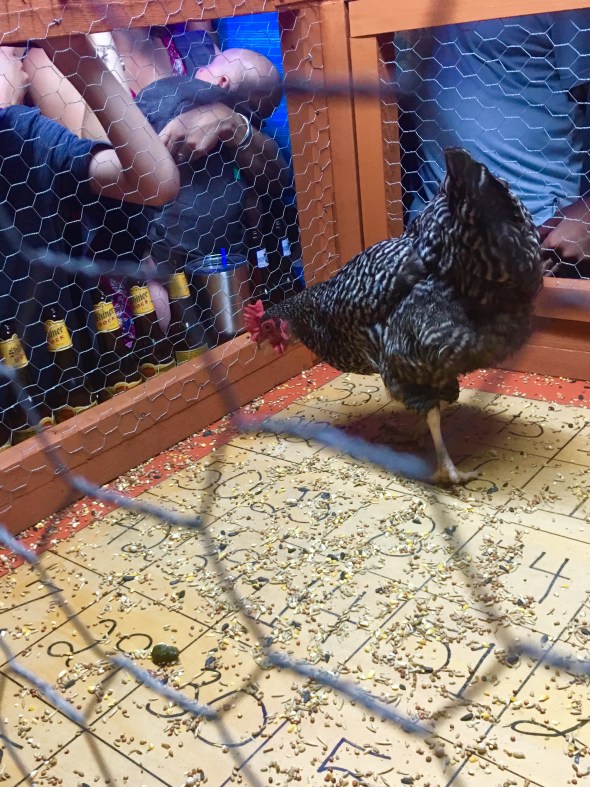
Google “weird Austin” and there’s no end of blogs and e-zine articles trying to justify the term. From watching bats leave their roost under South Congress bridge to playing Chicken Shit Bingo at Ginny’s Little Longhorn Saloon, there are no end of suggestions.

Austin3

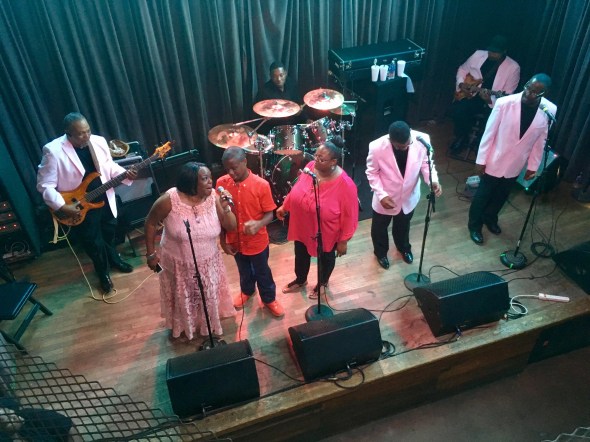
But read a little more carefully and you’ll perhaps find such writers are a little economical with the facts. There are suggestions that drinking a particular cocktail or watching a band play live in a bar is weird. Given that you can do that in any major city, I don’t see how that qualifies as weird.

Austin8

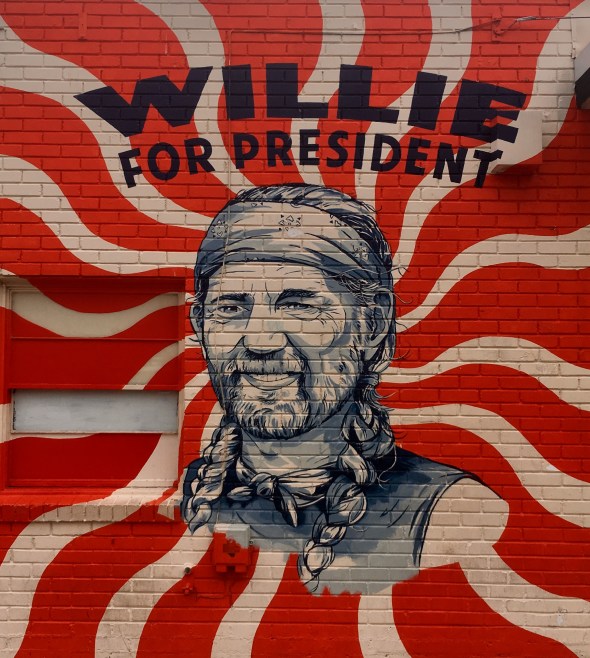
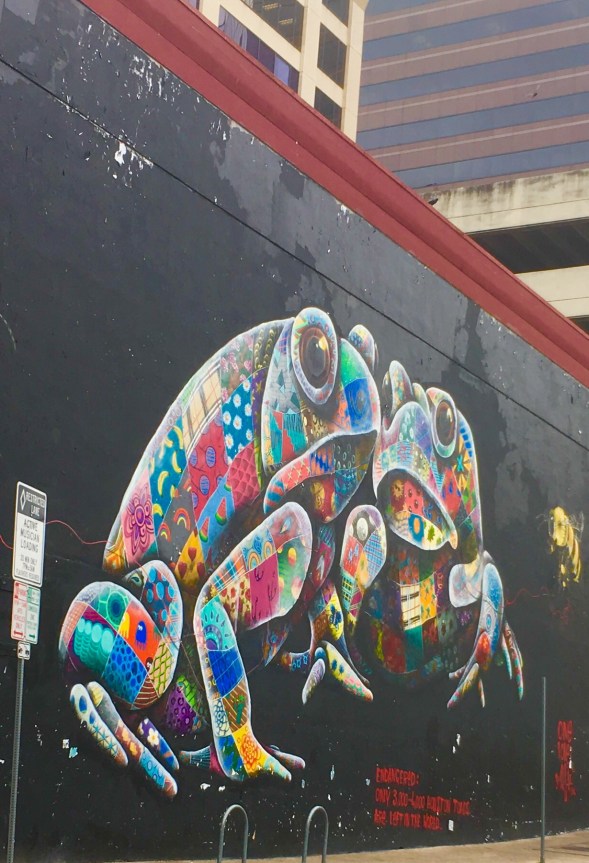
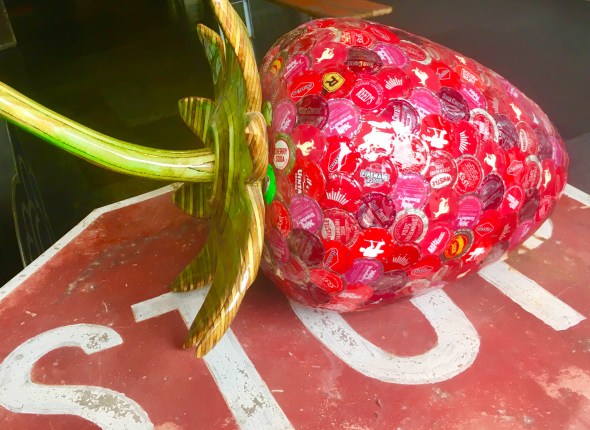
There’s a whole load of street murals which are a common sight in many a city these days and a cathedral of junk – but isn’t that just someone’s interpretation of art? Someone even went so far as to suggest the local propensity for eating tacos qualified the place as weird. Seriously?

Austin4

I didn’t take to Austin. In its defence, I was there for the weekend – and Memorial Day weekend at that. Entertainment venues were heaving, the restaurants were packed and added to the mix was a bunch of thunderstorms that brought unusually high humidity for the time of year.

Austin6

The music was pumping, the bass was thumping. If you’re 21, you’d have loved it, but for this middle-aged traveller, it wasn’t ideal. Ginny’s had a classic car show on its forecourt and was even more rammed than the regulars said it should be. The bats left it so late to come out from their hiding place it was too dark to see them when they did. Disappointing it was, weird it was not.

Austin

And I’m not alone. Google “Austin is overrated” and you’ll also find plenty of results. For those of us that like to sightsee as well as socialise, there’s a relatively limited number of sights to see. OK it has the State Capitol, which as you’d expect from Texas is bigger than everyone else’s and impressive inside. There’s a couple of good museums, including the LBJ Library and Museum dedicated to President Lyndon Baines Johnson. The riverfront is pleasant, but nothing to write home about. There’s a certain charm to SoCo, with its quirky shops and the excellent Jo’s for coffee, but it’s bisected by the busy road which gives the district its name.

IMG_9060

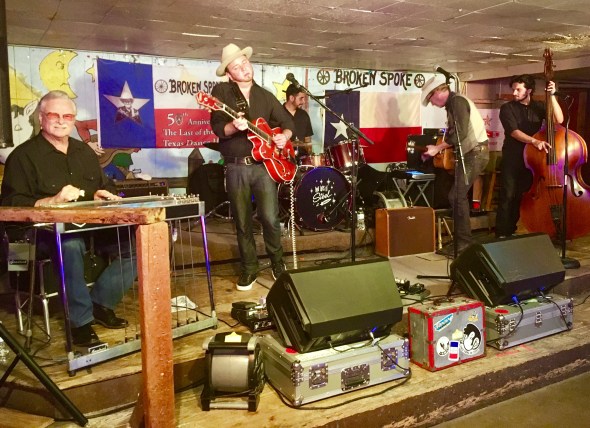
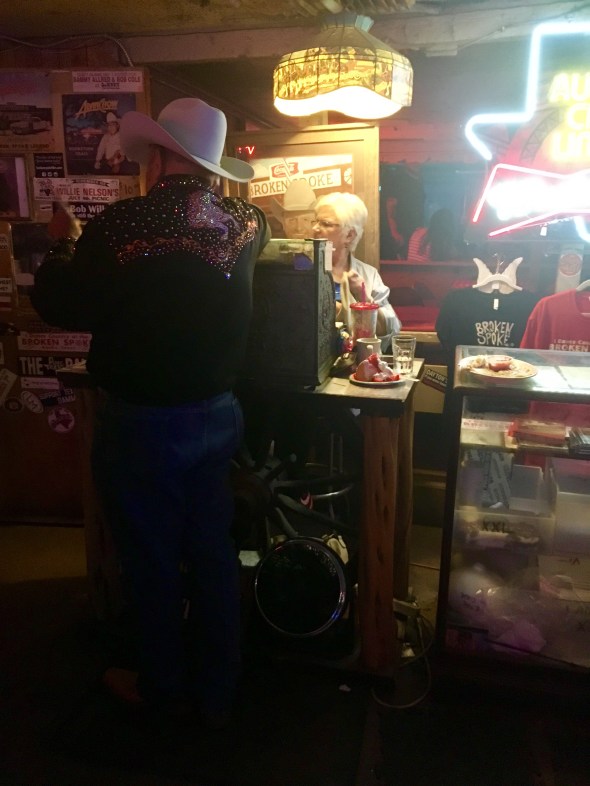
Amidst the noise, the many panhandlers that were just a stone’s throw from 6th Street and the Saturday night vomit on the pavement, one place stood out. The Broken Spoke had an excellent band, Two Tons of Steel, and a comfortable family vibe.

Austin7

Sure, people were drinking, but there were also granddads dancing with their granddaughters and young couples deep in conversation in between masterful circuits of the dance floor. (Yes, the music wasn’t so loud as to drown out their voices.) My brief Texas Two Step lesson wasn’t sufficient to give me the confidence to join them but it was fun to watch. From the moment we stepped through the door to be greeted by an elderly cowboy in a rhinestone studded shirt, we were welcomed. By the time the charming Ben Rogers doffed his Stetson and took a break from propping up the bar to call us a cab home, we were made to feel like we came every weekend.

Austin5

You see, what made Austin special was its residents. It’s that Southern hospitality thing kicking in again. In every venue and on every street corner, locals were keen to share their city. You don’t need a guidebook in Austin, you just need to hang around and chat. There’ll be no end of people to talk to.

Austin10.jpg

We were given recommendations for places to eat, drink and shop without soliciting for information. What’s more, they turned out to be good. I’d have not known about the Iced Turbo coffee at Jo’s in SoCo if the friendly gent at the lights hadn’t passed the time of day, nor would I have found Easy Tiger, its yummy bratwurst a welcome change from the ubiquitous (but tasty) Mexican fare.

Austin2

So, no, Austin’s not weird, no matter how much it would like to be, and as a tourist destination it’s a little dull, but its welcome is possibly the best you’ll get in the Lone Star state.