juliamhammond

Latest

Funchal’s old town doors

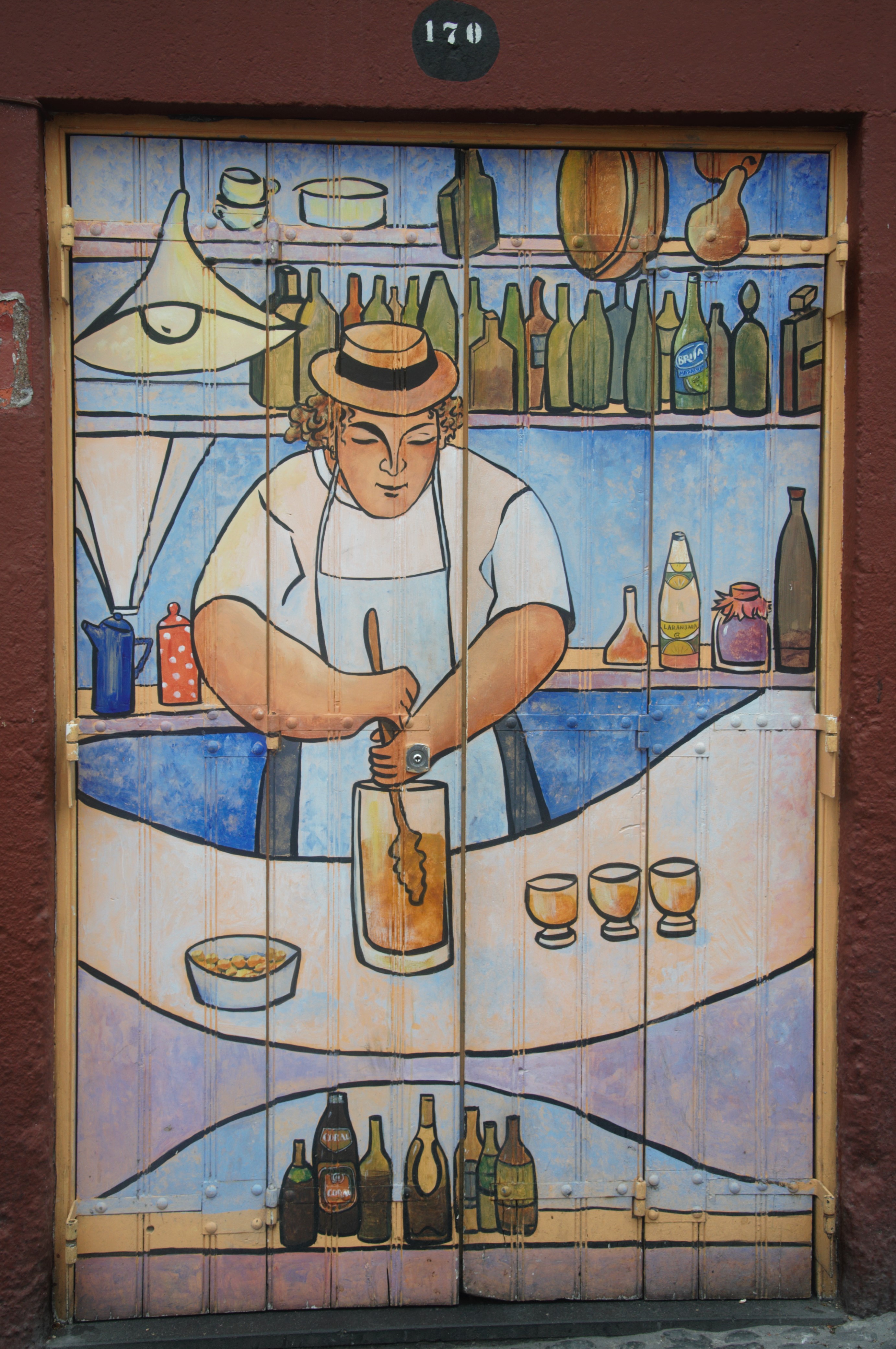
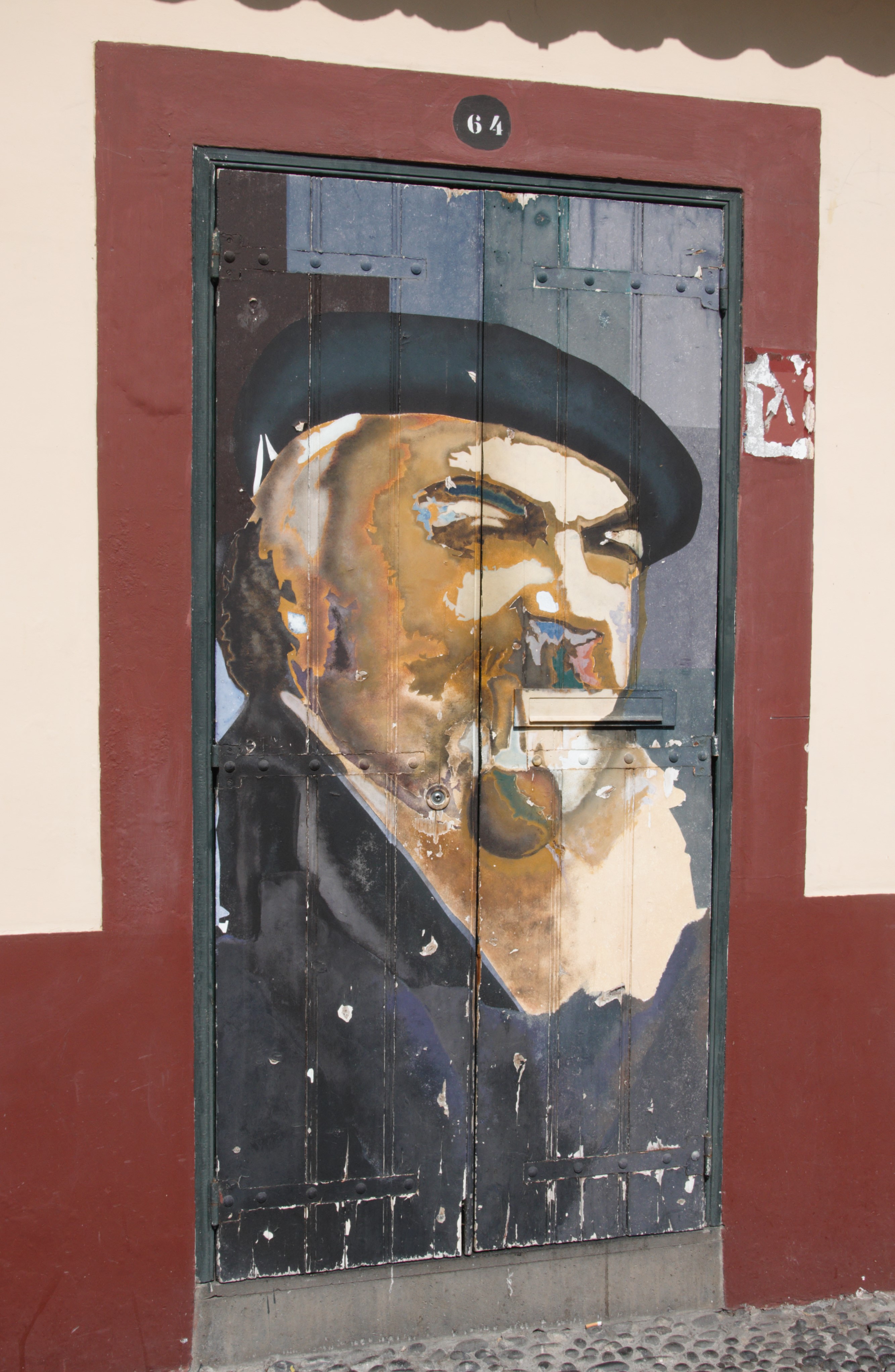
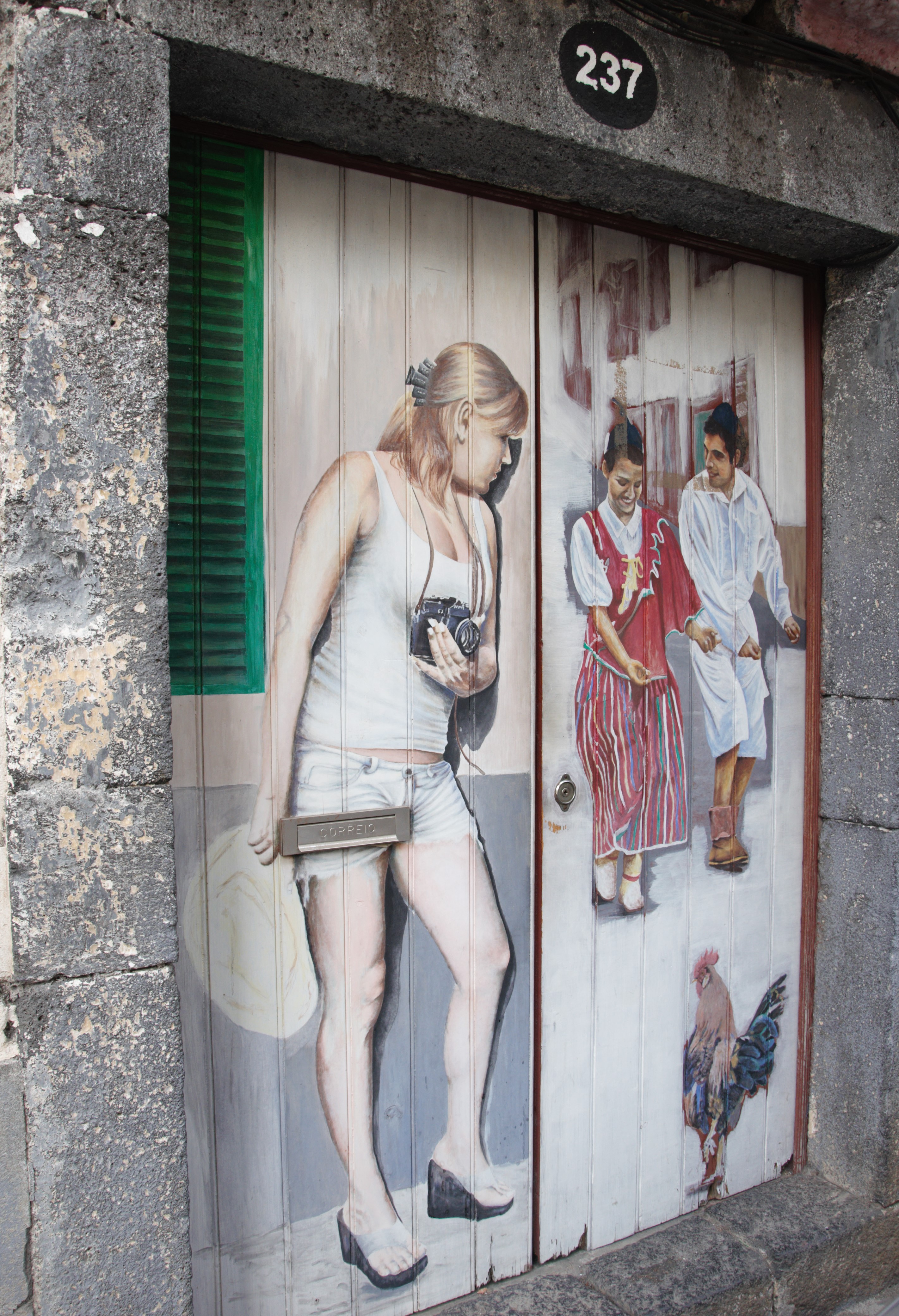
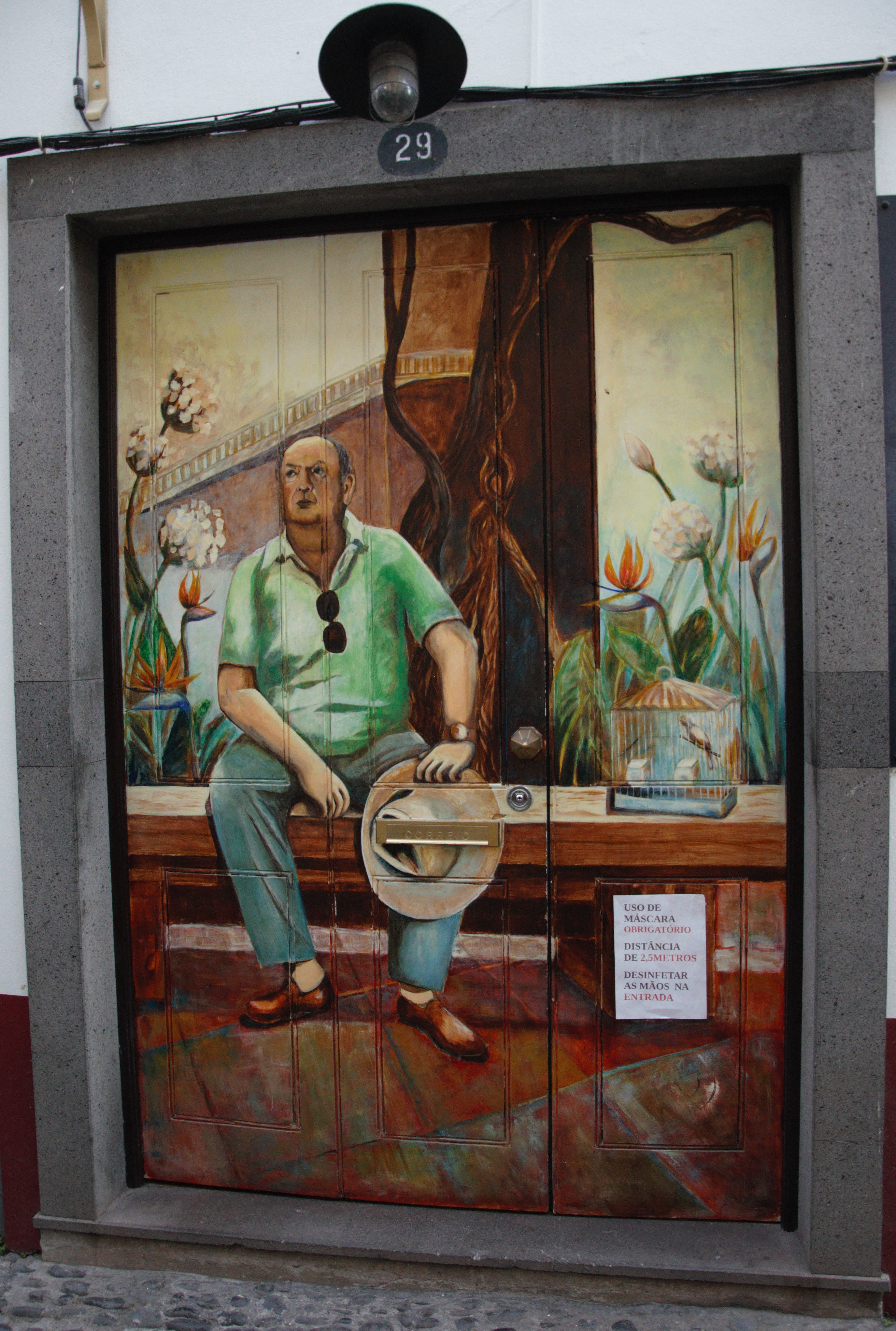
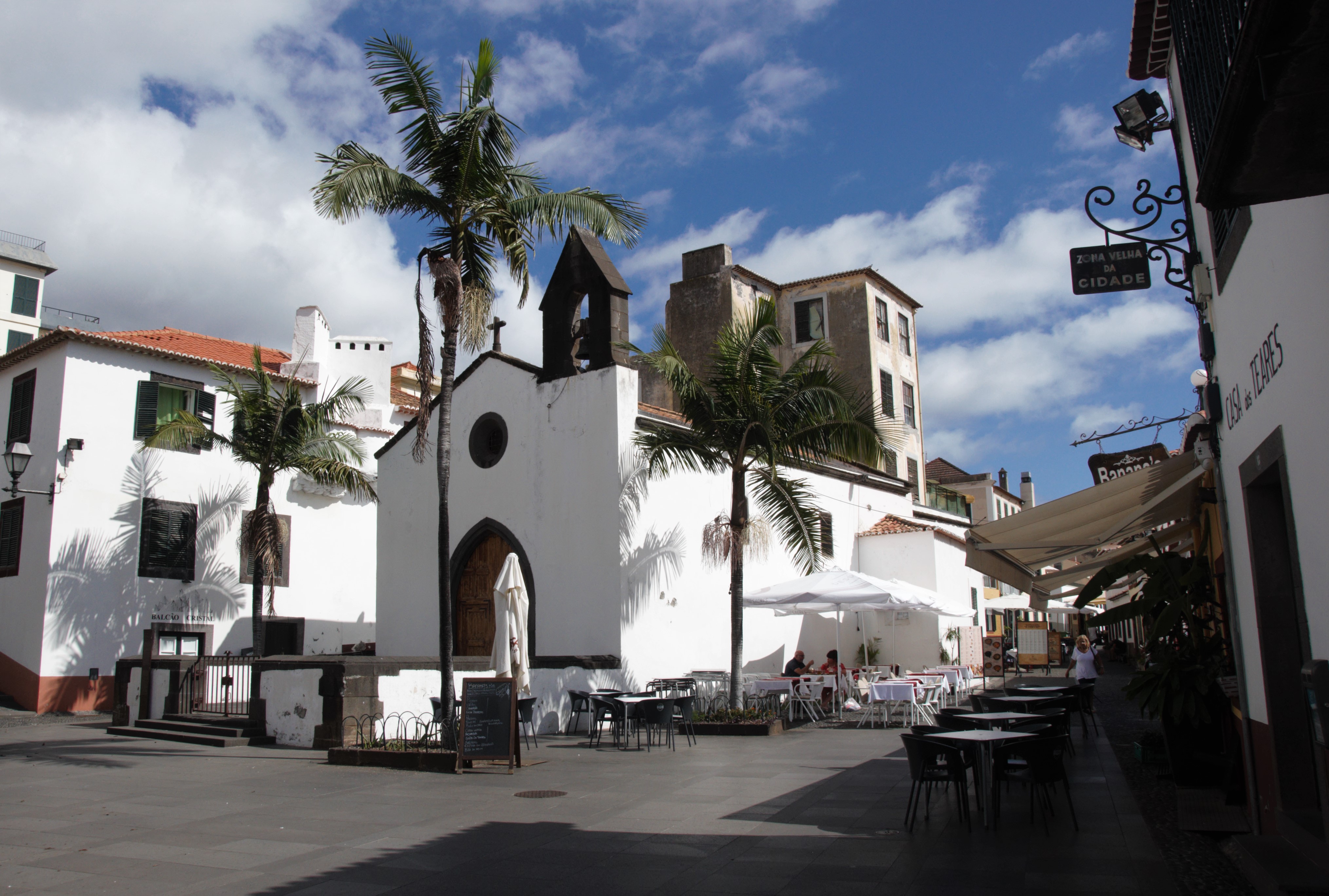
I spent five days exploring Madeira and it wasn’t nearly enough to discover its charms. Based in Funchal, I enjoyed several early morning strolls around the old town while waiting for buses to take me around the island. Those walks revealed a novel art project instigated by local photographer José Maria Zyberchem in 2010, coincidentally about the same time as Instagram began. It’s called the Art of Open Doors – and as it’s evolved, now centres largely on Rua de Santa Maria in the Zona Velha. The first piece of artwork on that street – at number 77 – was commissioned in 2011 and the project’s still growing.

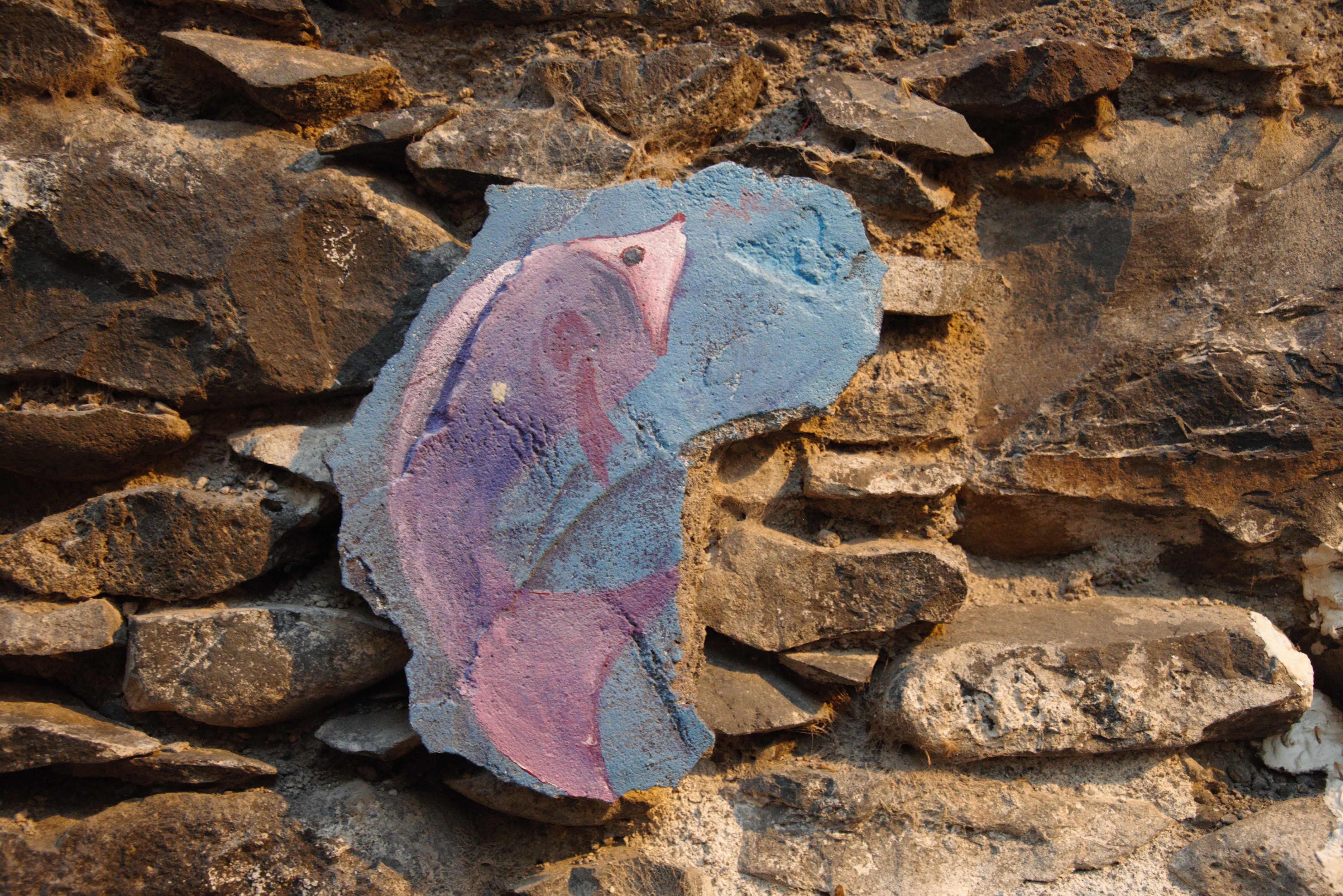
Homes, restaurants and shops combine to form one wonderful outdoor art gallery, as diverse as it is compelling. Some owners were more reluctant than others, particularly at first, but this is the kind of project that snowballs. The more doors they include, the greater the impact of the whole installation. As property changes hands, some of the art is painted over. In one or two cases, vandals have spoiled the original work. But, many of the doors are as they were when the artist packed away their brushes.

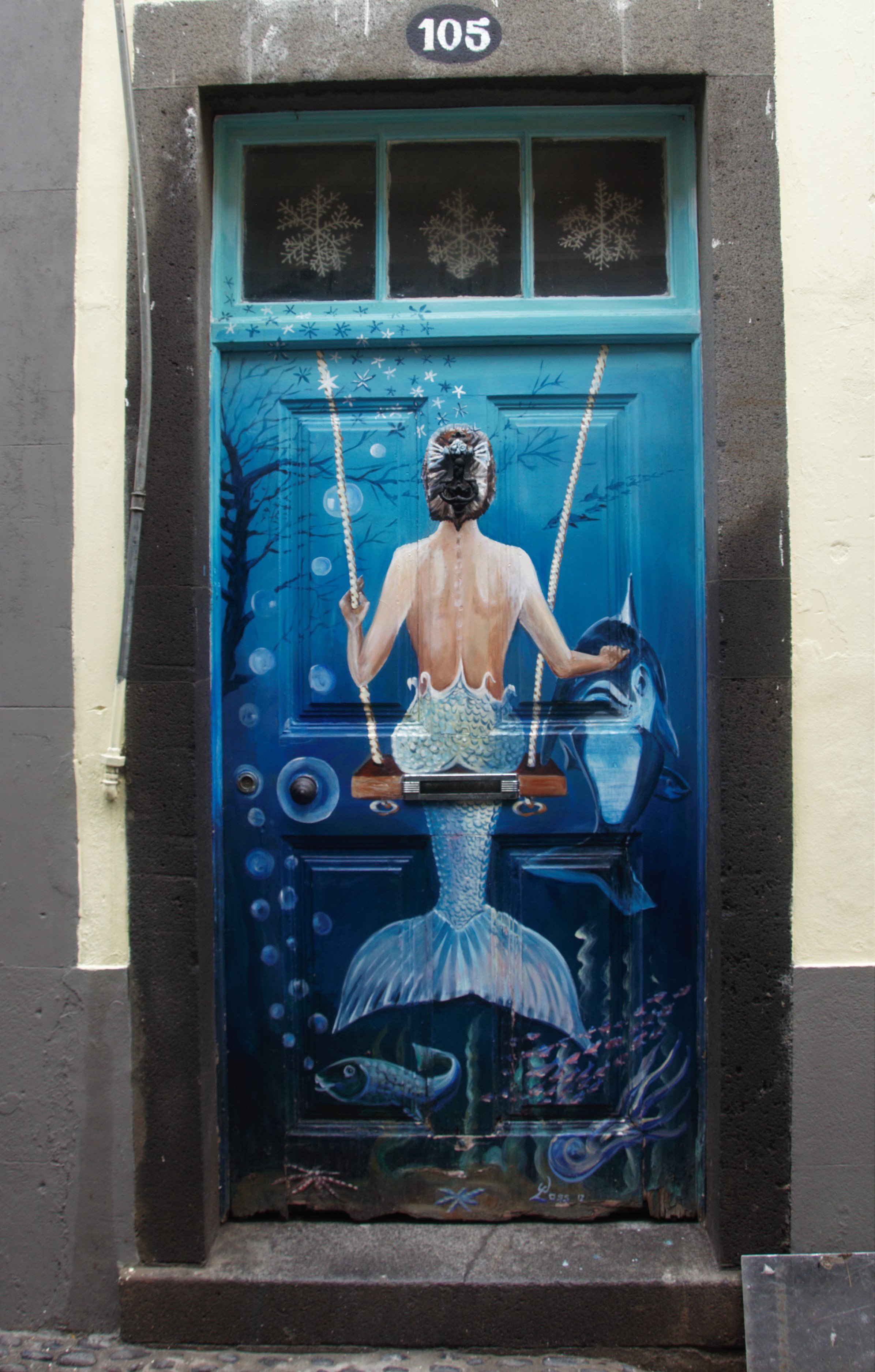
The Painted Doors Project, as it’s also known, provides an interesting insight into Madeiran culture, with images of poncha, folk dancing and the island’s colourful flora all making an appearance. Some artists make imaginative use of door knockers and post boxes within the design. Some are modern in style, others contemporary. All of them help to breathe new life into an area that was definitely looking a little rough round the edges.

Do you have a favourite? I’m hard pushed to choose and always a sucker for a dog, but if I had to pick, then perhaps the mermaid.

It’s travel, but not as I know it

As more and more of Europe experiences a rise in coronavirus cases, and the weather worsens as we head into winter, my thoughts are inevitably turning to travel further afield. I hate November with a passion. Since I’m no longer tied to school holidays, that means I can escape to far-flung destinations such as Barbados for a bit of autumnal sunshine. But this year’s a little different, of course. After my recent trip to lovely Madeira, tentative hopes to visit perhaps the Azores or Santorini were dashed due to the lack of direct flights and I remain wary of travelling long haul lest the situation worsens and I end up stranded.

I’m not even sure I’d enjoy the experience, if what’s on offer in Cuba and St Lucia becomes the norm. I’ve enjoyed trips to both those Caribbean countries and part of the appeal as an independent traveller is to explore on my own. But right now that wouldn’t be possible. Take St Lucia for example. Travellers of many nationalities including Brits are permitted to fly; BA are operating direct flights and TUI have just followed suit. So long as you can present a recent negative test result, you’re in. But that’s when things get a little more constrained.

The advice on the UK’s FCDO website reads:

“You must remain at your COVID-certified accommodation for the duration of your stay in St Lucia unless you are on an excursion arranged by the hotel. You may not leave the property by vehicle or on foot during your stay.”

To elaborate, St Lucian authorities permit travellers to stay in certain hotels. There are 30 such places on the official list, though not all of them have opened quite yet. No worries there. In fact, the hotel in Rodney Bay I chose before is on the list and I’d be more than happy to stay there again. The issue is what happens when I want to leave the resort. Current regulations state that unless I choose from a predetermined list of excursions with an approved list of operators then I’m legally bound to stay put. There’s nothing wrong with that if that’s how you usually travel, but I don’t enjoy holidaying like that. 

The experience in Cuba would, from my perspective, feel equally restrictive. Last time I visited this fabulous country, I split my time between Havana and Trinidad. I explored sugar plantations by day, travelled in style by vintage car and danced late (for me) into the night fuelled by sweet but potent canchancharas. If I were to visit right now, I wouldn’t be landing at Havana Airport – it’s only open for repatriation and humanitarian flights. The situation is a little more relaxed than it was before – visitors are allowed to rent cars and aren’t entirely confined to the beach resorts. And sometimes, as it was for me, it’s cheaper and easier to see the sights on an organised excursion.

Nevertheless, Havana remains off limits, as does Ciego de Avila, Spriritus and Pinar del Rio. Note too that although tourist flights to other parts of the country are operating, the current FCDO advisory states:

“Visitors who fly directly in Jardines del Rey Airport (for holidays in Cayo Coco, Cayo Cruz or Cayo Guillermo) may rent cars, but cannot leave the Cayos.”

I’m not suggesting for one minute that the Cuban or St Lucian governments aren’t doing the right thing. They have a responsibility to take care of their citizens and this is an effective way of balancing that duty with the need to kickstart their economies in a COVID-safe way. Tourism is a major income generator for both islands, as it is across the wider Caribbean region. A number of islands are now deemed safe destinations for British tourists, including Barbados, Antigua and the British Virgin Islands. Each is managing arrivals in their own way. The information’s easy to find and it’s up to you to decide whether you would be able to have the kind of holiday you hope for.

For me, a trip isn’t on the cards until I can travel my way. I guess I’ll just have to be content with Tenerife, but as the UK heads into Lockdown 2.0 even that will probably have to wait until 2021. What about you?

Funchal’s wicker toboggans

Funchal’s wicker toboggans might not give you a rollercoaster-level thrill, but their long history makes riding one a must for any visitor to the Madeiran capital.
I stopped off at The Madeira Story in downtown Funchal for a little background before catching the cable car up to Monte. I learned that people started to use the wicker toboggans, known as “carros de cesto”, back in the 19th century.

Wicker is a big deal in Madeira; the industry is centred on the village of Camacha. Willow grows abundantly on the island, thanks to its humid climate. Once harvested, the willow sticks are boiled to make them flex more easily, an attribute that’s vital if they’re to be crafted into baskets, furniture – and toboggans.

Riding a toboggan provided the means of getting down the very steep hill from Monte to the Livramento neighbourhood in comfort. Having walked down from the end of the toboggan ride I can attest to the painful toll those gradients have on your toes, knees, calves and thigh muscles. But if you look closely at these old photos, you’ll also see the steps in the cobbles, designed to make it easier to walk – but probably resulting in a much bumpier ride than that you’d experience today.
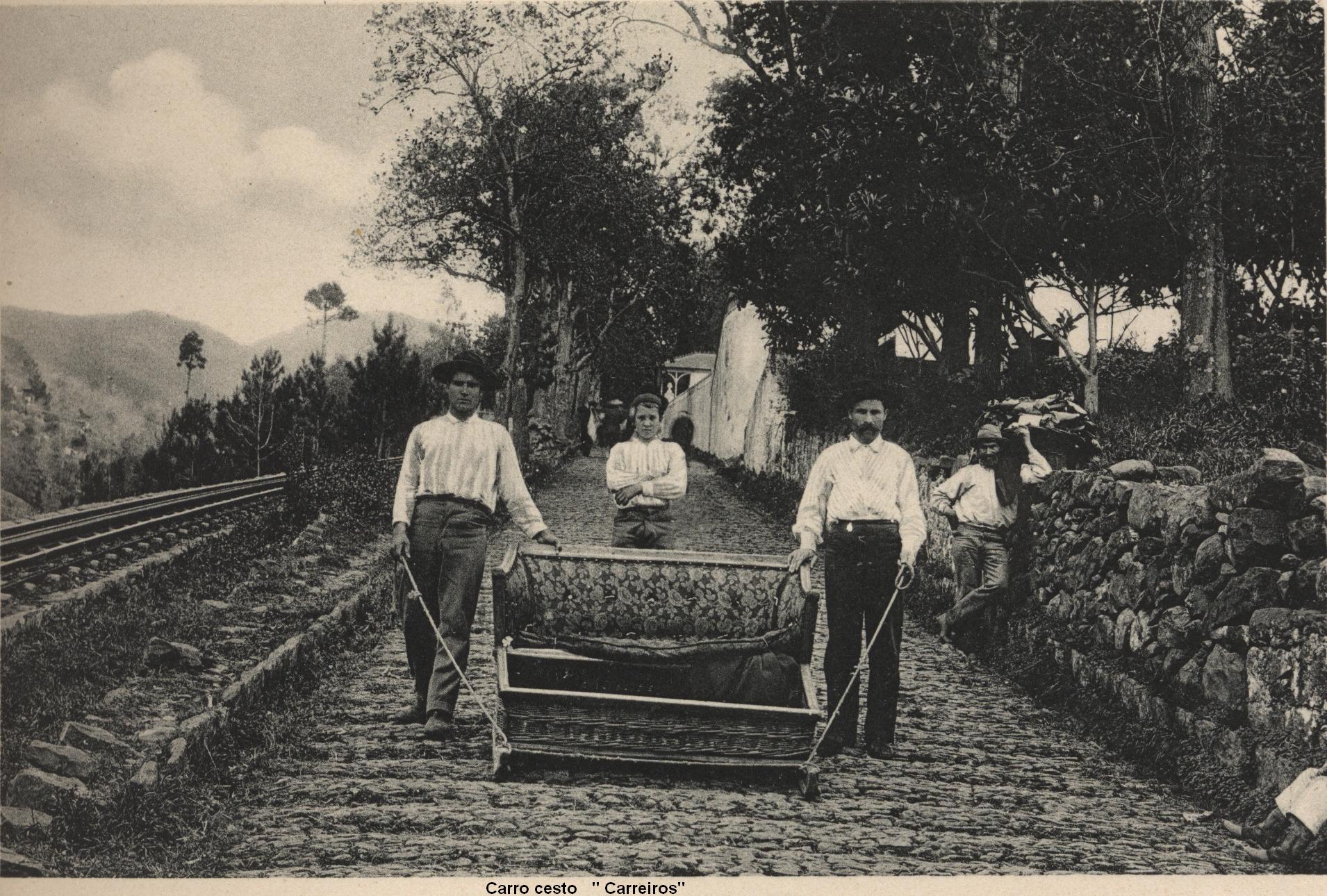
Today’s carreiros wear much the same white uniform and straw boater as their 19th century counterparts. However in some old photos the carreiros wear something akin to a funnel on their head instead. I’d love to know what these peculiar hats were called and when they were phased out.
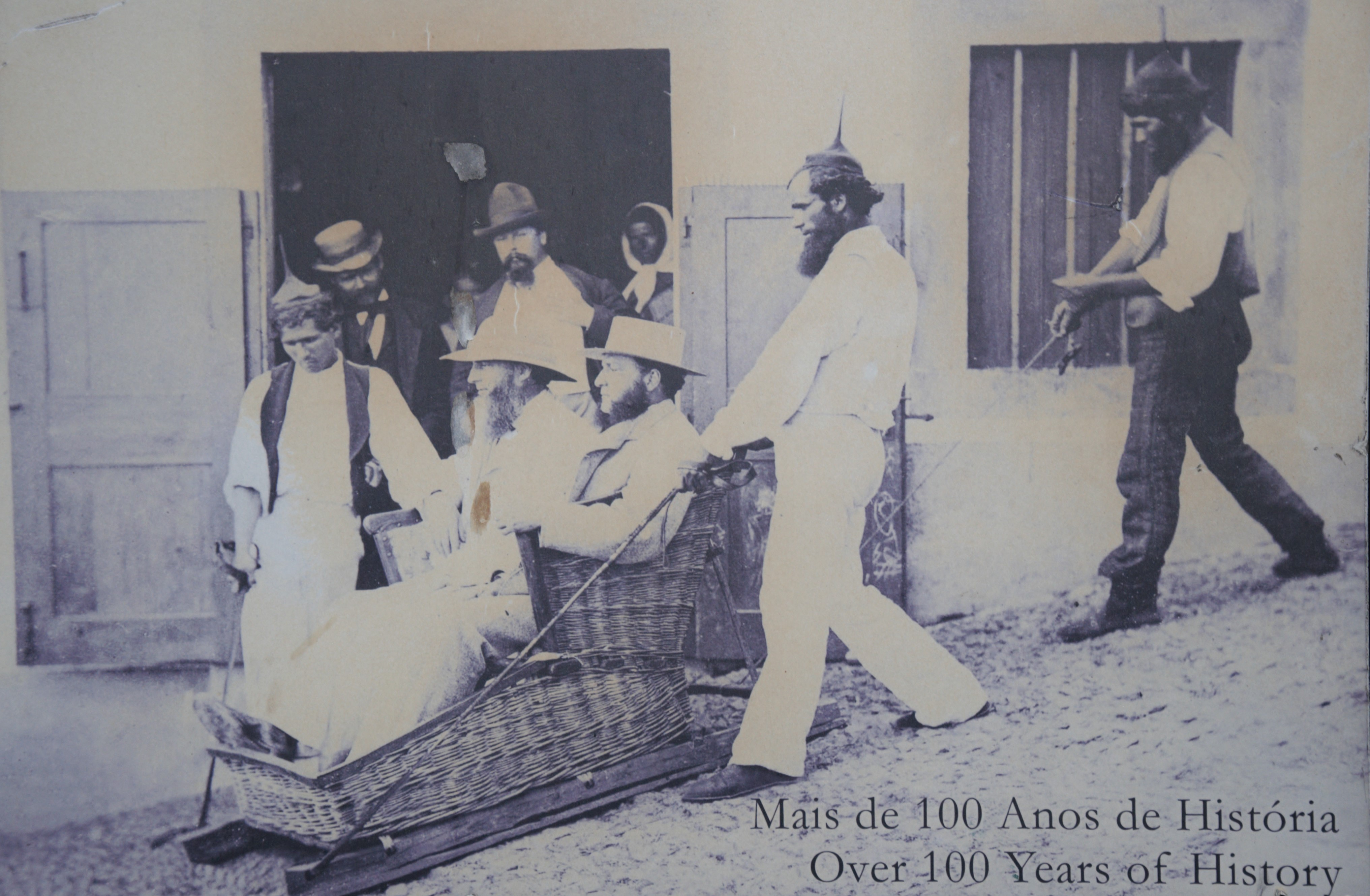
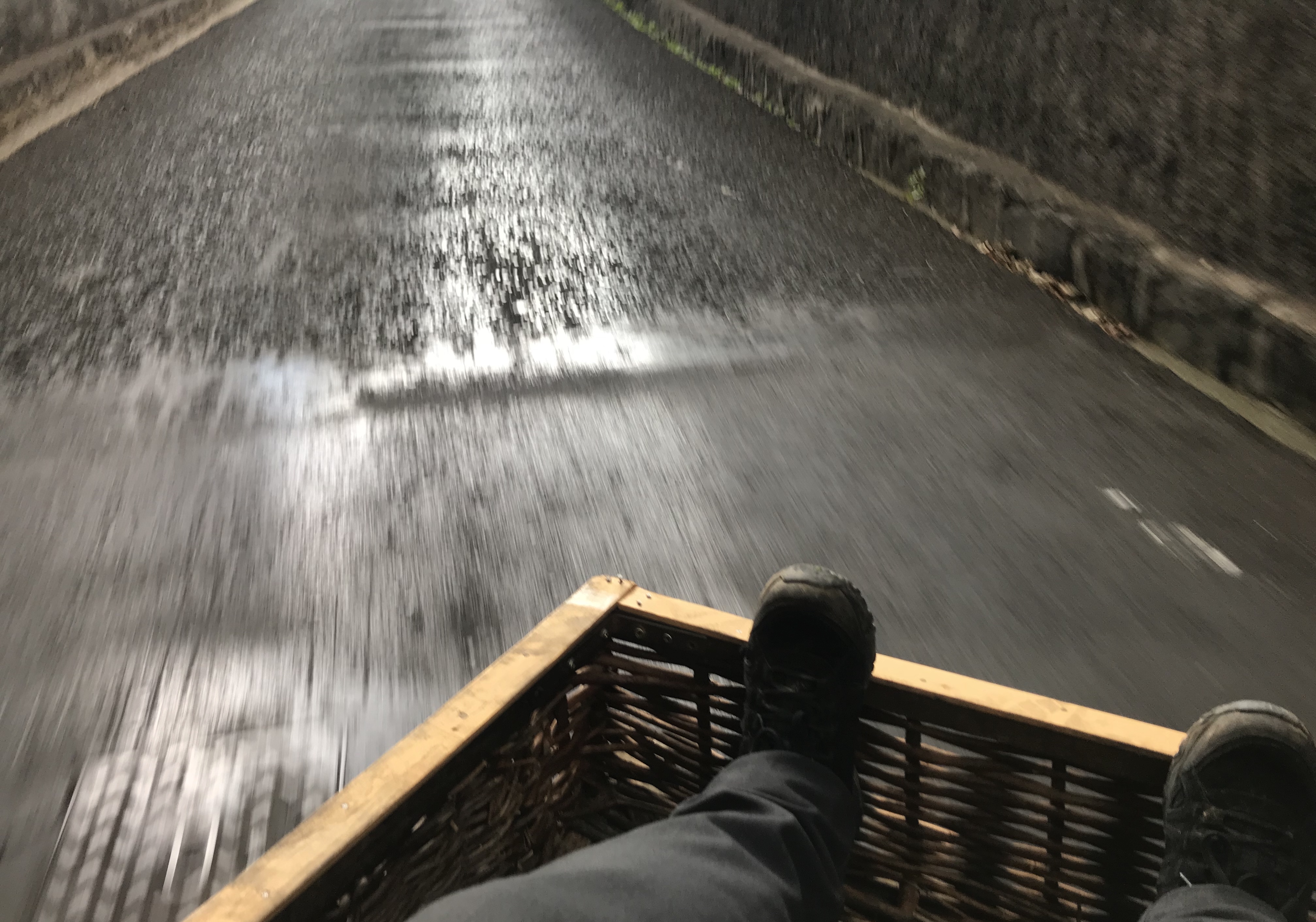
In pairs, the carreiros drag the wicker cart on ropes to get some momentum, before running to the back ready to steer. Gravity pretty much does the rest – the cart’s greased wooden runners glide surprisingly smoothly on the tarmacked streets.
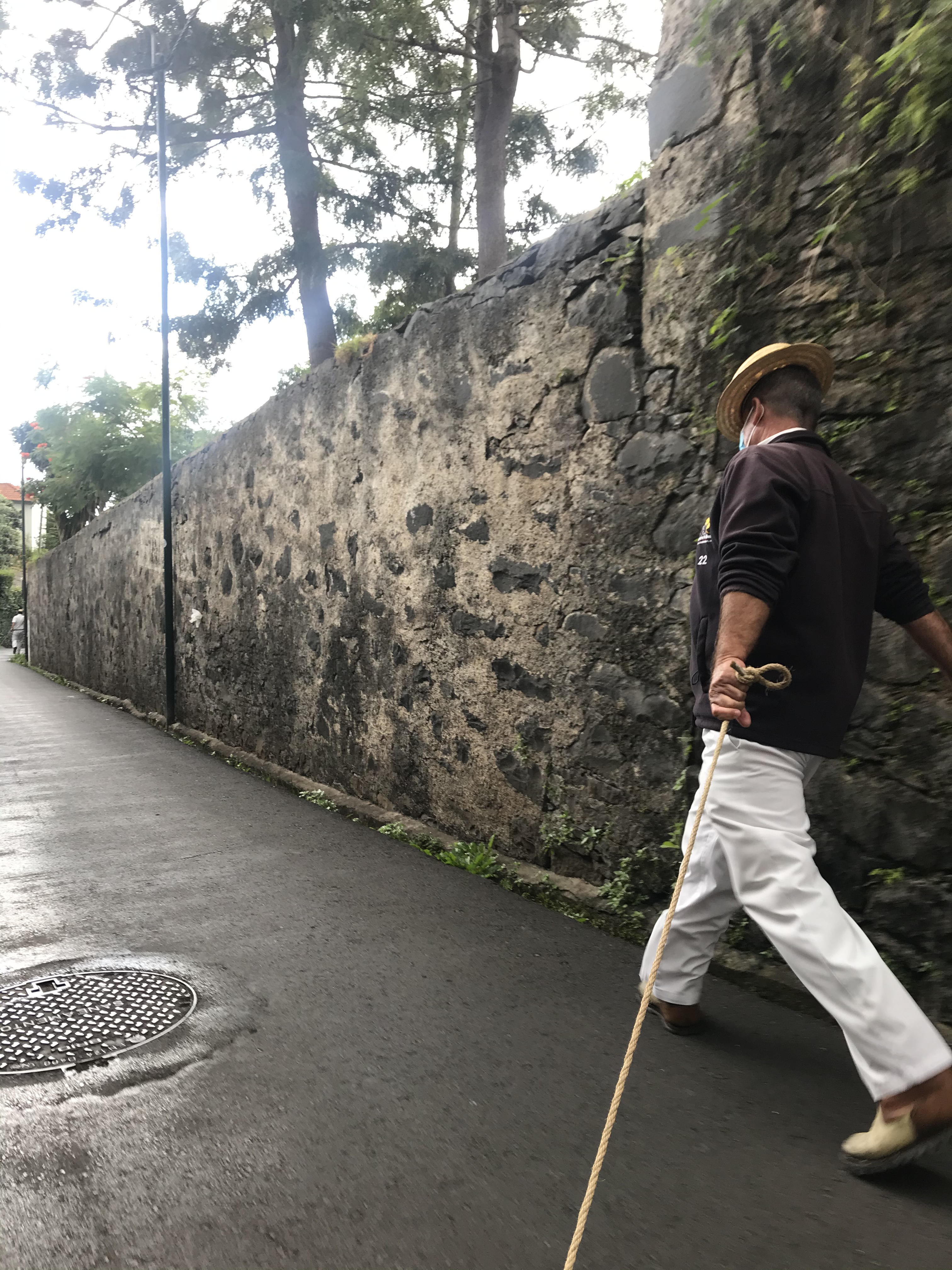
At junctions (these are proper roads used by cars too), spotters keep an eye out for oncoming traffic and ensure someone gives way. If it’s the toboggan, passengers must rely on the braking power of the carreiros’ shoes. Fortunately, despite reaching speeds of up to 30kph – some say even faster – they seem to be pretty adept at stopping. It’s fun rather than terrifying, but an activity I’d definitely recommend.       
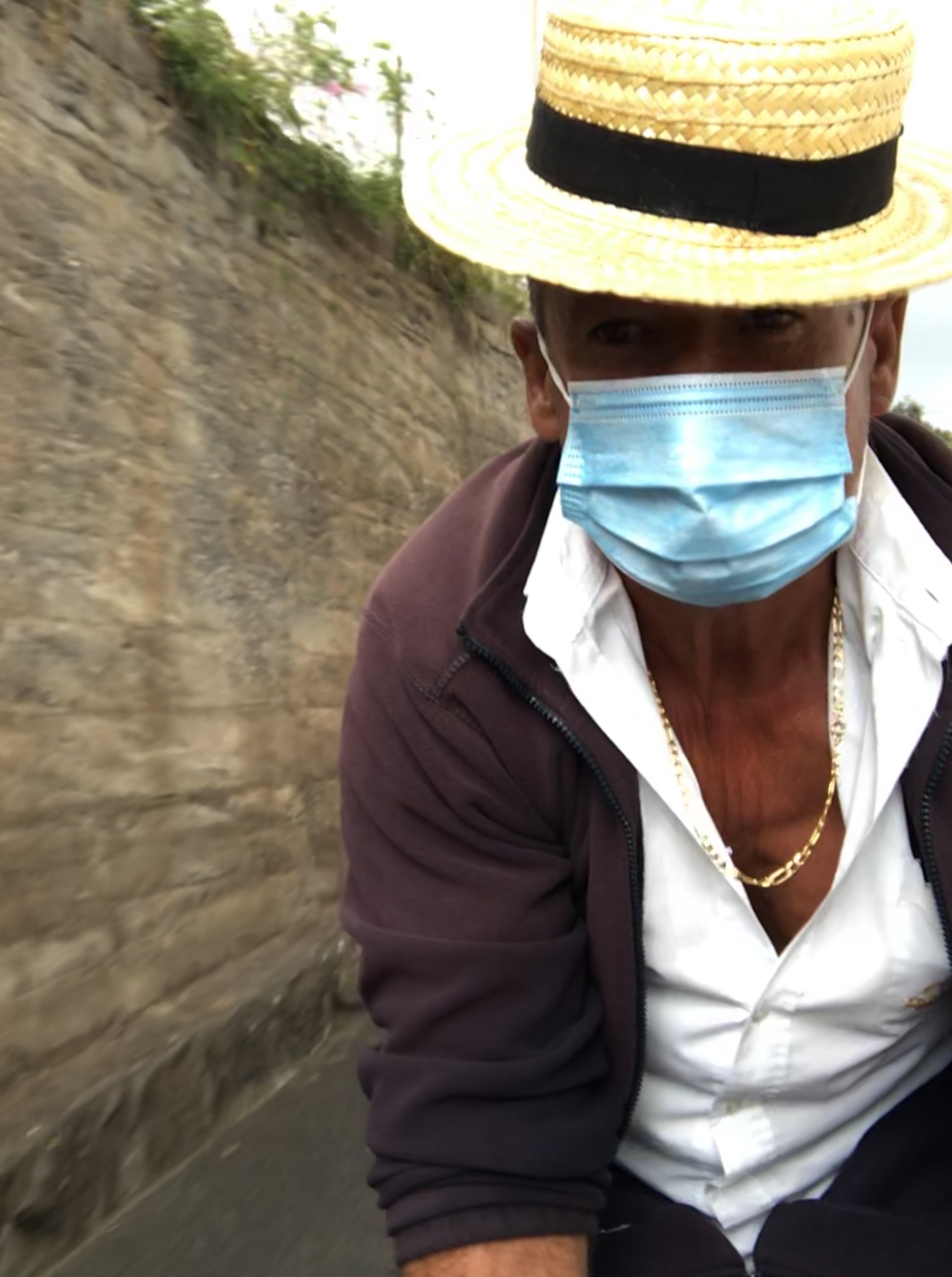
Some sources claim that Ernest Hemingway pronounced the ride “the most exhilarating” of his life during his 1954 stopover on the island. But there are no written accounts penned by the author; instead, it’s likely that the only Hemingway to have experienced the toboggans during that trip was his wife Mary, who wrote about it herself. 

Rain was threatening and so the carreiros were beginning to pack away the wicker toboggans. This involved considerably less effort than a century ago. Back then, if this picture is to be believed, the toboggans were carried downhill on their shoulders.
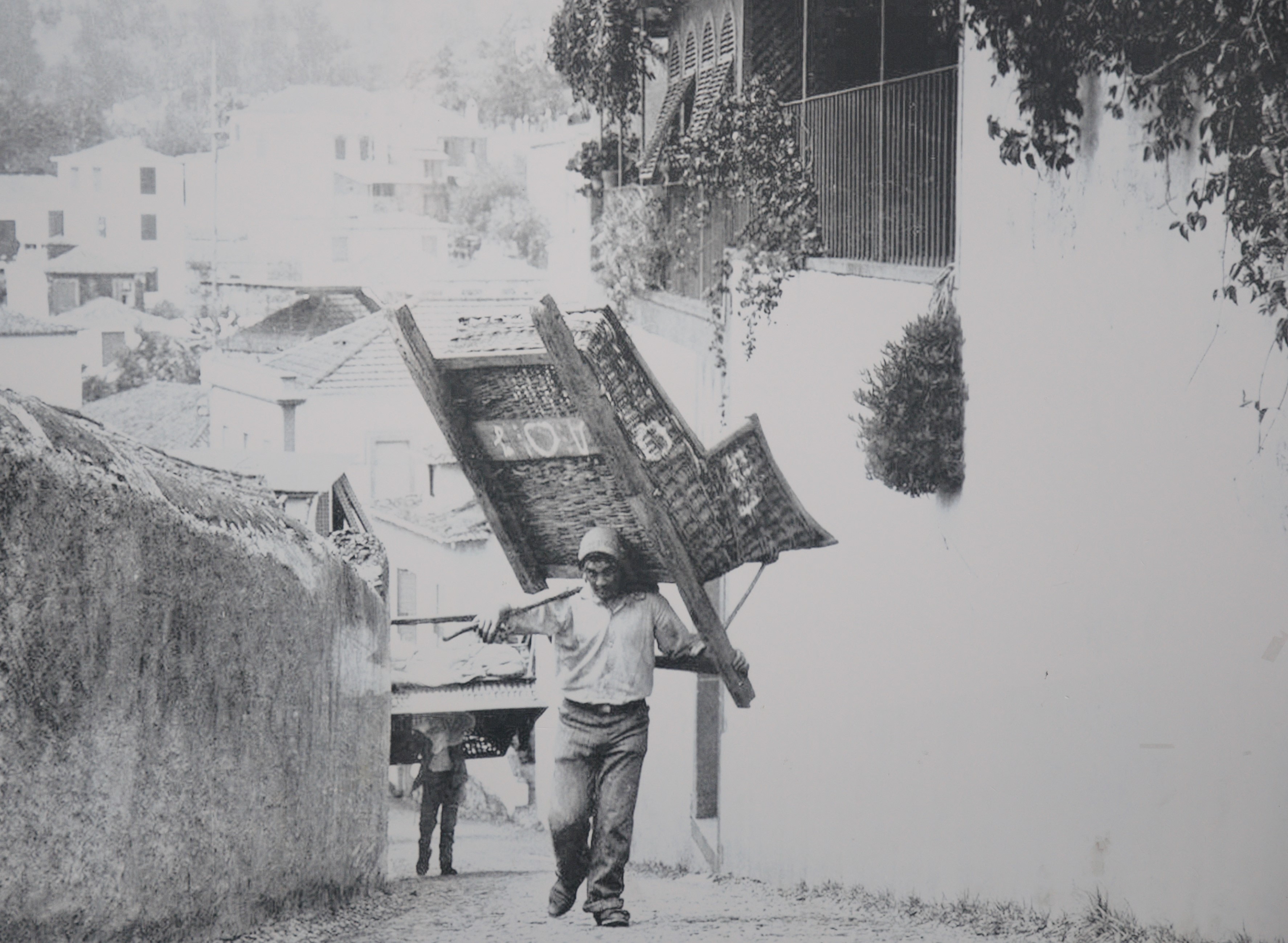
These days, all that has to be done is to bump the cart down a few steps, using the ropes to guide it. From the bottom, it’s hoisted onto a waiting flatbed truck and piled up neatly for the transfer to the depot.

To ride the toboggans:

The Monte base is a short walk from the top of the Teleférico do Funchal, which departs from the Funchal waterfront near the bus station. A one way adult ticket costs 11 euros. The toboggan ride costs 30 euros for two passengers (solo travellers pay a hefty 25 euros). The ride lasts just a couple of minutes. From the end of the ride at Livramento at the junction between Caminho do Monte and Estrada do Livramento, a taxi will cost you 10 euros back down to the cable car station. Save your money and instead, catch a city bus (#19 departs from across the street and #26 nearby) for a fifth of that cost.

On the trail of Fire Saga in Húsavík

One of the funniest films I’ve seen in a long time is Eurovision Song Contest: the story of Fire Saga. Most of the Icelandic scenes were filmed in October 2019 in Húsavík, in the north of Iceland. While I’m not usually a fan of Will Ferrell, who plays Lars Erickssong in the movie, I do share his love for the insanity of Eurovision. So too, apparently, do Icelanders – according to Visit Húsavík, over 98% of them tune in when the contest is broadcast each May. When I had the opportunity to visit Húsavík this summer, I decided to check out some of the places featured in the movie.

The whales

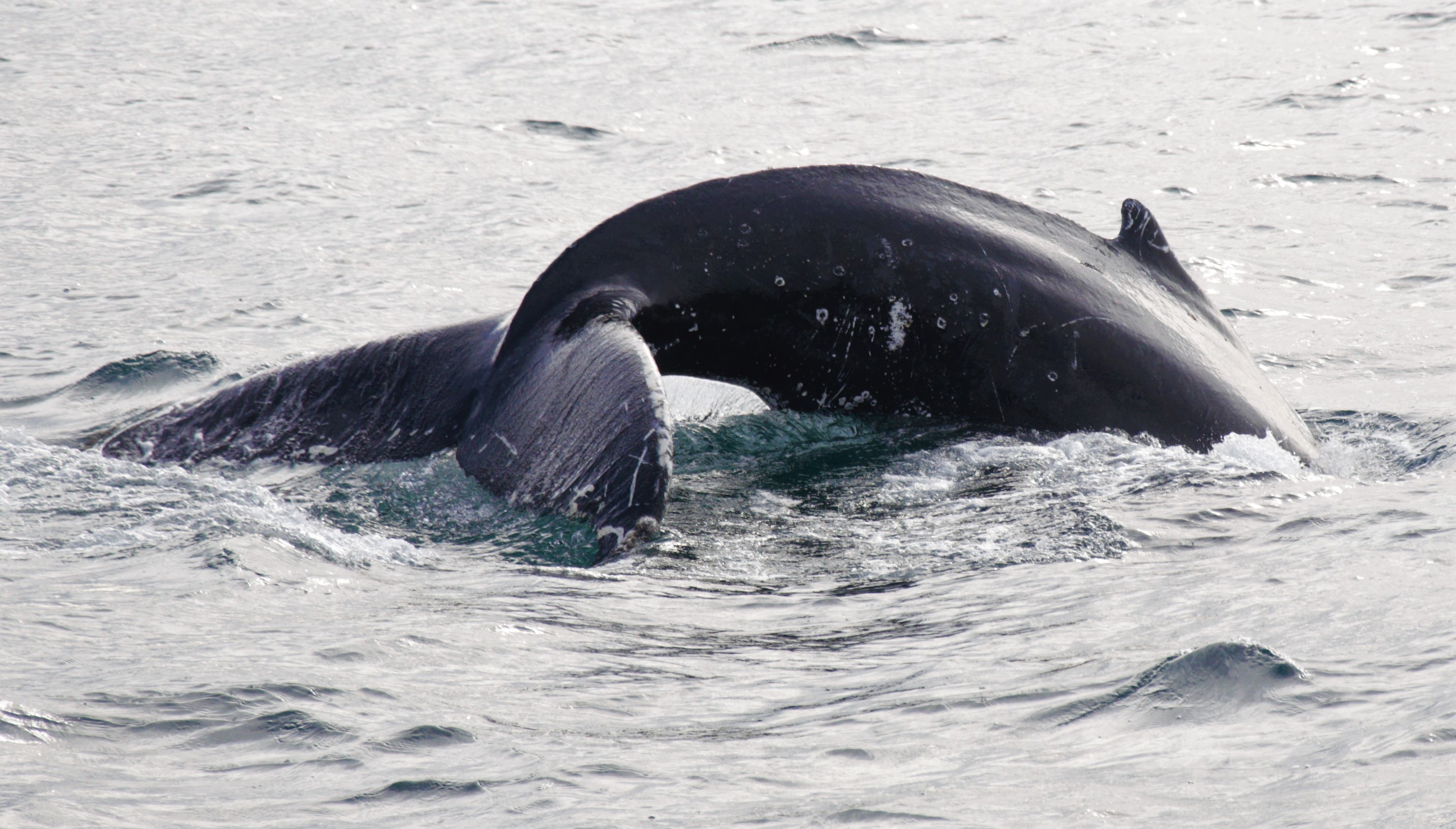
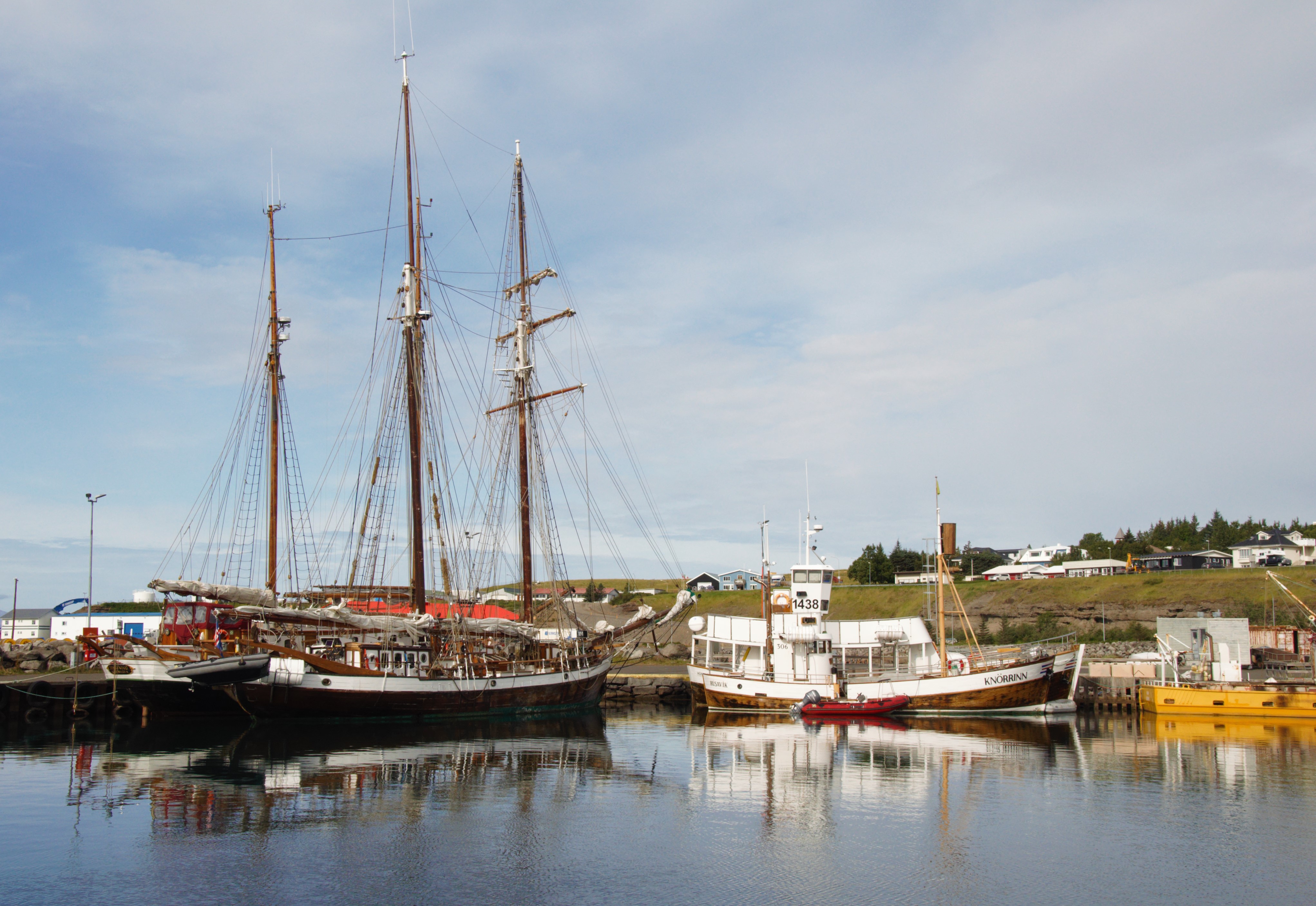
Húsavík is well known in Iceland as a whale watching village and it’s no surprise that the cetaceans feature in scenes from the movie. Tours depart regularly and head out into Skjálfandi Bay where it’s common to see humpback, minke, white-beaked dolphin, harbour porpoise and blue whales. Occasionally it’s possible to see them from land (try GeoSea) but as Erick Erickssong (Lars’ father) is a fisherman, if you’re really going to experience Húsavík as portrayed in the movie you should get out on a boat.

Lars’ family home

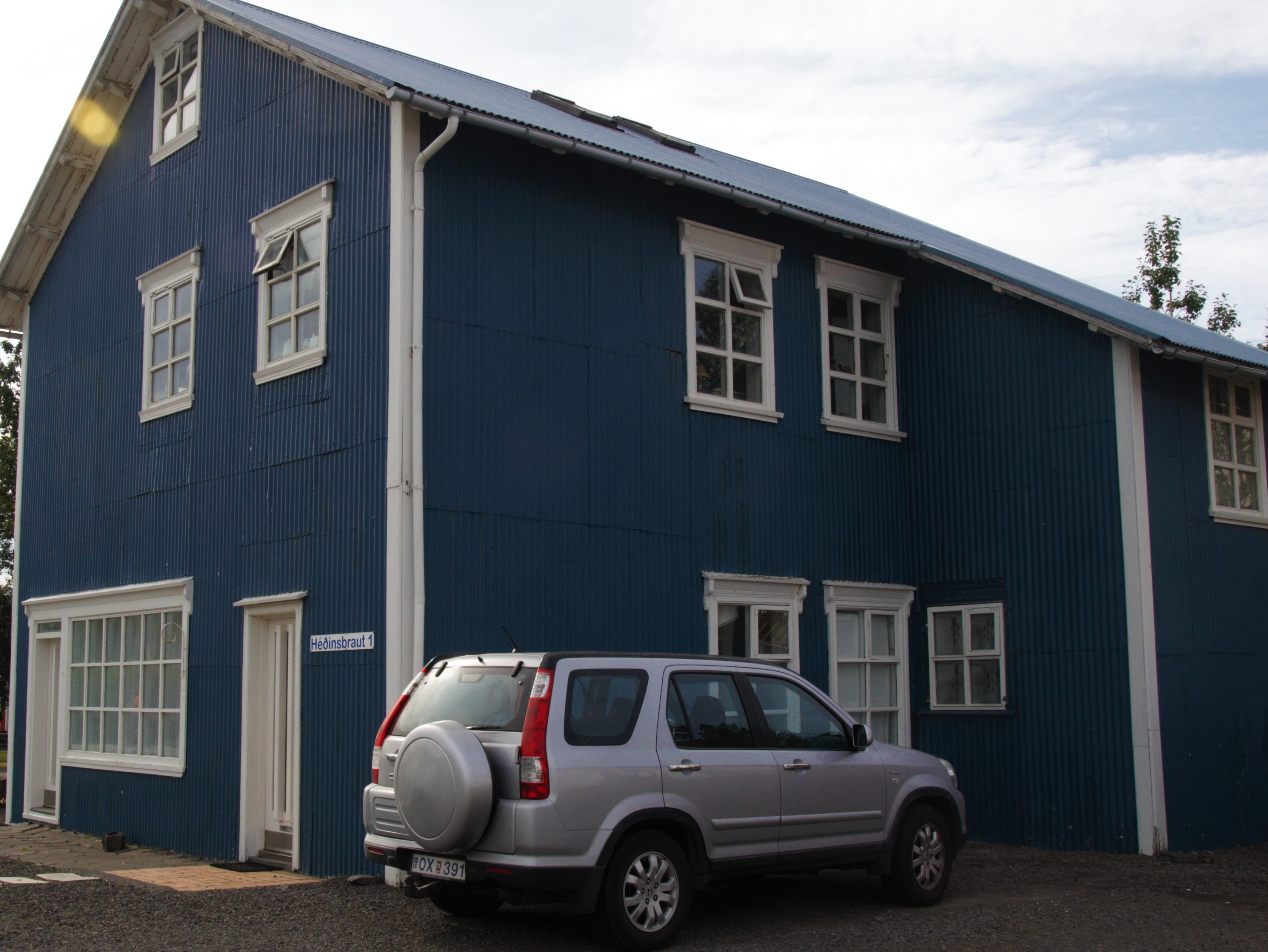
The distinctive two-storey home is easy to find as it sits right near the harbour on the main drag. It’s located on the corner of Héðinsbraut and Hafnarvegur. Built in 1903, it is a wooden structure painted a rather lovely shade of blue. A residential property in real life, the apartment that covers the top two floors of the house was recently put up for sale for 24.5 million ISK, about £140000. Bargain!

Captain’s Galley bar

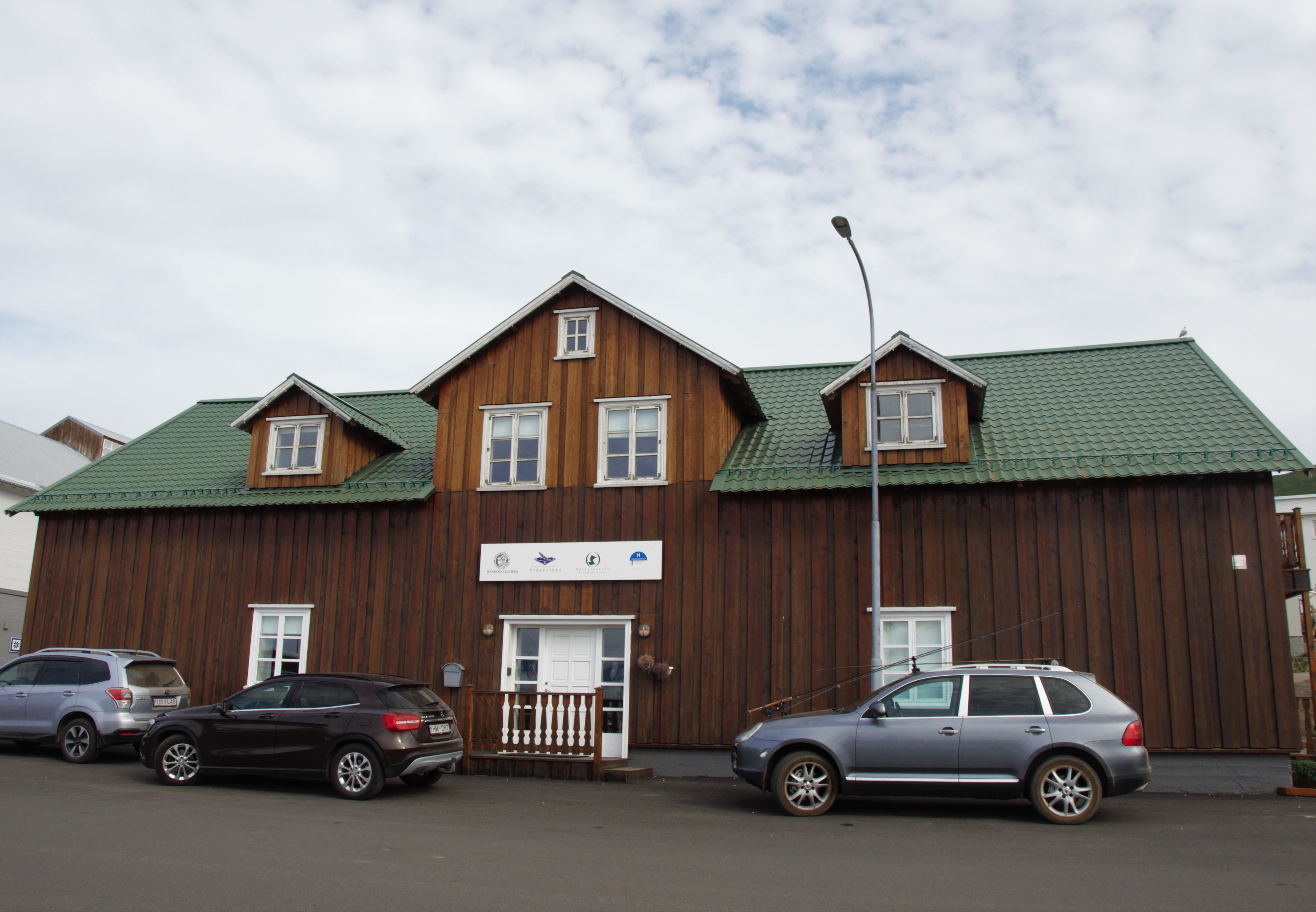
Named “Skipstjórakráin” in Icelandic, disappointingly, this bar isn’t a real pub. Instead, it’s the home of the Húsavík Academic Center (HAC). The signage was removed for the purposes of filming so the building could be used for the exterior shots. It’s another centrally located building, close to the harbour; the shape and recognisable gables make it simple to identify. But like many things on the big screen, things aren’t exactly what they seem – according to IMDB, the interior scenes were filmed back in the UK at Chobham Rugby Club.

Húsavíkurkirkja

This iconic wooden church was built in 1907 and overlooks the harbour in the centre of Húsavík. In the film, Lars rings the church bell to announce that he and singing partner Sigrit have been chosen as the Icelandic entry to the Eurovision Song Contest. It’s a pretty church and well worth a quick nose inside.

The bus stop

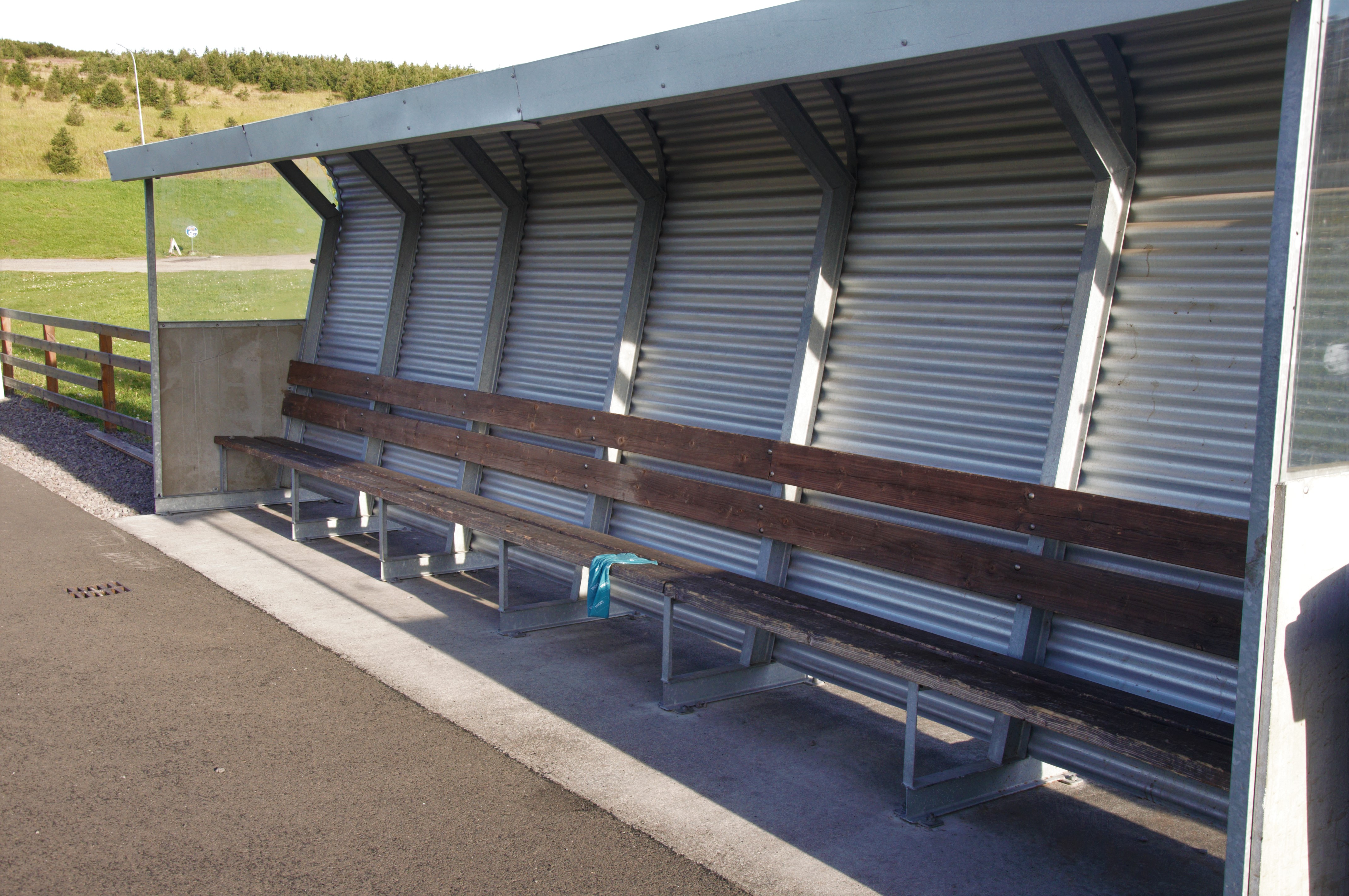
The bus shelter where Lars and Sigrit wait for their ride to Reykjavik isn’t a bus stop at all – it actually sits beside the astro turf pitch belonging to Völsungur’s football team. Hinrik Wöhlers, director of the Húsavík Chamber of Commerce and Tourism was reportedly keen on shifting one of the two shelters to the harbourside location seen in the film. When I visited in August 2020 they were both still at the football ground.

The elf houses

Though it’s common to see elf houses in Iceland, these particular ones were a prop installed specifically for the movie. However, the Cape Hotel were keen to tap into the interest created by the film and faithfully recreated this tiny residential street in the hotel garden. As well they opened a pop-up Ja Ja Ding Dong bar; it’s outside so it’s likely to remain a summer attraction only. I spoke to the manager and asked him whether he was a fan of Eurovision himself. “I am now,” he said with a grin.

The village of Húsavík is one of the prettiest in the country so even if you’re not a Eurovision fan you should really add this to your Iceland itinerary. It’s a great base from which to drive the Diamond Circle route which features Dettifoss waterfall, Ásbyrgi Canyon and Lake Mývatn. But if you do love to watch Eurovision, then find your way to this petition which calls for Swede Molly Sandén aka My Marianne to perform Húsavík (My Hometown) at the contest in 2021:

https://www.thepetitionsite.com/626/164/246/get-husavik-my-hometown-performed-at-eurovision-2021/

Iceland’s thermal baths

Despite the country’s capricious weather, a visit to one of Iceland’s thermal baths is a must, whether you’re a first-timer or on a return visit. There are numerous hot springs and thermal baths dotted around the country, some little more than a hollow in a totally natural settting. In this post, I compare three of the biggest. All offer lockers, smart changing rooms, swim up pool bars and something akin to a spa experience. So how do they stack up?

The Blue Lagoon

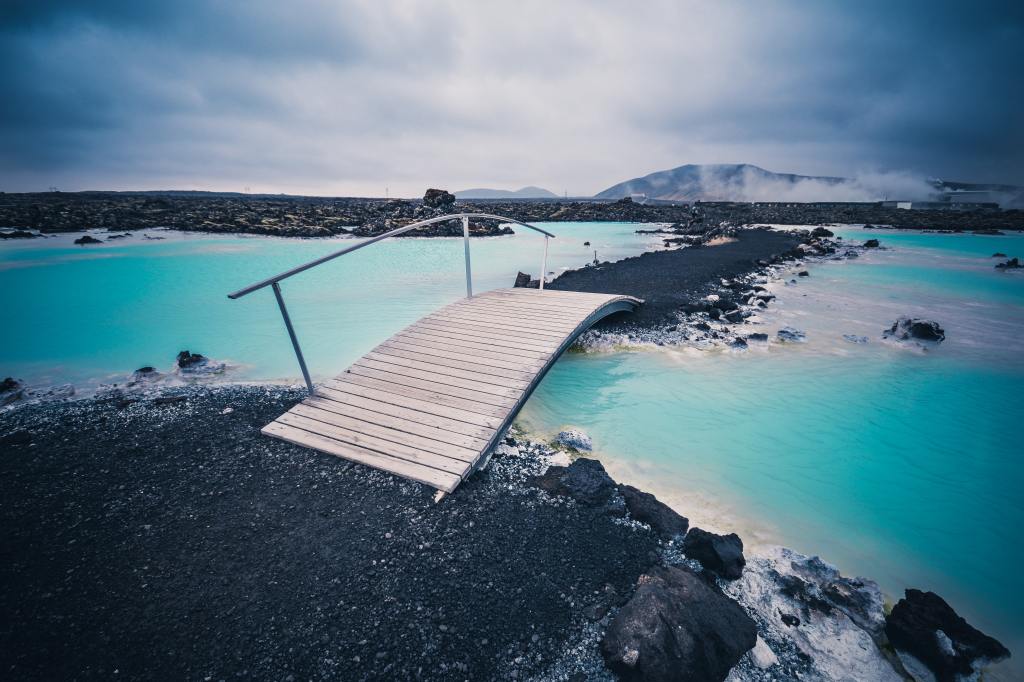
Blue Lagoon by Chris Lawton via Unsplash

First-time visitors, consider this a must. Located close to Keflavik Airport, it offers the chance to tick off a quintessentially Icelandic experience before you’ve even checked in to your hotel. Located in the middle of a lava field on the wild Reykjanes peninsula, nature is raw and rugged here, but dip a toe in and the water is warm and soothing. White silica-rich mud makes an enriching face mask and also reflects light to give the water its beautiful blue colour. It’s gorgeous, with plenty of tucked away spots to create a sense of privacy even when the place is crowded. On site, there’s a fancy spa, restaurant and eye-wateringly expensive accommodation. Book well in advance for your session in the baths, particularly if you want to visit before or after your flight. 

The lava field surrounding the Blue Lagoon

Would I go back?

Definitely yes. It’s touristy, of course, but there is something rather special about the place.

https://www.bluelagoon.com/

Mývatn Nature Baths

The nature baths with the lake in the background

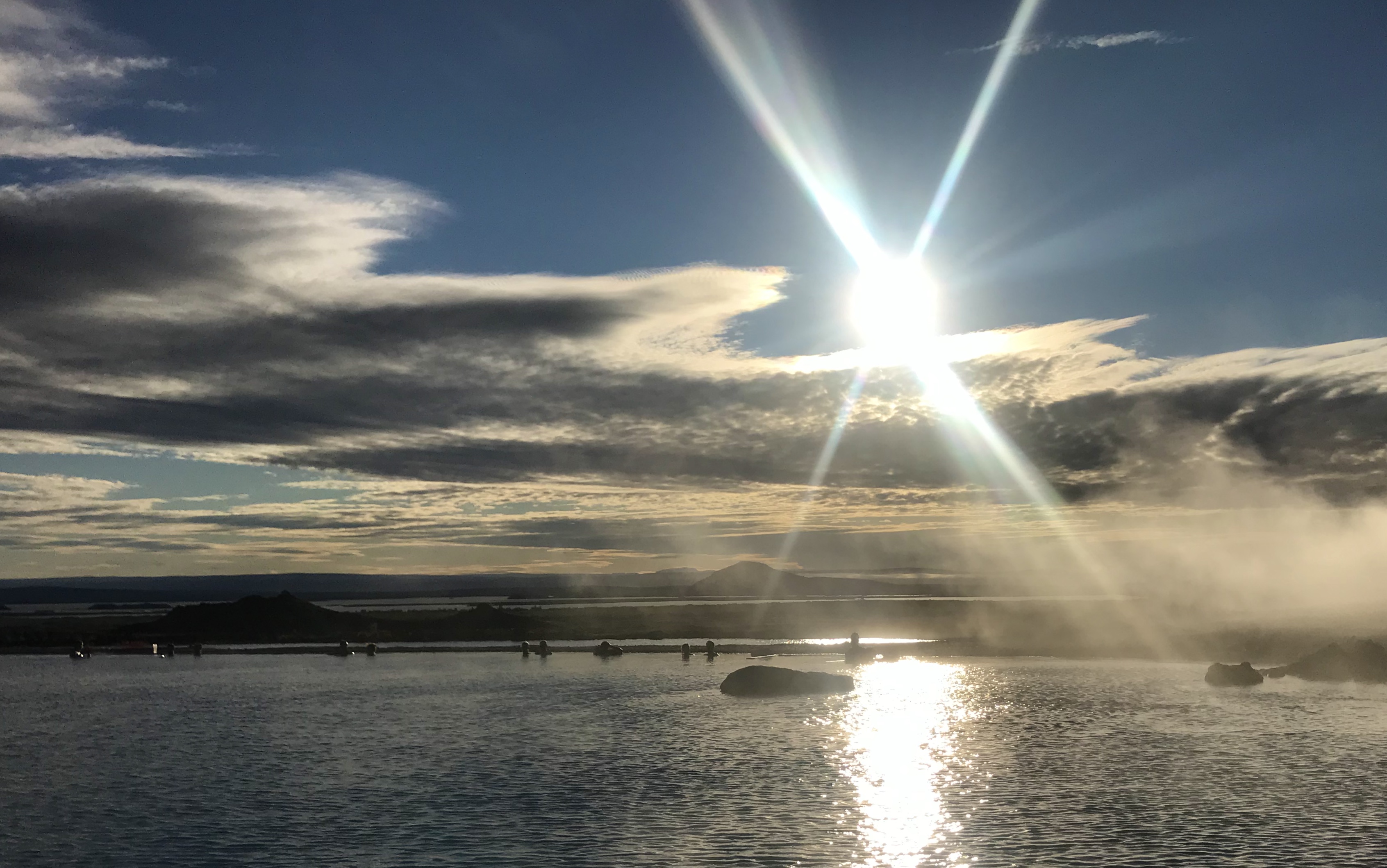
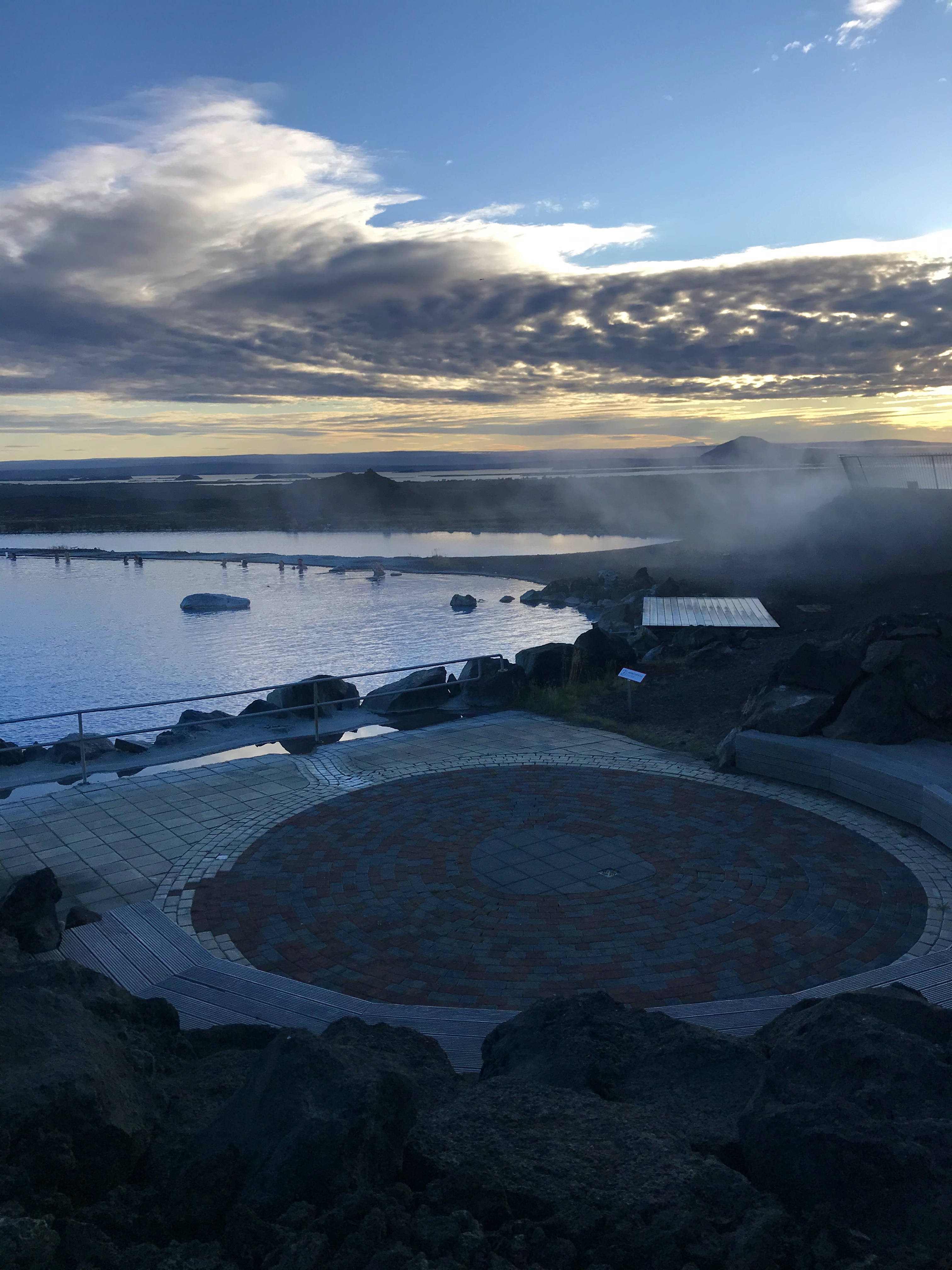
The north of Iceland sees far less traffic than the south. Like the Blue Lagoon, Mývatn Nature Baths water source is linked to a power supplier, this time the National Power Company´s bore hole in Bjarnarflag. The water in the baths has a temperature of between 36 and 40°C and also has a high mineral content. The pool is basically split into two sections, with one slightly cooler than the other – I found the hotter part to be more comfortable. Both overlook the lake itself and the midges which plague the area in summer were absent from the pool itself which was a relief. 

Mývatn Nature Baths

Would I go back?

Probably not. It’s pleasant enough but didn’t have the wow factor.

https://myvatnnaturebaths.is/ 

GeoSea

GeoSea and the bay beyond

Opened in August 2018, GeoSea uses a mix of geothermal heat and seawater pumped from two nearby drillholes to maintain a temperature of 38 to 39°C. Intimate and architecturally sympathetic to its surroundings, it sits on a cliff right on Skjálfandi Bay, meaning that if you are really lucky you might catch sight of the whales that occasionally come right into the bay. The carefully thought out design means that the pool water and that of the bay itself create the illusion of an infinity pool. As it is west facing, it’s perfect for those rare, clear days when you can watch the Icelandic sun set. In the winter, stay after dark and you might also catch a glimpse of the Aurora Borealis. If your visit coincides with an evening such as those, you are in for a real treat.

GeoSea at sunset

Would I go back?

Absolutely. This is surely one of the best views in the whole country.

https://www.geosea.is/