juliamhammond

Latest

Tips for keeping yourself – and your stuff – safe while you’re travelling

Travel safety is a big consideration for most travellers and as a solo female, it’s something that has to be thought about, both at the planning stage and while I’m on the road. Here’s some advice based on what I’ve learned over the years about keeping myself safe.

Plan before you go

I hold what I call my reserve bucket list. I contains places that I hope to go to one day, but for safety or security reasons aren’t top of the list right now. One of the websites I go to when I have a trip idea involving somewhere that might just be a bit dodgy is the FCO’s – and in particular its Travel Advice by Country. Sometimes it can make for scary reading, but knowledge is never a bad thing. The FCO’s up to date facts about a country can help rule it out – sorry, Mali, you’ll just have to wait in line with Yemen – but where it’s clear that any issues involving safety are contained to a specific part of the country, it can sometimes rule a country in.

guatemala-img_0739

Guatemala – one place where the FCO’s advice helped me prepare

Keep abreast of news while on the road

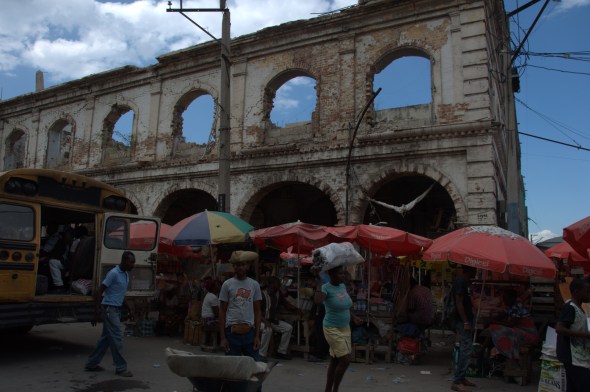
I’ve found Twitter to be an invaluable help in finding out what’s going on within a country from the inside. In Haiti last year, it was the most accurate way of tracking the unrest triggered by fuel price rises and ensuring that I didn’t leave sleepy Jacmel too early. It’s also been handy to check how the roads are running in and out of Calais when my family have taken a cross Channel ferry during the recent difficulties.
dsc_0060

Haiti – not the safest place to travel but  certainly interesting

Think about luggage

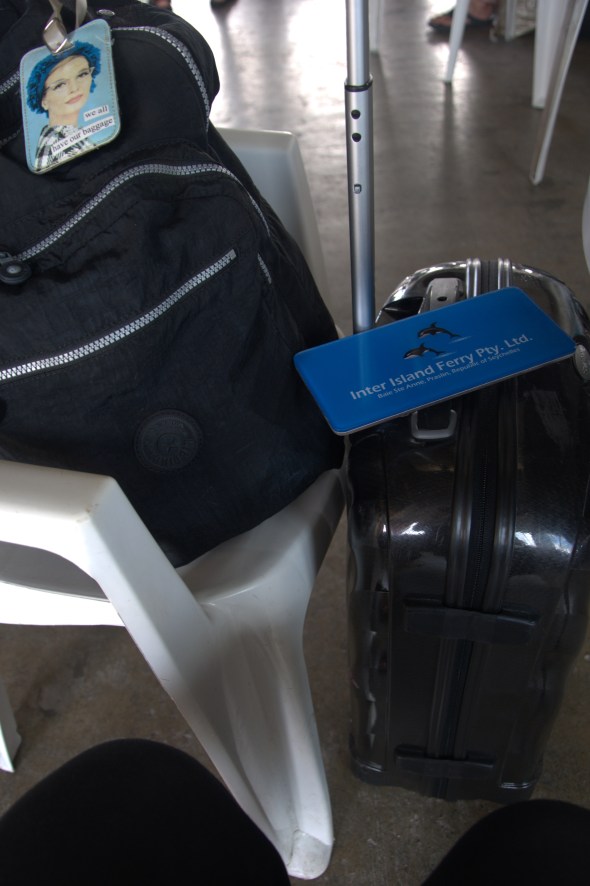
Habitually I travel with a rigid-shell wheelie, which would be harder for thieves to slash than a soft suitcase. My aim is usually to appear a more difficult target than someone else, so to that end I ensure zips and fastenings are done up, small padlocks secure outside pockets from interfering fingers and bags are worn cross-body so they can’t easily be slipped off my shoulder. Valuables are buried deep within inside pockets and expensive equipment like cameras are in plain bags rather than labelled ones with Nikon or Canon clearly visible. One thing I never do, though, is wear my rucksack on my chest – personally, I just think that marks you out as a dumb tourist and makes you more of a target.
DSC_0677

My trusty travelling companions, seen here waiting for a ferry in the Seychelles

Trust your instincts

Over the years I’ve either been lucky or I’ve developed the skill of knowing when something just doesn’t feel right.  Of course, I could have been blissfully unaware of any potential danger.  Sometimes, you just have to go with your gut and accept help or hospitality from complete strangers.  I’ve trusted people to give me a lift and turned others down simply because it didn’t seem right; spoken to others at length and entered their homes while avoiding eye contact with others.  One of the most rewarding aspects of travelling is the encounters you have with people along the way, which would be impossible if your guard was always up.  So far, though I shouldn’t want to jinx my luck, I’ve never got myself into any situation I couldn’t get out of.  Perhaps that’s the key – have an exit strategy in the back of your mind.

img_6172

I’ve been rescued by a group of Rastas in Zambia

Choose accommodation in a safe location

It can be tempting to book a hotel or hostel near a bus or train station but I do check first to find out if that puts it in an insalubrious district. Better to have a short taxi ride or subway trip than to risk walking around somewhere that I’m more likely to get robbed. That’s especially important if I’m arriving after dark, which may be earlier than at home, of course. If arriving after nightfall is unavoidable, then I’ll almost always take a taxi; to do otherwise could be false economy. It’s also good to take local advice.  The hostel I stayed at in Windhoek, Namibia’s capital, was very clear with the advice posted on its gate: leave anything behind that you didn’t wish to lose – pickpockets were, sadly, rife.

img_2222

Damascus in the daylight

Ironically as it turned out, when I visited Syria just months before the civil war kicked off, I took the airport bus from Damascus into the city and then walked alone through its deserted streets at 2 am – and have rarely felt safer than I did that night. Perhaps safety is a state of mind?

Happy Mexican Independence Day!

September 16 is Mexican Independence Day.  Outside Mexico, it is overshadowed by the Cinco de Mayo celebrations which many confuse with Independence Day.  In fact May 5 is the anniversary of Mexico’s victory over the French at the Battle of Puebla in 1862. Mexican independence instead was won from the Spanish in 1821 after a war which commenced on September 16 1810.

The fight to extricate Mexico from Spanish rule began with what’s known as the Grito de Dolores, translating as the Cry of Dolores, a rallying cry designed to incite revolt. It was uttered in the small town of Dolores, located a short distance from the colourful city of Guanajuato in central Mexico.  The exact words that marked a new chapter in Mexico’s history have been forgotten, but the man who spoke them has not, Miguel Hidalgo y Costilla, a Catholic priest whose statue you’ll find in Guanajuato.  Hidalgo was executed a year later but his country owes its freedom to his bravery.

img_7118-1

Place of Frogs?

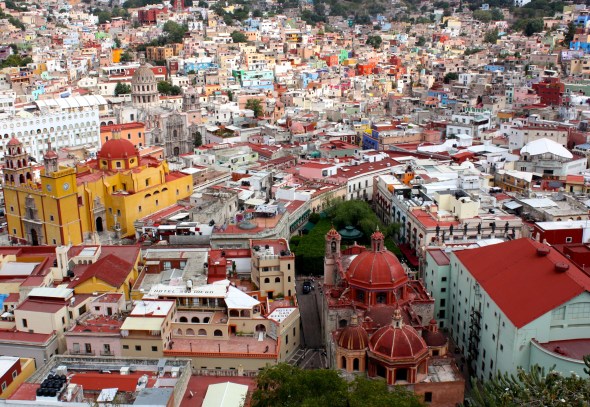
I took a bus to Guanajuato a few years back, travelling from the pretty artists’ enclave of San Miguel de Allende.  Arriving in the place they call the “place of frogs” because early residents thought the surrounding hills looked like one, I was struck by the city’s colour.  Looking like a city that has shares in Dulux, almost every building is painted a vibrant shade.  Individually, they’re pretty, but the overall effect is stunning and it’s no surprise to learn that they’ve earned a UNESCO listing.  I took the funicular up to the statue of El Pipila and looked down over the Teatro Juarez immediately below.  It really is a splendid place.

img_7104

Overlooking Guanajuato from El Pipila

Once, Guanajuato was a mining town, sitting on vast reserves of silver, making it one of the most productive mining areas in the country.  The La Valenciana mine, located in the village of the same name, brought huge wealth to the Spanish mine owners and provided many labouring jobs, but it was closed down when the Spanish were given their marching orders.  The mine did reopen, but is now permanently shut, though tours are available.  Even if you don’t descend underground, it’s worth heading to La Valenciana to see the ornate San Cayetano church.

Back in Guanajuato, one of the best ways to appreciate the city is on foot, wandering along the many alleyways, including the Callejon del Beso (the alleyway of the kiss) where it’s so narrow it’s possible to kiss your lover from balconies on opposite sides of the street. Cafes are another thing that the city does well, scattered in the plazas that are lined with museums, theatres, churches and historic mansions.

img_7090

Bronze sculpture of a musician outside San Diego church

The day is marked with fiestas, flags, parades and partying.  Whether you’re in Mexico or not, I’m sure you’ll join me in raising a glass to that.  Viva Mexico!

Been there, done that, now what?

I wouldn’t class myself as a jaded traveller.  I still get excited as I pack my wheelie and I even still love dragging myself out of bed in the pitch black to make an early flight.  But there are places that I’ve tired of, places where I find myself wondering why they’re so hyped.  If I never got to go to Paris or Amsterdam again, I wouldn’t be concerned.  (But let’s not include New York in there because I’d be gutted to think I could ever be done with that incredible city.)

image

Tulips from Amsterdam

Increasingly, though, I’m keen to seek out places without crowds, not so much out of some kind of snobbish one upmanship but more out of a desire to be completely unsociable.  We introverts need our space, you know.  So which alternative destinations do I recommend if you’re looking for an off the beaten track experience?

Been there: Cusco and the Sacred Valley

Now what: Chachapoyas

The wealth of Inca sites in and around the Peruvian city of Cusco makes the area one of the country’s most visited.  From Sacsayhuaman to Machu Picchu, this splendid heritage makes for fascinating viewing, but year on year visitor numbers have soared and you’ll be hard pushed to find space for quiet reflection unless you seek out some of the lesser-known places like Poroy and Chinchero.

10427280_10203326911761294_2819976564638893839_n

Kuelap fortress

Trailblazers should ditch the crowds and fly north from the Peruvian capital Lima instead of south.  Basing yourself in the charming town of Chachapoyas, you’ll be well placed to visit the intriguing hilltop fortress of Kuelap as well as the sarcophagi at Karajia.  Find out everything you need to know about arranging your trip here:

https://juliamhammond.wordpress.com/2014/11/25/northern-peru-the-chacha-circuit/

Been there: Dominican Republic

Now what: Haiti

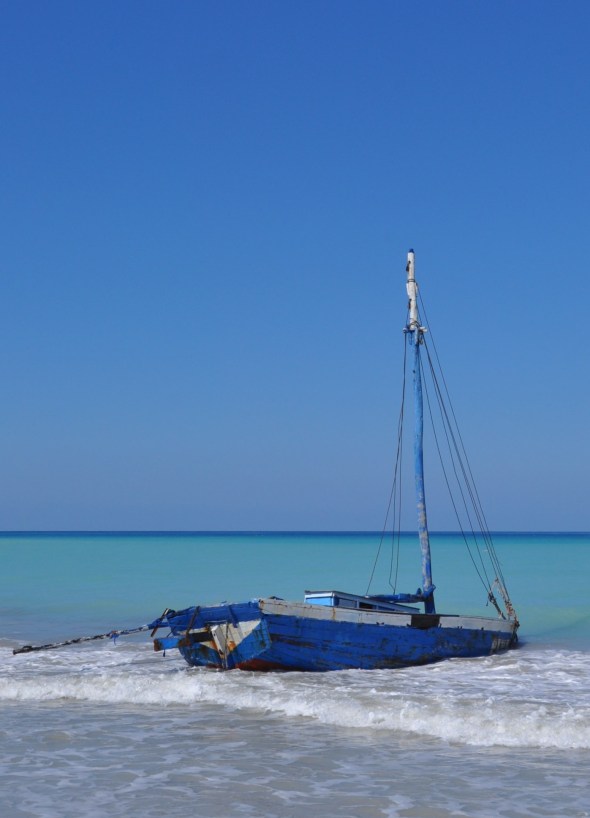
Not for the faint hearted, a trip to Haiti’s going to require you to keep your wits about you.  Compared to its Hispaniolan neighbour, the Dominican Republic, package tourism is in its infancy and largely confined to Labadee in the north of the island.  Instead of all-inclusives and the hard sell at the end of a rum factory tour, head over the border and make for the sleepy beach at Port Salut.

image

Fishing boat on Pointe Sable, Port Salut

You won’t find a bustling resort, rowdy beach bars or pestering hawkers who won’t leave you alone until they’ve made a sale.  At weekends, a steady stream of ex-pat aid workers from Port au Prince gives the place some life, but if all you want is pristine white sand, crystal clear turquoise waters and a cold beer, then come on a weekday and you’ll have the place to yourself.  See why I liked it here:

https://juliamhammond.wordpress.com/2015/02/14/the-best-beach-in-haiti/

Been there: Andalusia

Now what: Extremadura

I’m a big fan of Andalusia, from the tranquil elegance of the Mezquita in Cordoba to the bustling alleyways of the Jewish quarter in Seville.  The delightfully atmospheric hamman in Jerez offered welcome respite from scorching afternoon sun and the towers of Cadiz offered a glimpse into that city’s fascinating maritime past.  This year, though, for the first time, I dragged myself away from Andalusia’s comforting familiarity and ventured north to Extremadura.

photo3

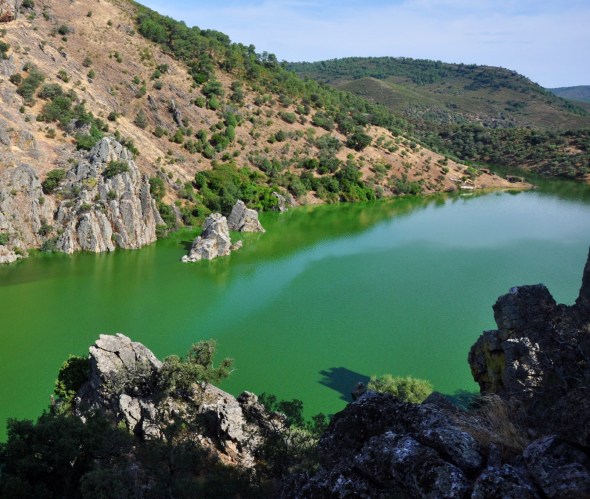
Vivid colours and unspoilt views

This overlooked region still has its pueblos blancos, like Zafra.  It offers the gourmand such a choice in unmissable foodie experiences that stay too long and you’ll need to pay for an extra seat on the plane to accommodate a vastly enlarged belly.  And the scenery, both natural and built, is as transfixing as its more popular neighbour.  My favourites?  Monfragüe National Park’s showstopping scenery and Trujillo’s atmospheric back street bakeries selling yummy yemas.  Find out what else you shouldn’t miss here:

https://juliamhammond.wordpress.com/2016/07/12/a-beginners-guide-to-extremadura/

Been there: Vienna, Budapest and Prague

Now what: Lviv

Given the political situation in parts of Ukraine, you could be forgiven for thinking I’ve lost my mind in recommending one of its cities instead of the other gems of the Austro-Hungarian Empire.  But Lviv was annexed by Austria in 1772 and, known as Lemburg, had more in common with west than east.  Belle Epoque mansions and public buildings built in Viennese style still characterise today’s Lviv.  It’s a very rewarding place to explore on foot, safe and not at all what you’d expect from an ex-Soviet bloc city.  I’ll have my coffee and cake here, thanks.

lviv

Elegant Lviv


Any other suggestions?

Of course, there’s a good reason why some parts of the planet attract so many of us. But if you venture off on your own, the rewards are limitless.  Where have you been that improves upon one of the world’s top rated destinations?

The coffin makers of Teshie

If you could choose a coffin designed to match your favourite hobby or interest, what would it be? A football boot? A bottle of Coke? A mobile phone? In Teshie, a suburb of the Ghanaian capital Accra, there’s no such thing as a regular coffin.

Ghana 327

If I’m honest, I’ve never really given my own funeral much thought, concentrating instead on living. But to Ghanaians, death is a big celebration, the funeral a chance to mark the contribution a person has made to their community. And a big part of that is a customised coffin. Despite the typical cost coming in at more than six times the average income, many families choose to invest in one of these designer pieces to give their loved one a worthy send off.

Ghana 334

The southern Ghanaian Ga people believe that death is not the end and that a person’s spirit will live on in the afterlife. It’s thought that deceased relatives hold much influence over the living and thus need to be kept happy. Depending on a person’s status, they might qualify for a particular type of coffin. Swords have high status and therefore cannot be used for just anyone; lions, cockerels and crabs represent clans and so only the heads of certain families are permitted to be carried in them.

Ghana 336

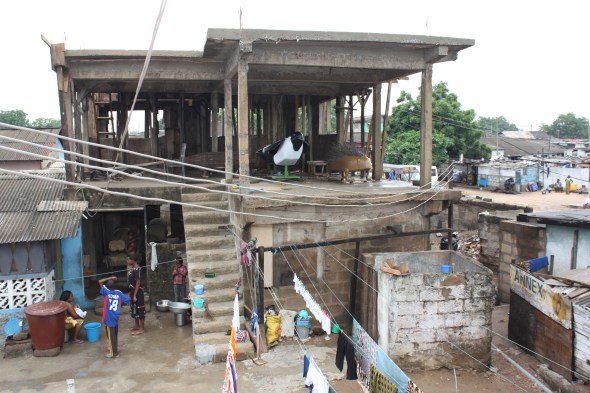
Pulling up along the main street in Teshie, at first glance it seemed a pretty unassuming place. My driver led me to the back of one of the breeze block shops that lined the street and up a rickety wooden staircase across the back yard.

Ghana 332

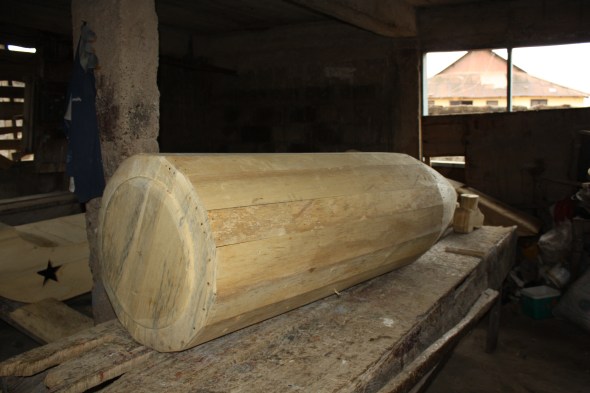
There, open to the elements, was a tiny showroom and workshop packed with finished and half-finished creations. An aeroplane, silk lined and carefully painted, looked ready to leave, missing only its dead body. A small photograph of an unsmiling policeman was tacked to the wall next to a crudely chiselled dugout. It was in its early stages, but it was clear  that  before long, this was going to be the ultimate vanity project.

Ghana 326

It’s also common for the deceased’s relatives to choose a coffin themed to their loved one’s former occupation. A fisherman would find himself interred inside a fish – how ironic – while a fruit seller could end up in an elongated pineapple or mango, perhaps. A barman (or drunk) could be a bottle of beer, a farmer a cow. There was no shortage of imagination, or skill.  Many of the craftsmen working on these fantasy coffins have been in the family business since starting their working life. Artisans employ apprentices who learn the craft and do the grunt work, leaving the artist to work simultaneously on the finer details of a number of coffins at once. Once carved, specialist painters or sign writers are drafted in to decorate the coffin appropriately. A coffin such as this is always to be a carefully crafted item, never a rush job.

Ghana 325

But although such businesses have been operating for decades since around 1950, interest from overseas is a relatively recent phenomenon. Word’s now out, though, and the coffins have featured all over the world in museums, festivals, commercials and trade shows from Milan to Toronto and a wealth of places in between. Coffins for local use are generally sculpted from the wood of the wawa tree, but for increased durability, those going to temperate climes are usually created out of something harder such as mahogany.

Ghana 330


If I’d have been at the beginning of my trip rather than the end, I might have been tempted. Never mind the freight charges, just think of the reaction when you got it home.  Orders take at least a fortnight to take shape if not longer, however, so for now a personalised coffin will have to wait.  In any case, I have no idea what I’d choose.  Would you?

Should you go back to a favourite destination?

For much of my adult travelling life, I’ve been keen to seek out new destinations, craving the buzz which comes from taming the unfamiliar and discovering what makes a place tick.  As the country count has increased, some have commented that I’m only interested in the number, but that’s really not the case.  In fact, over the past two years I’ve cut back on visiting the new to revisit old haunts.  Nostalgia is harder to fight the older you get.

image

Valle de la Luna, near San Pedro de Atacama

After a fourteen year gap, exploring the incredible landscapes around San Pedro de Atacama in Chile helped to reinforce just how spectacular that country is – and this time I came armed with a better camera:

https://juliamhammond.wordpress.com/2015/04/20/around-san-pedro-de-atacama/

As well as Chile, I returned to Salzburg in Austria, a city which I last visited as a child.  Participating in the Fraulein Maria Cycling Tour enabled me to create new memories – although I think my dream of belting out Lonely Goatherd at the top of my voice was probably someone else’s nightmare.  Perhaps that’s the key – to try something new in a familiar environment and add another page to your personal guide book for that place.

Notes

Fraulein Maria’s Cycling Tours provide the words in case you’ve forgotten

There’s more here:

https://juliamhammond.wordpress.com/2015/06/05/salzburg-on-two-wheels/

There’s a risk, though, and that’s the place will have changed from the rose-tinted picture that takes pride of place in your holiday album.  Accept the reality: it moved on, and it moved on without you.  I remember heading back to Lake Titicaca after an eleven year gap to find the Uros Islands that had held such rustic  charm now sported satellite dishes and solar panels.  The quality of life for the islanders had measurably improved and I had to adjust my perception accordingly.  Why should people forgo education and health care just so we can get our daily dose of quaint?

IMG_3977

At least the Uros Islands still bounce

However, on balance, returning has been a largely satisfactory experience.  Seville, New York, Saigon and Cusco are amongst the cities which have garnered renewed attention from me over the past couple of years, and none of them disappointed.  In a few weeks, I’ll head to Budapest for a second visit.  It will be a day trip (joining Belfast, Lisbon, Amsterdam and Bremen on this blog once I return) but I’m already excited at the thought of luxuriating in one of the city’s hot springs and having a post-dip coffee and cake at Gerbeaud’s Cafe.  If you’ve been, send me your tips for how I should spend my day.

My next big solo trip will be back to South America; I plan to return to Uruguay, Argentina and Bolivia but many of the destinations I’ll stop at en route from Montevideo to La Paz will be new to me.  And I’ve still got a few new countries on my wish list – Ethiopia, Cape Verde and Moldova spring to mind – but for now, they’ll just have to get in line.

What’s your take?  Do you love to return to the familiar or prefer seek out new places?