juliamhammond

Latest

Checking in to come home, Russian style

img_9445

I stood, motionless, in the middle of the crowded space. People came and went around me. Some queued, others waited patiently next to piles of luggage, still more hugged relatives in emotional goodbyes. For all the world, it looked like a regular airport, going about regular airport business. I reckon I’ve been to thousands of airports in my time, striding confidently across halls, dealing with airport officials, polite on the outside even if seething on the inside at petty officiousness and stupid rules. I’m no fan of airports, you understand, but they are a necessary evil to get me to somewhere exotic and exciting.

But this one had me stumped. For the first time, I couldn’t find check-in.

How do you lose check-in? How is it possible not to see row upon row of impersonal white desks and grubby baggage belts, with their maze of retractable queue barriers that make you pace this way and that like a caged lion? How do you lose the planeloads of people that must have got to the airport before you as your flight is going out late afternoon?

Like a detective, I scoured the room for clues. The space was devoid of signage, even in Russian. I couldn’t see anyone holding a boarding card and most people still had large suitcases. Was I in arrivals, I wondered? I headed back outside. The sign read “Departures”.

Back inside, I started to ask fellow passengers but drew only blank looks. Pointing at my suitcase and shrugging my shoulders in a kind of a “what do I do with this?” mime wasn’t working. Pointing at the airport page in my phrase book and again at my suitcase wasn’t working. I glanced at my watch. At this rate I’d miss my plane.

Half an hour before, I’d been so relaxed. Russia, so daunting at first, had lost its ability to intimidate. My vocabulary was still limited to a dozen words (and only then if “Big Mac Meal” counts) but I’d learnt to match the Cyrillic alphabet to their Latin translation which was enough to make a quiz game out of most days’ activities. The people I’d met on the numerous trains and buses that had transported me 3500 miles across the Russian steppe to Ulan-Ude had, without exception, been helpful and charming. For three days, Aleksandr, the Russian Army officer headed for Chita, had fed me omul for breakfast on the slow train to Irkutsk, asking nothing in return save for a compliment about his red-haired wife in the photo album he carried in his kit bag. That same smoked fish hung in the market in Listvyanka, a tumbledown village on the shores of Lake Baikal. An elderly woman, head covered with a colourful babushka, pointed out the sights from the bus and used my phrase book to explain she was off to buy crystals.

I thought about her, in the airport terminal, and cursed my phrase book. What editor would include the word for crystal but not check-in? It was hot in the hall, and I wiped my brow with the back of my hand. I was starting to panic. The voice inside my head told me to calm down. I still had twenty minutes before check-in closed. There was a queue forming at the far side of the room and I joined the end of it. My question about whether this was the check-in queue leapfrogged up the queue like a Chinese whisper. Back came the answer – no.

No? No?!!!

I turned away from the queue and the mutterings of its occupants. I was running out of ideas. Now I started to mentally re-plan my journey home. If I couldn’t fly back to Moscow, I’d have to take the train, a four or five day trip. I’d miss my Moscow connection and have to pay for a new flight. More than that, I’d have to suffer the humiliation of telling friends and family the reason I’d missed my flight and suffer months of good natured ridicule.

Indignant, I thought to myself that no airport was going to beat me. I scanned the hall again. Along one side, there was a blank white wall. It looked like a recently-erected partition, free of scuffs and scratches, though I couldn’t be sure. I wheeled my case over for a closer look. On inspection, there appeared to be a concealed doorway. I knocked and waited. A businessman in a hurry pushed his way past me and through the door. I looked through, of course, to find out what was behind it.

There before me stood row upon row of impersonal white desks and grubby baggage belts. I made check-in with five minutes to spare.
Why I’d rather celebrate Day of the Dead than Halloween

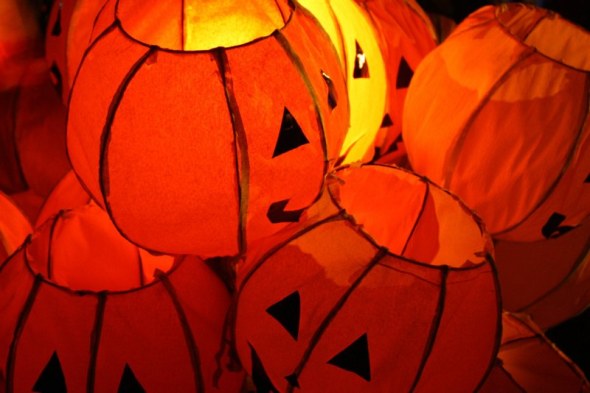
Halloween is upon us and with it, the excessive commercialism that has, sadly, come to characterise this holiday.  I know some parents make the effort to teach their kids some context, but I suspect many young trick or treaters will have no idea about the origins of the occasion.  In fact, trick or treating is thought to have started in Ireland, Wales and Scotland where knocking door to door resulted in the exchange of food for a song.  The origins of Halloween go back further: an adaptation of the Celtic pagan festival known as Samhain according to some, while Christians mark it as the evening before All Hallows, an 8th Century attempt to eradicate pagan celebrations.  Both however, have something in common: it’s seen as a time when the spirits return and the dead are remembered.

img_7712

My issue with Halloween, my only issue, is its materialistic bent.  Encouraging children to demand treats doesn’t sit well with me.  Sure, it’s a bit of fun and what kid doesn’t like dressing up and carving pumpkins?  I have no problem with that!  However, it seems, as with Christmas, that the true meaning of the occasion has been well and truly buried under all that candy-begging and even harassment of the vulnerable.  And if you’re still in any doubt that this is big business, then consider these statistics from a recent Daily Telegraph article:

£283 million: predicted sales of Halloween-based products in the UK in 2015
$6.9 billion: total Halloween consumer spending in the US expected for 2015
$2.1 billion: total amount expected to be spent in the US on candy in 2015
3 million: number of pumpkins Tesco expects to sell this Halloween

img_7536

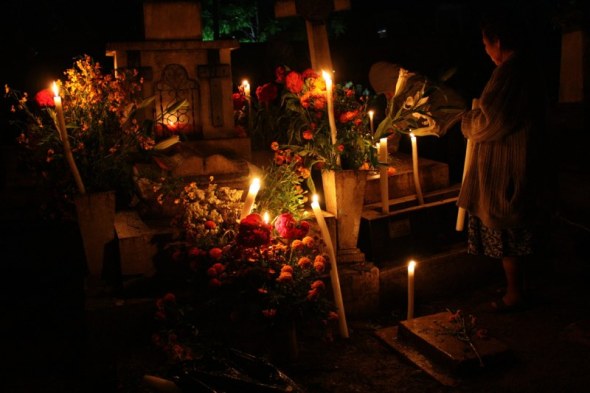
If you’re a Halloween fan and still reading, and I haven’t well and truly pissed you off by this point, then let me tell you what I prefer about Day of the Dead.  Known as Día de Muertos, it’s been part of Mexican culture for three thousand years.  I first experienced this festival a few years ago with a visit to Oaxaca and was immediately struck by the way that it blended religion, respect, commemoration and celebration.  And let’s not forget that last one.  Day of the Dead is anything but dull: there are fancy dress parades, carnival floats and of course, much music, drinking and dancing.

img_7502

At the heart of the festivities is the dressing of the graves of the ancestors and the construction of homemade altars built to honour their spirits and encourage them to return for a visit.  Work starts on these ofrendas in the last few days of October, and every street corner is occupied by flower sellers surrounded by buckets of vibrant orange marigolds known locally as cempasuchil.

img_7567
On November 1st, the souls of deceased children are the focus, while on November 2nd, it’s the turn of the adult ancestors.  Families visit the cemetery and sit at the graveside to raise a glass of Mezcal and eat a special feast.  It’s all at once a poignant, private and public occasion, as visitors are welcomed and encouraged to join in.

img_6986

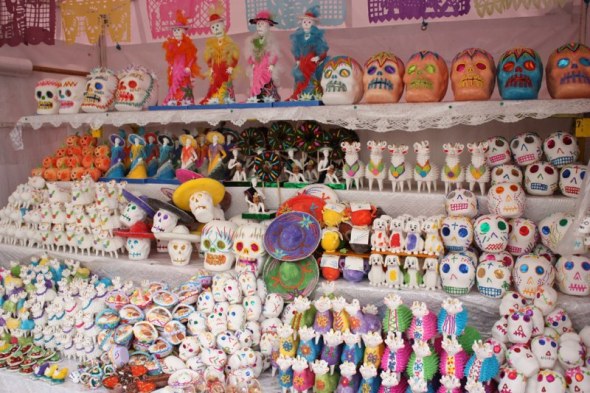
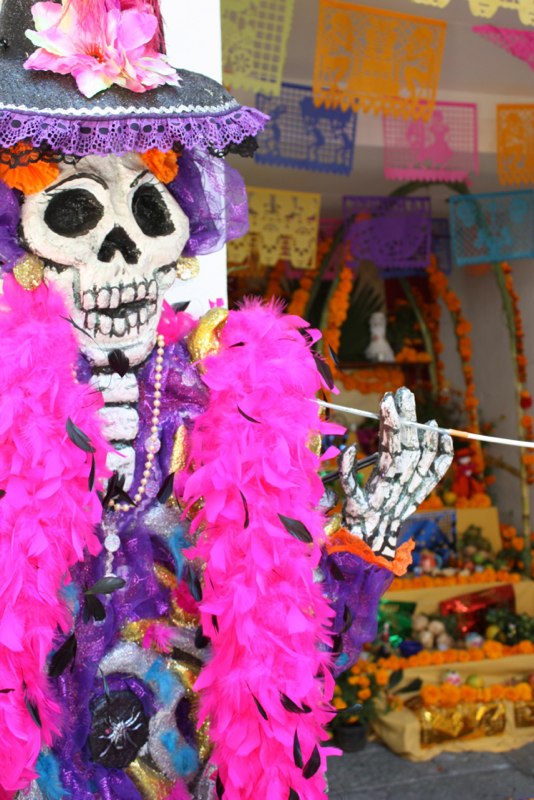
Catrina, the elegantly dressed skeleton and iconic figure of Day of the Dead, is everywhere.  Clearly, commerce plays a big part in Día de Muertos too: vendors sell everything from sugar skulls to folk art skeletons, Mezcal to garlands of marigold petals.  I don’t have a problem with that.  But in Mexico it sits side by side with ceremony and tradition, with both given their proper place.

img_7431

Día de Muertos touched me as a way to remember my grandparents, much loved but long departed.  Amid the hectic day to day activities of “life goes on”, over time, I found myself thinking of them less and less.  It’s not that I don’t still love them, but I began to worry that as the memories faded I’d one day forget to remember what a significant contribution they made to my life.  Their photos are on the altar we made:

img_7505

When I went to Oaxaca, I took with me their photographs, and, having been privileged to help build an altar at Casa de las Bugambilias, felt a stronger connection to them than I’d had in years. So this year, I’ve built my own altar and on November 2nd, All Souls Day, I’ll raise a glass to toast these very special people and thank them for all they did for me when they were here.


For more photos from the Oaxaca trip, please visit:

http://www.juliahammond.co.uk/Travel/DIA_DE_MUERTOS.html

Five favourite travel books: Africa

While novice backpackers cut their teeth on the well-trodden route from South East Asia to Oz, Africa outside the beach resorts and luxury safari camps can be challenging even for the most experienced traveller. Fortunately for the world of travel literature, this is good news. Challenges make for gripping tales. These books are my favourites from this enchanting, maddening and diverse continent.  What are yours?

In the footsteps of Mr Kurtz by Michela Wrong

fullsizerender-10

You could be forgiven for thinking that some of the topics chosen by Michela Wrong as suitable book material might be a chore to read but she has a talent for observation as well as insight and thus her work is hard to put down. This vivid account of Mobutu Sese Seko opens with the words:

“At 3 a.m. on Saturday morning, a group of guests who had just staggered back to their rooms after a heavy drinking session in L’Atmosphere, the nightclub hidden in the bowels of Kinshasa’s best hotel, heard something of a fracas taking place outside. Peering from their balconies… they witnessed a scene calculated to sober them up.”

I’ll forgive her following a.m. with morning.  That’s one great opening paragraph.

The Congo isn’t somewhere I’ve been, though it is somewhere that fascinates me. This book, tackling the subject of how good leaders turn bad, is one to be devoured, one that will keep you turning the pages long after you should be asleep and one that is essential reading for any traveller to Africa, Congo or otherwise.

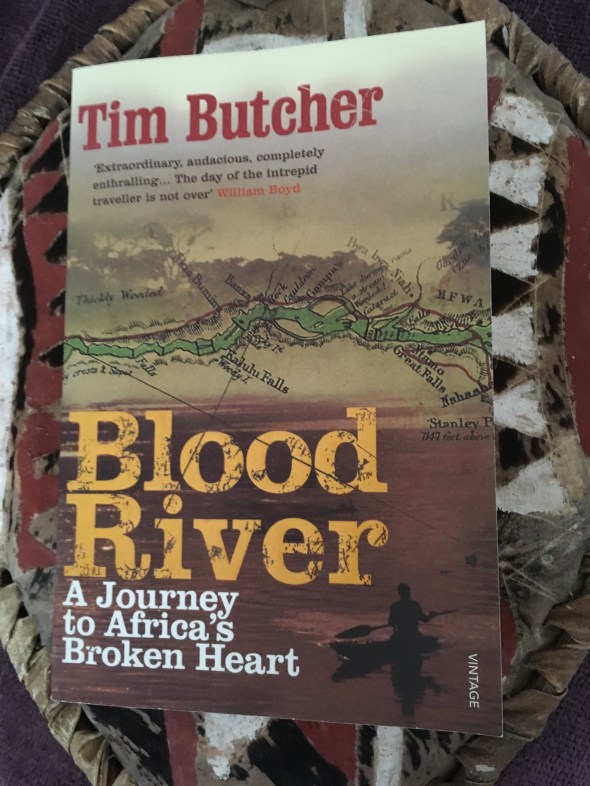
Blood River by Tim Butcher

fullsizerender-14

Another Congo account, entirely different but equally enthralling, is Butcher’s tale of his journey along the Congo River. Such were the dangers likely to be encountered en route, you’d be forgiven for thinking at the outset that the author was a complete lunatic. It’s one of those narratives where you find yourself holding your breath so often that you wonder whether such behaviour could be good for you. He writes beautifully:

“The heat began to grow, so I shed my fleece, but not the feeling of torpor.”

He’s economical with words, yet is wonderfully evocative at the same time:

“I stirred in the pre-dawn chill, my legs pedalling for bedclothes.”

It’s such a casual phrase but one with an imagery with which you identify instantly, a delight to read right from the get-go.

The Lost Kingdoms of Africa by Jeffrey Tayler

fullsizerender-11

This guy is great too and through this book, you get to accompany him on a journey westwards across the Sahel from Chad to Senegal. These days, much of the region would be challenging to visit, some on the no-go list through risk of kidnap or terrorism. He sums up Dakar:

“Women dressed in elaborate banana headscarves and tight-waisted floral dresses strolled the sidewalks. The wind set loose clothes flapping, but it carried no dust; it was pure, coming from the Atlantic, intoxicatingly fresh.”

I spent my holiday in Senegal by the ocean, from its capital Dakar to St Louis in the north, but having visited the Sahara, I can imagine how refreshing it must have been to have finally reached the sea after so long travelling through that desiccated region. I can also identify with his impatience to get out there and engage with the city:

“We soon slowed and got stuck in a traffic jam. I was too excited to sit still. With my bag on my shoulder, I jumped out…”

Isn’t that why you should always travel light?

The Last Resort by Douglas Rogers

fullsizerender-13

Douglas Rogers’ poignant memoir about his family’s struggles in Zimbabwe is one of the most heart-rending works on Africa I’ve read. It’s a timely reminder that issues surrounding land ownership and race in African nations are hugely complex. There are no easy solutions but there are always victims. Rogers deals with the subject tactfully and with empathy for both sides:

“Other farming families stayed longer, determined to fight to get their property or livestock back, or simply because this was home. They were Zimbabweans. There was nowhere else to go.”

Swahili for the Broken-hearted by Peter Moore

fullsizerender-12

Sometimes you just want to read something a little less serious, and Peter Moore has a light touch and a sense of humour that hits the spot. Each chapter begins with an African proverb, which is an education in itself, but it’s his witty turn of phrase and wry observations as he travels from Cape Town to Cairo that make the book such a gem. He’s the kind of person you’d love to go travelling with despite deep down knowing you’d be led astray, as with this account from the Zim side of Victoria Falls:

“Perhaps the most astounding thing about the falls is that there are no guard rails along the rim to stop visitors from falling in. Back home they stick up signs screaming ‘Danger!’ even if it’s a 1-metre drop onto a bed of spongy moss. Here you can get as close to a 107-metre drop as you want… As I crept towards the edge to peer at the river 100 metres below I lost my footing and slipped on the wet rocks.”

Peter, if you’re reading, where shall we go?

Five favourite travel books: South America

I rarely read up about a place in a travel book as preparation for a holiday, but I do love to read about travel. South America, as regular readers will know, is my favourite part of the world and so I thought I’d begin here as I share my best loved travel reads. If you’ve any recommendations for must-read books on any of the South American countries, then do share – I’d love to know. And watch out for more on this theme at a later date: my bookshelves are stuffed full of addictive page-turners not only for the rest of the Americas, but destinations spanning the rest of the world’s continents.

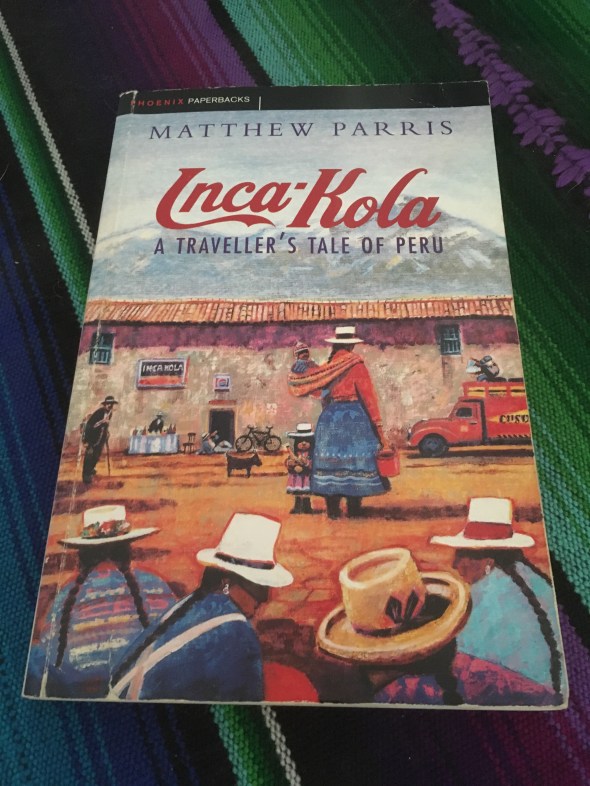
Inca Kola by Matthew Parris

img_6899

If my house was burning down and I only had time to grab one travel book, it would be this one.  I’ve read Matthew Parris’ absorbing account countless times and it’s a delight from the first page to the very last.  From his introduction to Limeño traffic to accounts of hostile bandits and remote mountain villages, this is a fabulous insight into how Peru used to be.  In the opening chapter, Parris writes:

“Go to any scrapyard in Europe and command the wrecks to rise like Lazarus from the slab: you will have launched a fleet of the finest and newest Lima has to offer!”

I’m reminded of my first visit, in 1995, when my friend announced that, in order to find a cheap ride, you had to flag down the least roadworthy taxi that passed.  The dilapidated Beetle that would take me back to airport at the end of that trip had as many rusted holes as it did square inches of metal and the doors were held in place by ordinary kitchen string.  That we made it at all was a miracle, but it was indeed cheap.

Eight Feet in the Andes by Dervla Murphy

img_6895

Few mothers would take their nine year old daughter on a long distance Andean trek with only a mule as transport, but then few people would look to Dervla Murphy for parenting advice.  What results is a wonderful adventure and a lesson to everyone that you should never make excuses to avoid fulfilling your needs, especially where travel is concerned.  I’ve never had children, but I like to think that had I done so, he or she would have accompanied me on my travels.

Often, Dervla’s experiences are far from mine, but I did identify with this:

“She…provided two litres of watery chicha fascinatingly diversified by scraps of floating vegetation.  (“Better than insects” commented Rachel, peering into my glass.)”

I only tried chicha once, this home-fermented maize beer not to my taste. Rumours that those who made it spat their own saliva into it didn’t help to convince me otherwise.

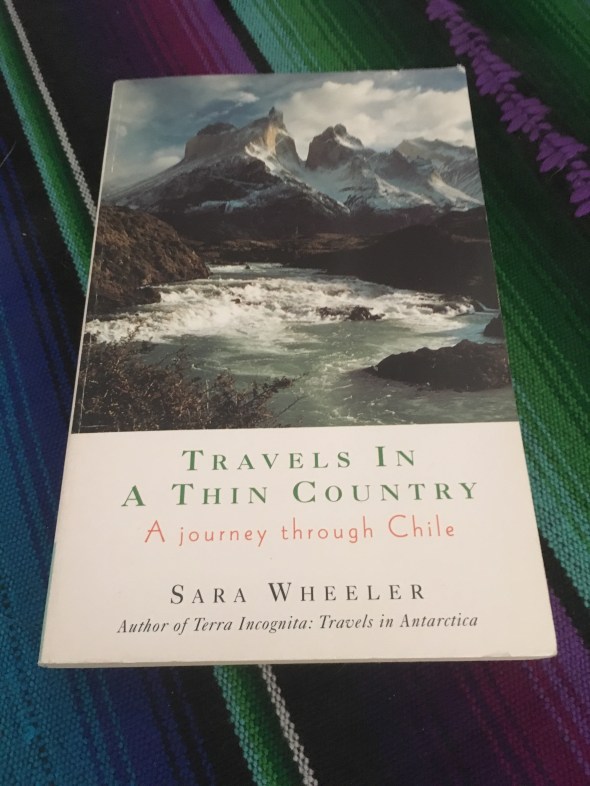
Travels in a Thin Country by Sara Wheeler

img_6897

Peru’s neighbour Chile is the subject of this well-written and engaging work.  The author spent six months travelling in the country and writes as confidently as you’d expect.  Some of my favourite parts of the book are her interactions with those she meets, including this episode in the Torres del Paine National Park:

“I asked if they could sum up the difference between Chilean Patagonia and Argentinian Patagonia in one sentence.  “Absolutely none at all except the Chilean bit has mountains,” said the Argentinian.  “Quite,” said Fabien (her Chilean guide) and that was that.”

That brief exchange sums up the difference in temperament between the chatty Argentinians and the more reserved Chileans.  And in terms of comparing scenery, I can report that both are spectacular and equally beautiful.

The Old Patagonian Express by Paul Theroux

img_6896

While I’m not disputing that Paul Theroux is a great travel writer, he’s a grumpy old man much of the time and as a consequence, I often find his work doesn’t quite hit the spot.  This is an exception and the combination of trains and the Americas is a happy combination as far as I’m concerned.

However, towards the end of the book, Theroux reverts to type as he writes about La Boca, a colourful working class neighbourhood of Buenos Aires:

“I roamed the city on my own.  It now depressed me.  It was partly the effect of La Boca, the Italian district near the harbour… some of the squalor was affectation, the rest was real dirt.”

He was writing in the late 1970s.  I visited three decades later and the vibrant colours and equally colourful characters who inhabited the place made it one of the areas I remember most fondly.  But who am I to disagree?

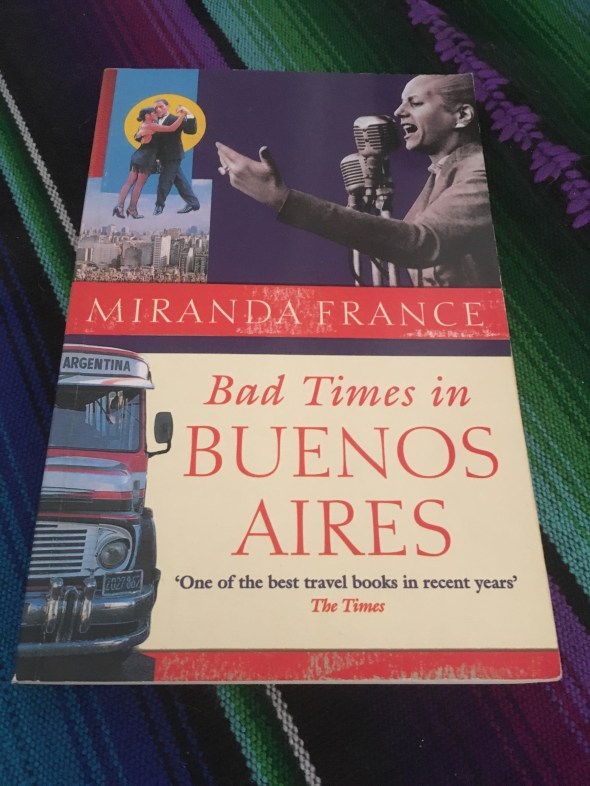
Bad Times in Buenos Aires by Miranda France

img_6898

Somehow Miranda France manages to point out Buenos Aires’ flaws with more charm and seems to be affectionately ribbing her adopted home rather than moaning about it.  This, I love:

“There was a word I kept hearing: bronca.  An Italo-Spanish fusion, like most Argentines themselves, the word implied a fury so dangerously contained as to end in ulcers.  People felt bronca when they waited for an hour to be served at a bank, and then the service was bad because the cashiers all had bronca too.  Bronca crackled down the crossed telephone lines and stalked the checkout queues in supermarkets with hopeful names like Hawaii and Disco.”

Ah, Buenos Aires, what a screwed up and yet utterly captivating place!  See you next year, I can’t wait!

Just back from – a day trip to Belfast

Strictly speaking, I’m not “just back” from this one, but having recently visited Budapest for the day, I realised that some of my earlier days out by plane haven’t yet made it to the blog, so watch out for Berlin hot on the heels of this one.

972354_10200673254061510_817156232_n

Although I’ve been to the Republic of Ireland a couple of times, I’d never been to Northern Ireland and given how many countries I have travelled in, that seemed to be an omission I really needed to put right.  With two dogs to consider and a husband not up for multiple day dog sitting, we met in the middle at a day out and I booked my flights.  At the time, my closest airport was London Southend and I scored a cheap outbound flight with easyJet at 0715 arriving 0830, returning on the 2055 which landed at 2215.  This route isn’t offered anymore, but you can still take advantage of multiple flights from London Gatwick, for instance, if you’re hoping to do this trip yourself.

With 12 hours to make use of, I decided to rent a car and tour the province.  A sub-compact doesn’t break the bank and it gave me the opportunity to see some of Northern Ireland’s most well-known sights.  First stop was Dunluce Castle.  I’m no Game of Thrones fan but it is one of the filming locations.  The picture gives you an idea of the drama of its setting and despite being a warm day in late May, the place was deserted.

980061_10200670866041811_934980434_o

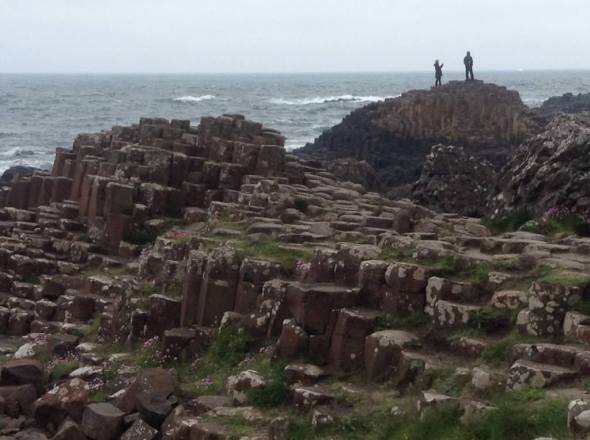
Next up, a short drive along the coast, was the famous Giant’s Causeway.  One of the major beefs with this is the exorbitant cost of entry.  Adult admission costs a whopping £9 and I do think the National Trust are pushing their luck.  However, as basalt scenery goes, it is impressive, though perhaps less so if you’ve seen some of Iceland’s towering columns.  In any case, pre-booking tickets can save you £1.50pp and there are also deals to be had if you do Park and Ride or just take the regular bus.  Anyway, I had a very pleasant few hours there strolling around the beach, clambering up nature’s natural staircases and even watching a lone piper play.

966687_10200671070206915_861408487_o

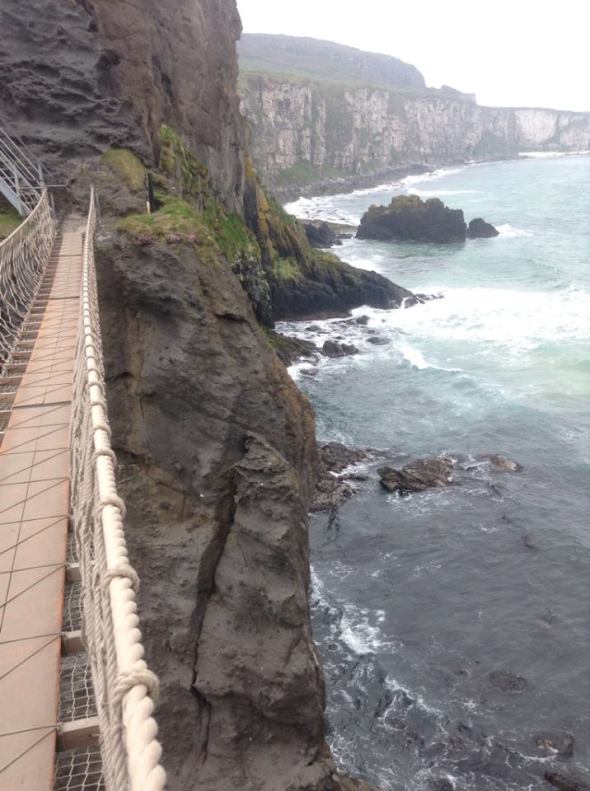
The other National Trust must-see in this part of the world is Carrick-a-Rede, about nine miles along the coast.  It’s a bit cheaper than the Giant’s Causeway at £5.90 but for that you get the chance to traverse a rope bridge over the water – a scary but unmissable experience.

754_10200672994375018_2109900935_n

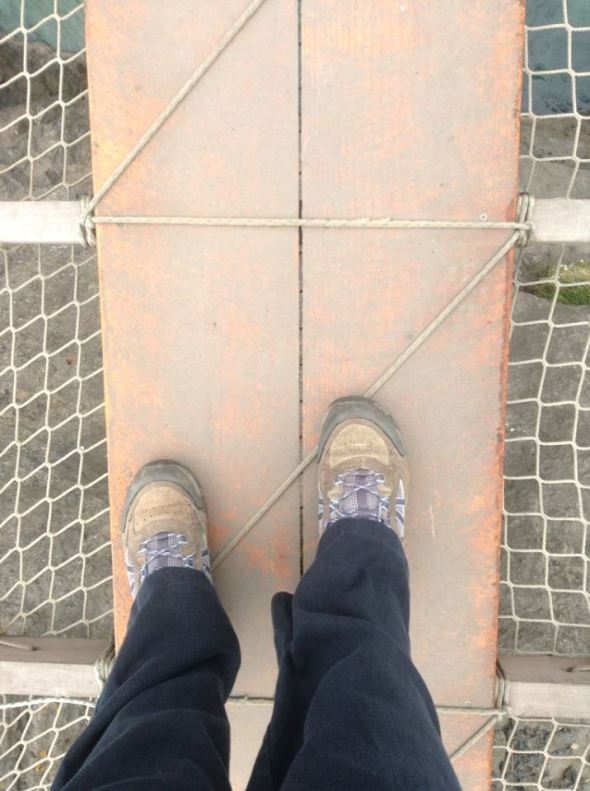
On the day I visited, the wind was negligible, but when the wind picks up…  I figured there was a reason you bought your ticket before you caught sight of the bridge – just imagine the revenue they’d miss out on!  I’m not too keen on heights if I don’t feel my feet are firmly on the ground, so this would have been a terrifying place if there had been more than just a slight breeze.  The scenery, as with the first two locations, was fabulous, leaving me to wonder why I’d left it so long to visit this beautiful part of the United Kingdom.

485526_10200672996655075_920767580_n

All this coastal exploring was making me hungry and so I drove down to Ballintoy Harbour (another G of T location) for a late lunch at Roark’s Kitchen.  The stone cottage which it occupies looks like it’s been there for many centuries and the place offered the chance for me to try out some of the local specialities.  In the end, though, I was tempted with the Ulster Fry, like a full English but with potato bread.

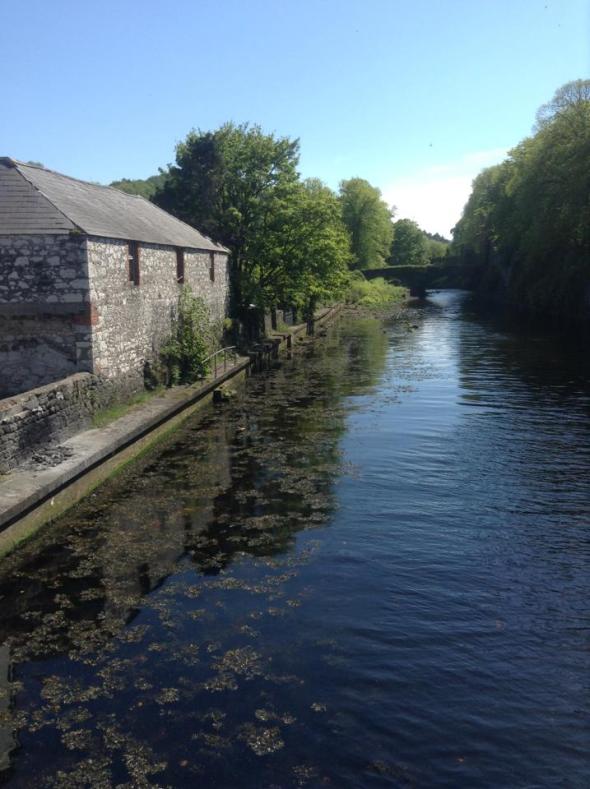
Back on the road, I enjoyed the pretty scenery in the sunshine, the blue sky giving me a chance to see the coastline at its best.  Cushendun was very quaint – that’s the village in the first picture of this blog.  Glenarm was also charming, straddling the water.  It has a stately home in the shape of Glenarm Castle which I didn’t visit, but I might have been tempted with its tearooms had I not overdosed on good hearty food at lunch.

310099_10200673259621649_1840374955_n

Instead, I decided to head back to the city.  Now, by then it was late afternoon, so I didn’t have a huge amount of time.  I decided to visit the docks area, seeing the massive yellow Harland and Wolff cranes before parking up at Titanic Belfast.  Even the building itself was a stunner, but the exhibits really brought to life that ill-fated voyage.  That was my last stop of the day and a very interesting one; the museum was well worth a visit.

That was May 2013 and I promised myself a return visit to this enchanting province and of course, to explore more of Belfast.  I haven’t yet, but I do intend to one day.