juliamhammond

Latest

What’s it like to travel long haul on a budget airline?

Update autumn 2019:

While I’ll leave this post up as some of the issues about travelling long haul on a budget airline are still valid, this route no longer operates. In addition, there have been some concerning reports about the financial health of Norwegian Air in the travel press. Some long haul routes have been cut as the airline makes efforts to return to profitability. This report from the FT gives some background, but for the meantime, it’s a case of buyer beware. If you choose to book, particularly if that’s some time in advance of when you plan to travel, make sure you have adequate travel insurance that covers you for unexpected accommodation bills and new flights, just in case.

___________

It’s one thing to pay a few pounds and hop on a Ryanair flight across the Channel, but what’s it like to travel long haul on one of the budget airlines. I put it to the test using Norwegian to carry me across the Atlantic and here’s what I thought.

Flights: LGW to SJU

Norwegian operates flights twice weekly departing Wednesdays and Saturdays.  They offer fares from under £300 return if you book well in advance which compares favourably with scheduled airlines serving other direct flight Caribbean destinations such as Antigua and Barbados.

16105936_10210274114877030_5079054604556801583_n

Check-in
Unlike their European routes, it’s not possible to check-in online with Norwegian for destinations to the USA and that included our destination, the US territory of Puerto Rico.  That’s not such a big deal when you’re departing from a small airport, but I was a little apprehensive as to how long the wait would be to check in at London’s busy Gatwick Airport.  In the event, it took less than half an hour to get checked in and proceed to security which wasn’t as bad as it could have been.

Baggage

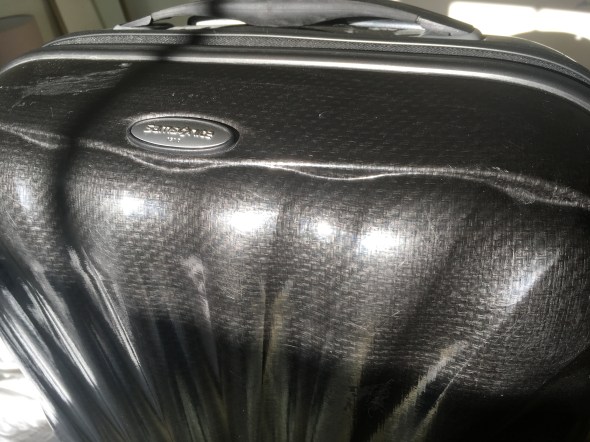
Checked baggage comes at a price; £25 for each sector if pre-booked but significantly more if purchased at the airport.  Travelling with my husband, we decided to take one full sized case and the rest as carry-on.  My much travelled Samsonite wheelie almost exactly matches the dimensions of Norwegian’s permitted carry-on at 55 x 40 x 20cm (Norwegian allows 55 x 40 x 23cm).  It’s a light case, which is a factor as it has to be lifted into the overhead bins and doesn’t go over the 10kg weight limit.  But it’s also spacious, and easily big enough for a week’s worth of clothes for the Caribbean, though if you were heading further north at this time of year to one of the big US cities served by Norwegian you’d be struggling for space.

img_7454

Seat assignment

Normally, my husband and I wouldn’t bother to pay extra for seat assignment on a short haul flight, but we decided to go ahead as this was a nine hour flight.  Each way cost us £25, a total of £100 to sit together.  I do think that’s steep.  We chose from an online seating plan opting for the back row of the plan (row 40) as this has a 2-3-toilet configuration, meaning we expected to have the section to ourselves.  You can see it here at Seatguru:

https://www.seatguru.com/airlines/Norwegian_Air_Shuttle/Norwegian_Air_Shuttle_Boeing_787-8.php

However, although we were still on a 787 Dreamliner, the plane we ended up travelling on had 42 rows ( though 40 on each of the side sections) and they were 3-3-3.   This was what we got:

https://www.seatguru.com/airlines/Norwegian_Air_Shuttle/Norwegian_Boeing_787-9.php

So we ended up with someone next to us which was a bit of a disappointment.  Fortunately, few people seemed to be using the rear toilets so it wasn’t too disruptive.

Legroom

On the outward leg, we found the space to be really cramped.  Neither of us are exceptionally tall, but we do have long-ish legs.  When I checked I was surprised to find that the legroom at 31-32 inches was similar to most long haul airlines.  The width also compared to the norm at about 17 inches, though this would have been more comfortable if we’d have had window and aisle as we expected rather than window and middle which is what we got.  We could have opted to pay extra for Premium Economy which offered a seat pitch of 46 inches.

fullsizerender-34

Food

Neither of us felt it would be a good use of our funds to pay for the in-flight meals, opting instead to have a meal before we left and take snacks on board and pay for drinks airside.  We were happy with this decision; the trays of those fellow passengers opting for meal service looked OK but not over-generous and we didn’t feel we’d missed out.  A lot of people had done the same as us.  It was an even better decision on the return journey when we had a shorter journey (thanks to a speedy tailwind) and of course, being an overnight flight, we slept for a significant portion of the journey.

Entertainment

The choice of entertainment was perfectly reasonable though I had a good book to read so didn’t end up watching any of the content.  There were recent films I hadn’t seen.  You should be aware that you either need to purchase headphones or bring your own.  Also it’s worth noting that the WiFi that you find on some European flights with Norwegian isn’t available on their Trans-Atlantic routes.

Blankets and pillows

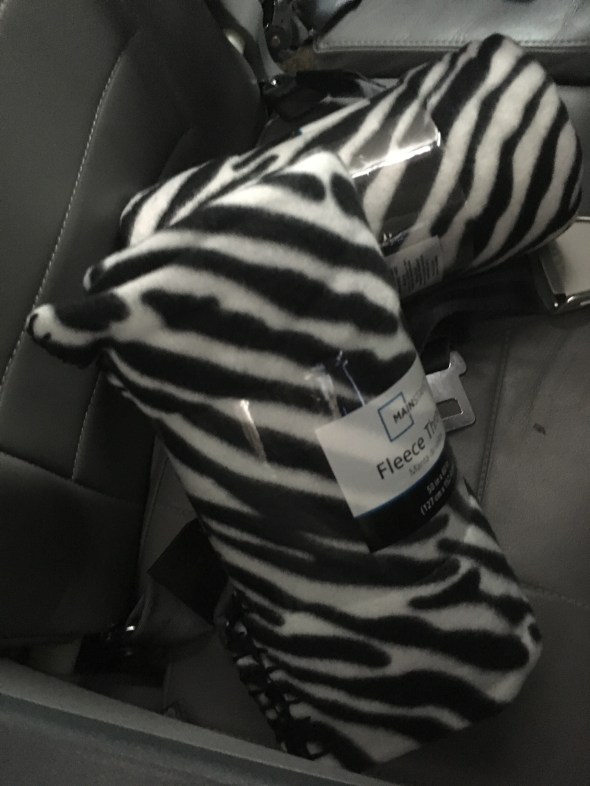
These aren’t given out free of charge as you’d find with a full service airline.  You can buy a blanket at a cost of $5 but we found bigger, fleecier and warmer ones in Walmart for $3 a pop.  Since we unpacked, they’ve been appropriated by the dogs!

img_7392

Dreamliner

This was my second time on a Dreamliner after flying from Easter Island to Santiago de Chile on one in 2015.  They make a big deal about cabin pressure, mood lighting and windows that have sunglasses mode, and claim this helps to alleviate the issues with jet lag.  I’m not sure this had an effect, though as there’s only a 4 hour time difference the effects of jet lag would be minimal anyway.

The verdict

Would I fly Norwegian Trans-Atlantic again?  Yes, I’d definitely consider it.  I was happy with the experience overall though I’d see if I could upgrade to an extra legroom seat next time.  In the interests of marital harmony I’d probably be best not to comment on whether sitting with my husband was worth £100!

Update May 2017

At the time of writing it’s unclear whether Norwegian will be flying the LGW-SJU route this autumn. The airline is considering whether it will fly to Puerto Rico at all, but if it does, the London route will probably be the only one to survive the cull, managing 81% occupancy last season. Watch the press for details.

The streets of Old San Juan

The Puerto Rican capital has a history which goes back over 500 years.  Founded by the Spanish at the end of the first decade of the 16th century, it was originally known simply as Puerto Rico but by 1521 went by its proper name of San Juan Bautista de Puerto Rico (which these days has become just San Juan).  Though you could be forgiven for thinking the city’s American, it’s not quite: the Spanish eventually ceded the island to the USA at the end of the Spanish-American War in 1898 and it’s been a self-governing territory ever since.  That Spanish flair is still much in evidence in Old San Juan, however.

photo2

Within the metropolitan area of San Juan which sprawls for miles, the area of settlement that occupies a narrow peninsula on the island’s north coast, bounded by Fuerte San Cristóbal and Castillo San Felipe del Morro, is known as Old San Juan.  The geography of San Juan naturally lent itself to providing a safe harbour.  It’s still a busy port today receiving a steady stream of cargo and cruise ships.

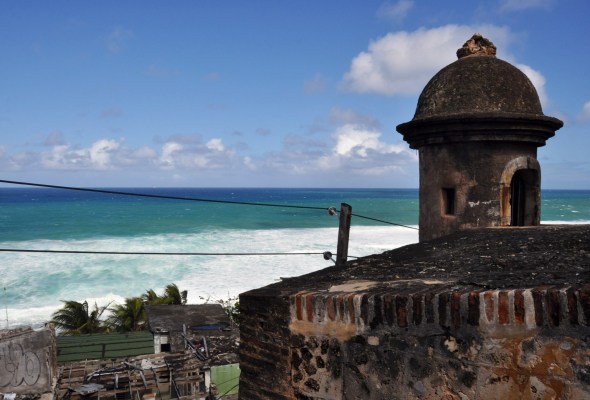
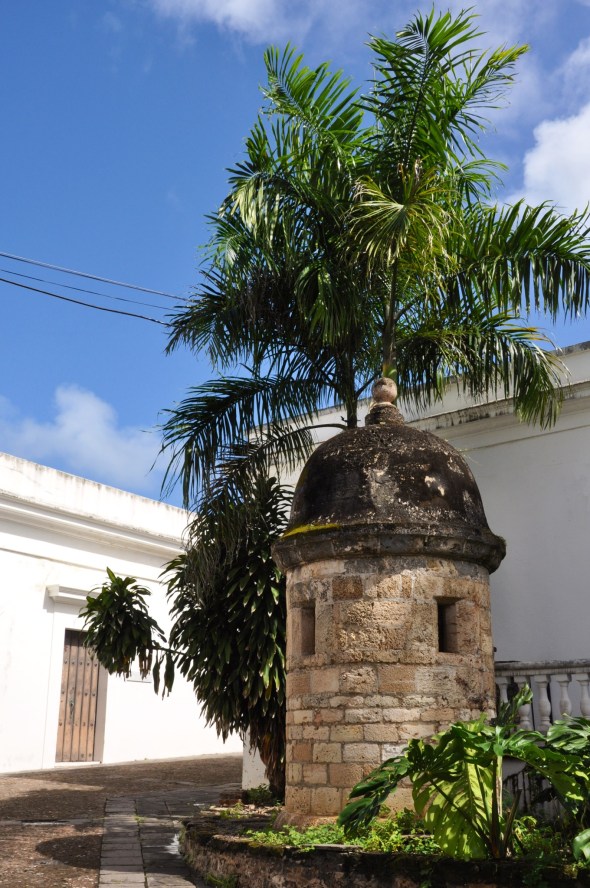
In its early days, San Juan’s location at the eastern edge of the Caribbean led to its development as a defensive stronghold, hence the heavy fortifications that you can still see today.  They comprise not only those two forts but the thick, almost impenetrable, walls that encircle the city and the imposing Puerta de San Juan located on the south western flank of the city.  As the 16th century progressed, Old San Juan came under attack from numerous forces, among them Francis Drake, whose men were adversely affected by a dysentery outbreak and fled, tails between their legs.  They wouldn’t be the last.

photo14

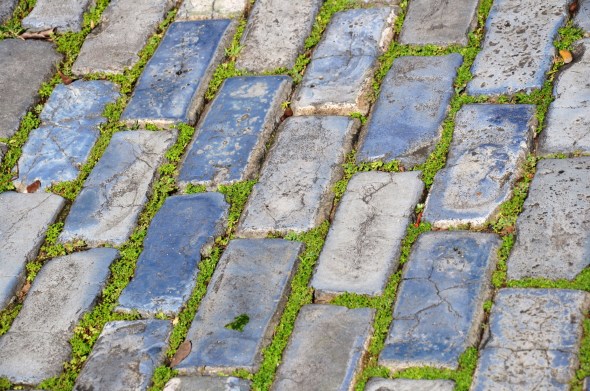
The narrow European-style streets of Old San Juan are a far cry from the wide boulevards lined with high rises and flanked by shopping malls that characterise other parts of the city.  Here, cobbled surfaces bear the distinctive blue setts known as adoquines.  They’re not granite, as you might think, but instead made from the slag of iron furnaces and used as ballast on ships arriving from Spain.

photo

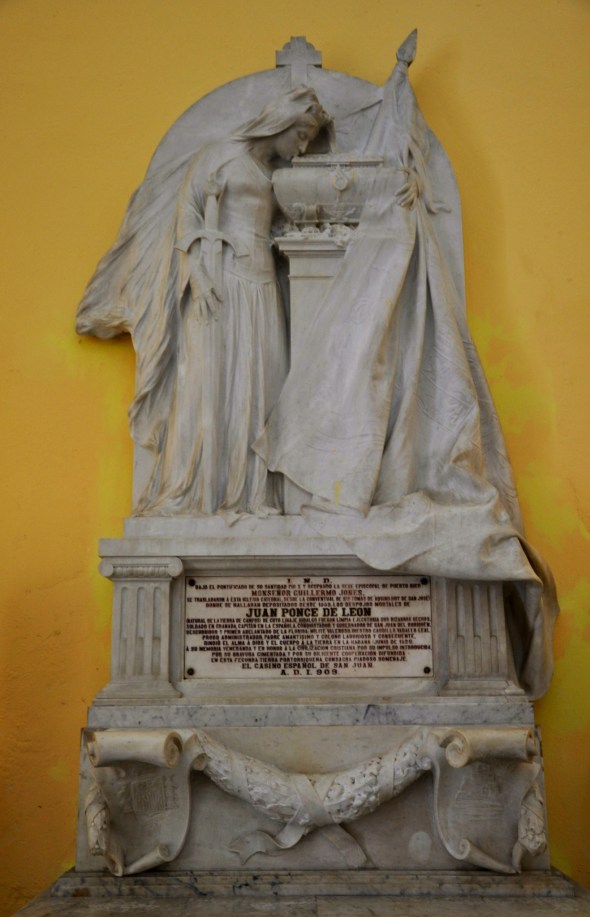
One of those Spanish ships brought Juan Ponce de León, whose remains can be found in front of an egg yolk yellow wall of the city’s bijou cathedral.  Like many conquistadors seeking a new life in the New World, he was escaping a life of poverty and a region devoid of opportunities for the ambitious.  His travels took him first to Florida and then to Puerto Rico, and it is he that is credited with the foundation of the island’s first settlement, Caparra, which predates Old San Juan by a few years though wasn’t to last.

photo12

Ponce de León was the island’s first governor but he didn’t remain long in Puerto Rico.  Off exploring, he was fatally wounded by a poisoned arrow and died in Cuba.  The family home, Casa Blanca, is significant as the oldest continuously occupied house in the city.

One of the great delights of a visit to 21st century Old San Juan is simply to wander.  Many of the buildings are painted in bright colours, making this a photographer’s dream.  Several tourist trolleys loop the old town, but to truly appreciate the architecture and atmosphere, strolling through its streets and lingering in its many parks and squares is a must.

photo3

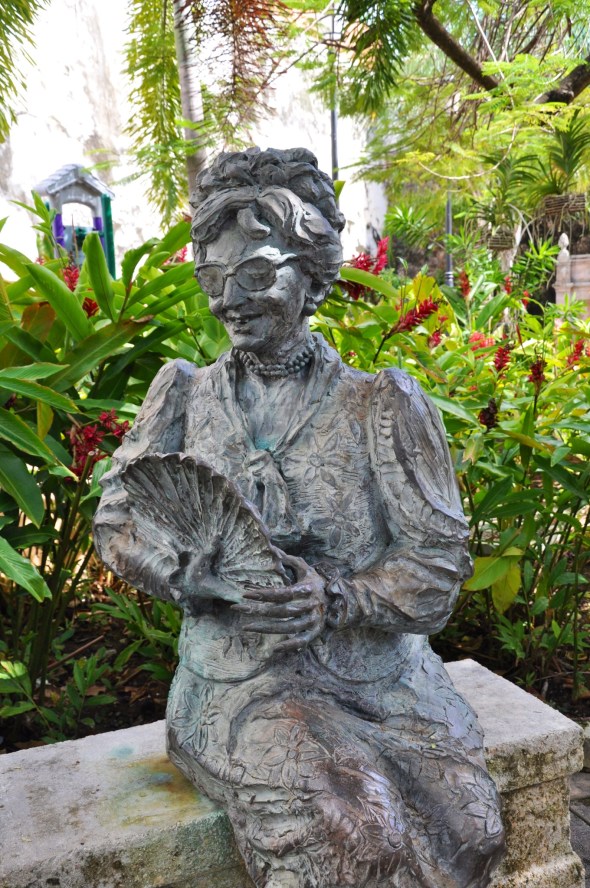
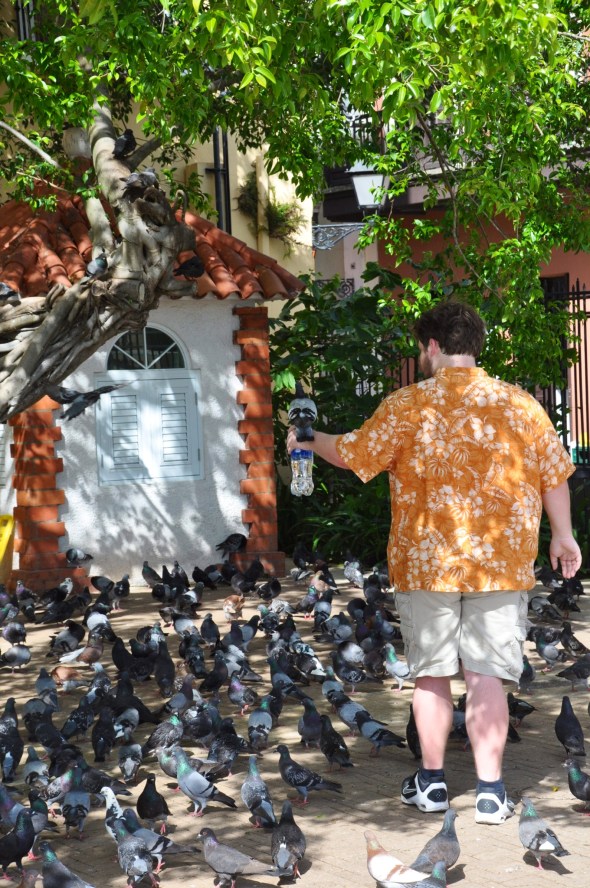
Each has its own identity, from the tourists that feed the pigeons which flock to Parque Las Palomas, to the many characterful statues and sculptures that you’ll find camouflaged with verdant planting.  The shade provides welcome respite from the Caribbean sun, enabling visitors to recharge their batteries before continuing their exploration of this delightful place.

photo10

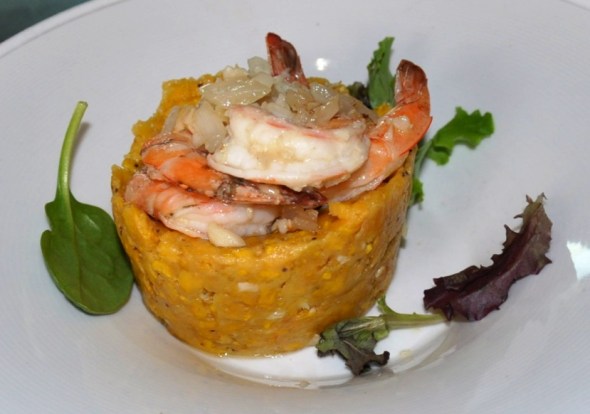
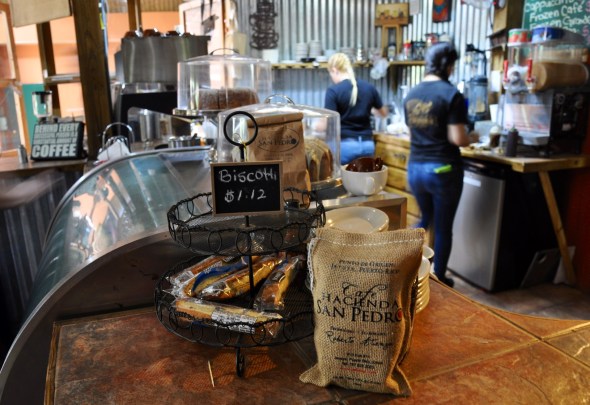
When you do finally run out of steam, there are many cafes and restaurants where you can try the uniquely Puerto Rican dishes.  Mofongo, a dish of mashed plantains topped with shrimp or chicken, is a staple and a must-taste.  For a snack, the ubiquitous Mallorcas, pastries filled with cheese, guava jam, ham or eggs and dusted with icing sugar, is a tasty way of staving off the hunger pangs.  And don’t leave without trying the coffee: rich and smooth, the addition of sugar would be a sin.

photo15

Puerto Rico’s Ruta Panorámica

Translating as the Scenic Route, Puerto Rico’s Ruta Panorámica consists of 167 miles of twisting mountain roads that bisect the island’s verdant interior. Driving on this Caribbean island was fast though rarely furious. Although many a driver strayed onto our side of the road as they tackled the many blind hairpins, we didn’t hear a horn hooted in anger. Plenty of vehicles had horns which imitated police sirens, however, which was disconcerting at first. This was also the road that attracted the boy racers in their pimped up orange, blue or red Jeeps, sound systems blaring out the bass as they tried to outdo each other’s decibel count.

img_7327

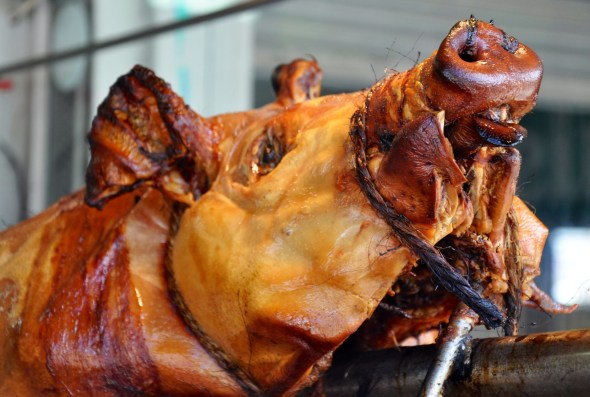
We began in Guavate, a short drive from the easternmost point of the Ruta Panorámica. On Sundays, half the island’s population winds its way up the steep switchbacks to eat suckling pig in one of the village’s many lechoneras. Whole pigs rotate on spits, drawing in the punters, while chefs armed with machetes hack the glistening animals into bite sized pieces. This isn’t fancy dining: you’re just as likely to get a lump of bone as you are a hunk of melt in the mouth pork, but the crackling is to die for and the atmosphere warm and inviting. Stalls loaded with helium-filled balloons and soft toys ensure that amidst all that Medalla beer, it remained a determinedly family-friendly occasion.

img_7326

The party at Guavate goes on all afternoon, but we were keen to drive at least part of the Ruta Panorámica, picking it up midway between the towns of Cayey and Aibonito. Climbing steadily, we followed a tour bus, grateful of its slow pace for the extra time it gave us to judge the severity of the bends. Despite our unexpected guide, we still managed to take a wrong turn and missed seeing the Cañón de San Cristóbal, though we might only have caught a glimpse of this deep chasm from the road.

img_7325

At the Mirador Villalba Orocovis, we grabbed the last space in the parking lot. Sweeping views south across lush vegetated slopes topped by charcoal grey scudding clouds drew a small crowd. The beat of salsa and reggaeton formed a noisy soundtrack to the chaotic scene and judging by the groups of people crowding around car boots, parking lot picnics were even more popular than the stunning views.

img_7328

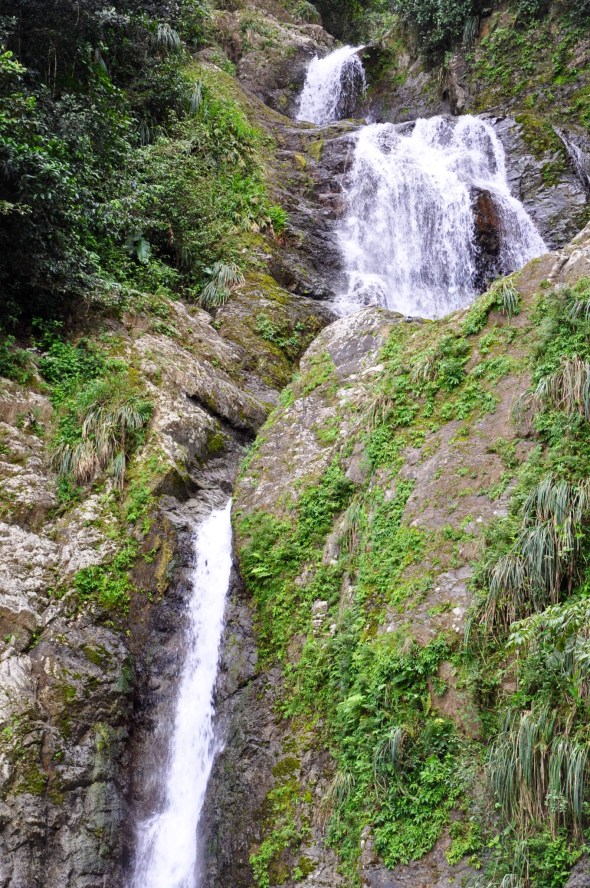
Continuing west, we climbed into the Toro Negro Forest. Giant stands of bamboo topped by frothy lime green leaves diffused the afternoon sunshine and formed towering arches over the narrow road. Here and there, we hit a traffic jam caused by cars trying to squeeze into the undersized gravel verges that formed the car parks of local neighbourhood restaurants. Driving the road required a steely nerve: swerving around deep potholes onto the wrong side of the road ahead of tight bends. Our guidebook advised tooting the horn at such points to alert oncoming traffic but this wasn’t a convention observed by anyone, least of all the local drivers who formed the majority of road users.

img_7329

Everyone was in a hurry, except the stray dogs who pottered in the dirt by the side of the road, wandering into the road at worryingly frequent intervals. Some, heartbreakingly, were road kill. Families sat on cheap deckchairs by the side of the road, some animated, others reflective. Their possessions were modest: homes characterised by peeling paint and scruffy yards cluttered with ageing cars sporting years of dents and scratches. It was testament to the fact that local knowledge didn’t make this crazy road any easier to navigate.

img_7330

By then, we were in the heart of Puerto Rico’s productive coffee country, and our next stop, a hacienda just short of the town of Jayuya, was proof that the soil and the climate in these hills was well suited to the crop. We queued to sample the rich, almost creamy espresso, fuller bodied and sweeter than we were accustomed to. It was so smooth, we went back for more, this time in the form of frozen coffee. We slurped it through straws, as we sat by the lake on pallet benches slung with rough hessian sacks, watching tiny birds ripple the surface as they dive bombed the water for flies. The ageing machinery above the hacienda’s cafe revealed a surprise: it was made by Bentall’s agricultural works at Heybridge Basin, just a few minutes’ drive from home.

img_7331

We were keen to get off those dangerous mountain roads by nightfall, cutting north and spiralling up and down through the countryside for what seemed like forever. We were sure we’d missed a turnoff, but instead, we’d woefully underestimated the time it would take us to cover such a small section of the map. Eventually, the Ruta Panorámica spat us out onto the racetrack that would deliver us to San Juan, a world away from the sleepy Puerto Rican countryside that was as more-ish as its coffee.

A beginner’s guide to the Trans-Siberian

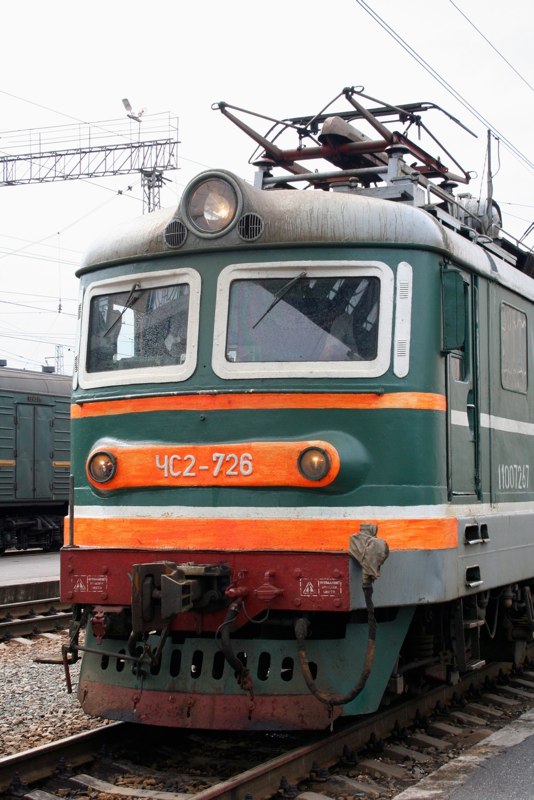
I love a good train trip and the ultimate in rail journeys has surely got to be the Trans-Siberian in some form or another.  If you’re thinking of crossing Russia by train, I’d suggest doing some background reading beforehand to get your head around what seems like a complex trip but in reality is more straightforward than it looks.
img_8581

What is the Trans-Siberian?

Some people wrongly believe that the Trans-Siberian is one single luxury train.  It’s not.  It’s one of several long distance routes that stretch across Russia.  Generalising a little, there are three main routes: the Trans-Siberian, the Trans-Manchurian and the Trans-Mongolian.  Following each of these routes, it is possible to travel on a single train, but most people stop off along the way to explore some of Russia’s great sights – and see something of Mongolia and China as well, perhaps.

trans-siberian_railway_map

Trans-Siberian route (Courtesy of Ertmann and Profil CC BY-SA 2.5 via Wikimedia)

How long will I need?

To follow the classic route from Moscow in the west to Vladivostok in the east without stops will take 6 days.  If you plan to do this, you’ll need to book the Rossiya train (number 1 or 2 depending on the direction you take).  Extending your journey , you could begin (or end) in St Petersburg rather than Moscow, which are connected by an overnight train taking about 8-9 hours, or the high speed Sapsan train which covers the distance in about 4 hours.  Personally, I’d allow at least a couple of days to scratch the surface of Moscow or St Petersburg, though it’s easy to spend more time in either.  To cover the whole route with a few meaningful stops, it’s best to allow a couple of weeks, more if you can.  And of course, you can do the whole trip overland with connecting trains via Paris and a route that takes you through Berlin, Warsaw and Minsk.
img_8238

What was my itinerary?

Mine is, of course, by no means the definitive tour.  On these three routes, it’s easy to tailor your journey according to your own personal preferences.  I flew from London City airport to Moscow as at the time I booked, this worked out cheapest.  When I planned my trip, I’d already been to Beijing, so I opted for the Trans-Mongolian from Moscow to Ulan Bator in Mongolia, leaving the Trans-Siberian on the map above at Ulan-Ude and heading south to the border. Read more about Russia here:

The Devil reads Pravda?
img_8416

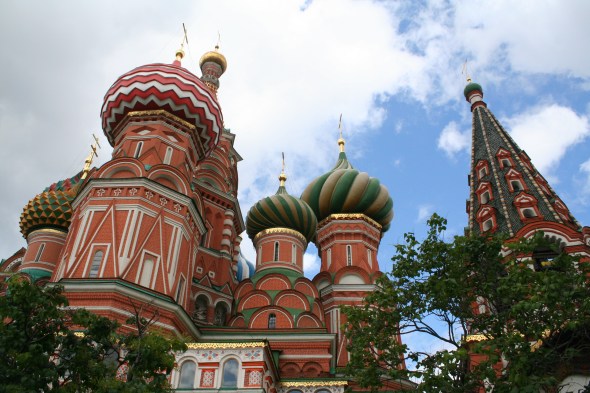
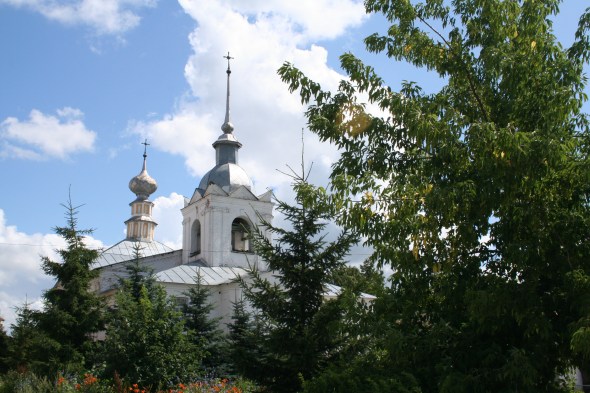
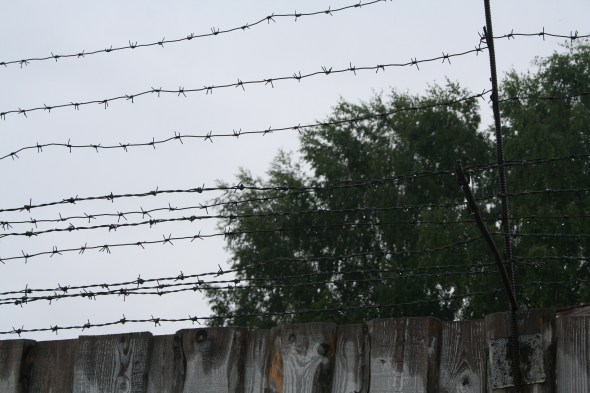
I stopped at Vladimir (for Suzdal and the Golden Ring) and then Perm (to visit one of Stalin’s notorious gulags).  I skipped the popular stop at Yekaterinburg for reasons of time, though I’d like to visit next time, making the journey from Perm to Irkutsk in one go (a little under three days and over 3000 miles) as I wanted to experience a multi-night trip. I think that was enough: though you can book itineraries which involve staying on board the train for longer, I was definitely ready to sleep in a proper bed after two nights on the train and it was an amazing feeling to luxuriate in a bath and soak away all that train grime and staleness. There’s only so much wet wipes and dry shampoo can achieve!
img_8749

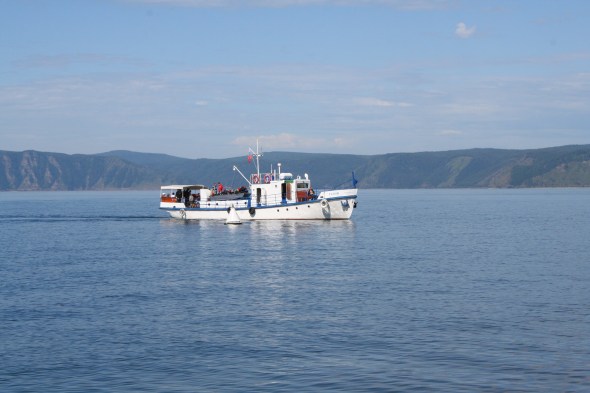
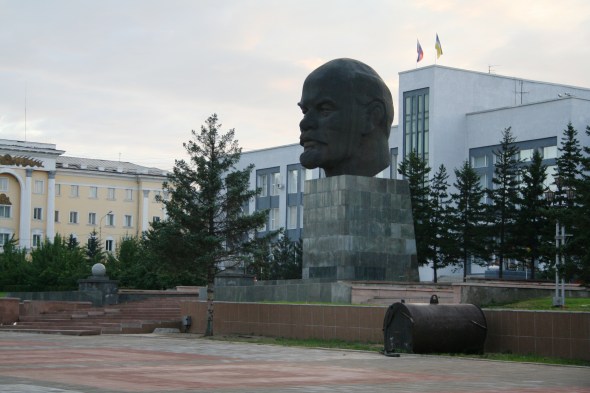
I had a couple of days at Irkutsk so I could visit Listvyanka at Lake Baikal. On a second trip, I’d build in more time here as it was beautiful – and frozen in winter, it must be a special place indeed. Reboarding a train, I crossed over the border to Mongolia.  Having seen a little of the Mongolian capital I set off into the surrounding countryside for an unforgettable stay in a ger with the steppe nomads. Culture shock is an understatement! Read about it here:

A day with the steppe nomads

I then retraced my steps to Ulan-Ude from where I caught a flight back to Moscow with budget airline S7 – a six and a half hour domestic flight which gives you some idea of the country’s vast size.  This worked out considerably cheaper than finding a single leg fare to Moscow and home from UB.  In all, the train tickets cost me about £500, with flights adding about £350 to the total. In all a couple of weeks’ holiday cost me around £1500 including basic hotels, meals and sightseeing.

Is it easy to do as an independent traveller?

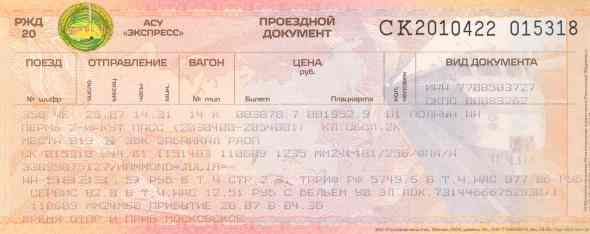
Yes and no.  I’m a big fan of independent travel, not only for the cost savings, but also for the flexibility it gives me to tailor the itinerary to suit my exact requirements.  But I’m also not a Russian speaker and I felt I needed support with the booking process to ensure I ended up with the right tickets for the right trains.  As you can see from the ticket below, it’s not at all easy to understand not only a different language but a different alphabet as well.
russian-train-ticket

Due to the complexities of the railway ticketing system plus visa considerations, I decided to use a single specialist travel agent for those two aspects of my trip.  As is my usual style, I booked my own flights, accommodation and most of my sightseeing myself; the exception was a private tour to Perm-36 Gulag which I also outsourced. I used a UK-based company called Trans-Siberian Experience (https://www.trans-siberian.co.uk) who were very efficient and helpful. The day trip was a 260km round trip from Perm, customised to my personal requirements and cost £170, the most extravagant part of my trip but more than worth the outlay.
img_8548

The company I used at the time was Real Russia.

http://realrussia.co.uk/Trains/Trans-Siberian

Their website has a dedicated Trans-Siberian section which enables you to check train times, suss out possible routes, check prices and order visas.  It’s clear and in my experience the support offered by the team was excellent.  All my tickets were sent in good time with English translations, the visa process was uncomplicated and every aspect of the trip that they’d arranged went according to plan – which was more than could be said for some of my own bits:

https://juliamhammond.wordpress.com/2016/11/06/lost/
img_9435

Since switching careers, I’ve done a lot of work for Just Go Russia, another London-based agency specialising in Russia, and they are always extremely efficient.  If you’re looking for a tour, they do offer a wide range of options.  You can find them here:

http://www.justgorussia.co.uk/en/transsiberian.html

Even if you don’t end up booking a tour, it’s a good way of getting an overview of the route and whittling down the options about where to stop off.  Another source of information is The Man in Seat 61, my starting point for every train trip I’m planning outside the UK.  There’s a good overview here:

http://www.seat61.com/Trans-Siberian.htm

What’s it like on the train?

Each of the trains I took was a little different.  I “warmed up” on the short leg from Moscow to Vladimir and this was a regular seated train.  That took away some of the nerves about checking I was on the right train, right seat and so on, without the worry of a missed long distance connection. From Vladimir heading east, some of the long distance trains leave in the middle of the night, so I opted for one departing early evening which arrived after lunch the following day.  The overnight trains varied considerably in terms of speed and quality, something that is reflected in the price.

Another thing to factor in if travelling in Russia’s hot summer is that the air-conditioning is turned off when you stop at the border and the windows of such carriages don’t open; more basic trains have windows that can be pulled down to let in a breeze.  (In winter, in case you’re wondering, the trains are heated, so prepare to swelter on the train and freeze on the platform.)

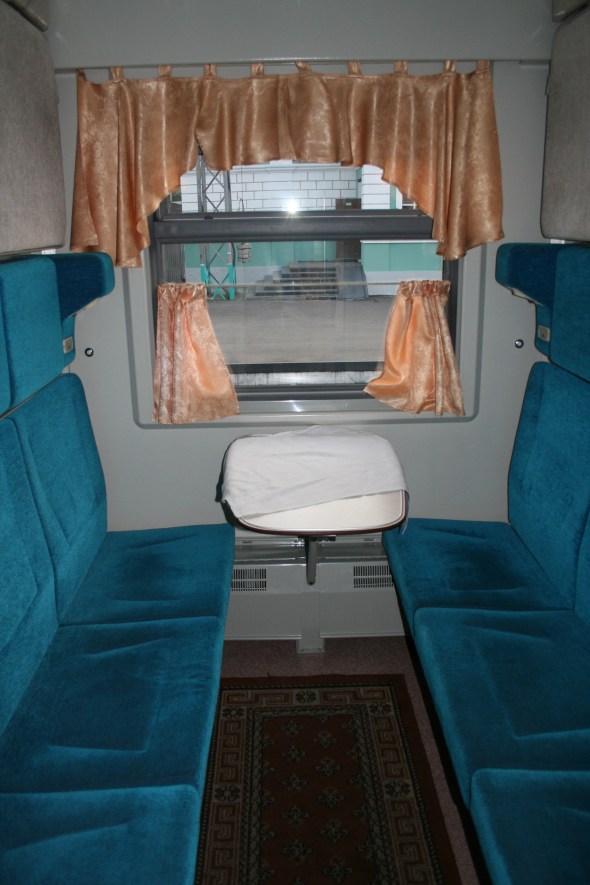
Some compartments featured luxury velour seating, others were more basic, such as the one I travelled on from Perm to Irkutsk.  In my opinion, that didn’t really matter as I followed the lead of my compartment companions (all Russians) and stretched out on a made bed all the way rather than converting it back to a seat.  When I did the Irkutsk-UB leg, the train was more luxurious, those sharing the compartment were all tourists like me and we all sat up during the daytime.  To be honest, I liked the local approach best.
img_8845

In all cases, I opted for second-class tickets which provided comfortable accommodation though no en-suite facilities.  The logic to this was that as a solo female traveller I didn’t want to be alone in a compartment with a single man and the first-class compartments came as two-berth not four-berth kupe.  I shared with three men from Perm to Irkutsk but as everyone sleeps in their clothes nothing untoward happened and actually I was well looked after by one of them in particular, a Russian army officer heading on to Chita.

Border crossings can be daunting, but knowing my visas and documentation were in order was helpful. Formalities vary and the immigration officials will make it clear whether you are to remain on board or not. It is normal for them to take your passports away; that can feel stressful but having a photocopy of your papers is a comfort. Note that the Chinese trains run on a different gauge so the carriages have to be lifted onto new bogeys.

What should I pack?

As you are likely to sleep in your clothes then picking something comfortable like jogging bottoms and a loose T-shirt is a good idea, though clearly you won’t win any fashion awards.  Who cares?  I found it helpful to pack changes of clothes (socks, underwear and T-shirts) in a day pack so I could store my suitcase under the bed and forget about it.

In terms of footwear, most of the locals seemed to favour blue flip-flops with white socks. Slip on shoes of some form are convenient to help keep your bedding free of dust picked up from the floor. The provodnitsa, or carriage attendant, will come round with the vacuum cleaner each day and will chastise anyone who’s made a mess, so keep the compartment clean.

It’s a good idea to book a lower bunk as you are then sleeping on top of your bags, affording grreater security than the open stow holes up top. It’s possible to lock the door from the inside, but not from the outside, so when you visit the bathroom it’s reassuring to know that your belongings are out of sight. Having a small handbag to carry passport, money and other valuables – like train tickets! – was also helpful. When I’m travelling by overnight train I always take a lockable, hard shell wheelie; it’s narrow enough to wheel down train corridors and light enough to lift from the platform, but also more robust than a slashable canvas bag. A determined thief will steal or break into anything, so it’s about making yourself a more difficult target than the next passenger.

When I travelled, the bathroom facilities were pretty basic so I would definitely recommend taking lots of wet wipes and also a can of dry shampoo.  It’s amazing how clean you can get yourself in a small cubicle with just a small sink.  These days, most Russian overnight trains have a special services car with a pay-to-use shower which would have been great.  You do need your own towel, but I use a special travel towel which folds up small and dries fast.  I won mine in a competition but you can get something similar here:

http://www.nomadtravel.co.uk/c/261/Travel-Towels-and-Wash-Bags

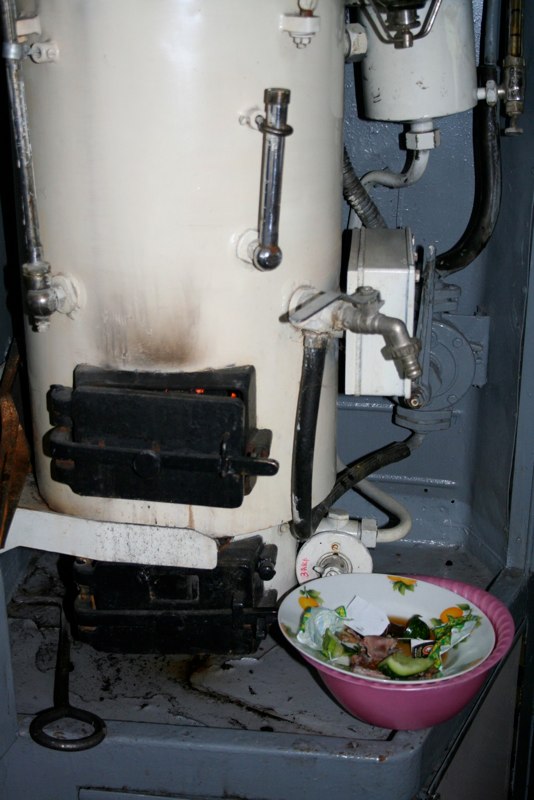
In terms of sustenance, the provodnitsa also keeps a samovar boiling from which you can get hot water to make tea, noodles or soup, so I packed some of these too. Some were more accommodating than others; if you get a grumpy one, she’ll lock her door or disappear for hours at a time. I was lucky to have a smiling provodnitsa on my longest leg, which made a difference. The Russians travelled with plenty of food which they generously shared, most memorably omul, a kipper-like smoked fish common in Siberia.
img_8583

There’s a restaurant car as well and at station stops, despite the queues there was often enough time to nip off to buy food from the platform vendors, so carry enough small change for these kind of purchases.  Finally, it’s a long way.  Although batteries can be charged (though sometimes in the corridor on older trains) I’d pack an old fashioned paperback to read or carry a pack of cards to entertain yourself.  Take family photos – in my experience it’s true that Russians love to share theirs. It’s also true that a bottle of vodka can break the ice though some compartments sounded more raucous late at night than others – the luck of the draw!  I also had a copy of the Trans-Siberian Handbook (as opposed to the Lonely Planet which I would usually take) because the level of detail about what you’ll see out of the train window was much better.

img_8585

Anything else I should know?

One of the things I was most worried about before I set off was missing a train or missing a stop.  In the event, neither of these were an issue.  At the station, huge signboards helped identify where the train might pull in and showing the ticket and smiling a lot got me escorted to many a carriage door.  Pretty much without exception, I found the Russian railway staff very helpful. The trains used to run on Moscow time which could be a little confusing at first, but there are timetables up in the corridors and even on the longer legs I usually knew roughly where I was.  Since summer 2018, they’ve switched to local time and are showing both times to help ease the changeover.

A phrase book helped me decipher the Cyrillic alphabet; my technique was to focus on just the first two or three letters rather than trying to remember the whole name.  Thus Suzdal became CY3 etc.  The train provodnitsas were very good at giving their passengers plenty of warning when their stop was imminent and so I managed to get across Russia without incident.

I never felt unsafe during my trip but I would say that you need to be a bit savvy when it comes to your valuables.  Keep your passport and money with you, don’t flash around expensive cameras or laptops but equally, don’t get too paranoid.

Would I do it again?
img_9383

Yes!  The scenery at times was monotonous but that was missing the point.  The adventure was in the interactions with people on the train; the sightseeing came after I alighted at the station.  Next time I think I’ll begin in St Petersburg, detour to Kazan and make that visit to Yekaterinburg before heading east to Vladivostok.  Now where did I put that Trans-Siberian handbook?

Stranded in Jacmel

One of the great joys of travelling alone is the freedom to go where you please, when you please.  Unfortunately, I was going nowhere, stranded by a set of circumstances out of my control and, thanks to a woefully inadequate command of the local lingo, completely at a loss as to why.

image

I’d been in Jacmel for a few days celebrating Kanaval.  Carnival festivities took place each February a week before the rest of the country.  A flamboyant parade of colourful floats, larger than life papier mâché characters and enthusiastic dancing, it was a raucous, deafening and utterly captivating event.  In short, it was anything but a warm-up for the revelry which took place a week later in the Haitian capital, Port au Prince.

I say I’d been in town.  More accurately, I’d been staying just out of town.  Prices at that time of year were hiked by the few desperate hoteliers that managed somehow to stay in business.  Haiti’s tourism industry is precarious at best, battered by a hideous earthquake in 2010 and several devastating hurricanes.  Those extra gourdes would likely mean the difference between staying open until the following year and closing their doors for good.  Today was the day the visitors left and those who remained counted their takings to determine their fate.

DSC_0175 (3).jpg

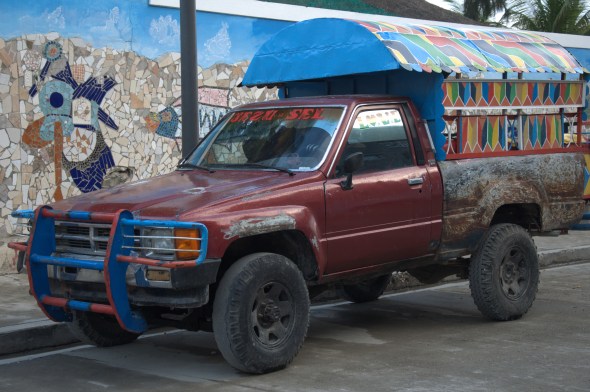
But things were not going to plan that morning.  A taxi had dropped me off at the petrol station forecourt that served as a bus station, though there was no petrol at the pumps and nothing in the vicinity that you’d call a bus.  Instead, a gaggle of decrepit minibuses were parked in an untidy line as their drivers slouched against the concrete fence drawing on cigarettes and lazily passing the time of day.  Inside one minibus there were a handful of patient passengers.  Assuming that it would leave when full, I approached the driver to ask if he was headed to Port au Prince.  To my surprise he replied in the negative.  My schoolgirl French wasn’t up to the ensuing conversation but the gist of it, as far as I could work out, was that there were no buses leaving for the Haitian capital at all.

“Pas de bus?” I asked, exaggerating a French accent for effect while pointing at the minibus.

He shrugged.

“Pas de transport?” I tried, hanging onto the hope that he’d misunderstood.

“Non.”

That, I understood.

A knot began to tighten in my stomach.  A veteran of many a solo trip, had I bitten off more than I could chew?  With private transport back to the capital well outside my budget, if there was no bus, any chance I had of making my flight home was dwindling fast.  What I still couldn’t understand, however, was why, if all transport was suspended, his bus still had passengers inside.  I decided that as we were so close to the Dominican border, I’d try speaking Spanish.  From what I’d read, there was no love lost between the Haitians and their wealthier neighbours – a few days earlier a cross-border bus had been set alight in a tit for tat incident – but I was running out of options.

coach

Fortunately, the driver spoke a bit of Spanish too.  I managed to ascertain that there was a protest just out of town.  A blockade had been hastily erected on the road which wound through the hills that cocooned sleepy Jacmel from what otherwise might have been the contagious noise and chaos of the capital.  This roadblock of burning tyres and angry protesters had stymied public transport for the foreseeable future.  Something to do with the government increasing the price of fuel, he said vaguely, and out of his hands.  Until the roadblock was lifted, no one was going anywhere.  Those few passengers inside his vehicle were either blindly optimistic of their government’s ability to resolve the situation or had nowhere else to go.

Luckily, I did have somewhere.  As of today, hotels were back to offering post-carnival rates, so I schlepped my wheelie back into town.  The Hotel Florita was a Jacmel landmark, its elegant balconies and huge wooden doors a giveaway to its former life as a coffee warehouse.  Built in 1888, it had been spruced up post-earthquake with a coat of whitewash, its myriad architectural features accentuated in baby blue.  I’d read about the place when I’d been planning the trip and fallen in love with the idea of staying there.

dsc_0055-2

The hotel’s own website proudly boasted that the place was “not in catastrophic condition” and that the main house had “not been hijacked by conditioned air”.  The management’s description of the New Yorker who converted the place into a hotel was just as entertaining, recounting that the man had first seen it when drunk before “thoughtlessly and fecklessly” purchasing it.  The paragraph concluded: “Why he did it remains a mystery and his decision to turn it into a hotel a decade later unfathomable.  It is still there limping along.”  The Florita had seemed like my kind of place and now it seemed I might get to stay there after all.  Happily what had been the old courtyard kitchen now contained a four poster bed that had seen better days.  Its most recent occupants had checked out just this morning, leaving my path clear to snagging the cheapest room in the house.

dsc_0299

Installed on one of the Florita’s sofas, I logged on to what surely had to be the slowest WiFi connection in the western hemisphere and attempted to trawl Twitter for information. News was sparse but universally bad.  The latest fuel hike was one in a long line of unacceptable actions by an unpopular government and people had had enough.  I sympathised up to a point but their timing couldn’t have been worse.

While the townsfolk of Jacmel battled their hangovers to begin the big clean up, I spent the morning researching an alternative route home.  The blocked road over the mountains to Port au Prince was the only one in that direction.  To the west, a torturous mountain track lead to the tiny towns and villages of Haiti’s southern claw – effectively a dead end.  Jacmel had an airport, just outside the town, but it was no longer in use.  There was a coast road which might have taken me east into the Dominican Republic, but I had no wish to be the next victim of a retaliatory arson attack.

dsc_0013

I snapped the lid of the laptop shut and ordered a beer.  I might not be free to go where I pleased, but the whole point of travelling was to embrace your surroundings and anything they threw at you.  There were worse places to be stranded, I decided.  The sun was shining and it was nearly time for lunch.  Solving the problem of how I was going to get home could wait.