juliamhammond

Latest

Product test: Sunwise UVA clothing

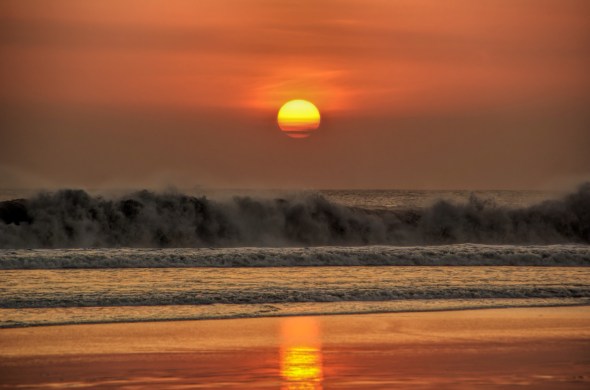
It was August 2004.  I was in Bali and I’d heard about a celebration known as Kuningan.  This ceremony was held to mark the end of Galungan, a holiday similar to our New Year.  Devotees dress in white with red sashes and bring offerings for their ancestors who are returning to heaven after spending time on earth for the Galungan festivities.  They bring yellow rice, fish and fruit, placed in bowls made from leaves.  The rice symbolises their gratitude to God for the blessings he has bestowed and the bowls are adorned with little figures representing angels which bring happiness and prosperity.  It promised to be an incredible sight, so I made my way to the temple near Candidasa on Bali’s eastern coast.

Arriving, I wasn’t alone.  In front of me was a sea of white, a crowd of people thronging the space between me and the temple entrance.  Resigned to a long wait, I found a place in a queue of sorts and waited.  It was late morning.  The sun was already high in the sky and packing a powerful tropical punch.  I wasn’t unduly worried.  I’d put on some sun cream and had chosen what I thought to be a sensible outfit – a long sleeved cotton blouse.  Time passed slowly and my shoulders began to redden.  I applied more cream to the visible parts and thought no more of it.  Eventually, I entered the temple and observed the prayers and rituals.  It was a fascinating scene.
sunset-1337686

Later on, returning to the hotel,  I realised the thin cotton blouse I’d worn was no match for the midday sun and my skin had not only reddened, it had blistered badly.  I spent the rest of the holiday in the shade, cursing how ill-prepared I’d been.  I’ve never been as casual about the sun since.  Several of my friends have had skin cancer, and that’s not something I wish to emulate.  According to statistics compiled for Cancer Research UK, there are over 15,000 new cases of melanoma skin cancer each year.  While many are treatable, some, sadly are not.  Realistically, with the amount of travelling I do and how fair my skin is, I need to be proactive about the precautions I take.  Sun cream alone isn’t enough of a solution.  Yet there are many tropical places in the world that I still want to visit.  I don’t want to find myself in a position where I’ve got to stay out of the sun completely and miss out on the chance of seeing them.

But here’s the rub.  I’ve never found much in the way of UVA resistant clothing that I thought I’d actually like to wear.  The thought of putting on one of those clingy long sleeved surfer shirts in soaring temperatures and high humidity just doesn’t appeal.  Nor do I find the functionality of the standard traveller clothing appealing; it just doesn’t feel like I’m on holiday if I’m wearing a collared shirt.  So up until now, I’ve slapped on the sun cream (ruining many a white blouse in the process with those impossible to remove stains) and hoped for the best.
accessories-84528

I’m not ready to give up my view of a tropical beach just yet.  So when a friend offered to let me trial a UVA resistant kaftan, I jumped at the chance.  Finally, something that would prevent a repeat of my Balinese burns.  Its first outing was to Ibiza.  In May, the temperatures are in the mid-twenties, perfect for a trial in conditions similar to a good British summer.  Here’s how I got on.

Style 8/10

10382152_365133273647148_8923002059651758848_n

I just loved the colours in this.  Blue always feels so summery and the mix of the palette works well as a pattern and means that it goes with a wider range of bottom halves.  The longer length style, sitting flatteringly mid-thigh, meant this kaftan hid both generous hips and a tummy that likes to eat.  I’m not usually a fan of the tie waist, as I do sometimes think such styles make me feel like a trussed turkey, but actually it too was attractive.  I found that in a bow it did have a tendency to undo itself, but in a loose knot it looked just as good.  The batwing sleeves hung to my elbow, giving it a pretty waterfall silhouette.  The round neck, though high, was loose enough to be comfortable.  In my selfies, though, it looks a little too high, reminding me of a hairdresser’s gown.  In real life, this isn’t the case, as the length of the garment more than balances this out and obviously if you have someone else taking your holiday photos you’ll get a better image.

FullSizeRender (99)

Comfort 9/10

I trialled this in a number of situations.  As I was on the move, it’s yet to sit round a pool (watch out for an update later this month when it comes with me to hotter Texas).  When I first looked at the label, I was a little concerned to see that it was made of 100% polyester, usually favouring cotton and linen for high temperatures.  It was so lightweight though, that I never felt hot and sticky; it didn’t cling and hung beautifully.  The versatility of this style means that it’s as at home in a cafe as it is on the beach, sophisticated enough for the city yet casual enough to wear poolside.  I even went for a short hike in it.  The floatiness of the fabric meant it didn’t ride up or become too rucked up around the legs.  My only criticism is that with half-sleeves the lower parts of your arms are exposed.  I’d love to see that the range is widened to include a long sleeve tunic blouse in the same colourway and fabric.

I’m not alone in praising its versatility.  Fellow tester Kate had this to say when she packed it for a Med cruise:

“In Rome today and melting.  The kaftan is absolutely brilliant. I don’t need cream under it and there’s been no burning at all. I feel posh too! Ingenious.”

Kate’s a skin cancer survivor and adds:

“It gave me so much confidence, took away the worry I have when I see the sun is shining! I could sit on a beach and look like everyone else in a glamorous floaty cover up, yet I knew my skin was being protected.”

Value for money 10/10

This item is new for 2017 and the retail price has yet to be finalised.  I’m assured that it should be in the region of £25 to £30.  At this price bracket, that’s excellent value for money in my opinion.  The kaftan is well made and you’re getting a quality product.  With little competition in the UK market, it’s hard to find a comparison, but similar clothing from high-end retailers can go for up to £100, making this a bargain.

Function 10/10

Let’s get real for a minute: the main reason you’re going to be looking at the Sunwise UVA product range is to buy clothing that is going to protect you from the sun.  So did it do its job?  I spent the day in and out of the sun, and even when my lower arms were reddening at my sunny cafe table over lunch, the parts covered by the kaftan were well protected.  I’ve covered the lack of wrist-length sleeves in the style score, so for me this garment’s ability to protect me from sunburn in temperatures of around 25°C was first rate.  If that changes when I up the temperatures a bit, I’ll edit this section to reflect its capabilities.

The verdict

Would I buy it?  Yes, absolutely, and another one too if further colourways were to become available.  It’s not something I’d have considered before, but I’m a convert.

Where to find it:

Sunwise UVA is a recent start up and would value your custom as well as your comments.  Their current range can be viewed online at:

http://www.sunwiseuva.co.uk/

They’re also on Facebook: look for Sunwise. UVA clothing
Should tourist numbers be capped?

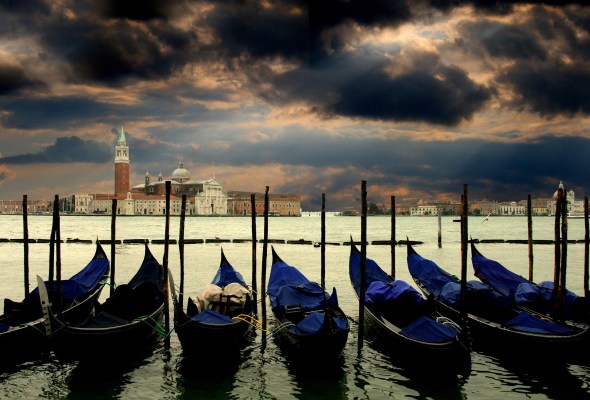
The authorities in Venice have recently announced that they will be introducing a series of measures to limit visitor numbers.  Amongst other things, Venice’s city council plan to issue tickets for St Mark’s Square and leaflet tourists to encourage them to head to less-visited parts of the city.  Supporters of the plan claim it’s necessary to protect a city that’s already on UNESCO’s endangered list; critics respond vehemently that a city should be open to all.  Where do I stand?  Somewhere in the middle, if I’m honest.

venice-194835

A storm is brewing over tourists’ right to roam

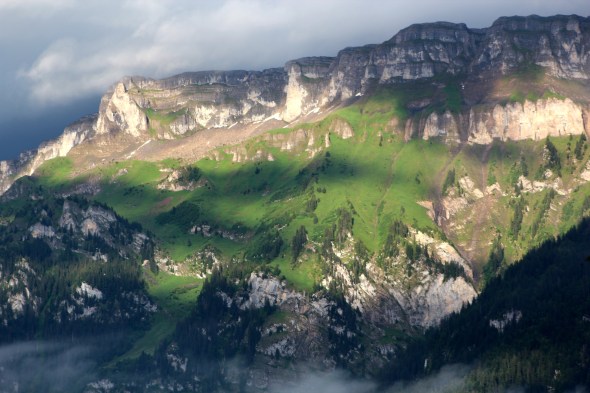
The more mobile the world’s population gets, the busier tourist honeypots are getting, and our visitor experience is suffering as a result.  Travelling to many European cities in the middle of August can be more of a chore than a pleasure.  I had to visit the Swiss city of Interlaken in August a couple of years ago and the sheer number of people competing for space was dangerously close to what the infrastructure could cope with.  Added to that was a liberal scattering of selfie sticks, overflowing rubbish bins and a bunch of people whose disdain for queuing manifested itself in elbowing and shoving. It was about as far from tranquil as you could get, and certainly not what you’d imagine if you pictured a trip to the Swiss Alps in your head.

interlaken-397627

Getting close to views like this can test your sanity

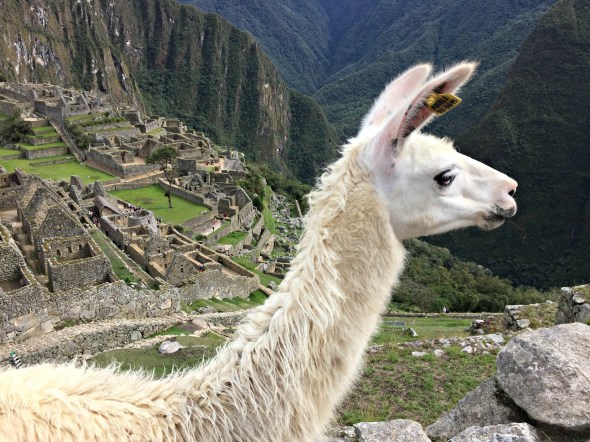
Over time, however, tourist numbers can increase so rapidly that not taking action can jeopardise not only the visitor experience but the site itself.  When I first visited Machu Picchu in 1995, I remember wandering with a friend amongst the ruins with hardly another soul there.  Memories can be a little rose-tinted; statistics put the annual figure in those days at about 250,000, averaging out at a little under 700 a day. By the time I returned in 2006, the site felt busy and the prices hiked in what proved to be an ineffectual attempt to limit the number of people.  Statistics estimate visitor numbers to have reached about 700,000 per annum by that point.

llama-1911541

Once the only thing photobombing your shot would have been a llama

By 2014, an estimated 1.2 million tourists came, around 300,000 in excess of limits agreed between UNESCO and the Peruvian authorities. Erosion of paths and stones, waste disposal issues and the risk of landslides are, still, very real threats.  The diesel-spewing fleet of buses might have been replaced by newer models and the threat to build a cable car that could well have sent the whole ruins tumbling down the mountain seen off, but Machu Picchu isn’t out of danger yet.

machu-picchu-1569324

Visiting Machu Picchu is now a very different experience

There are plans to introduce compulsory guides, expect tourists to follow set routes through the ruins and limit time at the site to prevent Machu Picchu collapsing under the strain.  I can’t face returning a third time under such conditions, but if I’d never been, I guess it would be better to accept these strategies than to miss out completely.  I feel lucky that I got to visit many of the world’s iconic sights ahead of the crowd yet at the same time saddened that the way I experienced them is, by necessity, a thing of the past.

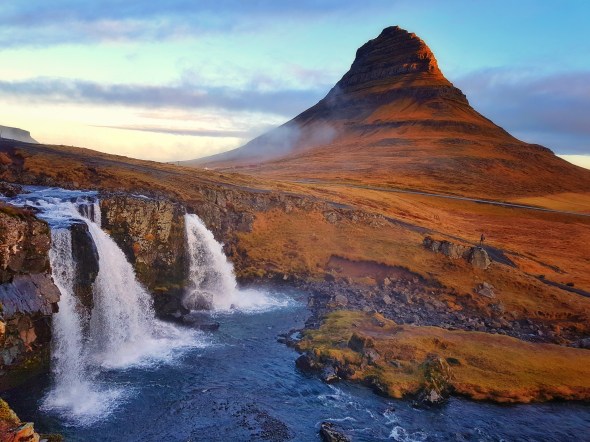
kirkjufell-2148191

Even off season, Iceland’s wild views are coming under pressure

A whole raft of amazing places have implemented, or are planning to, measures to limit the impact of tourism.  Whether following the Bhutanese model of insisting on a minimum spend of $200-$250 via a compulsory daily package, limiting numbers arriving by cruise ship à la Santorini and Antarctica or regulating hotel beds and the likes of Airbnb as is being considered by Iceland, the goal is the same: to find a limit which works for the environment and people.  If your next bucket list destination is nearing breaking point, you’d better get organised (or rich) so you don’t miss out.

Flight news: Honduras

While parts of Central America have been blessed with direct flights from Europe for some time, others have been a bit more disconnected.  Honduras is one of those places.  But now, with the launch of a weekly flight from Spain, it’s possible to get there a little quicker.  When I visited Honduras a few years ago, getting there involved an overnight layover in Houston, adding both considerable time and expense to the journey.  Air Europa’s flight from Madrid at first might appear to be less than ideal, arriving shortly before 5am in what was once the world’s worst hotspot for murders.  (San Pedro Sula has now passed the Murder Capital of the World crown to the Venezuelan capital Caracas.)  But this late departure means that a connecting ticket from the UK is possible and you no longer have to lose a day of your holiday just to get there.

IMG_7749.JPG

Honduras might not be the first place that springs to mind if you’re looking to holiday in that region, especially in terms of safety.  But it’s easy to get straight out of San Pedro Sula and the early arrival means you’ll have plenty of time to reach somewhere both safer and more beautiful well before nightfall.  Copan Ruinas is one such place.  I spent a pleasant time there in 2014, riding horses out to the Guatemalan border, drinking the excellent locally-grown coffee and exploring some of the least crowded Mayan ruins in the region.  Visitors were outnumbered by scarlet macaws by some considerable margin.

IMG_7822

While I’d still be loathe to recommend spending any more of your time in San Pedro Sula than is absolutely necessary, the country’s Caribbean coast is as laid back as they come.  It’s well worth risking the journey back to San Pedro Sula’s airport after your Copan Ruinas sojourn to make the short hop to Roatan Island.  It’s the perfect place to unwind in the sunshine, sink your toes in the sand and sip a cocktail or two.

IMG_8330.JPG

When are we going?


Five favourite travel books: Asia and the Middle East

I’m not Asia’s greatest fan. Though you’ll find some of the world’s most fascinating natural and cultural sights, I find it irritating that they’re buried amidst jumbles of telephone wires and that reaching them often involves darting out in front of more motorbikes than it should ever be possible to encounter on one road. Nevertheless, I enjoy reading about the place, when I can filter out the bits that I don’t like to be left with a vibrant and enticing locale. There are exceptions, however, and one is most definitely Sri Lanka. I visited last year and cannot wait to return.

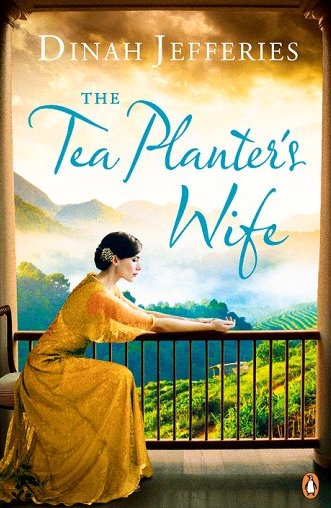
The Tea Planter’s Wife by Dinah Jeffries

Tea planter

It’s perhaps no surprise, therefore, to learn that one of my choices is a work of fiction. The story is enthralling but most of all, it captures the essence of the country in which it’s set. Here’s one of my favourite descriptions from the book:

“She took a deep breath of what she’d expected would be salty air, and marvelled at the scent of something stronger than salt.
“What is that?” she said as she turned to look at the man, who, she rightly sensed, had not shifted from the spot.
He paused and sniffed deeply.  “Cinnamon and probably sandalwood.”
“There’s something sweet.”
“Jasmine flowers.  There are many flowers in Ceylon.”
“How lovely,” she said.  But even then, she knew it was more than that.  Beneath the seductive scent there was an undercurrent of something sour.
“Bad drains too, I’m afraid.”
She nodded.  Perhaps that was it.”

For some reason, though this scene takes place in Colombo, it feels to me like it should be set in Galle Fort. Quite possibly that’s because I grabbed the first train out of Colombo to head for the hill country and quite possibly because Galle Fort oozes history, spice and sewage from every cobblestoned street.

Hokkaido Highway Blues by Will Ferguson

Hokkaido

My next choice focuses on an Asian country I also love: Japan. Travelling through Japan ought to have been a challenge, what with the different alphabet and all, but the Japanese go out of their way to make sure they can understand you, even if the conversation can get a little stilted. Here’s the author on the art of Japanese conversation:

“This was conversation by Non Sequitur and I was thoroughly familiar with it by now. The trick was to answer with equally arbitrary statements, until you sound like a couple of spies conversing in code.
“Yes, I can eat Japanese food. Baltimore is very big.”
“How long will you stay in Japan?”
“Until tomorrow, forever. It is very cold in Baltimore.”
He shook my hand. We smiled warmly at each other, clearly this was an International Moment.”

Fortunately, when I reached Kyushu, the lady in the tourist office at Yanagawa defaulted to technology when she realised our language abilities were sorely lacking. Video conferencing with a disembodied head on her computer, I was able to secure a map and a recommendation for lunch. The head seemed very disappointed that I had no further questions and I felt guilty as I thanked it and headed off.

Three Moons in Vietnam by Maria Coffey

Vietnam

Years ago, I found myself sleeping in Michael Caine’s bed. He wasn’t in it, of course – of course! – but he had stayed in that same room and slept in that same bed while filming The Quiet American. The bed was located in Hoi An, in an old Chinese chophouse that had been converted into a guest house. Despite that it heaves with tourists (more so now, I understand, than when I was there) I found Hoi An to be a wonderfully atmospheric place. Maria Coffey describes the place thus:

“It was no problem to while away some time in Hoi An. We explored the fish market along the river bank, where women vendors smoking fat hand-rolled cigarettes squabbled nastily and noisily with each other.”

I don’t remember any squabbling, but I do remember the noise.

Mirror to Damascus by Colin Thubron

Damascus

On to the Middle East now, and a book set in a city whose history stretches back seven millennia, giving me hope that when the present conflict ends, the city will rebuild and restore. I visited shortly before the war kicked off and was enchanted by the place and its people. Clad in what felt like a mediaeval cloak, I marvelled at the Umayyad Mosque; free of my robes, I haggled in the tiny shops on Straight Street and never felt unsafe in the streets of its old town, even late into the night. In his book, Thubron tackles some of the city’s history:

“Some cities oust or smother their past. Damascus lives in hers.”

Here’s to when Damascus can live freely again.

The 8.55 to Baghdad by Andrew Eames

Baghdad

My final choice is another reminder that time changes everything. Mention Baghdad now and the Iraqi capital is still, to many, a place that instils fear instead of hope. But less than a century ago in 1928, none other than Agatha Christie made the journey from London to Baghdad by train. Her route took her through Syria, where she frequently stayed at the Baron Hotel in Aleppo. (Rumour has it that this historic hotel, which I visited but didn’t overnight in, has so far survived the war almost unscathed.)

Eames quotes the 1928 edition of the Thomas Cook handbook which “advises customers packing for Syria that “There is nothing better for travelling than a suit of Scottish tweed, supplemented by an ulster or other warm overcoat and a good waterproof.” The author had probably never ventured further than Ramsgate.”

Times change and for some places, that’s a good thing.

The value of trip planning

I’m looking forward to two big trips at the moment, and they couldn’t be more different.  The first, in a few weeks’ time, is a ten day holiday to Texas.  I’ll be travelling with a specialist operator for the visually impaired, Traveleyes:

https://juliamhammond.wordpress.com/2017/02/17/off-to-texas-with-traveleyes/

It’s outside my comfort zone.  Not the place of course – I’ve been to more States than many Americans – but the style of travel.  I rarely book a package tour, avoid group travel and try not to allow anyone complete control over my itinerary.  Yes, I’m a control freak and yes, I’m happy about that.

texas-1656861_1920

The other, in June, is an independent trip to the Caucasus.  I’ll begin my adventure in Georgia, spending ten days exploring some of what promises to be the region’s most stunning landscapes, before venturing into Armenia and the breakaway republic of Nagorno-Karabakh for a further week.  This is firmly within my comfort zone.  This is how I like to travel: tailor made by me for me, with me firmly in the driving seat.

europe-1785465

The former is a departure from my usual travelling style.  Pretty much everything has been planned for me save for updating my ESTA and getting to the airport.  There’s some free time, of course, but the way the group rotates to ensure all travellers get a change of company means I won’t know who I’ll be paired with on those days and in any case, free time is to be “negotiated” so both parties are happy.  I don’t have a problem with the theory – it should make for a much better trip once we get going – but in practice I feel very disconnected from this trip.  The main reason has to be that I haven’t been able to do my usual research.  I have some ideas – someone, surely, will want to join me for what’s described as a “gospel-ish brunch” in Austin – but until I get there and meet my fellow travellers, that’s all they are: ideas.  Technically I don’t even know what flight I’m getting though I’ve figured that out by a process of elimination and United Airlines, if you bump me there’ll be trouble.

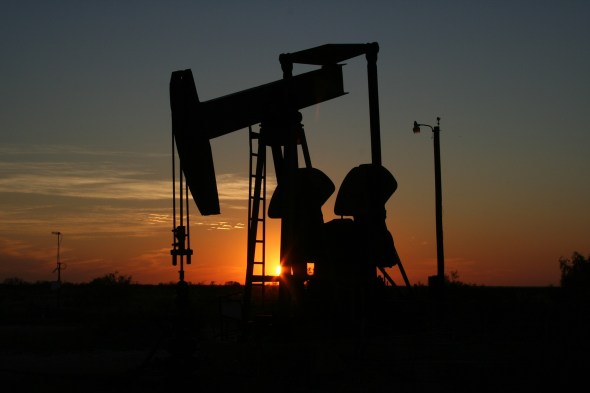
oil-106913

In contrast, the Caucasus planning is really engaging.  I’m wearing in new hiking boots and the Lonely Planet guide to Georgia, Armenia and Azerbaijan has become my nightly read.  I’ve been swapping emails with tour providers to see whether organised day excursions would be a better option than going it alone by marshrutka.  I’ve compared monasteries and researched foodie experiences, checked weather forecasts and studied hotel rooms.  I’m figuring out whether a side trip to Abkhazia is possible even though I’m still half convinced that was the country the Tom Hanks character was supposed to have come from in The Terminal.  I really must look that up.  A rough plan is finalised for Armenia and once the Tbilisi-Mestia flights are released in a couple of weeks, the Georgia part will fall into place too.  I’m happy.  Browsing maps, photos and blogs online is giving me a sense of place and the more I find out, the more excited I’m getting.

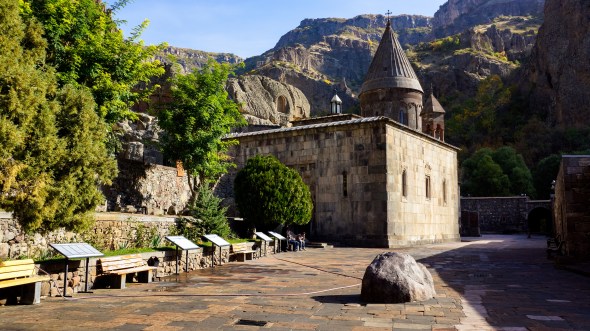
church-1832512

It’s just that the more I’m getting excited about Georgia and Armenia, the more I’m realising I’m missing the experience of getting excited about Texas.  Once I’m there, I’m sure it won’t be a problem, but without this build up, without the anticipation, I can’t seem to be able to savour the place.  It feels like I’ll be tucking into dinner without sniffing the aroma wafting from the kitchen.  And that’s a shame.