juliamhammond

Latest

Julia’s 12 golden rules of travelling

Over the years I’ve picked up a few things that I’d like to share with you.  Whether you’re planning your first big trip or an experienced traveller wishing to compare notes, these are the things that I consider my golden rules.

IMG_7208

Prepare but don’t over plan

Good trip preparations are key to a successful and safe trip.  Over plan, however, and with the rigid itinerary you’ve set yourself, you won’t be able to take advantage of unforeseen opportunities.  I try where possible to keep arrangements flexible, such as booking accommodation on a free cancellation basis, enabling me to change my plans if I want to.  You need to know enough to be safe, and yet still leave yourself open to the thrill of a surprise discovery.  Build in some down time: an exhausted traveller is not a happy traveller.

Take risks but be careful

Can you even be careful if you’re taking a risk?  I’m not sure!  But what I’m getting at is that you’ll need to take calculated risks.  If you’re planning to ride a horse, wear a helmet.  If you’re going to be up close to the really wild wildlife, listen to advice about what you should wear.  If you want to visit a bar in the dodgy part of town, don’t get hammered and take a taxi home.  If you’re using local transport, seek out the one with the best safety record and don’t travel at night.  I’ve ignored all of these of course.

Walking with lions, Zambia

Ditch the guide book and ignore the must-sees

Forgive me if this seems to contradict my opening rule (though rules are made to be broken of course!)  I do still usually start with a guide book, especially if the area is one I’m less familiar with or the trip is a longer one.  But the trouble with guide books is that they have a tendency to funnel everyone to the same places.  If you deliberately ditch the must-sees, you’ll often have the places you visit to yourself.  And if you really can’t bear to give up that Top Ten list, travel off season when the crowds will thin.

Step outside your comfort zone

Whether this means taking a trip to somewhere you’ve never been before or attaching yourself to the end of a bungee cord, this will mean different things to different people.  But the underlying principle is the same.  Challenge yourself.  Try something new.  Spread your wings.  Fly.

photo3

Don’t be scared to try solo travel

For some, the idea of solo travel is about as far from their comfort zone as they could possibly get.  Possibly, that first trip might be daunting.  The first few hours of my first solo trip (to France as an exchange student aged 17) were scary.  Three decades later, I remember shopping for live crab and watching it wriggle alarmingly close to my ankles in the footwell of the car.  I remember getting mud between my toes hunting for crevettes on the beach.  I remember the smoothness of the hot chocolate I had for breakfast and how enormous the bowl was that I sipped it from.  I remember visiting the local library (didn’t I know how to live it up on holiday!)  But one thing I don’t remember anymore is the fear.

Do no harm

Be nice.  Respect your environment, both cultural and natural.  You know the saying, take only photographs.  That.

img_8328

Take your time

It’s always tempting to pack too much into an itinerary.  Sometimes you just have to trust that if it’s good enough, you’ll go back for it one day.  But rushing around ticking off sights is no fun and you won’t remember where you’ve been or what you’ve seen.  Make time to do something as well as see something.  Most of my all-time favourite travel experiences have nothing to do with sightseeing.  A cooking class in Guatemala, where I learned how hard it is to grind cocoa beans with a pestle and mortar.  Herding cattle in Uruguay on a horse that didn’t want to move.  Walking a lion in Zambia and failing miserably to remember that I wasn’t walking my dog.

Connect with people

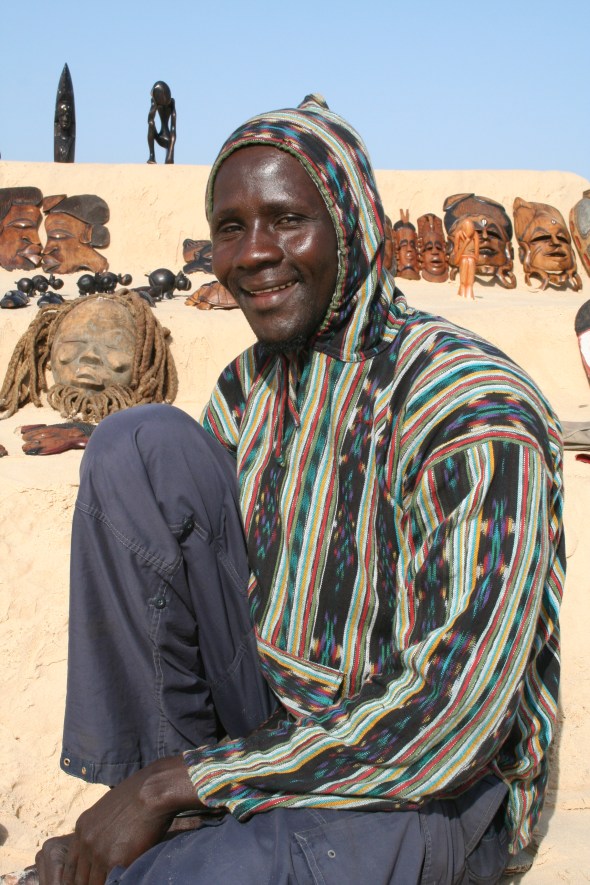
No matter how well you think you know a place, you don’t know it as well as those who live there.  There’s so much to be learned from chatting to the locals and I don’t just mean recommendations for places to eat.  But also, some of my fondest travel memories have been fleeting trips and tours I’ve made with people that I instantly connected with – and often never kept in touch with afterwards.  People are what make a place special, in my opinion.  It can be the most beautiful place in the world but if the people are ugly, your time there won’t be special at all.
IMG_6407

Don’t restrict yourself to chain hotels

It’s time to get practical.  I know you can earn points and get free nights, but if you register with a bland and forgettable hotel chain then those free nights are going to be somewhere bland and forgettable.  Try a private room in a hostel, excellent for meeting people.  Find somewhere historic to stay that’s got a story to tell, or even a resident ghost.  Try a quirky guesthouse or a welcoming homestay.  Meet the owner.  Chat a while.

Fly midweek to stretch your travel budget

Practical matters part two: you need to maximise your trip budget.  If the flight’s going to represent a big chunk of your budget, you’ll need to find ways of saving money.  Fly indirect, fly midweek, book late at night when the cheapest deals are most likely to come up and, alright, use those air miles.
DSC_0679

Travel light

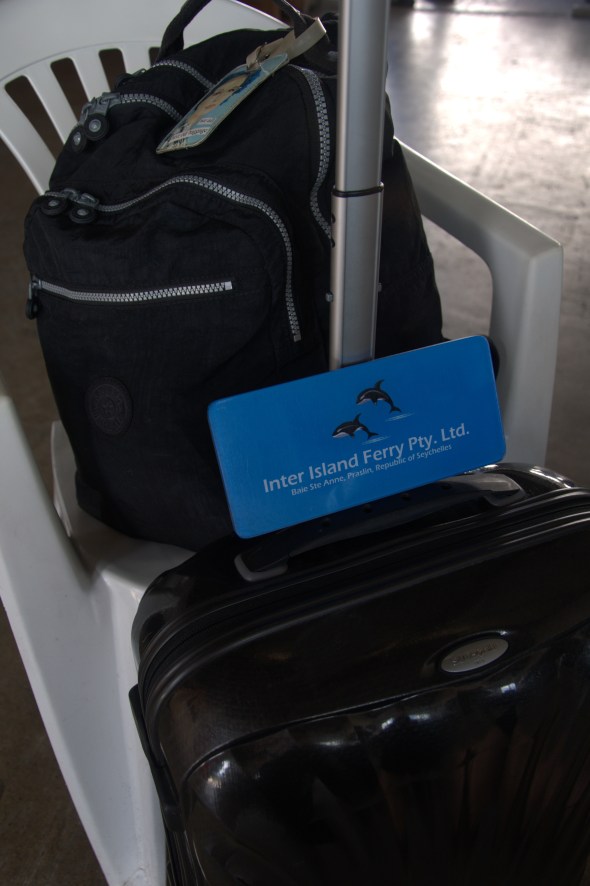
Of the three logistical points, this for me is probably the most important.  Travelling light keeps you mobile and allows you to focus on your surroundings rather than your possessions.  Think about the last trip you made and what you didn’t use.  Could those items have been left at home?  Do laundry on the road, buy toiletries when you get there, choose clothing that will multi-task, take a Kindle or use a book exchange – all these things will ditch the weight.

There will always be something

When it comes to travel, there will always be an excuse not to do it.  Life has a habit of throwing things up that might get in the way of your trip.  If it’s money, see what you can give up to fill the travel piggy bank.  Sell the stuff that’s cluttering your attic.  Cook dinner instead of calling for takeaway.  Unless it’s a legitimately important family matter that’s standing between you and the trip of a lifetime, go.

Happy travels!

Everything you need to know about flying

The title’s a bit of an exaggeration – at the very least a work in progress – but I’m in the process of creating an index for my blog posts. Here’s the first instalment. With years of independent travel under my belt there’s a lot of advice I can share about airlines and air travel. From finding business class flights at fares lower than economy to what to do if your flight is cancelled, there’s a blog to help.
sunset-2095225

Tips for saving money on flights
https://juliamhammond.wordpress.com/2014/10/15/nine-tips-to-save-money-on-flights-and-one-to-avoid/
Cabin baggage charges
https://juliamhammond.wordpress.com/2017/07/22/the-increasingly-thorny-issue-of-cabin-baggage/
What to do if you miss your flight
https://juliamhammond.wordpress.com/2016/07/27/what-to-do-if-you-miss-your-flight/
How to travel business class for the price of economy
https://juliamhammond.wordpress.com/2016/07/18/how-to-fly-business-class-for-the-price-of-economy/
Are business class flights really worth the extra?
https://juliamhammond.wordpress.com/2016/06/14/are-business-class-flights-really-worth-the-extra/
How to survive a long haul flight
https://juliamhammond.wordpress.com/2016/05/03/how-to-survive-a-long-haul-flight/
What’s it like to travel long haul on a budget airline?
https://juliamhammond.wordpress.com/2017/01/19/whats-it-like-to-travel-long-haul-on-a-budget-airline/
Thoughts on airports
https://juliamhammond.wordpress.com/2016/05/24/its-almost-time-to-go-to-the-airport/
Transport options from Heathrow to London
https://juliamhammond.wordpress.com/2015/12/07/how-to-get-the-best-out-of-a-heathrow-layover/
How to get the best from a Heathrow layover
https://juliamhammond.wordpress.com/2015/12/09/how-to-get-the-best-out-of-a-heathrow-layover-part-2/
Getting your money back if your flight is cancelled
https://juliamhammond.wordpress.com/2015/03/06/finally-a-win-against-cityjet/

The increasingly thorny issue of cabin baggage

Airline Jet2 are in the news this weekend, with an article in the Daily Mail highlighting their new policy of charging for guaranteed cabin baggage.  You can read the article here:
http://www.dailymail.co.uk/news/article-4719308/Now-airlines-charge-bring-HAND-LUGGAGE.html

the-air-1807486

I was a little suspicious, given the propensity of the Daily Mail to be economical with the truth, so I did some fact checking.  Buried within the Jet2 website, and revealed as far as I could see only after you have reserved flights and are well into the booking process, is the opportunity to pay extra to keep your bag with you:

Subject to availability, you can pre-book “guaranteed cabin baggage” for an extra charge, and if you have purchased this service, you will not be asked to put your hand baggage in the hold (unless it exceeds the weight and size requirements detailed above or operational requirements apply).  If we require your guaranteed cabin baggage to go into the hold for operational requirements, you can contact customer services to arrange a refund for any charges which you have paid for this service.

I tried a sample booking of a flight from Stansted to Dubrovnik.  The cost of ensuring your cabin baggage made it into the cabin with you (subject to those operational requirements not being necessary, of course) was £3 per person per leg, a little more than the £2.59 quoted in the Mail’s article.

travel-1767532

Would you pay it?

I’m not sure I would.  But then I’ve rarely taken a suitcase on board and instead prefer to check it or, better still, leave it behind.  I find it irritating to wait while wheelie after wheelie bangs its way down the aisle, though with airlines charging to put such luggage in the hold, I can hardly blame those doing so.  But this not only slows boarding, it often means that there’s too much luggage to fit.  I’ve taken many a Ryanair flight – the airline guarantees only the first 90 carry on bags will make it on board – and watched it all kick off as people are asked (or not) to hand over their bags.  My fairly small day pack has always made it on board, I presume because it can fit between my feet and wouldn’t have to be placed in the overhead bins.

Wizz Air, it would seem, have had to backtrack on their plans to charge for guaranteed larger sized cabin baggage.  You can take on a bag of up to 42x32x25cm free of charge, but to carry on an item up to the maximum dimensions (55x40x23cm) there’s a price to pay.  Until 29th October 2017, this can be anything from 10 to 20 euros according to the small print on their website (35 euros if you take care of business at the airport), but this add-on disappears after that date, supposedly incorporated into the price of your seat.  Have Wizz caved under the pressure of customer complaints, I wonder?

image

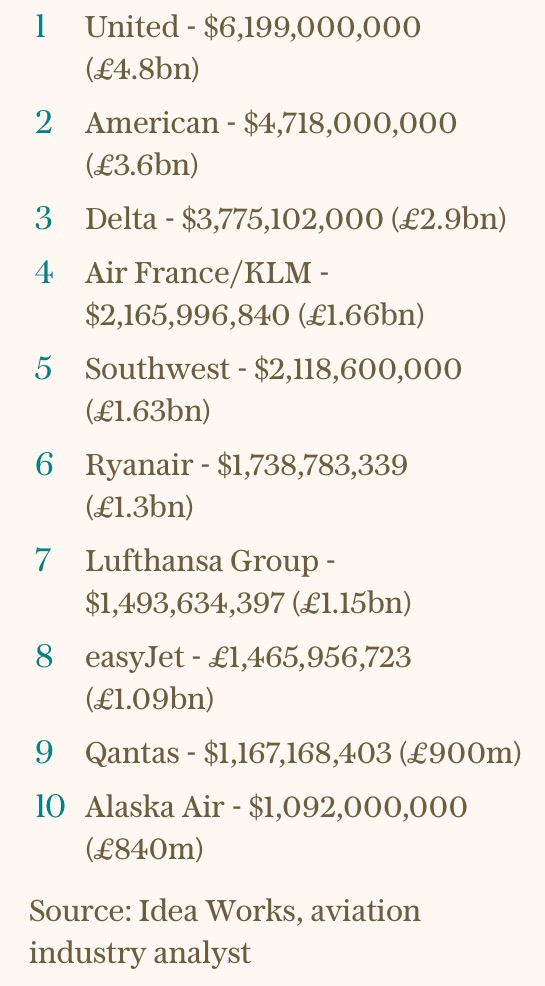
At this point, you’re likely to be muttering things about budget airlines, but they’re not the only offenders.  Increasingly, scheduled, so-called full service airlines are supplementing their fares with extra fees and charges.  And when it comes to revenue “earned” by such add-ons, you might be surprised to learn who the worst offenders are:

Airline charge

Some airlines are worryingly reliant on additional revenue as a share of their total earnings.  You can read the full report here:
http://www.telegraph.co.uk/travel/news/airlines-that-rely-most-on-extra-charges/

So, even on a scheduled airline, if I want to select my seat in advance (and even as a solo traveller I might, or risk being stuck in that middle seat that no one wants) I’m likely to have to pay for the privilege.  At the moment at least, I’m not likely to have to hand over my carry on luggage but who knows how long that might last?

I don’t think we’ve seen the last of this.  As travellers, if we’re determined to do so on as low a budget as possible, we’re going to have to think hard about what we really need to take with us.  I shared my packing tips here:
https://juliamhammond.wordpress.com/2016/02/28/packing-tips-from-someone-who-learnt-the-hard-way-2/

Taking large suitcases will perhaps become a luxury rather than the norm.  It will certainly be interesting to see if Jet2’s new policy lasts the distance, and if it does, whether other airlines will follow suit.

What are your views?  Would you pay to ensure your bag comes on board with you or do you think it’s one rip-off too many?  I’d love to hear what you think.

Photos from Ushguli

During my recent trip to Georgia, I spent a day in the hotch-potch straggle of villages collectively known as Ushguli.

DSC_0001 (2)

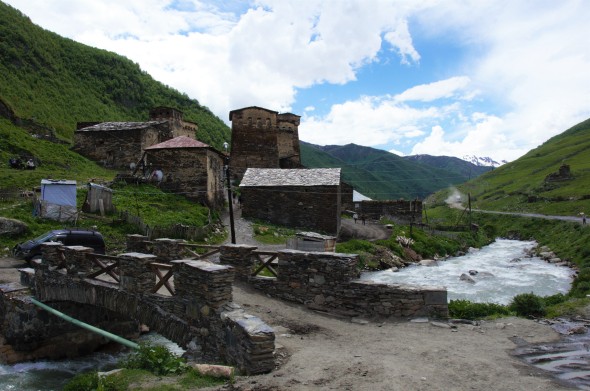
One of the best preserved Svan towers

They’re reached by an apology of a road from Mestia, the main focal point of tourism in Svaneti.  I shared a taxi with a couple of Germans to bounce and slide over gravel, in and out of potholes and scarily close to sections of road which had just fallen away.  The road’s in the process of being rebuilt, so don’t let that put you off.

DSC_0133 (2)

The view is worth the effort

Ushguli translates as “fearless heart” which matches the reputation of the Svans historically being a fearsome people suspicious of incomers.  Five villages form the settlement of Ushguli: Murkmeli which you pass as you go in, Chazhashi where your driver will park, and then higher up Chvibiani, Zhibiani and Lamjurishi, the highest of which claims to be the highest permanently settled village in Europe.  It’s a slightly dubious claim, though, not least because geographers and other experts can’t even decide whether Georgia is European or Asian.  (I’ll save that one for a later blog post.)

So what is it about Ushguli that makes it worth the arduous journey?  Mostly, it’s the setting.  Reached at the dead end of this rural road, all that stretches ahead of you are the few clusters of homes and Svan towers that constitute the villages and then meadows framed by the mountain peaks of the Great Caucasus.  UNESCO have had Chazhashi on their list since 1996.  Part of the attraction is just to find a quiet corner and sit.  There’s also an ethnographic museum in one of the towers which is far more interesting than it sounds.  Honestly.  I’m no great fan of museums but it was good.

FullSizeRender

12th century cross in the ethnographic museum

In Mestia, the person to find is the lady that sells the marshrutka tickets from her agency next to the bakery in the centre of town.  She manages more of the drivers and you’ll wait for less time.  A return ticket in a shared taxi costs 20 lari.  Be prepared to negotiate how long a wait you’ll have in Ushguli with your driver.  Tip: if you wish to spend more than a couple of hours, it’s worth popping into the restaurant he’s likely to have holed up in to make sure he’s not been knocking back too many beers.

Some of my favourite shots from the day:

DSC_0137 (2)

Chazhashi’s riverside setting

DSC_0146 (2)

View from inside the ethnographic museum over Chazhashi

DSC_0009 (2)

Sheepdog guarding the ethnographic museum

DSC_0010 (2)

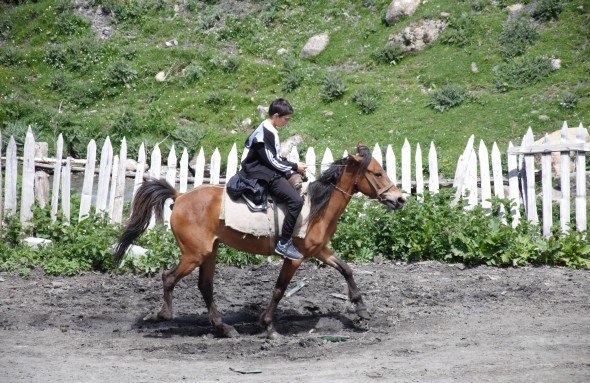
Young tearaway on a lively horse

DSC_0004 (2)

Grandma takes a rest

DSC_0033 (2)

Scratching post

DSC_0011 (2)

Cow under the public toilet

DSC_0066 (2)

Piglets feeding

DSC_0085 (2)

Tower and current occupant!

DSC_0082 (2)

Cow wandering through the village

DSC_0126 (2)

Looking down over Ushguli

DSC_0102 (2)

Monastery dwarfed by mountain

DSC_0105 (2)

Transport home? “You can go faster but I can go everywhere.”

If you’re planning a trip to Georgia – and you should – make sure you don’t miss Svaneti. You can stay in Ushguli and you can even do a three day hike there from Mestia in the short summer season. Or you can do as I did and base yourself in Mestia and visit Ushguli for the day.

Why San Antonio’s my favourite place in Texas

Visitors to San Antonio might be surprised to learn that it’s the seventh largest city in the USA, larger than San Francisco, Las Vegas, Miami and Boston.  This fast-growing city has a population of around 1.5 million.  In Texas, only Houston beats it.  But the best thing about San Antonio is that with such a compact and walkable downtown, it doesn’t feel big – and that’s why I like it.  I’m not alone.  An estimated 32 million visitors flock to San Antonio every year.

Mexican market SA

The Spanish first set foot in San Antonio in 1691, founding a settlement in the early 18th century.  Some of the earliest settlers came from the Canary Islands.  San Antonio became the capital of the Spanish province of Tejas; today it’s still possible to visit the Spanish Governor’s Palace.  Years ago, during my first visit to Argentina, I met a woman from San Antonio and was a little irritated by her insistence on pronouncing Texas as Tay-hass.  Now, I realise that perhaps it was just a pride in her city’s heritage.  You can read the story here:

https://theitin.com/places/south-america/argentina/san-antonio-de-areco/mrs-tay-hass/

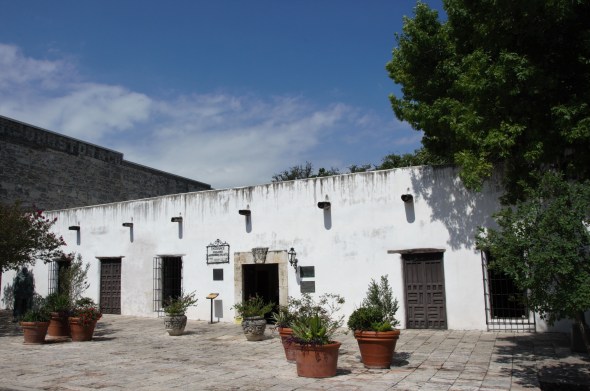
The single storey adobe building that forms the Spanish Governor’s Palace was the original comandancia, the place where the military garrison’s officers lived and worked.  Its whitewashed walls and simple furnishings allow the building to speak for itself; the tranquil courtyard garden is a serene oasis from the modern city which surrounds it.

Museum SA

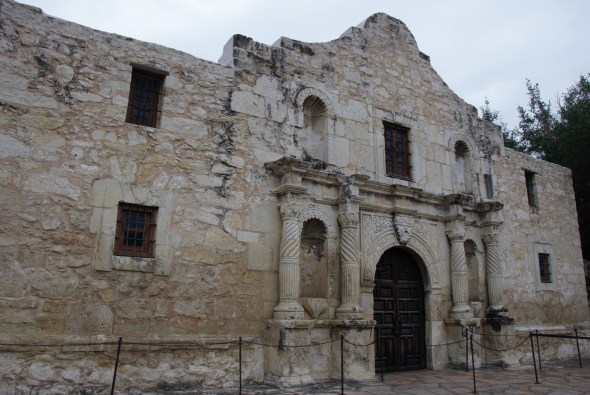
Of course, the most famous historic building in San Antonio is the Alamo and no visit to the city can be complete without a visit to this historic mission.  From 1821 to 1836, the city was the capital of Mexican Tejas, after Mexico had won its independence from Spain in 1821.  But when Antonio López de Santa Anna, later to become the country’s 8th president, abolished the Mexican Constitution of 1824, violence ensued.  The Texian Army, a group of volunteers and regulars, managed to force the Mexicans back, capturing San Antonio in 1835 during the Battle of Bexar.  But in 1836, Santa Anna hit back, marching on San Antonio to defeat the Texian forces who were trying to defend the Alamo.  A memorial stands outside the building, inscribed thus:

Erected in memory of the heroes who sacrificed their lives at the Alamo, March 6, 1836, in the defense of Texas. They chose never to surrender nor retreat; these brave hearts, with flag still proudly waving, perished in the flames of immortality that their high sacrifice might lead to the founding of this Texas.

Alamo 2

“Remember the Alamo!” became the rallying cry of the Texian Army.  Later that year, Santa Anna was defeated and Texas won its independence.  It remained that way until 1845 when it was annexed by the USA with popular approval from the Texians.  Texas was formally incorporated as a state of the USA on February 19, 1846.

A stroll along the city’s River Walk is the most scenic way to reach the cathedral.  This urban waterway, lined with trees and restaurants, is the social heart of San Antonio.  Catastrophic flooding occurred on the San Antonio River in 1921, leading to calls to manage the river as it wound its way through the heart of the city.  Casa Rio was the first restaurant to open in 1946, but I’d recommend you pay a visit to Cafe Ole where you should ask if their server Richard is rostered on – he’s excellent.

The cathedral is well worth a visit.  Also known as the church of Nuestra Señora de la Candelaria y Guadalupe, it was originally built from 1738 to 1750 and some of those original walls still stand.  The current structure largely dates from the 19th century.  Each evening, a sound and light show tells the history of the city, the captivating graphics projected onto the cathedral’s façade and twin towers.

Though it can feel like it at times, the city’s not just the sum of its Mexican heritage.  There’s actually a historic German district known as King William, located within an easy walk of downtown.  In the 1790s, Mission San Antonio de Valero, one of the city’s five missions, sold off land to settlers.  It wasn’t until the 1860s, however, that the district was sectioned off into plots and took on its present day layout.  At that time, it attracted a sizeable population of German immigrants.  The main street was named King Wilhelm 1, after the King of Prussia, though it garnered the derogatory nickname Sauerkraut Bend for a while too.  Its wealthy residents competed to construct the most impressive mansions and a stroll along the street today is as much an exercise in real estate envy as it is regular sightseeing.  A visit to the Edward Steves Homestead Museum affords the opportunity to see how such families might have lived.

There’s plenty more: a rich cultural heritage manifested in a number of excellent art museums and a plethora of shopping plazas including El Mercado, the largest Mexican market in the USA and La Villita, a concentration of arts and crafts stores showcasing some of the area’s finest artisan talent.  And if you wish to get kitted out with your own stetson before continuing your Texan journey, then I’d recommend a visit to this place:

Picture5

Paris Hatters celebrates a century of trading this year.  It’s not much to look at, but the tiny store is packed with boxes stacked almost to the ceiling ensuring that whatever your style choice or your size, there’s something to fit.  Its clientele boast a number of the rich and famous, among them former Presidents Lyndon B. Johnson, George Bush, Dwight Eisenhower and Harry Truman, Pope John Paul II, Matt Damon, Tommy Lee Jones, Bob Hope, Sammy Davis Jnr., Dean Martin, Luciano Pavarotti, B.B. King and Bob Dylan.  You never know, as you look in the mirror, someone you recognise might be right behind you!