juliamhammond

Latest

Everything you need to know about flying

The title’s a bit of an exaggeration – at the very least a work in progress – but I’m in the process of creating an index for my blog posts. Here’s the first instalment. With years of independent travel under my belt there’s a lot of advice I can share about airlines and air travel. From finding business class flights at fares lower than economy to what to do if your flight is cancelled, there’s a blog to help.
sunset-2095225

Tips for saving money on flights
https://juliamhammond.wordpress.com/2014/10/15/nine-tips-to-save-money-on-flights-and-one-to-avoid/
Cabin baggage charges
https://juliamhammond.wordpress.com/2017/07/22/the-increasingly-thorny-issue-of-cabin-baggage/
What to do if you miss your flight
https://juliamhammond.wordpress.com/2016/07/27/what-to-do-if-you-miss-your-flight/
How to travel business class for the price of economy
https://juliamhammond.wordpress.com/2016/07/18/how-to-fly-business-class-for-the-price-of-economy/
Are business class flights really worth the extra?
https://juliamhammond.wordpress.com/2016/06/14/are-business-class-flights-really-worth-the-extra/
How to survive a long haul flight
https://juliamhammond.wordpress.com/2016/05/03/how-to-survive-a-long-haul-flight/
What’s it like to travel long haul on a budget airline?
https://juliamhammond.wordpress.com/2017/01/19/whats-it-like-to-travel-long-haul-on-a-budget-airline/
Thoughts on airports
https://juliamhammond.wordpress.com/2016/05/24/its-almost-time-to-go-to-the-airport/
Transport options from Heathrow to London
https://juliamhammond.wordpress.com/2015/12/07/how-to-get-the-best-out-of-a-heathrow-layover/
How to get the best from a Heathrow layover
https://juliamhammond.wordpress.com/2015/12/09/how-to-get-the-best-out-of-a-heathrow-layover-part-2/
Getting your money back if your flight is cancelled
https://juliamhammond.wordpress.com/2015/03/06/finally-a-win-against-cityjet/

The increasingly thorny issue of cabin baggage

Airline Jet2 are in the news this weekend, with an article in the Daily Mail highlighting their new policy of charging for guaranteed cabin baggage.  You can read the article here:
http://www.dailymail.co.uk/news/article-4719308/Now-airlines-charge-bring-HAND-LUGGAGE.html

the-air-1807486

I was a little suspicious, given the propensity of the Daily Mail to be economical with the truth, so I did some fact checking.  Buried within the Jet2 website, and revealed as far as I could see only after you have reserved flights and are well into the booking process, is the opportunity to pay extra to keep your bag with you:

Subject to availability, you can pre-book “guaranteed cabin baggage” for an extra charge, and if you have purchased this service, you will not be asked to put your hand baggage in the hold (unless it exceeds the weight and size requirements detailed above or operational requirements apply).  If we require your guaranteed cabin baggage to go into the hold for operational requirements, you can contact customer services to arrange a refund for any charges which you have paid for this service.

I tried a sample booking of a flight from Stansted to Dubrovnik.  The cost of ensuring your cabin baggage made it into the cabin with you (subject to those operational requirements not being necessary, of course) was £3 per person per leg, a little more than the £2.59 quoted in the Mail’s article.

travel-1767532

Would you pay it?

I’m not sure I would.  But then I’ve rarely taken a suitcase on board and instead prefer to check it or, better still, leave it behind.  I find it irritating to wait while wheelie after wheelie bangs its way down the aisle, though with airlines charging to put such luggage in the hold, I can hardly blame those doing so.  But this not only slows boarding, it often means that there’s too much luggage to fit.  I’ve taken many a Ryanair flight – the airline guarantees only the first 90 carry on bags will make it on board – and watched it all kick off as people are asked (or not) to hand over their bags.  My fairly small day pack has always made it on board, I presume because it can fit between my feet and wouldn’t have to be placed in the overhead bins.

Wizz Air, it would seem, have had to backtrack on their plans to charge for guaranteed larger sized cabin baggage.  You can take on a bag of up to 42x32x25cm free of charge, but to carry on an item up to the maximum dimensions (55x40x23cm) there’s a price to pay.  Until 29th October 2017, this can be anything from 10 to 20 euros according to the small print on their website (35 euros if you take care of business at the airport), but this add-on disappears after that date, supposedly incorporated into the price of your seat.  Have Wizz caved under the pressure of customer complaints, I wonder?

image

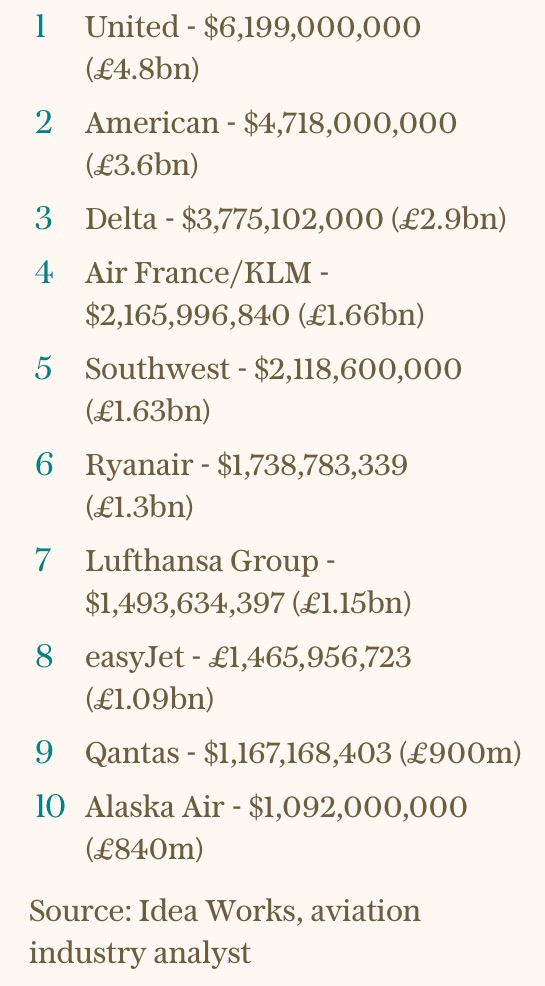
At this point, you’re likely to be muttering things about budget airlines, but they’re not the only offenders.  Increasingly, scheduled, so-called full service airlines are supplementing their fares with extra fees and charges.  And when it comes to revenue “earned” by such add-ons, you might be surprised to learn who the worst offenders are:

Airline charge

Some airlines are worryingly reliant on additional revenue as a share of their total earnings.  You can read the full report here:
http://www.telegraph.co.uk/travel/news/airlines-that-rely-most-on-extra-charges/

So, even on a scheduled airline, if I want to select my seat in advance (and even as a solo traveller I might, or risk being stuck in that middle seat that no one wants) I’m likely to have to pay for the privilege.  At the moment at least, I’m not likely to have to hand over my carry on luggage but who knows how long that might last?

I don’t think we’ve seen the last of this.  As travellers, if we’re determined to do so on as low a budget as possible, we’re going to have to think hard about what we really need to take with us.  I shared my packing tips here:
https://juliamhammond.wordpress.com/2016/02/28/packing-tips-from-someone-who-learnt-the-hard-way-2/

Taking large suitcases will perhaps become a luxury rather than the norm.  It will certainly be interesting to see if Jet2’s new policy lasts the distance, and if it does, whether other airlines will follow suit.

What are your views?  Would you pay to ensure your bag comes on board with you or do you think it’s one rip-off too many?  I’d love to hear what you think.

Photos from Ushguli

During my recent trip to Georgia, I spent a day in the hotch-potch straggle of villages collectively known as Ushguli.

DSC_0001 (2)

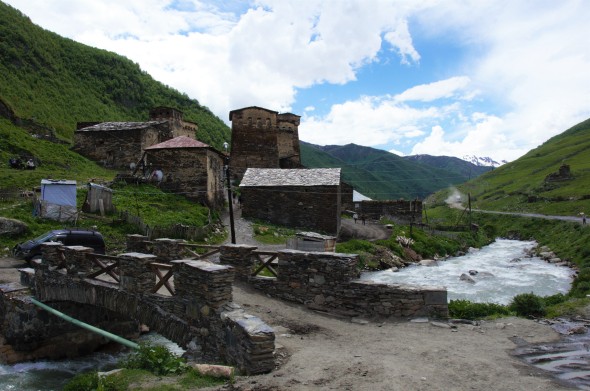
One of the best preserved Svan towers

They’re reached by an apology of a road from Mestia, the main focal point of tourism in Svaneti.  I shared a taxi with a couple of Germans to bounce and slide over gravel, in and out of potholes and scarily close to sections of road which had just fallen away.  The road’s in the process of being rebuilt, so don’t let that put you off.

DSC_0133 (2)

The view is worth the effort

Ushguli translates as “fearless heart” which matches the reputation of the Svans historically being a fearsome people suspicious of incomers.  Five villages form the settlement of Ushguli: Murkmeli which you pass as you go in, Chazhashi where your driver will park, and then higher up Chvibiani, Zhibiani and Lamjurishi, the highest of which claims to be the highest permanently settled village in Europe.  It’s a slightly dubious claim, though, not least because geographers and other experts can’t even decide whether Georgia is European or Asian.  (I’ll save that one for a later blog post.)

So what is it about Ushguli that makes it worth the arduous journey?  Mostly, it’s the setting.  Reached at the dead end of this rural road, all that stretches ahead of you are the few clusters of homes and Svan towers that constitute the villages and then meadows framed by the mountain peaks of the Great Caucasus.  UNESCO have had Chazhashi on their list since 1996.  Part of the attraction is just to find a quiet corner and sit.  There’s also an ethnographic museum in one of the towers which is far more interesting than it sounds.  Honestly.  I’m no great fan of museums but it was good.

FullSizeRender

12th century cross in the ethnographic museum

In Mestia, the person to find is the lady that sells the marshrutka tickets from her agency next to the bakery in the centre of town.  She manages more of the drivers and you’ll wait for less time.  A return ticket in a shared taxi costs 20 lari.  Be prepared to negotiate how long a wait you’ll have in Ushguli with your driver.  Tip: if you wish to spend more than a couple of hours, it’s worth popping into the restaurant he’s likely to have holed up in to make sure he’s not been knocking back too many beers.

Some of my favourite shots from the day:

DSC_0137 (2)

Chazhashi’s riverside setting

DSC_0146 (2)

View from inside the ethnographic museum over Chazhashi

DSC_0009 (2)

Sheepdog guarding the ethnographic museum

DSC_0010 (2)

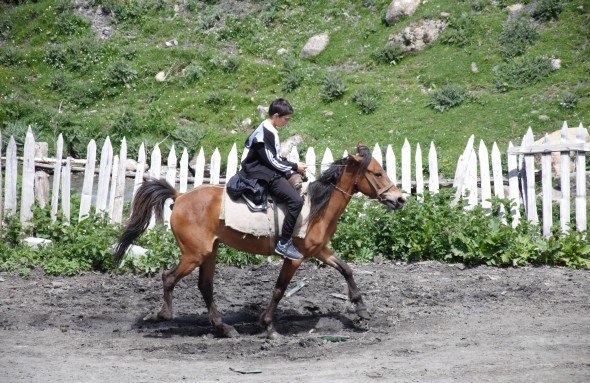
Young tearaway on a lively horse

DSC_0004 (2)

Grandma takes a rest

DSC_0033 (2)

Scratching post

DSC_0011 (2)

Cow under the public toilet

DSC_0066 (2)

Piglets feeding

DSC_0085 (2)

Tower and current occupant!

DSC_0082 (2)

Cow wandering through the village

DSC_0126 (2)

Looking down over Ushguli

DSC_0102 (2)

Monastery dwarfed by mountain

DSC_0105 (2)

Transport home? “You can go faster but I can go everywhere.”

If you’re planning a trip to Georgia – and you should – make sure you don’t miss Svaneti. You can stay in Ushguli and you can even do a three day hike there from Mestia in the short summer season. Or you can do as I did and base yourself in Mestia and visit Ushguli for the day.

Why San Antonio’s my favourite place in Texas

Visitors to San Antonio might be surprised to learn that it’s the seventh largest city in the USA, larger than San Francisco, Las Vegas, Miami and Boston.  This fast-growing city has a population of around 1.5 million.  In Texas, only Houston beats it.  But the best thing about San Antonio is that with such a compact and walkable downtown, it doesn’t feel big – and that’s why I like it.  I’m not alone.  An estimated 32 million visitors flock to San Antonio every year.

Mexican market SA

The Spanish first set foot in San Antonio in 1691, founding a settlement in the early 18th century.  Some of the earliest settlers came from the Canary Islands.  San Antonio became the capital of the Spanish province of Tejas; today it’s still possible to visit the Spanish Governor’s Palace.  Years ago, during my first visit to Argentina, I met a woman from San Antonio and was a little irritated by her insistence on pronouncing Texas as Tay-hass.  Now, I realise that perhaps it was just a pride in her city’s heritage.  You can read the story here:

https://theitin.com/places/south-america/argentina/san-antonio-de-areco/mrs-tay-hass/

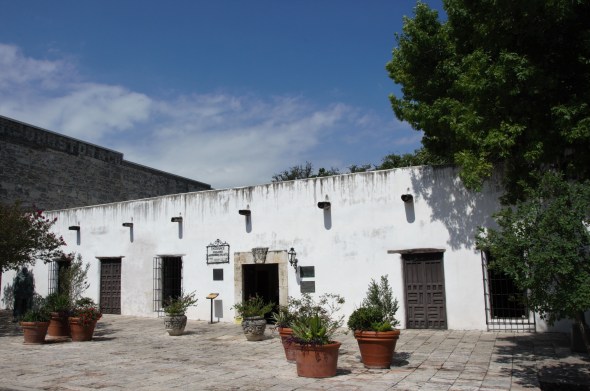
The single storey adobe building that forms the Spanish Governor’s Palace was the original comandancia, the place where the military garrison’s officers lived and worked.  Its whitewashed walls and simple furnishings allow the building to speak for itself; the tranquil courtyard garden is a serene oasis from the modern city which surrounds it.

Museum SA

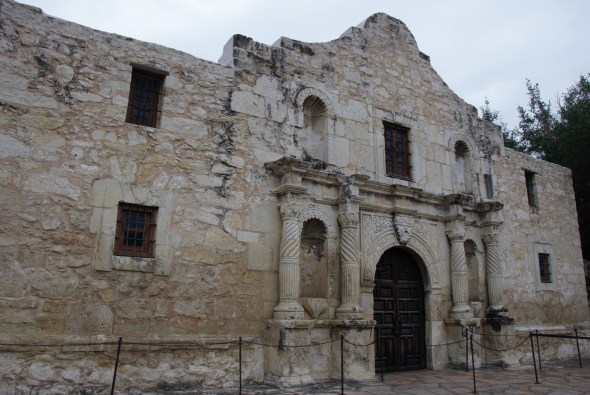
Of course, the most famous historic building in San Antonio is the Alamo and no visit to the city can be complete without a visit to this historic mission.  From 1821 to 1836, the city was the capital of Mexican Tejas, after Mexico had won its independence from Spain in 1821.  But when Antonio López de Santa Anna, later to become the country’s 8th president, abolished the Mexican Constitution of 1824, violence ensued.  The Texian Army, a group of volunteers and regulars, managed to force the Mexicans back, capturing San Antonio in 1835 during the Battle of Bexar.  But in 1836, Santa Anna hit back, marching on San Antonio to defeat the Texian forces who were trying to defend the Alamo.  A memorial stands outside the building, inscribed thus:

Erected in memory of the heroes who sacrificed their lives at the Alamo, March 6, 1836, in the defense of Texas. They chose never to surrender nor retreat; these brave hearts, with flag still proudly waving, perished in the flames of immortality that their high sacrifice might lead to the founding of this Texas.

Alamo 2

“Remember the Alamo!” became the rallying cry of the Texian Army.  Later that year, Santa Anna was defeated and Texas won its independence.  It remained that way until 1845 when it was annexed by the USA with popular approval from the Texians.  Texas was formally incorporated as a state of the USA on February 19, 1846.

A stroll along the city’s River Walk is the most scenic way to reach the cathedral.  This urban waterway, lined with trees and restaurants, is the social heart of San Antonio.  Catastrophic flooding occurred on the San Antonio River in 1921, leading to calls to manage the river as it wound its way through the heart of the city.  Casa Rio was the first restaurant to open in 1946, but I’d recommend you pay a visit to Cafe Ole where you should ask if their server Richard is rostered on – he’s excellent.

The cathedral is well worth a visit.  Also known as the church of Nuestra Señora de la Candelaria y Guadalupe, it was originally built from 1738 to 1750 and some of those original walls still stand.  The current structure largely dates from the 19th century.  Each evening, a sound and light show tells the history of the city, the captivating graphics projected onto the cathedral’s façade and twin towers.

Though it can feel like it at times, the city’s not just the sum of its Mexican heritage.  There’s actually a historic German district known as King William, located within an easy walk of downtown.  In the 1790s, Mission San Antonio de Valero, one of the city’s five missions, sold off land to settlers.  It wasn’t until the 1860s, however, that the district was sectioned off into plots and took on its present day layout.  At that time, it attracted a sizeable population of German immigrants.  The main street was named King Wilhelm 1, after the King of Prussia, though it garnered the derogatory nickname Sauerkraut Bend for a while too.  Its wealthy residents competed to construct the most impressive mansions and a stroll along the street today is as much an exercise in real estate envy as it is regular sightseeing.  A visit to the Edward Steves Homestead Museum affords the opportunity to see how such families might have lived.

There’s plenty more: a rich cultural heritage manifested in a number of excellent art museums and a plethora of shopping plazas including El Mercado, the largest Mexican market in the USA and La Villita, a concentration of arts and crafts stores showcasing some of the area’s finest artisan talent.  And if you wish to get kitted out with your own stetson before continuing your Texan journey, then I’d recommend a visit to this place:

Picture5

Paris Hatters celebrates a century of trading this year.  It’s not much to look at, but the tiny store is packed with boxes stacked almost to the ceiling ensuring that whatever your style choice or your size, there’s something to fit.  Its clientele boast a number of the rich and famous, among them former Presidents Lyndon B. Johnson, George Bush, Dwight Eisenhower and Harry Truman, Pope John Paul II, Matt Damon, Tommy Lee Jones, Bob Hope, Sammy Davis Jnr., Dean Martin, Luciano Pavarotti, B.B. King and Bob Dylan.  You never know, as you look in the mirror, someone you recognise might be right behind you!

Why you should visit the Armenia Genocide Museum and Memorial

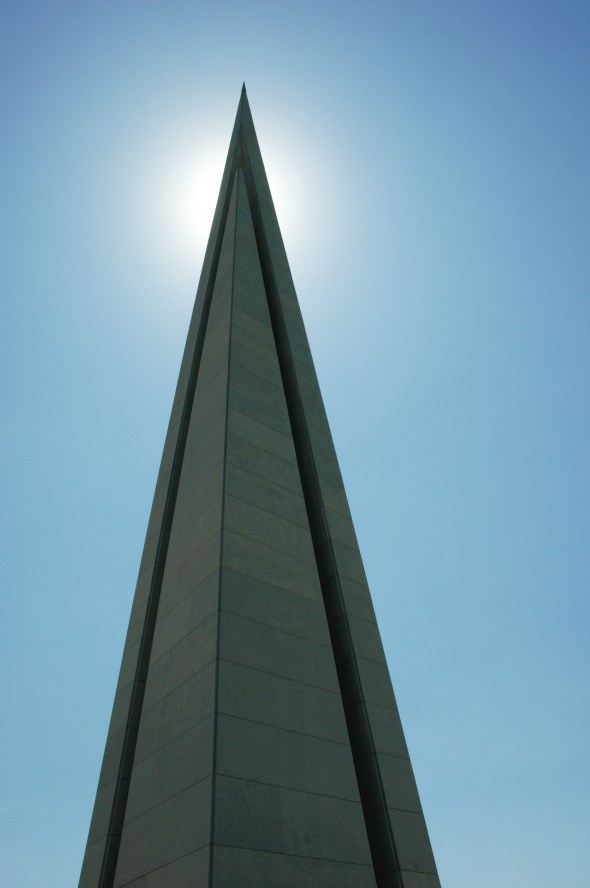
On Tsitsernakaberd Hill, overlooking the city of Yerevan, you’ll find a pilgrimage site dedicated to the 1.5 million victims of the Armenian Genocide.  Their harrowing story cannot fail to move you, as it did me.

DSC_0352 (2)

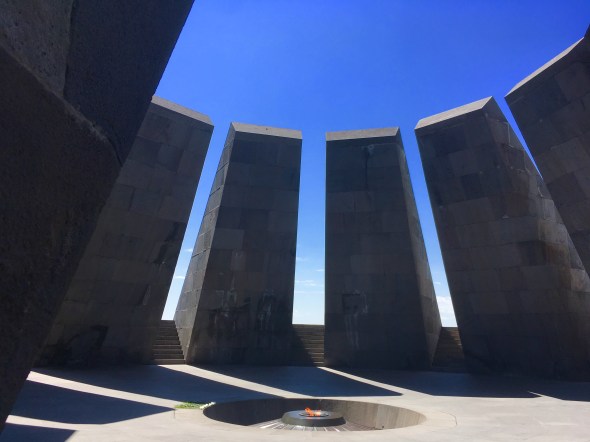
I sit, alone. The music haunts every inch of stone and every speck of dust. The sound of violins, melancholic yet soothing, permeates the soul. I feel it. It seeps into my heart and as I focus on the flickering flame, I raise a hand to my cheek, wiping a persistent tear. A few sorry bunches of carnations have wilted where they were placed. Tall slabs of basalt crush the sunlight. The sky is obstinately blue but in here, inside the stone circle, it’s a place of shadows and ghosts. I’m shocked at the strength of my feelings. Until yesterday, I hadn’t been aware an Armenian genocide had taken place. And I’m ashamed of that.
Arm 1

A cleaner arrives with her broom and sweeps, rhythmically, until my attention is forced out of its sad reverie. She busies herself collecting dead blooms and rearranging those that will stay. A young man follows her with a camera, framing and reframing his shots. He clicks repeatedly but then he too is still. A family of five arrive, speaking Armenian, and pose in endless configurations for snapshots beside the flame. The emotion I felt is lost and I glance at my watch. The museum is open. I head inside.
DSC_0368 (2)

I read, missing nothing, trying to make sense of what happened. In the late 19th century, Armenia was a divided country. The Persians had ceded territories to the Russians, who occupied what was then known as Eastern Armenia. Strategically important Western Armenia had fallen to the Ottomans in 1555 and over four centuries later, they retained control. War between the Russian and Ottoman Empires had torn Armenia apart. Armenians living under Turkish rule looked to the Russians for protection but though the 1878 Treaty of Berlin set out basic rights for Armenians they were not honoured. Amidst growing calls for independence, Sultan Abdul Hamid, the leader of the Ottoman Empire, tightened his grip on the dissenters. Words were banned: Armenia, rights, freedom.

To ban the word freedom is an alien concept.  From my privileged life in a stable democracy, how could I understand?

Compelled, I read on. In 1895, 300,000 protesters were massacred in Constantinople in an attempt by Hamid to shut down the Armenian Question for good. It didn’t work. Nine years later, there was another uprising. The stability of the Ottoman Empire was under threat. In 1908, a political party called the Young Turks seized power. Their policy of the “salvation of the Turkish homeland” could only be achieved, they held, by the liquidation of the Christian population. Under their watch, anti-Armenian atrocities continued unpunished. A further 30,000 were killed in a market in Adana in 1909. Their treatment was horrific. Many were set alight or stabbed repeatedly. The backs of children’s legs were gored with cotton hooks leaving gaping holes. A series of photographs documented the horror.

Arm 2

I’m struck by the eyes.  They stare, vacantly, yet implore those watching to act. But it’s too late. I’m a century too late.

World War One was to provide cover for the vilest act of all. A secret treaty was signed, allying the Ottomans with the Germans. Needing the support of its largely Islamic population to survive, the Turks proclaimed Jihad in an attempt to demonstrate their religious credentials. In October 1914, 60,000 Armenians were called up to fight, joining others already conscripted. They fought, bravely, at Sarikamish on the Caucasian Front under Enver Pasha, but were no match for the wintry conditions. The Ottomans suffered huge losses and 70,000 lost their lives. A scapegoat was required. The Armenians were that scapegoat. Soldiers who had fought alongside Pasha were killed on his orders. Afterwards, the Young Turks turned their attention to civilians, murdering politicians, clergy, intellectuals and other eminent Armenians. Mass arrests followed, in Western Armenia and Constantinople.

The Armenian family I saw at the memorial see that I’m making notes. It’s diaspora season and they’re from LA, bringing their children to the home of their ancestors for the first time. They ask if I’m a writer and if I’m going to write about this. I promise them I will, emotion choking my words. The mother hugs me, an unspoken thank you.

Unarmed Armenians in Ottoman territory were rounded up to be sent to the deserts of Mesopotamia and Syria, their property looted as they left. Men were separated and stabbed. Women, children and the elderly were spared, but instead driven south. On the way, their police and army escorts stood by and did nothing as bands of Kurds and Turks kidnapped and murdered the helpless. Those who did complete the journey ended up in concentration camps. In Rakka, Bab, Deir Ez-Zor, Ras Ul-Ain and Meskene, 600,000 endured horrendous atrocities. They were subjected to medical experiments, pregnant women were used for target practice, bare feet were shod as if they were horses’ hooves, children were burned alive or dragged behind horses until they died from their injuries. Rape was common. An estimated 600,000 lost their lives.

Arm 3

It’s hard to reconcile what I’m reading with the gentle and welcoming Turks I’ve met on my travels. I’m shocked to find I’m upset, not because I think it’s not worth getting upset about, but because at Auschwitz and Bergen-Belsen and Dachau, I haven’t been. Sobered, desperately sad, but not upset like this. The tragedy that befell the Armenians feels worse, somehow, because I wasn’t aware it had happened. I feel that in some way that means I’ve betrayed them.

On May 24 1915 France, Britain and Russia issued a joint statement condemning and declaring the Turkish government responsible for a “crime against humanity and civilisation”. After the war, the Young Turks were brought to trial. The key perpetrators – Mehmed Talat, Ismail Enver and Ahmed Djemal – were brought to justice and punished for what they’d done. Yet today, the mass extermination of Armenians isn’t acknowledged by all countries. Britain views what happened as a war crime and doesn’t recognise it as genocide.

DSC_0373 (2)

I climb, slowly, from the bowels of the museum back up into the sunshine of the plaza, legs and heart heavy. Another tear escapes from my eye but this time, I let it fall.

Practical matters

To visit the Armenian Genocide Museum and Memorial it’s easiest to take a taxi.  From Republic Square I paid 700 drams, just over £1.  The museum is free to enter.  Leaving, the unofficial taxis in the car park were asking for 2000 drams for the same ride.  I walked down the hill and across the footbridge to the Dalma Garden Mall, from where I caught the #27 marshrutka back to Mashtots Avenue for a 100 dram fare.  The bus stops right outside the Blue Mosque, also worth a visit.

http://www.genocide-museum.am