
How to get the best out of a Heathrow layover (Part 2)
In my first blog on Heathrow layovers, I dealt with how you should go about getting into Central London.
Depending on how much time you have, there’s lots to do between flights – it’s London, after all – and you won’t be encumbered by heavy bags. If you have something in mind but aren’t sure if it’s feasible, and it’s not featured here, drop me a line via Facebook (Julia Hammond Travel Writing) and I’ll give you some ideas. Note: the time available is measured from when you emerge landside after landing to when you need to be back at the airport for your next flight. Allow at least 60 minutes to get through security and to your gate; you don’t want to miss that onward flight!
Time available 4 hours: NOTTING HILL
You’ll need to keep a close eye on your time with this amount of time. With this short a layover, you need to restrict yourself to the west of the capital.

Portobello Road Market
My suggestion is a quick visit to Notting Hill, a vibrant neighbourhood where Julia Roberts once filmed, Jimi Hendrix died and The Clash called home. Take the District or Circle lines two stops from Paddington to Notting Hill Gate and walk via Portobello Road, where you’ll find the famous market (stalls can be found in the area most days but it’s best to visit on Friday or Saturday) and there are some great eateries including the Hummingbird Bakery. If you have time, the excellent Museum of Brands on Lancaster Road is worth a stop.
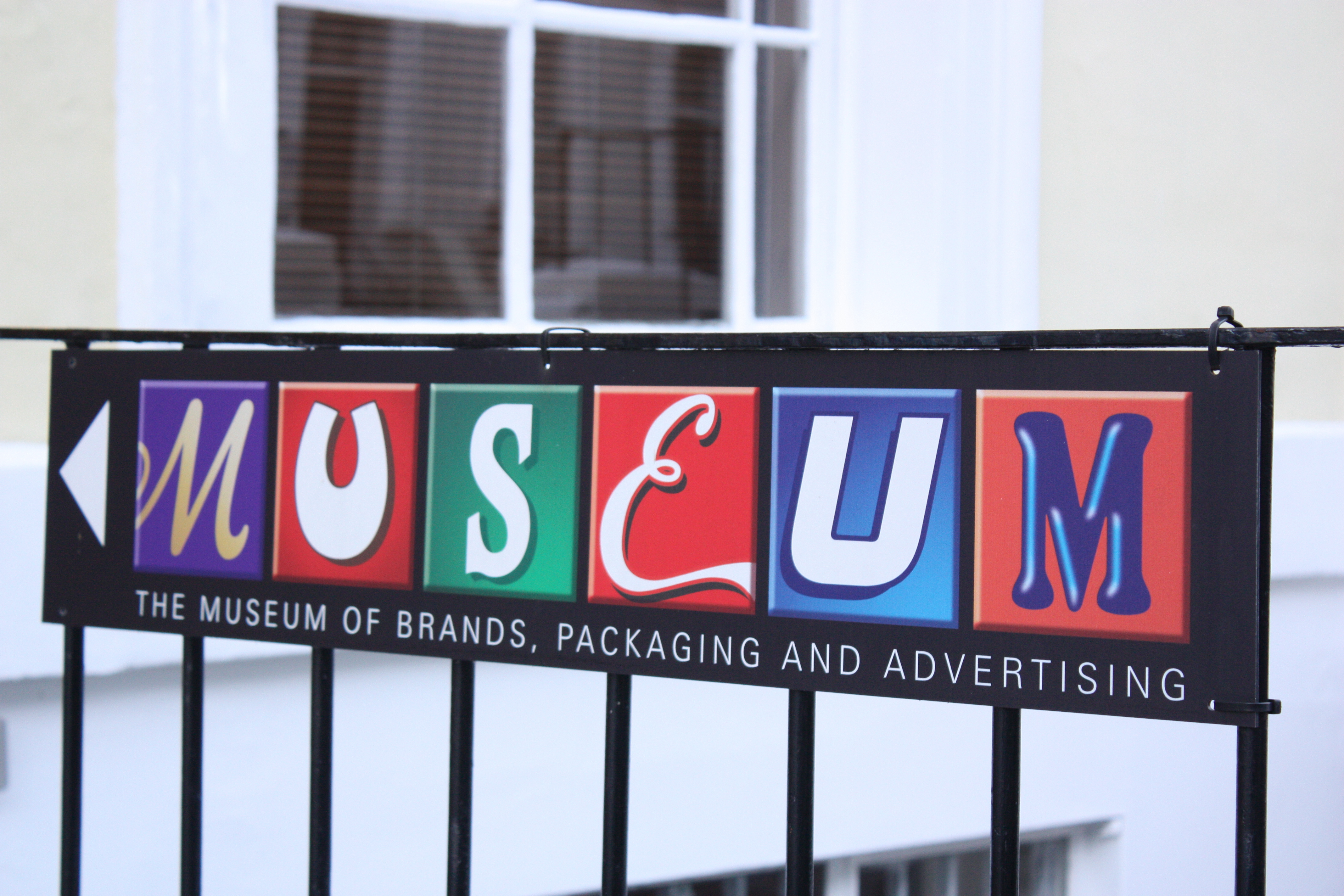
The Museum of Brands, Packaging and Advertising
When you’re done, there’s no need to walk back to Notting Hill Gate. Head back to Paddington from Ladbroke Grove tube station via the Circle or Hammersmith & City lines.
Time available 5 hours: MARYLEBONE
Marylebone, a neighbourhood squeezed between the West End’s shopping streets and beautiful Regent’s Park, is fast becoming the fashionable place to be seen in London. With an extra hour for your layover, you should have time to pay a visit to Sherlock Holmes at 221B Baker Street. Located between 237 and 241 Baker Street, it’s just a three minute walk from Baker Street Tube, linked to Paddington via the Bakerloo Line.

The Sherlock Holmes Museum
You’ll most likely see a policeman in a cape on the door, but be warned there’s often a queue to get in. It’s open from 9.30am to 6pm. Walk north from the museum and it’s only a few minutes to London’s beautiful Regent’s Park. With its elegant Georgian mansions framing the park and a mixture of manicured lawns and open space, this is one of the capital’s most beloved green lungs.

Regent’s Park
Cross over York Bridge, keeping an eye out for the herons sometimes seen here, and skirt the southern part of the park. When you’re ready to leave, use Regent’s Park station, one stop along from Baker Street on the Bakerloo Line. From there, it’s four stops back to Paddington or, if you have time, one stop down to Oxford Circus, still London’s main shopping artery and home to Selfridges & Co. department store, west of the tube station just past Bond Street. Alternatively, Marylebone High Street and its neighbouring streets have plenty to offer in terms of quirky boutiques and historic landmarks.
Time available 6 hours or more: HAMPSTEAD
With longer between flights, the whole of London is at your fingertips, so why not try somewhere that’s a bit off the beaten tourist track? Hampstead requires a change of Tube trains but is well worth the effort; take the Hammersmith & City or Circle Line as far as Kings Cross or the Bakerloo Line to Embankment, and then change to the Edgware Road branch of the Northern Line to travel to Hampstead station. Total journey time is about 35 minutes, so don’t be put off.

Hampstead “village”, packed with grand mansions and town houses
Hampstead feels more like a village in parts, but with phenomenal views from its vantage points across London, you can tick off the capital’s landmarks all at once. Try the view from Holly Mount, just down the road from the excellent Holly Bush pub or continue up to the Heath.
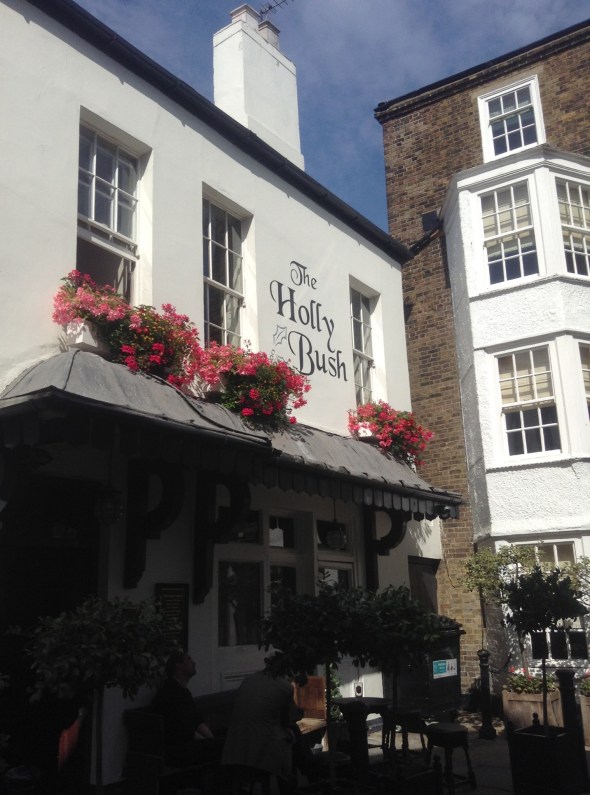
The charming Holly Bush pub
Hampstead Heath is well worth the trek up the hill. Walking across this huge open space will make you forget you’re in one of the world’s largest cities and help you realise why it’s also one of the world’s most liveable cities. On your way, take a detour along Hampstead Grove and you’ll pass a small observatory run by the Hampstead Scientific Society. Inside is a 6″ Cooke refracting telescope dating from the turn of the 20th Century.
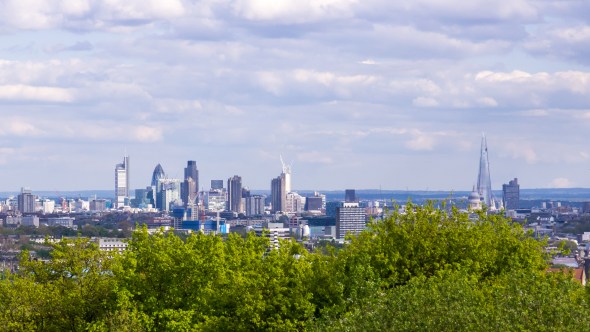
View of London from Parliament Hill, Hampstead Heath by Ed Webster via Flickr CC BY 2.0
On your way back to the High Street, stop to take a look at the house once inhabited by Ernő Goldfinger of Trellick Tower fame, who lived at Number 2 Willow Road. Local resident Ian Fleming, creator of James Bond, hated the modernist structure and allegedly took his revenge by naming one of his Bond villains after the man responsible for the eyesore.
Of course, if you don’t fancy Notting Hill, or Marylebone, or Hampstead, then there’s always St Paul’s Cathedral, Buckingham Palace or Big Ben. One short layover just isn’t going to be enough, of course, but these ideas surely beat staying in an airport lounge drinking coffee and browsing duty free shops.
And if you are tempted to come back, then why not try my Unanchor guide to London’s Villages, which consists of three day-long walking tours, one in each of the three locations featured above. Packed with ideas and information, it’s available on Amazon as well as direct from Unanchor.com and can be downloaded as a PDF or straight to your Kindle. Here are the links:
How to get the best out of a Heathrow layover (Part 1)
Flying via Heathrow? There’s no need to stay at the airport. Instead, take a trip into London and have a taste of what the British capital has to offer.
Part One: Getting to Central London

Notting Hill is comfortably doable on a layover
Take the train. Don’t be tempted with taxi or bus transfers; London’s traffic is too unreliable for you to risk wasting valuable layover time stuck in traffic. Instead, you have several options.
Most expensive, but fast, is the Heathrow Express. It takes 15 minutes to get from LHR to London Paddington station, from where you’re well connected by Tube to the centre and its attractions. Machines (and conductors) accept cash as well as credit and debit cards, but you’ll save a lot if you don’t use it.

Heathrow Express ticket machines

Heathrow Express Second Class
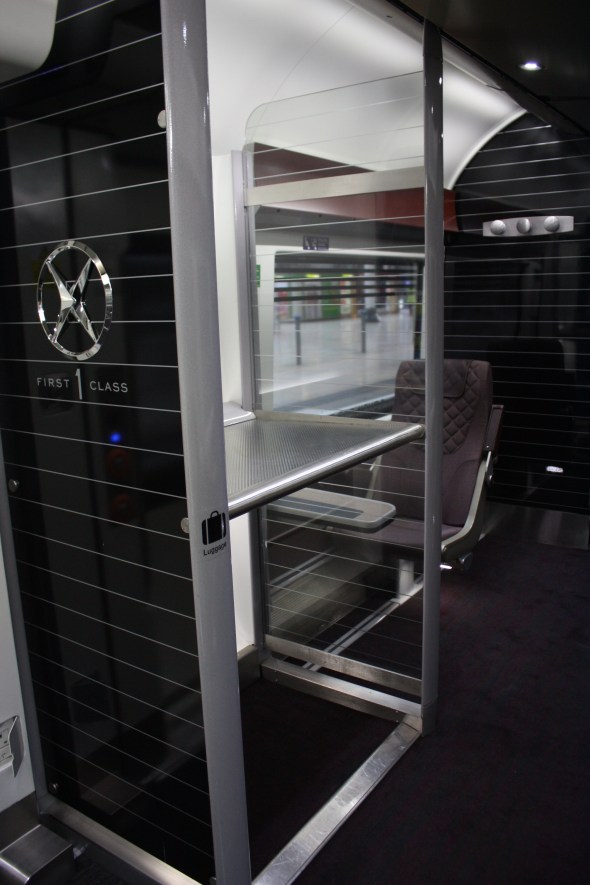
Heathrow Express First Class
However, there’s now a better way, which is almost as fast (quickest journey time to Paddington is 24 minutes) but significantly cheaper. The Elizabeth Line crosses London. Along the way it handily links Heathrow with key central London stations such as Paddington, Bond Street, Tottenham Court Road and Liverpool Street.
Cheaper still is the Tube, but it stops more frequently so your journey will take longer. The Piccadilly line connects Heathrow to popular tourist destinations such as Piccadilly Circus, Covent Garden, Hyde Park and Leicester Square. Journey times can feel tediously slow as the numerous stations aren’t far apart, but on average you’re looking at around 45 to 50 minutes to get into Central London. Fares vary according to the time of day and whether you have an Oyster card/tap in and out with a credit or debit card.
Useful links
Heathrow Express: https://www.heathrowexpress.com/
London Underground including information about the Elizabeth Line: https://tfl.gov.uk/
Tube and rail map: https://tfl.gov.uk/maps/track
Fares: https://tfl.gov.uk/campaign/new-fares
Heathrow transport information: http://www.heathrow.com/transport-and-directions#
For some well-known and more unusual suggestions for what to do once you’ve reached Central London, read my next blog: https://juliamhammond.wordpress.com/2015/12/09/how-to-get-the-best-out-of-a-heathrow-layover-part-2/
How to save money on your N’Awlins vacation
New Orleans, pronounced N’Awlins by the locals, was tagged the Big Easy by gossip columnist Betty Guillaud in the 1970s. As that nickname suggests, it’s a laid back city, easy going and, in my opinion, the best place in the States to let your hair down and enjoy yourself. But to do that, you’ll need money, so rather than waste it on the boring aspects of your holiday spending, here’s how to make some cuts that won’t spoil your fun – and will allow you to divert your cash into things that will make your vacation memorable.
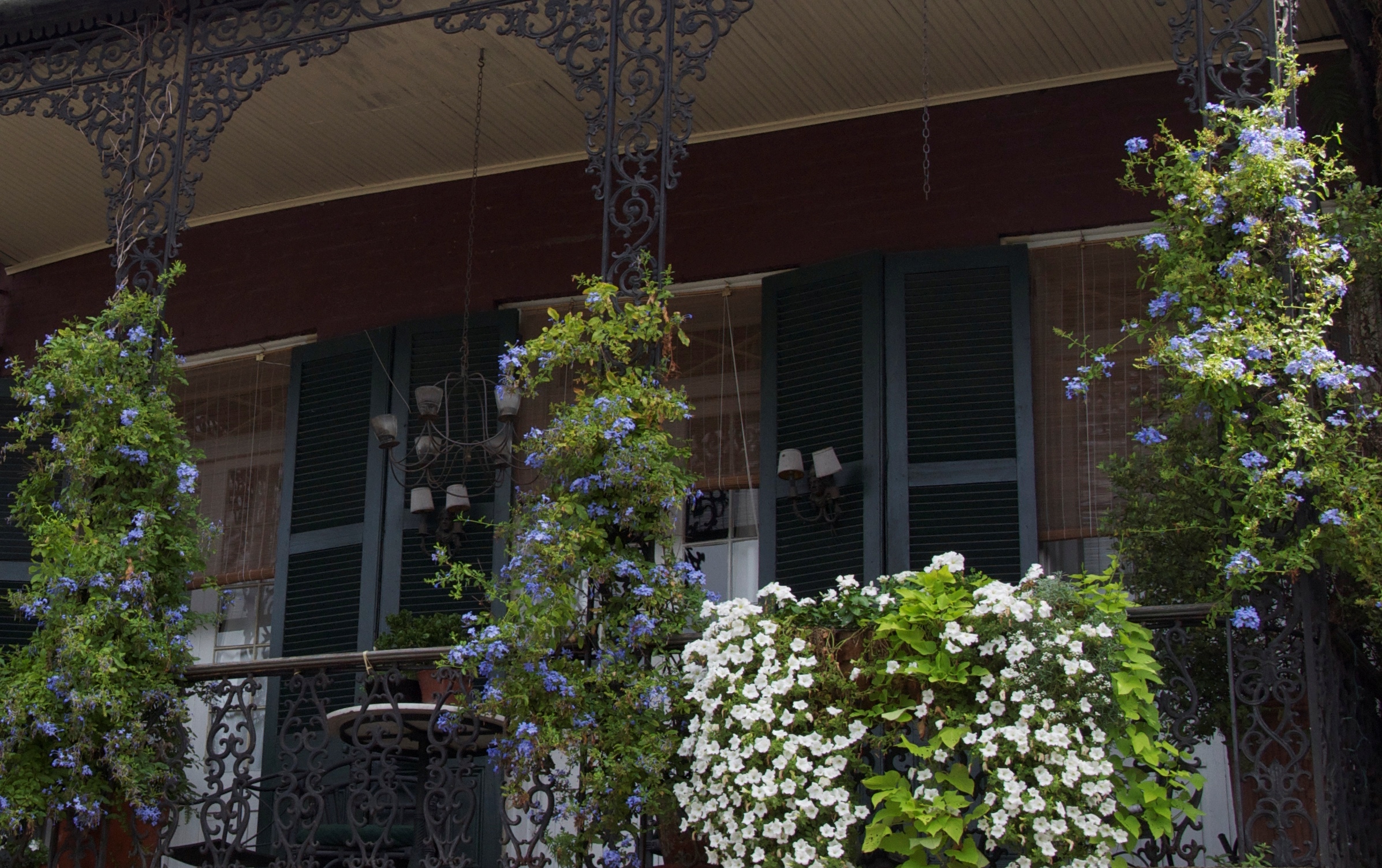
One of the French Quarter’s ornate balconies
Ditch the car
Forget what you’ve heard about needing a car in the USA, in the Big Easy it’ll just make things more difficult. Parking is hard to find, can be expensive and being towed if you get it wrong will really put a downer on your vacation. If you’re arriving by plane, then from the airport to the heart of the city, you have three options. First, a taxi – it’s a fixed rate of $33 for one or two people, with an additional charge for more than two. It’s convenient, and if you time your visit for hot and sultry summer, then it’s the coolest option too. Second, a shuttle – for $20, you can take a shared shuttle; they go round the houses, but it’s a saving if there’s one of you. Third, and cheapest of all, take the E2 bus for $2 (yes, you read that right, a saving of $31 on the cost of a taxi) to get right to the heart of downtown. From the centrally located Amtrak rail station, tram 49 gets you right into Canal Street for a budget-busting $1.25, with transfer to other trams or city buses for an additional $0.25.

Riverfront tram
Getting around
Much of the tourist area of New Orleans – think French Quarter, Faubourg Marigny and Downtown – is easily walkable. To get further afield, buy a $3 day pass for the city’s buses and trams and hop on and off to your heart’s content. Ride the green line to City Park, for the Botanical Gardens and Bayou Saint John, the historic St Charles Avenue tram for the beautiful mansions of the Garden District or the Riverfront tram for the eclectic shopping and ice cream daiquiris of the French Market. Check http://www.norta.com/ for current schedules.

Free self-guided walks around the Garden District are easy to find online
Choose your tours carefully
While much of New Orleans can be visited independently, for some things a tour is compulsory. Since Marie Laveau’s tomb at St Louis Cemetery #1 was spray-painted pink and smashed up with a baseball bat last year, visiting on your own has been impossible. To make sure your tour money does some good, and for a reasonably priced tour, try Save our Cemeteries http://www.saveourcemeteries.org/. The organisation works tirelessly to restore, repair and educate. Other cemeteries can be visited for nothing, including the atmospheric Lafayette cemetery in the Garden District. An excellent self-guided walk can be found at http://www.scsh.com/pdfs/Garden-Dist-tour-2.pdf

Lafayette cemetery
Taking a carriage ride around the French Quarter is a great way to get your bearings, but can be expensive. Rather than taking a private trip, opt for a place on a larger shared carriage, which costs $18 for a half hour tour compared to the $90 for up to four people if you don’t want to share.

Shared carriage around the French Quarter
If you want to get out on the river, the steamboat Natchez makes regular trips on the Mississippi several times a day. Eschew the expensive dinner cruise which costs a whopping $46 even without food ($77 with dinner) and board in the afternoon when cruises are better value at $29.50. You’ll still get all that jazz!
Look for coupons
Most hotel foyers have a stack of leaflets about nearby attractions and many of them include money-off vouchers. The free map given out across the city also has a few – I saved a couple of bucks off the $19.95 entrance fee at the excellent Mardi Gras World by ripping off a corner. The savings will soon add up.

Last year’s float being recycled at Mardi Gras World
See a band for free
Forget Bourbon Street, the action’s moved to Frenchmen Street where you’ll find a whole lot of great music for the price of a drink. While some clubs apply a nominal cover charge, many offer free entertainment. Try The Maison, where you can listen to a band while chowing down on tasty shrimp and grits. If you’re not too bothered about alcohol, ordering a soda gets you free refills.

Free music is easy to find throughout the French Quarter and Faubourg Marigny
Save money on drinks
A trip to N’Awlins wouldn’t really be complete without at least one cocktail but the cost of drinks in bars and restaurants will soon mount up. Take advantage of the city’s laid back attitude to drinking and get one to go from the Gazebo Café at French Market. Takeaway ice cream daiquiris, a speciality, cost $7.75, a saving of between two and four dollars off a typical indoor price. Carrying out a “to-go” cup is completely legal, though make sure it has a lid, and don’t get too intoxicated or you’ll fall foul of the authorities.
Got any tips of your own? I’d love it if you posted in my comments section!
Latest blogs for Go4Travel
Regular readers will know that I blog regularly for Go4Travel, usually about New Zealand. Every now and then, I persuade the editors to let me blog about other amazing destinations and they couldn’t resist when I pitched Chile. My overview guides to Easter Island, San Pedro de Atacama and Torres del Paine National Park are essential reading if you’re thinking of heading there yourself. Take a look here:
http://www.go4travelblog.com/author/juliahammond/
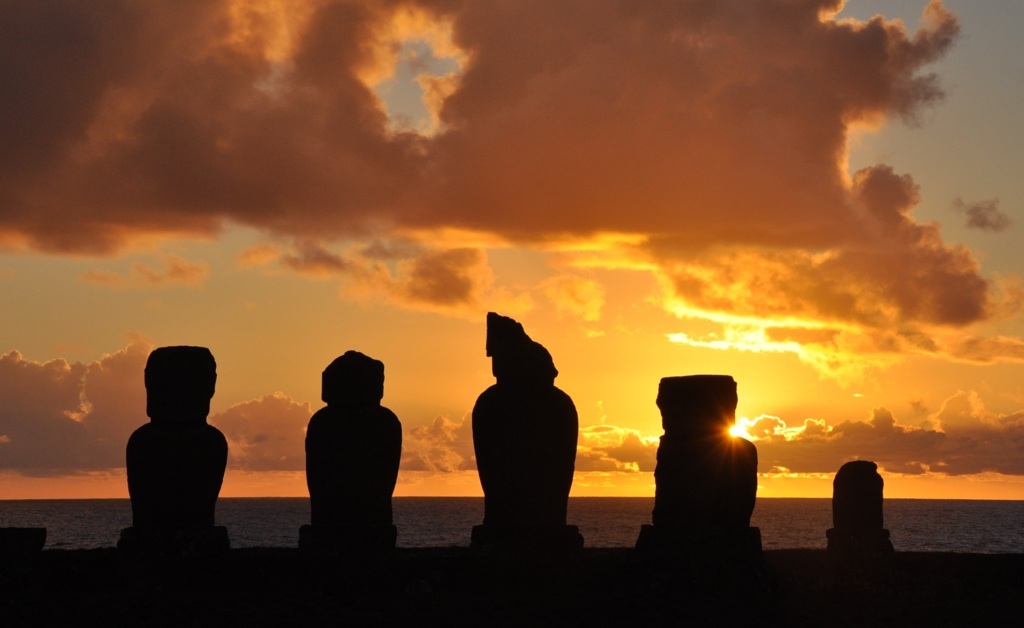
Sunset at Ahu Vai Uri, Tahai, Easter Island
Finally, a win against CityJet
Last July, I flew in to Paris from Lima, Peru with Air France to connect with a CityJet flight back to London City Airport. I checked in as normal at Orly airport on 4 July and made my way airside.
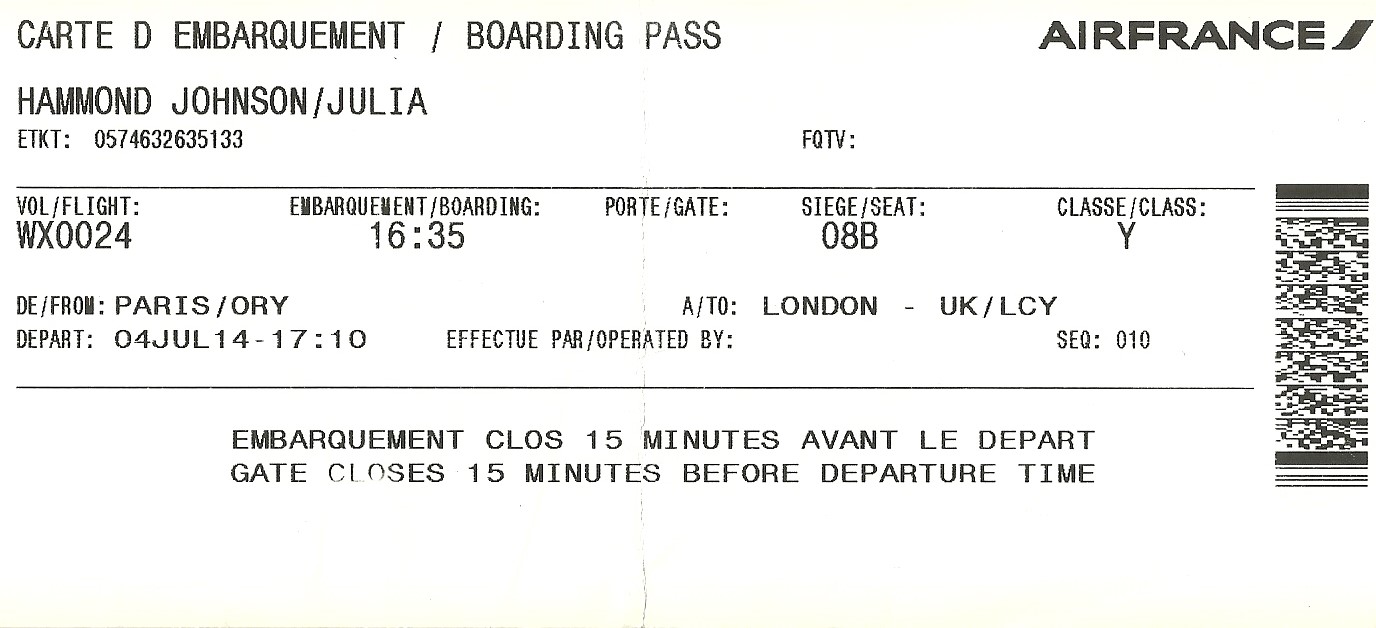
At check-in there was no indication anything was wrong
Noting that the information board didn’t yet have a gate number, I took a seat and read a magazine. After a while, I thought it would be wise to check if the flight had been allocated a gate and was puzzled to see that fifteen minutes before the scheduled take-off slot, the flight had disappeared from the screens. There were no CityJet ground staff around and after asking a few airport employees, I decided to go back landside to find out what was going on.
At the check-in desk, I managed to find out that the flight had been cancelled “for technical reasons”. I was told that there was no way I’d be able to get back to London that evening as the Heathrow and City flights were all full. The CityJet employee was apologetic but when asked for a solution, gave a Gallic shrug and basically told me there was none. A couple of businessmen in the same predicament joined me and received the same treatment. Eventually, a supervisor was called who repeated that there was “no solution”. Eventually, after some heated debate, he acknowledged that it was CityJet’s responsibility to get us back to the UK and suggested that we go on standby for the following morning’s flight – but that it was possible we wouldn’t be able to travel as the flight wasn’t showing sufficient spaces.
To cut a long story short, the only way of a guaranteed return to London was to take the train to Gare du Nord and take Eurostar at our own expense – and under EU rules, claim compensation for the cancelled flight. To do this required the return of our checked luggage. At first, we were told it was waiting on the carousel, but it wasn’t and no member of ground staff knew where it was. Having booked a Eurostar ticket on the understanding I’d be able to leave the airport pretty much immediately, I then had a nail-biting wait for the luggage to be tracked down followed by a mad dash across Paris. I caught my Eurostar train with five minutes to spare.

My Eurostar journey was a very pleasant experience
Back in the UK, I submitted my request for compensation. Having been given a slip of paper at Orly with a handwritten note reading “ticket of the flight can be refound (sic)” I didn’t envisage any issues, even if it had been incorrectly dated as 4 June. I filled in the relevant form from CityJet’s website, attached scans of the relevant receipts and tickets and waited for a response.

Airlines should give you a written notification of a flight cancellation
Nothing happened for several weeks, until I received this reply on 21 August:
Dear Mrs. Hammond Johnson,
Thank you for contacting CityJet.
We write in response to your email regarding your flight incident and we would like to apologise for the inconvenience caused on this occasion.
Having studied your file, we inform you that the incident was due to a technical issue. Such cases are considered as extraordinary events for which we cannot be held liable according to the European Regulation 261/2004.
We therefore regret to inform you that we cannot agree to your compensation request.
We hope your subsequent journeys with us will be to your full satisfaction.
Kind Regards,
Veronica
CityJet Customer Care
Not to be fobbed off, I visited the Which? consumer guide website, which suggested that there was a relevant court case appeal being heard regarding Jet2. Basically, if the appeal went in the customer’s favour rather than that of the airline, technical issues would no longer be classified as extraordinary and I would be entitled to 250 euros in compensation. I decided to wait it out. In November, I read online that the ruling was what I’d hoped for and so I used the Which? template to create the following letter:
24 November 2014
Dear Sir/Madam,
Reference: WX024
I am writing to you in connection with the above flight on which I was booked to travel on 4 July 2014.
The flight was supposed to depart from Paris Orly at 1710, but was cancelled fifteen minutes prior to take off.
When I tried to get compensation under the EU Denied Boarding Regulation 261/2004, I was told I was not eligible because the cancellation was caused by an extraordinary circumstance.
Technical problems are not extraordinary circumstances unless they are the type that you could not expect to encounter when operating a flight.
The decisions made in the Wallentin-Hermann vs. Alitalia case 2009 and Jet2 vs. Huzar case 2014 have confirmed that routine technical difficulties are not extraordinary circumstances. Although Jet2 appealed the ruling, the decision was upheld in November 2014.
I am entitled to the sum of 250 euros compensation and look forward to receiving the sterling equivalent within the next 14 days.
I attach a copy of the ticket and previous correspondence I have had with your airline,
Yours sincerely,
Julia Hammond Johnson

Ensure any written correspondence can be tracked
I posted it recorded delivery as suggested and waited. Weeks passed and I heard nothing. I sent an email to CityJet requesting an answer to my letter. The following day, I received this reply:
Dear Mrs. Hammond Johnson,
I write in response to your email from Saturday, January 31, 2015.
We take into consideration all the emails sent to you previously from our colleague Veronica on the 21 August 2015 regarding your request for the compensation of your flight cancellation.
At that time as per the European Regualtions EC261/2004 technical issue was classified as Extraordinary events which was not eligible for any compensation. Your compensation request was denied in August before the decision regarding technical issues was amended. Therefore your case was close in August 2014 and the decision was made in November 2014.Taking into consideration the European Regulations at that time you are not entitle to any compensation.
On this occasion we must deny your request for compensation.
Yours sincerely,
Hunsini
CityJet Customer Care
Unimpressed by CityJet’s attempts to wriggle out of their legal obligations, I sent this terse reply:
As you are well aware, the ruling in November applies to flights going back up to six years. You are therefore not legally entitled to deny my request for compensation under British and EU law. I am quite prepared to take this to court and to the media, neither of which would do anything good for CityJet’s image.
Please reconsider the request. Surely 250 euros is better than the negative publicity which would be generated. I have no intention of dropping this matter.
Julia Hammond Johnson
It did the trick. I received this email response almost immediately:
Dear Mrs. HAMMOND JOHNSON,
I write in response to your email from Tuesday, February 03, 2015 whereby you explain you have experienced a flight cancellation.
We are pleased to inform you that we agree to offer you the full compensation amount of Eur 250.00.
In order to answer to your request, we would be grateful if you could send us the following documents by responsding to this email
•Complete bank details including the IBAN (International Bank Account Number),
•Swift code / BIC,
•the full name of the Account holder,
•bank name including address
We are looking forward to read from you.
Yours sincerely,
Kaminee
CityJet Customer Care
It made me chuckle – the first line of Kaminee’s response giving the impression that no previous correspondence had taken place. I did as I was asked and was promised compensation within 21 working days. I am pleased to report that the money was credited to my account on 4 March, eight months to the day after the flight cancellation. Other than the fact that the value of the euro has taken a nosedive against the pound during that time, I am happy with the result. Together with the refund I received last July from Opodo (with whom I booked) for the unused flight leg, the compensation I received covered the cost of my train journey back to London.
What have I learnt from this?
Firstly, know your rights and make sure any correspondence you send quotes the relevant court rulings. Secondly, keep all your receipts and paperwork, taking scans to send if your complaint is made via email. Thirdly, where you have to use the regular mail, ensure you use recorded delivery so that you can prove your letter was received and on what date. Finally, I’ve decided that I won’t be travelling with CityJet again – any airline can be forced to cancel a flight, but CityJet’s deliberate attempts to avoid paying out compensation and its lack of integrity as a company mean that I shall choose to take my business elsewhere in future.
A beginner’s guide to Barcelona
With a two thousand year history and a vibrant culture, it’s no wonder the Mediterranean city of Barcelona is the UK’s undisputed favourite when it comes to Spanish city break destinations. As well as having its own ample stretches of sand, the city is perfectly situated to combine some sightseeing with a beach holiday to the Costa Brava or Costa Dorada. But what should you see on a first visit? Follow my beginner’s guide to this captivating Catalan gem.
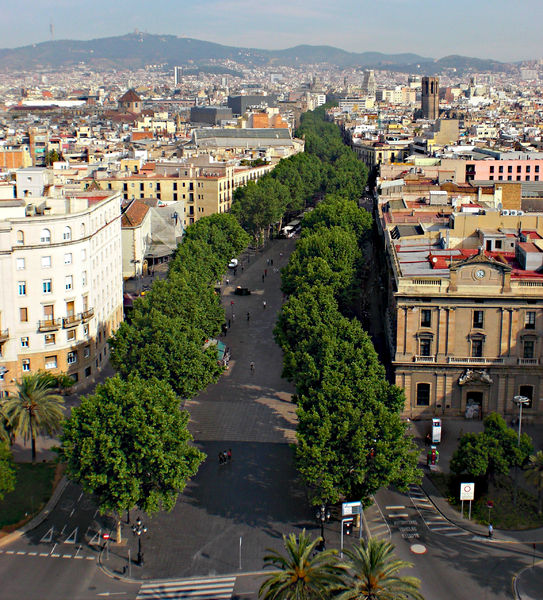
La Rambla by Oh-Barcelona.com reproduced under the terms of the Creative Commons licence CC by 2.0
Getting there
A number of airlines fly from the UK to Barcelona, from regional airports as well as London. To give you an idea of the choice available, there are almost 200 direct flights a week from London, on airlines such as British Airways, Iberia, easyJet, Monarch and Vueling. It’s not difficult to pick up a return ticket for as little as £50 (flying with easyJet from Southend at the end of February, price correct at time of writing) but book well in advance for a summer trip as demand is obviously higher.
Getting from the airport
Most flights arrive at Barcelona’s El Prat airport (some Ryanair services fly into Girona) and there is a train service direct into the city. Take the RENFE R2 Cercanias service (the local stopping train, sometimes referred to as Rodalies in Catalan) as far as Passeig de Gracia. Tickets cost 4,10 euros and there’s no need to buy a ticket in advance. Alternatively there’s an airport bus costing 5,90 euros which takes on average about a half hour to reach the city centre. You can buy tickets online in advance here http://www.aerobusbcn.com/en/buy-tickets or just pay cash to the driver. Expect to pay up to 40 euros for a taxi from the airport to the city centre.
Getting around
The Barcelona metro is extensive and easy to use, though as with any busy city, take care of your belongings and ensure bags are zipped or fastened securely.

LlefiàL10 by Javierito92, licensed under CC BY 3.0 via Wikimedia Commons
A single ride on the metro (or bus) costs 2,15 euros but if you are planning on taking five or more journeys then you could buy a T10 card costing 9,95 euros which covers you for ten journeys over a year (i.e. there’s no need to use all ten on the same day). If you make a journey and change lines without exiting the metro, then that counts as one ride, so long as your total journey time is under 75 minutes. Multi-day travel cards are available, giving you two days’ unlimited travel for 14 euros for instance. 3, 4 and 5 day cards are also offered. Check current prices here:
http://www.tmb.cat/en/barcelona-travel-card
Alternatively, you might consider the Barcelona card. This is a tourist pass offering free transport (including the airport train but not the express airport bus), free or discounted admission to some tourist attractions and discounts in some restaurants and shops. It costs 45 euros for a three-day pass. Examples of free attractions (correct at the time of writing but check on arrival) include the Botanical Gardens and Museum of Modernism. Do your homework; work out what you might like to see and total up the cost – as with all these cards, you need to use it a lot to make it worth your while. A full list of discounts is found here:
For a first-time visitor who perhaps is less confident about using public transport, I’d recommend a hop on, hop off sightseeing bus. Barcelona is a city of over 4 million people and therefore its sights are scattered over a wide area. Although there is a lot to see in a fairly small downtown area, if you wish to see some of the more far-flung attractions it’s easier to catch the sightseeing bus. It’s more expensive than public transport, with a one day ticket costing 24,30 euros if purchased online and a two day ticket about 10 euros more. Their informative website can be found here: https://www.barcelonabusturistic.cat/en/home and provides details of routes, prices and current schedules.
Where to stay
I stayed at the Hotel Duquesa de Cardona, a luxury boutique hotel on the waterfront close to the Columbus statue at the end of La Rambla and a short walk from the aquarium. Its beautifully appointed rooms can cost as little as £75 a night for a double in low season, but the convenient location and excellent service mean that it does sell out in peak periods. The W chain are represented in Barcelona at Plaça de la Rosa dels Vents by Barceloneta beach. The hotel’s 473 rooms feature funky décor and both its pool terrace and 26th floor Eclipse bar afford stunning views of the Mediterranean Sea. On a tighter budget, try the Chic and Basic Ramblas, under £50 per night but only a stone’s throw from La Rambla, or for around £20 more, the Hotel Sant Agustí, a converted convent near to the Plaça Reial. The building dates from 1720 and has been a hotel since 1840, making it one of the city’s oldest.
What to see
Antoni Gaudi’s work

Sagrada Familia nave roof detail by SBA73, licensed under CC BY-SA 2.0 via Wikimedia Commons
If there’s one name that is synonymous with Barcelona, it’s that of Antoni Gaudi, the architect responsible for the as yet unfinished Sagrada Familia church. This elaborately constructed church was begun in 1882, consecrated by Pope Benedict XVI in 2010 but is unlikely to be complete until at least 2026. George Orwell was not a fan, branding it one of the world’s most hideous buildings, but millions of impressed visitors beg to differ. It’s definitely worth a look.
Gaudi’s architecture can be found elsewhere in the city. Slightly north of Barcelona’s city centre in the Gràcia district, it’s worth making a special effort to pay a visit to Parc Güell. Another of Antoni Gaudi’s bonkers creations, as you’d expect its planting is interspersed by wacky benches, columns and platforms featuring the architect’s trademark mosaic tiling. The extraordinary Parc Güell now charges admission, but is a must-see.
Casa Milà, better known as La Pedrera, is another building bearing the hallmarks of the architect’s unique style. Its odd chimneys are classic Gaudi. I also loved Casa Batlló which Gaudi redesigned in 1904. Once a family home and now a UNESCO world heritage sight, it’s unique, quirky and delightful, both inside and out. The entrance fee is a bit steep but looking at the exterior is free.

Casa Batlló
La Rambla
This single street is possibly the most famous in the city. For this reason, it has to figure in your itinerary but be warned, it’s also a popular stomping ground for pickpockets and scammers. This pedestrian thoroughfare is crammed with souvenir vendors, street performers, human statues and, at night, prostitutes. It features a mosaic created by the artist Joan Miró, located near the Liceu metro station. If you look closely, you’ll be able to spot his signature on one of the tiles. A museum dedicated to his work can be found at Montjuïc. The street also has a selection of restaurants but you’d do better heading off the street and away from the crowds.
Montjuïc
This hill overlooking the city literally translates as “the hill of the Jews”. Getting up there is half the fun. Head up by funicular and then take the Port Vell aerial tramway back down to the waterfront at Barceloneta. At the top, there’s a whole load of things to do. As well as the Fundació Miró, Montjuïc
is also home to the Museu d’Arqueologia, the Museu Etnològic and the Museu Nacional d’Art de Catalunya-MNAC, housed in the impressive Palau Nacional. In addition you’ll find the Magic Fountain and the artisan village at Poble Espanyol, both built for the 1929 International Exhibition.

Parc Montjuïc by Canaan, reproduced under the Creative Commons licence CC BY-SA 3.0
Barri Gòtic
Barcelona’s Gothic Quarter is its old town, linking La Rambla to the Mediterranean seafront. Many of the buildings of this area date from mediaeval times, though there was extensive modernisation and renovation in the 19th and early 20th century. One of the area’s most popular attractions is the Picasso Museum. Suggested by the artist himself back in 1960, Barcelona is a fitting choice for the museum; although Picasso was born in Malaga, he spent his teenage years in the city before moving to Paris in his twenties. The five buildings that house a collection of 3500 of his earlier works are as much an attraction as the art itself – Palau Aguilar, Palau del Baró de Castellet and Palau Meca date back to the 14th century.
The Barri Gòtic is a fabulous area in which to wander, with alleyways linking attractive squares, my favourite being the Plaça Reial. This palm-filled square provides respite from the heat of the summer sun; in my opinion there’s no better place in the whole of the city to sip a coffee and people-watch. As with other touristy areas, keep a close eye on your belongings.

Barcelona – Plaça Reial by Josep Renalias, licensed under CC BY-SA 3.0 via Wikimedia Commons
Camp Nou
For football fans, there’s only one unmissable attraction in the city – Barcelona’s Camp Nou stadium, home to Futbol Club Barcelona, or Barça to its adoring fans. It is possible to take tours of the stadium. Visit the FCB Museum, walk down the players’ tunnel and out onto the pitch, stand in the dressing room and see behind the scenes in areas such as the press room.

Camp Nou colours by DJ Lucifer, licensed under CC BY 2.0 via Wikimedia Commons
Something for the evening
Cava is to Spain as champagne is to France, and the most atmospheric place in town to drink the stuff is at El Xampanyet. This small bar has a take me as you find me vibe, with a mixed clientele of locals and visitors. The tiled walls and tasty tapas have barely changed since the place opened back in 1929. Its location on Carrer de Montcada in El Born district, is within an easy stroll of the cathedral and Parc de la Ciutadella, and perfect for a few glasses before dinner in the Old Town.
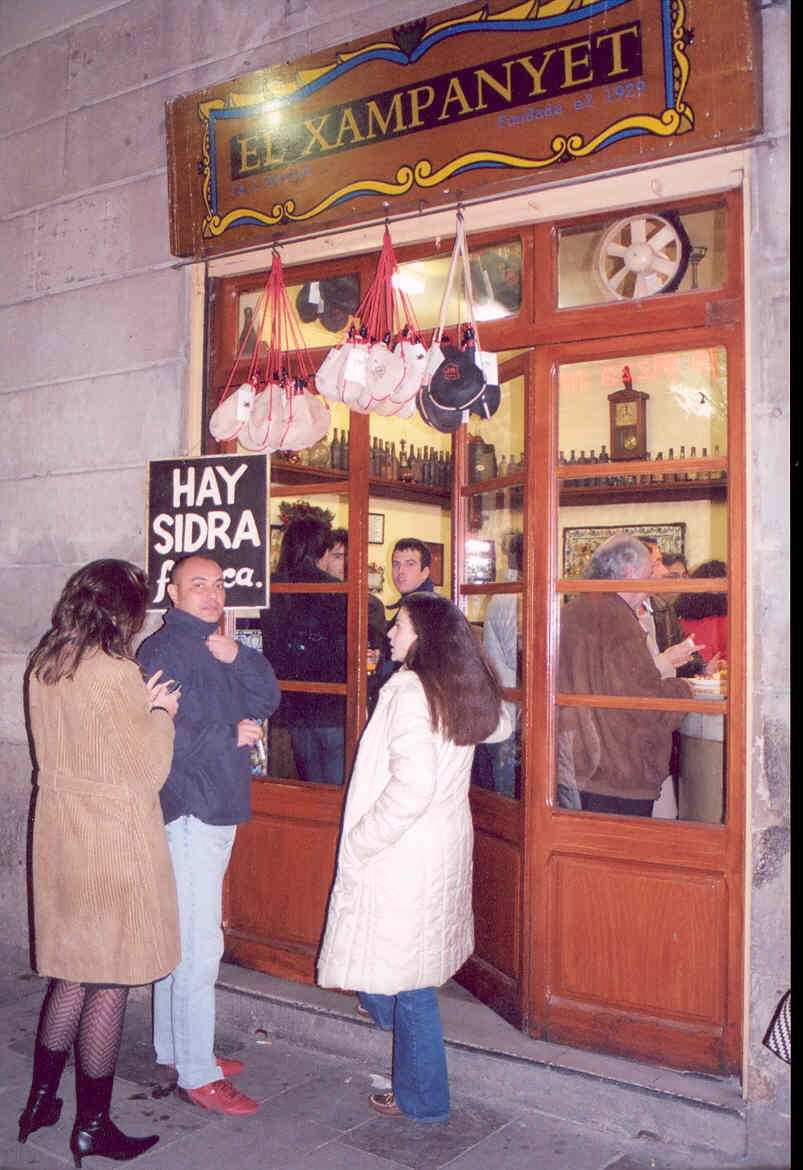
El Xampanyet
Just back from – a day trip to Amsterdam
Is an Amsterdam day trip viable? In the second of an occasional series, I test whether it’s really worth making the effort for just a single day’s visit to this popular Dutch city. Would I regret not paying for a hotel room as I dashed from attraction to attraction?
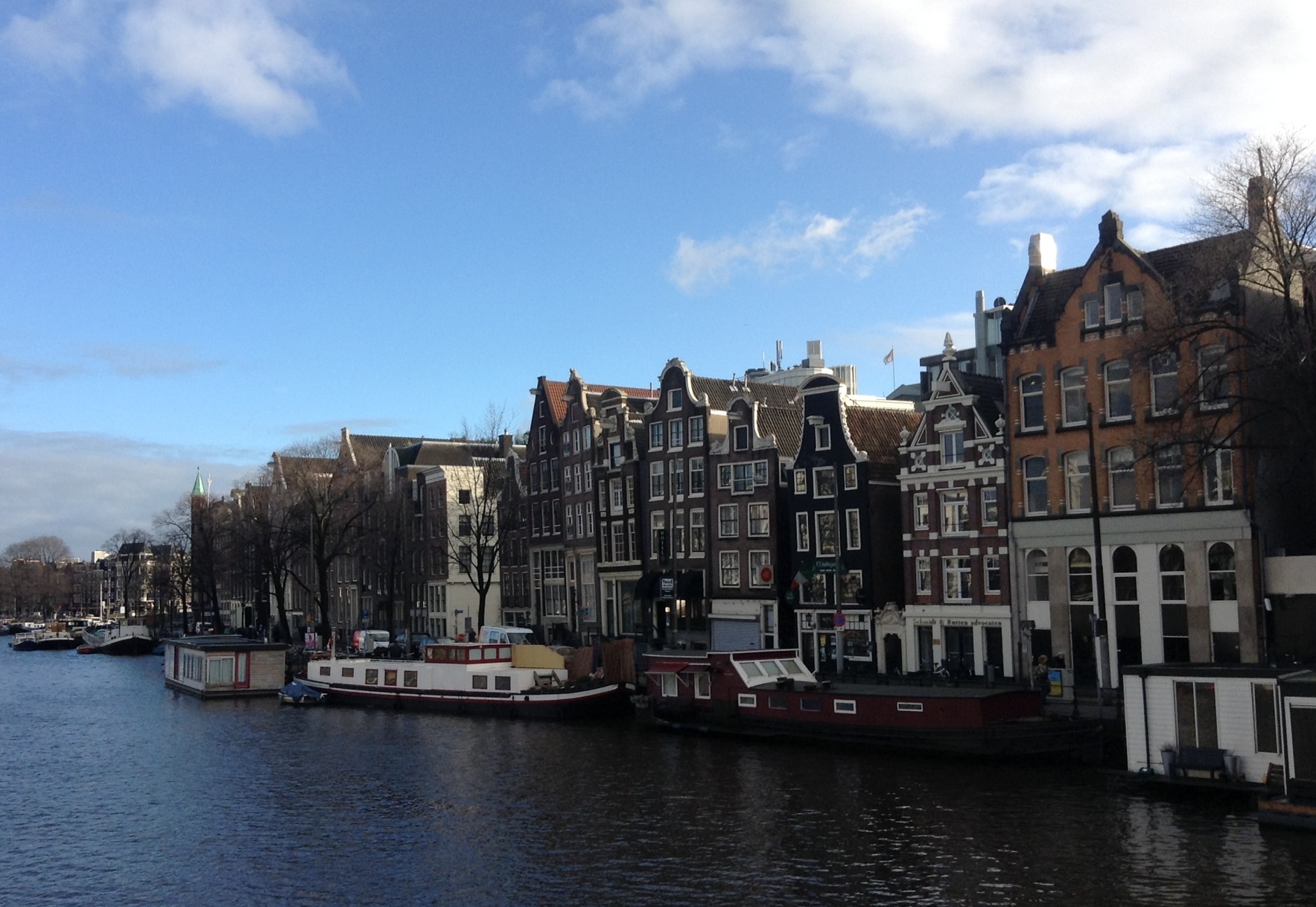
Amsterdam’s canals
Logistics
I chose to fly from London’s Southend airport, around an hour from Central London but only a short drive from my Essex home. Southend, though expanding, is still a small airport, making it possible to transit the airport in just a few minutes – none of the long queues for security or marathon hikes to the gate that characterise Britain’s larger airports. easyJet fly out to Amsterdam at 7.30am and back at 6pm, making a short day out a cheap possibility. It’s wise to note that easyJet fly into a satellite terminal at Schipol, making for a tidy walk to the gate for your return flight. But they have a good track record for punctuality and my outbound flight was on time. On the return leg, we landed early and thanks to the time difference, I was back in my kitchen feeding the dogs their dinner almost before I should have left Schipol. (Don’t worry about them, we have doggie day care for such occasions.)
Getting into the city
Having made it across the airport without getting distracted by the many shops and even a branch of the Rijksmuseum (Schipol has got to be the best airport in Europe, don’t you think?) I exited through self-service passport control leaving the tulip bulb purchases for my return. Keep straight on as you exit customs for the train station, the quickest way into central Amsterdam. Directly in front of you are bright yellow ticket machines which take cash and cards. A single ticket into the city costs 5,10 euros with a 0,50 euro surcharge for using a credit card; UK issued cards work fine. It’s worth noting, though, that they take coins and not notes if you wish to pay cash. Make a left and head for the train; it’s a quick fifteen minute ride into the city. Trains leave frequently for Amsterdam Centraal Station immediately to the north of the main city. I waited one minute for a train and was walking Amsterdam’s streets by 10am.

Centraal Station
Getting around
The city centre of Amsterdam is compact and unless it’s raining, it’s a pleasant experience to wander the back streets and canal side paths on foot. You’ll need eyes in the back of your head, though, to avoid being run over by a bicycle. The city has dedicated cycle lanes but it’s all too easy to forget where the pavement ends if you’re trying to take a photo. If you hire a bike yourself, it’s customary to ring your bell rather than mutter profanities at wayward pedestrians obsessed with getting the perfect selfie.
For longer distances, the easiest method of getting around the city is by tram. Single rides cost 2,90 euros and the ticket is valid for an hour. Tap the ticket on the reader as you are given it to activate it. If you are likely to make more than three journeys, it’s worth your while buying a day pass, costing 7,50 euros. Tap in and out each time you ride.

Cheese!
What did I do?
I’ve been to Amsterdam before, so decided to give the big museums and the Anne Frank House a miss this time. If you are making a first visit then you should really consider staying a few days to give you time to do the sights justice. Queues for the Anne Frank house are frequently long (even on a Monday in January!) so if you do want to go, and you should, plan to make this first on your day’s agenda when you visit.
I made for the Begijnhof instead. It’s an easy walk from Centraal Station – cross over the canal and head down Damrak, the main drag. Damrak is tourist central, but you can arrange everything from canal boats to bicycle hire here and buy souvenirs tackier than you’ve ever imagined. From Dam Square, continue down Kalverstraat (almost as bad as Damrak) until you get to Spui.
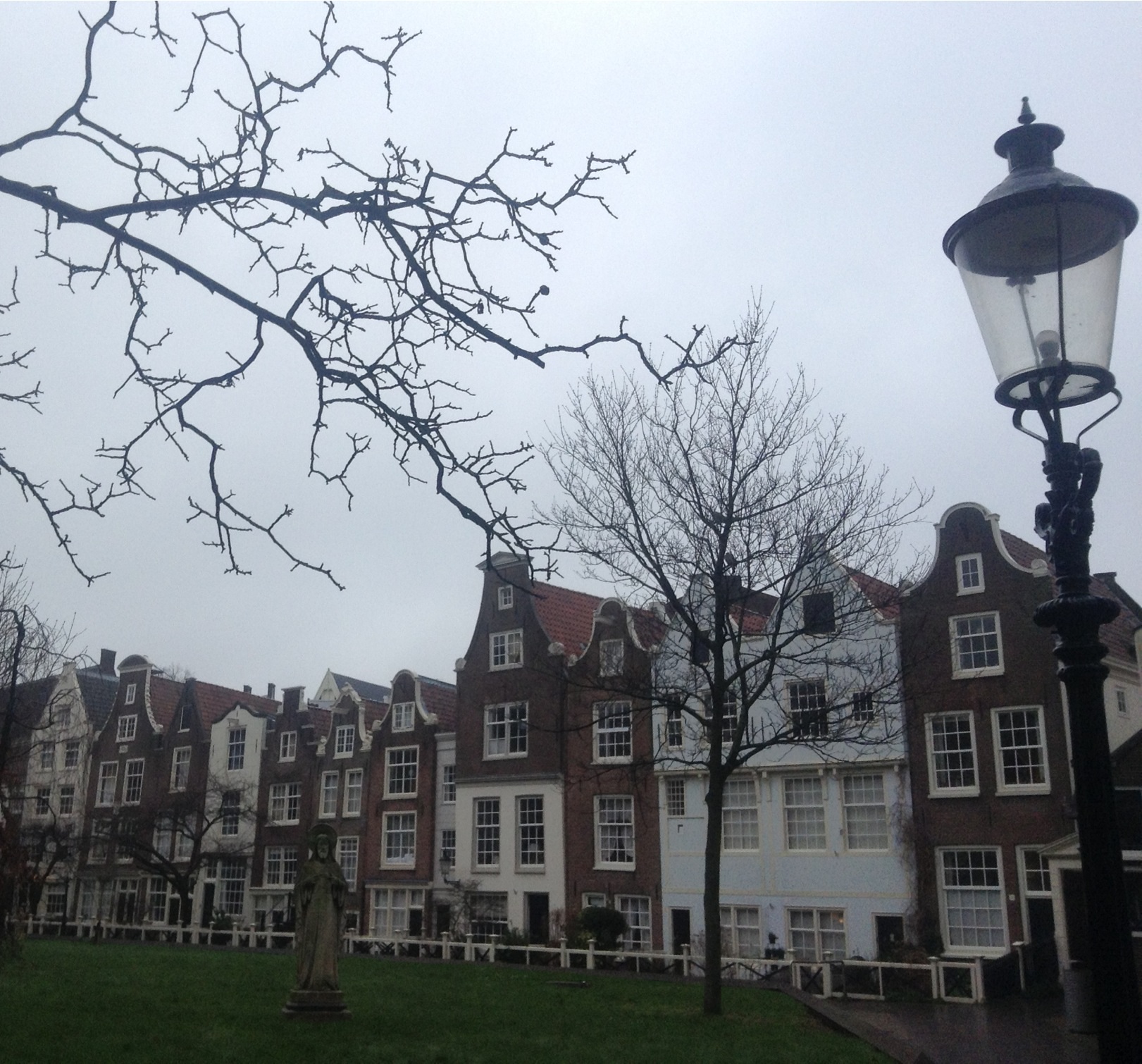
The Begijnhof
Accessed through a wooden door, a passageway with impressive vaulted ceilings leads through to an enclosed square, the Begijnhof. Women have lived on this site since 1150, primarily to care for the sick. By the fourteenth century, the place had become a nunnery, the women referred to as “beguines”. Taking pride of place in this inner courtyard is the church. The Begijnhof is also the site of one of only two surviving timber buildings in the city, this one dating from 1528. Visitors can access half the square, so long as they keep off the well-manicured lawns; the rest is for residents only. Entrance is free, though donations to the church are welcomed.
The Begijnhof is around the corner from the Bloemenmarkt, on the Singel, which claims to be the only floating flower market in the world. Don’t worry if you haven’t timed your visit for spring, even in winter the stalls are a riot of colour, selling cut flowers and bulbs. The packaged bulbs are aimed squarely at the tourist market – locals make a beeline for the loose bulbs as they’re considerably cheaper.

Tulips from Amsterdam
Next, I set about exploring the area known as “De Negen Straatjes” – the nine streets. This is an area bisected by canals from the Singel to the Prinsengracht and gentrification has resulted in a wealth of designer boutiques, gift shops and art galleries that lend themselves to ambling. This is not a district to walk with a purpose, more an area in which to potter and dither before recharging your batteries in a cafe. Forget Starbucks – though there are plenty – a canal side coffee shop is the way to go. I recommend the Koffee Huis “De Hoek”, a far cry from the smoky cannabis cafes for which Amsterdam is better known. Try their cheese and ham pancake washed down with proper freshly- squeezed orange juice and bag a window seat for brunch with a view.
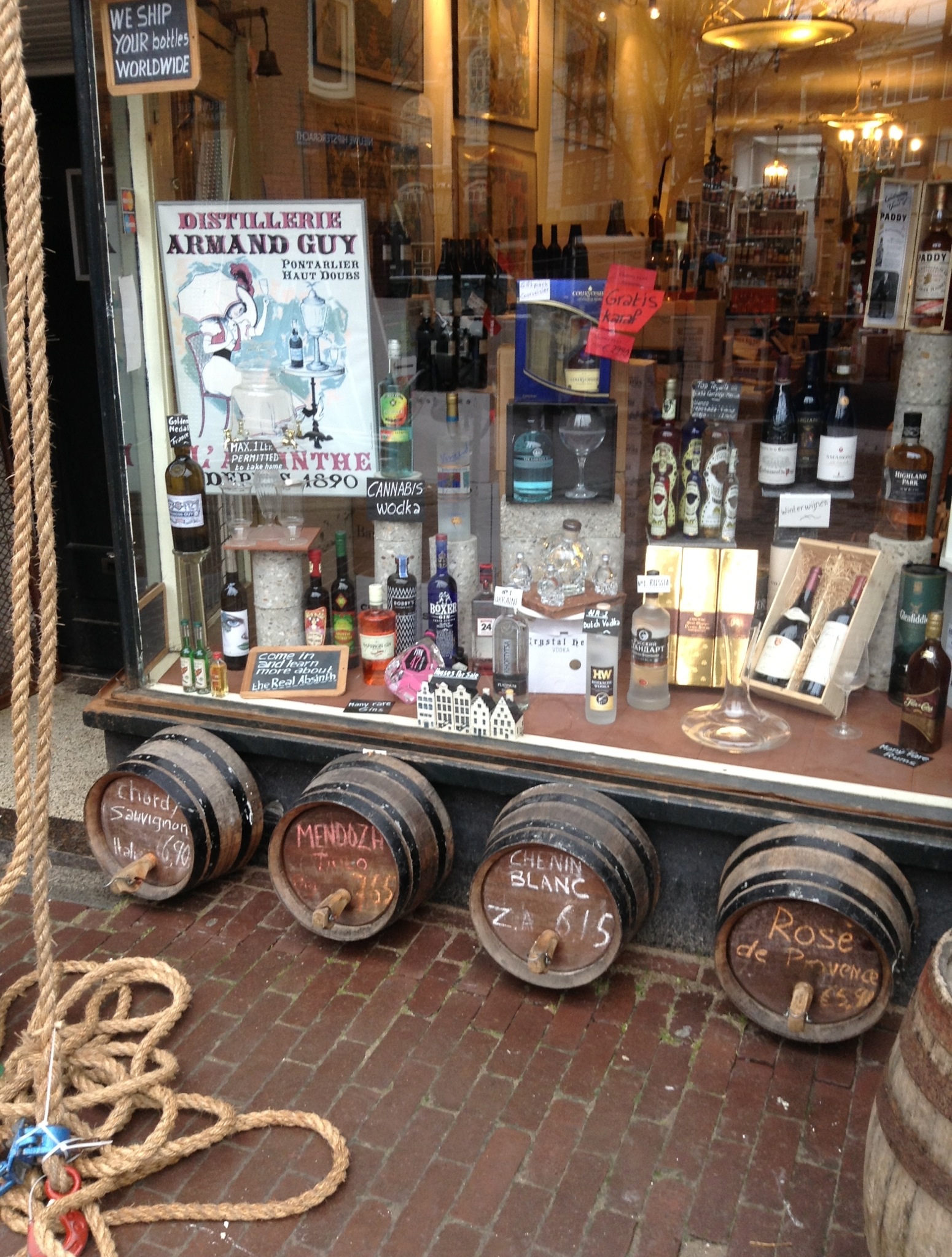
Off licence, Nine Streets
Continuing along Prinsengracht, and just past Westermarkt I passed the long queue for the Anne Frank House. Further along on the opposite side of the canal is an interesting little museum devoted to tulips. Behind the extensive gift shop and down a steep flight of steps, a series of small interconnecting rooms tell the history of this iconic Dutch flower, which you’ll soon learn, isn’t Dutch at all. In fact, it is native to Asia (who knew?) and it was the Ottomans who introduced the flower to the Netherlands in the sixteenth century. They soon became fashionable, with growers competing to see who could produce the most sought after bloom. Speculators moved in on the industry and soon bulbs with the right “pedigree” were changing hands for crazy sums of money, with some selling for twenty times the annual salary of the average Amsterdam resident at the time. Out of control, the market crashed in 1637 and it was to take a further 200 years to steadily rebuild it. Fortunately, the prices of tulips are far more reasonable today, as is the 5 euro entrance fee.
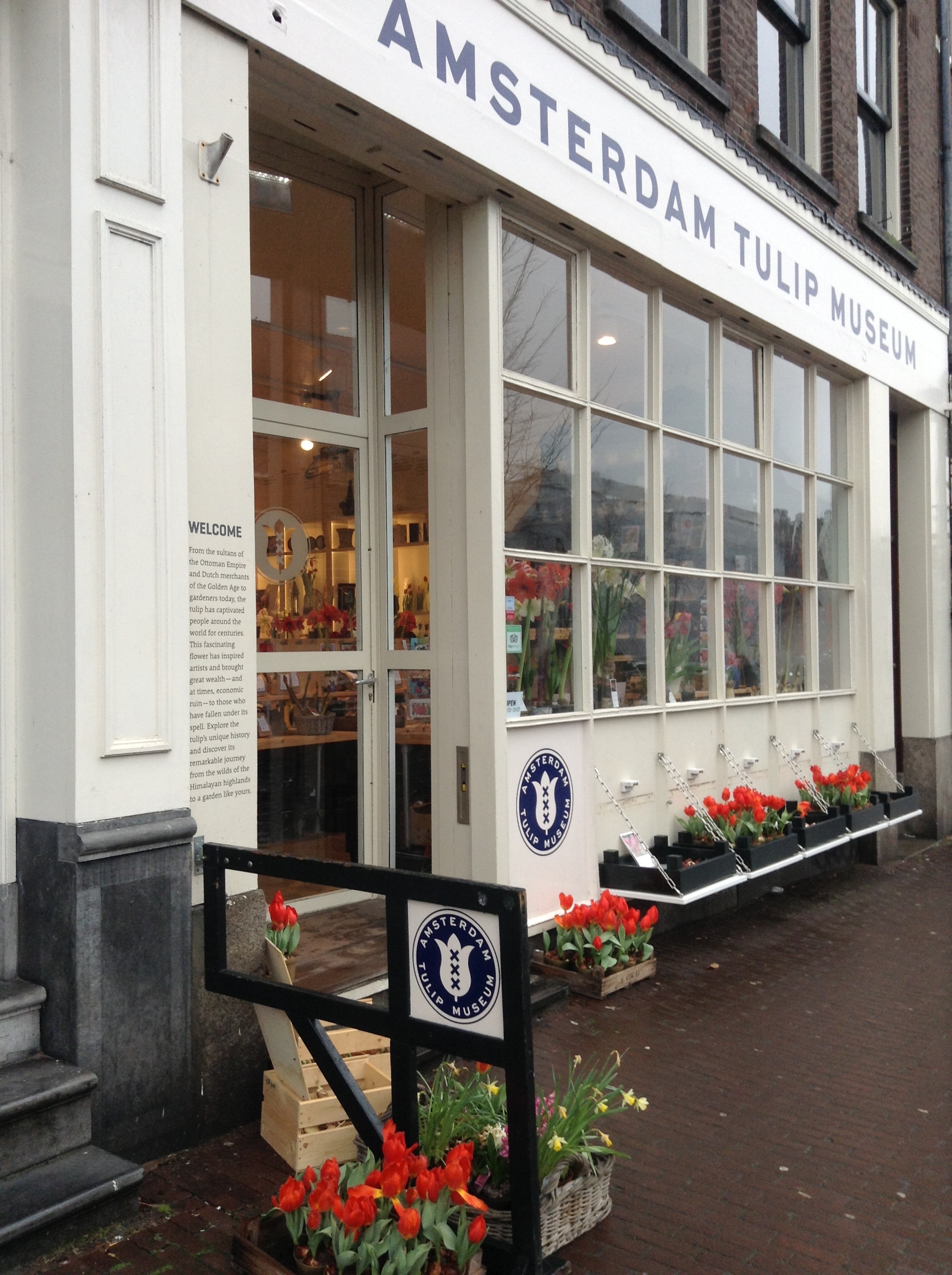
The Tulip Museum
Back at the Westerkerk, I jumped on a number 14 tram heading east to my second museum of the day – the Dutch Resistance Museum. This absorbing museum recounts the experiences of the Netherlands from 14 May 1940 to 5 May 1945, the period when the country was occupied by Nazi Germany. As well as resistance, the museum explains how people chose different paths in coping with the invasion – some collaborated, some fought back. The exhibition covers all forms of resistance: going on strike, forging documents, helping people to go into hiding, publishing underground newspapers, maintaining escape routes, and even armed resistance and espionage. Entrance costs 10 euros which I thought was good value for money. Take the free audio set that’s offered as it unlocks a series of explanations in English; the exhibits are all signed in dual language but some of the text is on the small size. A short film puts the museum in context, in kid-friendly language, and there’s a special children’s section to the museum as well. Families, this is your part of town – Artis zoo’s just across the street.

Dutch Resistance Museum
All that history had made me thirsty (and my back ache) so sinking into a chair in the Cafe Koosje on the corner of Kerklaan and Plantage Middenlaan came as a welcome relief. The hot chocolate topped, of course, with a generous dollop of cream and the friendly wait staff made this a good place to take a break.
It was time to head back to the centre for some shopping and my mind was on food. Taking the number 14 tram back to Waterlooplein, I walked to Staalstraat where I’d read about a foodie’s paradise at number 20. Het Hanze Huis is crammed full of European foods, from syrups to flavoured tea, chocolate to tasty biscuits. Mouth already watering, I decided to continue by number 24 tram (tram-hopping like a local!) to the market on Albert Cuypstraat. A mix of market tat, food trucks and cheese stalls, this place is definitely worth a visit. I stocked up on Stroopwafels, a family favourite, from a charming man who posed happily for a photo. Bag full, I had to pass on the Gouda cheese, but figured I could at least get that in Sainsbury’s.
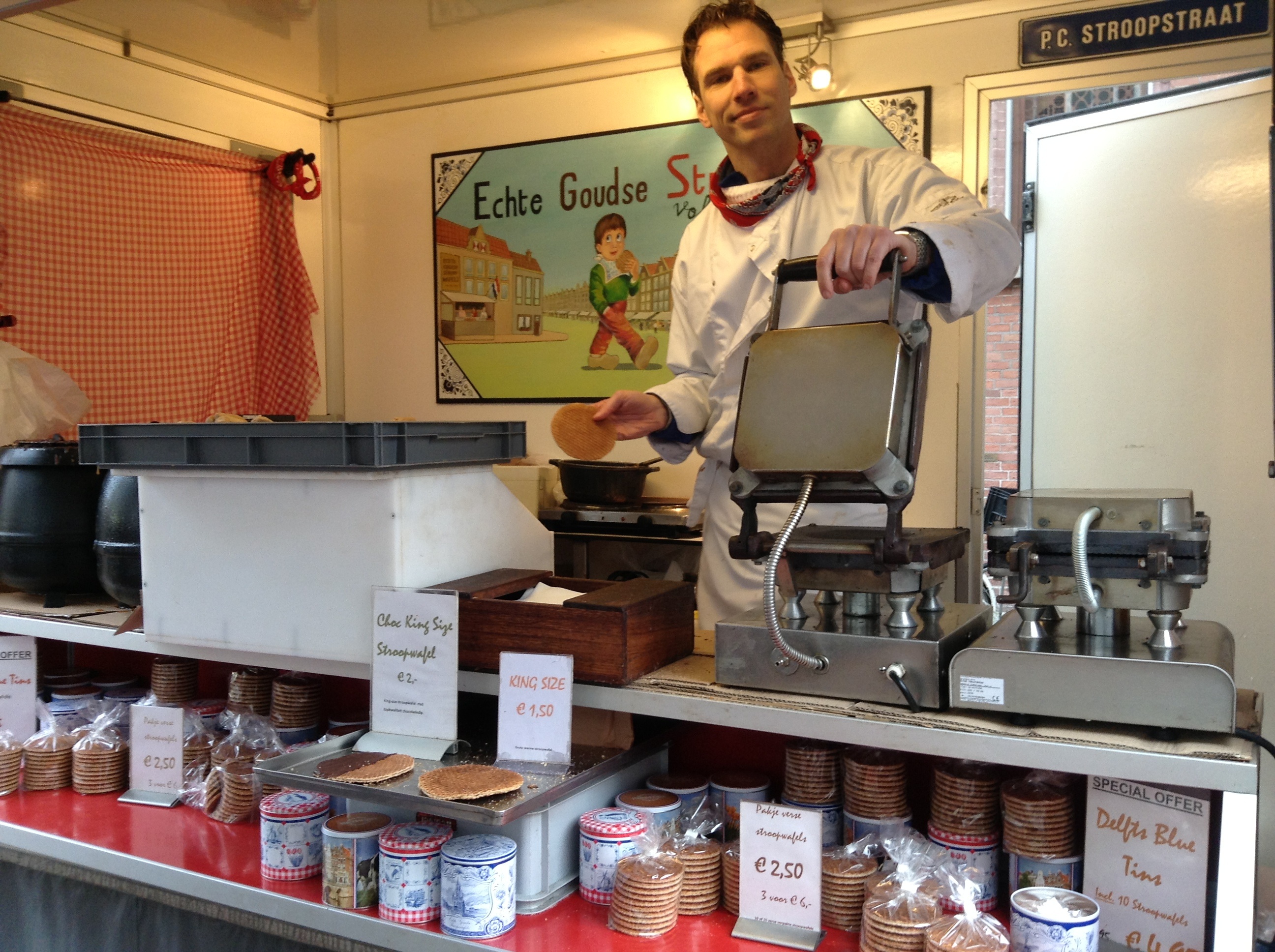
The Stroopwafel man
Heading back to the centre on the number 4 tram, my final stop was to a pub with no bar. I’d come across De Pilsener Club, located on Begijnensteeg, via several bloggers on the net. The pub’s nickname is De Engelse Reet, which apparently translates as “The English Ass”. Perfect, I thought. After all today’s walking I need a seat for my own ass. According to what I read, the pub has been in business since the end of the nineteenth century. It’s been in the current owner’s family for four generations (I read that they all share the same first name, so that’s four men called Tuen Van Veen) and they don’t like change. Stepping over the threshold is like travelling back in time, with sanded floorboards and tables pockmarked through years of use. Given the early hour (for a pub, anyway) I expected to have to drink alone, but two tables were occupied when I walked in and by the time I left, it was full. It seems it’s a very popular meeting place in the late afternoon for Amsterdam’s over 60s.
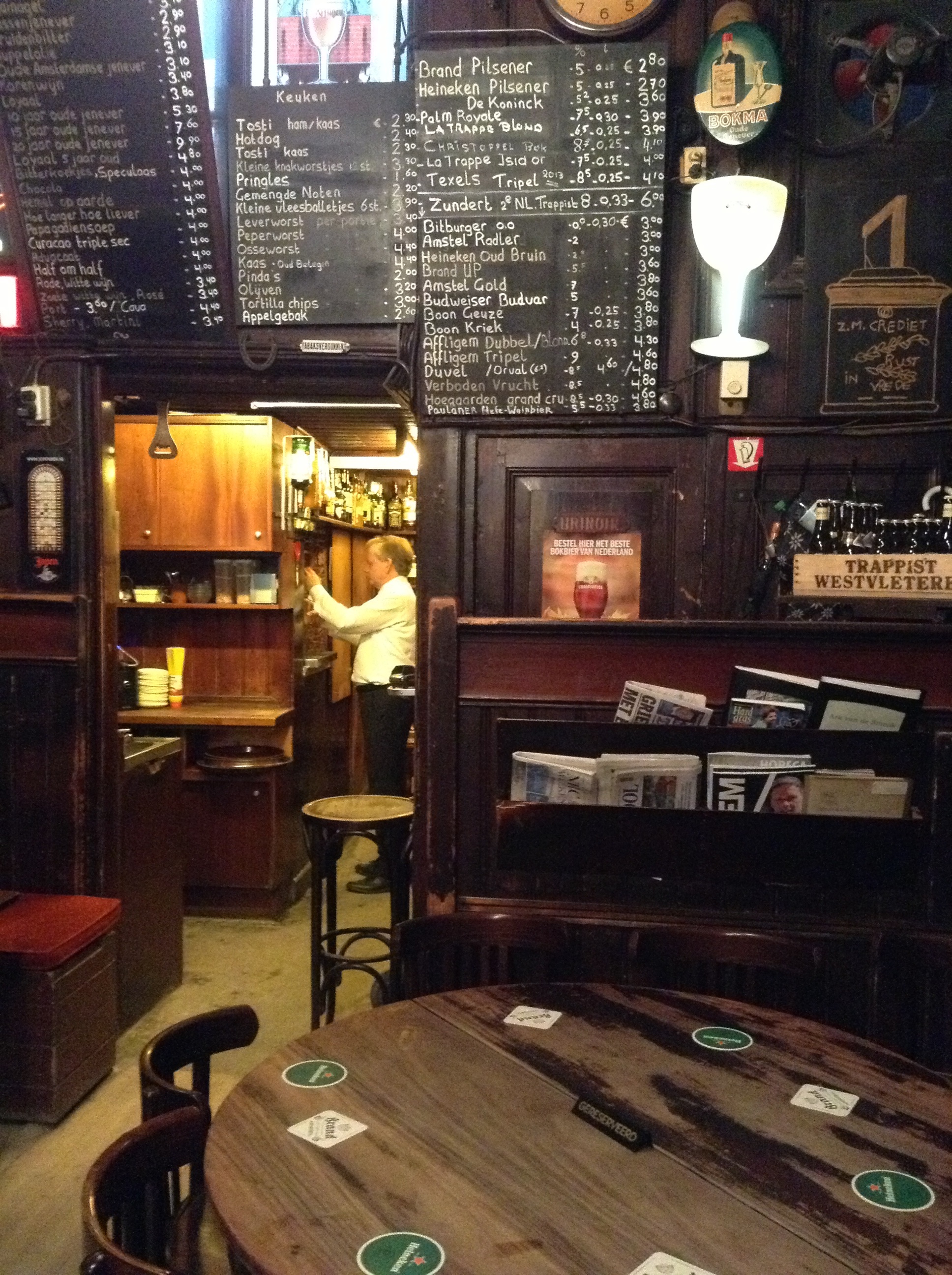
De Engelse Reet
The lowdown
As with Lisbon, I pre-planned my itinerary in order to minimise the chances of wasting time arriving somewhere that’s not yet opened up for the day or unnecessarily backtracking across town. Both times I’ve been fully prepared to ditch things as the day goes on, but was once again surprised by how much I ended up doing. I’ll admit, Amsterdam has never been one of my favourite cities, but I wanted to prove to myself that I could find a city I love within a tourist city I really don’t. A bit of extra research this time uncovered parts of Amsterdam that were a whole lot more rewarding than the Red Light District, tacky souvenir shops and mainstream museums I might otherwise have felt obliged to visit.
I also made good use of the Travel Telegraph’s app, and grew increasingly fond of its “favourites” capability and very functional zoomable map – particularly helpful as my paper map began to disintegrate in the drizzle. Because of the shorter flight time and the exceptionally quick train connection, having a later outbound flight and earlier inbound flight wasn’t an issue, though I could quite happily have holed up in De Engelse Reet and made a night of it. Next time that’s where you’ll find me, though perhaps I’ll get Tuen Van Veen to serve me up a couple of hard boiled eggs to soak up the Heineken.
A beginner’s guide to Iceland
Updated Spring 2022
Iceland’s fortunes are looking up. Years have passed since the volcanic eruption that resulted in flight chaos throughout the northern hemisphere. Post-economic crash and coping admirably with the fallout from the coronavirus pandemic, Iceland is fully open for business.

Iceland’s scenery is dramatic and beautiful
How to get there from the UK
Flights with BA and also Icelandair, the national carrier, depart from London Heathrow to Keflavik (KEF), the airport nearest to the Icelandic capital Reykjavik. Budget airlines also serve Keflavik. easyJet offer a good service from London Luton and London Gatwick, while Play operates out of London Stansted. A non-stop flight takes a little over 3 hours from London. There are also flights from Manchester and Edinburgh. Icelandair offers fares to North America with Reykjavik as a stopover destination for the same fare making it possible to combine an Icelandic break of 1 to 7 days with cities such as New York.

Jökulsárlón glacial lagoon
Getting from Keflavik airport into the city centre
The simplest and cheapest way to get to Reykjavik is to use the FlyBus. This bus will take you from the airport to either the bus station or to some hotels. To find out whether yours is served, there’s a list on the FlyBus website – check Google maps if yours isn’t listed to identify which listed hotel is closest. Single fares to the bus station are 3499 ISK (about £21) and to your hotel 4599 ISK (about £28). The journey takes 45 minutes, there’s free Wi-Fi on board and tickets are flexible, so if your plane is late, you just take the next available bus. There are frequent departures throughout the day and evening.
If you are travelling as a larger group or further afield, you may prefer to hire a car. The easiest way to do this is to book with one of several car hire companies based at the airport. I’ve used Thrifty a couple of times now. They’re not the cheapest but the cars are reasonably new and the rates are competitive. Note that you’ll need special insurance if you plan to drive off road or on some of the interior’s gravel roads (note: the latter are closed during the winter). It’s also advisable to take out an insurance policy that covers you for damage caused by sand (especially if you plan to travel along the south coast) or gravel. You might be a careful driver but there’s nothing you can do to mitigate against those travelling at speed who pass you from the opposite direction.

Icelandic fishing villages such as Olafsvik are charming
Getting around
If you’ve chosen not to hire a car, it is possible to use public buses to travel between some parts of the country. Check schedules carefully as it can be a long wait between buses. Consult this useful map of the main long distance routes in Iceland to see at a glance whether the places you plan to visit are connected or not. Alternatively, use a company such as Reykjavik Excursions which can offer day or multi-day tours. They can also sell you a ticket for a summer-only bus up to Landmannalaugar in the highlands.

Seljalandsfoss
Reykjavik
The Icelandic capital is charming and a good base for the first time visitor. Pay a visit to the unusual Hallgrímskirkja church; it’s only 1200 ISK to go up it and take in the views of the city. Also great for the views though a little out of the centre is Perlan; it features an excellent Áróra Northern Lights planetarium show and now also has a double zipline. The area around Tjörnin lake is worth a stroll if the weather’s good; it’s not far from the main drag and is popular with joggers. Down by the harbour there’s a cool structure known as Sun Voyager or ‘Sólfar’ which is worth making the effort to visit; walk past Harpa, the city’s concert hall and along to the Old Harbour for a pleasant walk. In the opposite direction, you’ll come to Höfði House where Reagan and Gorbachev met in 1986 to begin the process of ending the Cold War.
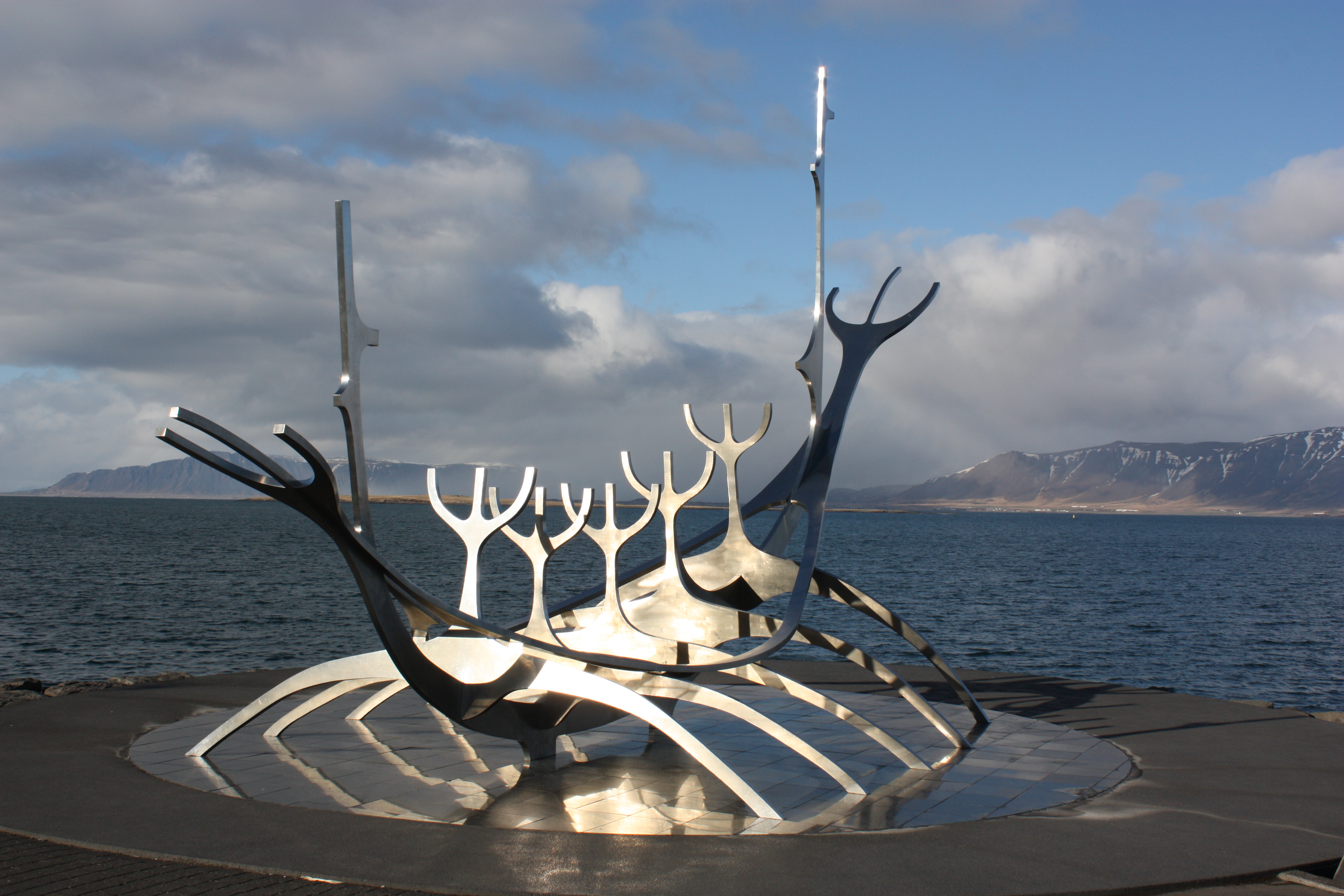
The Sun Voyager statue, Reykjavik
Must-see attractions beyond the capital
Reykjanes
The Blue Lagoon is a world-renowned spa consisting of a large pool fed by geothermally-heated water. It’s possible to book massages and other treatments; even if you just want a dip you’ll need to pre-book (evening slots are cheapest). There’s also a bar if you’d like a drink whilst relaxing in the warm water. Pots of white silica-rich mud are yours to try out – spread it on your face and body for an enriching treatment. Tip: in cold weather, turn left on your way out and enter the pool indoors before swimming out – it’s warmer than making a run for it from the main door. It’s possible to visit the Blue Lagoon on your way to or from Keflavik airport and lockers large enough to take a suitcase are available. The Blue Lagoon is the main attraction on the Reykjanes peninsula where the North American and European plates meet. With your own transport you can stand on Leif the Lucky’s bridge that straddles the two – but be warned, it’s one of the windiest places in the country.

The Blue Lagoon
The Golden Circle
The Golden Circle comprises three of Iceland’s most awe-inspiring attractions: Gullfoss waterfall, Haukadalur and Þingvellir, the site of the original Icelandic parliament. One of Iceland’s many dramatic waterfalls, Gullfoss is the spot where the Hvítá river rushes south and plunges into a chasm where the water explodes into a maelstrom of white water and eroded rock. At nearby Haukadalur, the original geyser, Geysir, has long since given up erupting, but the plume of water that spurts from nearby Strokkur is impressive and conveniently frequent. The Alþingi, or parliament, met at Þingvellir from 930 to 1798 and thus the site is important culturally and historically in addition to its stunning physical characteristics. The three sites can be combined on a morning or afternoon organised tour departing from Reykjavik, but it is worth spending more time at each than the tour allows. If you do decide to go it alone, consider stopping at the excellent Laugarvatn Fontana spa where they bake rye bread in the hot sand twice a day. Spa admission costs 3950 ISK per person (about £24) and the bread baking, including tasting, is 2300 ISK (about £14).

Strokkur on the verge of blowing
The Snæfellsnes peninsula
The Snæfellsnes peninsula is ignored by many but is a worthwhile day out. It’s a remote peninsula with a dramatic coastline perfect for a scenic drive. Its expanses of countryside are punctuated by small fishing villages including the charming Olafsvik. The Hollywood film “The Secret Life of Walter Mitty” was filmed here, focusing on the village of Stykkishólmur whose centre is crammed with historic buildings. Another highlight is the Shark Museum at Bjarnarhöfn. There you can find out how the Icelandic delicacy of hákarl is created and, if you’re brave enough, try a cube of this dried rotted shark flesh for yourself.

Trying hákarl, rotted shark meat
The south coast
Take the southern ring road towards Vik and you will come across two impressive waterfalls. Skógafoss waterfall has an impressive 60 metre drop, but for sheer drama, my choice is the beautiful Seljalandsfoss waterfall. Climb up the wooden staircase to the right of the falls as you face them and the path takes you behind the curtain of water. You will get wet but it’s a lot of fun. In Skaftafell, don’t miss the glorious sight of Svartifoss, an impressive waterfall flanked by basalt columns. To ride nearby, see my post about Glacier Horses. On a secluded ash-grey beach (once accessible by 4×4 but now accessed only on foot) is the wreck of a plane. Near Vik, the DC3 crashed back in 1973 with no loss of life, and the plane has been there, abandoned, ever since. It’s worth the five mile round trip walk over the volcanic sand to see this curious and fascinating wreck but allow plenty of time to return before sunset. Just before you reach Vik, keep an eye out for the notorious sneaker waves as you visit Reynisfjara beach. In Vik itself, meet up with the guide from Katlatrack and don helmet and crampons for one of their ice cave tours up on Mýrdalsjökull. Their three hour fast track tour costs 19,900 ISK per person (about £121) but although it’s expensive it’s worth every penny.

The crashed DC3 near Vik
Jökulsárlón
Situated on the edge of Vatnajökull National Park, itself a fun destination if you’d like to try out snowmobiling on Europe’s largest glacier, Jökulsárlón is a large glacial lake in the south west of Iceland. As the Breiðamerkurjökull calves into the lake, icebergs travel the short distance to the Atlantic Ocean where they bob about on the waves, washed on and off the beach until they finally melt. It’s a magical place; though both the beach and the lagoon itself can get crowded. In summer, it’s possible to take a boat trip. The best value tour is on an amphibious vehicle which gets you close to some of the icebergs for 6000 ISK per person (about £36), but you’ll get closer to the glacier if you pay the extra for the Zodiac tour. Just west is the sometimes overlooked Fjallsárlón. It too has icebergs and boat trips though it’s not quite as impressive as its more famous neighbour.

Jökulsárlón Glacier Lagoon
Austurland
East Iceland receives far fewer visitors than the popular south, but there are some breathtaking sights there too. A couple of the coastal villages stand out. You might recognise Seyðisfjörður for the rainbow path leading to its pretty church; it’s accessed by a tarmac road as this is also the place to jump on a ferry to Denmark or the Faroe Islands. In contrast the road to Borgarfjörður eystri, another of the area’s spectacular fjords, winds up and over a mountain pass. For an off the beaten track retreat, the Blabjorg Guesthouse with its open air hot tubs overlooking the water is a great choice. The east’s most unmissable sight is a relative newcomer: until a nearby hydro-electric plant was built which held back the water, the breathtaking Stuðlagil Canyon was hidden to the world.

Stuðlagil Canyon
The Diamond Circle
North Iceland’s answer to the well-established Golden Circle launched officially as a marketing concept in September 2020 but travellers have been drawn to its attractions for much longer. Base yourself in the delightful port town of Húsavík, where you can visit the excellent whale museum and then head out into Skjálfandi bay to see if you can spot them for yourself with a company such as North Sailing. They offer tours for a reasonable 10990 ISK (about £67) with a 98% chance of a sighting. The other four stops on the Diamond Circle are Goðafoss waterfall, Mývatn (Midge Lake – in summer it lives up to its name!), Ásbyrgi canyon and last but not least Dettifoss waterfall, the largest in Europe. This part of Iceland is geothermal; take advantage of that naturally occurring hot water with a dip at GeoSea in Húsavík or the Mývatn Nature Baths. Reservations are advised for both, especially in peak season. Further west, detour off the ring road for a visit to Siglufjörður. This charming town made its money on processing herring; today, the old industrial buildings have been converted into a fascinating museum (2200 ISK per person, about £13).
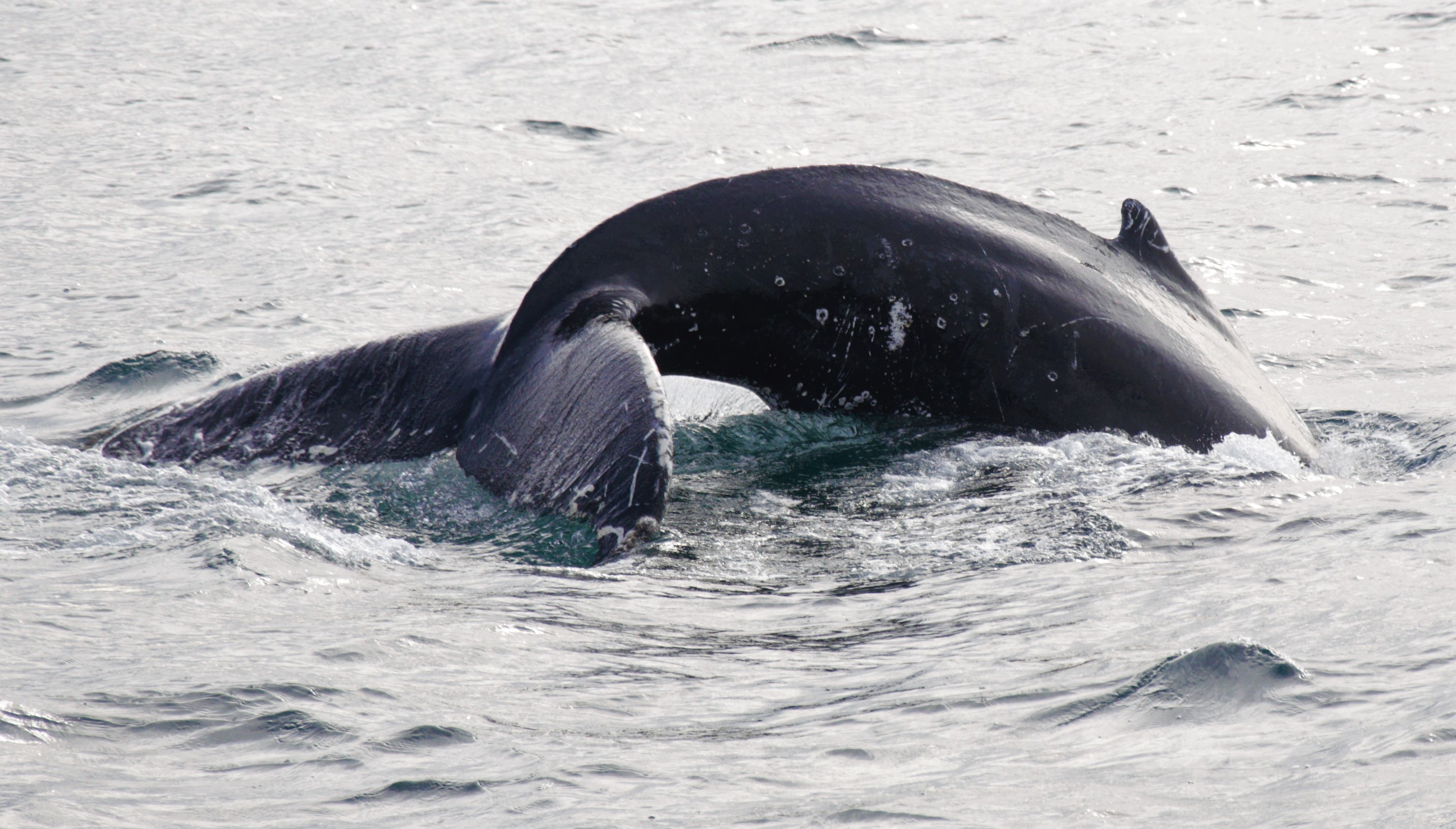
Humpback whale near Húsavík
The north west
The north west of Iceland and in particular the remote Westfjords are often missed by visitors. From Akureyri, Iceland’s second city, the road east is relatively quiet. The old turf buildings at Glaumbær are interesting to explore and well priced at 1700 ISK (about £10). Make a detour to visit the Icelandic Seal Center in Hvammstangi (admission 1200 ISK (abotu £7). Note that it is closed during the winter. Afterwards, head north to see if you can spot seals at Illugastaðir or Hvítserkur – the latter is also worth a stop for its magnificent sea stack. Ísafjörður is the capital of the sparsely populated Westfjords and even has its own brewery. From here you can take a boat trip with Borea Adventures to Hornstrandir in the hope of spotting Arctic foxes (sightings not guaranteed); there’s a few stuffed ones in a museum just outside Ísafjörður itself. Detour to Flateyri to Iceland’s oldest bookstore, or to Holmavik to visit the quirky but creepy Museum of Icelandic Sorcery and Witchcraft. Another excursion is to Simbahöllin in Thingeyri, which does fabulous waffles in summer. To feel like you’ve reached the end of the world try Patreksfjörður, a fish processing settlement within easy reach of the attractive Rauðasandur – a distinctive red sand beach – and the Látrabjarg bird cliffs. It’s also handy for the ferry to Stykkishólmur in Snæfellsnes.

Glaumbær – The old turf farm
Practical information
It’s possible to loop the ring road in about a week but you’ll be pleased that you allowed more time, at least ten days and two weeks if you can manage. Roads outside the mountainous interior still vary a lot; the ring road is tarmacked and aside from the occasional blind hill and many one-lane bridges, you’ll have no issues at all in fine weather. Keep abreast of local weather conditions online and don’t underestimate the impact of wind speeds. Another invaluable website is that showing road surfaces; gravel roads are generally simple to drive unless they are very steep, though you’ll appreciate the extra grip of a 4×4. The interior shuts in the autumn and doesn’t reopen until late spring; most of its F roads require a high clearance 4×4.
Tips for getting the best out of a trip to New York City
There’s so much to see in the Big Apple so making sense of it all as a first time visitor can be daunting. Here’s what I’ve learned:
Use the subway
Getting around in New York’s traffic can be hell so why waste your precious time sitting in traffic? Instead take the subway. A one week MetroCard costs $30 plus a $1 fee to buy the card. Tip: save your card and take it with you on your next holiday – the card is reusable. Standard fare per journey is $2.75 so you don’t have to use it much over a week to get your money’s worth. Check out the MTA tourist’s guide here: http://web.mta.info/metrocard/tourism/index.html.

Essex Street subway station
Both JFK and Newark airports, serving UK carriers, are located out of Manhattan – JFK is out in Queens and Newark is over in New Jersey. Both take a similar amount of time to reach. If you are offered a coach or shuttle connection to the airport as part of a package, think carefully as to whether to take it – journey times are often double that of the subway or Long Island Rail Road, especially at rush hour. Note that if you take the subway or LIRR to JFK you’ll need to connect to the AirTrain which requires an extra ticket (a $5 fare). In the city, look to see whether you can take an express train; for longer journeys (e.g. Upper West Side to Battery Park) these can be considerably quicker. But at busy periods, you might have a better chance of getting a seat (or even getting on!) if you take the local. Print off a map from http://web.mta.info/maps/submap.html or download a free app so that you can ensure you don’t go whizzing past your stop.
See NYC’s museums and attractions free of charge
Time your visit right and you could save a ton of money. Many of New York’s premier attractions offer free entry at particular times of the week, so before you consider buying a tourist pass, work out which attractions you want to visit and when you can see them for nothing. For example, up in the Bronx, the Zoo offers free entry on a Wednesday, though some exhibits charge an additional fee, such as the excellent Congo Gorilla Forest.

Bears playing in the Bronx Zoo
The nearby Botanical Gardens offers free entry on the same day, so combining the two makes sense. The city’s top museums are also free some of the time – try the 9/11 Memorial and Museum on Tuesdays after 5pm (reservations recommended) and the Museum of Modern Art between 4 and 8pm every Friday. For a fuller list, check out http://www.nycgo.com/articles/free-nyc-museums and double check things haven’t changed just prior to your visit.
Go local and eat at a food cart
Some of the best food in New York can be found at the city’s food trucks. Famous burger chain Shake Shack started from a cart in Madison Square Park back in 2000.

Shake Shack, near the Brooklyn Bridge
No matter what your favourite type of food, there’s a truck to suit. Try Calexico, a Cal-Mex eatery with a range of restaurant locations and carts scattered across lower Manhattan and Brooklyn, including the Flat Iron and SoHo. Schnitzel and Things brings an American twist to German food and again shifts from place to place; follow them at http://www.schnitzelandthings.com/ to find out whether they’ll be near you. If you’d rather try something from the US, then I have a couple of recommendations. Shorty’s on Wheels is the mobile offering from Philly cheesesteak provider Shorty’s – check out its website http://www.shortysnyc.com/truck-schedule.php for the week’s locations as the vehicle moves on a daily basis. Luke’s Lobster have a number of restaurants scattered across the city bringing a taste of New England (think clam chowder, crab and lobster rolls) but they go mobile via the Nauti Mobile. Find them here: http://lukeslobster.com/nauti and check out their scrumptious menu.
Get off Manhattan
There’s so much to do and see that it is tempting to limit yourself to Manhattan, but that would be a pity. On a summer’s weekend, there are few places better than Governor’s Island. Take the ferry from southern Manhattan, rent a bicycle and enjoy fabulous views of the New York skyline from two wheels without having to worry about traffic. Over in Brooklyn, the neighbourhood of Williamsburg contains a clutch of great shops (and eateries) centred on Bedford Avenue including the Goorin Bros. hat shop, the Bedford Cheese Shop and the delightful Red Pearl, a boutique selling clothes, jewellery and gifts: http://shop.redpearlbrooklyn.com/. If you have enough time to venture further afield, take a Metro North train out of Grand Central and visit the quaint town of Rye or, a little further on, Old Greenwich, one of Connecticut’s prettiest little towns and home to the Sweet Pea’s Baking Company: http://sweetpeasct.com/.

Sweet Pea’s Baking Co, Old Greenwich
Kindle guide to Cusco now available to download at Unanchor.com & on Amazon
I’m pleased to announce that my latest Kindle guide is now available to download. It’s a five day itinerary covering the best of Cusco and the Sacred Valley and you can purchase it now on Unanchor’s website here:
http://www.unanchor.com/itinerary/view/509.
It is also available on Amazon here:
There’s a free sample on Amazon, so why not download it and perhaps write a review?
Cusco, the ancient capital of the Inca Empire, is Peru’s top visitor destination. Around two million foreign visitors travel to this part of South America annually, with numbers steadily growing year on year. Aside from nearby Machu Picchu, the jewel in Peru’s tourist crown by some considerable margin, there are enough historic and cultural attractions in the Cusco area to keep visitors occupied for weeks.

Alpacas are a common sight in the countryside around Cusco
Cusco, with its colonial architecture set around characterful squares, warrants a whole trip in itself. The historic city is centred on the bustling Plaza de Armas. The imposing cathedral and its tiny neighbour, the Iglesia del Triunfo, face off against the Iglesia de la Compania de Jesus, built by the Jesuits to rival their Catholic counterpart. The most important temple of the Inca Empire, Koricancha, occupies a prime location on Avenida El Sol, just a short walk from the plaza. Neighbourhoods such as San Blas, with steep cobbled streets packed with cafes, bars and galleries, have much to delight tourists. Higher still, exploring the Inca fortress of Sacsayhuaman, with its enormous blocks of stone and impressive Inca engineering, is a must on every visitor’s itinerary.

Inti Raymi celebrations take place each June
But that’s not all. Cusco is a short drive away from the Sacred Valley, crammed full of Inca archaeological sites amidst stunning highland scenery. The agricultural terraces and storehouses of Ollantaytambo offer a fascinating glimpse into the everyday life of the Incas. The valley is settled and farmed to this day and the bustling markets at Pisac and Chinchero draw thousands seeking the perfect souvenir to take home.

Chinchero market
Therein lies the problem: there’s so much to see that careful planning is essential. Knowing what to leave out and what not to miss is crucial to making the best of your time here. Lesser known attractions such as the circular terraces of the Inca’s agricultural laboratory at Moray or the incredible salt pans, the Salineras de Maras, are often overlooked as the tour buses hurtle past on their way to the big attractions.

Salt production near Maras
That’s where this guide comes in. I’ve visited Cusco and the Sacred Valley on numerous occasions spanning a period of twenty years, most recently in 2014. This tailor-made itinerary explains how to dodge the crowds and see the best of the area without relying on expensive tours. It offers recommendations for accommodation options to suit all tastes and budgets as well as detailing the best places to eat. Day by day plans with clear maps and photographs make navigating on foot and by public transport simple, giving you the confidence to step out on your own.
Nine tips to save money on flights – and one to avoid!
Flight costs often represent a big chunk of your holiday budget but there are ways for the savvy traveller to save money. Here’s how to free up more cash for your holiday.

Book early
Airlines are keen to lock you in to a date and offer enticing early bird fares. Once sold, prices are likely to go up (though this isn’t guaranteed!) If you are certain about when you will travel – a birthday celebration perhaps or fixed school term dates – then it is worth booking in advance. It also has the advantage of spreading the cost of the trip over a period of time compared to the shock of a large bill from a tour operator a couple of months before departure. Scheduled flights become available about 11 months before you fly, while some budget airlines, such as the US carrier Southwest, publish the date flights will be released for the new season on their websites. Make sure you take out travel insurance to be sure you’re covered in the event something doesn’t go according to plan.
Sign up for offers
For UK budget airlines such as easyJet and Ryanair, the easiest way to keep abreast of the schedules is to sign up for their email newsletter. These will regularly send you details of special sales, release dates for particular routes and new destinations. Follow your preferred carriers on Facebook and other social networking sites to be the first to be notified of their latest promotions. It’s also worth looking at the news and media sections of airline websites to get wind of what’s coming up.
Fly indirect
It’s not everyone’s idea of fun to spend some of their precious holiday stuck in an airport waiting lounge. That said, the savings to be had from an indirect flight can be too tempting to resist. Use an online agent like Opodo or Expedia to compare the savings on your chosen route or by mixing airlines. Be careful of very long layovers as the cost of booking an airport hotel could negate the savings you’ve just made. Using indirect flights with long daytime layovers can be a good way of seeing a city knowing that your luggage is safely checked ready for the second flight. Some airports such as Singapore Changi even offer free trips for eligible passengers. Make sure you’ve checked the visa requirements if you’re planning to sightsee along the way.
Look for alternative destinations
Horror stories abound in the media of airlines that deposit their unwitting passengers at obscure airports far from their intended destinations. It is possible, however, to make this work for you rather than against you. Travelling from an alternative airport can not only save you money, but it can also save you time. Factor in journey times, rail fares, airport parking and the availability of public transport at your destination to get an overall price rather than the basic flight price. Don’t dismiss a smaller airport until you’ve scrutinised the schedule; you might find an indirect flight is still quicker than travelling to a larger hub such as Heathrow.
Shop around for the best baggage allowance
Depending on how long you are away for and what kind of gear you need to take, the cost of transporting your belongings varies enormously between airlines. Think seriously about hand baggage only fares; some airlines offer generous cabin baggage allowances and some hotels provide many of the products you might be thinking of carrying with you. Check websites and email hotels in advance to make sure you only take what you need. If you really can’t leave the suitcase behind, compare airline baggage fees to ensure you choose the cheapest option. Often headline “deals” don’t include baggage fees.
Choose when you fly
Midweek fares tend to be better value than weekend to weekend deals as many people like to take their holiday in complete weeks. If you are going away for a weekend, look for Saturday to Monday flights rather than Friday to Sunday. Hotel room rates are often lowest on a Sunday night giving you further savings. Think about whether you can travel on the early or very late flights; if you’re not tied to public transport these may offer considerable savings on the more convenient middle of the day departures. Even the time of day that you search for flights might be a factor; some people say that booking late at night throws up better deals than if you surf at peak times. It’s anecdotal rather than based on scientific fact but it can’t hurt to try.
Travel in the shoulder seasons
It’s worth doing your homework on the weather. Missing the peak months doesn’t have to mean missing out on sunshine. Consider travelling in September for the Med or in winter for a city-break. Temperatures in Australia are much more conducive to sightseeing in the Antipodean winter – and it’s dry season up in the north too. Try the Caribbean in November or May; check out historic hurricane data to make an educated guess at which islands are least likely to get a direct hit if you want to visit between August and October.
Travel outside festival times
Depending on how badly you want to celebrate, you might consider flying out or back on a public holiday. Returning on New Year’s Eve rather than after the hangovers have lifted can save you money and you’ll be able to party back home with your friends instead of strangers.
Consider alternative methods of transport
Depending on the journey you wish to make, it might be a realistic alternative to take an overnight sleeper train or take your car on the ferry. Booking well ahead is just as important on popular train routes, such as Eurostar, as it is with flights but you have the added advantage of arriving in the centre of the city rather than a long taxi ride away on its outskirts. Some long distance bus companies offer one dollar fares if you book sufficiently early – and it is possible to get hold of them.
And one to avoid…
There’s one tip for saving money on flights that could actually cost you a small fortune. Taxes vary from airport to airport, meaning that the long-haul savings travelling from Paris or Amsterdam could be significant compared to, say, Heathrow. However, don’t be tempted to use a different airline to cover the first leg on a separate ticket. If that flight is delayed or cancelled and you miss your second leg, the second airline is under no obligation to honour your ticket and you could be left considerably out of pocket.
Five reasons to travel independently
Over the last couple of decades, I’ve lost count of the times people have labelled me ‘brave’ for travelling without the safety net of a group tour or package holiday. For me, travelling independently fits as comfortably as a well-worn slipper. Throwing my lot in with someone else, for me, is stressful and worrisome. Here are my top five reasons for travelling alone:
Freedom
Don’t get me wrong, I have a blessed life at home, where I love my role of wife, daughter and general slave to my canine offspring. But for a few weeks each year, I get the precious reward of time with myself when I don’t have to compromise. I can do what I want, when I want. The freedom I get from solitude is one of the prizes of travel. The map becomes my play thing, a border ripe for a crossing, an obscure country my next must-see destination. I can cram my days with sightseeing or laze in a hammock and do nothing. I can stay up all night or hit the sack before dinnertime. I can experiment with new foods or eat at the same cafe for the fifth night running. No negotiation, no justification – just pure unadulterated selfishness.

Sleepy Copan Ruinas, Honduras
Meeting people
Travelling as a couple or within a group acts like a cocoon from the outside world. Travel alone, and the level of interaction you’re going to get depends on the effort you make to reach out to people. It forces you to form relationships and invest in conversations. Hiring a guide or a driver just for yourself is extravagant but also a window into the soul of the place you’re exploring. But it’s the everyday encounters that can be the most memorable. Sometimes, it will begin with the offer of a sweet from a neighbour on a park bench, a helping hand up a rocky path or a casual conversation on the back seat of a local minibus. Always, it will be rewarding.

Mapunda the guide, Tanzania
No one can talk you out of danger
At home, I’m generally risk averse but that seems to dissolve once I step foot on foreign soil. In some cases, it’s unavoidable. I wouldn’t dream of backing off my driveway at home without fastening my seatbelt, but necessity has forced me to ride beltless for hour after bumpy hour in vehicles that haven’t seen a mechanic in decades. Over the years, I’ve developed a fatalistic outlook on life, rationalising that I could just as easily be killed on the roads at home. Sometimes, the activities I’ve done have involved a calculated risk – walking with lions, hiking to the crater of a very active volcano, overnighting in the murder capital of the world – but the memories I’ve created have been worth it.

Watching Mt Yasur explode, Vanuatu
It hones your skills
One of the biggest fears people have of travelling solo is what would happen if things were to go wrong. Without a travelling companion, you are forced to rely on yourself for a solution. I’ve only ever missed two flights. Once in Posadas, near the Argentina-Paraguay border, the whole airport was shut by the time I arrived as the airline had omitted to tell me they’d moved the flight forward by five hours. In Bangkok, it was my own fault. I muddled a midnight flight and turned up three hours early only to find I was almost a day late. Both problems had a solution, a very comfortable cama-bus in Argentina and an extremely understanding check-in agent in Thailand. The only time I really thought my problem-solving skills weren’t up to the job was in Ulan Ude in Russia, where they had unhelpfully hidden check-in behind a signless whitewashed wall. I tried miming and pointing at words in my phrase book – all to no avail. Eventually someone slipped through the well concealed door and I figured it out in the nick of time.
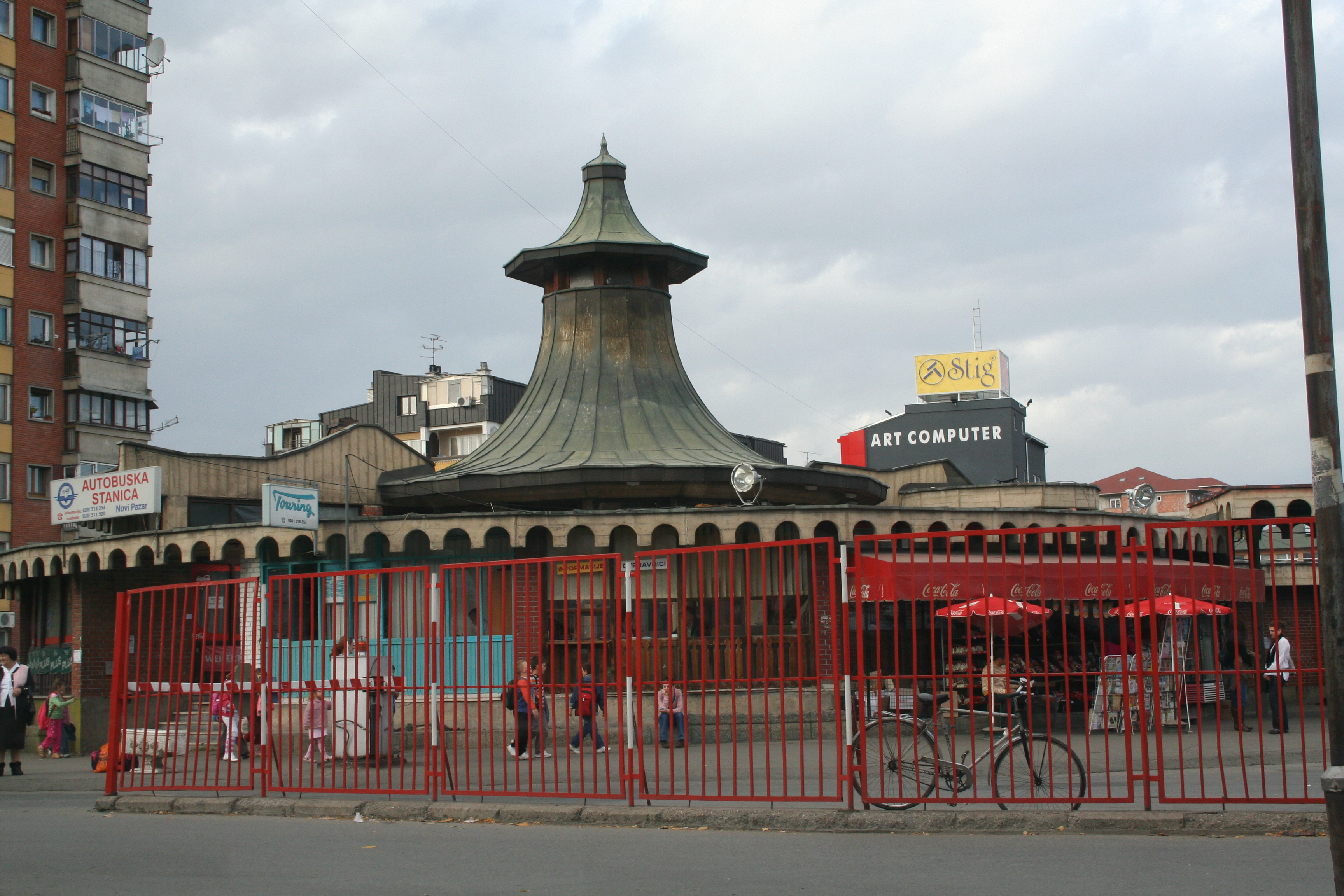
Bus station with no bus, Serbia
It’s cheaper
I couldn’t do the amount of travelling I’ve done at the prices charged by most tour operators. I can shop around for the best flight deals, find a hotel room which doesn’t penalise the single traveller with a jaw-dropping supplement and can opt out of the parts of itineraries that just don’t interest me. Local transport is invariably cheaper than a seat on a tour bus and I don’t pay entrance fees for attractions that I don’t want to visit. It can occasionally go wrong, of course, but that’s what good insurance is for.

Room for one more, Senegal
Photos and words: Julia Hammond

 Julia's Travels