Lots of people ask me what my favourite country is out of all those I’ve travelled to. It isn’t really a hard question to answer as over four visits to this South American nation, it’s really got under my skin. Peru’s landscapes, fascinating culture and rich history make it a shoe in for the top spot, its crazy and very likeable people the icing on the cake. If you’ve never been to South America, Peru’s a great country to start with. Its tourist infrastructure is well developed, particularly around Cusco, and although it has sometimes had a reputation for petty crime, with a bit of care you can easily avoid becoming the next statistic.

Bottle feeding a baby alpaca
Getting there
Getting to Lima, the Peruvian capital from the UK has just got a whole lot easier with the introduction of thrice-weekly direct flights from London Gatwick with British Airways. However, these are hard to come by for a reasonable price and you’re still likely to have to consider an indirect routing.
Typically, the best European options are via Madrid with Iberia, through Amsterdam with KLM and Paris with Air France. I’ve used all these routes and the advantage outbound is that you’re on the second leg towards Peru pretty quickly which makes you feel like you’re getting somewhere. Be wary of using CityJet connections from Paris back to London in case you have the poor experience I suffered:
https://juliamhammond.wordpress.com/2015/03/06/finally-a-win-against-cityjet/
It’s also possible to hub through the USA which gives you two more evenly balanced flights. However, if you do choose this option you’ll need to clear immigration in the USA even though you’re only in transit, meaning you’ll need to apply for an ESTA at a cost of $14 just to sit in the airport. Queues can be long; it’s best to allow at least a three hour layover if you plan to do this to avoid missing the second leg of your flight. I’ve seen people beg and plead to queue jump to no avail.
Getting to Lima from the airport
With most flights from the UK arriving in the evening Peru time, you’re going to need to spend at least one night in the capital before connecting to your domestic flight or bus the following day. Lima’s Jorge Chavez airport is located in the port district of Callao, the opposite side of the city to the upscale neighbourhoods of San Isidro, Miraflores and Barranco which are the most pleasant to stay in. You can find accommodation in Callao but it’s not a very nice area and not especially safe. Buses pass the airport and head into the city but you’re better off organising a taxi. Don’t go out onto the street to hail one; instead, before you leave the arrivals hall, look for the Taxi Green company and use them. Their rates are fixed so you can be sure you won’t be ripped off. Lock your door though; I’ve had an opportunist thief attempt to steal my phone by opening the back door of the taxi while we waited at a red light.
Getting around
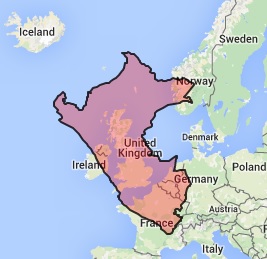
Let’s start by stating the obvious: Peru is large. Getting around is a trade off between cost and time. If you are only in the country for a couple of weeks then flying between cities is really your best bet. Internal flights are relatively competitive if you book reasonably early, especially to Cusco. I’ve recently flown with LC Peru and Star Peru which were both good; TACA also operate internal flights. LAN (now LATAM), the national carrier, is very reliable but tends to be more expensive.
You can also take overnight buses. It’s advisable to travel with a reputable company such as Cruz del Sur or Ormeño as they are supposed to drug-test their drivers more often and travel with a pair. Buses have regular seats but often semi-cama or cama also; these are much larger, reclining seats (cama means bed) and are much better over longer distances. I suffer from back problems but found I could get comfortable enough to sleep.
Train services are limited in Peru but there are a couple of routes which are of interest to tourists. Lima to Huancayo is the second highest rail line in the world (after Tibet) but the Tren de Sierra only rarely makes the journey. Services from Cusco are more frequent and thus of greater importance here. Trains run to Machu Picchu beginning from Poroy just outside Cusco (and also from Ollantaytambo further along in the Sacred Valley) as well as to Puno over the altiplano. Find out more at http://www.perurail.com.
In town, it’s cheap to take a taxi, though make sure you agree a price in advance and if there’s more than one of you, make sure that price is per car and not per person. Colectivos, minibuses that run on fixed routes, are easy to hail and cheap to ride. Alternatively, little three wheelers (Peruvian tuk tuks) are the way to go in places like Cajamarca.
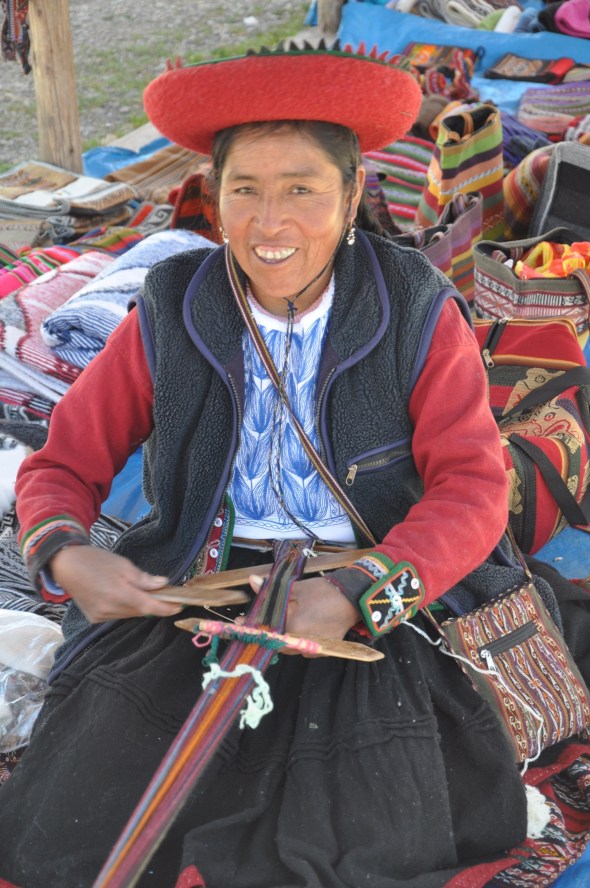
Chinchero market
Where to go
Lima
The nation’s capital had something of a reputation with many visitors spending as little time there as possible. These days, however, it’s enjoying a resurgence in popularity as the Peruvian foodie scene has kicked up a gear. I did an excellent food tour with the Lima Gourmet Company which made me re-evaluate my feelings about the city. For more on Peruvian cuisine read my blog for Wanderlust here: http://www.wanderlust.co.uk/planatrip/inspire-me/lists/top-10-peru-food-experiences?page=all

The best desserts in the whole country
Nazca, Ica and Pisco
A few hours’ drive south of Lima are the Nazca Lines, those lines in the desert which defy explanation. It’s possible to take a flight in a light aircraft but try to time your visit for early in the day as it gets bumpy later on – and take it from me, drinking a bottle of Inca Kola beforehand doesn’t help. I saw the monkey and the inside of a sick bag. Nearby, head for Ica to visit the pretty oasis of Huacachina and to Pisco, the jumping off point for a boat trip to the Ballestas Islands.

Mummies in the desert
Cusco
The undisputed jewel in Peru’s tourist crown, if you only have time for one place in Peru then make it the Incan capital. There’s plenty to see in the city itself, including the incredible Qoricancha, temple of the Sun God, as well as the Spanish cathedral built on Inca foundations. San Blas neighbourhood is a good place to browse the craft shops and relax in its pavement cafes, but for the wow factor, continue up the hill to the incredible fortress of Sacsayhuaman.
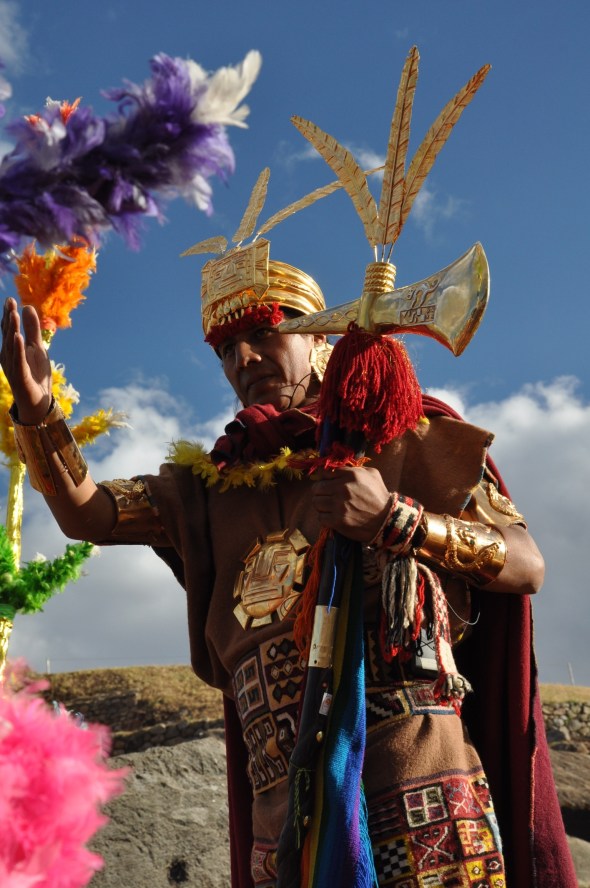
Inti Raymi celebrations take place in Cusco each June
Sacred Valley & Machu Picchu
Machu Picchu, an Inca citadel high in the hills, is Peru’s number one tourist destination. Walking the Inca Trail is the ultimate bucket list activity. If that’s too much like hard work, take the train and overnight in Aguas Calientes. These days you’re unlikely to get the place to yourself but to have a chance of seeing this magnificent UNESCO World Heritage Site before the crowds peak with day-trippers from Cusco is worth a try.
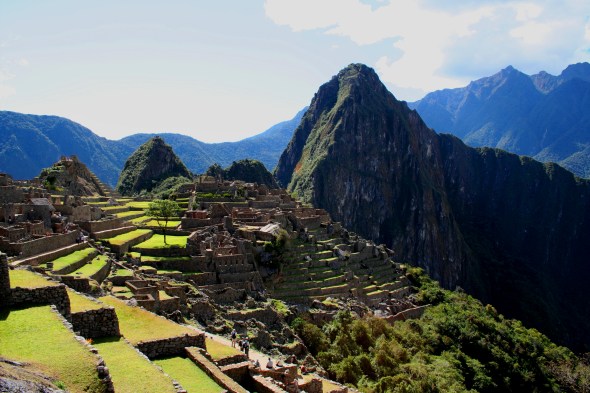
Machu Picchu
The Sacred Valley is packed full of amazing places to visit, among them Ollantaytambo with its imposing ruins, the amphitheatre at Moray, salt pans near Maras, and two great markets at Chinchero and Pisac. For a suggested itinerary, try my Unanchor Kindle guide: http://www.amazon.co.uk/Cusco-Unanchor-Travel-Guide-first-time-ebook/dp/B00RKE5E96.

Salt production near Maras
Arequipa
The White City, built in colonial times from sillar, the local volcanic stone, is the most elegant of Peru’s many wonderful cities. Its Plaza de Armas is dominated by a beautiful cathedral and wandering the old town is a delight. It’s worth heading slightly out of the centre to the mirador at Yanahuara; this lookout offers a good vantage point from which to see Misti. Arequipa’s also the jumping off point for visiting the impressive Colca canyon. Download my Unanchor guide from Amazon to find out more: http://www.amazon.co.uk/Arequipa-Unanchor-Travel-Guide-First-Time-ebook/dp/B00Q2C02NU

The mirador at Yanahuara
Puno
The high altitude at which Puno sits makes walking up its hills hard work, but if you make the effort, the views of Lake Titicaca are worth the lack of breath. One of the most interesting day trips is out to the chullpas at Sillustani, ancient Aymara funerary towers. Another is to the islands on the lake: Taquile and Amantani give visitors an interesting insight into what life is like on the lake while the more touristy Islas Flotantes (the Uros floating islands) are well worth a bounce.

Visiting the Uros Islands
Chachapoyas
Chachapoyas is well off the beaten track, but that doesn’t mean you should give it a miss. Nearby, the ruins of Kuelap are touted as the “new” Machu Picchu, even though they’re considerably older. Also in the area are the peculiar sarcophagi at Karajia, where mummies were placed high in the cliffs, and the lofty Gocta Falls, hidden from the outside world until 2005. Find out more in my earlier post: https://juliamhammond.wordpress.com/2014/11/25/northern-peru-the-chacha-circuit/

Kuelap
Cajamarca
Another northern gem, this is the place where Atahualpa was tricked into paying a huge ransom in gold by the invading Spanish. He was captured and murdered, but you can pay a visit to the Baños del Inca for a soak near his tub. A short ride from the city centre are the Ventanillas de Otuzco, a pre-Inca necropolis. Don’t leave without sampling the region’s yummy cheese.

Cajamarca is worth visiting for the hats alone
Mancora
Hammocks and palm trees dripping with coconuts – are you sure this is Peru? Mancora is a surfer’s resort up near the Ecuadorian border. If you’ve timed your visit to catch the dry season in the south, those cold nights may well have you dreaming of lazing around on a sunny beach as the Pacific waves lap the shore.

Looking out over the Pacific from a Mancora hammock
And even that’s not all. Chan Chan, the largest pre-Columbian city in the Americas and capital of the Chimu kingdom, is another of Peru’s UNESCO World Heritage Sites and the biggest adobe city in the world. One day I’ll fly up to Trujillo and pay a visit. I’ve also not been to Iquitos, the heart of the Peruvian Amazon, but if rainforest’s your thing, then you should plan to go. As for me, I’m not a fan of the humidity or the midges, so I’ll be making a beeline for Huaraz, the base for some of Peru’s best mountain peaks and glacial lakes. But even as I daydream about going back, I’m guessing that even a fifth trip won’t be enough for me to have had my fill of this wonderful country.






![IMG_3002[1]](https://juliahammond.blog/wp-content/uploads/2016/04/img_30021.jpg?w=590)
![IMG_3089[1]](https://juliahammond.blog/wp-content/uploads/2016/04/img_30891.jpg?w=590)



 Julia's Travels