juliamhammond

Latest

Ever wondered what it’s like to take a flight which lands on a beach?

For a long time there have been two aviation-related items on my Scottish bucket list. I will have to wait a little longer to tick off the world’s shortest commercial flight – a 1.7 mile hop from Papa Westray to Westray in the Orkney Islands. But this May I realised a travel ambition: to land on the beach on the Isle of Barra in the Outer Hebrides.

Flights to Barra are operated by Loganair. I flew from Glasgow on a Twin Otter. They typically have a capacity of about 19 passengers though there were only 13 of us on board on the outbound leg and just four when we returned to Glasgow. It’s an intimate affair. Two crew members accompany the flight; the pilot is joined by a first officer who doubles as cabin crew for the obligatory safety briefing.

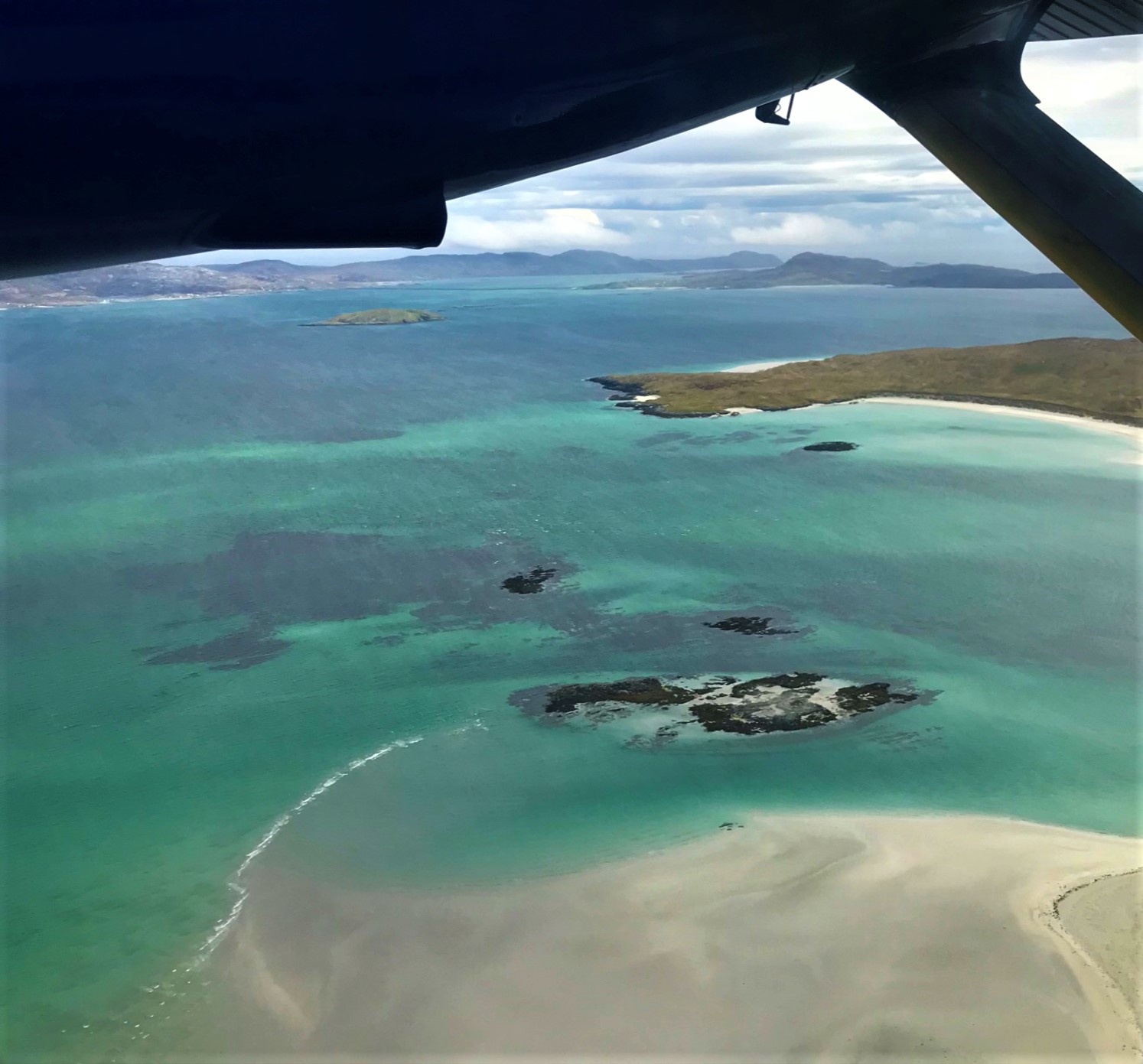
I’d heard that flights could be bumpy and in such a tiny plane I was fully prepared to feel queasy. Luckily for me, the weather was calm and the skies clear – both times. The flight time is about an hour from Glasgow and along the way we had some great views of some of the other islands.
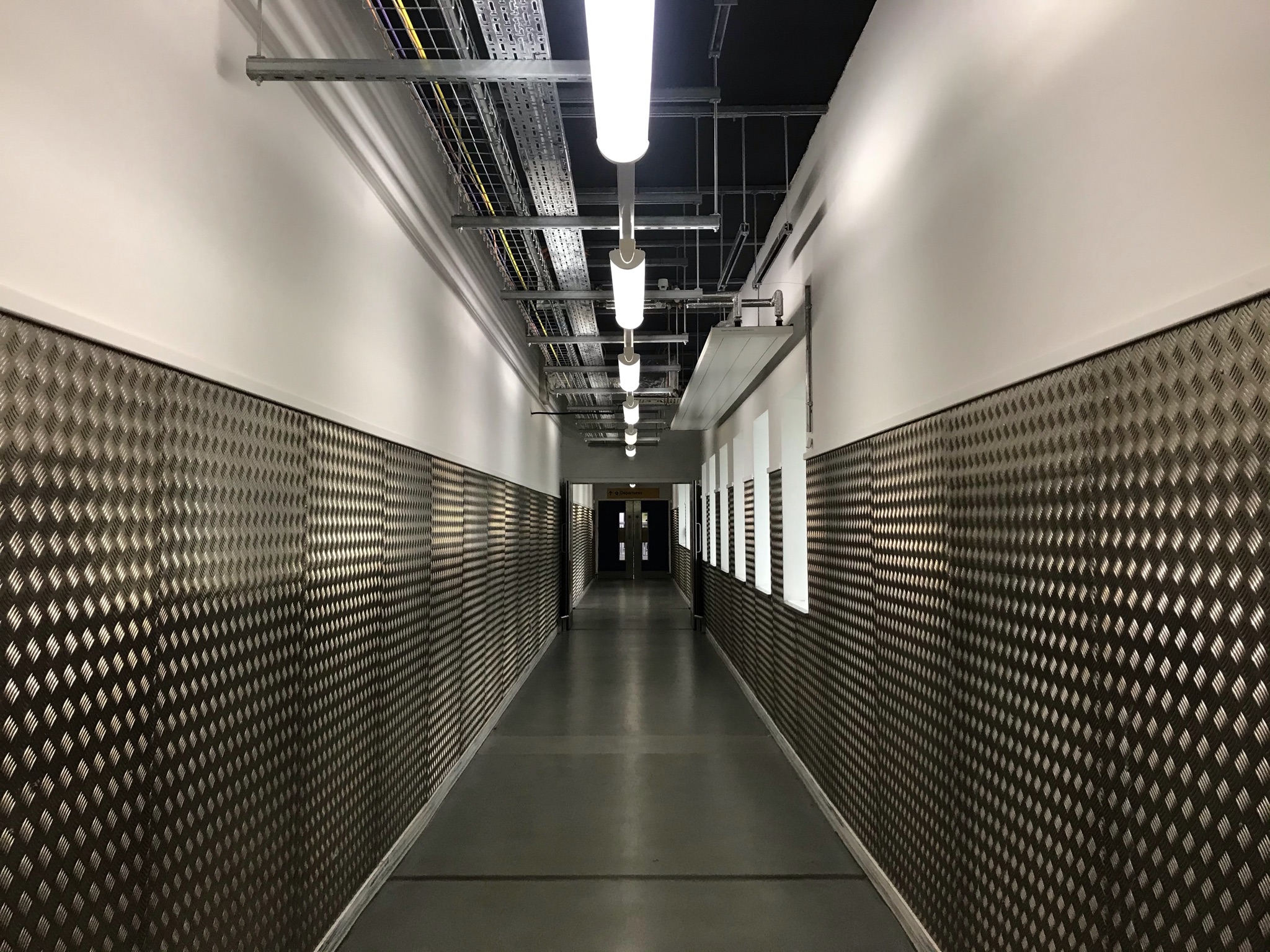
My experience at Glasgow Airport was strange. Thanks to COVID, there were few people around when I arrived. In fact, I was directed down a side passage instead of entering the departure gate area via the duty free shop as was the norm. Even though I’d flown from Glasgow a few times before, it was a bit disconcerting, particularly when passengers were outnumbered by staff by a ratio of about 4:1. And this was for a civilised departure time of 10.15am. Eventually, a few businesses opened – Boots, WHSmiths, the duty free shop and the pub. The fact that everything else remained closed and there were fewer than 20 people waiting to fly in the whole terminal – not to mention seeing just a dozen flights for that day on the departure board – was a real eye-opener to the devastating effect this pandemic has had on airport economies.
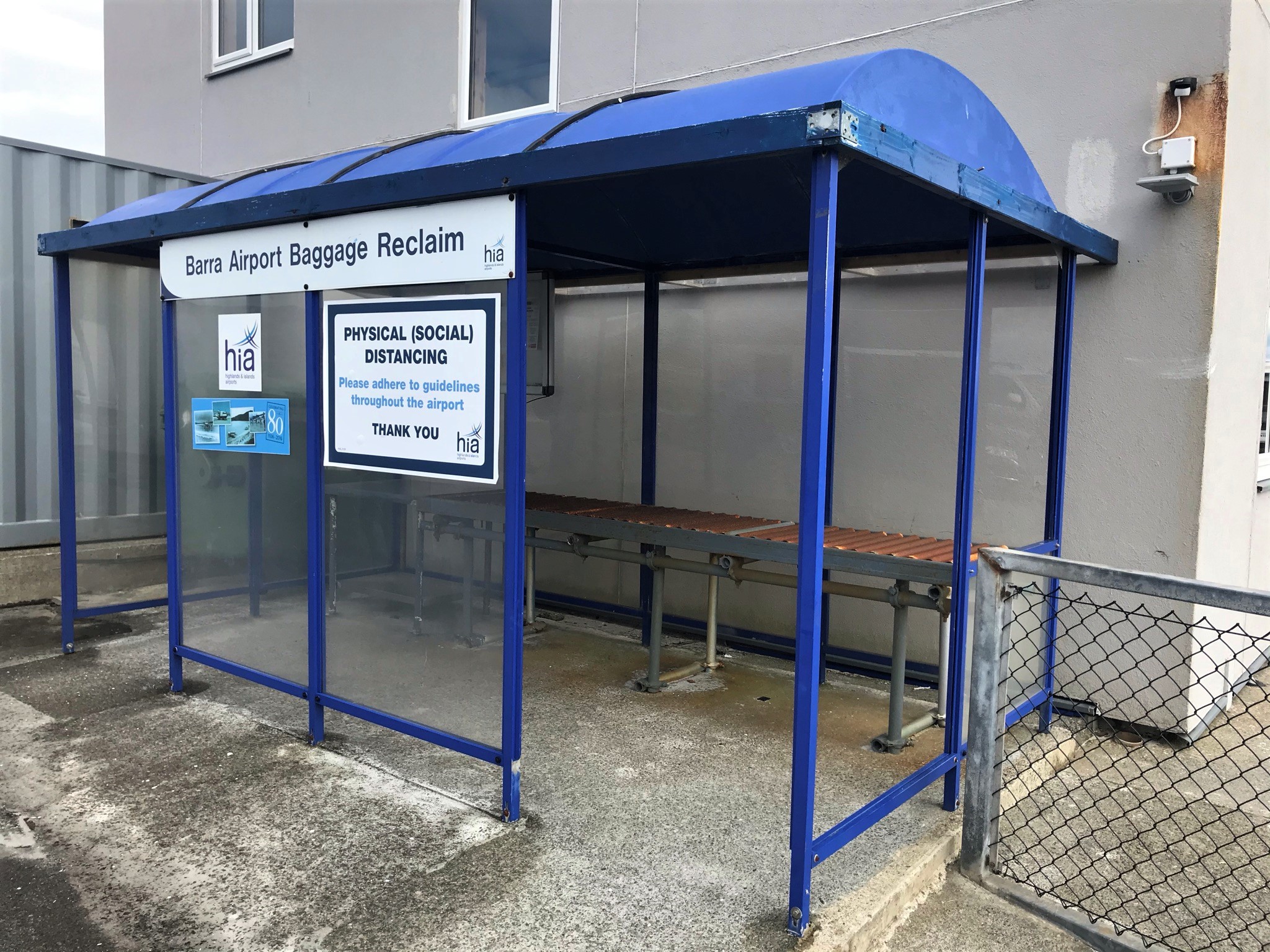
Nevertheless, as I boarded the plane I was grinning. It’s always exciting to fly, but this was the first plane I’d boarded since October 2020. Approaching Barra at low altitude, we had a good view of the landing strip and airport. Aside from the beach itself, the airport comprised a few small buildings that housed the terminal, fire service and maintenance operations. Baggage reclaim was a bus shelter, though the bus itself idled in the car park as it waited for passengers.
I had a better chance to see how this airport functioned on the return leg. At high tide, the water is too far in to enable a safe landing. Even at low tide, a reccy is done by Land Rover to check there’s no debris left on the beach by the tide and to make sure the beach is dry enough to permit a safe landing. Whichever direction the plane lands, there’s plenty of room for it to taxi to the “stand” on the part of the beach closest to the terminal.

From my window seat I had a clear view of the landing. As we landed, the water on Traigh Mhor beach created a spray off the wheel. It was a smooth landing though – touching down on soft sand is definitely a lot more comfortable than doing so on the usual runway asphalt. Coupled with the lack of wind, it was one of the smoothest landings I’ve ever experienced.

And of course, being such a tiny plane with so few passengers, disembarkation was fast too. As it is a domestic flight there were no inbound formalities, though on the return leg bags were weighed and all passengers, regardless of whether they were in possession of an electronic boarding pass, were checked in by hand. It takes next to no time, but I’d recommend getting up to the airport well ahead of the departure time.

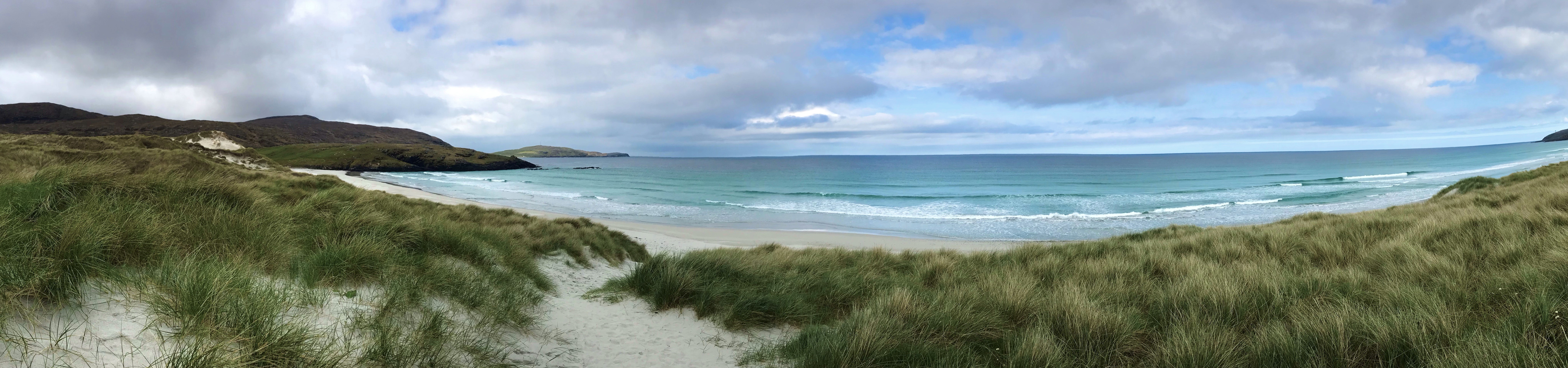
It is possible to fly in on the early flight and out on the later one, giving you a few hours on Barra. I opted for a two-night stay so I could see more of this charming island. Though Kisimul Castle is currently closed, boat trips to Mingulay to see its ruined village and bird cliffs are running, and there are plenty of excellent hikes to unspoilt beaches. Across the road you won’t want to miss the dune-backed Traigh Eais beach – a short but rewarding walk – and of course you’ll be able to see the incoming flight touch down. The bus driver was happy to let me stay on the bus for some bonus sightseeing as he looped up to Eoligarry to the north of the island.
To check out flight availability, visit the Loganair website.

To watch the videos of the flight landing, check out my Facebook page, Julia Hammond Travel Writing.

A dog friendly break in Shropshire

Aside from a brief visit to Ironbridge many years ago, this was my first visit to Shropshire. I’ve just returned from a few days spent in a converted cow shed – rather lovelier than it sounds – in a sleepy village close to the Shropshire Hills. What follows is by no means a complete guide to the area – for that I recommend the excellent Slow Travel Shropshire by Marie Kreft. As with other guides in this Bradt series, it will equip both first-time and return visitors with all the information they need to get the most out of this beautiful county.

Where we stayed

Edgton’s church

Home for a few days was the delightful Little Drift cottage in Edgton. Convenient for Ludlow and Church Stretton, this cute place was surprisingly spacious. The cottage shares an enclosed courtyard with the owners’ house with a couple of seats perfectly located to enjoy the late afternoon sunshine over a glass of wine. Inside, the comfortable living room and well-equipped kitchen were more than adequate for our needs, while upstairs there were two roomy bedrooms and a modern bathroom. There were enough dog-friendly touches to make this work for Edison as well – dogs allowed upstairs and a hose outside in case he got too muddy – useful for cleaning off hiking boots too.

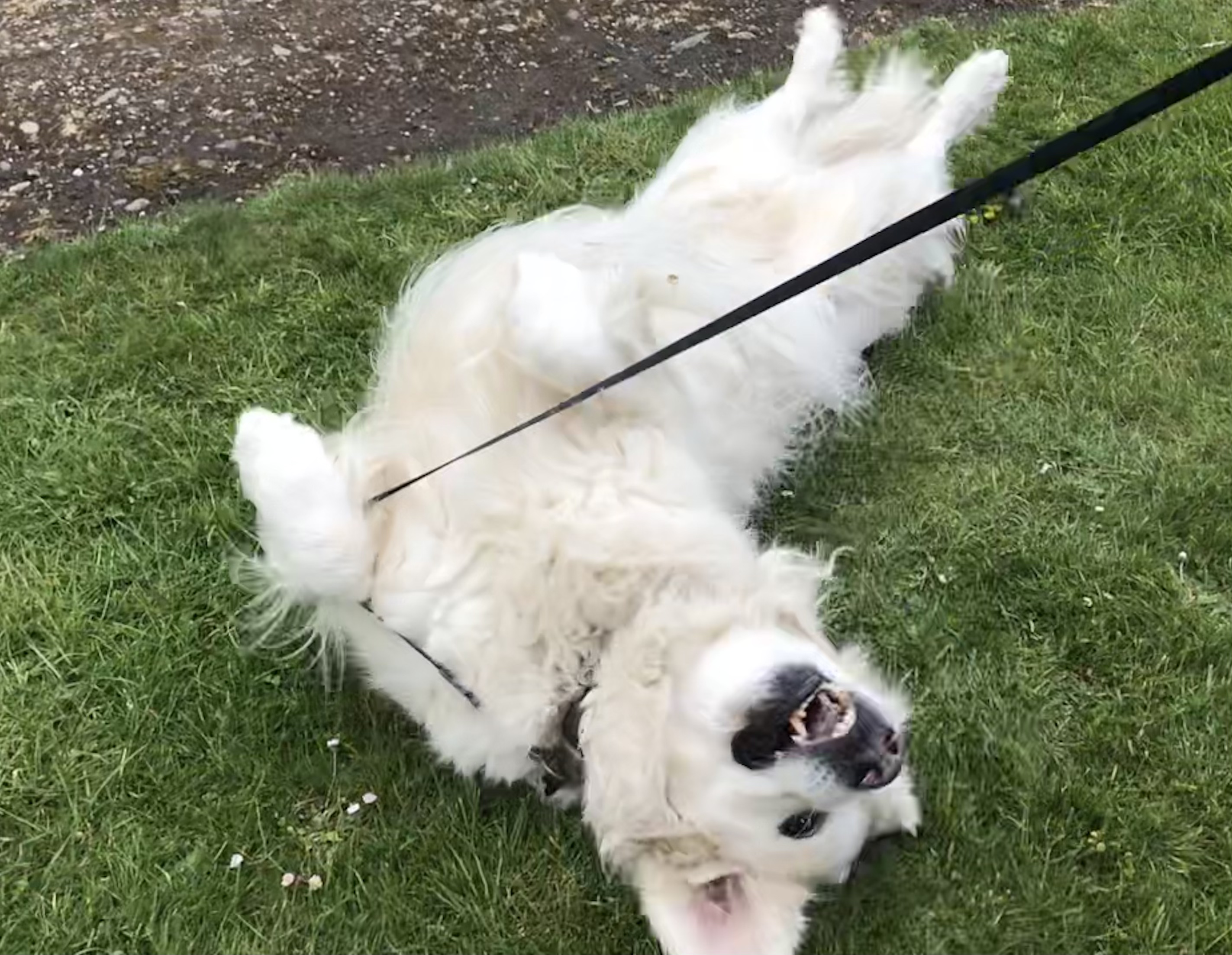
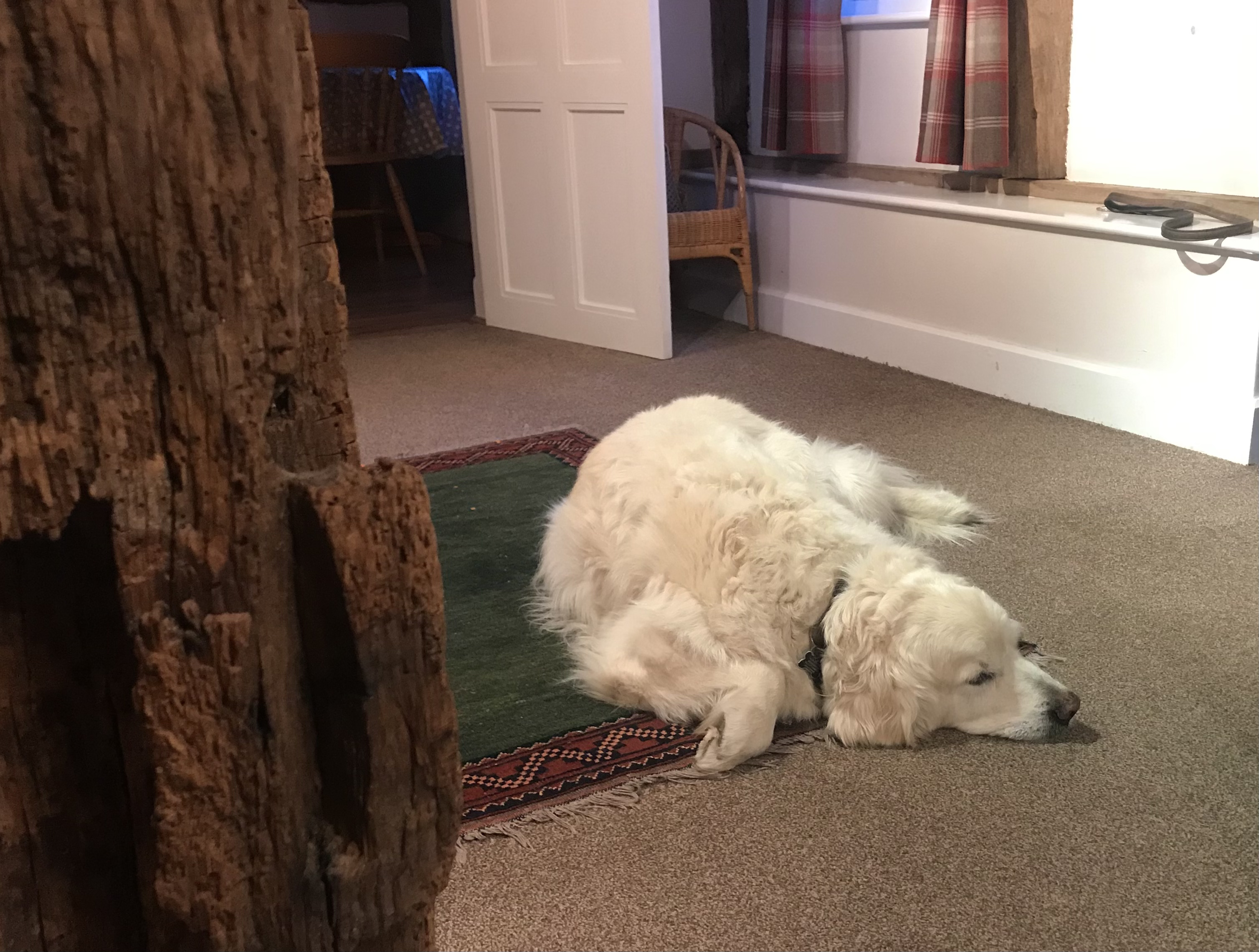
Dog tired

Where we strayed

Ironbridge

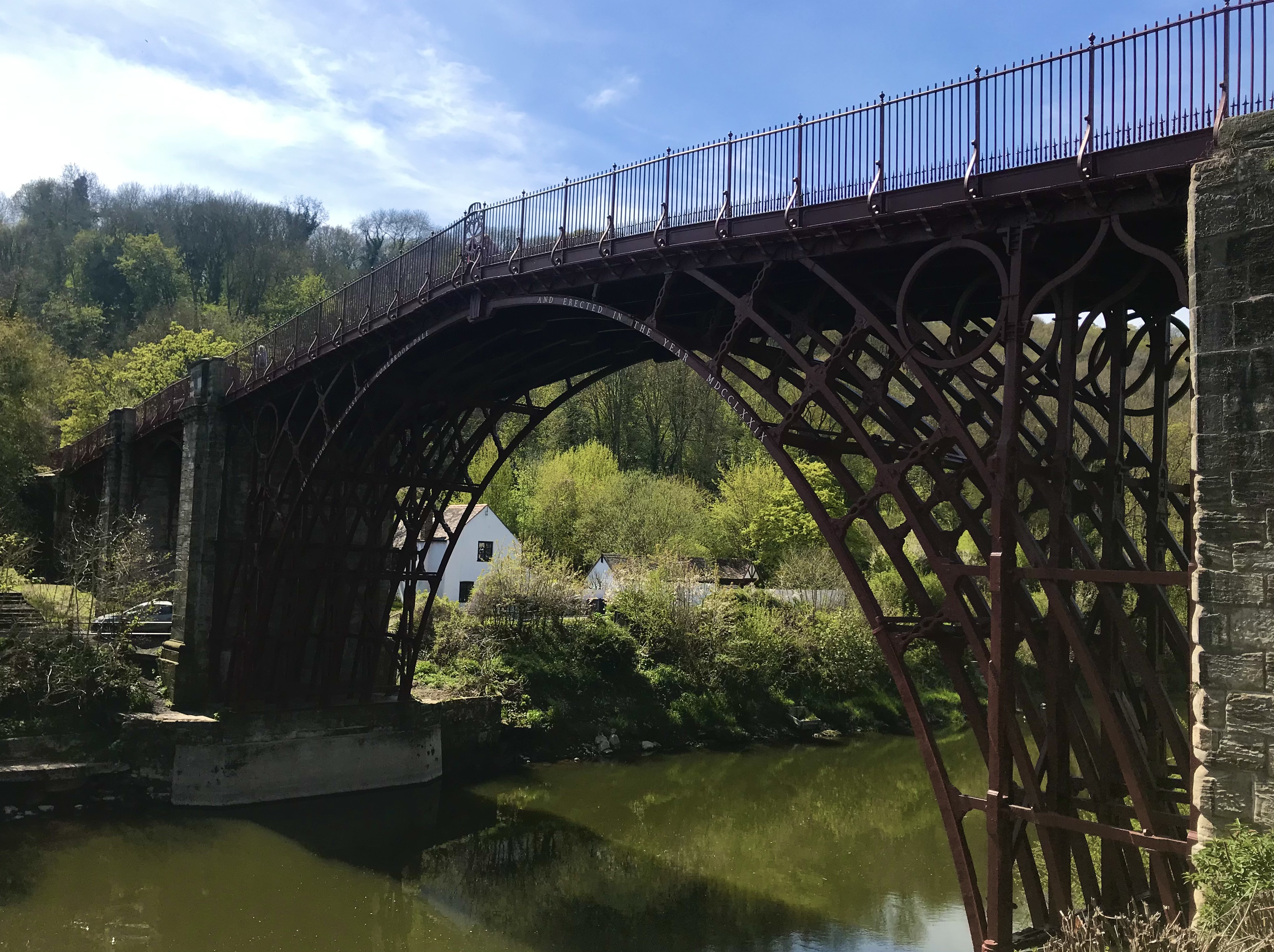
The Iron Bridge

The UNESCO World Heritage Site of Ironbridge is handily close to Telford and as such barely a detour from our route into Shropshire. It’s the oldest iron bridge in the world, erected in 1779. In nearby Coalbrookdale in 1709, Abraham Darby had worked out how to produce iron on a commercial scale and the area soon attracted industry. With that, access needed to be improved and Thomas Pritchard, a local architect, came up with a groundbreaking design for an iron bridge. He died in 1777 but Darby’s grandson took on the job of overseeing construction. The result was the single span bridge we see today, 30 metres long and boasting five semi-circular ribs. It cost about £6000 to build, almost double the original estimate.

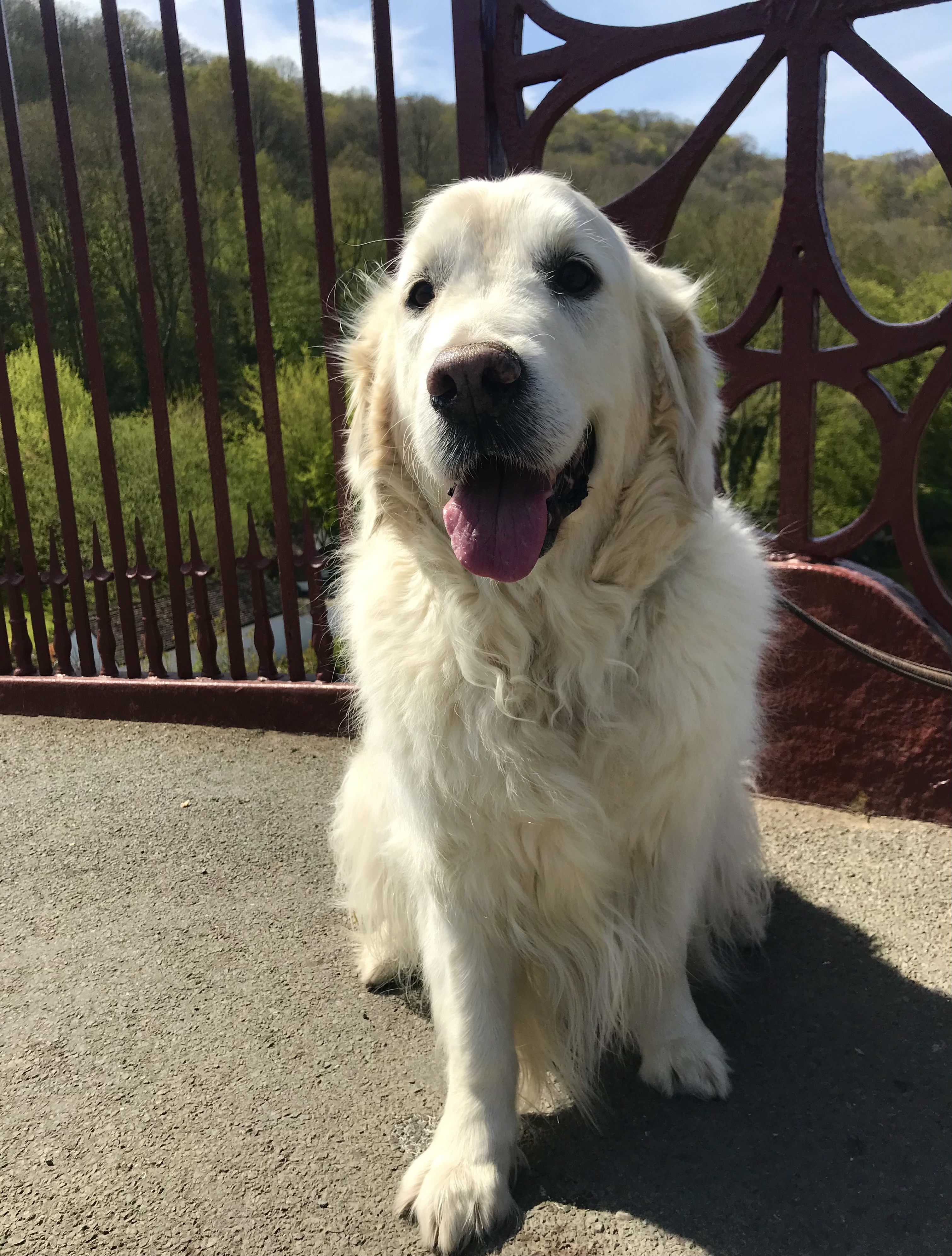
Edi on the bridge

Much Wenlock

Wenlock Priory

This charming place bills itself as instrumental in the establishment of the modern day Olympics, though with the dog in tow (not to mention COVID restrictions) we were confined to outdoor attractions only. There is a museum, however, should you be keen to learn more. Instead, we were content with a stroll through the village to admire the many historic properties and also a visit to Wenlock Priory. Managed by English Heritage, this ruined monastery stands close to fields grazed by sheep and at this time of year, plenty of lambs. It is sufficiently intact for visitors to get a sense of what it would have once been like, particularly if you take advantage of the audio guide provided.

At the priory

Carding Mill Valley

Valley walk

Managed by the National Trust, Carding Mill Valley offers an easy but scenic walk to Lightspout Waterfall. The route is billed as moderate, as there are a few short stretches which involve some minor clambering over rocks. Edison enjoyed the chance to cool his paws in the stream, and have a drink whenever he wanted. The weather had been mostly dry in the weeks before our visit so there wasn’t a lot of water in the falls, but they were pretty nevertheless. We looped back along New Pool Hollow on a trail the National Trust described as “suitable even for children”. It led to a small reservoir before looping back to the tearoom.

Cooling paws

The Long Mynd

View from the Long Mynd

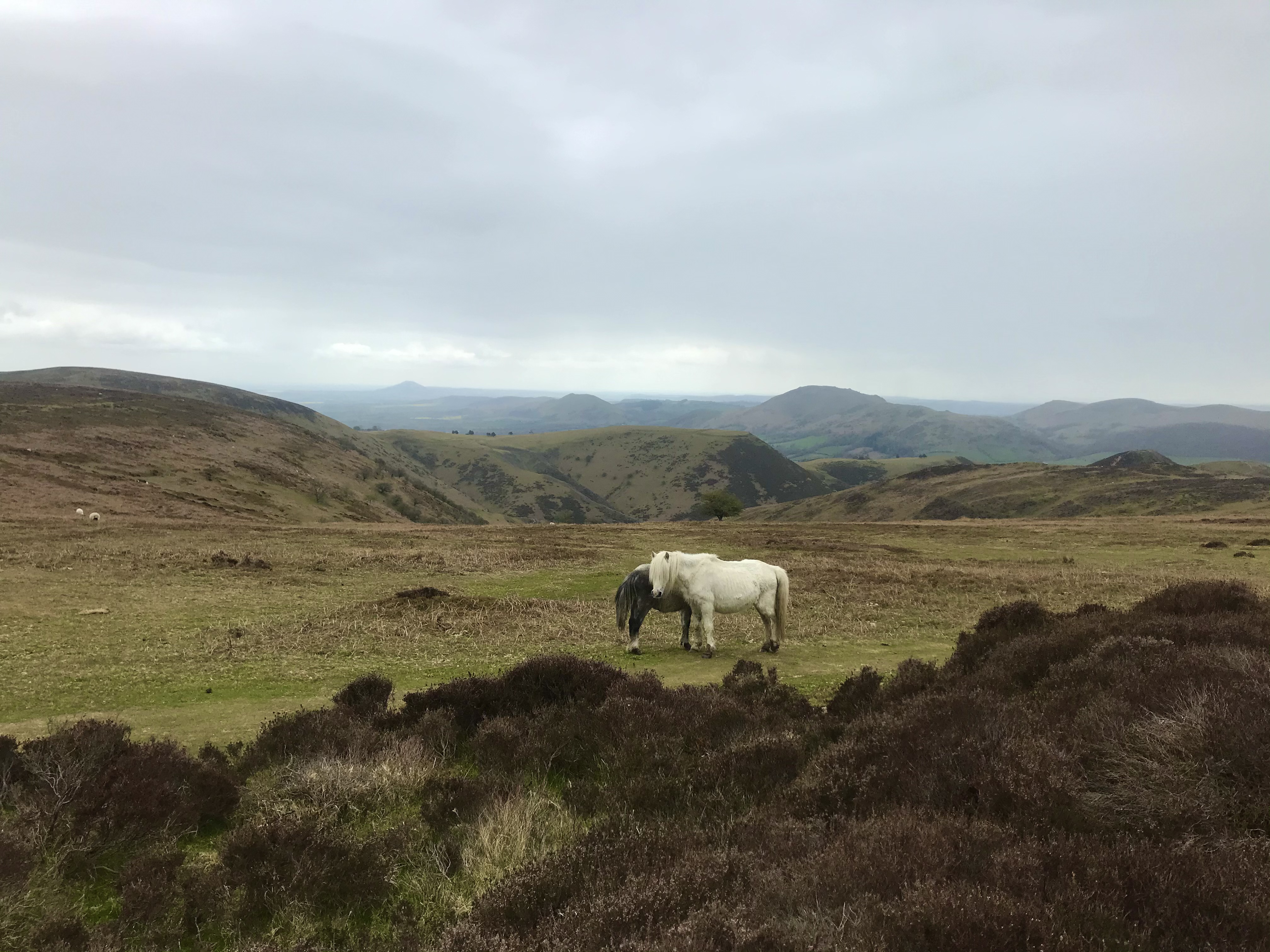
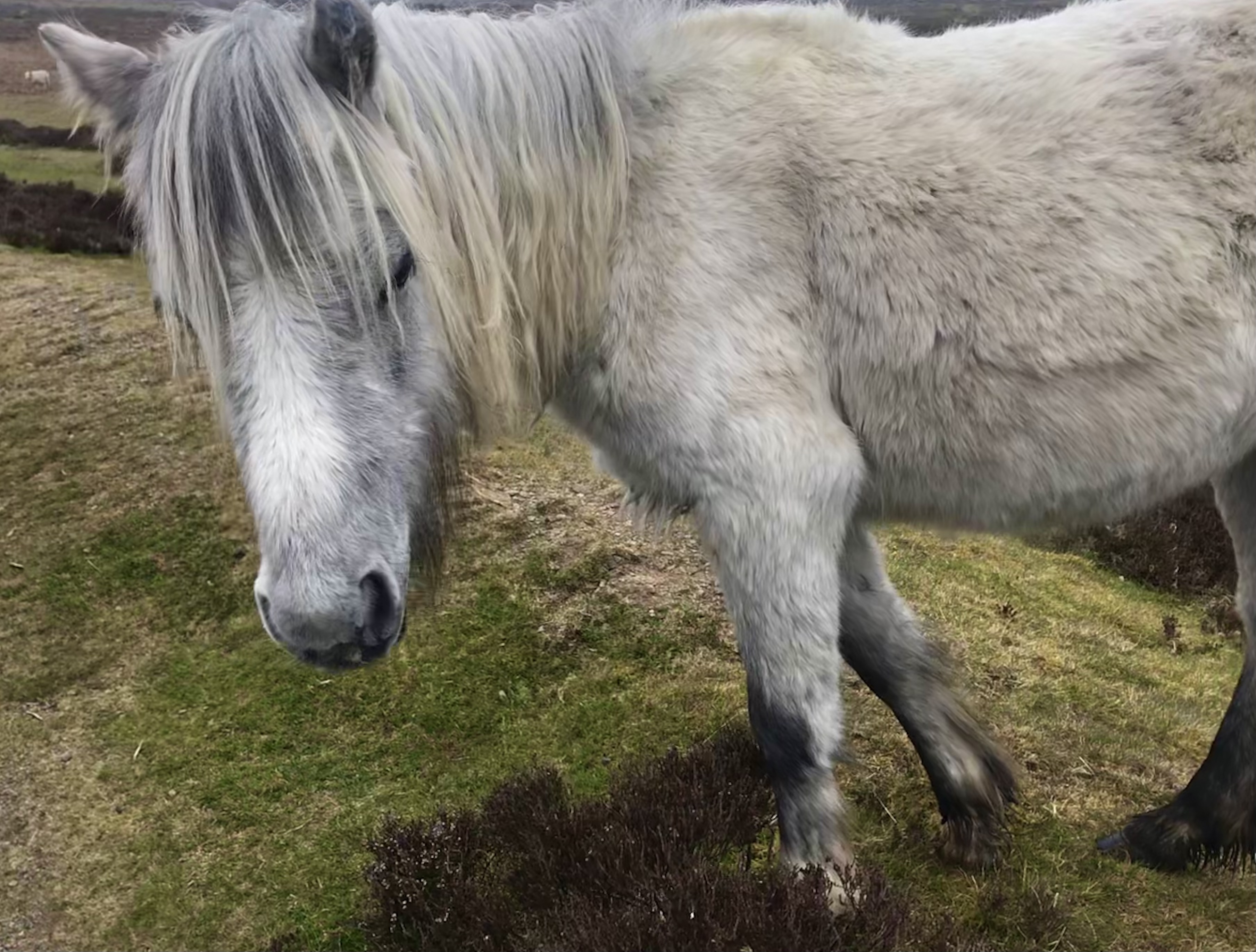
For a longer walk it’s possible to continue from Carding Mill Valley to the Long Mynd on foot. Instead, we chose to drive the Burway – a largely single track road which follows the ridge. There are passing places and as we were early in the season there was barely any traffic but I assume it would get pretty busy in peak season. We parked up near the top and continued on foot – the views were breathtaking and one of the wild ponies that was grazing nearby moved in for a quick lick of the car much to the dog’s surprise. At Pole Bank beside the Triangulation Pillar there’s a signpost which points to local landmarks which is great for getting your bearings.

Wild ponies

The Stiperstones

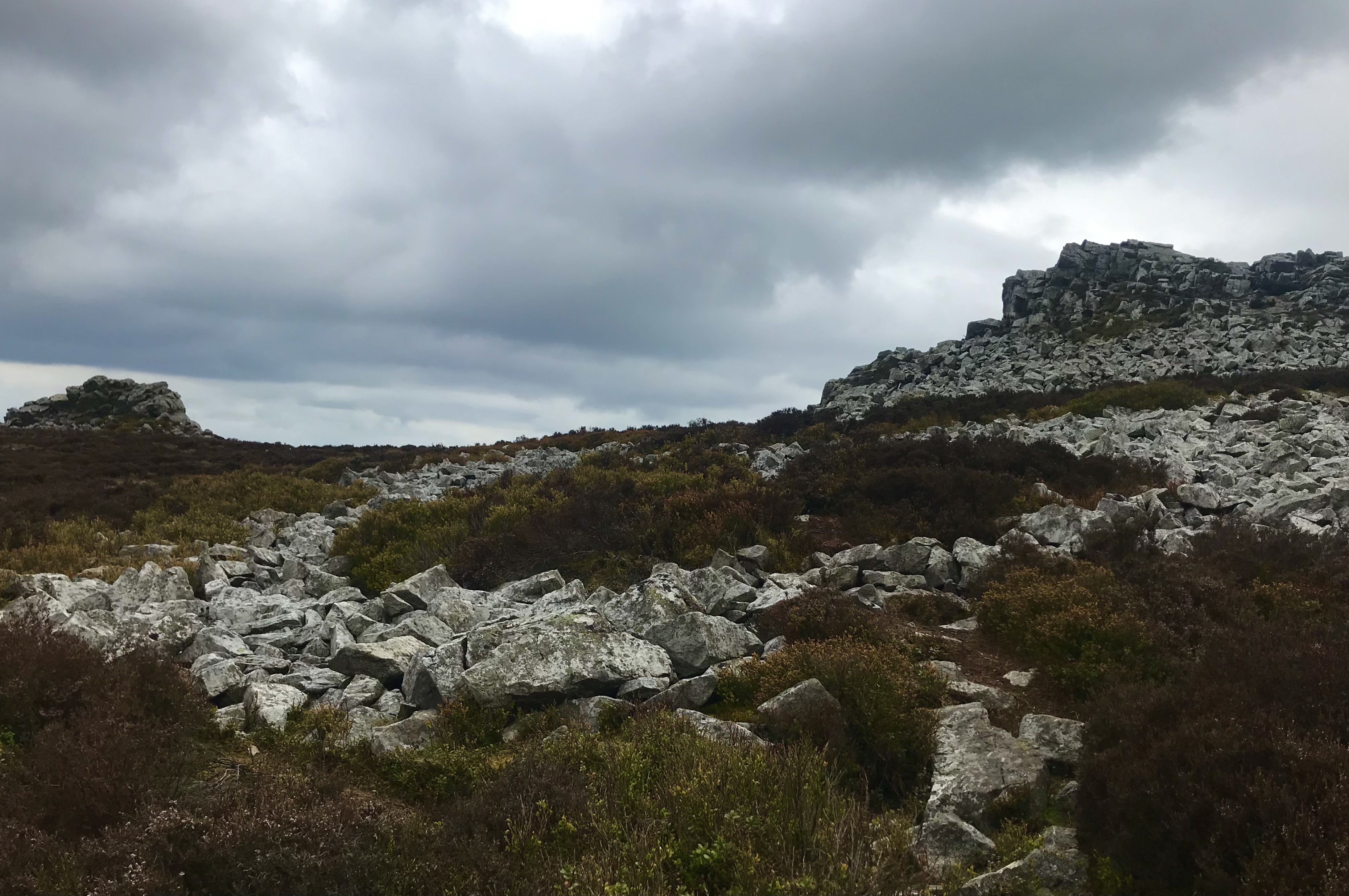
The Stiperstones

The Stiperstones are a collection of rocky outcrops which are formed from quartzite. Surrounded by heather, smaller rocks litter the slopes beneath. Each has a name: you’ll find Shepherd’s Rock, Cranstone Rock and Nipstone Rock. Manstone Rock is the highest point. The largest is Devil’s Chair. According to legend, the Devil was carrying stones in his apron but one of the strings broke, so he dropped them here. There’s also a ghost that roams here: a Saxon noble called Wild Edric haunts this upland area fighting an endless battle. As with other Shropshire uplands, there are some excellent mini-hikes from convenient car parks as well as longer walks.

Shame about the weather

A trio of castles

Acton Burnell

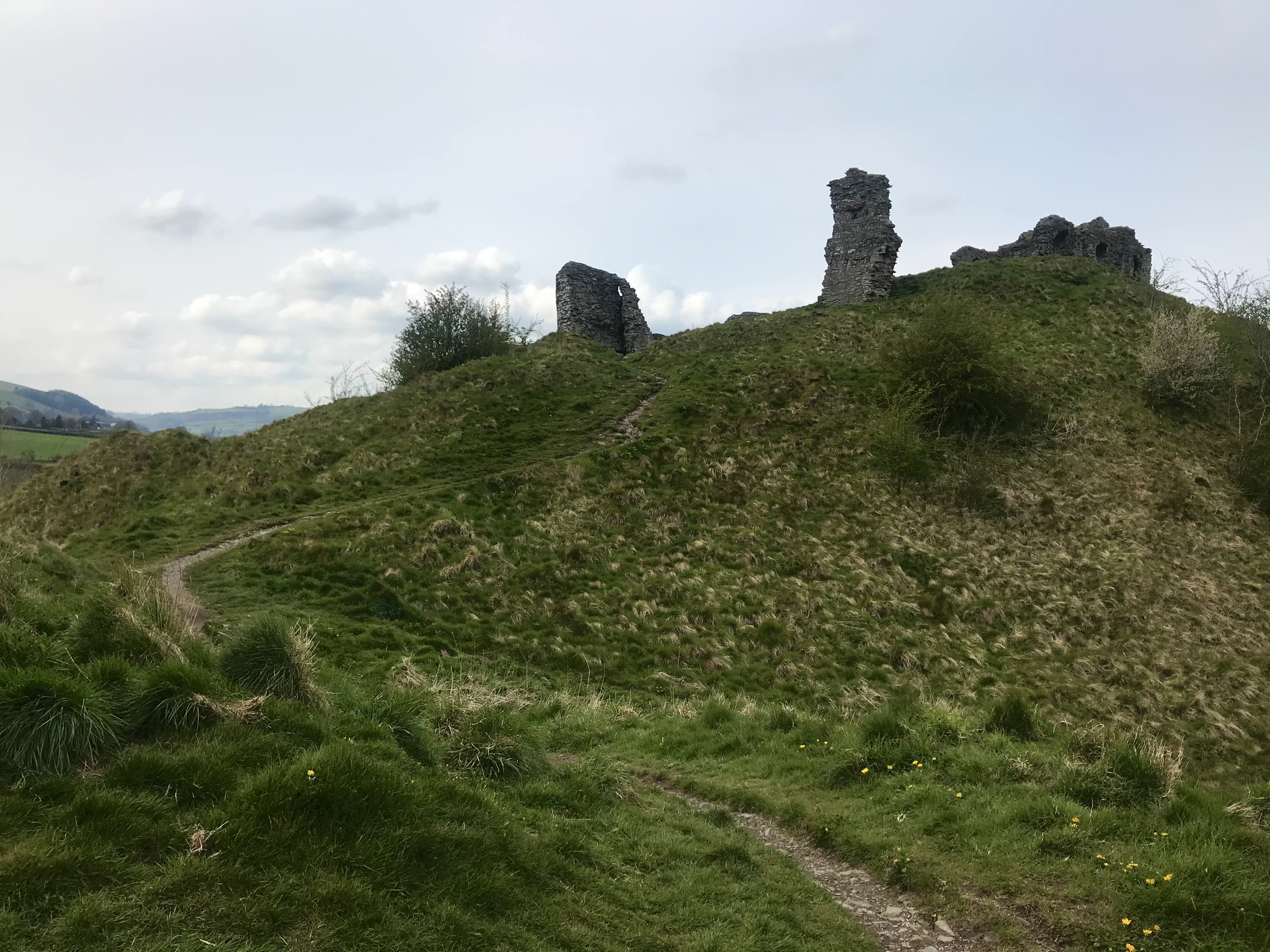
There’s no shortage of castles in this part of England though we were a little unlucky. During our visit Stokesay Castle and Ludlow Castle were both off-limits as they were being used for filming. Instead, we had to make do with Acton Burnell Castle, a ruined shell of a property built in the 13th century by Bishop Burnell, Edward I’s Lord Chancellor. It’s free to get in and we had the place to ourselves, save for a couple of squirrels. We only stopped for coffee in Shrewsbury but when COVID restrictions on indoor attractions are lifted, it’s good to know that you can take a self-guided tour of Shrewsbury Prison with a dog in tow. Instead, we looped south to another ruin, Clun Castle and a somewhat unimpressive heap of stones which once formed the fortification in the nearby town of Bishop’s Castle.

Clun Castle

If you know this part of the world at all, you’ll be wondering why I’ve omitted Ludlow. This historic town is definitely a must for visitors. We did a drive-through only on this occasion to admire the many historic buildings but I’m keen to go back for the annual food festival which is held in September. Edison will have to stay home for that trip, as will my “I only eat brown food” husband.

Why I can’t wait to go back to New York

It’s been a while since I posted. The constant changes to predictions for summer travel have been wearing and I decided it was easiest to cope with it by simply not thinking about it at all. Nevertheless, my inbox has been flooded with press releases and updates reminding me that while the UK government won’t be updating their guidance until at least May 7th, tourism providers are chomping at the bit to get us to commit our holiday funds. Many of them sound really tempting, most of all a new initiative covering New York City. The “NYC Reawakens” tourism campaign is designed to help promote visitor attractions, hotels and restaurants. Since my last visit in February 2020, there’s a lot to get excited about.

A new observation deck

On May 1st, the Empire State Building celebrates its 90th birthday. Since it opened, other observation decks have followed suit. Last year, Edge launched at Hudson Yards. Frustratingly, my invite to step out onto the glass floor fell through at the last minute as the builders hadn’t vacated in time. Although I was told I’d be welcome next time I was in town, lockdown happened soon afterwards. Now there’s another. This autumn, SUMMIT opens at One Vanderbilt, close to Grand Central station. I’m not sure anything can top (sorry for the pun) the iconic ESB except perhaps Top of the Rock, but everything’s worth a try at least once, right?

Image credit: Related Oxford

TV tie-ins

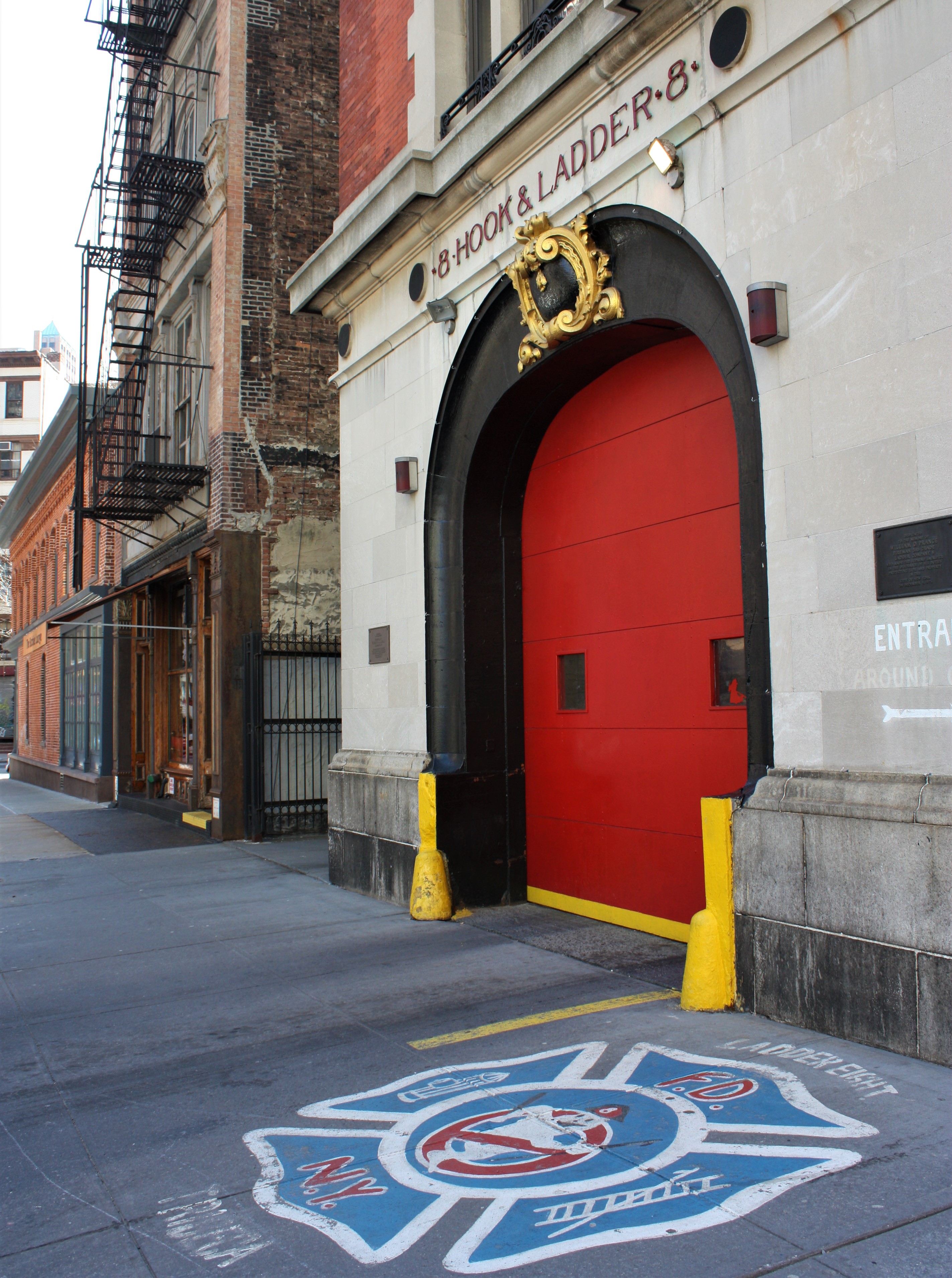
One of the most fun tours I’ve done in New York City is definitely the movie tour operated by On Location. There have been so many films and TV shows set in New York that many of its buildings feel familiar the first time you set eyes on them in real life. One film in particular was even the reason for one of my earlier trips. After watching the John Cusack movie Serendipity, my husband and I made a repeat visit to NYC just days later – I’ve rarely been as spontaneous. This time, I’m looking forward to sitting on the Central Perk couch at the Friends Experience. I might just be tempted to watch a few more episodes of the Marvelous Mrs Maisel to get more out of the tie-in tour from the seat of her 1957 Studebaker. Harry Potter fans will be interested to learn that a dedicated merchandise shop opens in the Flatiron District at 935 Broadway on June 3rd. On the subject of shopping, the legendary Century 21 department store is set to relaunch too.

Who you gonna call?

Other attractions

Though I love New York in the off season, perhaps this year it won’t be as crowded as usual in summer. In my book, that’s a good reason to time a visit to coincide with the opening of an exhibition of portraits of Barack Obama at Brooklyn Museum. By the time the artwork reaches the Big Apple on August 27th, it’ll have already been seen in Washington and Chicago, as is fitting. The Frick’s collection is temporarily being housed at Madison and 75th while its historic East 70th building opposite Central Park is being renovated. I’ve never been a huge art fan but I was surprised at how much I enjoyed my visit. Somewhere I’ve never got around to touring is the Intrepid, though I know it gets rave reviews from those that have. This year, for the first time in decades, visitors will be able to access the pilot escalators and, it’s hoped, the bomb escalators.

Street Art on the FIT building in Chelsea

That’s plenty to be going on with, though there are also a number of exciting new hotel openings, such as Virgin’s first NYC hotel in NoMad (due this winter) and a Margaritaville Resort in Times Square (accepting bookings from June). I also promised myself I’d stay at the TWA hotel after enjoying a rather sociable visit to Connie Cocktail Lounge for drinks last year. I’m pretty tempted – are you?

Why I’m still not booked up for summer

I’ve never found it harder to resist booking a trip than over the last few days. The UK vaccine rollout continues apace; I’m finally old enough to be booked in and if all goes according to plan, I will be fully protected (as much as any vaccine can do so) by mid-June. Of course currently, international leisure travel is banned here in the UK, but each day, my social media feeds and inbox bring news of more countries that will permit entry for vaccinated travellers without the need for quarantine. Everyone, it seems, is competing to have us back. So why haven’t I booked?

Quarantine uncertainty

One thing I learnt last year was that predicting what the situation with travel will be in the weeks and months ahead is fraught with uncertainty. After the Icelandic government altered their quarantine arrangements, I had to reschedule my trip in a hurry, dropping everything to leave almost a month ahead of my planned departure date.

The information about current entry requirements is fairly easy to obtain – my go-to is the FCDO travel advice which is a UK government site updated regularly. From this, I have a tentative shortlist of countries to which I might travel later in 2021. But as coronavirus case numbers change, so too can national policies. In other words, just because somewhere is saying they’re welcoming us now doesn’t mean their borders will still be open in the summer.

Inbound quarantine restrictions are also a factor. The UK government currently have a “red list” of countries which trigger a compulsory inbound quarantine for ten days on arrival in England. Whether that takes place at a hotel or in your own home depends on where you have travelled and the route you take to reach England:

“If you’re travelling to England you must either quarantine in the place you’re staying or in a managed quarantine hotel for 10 days because of coronavirus (COVID-19). What you need to do depends on where you travel in the 10 days before you arrive in England.”

Costs for the managed hotel option are significant and certainly a deterrent- as intended. I’m sure those who have already booked are hopeful, maybe even confident, that their destination won’t appear on the list. At some point, as yet unspecified, this requirement will be lifted, but with case rates still worryingly high in some parts of the world, there are no guarantees.

Testing requirements

The requirement for a PCR test (or two) is an added complication. There’s a lot of variation between countries. Some offer testing on arrival with a requirement to quarantine or at least limit activities until a negative result is received. Others require tests to be carried out in advance, usually within a 72 hour window. A positive result would scupper your holiday at the last minute, as it’s hard to find an insurance policy which would cover cancellation in those circumstances.

Even if it’s negative, it could add a considerable sum to the cost of your holiday. In the UK, such tests should be done privately and are quite expensive. Abroad, the cost of testing varies a lot. Last year, I paid around £50 for two tests in Iceland but nothing for the test on arrival in Madeira. It’s worth doing thorough research in advance to avoid getting a bill you weren’t expecting. Test to release on the inbound leg currently adds another cost.

Vaccine passports

Some countries, tour operators and airlines have indicated they’ll require guests to be fully vaccinated before they are eligible to travel. In some cases, such as Iceland, this removes the need to take a PCR test so long as you carry official proof. Being vaccinated isn’t likely to be a problem for the over 50s, as we’re not permitted to travel internationally until at least May 17th. But younger travellers might need to wait until autumn until they receive that crucial second dose to qualify. Vaccine passports are also probably going to be a requirement, but the precise nature of the document, how to apply and how much it will cost is still being worked out. As with many things during the pandemic, governments are having to play catch up as the situation evolves.

The holiday itself

As numbers continue to spike in countries across the world, quite rightly governments are reacting with local or national lockdowns. When that happens, visitor attractions are an early casualty. Some trips would be worse affected by this than others: the trips I made last year to Iceland and to Madeira largely focused on walking outdoor trails. Aside from dining, much of what I did wouldn’t have been affected by the closure of museums and other indoor attractions.

Hit the jackpot, of course, and you get to experience popular places without the crowds. I visited St Petersburg just before things really kicked off last March and toured its breathtaking palaces with no waiting in line and no jostling to see their exhibits. That was an extraordinarily special thing. But it’s a gamble; if you’ve always wanted to visit a particular attraction but it’s closed, ask yourself whether that would ruin the trip. Had I been in Funchal and missed out on the famous wicker toboggan ride, I’d have been disappointed; thankfully they were able to operate.

The industry perspective

The impact of the global pandemic has been horrendous for tourism-driven companies. Even the most profitable airlines have taken a huge hit and there are no guarantees that routes or even airlines will be around. Make a booking and you do your bit to help to save the industry, but if it all goes belly-up you potentially won’t see your hard-earned cash again. If you do plan to pay upfront, check your insurance policy and make sure you’re happy with the cover it provides.

But many companies are offering flexible bookings, and we know a lot more about who did the right thing in 2020 when it came to refunds thanks to this useful survey by the travel team at Which? If your gamble pays off you can win big. Hotels have slashed their rates, meaning you can enjoy luxury on a modest budget, while outside of peak season, the cheap fares we’ve come to expect from airlines are there for the taking. However, in my experience, last minute flights in 2020 were pretty affordable and accommodation was widely available even on the day, so if you’re not too fussed about where you go and where you stay, there’s an argument for waiting.

But a word of caution: the vaccine rollout might change that for 2021 as costs are always influenced by supply and demand. If more Brits feel confident to travel abroad this summer, the prices will reflect that increase. But last March we couldn’t have imagined a winter booking could be risky, so who knows what the situation will be like later this year?

The new GHIC card

Ever the optimist, in a week when foreign travel slipped even further from our grasp, I’m now the proud owner of the new GHIC card. It replaces the EHIC card, though Brits still in possession of a valid card can use it until it expires.

What does it cover?

The UK government website says:

An EHIC or GHIC covers state healthcare, not private treatment. With an EHIC or GHIC you can get emergency or necessary medical care for the same cost as aresident in the country you’re visiting. This means that you can get healthcare at a reduced cost or for free, but planned treatment is not covered. What is covered does vary from country to country, so it’s best to check on the website. There’s a handy drop down menu for each country. You can also use the FCDO travel advice by country site; the “Health” section has helpful country-specific information. Broadly speaking, though, if the treatment would be free in the UK, then for card-holders it also would be for the countries that are part of the scheme.

Where is it accepted?

Basically, it’s valid throughout most of the EU, but there are some exceptions. The following parts of Europe are not covered by the scheme, but also didn’t accept the EHIC: the Channel Islands, including Guernsey, Alderney and Sark; the Isle of Man; Monaco; San Marino and the Vatican. In addition, UK GHIC holders are no longer covered for treatment in Norway, Iceland, Switzerland and Liechtenstein. Contrary to the “global” in its name, it doesn’t entitle the holder to global cover.

What if I lose it?

The government website is clear that you’ll still be covered but you will need to apply for a PRC, which stands for the Provisional Replacement Certificate. If you lose your GHIC or it is stolen while you are away, then call NHS Overseas Healthcare Services on +44 191 218 1999. Someone will be there to help you from Monday to Friday, 8am to 6pm, but not at weekends.

So why do I still need travel insurance?

One of the most costly aspects of a medical emergency or serious incident abroad is the cost of getting home. This isn’t covered by the GHIC (and also wasn’t covered by the EHIC). So for instance, if during the course of treatment you are told by doctors that you can be medically repatriated to the UK, the bill can run to thousands of pounds. Even if that’s not the case, some countries expect you to pay at least part of the cost for your treatment upfront and then claim it fully or partially back later. Having decent travel insurance is vital.

How to apply

Applying is free if you are a UK citizen. Applications are made through the NHS website and you will not need to enter any payment information. However you will need your NHS number or National Insurance number, so have it to hand. The form’s pretty straightforward and only takes a few minutes.