juliamhammond

Latest

The Kelpies

dsc_0002-2

Steve was proof they’re built of sterner stuff up in Scotland.  While I was cocooned in a thick winter jumper and padded coat, he went bare armed as he rounded up his tour group outside the visitor centre.  I couldn’t help but comment.  His eyes crinkled at the edges as he told me that the building had underfloor heating and his body was as efficient as a storage heater.  He assured me he’d be warm throughout the tour.  I was convinced, however, that I’d see a goose bump or hint of a shiver at some point.  After all, you don’t come to Falkirk in February for T-shirt weather.

dsc_0046-2

And it most certainly wasn’t T-shirt weather.  Dark concertina folds of cloud crowded the sky and a brisk wind ruffled my hair.  I wasn’t too upset.  If anything they added drama to an already impressive sight.  The two horse heads that formed The Kelpies stood over 30 metres tall.  Coming from Glasgow, the first glimpse from the car was as in your face as it got: a massive horse’s mouth emerging from a clump of trees by the side of the motorway.  I’d known little about The Kelpies before I’d visited and was taken aback as to how large they were.  Excited, I pulled into the Helix car park and was delighted to find it was free.  No National Trust price hikes here; this is a community run project and consideration is given to such matters.  On a bleak February Saturday, it felt like my willingness to risk the weather had been rewarded and that put a smile on my face.

dsc_0029-2

I had a few minutes to kill before the tour began so I kicked around the site with coffee in hand.  What was immediately apparent was that this was as much a community resource as a tourist attraction.  Dogs happily chased balls and the kids had brought their scooters.  For those wishing to wander along the adjacent Forth & Clyde canal or around The Kelpies, no charge was made.  I decided to invest in the £7 required for the tour, keen to find out more about this unique sculpture.
dsc_0099-2

There was plenty to learn.  Steve was an enthusiastic guide and worked the small crowd well.  “In the three or so years since we’ve been open,” he said, “ten people have fallen into the water.  Nine of them were adults!”  He grinned and the kids in the group took the bait, ribbing their parents.  The shallow moat around the base of The Kelpies wasn’t likely to drown anyone, but given the number of people walking backwards with their eyes glued to their camera screens, it was easy to see how the tally had been achieved.

dsc_0073-2

I’d last visited Falkirk back in the mid 1990s.  It hadn’t left a lasting impression.  Steve acknowledged that I wasn’t alone in holding such a view.  “I’ve lived here for twelve years,  Before, when I was asked where I came from I’d say Falkirk.”  He muttered into his beard and the name was lost on the wind.  “Now, because of The Kelpies, I’m proud to say I’m from Falkirk.”  Falkirk Council shared his passion, it would seem.  Securing Lottery funding to the tune of around £23m, they and several other interested parties match-funded.  The timing of the project wasn’t great, coinciding with the recession, but despite opposition the planned project went ahead.  Visitor numbers are looking healthy – an estimated 2 million people have come here since the construction finished in late 2013 and around 200,000 have taken the tour.  What was good to hear was that many of those that came were repeat visitors from the local area.  Profits from the attraction were ploughed back into local amenities such as local library funding.
kelpie-badge

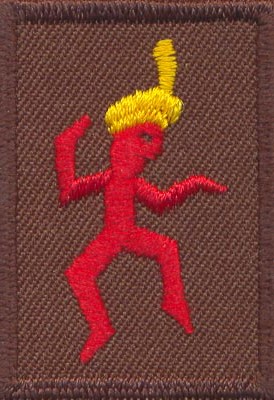
The story behind The Kelpies project was fascinating, blending mythology with industrial heritage.  The Scottish Kelpie that I’d worn on my Brownie uniform  was a little red pixie-like character.  “We’re the little Scottish Kelpies, smart and quick and ready helpers,” went the rhyme we chanted.  But this sweet image, it would seem, was a con.  Of all the Brownie creatures, the Kelpies were the nastiest – malevolent, shape-changing aquatic creatures that commonly took the form of a horse.  They’d entice people in their equine form before dragging them underwater to an untimely death.  If the media had got hold of that story in time, someone at Brownie HQ would have been fired for sure.

dsc_0054-2

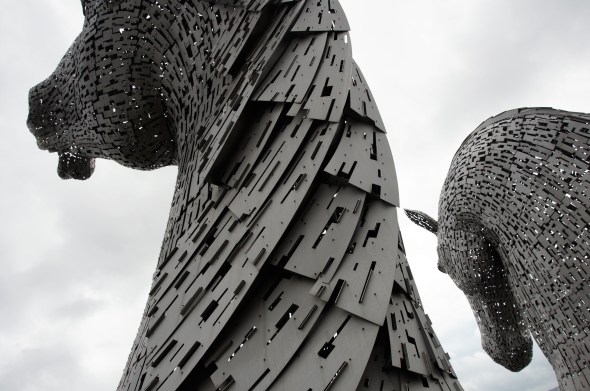
Artist Andy Scott was responsible for the Kelpies at Falkirk and he’d focused on the power and endurance of the beasts rather than their malevolence.  The canal-side location was an appropriate setting; horses would have been a common sight, pulling the barges upon which Scotland’s industry relied.  In a clever twist, the idea of using the Kelpie reinforced how much the landscape had been transformed too.  When choosing a suitable horse to model, Scott took the local Clydesdale breed as his inspiration, with the two muses being Baron (head up) and Duke (head down).  The original sketch had been of the entire animal, the water line sketched in and then cropped to ensure the sculpture’s proportions were accurate.

dsc_0118-2

The resultant sculpture is magnificent.  The second largest equine structure in the world, they’re beaten in scale only by the monument to Genghis Khan in Mongolia.  That stands 40 metres tall, but then Genghis is on top and he’s the star attraction.  I’ve seen it, and it’s impressive, but, well, a bit too shiny.  The Kelpies would probably be even more of a distraction for drivers on M9 if they had such a sheen, but the matte finish looks more tasteful.  Sorry Mongolia, 1-0 to Scotland.

img_8954

There’s something about the workmanship of The Kelpies that draws your attention and keeps it transfixed.  Inside, out of the wind, it’s easier to concentrate on the structure itself.  Each of the horse heads used 464 manufactured plates in its construction.  Every one is different.  They were transported on 150 lorries from Sheffield and took ninety days to be fitted together, in what must have been like an ultimate marathon game of Tetris.  At night, they’re lit by LEDs, an energy efficient method costing the equivalent of a pot of tea every night.  Now that’s an achievement in itself, don’t you think?

dsc_0062-2

My one disappointment was that it wasn’t possible to climb the structure, though looking at the access ladder for the maintenance crew, you’d need a good head for heights to do so.  No matter; the tour’s a must, even at ground level.  For more information and to pre-book a slot to see The Kelpies with a guide, please visit the website here:
http://www.thehelix.co.uk/

Off to Texas with Traveleyes

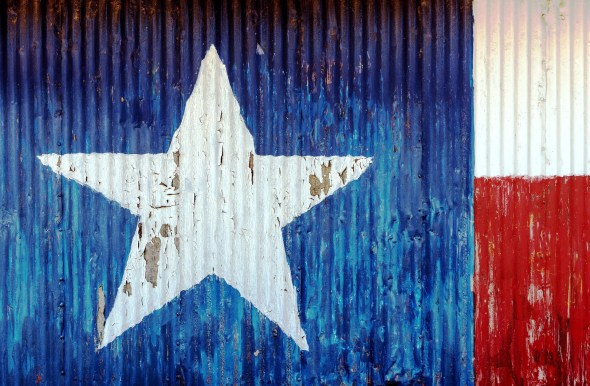
In May I’m off to Texas, and I’m already excited. But this isn’t my usual kind of trip. This time I’m travelling with a company called Traveleyes, who pair sighted travellers with the visually impaired for a trip which promises to enrich the experience for both types of tourist.

texas-1656861_1920

The brainchild of Amar Latif, an entrepreneur who went blind in his late teens, the company specialises in offering trips which make independent travel a reality for the blind and partially sighted. Sighted travellers are offered a hefty discount on the price of the tours. In return, they accompany a different traveller each day, guiding the person to their own individual requirements.

space-telescope-2019309

Included sightseeing programmes promise to make this a trip to remember.  I’m looking forward to visiting Austin, San Antonio and the Alamo, where we’ll be taking guided walking tours to unlock the history of these places.  I’m especially keen to visit Galveston, devastated by the USA’s deadliest hurricane in 1900 which killed over 6000 people.  It’s long since been rebuilt, of course, but it will be interesting to compare notes with the experience of New Orleans after Hurricane Katrina.

http://oceanservice.noaa.gov/news/features/sep13/galveston.html

ruhl-house-1591356

There are also some activities on the programme which you might not expect.  A ranch stay forms part of the programme and we’ll be riding out on horseback to enjoy the local scenery.  As a novice rider, I’m a little daunted about how I’m going to be able to guide another horse if I’m not fully in control of my own, but I’m trusting that both Traveleyes and the ranch have already thought of that.

cowboy-419083

Traveleyes have sent through their document on the do’s and don’ts of how to act as a sighted guide and I’m going to be studying it carefully.  One thing I do know, however, is that I’m going to learn as much as the people I’m paired with.  I can’t wait to see Texas from a different perspective to my own.  Check back at the start of the summer and find out how I got on.

If you’d like to find out more about Traveleyes, please visit their website:

Home page

A round up of some of my latest work

It’s been a busy time recently, working on lots of different projects. I try to keep an up to date list on my website http://www.juliahammond.co.uk but I thought it might be a good idea to post some links here too.

etrip.tips

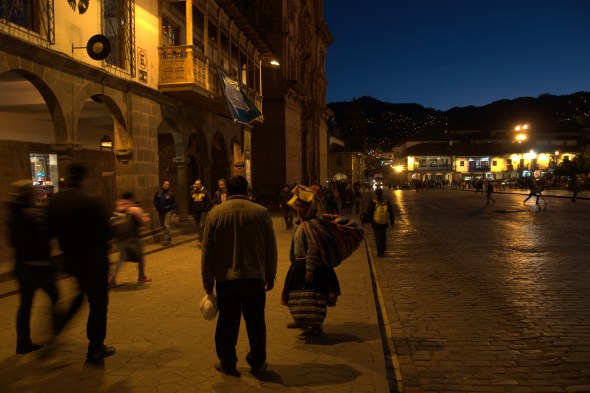
I’ve written a number of articles for this excellent website and it’s really good to have an outlet for some narrative driven pieces rather than factual blogs. If you haven’t had a look, then I’d recommend you have a browse. To get you started, here’s a piece on Cusco:

Falling in Love With Cusco

julia_plaza-de-armas

Camping and Caravanning Club of Great Britain

Closer to home, the Camping and Caravanning Club commissioned a series of blog posts covering a variety of British cities.  It took a while for them to go live but they’re now all up.  You’ll find the likes of Norwich, York, Manchester and Oxford but here’s one on London:
http://www.campingandcaravanningclub.co.uk/blog/2016/december/camp-near-london-and-use-our-handy-city-break-guid/

img_6577

Sunday Times Travel Magazine

Following a string of rejected pitches, I finally managed to get an idea accepted by the Sunday Times Travel Magazine after snagging the £342 business class error fare to New York last year.  I’ve pitched a second idea which may or may not be a follow up piece, but we’ll just have to wait and see.  In the meantime, here’s the piece that made the cut in the March 2017 edition:

sttm-scan

Go4Travel

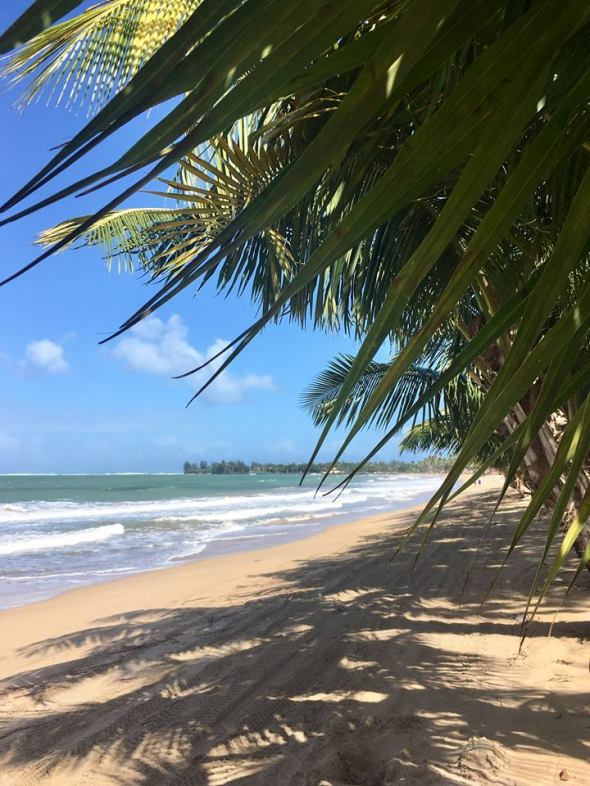
The excellent Go4Travel continues to be a satisfied client and I’m delighted that they accept my work on a regular basis.  Alongside my regular articles on New Zealand, I write on places I’m currently visiting, so most recently, I’ve had blogs published on Puerto Rico following a most enjoyable trip there last month.  A round up of most of the articles can be accessed via this link:
http://www.go4travelblog.com/authors/juliahammond/

16105936_10210274114877030_5079054604556801583_n

Coming soon

Towards the end of last year, I submitted a piece to the Essex Belongs To Us initiative and learned in December that my short article on what it’s been like to move to Salcott had been accepted for their anthology.  It’s due to be published in March and launched at the Essex Book Festival which sadly I won’t be able to attend as I’ll be off travelling.  There should be news here in the near future if you’d like a copy:
https://essexbelongstous.org/

creek-sunrise-5


More from Puerto Rico: Arecibo’s radio telescope

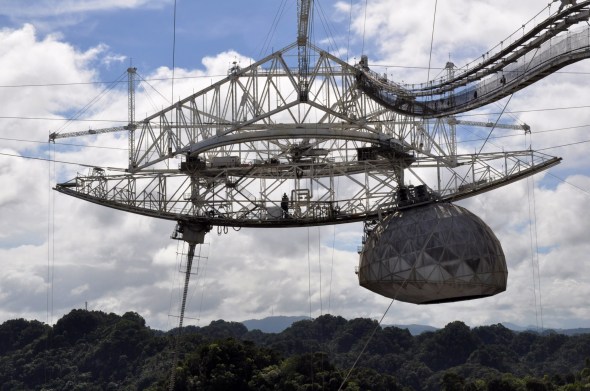
One of the unexpected bonuses of a week of showery weather was that we did a lot more sightseeing in Puerto Rico than we’d originally planned.  A visit to see Arecibo’s Observatory with a huge radio telescope hidden away amongst the wooded karst scenery of the island’s interior was on the cards after we “discovered” it on the map we’d been given by the hire car company.  It was a bit of a trek, reached by a winding road up a mountain and then, phones set to airplane mode, a climb up a seemingly unending flight of steps to get to the Observatory’s visitor centre.  Stepping out onto the observation deck out the back, it was worth the effort when this was the result:

photo3

If it looks familiar, then you might well be a Bond fan, albeit one with a better memory than me.  Much as I love the Bond films, they do seem to be hard to tell apart.  The sequence shot here in Puerto Rico comes from the 1995 Pierce Brosnan film Goldeneye.  The dish shaped telescope that you see above was flooded and drained for a climatic chase scene which proves just how different a location can be once the movie makers get their hands on things.  There’s a good YouTube clip here if you want to see for yourself:

You might also remember that this was where they filmed the Jodie Foster movie Contact.  The storyline revolved around her research into SETI, which is an acronym for Search for Extra-Terrestrial Life.  In a twist, they actually do SETI at the Observatory.  Any sounds from space will be picked up by the radio receivers, which hang down, suspended in liquid helium so they don’t overheat and so that any incoming sound is magnified.  I have this  idea in my head that when the aliens do answer, they’ll speak in high pitched voices and laugh at how dumb they sound. And they’ll eat Smash instant mashed potato. (Can you even get that now?)

I was excited about such a message until I learned that the one they sent in 1974 still has a good 24000 years and then some to reach its destination somewhere in outer space and then the same time to get back.  Not a lot of point in that, then.  That didn’t stop them launching SETI@home in 1999 or having a pin board for visitors to leave a Post-It note of the question they wanted to ask.  Reminded me of Duran Duran…

“Is there anyone out there?”

photo2

There’s a lot of science stuff that was well beyond my comprehension and interest, but also a series of interactive exhibits, probably aimed at children, that were fun to try out.  There were bits of meteorite collected from where they’d fallen, many in deserts, some scarily recently.  I did enjoy playing a simple computer game to shoot down asteroids and some kind of playground roundabout that if you acted like a figure skater and stuck your leg out, it would change speed.  I would tell you what that’s got to do with the space theme except I was so dizzy when I got off I couldn’t read the explanations.

photo1

We watched a short film about the Observatory.  It hadn’t been updated to reflect that this is no longer the world’s largest radio telescope (now that’s in China, quelle surprise).  It was interesting nevertheless.  After seeing the film, we took a VIP tour which was just a ride in a bus but it did take you right to the edge of the “dish” and that’s what really gave me a sense of scale.  Plus, the guide said that Pierce Brosnan was a complete wuss when he had to do his action scenes which cheered me up no end as I don’t much like his Bond now Daniel Craig has shown us how it should be done.

photo4

If you’re in Puerto Rico and you’d like to visit the Observatory, it’s around an hour and a half’s drive from San Juan.
 

The streets of Old San Juan

The Puerto Rican capital has a history which goes back over 500 years.  Founded by the Spanish at the end of the first decade of the 16th century, it was originally known simply as Puerto Rico but by 1521 went by its proper name of San Juan Bautista de Puerto Rico (which these days has become just San Juan).  Though you could be forgiven for thinking the city’s American, it’s not quite: the Spanish eventually ceded the island to the USA at the end of the Spanish-American War in 1898 and it’s been a self-governing territory ever since.  That Spanish flair is still much in evidence in Old San Juan, however.

photo2

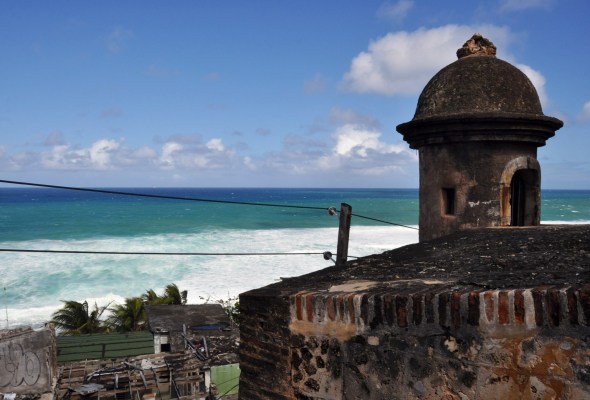
Within the metropolitan area of San Juan which sprawls for miles, the area of settlement that occupies a narrow peninsula on the island’s north coast, bounded by Fuerte San Cristóbal and Castillo San Felipe del Morro, is known as Old San Juan.  The geography of San Juan naturally lent itself to providing a safe harbour.  It’s still a busy port today receiving a steady stream of cargo and cruise ships.

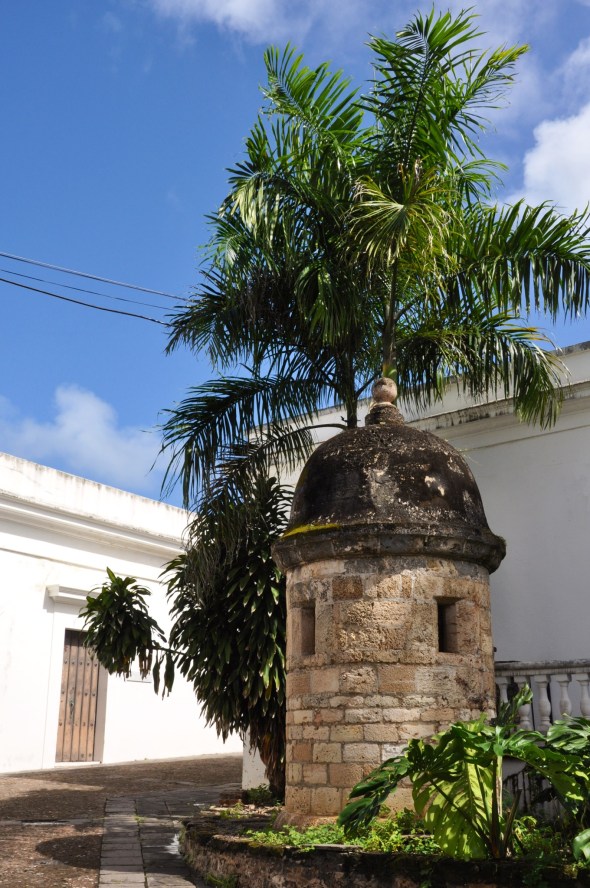
In its early days, San Juan’s location at the eastern edge of the Caribbean led to its development as a defensive stronghold, hence the heavy fortifications that you can still see today.  They comprise not only those two forts but the thick, almost impenetrable, walls that encircle the city and the imposing Puerta de San Juan located on the south western flank of the city.  As the 16th century progressed, Old San Juan came under attack from numerous forces, among them Francis Drake, whose men were adversely affected by a dysentery outbreak and fled, tails between their legs.  They wouldn’t be the last.

photo14

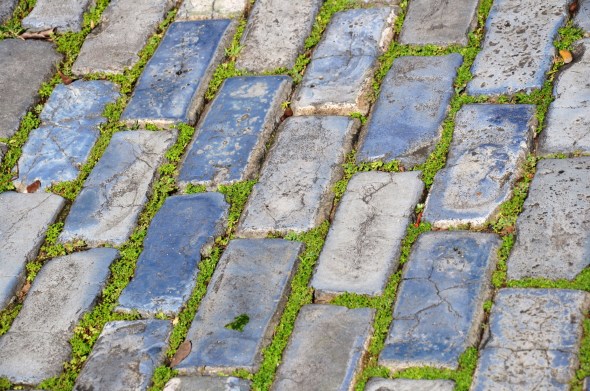
The narrow European-style streets of Old San Juan are a far cry from the wide boulevards lined with high rises and flanked by shopping malls that characterise other parts of the city.  Here, cobbled surfaces bear the distinctive blue setts known as adoquines.  They’re not granite, as you might think, but instead made from the slag of iron furnaces and used as ballast on ships arriving from Spain.

photo

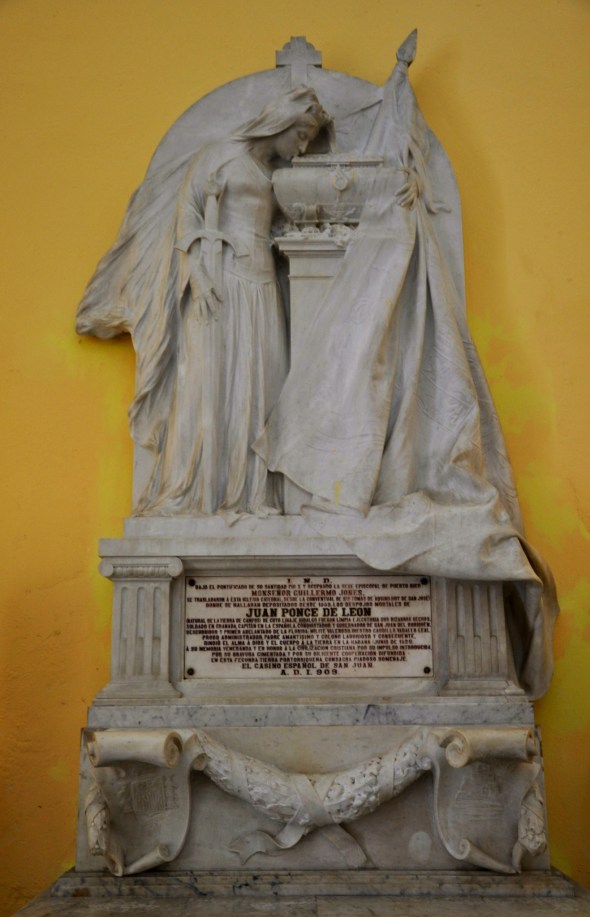
One of those Spanish ships brought Juan Ponce de León, whose remains can be found in front of an egg yolk yellow wall of the city’s bijou cathedral.  Like many conquistadors seeking a new life in the New World, he was escaping a life of poverty and a region devoid of opportunities for the ambitious.  His travels took him first to Florida and then to Puerto Rico, and it is he that is credited with the foundation of the island’s first settlement, Caparra, which predates Old San Juan by a few years though wasn’t to last.

photo12

Ponce de León was the island’s first governor but he didn’t remain long in Puerto Rico.  Off exploring, he was fatally wounded by a poisoned arrow and died in Cuba.  The family home, Casa Blanca, is significant as the oldest continuously occupied house in the city.

One of the great delights of a visit to 21st century Old San Juan is simply to wander.  Many of the buildings are painted in bright colours, making this a photographer’s dream.  Several tourist trolleys loop the old town, but to truly appreciate the architecture and atmosphere, strolling through its streets and lingering in its many parks and squares is a must.

photo3

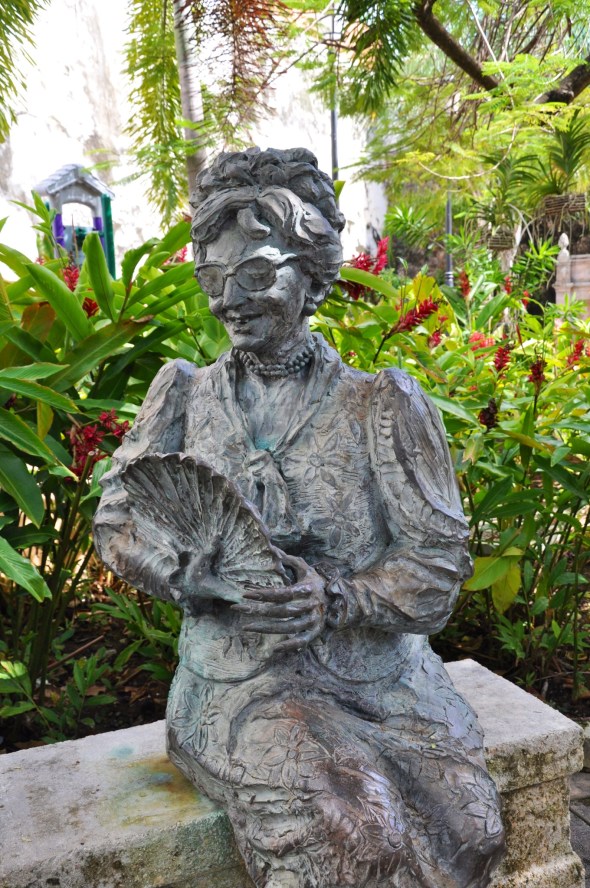
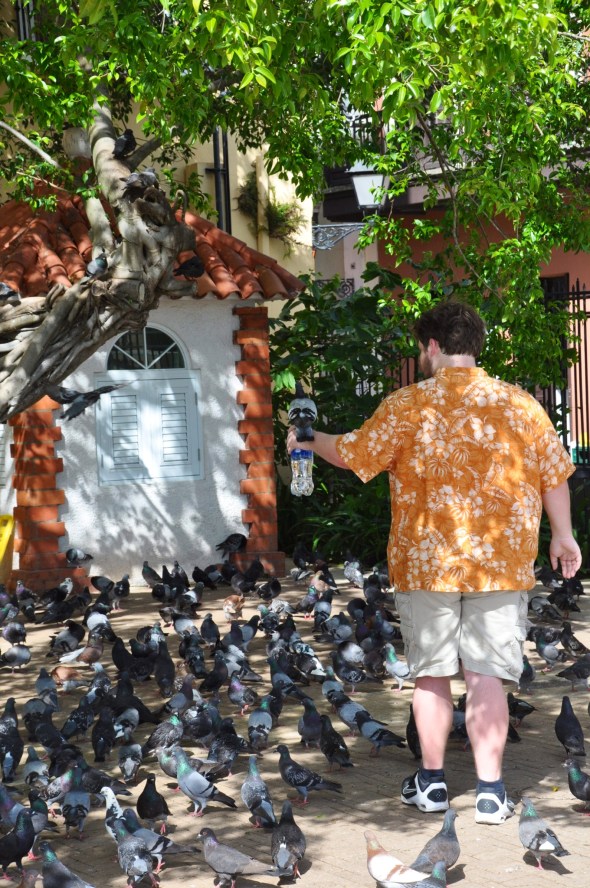
Each has its own identity, from the tourists that feed the pigeons which flock to Parque Las Palomas, to the many characterful statues and sculptures that you’ll find camouflaged with verdant planting.  The shade provides welcome respite from the Caribbean sun, enabling visitors to recharge their batteries before continuing their exploration of this delightful place.

photo10

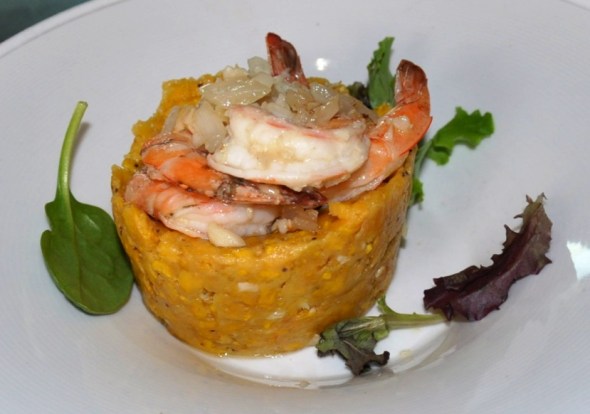
When you do finally run out of steam, there are many cafes and restaurants where you can try the uniquely Puerto Rican dishes.  Mofongo, a dish of mashed plantains topped with shrimp or chicken, is a staple and a must-taste.  For a snack, the ubiquitous Mallorcas, pastries filled with cheese, guava jam, ham or eggs and dusted with icing sugar, is a tasty way of staving off the hunger pangs.  And don’t leave without trying the coffee: rich and smooth, the addition of sugar would be a sin.

photo15