juliamhammond

Latest

A beginner’s guide to New Orleans

The Big Easy isn’t your usual North American city.  Crammed full of French and Spanish creole architecture, hemmed in by Lake Pontchartrain to the north and enclosed by a huge looping meander of the Mississippi to the south, it’s about as unique as they come in this part of the world.  It’s laid back, easy going and welcomes visitors like they’re old friends.  Here’s what you need to know if you’re planning to visit.
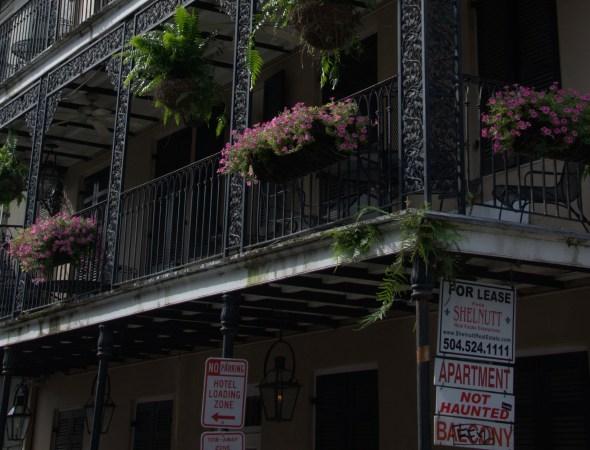
dsc_0647-1

Apartment listings include whether haunted or not

Getting there

From the UK, getting there just got a whole lot easier.  Direct flights with British Airways from Heathrow begin at the end of March.  They’re going to be a little more expensive than the indirect options but convenience may be worth paying for, particularly if your travel dates match up (the direct service operates several days a week only).  Indirect, flights hubbing via Atlanta with Delta are likely to be the cheapest option, but don’t rule out other carriers.  The #202 Airport Express bus (sometimes referred to as the E2) is the cheapest method of transport between the arrivals hall and downtown but of course the use airport shuttles and taxis are available.

DSC_0526_2

Amtrak: a great way to arrive in New Orleans

If you want to arrive overland, then consider one of the Amtrak trains that serve New Orleans.  The Crescent takes 30 hours to make its way south west from New York stopping at Philadelphia, Washington and Atlanta, while the City of New Orleans is quicker, taking 19 hours to travel south from Chicago via Memphis.  Single travellers will find the roomettes a tight squeeze; I had just a small wheelie and we just about fitted, me and my bag.  Book early as this isn’t a cheap option unless you can cope with a reclining seat.  The good news is that once you arrive, it’s a quick trolley ride into the French Quarter from the railway station.

Getting around

Much of the historic downtown area known as the French Quarter is a delight on foot (so long as it’s not raining heavily).  But New Orleans also has a very useful public transport network which is convenient to use and budget-friendly.  Planning your accommodation so that you stay near to a tram stop can make your holiday a whole lot easier.

DSC_0917_2

Riverfront tram

There’s plenty of information online including maps:

http://www.norta.com/Getting-Around/Overview

Trams are fun to ride and simple to find.  The shortest, the #2 Riverfront streetcar, links the French Quarter with the Outlet Mall at Riverwalk.  The #47 Canal streetcar takes you from the edge of the French Quarter past St Louis Cemetery No. 1 and up as far as Greenwood Cemetery.  The #48 follows a similar route and then heads to City Park.  The #12 St Charles streetcar is great for the Garden District and Audubon Park.  Single tickets are $1.25 but a 1 day Jazzy pass only costs $3 if you’re planning on making a few journeys.  Crossing the river is also worth doing.  You can take the ferry from Canal Street to Algiers Point for just $2.  Check out the schedule here:

http://nolaferries.com/

Where to stay

Being central to the action is key in New Orleans.  It’s the kind of place where you can wander aimlessly, drink in hand, and you don’t want to have to end your evening trying to find a cab.  I’ve stayed in a couple of places that are worth recommending.  Both are located within staggering distance of the #2 Riverfront streetcar.  If you’re on a budget, try Villa Convento.  It’s atmospheric and reputedly haunted, a Creole townhouse dating back to about 1933.

dsc_0610-1

My room at the Villa Convento

Some say it’s the House of the Rising Sun, made famous by The Animals in the 1964 song.  Renovation work has taken place though some parts of the hotel are a bit shabby – the lift being one of them – but ask for a room with a balcony and you should be fine.  It’s website is here:

http://www.villaconvento.com/

At the other end of the same streetcar line is the Marriott Downtown at the Convention Center.  Ask for a room in the historic half of the hotel which has more style.  I like it because you alight at the Julia Street station.  Mulate’s restaurant is also nearby though when I went there the food didn’t live up to my admittedly high expectations.

Money-saving tips
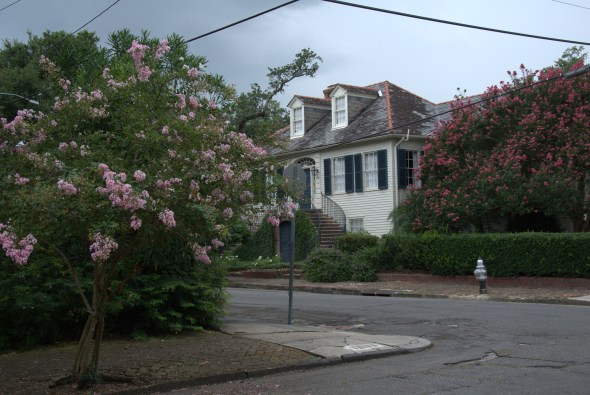
dsc_0862-1

Free walking map leads you round the Garden District

If you’re on a tight budget, there are loads of ways to save money while you’re in the Big Easy.  For tips on how to save money on everything from food, drink and attractions to where to find free walking tour maps, check out my previous blog post:

https://juliamhammond.wordpress.com/2015/06/26/how-to-save-money-on-your-nawlins-vacation/

What to see

There’s a ton of places that are worth seeing and doing in New Orleans, so what follows should get you started if it’s your first visit.

The French Quarter

dsc_0677-1

The French Quarter is packed with historic homes

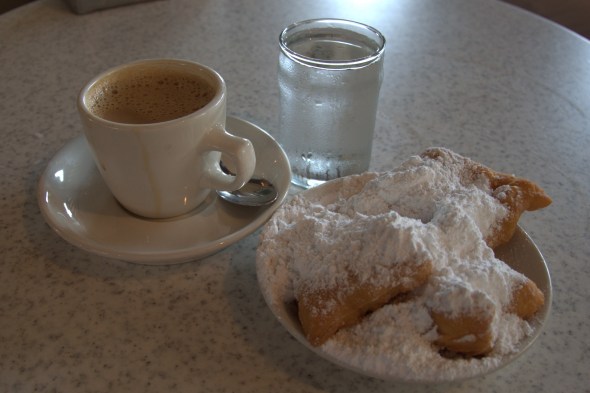
You can’t visit New Orleans and not go to the French Quarter.  Amidst its streets, you’ll find the 18th century almost Disney-esque St Louis Cathedral which commands a prominent position on Jackson Square.  Opposite, the Cafe du Monde is the place to eat beignets and drink the chicory-rich coffee; it’s tourist central, but a must none the more for that.
dsc_0796-1

Beignets and cafe au lait

Take a horse and carriage ride from here through the surrounding cobblestone streets of the Quarter.  You’ll get your bearings as you clip clop through the Vieux Carré past mansions with wrought iron balconies intertwined with trailing plants and hidden courtyards glimpsed through open doorways.

Music on Frenchmen Street
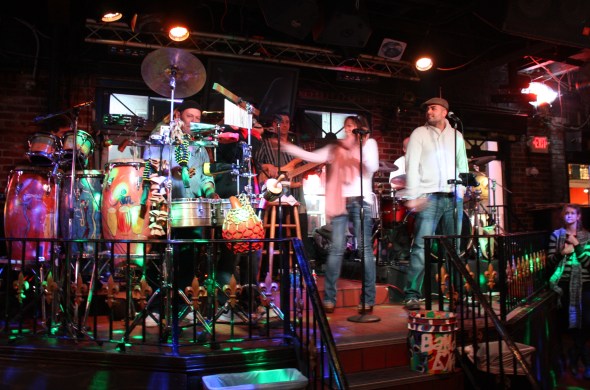
music

Live music is an essential part of the New Orleans experience

Forget Bourbon Street, which has almost become a caricature of itself.  In my opinion, you’re much better off heading to Frenchmen Street.  You’ll find it in the nearby Faubourg Marigny neighbourhood.  There’s at least twenty or so bars and clubs where you’ll find live music.  Although the action kicks off in the late afternoon, the later it gets the better the atmosphere.  Some places have cover charges, others require the purchase of food or drink.  Others require just a tip for the musicians.  My advice is to head down there and check out what’s on during your stay.  If you do want to get some advance research in, check out this site:

HOME

St Louis Cemetery No. 1

dsc_0772-1

St Louis Cemetery No. 1

One of the most interesting things to do while in New Orleans is to visit at least one of its Catholic cemeteries.  Begin with St Louis Cemetery No. 1.  This is the oldest, opened in 1789.  It is characterised by above ground tombs, a nod to the city’s swampy and flood-prone location.  The most notable “resident” is Marie Laveau, Voodoo priestess, a religion very much alive in New Orleans to this day and a fascinating topic to explore.   She rests among aristocrats, politicians, engineers and architects.  Actor Nic Cage has a plot here; look for the pyramid.  Since 2015, independent visiting has been prohibited after vandals spray painted Marie Laveau’s tomb.  You’ll need to take a tour.  Options include booking via the nonprofit Save Our Cemeteries or Free Tours on Foot; I’d recommend Gray Line, especially if Sandy’s rostered on.

The mansions of the Garden District

dsc_0873

Seen on a fence in the Garden District

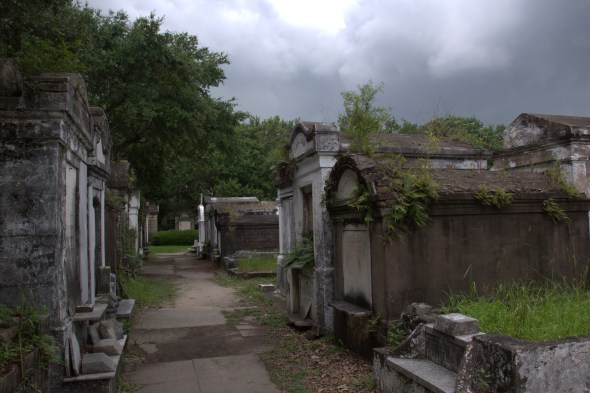
The Garden District’s wide avenues and huge mansions with even bigger gardens contrasts with the downtown feel of the French Quarter.  Many of these mansions have a story to tell, their original owners making their fortunes off cotton and other mercantile activity, and a walk around the area is a pleasant way to spend the afternoon.  In the midst of the mansions, you’ll find another atmospheric cemetery: Lafayette Cemetery No. 1.  The cemetery was first planned out in 1832, making it the oldest of New Orleans’ seven cemeteries, and can be visited without having to book a tour.
dsc_0833-1

Lafayette Cemetery No. 1

Mardi Gras World
DSC_0998

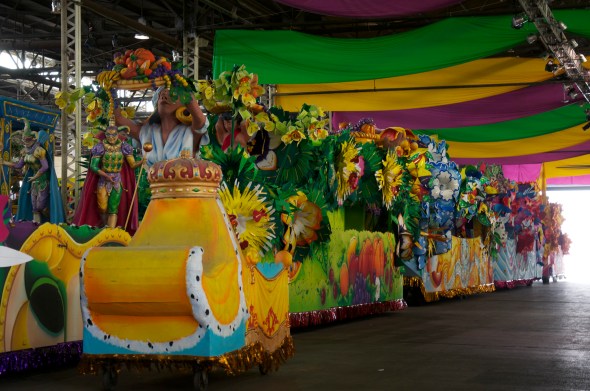
Last year’s float being recycled at Mardi Gras World

If you can’t get here in February for Mardi Gras, then at the very least you should pay a visit to Mardi Gras World down by the Convention Centre.  The building houses an enormous collection (both in scale and number of exhibits) of former floats, props and other carnival-related paraphernalia.  Guided tours are possible and will show you around; you’ll get to see some of the costumes and props being made for the next carnival.  Many are revamped and recycled.  One thing’s for sure: the colours will blow your mind!

Old Algiers
algiers

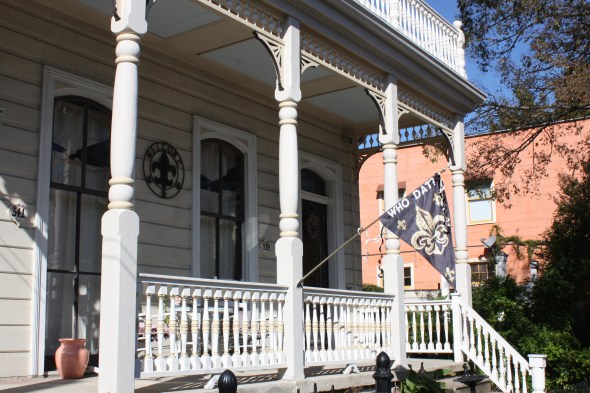
Home near Algiers Point

Across the Mississippi lies the sleepy residential neighbourhood known as Old Algiers.  It was first settled by Jean Baptiste le Moyne in 1719, who had a plantation here.  It has a dark past, site of a slaughterhouse and also an 18th century holding area for African slaves.  The ferry you take to get here has operated since 1827, fiercely protected by the Algiers residents from any attempt by the city authorities to close it down on economic grounds.  It’s well worth a wander to explore the 19th century homes here, and of course a coffee stop in the corner cafe at the junction of Alix and Verret Streets.

Steamboat Natchez
natchez

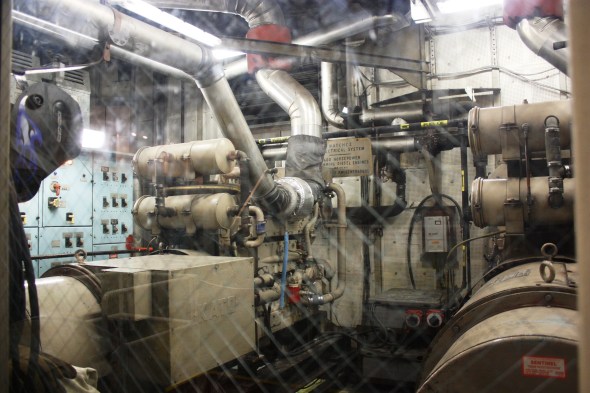
Below decks on the Natchez

The steamboat you’ll see churning up the Mississippi isn’t the first to be named the Natchez.  It’s actually the ninth and dates only from 1975.  It’s also not modelled on its namesake predecessors, pinching its design instead from steamboats Hudson and Virginia.  Her engines came from the steamboat Clairton and were made in 1925; her copper bell came from the SS JD Ayres.  So she’s a bit of a mongrel, really.  Nevertheless, cruises for lunch and dinner are a popular addition to many people’s itineraries.  Even if the food doesn’t impress, the music’s good and it’s interesting to head down to the engine room to have a closer look.

Hurricane Katrina tour
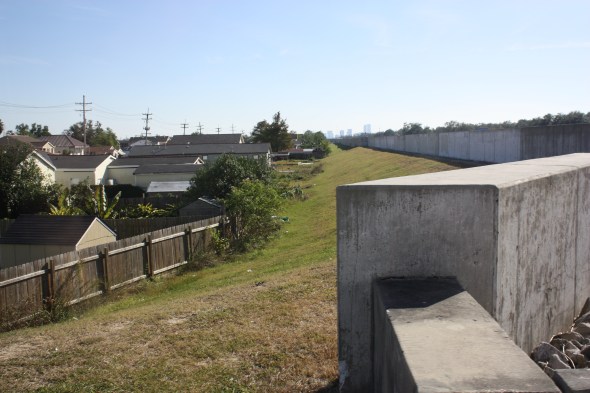
height-of-water-compared-to-housing

A reminder of how vulnerable low-lying New Orleans is

Despite it being over a decade since Hurricane Katrina blew through the Big Easy with devastating consequences, there are still parts of the city that bear its scars.  I took a Gray Line tour in 2012 and was shocked to find so many houses still covered with blue tarpaulins and bearing the red crosses of the search teams on their doors and windows.  Returning a few years later in 2015, I was less surprised to see boarded up houses as the train made its final approach into the city.  Time may heal the hurt and dissipate the shock, but the economic impacts on an individual scale linger long after the city proclaims it’s open for business again.  New Orleans will always be vulnerable to the impacts of hurricanes, and exploring what happened in 2005 will help you understand why.

For more on New Orleans, why not read my article on etrip.tips?

Return to New Orleans

The Travel Whispers Blogger Challenge

Something interesting popped up in my Twitter feed yesterday evening: the Travel Whispers Blogger Challenge.  I had read a blog by Josie Wanders on being a newbie in business class which struck a chord as she sounded as excited as I was when I flew with BA last year.  You can compare our experiences here:

A Newbie Flying Business Class – What Was it Like?

https://juliamhammond.wordpress.com/2016/06/14/are-business-class-flights-really-worth-the-extra/

Josie had also completed the blogger challenge, which had been set up by another travel blogger, Stephanie Cox.  Basically, it’s a great way of getting travel ideas; the travel bloggers that have participated know their stuff and there are some tempting recommendations that I’m definitely going to check out.  If you’re interested in joining in, then have a look at Stephanie’s original post here:

The Travel Whispers Blogger Challenge!

What follows are my answers to the Travel Whispers Blogger Challenge.  What would yours be?

1. If you had to move to a country that you’ve NEVER been to, and live there for ten years, where would you go?

I read this and I almost gave up there and then.  I’m up to 107 countries now, and it’s tempting to think that all the good ones have gone!  I can’t pick Peru or Mexico or Australia or Austria or Spain, all of which would have been contenders.  I’m spinning my globe here and though there’s some exciting destinations that so far are untrodden by my hiking boots – Rwanda, Kyrgyzstan, Georgia – they’d all be pretty tough to live in, especially for ten years.  So I’m going to take the easy route and pick a lovely warm Caribbean island to spend my imaginary decade, and my choice would be Barbados.  With direct flights from the UK my friends would be able to come and visit, so I’d have someone to go to the beach with.

2. If you had to live in a hotel for the rest of your life, which hotel would you choose and why?

Now this one is tricky for different reasons: I’ve been fortunate to stay at a lot of hotels and, a lot of good ones to boot.  Taking “hotel” literally, it rules out fabulous glamping sites such as Patagonia Camp which is possibly my all time favourite place to wake up.  There’s something so special about seeing the sun come up over the lake with the granite towers slowly coming into view as the light increases.  But I digress.  Hotel, they asked for and hotel, they will get.  Now obviously, if I’m going to spend the rest of my life somewhere, I’m going to pop out of the hotel from time to time, so my choice would be the Hotel Plaza de Armas in Cusco.  I’ve stayed there twice.  The hotel is a comfortable mid-range option, nothing fancy, but the view over the main square is one I’ll never tire of and the city after multiple visits, is one I love more every time.

julia_plaza-de-armas

3. If you could only eat the cuisine of one nationality forever more, which would you choose?

Mexican.  That’s an easy one.  But not just tour usual tacos and burritos, it would be the dishes of Oaxaca, with the rich mole sauces that make the palate tingle, and the steaming mugs of chocolate served Mayan style.

img_7791

4. Who has given you ‘holiday envy’ this year, and how?

Each time I browse Twitter, check my Facebook feed or dip into myWanderlust, there’s something that excites me.  A few people have posted about Georgia, a country that’s been on my wish list for some time, especially the Svaneti region.  I’d be loathe to say I envy them, but I’m keen to copy them!

5. If you had to look at the same sunrise or the same sunset every day, where in the world would you never get bored of seeing? Please don’t say sitting outside Cafe Mambo in Ibiza.

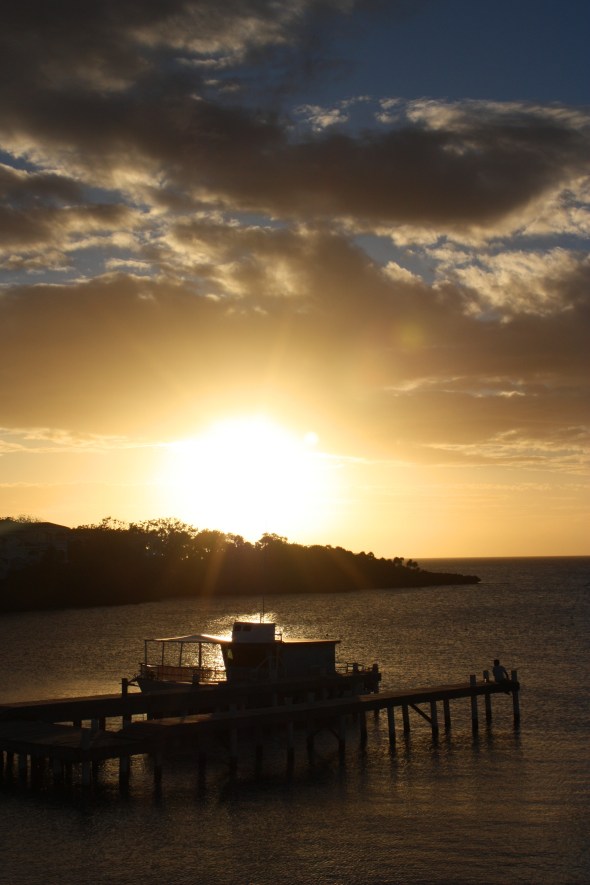
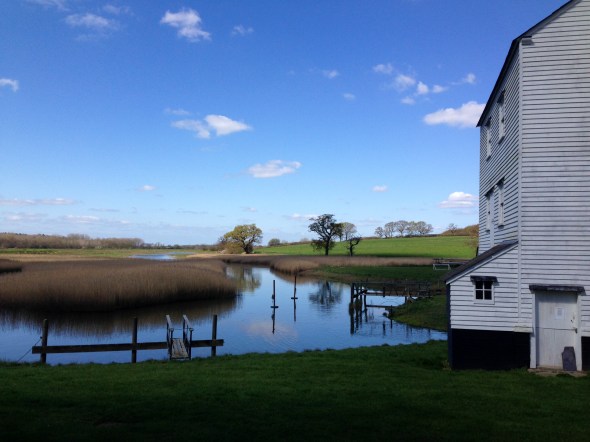
I’m writing this watching the sun come up over the Essex marshes from my desk; since moving here a year ago this has become my favourite sunrise.  This morning there’s a hard frost on the ground, the brown reeds look almost yellow where the sun’s weak rays are hitting them, and the tide’s yet to rise.  The sky has gone from a blood orange to a delicate peach, punctuated by skeletal trees that won’t see buds until at least March.  But it’s cold out there, and if I’m searching for warmth, then it would be seeing the sun set on the Honduran island of Roatan.  If there’s ever a place where I’d hum “Sitting on the dock of the bay”, then this is the place.

img_8308

6. If you were taking a ‘staycation’ in your home town, where would it be and what would you recommend others to do?

I don’t live in a town anymore, but the north Essex countryside is well worth a trip.  I’d begin with sunrise at the coast, perhaps on Mersea Island where the sun will illuminate the many oyster shells discarded on the beach.  Then, head north across the Colne to wander along the riverbank to the Torrington Tide Mill before meandering north along the country lanes to Dedham Vale, where Constable once painted.  If it’s warm, I’d recommend a boat trip along the river, past Flatford Mill and down into Dedham itself, where the cream teas are to die for.  Later, a meal in one of my county’s centuries-old pubs before a roaring fire would seem a fitting end to the day.  Who’s coming?

photo2

7. Describe your perfect travel day of the year?

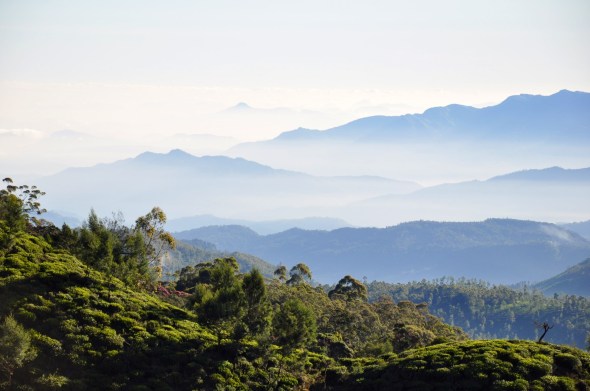
Lots to choose from, but I think perhaps it would be riding the railway through Sri Lanka’s hill country, past the verdant terraces crammed with tea bushes.  Alighting at Nuwara Eliya, my destination was the nearby Heritance Tea Factory, a former workplace now sympathetically converted into a luxury hotel.  I had great fun picking tea, tasting tea and having a tea facial.  I do like a good cuppa, but I am a Brit, so what did you expect?

image

8. What have you ticked off your bucket list in 2016?

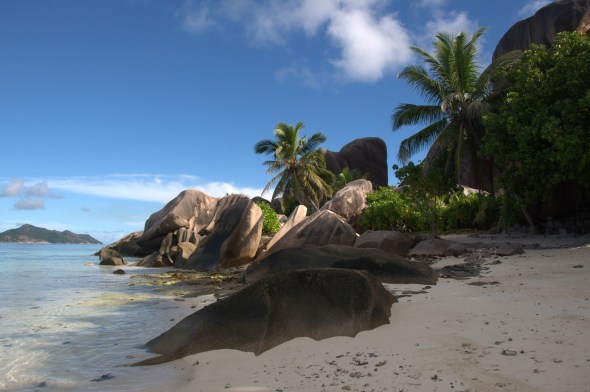
2016 was the year when I finally made it to the beautiful Seychelles, an Indian Ocean paradise that’s been on my wish list for many years.  And it was also my first time flying business class, and what better introduction than with British Airways to New York, one of my favourite cities.

DSC_0939

9. What is top of your travel bucket list for 2017?

Top of my list is attending the Fiesta de la Patria Gaucha, a cowboy festival in the Uruguayan town of Tacuarembó.  I’ll be there in March, marvelling at the horsemanship, before continuing via Salta in Argentina to the salt flats near Uyuni, Bolivia.  It’ll be wet season, and if I’m lucky I’ll get to see the famous mirror effect.

10. Share your favourite Instagram photo of 2016?

I don’t have an Instagram account, but this is one of my favourites from Twitter instead.

surfers

Since this is a Whispers challenge, thanks to Vintage Blue Suitcase who has passed this on to me. Now in turn I’ll pass this on; the baton is passed to ILive4Travel.  Here are the links:

http://www.vintagebluesuitcase.ca/2017/01/the-travel-whispers-blogger-challenge.html

http://www.ilive4travel.com/travel-whispers-blogger-challenge/

If you want to get involved join the Facebook group!

What’s it like to travel long haul on a budget airline?

Update autumn 2019:

While I’ll leave this post up as some of the issues about travelling long haul on a budget airline are still valid, this route no longer operates. In addition, there have been some concerning reports about the financial health of Norwegian Air in the travel press. Some long haul routes have been cut as the airline makes efforts to return to profitability. This report from the FT gives some background, but for the meantime, it’s a case of buyer beware. If you choose to book, particularly if that’s some time in advance of when you plan to travel, make sure you have adequate travel insurance that covers you for unexpected accommodation bills and new flights, just in case.

___________

It’s one thing to pay a few pounds and hop on a Ryanair flight across the Channel, but what’s it like to travel long haul on one of the budget airlines. I put it to the test using Norwegian to carry me across the Atlantic and here’s what I thought.

Flights: LGW to SJU

Norwegian operates flights twice weekly departing Wednesdays and Saturdays.  They offer fares from under £300 return if you book well in advance which compares favourably with scheduled airlines serving other direct flight Caribbean destinations such as Antigua and Barbados.

16105936_10210274114877030_5079054604556801583_n

Check-in
Unlike their European routes, it’s not possible to check-in online with Norwegian for destinations to the USA and that included our destination, the US territory of Puerto Rico.  That’s not such a big deal when you’re departing from a small airport, but I was a little apprehensive as to how long the wait would be to check in at London’s busy Gatwick Airport.  In the event, it took less than half an hour to get checked in and proceed to security which wasn’t as bad as it could have been.

Baggage

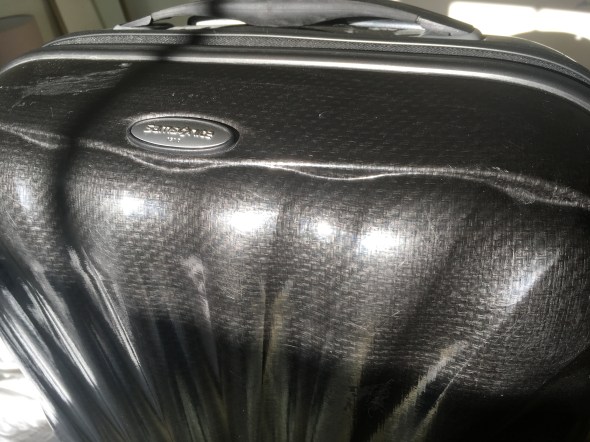
Checked baggage comes at a price; £25 for each sector if pre-booked but significantly more if purchased at the airport.  Travelling with my husband, we decided to take one full sized case and the rest as carry-on.  My much travelled Samsonite wheelie almost exactly matches the dimensions of Norwegian’s permitted carry-on at 55 x 40 x 20cm (Norwegian allows 55 x 40 x 23cm).  It’s a light case, which is a factor as it has to be lifted into the overhead bins and doesn’t go over the 10kg weight limit.  But it’s also spacious, and easily big enough for a week’s worth of clothes for the Caribbean, though if you were heading further north at this time of year to one of the big US cities served by Norwegian you’d be struggling for space.

img_7454

Seat assignment

Normally, my husband and I wouldn’t bother to pay extra for seat assignment on a short haul flight, but we decided to go ahead as this was a nine hour flight.  Each way cost us £25, a total of £100 to sit together.  I do think that’s steep.  We chose from an online seating plan opting for the back row of the plan (row 40) as this has a 2-3-toilet configuration, meaning we expected to have the section to ourselves.  You can see it here at Seatguru:

https://www.seatguru.com/airlines/Norwegian_Air_Shuttle/Norwegian_Air_Shuttle_Boeing_787-8.php

However, although we were still on a 787 Dreamliner, the plane we ended up travelling on had 42 rows ( though 40 on each of the side sections) and they were 3-3-3.   This was what we got:

https://www.seatguru.com/airlines/Norwegian_Air_Shuttle/Norwegian_Boeing_787-9.php

So we ended up with someone next to us which was a bit of a disappointment.  Fortunately, few people seemed to be using the rear toilets so it wasn’t too disruptive.

Legroom

On the outward leg, we found the space to be really cramped.  Neither of us are exceptionally tall, but we do have long-ish legs.  When I checked I was surprised to find that the legroom at 31-32 inches was similar to most long haul airlines.  The width also compared to the norm at about 17 inches, though this would have been more comfortable if we’d have had window and aisle as we expected rather than window and middle which is what we got.  We could have opted to pay extra for Premium Economy which offered a seat pitch of 46 inches.

fullsizerender-34

Food

Neither of us felt it would be a good use of our funds to pay for the in-flight meals, opting instead to have a meal before we left and take snacks on board and pay for drinks airside.  We were happy with this decision; the trays of those fellow passengers opting for meal service looked OK but not over-generous and we didn’t feel we’d missed out.  A lot of people had done the same as us.  It was an even better decision on the return journey when we had a shorter journey (thanks to a speedy tailwind) and of course, being an overnight flight, we slept for a significant portion of the journey.

Entertainment

The choice of entertainment was perfectly reasonable though I had a good book to read so didn’t end up watching any of the content.  There were recent films I hadn’t seen.  You should be aware that you either need to purchase headphones or bring your own.  Also it’s worth noting that the WiFi that you find on some European flights with Norwegian isn’t available on their Trans-Atlantic routes.

Blankets and pillows

These aren’t given out free of charge as you’d find with a full service airline.  You can buy a blanket at a cost of $5 but we found bigger, fleecier and warmer ones in Walmart for $3 a pop.  Since we unpacked, they’ve been appropriated by the dogs!

img_7392

Dreamliner

This was my second time on a Dreamliner after flying from Easter Island to Santiago de Chile on one in 2015.  They make a big deal about cabin pressure, mood lighting and windows that have sunglasses mode, and claim this helps to alleviate the issues with jet lag.  I’m not sure this had an effect, though as there’s only a 4 hour time difference the effects of jet lag would be minimal anyway.

The verdict

Would I fly Norwegian Trans-Atlantic again?  Yes, I’d definitely consider it.  I was happy with the experience overall though I’d see if I could upgrade to an extra legroom seat next time.  In the interests of marital harmony I’d probably be best not to comment on whether sitting with my husband was worth £100!

Update May 2017

At the time of writing it’s unclear whether Norwegian will be flying the LGW-SJU route this autumn. The airline is considering whether it will fly to Puerto Rico at all, but if it does, the London route will probably be the only one to survive the cull, managing 81% occupancy last season. Watch the press for details.

The streets of Old San Juan

The Puerto Rican capital has a history which goes back over 500 years.  Founded by the Spanish at the end of the first decade of the 16th century, it was originally known simply as Puerto Rico but by 1521 went by its proper name of San Juan Bautista de Puerto Rico (which these days has become just San Juan).  Though you could be forgiven for thinking the city’s American, it’s not quite: the Spanish eventually ceded the island to the USA at the end of the Spanish-American War in 1898 and it’s been a self-governing territory ever since.  That Spanish flair is still much in evidence in Old San Juan, however.

photo2

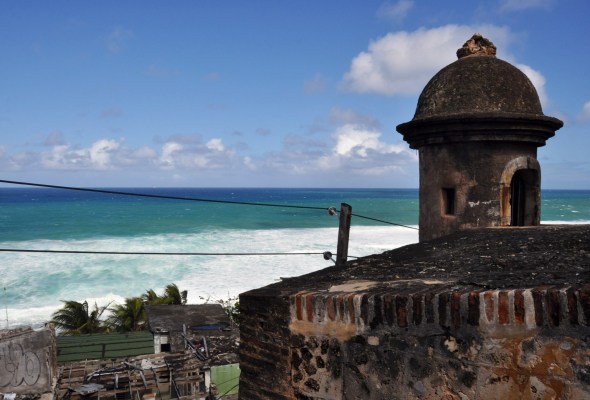
Within the metropolitan area of San Juan which sprawls for miles, the area of settlement that occupies a narrow peninsula on the island’s north coast, bounded by Fuerte San Cristóbal and Castillo San Felipe del Morro, is known as Old San Juan.  The geography of San Juan naturally lent itself to providing a safe harbour.  It’s still a busy port today receiving a steady stream of cargo and cruise ships.

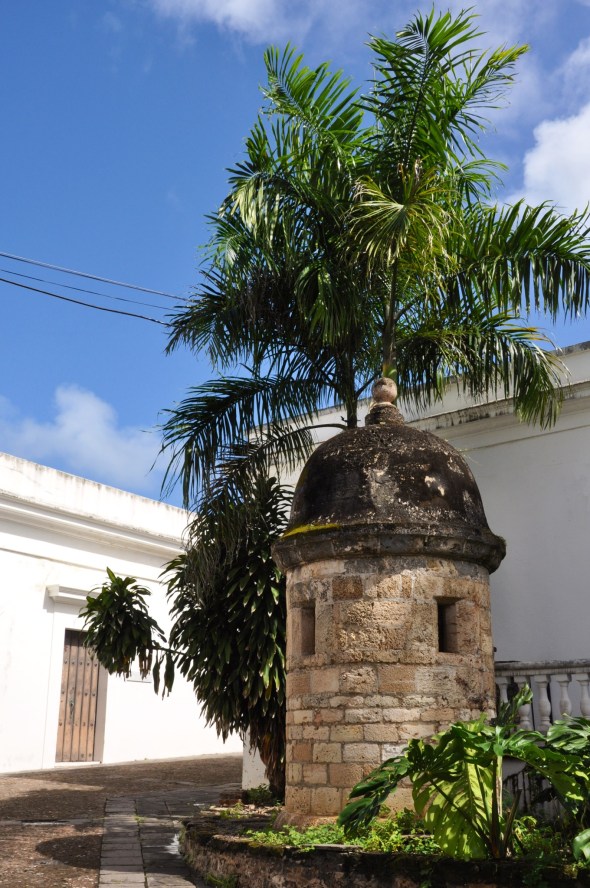
In its early days, San Juan’s location at the eastern edge of the Caribbean led to its development as a defensive stronghold, hence the heavy fortifications that you can still see today.  They comprise not only those two forts but the thick, almost impenetrable, walls that encircle the city and the imposing Puerta de San Juan located on the south western flank of the city.  As the 16th century progressed, Old San Juan came under attack from numerous forces, among them Francis Drake, whose men were adversely affected by a dysentery outbreak and fled, tails between their legs.  They wouldn’t be the last.

photo14

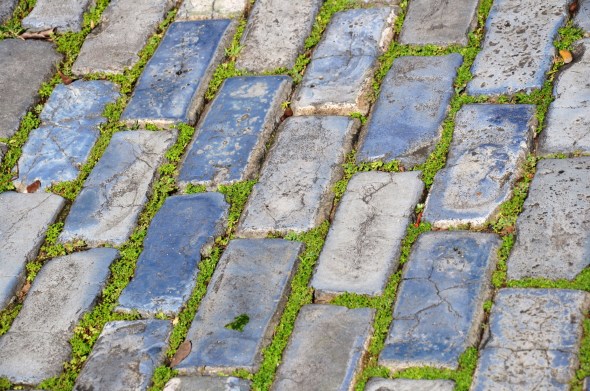
The narrow European-style streets of Old San Juan are a far cry from the wide boulevards lined with high rises and flanked by shopping malls that characterise other parts of the city.  Here, cobbled surfaces bear the distinctive blue setts known as adoquines.  They’re not granite, as you might think, but instead made from the slag of iron furnaces and used as ballast on ships arriving from Spain.

photo

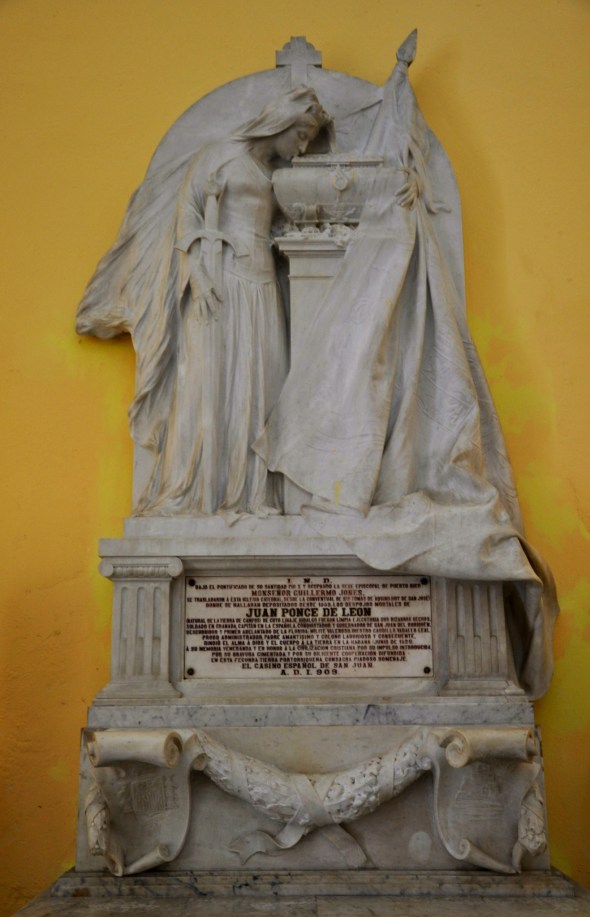
One of those Spanish ships brought Juan Ponce de León, whose remains can be found in front of an egg yolk yellow wall of the city’s bijou cathedral.  Like many conquistadors seeking a new life in the New World, he was escaping a life of poverty and a region devoid of opportunities for the ambitious.  His travels took him first to Florida and then to Puerto Rico, and it is he that is credited with the foundation of the island’s first settlement, Caparra, which predates Old San Juan by a few years though wasn’t to last.

photo12

Ponce de León was the island’s first governor but he didn’t remain long in Puerto Rico.  Off exploring, he was fatally wounded by a poisoned arrow and died in Cuba.  The family home, Casa Blanca, is significant as the oldest continuously occupied house in the city.

One of the great delights of a visit to 21st century Old San Juan is simply to wander.  Many of the buildings are painted in bright colours, making this a photographer’s dream.  Several tourist trolleys loop the old town, but to truly appreciate the architecture and atmosphere, strolling through its streets and lingering in its many parks and squares is a must.

photo3

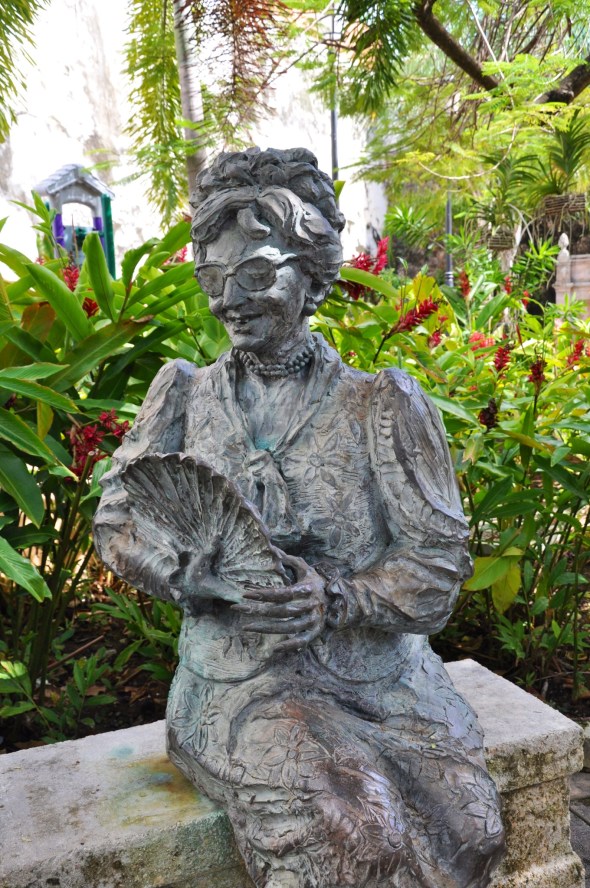
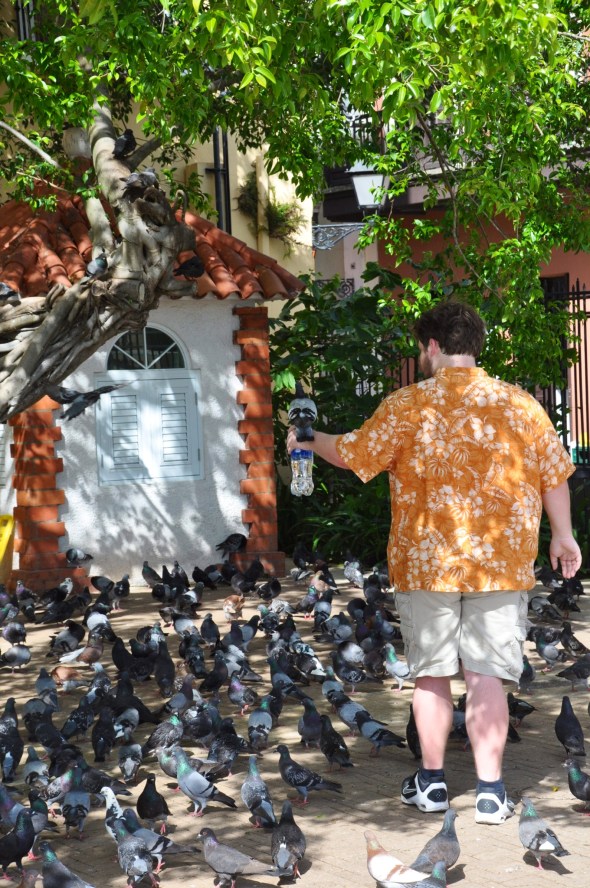
Each has its own identity, from the tourists that feed the pigeons which flock to Parque Las Palomas, to the many characterful statues and sculptures that you’ll find camouflaged with verdant planting.  The shade provides welcome respite from the Caribbean sun, enabling visitors to recharge their batteries before continuing their exploration of this delightful place.

photo10

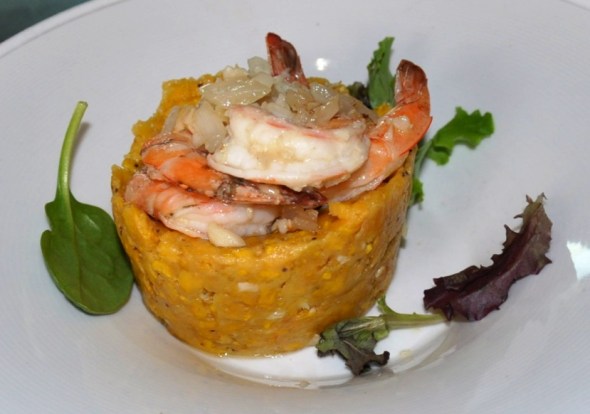
When you do finally run out of steam, there are many cafes and restaurants where you can try the uniquely Puerto Rican dishes.  Mofongo, a dish of mashed plantains topped with shrimp or chicken, is a staple and a must-taste.  For a snack, the ubiquitous Mallorcas, pastries filled with cheese, guava jam, ham or eggs and dusted with icing sugar, is a tasty way of staving off the hunger pangs.  And don’t leave without trying the coffee: rich and smooth, the addition of sugar would be a sin.

photo15

Puerto Rico’s Ruta Panorámica

Translating as the Scenic Route, Puerto Rico’s Ruta Panorámica consists of 167 miles of twisting mountain roads that bisect the island’s verdant interior. Driving on this Caribbean island was fast though rarely furious. Although many a driver strayed onto our side of the road as they tackled the many blind hairpins, we didn’t hear a horn hooted in anger. Plenty of vehicles had horns which imitated police sirens, however, which was disconcerting at first. This was also the road that attracted the boy racers in their pimped up orange, blue or red Jeeps, sound systems blaring out the bass as they tried to outdo each other’s decibel count.

img_7327

We began in Guavate, a short drive from the easternmost point of the Ruta Panorámica. On Sundays, half the island’s population winds its way up the steep switchbacks to eat suckling pig in one of the village’s many lechoneras. Whole pigs rotate on spits, drawing in the punters, while chefs armed with machetes hack the glistening animals into bite sized pieces. This isn’t fancy dining: you’re just as likely to get a lump of bone as you are a hunk of melt in the mouth pork, but the crackling is to die for and the atmosphere warm and inviting. Stalls loaded with helium-filled balloons and soft toys ensure that amidst all that Medalla beer, it remained a determinedly family-friendly occasion.

img_7326

The party at Guavate goes on all afternoon, but we were keen to drive at least part of the Ruta Panorámica, picking it up midway between the towns of Cayey and Aibonito. Climbing steadily, we followed a tour bus, grateful of its slow pace for the extra time it gave us to judge the severity of the bends. Despite our unexpected guide, we still managed to take a wrong turn and missed seeing the Cañón de San Cristóbal, though we might only have caught a glimpse of this deep chasm from the road.

img_7325

At the Mirador Villalba Orocovis, we grabbed the last space in the parking lot. Sweeping views south across lush vegetated slopes topped by charcoal grey scudding clouds drew a small crowd. The beat of salsa and reggaeton formed a noisy soundtrack to the chaotic scene and judging by the groups of people crowding around car boots, parking lot picnics were even more popular than the stunning views.

img_7328

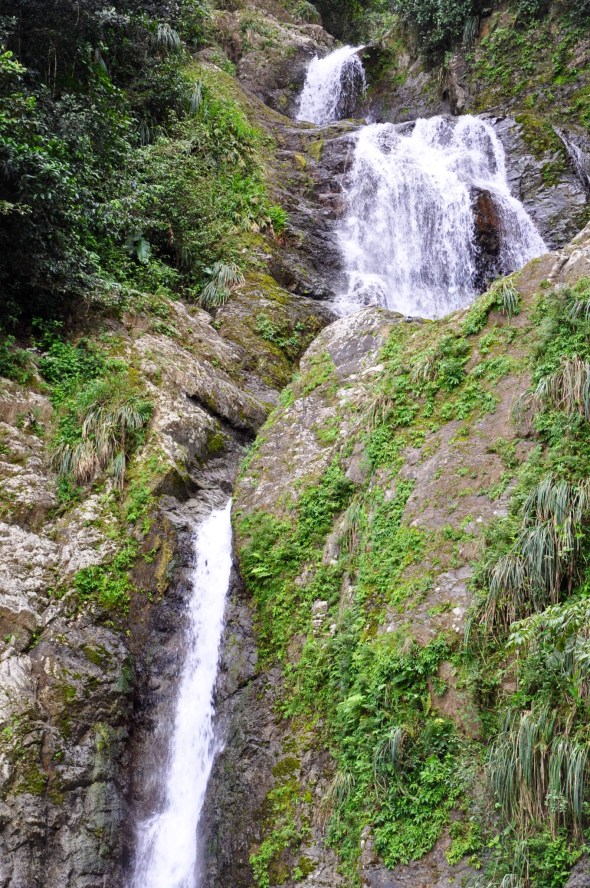
Continuing west, we climbed into the Toro Negro Forest. Giant stands of bamboo topped by frothy lime green leaves diffused the afternoon sunshine and formed towering arches over the narrow road. Here and there, we hit a traffic jam caused by cars trying to squeeze into the undersized gravel verges that formed the car parks of local neighbourhood restaurants. Driving the road required a steely nerve: swerving around deep potholes onto the wrong side of the road ahead of tight bends. Our guidebook advised tooting the horn at such points to alert oncoming traffic but this wasn’t a convention observed by anyone, least of all the local drivers who formed the majority of road users.

img_7329

Everyone was in a hurry, except the stray dogs who pottered in the dirt by the side of the road, wandering into the road at worryingly frequent intervals. Some, heartbreakingly, were road kill. Families sat on cheap deckchairs by the side of the road, some animated, others reflective. Their possessions were modest: homes characterised by peeling paint and scruffy yards cluttered with ageing cars sporting years of dents and scratches. It was testament to the fact that local knowledge didn’t make this crazy road any easier to navigate.

img_7330

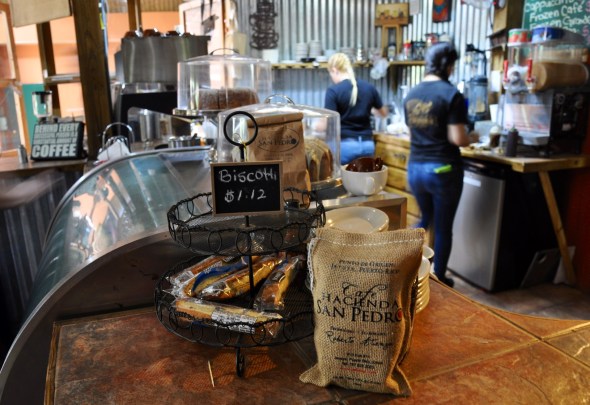
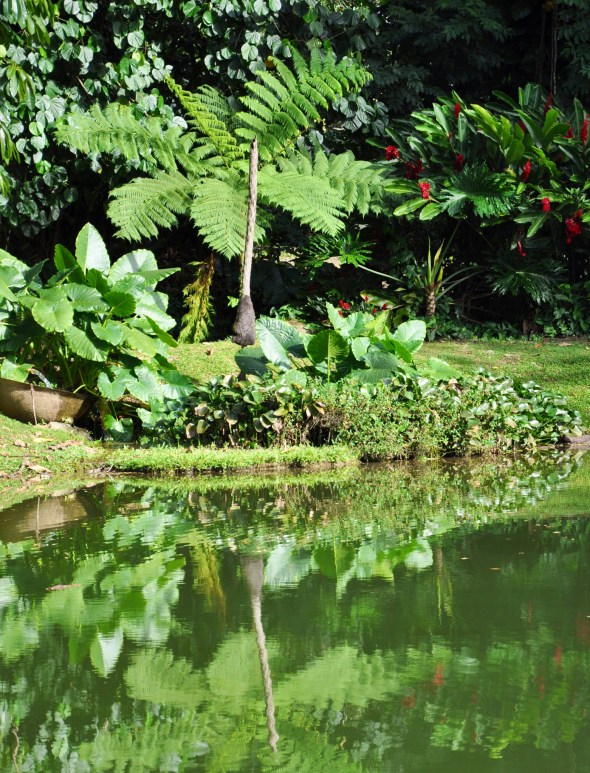
By then, we were in the heart of Puerto Rico’s productive coffee country, and our next stop, a hacienda just short of the town of Jayuya, was proof that the soil and the climate in these hills was well suited to the crop. We queued to sample the rich, almost creamy espresso, fuller bodied and sweeter than we were accustomed to. It was so smooth, we went back for more, this time in the form of frozen coffee. We slurped it through straws, as we sat by the lake on pallet benches slung with rough hessian sacks, watching tiny birds ripple the surface as they dive bombed the water for flies. The ageing machinery above the hacienda’s cafe revealed a surprise: it was made by Bentall’s agricultural works at Heybridge Basin, just a few minutes’ drive from home.

img_7331

We were keen to get off those dangerous mountain roads by nightfall, cutting north and spiralling up and down through the countryside for what seemed like forever. We were sure we’d missed a turnoff, but instead, we’d woefully underestimated the time it would take us to cover such a small section of the map. Eventually, the Ruta Panorámica spat us out onto the racetrack that would deliver us to San Juan, a world away from the sleepy Puerto Rican countryside that was as more-ish as its coffee.