juliamhammond

Latest

An island for every month of the year

For many of us, an island holiday is the ultimate in escapism.  There’s something about it which engenders a kind of “pull up the drawbridge” mindset perfect for recharging the batteries.  What follows puts together those islands that for one reason or another have made a lasting impression on me, with a suggestion for a good time to visit weather-wise.

Gorée – January

Senegal’s Île de Gorée is at once a melancholy and vibrant place.  The focus for the country’s remembrance of those lost to the slave trade even though few were ever shipped from its shores, it’s also colourful and charismatic, a favourite of artists and craftsmen.  It’s an easy day trip from the Senegalese capital Dakar.  In January the weather is sunny and mild, making this the perfect winter escape.

img_6588

Roatan – February

Honduras might have a hellish reputation in terms of safety and security – its largest city San Pedro Sula is considered to be the murder capital of the world – but the languid island of Roatan off its northern coast is about as far from trouble as you can get.  It has all the characteristics you’d expect from a Caribbean island: a laid back welcome, turquoise warm waters and fresh fish dinners.  In February, it’s busy enough to feel buzzing, yet you’ll have no problem finding space on the beach to soak up those tropical rays.

img_8328

La Digue – March

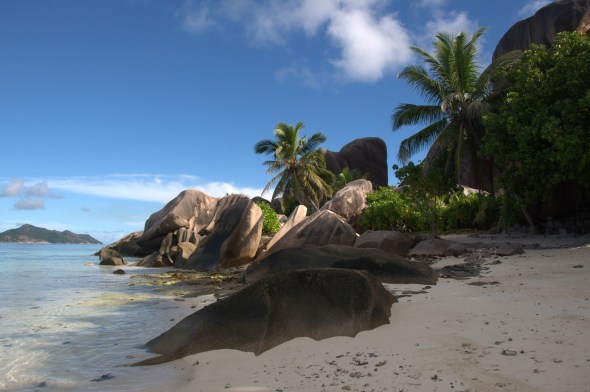
The Seychelles has a reputation for luxury – and all the costs that come with achieving it.  The good news is that La Digue manages to offer accommodation for all budgets.  Better still, it’s one of the prettiest islands on the planet and compact enough that you can explore it by bike in a few days.  In March, the weather’s on the turn, but unless you’re really unlucky, visiting La Digue in the shoulder season means you’ll dodge the worst of the crowds as well as the rain.
DSC_0939

St Lucia – April

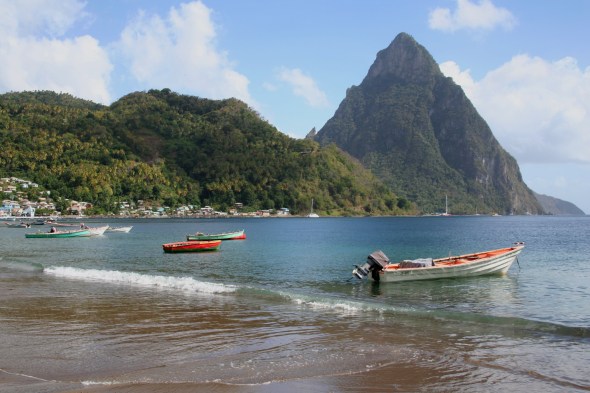
One of the lushest islands in the Caribbean, St Lucia is also one of the prettiest.  But that verdant setting has only been achieved with rainfall totals higher than many in the region.  April is statistically the driest month, so time your visit to the island’s cocoa plantations, hot springs, iconic peaks and of course fabulous beaches to hit the best of the weather.
img_1440

Gozo – May

Malta’s firmly on the beaten track when it comes to Mediterranean escapes, but visit Gozo before the main tourist season kicks into gear and you’ll be impressed.  This rural and characterful island combines fascinating historic attractions with impressive coastal scenery.

malta-gozo-countryside

Lanzarote – June

If you’ve ruled out Lanzarote on account of its nickname, Lanzagrotty, then you need to have a rethink: this place is seriously cool.  Avoid the crowds of tourists tied to school holidays and get in ahead of the crowds to explore Cesar Manrique’s fabulous architectural legacy and some of the hottest volcanic scenery on the planet.

img_9648

Zanzibar – July

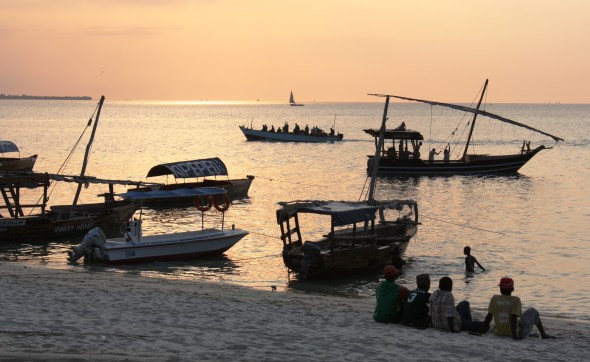
There are few islands with names that conjure up as exotic an image as that of Zanzibar.  The reality is as satisfying: the narrow alleyways of the capital Stone Town are lined with mansions made from coral stones held together with lime mortar, built by merchants who traded spices, silks and slaves.  To the north of the island, you’ll find plenty of excellent beaches where you can enjoy the dry, hot July weather.
img_7408

Tanna – August

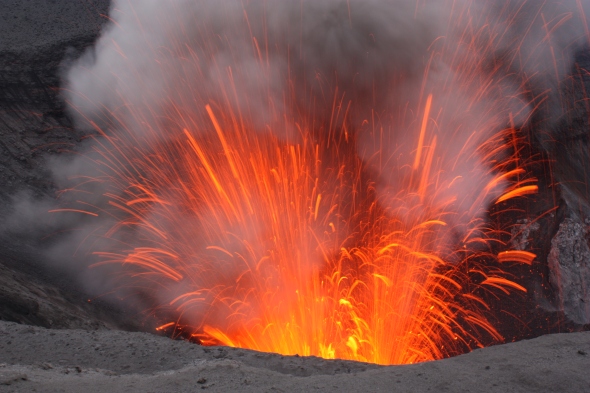
Faraway in the South Pacific lies the archipelago of Vanuatu.  Its most fascinating island is without a doubt Tanna.  Dominated by one of the most accessible active volcanoes on the planet, visitor interest is piqued by the John Frum cargo cult, and in particular the offshoot Prince Philip movement that think our Queen’s husband is a god.  Toast him with kava, the local firewater which numbs your mouth and sedates your brain.
img_4782

Bali – September

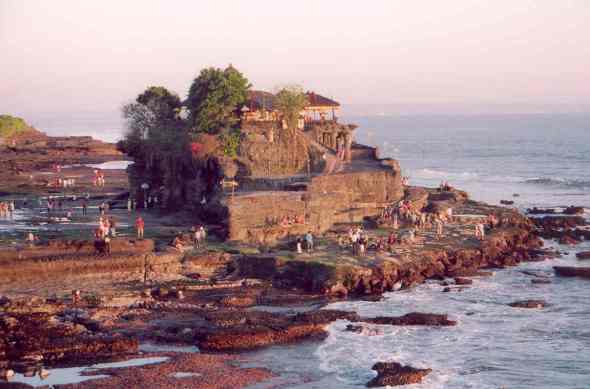
Well on the beaten tourist track, Bali offers a winning combination of culture and relaxation in one neat and tiny package.  Its resorts make the best of the sandy beaches and September sees the crowds thin ahead of the October to March wet season.  Watch the sunset over the ocean at Uluwatu temple or head inland to the green rice terraces that encircle the pretty town of Ubud.
indonesia-tanah-lot-temple-at-sunset

Kyushu – October

The most southerly of Japan’s big four, Kyushu packs a punch.  It’s a good choice for those wishing to get up close to the country’s tectonic action, with mud pools, hells and hot sand baths at Beppu and the active volcano Sakurajima an easy ferry ride from the city of Kagoshima.  By October, the humidity that plagues the summer months is long gone, but temperatures are still high enough to make sightseeing a pleasure.

img_7782

Easter – November

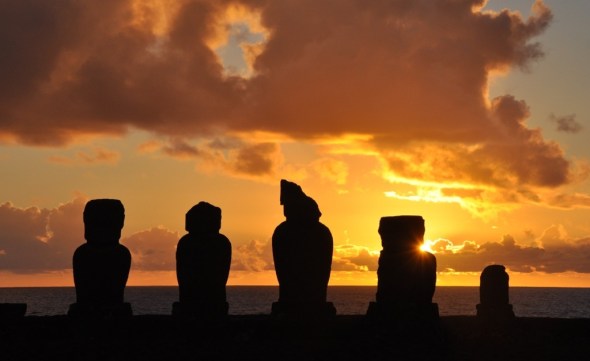
Despite its isolation, remote Rapa Nui is recognisable the world over for its moai, the oversized stone heads that gaze out over the Pacific from all parts of this mountainous island.  The five hour flight from the Chilean capital just to get there is arduous, but when you do, you’ll agree it’s well worth the effort.  Its history is fascinating, but it’s the location that  blows your mind.
image

Cuba – December

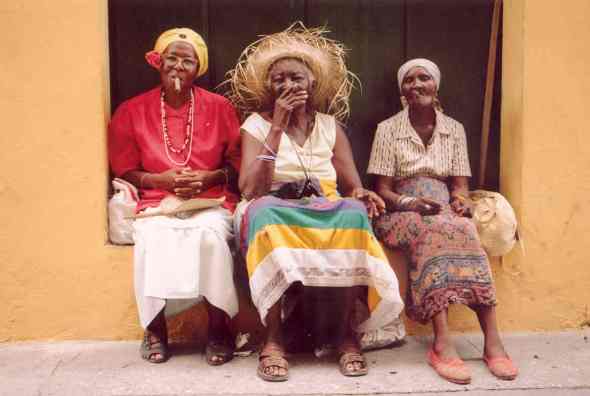
Go there before it changes, they said.  So I did.  But that was well over a decade ago and the tour companies are still saying it.  Nevertheless, I haven’t yet met a visitor who was disappointed.  Cuba’s one of those places that gets under your skin, from the old ladies in Havana who’ll puff on their cigars for a dollar to the horses that you’ll still see trotting down the cobbles of backstreet Trinidad.  Forget generic Caribbean, this place is unique and special because of it.
cuba-the-cigar-ladies

So there you have it, my favourites.  What are yours?
Why I’d rather celebrate Day of the Dead than Halloween

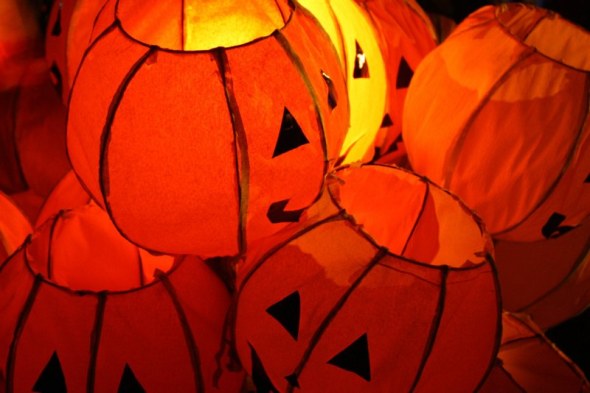
Halloween is upon us and with it, the excessive commercialism that has, sadly, come to characterise this holiday.  I know some parents make the effort to teach their kids some context, but I suspect many young trick or treaters will have no idea about the origins of the occasion.  In fact, trick or treating is thought to have started in Ireland, Wales and Scotland where knocking door to door resulted in the exchange of food for a song.  The origins of Halloween go back further: an adaptation of the Celtic pagan festival known as Samhain according to some, while Christians mark it as the evening before All Hallows, an 8th Century attempt to eradicate pagan celebrations.  Both however, have something in common: it’s seen as a time when the spirits return and the dead are remembered.

img_7712

My issue with Halloween, my only issue, is its materialistic bent.  Encouraging children to demand treats doesn’t sit well with me.  Sure, it’s a bit of fun and what kid doesn’t like dressing up and carving pumpkins?  I have no problem with that!  However, it seems, as with Christmas, that the true meaning of the occasion has been well and truly buried under all that candy-begging and even harassment of the vulnerable.  And if you’re still in any doubt that this is big business, then consider these statistics from a recent Daily Telegraph article:

£283 million: predicted sales of Halloween-based products in the UK in 2015
$6.9 billion: total Halloween consumer spending in the US expected for 2015
$2.1 billion: total amount expected to be spent in the US on candy in 2015
3 million: number of pumpkins Tesco expects to sell this Halloween

img_7536

If you’re a Halloween fan and still reading, and I haven’t well and truly pissed you off by this point, then let me tell you what I prefer about Day of the Dead.  Known as Día de Muertos, it’s been part of Mexican culture for three thousand years.  I first experienced this festival a few years ago with a visit to Oaxaca and was immediately struck by the way that it blended religion, respect, commemoration and celebration.  And let’s not forget that last one.  Day of the Dead is anything but dull: there are fancy dress parades, carnival floats and of course, much music, drinking and dancing.

img_7502

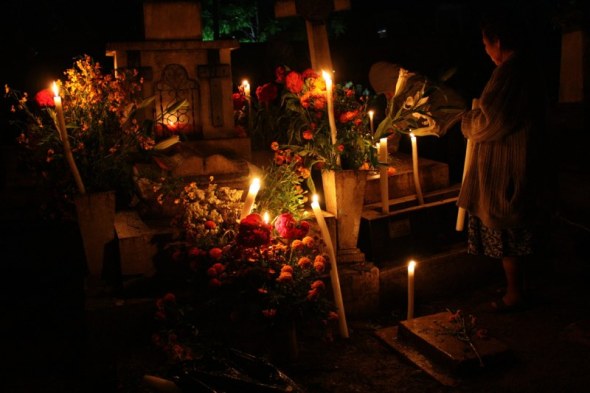
At the heart of the festivities is the dressing of the graves of the ancestors and the construction of homemade altars built to honour their spirits and encourage them to return for a visit.  Work starts on these ofrendas in the last few days of October, and every street corner is occupied by flower sellers surrounded by buckets of vibrant orange marigolds known locally as cempasuchil.

img_7567
On November 1st, the souls of deceased children are the focus, while on November 2nd, it’s the turn of the adult ancestors.  Families visit the cemetery and sit at the graveside to raise a glass of Mezcal and eat a special feast.  It’s all at once a poignant, private and public occasion, as visitors are welcomed and encouraged to join in.

img_6986

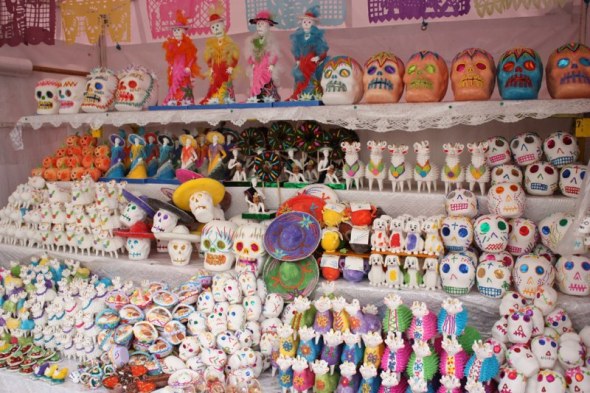
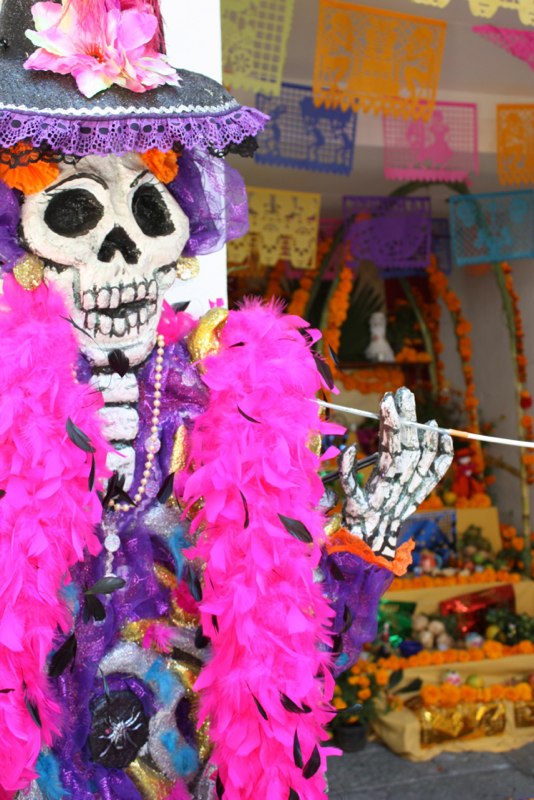
Catrina, the elegantly dressed skeleton and iconic figure of Day of the Dead, is everywhere.  Clearly, commerce plays a big part in Día de Muertos too: vendors sell everything from sugar skulls to folk art skeletons, Mezcal to garlands of marigold petals.  I don’t have a problem with that.  But in Mexico it sits side by side with ceremony and tradition, with both given their proper place.

img_7431

Día de Muertos touched me as a way to remember my grandparents, much loved but long departed.  Amid the hectic day to day activities of “life goes on”, over time, I found myself thinking of them less and less.  It’s not that I don’t still love them, but I began to worry that as the memories faded I’d one day forget to remember what a significant contribution they made to my life.  Their photos are on the altar we made:

img_7505

When I went to Oaxaca, I took with me their photographs, and, having been privileged to help build an altar at Casa de las Bugambilias, felt a stronger connection to them than I’d had in years. So this year, I’ve built my own altar and on November 2nd, All Souls Day, I’ll raise a glass to toast these very special people and thank them for all they did for me when they were here.


For more photos from the Oaxaca trip, please visit:

http://www.juliahammond.co.uk/Travel/DIA_DE_MUERTOS.html

Five favourite travel books: South America

I rarely read up about a place in a travel book as preparation for a holiday, but I do love to read about travel. South America, as regular readers will know, is my favourite part of the world and so I thought I’d begin here as I share my best loved travel reads. If you’ve any recommendations for must-read books on any of the South American countries, then do share – I’d love to know. And watch out for more on this theme at a later date: my bookshelves are stuffed full of addictive page-turners not only for the rest of the Americas, but destinations spanning the rest of the world’s continents.

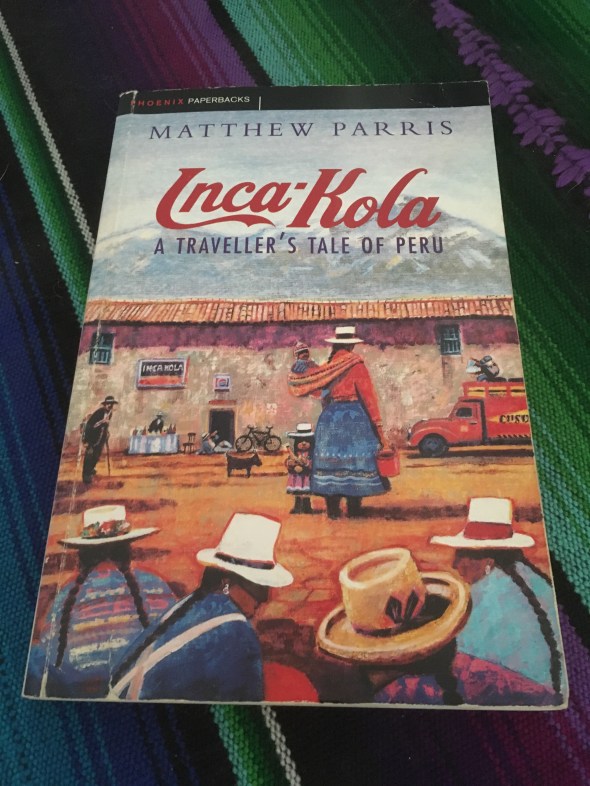
Inca Kola by Matthew Parris

img_6899

If my house was burning down and I only had time to grab one travel book, it would be this one.  I’ve read Matthew Parris’ absorbing account countless times and it’s a delight from the first page to the very last.  From his introduction to Limeño traffic to accounts of hostile bandits and remote mountain villages, this is a fabulous insight into how Peru used to be.  In the opening chapter, Parris writes:

“Go to any scrapyard in Europe and command the wrecks to rise like Lazarus from the slab: you will have launched a fleet of the finest and newest Lima has to offer!”

I’m reminded of my first visit, in 1995, when my friend announced that, in order to find a cheap ride, you had to flag down the least roadworthy taxi that passed.  The dilapidated Beetle that would take me back to airport at the end of that trip had as many rusted holes as it did square inches of metal and the doors were held in place by ordinary kitchen string.  That we made it at all was a miracle, but it was indeed cheap.

Eight Feet in the Andes by Dervla Murphy

img_6895

Few mothers would take their nine year old daughter on a long distance Andean trek with only a mule as transport, but then few people would look to Dervla Murphy for parenting advice.  What results is a wonderful adventure and a lesson to everyone that you should never make excuses to avoid fulfilling your needs, especially where travel is concerned.  I’ve never had children, but I like to think that had I done so, he or she would have accompanied me on my travels.

Often, Dervla’s experiences are far from mine, but I did identify with this:

“She…provided two litres of watery chicha fascinatingly diversified by scraps of floating vegetation.  (“Better than insects” commented Rachel, peering into my glass.)”

I only tried chicha once, this home-fermented maize beer not to my taste. Rumours that those who made it spat their own saliva into it didn’t help to convince me otherwise.

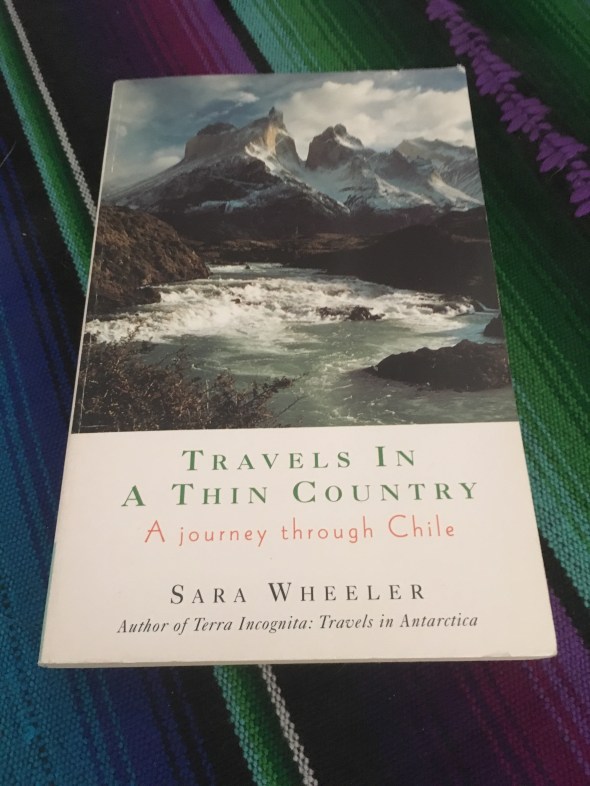
Travels in a Thin Country by Sara Wheeler

img_6897

Peru’s neighbour Chile is the subject of this well-written and engaging work.  The author spent six months travelling in the country and writes as confidently as you’d expect.  Some of my favourite parts of the book are her interactions with those she meets, including this episode in the Torres del Paine National Park:

“I asked if they could sum up the difference between Chilean Patagonia and Argentinian Patagonia in one sentence.  “Absolutely none at all except the Chilean bit has mountains,” said the Argentinian.  “Quite,” said Fabien (her Chilean guide) and that was that.”

That brief exchange sums up the difference in temperament between the chatty Argentinians and the more reserved Chileans.  And in terms of comparing scenery, I can report that both are spectacular and equally beautiful.

The Old Patagonian Express by Paul Theroux

img_6896

While I’m not disputing that Paul Theroux is a great travel writer, he’s a grumpy old man much of the time and as a consequence, I often find his work doesn’t quite hit the spot.  This is an exception and the combination of trains and the Americas is a happy combination as far as I’m concerned.

However, towards the end of the book, Theroux reverts to type as he writes about La Boca, a colourful working class neighbourhood of Buenos Aires:

“I roamed the city on my own.  It now depressed me.  It was partly the effect of La Boca, the Italian district near the harbour… some of the squalor was affectation, the rest was real dirt.”

He was writing in the late 1970s.  I visited three decades later and the vibrant colours and equally colourful characters who inhabited the place made it one of the areas I remember most fondly.  But who am I to disagree?

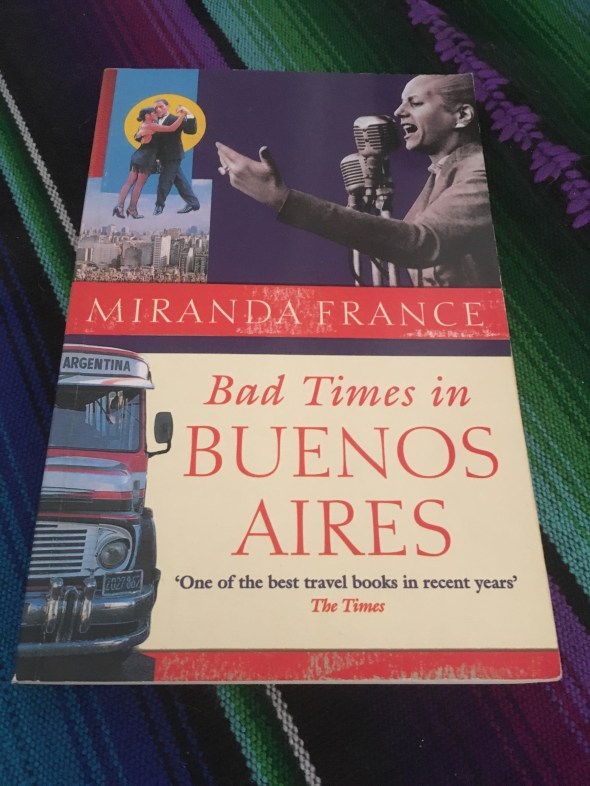
Bad Times in Buenos Aires by Miranda France

img_6898

Somehow Miranda France manages to point out Buenos Aires’ flaws with more charm and seems to be affectionately ribbing her adopted home rather than moaning about it.  This, I love:

“There was a word I kept hearing: bronca.  An Italo-Spanish fusion, like most Argentines themselves, the word implied a fury so dangerously contained as to end in ulcers.  People felt bronca when they waited for an hour to be served at a bank, and then the service was bad because the cashiers all had bronca too.  Bronca crackled down the crossed telephone lines and stalked the checkout queues in supermarkets with hopeful names like Hawaii and Disco.”

Ah, Buenos Aires, what a screwed up and yet utterly captivating place!  See you next year, I can’t wait!

Just back from – a day in Budapest

If you’re a regular reader of this blog then you’ll know it’s perfectly possible to have a day out in Europe, so long as you don’t live too far away from the airport and the flight schedules permit an early out, late back pairing.  Following on from my days out in Amsterdam, Belfast, Bremen and Lisbon, the latest trip saw me heading to the Hungarian capital Budapest.  The links to those previous day trips can be found at the end of this post.  As with the others, I’ve been to Budapest before, but well over a decade ago, so I was keen to revisit what had been an enjoyable destination.

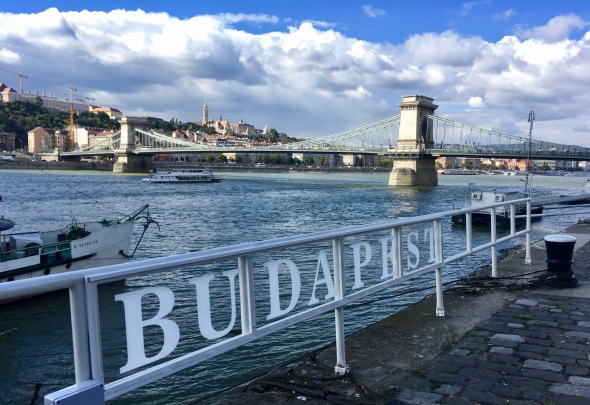
budapest

Budapest straddles the Danube

Arriving at midday local time after a civilised 8.30am flight, it was good to hear the famous Ryanair on time hurrah and even better to find that Hungary’s border police valued speed over anything else.  An easy bus and metro ride got me into the centre of Budapest, giving me about six and a half hours in the city after the commute to and from the airport had been factored in.  Once again, having waited for a flash sale, I paid less for my flight than I would have done for a train ticket into London, with my time equating to less than £5 per hour of sightseeing.  I thought that was good value.  The one day travel card, good for bus, tram and metro, was also excellent value at 1650 forints, about £5.

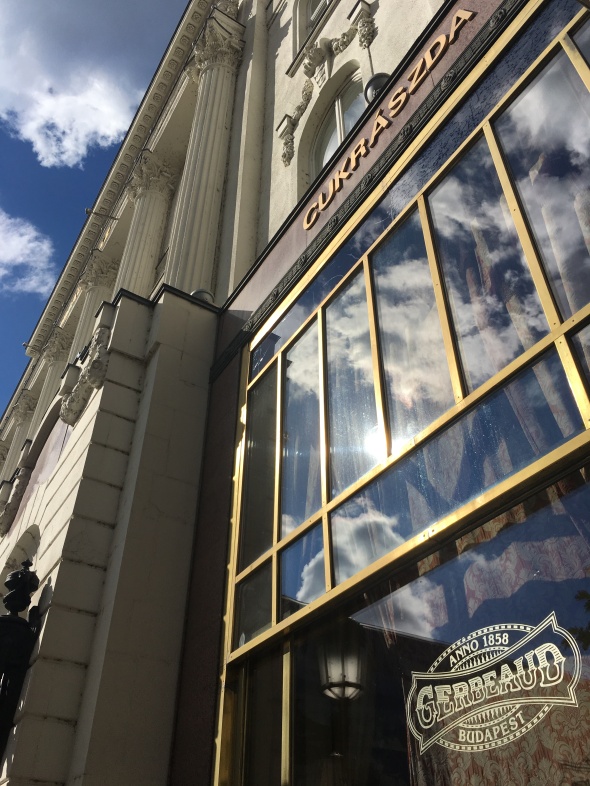
img_6430

Cafe Gerbeaud has been found at its present location in Vörösmarty tér since 1870

First stop was an old haunt: Cafe Gerbeaud.  Located in Pest, this famous coffee house has been a fixture for well over a century and still knows how to put on the style.  A cappuccino and some delicious biscuits topped up the massive breakfast of huevos rancheros I’d wolfed down at Stansted.  The sun was pleasantly warm for October and so I decided to take a stroll along the banks of the Danube and over the city’s famous Chain Bridge.

img_6434

On the waterfront

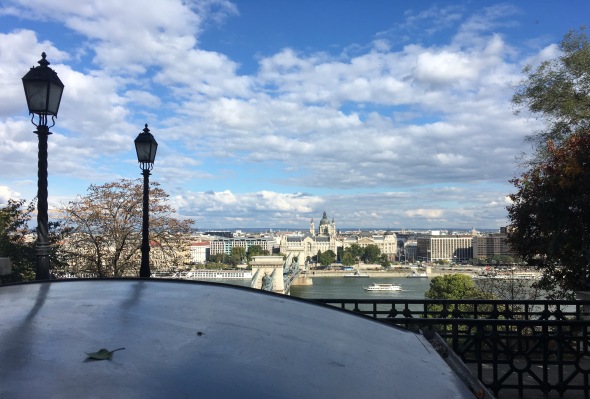
With skies blue and visibility good, it was too tempting to take the funicular up Buda’s Castle Hill.  The ticket wasn’t included in the travel card, more’s the pity, but it was 1200 forints for a single ride – hardly break the bank rates.  The views from the top were as fine as any in Europe, with landmarks like Pest’s parliament building easy to spot.

funicular

View across to Pest as I ascended the funicular

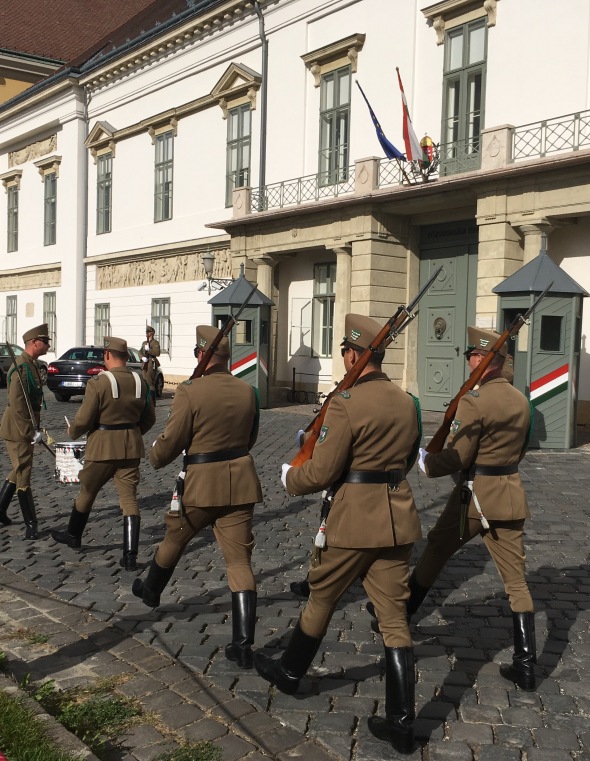
The castle occupies a prominent position, as you might expect.  There are wine tastings to sample and museums to explore, but one of the great pleasures is just to sit in the sunshine and admire that view over Pest.  As luck would have it, the changing of the guard ceremony was about to start in front of the Presidential Palace just as I reached the top.  A forest of cameras, phones, selfie sticks and mobile phones recorded the occasion, but there was plenty of room for everyone to get their shot.

changing

Changing of the guard, a tradition reinstated in 2003

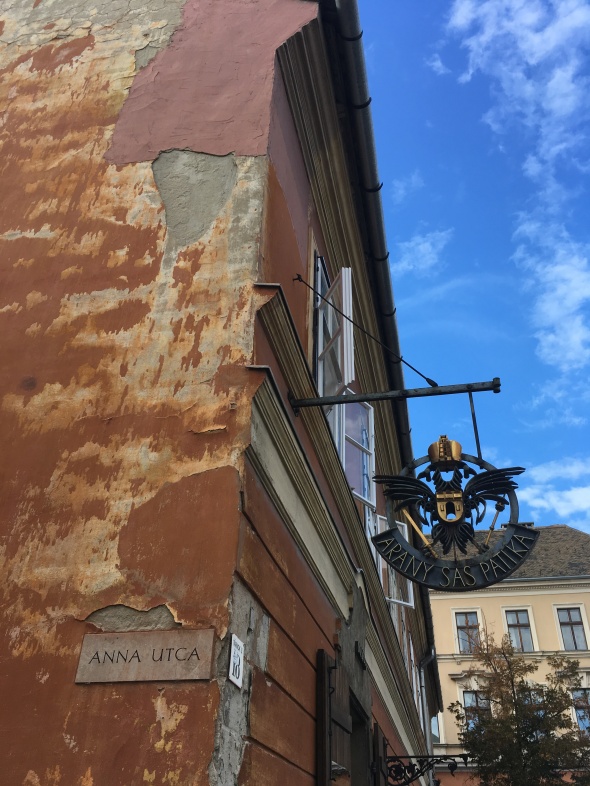
The weather was just too good to resist and so I continued my stroll through Buda’s castle district to picture postcard Fishermen’s Bastion.  It’s not a place to hurry, unless an out of control Segway rider is heading your way.  There are loads of museums and plenty of cobbled streets, and as access to traffic is limited it’s easy to wander around.

img_6551

Castle District

The white domes of Fishermen’s Bastion have a touch of the Sacre Coeur about them.  The place was constructed between 1901 and 1903, designed to complement the Church of Our Lady which dominates the square adjacent to it.  There’s no need to pay to enter for the view, or to have a coffee in the expensive cafe in the ramparts, though, as you can enjoy the same splendid vistas for nothing if you walk a little further along.

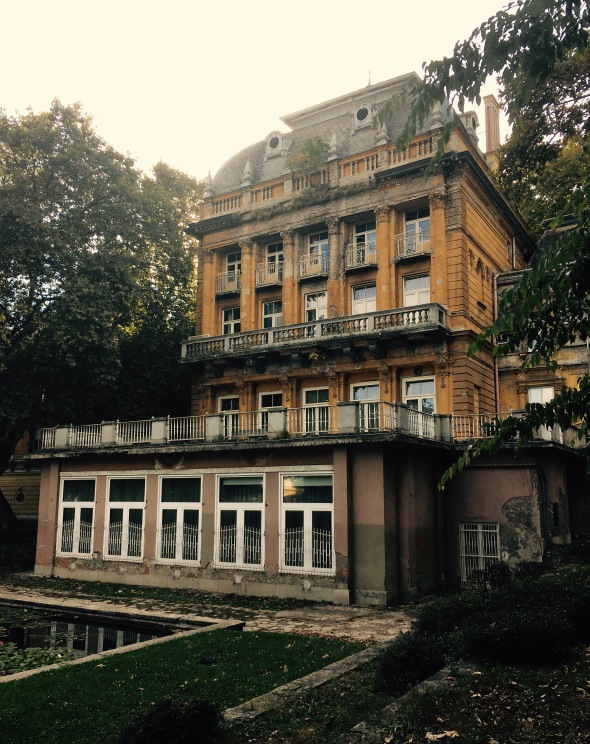
Back on the bus, I headed down to the river to search out an old Turkish Bath I’d read about.  Instead, I found what looked like an abandoned sanatorium but what was actually a working thermal baths.  It turned out to be the Lukács baths, whose website provided a bit of background missing from other web posts about Budapest’s baths:

“The Lukács Thermal Bath has a rich historical background: monastery baths were built in this area as early as the 12th century, the first spa hotel was built in the 1880’s, a drinking cure hall was added in 1937, and a daytime hospital was established in 1979. At the end of the 20th century, the thermal bath was thoroughly renovated and all facilities were modernised.”

fullsizerender-9

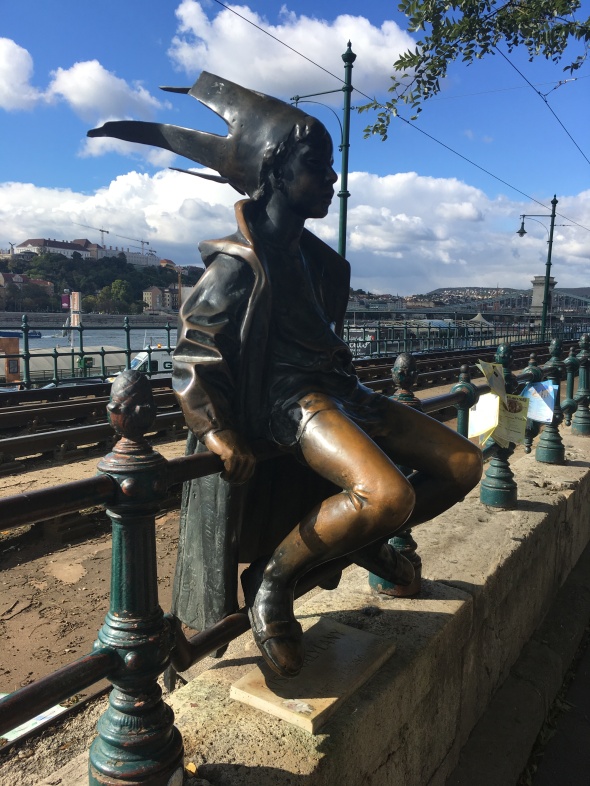
A surprise find

Budapest has loads of them dotted about the city, including the swanky baths at the Gellert Hotel and the famous Széchenyi Baths in City Park.  These were less well known, perhaps off the tourist track because it looked like no one had maintained them for an age.  Undeniably atmospheric, I decided against a dip in case the building fell on me and in any case, it was late afternoon and getting a little chilly.  Instead, I decided to go back to Pest instead for a stroll through City Park.  The lake had been drained for cleaning, alas, so I cut my losses and caught a bus to the market.

fullsizerender-8

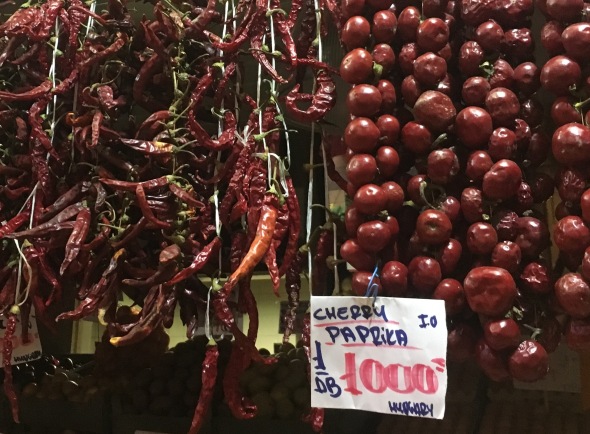
Paprika in the market

I could wander around a market all day, and Budapest’s, housed in a glorious building down by the river, is no exception.  Ropes of paprika hung like Christmas decorations from greengrocery stalls and rows of salamis adorned the butchers.  I’d been tipped off about a cheese pastry, a kind of crispy rolled croissant filled with cream cheese and dipped in finely grated cheese.  It was deliciously more-ish.

fullsizerender-7

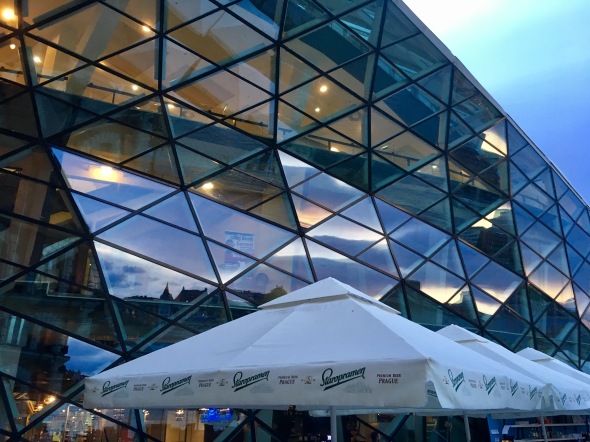
The Whale at dusk

Temptation would have to be resisted though, for almost next door was one of Budapest’s newer architectural efforts.  Known as Bálna or the whale, this modern structure connects several old warehouses with a confection of glass and steel.  It opened, I read, in November 2013 after protracted disputes between the city and the developer, but not all of the units inside had been filled – a mix of shops, bars and restaurants – leading to some commentators renaming it the white elephant.

fullsizerender-6

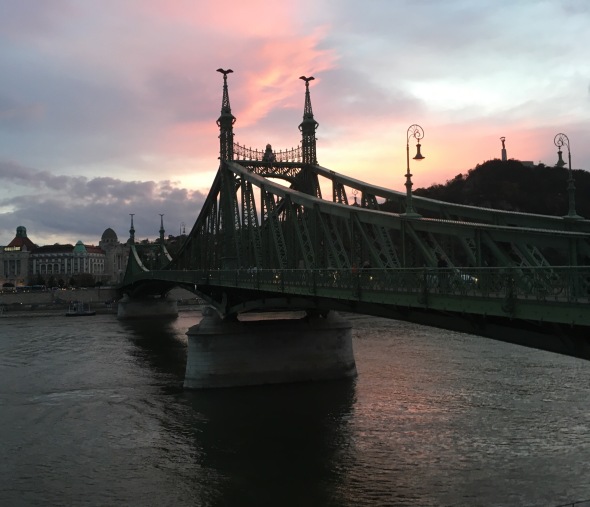
Sunset over the Danube

It was getting late.  The sun had cast a pink hue over the Gellert and left the faintest of reflections in the Danube.  There was just time for a light supper before heading back to the airport for my 9.35pm flight back home.

Previous day trips…

Bremen

https://juliamhammond.wordpress.com/2016/06/07/just-back-from-a-day-trip-to-bremen/

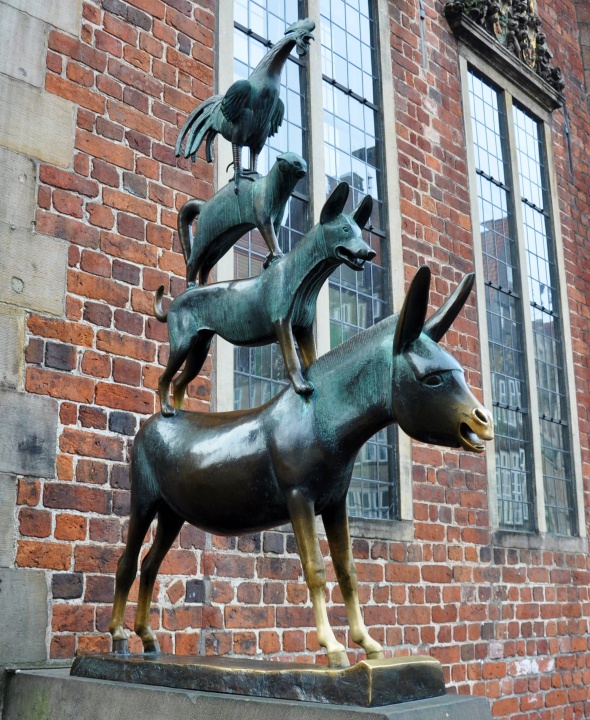
image

The four budding musicians

Lisbon

https://juliamhammond.wordpress.com/2014/10/20/just-back-from-a-day-trip-to-lisbon/

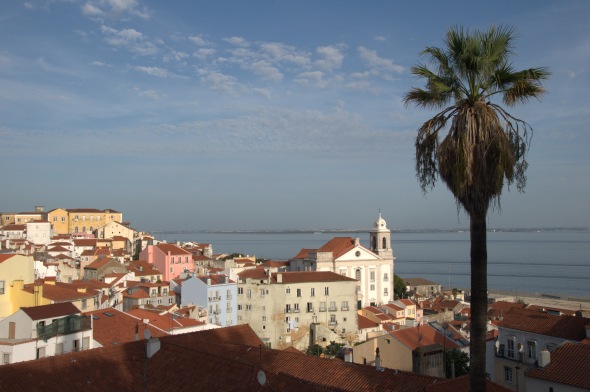
View from Mirador Portas do Sol

The Alfama district seen from the Mirador at Portas do Sol

Amsterdam

https://juliamhammond.wordpress.com/2015/01/26/just-back-from-a-day-trip-to-amsterdam/

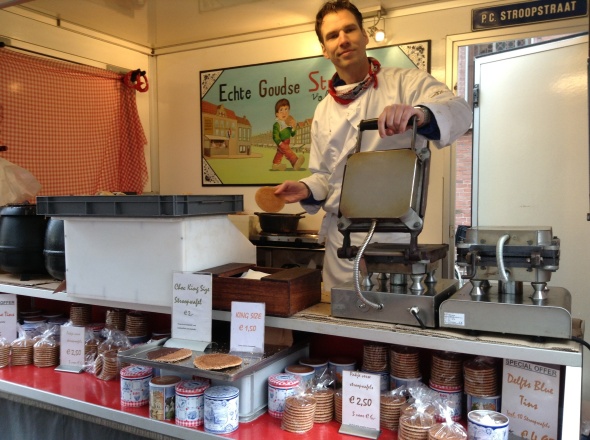
image

The Stroopwafel man

Joshua Tree National Park

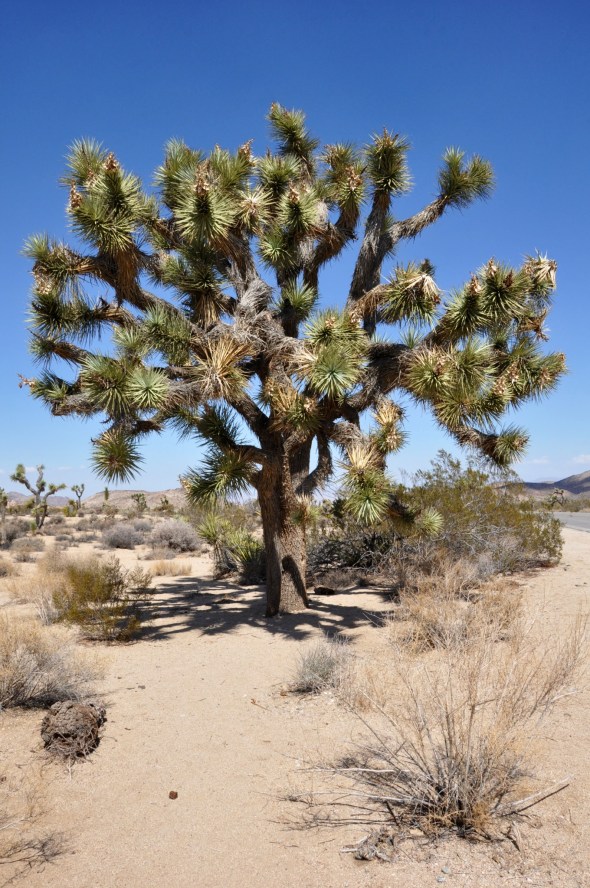
U2 fans take note: if you rock up to Joshua Tree National Park looking for that tree, you’ll be disappointed. The iconic image that featured on the band’s 1987 album cover was actually taken by the side of the SR190, a couple of hundred miles away up near Darwin, CA. There’s no point in going in search of it as the tree is long gone. In fact, the Joshua Tree National Park wasn’t even a designated national park at the time, though it was a national monument. Its status was upgraded in 1994.

img_6409

A visit to the park is a rewarding experience. It’s basically divided into two distinct zones: the Colorado desert to the south and the higher and slightly wetter Mojave Desert to the north.  As with many US national parks, a road cuts through the park. If you’re driving, enter from the south as the scenery will improve as your day goes along rather than the other way round.

img_6411

The cholla cactus garden (pronounced choy-a in the Latino way as with most place names in these parts) is one of the highlights of the south side of the park. Much of the road leading to the area is lined with fairly featureless scrub, the barren landscape dotted with creosote bushes and the cactus-like ocotillo trees which despite their appearance aren’t cacti at all. Aside from almost running over a snake, we saw almost no wildlife at all which wasn’t a surprise given the landscape and the high temperatures.

img_6412

Cholla cacti almost have the appearance of cuddly bears – if your imagination is wired that way – but are extremely hazardous. Their prickles are incredibly sharp, and they get their nickname of jumping cactus from their propensity to detach.

img_6410

Straying from the path could be a disastrous decision. That path is sufficiently wide not to cause a problem, but as with walking the beam in gym class, there’s something about knowing you can’t wobble that makes you wobble. As someone with short sight and thus poor peripheral vision, it was a slightly stressful walk. Back at the hotel later, I found this video on YouTube showing what happens if you’re not so careful – and it’s excruciating viewing:


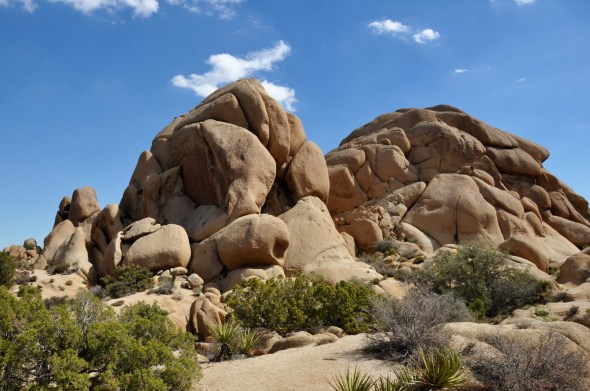
Back in the car without incident, the road climbed steadily, taking us into the Mojave and ramping up the scenic quality to something worthy of National Park status.  Pulling over, we were treated to the sight of Skull Rock, which as its name suggested had been sculpted into something resembling a human skull.

img_6408

The geological story of much of rocky Joshua Tree is one of volcanic intrusion – molten monzogranite pushing its way up into the overlying Pinto gneiss. As the magma cooled, the granite cracked. Over time, chemical weathering widened those cracks and rounded off the rock into the huge monzogranite boulders that litter the landscape today.

img_6404

After Skull Rock came Jumbo Rocks, which were pretty much what they said they were. If at first we had been in any doubt as to whether this desert deserved to be a national park then those doubts had now evaporated. Some people run America down, but in terms of sheer scale, its majestic scenery cannot be beaten. I know the word is overused, but it is awesome.

img_6413

Turning off the main highway, we climbed for a short while to Keys View. Fearing snakes, scorpions and tarantulas, it turned out to be something much more common that caused us the biggest headache in terms of creature discomfort – honeybees. Attracted by moisture, and not caring whether that came from human perspiration, a/c condensate or half-drunk Coke in the car’s cup holder, those pesky insects created quite the nuisance of themselves. Fortunately we were able to get them back out of the car fairly easily and – with much relief – without being stung, leaving us free to appreciate the views across the valley to Palm Springs and even as far as the Salton Sea in the hazy distance.

img_6406

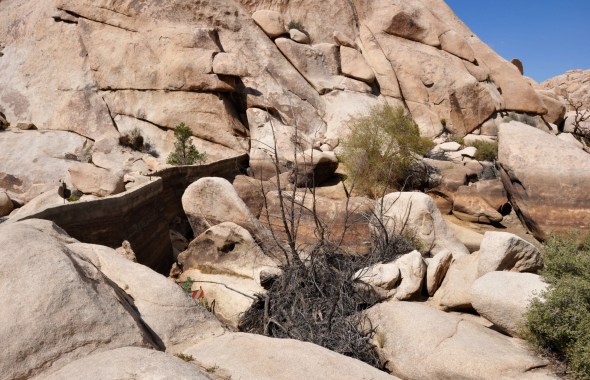
Descending to the valley, the road took us to the start of the Barker Dam loop trail. It wasn’t far, along a well marked and graded gravel path, though in the intense heat (by British standards anyway) it was far enough. The dam was constructed around 1900 to store water for the cattle which were grazed here as well as for the local mines. It’s rain-fed, but visiting in the autumn meant that the reservoir was bone dry, leaving visitors to ponder the wisdom of trying to rear livestock in such an inhospitable location in the first place.

img_6403

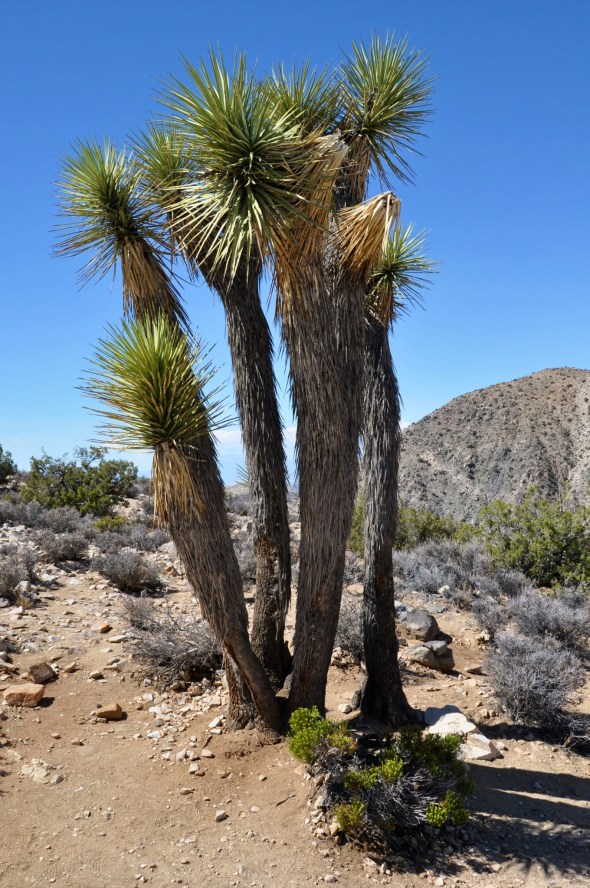
Not far from Barker Dam lies Hidden Valley, one of the park’s landmark attractions and the only place we saw a tour bus. Once the hideout of cattle rustlers, now it’s aesthetic qualities that draw humans. Steps wind up through the rocks to a clearing crammed with vegetation: cacti, yucca and several species of trees have colonised the area naturally protected from the wildest weather. Overhearing a guide, I learnt that even a seemingly spine-free cactus was actually a hazard. Touch what seemed like a smooth surface and microscopic spines would embed themselves into the skin – almost impossible to remove without the aid of duct tape. Ouch!

img_6405

My verdict? Visit Joshua Tree for sure, but remember it comes with a health warning!