juliamhammond

Latest

The Fiesta de la Patria Gaucha

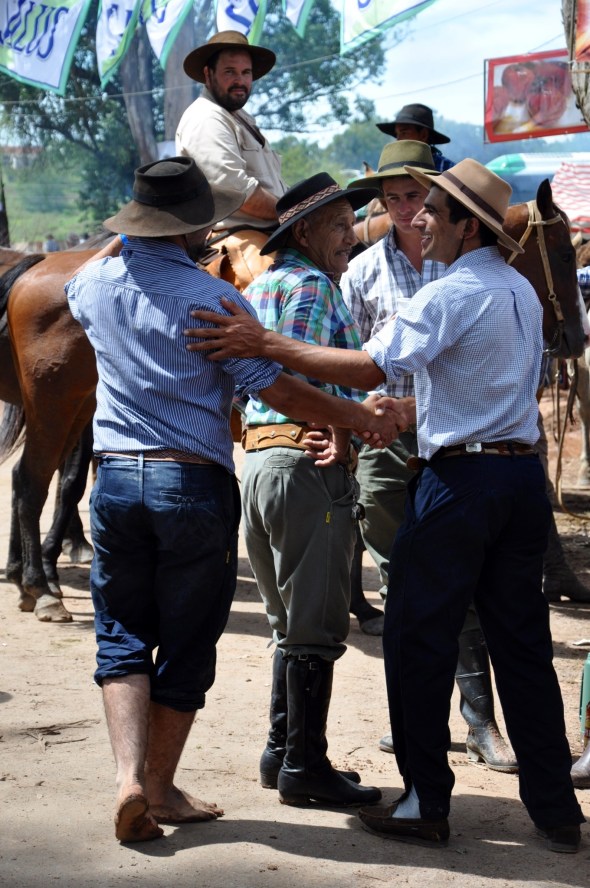
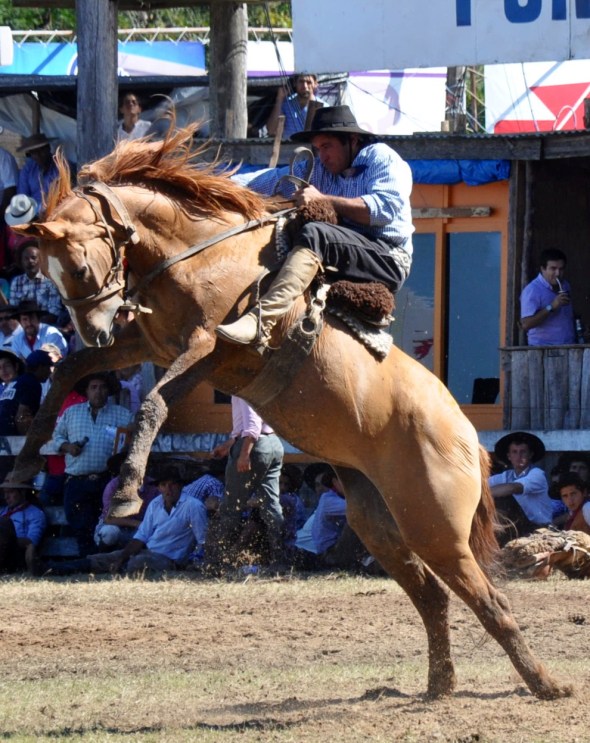
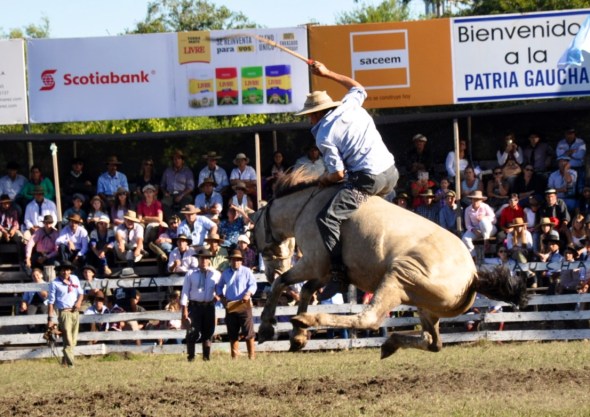
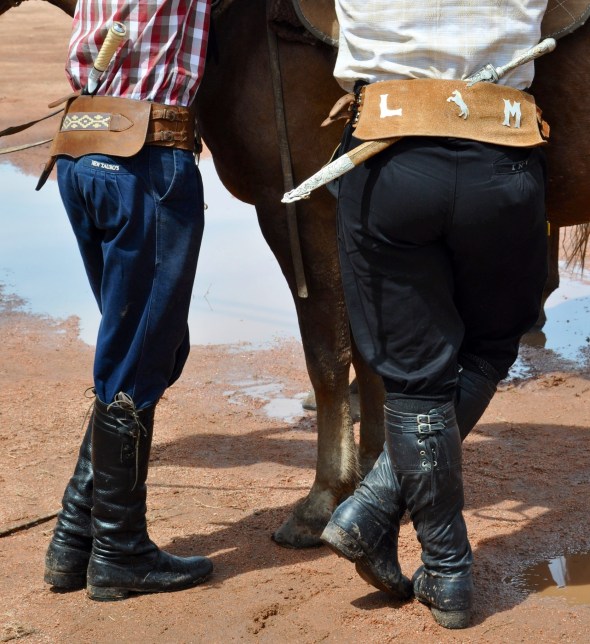
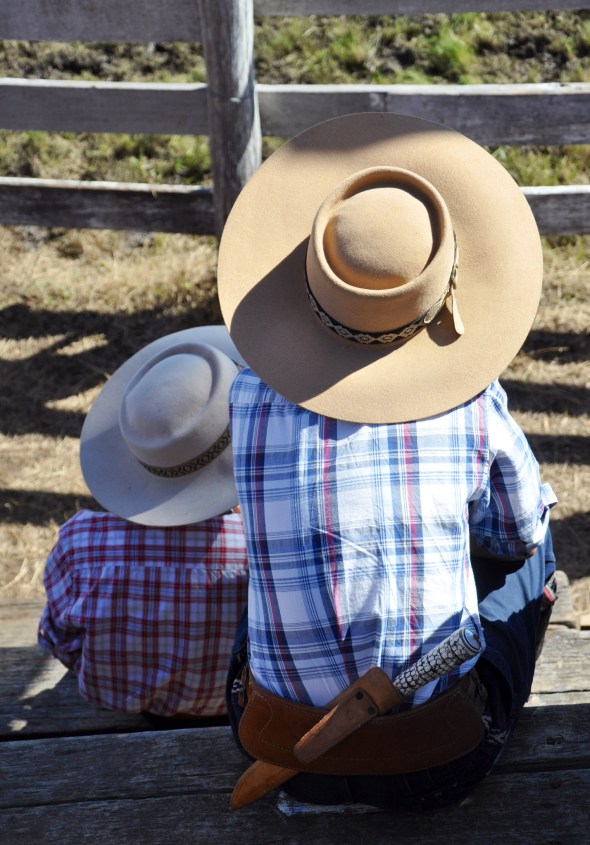
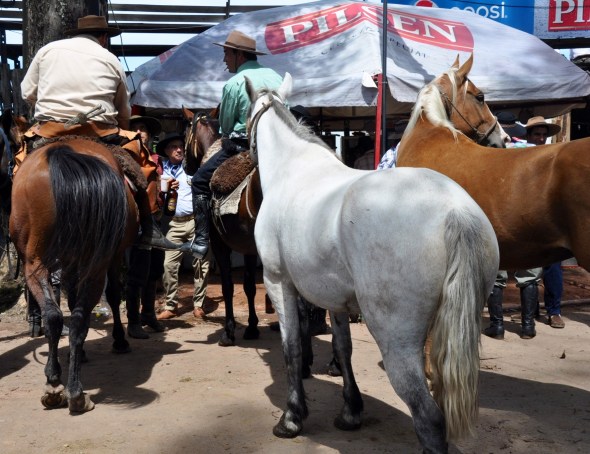
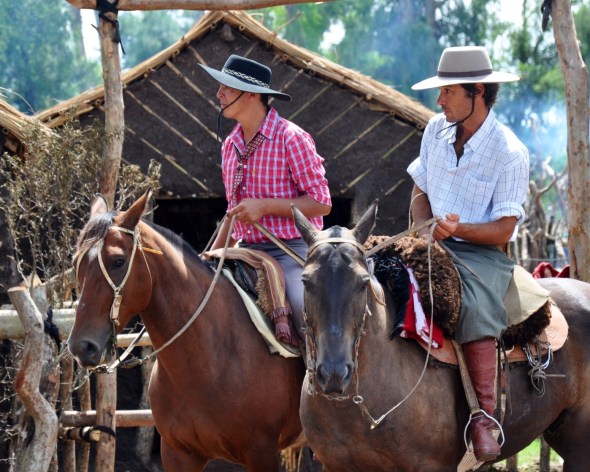
Each year, Tacuarembó hosts the Fiesta de la Patria Gaucha. It’s been held for thirty years, the first event being held in 1987. The festival celebrates the great tradition of the gaucho in Uruguay. At first, to an insider, it can seem like a fancy dress parade, but it soon becomes apparent that this is a chance for those living in and around Tacuarembó to eat, drink and be merry – while in charge of a horse, of course. The parade ground hosts a series of races, skills demonstrations and parades, but to begin with, here are some of the characters that make it a feast for the eyes.

image

image

image

image

image

photo12

photo11

photo6

photo3

photo

photo2

photo6

image

image

photo9

photo4

photo8

image

image

image

image

image

image

Salta’s Lightning Girl

IMG_7854


One of the most fascinating and also morally challenging of the Inca rites is surely the sacrificing of children. Scattered across the high Andean peaks are a number of sacrificial sites that have only been discovered relatively recently. One such site can be found on Mount Llullaillaco, a 6700m high volcano straddling the Argentina-Chile border. Drugged with coca and fermented maize beer called chicha, three children had been led up to a shrine near the volcano’s summit and entombed, a practice known as capacocha. The freezing temperatures inside their mountain dens had not only killed them, it had perfectly preserved their small bodies. There they’d remained, undisturbed, for five centuries. An archaeological team led by Johan Reinhard found what’s now known as the Children of Llullaillaco less than twenty years ago.

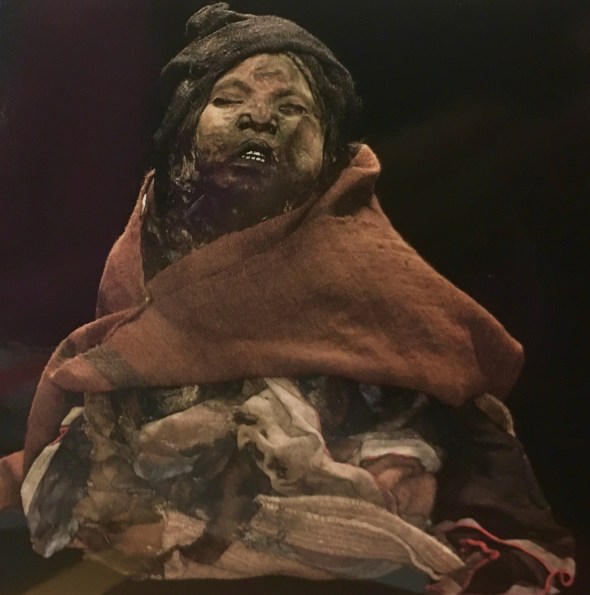
Today, the three mummies are rotated, one on display at a time, in MAAM, a museum on the main plaza in the northern Argentinian city of Salta. Three years ago, I’d visited Juanita, a similar mummy found in Peru and displayed in a darkened room a few blocks from the Plaza de Armas in Arequipa. As a consequence, I figured I knew what to expect when I stepped inside MAAM. During my visit, Lightning Girl was the mummy being displayed, possibly the most haunting museum exhibit I’ve ever seen.  No photography is permitted; the image above is of a postcard I purchased in the museum shop.

The first thing that struck me was how well preserved this small child was, much more so than Juanita had been. Found entombed with a slightly older girl, her half-sister, and a boy, she looked straight ahead. Her face stared bleakly, as if tensed against intense cold. A dark stain marked her face, thought to have been caused by a lightning strike after she was sacrificed. But it was her teeth that caught my attention, tiny white milk teeth that emphasised just how young this girl would have been when she met her fate. Text beside her indicated that she had been just five years old when she died. There was no escaping that here in front of me, in this darkened room, was a real person.

During Inca times, it was the custom to choose sacrificial children from peasant families, deemed an honour for the family, though surely a heartbreaking one too. Girls such as these were selected as toddlers to be acclas or Sun Virgins, destined later to be royal wives, priestesses or to be sacrificed. It is thought that the elder girl was such a person, the two younger children her attendants. The children were then fed a rich diet of maize and llama meat to fatten them up, nutritionally far better than their previous diet of vegetables would have been. The higher their standing in society, the better the value of this offering to the gods, essential to protecting future good harvests and political stability. The children would not die, it was believed, they joined their ancestors and watched over mortals like angels.

Despite the drugged state induced by the coca and chicha, which in theory led to a painless end, the boy had been tied. Perhaps he’d struggled and had needed to be restrained. The older girl had her head buried between her knees, but Lightning Girl looked straight ahead. Had she been too young to comprehend what was happening to her?

Trip preparations: Bolivia

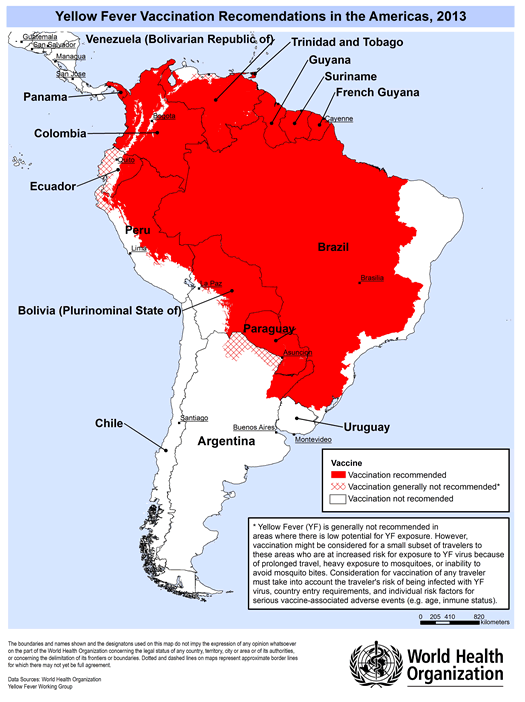
It’s almost time for me to fly off to South America.  My itinerary is pretty much fleshed out now and most of the bookings are made.  One thing that’s easy to overlook, though, is specific vaccination requirements.  For Bolivia, the regulations concerning yellow fever have just changed.

yellow-fever-americas

http://www.fitfortravel.nhs.uk/advice/disease-prevention-advice/yellow-fever/yellow-fever-risk-areas.aspx

As you’ll see from the map above, parts of Bolivia are affected, like much of South America, by yellow fever.  Travelling to Uyuni and then La Paz, however, I’m not going to be venturing into yellow fever territory, so it’s tempting to think I wouldn’t need the vaccine. But early last month, a Danish traveller was found to have the disease.  The National Health Director was quoted as saying: “This person came from another place and was not vaccinated.” There’d been an outbreak of yellow fever across the border in Brazil, but whether the Danish traveller had been there is unclear from the news reports. You can read Reuters’ report here:

http://uk.reuters.com/article/us-bolivia-health-yellow-fever-idUKKBN15P2QW

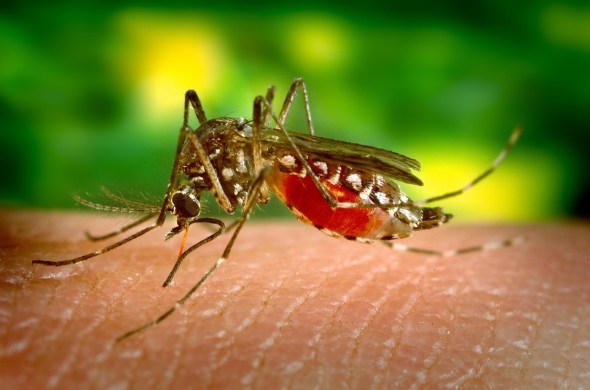
Biting Sucking Female Mosquito Parasite Disease

What this means in practice is that from yesterday, 2nd March, all travellers entering Bolivia from a country which has a current outbreak of the disease or remains a risk area for it, must hold a valid yellow fever certificate.  I’m travelling across the border from Argentina so that means me – even though I won’t have passed through yellow fever areas within Argentina.  I’ll still need a certificate. That certificate would need to be issued at least 10 days before I’d be due to enter Bolivia.  Potentially, without one, I could be refused entry at the border.

Even some transit passengers are likely to be affected.  If you hub through an airport in a neighbouring country on your way to Bolivia, you could still be refused entry into Bolivia if you have cleared immigration and gone landside.  That’s even if you never left the airport.  Basically,  the Bolivians are playing it safe and you can’t blame them for being cautious.

I’ll update this post in a couple of weeks to tell you if the certificate was requested by border officials or not.  Fortunately, my jabs are up to date and the yellow fever certificate I needed to get into Panama a few years ago is still valid. But make sure you’re not caught out by this change in immigration requirements by seeking health from a medical professional before you embark on your trip.

Update March

At the land border between La Quiaca and Villazon, I was not asked for a yellow fever certificate.

From Heybridge to Jayuya

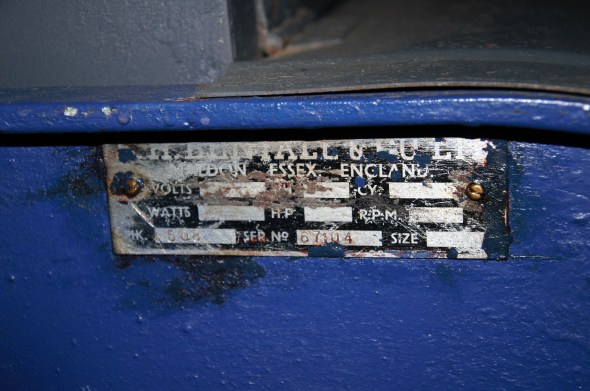
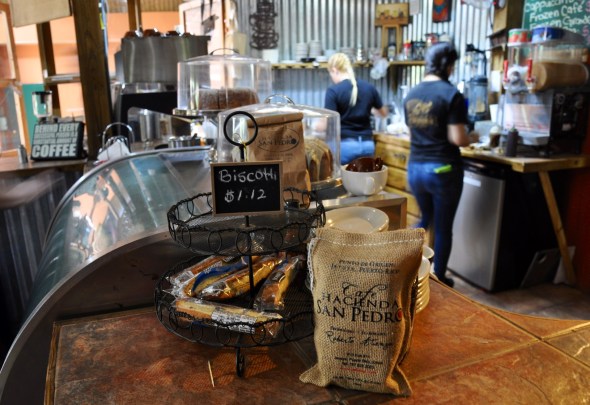
Visiting Hacienda San Pedro in Jayuya, Puerto Rico, last month I came across this machine in the hacienda’s museum.  I presume it was some kind of machine used to grind the coffee, but there was no information on it.  What caught my eye was the place name on the machine: Maldon.  That’s a fifteen minute drive from my house.

dsc_0132

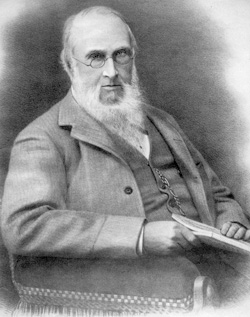
Since getting back, I’ve been finding out a bit about E. H. Bentall and it makes for interesting reading.  Not least, the E. H. stands for Edward Hammond, which is my father’s name.  Edward’s father (the Heybridge Edward, not mine) was a farmer named William.  He designed a plough to use on his land near Goldhanger and got a local smithy to make it up.  Word got around and by 1795, he’d gone into business making them.  Business boomed but raw materials at the time had to be brought in by barge up the Blackwater.  William Bentall upped sticks and moved down the road to Goldhanger where he built a place by the Chelmer and Blackwater Navigation.   Bentall diversified, producing amongst other things the first steam powered threshing machine.

image043

Meanwhile, with his wife Mary Hammond, he’d produced a son.  Edward Hammond Bentall had the same aptitude for engineering as his father.  This particularly makes me smile as my Dad was an engineer throughout his working life.  He took over the business in 1836 aged 22 and three years later, registered as E.H. Bentall & Co, it was thriving.  In 1841, mindful of competition, he took out a patent on an improved Goldhanger plough protecting it from imitators.  Under Edward’s leadership, the company began to export machinery overseas and one of those machines found its way to a coffee hacienda just outside the village of Jayuya.

img_7330

Back at home, Edward Hammond Bentall had been elected as Member of Parliament for Maldon, a post which he held from 1868 to 1874.  In 1873 Edward had an imposing home built, known as The Towers, which was located near Heybridge Cemetery.  It was so well built that when the time came to pull it down in the 1950s, dynamite had to be used to blow it up.  By the time Edward passed the business on to his son Edmund in 1889, he was a wealthy man.  He died in 1898.

e-h-bentall

Mechanisation of the coffee plantations further increased profits, particularly after World War Two while the company operated under the leadership of Edward’s grandson, Charles.  He died in 1955, and just six years later, the company was taken over by Acrow, which eventually went bust in 1984.  That was it for Bentall & Co, but their warehouse still proudly overlooks the canal in Heybridge.

Postscript

And if you remember Bentall’s department store (now Kingston Fenwicks), the founders of that store are related to William too.

The Kelpies

dsc_0002-2

Steve was proof they’re built of sterner stuff up in Scotland.  While I was cocooned in a thick winter jumper and padded coat, he went bare armed as he rounded up his tour group outside the visitor centre.  I couldn’t help but comment.  His eyes crinkled at the edges as he told me that the building had underfloor heating and his body was as efficient as a storage heater.  He assured me he’d be warm throughout the tour.  I was convinced, however, that I’d see a goose bump or hint of a shiver at some point.  After all, you don’t come to Falkirk in February for T-shirt weather.

dsc_0046-2

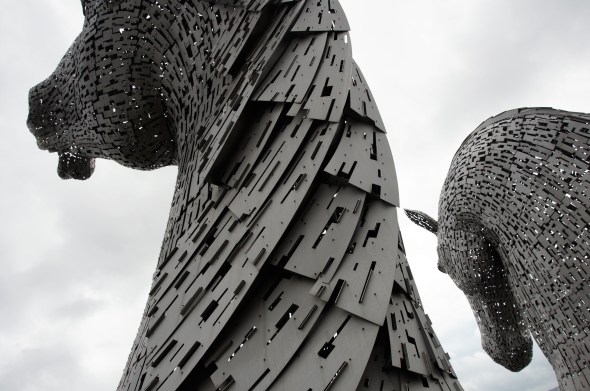
And it most certainly wasn’t T-shirt weather.  Dark concertina folds of cloud crowded the sky and a brisk wind ruffled my hair.  I wasn’t too upset.  If anything they added drama to an already impressive sight.  The two horse heads that formed The Kelpies stood over 30 metres tall.  Coming from Glasgow, the first glimpse from the car was as in your face as it got: a massive horse’s mouth emerging from a clump of trees by the side of the motorway.  I’d known little about The Kelpies before I’d visited and was taken aback as to how large they were.  Excited, I pulled into the Helix car park and was delighted to find it was free.  No National Trust price hikes here; this is a community run project and consideration is given to such matters.  On a bleak February Saturday, it felt like my willingness to risk the weather had been rewarded and that put a smile on my face.

dsc_0029-2

I had a few minutes to kill before the tour began so I kicked around the site with coffee in hand.  What was immediately apparent was that this was as much a community resource as a tourist attraction.  Dogs happily chased balls and the kids had brought their scooters.  For those wishing to wander along the adjacent Forth & Clyde canal or around The Kelpies, no charge was made.  I decided to invest in the £7 required for the tour, keen to find out more about this unique sculpture.
dsc_0099-2

There was plenty to learn.  Steve was an enthusiastic guide and worked the small crowd well.  “In the three or so years since we’ve been open,” he said, “ten people have fallen into the water.  Nine of them were adults!”  He grinned and the kids in the group took the bait, ribbing their parents.  The shallow moat around the base of The Kelpies wasn’t likely to drown anyone, but given the number of people walking backwards with their eyes glued to their camera screens, it was easy to see how the tally had been achieved.

dsc_0073-2

I’d last visited Falkirk back in the mid 1990s.  It hadn’t left a lasting impression.  Steve acknowledged that I wasn’t alone in holding such a view.  “I’ve lived here for twelve years,  Before, when I was asked where I came from I’d say Falkirk.”  He muttered into his beard and the name was lost on the wind.  “Now, because of The Kelpies, I’m proud to say I’m from Falkirk.”  Falkirk Council shared his passion, it would seem.  Securing Lottery funding to the tune of around £23m, they and several other interested parties match-funded.  The timing of the project wasn’t great, coinciding with the recession, but despite opposition the planned project went ahead.  Visitor numbers are looking healthy – an estimated 2 million people have come here since the construction finished in late 2013 and around 200,000 have taken the tour.  What was good to hear was that many of those that came were repeat visitors from the local area.  Profits from the attraction were ploughed back into local amenities such as local library funding.
kelpie-badge

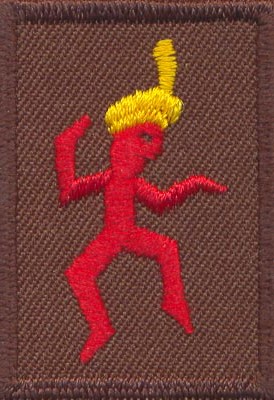
The story behind The Kelpies project was fascinating, blending mythology with industrial heritage.  The Scottish Kelpie that I’d worn on my Brownie uniform  was a little red pixie-like character.  “We’re the little Scottish Kelpies, smart and quick and ready helpers,” went the rhyme we chanted.  But this sweet image, it would seem, was a con.  Of all the Brownie creatures, the Kelpies were the nastiest – malevolent, shape-changing aquatic creatures that commonly took the form of a horse.  They’d entice people in their equine form before dragging them underwater to an untimely death.  If the media had got hold of that story in time, someone at Brownie HQ would have been fired for sure.

dsc_0054-2

Artist Andy Scott was responsible for the Kelpies at Falkirk and he’d focused on the power and endurance of the beasts rather than their malevolence.  The canal-side location was an appropriate setting; horses would have been a common sight, pulling the barges upon which Scotland’s industry relied.  In a clever twist, the idea of using the Kelpie reinforced how much the landscape had been transformed too.  When choosing a suitable horse to model, Scott took the local Clydesdale breed as his inspiration, with the two muses being Baron (head up) and Duke (head down).  The original sketch had been of the entire animal, the water line sketched in and then cropped to ensure the sculpture’s proportions were accurate.

dsc_0118-2

The resultant sculpture is magnificent.  The second largest equine structure in the world, they’re beaten in scale only by the monument to Genghis Khan in Mongolia.  That stands 40 metres tall, but then Genghis is on top and he’s the star attraction.  I’ve seen it, and it’s impressive, but, well, a bit too shiny.  The Kelpies would probably be even more of a distraction for drivers on M9 if they had such a sheen, but the matte finish looks more tasteful.  Sorry Mongolia, 1-0 to Scotland.

img_8954

There’s something about the workmanship of The Kelpies that draws your attention and keeps it transfixed.  Inside, out of the wind, it’s easier to concentrate on the structure itself.  Each of the horse heads used 464 manufactured plates in its construction.  Every one is different.  They were transported on 150 lorries from Sheffield and took ninety days to be fitted together, in what must have been like an ultimate marathon game of Tetris.  At night, they’re lit by LEDs, an energy efficient method costing the equivalent of a pot of tea every night.  Now that’s an achievement in itself, don’t you think?

dsc_0062-2

My one disappointment was that it wasn’t possible to climb the structure, though looking at the access ladder for the maintenance crew, you’d need a good head for heights to do so.  No matter; the tour’s a must, even at ground level.  For more information and to pre-book a slot to see The Kelpies with a guide, please visit the website here:

http://www.thehelix.co.uk/