juliamhammond

Latest

A year of travels: looking back on 2017

2018 is almost here and it’s time to look back at the trips made in 2017.  I’ve been fortunate once again to have the opportunity to make lasting memories in some of the world’s most captivating destinations.  Here’s a round up of my favourite trips from the past year as well as a teaser for what’s to come in 2018.

Puerto Rico
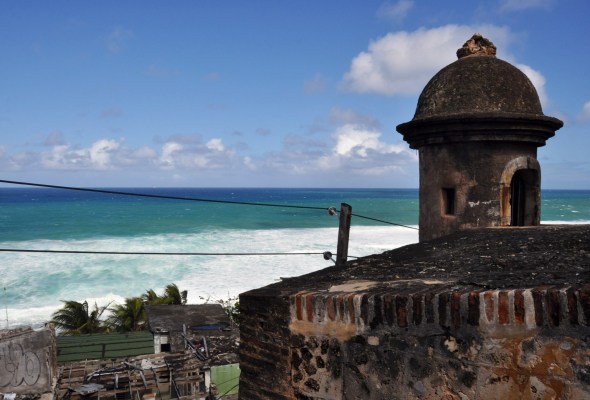
photo2

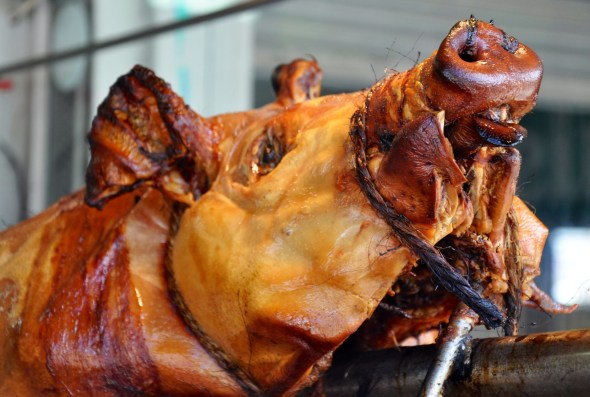
The first trip of the year took me to Puerto Rico, which by autumn would be left reeling from the devastation wrought by Hurricane Maria in September.  The beauty of this Caribbean island and how diverse it was blew me away.  From the historic cobbled streets of Old San Juan to the dramatic views from its mountains via rainforests, windswept beaches and an enormous telescope, this island fast became one of my favourite in the Caribbean.  I love a sandy beach as much as the next person, but it gets boring after a while and it’s good to know there’s a suckling pig roasting for when you’re ready for a feed.
img_7327

Puerto Rico is slowly getting back on its feet again.  There are several posts on this blog which showcase the island’s attractions, but for an insight into recent months, this New York magazine article recounts just how tough it has been:

http://nymag.com/daily/intelligencer/2017/12/hurricane-maria-man-made-disaster.html
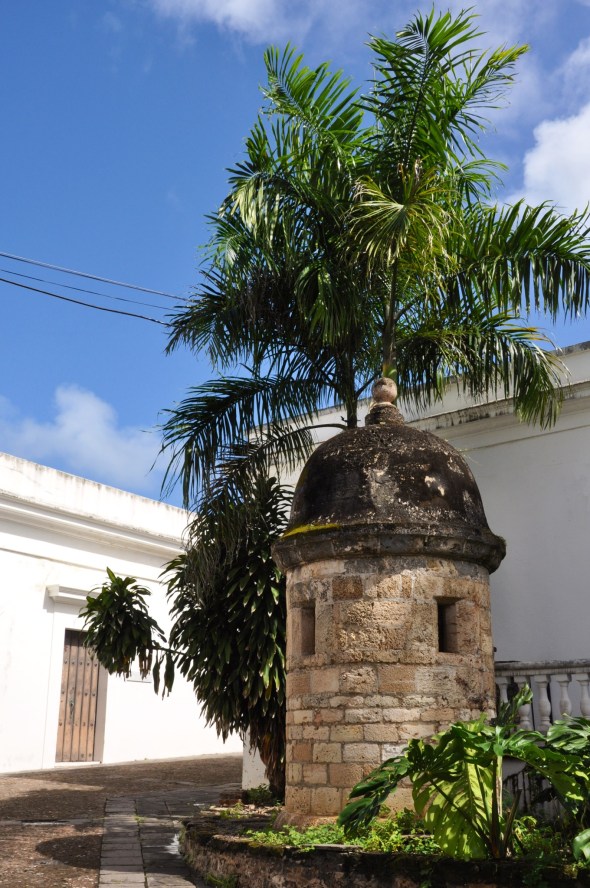
photo12

Scotland

In February I flew up to Glasgow to visit friends.  They recommended a drive over to Falkirk to see the Kelpies.  It’s well worth the effort if you’re planning a trip to Scotland in 2018.  The sculptures are as magnificent up close as they are imposing from a distance.  Despite the inclement weather, I found the story behind the project fascinating and I was lucky to get a guide who was so enthusiastic about his topic.

https://juliamhammond.wordpress.com/2017/02/24/the-kelpies/

dsc_0002-2

Uruguay and Argentina

In March I returned to Uruguay and Argentina after a ten year gap spent largely salivating over thoughts of the $4 fillet steak I’d eaten in El Calafate – I’m sure we have all had those holiday meals that we remember forever.  But sometimes these memories are not to be repeated.  I had the most amazing crab dinner in St Lucia years ago but the restaurant has closed down.  And what about Argentina?  In the intervening years, costs had risen, particularly in Buenos Aires.  Salta obliged with a decent steak, but at a price.  Fortunately, there, in the form of the haunting face of the Lightning Girl was something to compensate – though it was a chilling insight into the past.

https://juliamhammond.wordpress.com/2017/03/20/saltas-lightning-girl

photo3

I enjoyed seeing more of my favourite continent.  A challenging but rewarding stay on a working ranch in Uruguay tested my riding ability to the limit, with excursions to the Fiesta de la Patria Gaucha providing a welcome injection of fun.  If you’re nervous about trying out a working ranch rather than the more typical dude ranch, don’t be, but read this first:

https://juliamhammond.wordpress.com/2017/06/05/dude-ranch-vs-working-ranch-how-do-you-know-whats-best-for-you/

Bolivia

photo6

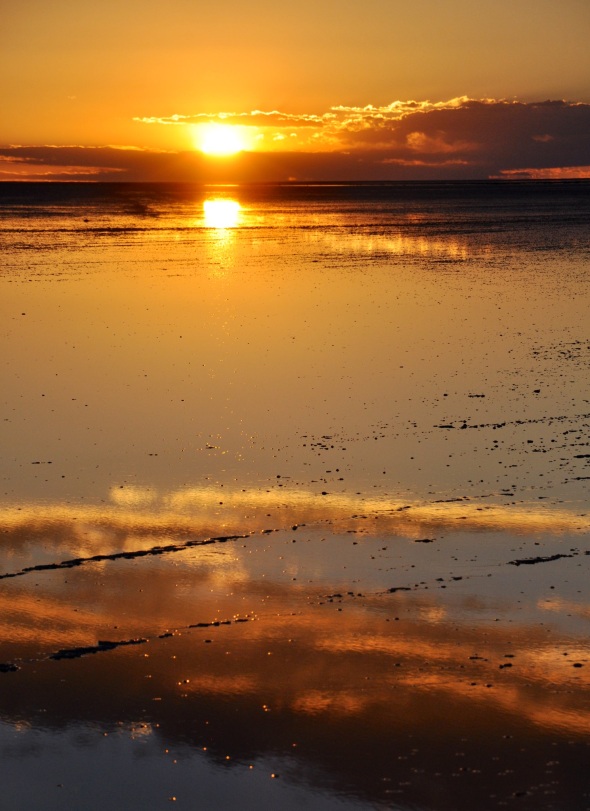
After visiting so many countries, it might come as a surprise to learn I still have a bucket list and for many years, a trip to the salt flats at Uyuni has been top of the list.  Crossing overland from Argentina, I timed my visit for the end of rainy season as I’d heard the sight of a flooded salt lake wouldn’t disappoint.  It was phenomenal, and spending the night in a salt hotel was an unusual if slightly uncomfortable experience.  See how Uyuni stacked up when compared to the salt flats of northern Argentina here:

https://juliamhammond.wordpress.com/2017/04/03/salt-flat-tours-argentina-vs-bolivia/

Ibiza

When a friend asked could I try out some of his company’s Sunwise UVA clothing, I jumped at the chance and picked Ibiza as my destination.  I product tested a floaty, very feminine kaftan which protected me well from the sun but also was versatile enough for me not to look out of place on the beach and at a city cafe.  I’m more of a T-shirt and trousers kind of girl but it wasn’t too frou-frou to be wearable.  Ibiza was surprising too – much more to it than beach clubs and foam parties.

If you burn easily or are keen to protect your skin from sun damage, then I’d recommend you check out Sunwise UVA’s website.  The link’s in my blog post.

https://juliamhammond.wordpress.com/2017/05/10/product-test-sunwise-uva-clothing/

PS I’m not on commission.

Texas

Next up was a return visit to the USA, but one with a difference, as I explored Texas with Traveleyes, a specialist company which focuses on trips for the visually impaired.  Putting my travel plans into the hands of a company definitely took me out of my comfort zone.  Nevertheless, I made some great friends on the trip and especially enjoyed San Antonio.  After a dull art museum (what was it Elton John was supposed to have said?  I don’t like going to museums because I can’t buy it…) I skipped off with my VI, a charmer nicknamed Smithie (to my Essex).  We wound up at Paris Hatters, one of the city’s oldest stores, and bought him a cowboy hat.  Elton John would have approved.

Austin10

As a sighted guide, the experience was a reminder of just how much we take for granted but also made me realise how much my visually impaired companions could access – from horse riding to a lesson in the Texas Two-Step in preparation for Austin’s honky tonks, nothing was off limits.  It was a thought-provoking holiday and I can see why some of the sighted guides go time and time again.  Find out more about Traveleyes here:

Home page

The Caucasus

DSC_0001 (2)

Another bucket list trip became a reality as I spent a few glorious summer weeks in the Caucasus.  My focus was on Georgia and Armenia with a couple of side trips to disputed territories to add a frisson of excitement.  (There’s nothing like a morning spent in police custody to make a trip feel that little bit different!  Sorry for the worrying text Mum, won’t do it again.)  This part of the world is a delight.  My personal highlights were the scenic Svaneti region of Georgia with its charming towers and ever so slightly wild people, and a very emotional visit to the genocide memorial in Yerevan which literally moved me to tears.

https://juliamhammond.wordpress.com/2017/07/09/why-you-should-visit-the-armenia-genocide-museum-and-memorial/

Venice

DSC_0886 (2)

I’ve made many day trips to European cities by air over the last few years, proving you can still satisfy your city break fix even if you’ve run out of holiday.  This autumn I picked Venice and spent the day leisurely exploring its canals and back streets enjoying some of the city’s off the beaten track sights.  I found a gondola in a book store, a heavenly bar hidden in plain sight near the Rialto Bridge and dresses that started life in a women’s prison.  Off season, this is an engaging destination and far better without the crowds of summer.

https://juliamhammond.wordpress.com/2017/10/13/just-back-from-a-day-trip-to-venice/

Cape Verde
DSC_0278 (2)

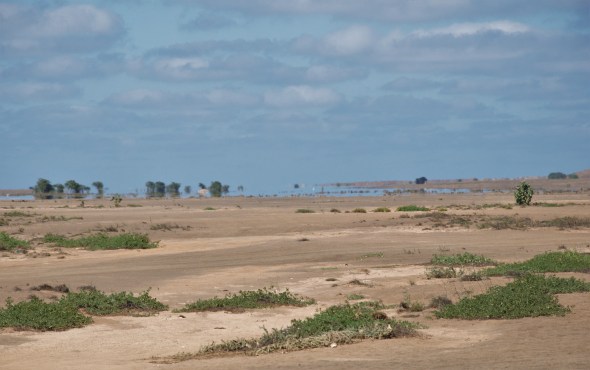
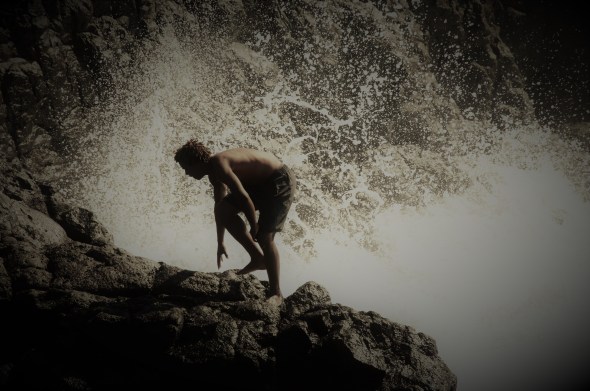
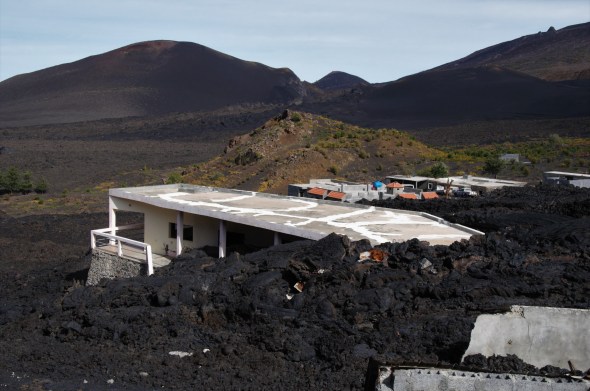
November’s a horrible month.  Dark evenings signal the start of the long winter season and Christmas lights have yet to migrate from shop to front window.  Grumpy Julia was in need of some sun and jetted off to Cape Verde.  While Sal could have had more soul, Fogo Island with its brooding volcano didn’t disappoint.  My guesthouse set me up with a guide to hike inside the caldera walls, a place known as Chã das Caldeiras.  We walked between villages, the path running alongside the raw edges of the 2014-15 lava flow that engulfed the homes of over 1000 people though luckily claimed no lives.

As the guesthouse owner said, “it’s still Africa, but not as you know it”.

https://juliamhammond.wordpress.com/2017/12/19/a-beginners-guide-to-cape-verde/

Salzburg

DSC_0246 (2)

I couldn’t let the year end without a trip to a Christmas market after enjoying those at Copenhagen and Regensburg so much last year.  This year, I chose one of Austria’s most charming cities and flew to Salzburg to get my fix.  Snow covered the ground, but that didn’t deter the crowds or the authorities (take note Lincoln!)  A Krampus run and a train ride to see Silent Night being performed in the village where it was composed rounded off the trip.  If you plan to follow suit in 2018, I’d recommend you take a look at the guide I wrote:

https://juliamhammond.wordpress.com/2017/12/12/tips-for-getting-the-best-out-of-salzburgs-christmas-markets/

DSC_0108 (2)

That rounds off my travels in 2017, a bumper year for making memories.  I’ve only just started thinking about where I’ll go in 2018, but it all kicks off in Cuba this January, booked after I learned of a £140 error fare deal from Secret Flying.  If you haven’t yet signed up for their updates, I’d recommend you get over to their website.  I’m also booked to go to New Zealand in May, having taken advantage of Air New Zealand’s fantastic Black Friday deal.  I’m currently toying with the idea of crossing the dateline and spending some time in the Cook Islands while I’m out there.  Watch this space.

Wherever you’re planning for 2018, I’d love to hear about it.  Happy travels!

A beginner’s guide to Cape Verde

As the northern hemisphere winter starts to bite, our thoughts turn to warmer climes. But travelling to the Caribbean can be expensive unless you can snag an error fare and the Med’s still a little too chilly.  If you’re looking for winter sun on a post-Christmas budget, why not consider Cape Verde?  Known locally as Cabo Verde, it’s a ten island archipelago, nine of them inhabited.  With a long history and dramatic volcanic landscapes to complement its many glorious beaches, there’s an island to suit everyone.

DSC_0642 (2)

The salt pans which gave Sal its name

Getting there

Most Brits jet off to Sal, a largely barren island blessed with a bumper crop of  beaches and enough resorts to leave you spoilt for choice.  The two main operators that win on price are Thomas Cook Airlines and Tui, both of which offer direct flights from the UK.  Depending on which extras you consider essential, you can pick up a flight for between £200 and £400. I recently blogged about my experience with Thomas Cook Airlines. Find my review here:

https://juliamhammond.wordpress.com/2017/11/25/review-of-thomas-cook-airlines/

IMG_1733

Thomas Cook plane at Sal airport

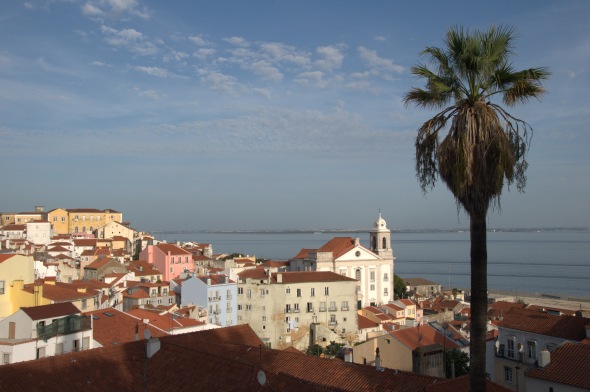
No scheduled carriers offering direct flights serve the UK, but you can fly with TAP via the Portuguese capital.  If you’ve never been to Lisbon, it’s possible to add a stopover to your holiday.  Find out what you can do in and around Lisbon here:

https://juliamhammond.wordpress.com/2014/10/20/just-back-from-a-day-trip-to-lisbon/

View from Mirador Portas do Sol

Lisbon’s Alfama district seen from the Mirador at Portas do Sol

Getting around

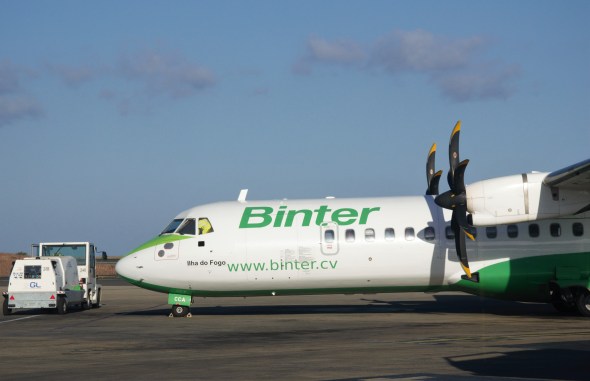
There’s recently been an increase in domestic flights between many of the islands, with Binter extending their reach from their Canary Islands base and Icelandair taking over the national airline TACV which could see it become more reliable. These changes have opened up island hopping for those constrained by relatively short holidays, providing a real alternative to the inter-island ferries that are available.  I had a week on Cape Verde, splitting my time between the islands of Sal, Santiago and Fogo.  Ideally you want to spend at least a few days on each.  If I’d have been there for a second week, I’d have flown to São Vicente, home to the island’s cultural hub Mindelo and hopped over to Santo Antão for some hiking.

DSC_0586 (2)

Binter, one of the inter-island airlines

What to see

Sal

Sal’s a package tourist hub, but with a little effort, you can venture beyond the horizons of the all-inclusives.  I based myself in Santa Maria, the main resort.  As time was limited – I’d really only added a night here to make sure I didn’t miss my flight – I booked an island tour through my bed and breakfast, the centrally located but basic Pensão Les Alizés.  Costing just 25 euros for the day’s excursion plus a couple of entrance fees, it was a good way of covering some of the main sights on Sal without resorting to expensive taxis.  You’ll notice the currency stated is euros; on Sal, most places will take euros alongside the local Cape Verdean escudos.  It’s also worth visiting Project Bioversity’s turtle project, located on the beach behind the Riu Palace Hotel.  Read about it here:

https://juliamhammond.wordpress.com/2017/12/04/an-interesting-turtle-project-on-sal-cape-verde/

DSC_0012 (2).jpg

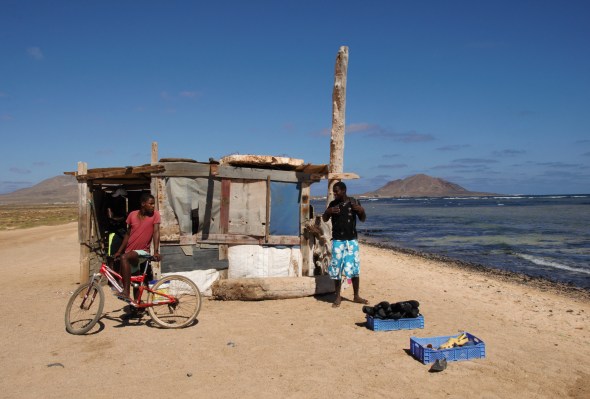
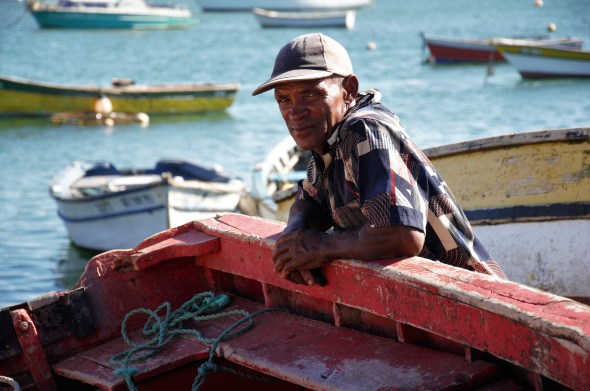
Fisherman on Sal Island

DSC_0592 (2)

Murdeira, looking over towards Monte Leão

DSC_0617 (2)

Shoe rental, Shark Bay

DSC_0645 (2)

Salt pans at Pedra de Lume

DSC_0674 (2)

Mirage, not water

DSC_0682 (2)

The Blue Eye

DSC_0697 (2)

Buracona lava pools

DSC_0727 (2)

Local fisherman, Palmeira

Fogo

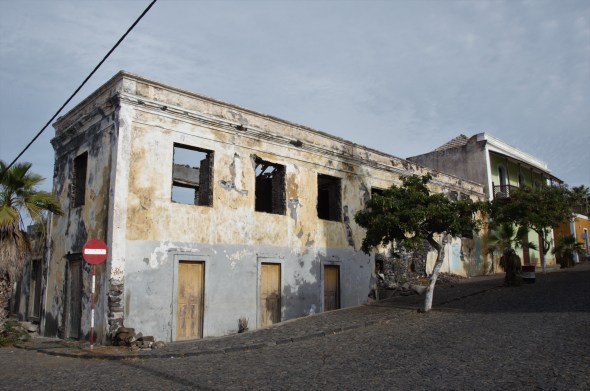
Fogo’s about as far removed from Sal as you can get.  This tiny island is dominated by an active volcano which looms menacingly against the skyline as you approach.  The island’s main town is São Filipe, whose colourful colonial sobrado mansions straggle down the rocky coastline towards the shore.  The pace of life is slow, and tourists are relatively few in number.  I’d recommend a stay at the Colonial Guest House, a restored 19th century sobrado house with a pool and restaurant within walking distance of the Bila Baxo’s historic attractions.  It’s possible to climb the volcano, whose last eruption ended in February 2015, though I settled for an easier guided walk inside the walls of the caldera, along the Chã das Caldeiras.  Book well ahead through your guest house to secure an English-speaking guide, as they are few and far between.

DSC_0052 (2)

Bila Baxo

DSC_0071 (2)

Sobrado mansion awaiting renovations

DSC_0118 (2)

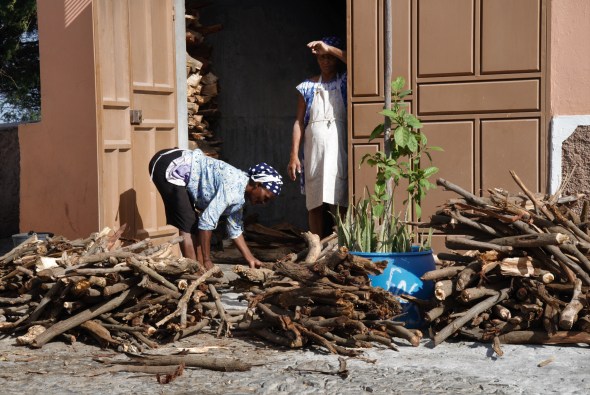
Bringing in the firewood, São Filipe

DSC_0184 (2)

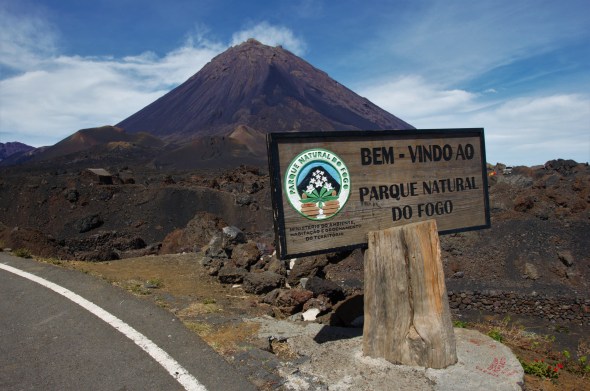
Parque Natural do Fogo

DSC_0278 (2)

Homes and businesses buried in the 2014-15 lave flows, Portela

DSC_0310 (2)

Road to nowhere, Chã das Caldeiras

Santiago

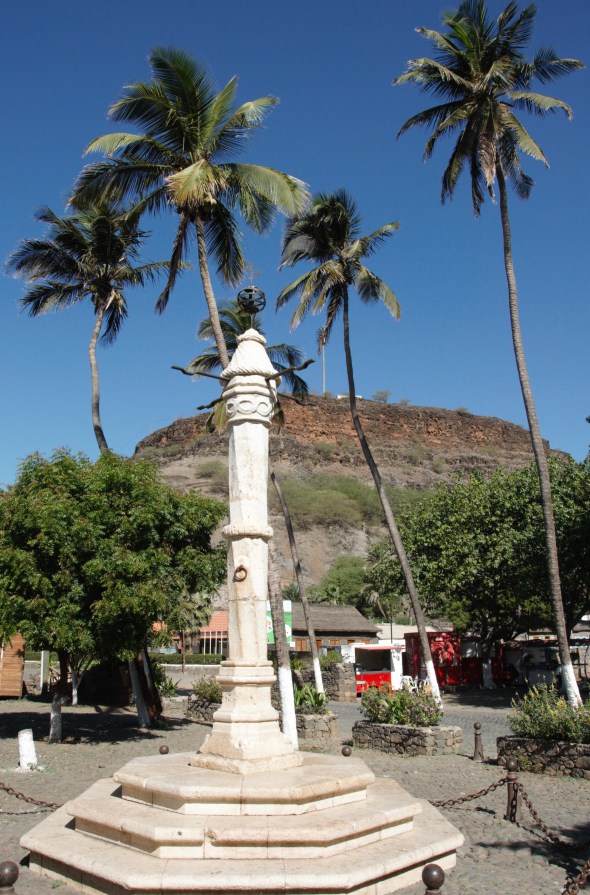
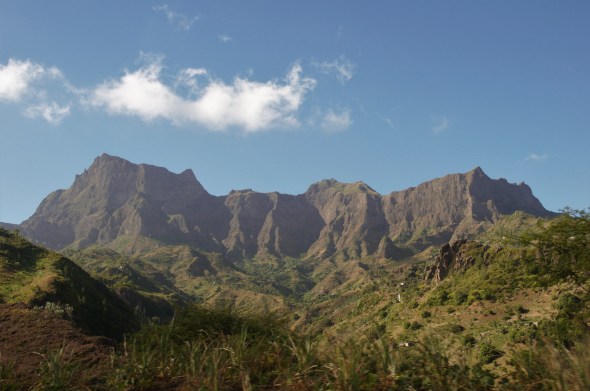
Home to the nation’s capital Praia, Santiago is an interesting destination for visitors.  I based myself in Praia and, like most of its residents, headed out to nearby Cidade Velha on a warm November Sunday.  Once known as Ribeira Grande, it was the country’s capital and focus for 15th century settlers.  There’s a pillory post, left as a reminder to the island’s slave trading history, and a short stroll away you’ll encounter the oldest colonial church in the Tropics, Nossa Senhora do Rosário church.  It’s also worth venturing into the island’s mountainous  interior as the scenery is spectacular.  The local minibuses, known as alaguers, are cheap.  Try to get a front seat spot for the best views.

DSC_0363 (2)

Rua de Banana, Cidade Velha

DSC_0364 (2)

Nossa Senhora do Rosário church

DSC_0343 (2)

Pillory post, Cidade Velha

DSC_0442 (2)

Football on the beach

DSC_0514 (2)

Sunrise over Praia

DSC_0556 (2)

The road to Assomada

DSC_0561 (2)

Dramatic peaks of Santiago’s mountainous interior

Tips for travellers

The diverse landscapes and captivating history make Cape Verde a rewarding destination.  The variety of activities on offer make island-hopping a very attractive proposition, and with online booking, simple to arrange without the need for a package.  That said, it is Africa, and travellers need to be prepared for things to occasionally run less smoothly than they’d like.

Transport can be a bit hit and miss, but the friendly Cape Verdeans will help if you find yourself stranded. Alaguers, or minibuses, run on set routes but if you flag down an empty one you’ll be asked if you want it “colectivo” or not – it’s cheaper to share but you’ll spend time waiting for passengers if they’re not full.

Weatherwise, it’s significantly warmer than the more northerly Canary Islands.  During my mid-November trip, temperatures were pushing 30ºC.  However, be prepared for the wind to pick up – if you’re looking for a fly and flop holiday, make sure your accommodation has a decent pool as you’ll often find the sea’s off limits due to dangerously strong tides.

Tips for getting the best out of Salzburg’s Christmas markets

If you’re looking for an alternative to Germany’s excellent Christmas markets, then why not head over the border to Austria?  Salzburg is one of Europe’s most elegant cities, and during the run up to Christmas, it’s bedecked with festive lights and crammed full of stalls.  I spent the weekend exploring its Christmas markets and experienced Advent Austrian-style.  Here are my tips for getting the best out of a pre-Christmas trip.

DSC_0070 (2)

Make the most of public transport with a day pass

An extensive network of buses and trolley buses makes getting around easy.  Day passes are available, as is the more expensive Salzburg Card which includes free admission to visitor attractions as well as free transport.  It does cost 24 euros for the day, however, so you need to be sure you’re going to get your money’s worth for the extra 20 euros you’ll be spending per person.  If you’re going to be spending a lot of time at the markets it’s unlikely the Salzburg Card will represent good value for money.

DSC_0166 (2)

But if you buy regular, transport-only day passes from a machine they cost just 4 euros a day, compared to 5,70 euros if you purchase them from the driver of the bus.  If you’re arriving in Salzburg by train or plane, you’ll find these machines in the main bus station or at the airport.  They are valid for a complete 24 hour period rather than by calendar days, so you’ll most likely be able to use them the following morning too – good to know if you’re going to be starting your day somewhere there’s no machine.  Print off or download maps before you go to make sense of the network; there’s also an app featuring timetables and mobile ticketing.

DSC_0265 (2)

Download from:

https://salzburg-verkehr.at/service/downloads/

There’s an English option available, but if not these are the maps you’ll find most useful:

City: Liniennetzplan Stadt Salzburg              Region: SVV Zonenplan

Wrap up warm

You might not get a dumping of snow as I did, but if you’re visiting Salzburg in December, it is likely to be very cold. Temperatures during my visit hovered just below freezing, but if like me you’re tempted out onto the Wolfgangsee, the wind that blows across the lake is a chill one. Pack accordingly, and layer up with hat, scarf, gloves and thermal underlayers. If all else fails, drink gluhwein!

Plan your market trips

As you might expect, there’s more than just one market in the city, as well as some delightful markets in the surrounding towns and villages.  I took a trip out to St Gilgen and Strobl on the shores of the Wolfgangsee.  Strobl’s market featured livestock in the form of sheep, goats and reindeer and boat trips were possible too between the lakeshore villages.  St Gilgen’s market was bigger and had a lot of character.  A day pass on the #150 bus meant I could hop on and hop off all day for a fare of 17,60 euros.

In the city itself, the largest market is the Christkindlmarkt in Domplatz.  As the name suggests, it’s right by the cathedral in the Old Town.  It has its origins in a market that started in the 15th century, though in its present incarnation it’s been going since 1974.  Just around the corner you’ll find an ice rink.  The Christkindlmarkt had a huge concentration of stalls but as a result was packed; if you’re not so keen on crowds, I’d recommend visiting this one during the day.

There is also a smaller market at Mirabellplatz, which is handy if you need to kill time or grab a hot drink before your bus leaves as it’s right by the stops.  This year the market up at the Hohensalzburg fortress is closed due to renovation work, but well worth checking out next year.

My favourite of all the city markets was that at Hellbrunn, a short ride away by #25 bus and included in the 4 euros day pass.  Nestled in the courtyard of this attractive palace, there are plenty of artisan stalls so a lot of choice if you plan to do some gift-shopping.  The inclusion of hundreds of trees festooned with red baubles and the use of the palace shutters to turn the palace into a huge Advent calendar makes this one extra special.

There is a 3 euros entrance charge at the weekend (it’s free on weekdays) but this is redeemable for a mug of Gluhwein which would have cost 3,50 euros.  If you have kids with you, it’s good to know that this is the place where they have the trick fountains and although they used to be a summer-only attraction, for the last couple of years these have been opened during Advent too.

DSC_0310 (2)

To check opening times and other details, this is the link you’ll need:

https://www.austria.info/uk/things-to-do/skiing-and-winter/christmas-markets/christmas-markets-in-salzburg

Don’t just visit the markets

Space them out and punctuate your visits with other activities. There are carol concerts and muscial recitals at many of the markets; you’ll find schedules online, though not all sites are in English. For something completely different, I caught a train out to Oberndorf bei Salzburg to visit the Silent Night chapel, a memorial chapel in the village where schoolmaster Franz Gruber and pastor Josef Mohr composed and performed the popular carol for the first time.  In the company of a band of actors and local dignitaries, I participated in a themed walk that crossed the Salzach River into Laufen, Germany.  there, at the Salzachhalle, watched a play which recounted the tale of the history of those twin villages as well as the story of how Silent Night came to be.  I won’t pretend I understood a lot with my schoolgirl German, but the music was heavenly.

Attending a Krampus run is also good fun and it’s worth checking out where the nearest is during your visit.  If you haven’t already seen the blog I wrote about Gnigl’s Krampus festivities, check out the post here where you’ll also find some useful links if you plan to go yourself:

https://juliamhammond.wordpress.com/2017/12/05/the-scary-side-of-christmas/

Done Salzburg?

If you’ve already been to Salzburg’s Christmas markets and they’ve given you a taste for more, why not try these alternatives?  Last year I blogged about Copenhagen and Regensburg, both of which can be visited in a day from London:

https://juliamhammond.wordpress.com/2016/12/05/just-back-from-a-day-at-copenhagens-christmas-markets/

https://juliamhammond.wordpress.com/2016/11/25/just-back-from-a-day-trip-to-regensburg/

DSC_0105 (2)

Wherever you are this Advent, have a safe and happy time!

Book review: Europe by Rail

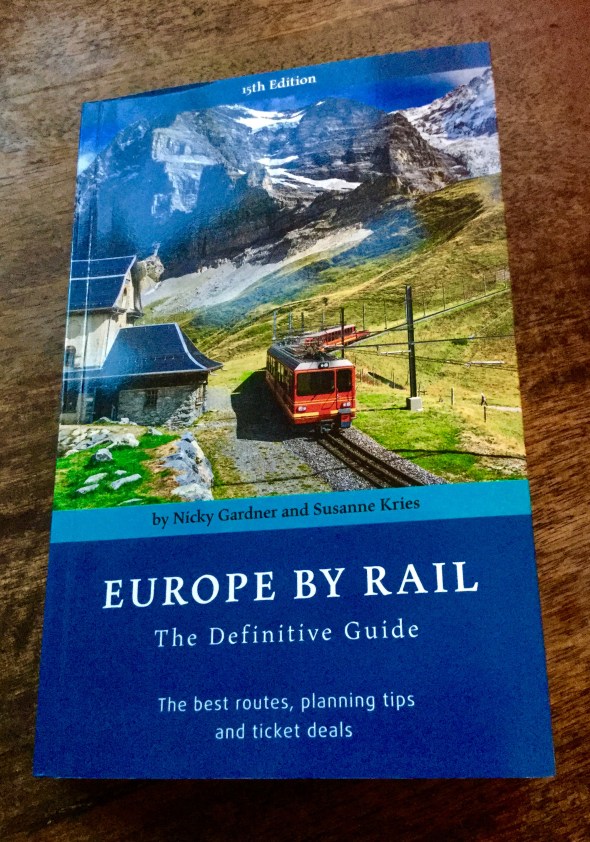
I was thrilled when an opportunity arose to review the latest edition of Europe by Rail in exchange for a complimentary copy.  This guide, now in its fifteenth incarnation, is to print what the Man in Seat 61’s website is to the internet – the definitive guide.  But with so much information freely available on the internet, should you buy this book at all?

Europe by Rail

A task of epic proportions

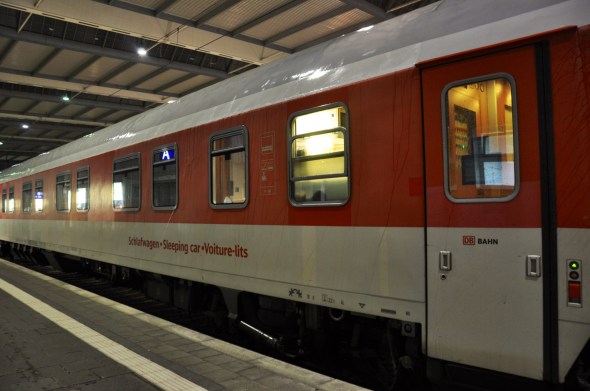
Covering all the railways of all the European countries in a book light enough to carry onto a train is a huge undertaking.  As a consequence this book acts as an overview.  While it’s definitive, it doesn’t claim to be comprehensive.  The guide is designed to be used together with the European Rail Timetable – or in these times of data roaming, in conjunction with the websites of national rail providers in the countries it covers.  The authors, Nicky Gardner and Susanne Kries, have updated the guide once more, expanding coverage of the Baltics and the Balkans, as well as providing current information about rail travel across the continent.  Schedules change frequently, and I was sad to learn that the excellent CityNightLine service which I enjoyed in 2015 ceased operations between Munich and Berlin last year.

Night train exterior

CityNightLine

An inspiring guide

The authors wanted to take the guide in a different direction and as such, set out to inspire as well as inform.  So although there are factual sections in the guide, its greatest strength is in the persuasiveness of the descriptions that comprise the bulk of its pages.  Underpinning this erudite prose is a fundamental belief that train journeys are fun and, most crucial of all, to be savoured.  While acknowledging the important role Europe’s high speed trains have to play, Gardner and Kries put the case for slow travel, yet never come across as preachy.  If you need to zip across the continent in a hurry, then so be it, but for those with more time, there are routes to be savoured on local stopping trains, with tempting sidetracks built in as well.

Regio train crossing Landwasser Viaduct

Crossing the Landwasser Viaduct in Switzerland

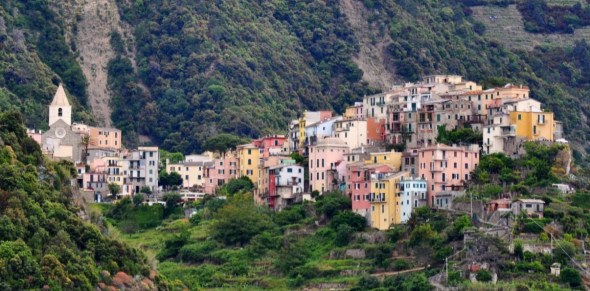
Punctuating the narrative are frank insights into the realities of each trip: “It’s an easy run south to Barcelona.  The railway enters the Catalan city through its unexciting northern suburbs and terminates in the subterranean gloom at the Estació de Sants.”  Nuggets of advice are also in abundance, such as this on Italy’s fabulous Cinque Terre: “A long sequence of tunnels means that you’ll see little of the area from the train, but take time to stop and explore.  Vernazza is a good base; it’s the prettiest of the villages.”  Gardner and Kries have put the hours in and travelled these routes, which makes them authoritative as well as engaging.

image

The Cinque Terre

What could be improved?

Numbers rather than names refer to each of the fifty routes covered by the guide once you get past each one’s title.  Though this system takes a bit of getting used to, many of them cross international borders so it’s hard to see how they could be referred to in any other way.  It doesn’t help, however, that some of the subtitles within each section, specifically those of the major cities en route, are in the same sized font, making it confusing as to whether you’ve reached the end of a route or not.  It takes a bit of time to get your head around, but once you’ve got into a rhythm, you won’t be bothered by it.

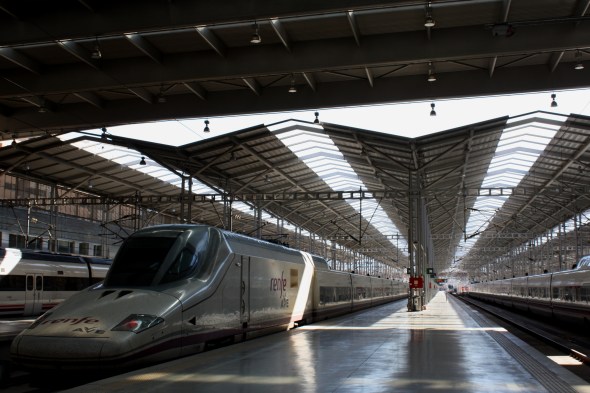
IMG_9788

Spain’s high speed AVE

Each route features a map.  The presentation is simple, with a table attached that shows the journey time, frequency and cross-reference for the European Rail Timetable.  While I could see that the authors were aiming for clarity, I thought it was a shame that these maps couldn’t have been illustrated to showcase some of the key attractions along the way.  This would have added to the temptation to jump on a train and follow in their footsteps.  I’m guessing publishing constraints required the photographs to be grouped in their own section, as is the way with most guidebooks, but it’s again a pity that these couldn’t have been integrated with the text.  Instead, I wanted to skim over them, impatient to get to the routes themselves.

TILED TICKET OFFICE SINTRA

Sintra station’s exquisite ticket office

There’s a lot of page turning, back and forth, which breaks into reveries and brings the reader back to reality.  I appreciate that logic dictates a section entitled “Before you leave” should be placed at the beginning of a guide, but perhaps the parts detailing rail passes, ticket classes and the like would have been just as at home in an appendix.  These are minor criticisms, more a measure of how keen I was to get stuck in than any fault with the guide.

The verdict: would I buy this guide?

For anyone planning to embark on a rail holiday in Europe, this guide is an invaluable companion.  Even if you’ve travelled extensively by rail across the continent, things change regularly and it’s an easy way to bring yourself up to date.  Don’t wait until you leave to buy it.  The suggestions for stopovers and detours will help with your planning and you’ll have information at your fingertips about rail passes, supplements, connections and the like.  If you’re like me, it won’t help you make a decision, as there are so many tempting routes from which to choose, but it will give you hours of pleasure as you take a virtual journey on some of Europe’s most scenic tracks.  Now if you’ll excuse me, I’m just going to go back to that chapter on Arctic Norway…

The scary side of Christmas

The bus is packed and tempers are fraying as those who can’t fit are left to wait on the snowy pavement.  On board, spirits are high. Childish excitement is contagious.  At Gnigl station in Salzburg, Austria, the bus spews its pasengers onto the street and the pace quickens as I follow the crowd up the street.    A fire engine blocks the road and the scream of labouring engines marks the point where the trolley buses unhook and divert to continue their journey under their own power.  Behind metal barriers, the crowd is already four or five thick.  I squeeze past and make my way along the street until I find a space next to three youngsters of primary age.  I take a few test shots with the camera and the little boy next to me tells me sternly to use the flash.

DSC_0239 (2)

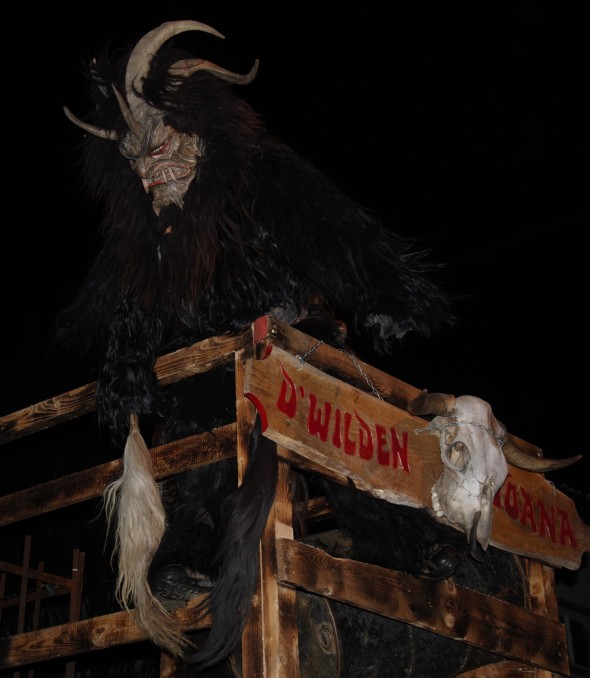
Soon, the parade gets underway.  The Krampuslauf has a long history in Austria, its origins in pagan rituals dating from the Middle Ages.  While St Nicolaus rewards good children with sweets, those who have been naughty have to face the consequences of their actions.  Chains and claws set the Krampus apart from the evil Schiachperchten, who are also masked creatures with shaggy pelts and curved horns.  Traditionally, the perchten weren’t seen during Advent, instead being associated with the period between the Winter solstice and Epiphany.  These days the once defined lines between the two have become blurred, though no one seems to mind.

The costumes are elaborate, with no visible trace of the human inside.  Hand carved wooden masks are painted in garish colours.  From head to toe a suit of shaggy sheep wool, plus tail of course, tops shoes hidden behind hooves.  The jarring sound of the bells on their backs marks their arrival.  The children next to me fall silent, their fearful eyes widening.  They’re young enough still to believe.  A six foot beast runs at the barrier and clambers up, rearing over the children’s heads to great effect.  Their shrieks pierce the night and they shrink back, momentarily afraid.  Even as an adult, it’s a frightening moment, and I can’t help myself as I jump back too.

DSC_0236 (2)

One child  finds the courage to roar back at the Krampus and the monster ruffles his hair in a good-natured response.  Everyone plays along, and the atmosphere is one of family fun.  But there are more terrifying figures behind him.  As they dart up the street, they twist this way and that.  The cow bells on their backs clank heavily and they swish whips fashioned, I’m told, from a horse’s tail.  I’ve heard that it’s common for them to thrash spectators’ legs and it makes me a little nervous.

From time to time, there’s an injection of humour.  One group stops to perform a dance routine, though they’re as far removed from a boy band as you can get.  Another pair face off as if in a boxing ring, before dropping to the floor and doing press ups.  The children next to me giggle, at least until they jump to their feet.  But St Nicolaus isn’t far behind and their pleading cries gain the desired result: sweets.  They stuff their faces, eyes bright, their fear of Krampus forgotten.

The frigid air bites my cheeks and I wrap my scarf tighter around my face.  The parade’s only about half done, but there’s a gluhwein stand within sight and it’s time to warm up.

Where to see the Krampus in or around Salzburg

Gruss_vom_Krampus

5th December, is St Nicolaus Eve, the night of the Krampus run in Salzburg’s Altstadt.  There are also many other parades that take place throughout the Salzburg region, from its suburbs to tiny mountain villages, as well as throughout Austria and the neighbouring German state of Bavaria.  The following two links will help you plan which Krampus or Perchten parades coincide with your visit:

https://www.krampuszeit.at/veranstaltungen/salzburg/

https://www.salzburg.info/en/salzburg/advent/krampus-percht

DSC_0231 (2)

If you plan to head to Gnigl next year, it’s an easy ride on the #4 trolley bus from Mirabellplatz in the centre of the city.  Alight at Gnigl S-bahn station and follow the crowd a couple of blocks up to Turnerstrasse or Schillinghofstrasse to claim your spot.