juliamhammond

Latest

Trinidad: sugar and slaves

Trinidad’s fortunes were made in sugar and slaves. A few kilometres from the city, the Valle de los Ingenios is littered with the ruins of long abandoned sugar mills. While Cuba still harvests fields of sugar cane, production has long since moved away from this region.

FullSizeRender

Standing in the grounds of the San Isidro de los Destiladeros mill, little imagination is required to picture how the scene would have been a century or two ago. The main house is still intact, a little weatherbeaten perhaps but not yet derelict. Its cedar windows and doors have been bleached by decades of sun. These days they’d pass for shabby chic and be considered worthy of a magazine spread. Back then, they were functional, the heavy shutters designed to keep the house cool despite its tropical setting.

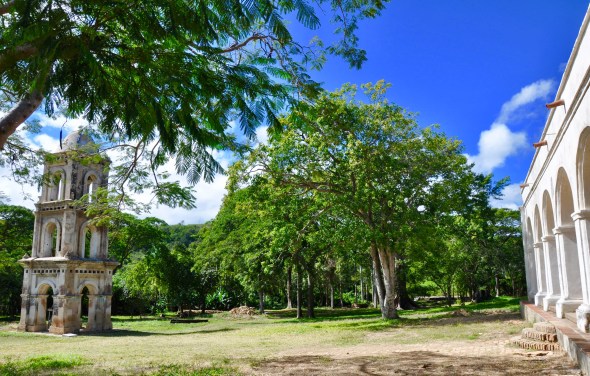
Across the clearing my guide pointed out a bell tower, used as a lookout and built to call time for those toiling in the fields or factory buildings. Beyond the tower is what remains of the factory’s foundations and beyond that, the slave quarters, hidden away in the forest and once shielded from view by the factory itself. The prevailing wind had also been taken into account when siting the main house, so that sensitive noses wouldn’t have to contend with the sickly sweet smell of molasses.
FullSizeRender.jpg

The first mill on this site opened in 1776. Initially its assets were limited to just three horses, ten slaves and a single small sugar press. The Spaniard who owned it sold up to one Pedro Malamoros Borrell, who grew the farm and gave it the name we use today. He owned many slaves and life was tough for them. From November to April, they’d work ten days on and one off, working long hours in the hot sun and humid conditions cutting the cane.

FullSizeRender.jpg

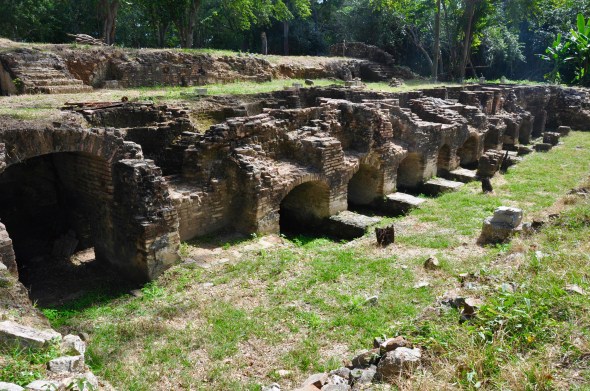
Others grafted in the factory pushing the sugar presses known as trapiches which squeezed juice from the raw cane. It was dangerous work and not uncommon for workers to lose an arm if it caught in the press. Though much of the mill lies in ruins, you can still see where the sugar would have been boiled to create molasses. My guide explained how heat passed along the row of nine pans, gradually getting cooler the further the distance it travelled from the centre. The cane juice was cleaned and transferred from pan to pan as well, constantly stirred until crystals formed to turn it into muscovado sugar.
FullSizeRender.jpg

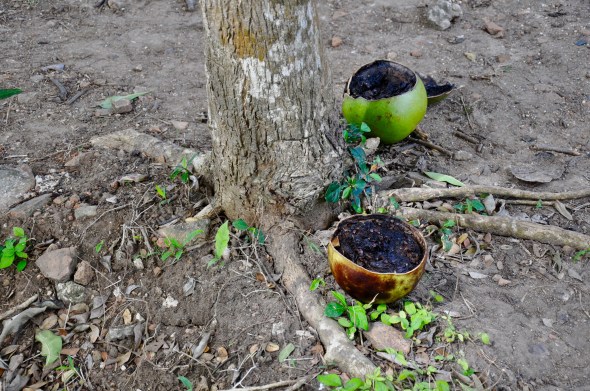
On the ground I spotted what looked like a rotten coconut. In fact it was the fruit of a güira tree. Used to make bowls from which the drink canchánchara could be served, they were also used to present offerings to the gods. My guide told me of an altogether more down to earth use: the insides are considered an effective flea treatment for dogs, and probably better for them than the chemical treatment I use back home, albeit gross to apply.
FullSizeRender.jpg

Between May and October the slaves would have been rented out for other work. Slaves were entitled to keep a quarter of their pay, the rest lining their owner’s pockets. Savings could buy freedom. Slaves were more likely to purchase freedom for their children than themselves, or to use the money to pay for their own small house just outside the communal barracks.

FullSizeRender.jpg

Though their lives were strictly controlled and conversion to Catholicism encouraged, the practice of African religions such as Santeria continued. A ceiba tree is considered sacred to followers of Santeria, representing Changó, the God of Thunder as its soft bark renders it lightning-proof. One stands to this day near where the barracks once were, a face visible in its trunk.

Borrell sold up in the mid 19th century to Carlos Malibrán and made a killing. But within a few short years, a crisis would hit the sugar industry. Malibrán would offload the property just four years later. Across the valley, crop rotation had been overlooked by mill owners greedy for profit and the soil had lost its fertility year in year. Yields fell and as competition from Europe’s sugar beet farmers felled prices, the rug was pulled from under Cuban sugar’s feet. The new owner of San Isidro de los Destiladeros mill lost pretty much everything and ended up mortgaged to the hilt. What had been fields of sugar cane were turned over to pasture.

FullSizeRender.jpg

As the Cuban war for independence gathered momentum in 1868, slaves saw their opportunity to gain their freedom by joining the army. The flight of labour was another nail in the industry’s coffin. By 1898, the owners of the San Isidro de los Destiladeros mill had closed up and moved to Sancti Spiritus and the factory was demolished. Ownership passed to the Fonseca family in 1905 and they lived here until 2012. Burdened by the cost of restoration, they donated the house and ruins to the state.

Getting there
I arranged a morning visit to Valle de los Ingenios with Paradiso – a place on a shared tour cost 22 CUCs. You’ll find their tour agency at General Lino Pérez 30 about a minute’s walk from the Etecsa office in Trinidad. Alternatively haggle with a driver of a classic car, making sure you negotiate for the taxi to wait.

On the trail of the mob in Havana

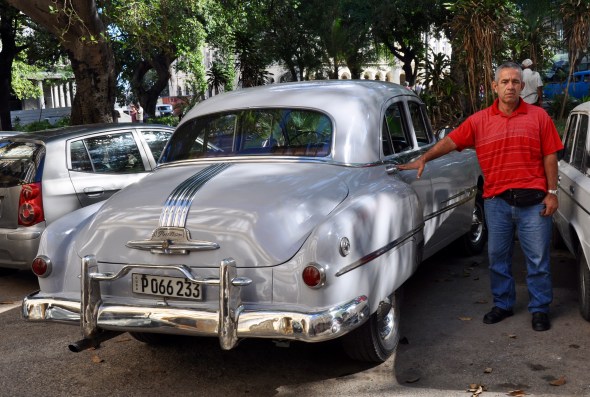
The classic American automobiles that cruise the Malecón ooze the glamour of bygone days, but 1950s Havana had a seedy alter ego. Mob-run casinos drew a decadent crowd. Vices of all kinds took centre stage. Traces of this era of such excess can still be seen today – if you know where to look.  Curious, I contacted Havana Super Tour and asked guide and founder Michael Rodriguez to let me in on a few of Havana’s dark secrets. Waiting to take us back in time was an immaculate silver grey Pontiac driven by owner Ricardo. Michael joked that Cuban men value their cars more highly than anything else in their lives – even their women. I’m not convinced that’s true of only Cuba.

Cuba8

We began where the charmingly decrepit mansions of Habana Vieja give way to the boulevards of Centro. Gambling is banned in today’s Cuba, but the old casinos have been repurposed as conference rooms and elegant salons in many of the capital’s most renowned and once notorious hotels. One of them is the historic Hotel Sevilla. I’d stayed there during my first visit to Cuba fifteen years ago and around the corner from the exquisite Moorish-style lobby where I’d once checked in is a rogue’s gallery of past guests – good and bad. This time my focus was on the latter. Michael steered me towards a photograph of Al Capone, perhaps Chicago’s most notorious gangster, who used to book out the entire sixth floor when he was in town. Privacy comes at a price when you need to make sure no one eavesdrops.

Cuba2

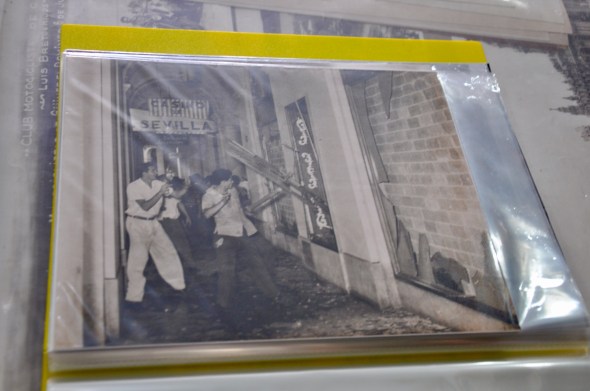
Michael led me across the street to a tiny store selling antiquarian books and other memorabilia from times past. Leafing through a folder of old black and white photos, he showed me how some of the Cuban capital’s hotels would have looked in Batista’s day and in the years immediately following the overthrow of his government. The city was the place to see and be seen. Hollywood’s biggest names came in their droves with Frank Sinatra leading the pack. Scandal was never far away. Michael reckoned that despite rumours that Sinatra’s singing career had initially been financed by the mob, he was clean – in Havana anyway. Some of his associates, however, were not.

Cuba1

The biggest player of all on the Havana mob scene was an East European Jew who’d come to the USA to reinvent himself. Smart as they came, Meyer Lansky grew up in New York with Lucky Luciano. Lansky was the brains to Luciano’s brawn and together, they made a formidable pair. You messed with them at your peril. Having operated out of the Nacional for years, Lansky had his hands in a number of other businesses, including the successful Montmartre Club which was eventually torched by a revolutionary supporter in the early 1960s.

Cuba6

Over a Mafia mojito at the Nacional. Michael told me that it was common for a Hollywood name to provide a respectable front for the money laundering, shady deals and violent altercations that were going on behind the scenes. Actor George Raft got his big break in the 1932 gangster movie Scarface. When New York mobster Santa Trafficante Jnr. opened the Capri, he needed someone to be its respectable public face. But though it was commonly held that Raft owned a sizeable stake in the hotel, Nicholas Di Costanzo, Charlie “The Blade” Tourine and Santino “Sonny the Butcher” Masselli operated it. It doesn’t take a genius to work out that many of the regular clientele were anything but legit themselves.

Cuba5

Lansky himself opened the Riviera Hotel in 1956 as a front for his deals. It was one of many businesses through which he could launder his ill-gotten gains. Though he claimed Cuba ruined him when Castro rolled into Havana, under Batista’s regime he’d lived like a king. Despite decades of ruling the organised crime roost, the only crime the authorities ever managed to pin on him was a charge of illegal gambling.

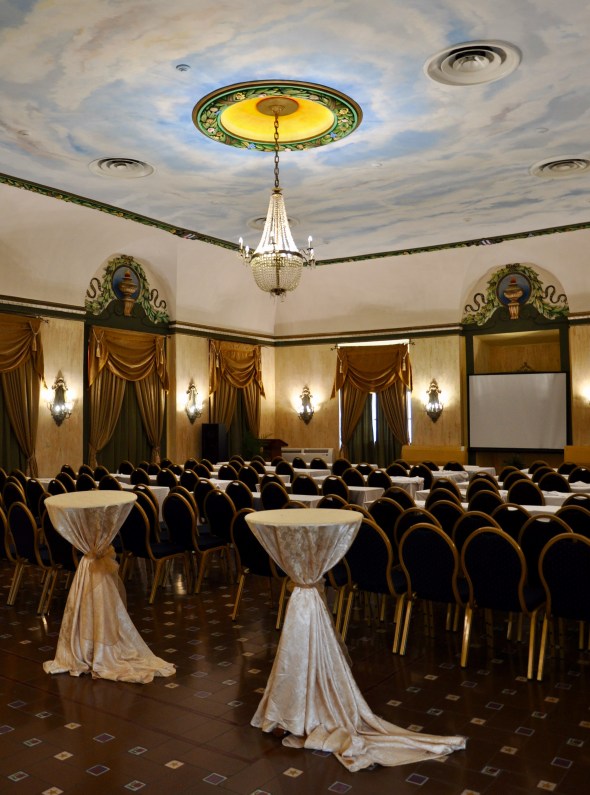
The Riviera, our last stop, could have been a set from the hit US TV show Mad Men, had US-imposed sanctions not restricted where the studio’s dollars be spent. Mid-century modern might be back in vogue, but you’ll be hard pressed to find somewhere where the fixtures and fittings are as original as the furnishings. Walking through the doors of the Riviera Hotel was like stepping back in time, its 21st century patrons sticking out like a sore thumb in their modern apparel. Its casino was now a meeting room, the showy chandeliers the only clue to its dazzling past.

Cuba9

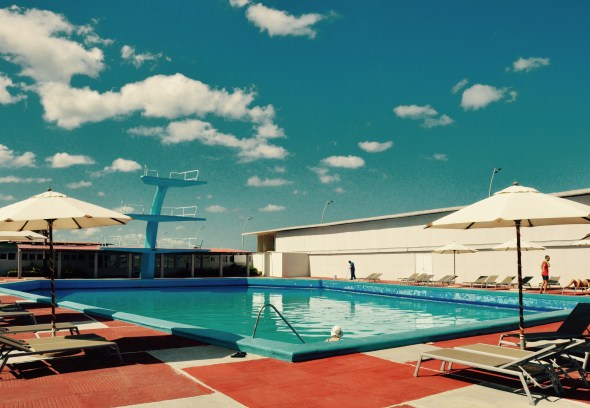
Out back the pool had a turquoise diving board that just needed a girl with an hourglass figure and a red halter neck bathing suit to complete the picture postcard shot. Instead, an elderly lady with a white swimming cap and cellulite for thighs glided at a leisurely pace through the sunlit water. Michael suggested I took a closer look at the shape of the pool which had been constructed, aptly macabre, to take the form of an open coffin.

This is a chapter of Cuba’s history that is overshadowed by Che Guevara and Castro’s revolution, but it’s no less compelling. After Batista was kicked out, Havana under Fidel’s leadership cleaned up its act. But there’s still plenty of tangible evidence to make this a fascinating tour and if you want to see a side to Havana many travellers miss, then this is most certainly it.  It’s one thing reading the story, but nothing compares to standing in the same spot of some of the 20th century’s shadiest characters.

Cuba3

About HST

Havana Super Tour is a rarity in Havana, a privately run enterprise which specialises in subjects as diverse as Art Deco, architecture, African religion, art or Hemingway. Alternatively, work with Michael and the HST team to design a bespoke tour to suit your own interests. Your classic car leaves from Casa 1932 at Campanario 63, a couple of blocks from the Malecón in Centro. The highly recommended Mob tour costs 35 CUCs per person, minimum two people, with transportation in a vintage automobile of course. Contact HST by email at elandarincarvajal@gmail.com or visit their website at:

http://www.campanario63.com/

The views expressed in this piece are my own, though I’m grateful to HST for offering me a private tour for the price of a group outing.

Making sense of Cuba’s currency

Cuba’s idiosyncratic monetary system can be daunting for first time visitors but it’s much simpler in practice than it might first seem.

Cuban currency is a closed currency, which means it cannot be purchased outside the country and neither can they be exchanged for other currencies outside Cuba.  The government runs a dual system: CUPs (pesos nacionales) for residents and CUCs (pesos convertibles) for visitors.  CUC notes have “pesos convertibles” written on them.  In practice, most of the time you’ll just use CUCs and prices will be referred to as pesos.  In some shops, you may see dual prices displayed, but if in doubt, just ask.  Be careful though not to get fobbed off with pesos instead of CUCs as they’re worth a lot less.  One of the best ways to avoid being scammed is never to change money on the street.  Instead use a Cadeca (exchange bureau) or bank, though you will have to queue on the street to get in.  Rates in hotels tend to be lower.

Which currency should you take?

Euros and pounds are easy to change once you arrive.  If you’re arriving independently into Havana’s Jose Marti airport, there are two choices.  Inside the arrivals hall (but after you’ve cleared immigration and customs) you’ll find a couple of ATMs next to the information kiosk.  To find an exchange bureau exit the arrivals hall and turn immediately left once you get outside.  Dispense with the taxi touts with a polite “No, gracias”.  You can change your currency at the official desk here and will be given a receipt.

What about US dollars?

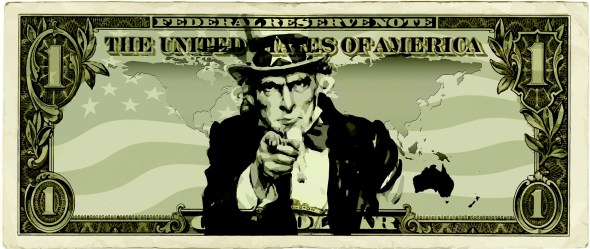
The dollar isn’t king here like it is elsewhere in Latin America.  The uncomfortable relationship between Uncle Sam and Cuba adds a 10% additional commission fee to any exchange transactions, making it very poor value.  You also won’t be able to use any credit card issued by an American bank, though MasterCard and Visa issued outside the US are OK.  If you’re unsure whether this affects you, check with your issuer before you leave home.

usa-1935750_1920

Can you rely on credit cards?

In short, no.  It’s wise to keep a store of cash on you just in case you struggle to find an ATM.  Few places accept credit cards – this is a cash based economy.  If you haven’t prepaid your accommodation, you might find that you can’t pay by card, so double check well before you’re due to check out to avoid any problems.  However, if you’ve made an internet booking, you’ll have been able to pay by credit card in advance.  Independent travellers should carry proof of this paid reservation as the internet can be unreliable in Cuba – your accommodation provider may not have access to emails or booking systems when you arrive.

Have you seen my blog about using the internet in Cuba?
https://juliamhammond.wordpress.com/2018/02/08/cuba-internet-101

Cuba: Internet 101

When I made my first visit to Cuba fifteen years ago, outside Havana I was pretty much incommunicado.  My phone didn’t get a signal and internet was non-existent.  Travelling as a solo female, it felt pretty isolating.  Fortunately, in the intervening period, things have changed.  Telephone service is via Cubacel and there is one internet service provider in Cuba – Etecsa.

card4

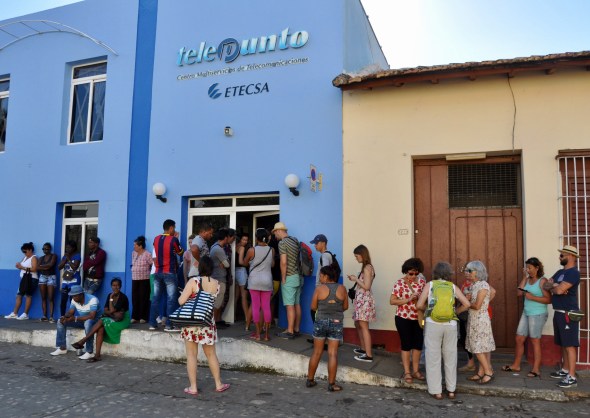
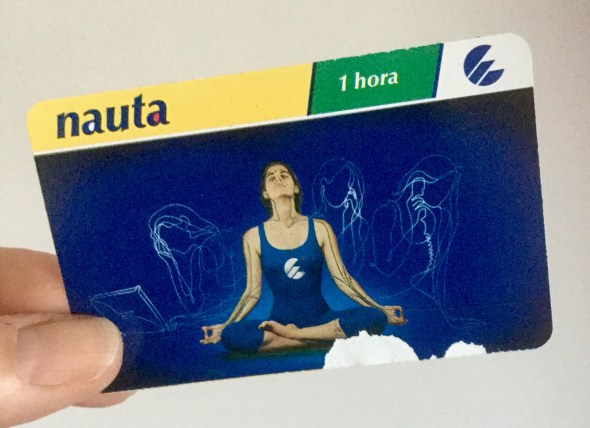
Etecsa’s often as creaky as an octogenarian’s arthritic knees but that’s all you’ve got.  While some hotels will offer WiFi, you’ll still need to log into Etecsa as well to get connected.  To do so, first you’ll need a  scratch card or “tarjeta” which is issued by Etecsa outlets.  You’ll usually find there’s a crowd at the door, with a bouncer strictly controlling who gets to enter and join the smaller queue inside.  Be polite and keep your cool unless you want to be sent to the back of the line.

card3

Cards cost 1 CUC, about 70p at current exchange rates.  They have a number on the back and a scratch off panel which will reveal a password.  Though you can sit in the Etecsa internet lounge, in practice that’s dearer and you should expect to join most people on the street.  If you spot a crowd of people sitting on the pavement in a huddle, chances are you’ve just found the Etecsa WiFi hotspot.

card1

Enable your WiFi and select Etecsa.  You may have to be patient to get it to connect if it’s busy. When you succeed, a screen will pop up automatically.  Enter the card number and the passcode that you’ve scratched to reveal.  If you’ve connected, a new screen will show the amount of time you have remaining for that card.  They last one hour and you can log in and out to use it on several occasions.

card2

Social media junkies will be relieved to know that Facebook, Twitter and the like are all permitted in Cuba, unlike the situation in some other one-party states.  So long as you have a strong enough internet connection you’ll be able to bombard your friends with images and tales regaling your Cuban exploits.  In practice my ability to do so varied considerably.  Sometimes I had an excellent upload speed, other times I could barely get it to connect.  But honestly, that’s probably a good thing – time we thought more carefully about wasting precious holiday time staring at a screen.

Have you seen my blog about Cuba’s dual currency?
https://juliamhammond.wordpress.com/2018/02/08/making-sense-of-cubas-currency/

How the cost of attractions compares

I shared a video from BBC Wiltshire this week on my Facebook page. It reported that the cost of visiting Stonehenge is set to increase this April. Individual adult admission will rise from £16.50 to £19.50 while the cost of a family ticket will go up from £42.90 to over £50. Is it worth it, I asked, and the answer was almost universally no. So how does the cost of visiting Stonehenge compare with other world famous attractions?

The Pyramids
egypt-1083248
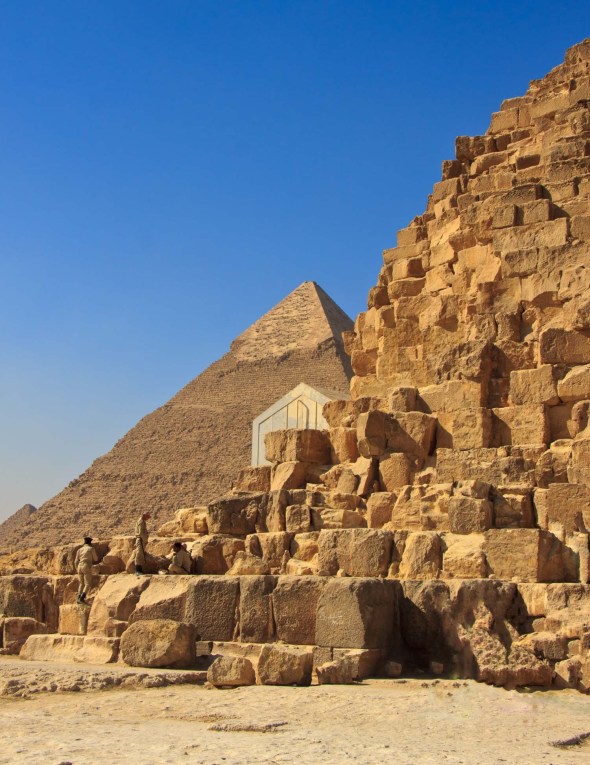
General entrance to the Pyramids complex costs just 120 Egyptian pounds (under £5) but that doesn’t permit you to go inside the pyramids themselves. To get into the Great Pyramid it will cost a further 300 Egyptian pounds – if you’re lucky enough to get one of the 150 permits available each morning or afternoon. Entrance to the smaller pyramids is rotated so only one is open per day; it costs 60 Egyptian pounds on top of the general admission to go in.

Machu Picchu

IMG_3533

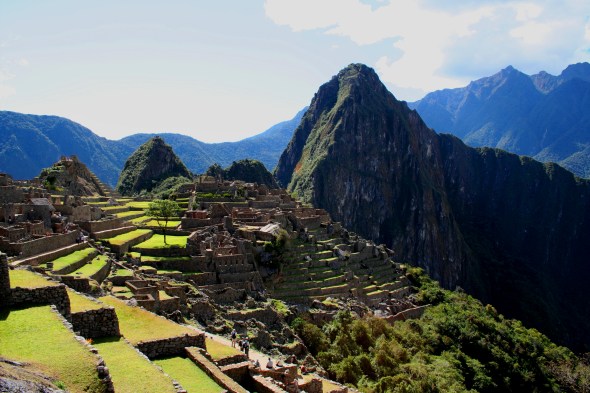
Entrance to Machu Picchu is being more tightly regulated by the Peruvian authorities in an attempt to manage visitor numbers. Tickets are timed and cost a foreigner 152 soles, about £33.80. Peruvians can enter for 64 soles (£14.20), as can nationals of the Comunidad Andina – Bolivia, Ecuador and Colombia. You’ll need to pay extra if you’re aiming to climb Huayna Picchu. Even with the limits now imposed, it’s still a must-see while you’re in Peru.

Petra
IMG_2822 (2)
Tickets cost 50 Jordanian dinars for a one day ticket, though subsequent days are significantly cheaper. Two days will cost you 55JD and three will set you back 60JD. To qualify, you have to be able to prove you are staying overnight in Jordan, or the price becomes 90 JD. £1 will get you around 1 JD, so a visit to Petra makes Stonehenge look cheap. It’s better value, however, as there’s so much more to see, from the iconic Treasury to lesser known sites.

Angkor Wat
reflection-2237981
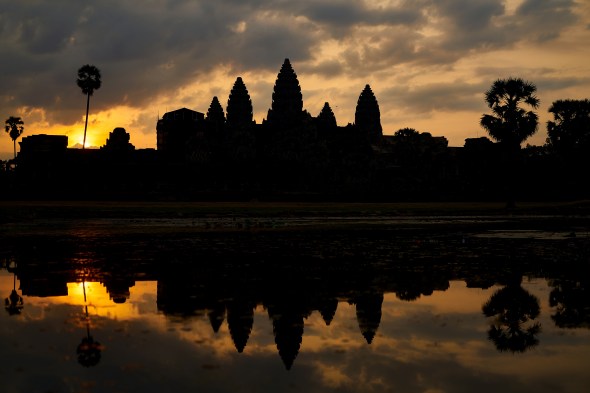
Before you fork out for Cambodia’s premier attraction, you’ll need to decide how many days you’ll need to explore the vast Angkor archaeological complex. Passes are sold in one day ($37/$26.40), three day ($62/£44.30) and seven day ($72/£51.50) blocks that have to be used on consecutive days. You’ll also have to have your photo taken but this is free. Three days is about right to see the main sights.

Empire State Building

IMG_5617

The Empire State Building

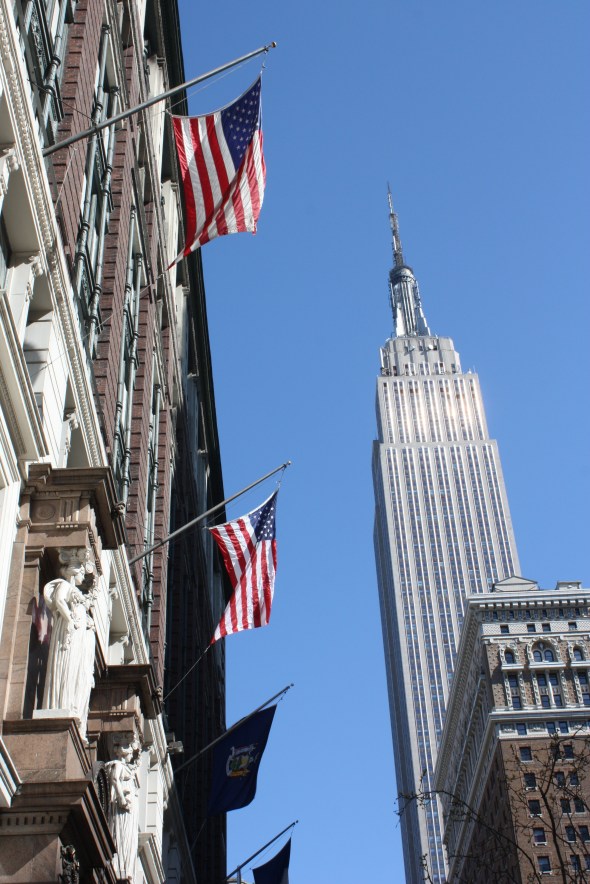
Most visitors to the Empire State Building are content with an ascent to the 86th floor viewing platform. Adult tickets for this currently cost $37 (£26.40). To combine the 86th floor with the top deck on the 102nd floor, the price rises to $57. Seeing the sunrise will set you back $100 though you’ll need to snag one of only 100 tickets. A combo ticket for day and night (reentry after 9pm) is $53, so time your visit for sunset to avoid this surcharge.

Taj Mahal
taj-mahal-368
Getting into India’s most famous visitor attraction, the Taj Mahal, will set back foreign visitors 1000 rupees, the equivalent to about £11.20. Costs are approximately halved for citizens of SAARC countries (Bangladesh, Nepal, Bhutan, Sri Lanka, Pakistan, Maldives and Afghanistan) and BIMSTEC Countries (Bangladesh, Nepal, Bhutan, Sri Lanka, Thailand and Myanmar), while domestic visitors pay 40 rupees (about 45 pence).

Eiffel Tower
architecture-1850643
The cost of reaching the top floor of the Eiffel Tower varies according to your energy levels. Take the elevator and it will set you back 25 euros (about £22). You can save 6 euros off this cost if you are prepared to climb the stairs instead. Satisfying yourself with a partial ascent is another way to keep your costs down – 16 euros and 10 euros for lift or steps respectively gets you to the second floor.

Have you visited any of these attractions? Were they worth the price of the entrance fee?