
Julia’s Guide to New York Part 3: Manhattan East
Begin at Canal Street. Head along Canal and into Chinatown. My favourite parts are around Mott and Mulberry but the whole area is interesting just to see how different it is from other nearby areas. I can never suppress a snigger when I pass Mei Dick barbers. Vietnamese businesses are slowly colonising parts of Chinatown and of course it has Starbucks et al, but it remains a very Chinese neighbourhood. It’s also a great place to pick up a bargain I ♥ NY T-shirt or Hoodie. Haggle hard!
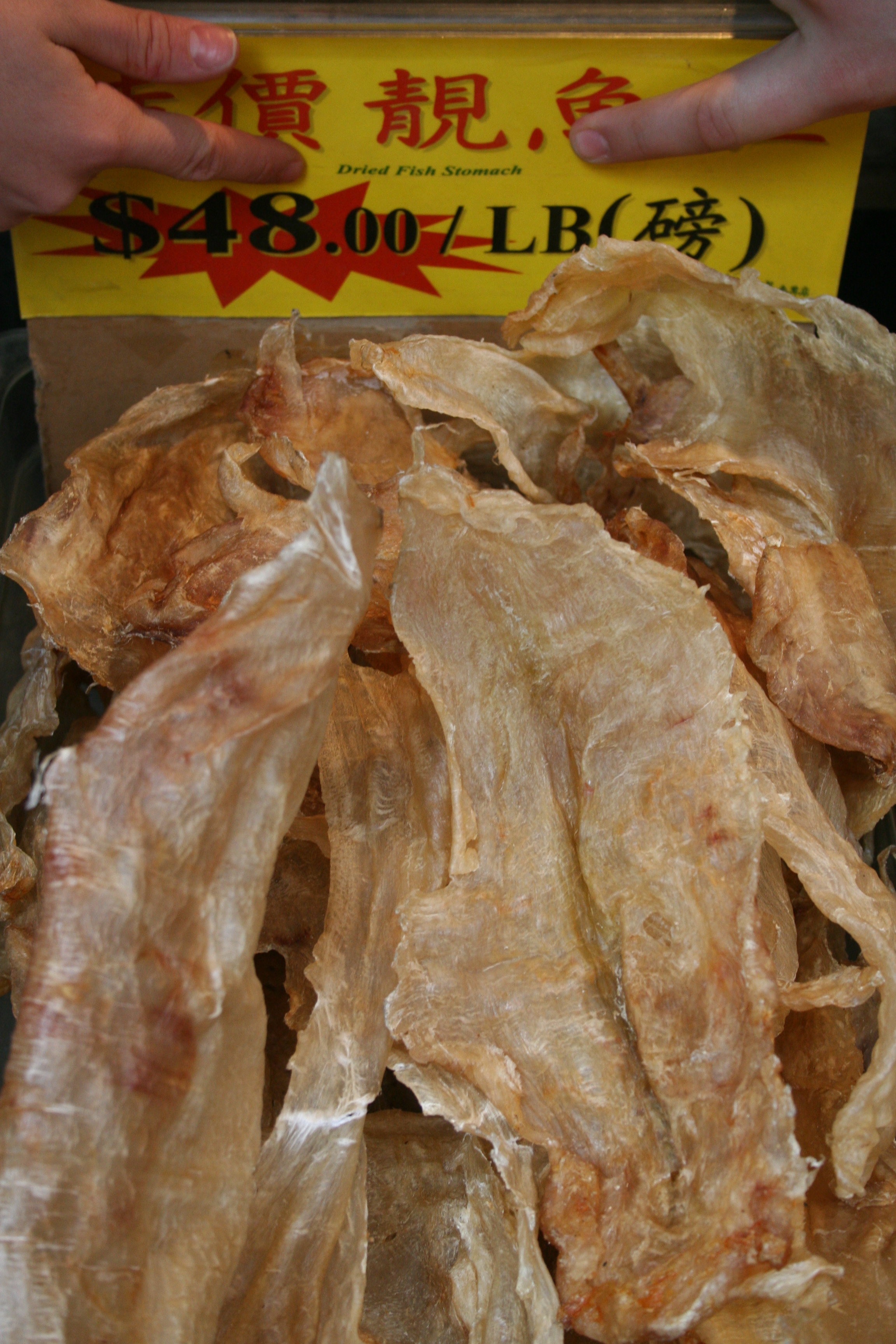
Shopping in Chinatown is never dull
Next, take the J or Z subway (brown) to Essex and Delancey. Head across the street to Orchard Street and visit the Lower East Side Tenement museum. By European standards this isn’t old, but it is for Manhattan and the room sets give a clear picture of what life would have been like for garment workers in this district back in the 19th Century. Architecturally it’s very interesting inside too as some of the rooms are in their original condition complete with years of peeling wallpaper. You can book in advance at www.tenement.org and there are various tours you can book onto which give you a themed talk into an aspect of tenement life that appeals. It really does bring history to life and helps you understand the context of the buildings.
Cross the street and head for 205 East Houston Street, in particular Katz’s deli. This old Jewish deli has been there for years; it’s a New York institution. The food is amazing; the setting is humble. I can recommend the pastrami on rye and you should also taste the knish. Wash it down with an egg cream. This was the setting for the famous fake orgasm scene in When Harry Met Sally but as you’ll see from the many pictures that adorn the walls, this is a favourite of many celebrities and politicians as well as the NYPD and FDNY.

“I’ll have what she’s having!”
Two of my favourite squares are a short walk from each other. Take the subway to Union Square which has a thriving farmers’ market every Wednesday, Friday and Saturday. It began in 1976 with a few farmers and the number of stallholders has grown steadily to around 140 today. North of Union Square at 23rd Street is Madison Square Park, alongside which you’ll find the triangular Flat Iron Building which dates from 1902.
North via the subway again at 42nd Street is what’s been termed the greatest railway terminal in the world: Grand Central station. It certainly outshines Liverpool Street at rush hour. This building is spectacular on a sunny day when the light shafts in through the windows, rivalling nature’s crepuscular rays. Walk across 42nd Street and pass the Chrysler Building. You can’t go up, but the building is worth a look nevertheless.
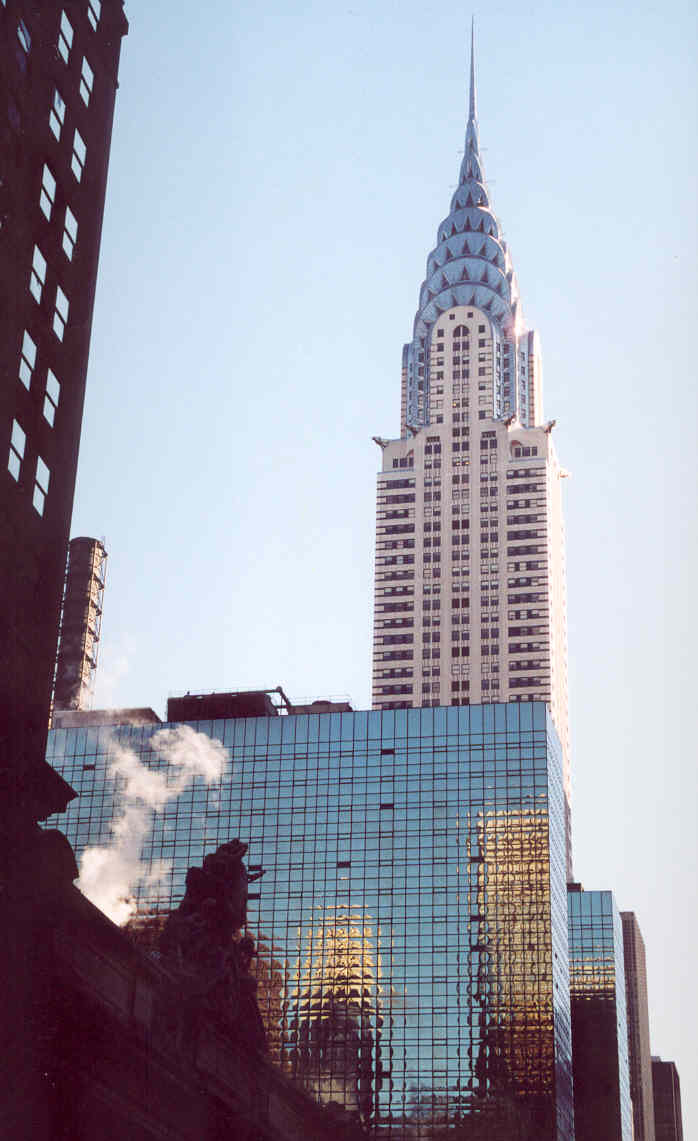
The Chrysler Building
Keep heading towards the river for a look at the United Nations Building (44th Street and 1st Avenue). You can book guided tours which are interesting, with the disarmament exhibits particularly poignant. It is necessary to pre-book tickets at http://visit.un.org/wcm/content/site/visitors/home/plan and as with the Statue of Liberty and the Empire State you do have security screening for which you need to allow time.
At 59th Street and Lexington, you’ll find Bloomingdales. Buy a Little Brown Bag and walk a block up to 60th Street. Serendipity 3 is a cute cafe featuring as its signature drink frozen hot chocolate, located at 225 East 60th Street. From there, head for the Roosevelt Island tramway. There isn’t a lot to see on Roosevelt Island itself but this tiny cable car is worth a ride in itself for the view back to Manhattan. Metro cards are accepted. Website http://rioc.ny.gov/tramtransportation.htm has the schedule.
Museum Mile is an integral part of the Upper East Side and my two favourites are both alongside Central Park. The Guggenheim is an amazing building for its architecture, all white curves of loveliness. Frank Lloyd Wright designed this building; if I’m honest, it fascinates me more than the exhibits inside but this is a must-see on your itinerary. Find out about the current exhibits at http://www.guggenheim.org/new-york. Up at 103rd Street is the Museum of the City of New York. Overlooked by many visitors, it tells the story of New York’s growth over time via a must-see film. Exhibits change, but will stay in your mind. A permanent fixture is the Activist New York display, featuring campaigns that range from anti-slavery to the suffragette movement, artefacts such as the Gay Bob doll and changing attitudes to the preservation of historic buildings. While you’re up here, it’s worth crossing the road into Central Park to see its only formal space, the Conservatory Garden, and Harlem Meer.

Museum of New York City
For dinner, head into Spanish Harlem. A block north of Tito Puente Way, a street named in honour of the outstanding Latino musician though I couldn’t find a plaque, I dined at Amor Cubano. It’s Cuban, obviously, though much around it is Puerto Rican. The food is delicious, the welcome familial and the atmosphere enhanced by live music. Camaradas el Barrio, a couple of blocks away, offers the best Puerto Rican food in the area and again has live music most evenings. But if you want to follow in the footsteps of Frank Sinatra, Dean Martin and Tony Bennett, then there’s only one place to go. Patsy’s Pizzeria has been a favourite since it first opened its First Avenue doors back in 1933.
Julia’s Guide to New York Part 2: Manhattan West
Part 2 of my guide to the Big Apple covers Manhattan’s west side from Washington Square to Central Park.
This route begins in Washington Square, where Harry left Sally after their road trip from Chicago. This landmark square has also featured in the Will Smith film I am Legend and is worth a visit for a picture of the arch. Head north along West 4th Street, through the attractive residential area of Greenwich Village. Turn left into Grove Street and a couple of blocks further on you’ll come to the building that featured as the apartment building in the hit TV show Friends. Backtrack a block and head north along Bleecker Street. There are plenty of boutiques and cafes, but the one that may well have a queue outside is the original branch of the Magnolia Bakery, whose melt-in-the-mouth cupcakes featured in the HBO show Sex and the City.
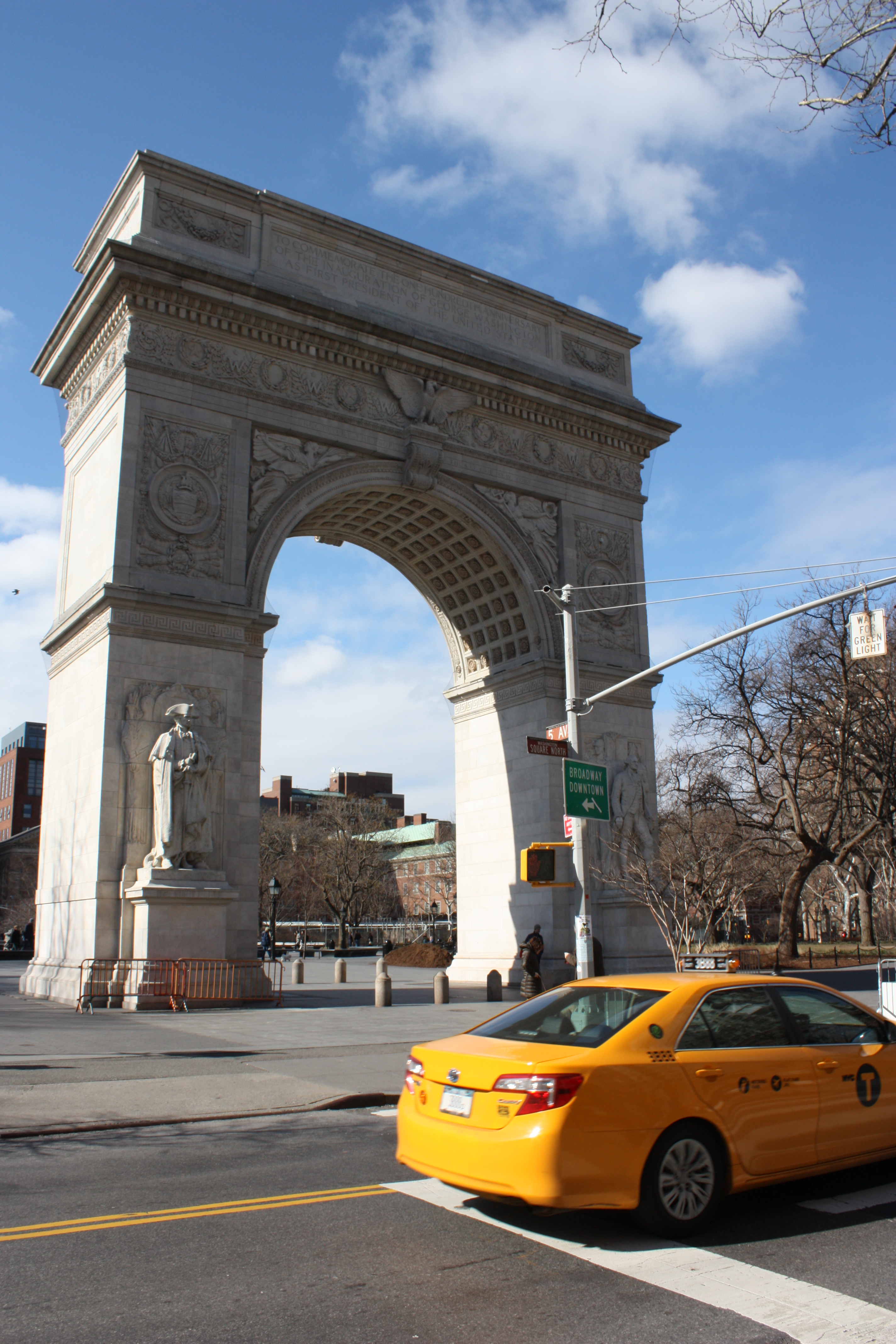
Washington Square arch
One of my favourite things about New York is its capacity for change so today I’d recommend you then have a wander in what was once the heart of New York’s butchery area. Today the Meatpackers’ District is home to cute cafes and designer clothes stores, where warehouses have been turned into cutting edge businesses.
To get to the heart of the Meatpackers District, continue north along Hudson Street and right into Gansevoort Street. In the area bounded by Gansevoort and West 14th Street, you’ll pass enough boutiques and outlets to get a feel for the area. Turn down Washington Street and at the corner with West 13th Street is the Hogs and Heifers bar from the film Coyote Ugly. One block south is the start of the High Line, a fantastic community-driven renovation that showcases the architecture of the area whilst turning an overground railway into a recreational facility for locals and tourists alike. It’s heaving in the summer but in the winter, pick a clear day and you’ll be able to wander in peace and really appreciate your surroundings. Wrap up warm against the wind though – when a cold wind blows across the Hudson, it bites into your face like a swarm of angry mosquitoes. One of the architectural highlights is The Standard Hotel which straddles the High Line. Nip down for a Fat Witch brownie from the Fat Witch Bakery in Chelsea Market at 9th Avenue. Go online to www.fatwitch.com to see what might tempt you.
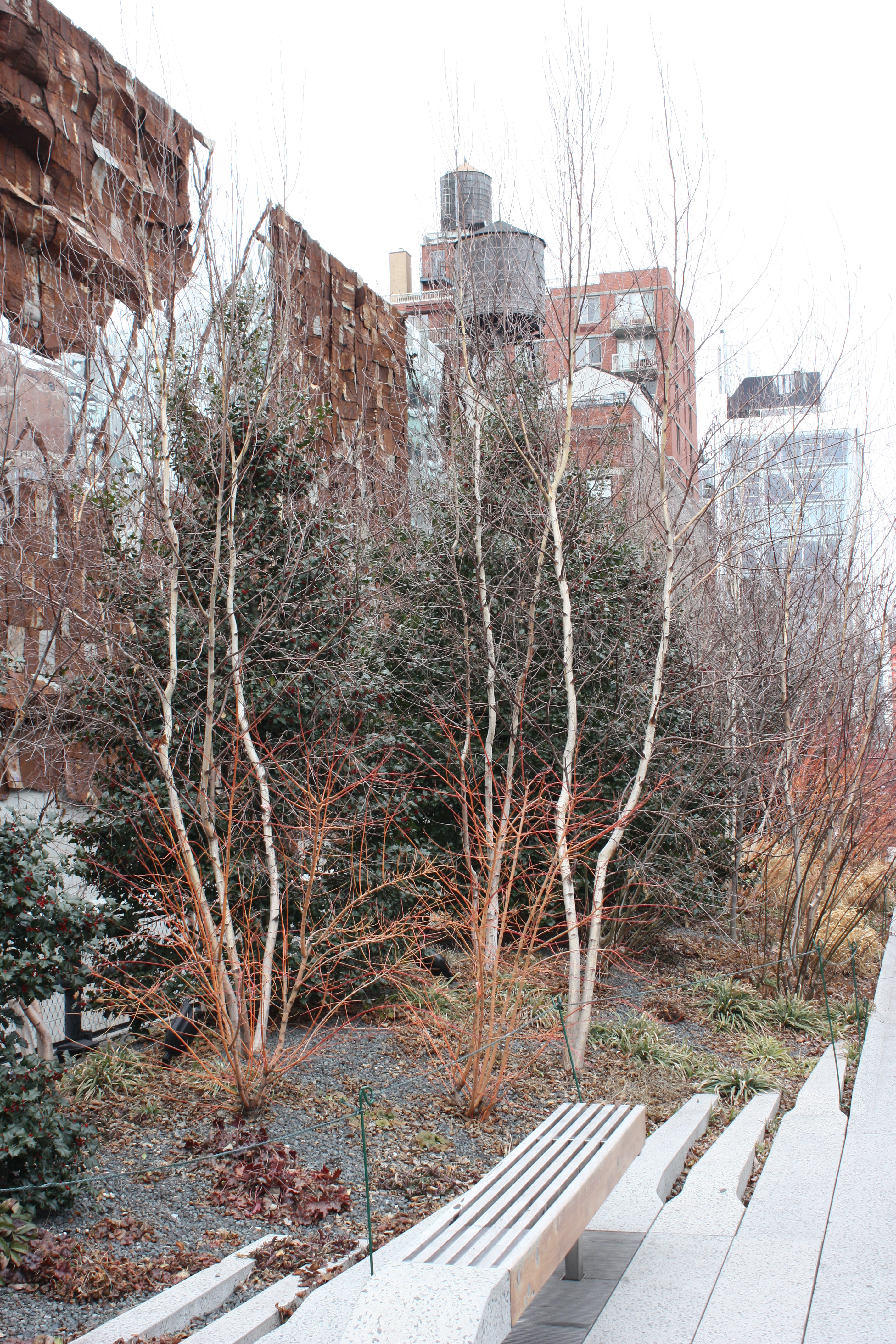
The High Line in winter
Back on the High Line, continue north; the park narrows and widens, offering vistas over art installations and views across to skyline landmarks like the Empire State. There are plenty of cosy nooks and crannies to snuggle up and you’ll have some of these pretty much to yourself in winter.
Follow the High Line right up to 30th Street and then head east past the Post Office (don’t stand too close to the building or you might get an unwelcome souvenir from the pigeons). It’s a fair walk across so you might wish to hail a yellow cab, but the walk will take you to 6th Avenue. Make a left and walk three (shorter) blocks to Herald Square at the back of Macys – the largest department store in the world, allegedly. Plenty of cafes and food outlets are located in this area as this is the heart of Midtown.
Just a block over, on 5th Avenue, is the Empire State Building. You may wish to reserve in advance as it can be pretty busy; go online at www.esbnyc.com. This Art Deco structure is one of the world’s most iconic buildings and definitely worth a visit. Don’t let them upsell you to the Skyride – it’s not worth the time or the money. The views from the 86th floor on a clear day are excellent, but the wind can be strong on at least one side of the viewing platform. Prepare yourself with a photogenic hat or plenty of hairspray.
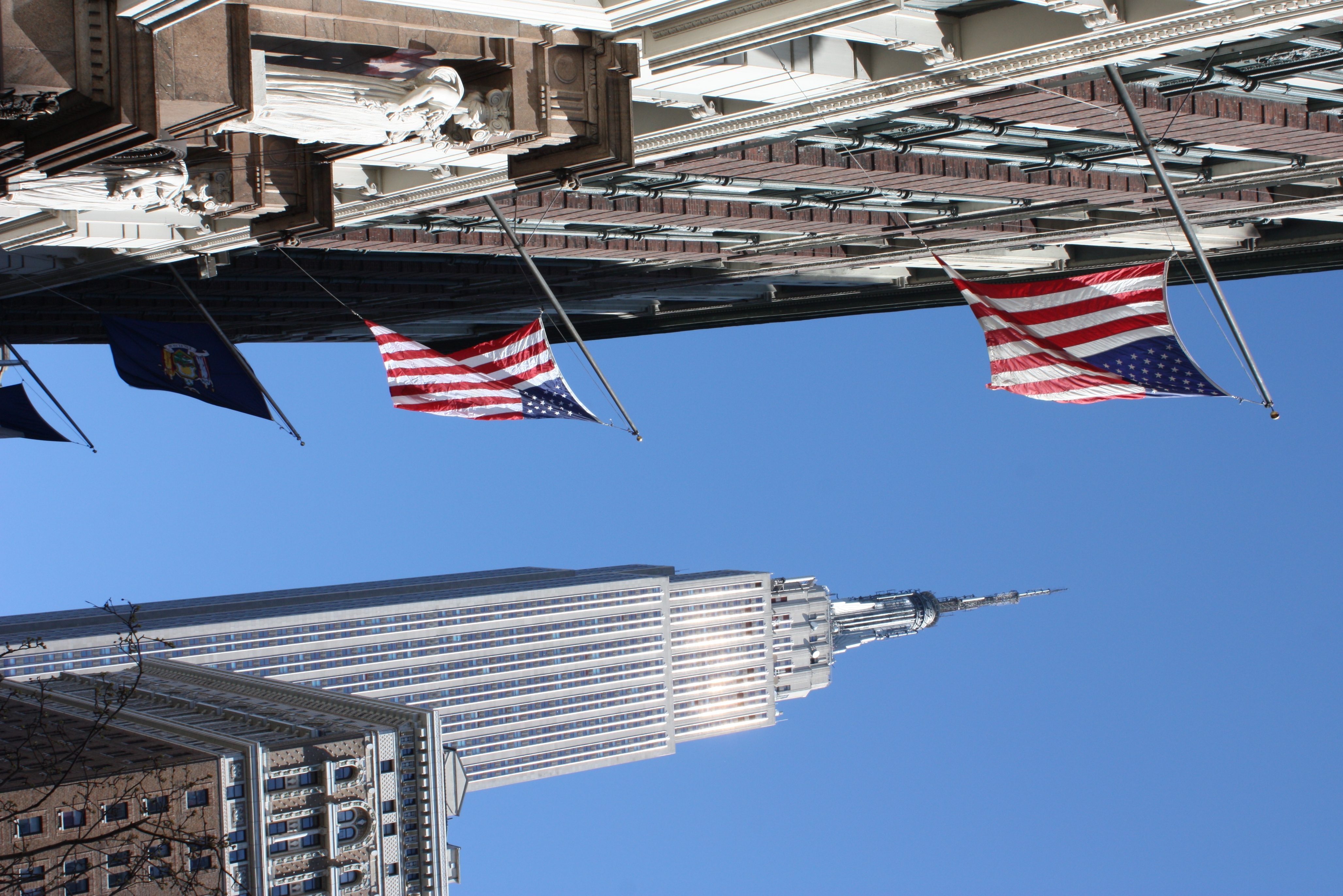
The Empire State Building
North along 5th Avenue takes you to Bryant Park, where there’s a good Christmas market and, when the weather’s warm, al fresco eateries. Cut back west to Times Square and note the location. It’s tourist central, of course, emblazoned with neon and awash with comic book characters just dying to pose for a photo. If you like what you see, come back after dark. From Times Square, head for the subway and take the red line to 72nd Street (it’s an express stop, so the 1, 2 and 3 are all fine). If you’re hungry, try a hot dog from Gray’s Papaya and walk a couple of blocks over to the park.
Central Park is a must and from the west, you’ll follow a trail of pampered pooches heading into the park. If you have your own back home, pick up a canine-friendly gift from the New York Dog Shop on 73rd Street – purple squeaky Empire State toy, anyone? Enter the park at the 72nd Street Traverse and look for the memorial to John Lennon, the legendary musician shot on December 8th 1980 outside the Dakota Building which stands across the street. The Imagine mosaic forms part of a tribute area known as Strawberry Fields, funded by a $1 million donation from John’s widow Yoko Ono. Continue through the park. In summer, you might rent a boat from the Loeb Boathouse; in winter, perhaps try your luck at ice-skating on the Wollman rink.

Central Park
The days of one Central Park attraction might be numbered, however. Despite Mayor de Blasio’s intention to ban them, at the time of writing it is still possible to take a horse and carriage ride through the park; they congregate along 59th Street at the southern edge of the park. They’ve been a part of the Park since the day it opened back in 1858 and Hollywood stars such as Liam Neeson and Danny Glover have made no secret of their opposition to the Mayor’s plans, along with an estimated 67% of New Yorkers. Find out more about the issue at www.savenychorsecarriages.com.
When you’re done, make your way back to see the lights of Times Square. You may wish to eat at Ellen’s Stardust Diner. It’s not to everyone’s taste, but those that love it enjoy the singing wait staff and its 1950s retro diner decor. You’ll find it at Broadway and 51st, or if you can’t see it, listen out for a song. To round off the evening, pay a visit to the observatory platform at the Top of the Rock. This offers unrivalled views of Manhattan for one reason – your view will include the Empire State Building. Depending on the season, this after-dinner slot may coincide with sunset, and it’s certainly an impressive vista after dark, although you may not wish to ascend this and the ESB in the same trip, especially if your time is limited. Pre-book your ticket at http://www.topoftherocknyc.com to avoid having to wait in line.

Sunset at the Top of the Rock NYC
Julia’s Guide to New York Part 1: Lower Manhattan
Here’s my guide for the first-time visitor to Lower Manhattan.
Begin at the southern tip of Manhattan, on the reclaimed land known as Battery Park City. Walk across Battery Park until you see Castle Clinton (the large circular fort) and get tickets for the Statue of Liberty – I’d advise an early start as the queues can be long, even out of season. Take the Circle Line cruise, get off at Liberty Island and have a close-up shot with the Statue. You can go up inside the crown but you need to pre-book tickets which have limited availability. When I last visited, the exhibition inside explained the technology behind creating the structure. Book tickets ahead of time at www.statuecruises.com

The Statue of Liberty
The second stop on the Circle Line cruise is Ellis Island. Temporarily closed after damage sustained by Storm Sandy’s flooding, it has now reopened. This fascinating museum tells the story of immigration to the USA, focused on the migrants that came through Ellis Island. You can imagine how scared some of them would have been as they stood in the hall with its huge arched windows. Some of the pictures are haunting and it’s definitely worth hiring an audio guide to hear the stories. Allow at least a couple of hours to absorb the information – more if you’re a history buff or genealogy fan.
If you’re not bothered about seeing Lady Liberty close up, you can take the Staten Island ferry from right next to the South Ferry subway building. It’s free and runs every 15 to 30 minutes. You get the same amazing view of southern Manhattan and Battery Park from the back of the ferry without having to pay, or queue. The platform at the rear of the ferry is small, so wait by it when you board to be sure of a good spot on the left as you look back to Manhattan and across to the Statue of Liberty.

Lower Manhattan as viewed from the Staten Island Ferry
On your return to Battery Park, walk across the park to the Skyscraper Museum, tucked away opposite the Museum of Jewish Heritage on its western side. Lots of people don’t know about this place but it has some interesting exhibits of skyscrapers within Manhattan and a main exhibit that changes regularly. Check for current exhibit details at www.skyscraper.org
Head over to Bowling Green subway (green line) back towards the South Ferry station – you’ll see a sculpture crafted from 9/11 debris. Walk north up Broadway and you’ll soon come across the Charging Bull sculpture the centre of the street – worth a brief photo and you sometimes get street performers or musicians hanging out here.

Arturo di Modica’s famous Charging Bull sculpture
Carry on up the street until you get to Wall Street and take the obligatory pictures of the New York Stock Exchange and opposite, Federal Hall. You get a cool view standing next to the statue of George Washington and looking out over the street. Now head north towards Fulton Street and turn down the street heading for South Street Seaport. It’s worth noting that there’s a TKTS booth here which often has shorter queues than its better known counterpart in Times Square. The old fish market has closed and relocated to the Bronx. The seaport buildings were hit badly by Storm Sandy in 2012 but renovations have been extensive. Pier 17 has reopened and there are a range of pleasant eateries in and around this area which makes a good spot for a lazy lunch. If you want something quick and on the run, I love Ruben’s Empanadas – a little taste of Latin America right on Fulton Street.
Stroll off lunch with a walk along the East River boardwalk until you are just short of the Brooklyn Bridge – it makes for a good view. You may wish to head up onto the bridge itself – you need to walk at least halfway across to you get a true feel for the bridge’s amazing architectural quality. Alternative views can be had by taking a yellow water taxi across to Brooklyn and view Manhattan’s skyscrapers from the east. Note that water taxi fares in summer are cheaper because in winter you have to buy a day pass.

The Brooklyn Bridge
Backtrack along Fulton Street and head for the tiny church of St Paul’s Chapel at 209 Broadway. You’ll find the 9/11 Chapel of Remembrance here and if you walk around the back, you find the Liberty Bell in the churchyard. Take the road to the right of the church and cut across to the junction of Liberty and West Streets for the entrance to the 9/11 memorial. There’s no need to pre-book tickets anymore now that the museum is open – all the security checks now take place inside the museum, which is worth a visit. You can also ascend New York’s tallest building, the Freedom Tower. Your final stop just a few steps up from the memorial site at 233 Broadway is the Woolworth Building; built in 1913 and once the tallest building in the world.
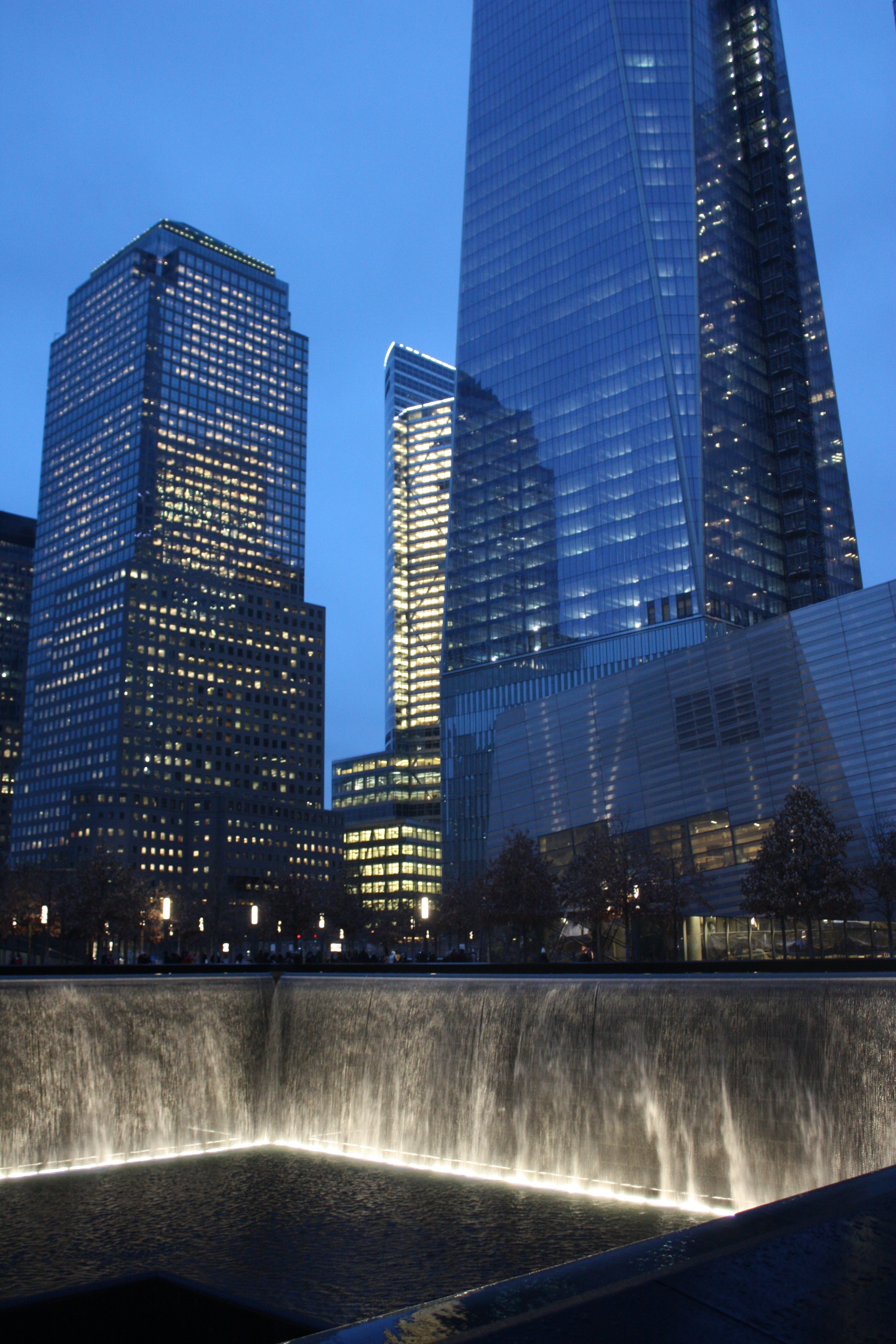
9/11 Memorial at dusk
My choice of dining in Lower Manhattan is at Fraunces Tavern, located at 54 Pearl Street. Hop on the subway and travel a few stops to go back in time – this is the place where George Washington bade his farewells to his officers back in 1783. Fittingly, there is now a museum of American Revolutionary War history in the building. The bar has an extensive menu of over 130 craft beers and ciders, hosts live music at weekends and the food is good too.
A beginner’s guide to the Riviera Maya
Mexico’s Riviera Maya is the name given to the stretch of Quintana Roo coastline that extends from Cancun in the north (or a few kilometres south of it, definitions vary) to the Sian Ka’an Biosphere Reserve to the south. Together with the neighbouring state of Yucatan, it is a deservedly popular package and independent tourism destination. This guide is aimed at the first-time visitor and should help you to make the most of your holiday. Prices are shown in Mexican pesos, which at the time of writing had an exchange rate of about 23 to the pound. The information given was correct at the time of writing, but check locally as things change.
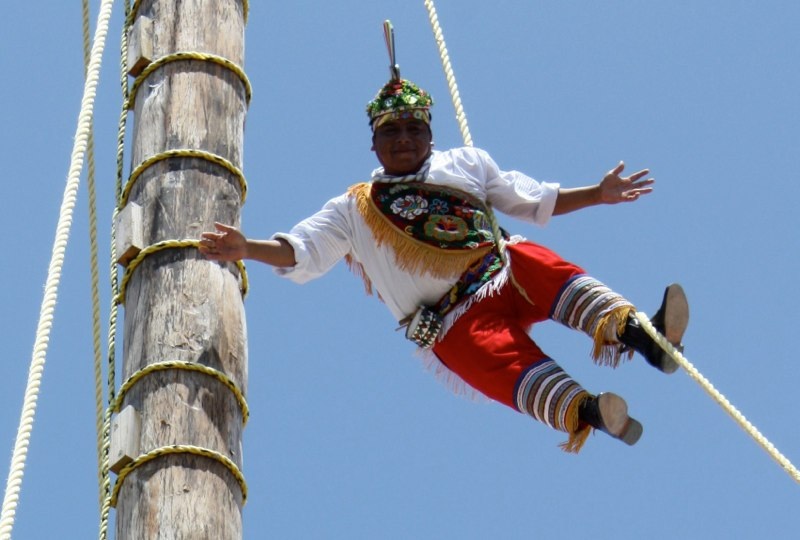
One of the four voladores
How to get there
Most visitors arrive at Cancun’s international airport just to the south of town, well served by direct scheduled flights from the UK, for example, with British Airways and Virgin Atlantic. It is possible to fly to Mexico City and catch a connecting flight but this takes longer. A wide range of packages are available. From the airport, the best way of getting to your hotel depends on your location. ADO buses serve the centres of Cancun and Playa del Carmen on a half-hourly basis, with fares of 270 pesos per person to Playa and 145 to 170 pesos to Cancun and its hotel zone. Shared airport shuttles are available to the main resort areas as are private hotel transfers though you’ll pay more than the scheduled bus. If you’re on a package, transfers will usually be included but check your booking documents.

Parrot in Xcaret Eco-park
How to get around
Taxis are cheap but better still are the minibuses called colectivos that ply the main road at regular intervals. To catch one, simply flag it down and tell the conductor your intended destination. Fares are cheap so take loose change and small notes; hang on to your receipt if you’re given one. In Playa, colectivos can be found in town at Calle 2 Norte between 15th and 20th, whereas in Cancun you’ll need to come out of the Zona Hotelera into downtown, where they congregate outside La Comercial Mexicana supermarket on Avenida Tulum. In Tulum, look for them opposite the ADO bus station in the town. It’s a good idea to double check with your hotel once you arrive.
Several bus companies serve a large network across Quintana Roo (the state containing the coastal strip) and neighbouring Yucatan (where you’ll find Chichen Itza). The best quality buses, with fewer stops and therefore slightly dearer fares, are run by ADO, whose website is easy to navigate (it’s also in English) and tickets can be booked online. Local routes are also served by the cheaper Oriente and Mayab buses, which tend to be a little less comfortable and stop more frequently.
Where to stay
Cancun is the largest of the Mayan Riviera resorts. Created from scratch four decades ago, it basically consists of two areas: downtown, where the locals live, and the Zona Hotelera, a narrow strip of land flanked by a lagoon on one side and white sand in the other. Its lively nightlife and many bars attract a young crowd, especially from the USA and Canada. However, Cancun’s too noisy and brash for many, who instead head an hour down the coast to Playa del Carmen. Playa has grown immensely in the last decade, but its pedestrian street, Quinta, with a good selection of shops, bars and restaurants still attracts many people. The central beach, though eroded in places, is busy and lined with popular beach clubs playing music while its water is safe for swimming.

Blue margarita
Alternatives to Cancun and Playa
Another hour by bus further south, Tulum has also developed rapidly with accommodation strung out along the beach as well as in town. Once home to a few hippy hangouts, it now also hosts stylish beach clubs and luxury hotels alongside hammocks and hostels. Puerto Morelos, midway between Cancun and Playa, is a small town that contains a few hotels. Akumal, a quarter of an hour south of Playa, serves those who like their resort town to be local and relatively unspoilt.
The easiest way to get to both Puerto Morelos and Akumal is by flagging down a colectivo on the side of the main road, known as the 307. Connecting Cancun to Tulum and beyond is a string of all-inclusive luxury resorts, gated from the main road and fiercely protective of their private patch of beach. These are well suited to families as the all-inclusive option makes budgeting easier and there are plenty of water-based activities for all ages.
Whether you’re a backpacker on a budget or a family seeking a fortnight of water sports and lazy days by the pool, there’s something on the Mayan Riviera that will cater for you. If you don’t mind being away from the beach, the town of Valladolid, two hours inland from Cancun, offers an alternative to independent travellers seeking a less touristy experience. ADO buses run frequently, with fares from 255 pesos each way from both Cancun and Playa del Carmen.
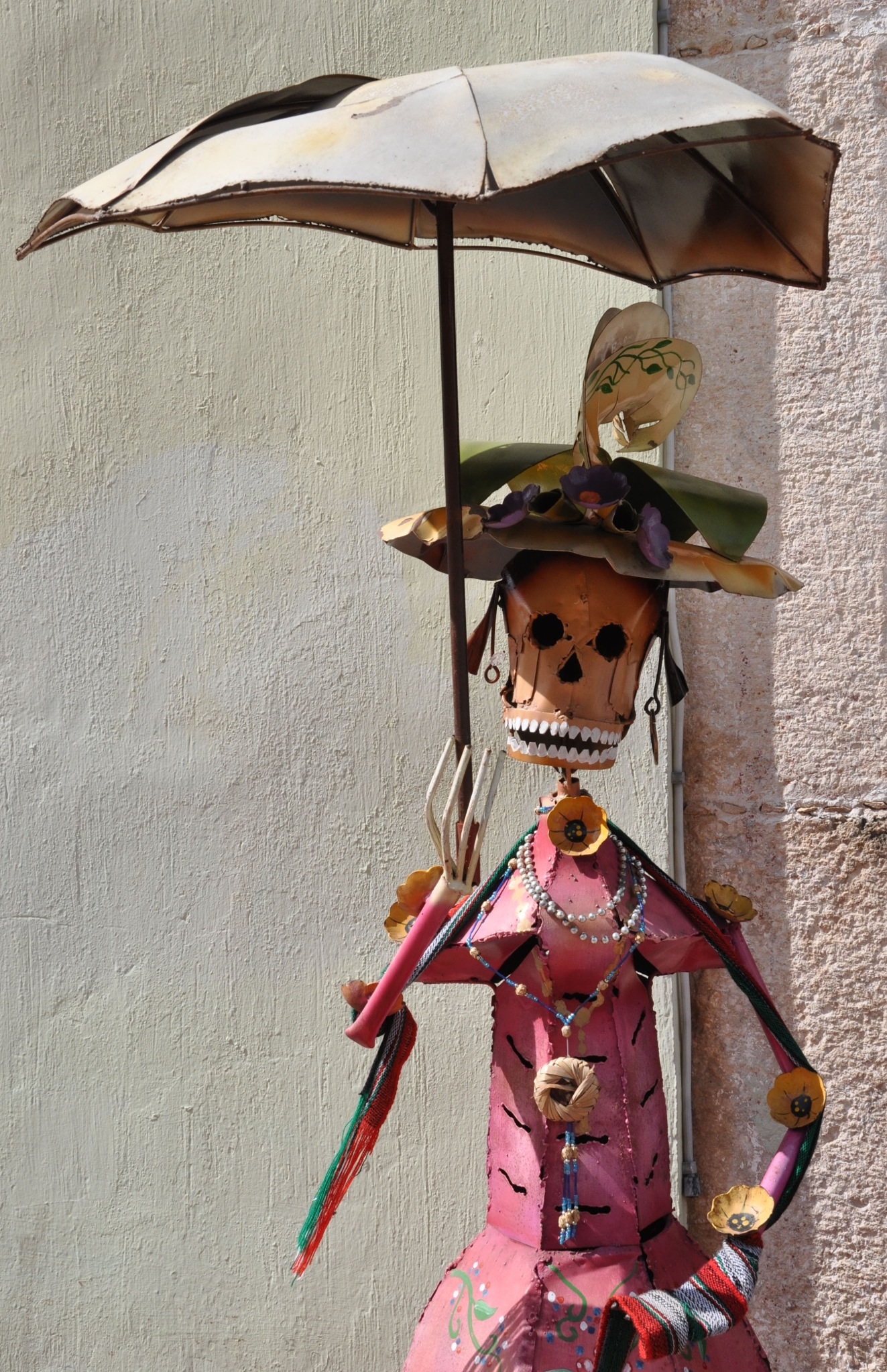
Art gallery in Valladolid selling all things Catrina, the symbol of the Day of the Dead festivities
Set around a charming plaza, there are a handful of hotels and restaurants, one of the best being El Meson de Marques right on the main square. From Valladolid, it’s easy to get to the ruins of Chichen Itza and Ek Balam as well as to the pretty town of Merida to the north of the peninsula, itself a good base for visiting the ruins of Uxmal and Sayil. The town is busy and it can feel less comfortable in the heat without a cooling sea breeze, but Valladolid’s a useful stopping off point between the coast and Merida if you wish to tour the peninsula.
Theme parks
As you’d expect from a well-established destination, there’s a number of water and eco-parks to tempt holidaymakers out of their resorts. If you go to only one, make it Xcaret. Pronounced “ish-ca-rett”, the site was once a Mayan port. Visit its archaeological remains within the main park; the park itself is a fun way to spend the day (from 2480 pesos). You can swim in a lazy river and visit the park’s wildlife including turtles and dolphins. The park features a reconstructed Mayan ball court as well as a typical hacienda and folk art museum.
At night, stay for the spectacle that condenses a thousand years of history into a couple of hours (evening admission from 1814 pesos). It features everything from Mayan sport played with balls of fire to dance and folklore set pieces representing Mexico’s diverse regions. This and other performances such as an equestrian show and the exciting display put on by the Voladores de Papantla are included in the ticket price. It’s simple to find booths selling tickets in Cancun and Playa del Carmen or you can book online. Some activities carry a supplement. For more information visit the Xcaret website or pick up a leaflet when you arrive.

The show at Xcaret
Xplor is the go-to park for thrill seekers. Tickets – prices are similar to Xcaret and bookable online – cover four attractions: a ride in an amphibious vehicle, a lazy river swim, underground rafting and the highest zip lines in Latin America. Full instruction is given and a helmet mounted camera ensures that you have a selection of photos as a memento of your day. As well as Xcaret and Xplor, there are a range of other attractions in a similar vein, including Xel-Ha and Rio Secreto.
Perhaps even more fun is to do what residents do to make the best of the landscape and cool off when it’s hot. Beneath the peninsula, the limestone rock has slowly been weathered away to create a fascinating underground world of sinkholes and caverns into which water has gradually filtered. These subterranean lagoons are known locally as cenotes, form natural swimming pools popular with families at weekends but often quieter in the week.
There are many cenotes close to the coast, but one of the best is Cenote Xkeken at Dzitnup. Located a little way out of Valladolid, it is a glistening turquoise lake lit through a hole in the roof of a huge cavern dangling with stalactites. The name is Mayan for pig; allegedly a farmer stumbled across it when one of his pigs fell into it by accident. Entrance costs 226 pesos; it’s possible to combine your visit with another nearby cenote, Samula.

Cenotes can be found throughout the peninsula
Mayan ruins
The large number of historical sites in Quintana Roo and the Yucatan can leave the visitor ruined out. It’s best to choose a few and enjoy them, rather than attempt to tick them all off in one trip. The jewel in the crown is without a doubt Chichen Itza. A sprawling site surrounded by jungle, it centres around the restored Kukulkan pyramid and an interesting collection of other structures including an observatory and ball court. Every tour operator offers day trips, but the site is easy to visit independently.
ADO buses connect Chichen Itza directly to Cancun and Playa del Carmen via good roads. The relativly new Tren Maya also serves this part of the peninsula, though tickets aren’t cheap and schedules won’t always suit your plans. Guides for Chichen Itza can be hired at the entrance if you wish and they’ll provide valuable context if this is your first visit. A ticket to get in costs 697 pesos for foreign tourists. (Mexicans enjoy a discounted rate, locals even more so).

The Kukulkan pyramid at Chichen Itza
The must-see on the coast is Tulum, not for its scale but for its location. Tulum’s temples sit right on top of the cliff above a small patch of sand and a turquoise sea and unsurprisingly as a result receives the highest number of visitors of any of the peninsula’s archaeological sites. Like Chichen Itza, the volume of tourists necessitates obvious management and many structures are roped off, but the grey of the stone against the blue sky makes this a very atmospheric place despite the crowds. It’s still just possible to find a quiet spot with just a lizard or two for company, especially first thing in the morning. Tickets are priced at 100 pesos but you’ll also need to pay a conservation fee and also for entrance to the national park.

Tulum’s dramatic setting
Coba, just a few years ago off the beaten track but now increasingly in the tour operators’ sights, is situated an hour or so from Tulum. Once a thriving Mayan city, the ruins are scattered through an area of jungle crisis-crossed with Mayan roads known as sacbe. The pyramid here is less well preserved than that at Chichen Itza and for now at least can be climbed by anyone untroubled by vertigo – with just a single rope to cling on to, this is not a climb for those with a fear of heights. Entrance costs 210 pesos for foreigners but due to the size of the site, many people opt to rent bicycles or take a ride to the ruins in a cycle rickshaw at extra cost.
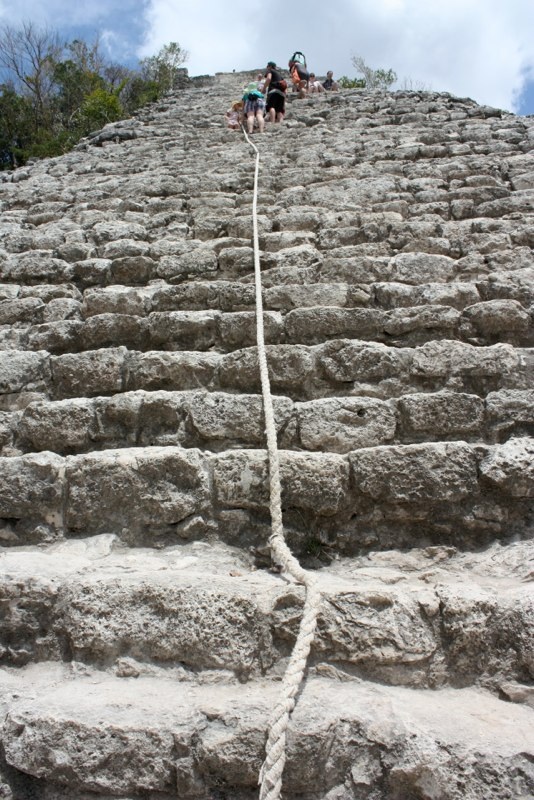
Coba’s pyramid
Less well-known and yet only twenty minutes by colectivo from Valladolid are the extensive ruins at Ek Balam. Relatively recently rediscovered, like Coba the site has a pyramid to climb, the Acropolis, its 106 worn steps rising steeply from the ground to offer extraordinary views of the surrounding jungle from the top. Ek Balam means dark jaguar in Mayan and as a result, the observant will spot jaguar motifs carved into the stone throughout the site. The entrance fee is 671 pesos for foreign tourists.
Reach Ek Balam by colectivo taxi from Valladolid; either pay for a seat and wait for others to join you or pay for the whole car. As they’re taxis rather than minibuses, you’ll have to ask where to find them. Try Calle 44 between 37 and 35, tucked inside the courtyard of a building rather than on the road outside.

The little-visited Ek’ Balam
Further afield, the attractive colonial town of Merida makes a convenient base if you wish to visit the Yucatecan sites of Sayil, Labna and Uxmal. It’s also close to Izamal whose ruins boast the largest surviving Mayan structure in the area. Getting to Merida takes around five hours by bus from the coastal resorts of Quintana Roo.
Natural wonders
A coral reef extends from the Riviera Maya down past Belize and on to Honduras. The second longest in the world, after Australia’s Great Barrier Reef, it provides excellent opportunities for both snorkelling and diving. The largest protected reserve in the area is the Sian Ka’an Biosphere Reserve, south of the main tourist strip. Tours showcase its flora and fauna, in particular birds, dolphins and turtles, plus occasionally manatees for those lucky enough to spot them. Akumal’s public beach is a good place for green turtle watching. There’s no need to book a tour, as snorkelling equipment can be rented from the dive shop on the beach, from where it’s a short swim out to the reef. Even in busy spots such as the main beach at Playa del Carmen, you’ll see flamingos diving for fish and bobbing about amidst the breakers.

Playa del Carmen beach
Off the coast
Cozumel, an established cruise ship and diving destination, is easily reached by ferry from the terminal at the southern end of Playa del Carmen. It offers the facilities you’d usually expect from a place where the majority of visitors are only in town for a short while. Island tours are expensive as are taxis. Isla Mujeres and Isla Holbox, reached by ferry from Cancun, are better bolt holes if you want a more laid back island stay.
Updated April 2026
Little Italy in The Bronx
“You walked from the subway? Did you come with a SWAT team?”
Jack was trying to be funny, I think, playing on the reputation of the South Bronx as dangerous. I was in his shop, DeCicco Brothers, on Arthur Avenue, where in true Italian style I had been embraced and welcomed as part of the family within about fifteen minutes of rocking up. There was no mistaking he was proud of his Italian heritage: the shop was packed with the distinctive blue of the national team’s football kit and piles of T-shirts emblazoned with the slogan “I’m Italian, I can’t keep calm”. Low rise and lined with trees, this characterful street at the heart of Little Italy had more in common with leafy Greenwich Village than a gang-infested no-go zone.

Leafy Arthur Avenue

DeCicco’s best T-shirt
The Bronx has had a hard time shaking off its bad boy reputation. “The Bronx is burning” was a phrase coined in 1977 by the media (rather than sports commentator Howard Cosell to whom the phrased is wrongly credited). It referred to the many fires that burned that summer when ageing housing stock combined with closures of firehouses had horrific consequences. The closure in 1973 of the 3rd Avenue El, New York City’s last elevated railway, and the completion of urban planner Robert Moses’ Cross-Bronx Expressway a year earlier, had fractured a community. The social and economic problems that were to follow resulted in a reputation that’s been difficult to shift.
New York has a long history of Italian immigration. Between the 1870s and the 1920s, around 5 million Italians, the majority from the Mezzogiorno, came to the USA and around a third never made it any further than New York’s five boroughs. Little Italy in Manhattan, now a shadow of its former self, retains a smattering of restaurants that fool only the most gullible of tourists into thinking they are in a genuine Italian-American neighbourhood. In truth, the Italians have long since moved away and the area is gradually being assimilated into Chinatown. According to some reports, the 2010 census doesn’t record a single Italian-born individual living in this part of the city.

Elderly Italians outside Tino’s Delicatessen
Little Italy in the Bronx, in contrast, is thriving, a tiny oasis of cor-fee and mozzarella and prosciutto packed into a few streets of the Belmont district. At Tino’s Delicatessen I sipped a cinnamon-scented cappuccino in the company of four elderly gentlemen, their faces lined and puffy from years of pasta and hard living. Despite the warm November sunshine, they were heavily wrapped up against the elements. Pausing occasionally to apologise for the profanities which escaped their lips, they put the world to rights as they probably did every morning. I’m not sure what they made of me, an outsider.

Tino’s delicatessen
A few doors further down Arthur Avenue, Jack DeCicco’s father Tony wandered in off the street and was keen to share his story. Together with his wife, he had arrived from Napoli in 1969 and had been in Little Italy ever since. He was immensely proud of his neighbourhood and took me to some of his favourite haunts: the Casa Della Mozzarella around the block on 187th Street, described by one Brooklynite as “oral dairy porn” and Vincent’s Meat Market, where row upon row of sausage and salami hang like chandeliers from the ceiling. The area is a foodie’s paradise, where everything from salt cod to handmade ravioli can be bought today just as it has been for decades.

The ceiling of sausage
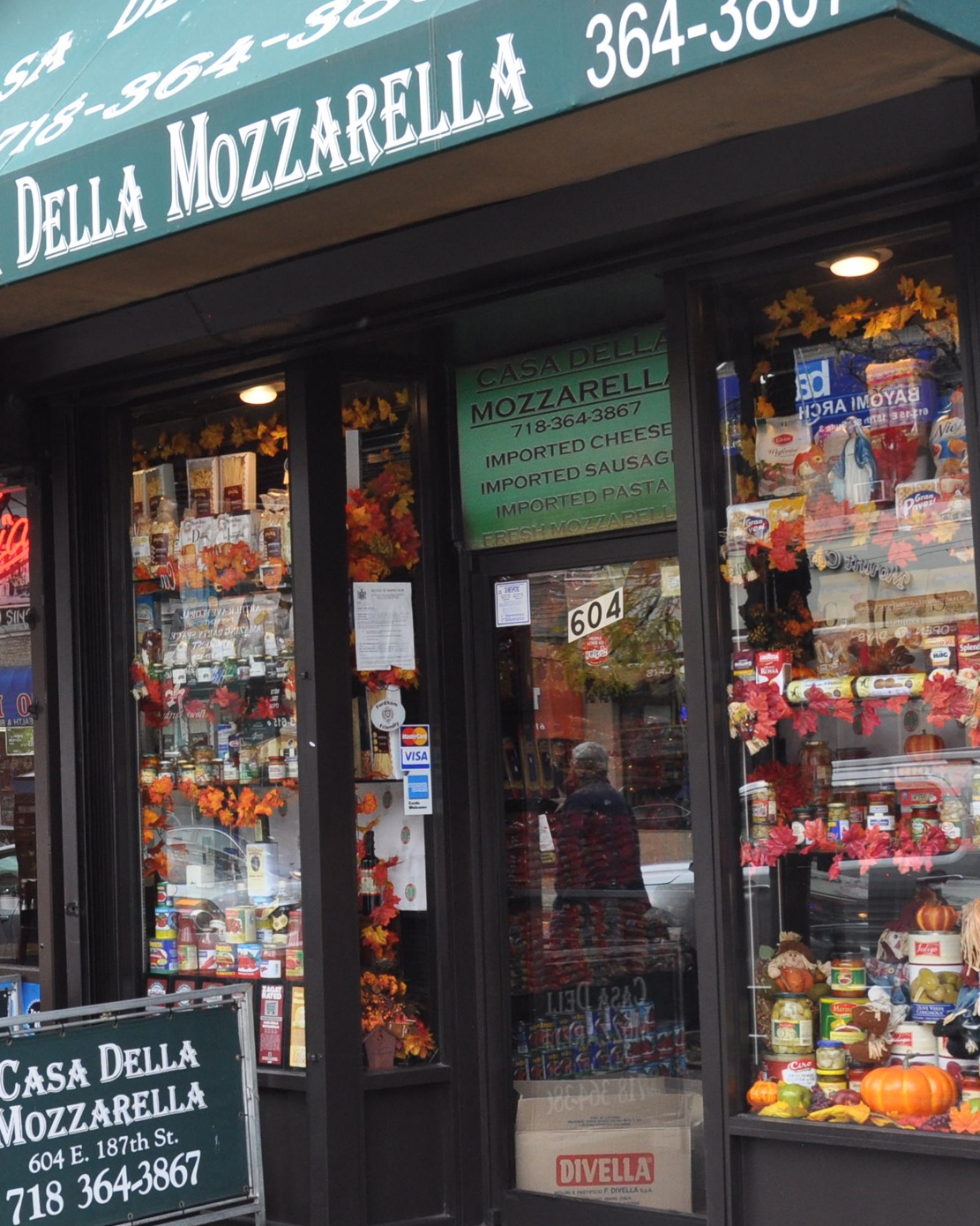
Casa Della Mozzarella
In a city that likes to reinvent itself and in a borough where so much was destroyed, there’s something comforting about the number of businesses that were founded at turn of the last century rather than the current one. Go and see for yourself – no SWAT team required.


